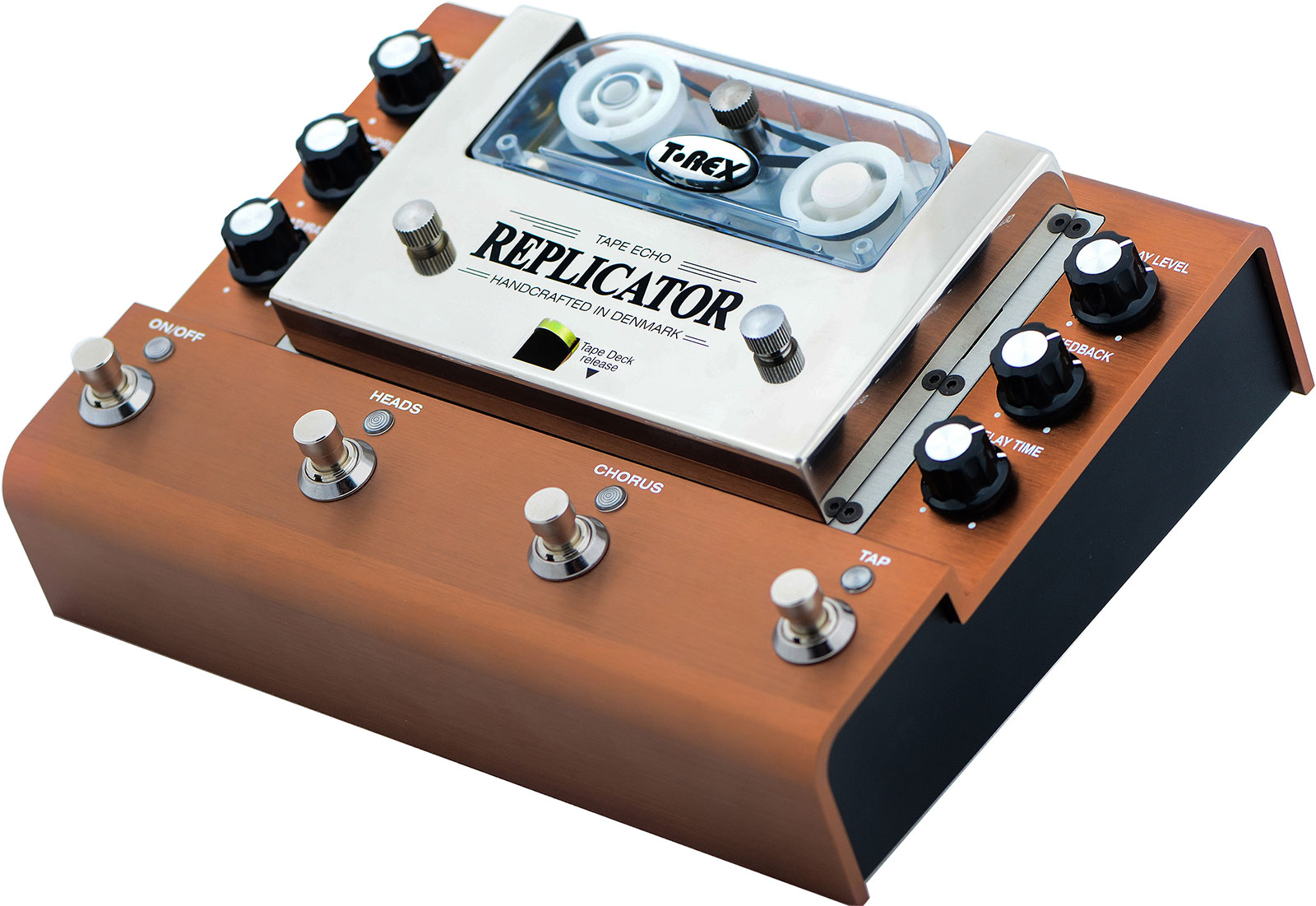
• Genuine tape echo
• 100% analog signal
• True bypass
• Two playback heads for three modes of operation
• Tap tempo
• ”Kill dry” switch
• Expression pedal control of time and feedback
• Comes with second tape cartridge and soft bag
****
Demo Track
• All guitar tracks recorded using the Replicator and a Blackstar HT-1R valve combo
• Rhythm guitars – Fender Stratocaster (left channel) & Fender Telecaster (right channel)
• Lead guitar – Fender Stratocaster
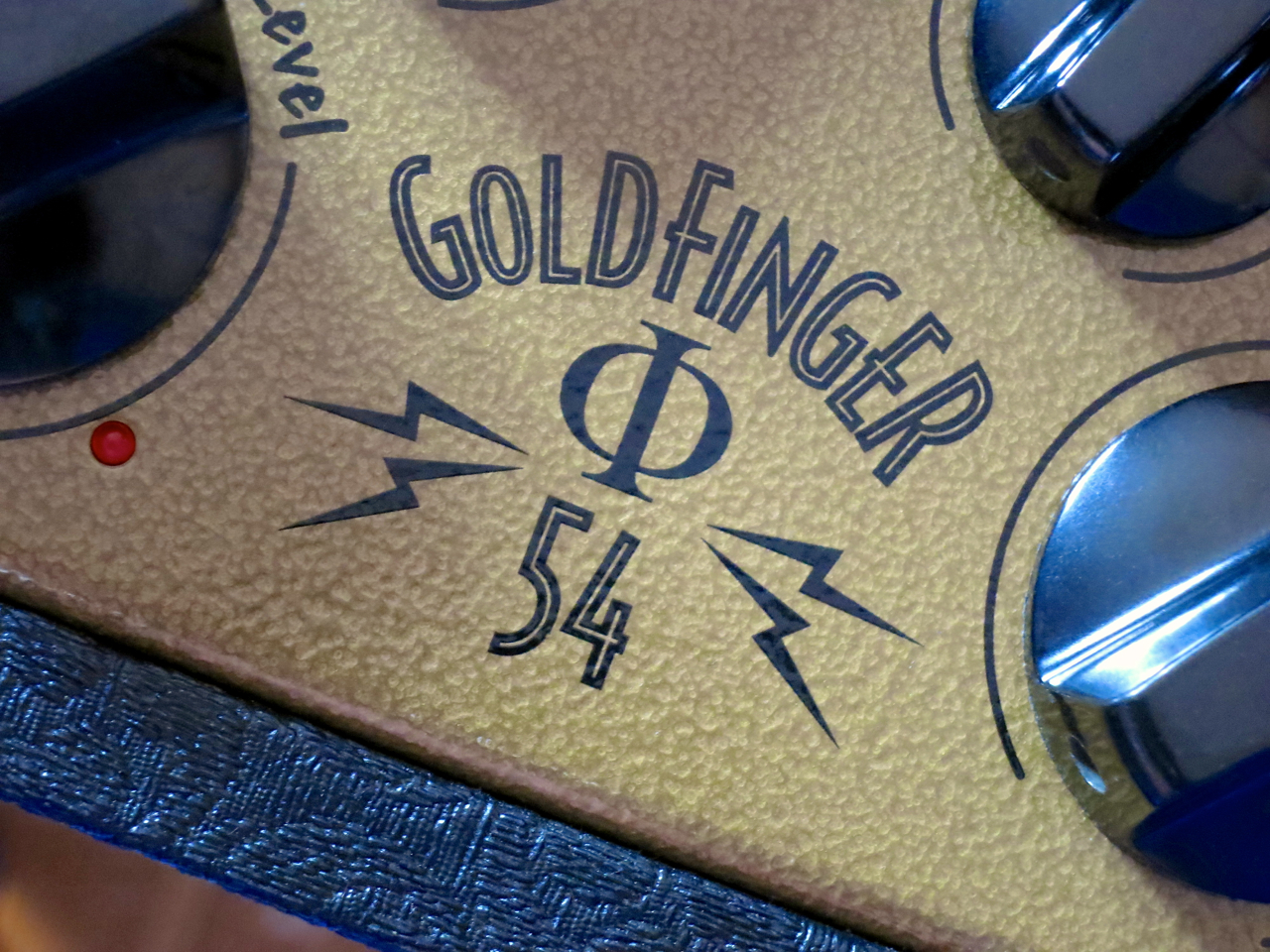
Bogner Amplification has recently added a new member to its Goldfinger-family of guitar amps. In addition to the two-channel Goldfinger 45, there’s now also a single-channel amplifier available, called the Goldfinger 54 Phi.
****
The basic idea behind the Bogner Goldfinger 54 Phi combo (current price in Finland:3.091 €) was to develop the most versatile single-channel valve amp possible.
The 54 Phi’s starting point was the Goldfinger 45’s clean Alpha-channel. The new model is concentrating mainly on clean tones, and it is meant as the ideal combo for guitarists who achieve most of their sounds with the help of effect pedals.
In its combo version – the 54 Phi is also available as an amp head – weighs in at about 26 kilos.
The cabinet is made from pine ply and it sports an open back construction.
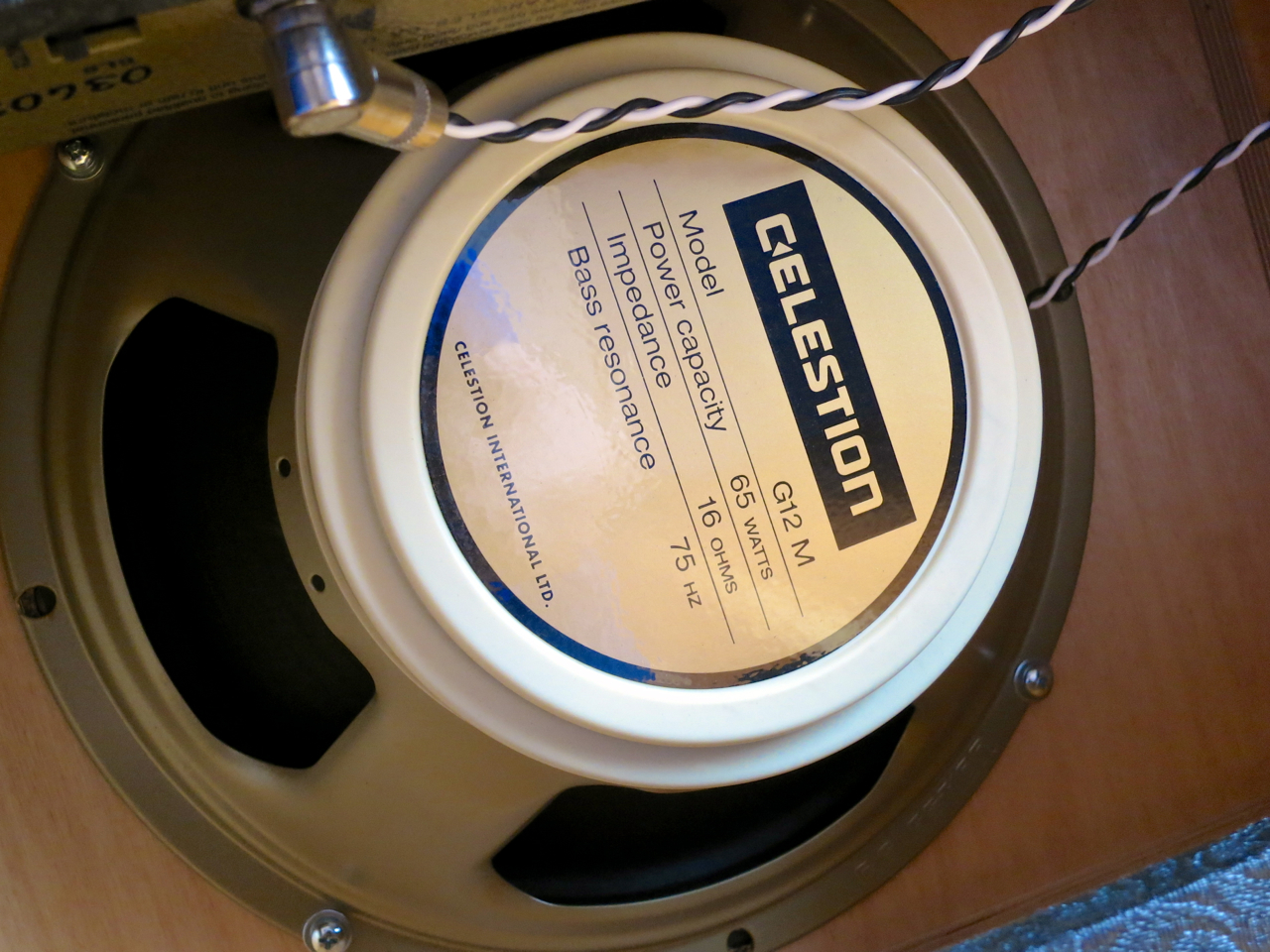
Bogner’s new tube combo comes equipped with a Celestion G12M-65 Creamback speaker, which combines a modern power rating with a classic, Greenback-type tonality.
A four-button footswitch unit is sold with the GF 54 Phi, and it gives us some hints regarding the combo’s versatility and features.
****
Bogner’s Goldfinger Phi offers a lot of scope for adjustment, so that every guitarist can dial in the sound he or she wants. Due to its versatility the 54 Phi needs you to get familiar with all its features, before plugging your guitar in and wailing away.
Actually, you should start your sonic journey with this Bogner’s back panel! The GF 54 Phi comes with a slightly unusual split power amp that employs two pairs of power amp valves – a pair of 6V6s and a pair of 6L6s. Each pair can be switched on or off individually, while the front panel’s Hi/Low-switch makes it possible to use only a single power amp tube from each pair, in effect halving the combo’s output power. By using the Hi/Low-switch and the power amp switches you can choose from six power modes. The lowest alternative lets the Goldfinger Phi run at approximately nine watts (6V6, Low), while the highest power mode (6L6+6V6, Hi) will give you the combo’s full 66 watts of output.
As were talking about a valve amp here, choosing between pairs (or single) power amp tubes doesn’t only have a bearing on the 54’s power rating, but it also affects the amp’s behaviour, especially when it comes to clean headroom and power amp compression (sag). You need to find the ”right” tube and Hi/Low-switch mix for your own, personal tone.
The Gain knob is used to set the preamp gain, while Loudness is what Bogner calls their master volume controls. There are two signal boosts implemented in the Goldfinger Phi’s preamp, but their are placed at different points in the signal chain, which makes them work and sound differently. The adjustable Boost booster is placed in front of the Gain control, even making it possible to achieve some distortion, if necessary. Solo, in turn, is a fixed booster that sits right at the end of the preamp.
Bogner’s GF 54 Phi offers you two different EQ-configurations. You can choose from Bogner’s own, modern tone stack or switch to a vintage Baxandall EQ. Originally, the Baxandall circuit was designed for Hi-Fi equipment, but it found its way into some guitar amps from the 1950s and 60s. Due to the way a Bax EQ works, there’s a perceivable drop in volume when you switch over without readjusting the EQ controls.
The EQ-section is complemented by a separate Presence control, as well as two Expand-switches (one adding bottom end, the other treble).
It may come as a shock to some valve purists, but Reinhold Bogner has deliberately chosen a digital reverb unit for his 54 Phi. In his view this digital unit offers more depth of sound and lushness than the type of spring tray he’d be able to fit into the 54 Phi combo. The reverb type features a little bit of chorus-style modulation to liven things up even further.
I’ve moaned about this before, and I’ll say it again: I’m not the biggest fan of Bogner’s downward-facing back panels. Unless you know the exact position of all connectors and switches by heart, you are forced to lie on your back to make sense of it all.
Be that as it may, the Bogner Goldfinger 54 Phi’s back panel gives you a wide array of different options for getting the most from your combo.
****
I was only given a weekend to test Bogner’s new baby, which is why I didn’t have enough time to record more audio demos. I still managed to come up with two, stylistically rather different demo songs.
The first track was recorded with the 54 Phi combo running in in 9 watts power mode, which made it possible to achieve overdriven sounds without the aid of pedals, simply by running hot humbucking pickups into the Goldfinger. The lead guitar is a Gibson Les Paul Junior with the tone knob turned down halfway, while all backwards guitar tracks were played on a Gibson Melody Maker SG. I recorded the combo (in both demo songs) with a Shure SM57:
The second demo track was recorded with the Bogner running at full tilt (66 W), and with a Boss SD-1 overdrive and a Joyo JF-37 chorus pedal in front of the combo. All guitar parts are played on a Flaxwood MTQ Hybrid guitar with a neck humbucker and a Telecaster-type single coil in the bridge position:
****
Bogner’s Goldfinger 54 Phi is a prime example of the versatility and quality of sound a well-designed, single-channel valve amp can offer.
This is a combo for the sound aesthete, who wants to build a strong foundation for his or her sound, regardless of whether this tone comes from just the fingers or a range of effect pedals.
Bogner Amplificationin Goldfinger-vahvistinperhe on hiljattain kasvanut. Kaksikanavaisen Goldfinger 45 -vahvistimen lisäksi on nyt saatavilla yksikanavainen herkkupala nimeltään Goldfinger 54 Phi.
****
Bogner Goldfinger 54 Phi -kombon (3.091 €) idea on ollut kehittää mahdollisimman monipuolinen yksikanavainen putkivahvistin.
54 Phi:n lähtökohtana on toiminut Goldfinger 45:n puhdas Alpha-kanava. Uutuusmallin pääpaino on juuri puhtaissa soundeissa, sillä 54 Phi on tarkoitettu paljon efektipedaaleja käyttävän kitaristin unelmakoneeksi.
Goldfinger 54:n komboversio (54 Phi on saatavilla myös nuppina) painaa noin 26 kiloa.
Vahvistimen kotelo valmistetaan mäntyvanerista ja sen takaseinä on avoin.
Uuden kultasormen kaiuttimiksi on valittu Celestionin G12M-65 Creamback -malli, jossa nykyaikainen tehonkesto yhdistyy klassiseen Greenback-soundiin.
GF 54 Phi:n mukana tuleva kytkinlauta, jossa on neljä kytkintä, antaa jo ensimmäisen vihjeen uutuus-Bognerin ominaisuuksista.
****
Goldfinger Phi pyrkii siihen, että jokainen kitaristi löytää kombosta juuri sen haluamansa soundin tarjoamalla runsaasti mahdollisuuksia muokkaukseen. Kombon monipuolisuuden vuoksi kannattaa tutustua 54:n ominaisuuksiin perusteellisesti ja rauhassa.
Oikeasti soundien maistamista pitäisi aloittaa tässä Bognerissa takapaneelista! GF 54 Phi:ssä on nimittäin hieman epätavallinen päätevahvistin, jossa toimii kahdet, kytkettävissä olevat putkiparit – 6V6 ja 6L6. Etupaneelista taas löytyy Hi/Low-kytkin, jolla päätevahvistimen tehoa voi puolittaa kytkemällä toisen kummankin putkiparin putkista pois päältä. Näin vahvistimen tehoa voi muokata kuudessa askeleessa yhdeksänwattisesta (6V6, Low) 66-wattiseksi (6L6+6V6, Hi).
Pääteputkien valinnat eivät kuitenkaan ulota ainoastaan Goldfingerin päätetehoon, vaan koko kombon käyttäytyminen muuttuu, etenkin puhtaan headroomin ja päätevahvistimen kompression (engl. sag) suhteen. Tämän perustan päälle rakennetaan sitten oma soundimaailma etupaneelissa olevien säätimien ja kytkimien avulla.
Gain-säädin on etuvahvistusta varten ja Loudness on Bognerin nimi master-volyymille. Säädettävä Boost-vahvistus ja kiinteä Solo-buusteri toimivat molemmat etuvahvistimessa, mutta niiden tarkka sijainti signaaliketjussa on eri. Boost vaikuttaa signaaliin jopa ennen Gain-säädintä, mikä tarkoittaa että sillä voi myös saada tarvittaessa särösoundeja aikaiseksi, kun taas Solo sijaitsee etuvahvistimen loppupuolella.
GF 54 Phi:ssa on tarjolla peräti kaksi eri EQ-vaihtoehtoa – Bognerin nykyaikaisen tone-stäkin sijaan voi nimittäin myös valita hieman erikoisen Baxandall EQ:n. Se oli alun perin taajuuskorjain Hifi-laitteille, joka oli kuitenkin käytössä myös joissain 1950- ja 60-luvun vahvistimissa. Bax EQ:n valinta laskee toimintaperiaatteensa vuoksi hieman etuvahvistimen signaalitasoa.
EQ-osastoa täydentävät erillinen Presence-säädin, sekä kaksi Expand-kytkintä, joista yksi lisää signaaliin diskanttia ja toinen bassoa.
Joillekin putkipuristeille tulee varmaan yllätykseksi, että Reinhold Bogner on päättänyt käyttää 54 Phi:ssä digikaikua. Mies on kuitenkin sitä mieltä, että hänen käyttämä kaikumoduuli kuulostaa selvästi paremmalta kuin GF:een menevä jousikaikutankki. 54-kombon kaikusoundissa on lisämausteena kevyt chorus-tyylinen huojunta, joka pitää lopputuloksen mukavasti elävänä.
Olen sanonut sen ennenkin, mutta pidän takapaneelin sijaintia Bogner-komboissa hieman epäkäytännöllisenä. Lattiaa kohti osoittavien kytkimien ja liittimien takia kitaristin täytyy maata selällään, jos haluaa nähdä mitä hän juuri tekee.
Takapaneelinkin tarjoamat ominaisuudet kielivät joka tapauksessa siitä, että Bogner Goldfinger 54 Phi on aito pro-luokan putkikombo.
****
Uutuus-Bogner kävi testissä vain viikonlopun yli, minkä takia audiodemojen tekoon käytettävissä oleva aika oli tällä kertaa hyvin rajallinen. Ehdin kuitenkin äänittää kaksi, tyyliltään hyvin erilaisia demobiisiä.
Ensimmäisessä biisissä 54 Phi -kombo oli 9 Watts -moodissa, jolloin Goldfingeria sai humbuckereilla säröön vielä olohuone-volyymillä. Soolokitarana toimii Gibson Les Paul Junior (kitaran tone-potikka oli säädetty hieman alas), kun taas takaperin soivat kitaralinjat on soitettu Gibson Melody Maker SG -mallilla sisään (molemmissa biiseissä kitaramikkinä toimii Shure SM57):
Toisessa demobiisissä Bogner oli ns. täysillä (66 W) ja sen eteen oli kytketty Boss SD-1 -särö ja Joyo JF-37 -chorus. Kaikki kitararaidat on soitettu Flaxwood MTQ Hybrid -kitaralla, joka on kaulahumbuckerilla varustettu Tele-tyylinen soitin (testi tulossa):
****
Bognerin Goldfinger 54 Phi todistaa hyvinkin vakuuttavasti, kuinka monipuolinen ja moniulotteinen erittäin laadukkaasti toteutettu yksikanavainen putkikombo voi olla.
Tällä soundiesteetikon unelmakoneella voi luoda omalle kitarasoundille vankan perustan, riippumatta siitä tuleeko se oma soundi pelkästään sormilta vai onko käytössä hyvin varustettu pedaalilauta.
When guitar synthesisers first came into being (at the beginning of the 1970s) they all were fully analogue and used the actual guitar signal as the raw material of their output. The guitar’s output was fed into a chain of different effects, including distortion, octaving, filters and modulation, to make the sound resemble that of an analogue synth.
Many old guitar synths sound great, but they require a very clean playing technique to track cleanly, and almost all of the devices were purely monophonic (meaning: no chords).
Roland’s GK-pickup – as well as the MIDI standard – changed all that drastically:
Thanks to the GK-pickup it was (and still is) possible to make use of chords, bends and double stops, and incorporate them all in your synth performance. The GK system also makes it easy to trigger rack synths, software synths or samplers using your guitar, turning the instrument into a full-blown orchestra.
The brand-new Boss SY-300 (street price in Finland approx. 720 €) returns to the original idea of the guitar synth, but takes advantage of the huge advances that have been made in digital technology recently. Boss say the SY-300 tracks quickly and accurately, while delivering huge and fat sounds with lots of scope for editing. But the best thing about it is: The synth is polyphonic and works straight off the regular guitar signal.
****
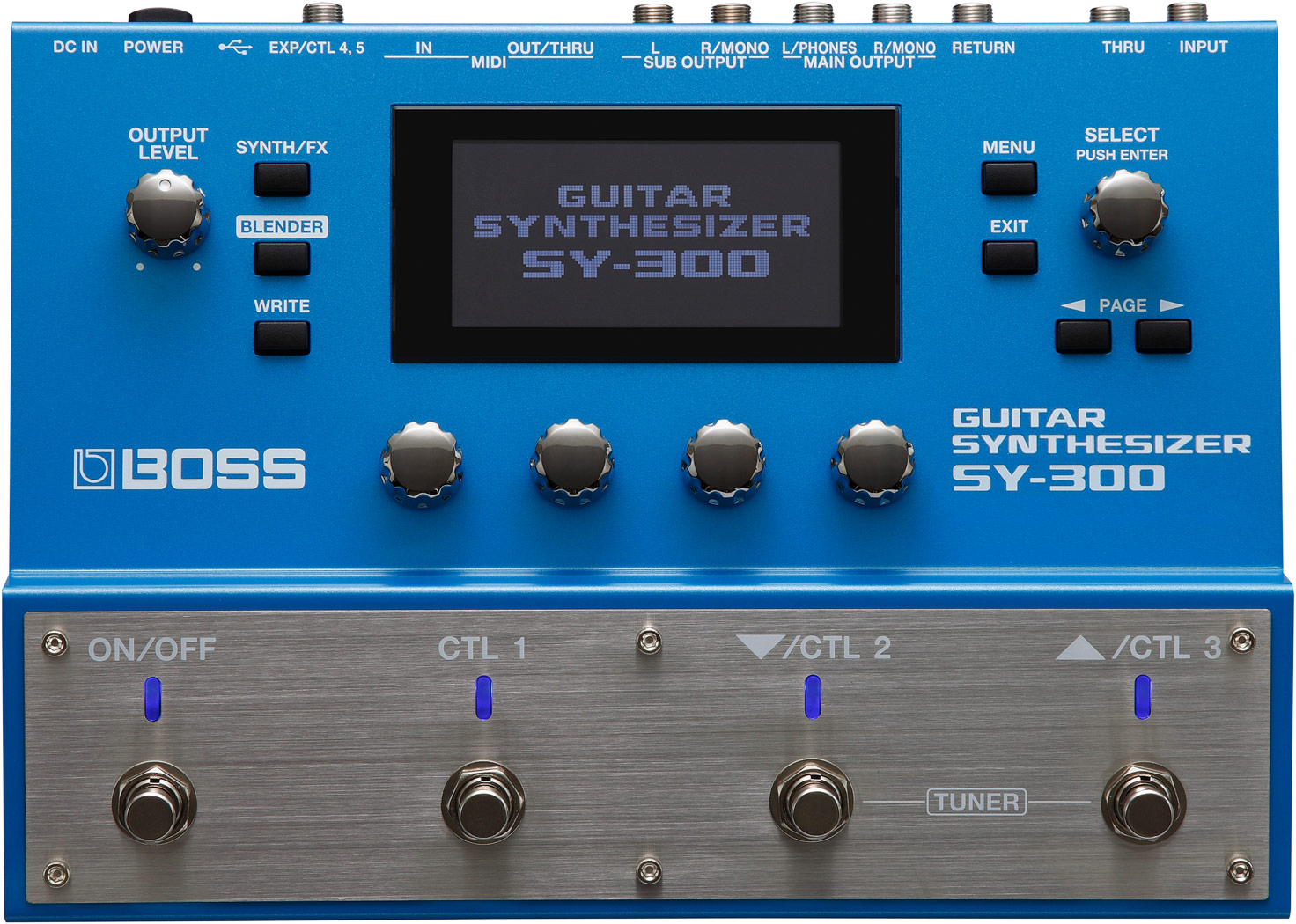
The Boss SY-300 is a chunky piece of gear and looks like a compact multi-effects unit. The external power supply unit is included in the price.
You can assign the synth’s four footswitches to different functions, but in the factory default they work as follows:
The switch on the far left is the On/Off-switch (well, actually the bypass). CTL 1 is used to change a predetermined parameter in the chosen patch (like vibrato or modulation). The last two switches (CTL 2 and CTL 3) take over patch changing duties; step on them both, and you’ll switch on the built-in digital tuner.
As we are talking about a fully featured digital piece of equipment, the amount of editable parameters is quite staggering. Luckily, the graphics-based user interface in the Boss SY-300 is well-designed, making it fairly easy to programme the synthesiser using the controller knobs beneath the display, and the navigation buttons to the right of it.
****
The SY-300’s well-spec’ed back panel will not leave you wanting:
Placed next to the guitar input are the phone jacks for the guitar synth’s external effects loop. The Ground/Lift-switch makes it safe and easy to break any hum-inducing earth loop. Boss even included two sets of stereo outputs in their synth. The Main Output could be sent to your onstage amplifiers, for example, while the Sub Output feed could be connected to the FOH console. The Main Output’s left output also doubles as a headphones jack.
It’s also easy to integrate the Boss guitar synth into any MIDI-setup, thanks to its two MIDI-ports. The jack labelled EXP/CTL 4,5 is for use with additional (optional) footswitches and/or expression pedals. The SY-300 is compatible with EV-5- and FS-7-pedals, as well as the FS-5U- and FS-6-footswitch units.
The Boss SY-300 can also be utilised as a versatile external soundcard, with the synth offer four different USB Audio-modes for just this purpose, like the nifty Re-Synth-mode, which works in the same way as reamping. The unit also sends and receives MIDI-data using USB. You can also edit patches, load new ones or share your settings with other SY-300 users with the free Boss Tone Studio software (Win/Mac OS).
****
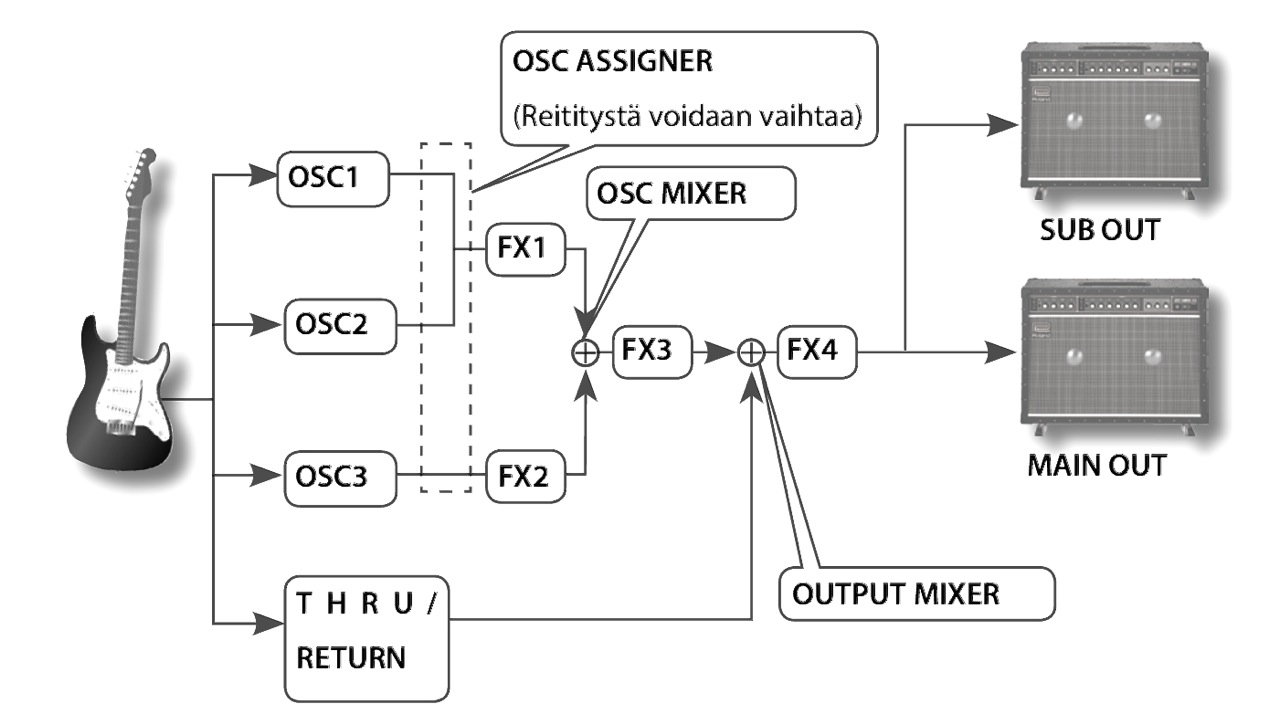
The above graphics show you the internal architecture and the signal path of the Boss SY-300. Each patch (Preset: 70; User: 99) can use up to three oscillators as sound sources (OSC1-OSC3). Each oscillator comes with a number of different waveforms to choose from (from saw to PWM, and beyond), as well as its own set of dedicated filters, LFOs and ADSR-envelope modules. A good indication of the SY-300’s versatility lies in the fact that exact placement of the oscillators in the signal path can be changed. You could have two oscillators running in parallel, with the third one placed behind the pair in series. Furthermore, the Sequencer feature makes it possible to use each oscillator as a 16-step sequencer, turning each note you play into a rhythmic and melodic pattern.
But there’s still more to come:
Boss’ new guitar synth also comes with four FX modules, each offering a very wide selection of different pro-quality effects. Depending on the chosen oscillator routing, the signal routing of the FX modules can also be changed by the user.
****
The new Boss SY-300 is a very user-friendly device, but due to its versatility – as well as the huge amount of editable parameters – you should take some time to read the user manual, before trying to programme your own patches. Especially if you’re new to the subject of synthesis, you shouldn’t be disappointed if it takes a little time, before your creations sound the way you intended.
I’m old enough to have learned synthesiser programming in the age of polyphonic analogue synths and the Yamaha DX7, which meant I felt right at home with the SY-300.
A good test of any user interface is trying to create something completely from scratch. I chose to use the Boss synth to come up with a slightly Eastern-influenced patch, that uses two oscillators in series to produce a sitar-style twangy tone, with the third oscillator assigned to produce shimmering overtones.
The resulting patch sounds like this (a single guitar synth track, plus three tracks of Roland HandSonic-percussion):
This clip gives you some idea of the types of patches included in the factory settings:
I also recorded a demo track that uses the Boss SY-300 for everything, except for the drum tracks:
****
Boss’ new guitar synth is a fantastic piece of gear, if you’re a fan of real synthesiser sounds.
The SY-300 locks on to your guitar signal very well and it tracks like a dream, staying true to both the dynamic, as well as the melodic and harmonic content of your playing.
The SY-300 isn’t meant to replace Roland’s GK-/GR-products – if you’re after realistic-sounding, multitimbral sounds, using a GK-pickup is still the easiest and best option. The Boss SY-300 is meant as a fantastic choice if you’re looking for a genuine guitar synth – in the original sense of the term. You will get huge and fat synthesiser sounds, seasoned with great effects, from the SY-300, not pianos, violins or trumpets.
As Christmas is just around the corner, we at Kitarablogi felt it was a good idea to review one of the starter packs offered by a local music dealer:
DLX Music’s own affordable starter pack (299 €) combines a Sterling S.U.B. Silo3 guitar with a Vox AmPlug 2 Classic Rock headphone amplifier. The only things you need to add are a plectrum and a set of headphones – and off you go. And what’s best: Thanks to the headphone amp you won’t be disturbing any neighbours with your playing!
****
The Sterling (by Music Man) S.U.B Silo3 is an affordable licensed copy of the legendary Music Man Silhouette HSS-model. To my knowledge, the S.U.B. Silo3 is currently offered in Finland only as part of three DLX Music guitar packs. In other countries of the EU this guitar model is sold for around 300 €.
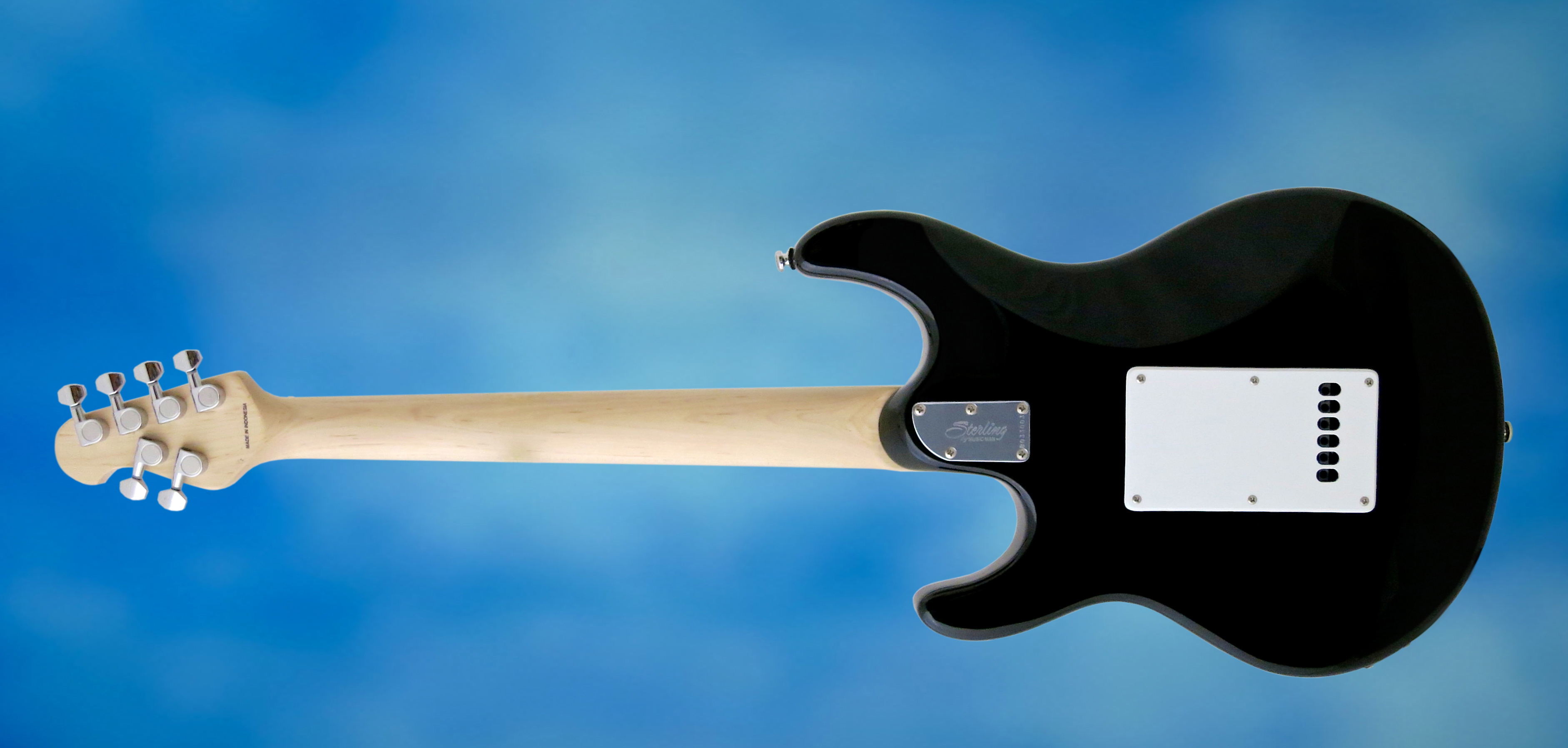
This Made-in-Indonesia Sterling uses different local hardwoods (all of which are said to resemble alder in terms of their sound) for the body.
The Silo3’s neck has been crafted from maple, same goes for the separate fretboard.
The whole neck comes with a thin satin finish, while the body is finished gloss black.
The fingerboard sports 22 medium-sized frets.
The Sterling’s very comfortable neck joint is a straight copy of the bolt-on joint used in Music Man’s US-manufactured guitars.
Thanks to the four-plus-two machine head arrangement on this guitar’s headstock, the Sterling Silo3 offers a straight string path from the nut to the tuner posts, without the need for any string retainers, which might impede on the vibrato’s return to pitch.
The tuners themselves are of decent quality.
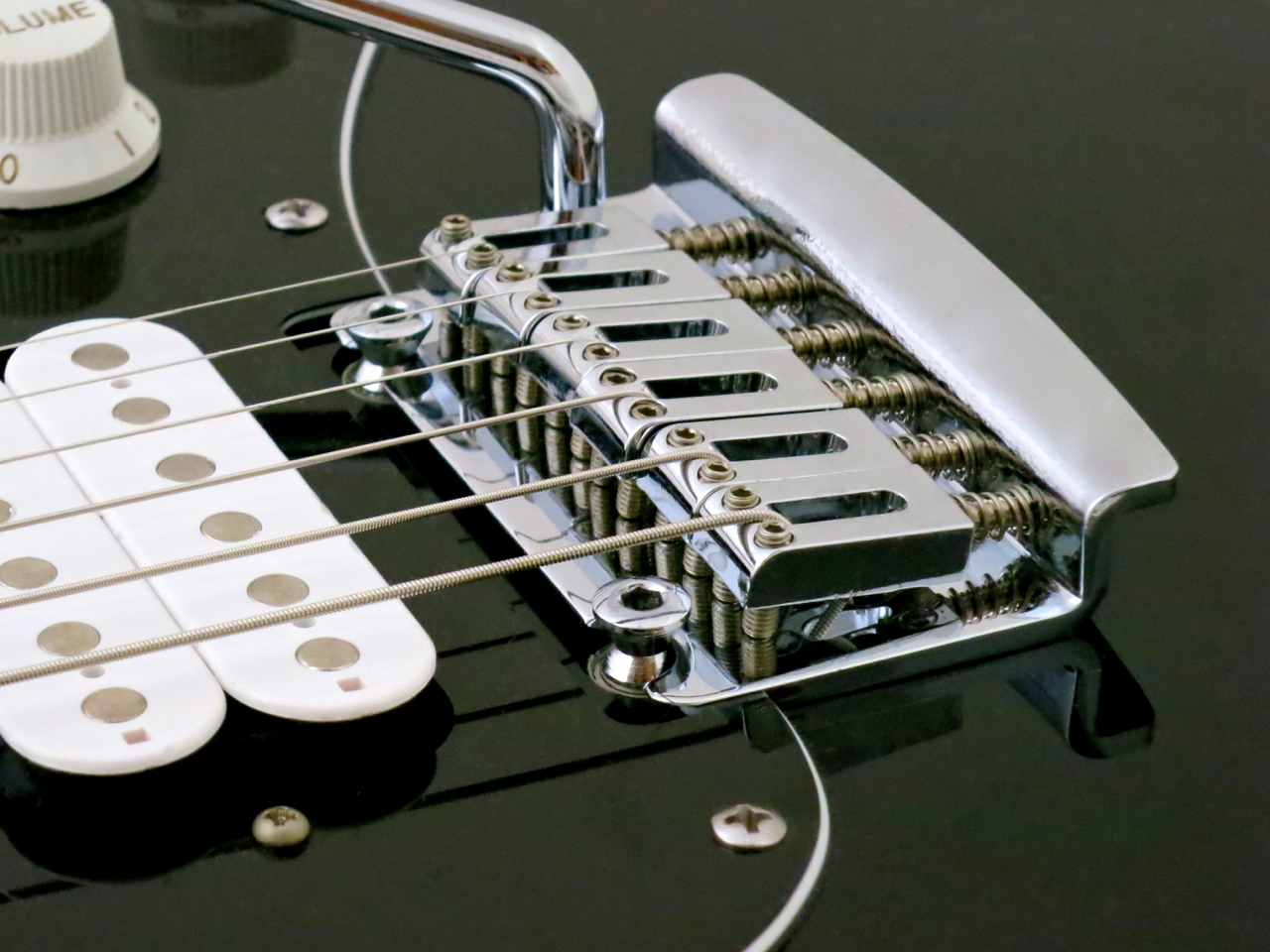
The vibrato bridge on the S.U.B. Silo3 is a modern take on the venerable vintage vibrato, featuring a knife-edge bearing with two height-adjustable posts.
Between the neck pickup and the end of the fingerboard you can see the truss rod adjustment wheel, typical of Music Man-instruments. Thanks to the wheel you can use an object that’s sturdy enough for the job – like a small screwdriver or a metal rod – to adjust the truss rod, without having to detach the neck or loosen the strings.
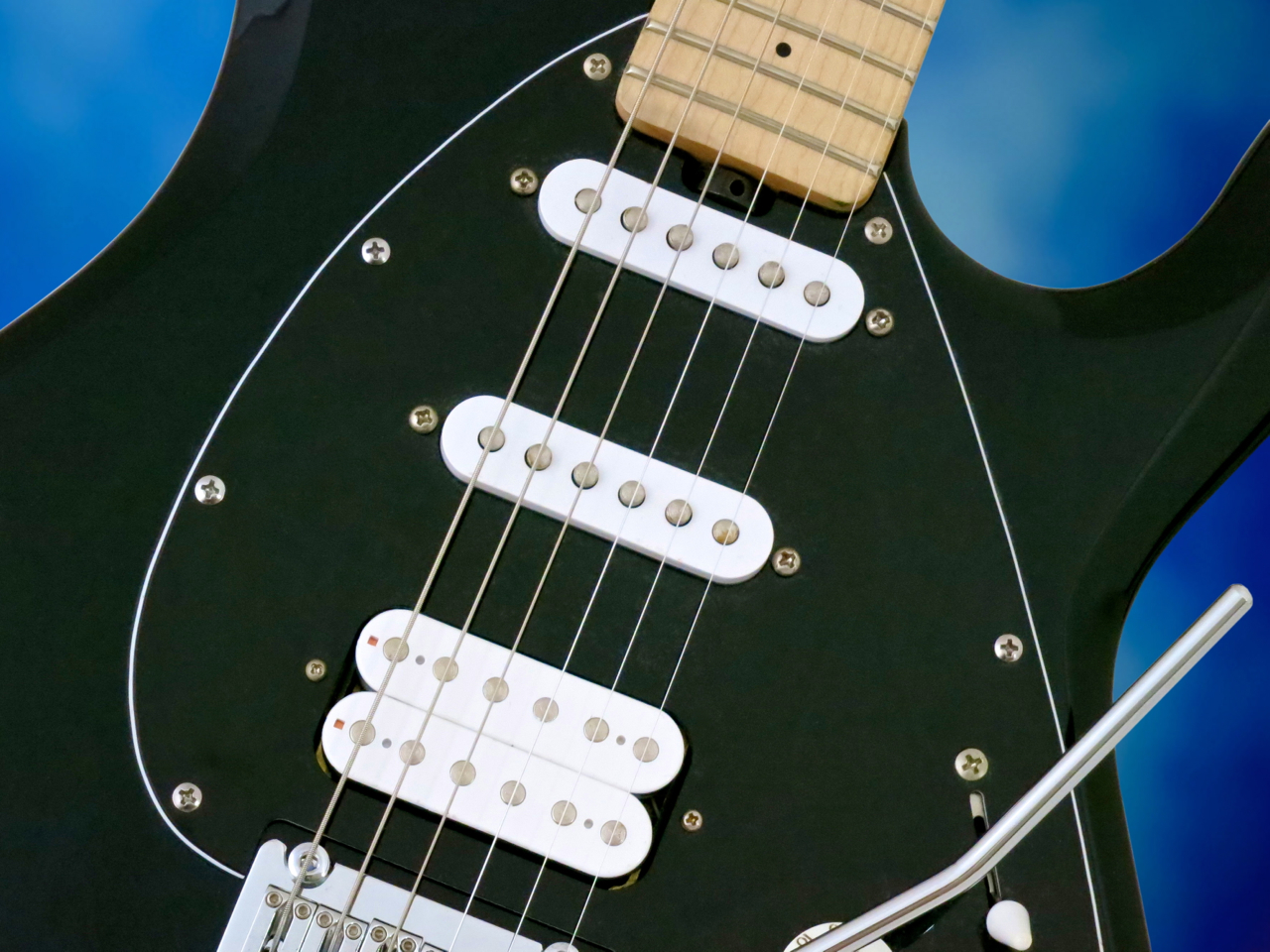
The Silo3 comes equipped with a set of ceramic pickups, which features slightly hotter singlecoils in the neck and middle positions for an overall balanced output level.
The controls comprise a master volume, a master tone, and a five-way blade switch.
****
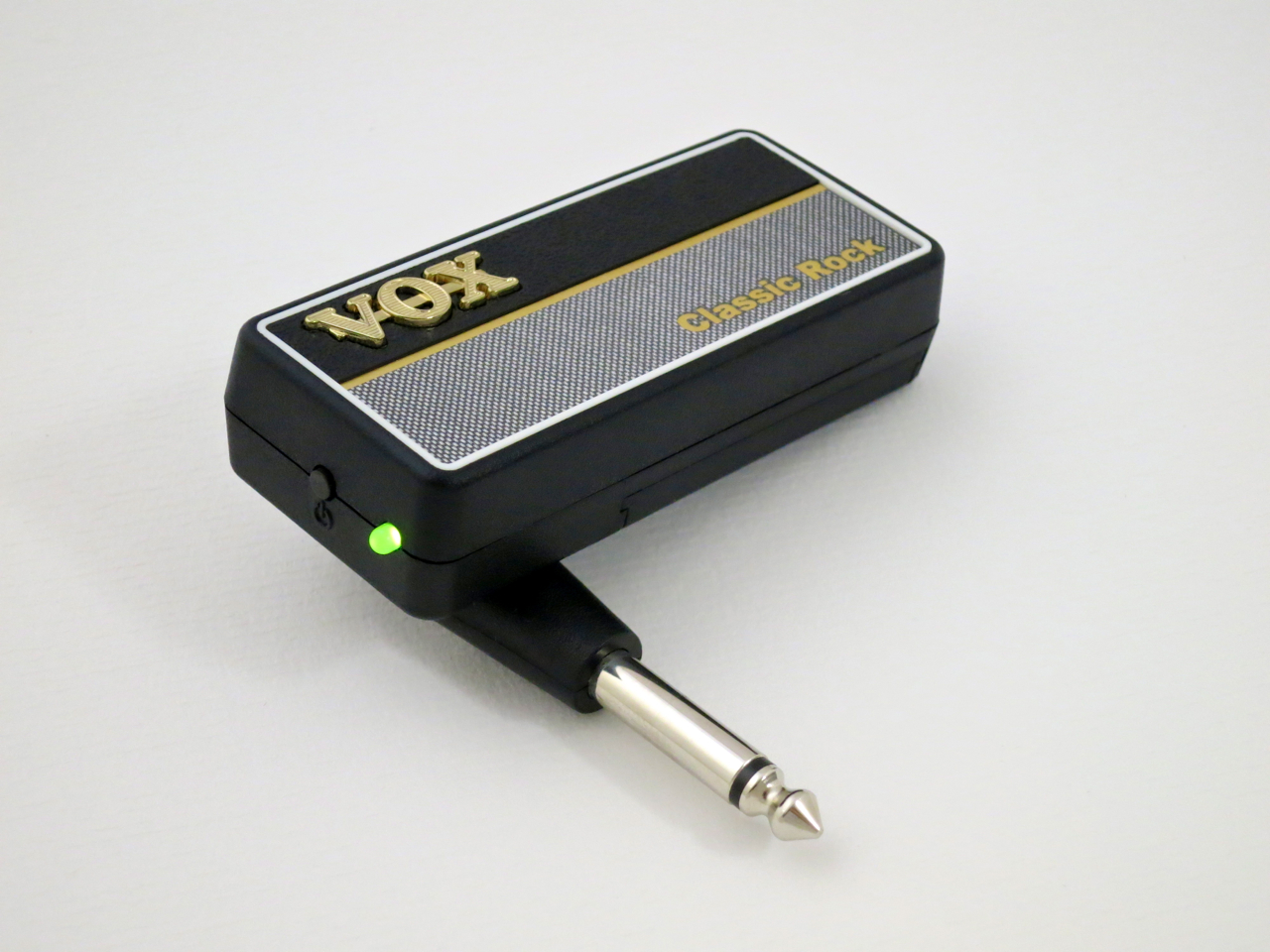
The new, second-generation Vox AmPlug 2 headphone amps come with an updated set of features, both in terms of their sound and their practicality.
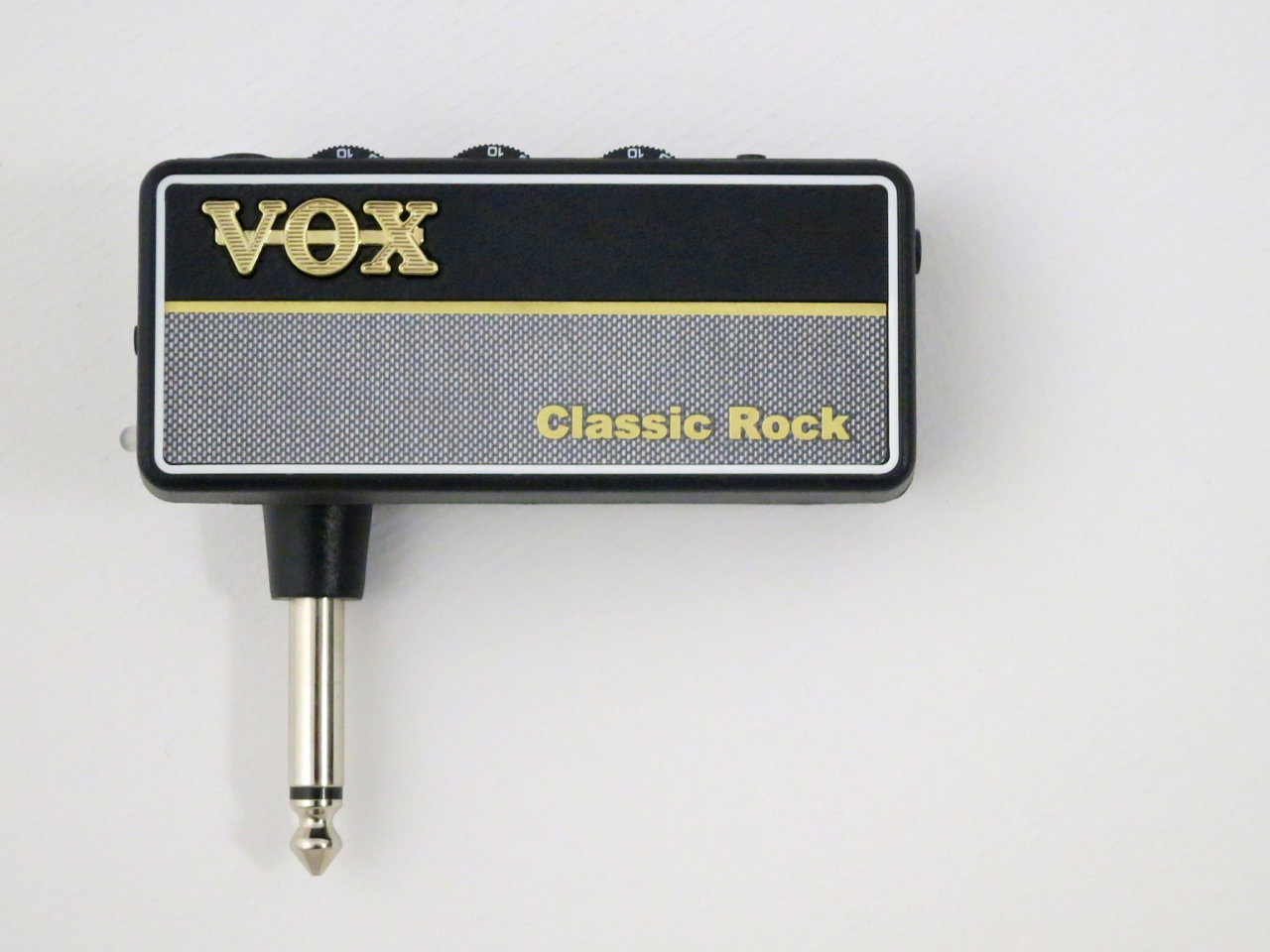
The new AmPlug 2 models now come with a rotating jack plug, which makes it easier to use the device with any electric guitar shape known to mankind.
The AmPlugs runs on two AAA-sized batteries.
The AmPlug 2 Classic Rock sports three controls:
Gain adjusts the preamp levels from clean all the way to distorted. Tone lets you control the amount of treble in your output signal, while Volume is your master volume control, which adjusts the volume level in your headphones.
The Classic Rock’s effects department (labelled FX) lets you choose between three different guitar effects (chorus, delay, reverb), with each effect type offering you three different variations. You can only use one effect at any given time.
The Vox also comes with an Aux-input for connecting an mp3-player (or your mobile phone) for play-along sessions.
This Vox headphone amp also comes with a built-in mid-range booster. The current boost setting is indicated by the colour of the on/off-LED (green: boost off; orange: mild boost; red: full boost).
****
Sterling’s S.U.B. Silo3 offers you a lot of guitar for very little money.
The neck’s oval, slightly flattish C-profile will feel comfortable to most players, while the nice fretwork on the Silo3, as well as its 12-inch fretboard radius, makes string bending easy. Our review sample came well-adjusted and with a player friendly action (low E: 2.2 mm; high e: 2.0 mm @ 12th fret). Sterling uses a quality set of Ernie Ball Super Slinkies (a 009 set) as factory strings.
Used moderately, the Silo3’s vibrato bridge returns well to pitch, but if you want to dive bomb, you’ll probably need a locking nut.
I must admit to have been positively surprised by the quality of the Sterling Silo3-model’s pickups. Don’t forget, we’re talking about a 300 € guitar!
The clean sounds are nicely rounded and fresh, and even the singlecoil pickups retain a healthy dose of bottom-end warmth. Because of their overwound nature, the singlecoil pickups also manage to hold their own – output-wise – against the bridge humbucker.
This sound clip (recorded straight off the AmPlug) starts with the neck pickup:
The Sterling S.U.B. Silo3 is such a versatile instrument that it manages to cover the whole range of overdriven and distorted guitar tones – from slightly crunchy old-school Blues to full-frontal Metal. For my part, I wouldn’t have any qualms about dragging this guitar on stage with me right now…
****
As you could already witness from the two above Silo3-clips, Vox has managed to improve further on the already great sound of its range of headphone amplifiers. There are, for example, definite improvements in the hiss levels of the AmPlug 2 Classic Rock.
The range of sounds on offer will cater for all you Marshall-spirited needs from the 1960s all the way to the 80s – Classic Rock, indeed. If you’re after contemporary High Gain-sounds, I’d steer your attention towards the AmPlug 2 Metal instead.
The Classic Rock’s effects section does its bit to spruce up your guitar tone, and the quality on offer is amazing (especially, when considering the tiny price tag). The audio clip starts with a completely dry guitar sound:
The AmPlug’s mid-boost function makes even fatter and more aggressive sounds possible, whenever you need them. This audio clip starts with the boost off, and continues with the mild boost, before giving you an idea of what the full mid-range boost will do for you:
****
In my opinion, this is a great starter pack, making learning to play the guitar, as well as practising, a lot of fun.
Sterling’s S.U.B. Silo3 isn’t the cheapest electric guitar that you can lay your hands on in Finland, but it most certainly is one of the best (and most versatile) instruments in its class. The Silo3 is a real electric guitar, and not a cheese grater with strings. This Sterling both plays and sounds great!
Vox’ updated AmPlug 2 Series wins you over with even more features and an even better sound. This inexpensive little device makes it possible for you to rock out in most places, and almost at any hour – whenever and wherever inspiration might strike.
You can really make music with this quality pack from DLX Music Helsinki, as you can hear from the demo track. All guitar tracks have been recorded straight off the Vox AmPlug 2 Classic Rock, without any additional effects (save for a tiny bit of compression added during mixdown):
****
Sterling by Music Man Silo3 and Vox AmPlug 2 Classic Rock (DLX Music starter pack)






















 Kitarablogi.com – Finland's premier Guitar and Bass blog