• Alun perin ”Sleep Walk” oli Santo ja Johnny Farinan kirjoittama instrumentaalikappale, joka ilmestyi vuonna 1959 • Joe Satriani levytti biisistä hyvän version vuonna 2002. Se on juuri Satrianin versio, josta sain inspiraatiota äänittää oman coverin. • Kitara: Jackson JS32 Dinky • Pedaalit: Mad Professor Simble OD ja EHX Memory Toy • Vahvistin: Bluetone Black Prince Reverb
Here’s my version of the Santo & Johnny classic ”Sleep Walk”, inspired by Joe Satriani’s cover version. **** • Guitar: Jackson JS32 Dinky • Pedals: Mad Professor Simble OD & Electro-Harmonix Memory Toy • Amp: Bluetone Black Prince Reverb • Microphone: Shure SM7B • Interface: Universal Audio Volt 2
Even though the first guitar effects were already introduced in the mid-1960s, guitar pedals only started to become affordable and widely available in the late-1970s with brands such as Boss. Ibanez and MXR.
****
Why do I need a pedalboard?
Back in the early Seventies most guitarists used one to three effects at the most on stage, if any. Back then the signal chain was straightforward and easy to set up and tear down. There were maybe a couple of guitars, a guitar lead, a couple of effect pedals, a short patch cable, as well as a long cable from the front of the stage to the amplifier.
In the early days most guitarists weren’t even too particular with their live sound. If the guitar sounded a little different from one show to another, who cares? The main objective was to keep the show on the road.
These days both the musician and his/her audience are much more discerning, and want to hear a fairly accurate version of a song’s recorded guitar and bass sounds live as well. Most players are very knowledgeable and specific when it comes to their signature sounds, as well as the pedals they use. A dependable and ”secure” signal chain is a prerequisite for the professional musician of today.
If you carry your effects around in a sports bag, setting up your signal chain – and troubleshooting it in case of problems – is much more time-consuming than pulling a clean pedalboard out of its gig bag (or case) and connecting only a couple of audio cables; one for the guitar and one for the amp.
A pedalboard also protects your effects and patch cables from damage by keeping them firmly in place during transport. Additionally, powering all your effect pedals is much easier using one central power supply for the whole board.
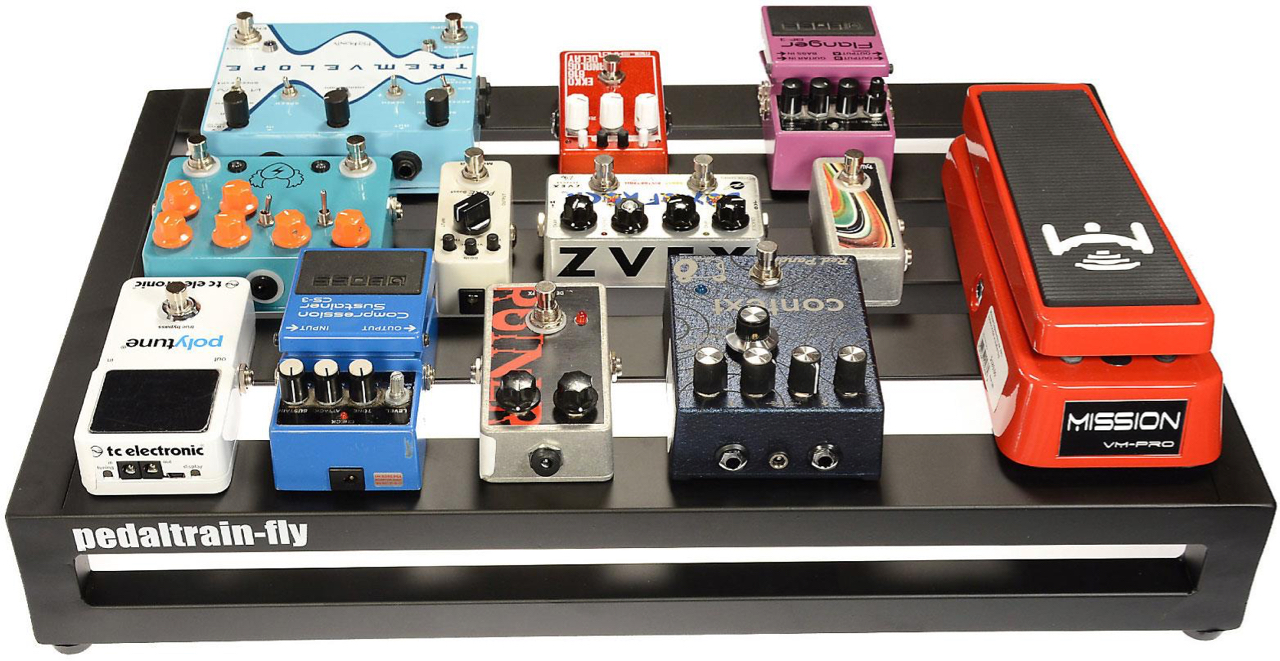
Luckily, the 2020s offer us a wide array of different solutions for the budding ’board builder, making even the assembly of a complex signal chain relatively easy.
If you want to find out all there is to know about pro-grade pedalboard assembly, I can heartily recommend you check out Kimmo Aroluoma’s in-depth online guide.
Kimmo Aroluoma, who is the founder of Custom Boards Finland, has spent years on the road as one of Finland’s most sought-after guitar technicians. Kimmo has worked for acts such as The Rasmus, HIM, or Hanoi Rocks. These days Kimmo spends most of his time running Custom Boards, a company dedicated to making world-class pedalboards, as well as supplying pro-grade components to DIY pedalboard builders.
Is there a ”correct” order for effect groups?
Find out more on the best order for effects placement HERE.
Making music is a creative process, so any type of experimentation is highly encouraged, but if you want to ensure that your ’board will work in the desired way with the least amount of hassle, the above picture will get you there. Of course this effect order works also with effects that are not placed on a pedalboard.
The yellow box is home to such effects that will only work reliably with a pure/dry guitar signal. The orange box contains effects that add gain and texture to your signal. Next up are modulation effects. The green box adds space to your signal, as well as providing a good spot for a master volume pedal. And if you use an audiolooper and/or a booster pedal they should be placed last.
Plan before you act
You should definitely plan your new pedalboard, before you buy anything. Otherwise you can easily end up buying something that isn’t right for what you’re trying to achieve.
Choosing the effect pedals
What is the purpose of the ’board? What type of music do you play? Are you in a Metal band or do you play Top 10 covers?
The fact that there’s an old pedal lying around somewhere in a box isn’t a good enough reason to add this pedal to your new pedalboard. There should be a logical, musical or practical reason behind any addition to your effect chain, because any unnecessary addition could potentially degrade your guitar signal.
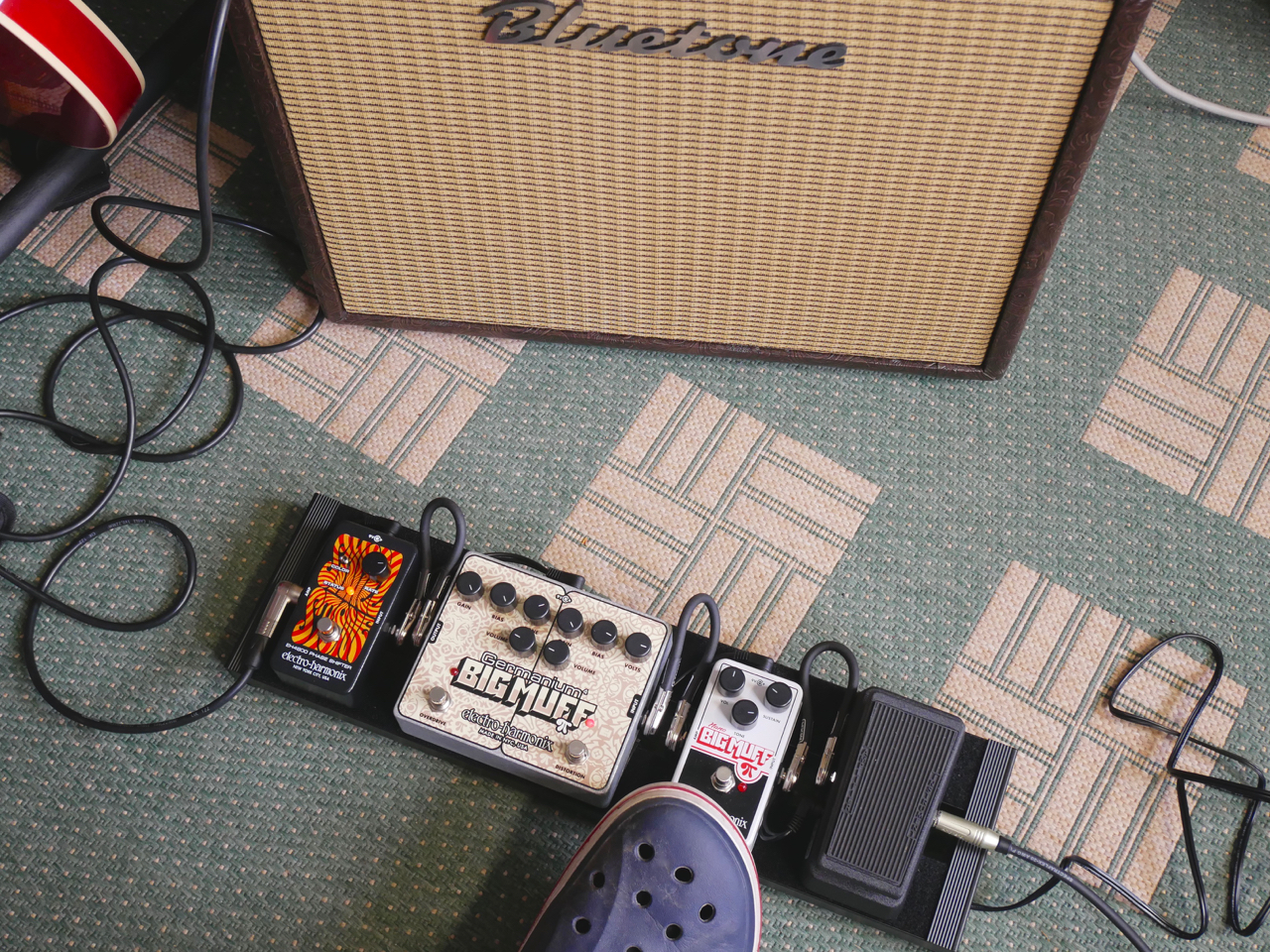
I had been dreaming about a compact board for playing Psychedelic Rock music – a bit ”Hendrix-ey”, but not necessarily totally authentic.
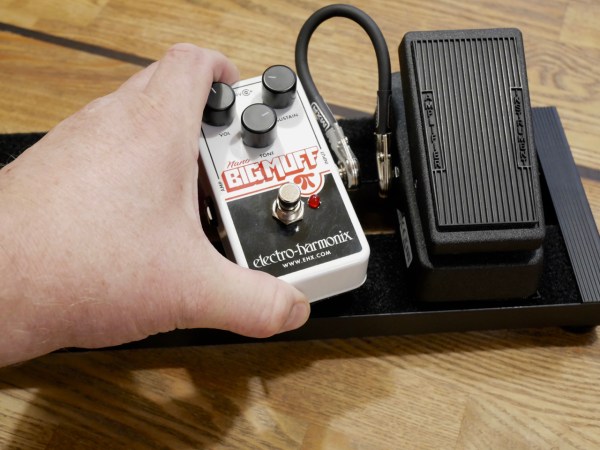
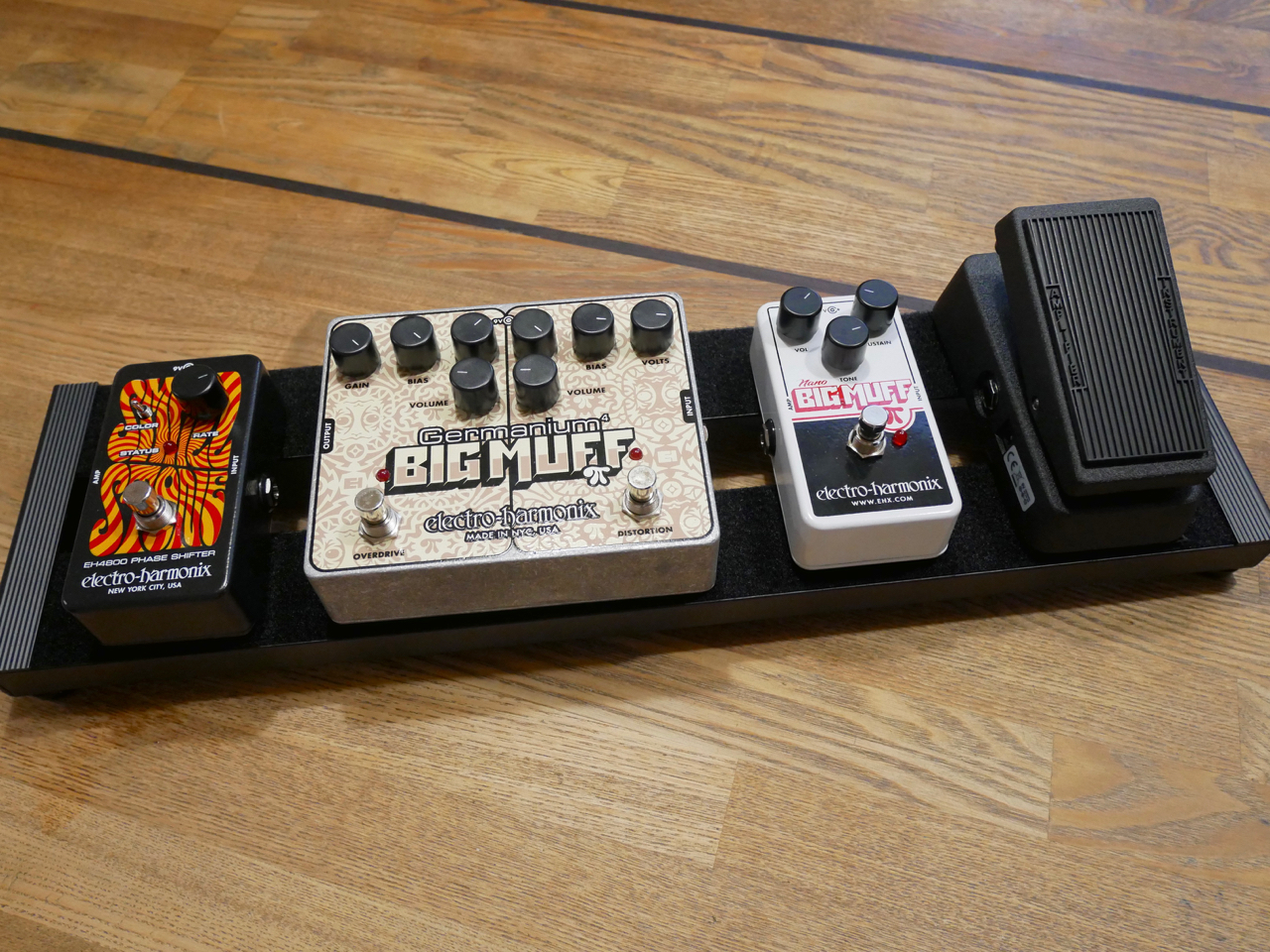
Because my main objective is ”compact” I have chosen a Jim Dunlop CBM95 Mini Crybaby-wah-wah for this project, as it is small enough to fit almost any ’board. Next up there are three blocks of different gain effects – a fuzz-style Electro-Harmonix Nano Big Muff Pi, as well as an EHX double-pedal – the Germanium 4 Big Muff Pi – to provide slightly wonky overdrive and distortion effects. The last pedal is a vintage-style phaser – the EHX Small Stone Nano. Tremolo, reverb and additional boosting are provided by my combo amp.
Patch cables
You should buy the best patch cables you can afford, because a poor quality cable will degrade your sound noticeably by ”eating away” your signal’s dynamic and treble content (especially with traditional passive pickups). There are many different models of ready-made patch cables available.
The number of patch cables you’ll need is dependent on the number of effect pedals you’re going to use. The individual length of each patch cable is determined by the physical placement of the pedals on the ’board. You should also remember to make sure that the plug design on a patch will fit in the space between two pedals. Choosing a relatively fat cable with large-bodied plugs will automatically mean that your pedals will have to be placed a little bit further apart.
Many professional pedalboard makers use bespoke patch cables for their clients’ pedalboards, using top-grade thin cable material coupled with special (no-solder) screw-on plugs. These patch cables save a lot of real estate on the ’board, while also being thin enough to be secured with the same security clips used for the ’board’s DC-power cables.
The physical placement of pedals and patch cables
My compact pedalboard will need no complicated wiring. I will place the effects in the physical order in which they appear in the signal chain in one simple row. This makes it very easy to use pre-made, off-the-shelf patch cables, because the signal continues straight on from one effect to the next.
In larger and more complex cases it may be more convenient to place the pedals that are used most in the bottom row of a ’board, with lesser-used effects placed farther away in the second row. On such ’boards the signal flow can be decidedly different from the physical order of the pedals. In such cases you should prepare a signal flow chart for yourself, so you can easily look up how you have planned to hook up all of the effects. Placing the pedals in their approximate place on the ’board frame will make it easy to measure the lengths of all the patch cables needed.
Choosing your pedalboard frame
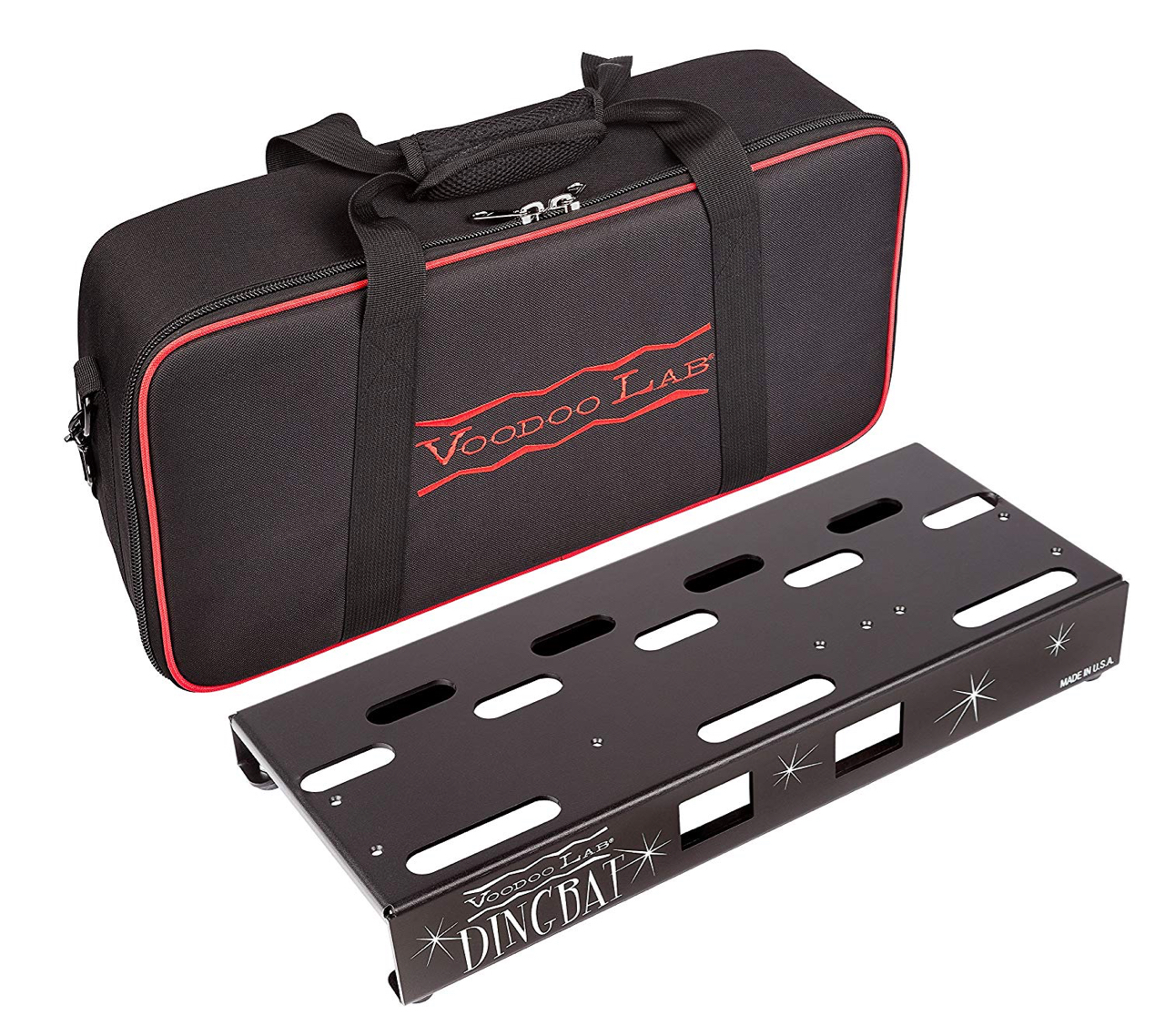
To find the best pedalboard frame for your project you have to measure the outer dimensions (width and height) of your effect array, but you shouldn’t forget to take into account how you plan to install your pedals on your board. Most ’board frames these days are made from metal, and the pedals are installed with adhesive hook-and-loop fastener tapes – either generic velcro (sold with most frames) or industry-grade 3M Dual Lock-tape (bought separately).
There are also a few companies who use their own types of screw-on bottom plates or side clamps on their board frames.
Choosing a power supply aka PSU
You have to choose your PSU according to the physical space of your ’board frame, as well as according to the power needs of your effect pedals. There is a plethora of different PSUs available on the market these days; some pedalboard brands also offer frames with pre-installed power supply units.
Do check the power requirements of each of the pedals that will go on your pedalboard. You should check for voltage (9, 12 or 18 V), for milliamperes, and for the type and polarity of the connector plug. Note that there are a few pedals out there that will require alternating current (AC) in contrast to most effects that run on DC! Pro-grade PSUs come with a whole set of different pedal power cables. Make sure that the set includes all the cables (and connectors) you require. If not you will have to buy the additional cables you need.
Because a pedalboard runs audio effects the power supplied by the PSU has to be ”clean”, e. g. free from extraneous noise, buzz and hum. Most traditional pedalboard PSUs provide this type of isolated power with the help of a whole row of tiny transformers. The transformers make sure no mains hum gets into the pedals’ power cables, while also isolating each of the outputs individually.
Because I have chosen the very compact and flat Palmer Pedalbay 50S frame, most professional PSUs cannot be mounted underneath the pedalboard in my case. Luckily, a 1Spot ”wall-wart” can be a viable option, if you forsake the additional safety and dependability of a ’board-mounted PSU. I’m not planning on touring with this pedalboard, and all the transporting will be done either by car or public transport, meaning the long cable between the transformer and the daisy chain cable will not be a problem for me. Additionally, I’m not running more than four pedals concurrently, and there’s no power-hungry digital multieffect in the group, so a simple daisy-chain set-up will work here.
Building my pedalboard
Here’s where it starts
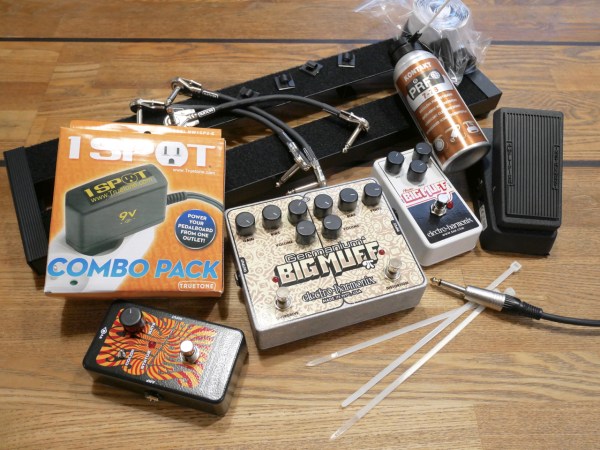
Here’s what everything looks like at the beginning. I forgot to put the scissors in the picture, used to cut the velcro to size. Additionally, I made a last-minute switch to black cable ties, because they looked better, after all.
Cleaning all connectors
Should one of your chosen pedals be faulty, you should have it repaired before it goes on the pedalboard. One faulty pedal will have a very detrimental effect on the whole signal chain and the reliability of your new ’board.
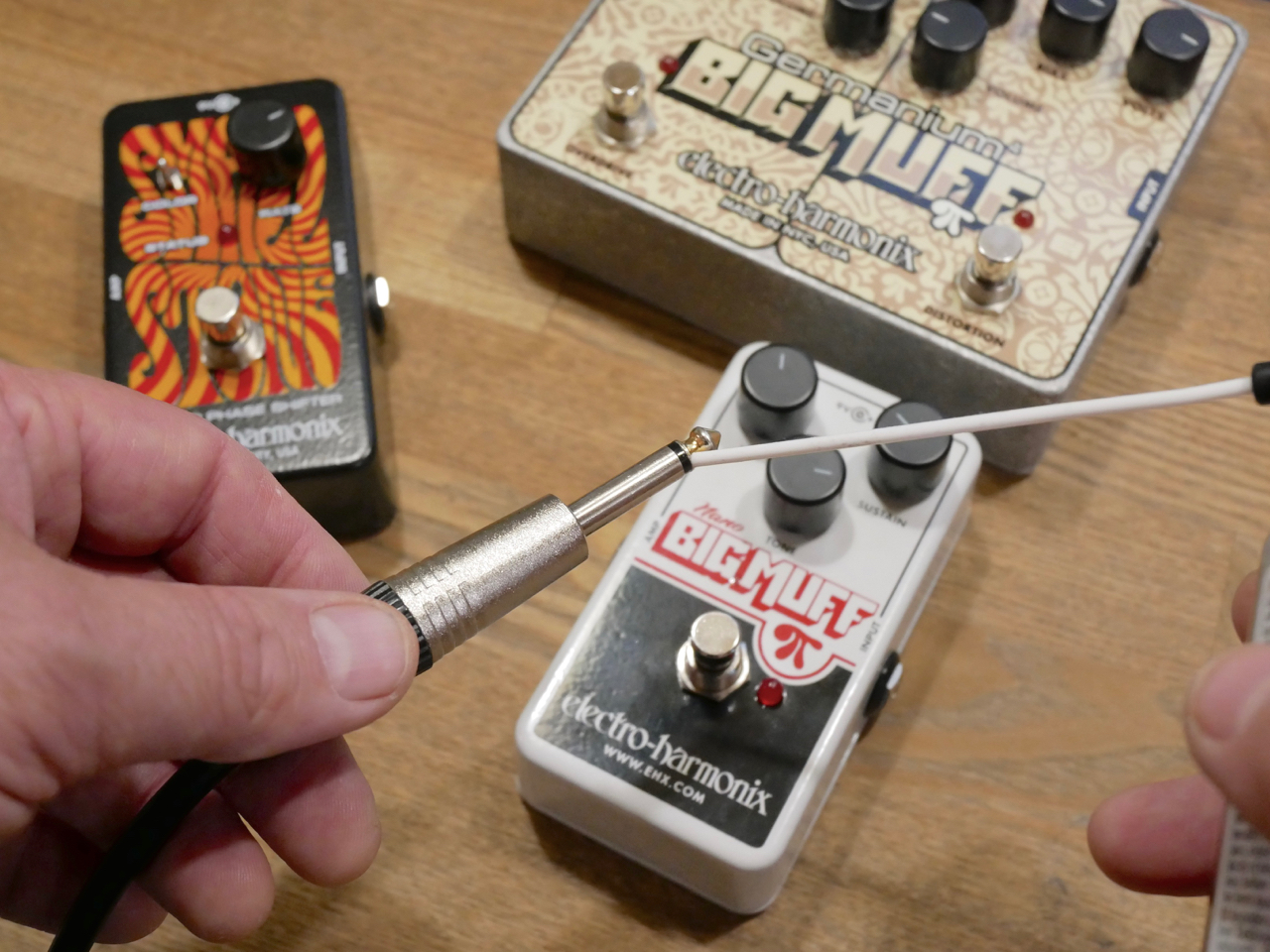
You should clean all audio jacks before you assemble your ’board by squirting a little bit of switch cleaner (like PRF 7-78 Kontakt) on a 1/4″ plug, and then inserting and unplugging the plug several times from the jack. Repeat for each audio input and output.
Cleaning all bottom plates
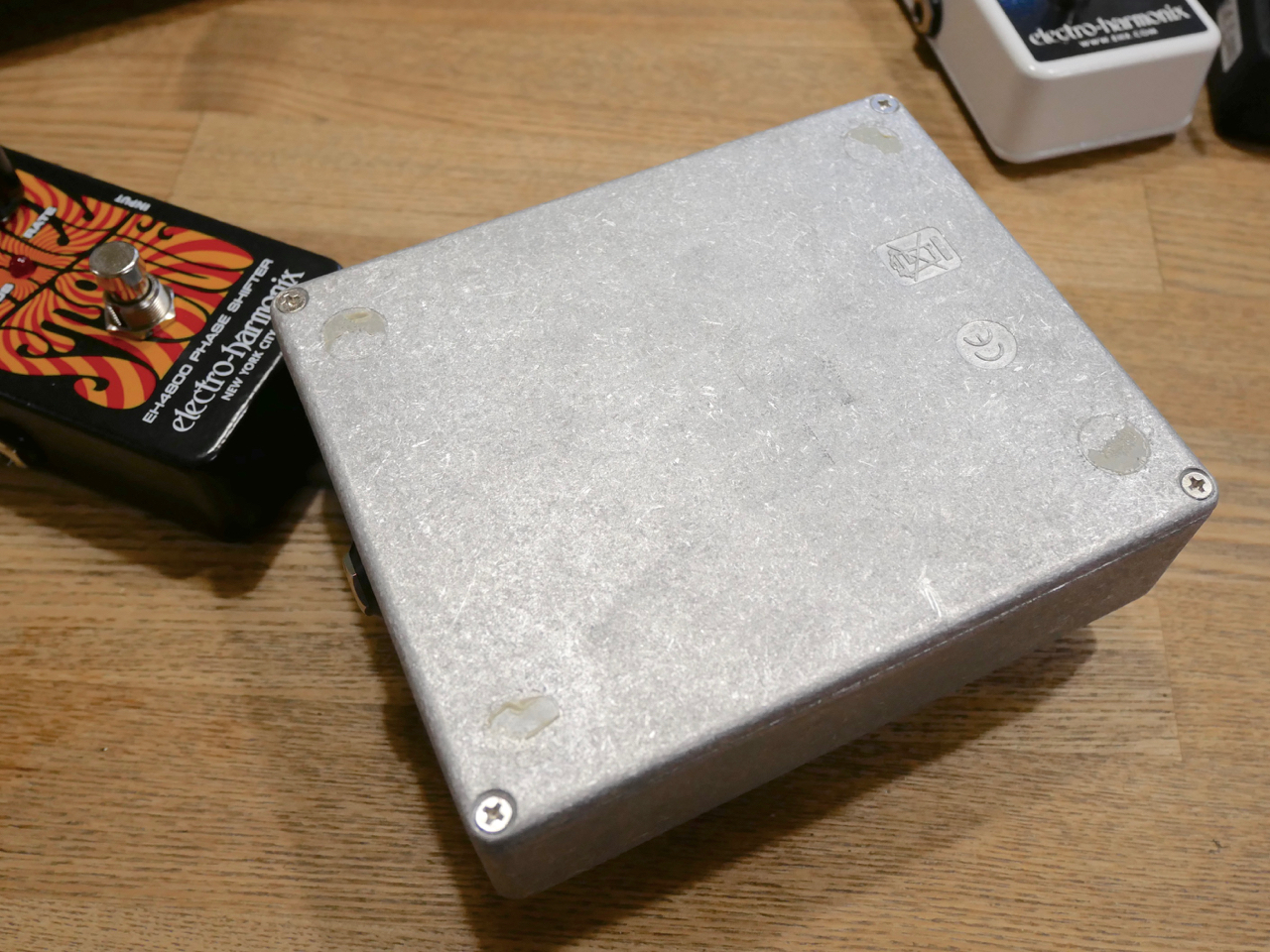
Before you can use any adhesive material on a pedal’s base plate, you will have to take off all rubber feet from the pedal. Velcro and 3M Dual Lock need a smooth and clean surface for them to stick reliably to a pedal’s bottom plate. Sometimes using an additional cleaning agent (like PRF Label Off) can help to get rid of any old glue residue.
On my Electro-Harmonix effects my work is made easier by the separate little rubber feet this company uses. Most Boss and Ibanez pedals, on the other hand, use large rubber or silicone mats, which are much harder to get to grips with. I’d recommend looking for the appropriate removal techniques in the Custom Boards online guide or on Internet forums.
Prevent leakage!
Remove all batteries from the pedals that go on your ’board. The patch cables stay inserted in each pedal’s input jack, which means any battery will be drained in a matter of hours (or a couple of days at the most). Taking the batteries out will prevent damage from leaking batteries in the long run.
Applying the adhesive
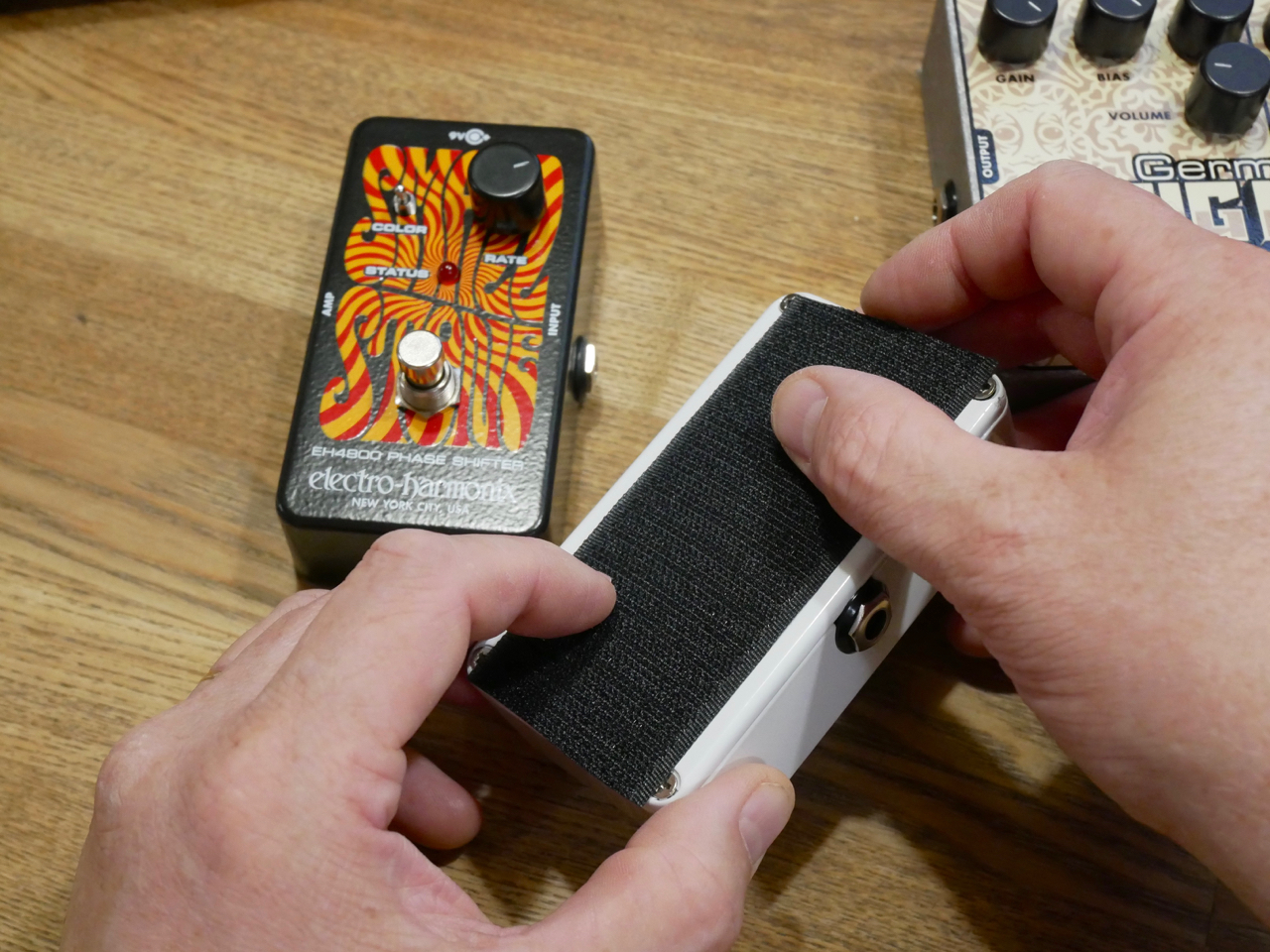
Now it’s time for the velcro to go on the base plates of the pedals. Make sure the adhesive tape sits nice and flat with no air bubbles.
The Palmer Pedalbay 50S comes with the loop side adhesive already installed on the frame. Most other models require you to glue the loop side yourself. If I were to use 3M Dual Lock on this ’board, on the other hand, I’d have to remove the pre-installed adhesive first and clean up all glue residue, before putting on the Dual Lock.
Installing the effects and patch cables
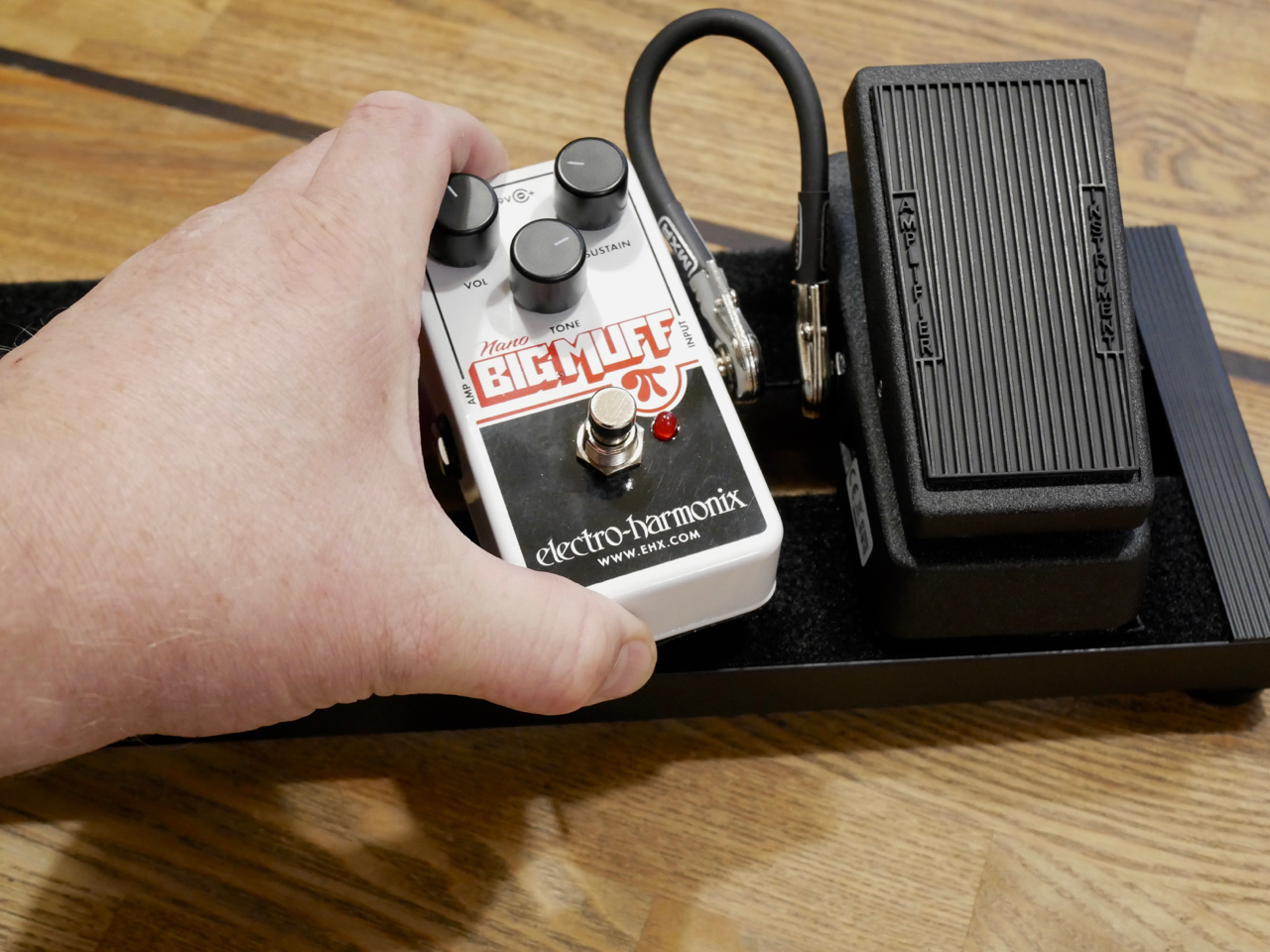
As there’s usually only a certain amount of space on a pedalboard, an effect pedal has to be installed on the frame with the patch cable already inserted in the previous effect’s output and this effect’s input. A 1/4″ plug is too long to be inserted after you’ve put all the pedals next to each other.
Installing the DC-cables with security clips
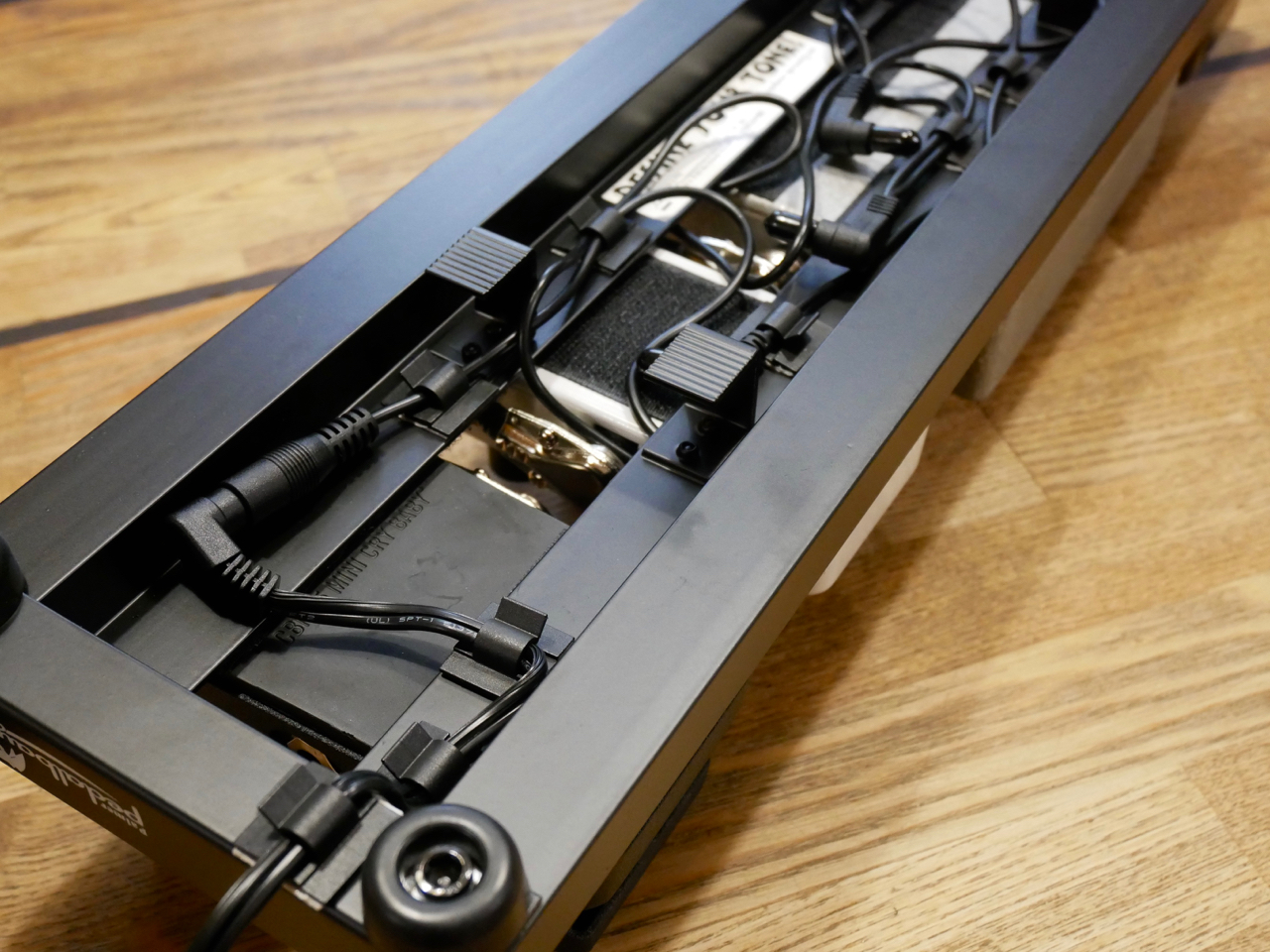
You’ll achieve a very clean and professional look by wiring the power supply cables from the ’board frame’s underside.
Many guitar shops also sell stick-on plastic security clips, which are just the ticket to keep all the DC-cables in place and securely out of harm’s way.
Time to check out your new pedalboard
This is a good time for a trial run of your new pedalboard with a guitar and an amp. Check out if the placement and the distance between the footswitches is convenient for you. Do all effects power on and off as they should? Is the signal going to the amp free from extraneous noise and hum?
In my project everything worked fine, but if you need help troubleshooting your pedal, you should consult Custom Boards’ builder’s guide.
Securing the patch cables
Because I’ve used off-the-shelf MXR patch cables for my project, and the cables had a relatively large diameter and flat, but wide, plug bodies, securing the patch cables with small plastic clips wasn’t really feasible. This is why I’ve chosen cable ties.
The idea is to keep the patch cables out of harm’s way – or should that be foot’s way – so that it’s impossible to step on them. You apply only a minimal amount of pull on the cable ties. You only want to keep the patch cables from moving around, you don’t want to damage the cables’ outer insulating layer.
Many DIY patch cables are thin enough to be secured with the same type of stick-on security clips used for the DC-cables.
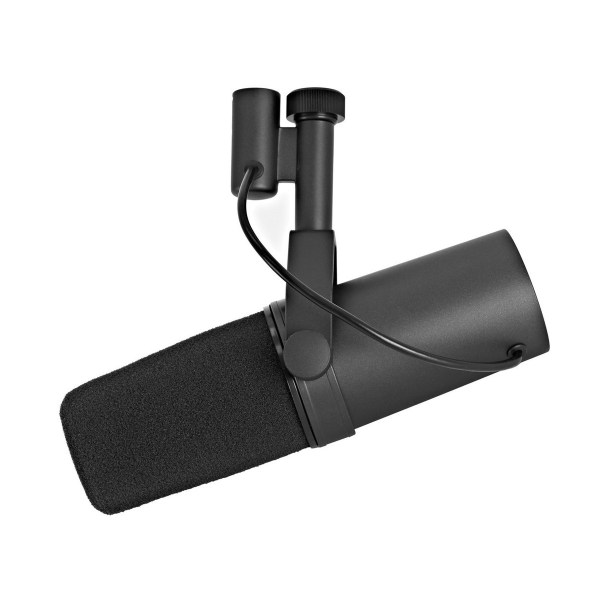
The following tracks were recorded with the Shure SM7B: • Squier Bronco Bass through a Bluetone Bass 200 tube hybrid combo • Two Fender Stratocaster rhythm guitar tracks with an EHX Nano Small Stone phaser through a Bluetone Black Prince Reverb all-valve combo • Fender Telecaster rhythm guitar through a Bluetone Black Prince all-valve combo • Fender Telecaster lead guitar with a Mad Professor Simble Overdrive through a Bluetone Black Prince all-valve combo • A shaker • A Sonor tambourine • Male voice ****
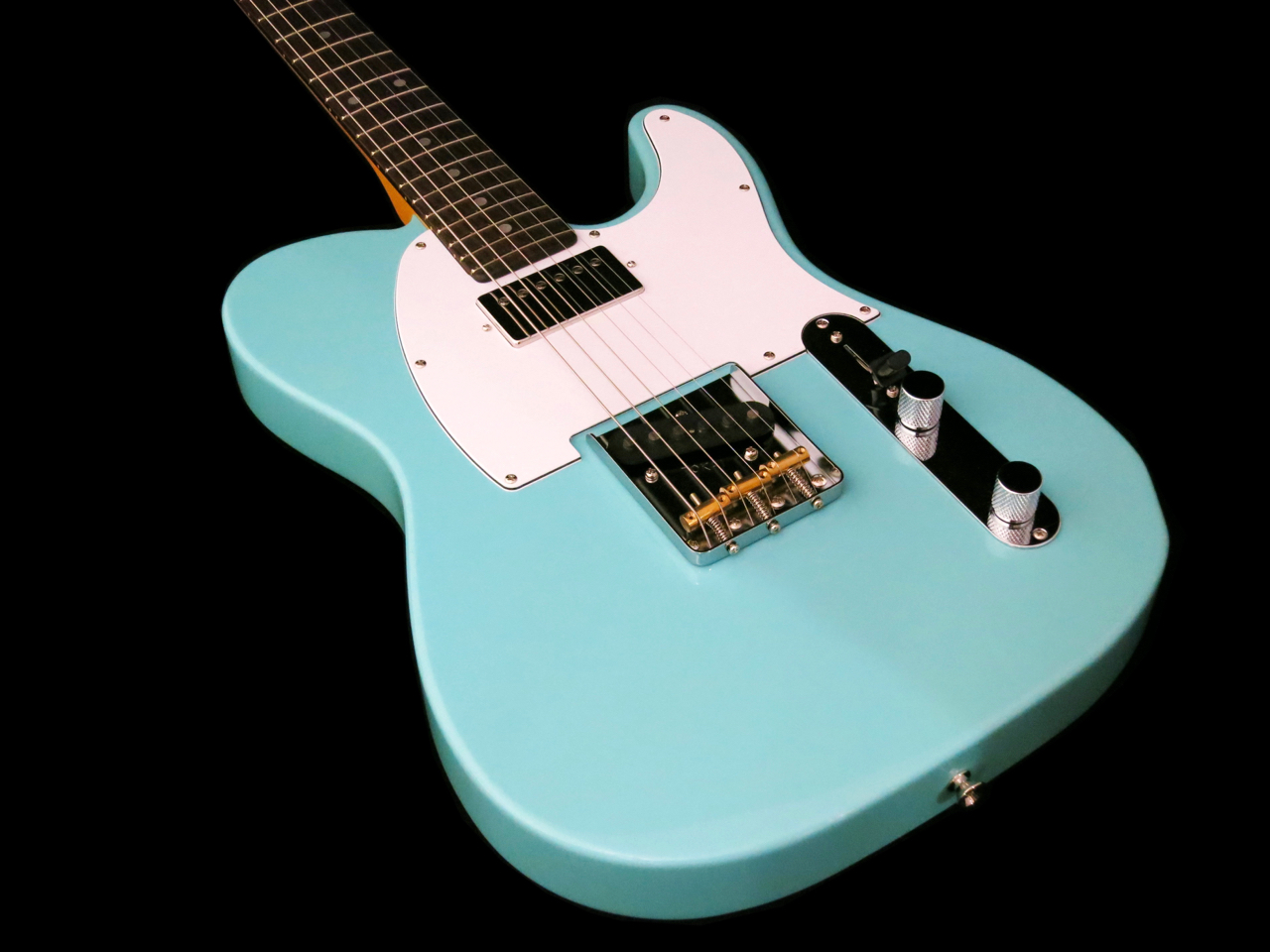
Tokai Guitars’ Finnish distributor, Musamaailma, isn’t only selling the Japanese brand’s products, they are also involved in developing certain new products. The newest result of this joint development is a Tele-version of the TST-50 Modern, called the TTE-50 Modern (999 €).
****
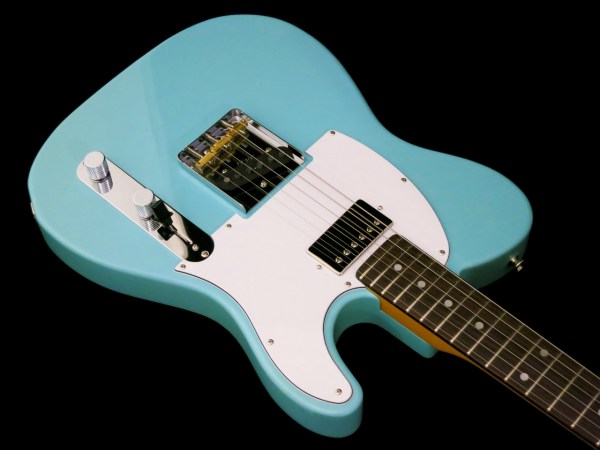
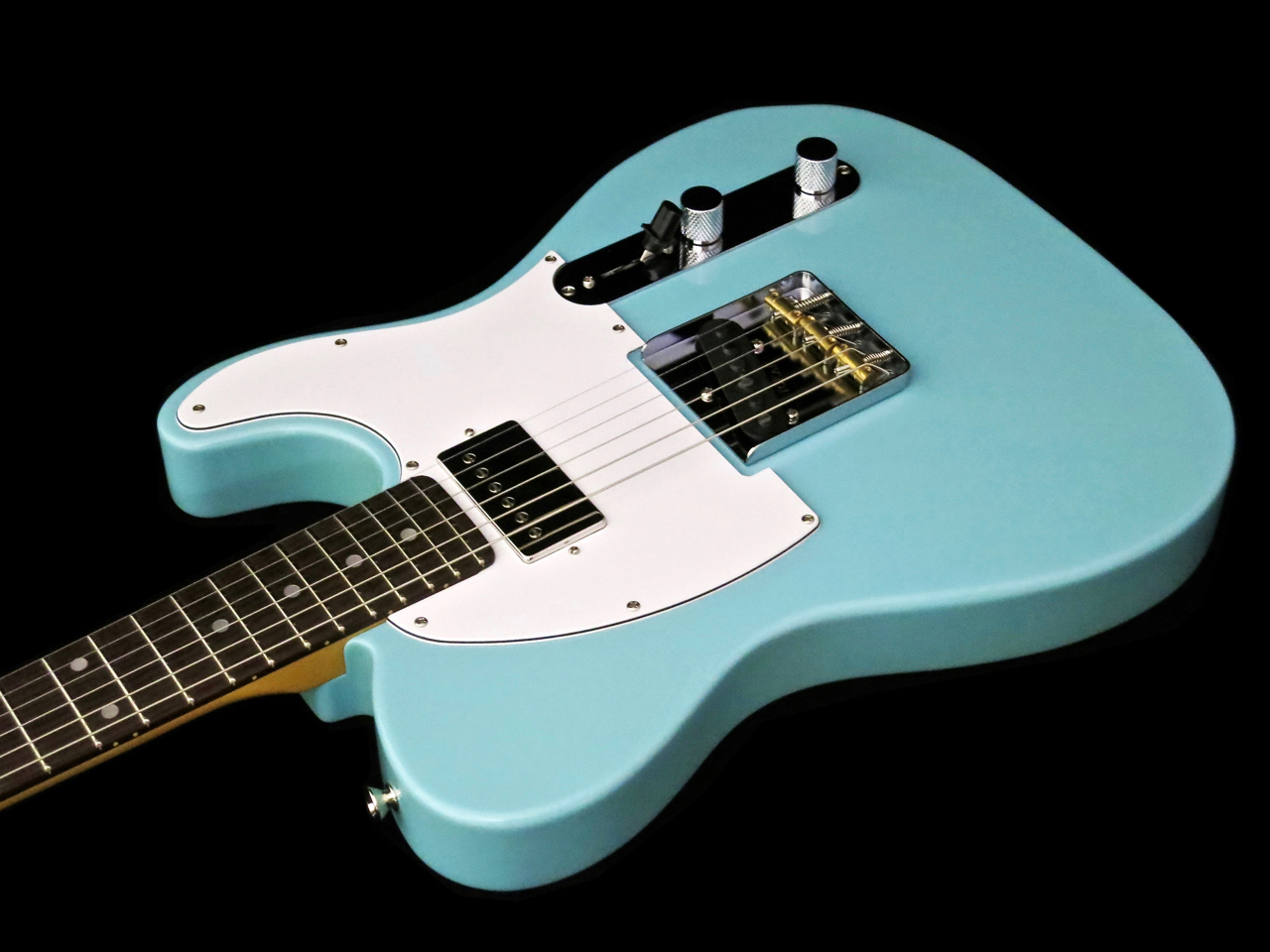
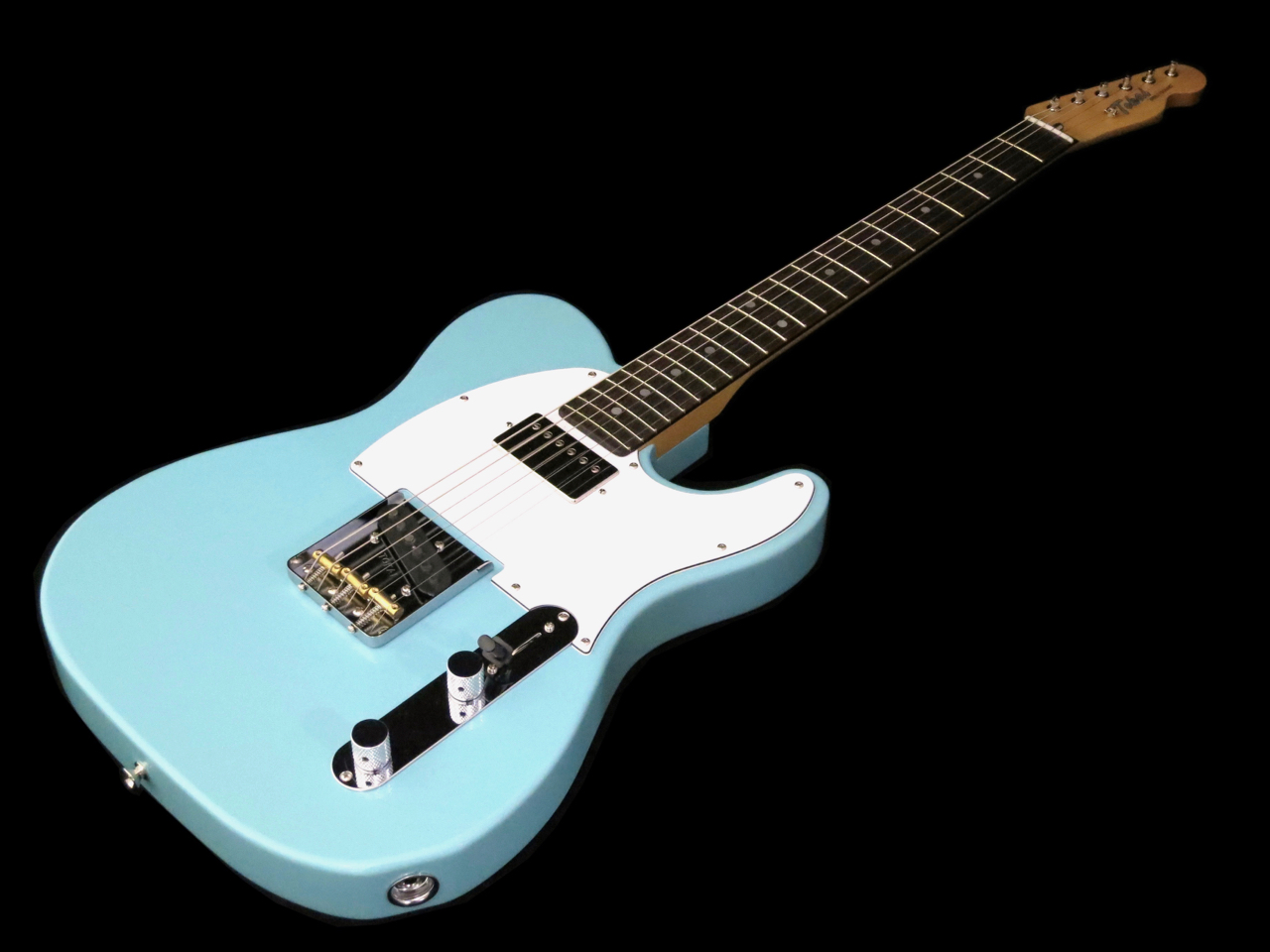
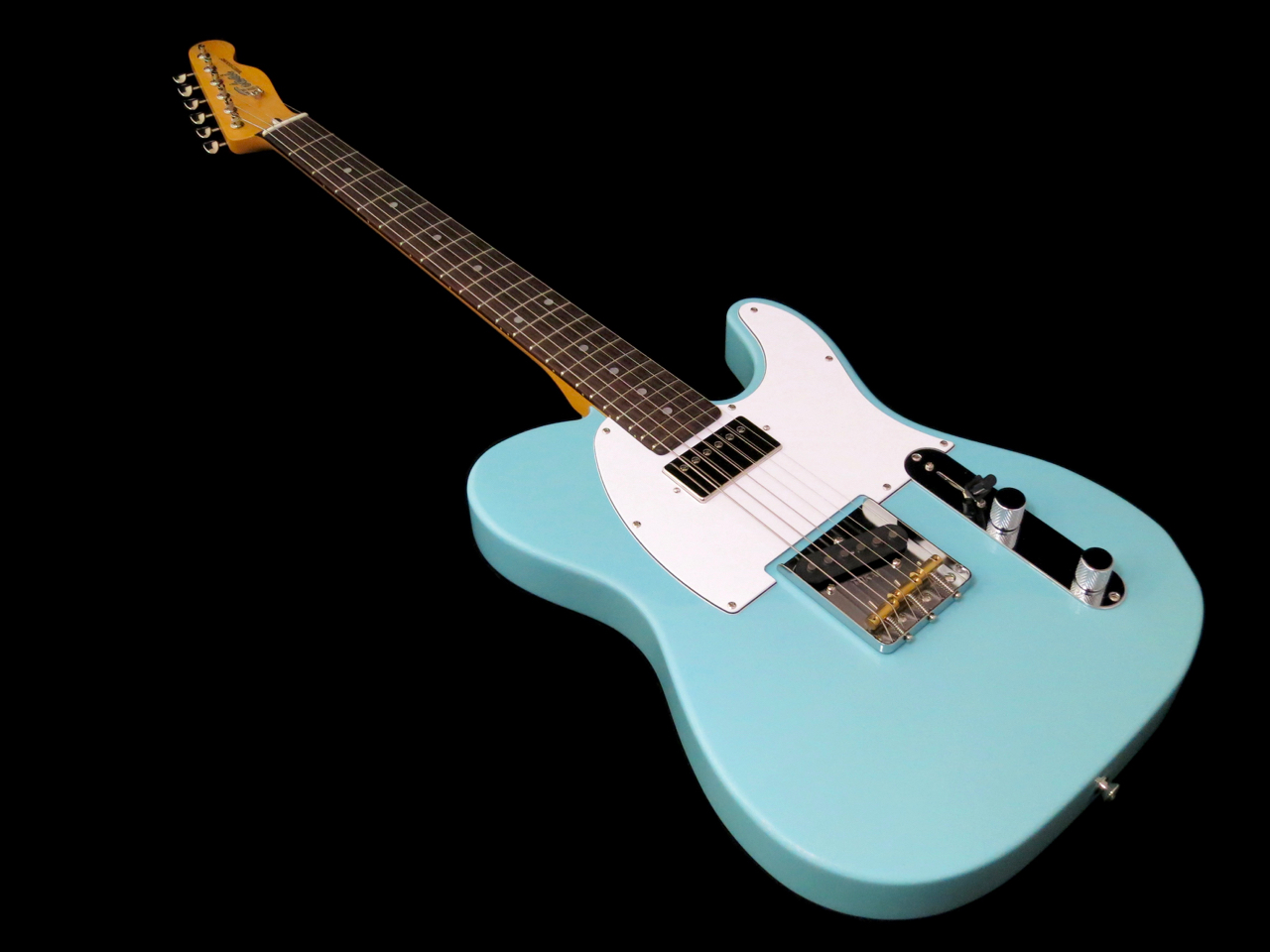
The Tokai TTE-50 Modern’s basic idea is to combine the most sought-after vintage features of Tokai’s TTE-models with the most requested modern features. You could say the TTE-50 Modern is a factory-modded special edition. The new guitar is available in three beautiful finishes – 3-Tone Sunburst, Olympic White and Sonic Blue.
The new Tokai comes with a two-piece premium alder body. On the sunburst version the glue line runs down the middle of the body, with the pieces’ grain nicely matched. The TTE-50 Modern combines a gloss-finished body with a satin-finished maple neck.
Despite the TTE-50 Modern sporting a rosewood fingerboard, there’s a walnut ”skunk stripe” running along the back of the neck. This is due to the inclusion of a bullet-type truss rod, which makes relief adjustment a doddle. The fretboard’s 9.5-inch radius sits in the middle of Fender’s vintage 7.25 inches and Gibson’s much flatter 12-inch radius. The TTE-50 Modern comes with 22 medium-jumbo frets (Dunlop 6105).
As most Tele fans love vintage-style hardware, the Tokai willingly obliges. You will find top-drawer Kluson-copies, made by Gotoh, as well as a vintage-style bridge with three brass saddles with string grooves.
The most obvious difference between a bog-standard Tele and the TTE-50 Modern lies in the pickup combination. The new Tokai combines a vintage-type bridge singlecoil with a PAF-type neck humbucker. This combination became very popular in the 1970s, with the most famous users including Keith Richards (The Rolling Stones), the late Albert Collins (aka The Iceman) and Andy Summers (The Police). Both pickups are made in Japan by Tokai.
We find the standard set of controls, comprising a three-way blade switch, a master volume, and a master tone control. Beneath the control plate you can see clean workmanship and quality parts. The volume control features a treble bleed circuit, which keeps the sound from getting wooly, whenever you turn the volume down.
The Tokai TTE-50 Modern comes in its own padded gigbag.
****
The TTE-50 Modern is a quality instrument. The workmanship and quality of finish are of a very high standard, and the guitar’s playability and sound are excellent.
The neck profile is a comfortable, not-too-thin, modern C, which is easy to play.
If you’re new to the pairing of neck humbucker and bridge singlecoil, the higher signal level of the neck pickup might feel slightly unintuitive at the beginning. But, I’m sure, you will quickly get to grips with this feature, especially as the Tokai’s controls work nicely to give you a full range of different sounds.
Here’s a clip of the TTE-50 Modern played straight into a Bluetone Shadows Jr. -combo (Shure SM57), starting with the bridge pickup:
And here’s the demo song – with and without the other instruments:
****
The Tokai TTE-50 Modern’s addition of a PAF-style neck humbucker turns the guitar into a very versatile instrument. From traditional Jazz to the ’60s British Invasion, from Blues to Rock, and from Country to Punk – this guitar can cover all the bases in style.
Tokai Guitarsin Suomen maahantuoja Musamaailma ei ainoastaan tuo japanilaisbrändin tuotteita maahan, vaan he ovat myös aktiivisesti mukana kehittämässä uusia tuotteita. Uusin yhteistyön hedelmä on Strato-tyylisen TST-50 Modern -mallin Tele-tyylinen sisarmalli, nimeltään TTE-50 Modern (999 €).
****
Tokai TTE-50 Modern -kitaran tarkoitus on yhdistää japanilaisten TTE-mallien parhaat vintage-tyyliset ominaisuudet paljon toivottuihin nykyaikaisiin detaljiratkaisuihin. TTE-50 Modern on ikään kuin Tokain pajassa valmiiksi modattu erikoisversio. Uusi kitara on saatavilla kolmessa eri värissä – 3-Tone Sunburst, Olympic White ja Sonic Blue.
Uutuus-Tokain runkoon on käytetty kahta leppäpalaa, jotka on sovitettu syykuvioiden suhteen erittäin tarkasti yhteen. Kiiltäväksi lakattuun runkoon on ruuvattu perinteisellä liitoksella mattalakattu vaahterakaula.
Vaikka TTE-50 Modernin kaulassa on ruusupuinen otelauta, kaulan keskiviivaa pitkin kulkee “skunk stripe” saksanpähkinästä, koska uutuusmallista löytyy kätevä Bullet-kaularauta, jolla kaulan säätö onnistuu lavasta päin. Otelaudan radius kulkee nykyaikaisella 9,5 tuuman kaarevuudella sopivasti Fenderin vintagemittojen (7,25 tuumaa) ja loivemman Gibson-standardin (12 tuumaa) välissä. Modern-kitaraan on asennettu 22 medium-jumbo nauhaa (Dunlop 6105).
Telecaster-fanit tykkäävät yleensä vintage-tyylisistä metalliosista, ja sellaisia löytyy myös Tokaista. Virittimet ovat Gotoh:n laadukkaat Kluson-kopiot. Tokain omassa vintage tallassa on kolme satulaa messingistä. Tallapaloihin on lisätty kieliuria.
Ehkä tärkein ero rivi-TTE-50:N ja Modern-version välillä löytyy uutuuskitaran mikityksestä, joka lisää perinteiselle yksikelaiselle tallamikrofonille työpariksi vintage-tyylisen humbuckerin. Tämä yhdistelmä on ollut suosittu aina 1970-luvulta lähtien, ja yhdistelmän tunnetuimmat käyttäjät ovat Keith Richards (The Rolling Stones), edesmennyt Albert Collins (aka The Iceman) ja Andy Summers (The Police). Tokai TTE-50 Modernissa kumpikin mikki on peräisin Tokain omasta mallistosta.
Kitaran säätimet tarjoavat kolmiasentoisen kytkimen, sekä master volume- ja tone-säätimet. Metallikannen alta paljastuvat laadukkaat osat – mm. pölysuojattu japanilainen kytkin. Volume-potikkaan on lisätty ns. treble bleed -kondensaattori, jonka ansiosta kitaran soundi pysyy sopivasti kirkkaana myös kun volumea pienennetään.
Tokain TTE-50 Modern myydään sen omassa laadukkaassa Tokai gigbagissa.
****
TTE-50:n Modern-versio on kyllä hyvin laadukas soitin. Työnjälki ja viimeistely ovat erinomaisen siistejä, ja myös kitaran soitettavuus ja soundi ovat silkkaa pro-tasoa.
Kaulaprofiiliksi on valittu moderni C-muotoinen läpileikkaus, joka sopii varmasti miltei jokaisen kitaristin käteen.
Jos ei ole tottunut tällaiseen humbucker-plus-yksikelainen-yhdistelmään, kaulamikrofonin suurempi lähtötaso voi aluksi tuntua jopa epäintuitiiviselta. Siihen kuitenkin tottuu hyvinkin nopeasti, etenkin kun Tokain laadukas ja hyvin suunniteltu elektroniikka mahdollistaa sen, että kummastakin säätimestä saa irti hyvin laajan skaalan erilaisia soundeja.
Ja tässä demobiisi – sekä koko sovitus että ainoastaan kitarat:
****
Tokai TTE-50 Modernin tapauksessa PAF-tyylisen humbuckerin lisääminen kaulamikrofoniksi tekee kitarasta erittäin monipuolisen. Perinnejazzista 1960-luvun Brittisoundiin, Bluesista Rockiin, sekä Countrysta Punkiin – kaikki onnistuu tyylikkäästi uutuus-Tokailla.
Here’s a short instrumental cover version of the Police classic ”Message in a Bottle”.
The Tokai TTE-50 Modern is an updated version of Tokai’s T-style guitar, featuring truss rod adjustment at the headstock, a 9.5″ fretboard radius, 22 medium jumbo frets, and a neck humbucker.
The signal chain for the guitar tracks was: Tokai TTE-50 Modern –> Ibanez FZ 850 Mini –> Joyo Analog Chorus –> Electro-Harmonix Memory Toy –> Bluetone Shadows Jr (Finnish boutique all-valve combo) –> Shure SM57 –> Focusrite Saffire 6 USB –> Apple Garageband














 Kitarablogi.com – Finland's premier Guitar and Bass blog