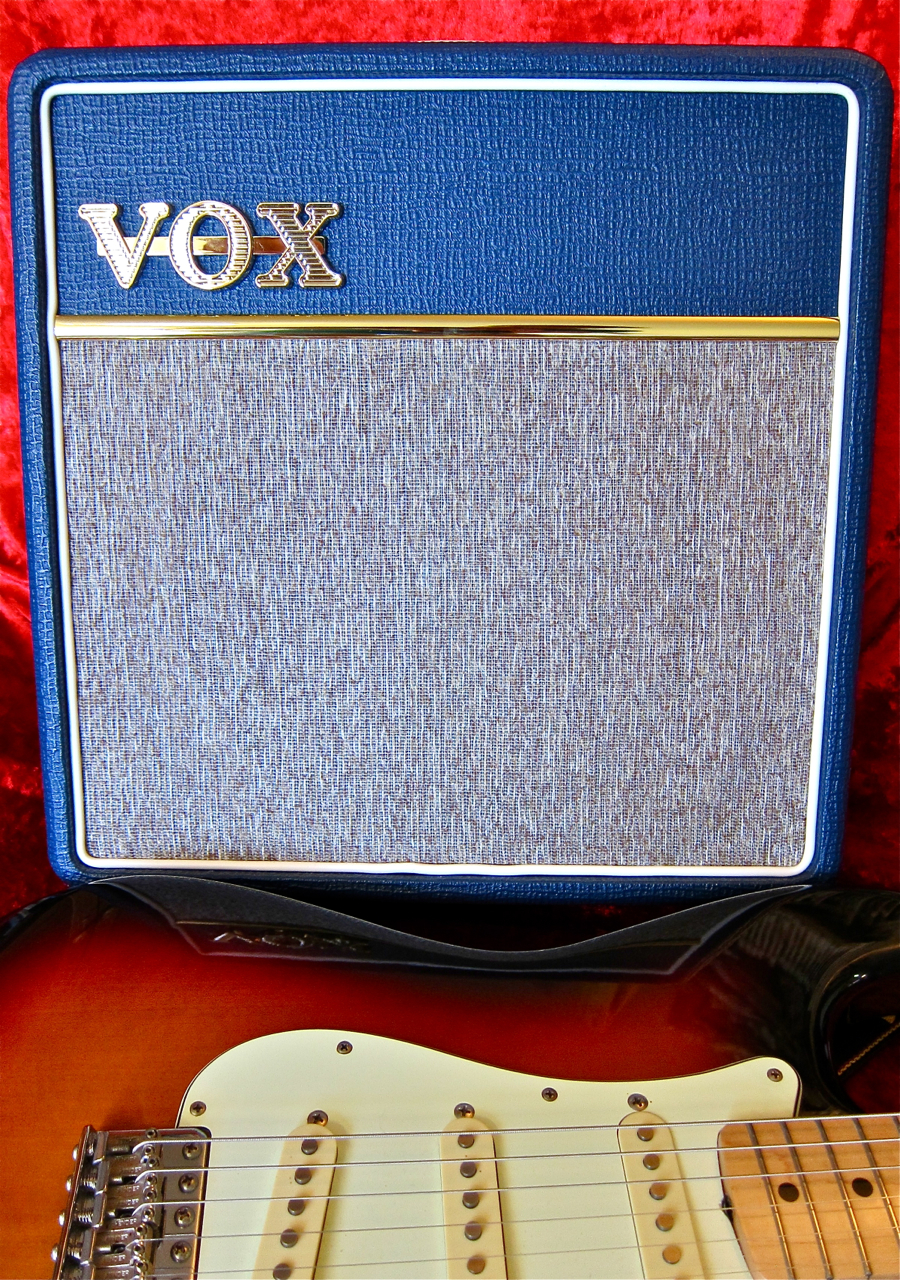
Review: Vox AC4 Blue

This is what it looks like – the brand-new Vox AC4 C1 Blue. I can already hear many of you thinking “What? Another AC4? Is it any different to the white AC4 TV?”

Granted, it is somewhat bewildering that Vox have several similarly named products in their range, so let me run you through the differences quickly:

At the moment of writing there are five different Vox AC4 valve amplifiers available. The Vox AC4 TV – which is available in three different guises – is the most affordable alternative, and aimed at the same market segment as ultra-compact modelling combos, such as the Roland Micro Cube.

At the other end of the price spectrum you can find the Vox AC4 HW, which is a very stylish hand-wired (HW) combo for the vintage fanatic. Just like the Sixties original, the AC4 HW is also equipped with a 12” Celestion speaker.

The new AC4 C1 Blue conveniently slots into the range between the two other AC4s. Vox’ C–series comprises new versions of the company’s most famous models, updated with nifty modern features.

****
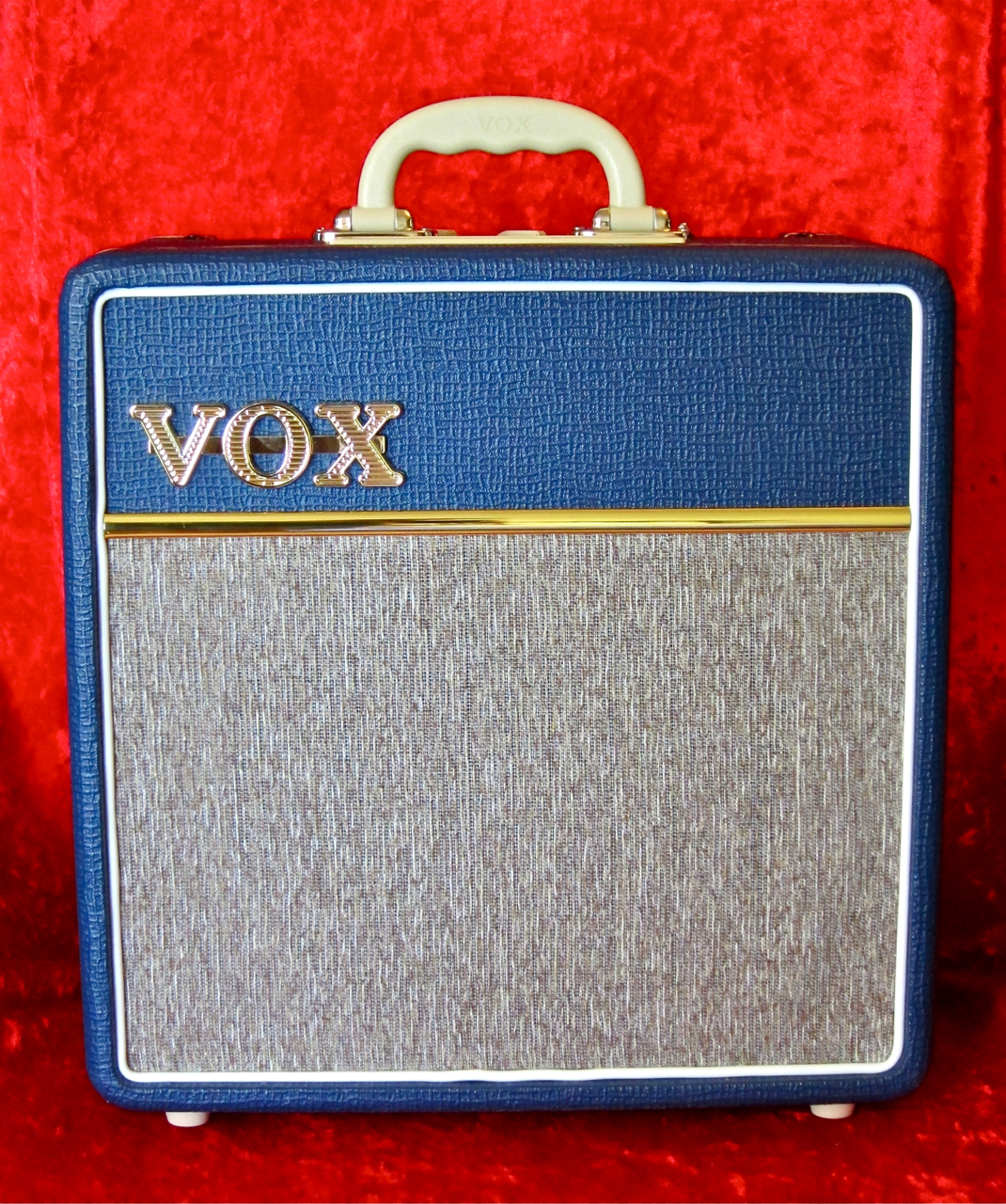
The Vox AC4 Blue (current street price in Finland 349 €) is a very beautiful combo amp, sporting the blue vinyl finish found on one special run from the Sixties, complete with the salt-and-pepper grille cloth.

Two 12AX7 valves are making up the preamplifier section, while the power amp is utilizing a single EL84. Output power is rated at four Watts (RMS) using a 16 Ohms speaker impedance.

The combo’s almost completely closed from the back. The back panel sports only two connectors – one for the power lead and another for connection of an external speaker. Ventilation is provided by a small opening right at the bottom of the combo’s back, as well as the customary small grille next to the carrying handle.

As is the case in quite a number of modern small valve combos, access to the valves is rather restricted in the AC4 C1 Blue. To change preamp valves you have to completely take off the whole back wall to get to the valves, which sit directly on the PCB-board. The owner’s manual recommend leaving valve exchanges to qualified service personnel to avoid the risk of an electric shock.

The Vox AC4 Blue comes equipped with the same special design already used successfully in the AC4 TV – a 10-inch Celestion VX10.

The front panel comprises controls for gain, bass, treble and master volume.

****

Vox has aimed to deliver genuine Top Boost –tone in a small package, and the AC4 C1 Blue really dishes out the goods. This little combo gives you all the legendary AC30 sounds, but at volume levels that fit your living room or home studio to a tee.

The AC4 C1 BL’s clean tones have plenty of jangle, coupled with Vox’ typical dose of grit and attitude. If your’re using powerful humbuckers, you’d better turn down your guitar’s volume a bit, unless you want to drive the combo into light Blues-overdrive.

For my taste the little Vox could do with a little bit less bite in the top end, but I got the trebles reigned in easily with the Treble-knob.

Upping the gain gets you into overdriven territory fairly quickly – from creamy Blues all the way to early Heavy Metal via Seventies Classic Rock. For out-and-out Nu-Metal the Vox AC4 Blue isn’t really the right amp, it just wasn’t designed to dish out that much grunt. For Brian May –type fat lead tones I’d recommend using a distortion pedal in front of the combo.

With its four Watts the AC4 C1 Blue has just enough power to annoy your neighbours – and for small gigs you could stick a microphone in front of it.

Here are a few soundbites (all clips start from the neck pickup):

Stratocaster – clean

SG – clean

SG – light crunch

Stratocaster – full gain

SG – full gain

****

Vox AC4 C1 Blue

current street price in Finland 349 €

Finnish distributor: EM Nordic

A big thank you goes to DLX Music Helsinki  for the loan of the review amp!

Pros:

+ genuine Vox Top Boost -sounds

+ small size

+ Master Volume knob

+ cool looks

+ value-for-money

Cons:

– exchanging valves difficult

****

****

Review: PRS Studio

****

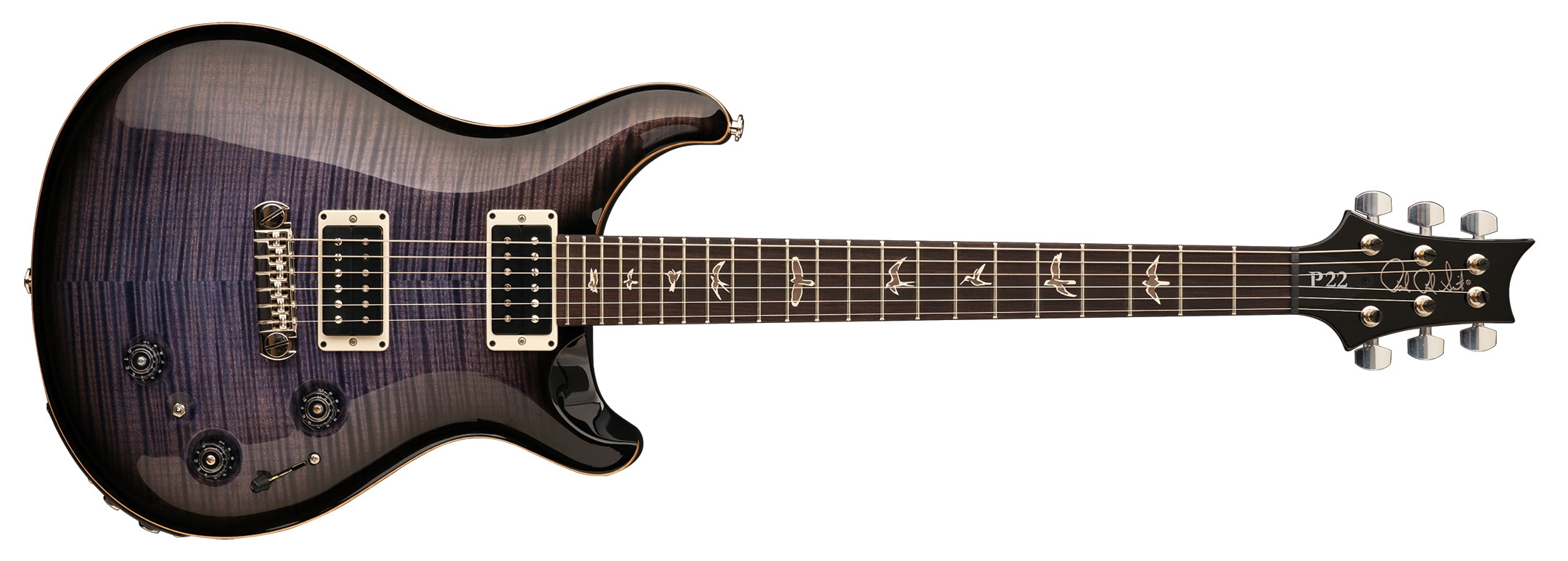
The PRS Studio -model, which was introduced last year, bundles all the improvements of the last few years in one single instrument. The Studio sports a long list of new – or improved – features, such as the Narrowfield-humbuckers.

****

In Gibson-speak ”studio” usually means a less expensive, slightly scaled-down model. In the PRS Studio’s case the word ”studio” denotes a guitar that is meant to be very versatile.

The PRS Studio (current price in Finland around 3,000 €) is a set-neck electric guitar, with the company’s traditional 25-inch (63,5 cm) scale. A great-looking flame maple top comes as standard on the Studio. PRS offer several different colour finishes, as well as a choice between a wraparound bridge or a PRS vibrato.

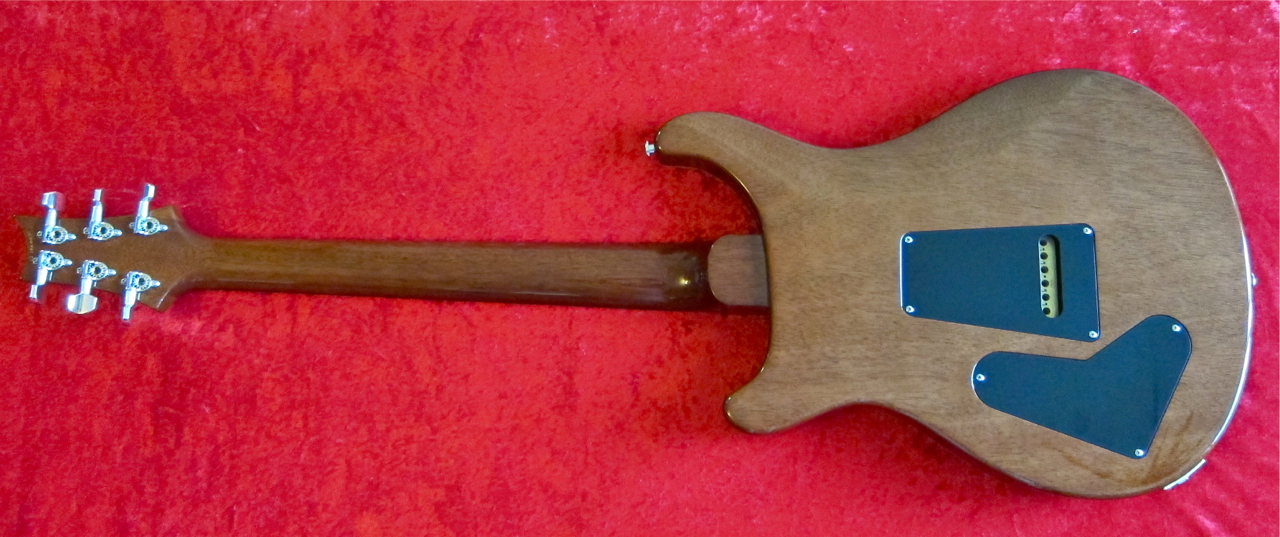
Both the neck and the back of the body are crafted from top-quality mahogany. The Studio is offered with two new neck profiles: The fuller version is called Pattern Neck, while its slimmer counterpart is designated as Pattern Thin.

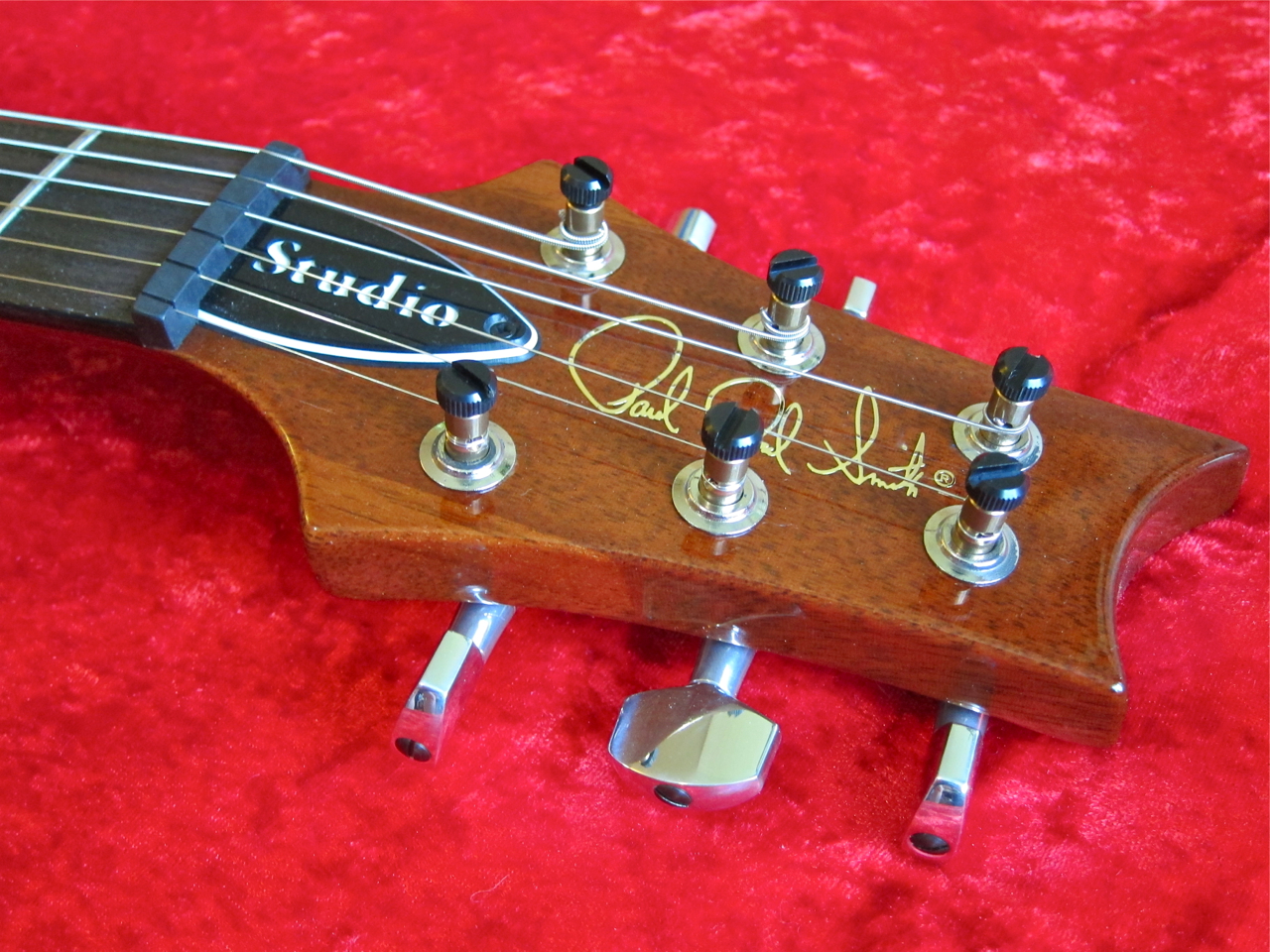
The new PRS Phase III locking tuners feature brass string posts and bushings with a much tighter fit.

I assumed that the reason for the open casings was weight reduction, but I was wrong. In one of PRS’ You Tube videos Mr Smith states that the main reason for this design change were the cool looks.

The company’s new bird inlays are standard on the Studio-model – cream coloured outlines filled with walnut.

The fretwork on our test sample was truly exemplary.

Here’s a good look at PRS’ customary neck joint – its big heel is good for sustain.

Over the past decades the PRS body shape has become a classic design in itself.

A breath-taking view for most guitar connoisseurs – the famous ”fake” binding, which is achieved by leaving the rim of the maple top unstained.

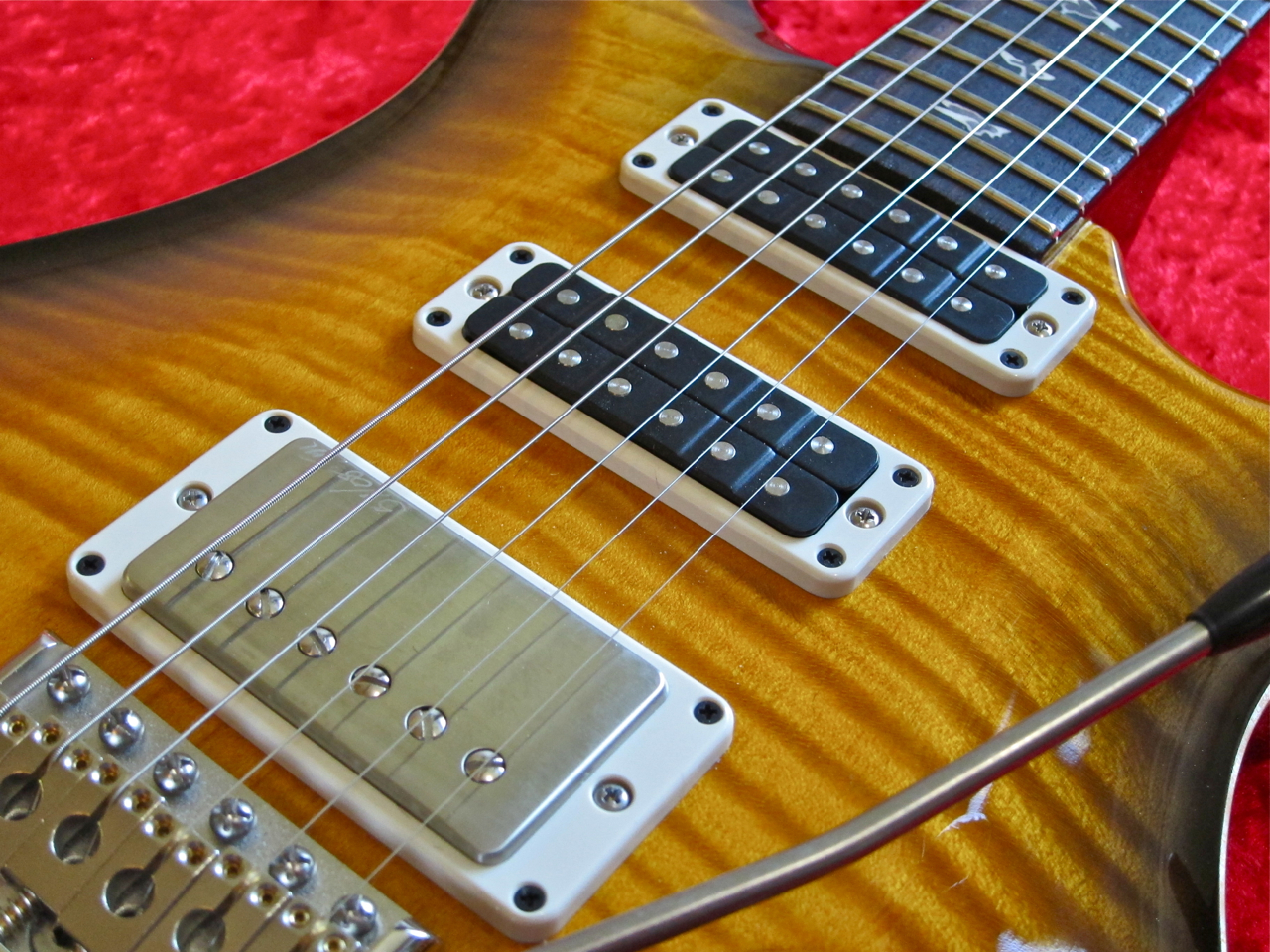
In the last years PRS has given its pickups a thorough overhaul, which has spawned a few new models: The Studio comes equipped with the new PRS 57/08 -humbucker in the bridge position. Many PRS-fans claim that this is the company’s best-ever vintage-type humbucker. The 57/08’s metal cover is brushed aluminium, and bridge versions have their model number deliberately engraved upside-down.

The brand new Narrowfield-humbuckers are very special beasts, indeed, with a sound of their own. The Narrowfield has a full-size humbucker’s output level and warm basic character, but thanks to its much narrower magnetic window the higher-mids and treble range both sound fresher and more transparent.

A push-pull-switch inside the tone control lets you split the bridge pickup.

PRS’ vintage-style vibrato is a fine improvement on Leo Fender’s original Stratocaster-bridge.

The vibrato block is milled from solid brass.

This is what the review sample’s control cavity looks like – not the cleanest PRS I’ve ever seen. Luckily the sawdust doesn’t seem to hamper the guitar’s functionality.

A classy hard case rounds out this package.

****

According to Paul Reed Smith himself, the Studio’s new Pattern neck profile is actually a return to the very beginning of PRS Guitars, when PRS was a tiny little workshop. The Pattern Neck isn’t miles away from the famous Wide-Fat-profile, but it is clearly rounder with much less shoulders to it.

The Studio’s ergonomics and playability can be summed up in one word – fantastic. The guitar is feather-light, and its slender body with the long upper horn balances perfectly on a strap – despite the neck joining the body at the 20th fret.

The PRS vibrato comes set up with four springs and works buttery and precisely with perfect return-to-pitch.

Acoustically the Studio performs like a true PRS – there’s a good dose of Gibson-ish set-neck character, mixed with a drier and and tighter attack. The warm, well-rounded, but fresh character is carried evenly across the whole fretboard.

The Narrowfield-pickups are a very interisting new breed. They don’t pretend to be sound like Strat-sized ’buckers, but give you plenty of humbucker warmth, coupled with more presence and a nice top end sheen. The Narrowfields work well in combinations, where you’d normally expect a couple of Fender-style singlecoils. In my opinion this is the first time I’ve heard a guitar, where a third humbucker makes tonal sense.

The moderately-powered PRS 57/08 -humbucker is the perfect partner for the Narrowfields, because it, too, has a fresh and dynamic tone. Splitting the 57/08 even gives you quite credible Fender-sound approximations.

The soundbites all start with the neck pickup on its own, flicking through all the switch positions with the bridge humbucker split. The final two repeats are the middle-plus-bridge and bridge-alone selections with the full humbucker in use:

PRS Studio – clean

PRS Studio – crunch

****

Three thousand Euros is quite a lot of money for one guitars. True, but I feel the PRS Studio is really worth each Cent – it is a guitar crafted to the highest standards from top-quality materials. The result is one of the best guitars coming from a large-volume manufacturer. Outstanding playability, coupled with the fantastic tone of the new pickups put this PRS in a league of its own.

****

PRS Guitars Studio

Current price in Finland: approx. 3,000 €

Finnish distributor: EM Nordic

A big thank you to DLX Music Helsinki for the loan of the review sample!

Pros:

• sheer quality

• workmanship

• playability

• smooth vibrato

• sound

• versatility

Cons:

• sawdust in the control cavity

****

Testipenkissä: PRS Studio

****

Viime vuoden puolella ilmestynyt PRS Studio -malli on firman jatkuvan kehityksen tämänhetkinen huipentuma. Tähän kitaraan sisältyy pitkä lista parannuksia monissa yksityiskohdisssa, sekä PRS:n uudet Narrowfield-humbuckerit.

****

Gibsonilla sana ”studio” viittaa tavallisesti ”standardia” edullisempaan versioon. PRS Guitarsin Studio-mallissa ei todellakaan ole kyse säästöversiosta, vaan nimi tulee tämän mallin monipuolisista soundimahdollisuuksista.

PRS Studio (DLX Musicin hinta 2.995 €) on liimakaulainen sähkökitara firman perinteisellä 25-tuumaisella (63,5 cm) mensuurilla. Pramea loimuvaahterakansi on jokaisessa Studiossa vakiona. Malli on saatavana usealla eri värityksellä, sekä PRS-vibratallalla tai firman wrapover-tallalla varustettuna.

Sekä kaula että rungon takaosa ovat ensiluokkaista mahonkia. Studiota valmistetaan kahdella uudella kaulaprofiililla: Pattern Neck on täyteläisempi vaihtoehto, kun taas Pattern Thin Neck on ohuempi.

Uusissa PRS Phase III -virittimissä on kielten lukitus, messingistä tehdyt tapit, sekä vintagea tiukemmin lapaan istuvat kaulukset.

Oletin, että virittimien puoliavoimiim koteloihin on päädytty painosyistä, mutta yhdessä firman You Tube -videossa Herra Smith kertoo, että tämä ratkaisu on valittu, koska ”se näyttää niin kivalta”.

PRS Studion vakiovarustukseen kuuluvat myös ruusupuisen otelaudan lintu-upotukset. Uusimmassa versiossa on kermanvaalea ulkoreuna ja pähkinäpuusta veistetty sisäosa.

Nauhatyö on testisoittimessa suorastaan esimerkkillistä.

Tältä näyttää Paul Reed Smith Guitarsin perinteinen liimaliitos sustainea lisäävällä, tukevalla kaulakorolla.

Firman rungon muotoilusta on tullut vuosien myötä klassikko.

Kitarafaneille tämä on suorastaan henkeäsalpaava näky – PRS:n kuuluisa ”feikki” reunalistoitus, jossa kannen reuna jätetään värjäämättä.

Viime vuosina PRS:n mikrofonivalikoima on käynyt läpi perusteellisen uudistusprosessin: tallamikrofoniksi on valittu PRS:n vintage-tyylinen 57/08-humbucker, joka on monien mielestä paras PRS-humbucker ikinä. 57/08:n metallikansi on harjattua alumiinia, ja pikanttina detaljina mikin mallitunnus on tallaversioissa aina päälaellaan.

Uusinta uutta on kaula- ja keskiasemaan asennettu Narrowfield-humbucker, joka on ihan uusi mikrofonityyppi omalla soundillaan. Narrowfieldissä on vintage-humbuckerin lähtöteho ja lämmin perusluonne, mutta kapeamman magneettisen ikkunan ansiosta erilainen preesensalueen rakenne ja hieman tuoreempi diskantti.

Tone-potikassa on nostokytkin, joka puolittaa yläasennossa tallahumbuckerin.

PRS:n vintage-tyylinen vibrato on itsekin legendaarinen parannus Leo Fenderin alkuperäisestä Strato-vibrasta.

Vibrablokki on valmistettu isosta messinkipalasta.

Tällaiselta testisoittimen elektroniikkalokero näyttää – ei ehkä siistein näkemäni PRS-kitara, mutta puupöly ei haittaa mitenkään kitaran toimivuutta.

Laadukas laukku kuuluu luonnollisesti PRS Studion hintaan.

****

Studion uusi Pattern-kaulaprofiili on itseasiassa PRS-kitaroiden alkuperäinen profiili sitä ajasta, kun PRS oli vielä pikkuinen custom-paja. Pattern Neck on lähellä vanhaa Wide Fat -profiilia, mutta aavistuksen verran lihaksikkaampi ja selvästi pyöreämpi. Wide Fat -kaulan hartiat on poistettu PRS:n uudesta Pattern Neckistä.

Studio-mallin soittettavuutta ja ergonomiaa voi kuvailla yhdellä sanalla – ensiluokkainen. Kitara on kevyt, ja sen ohut – ja yläsarvella varustettu – runko roikkuu tasapainoisesti hihnassa, vaikka kaulaliitos on vasta 20:n nauhan kohdalla.

Neljällä jousella varustettu PRS-vibra toimii hyvin jouhevasti ja tarkasti, ja se palaa käytön jälkeen nätisti nolla-asentoonsa ilman vireongelmia.

Akustisesti soitettuna PRS Studio soi kuin tyyppillinen PRS – Gibson-tyylinen perusluonne, mutta hieman kuivemmalla ja tiukemmalla atakilla. Kuulas, mutta lämmin karakteeri, sekä pitkä sustain ovat tasaisesti läsnä koko kitarassa.

Narrowfield-mikrofonit ovat erittäin mielenkiintoinen uutuus. Ne eivät yritäkään olla häriövapaita, Strato-tyylisiä mikrofoneja. Sen sijaan Narrowfieldistä saa loistavia solakkaampia humbucker-soundeja, jotka todellakin toimivat loistavasti kolmen mikrofonin kattauksessa. Etenkin viisipykäläisen vipukytkimen väliasennoissa eron tavallisien ja NF-humbuckereiden välillä on helppo havaita.

Hyvin maltillisella teholla toimiva PRS 57/08 -humbucker sopii tähän settiin täydellisesti, koska senkin sointi on dynaaminen ja hienostuneen raikas. Splitattuna 57/08:sta saa irti jopa melko uskottavia Fender-kaltaisia soundeja.

Seuraavissa esimerkeissä soitan kytkimen asennot läpi kaulamikistä ensin puolitettuun tallamikrofoniin. Lopuksi tulevat vielä ne kaksi asentoa, joissa tallahumbuckeri on kytketty täysille:

PRS Studio – puhdas

PRS Studio – crunch

****

Kolmetuhatta euroa on aika paljon rahaa yhdestä sähkökitarasta. PRS Studio on kuitenkin täysin hintansa arvoinen: soitin on valmistettu parhaista osista suurella huolella. Lopputulos on mielestäni yksi parhaimmista, sarjatuotannossa valmistettavista kitaroista. Soitettavuus on ensiluokkainen, ja uusien mikrofonien ansiosta tämä PRS on monipuolisuudessaan ihan omaa luokkaansa.

****

PRS Guitars Studio

DLX Musicin hinta: 2.995 €

Maahantuoja: EM Nordic

Kiitos DLX Music Helsingille testikitaran lainaamisesta!

Plussat:

• laatu

• työnjälki

• soitettavuus

• vibran toiminta

• soundi

• monipuolisuus

Miinukset:

• hieman puupölyä testiyksilön elektroniikkalokerossa

****

Testipenkissä: Vox AC4 Blue

Tässä se siis on – upouusi Vox AC4 C1 Blue. Kuulen jo melkein lukijoiden kysymykset: ”Hä? Taas yksi AC4? Onko eroja valkoiseen AC4:een uuden värimaailman lisäksi?”

On kenties hieman hämmentävää, että firman mallistossa on useita samannimisiä tuotteita, mutta kuten usein elämässä, myös Vox-malleissa tärkeitä tietoja saa mallitunnuksen lisäyksistä.

Tällä hetkellä Voxilla on viisi Vox AC4 -nimistä putkivahvistinta tuotannossaan: Vox AC4 TV – josta on olemassa kolme versiota (pikkustäkki, AC4 TV Mini ja AC4 TV) – on edullisin vaihtoehto, joka on tarkoitettu mallintavien pikkustyrkkäreiden täysputkiseksi kilpailijaksi.

Skaalan toisessa päässä on Vox AC4 HW, joka on tyylikäs käsinjuotettu (HW = hand-wired) peli vintage-faneille. Alkuperäisen AC4:n lailla myös AC4 HW on varustettu 12-tuumaisella Celestion-kaiuttimilla.

Uusi AC4 C1 Blue on sijoitettu näiden kahden mallin väliin. Voxin C-sarja koostuu legendaarisien vahvistinmallien uusintapainoksista, joissa mallien ominaisuudet on kehitetty eteenpäin nykyaikaista kitaristia varten.

****

Vox AC4 Blue (katuhinta 349 €) on kuvankaunis kombo, jonka ulkonäkö on lainattu yhdestä 1960-luvun erikoispainoksesta, jolla oli sininen vinyylipäällystys ja vaaleanharmaa etukangas.

Etuasteputkina toimivat kaksi 12AX7-mallia, kun taas päätevahvistin on rakennettu yhden EL84-putken ympärille. Päätetehoksi ilmoitetaan neljä wattia (rms) 16 ohmiseen kaiuttimeen tai kaappiin.

Kombon kotelo on lähes täysin suljettu, ja takakannesta löytyy ainoastaan liittimet sähköjohdolle sekä ulkoiselle kaiutinkaapille. Putkien jäähdytykseen tarvittu ilma kulkee takakannen pienestä aukosta ja kantokahvan edessä sijaitsevan muoviritilän kautta.

Kuten monissa nykyaikaisissa pikkustyrkäreissä myös AC4 C1 Blue -kombon putkiin on vaikea päästä. Putkien vaihtamista varten täytyy nimittäin irrottaa koko takakansi, minkä jälkeen pääsee suoraan piirilevyillä istuviin putkiin käsiksi. Käyttöohje neuvookin sähköiskun välttämiseksi kääntymään putkivaihdon tarpeessa valtuutetun tekniikon puoleen.

Kaiuttimena toimii AC4 Bluessa jo TV-mallista tuttu kymmentuumainen Celestion VX10 -kaiutin.

Etupaneeli tarjoaa yhden kitaratulon, sekä säätimet gaineille, bassolle, diskantille sekä master volumelle.

****

Vox lupaa AC4 Blue -kombolle aidon Top Boost -soundin pikkupakkauksessa, ja pikkuvahvistin lunastaa tämän lupauksen avokätisesti. Tästä styrkkarista löytyy kaikki ne soundit, jotka tekivät AC30:sta legendaarisen, mutta nyt ne ovat saatavilla myös pienellä volyymillä, juuri koti- tai projektistudioon sopivaksi.

AC4 C1 BL:n puhtaat soundit helisevät kauniisti, mutta niissä on aina mukana myös se Voxeille tyyppillinen pikkuannos rouhevuutta. Tehokkailla humbuckereilla on syytä pitää kitaran omat volyymit maltillisenä, muuten AC4:sta alkaa kuulla kevyen Blues-särön sävyjä.

Minun makuuni pikku-Voxin perussoundissa voisi olla hivenen verran vähemmän yläpään terävyyttä, mutta sain diskantin kuitenkin hyvin toimivalla Treble-säätimellä riittävästi aisoihin.

Avaamalla Gain-säätimen astutaan sitten reippaasti säröpuolelle, jossa AC4 Bluen gain-varat  vievät meitä kermaisesta Bluesista 1970-luvun Rockille ja varhaiseen Heavy-osastoon. Moderneja Metal-soundeja on turha etsiä tästä kombosta, eikä AC4 ole semmoiseen tarkoitettukaan. Brian May -tyylisiin solosoundeihin suosittelisin säröpedaalin lisäämistä kitaran ja kombon väliin.

Neljällä putkiwatilla pystyy muuten jo hyvinkin ärsyttämään kerrostalon naapureita – siis tarvittaessa AC4 Bluen kanssa voi lähteä soittamaan myös pienempiä keikkoja mikittämällä pikkukomboa.

Tässä muutama soundiesimerkki (pätkissä aloitetaan aina kaulamikrofonilla):

Stratocaster – puhdas

SG – puhdas

SG – kevytsärö

Stratocaster – gain täysillä

SG – gain täysillä

****

Vox AC4 C1 Blue

katuhinta 349 €

Maahantuoja: EM Nordic

Kiitos DLX Music Helsingille testivahvistimen lainasta!

Plussat:

+ aito Vox Top Boost -soundi

+ pieni koko

+ Master Volume

+ ulkonäkö

+ hinta-laatu-suhde

Miinukset:

– putkien vaihtamisen hankaluus

****

****
Review: Marshall JTM1C + JMP1C

****

Marshall Amplification celebrate their 50th anniversary this year. To honour the occasion the company is releasing five small anniversary models, produced in limited numbers. Each model of these one-Watt all-valve heads and combos has been designed to represent one era in Marshall-history, both in looks and in sound.

Kitarablogi.com had the pleasure to review the Sixties and Seventies combos – the JTM1C and JMP1C.

****
The JTM1C-combo (current street price in Finland approximately 700 €) nails the look of early JTM-models perfectly. Just like the famous Bluesbreaker-combo, the JTM1C sports a golden nameplate with the old-style block lettering and the famous salt-and-pepper grille cloth of yore.

Valve purists will be delighted at the sight of just one volume- and one tone-control – nothing stands in the way of pure tone.

Even though the anniversary models aren’t wired point-to-point in the vintage style, the electronic lay-out and PCB-build look very sturdy and clean. Two ECC83/12AX7-valves run in the preamp section, while the power amp employs one ECC82/12AU7.

The Marshall JTM1C is equipped with the same, fine Celestion speaker, which had been developed for the Class 5 combo – the ten-inch G10F-15.

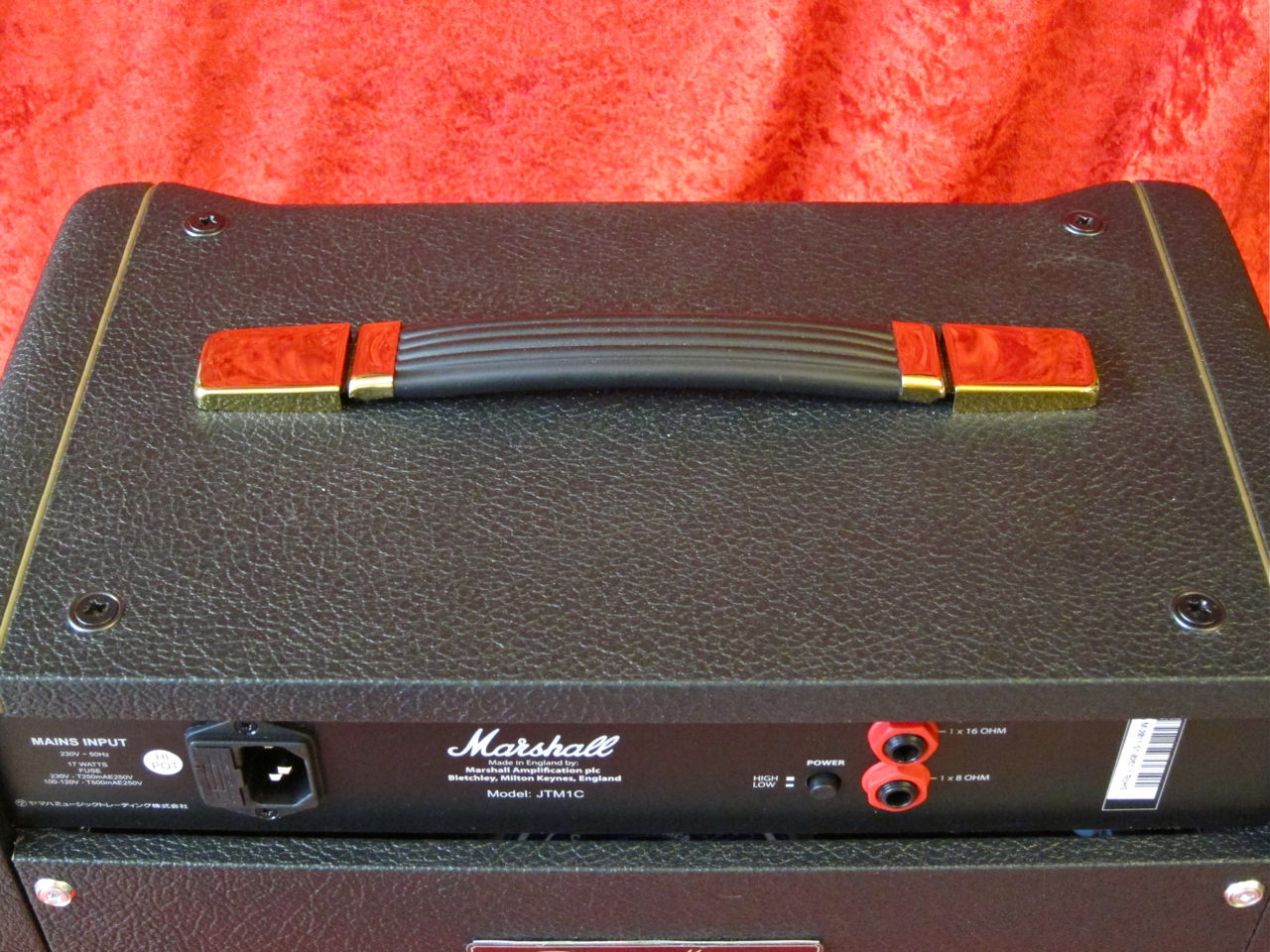
The combo’s half-open back looks as clean as the front.

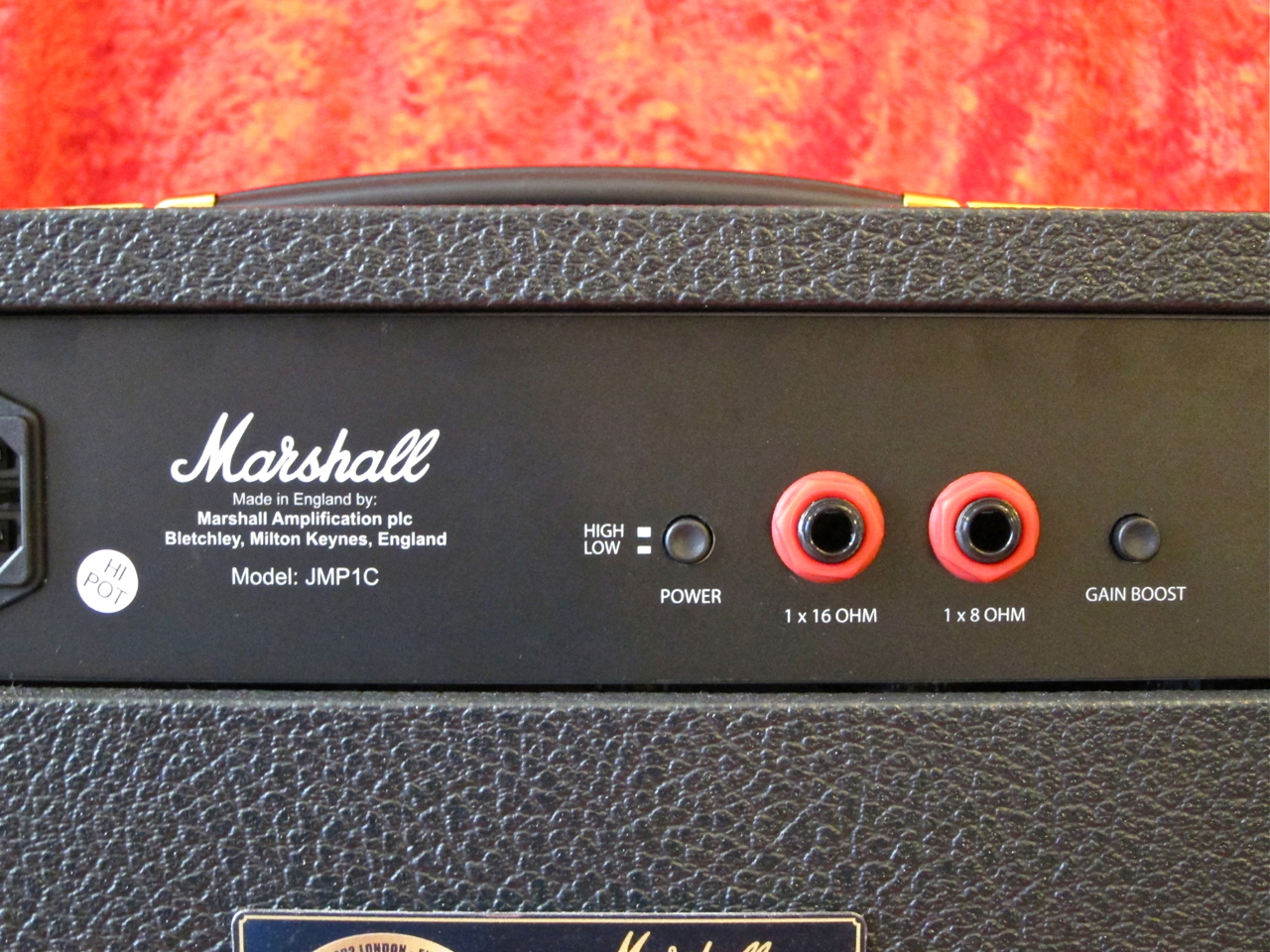
The Power-button next to the two external speaker jacks drops the maximum output of the amp from one Watt to 0.1 Watts.

The same Marshall-handle is used on all of the anniversary amps.

****

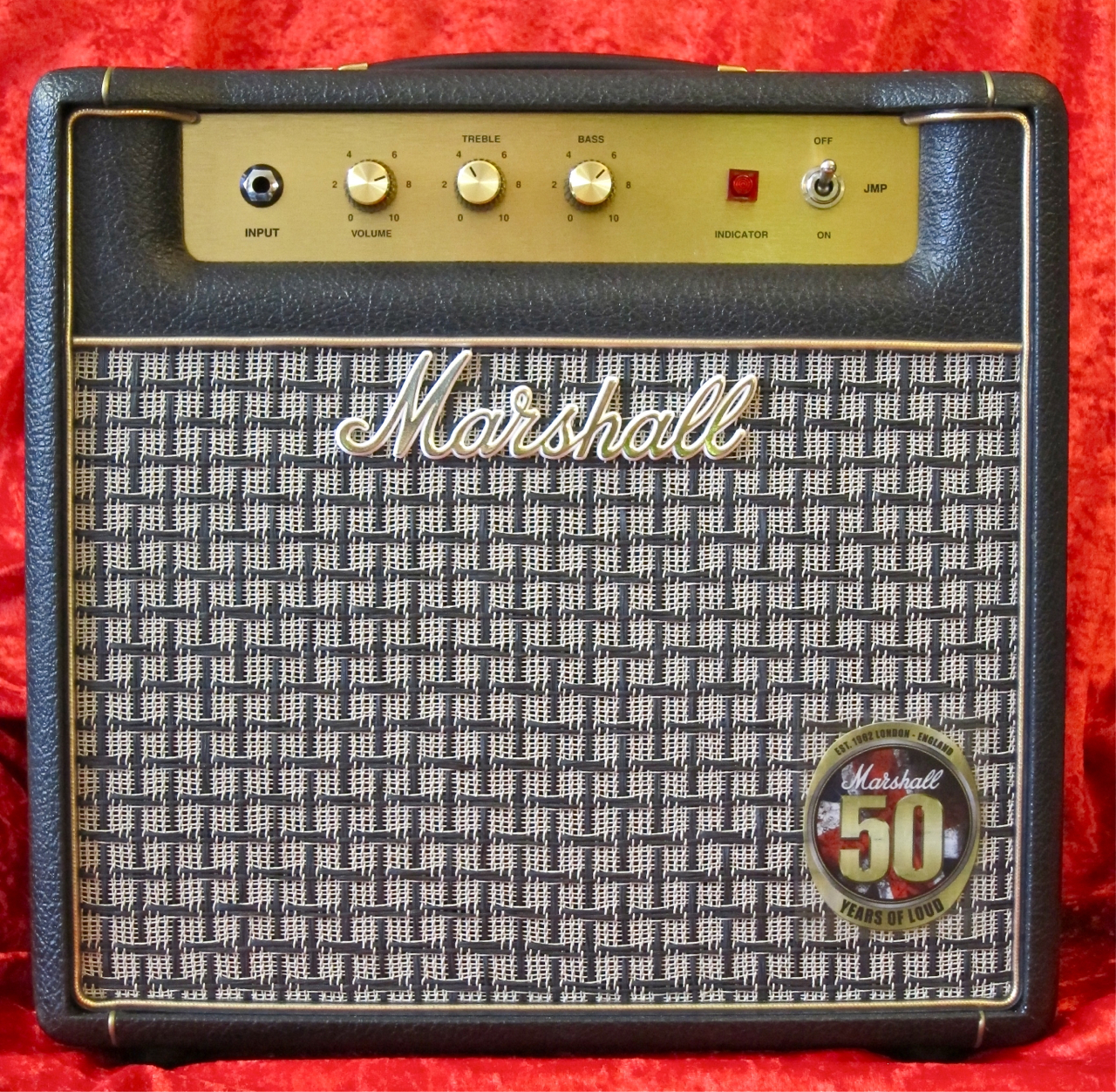
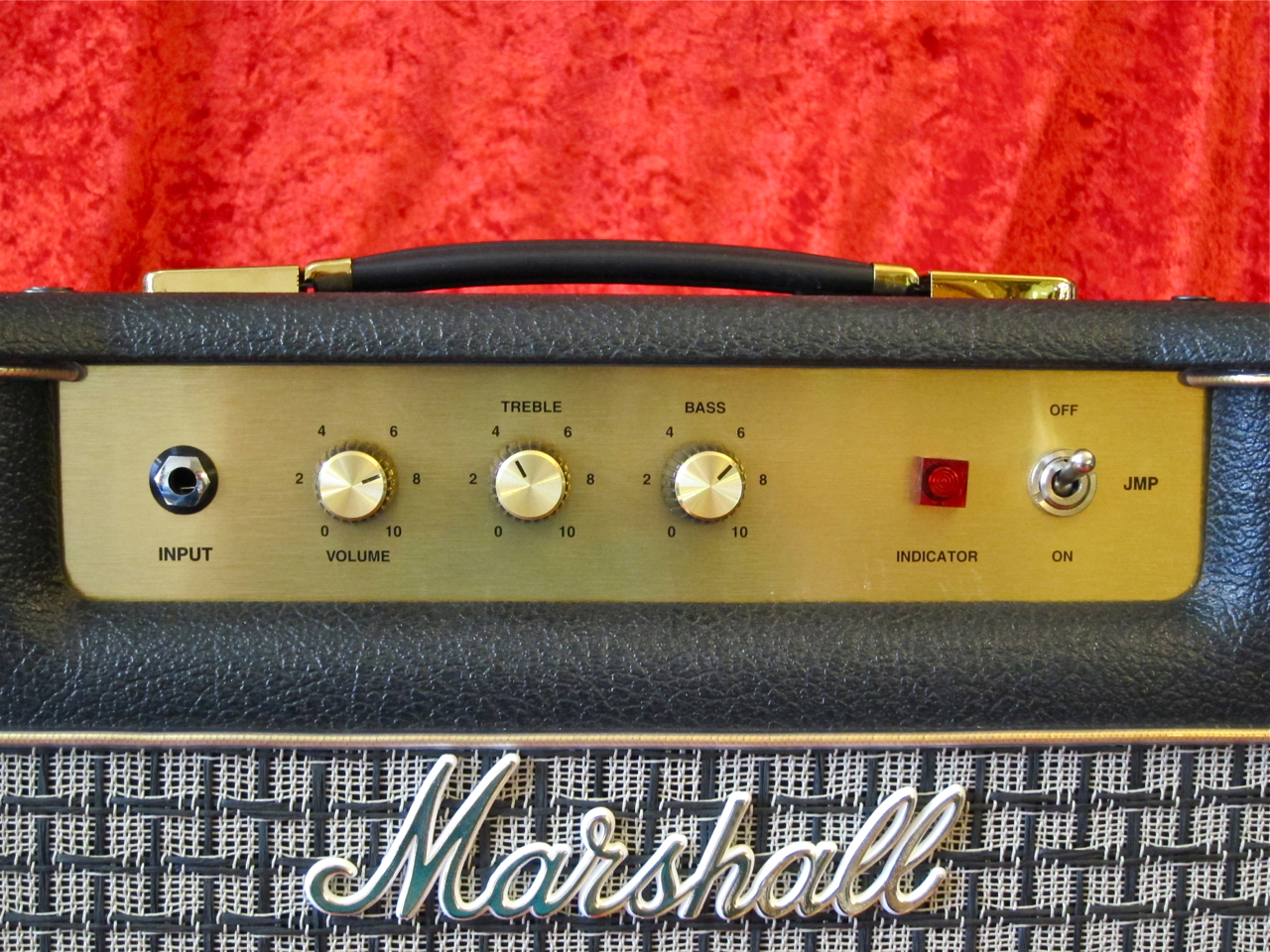
The Seventies are represented by the JMP1C (current street price in Finland approximately 700 €), which displays the famous Marshall script logo, as well as the light grey grille cloth with the dark weave that’s typical of many amps from that era.

This anniversary model features three controls – volume, treble and bass.

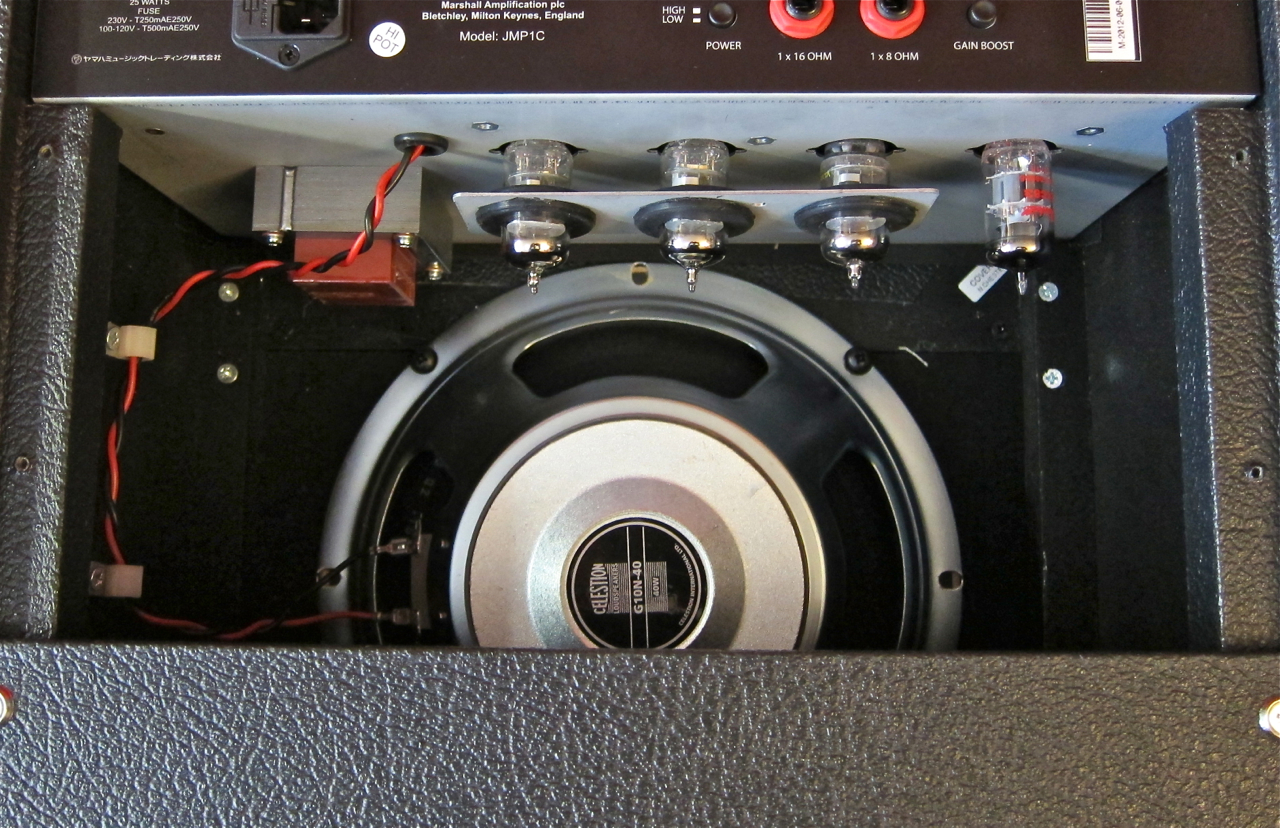
The JMP1C’s design uses four valves: two ECC83/12AX7’s in the preamp section, and two ECC81/12AT7-models for the power stage. The speaker, too, is different here – it’s a ten-inch Celestion G10N-40.

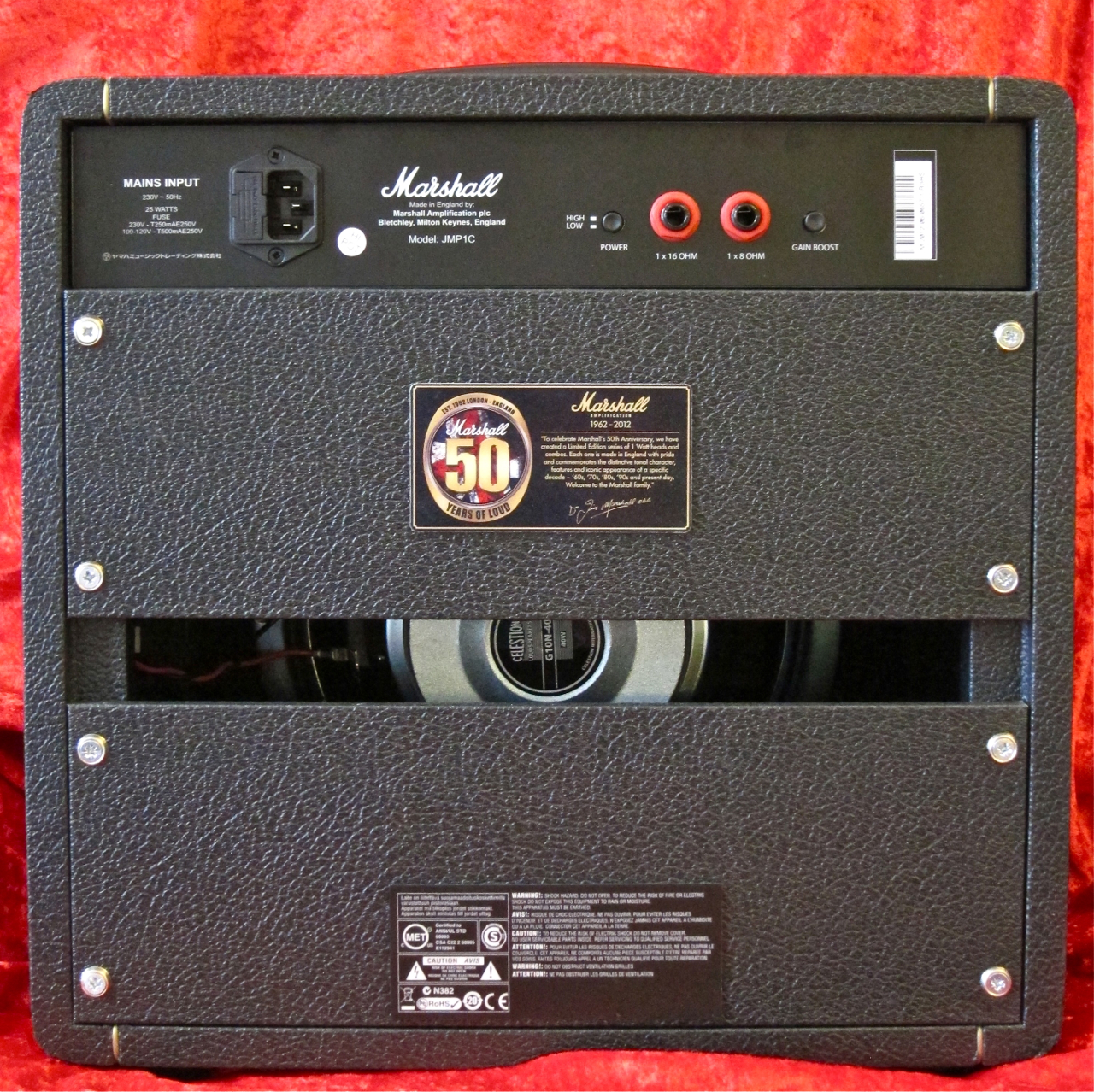
Looking from the back the JMP1C seems to look almost exactly like the JTM1C; but wait…

…there’s a second pushbutton next to the speaker outputs, labelled Gain Boost.

****

It’s interesting to note the sonic differences between these two combos.

Set clean the Marshall JTM1C has a fine, open and bright ring to its voice, while the JMP1C is noticeably fatter and more mid-centric. Neither of the combos is endowed with a lot of clean headroom, but I found the Sixties version to be somewhat better suited for clean playing:

Marshall JTM1C – Telecaster/clean

Marshall JMP1C – Telecaster/clean

****
Regardless of what guitar is used, once the volume control reaches about 12 o’clock both amps are definitely in overdriven territory. The JTM’s drive tones are warmer and smoother than those of the JMP. The JMP1C’s overdriven sounds are fresher and crunchier, with a distinct stack-like tonality, in contrast to the JTM1C’s Bluesbreaker-inspired delivery:

Marshall JTM1C – Les Paul Junior/overdrive

Marshall JMP1C – Les Paul Junior/overdrive

****

At full throttle – and with the JMP’s Gain Boost activated – the differences are clearer still: The JTM1C is really creamy and warm, while the JMP1C has a far more aggressive and snarling take on things. You could say the JTM1C is the bluesier alternative, while the JMP1C caters for the classic rock fans:

Marshall JTM1C – Hamer Studio Custom/full gain

Marshall JMP1C – Hamer Studio Custom/full gain

Both combos are rather loud for one-watters. Turned up full the volume is not quite loud enough to annoy your neighbours during the day, but almost, which is where the handy Power-button on the back panel comes in and saves the day.

****

700 Euros for such small combos may sound like a lot of money to some, but you shouldn’t forget two things: Firstly, all anniversary models are built in the UK, and not in China, and secondly, these are limited edition runs, making them interesting for collectors. If Marshall had chosen to release 50- or 100-Watt stacks to commemorate their five decades in business, the price of such models would have been above most of our budgets. With these cool one-Watt amps most Marshall fans are getting the opportunity to acquire their own piece of Marshall-history, without going bankrupt.

I feel the reviewed combos are great little amps that are a fitting tribute to both Marshall the company, as well as to their founder, the late Jim Marshall!

****

Marshall 50th Anniversary -combos

Finnish Distributor: EM Nordic

A big thanks to DLX Music for the loan of the review samples!

****

Marshall JTM1C

Pros:

+ workmanship

+ sound

+ output power can be curtailed

+ small size

+ collectability

****

Marshall JMP1C

Pros:

+ workmanship

+ sound

+ gain booster

+ output power can be curtailed

+ small size

+ collectability

****


Testipenkissä: Marshall JTM1C + JMP1C

****

Marshall Amplification juhlii tänä vuonna 50-vuotis syntymäpäiviään. Juhlan kunniaksi firma julkaisi viisi pientä juhlavahvistinta, joita rakennetaan rajoitetuissa erissä. Yksiwattiset täysputkinupit ja -kombot on suunniteltu niin, että ne edustavat soundiltaan ja ulkonäöltään aina tiettyä aikakautta Marshallin historiassa.

Kitarablogi.com sai testiin 1960- ja 1970-lukua edustavat kombot – JTM1C ja JMP1C.

****

JTM1C-kombon (katuhinta noin 700 €) ulkonäkö on varhaisten JTM-mallien, kuten esimerkiksi Bluesbreaker-kombon, mukainen: kultainen, vanhalla logolla varustettu laatta ja kuuluisa, harmahtava etukangas.

Soundipuristi ilahtuu spartaanisesta säädintarjonnasta – volyymi/vahvistus-säädin sekä yksi tone-potikka, siinä kaikki.

Vaikka juhlamallit eivät ole vintage-tyylisesti point-to-point käsinjuotettuja, elektroniikan toteutus piirilevyineen on hyvin laadukas. Etuasteputkina toimii kaksi ECC83/12AX7-putkea ja pääteputki on ECC82/12AU7.

Marshall JTM1C:hen on asennettu jo Class 5 -kombosta tuttu erikois-Celestion: kymppituumainen G10F-15.

Kuten kombon etupuoli, myös takapuoli komeilee erittäin siistillä työnjäljellään.

Kahden kaapilähdön lisäksi takapaneeliin on sijoitettu ”Power”-nappi, jolla kombon tehot saa laskettua yhdestä watista 0,1:een wattiin.

Kaikissa juhlamalleissa on sama Marshall-kantokahva.

****

1970-lukua edustavassa JMP1C:ssä (katuhinta noin 700 €) on käytössä meille kaikille niin tuttu ”käsin kirjoitettu” Marshall-logo, sekä harmaa, ruudullinen etukangas.

Tässä juhlamallissa on aikakauden mukaisesti ”kunnon” taajuuskorjaimet – erilliset säätimet diskantille ja bassolle.

JMP1C:ssä käytetään peräti neljää putkea: kaksi ECC83/12AX7-etuasteputkea, sekä päätevahvistimessa kaksi ECC81/12AT7-mallia. Myös kaiutin on tässä toinen, nimittäin kymmenentuumainen Celestion G10N-40.

Takaa katsottuna JMP1C näyttää lähes samanlaiselta kuin JTM1C; mutta – hetkinen…

…kaiutinlähtöjen toisella puolella on toinen nappi. Gain Boost -nimityksen perusteella voi varmaan odottaa, että tästä kombosta varmasti löytyy tarpeeksi säröä.

****

On todella mielenkiintoista huomata minkälaisia soinnillisia eroja kahdesta hyvin samankaltaisista komboista löytyy.

Puhtaissa soundeissa Marshall JTM1C soi avoimella ja kirkkaamalla äänellä, kun taas JMP1C:n ääni on keskialuevoittoisempi ja lämpimämpi. Molemmissa vahvistimissa ei ole erityisen paljon puhdasta headroomia, mutta 1960-luvun uusintapainos vetää mielestäni puhtaissa soundeissa pidemmän korren:

Marshall JTM1C – Telecaster/puhdas

Marshall JMP1C – Telecaster/puhdas

****

Viimeistään volume-säätimen puolessavälissä kummankin kombon soundi on selvästi säröllä. JTM:n särösoundit ovat miedompia ja lämpimämpiä kuin JMP:n. JMP1C on säröllä runsaasti tuoreempi ja rapeampi ja se kuulostaa enemmän vahvistinstäkiltä kuin JTM, jonka sointi on hyvin Bluesbreaker-tyylinen:

Marshall JTM1C – Les Paul Junior/särö

Marshall JMP1C – Les Paul Junior/särö

****

Kun gain on täysillä ja JMP:n boosti on aktivoituna, särösoundien selvä ero vielä korostuu. JTM1C on hyvin kermainen ja lämmin, kun taas JMP:llä on tarjolla selkeästi enemmän säröä ja soundi on rouheampi. Sanoisin, että JTM1C on bluesimpi, kun taas JMP1C rokkimpi:

Marshall JTM1C – Hamer Studio Custom/gain täysillä

Marshall JMP1C – Hamer Studio Custom/gain täysillä

Kummatkin vahvistimet ovat melko kovaäänisiä yksiwattisiksi komboiksi. Täysillä niillä voi juuri ja juuri soittaa päiväsaikaan kerrostaloasunnossa, joten on erittäin hyvä, että molemmista löytyy myös tehonpudotuskytkin.

****

Noin 700 euroa yksiwattisesta kombosta voi kuulostaa melko kalliilta, mutta ei sovi unohtaa, että juhlamallit valmistetaan kokonaan Englannissa (eikä Kiinassa), ja että kyse on myös keräilykohteesta. Jos Marshall olisi päättänyt valmistaa 50- tai 100-wattisia vahvistimia juhlan kunniaksi, niiden hinta olisi ollut liian korkea tavalliselle kitaristille. JTM1C:n ja JMP1C:n (ja muiden juhlasarjan pikkuvahvistimien) ansiosta lähes jokainen halukas voi ostaa itselleen palan Marshall-historiaa, omaa taloudellista tilannetta vaarantamatta.

Molemmat kombot ovat mielestäni erittäin onnistuneita kunnianosoituksia sekä Marshall-vahvistinfirmalle että juuri edesmenneelle perustajalle Jim Marshallille!

****

Marshall 50th Anniversary -kombot

Maahantuoja: EM Nordic

Kiitos DLX Musicille testiyksilöiden lainasta!

****

Marshall JTM1C

Plussat:

+ työnjälki

+ soundi

+ kaksi päätetehoa

+ pieni koko

+ keräilyarvo

****

Marshall JMP1C

Plussat:

+ työnjälki

+ soundi

+ kaksi päätetehoa

+ gain-boosteri

+ pieni koko

+ keräilyarvo

****

Pidä blogia WordPress.comissa.

Ylös ↑