
Lisätiedot: EM Nordic
Kitarablogi.com – Finland's premier Guitar and Bass blog
Juttuja kitaroista ja bassoista

****

Marshall’s DSL5C combo is the newest – and smallest – member of the DSL-series.
The DSL-range has its roots in the year 1997, when Marshall introduced their – now legendary – JCM2000 Dual Super Lead -head. The JCM2000 was the first Marshall amp that combined a vintage-voiced Plexi-channel and a modern Ultra Gain -channel in one chassis.
The production run of the original DSL-series was discontinued in 2007, with the JVM-range superseding it. The new DSL-series offers the company’s most-affordable all-valve amps to date, which are produced at Marshall’s own facility in Vietnam.
****

As you can easily guess by its name, the Marshall DSL5C (current street price in Finland around 520 €) is a five-Watt, two-channel combo.
In terms of its looks and the quality of its finish, this is a genuine Marshall. Quality control at the Vietnamese factory seems to as stringent as in Britain, and the combo looks great and feels well-made and sturdy.

The DSL5C comes with an open back cabinet. The upper opening in the cabinet’s back is covered with a metal grille to keep stray fingers and hot tubes apart form each other.

This little Marshall uses three preamp valves (ECC83/12AX7), plus a single power amp tube (ECC99/12BH7).

The DSL5C’s speaker is a ten-inch Celestion Ten 30, which is meant to provide a big, warm bottom-end, coupled with a healthy dose of ”Celestion grunt” and bite.
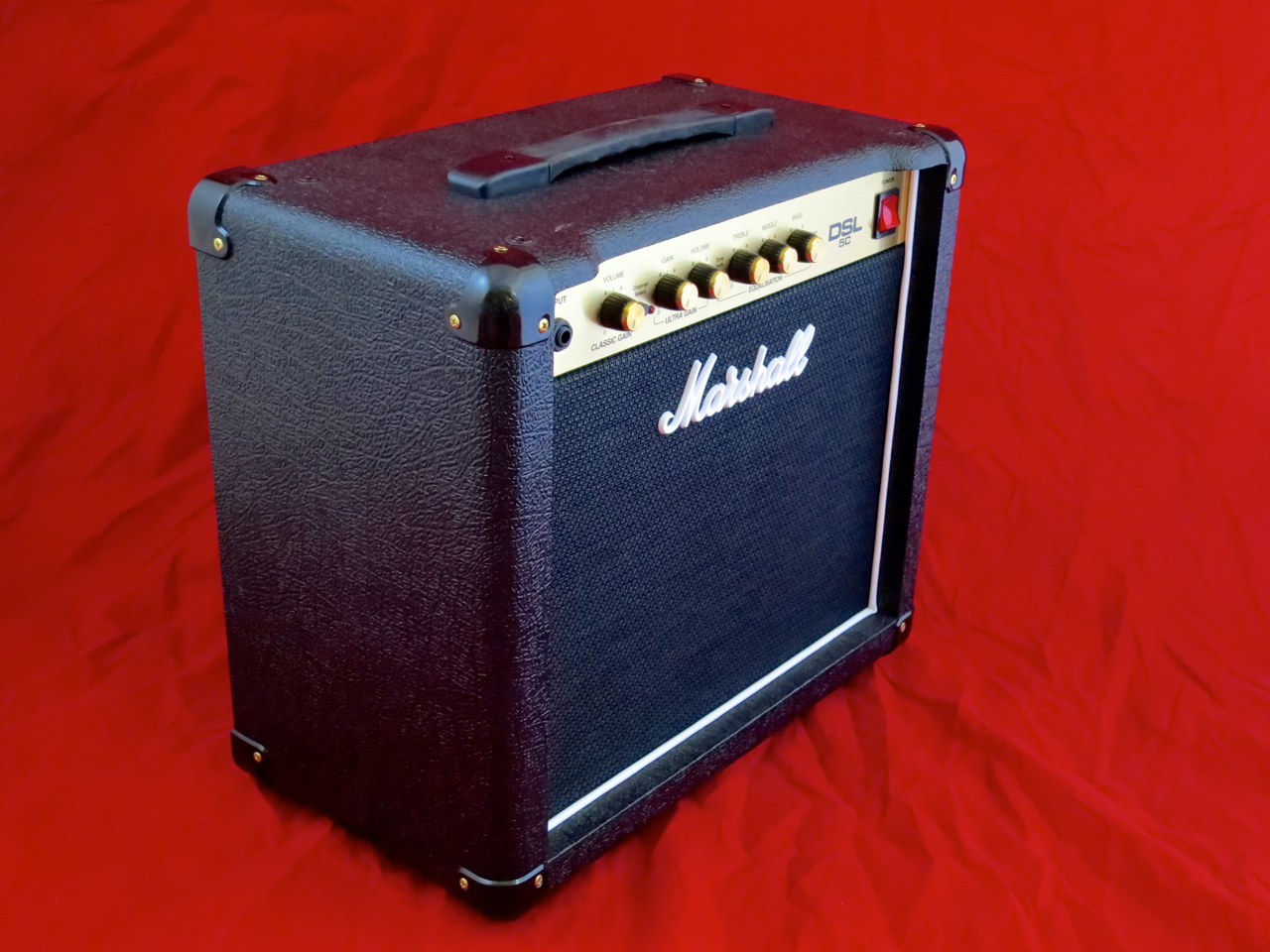
This compact combo weighs less than five kilos, making it very easy to carry, using its rubberised handle.
****

The Marshall DSL5C is a two-channel, all-valve combo:
Channel one – Classic Gain – is voiced to give you a classic Marshall 1959 -style tone and gain structure. The Classic-channel goes from bright and clean all the way to mid-level, classic crunch. Due to the fact that this channel doesn’t have a master volume, distorted sounds can only be had at very high volume levels – unless you switch to Low Power mode (more on this further down).
True to its name, the second channel – Ultra Gain – is made for modern, saturated high-gain sounds.
Both channels share a three-band EQ-section, which means a certain amount of tonal compromises will have to be made. But thanks to the way both channels have been voiced, a shared EQ doesn’t pose any real problems in the Marshall DSL5C’s case.
Pushing in the Tone Shift switch will give you a thinned out, sharper mid-range, making it ideal for many Thrash Metal tones. Engaging Deep bolsters the bottom-end at the output stage for a fatter sound.

The back panel offers you an effects loop, as well as a footswitch jack for the DSL5C’s sturdy channel switch (supplied, see pic below).
There’s a very nifty speaker-emulated output designed into this Marshall combo, which works in two different ways, depending on the setting of the Power-switch:
In Full Power mode the output gives out a line level signal, which can be sent to a mixing console or your recording equipment. The speaker will run even with a plug connected to the output. In Low Power mode (the manual says 0.5 Watts, the website 1 W) the output level is changed to work with headphones, and plugging a pair of cans in will mute the speaker. The Aux In only works in Low-mode, and its signal will be sent directly to the headphones.

****

In my opinion Marshall’s DSL5C is a fantastic-sounding little Rock- and Metal-combo, ideally suited for use in your bedroom, for practice, for recording and for backstage warm-up.
My only small niggle would be with the emulated output of our review sample, which produced more hiss than what I’d have expected. Anyhow, I was able to EQ out most of the hiss for the sound clips, meaning it really isn’t that much of a problem. And then there’s always the possibility that there was something wrong with this particular combo…
The DSL5C’s two channels enable you to get a wide variety of different Rock-, Metal- and Thrash-sounds out of this little combo, depending on your gain-, volume- and EQ-settings, but also on the power mode chosen. Going to Low Power doesn’t only drop your output levels, but also adds a lot of tasty, squashy power amp compression. This means that you can choose between very tight sounds (Full Power) and fatter, compressed tones (Low Power) by using the switch on the back panel.
All sound clips have been recorded in Full Power mode to allow for direct comparison between the miked up sound of the speaker and the speaker-emulated output.
For starters I played my Stratocaster through a clean setting on the Classic-channel (recorded with a Shure SM57):
…and here’s what the same bit sounds like recorded directly via the emulated output:
Here’s the Classic-channel and the neck pickup of my double-humbucker Hamer Studio Custom (miked up):
…and the same clip recorded direct:
Here’s my Strat into the Ultra-channel (Tone Shift off), recorded with the SM57:
…and its speaker-emulated counterpart:
This is the Hamer, tuned to Drop-D into the Ultra-channel (Tone Shift on), miked up:
…and this is the direct recorded version:
****
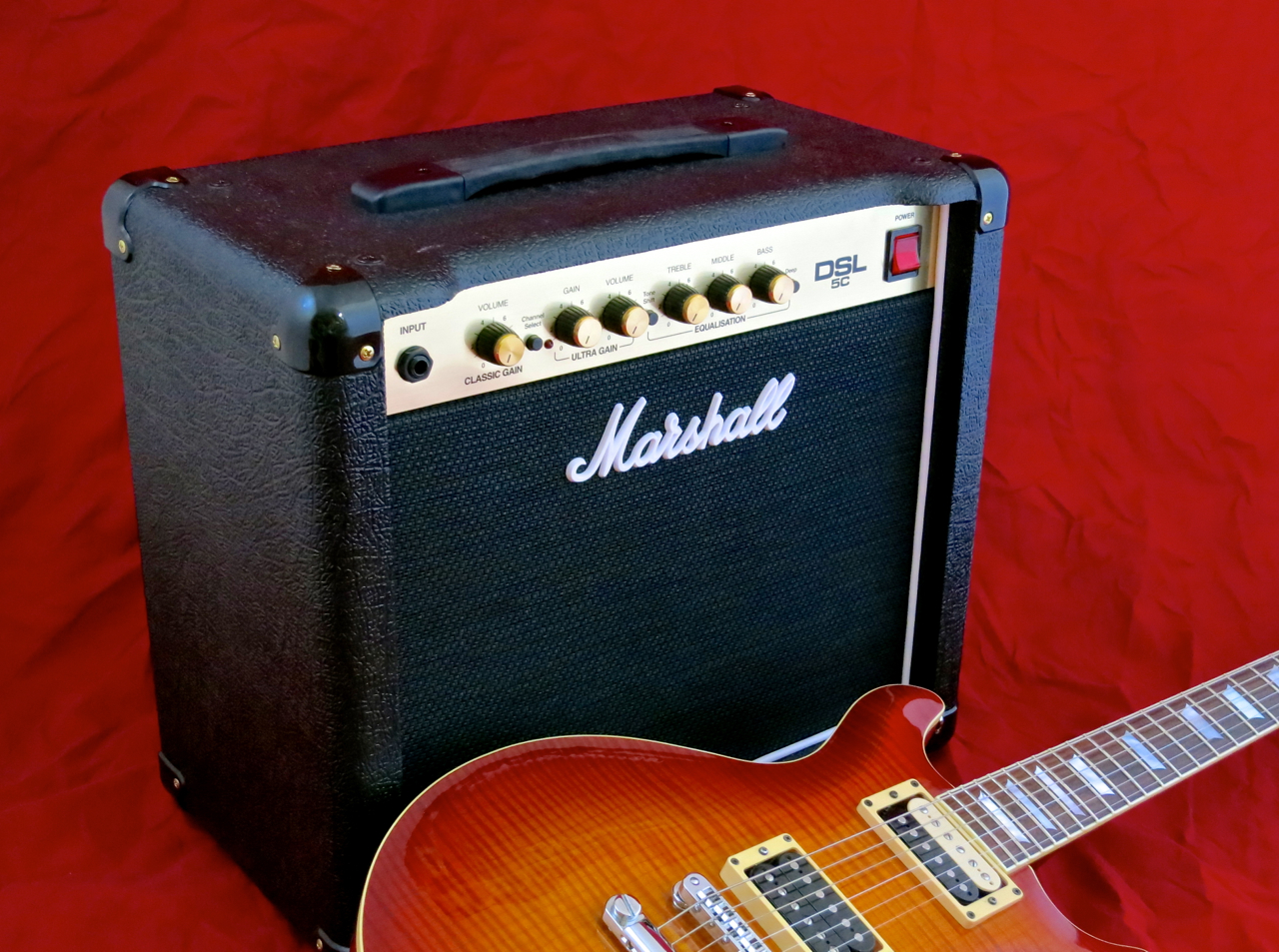
Marshall’s cute and cuddly new five-watter, the DSL5C, is a great choice as a first tube combo (”My first Marshall”), as well as a precision tool for any guitarist in those situations, when high wattage is more of a problem than an advantage (like at home or in the project studio).
The DSL5C delivers genuine, all-valve Marshall-tone in a handy package, and the combo’s Vietnamese origin means it’s also very affordable.

****
Marshall DSL5C
Finnish street price ca. 520 €
Finnish distributor: EM Nordic
We’d like to thank DLX Music Helsinki for the loan of the review amp!
****
Pros:
+ value-for-money
+ finish/workmanship
+ sound
+ two power modes
+ speaker-emulated output
+ footswitch included
Cons:
– noise levels of speaker-emulated output (see text)
****
Marshallin DSL5C on DSL-sarjan uusin, ja samalla myös pienitehoisin jäsen.
DSL-sarjan juuret ulottuvat vuoteen 1997, jolloin Marshallin legendaarinen JCM2000 Dual Super Lead -nuppi julkaistiin. JCM2000 oli silloin ensimmäinen Marshall, jossa oli yhdistetty Plexi-tyylinen vintage-kanava ja moderni Ultra Gain -kanava.
Alkuperäisen DSL-sarjan tuotanto lopetettiin vuonna 2007, jolloin JVM-sarja tuli sen tilalle. Uusi DSL-sarja tarjoaa firman edullisimmat putkivahvistimet, joita valmistetaan Marshallin omassa tehtaassa Vietnamissa.
****
Nimensä mukaisesti Marshall DSL5C (katuhinta noin 520 €) on viisiwattinen, kaksikanavainen putkikombo.
Vahvistimen ulkonäkö – samoin kuin viimeistelyn taso – on ehtaa Marshallia. Vietnamilaisessa tehtaassa laadunvalvonta näyttää pelaavan kiitettävästi, ja kombo tuntuu heti kättelyssä luotettavalta ja kestävältä.
Kotelon rakenne on DSL5C:n tapauksessa avoin. Takaseinän ylempään aukkoon on asennettu metalliritilä, joka suojaa vahvistinputkia kosketukselta ja kitaristin käsiä kuumilta putkilta.
Pikku-Marsun putkivarustus koostuu kolmesta etuasteputkesta (ECC83/12AX7) sekä yhdestä pääteputkesta (ECC99/12BH7).
DSL5C:n kaiutin on 10-tuumainen, keraamisella magneetilla varustettu Celestion Ten 30, jolle luvataan lämmintä bassorekisteriä, sekä monelle Celestion-kaiuttimelle tyypillistä purevuutta preesensalueella.
Tämä kompakti uutuuskombo painaa vain viisi kiloa, minkä ansiosta se on erittäin helppo kuljettaa sen kumimaisella kahvalla.
****
Marshall DSL5C on kaksikanavainen putkikombo:
Ykköskanava – Classic Gain – tarjoaa klassista Marshall 1959 -mallia muistuttavaa soundia ja gain-rakennetta. Classic-kanava ulottuu kirkkaista clean-soundeista keskivahvoihin vintage-säröihin. Koska tähän kanavaan ei ole lisätty omaa Master Volume -säädintä, Classicin särösoundeja saa esiin kuitenkin ainoastaan hyvin kovalla volyymitasolla, silloin kun päätevahvistin on 5 W -moodissa.
Nimensä mukaisesti kakkoskanava – Ultra Gain – on luotu tarjoamaan nykyaikaisia high gain -soundeja.
Molemmille kanaville yhteinen EQ-osasto tarkoittaa luonnollisesti, että soundin kannalta täytyy elää jonkin verran kompromisseja tekemällä, mutta Marshall DSL5C:n tapauksessa tästä ei koidu minkäänlaisia ongelmia.
Tone Shift -kytkimellä saa esiin loudnessmaisia Metal-soundeja, kun taas ilman Tone Shiftiä pikku-Marsulla on täyteläisempi keskialue. Deep-kytkin taas vaikuttaa päätevahvistimen bassotoistoon, ja lisää tarvittaessa muhkeamman bassorekisterin.
Takapaneelista löytyy efektilenkin ohella myös liitin pakettiin kuuluvalle kanavavaihto-kytkimelle (katso alla).
DSL5C:n kaappimallinnettu lähtö toimii kahdella eri tavalla, pääteasteen Power-kytkimen asennosta riippuen:
Power täysille jakki on linjatasoinen lähtö mikserille tai äänikortille, ja kombon oma kaiutin toimii myös silloin, kun linjalähtöä käytetään. Low Power -moodissa (käyttöohjeessa lukee 0,5 W, nettisivulla taas 1 W) sama lähtö toimii kuuloketasolla, ja kuulokkeen liittäminen jakkiin mykistää vahvarin oman kaiutinta.
****
Marshall DSL5C on mielestäni erittäin hyvältä kuulostava Rock- ja Metal-kombo koti-, harjoitus-, äänitys- ja warm up -käyttöön.
Ainoa kritiikkini kohdistuu kombon kaappimallinnettuun lähtöön, joka – ainakin testikoneessa – kohisi enemmän kuin mitä olisin odottanut. Tässä voi kuitenkin olla hyvinkin kyse yksilöviasta.
DSL5C:n kahdesta kanavasta saa esiin hyvin erilaisia soundeja, riippuen etupaneelin gain- ja volume-säädöistä, mutta myös päätevahvistimen Power-kytkimestä. Päätetehon pudottaminen aiheuttaa headroomin kutistamisen, mikä nostaa selvästi kompression määrää entisestään. Power-moodin valinnassa ei siis ainoastaan ole kyse pelkästä volyymistä, vaan myös siitä halutaanko soundista tiukemman (Full Power) vai muhkeamman (Low Power).
Kaikki ääninäytteet on äänitetty Full Power -moodissa.
Tässä ensin Stratocaster soitettu Classic-kanavan kautta Shure SM57 -mikrofonilla poimittuna:
…ja tässä sama pätkä linjalähdön kautta:
Tällainen on mikitetty puhdas soundi Hamer Studio Customin kaulamikillä soitettuna:
…ja sama pätkä linjalähdön kautta:
Tällainen on Straton soundi Ultra-kanavan kautta (Tone Shift on pois päältä) SM57 äänitettynä:
…ja sama pätkä linjalähdön kautta:
Tässä soitan Hamer-kitaraa Drop-D-virityksessä Ultra-kanavaan (Tone Shift päällä):
…ja sama linjalähdön kautta poimittuna:
****
Marshallin viisiwattinen DSL5C sopii loistavasti sekä ensimmäiseksi putkikomboksi (”My first Marshall”) että varttuneen soittajan työkaluna, sellaisissa tilanteissa, joissa isosta styrkkarista on enemmän haittaa kuin hyötyä (esim. kotistudiossa tai olohuoneessa).
DSL5C tuo aidon Marshall-soundin myös pieneen huoneeseen, ja kombon vietnamilaisen alkuperän ansiosta tämän putkivahvistimen hinta on kukkarolle ystävällinen.
****
Marshall DSL5C
Katuhinta noin 520 €
Maahantuoja: EM Nordic
Kiitos DLX Musiikille testivahvistimen lainasta!
****
Plussat:
+ hinta
+ viimeistely
+ soundi
+ päätevahvistimen tehonpudottaja
+ kaappimallinnettu lähtö
+ jalkakytkin kuuluu hintaan
Miinukset:
– linjalähdön kohinataso

****

Vox’ legendary Sixties guitars, the Mark III and the Mark V – aka the Vox Teardrop (Mark III) and the Vox Phantom (Mark V) – have made a comeback! These Brit Boom-guitars have claimed their place in history as the chosen axes of the Rolling Stones’ original lead guitarist Brian Jones (Mark III) and Tony Hicks (Mark V) of the Hollies.
But the best news is that these new versions come at quite affordable prices!
****

The Vox Mark III (current price in Finland approx. 355 €) sports a symmetrical body, which calls to mind old lutes or the Greek bouzouki.
This reissue comes with a short 22-inch scale (610 mm), making it an ideal beginner’s instrument.

The Teardrop is build from a basswood body and a bolt on maple neck. The fretboard is crafted from rosewood.

The new, smaller version of the legendary Vox-headstock cuts down on neck weight and thus improves the guitar’s balance.

The Mark III is equipped with a set of modern sealed tuning machines that sport off-white buttons.
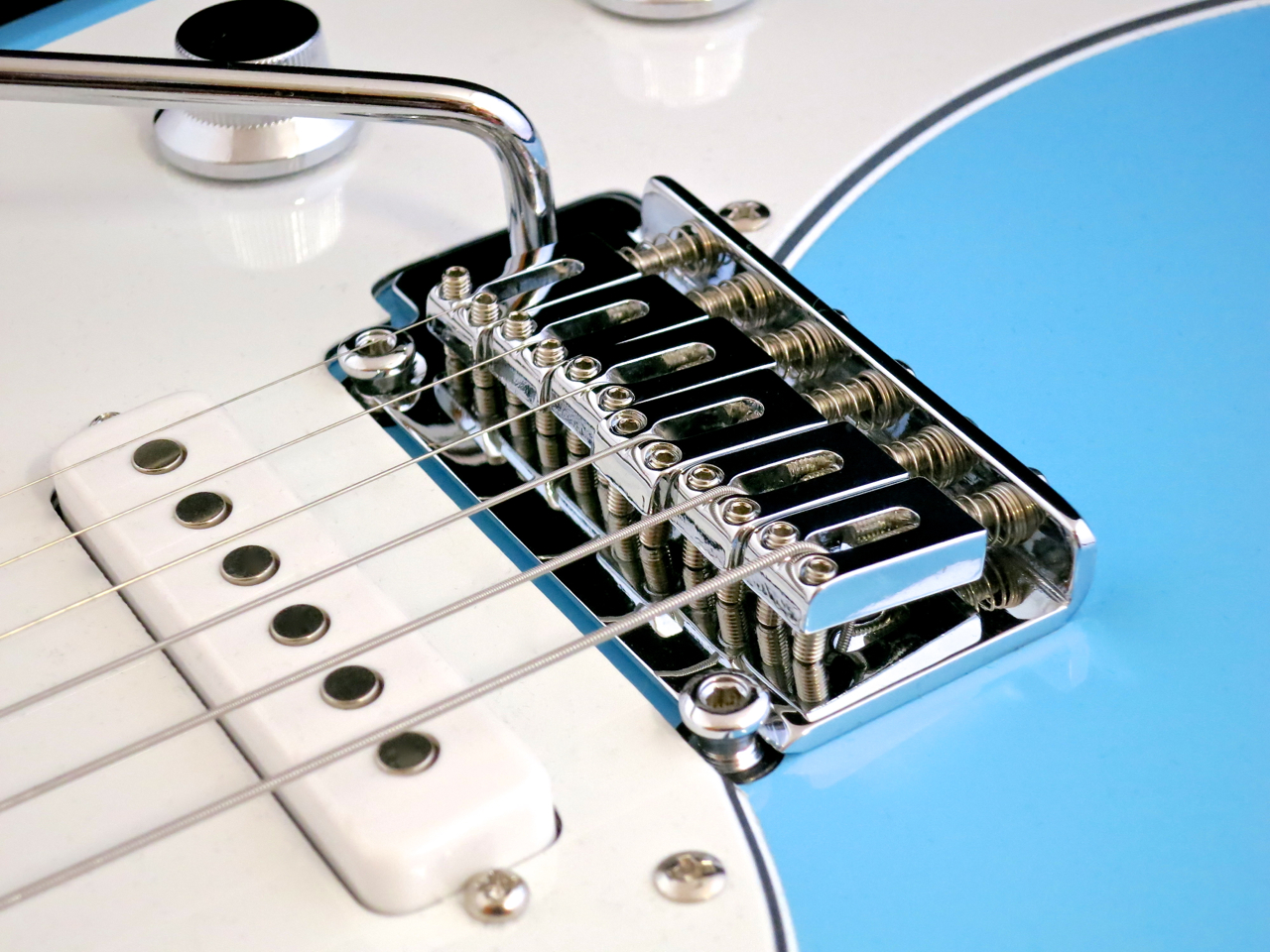
Both Voxes comes with a modern two-post vibrato bridge.

Three springs are factory-installed, but you can find a fourth spring in the gig bag, should you desire a firmer feel.
Vintage-snobs probably will scoff at the narrow tremolo block used in this vibrato. There are claims that this type of block diminishes sustain, but on the other hand Floyd Rose systems also use narrow blocks and nobody’s complaining.

There are three singlecoil pickups mounted to the three-ply scratchplate, meaning we’re in for a nice, sprightly vintage tone in all likelihood.
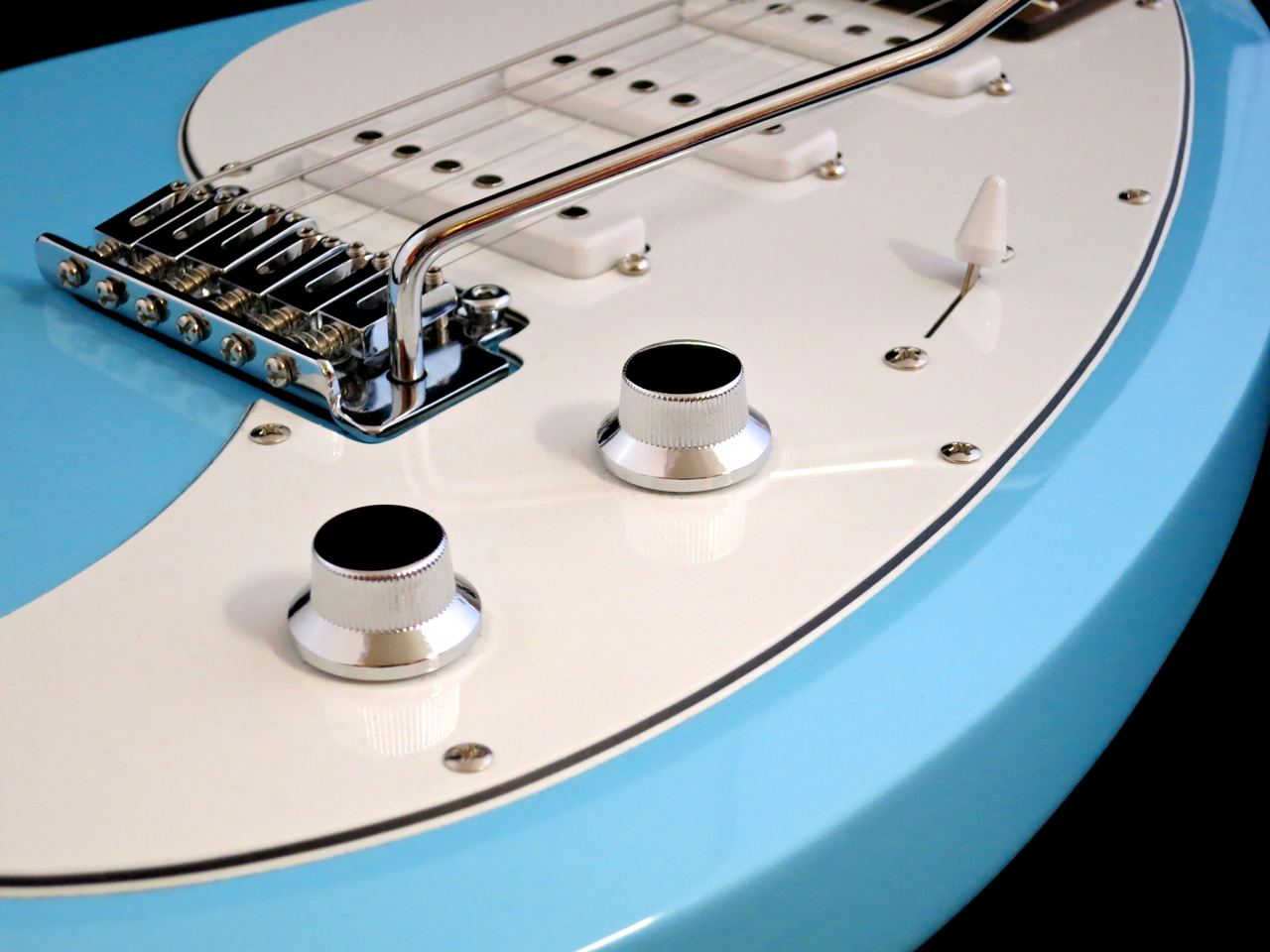
The traditional passive electronics comprise a five-way switch, as well as a master volume and a tone control.
****

The basic ingredients for the angular Vox Mark V (current price in Finland approx. 355 €) are virtually the same as in the Mark III.

There’s a rib cage contour in the Phantom’s basswood body, too.
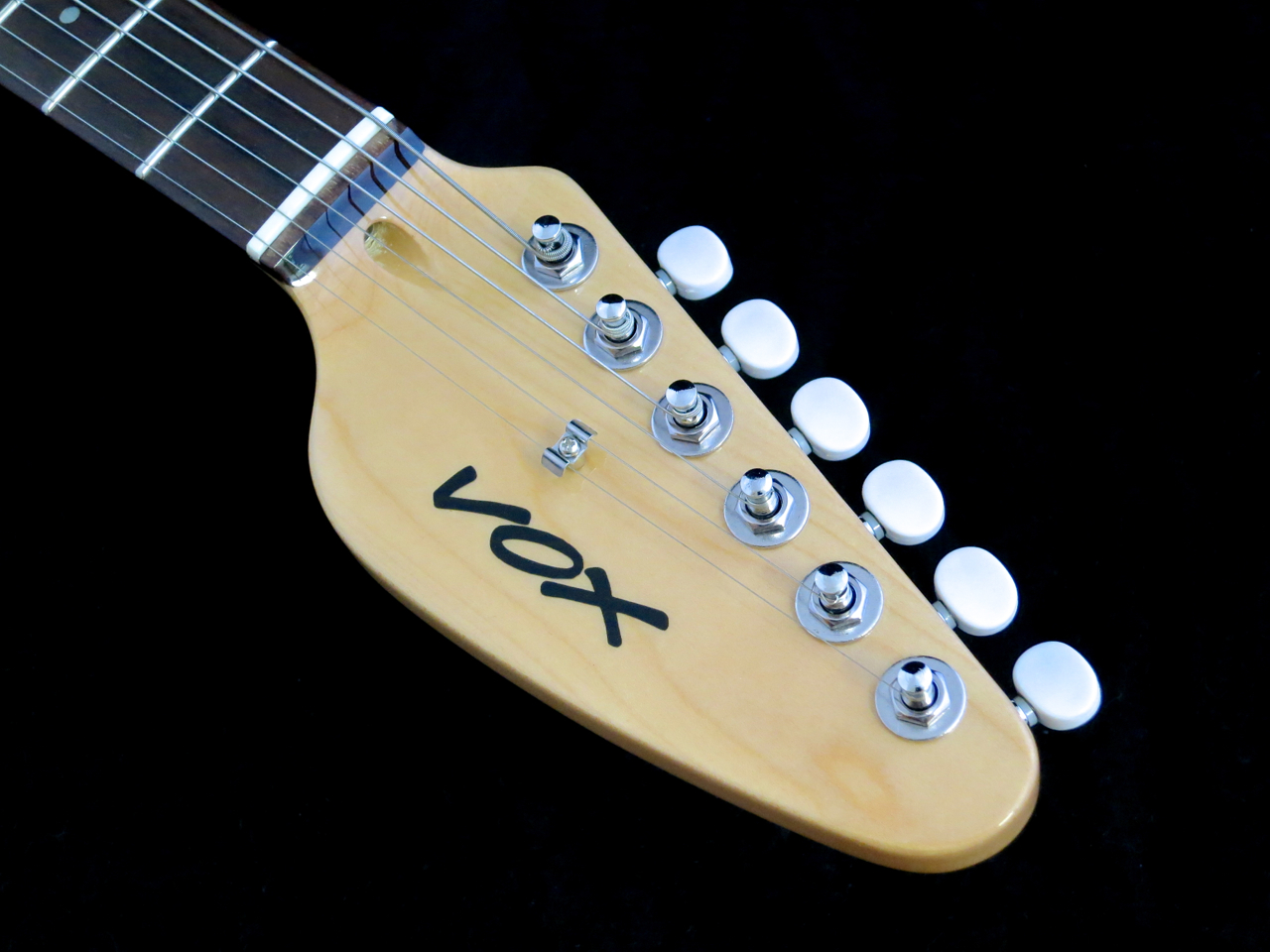
Both Mark-models feature gloss-finished maple necks with truss rod access at the headstock.

The vibrato bridge is surrounded the large pickguard of the Mark V.
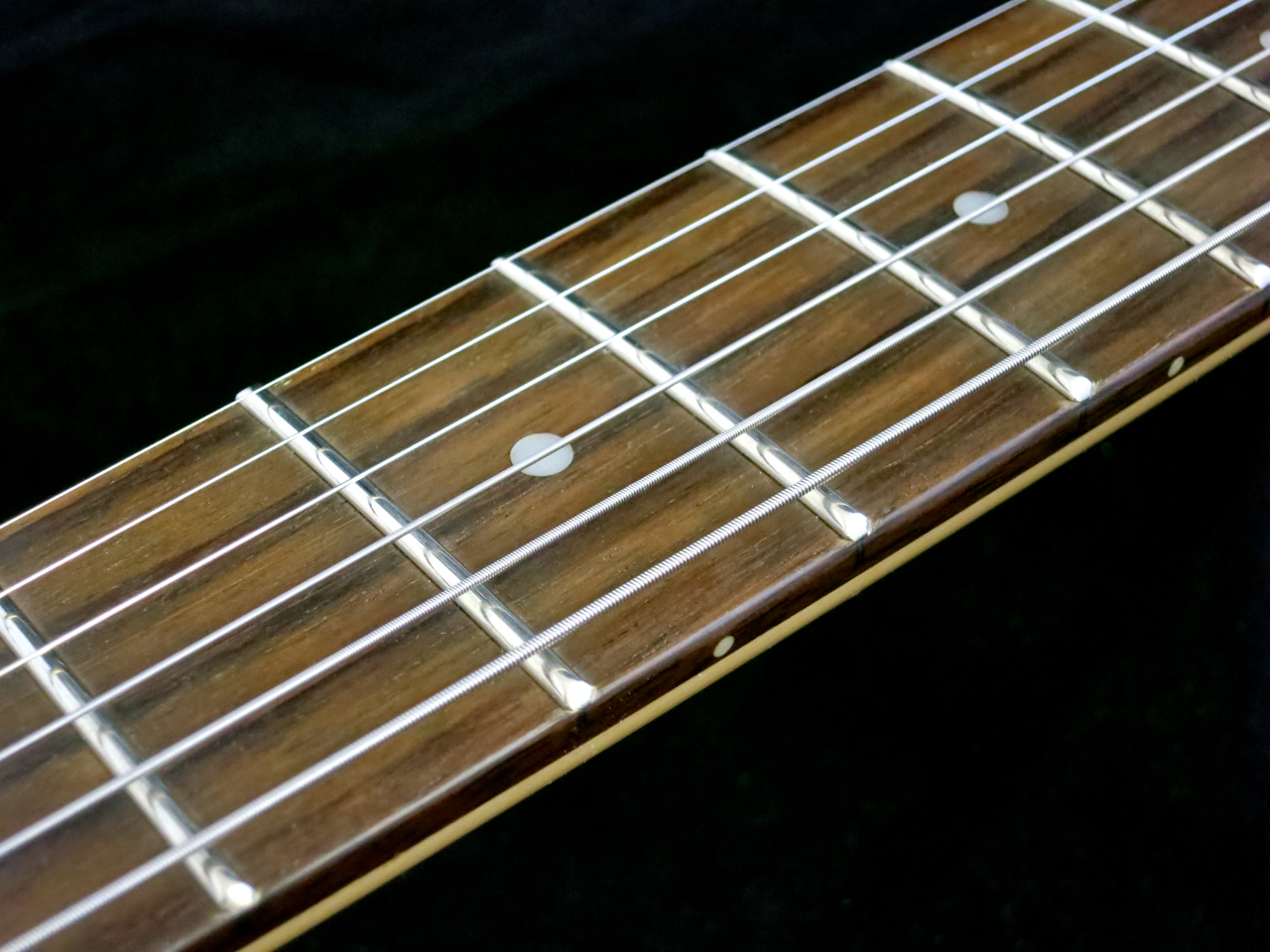
Both Voxes display very decent fretwork, which isn’t always a given in this affordable price bracket. The frets have been polished to a gleam and all ends have been rounded off carefully.
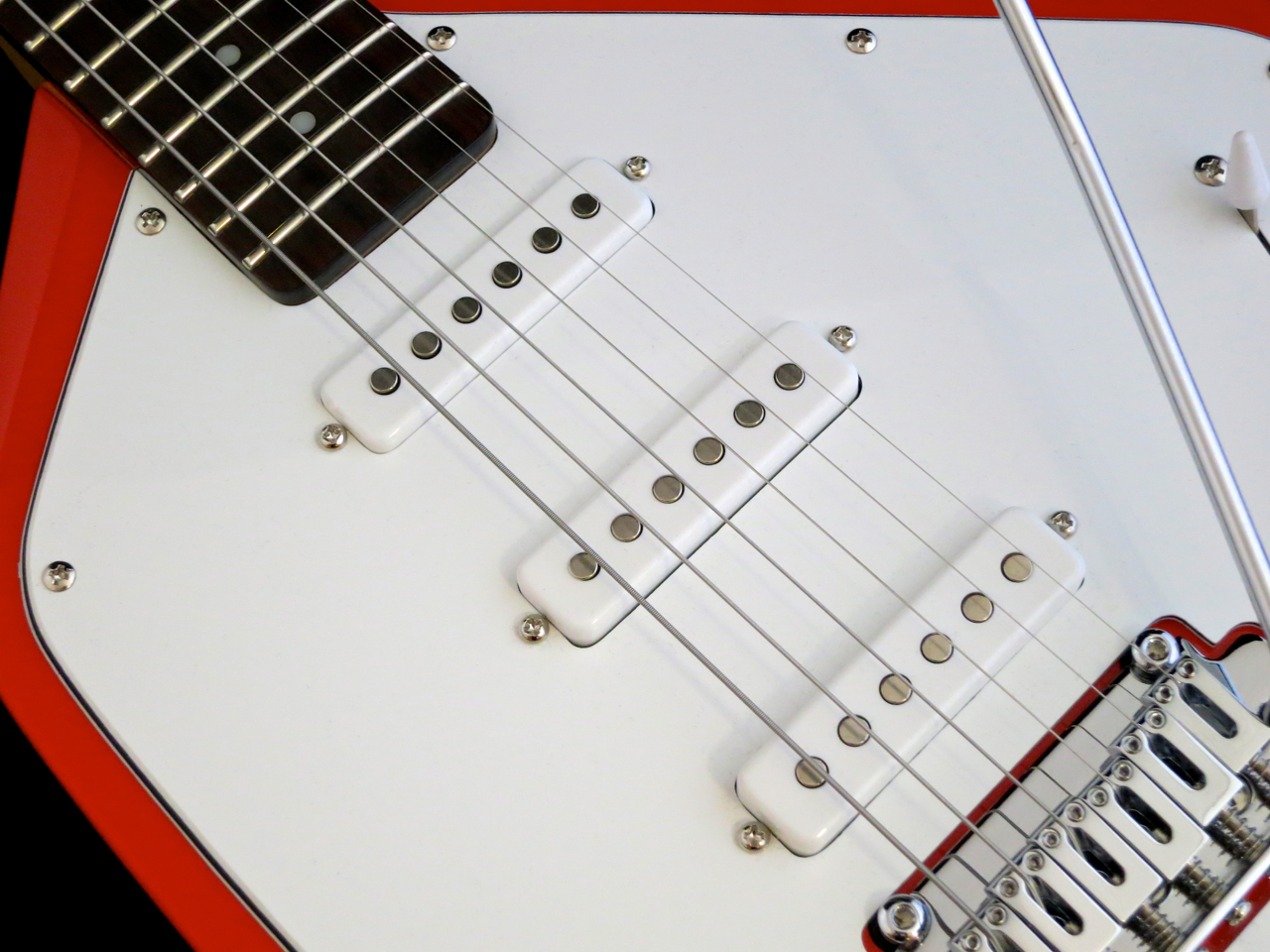
Vox Mark V Phantom is equipped with the same pickups…

…and the same controls as the Mark III Teardrop.
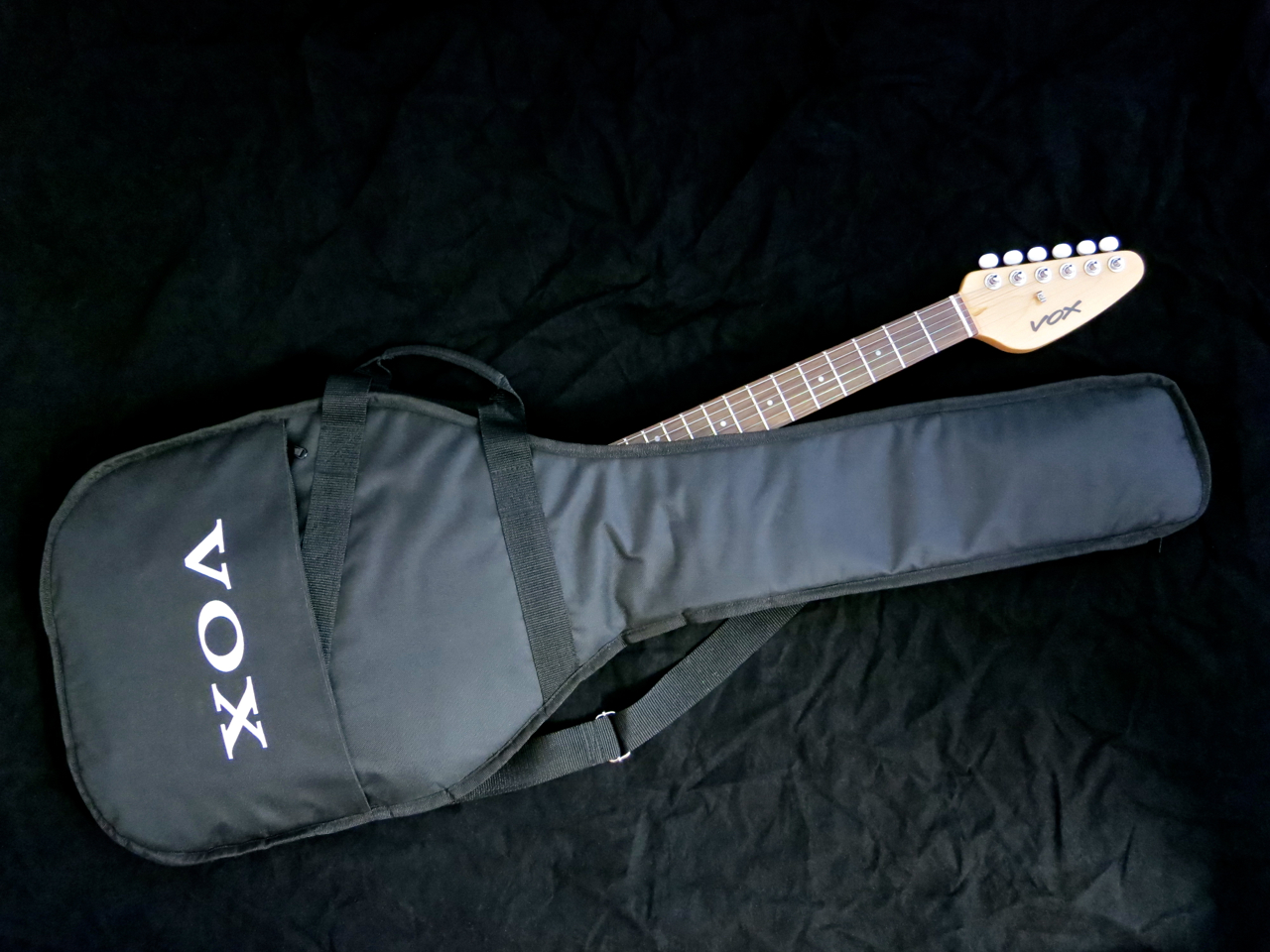
Both Vox Marks are sold with a nice gig bag!
****
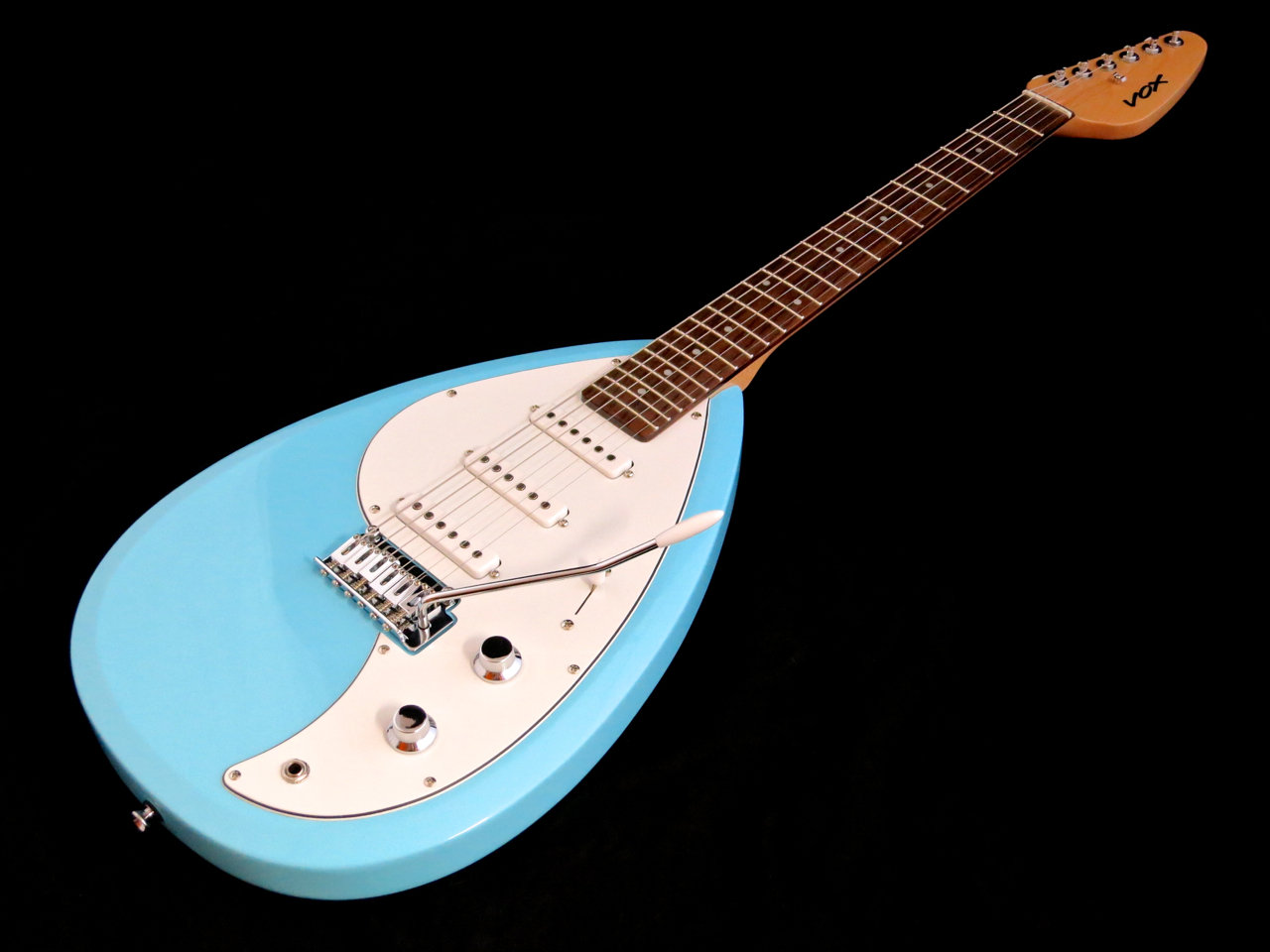
The Vox Mark III is a very compact electric guitar, with our test sample also being nicely light in weight. Due to its very rounded body the Terdrop probably isn’t the most comfortable ”sofa guitar”, but on a strap everything feels hunky dory.
The whole vibe is quite reminiscent of, say a Fender Mustang, no doubt because of the Mark III’s short-scale, gloss-finished neck with its round D-profile. With the factory set of 010-gauge strings bending is very effortless. Our test sample’s very low – but buzz free – action (E: 1,6 mm/e: 1,3 mm) pays testament to Vox’ workmanship. Used in moderation the vibrato works decently, but don’t expect Floyd Rose-style return to pitch.
The Vox Mark III rings very nicely with a fresh and firm acoustic voice.
The clean tones of the Vox Teardrop works great in a Sixties-style poppy, jangly context or for funky workouts:
Add some overdrive for some nice, sinewy vintage Rock-sounds:

****

The Vox Mark V doesn’t seem to want to fit in you lap – it takes a while to get comfortable, when playing sitting down. Our lightweight test samples’ strapped-on balance proved to be excellent, though.
In most respects the Phantom feels very similar to the Mark III, with its comfortable, vintage-style neck. Straight out of the gig bag our test sample’s intonation was a bit fruity on a couple of strings, but this was corrected in no time with the correct screwdriver. The action was set quite low (E: 1,6 mm/e: 1,1 mm) on the Mark V, too. And again, as with the Teardrop, the Phantom still rang nice and true without any rattling. Well done, Vox! Should you prefer a slightly firmer feel, I’d suggest moving up to a 011-gauge string set.
Both Voxes sound almost indentical – acoustically, as well as amped up.
This is the Mark V Phantom’s clean delivery, played through a small Marshall combo:
I really like the gritty and slightly rude Rock-sounds you can get from the Mark V:

****

Due to their unconvetionally-shaped bodies, Vox’ Mark range always runs the slight risk of being regarded as mere ”poser guitars”, better suited to music videos that to actually making music.
This is far from the truth, though, because these new versions of the Mark III and Mark V really deliver nicely vintage-tinged sounds for the Pop, Beat, Blues, and Classic Rock genres. In view of their pocket-friendly prices, quality workmanship, quirky looks and great sounds, I can only applaud Vox for bringing back the classic Teardrop and Phantom models. Try one!

****
Vox Mark-series guitars
Vox Mark III Teardrop – 355 €
Vox Mark V Phantom – 355 €
Finnish distributor: EM Nordic
A big thank you goes to DLX Music Helsinki for the loan of the review guitars!
****
Pros (both models):
+ classic looks
+ workmanship
+ playability
+ sound
+ gig bag included in price
Cons (both models):
– not the most natural ”sofa guitars”
****
Voxin 1960-luvun Mark III- ja Mark V -kitarat – jotka tunnetaan myös nimillä Teardrop (Mark III) ja Phantom (Mark V) – ovat jälleen saatavissa musiikkikaupoista. Brittiboomi-mallien tunnetuimmat käyttäjät olivat 1960-luvulla Rolling Stonesien Brian Jones (Mark III) ja Hollies-yhtiön Tony Hicks (Mark V).
Todella ilahduttavaa on, että uusi Vox-kaksikko on saatavilla erittäin maltillisella hinnalla.
****
Vox Mark III (355 €) muistuttaa symmetrisellä rungollaan hieman kreikkalaista busukia.
Uusintapainos valmistetaan lyhyellä 22-tuuman (610 mm) mensuurilla, minkä ansiosta se sopii hyvin myös nuorten soittimeksi.
Lehmusrunkoon ruuvattu kaula on veistetty vaahterasta, ja Teardropin otelauta on palisanteria.
Legendaarinen Vox-lavan uusi versio on hieman pienempi kuin alkuperäinen ja mielestäni paljon alkuperäistä kätevämpi.
Nykyaikaisissa suljetuissa virittimissä on valkoisia muovinuppeja.
Vox Mark III on varustettu nykyaikaisella vibratallalla.
Tehtaalta Mark III ja Mark V lähtevät kolmella jousella varustettuina, mutta topatussa pussissa on pakattu vielä yksi jousi mukaan.
Vintage-snobit eivät luultavasti tykkää tämän vibran ohuesta blokista, koska sanotaan, että sustainin kannalta massiivisempi on parempi. Toisaalta myös Floyd Rose -vibroissa käytetään vintagea ohuempaa blokkia.
Vox-mallin kolmesta yksikelaisista voi varmasti odottaa raikasta soundia kuuskytluvun hengessä.
Elektroniikka koostuu yhdestä viisipykäläisestä kytkimestä, sekä master tone- ja master volume -säätimistä.
****
Kulmikkaan Vox Mark V:n (355 €) perusresepti on periaatteessa sama kuin Mark kolmosessa.
Myös Fantomin lehmusrunkoon on lisätty mukavuusviiste soittajan kylkiluita/vatsaa varten.
Mark-mallien kaulat ovat samanlaisia, aina kiiltävää viimeistelyä myöten.
Mark V:ssa kolmikerroksinen pleksi ympäröi kitaran vibratallaa.
Vox-soittimien nauhatyö on yllättävän laadukasta, kun katsoo Mark-mallien hintalappuja. Nauhat on kiillotettu ja niidet päät on pyöristetty huolellisesti.
Vox Mark V Phantom -kitarassa käytetään samoja mikrofoneja…
…sekä samaa elektroniikkaa kuin Mark III Teardropissa.
Topattu pussi kuuluu Mark-malleissa hintaan!
****
Vox Mark III on erittäin kompakti kitara, ja testissä käynyt yksilö mukavan kevyt. Rungon pyöreän muotoilun takia Teardrop ei ole ehkä maailman luontevin ”sohvakitara”, mutta hihnan varressa kitaraa on hyvin mukava kantaa.
Lyhyen skaalan ja kiiltäväksi lakatun, pyöreällä D-profiililla varustetun kaulan ansiosta tällä Voxilla on samantyyppiset vibat kuin esimerkiksi Fenderin Mustang-mallissa, ja tehdaskieliä (010-satsi) on erittäin helppoa venyttää. Vaikka kielet oli säädetty hyvin lähelle otelautaa (E: 1,6 mm/e: 1,3 mm), Mark III Teardrop soi puhtaasti ja rämisemättä. Vibratalla toimii maltillisesti käytettynä hyvin, mutta Floyd Rosen haastajaksi sitä ei tietenkään ole.
Vox Mark III:n akustinen ääni on hyvin Fender-mainen, mutta samalla kauniin lämmin.
Vox Teardrop -mallin puhdas soundi sopii vaikkapa rautalankaan tai funk-musiikkiin:
Säröpuolella homman nimi on Vintage Rock:
****
Vox Mark V on sylissä hieman vastahakoinen tapaus, ja hyvän soittoasennon löytämiseen menee tovi. Kevyt testiyksilö roikkuu kuitenkin hihnassa todella hyvässä tasapainossa.
Phantomin soittotuntuma on erittäin lähellä Teardrop-mallia, nimittäin vintage-tyylinen ja mukava. Testiyksilössä intonaatio oli säädetty kahdelle kielelle hieman nuotin vierestä, mutta homma hoitui nopeasti ristiruuvarilla. Kitaran tatsi oli säädetty myös Vox Mark V:ssa hyvin kevyeksi (E: 1,6 mm/e: 1,1 mm). Jos haluaa soittotuntumasta vielä kiinteämmän, suosittelisin pykälän paksumman 011-satsin käyttämistä.
Molemmat Vox-kitarat kuulostavat miltei samalta, sekä akustisesti että vahvistimen kautta soitettuina.
Tällainen on Mark V Phantomin puhdas soundi pienen Marshall-kombon kautta soitettuna:
Mark V:n Rock-soundista löytyy mukavasti karkeutta ja asennetta:
****
Vox Mark -mallien erikoisten runkomuotojen takia voisi helposti erehtyä lokeroimaan Teardrop- ja Phantom-kitarat pelkiksi ”musiikkivideo-kitaroiksi”.
Totuus on kuitenkin, että sekä Mark III että Mark V toimivat ilahduttavan hyvin Pop-, Beat-, Blues- ja Classic Rock -genreissä. Uudet Voxit tarjoavat roimasti vastinetta rahalle, koska niiden soitettavuus ja soundi ovat enemmän kuin kohdillaan. Suosittelen!
****
Vox Mark -sarjan kitarat
Vox Mark III Teardrop – 355 €
Vox Mark V Phantom – 355 €
Maahantuoja: EM Nordic
Suuri kiitos DLX Musiikille testisoittimien lainaamisesta!
****
Plussat (molemmat mallit):
+ ulkonäkö
+ työnjälki
+ soitettavuus
+ soundi
+ topattu pussi kuuluu hintaan
Miinukset (molemmat mallit):
– eivät istu kovin luontevasti sylissä








 Kitarablogi.com – Finland's premier Guitar and Bass blog