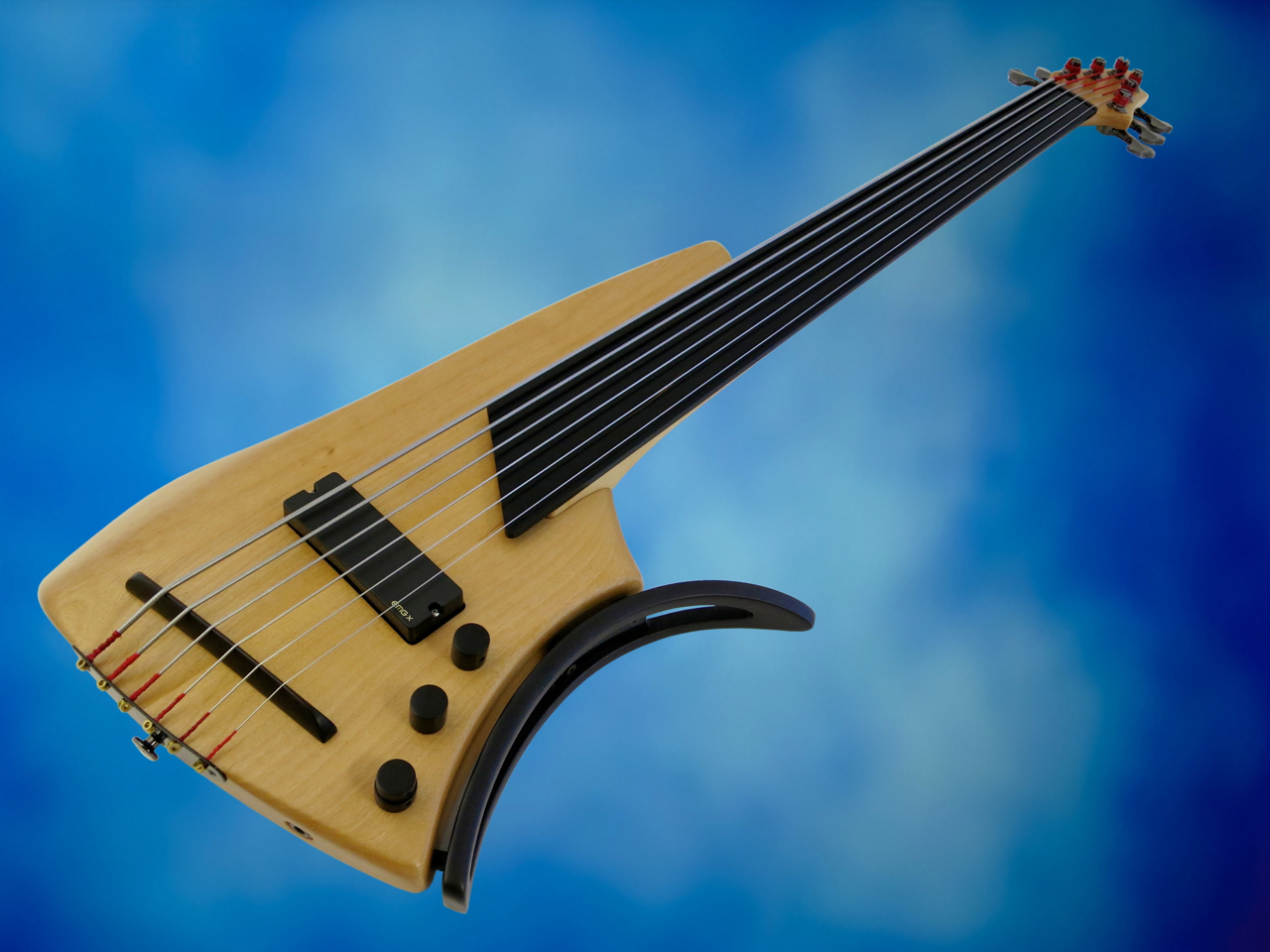
Juha Savisalo 6-String Bass Prototype – the Kitarablogi video

Kitarablogi.com – Finland's premier Guitar and Bass blog
Juttuja kitaroista ja bassoista

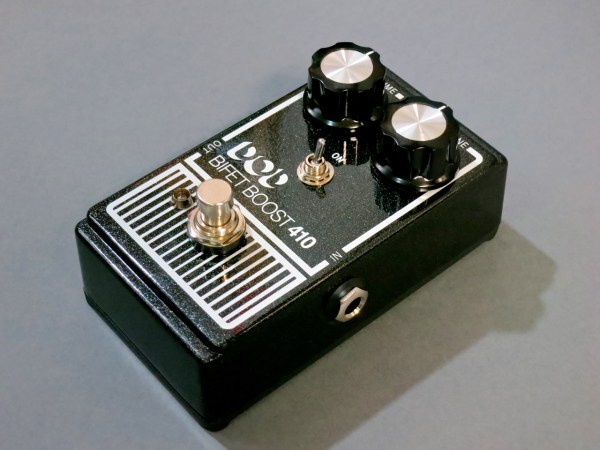
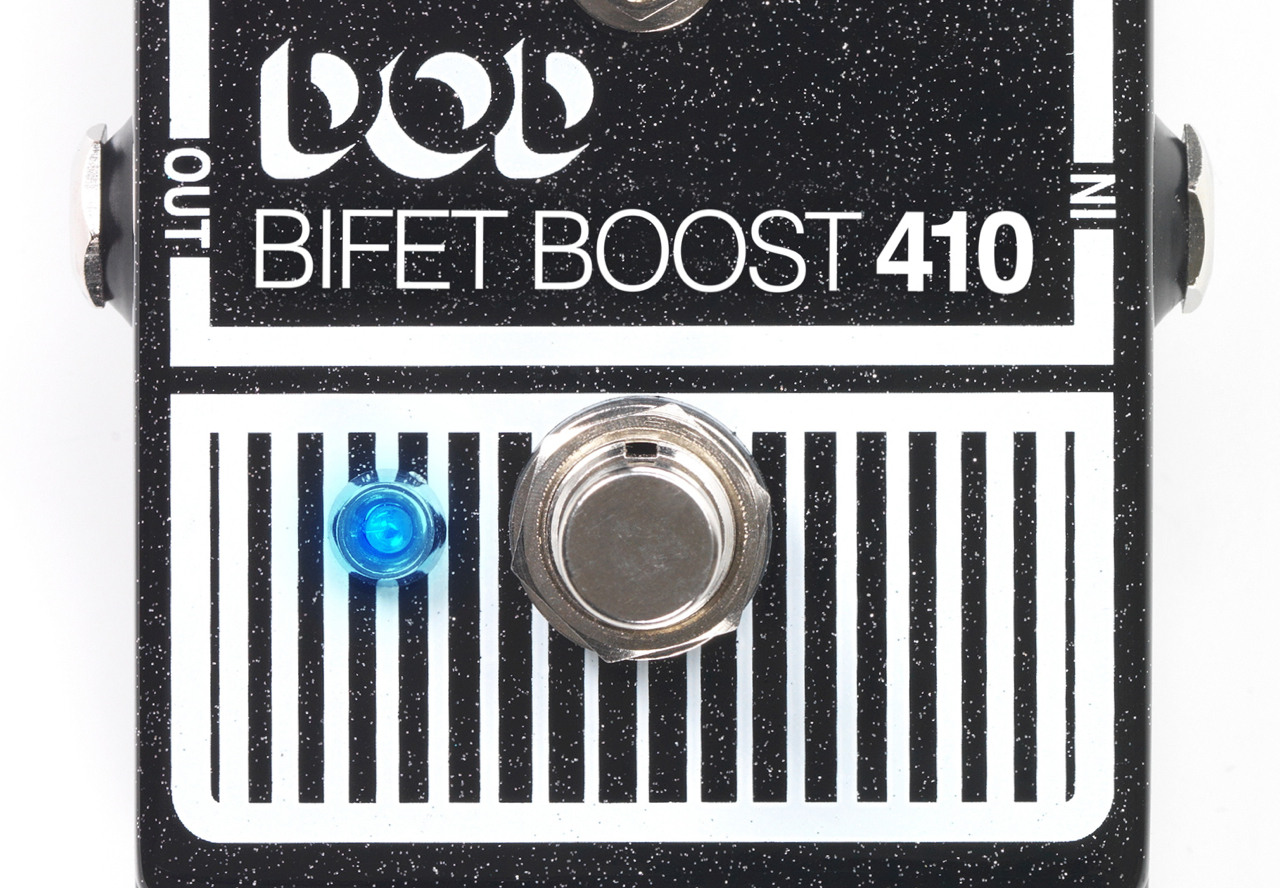
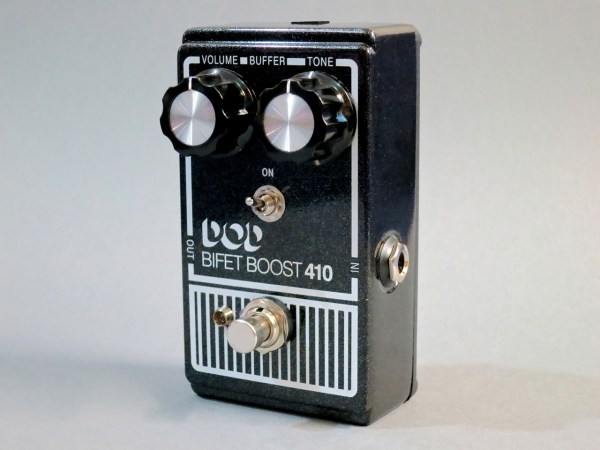
DOD has introduced an updated version of its Bifet Boost 410 pedal this year – the 2014-version adds a switchable buffer to the circuit.
****
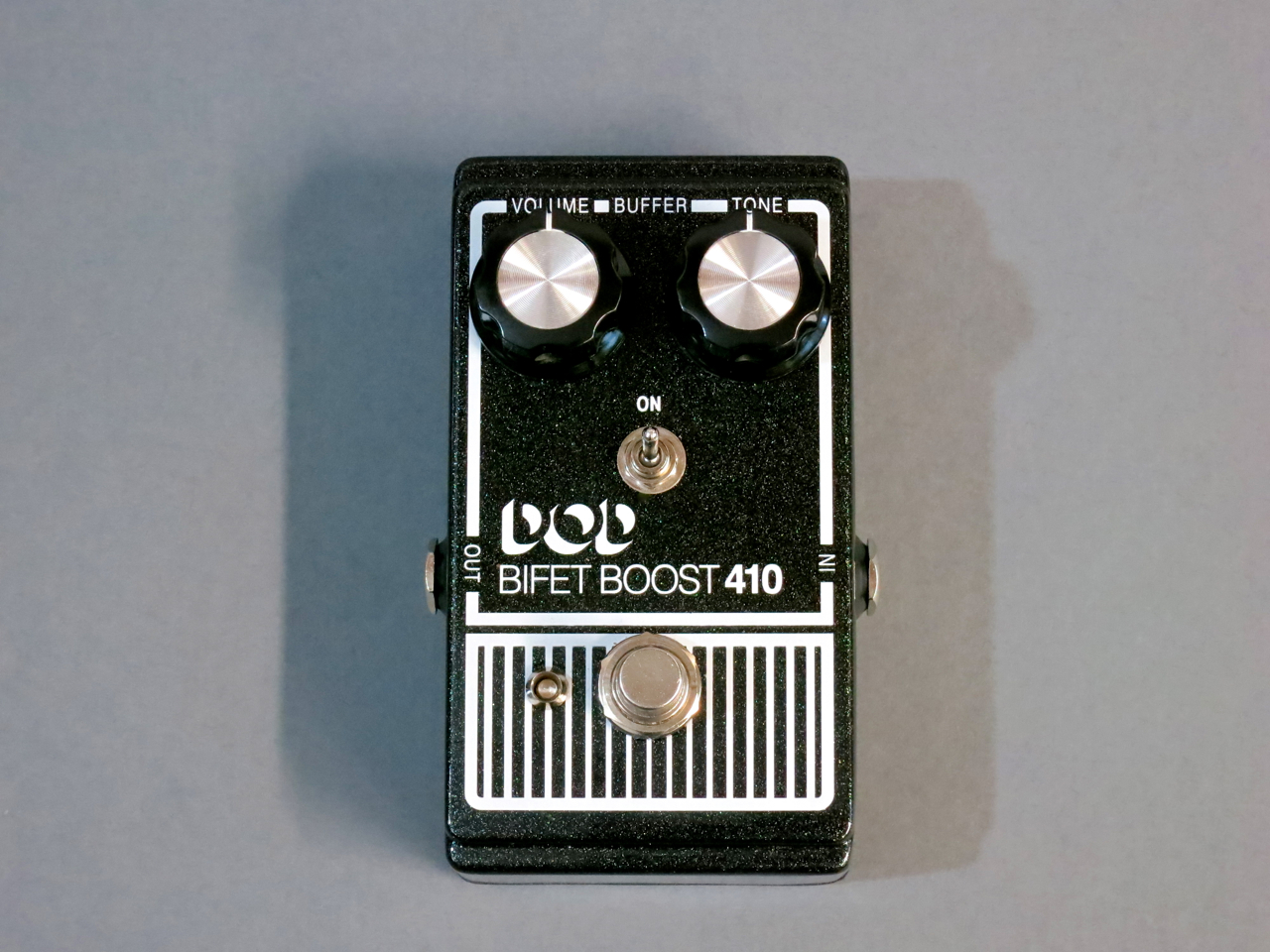
The DOD Bifet Boost 410 (current price in Finland: 99 €) is a signal level booster, giving you up to a whopping 20 dB of amplification.

The booster sports two controls – one for volume and one for tone.
Over the last few years, the term ”true bypass” has become the new marketing buzzword, bandied about frequently to ”prove” one pedal’s superiority over another. In reality there’s no mystique attached to true bypass – it simply means that when the pedal is switched off the input is hardwired straight to the output, without passing through any of the effect’s circuitry. If a pedal’s manufacturer doesn’t state true bypass in the spec list, chances are the pedal in question has an internal buffer, which stays in the signal chain even when the effect is off. A buffer is a small amplifier, whose main purpose lies in changing the signal’s impedance from high to low. Most buffer amps don’t amplify the signal level at all (= a gain ratio of 1:1), while some add a tiny bit of treble boost. A high impedance signal suffers from far greater degradation, when fed through a long signal chain (or very long guitar leads), than a low impedance signal. This means that a buffered bypass can come in handy, if you’re using a lot of effect pedals in series. True bypass is usually preferable in smaller set-ups, or if the effect in question sits in front of a fuzz pedal (fuzz pedals generally need a high impedance signal to function properly).
The updated DOD Bifet Boost 410 pedal offers a switchable buffer, so you can decide whether you want to use a buffer or not. You get the buffer in the mini-switch’s On-position, or true bypass with the switch turned off.

The Bifet Boost 410 can be run using a 9 volt battery or a (Boss-type) power supply (not included).
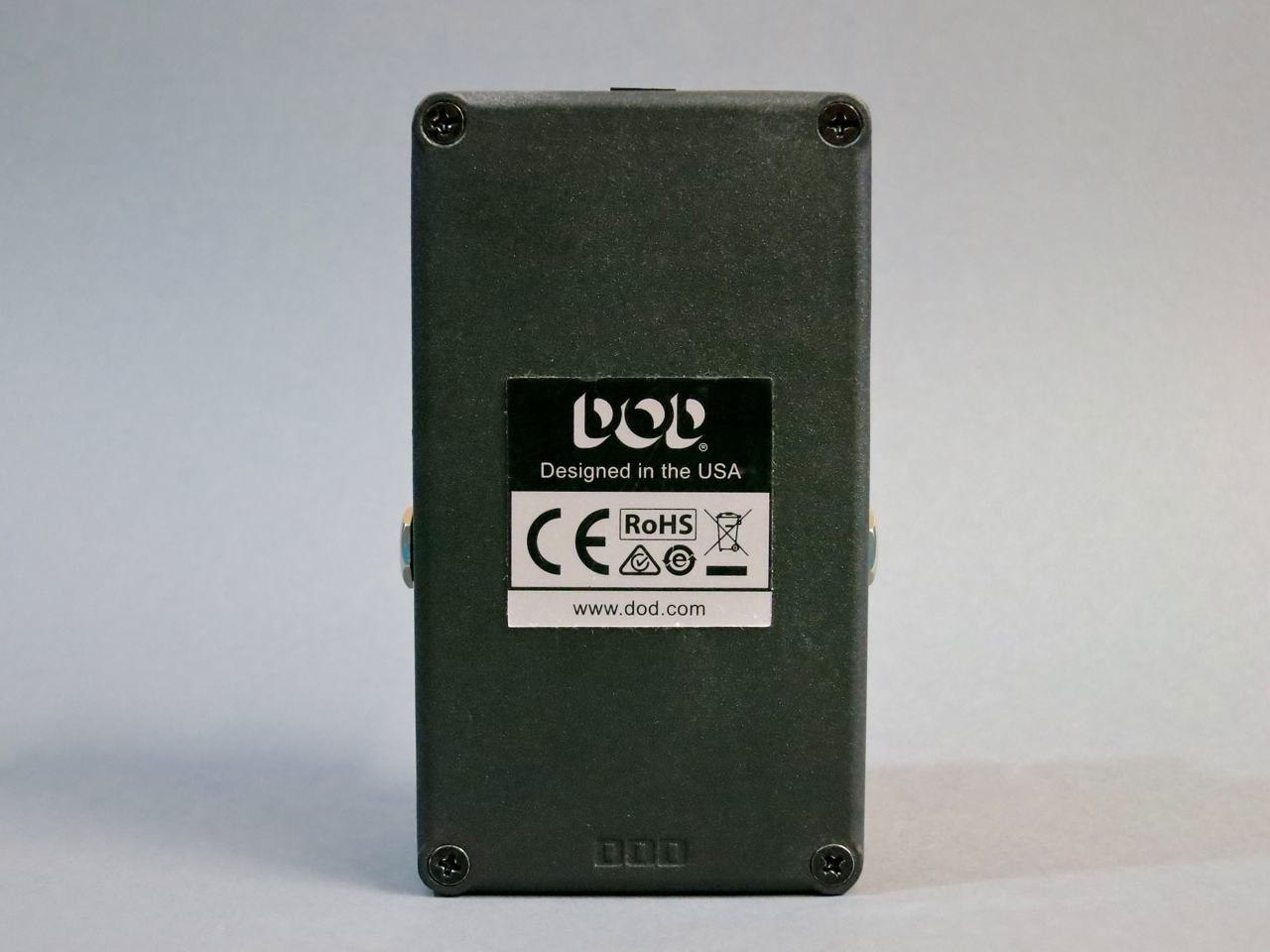
You need to take off the pedal’s metal base plate to change batteries.
The package includes four small stick-on rubber feet, which you can use when the pedal’s not used on a pedalboard.
****
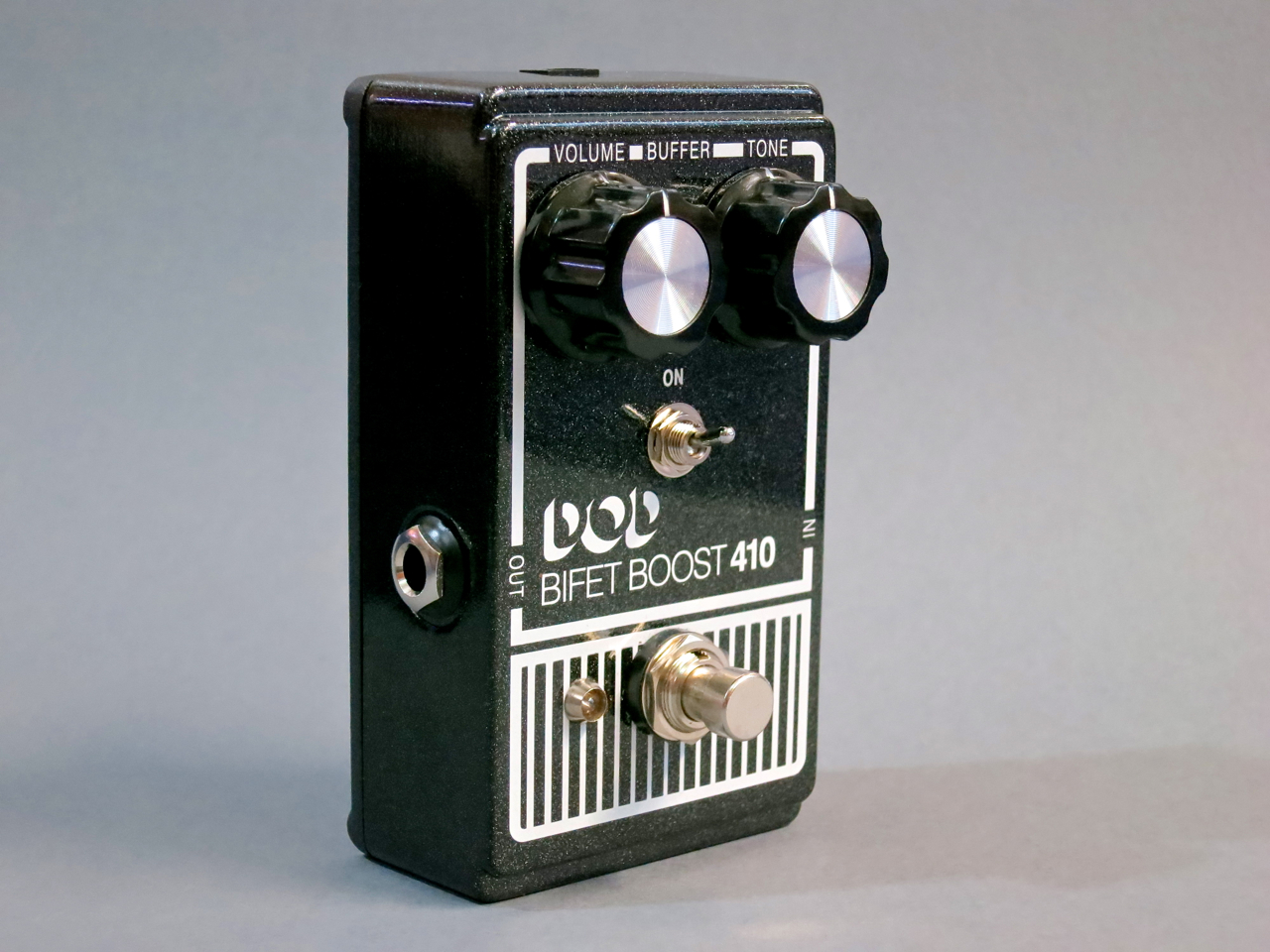
Usually, boost pedals can be divided into two categories: Those who provide a completely clean and neutral boost, and those who add a little colour and/or grit to the signal. The DOD Bifet Boost 410 belongs in the latter category, adding a little extra character to the mid-range frequencies, along with the raise in signal level.
Using the booster on a clean amp channel may push the guitar signal into overdrive, depending on the amount of headroom offered by the amp used. In this example you can clearly hear the Blackstar HT-1R’s sound break up and distort:
Used into a crunchy channel, the DOD-booster will add more chunky gain to to your tone:
You can use the tone control to add quite a lot of top end to your sound. You have to remember, though, that the sheer amount of gain on tap in this pedal will also boost any noise (hiss, hum) in your signal chain:

****
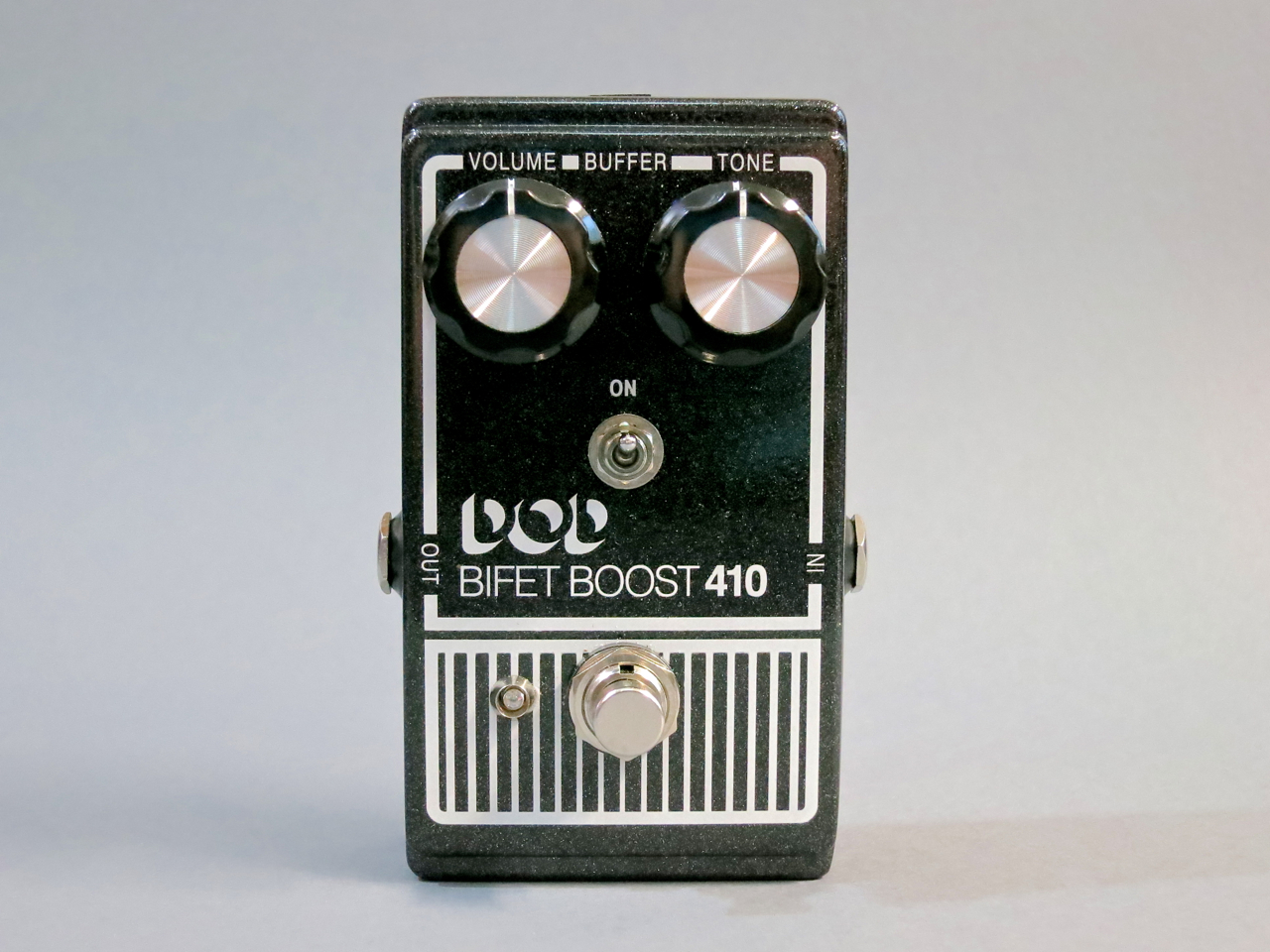
DOD’s Bifet Boost 410 is a pro-quality boost pedal and very easy to use. The added buffer switch lets you decide for yourself, whether you need a bypass buffer or not.
****
DOD Bifet Boost 410 (2014)
Current price in Finland: 99 €
Finnish distributor: EM Nordic
Thanks to DLX Music Helsinki for the loan of the review sample!
****
Pros:
+ up to 20 dB boost
+ tone control
+ switchable buffer
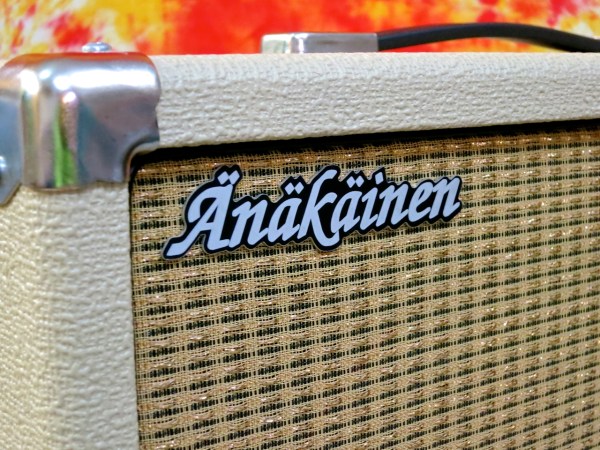

Puuverstas Änäkäinen’s Rumble 1 x 12 -cabinet (prices in Finland start around 580 €) offers a few fresh ideas on how to come up with a cracking guitar tone.
The fathers of the Rumble-concept are cabinet maker Kari Änäkäinen (try saying: Curry ANNA-kay-nun), who is also gigging as a guitarist and bassist, and Kuusankoski’s very own tube amp guru, Triodipaja’s proprietor Lassi Ukkonen (LUSS-cee OO-cow-nun). The guys hit upon the basic idea for the Rumble cabinet, when Kari asked Lassi to calculate the correct cubic content for a lightweight bass cabinet he was building for himself. The bass cabinet turned out very well and set the duo on the path to coming up with the Rumble.
****

When it comes to the cosmetics of his Rumble cabinets, Kari Änäkäinen is a dyed-in-the-wool vintage fan.
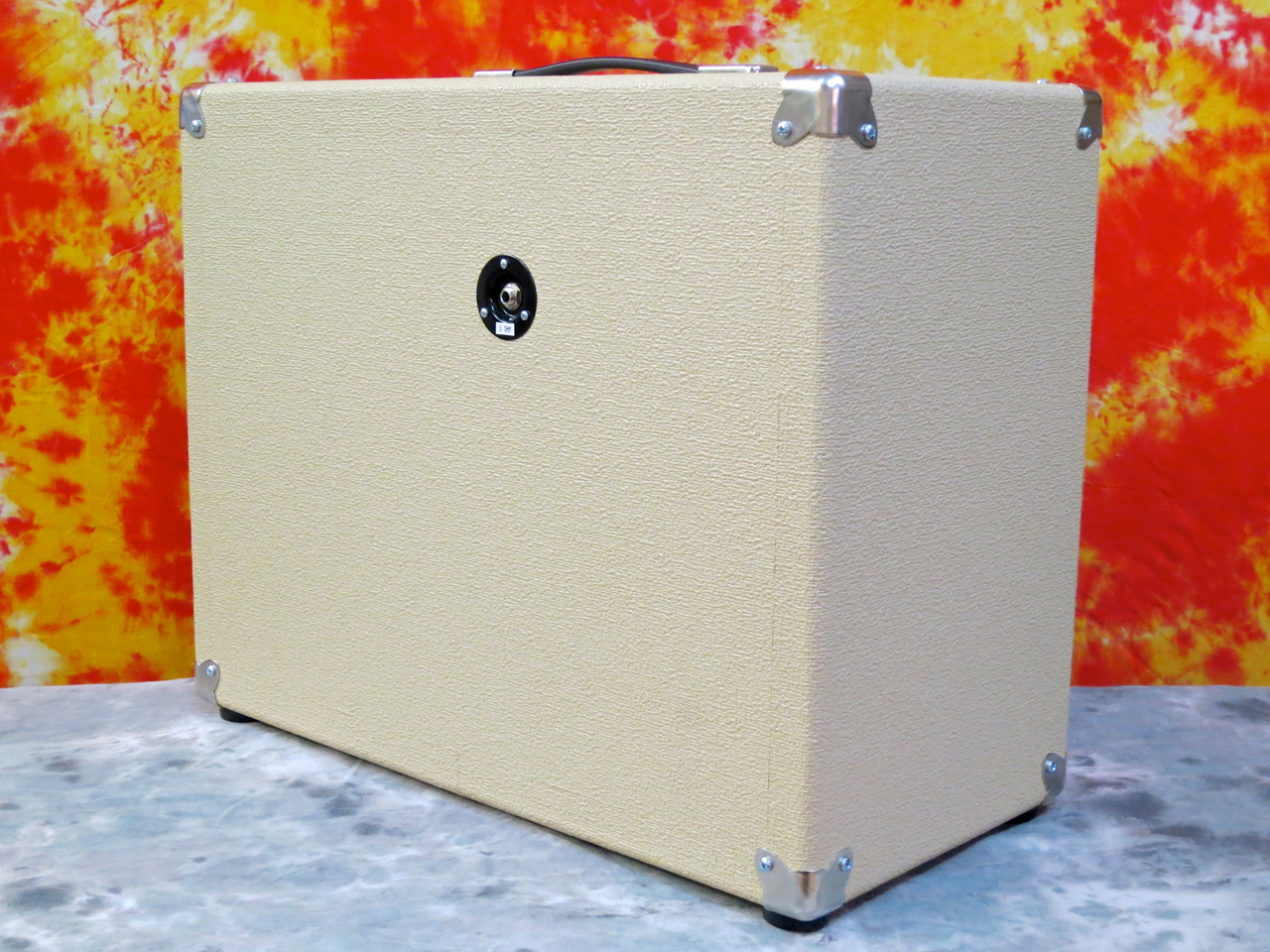
We received two different Rumble 1 x 12 cabinets for this review – one comes in a fetching ”Fender Blonde” look…

…while the other clearly points in the direction of moody Marshall-ness.

The Rumbles sport metal corner protectors.

Here you can see the impedance sticker affixed to the sturdy jack plate.
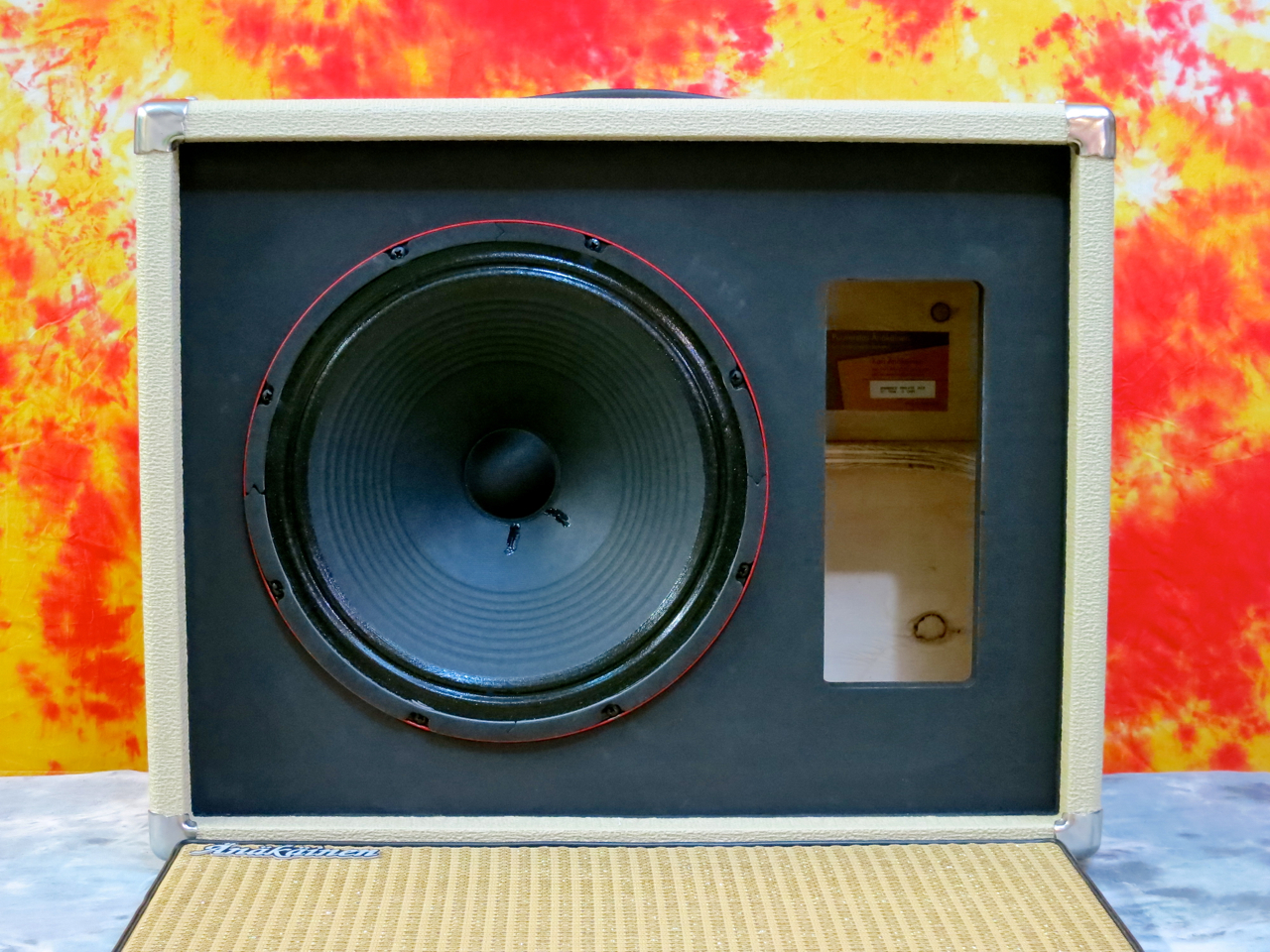
Currently, Kari Änäkäinen gives you a choice of five different speaker models for your personal cabinet.
The cream-coloured Rumble came equipped with an Eminence Private Jack -speaker (50 W/8 Ω).

A WGS:n Reaper (30 W/8 Ω) was chosen for the black counterpart.
As you can see in these pictures, one of the special features of all Rumbles is the large rectangular port on one side of the cabinet. The basic idea has been borrowed from bass-reflex speaker, which are often used in Hifi- and bass (amp) cabinet designs. In the Rumble the opening is mainly used for sound dispersion, as the speaker doesn’t feature any internal reflectors, tunnels or a ”tuned” bass port.

The details of the cabinet build is also a little bit different to your run-of-the-mill guitar cab. The cabinet itself is crafted from Finnish conifer plywood with a thickness of 15 millimetres.
The advantages of conifer plywood are its quality, abundance and light weight. Most other cabinet makers will claim that this type of plywood is too soft and pliable for cabinet-making, but Kari has found his own solution to this problem: He uses internal struts and supports made from the same material.
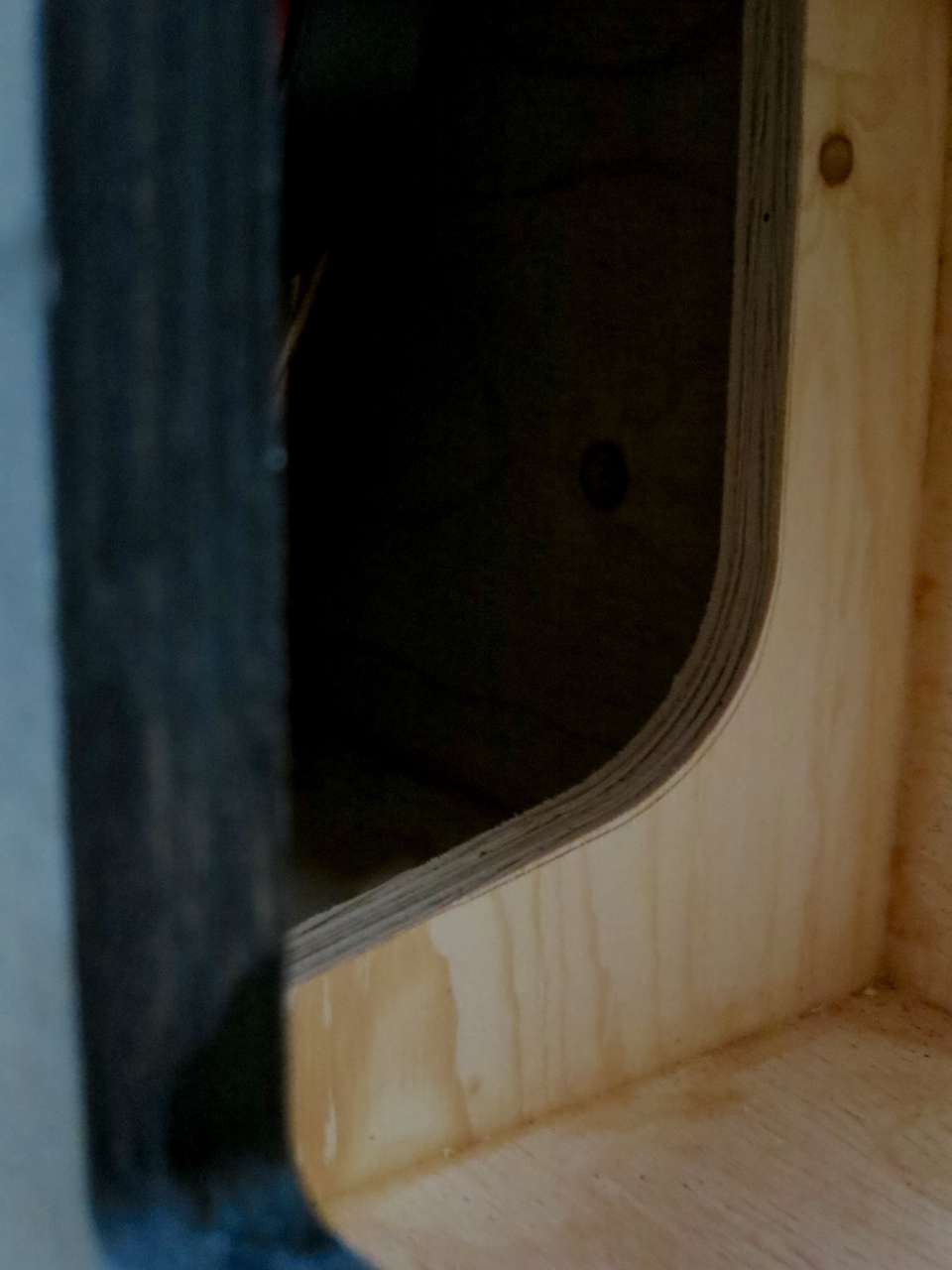
The speaker baffle, on the other hand, is made from very sturdy, 18 millimetre thick Finnish birch plywood.
The whole speaker cabinet is constructed using only glue joints and wood dowels. The only screws in an Änäkäinen Rumble are those keeping the speaker, the jack plate and the corner protectors in place.

The Rumble’s low weight of approximately 12 kilos is easy to lift by the cab’s top handle.
****
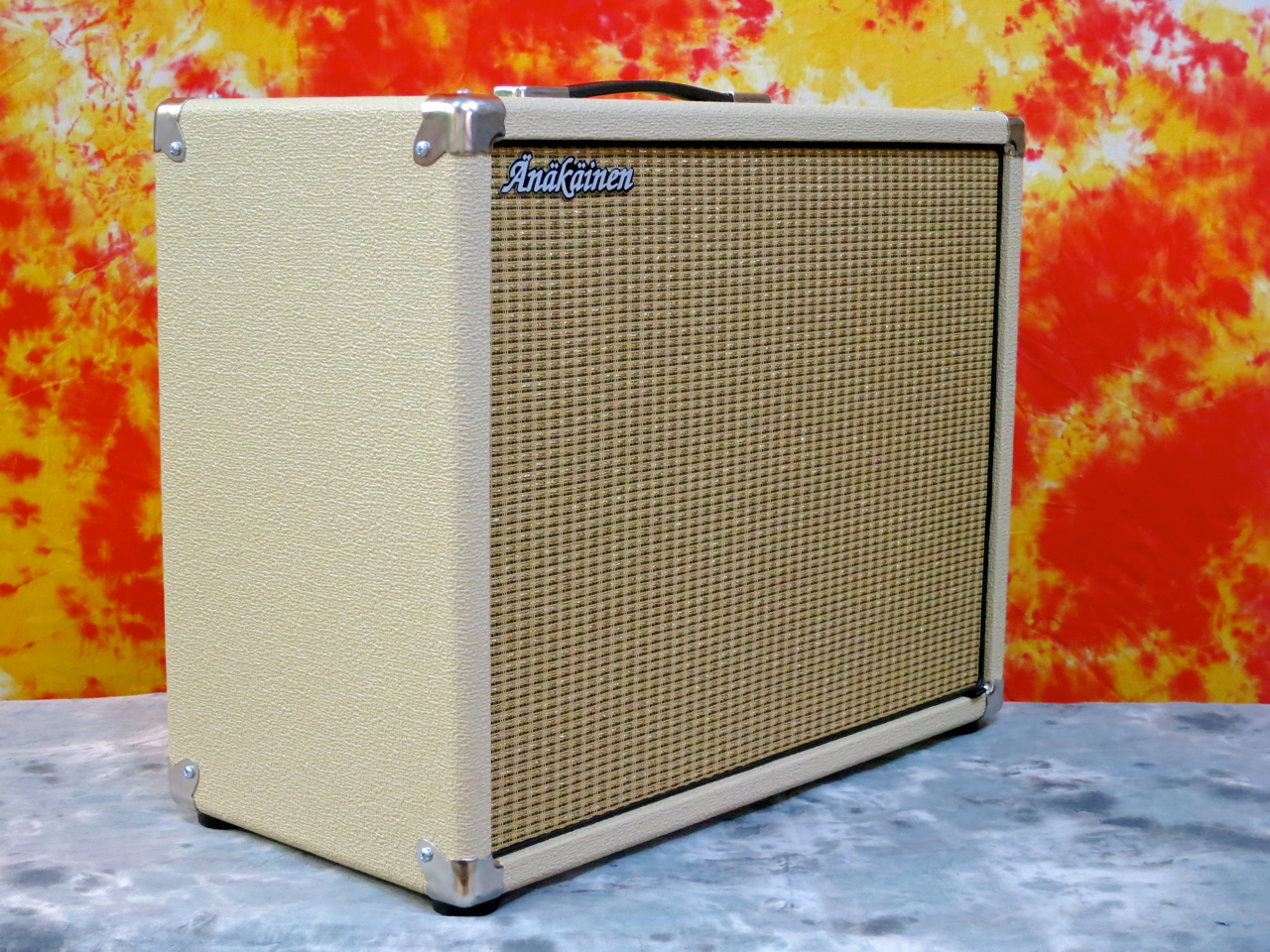
The first – completely subjective – impression I got from using the Rumble 1 x 12 was of a ”loud”, ”big” and ”musical” sounding cab. The Änäkäinen even made my tiny Blackstar HT-1R sound like a full-size tube amp.
The Rumble gets across a healthy shot of warmth and transparency – just like many other quality cabinets – but its special, front-ported construction adds an amazing amount of spread and directivity to the sound that is all its own. The sound dispersion is neither too narrowly focussed, nor is there any sound getting ”lost” behind the cab. Thanks to its front port, the Rumble delivers a larger-than-life, Cinemascope-style sound.
The Eminence-loaded blonde Rumble sings beautifully with a warm and creamy voice:

Thanks to the WGS Reaper -speaker inside the black-clad Rumble 1 x 12, this cab has a somewhat more aggressive British accent. This added bite isn’t quite as pronounced when you stick to clean amp settings, but it will help your Rock riffs to cut through more easily:
****

I must say I really like these Änäkäinen Rumbles a lot! They deliver excellent, boutique-class tones at a very fair price. If you need a relatively compact guitar cab with a big sound, you should really consider going for a Rumble!
****
Änäkäinen Rumble 1 x 12
Finnish prices starting around 580 €
Made by Puuverstas Änäkäinen
****
Pros:
+ workmanship
+ a functional, non-mainstream concept
+ wide, yet focussed sound
+ rich bottom end
+ different speaker options
****
Lisätiedot: Roland
DOD on hiljattain uudistanut Bifet Boost 410 -pedaalinsa – päivitetyssä versiossa on boosteriin lisätty kytkettävä bufferi.
****
DOD Bifet Boost 410 (99 €) on nimensä mukaisesti boosteri, ja pedaali tarjoaa kitarasignaalille jopa 20 dB lisävahvistusta.
Booster-toiminnolle on kaksi säädintä – Volumella asetetaan vahvistuksen tasoa, kun taas Tone-potikalla säädetään signaalin äänenväriä.
Viime aikoina efektipedaalien ns. True Bypass -kytkennästä on tullut uusin lyömäase kitaravoodo-markkinoinin viidakossa, jossa taistellaan eri pedaalien paremmuudesta. True Bypass tarkoittaa yksinkertaisesti, että tulosignaali menee suoraan pedaalin tulojakista lähtöjakkiin, silloin kun efekti on kytketty pois päältä. Jos True Bypass ei ole mainittu erikseen, pedaalissa on hyvin todennäköisesti bufferi. Bufferi on pieni vahvistuspiiri, joka ei vahvista käytännössä lainkaan signaalin volyymitasoa (vahvistussuhde on siis 1:1), vaan sen tarkoitus on muuttaa signaalin impedanssia korkeasta matalaan. Matalaimpedanssinen signaali voi kulkea myös pitkien johtojen (tai signaaliketjujen) läpi ilman diskantin tai dynamiikan ei-toivottua demppausta. Kimmo Aroluoman loistavassa Backstage-blogissa on hyvä juttu aiheesta.
Uudessa DOD Bifet Boost 410 -pedaalissa on kytkin, jolla voi valita itse haluaako efektin toimivan True Bypass -moodissa (kytkin Off-asennossa) tai bufferoituna (kytkin On-asennossa), silloin kun boosteri on pois päältä. Esimerkiksi fuzz-pedaalin eteen laitettuna Bifet Boost toimii tavallisesti paremmin ilman bufferia, koska fuzzin toiminta on riippuvainen kitaramikrofonien impedanssikuormituksesta. Pitkän efektiketjun loppupäässä taas DODin bufferi voi olla oiva apuväline signaalilaadun heikkenemistä vastaan.
Bifet Boost 410 toimii joko 9 voltin paristolla tai (Boss-standardin mukaisella) verkkolaitteella (ei kuuluu hintaan).
Pariston vaihtoa varten täytyy poistaa DODin metallipohja kokonaan.
Paketissa löytyy neljä liimattavaa kumitassua, joita voi käyttää jos ei ole tarkoitus asentaa boosteri pedaalilautaan.
****
Kun puhutaan boosteista, on olemassa kaksi päätyyppiä – sellaiset, jossa vahvistus on täysin neutraali, ja sellaiset, jotka lisäävät jotain omaa kitarasoundiin. DODin Bifet Boost 410 kuuluu jälkimmäisen kategoriaan, lisäämällä sointiin aavistuksen verran keskialueen rouheutta ja karakteeriä.
Puhtaaseen kanavaan soitettuna signaalin puhtaus riippuu luonnollisesti aina vahvistimen headroomista. Esimerkkipätkässä Bifet Boost ajaa Blackstar HT-1R -komboni jo selvästi rosoiseen suuntaan:
Säröpuolella DOD-boosterin käytöllä voi lisätä soundiin enemmän säröä ja tiheyttä:
Tone-potikan avulla kitarasignaalista saa myös erittäin purevan. Täytyy kuitenkin muistaa, että jokainen boosteri vahvistaa aina hyötysignaalin lisäksi myös kaikkia signaaliketjussa esiintyviä häiriöääniä. Diskanttipuolen avaaminen työntää mahdolliset sirinät ja kohinat sitten vielä vahvemmin esiin:
****
DOD Bifet Boost 410 on laadukas ja helppokäyttöinen boosteri tone-säätimellä. Bufferikytkin antaa nyt viimein käyttäjälle mahdollisuuden päättää bufferin käyttämisestä itse, mikä lisää DOD-boosterin käyttökohteita entisestään.
****
DOD Bifet Boost 410 (2014)
99 €
Maahantuoja: EM Nordic
Kiitos DLX Musiikille testipedaalin lainasta!
****
Plussat:
+ maks. 20 dB vahvistusta
+ Tone-säädin
+ kytkettävä bufferi


 Kitarablogi.com – Finland's premier Guitar and Bass blog