

Lisätiedot: Musamaailma
Kitarablogi.com – Finland's premier Guitar and Bass blog
Juttuja kitaroista ja bassoista

****

We’ve all seen the memes on social media, haven’t we? And let’s be honest – there’s plenty of truth in them!
Many – if not most – of us guitarists seem to have an annoying tendency to want to amass a wide selection of instruments and/or effect pedals and/or guitar amps for personal use. This gear lust, which often leads to crammed living conditions, empty pockets, and considerable trouble with our significant other, is generally known as Gear Acquisition Syndrome, colloquially shortened to G.A.S. (or GAS).
It seems that GAS has become ever more prevalent over the last couple of (or three) decades, but the roots of this problem reach as far back as popular music and the advent of mass media.
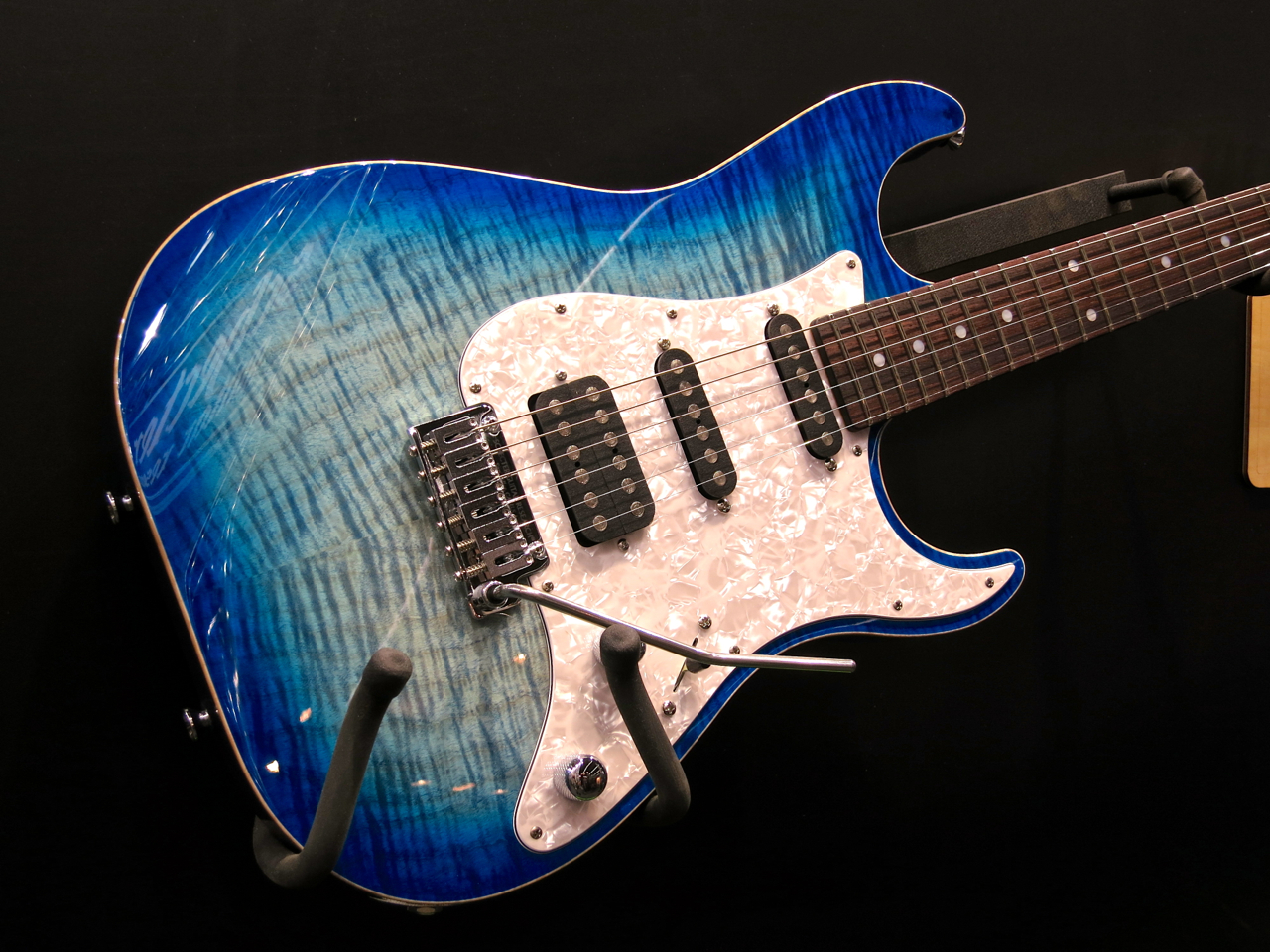
****
The early days

It’s hard to pinpoint exactly the onset of GAS, but many people would agree that Gibson’s Nick Lucas Special signature model (first released in 1927) played a crucial part.
Nick Lucas (1897-1982) was an accomplished guitarist and popular crooner, whose biggest hits (in the late Twenties and early Thirties) coincided with the popularity of the radio and the wider availability of phonograph records.
The Nick Lucas Special was Gibson’s first signature guitar, laying the groundwork for the endorsement deals we’re familiar with these days. Apart from riding on an artist’s popularity, a signature guitar also tends to suggest to the guitarist that, were he (or she) to play this particular instrument, some of the magic (as well as the technical prowess) of the endorsing artist might rub off. In short, the message is ”buy this guitar, and you will become a better and more popular player!”
As most male guitarists not only care for their playing technique, but also for the opposite sex, becoming more popular always sounded (and still sounds) like a good idea.
The Fifties and Sixties – the guitar boom

During the first half of the 20th Century the guitar grew from a not-very-common, specialist instrument into a popular mainstream choice – not least thanks to Country music and the ”singing cowboys” featured on radio and records, as well as in the movie theatres.
But it was Rock ’n’ Roll that put the guitar in all its shapes on the top of the desirability list for masses of youngsters in the so-called Western World.
Yet, GAS wasn’t such a serious issue at that time, because musical instruments were outrageously expensive then, and some of the top US-brands almost impossible to get hold of in Europe.
Andy Babiuk’s fantastic book ”Beatles Gear” gives the reader a very good idea of how difficult it was for the guitarists of the late Fifties and early Sixties to even scrape together enough money to buy a single guitar (or amp). Owning multiple guitars was the privilege of the biggest stars only. Back in 1965 a new, baby blue Fender Stratocaster would have set you back around 3,000 euros in today’s money! This makes a current American Standard Stratocaster seem dead cheap at approximately 1,500 euros. And remember, back then there was no such thing as a quality (licensed) copy, and even substandard instruments from Eastern Europe weren’t really cheap (Harrison’s Czech-made Futurama cost him the better part of 1,200 euros in today’s money).
Still, young players were brand-conscious, at least to some degree, and lusting for the exact guitar they knew their idol was playing. Even if they couldn’t afford it…
They don’t make ’em like they used to

The transition of the plain old ”used guitar” to the ”vintage guitar” we all know today got to a start in the late Sixties, mostly fuelled by the two best-known brands – Gibson and Fender:
When flagging sales of the Gibson Les Paul prompted the company to scuttle the model in favour of the instrument we now know as the Gibson SG, nobody could have foreseen that the move would lead to the first run on a discontinued electric guitar model ever. Caused by the exposure given to the ”out of print” Les Paul Standard by the new wave of Blues players, spearheaded by Mike Bloomfield and Eric Clapton, many serious guitarists started actively searching for used Les Pauls. The fact that Gibson chose to reissue the Les Paul in the late Sixties, but failed to sense that the crowd lusted for the double-humbucker Burst (instead of the Goldtop and the Custom), quickly turned the original Standards produced between 1958 and 1960 into the stuff of legend.
Both Fender and Gibson became parts of large business conglomerates before the Sixties were over, and a feeling started to seep into the guitar community that the earlier instruments were of a higher quality than those produced under the new managements.
Big in Japan

The proliferation of reasonably well-made guitars from Japan – often dead-on copies of US classics – at reasonable prices was what truly kicked off the phenomenon we now call GAS.
For the first time amateur and semi-professional guitarists could afford to own more than a couple of guitars. Effect pedals, too, would start to benefit from Far Eastern efficiency and mass-production.
Many of the 1970s Tokai-, Ibanez- and Yamaha-guitars – as well as the earliest Roland/Boss-effects – are now considered vintage classics in their own right.

Licensed copies
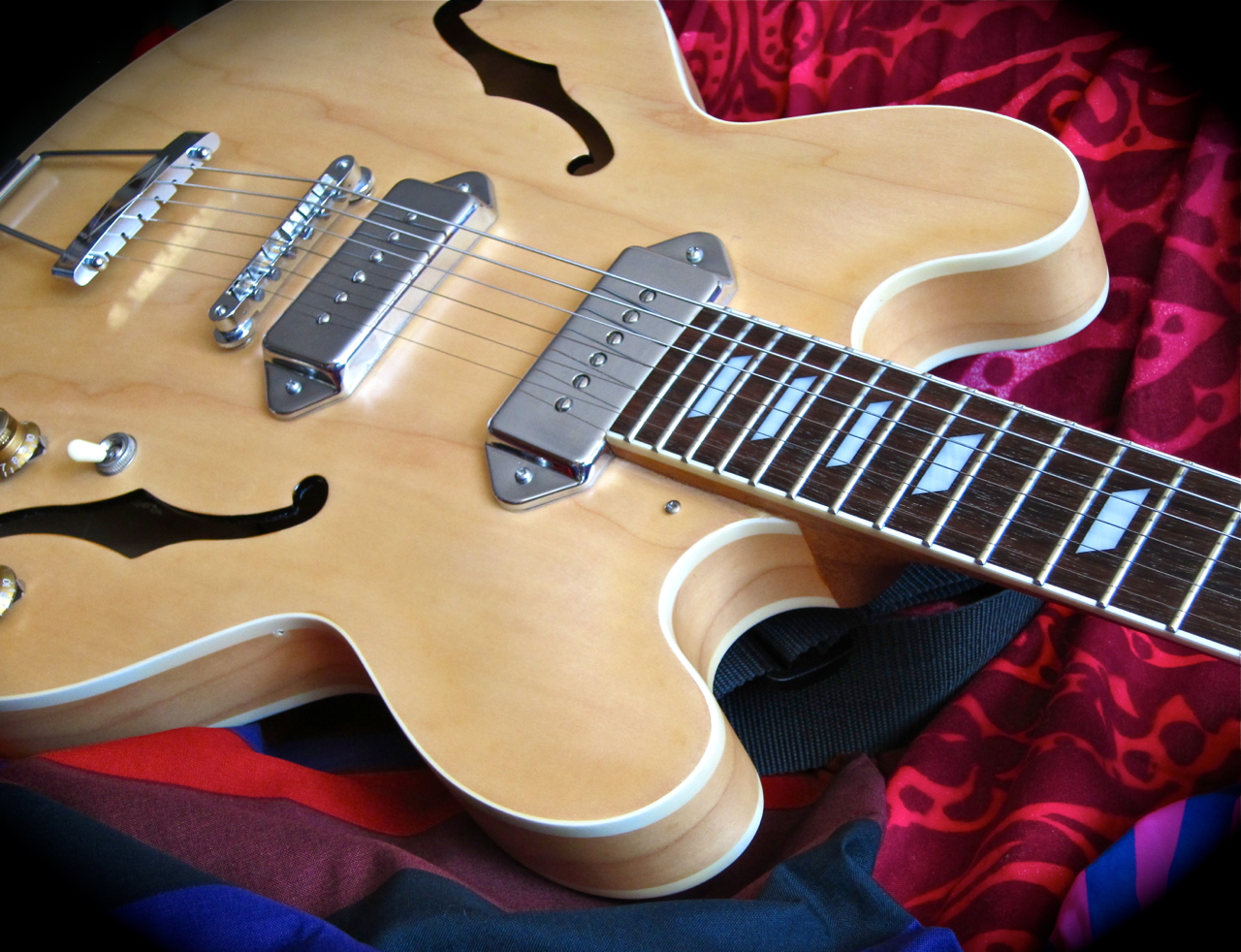
The Eighties finally ”sealed our fate”, when it comes to GAS.
Many large brands started to release official (=licensed) copies of their own instruments in the 1980s, with the rest following suit in the following decades. Brands like Squier, Epiphone, or Sterling make it affordable to hoard instruments that offer at least some of the clout of their famous, upmarket brethren.

****

We are all different – we don’t all lust after the same guitars, and we don’t all accumulate gear for the same reasons or in the same way.
I think one could divide us Gassers up into five basic categories, according to how and why we ”simply have to have that guitar”.
1. The Fan
The Fan is a hardcore follower of one (or two) Rock bands (or guitar gods), and he (or she) focusses on acquiring as much of the gear used by their idol as humanly possible. The Fan hopes to come as close as possible to their idol’s famous guitar tone, and he/she wants to feel (and look) the way his (or her) idol does when playing those classic riffs and songs.
2. The Nostalgist
The Nostalgist comes from a similar place as the Fan, having a clear vision of what it is he’s looking for. But, instead of trying to relive a certain band’s or player’s tone, as the Fan does, the Nostalgist wants to reclaim the (his/her own?) past. The Nostalgist longs for the classic looks and tones gleaned off vintage equipment, the sounds of a cooler, more vibrant place than the current here-and-now. Some Nostalgists also buy all the stuff they wanted, but couldn’t afford to get, when they were young.
3. The Hunter and Gatherer
The Hunter and Gatherer simply loves to get new toys, especially when he can claim to have ”snapped up a real bargain”. These are the guys that constantly trail the Internet, on the lookout for something, anything really, that might whet their considerable appetite. Very often it doesn’t even matter if it is an instrument (or other piece of gear) the Hunter and Gatherer really ”needs”; as long as it’s cool and ”a bargain” it’s a viable acquisition.
4. The Specialist
The Specialist has a strong focus on one, two or three specific pieces of equipment, that he (or she) simply cannot get enough of. These are the guys who seem to have a perfectly good reason for buying several dozen Telecasters, or a whole flock of Fender Tweed-era amps – or maybe they zone in solely on gear manufactured during one specific year…
5. The Pragmatist
The Pragmatist comes over as very reasonable, even though he’s an addict like the rest of us. The Pragmatist tells his wife that he doesn’t yet own an archtop guitar with DeArmond pickups, but that he needs just such a guitar to complete his ”colour palette” or ”toolbox”. Some Pragmatists – like professional guitarists, studio owners, or guitar reviewers – can make a real art form of their Gassing, meaning it takes the unsuspecting wife years (if not decades) to see through this charade.

Naturally, things aren’t always as clear cut in real life as they might seem on paper. Most of us GAS-sufferers tend to display a mixture of two of three of the above GAS-categories.
****
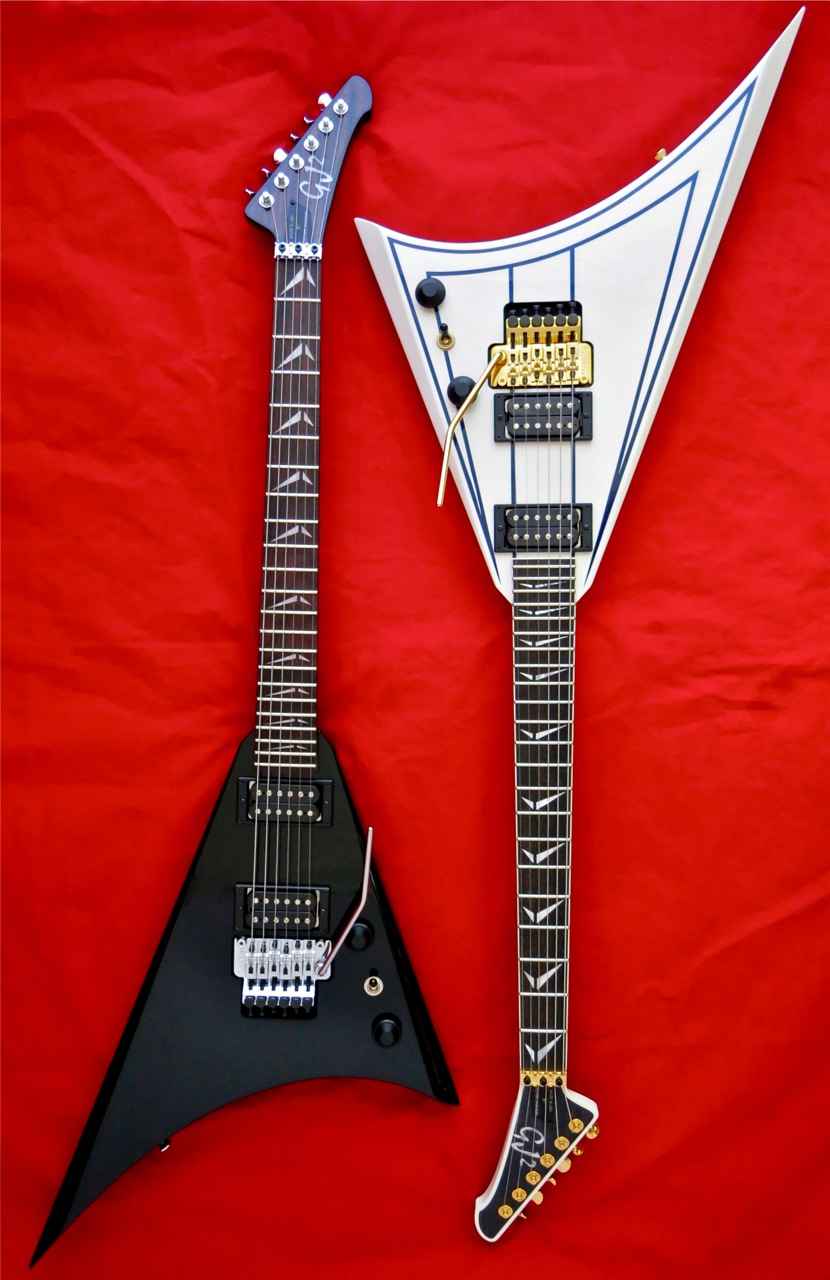
Does owning more than one or two guitars have real advantages? If you ask me, my answer would be a resounding ”yes and no”!
The ”yes” part of my answer has to do with the fact that playing guitar (or bass guitar) is always a tactile experience. Different instruments have different neck profiles, they have different overall dimensions, different actions, different fret sizes, different fingerboard radii, and they simply smell and feel differently.
This is probably the main reason why we don’t all play Line 6 Variax guitars. They might be decent instruments with an astonishingly realistic array of different tones, but they completely lack the important tactile element that is so crucial in inspiring you to come up with different licks and different ways of approaching the guitar as an instrument.
A big, fat Jazz box will make you play noticeably differently to a sleek Strat or SG, and the same holds true for the differences between, say, an ES-335 and a Floyd Rose-equipped Metal axe.
On the ”no” side of the equation, buying a new piece of equipment will surely inspire you, but it won’t automatically turn you into a ”better” guitarist. Even though it’s hard to admit, only regular practice will move you forward on the long and winding road to improvement.

****
In a way, we’re extremely lucky these days. There has never been a better time to be a guitarist than now. There’s an abundance of cool gear available, and much of it at rather reasonable prices.
The downside to this is, of course, that it’s so much easier to become a gear addict, because the price tag doesn’t necessarily act as much of a threshold, anymore.
Still, I tend to see the positive side of things, because the affordability of decent equipment makes it much easier for guitarists these days to try out different stuff on their way to finding the gear that’s most suitable for the music they make.

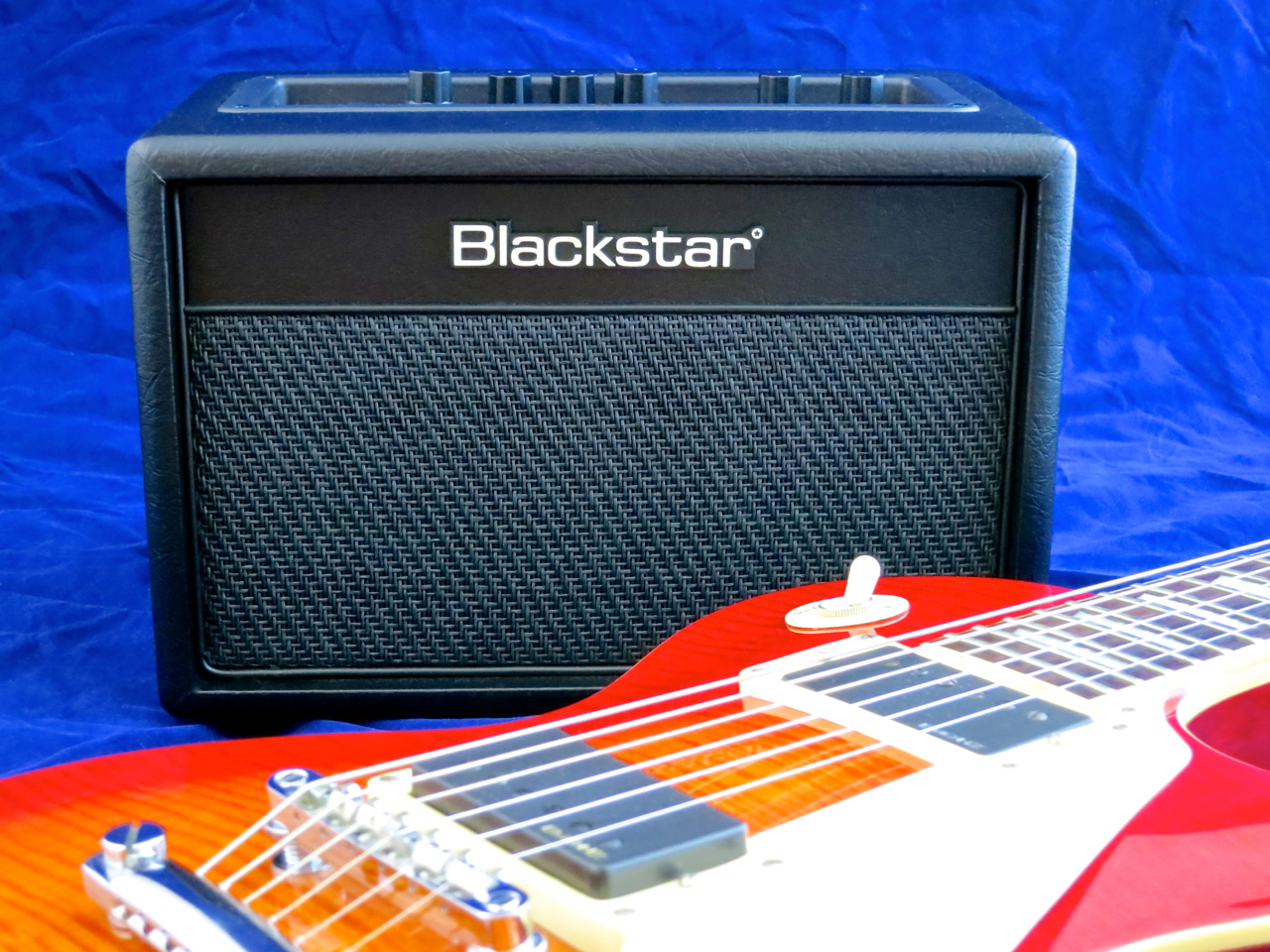
Blackstar’s ID:Core BEAM (current price in Finland: 299 €), which was introduced at this year’s NAMM Show, is one of a new breed of amplifiers:
The BEAM is a so-called ”lifestyle amp” that combines a practical solution for living room practising with a Bluetooth stereo system with a suitable Rock look.
****

The Blackstar ID:Core BEAM is a genuine ID:Core-combo, which means that all its parameters are accessible via Blackstar’s Insider software.
The newcomer is a stereophonic amp with its 20 watts of power running into a pair of three-inch speakers. Blackstar’s Super Wide Stereo-effect – a feature taken from the company’s larger ID:Core combos – can also be applied to the BEAM’s music player, with its own, separate width adjustment.

Apart from the power switch, the ID:Core BEAM’s back panel features the input jack for the (optional) footswitch. The rest of the combo’s controls and connectors can be found on the top-mounted control panel.
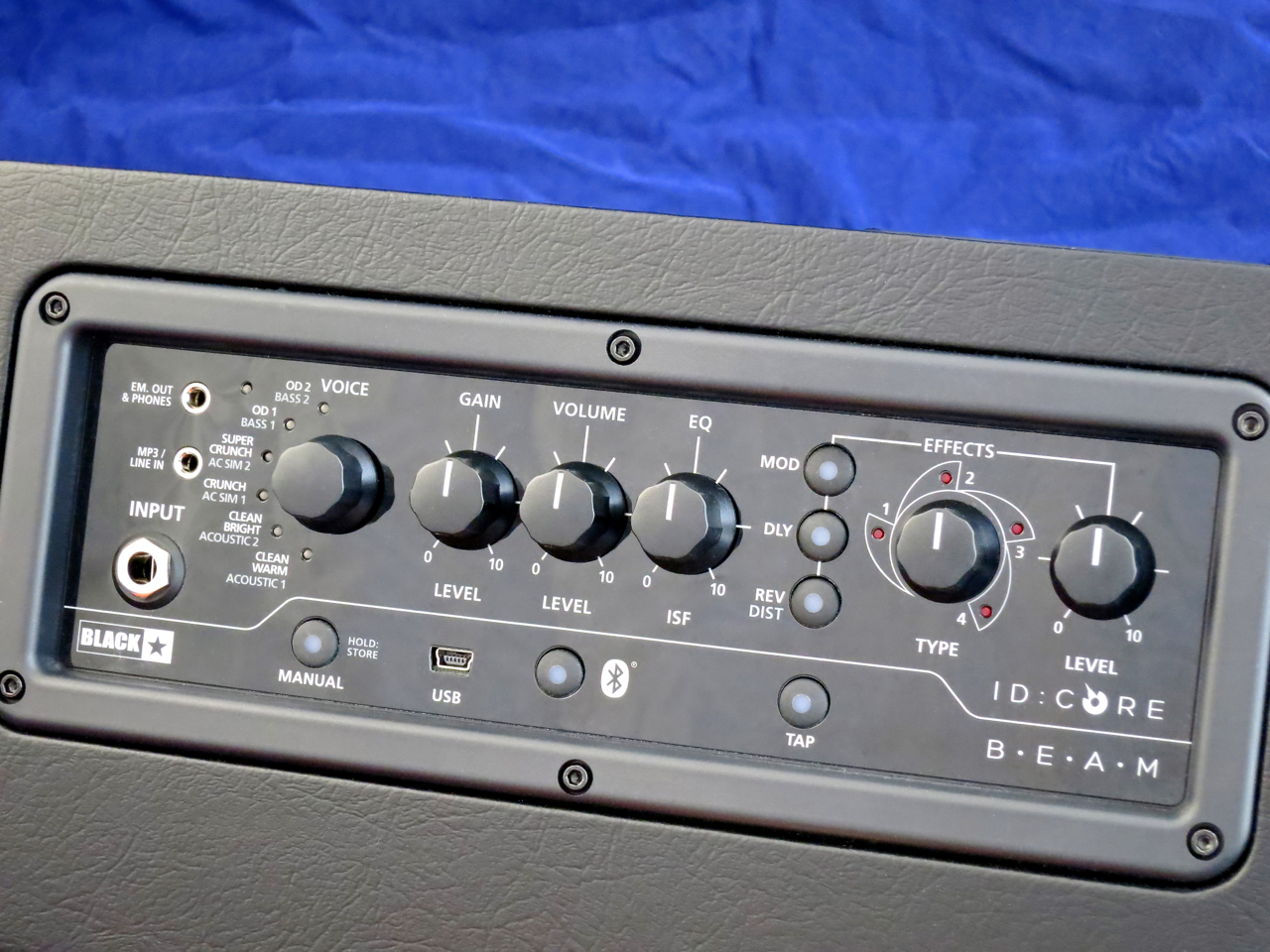
The larger ID:Core combos are well-equipped practice amps, but the BEAM has a couple of additional aces up its sleeve:
The ID:Core BEAM offers you 12 amp models (Voices). The first set (the Voices LED glows red) deals with six amp models for electric guitar, while the second set (green LED) gives you two Voices each for acoustic guitar, electric bass, and acoustic guitar simulation.
The amp section has three physical knobs for adjustment – gain, volume, and Blackstar’s patented ISF-control, which control’s the amp’s overall tonal character. Using the Insider-software you will be able to access additional parameters for deep editing, like a three-band EQ-section or a noise gate.
The effects department features four different modulation effects, four delay types, and four reverbs. The two Voices for bass swap the reverbs for bass distortion. You can choose one effect from each effect section for a Voice (meaning up to three simultaneous effects).
The small combo also features a built-in tuner.
The music signal, sent to the BEAM from your mobile device via Bluetooth, naturally isn’t sent through the combo’s amp modelling circuits. It is fed into the signal chain just before the power amp section. The ID:Core BEAM allows you to play along to the Bluetooth signal, of course!
The USB-port isn’t only used to remote control the amp’s parameters via Insider – this lifestyle combo doubles as a full-blown USB sound card. The BEAM can be run in three different USB-modes, which allows you to either send a stereo signal of the amp sound to your sequencer, or send two discrete mono signals (with one channel completely dry, and the second channel with all the amp modelling and effects) to your recording software. The third USB-mode is called Reamping, and it’s used to feed a dry guitar signal off your audio sequencer into the ID:Core BEAM and record the effected signal onto a separate recording track simultaneously.
The signal level of the USB-audio can be controlled directly (and independently of the amp’s master volume settings), making it very easy to set the correct recording levels for your personal studio setup.
****
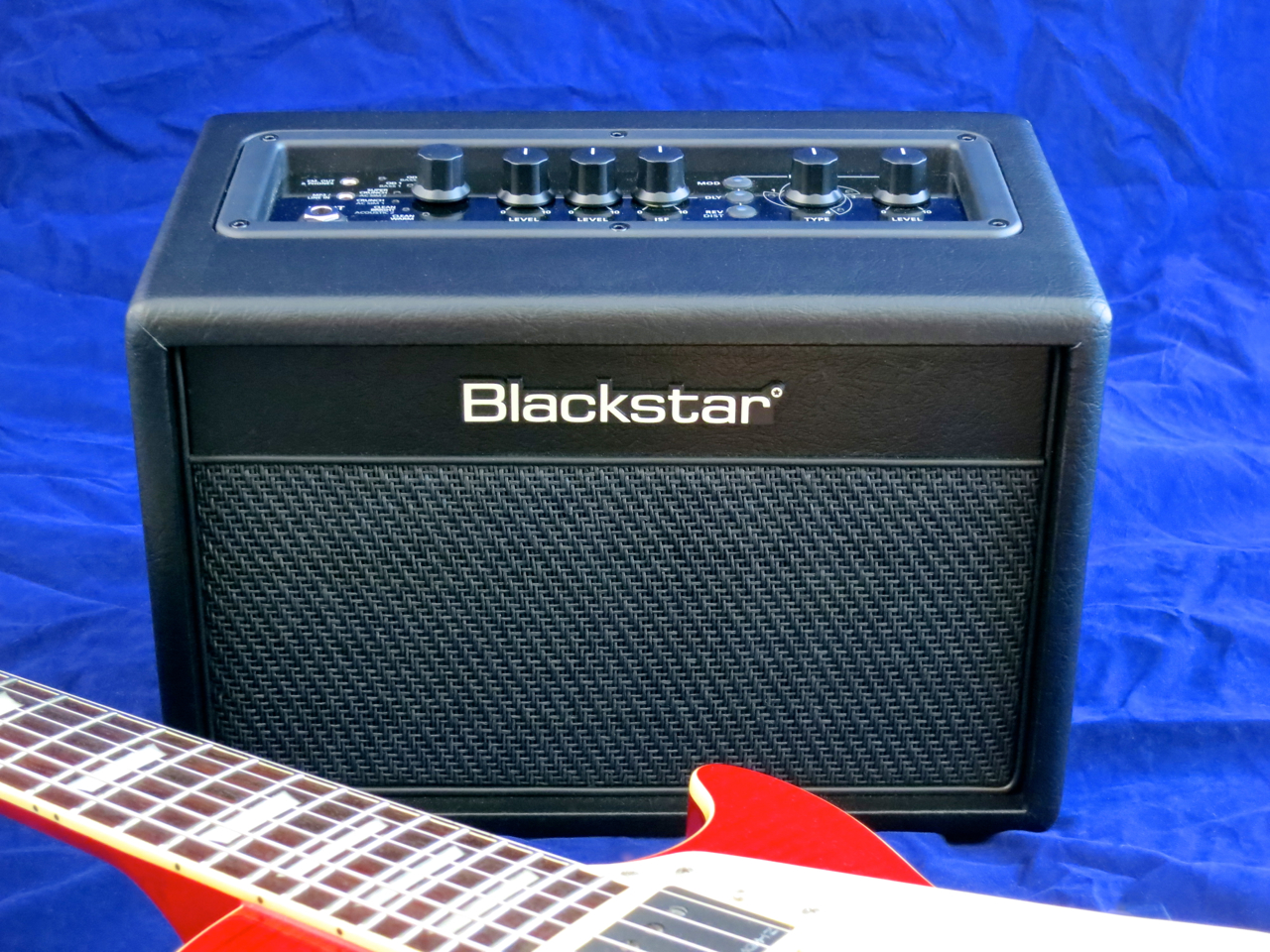
Blackstar have really hit the bull’s eye with their new lifestyle combo!
Listening to music with a very critical ear you can hear a little bit of hiss, but it isn’t loud enough to spoil the fun. Remember, the ID:Core BEAM isn’t meant to be a studio monitor, but rather a nifty, compact music player for your bookcase – something this little combo handles with much aplomb. You wouldn’t necessarily expect such a full and strong delivery from such a compact unit.
The ID:Core BEAM also sounds great as a guitar and bass amp, which isn’t quite as surprising, considering this combo’s pedigree.
The guitar amp voices have plenty of character, and the effects have more than ample depth and width:
The high quality of the acoustic simulator was something of a positive surprise:
Despite its diminutive size, the BEAM also delivers when it comes to electric bass tones:
****

The Blackstar ID:Core BEAM succeeds to combine a programmable practice combo for guitar and bass, a Bluetooth-player, and a USB sound card into a very enticing package. In addition to being a great living room amp, the BEAM could also prove a handy little amp for guitar instructors.
****
Blackstar ID:Core BEAM
299 €
Finnish distributor: Musamaailma
****
Pros:
+ well thought-out concept
+ value for money
+ feature-packed guitar and bass amp
+ adjustable Super Wide Stereo-function
+ USB sound card
+ full sound
Cons:
– high noise gate setting on default bass distortion
Vuoden alussa NAMM-messuilla esitelty Blackstar ID:Core BEAM (299 €) kuuluu uuteen, nopeasti kasvavaan vahvistinkategoriaan:
Se on niin kutsuttu ”lifestyle amp”, joka on samalla sekä hyödyllinen pikkukombo harjoitteluun että kitaristin imagoon sopiva Bluetooth-vahvistin musiikin kuuntelua varten.
****
Blackstar ID:Core BEAM on aito ID:Core-kombo mikä tarkoittaa, että sen kaikkiin parametreihin pääsee käsiksi Blackstarin oman Insider-softan kautta.
Uutuuskombo on stereofoninen, ja sen 20 watin tehoa pusketaan ulos kahdesta kolmen tuuman kaiuttimista. Isoista ID:Coreista tuttu Super Wide Stereo -efekti toimii BEAM-kombossa myös musiikin kuuntelussa, ja sen vaikutusta voi säätää erikseen.
ID:Core BEAM:n takaseinästä löytyy sähköliittimen lisäksi jakki jalkakytkimelle (maksullinen lisävaruste). Kaikki muut liittimet on sijoitettu isolle etupaneelille.
BEAM:n isot sisarukset ovat jo todella hyvin varustettuja, mutta pikkukombo panee ominaisuutensa runsaudella vielä selvästi paremmaksi:
Vahvistinmallinnuksia löytyy tässä peräti 12 kappaletta. Ensimmäinen satsi (Voice-ledi palaa punaisena) on varattu kuudelle eri sähkökitarakanavalle, kun taas toisesta satsista (vihreä ledi) löytyy kaksi vahvistintyyppiä akustiselle kitaralle, kaksi akustisen kitaran mallinnusta, sekä kaksi ohjelmaa sähköbassolle.
Vahvistinosasto tarjoaa kolme fyysistä säädintä soundien muokkaamiseksi – gainin ja volumen lisäksi löytyy vielä Blackstarin patentoima, yleissoundiin vaikuttava ISF-toiminto. Insider-softalla pääsee säätämään sitten tarkemmin muitakin parametrejä, kuten EQ:t tai kohinaporttia.
Efektiosasto tarjoaa neljä modulaatioefektiä, neljä viivetyyppiä, sekä neljä eri kaikua. Bassovahvistimien kanssa on kaiun sijaan lisätty bassosärö. Jokaisesta efektityypistä voi valita yhden per vahvistinmalli, siis samanaikaisesti voidaan käyttää korkeintaan kolmea efektiä.
Pikkukombossa on myös kätevä sisäinen viritysmittari.
Bluetooth:n kautta vastaanotettu audiosignaali ei luonnollisesti kulje mallinnusosion läpi, vaan se lisätään ID:Core BEAM -kombon signaalitielle vasta kitaravahvistimen jälkeen. Bluetooth-musiikin kanssa voi tietysti soittaa mukaan!
USB-liitintä ei käytetä ainoastaan Insider-softan pyörittämiseen, vaan tämä lifestyle-kombo on myös täysverinen usb-äänikortti. BEAM:lla on kolme eri USB Audio -moodia – vahvistin pystyy lähettämään joko stereofonista kitarasignaalia efekteillä höystettynä sekvensserille tai kaksi monosignaalia, joista yksi on kuiva tulosignaali ja toinen koko mallinnuksen läpi käynyt monosignaali. Näiden kahden lisäksi on tarjolla vielä erittäin kätevä Reamping-tila, jossa sekvensseristä lähetetty prosessoimaton kitararaita viedään ID:Core-kombon läpi ja mallinnettu signaali äänitetään toiseen sekvensseriraitaan.
USB-signaalitasoa pystyy säätämään itsenäisesti ja riippumatta kombon masterista, minkä ansiosta usb:n kautta lähetetyn voimakkuuden saa aina omalle äänityssoftalle sopivaksi.
****
Kyllä, nyt täytyy sanoa, että Blackstarin uusi lifestyle-kombo on täysosuma!
Musiikin kuuntelussa on havaittavissa pikkusen kohinaa, mutta se ei nouse lainkaan häiritsevästi esiin. ID:Core BEAM ei ole tarkoitettukaan studiomonoriksi, vaan kirjahyllyn musiikkikeskukseksi, ja se asia on kombolla suveräänisti hallussa. Musiikki kuulostaa yllättävän täyteläiseltä, ja myös sitä volyymin määrää on tarjolla kiitettävän runsaasti.
Myös kitara- ja bassosoundien osilta Blackstar-uutuus ei jätä mielestäni toivomiseen varaa!
Kitarasoundit soivat erittäin hyvin, ja myös BEAM:n efektitarjonta on varsin maukas:
Akustisen kitaran mallintaminen onnistuu pikkukombolla yllättävän hyvin:
Vaikka tämä Blackstar-uutuus on hyvin kompakti tapaus, jopa BEAM-kombon bassosoundit kuulostavat mukavan meheviltä:
****
Blackstar ID:Core BEAM yhdistää erittäin onnistuneesti mallintavan harjoituskombon kitaralle (ja bassolle), usb-äänikortin, sekä tehokkaan Bluetooth-kaiuttimen. Ainakin omasta mielestäni tämä uutuuskombo sopii todella hyvin – olohuonekäytön ohella – myös opetusvahvistimeksi.
****
Blackstar ID:Core BEAM
299 €
Lisätiedot: Musamaailma
****
Plussat:
+ toimiva konsepti
+ hinta-laatu-suhde
+ hyvin varusteltu, ohjelmoitava kitara- ja basso-osasto
+ säädettävä Super Wide Stereo -toiminto
+ USB-äänikortti
+ täyteläinen soundi
Miinukset:
– voimakas kohinaportti bassosärön tehdasasetuksissa
Lisätiedot: Musamaailma


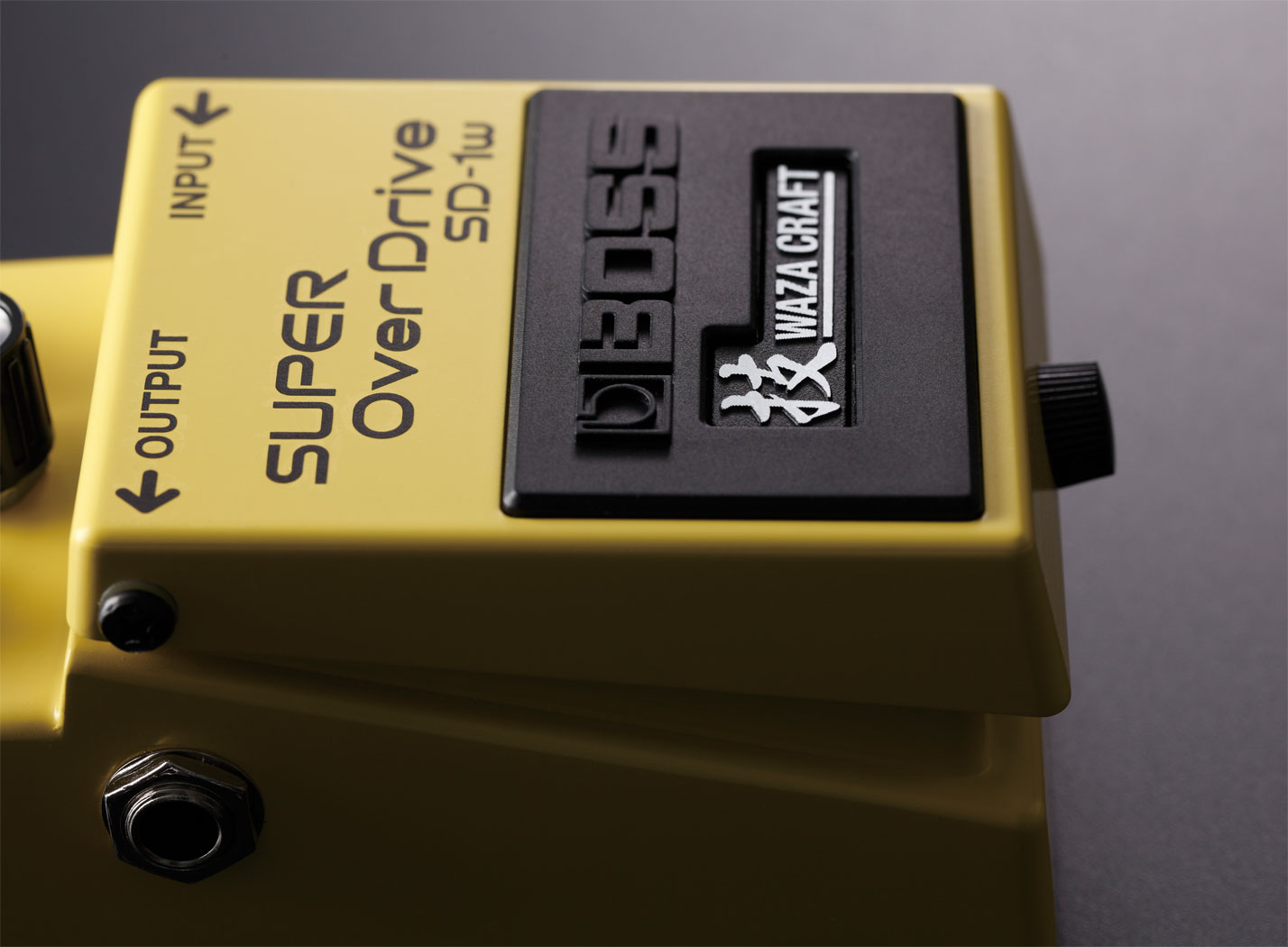
Boss’ Waza Craft pedals are the company’s brand-new all-analogue, top-of-the line compact effects. The Waza Craft range has been designed to give the quality-conscious guitarist the full boutique-pedal experience in the well-loved Boss format.
The Japanese word ”waza” can be translated as art, artistry or technology, and hints at the fact that the three new pedals (the overdrives reviewed here, plus the DM-2W delay) are a return to old-school, all-analogue circuitry, and that the effects are factory-modded for your convenience.
****
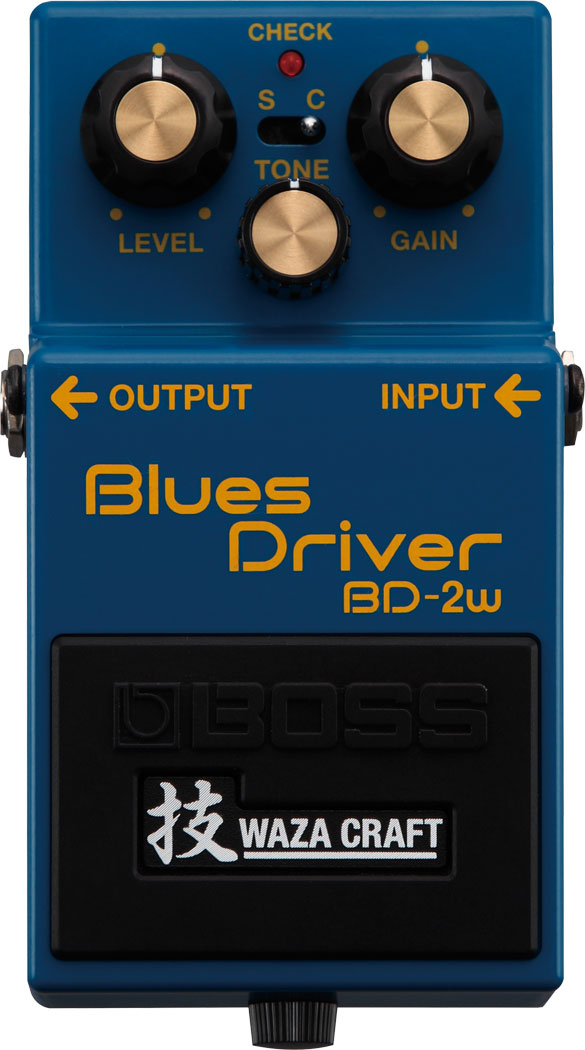
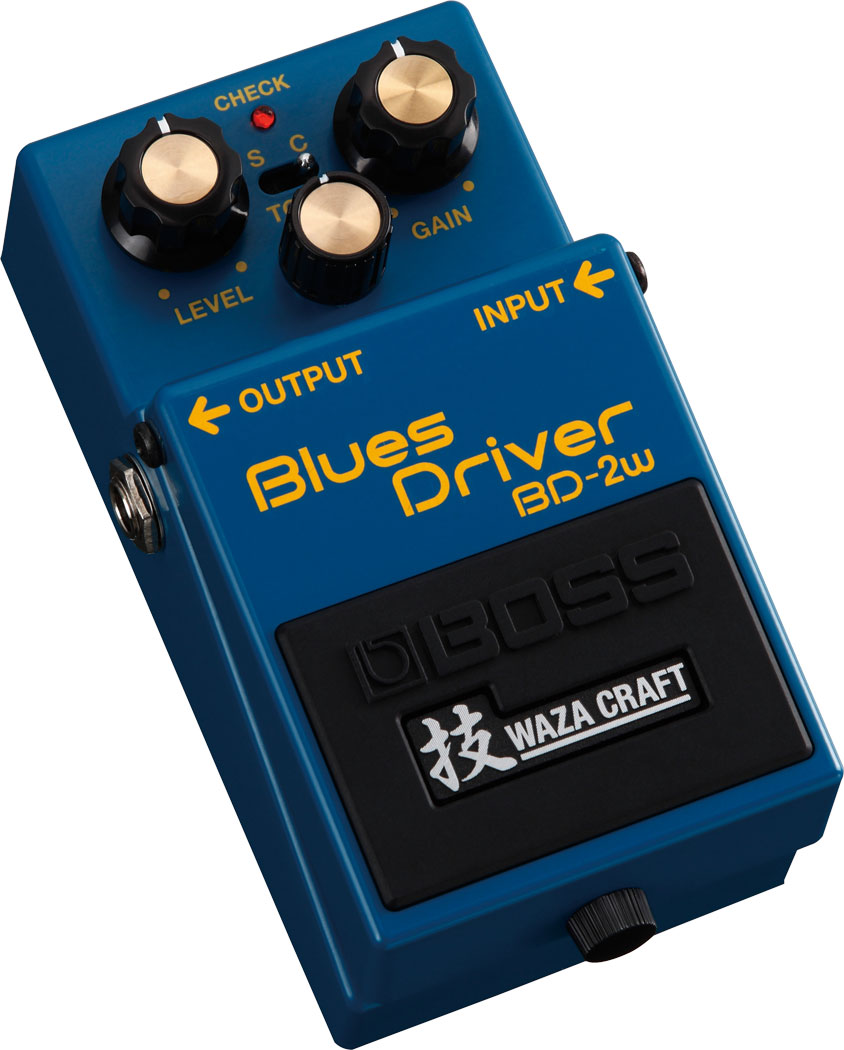
The Boss Blues Driver BD-2W Waza Craft (current price in Finland around 155 €) is a ”waza-treated” update of the popular Blues Driver overdrive.
In the late 1970s Boss came up with the now-legendary, compact guitar pedal format, which has since become an industry standard. The typical Boss pedal is made from a cast metal casing with the quick-access battery compartment tucked away beneath the pedal’s switch flap.
The BD-2W comes with the standard three controls for Gain, Tone and Level.
The Waza Craft range’s special feature lies in their twin mode set-up. You can use the mini-switch to toggle between Standard- and Custom-mode. Standard will give you a boutique version of the regular Boss Blues Driver experience, while Custom ups the ante by offering you a wider dynamic range, as well as a warmer tonality with added top-end sparkle.
The first clip gives you an idea of the BD-2W’s sound with the Gain control at 12 o’clock. The first half is played in Standard-mode, switching over to Custom-mode for the second half:
For the second clip I turned Gain up to full:
****
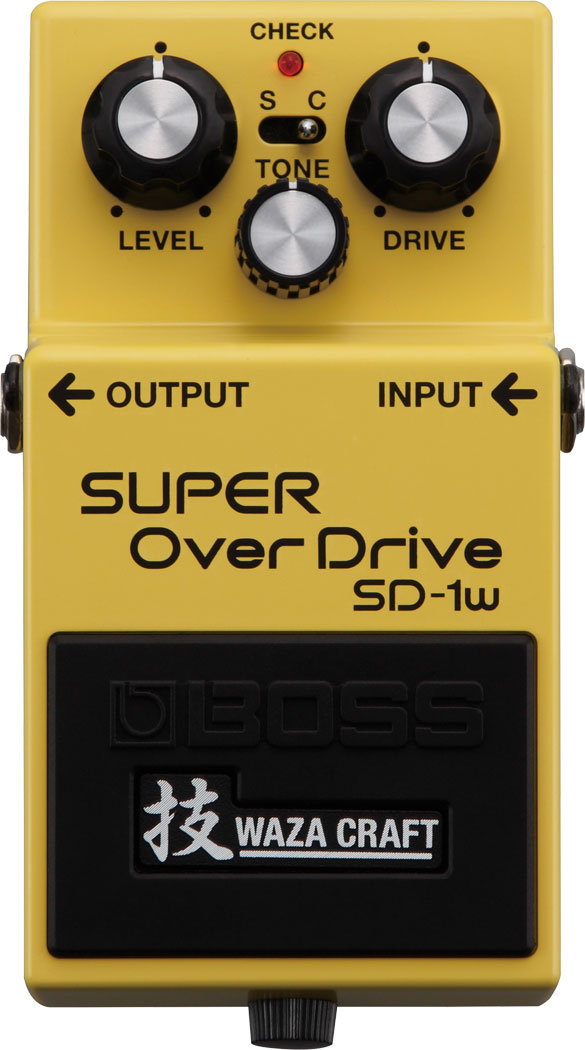
The Boss Super OverDrive SD-1W Waza Craft (current price in Finland around 155 €) is the top-of-the-line version of the company’s yellow-clad classic.
The name gives it away – we’re looking at an overdrive stompbox, so we should expect a dynamic performance with a dense mid-range. As a rule of thumb, distortion-type effects tend to have more bite and a creamier compression than an overdrive.
The Boss SD-1W, too, sports three controls – Drive, Tone and Level – and a mode switch. Standard-mode is meant to give you an upmarket counterpart of the regular SD-1 pedal, while Custom-mode promises a wider frequency range (especially handy for ultra-low tunings).
Here’s a clip of the SD-1W with Drive set to 12 o’clock. Standard-mode comes first, followed by Custom-mode:
And this will give you an idea of this pedal’s sound with Drive turned all the way up:

****

What do terms like ”boutique-pedal” and ”premium range” really mean?
In the case of the Waza Craft pedals the answer lies in both the sound and the ”feel” of these effects:
Both overdrive boxes sound even creamier than the standard versions, while also adding a small degree of clarity to proceedings. These premium versions also manage to keep hiss levels even lower than their ”ordinary” counterparts. Both the BD-2W and the SD-1W feel somewhat more organic and responsive, when compared to their (well-made) standard range brethren. The overdrive tones are very natural, and both effects react very nicely to changes in playing dynamics or guitar volume settings. You never get the feeling of the effect being pasted on, instead there’s a real interaction going on between the player, his guitar and the effect pedal.
In isolation Boss’ Waza Craft overdrives might even seem a little underwhelming, but when you A/B them with their standard series counterparts the differences become quite clear rather quickly. Don’t get me wrong, the standard versions are reliable industry standards with a more than decent sound, but for the ultimate Boss-experience you should take the path to Waza Craft.

****
Boss BD-2W + SD-1W Waza Craft
approx. 155 €
Finnish distribution: Roland Suomi
****
Pros:
+ classic format
+ all-analogue
+ two modes
+ sound
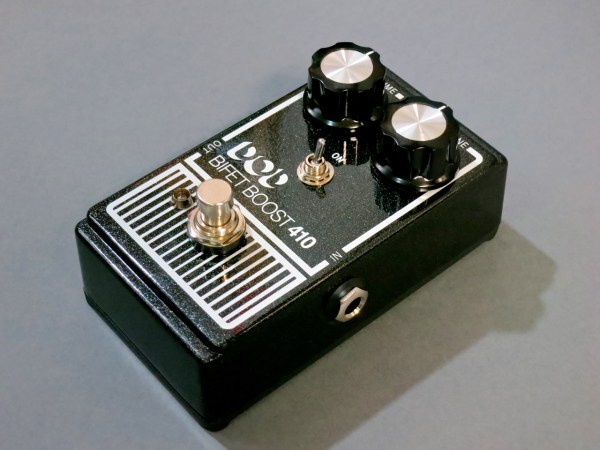
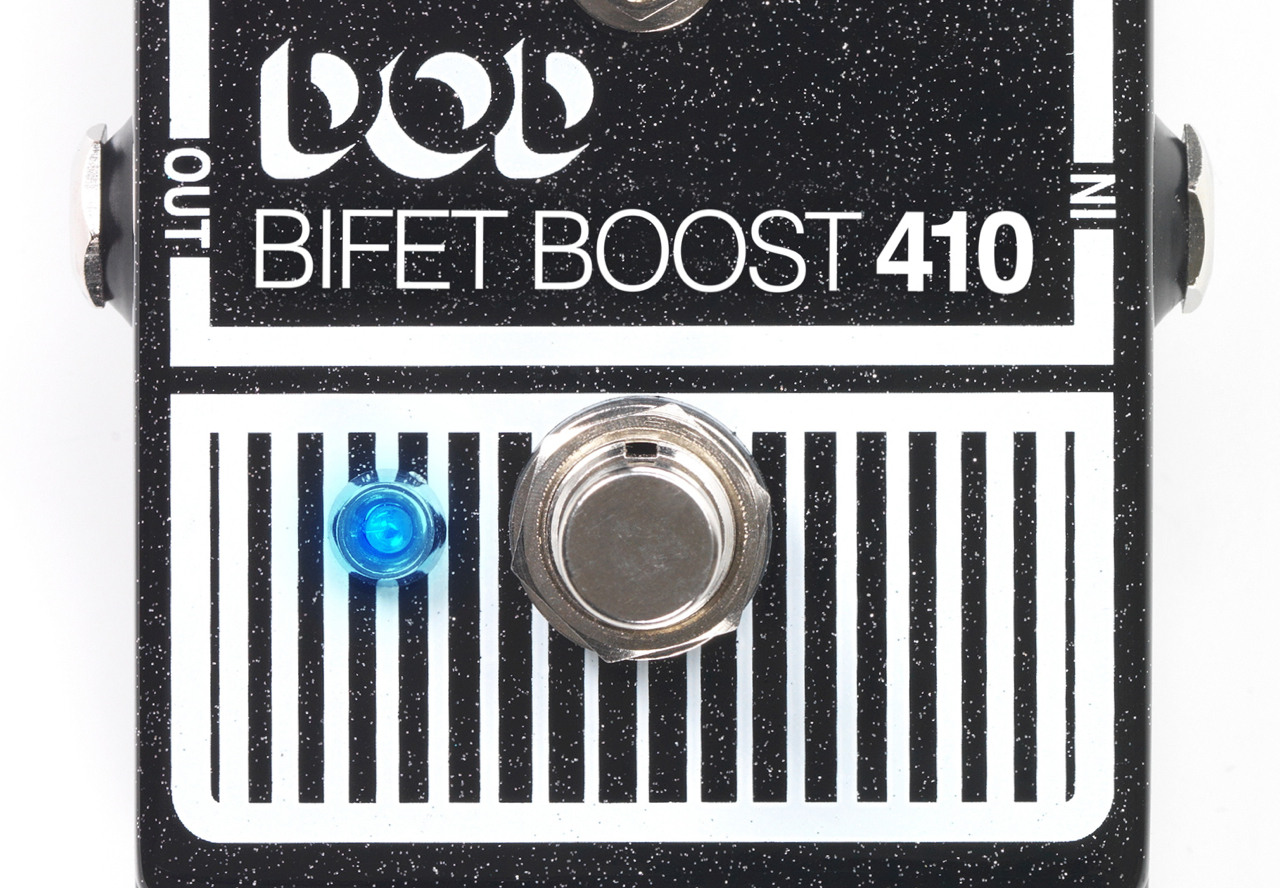
DOD has introduced an updated version of its Bifet Boost 410 pedal this year – the 2014-version adds a switchable buffer to the circuit.
****
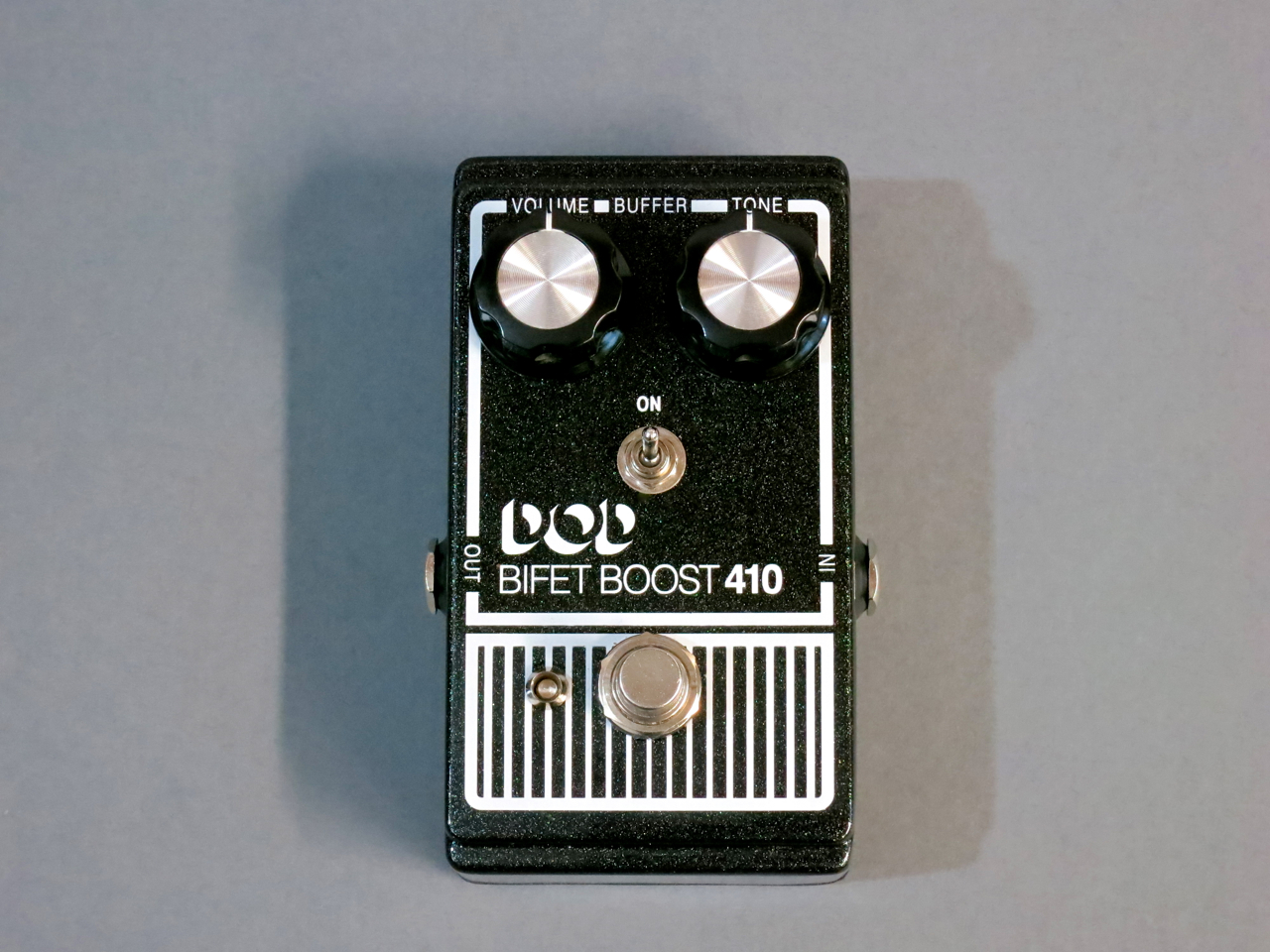
The DOD Bifet Boost 410 (current price in Finland: 99 €) is a signal level booster, giving you up to a whopping 20 dB of amplification.

The booster sports two controls – one for volume and one for tone.
Over the last few years, the term ”true bypass” has become the new marketing buzzword, bandied about frequently to ”prove” one pedal’s superiority over another. In reality there’s no mystique attached to true bypass – it simply means that when the pedal is switched off the input is hardwired straight to the output, without passing through any of the effect’s circuitry. If a pedal’s manufacturer doesn’t state true bypass in the spec list, chances are the pedal in question has an internal buffer, which stays in the signal chain even when the effect is off. A buffer is a small amplifier, whose main purpose lies in changing the signal’s impedance from high to low. Most buffer amps don’t amplify the signal level at all (= a gain ratio of 1:1), while some add a tiny bit of treble boost. A high impedance signal suffers from far greater degradation, when fed through a long signal chain (or very long guitar leads), than a low impedance signal. This means that a buffered bypass can come in handy, if you’re using a lot of effect pedals in series. True bypass is usually preferable in smaller set-ups, or if the effect in question sits in front of a fuzz pedal (fuzz pedals generally need a high impedance signal to function properly).
The updated DOD Bifet Boost 410 pedal offers a switchable buffer, so you can decide whether you want to use a buffer or not. You get the buffer in the mini-switch’s On-position, or true bypass with the switch turned off.

The Bifet Boost 410 can be run using a 9 volt battery or a (Boss-type) power supply (not included).
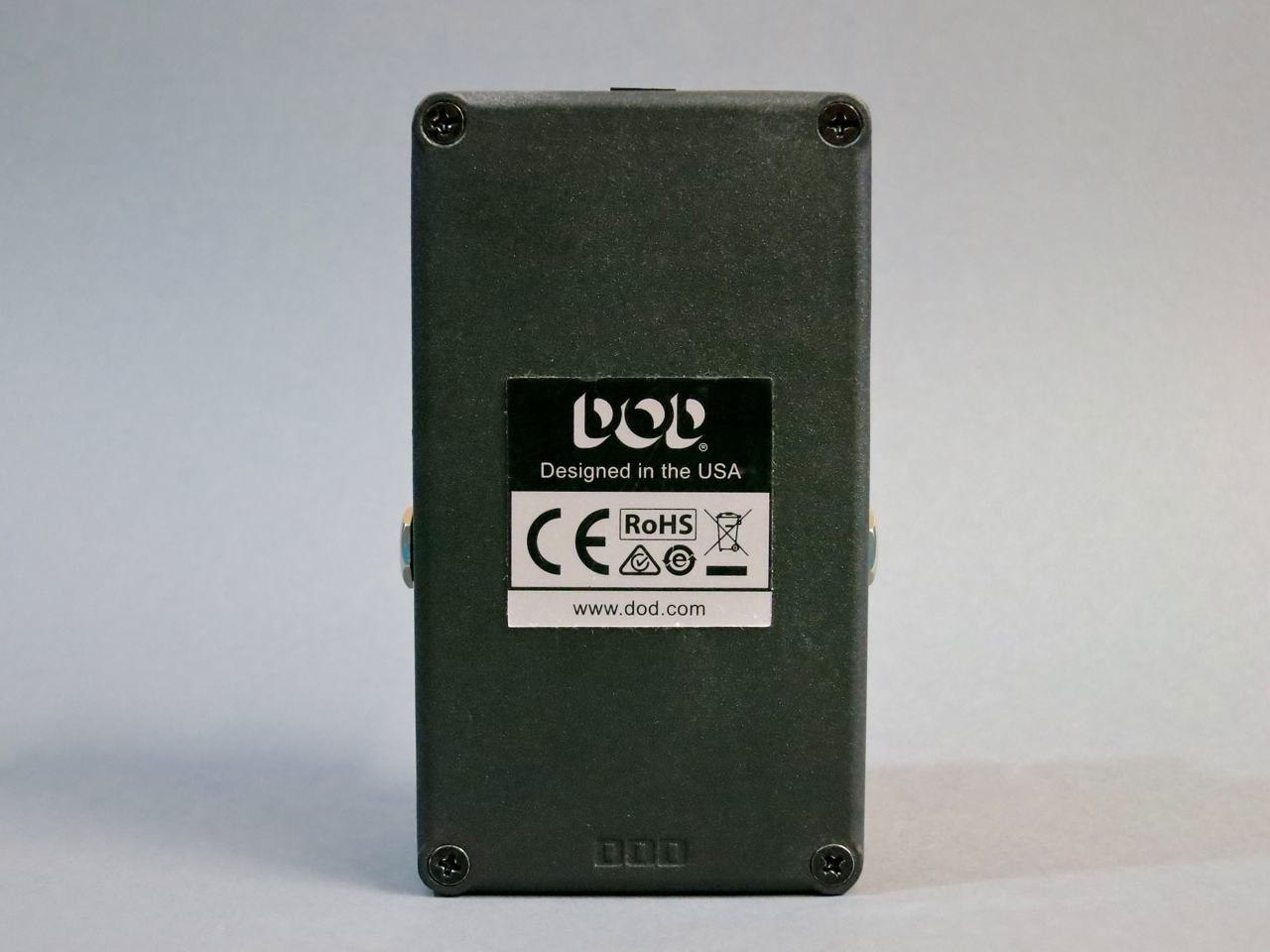
You need to take off the pedal’s metal base plate to change batteries.
The package includes four small stick-on rubber feet, which you can use when the pedal’s not used on a pedalboard.
****
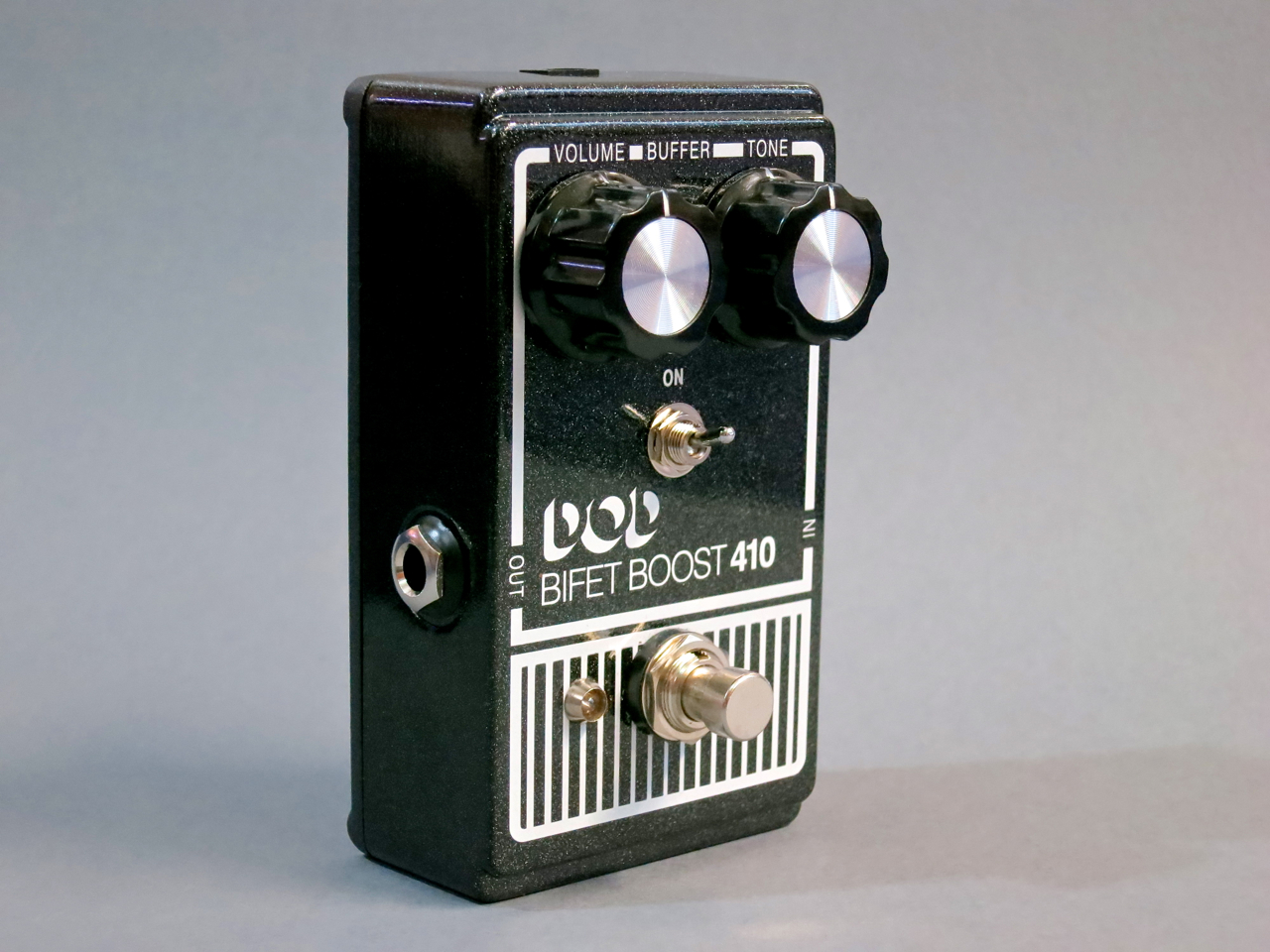
Usually, boost pedals can be divided into two categories: Those who provide a completely clean and neutral boost, and those who add a little colour and/or grit to the signal. The DOD Bifet Boost 410 belongs in the latter category, adding a little extra character to the mid-range frequencies, along with the raise in signal level.
Using the booster on a clean amp channel may push the guitar signal into overdrive, depending on the amount of headroom offered by the amp used. In this example you can clearly hear the Blackstar HT-1R’s sound break up and distort:
Used into a crunchy channel, the DOD-booster will add more chunky gain to to your tone:
You can use the tone control to add quite a lot of top end to your sound. You have to remember, though, that the sheer amount of gain on tap in this pedal will also boost any noise (hiss, hum) in your signal chain:

****
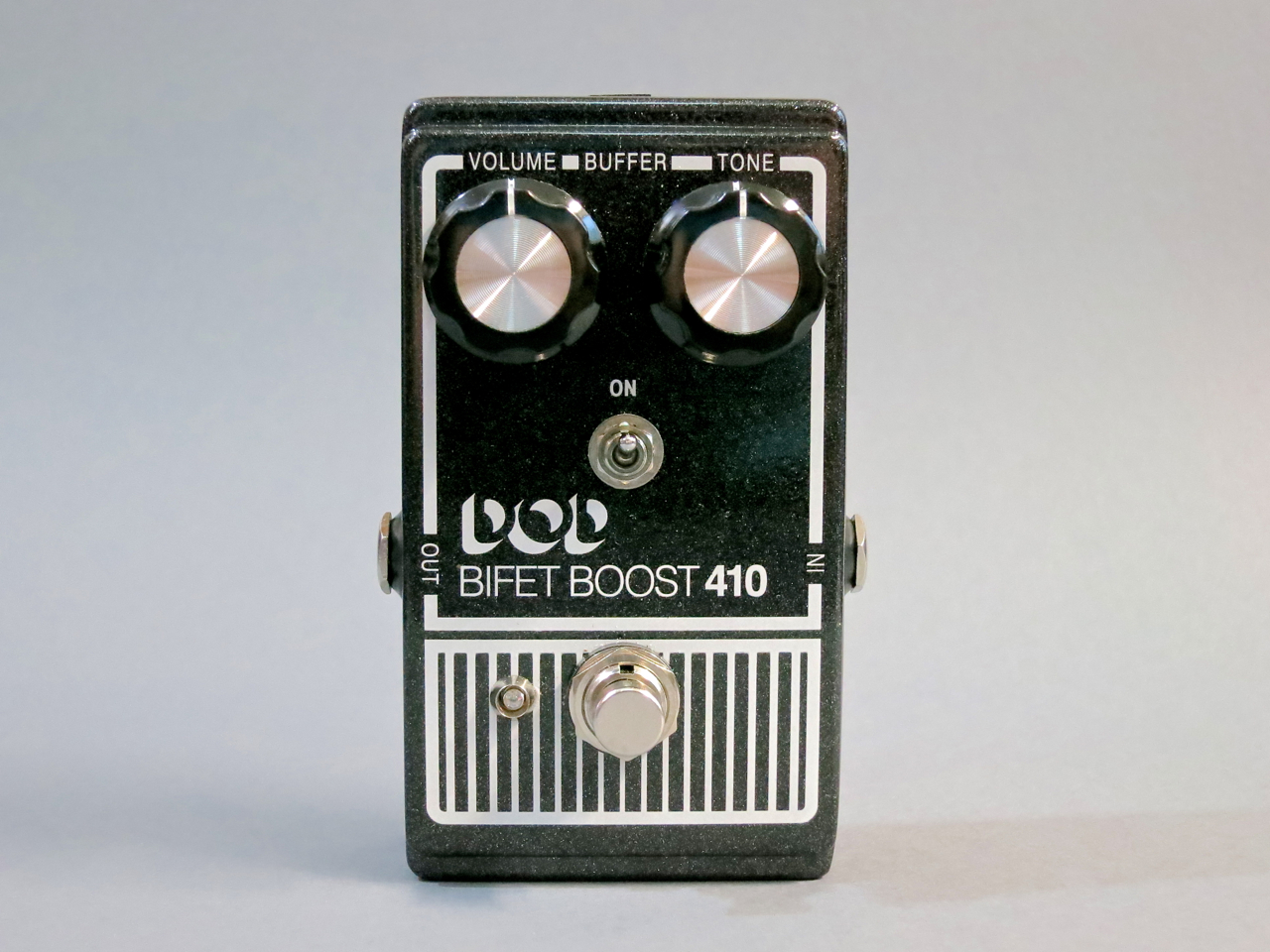
DOD’s Bifet Boost 410 is a pro-quality boost pedal and very easy to use. The added buffer switch lets you decide for yourself, whether you need a bypass buffer or not.
****
DOD Bifet Boost 410 (2014)
Current price in Finland: 99 €
Finnish distributor: EM Nordic
Thanks to DLX Music Helsinki for the loan of the review sample!
****
Pros:
+ up to 20 dB boost
+ tone control
+ switchable buffer

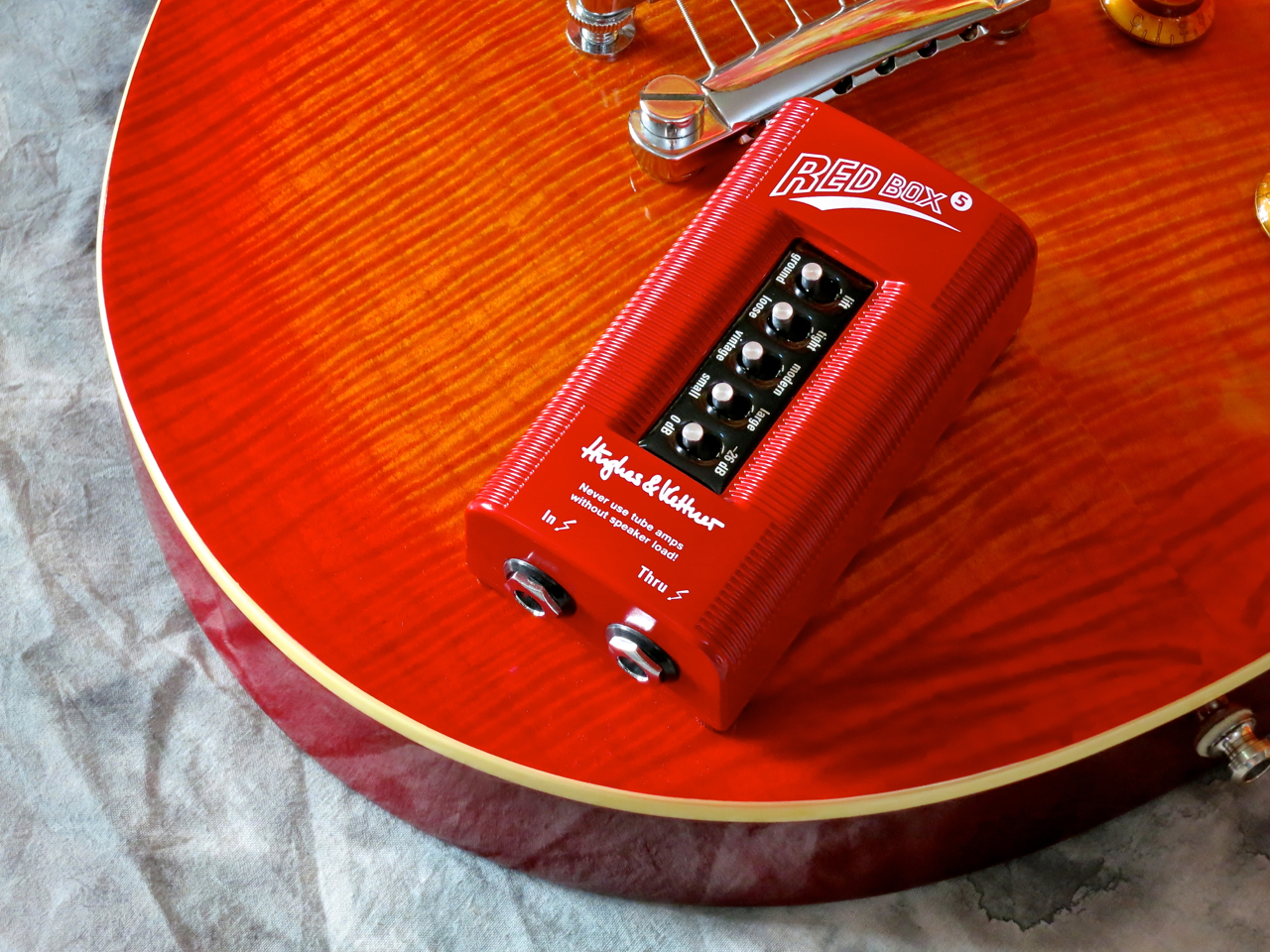
Hughes & Kettner’s Red Box has been a runaway success, ever since the first version was introduced in the late Eighties.
The Red Box is a specialised DI-box for your guitar amp. Traditionally, DI-boxes are meant to transform the high impedance signal of an electric guitar (or bass) into a low impedance signal fit for direct connection to a recording (or PA) console.
The Red Box, on the other hand, is inserted between the amp’s speaker output and the speaker (cabinet). Hughes & Kettner’s analogue cabinet modelling then makes it possible to send the sound of a miked up guitar speaker to the mixing desk (or sound card) without having to actually put a microphone in front of the amp’s speaker.
Hughes & Kettner haven’t been resting on their laurels, though. They have updated and improved the Red Box every once in a while, with the most recent version being the Red Box 5 tested here.
****
The Hughes & Kettner Red Box 5 (current price in Finland: 89,90 €) feels like a sturdy little blighter in its very compact cast-metal casing.
The Red Box’ switch panel has been sunk into the unit’s face, keeping the switches secure from mechanical damage or accidental changes to the settings.

Guitarists and guitar techs will rejoice in the fact that this little helper isn’t finicky when it comes to its power supply:
The Hughes & Kettner works just as well running on an internal 9 volts block, as it does powered by phantom power off the mixer, an external PSU. The Red Box will work with voltages from 9 to 12 V DC (centre negative) or even AC. So, finding a wall wart for this device should be a piece of cake!
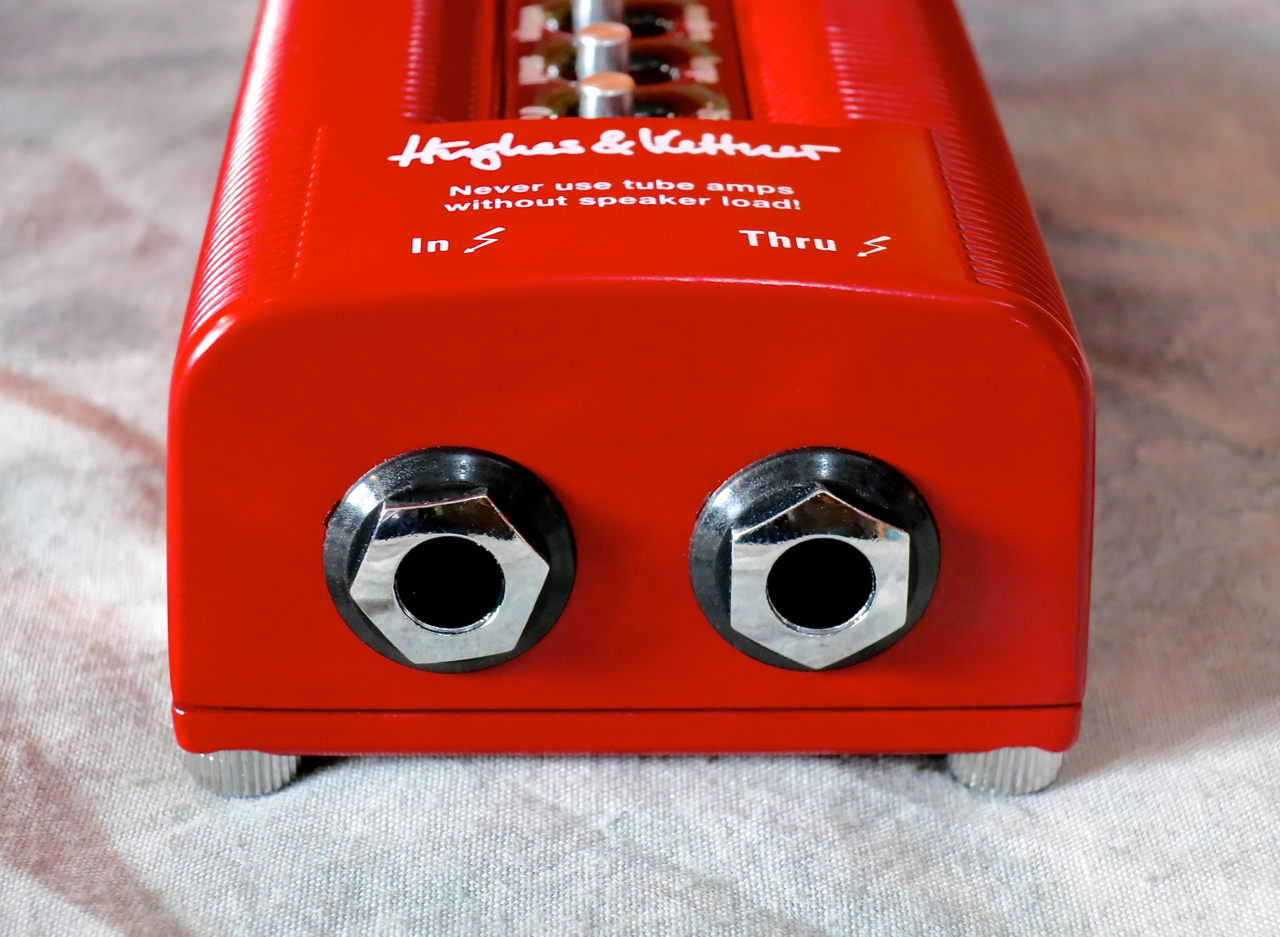
The speaker connectors have been placed at the Hughes & Kettner’s bottom end:
The amp’s speaker output is connected to the Red Box’ In-jack, while the Thru-jack will send an unadulterated signal to your speaker (cabinet).
It is very important that you don not confuse the Red Box – which is a DI-box – with a dummy load! If you’re using a valve amplifier (or a hybrid with a tube power amp) you really have to make sure to have the correct speaker load (in ohms) connected, whenever you use the amp. Using the Red Box without a speaker or dummy load will fry your amp’s power section or audio transformer!

The Red Box’ top end holds the balanced XLR DI-output, as well as the power supply (not included) connector.
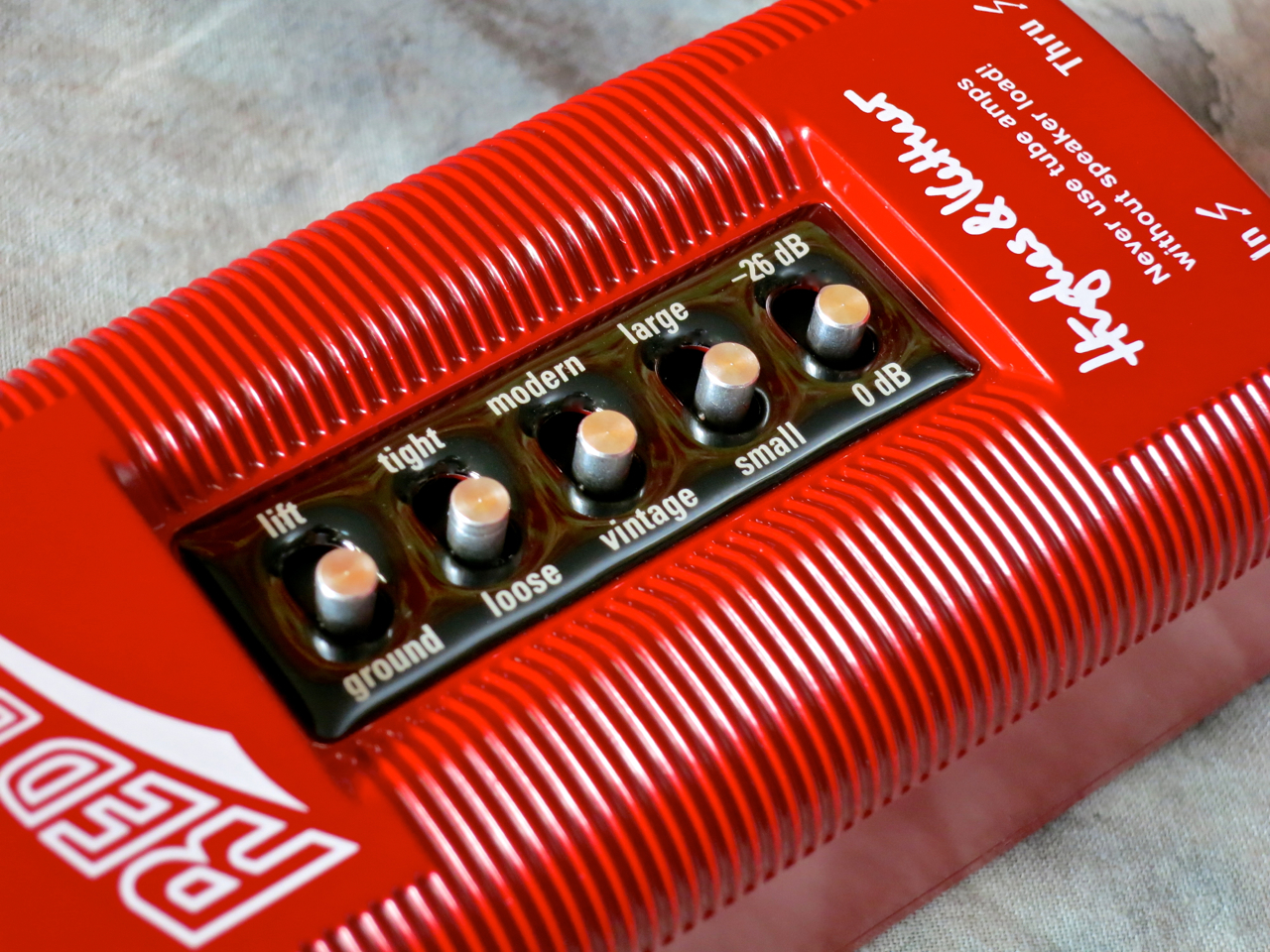
The Hughes & Kettner unit offers you five switches to tailor the DI-box’ output to your specific requirements:
There’s a ground lift switch (to cut any humming ground loops), a bass response switch, modern or vintage pre-EQ, a switch for the size of the virtual cabinet, as well as a 26 dB pad to prevent the DI-signal from overloading the console’s input.

A black velvet bag is also thrown in with the Red Box.
****

A ”great guitar sound” is probably one of our universe’s most subjective matters. Any guitar signal chain offers plenty of different variables. When you throw in the chosen cabinet, as well as the microphone and its placement relative to the speaker, the options available are virtually infinite. Nobody in their right mind can demand that a small DI-box, such as the Red Box 5, can actually offer any and all of the tonal options theoretically possible.
The Hughes & Kettner Red Box 5 raison d’être is to offer a handful of ”Best of” miked cabinet sounds, straight off of the amp’s speaker output to the mixing console (or sound card), without the hassle of having to set up a physical microphone, or having to account for the different sound characteristics of different rooms (for example on a tour). And in this the Red Box 5 truly excels.
To give you an idea of how well the Red Box 5’s sound stands up to a physical microphone, I have recorded a few clips simultaneously using a Shure SM57 and the Red Box. I used a Blackstar HT-1R running into an Änäkäinen Rumble speaker. The Red Box 5 was set to ”loose”, ”vintage” and ”large”.
Here’s a clean example, close-miked with the Shure:
And here’s the same example recorded direct with the Red Box:
Next I went for a crunchy amp sound; here’s the close-miked version:
And this is the same example DI’d through the Hughes & Kettner:
****
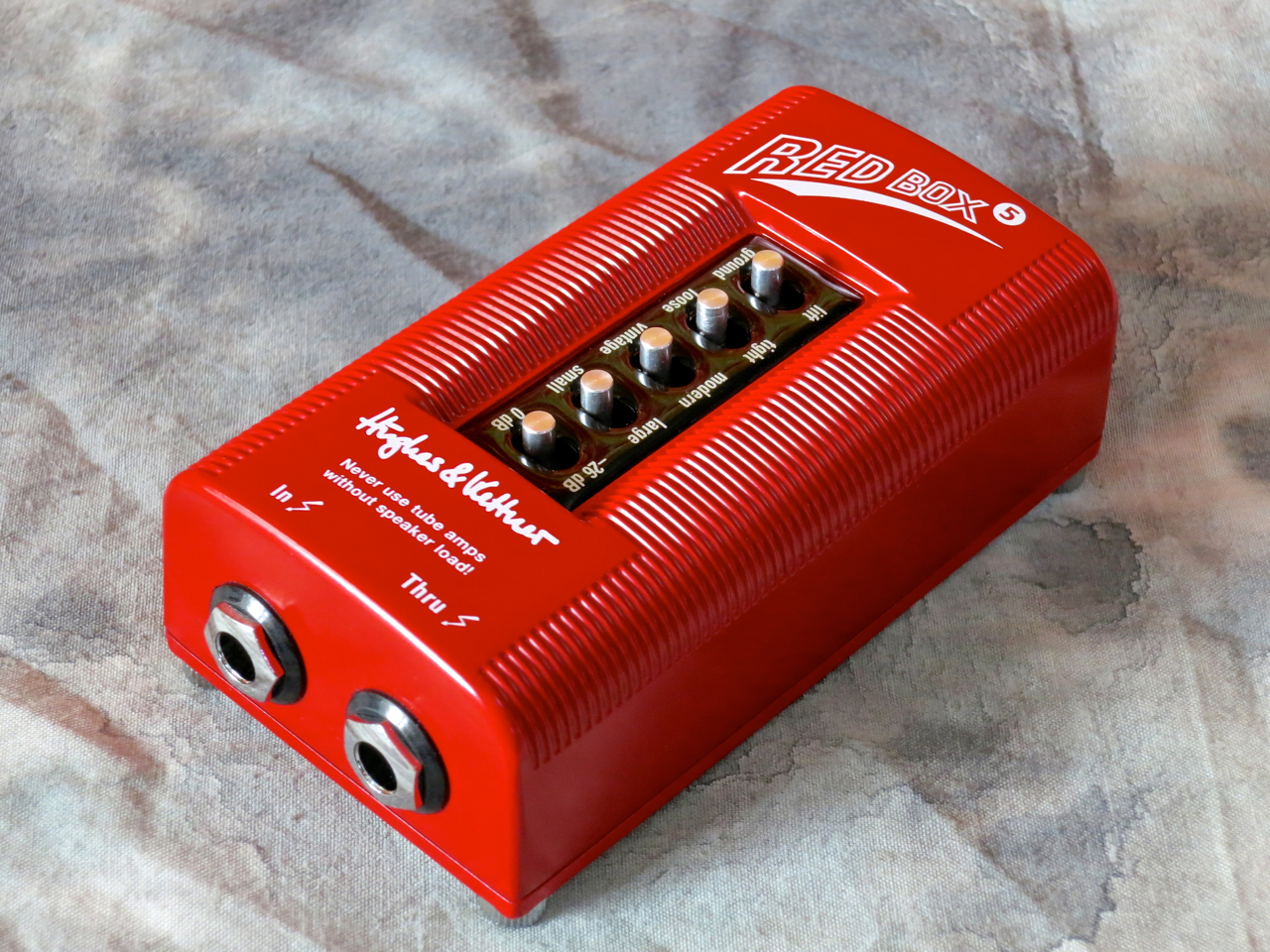
Hughes & Kettner’s Red Box 5 is a fabulous tool, especially for onstage use. No need to put up a mic anymore, which means no more feedback and bleed problems. The Red Box 5 will give you consistently excellent DI’d guitar amp tones with the least amount of hassle.
****
Hughes & Kettner Red Box 5
Current price in Finland: 89,90 €
Finnish distribution: F-Musiikki
****
Pros:
+ very compact size
+ multiple means of power supply
+ different tonal options
+ pro-quality cabinet modelling


 Kitarablogi.com – Finland's premier Guitar and Bass blog