Makea uusinta Gibsonilta // Sweet reissue from Gibson – ES-330

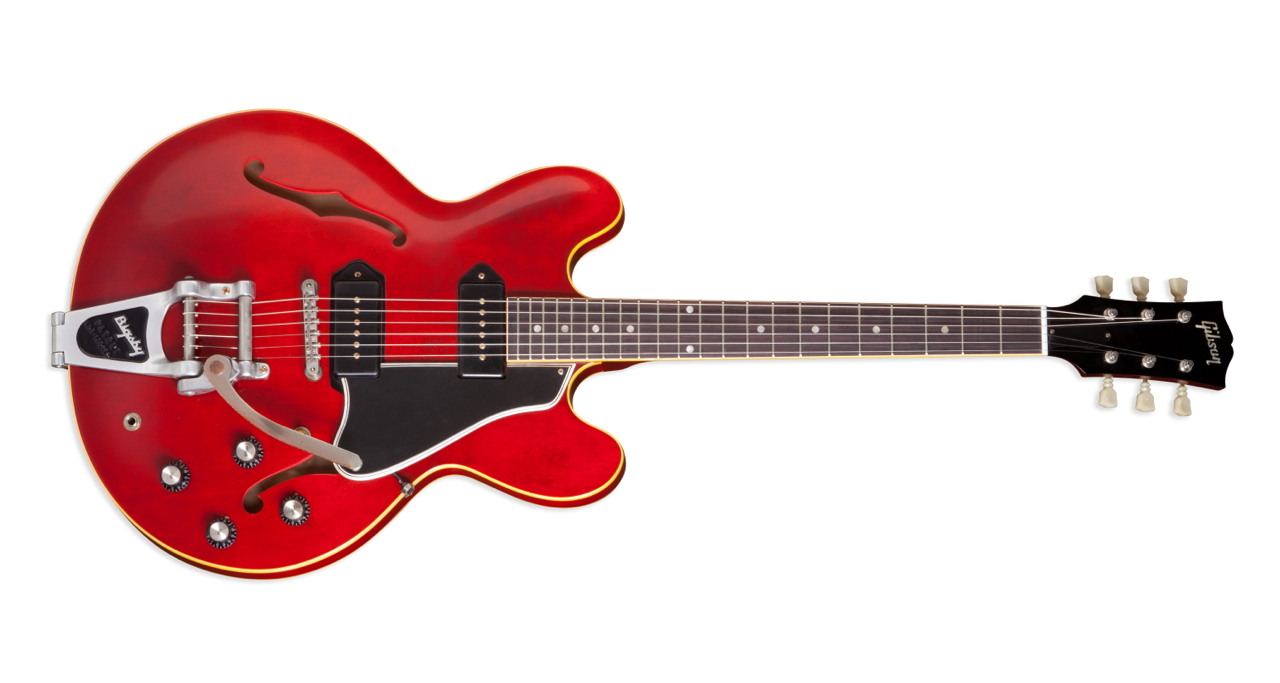
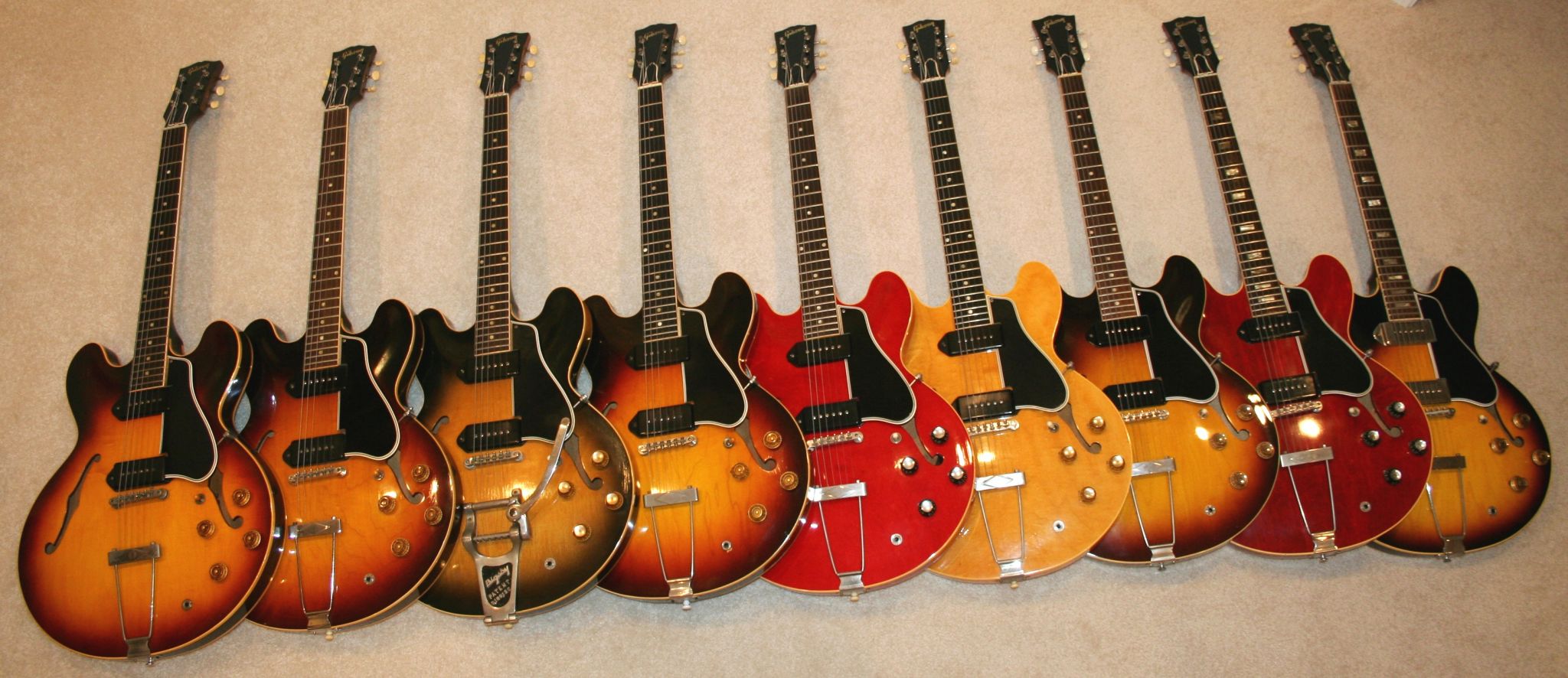
Gibson on laittanut vanhan klassikkonsa ES-330 uudelleen tuotantoon.

ES-330:lla on sama ohut vanerirunko kuin esimerkiksi ES-335, mutta ilman keskipalkkia, minkä takia kaulaliitos on tässä jo 16. nauhan kohdalla.

Mikrofonivarustus on sekin klassinen: kaksi Alnico II -magneetteilla varustettua P-90-mikkiä.

Malli on saatavilla sekä Bigsbyllä että tavallisella trapetsilla varustettuna.

****

Maahantuoja: Into-Luthman

Gibson has chosen to re-release its classic ES-330-model.

The ES-330 shares the ES-335’s thinline plywood body, but is fully hollow (no centre block), which is why the neck joint is already at the 16th fret.

The pickups in this reissue are a pair of Alnico II -equipped P-90s.

The models is available with a Bigsby or with a trapeze tailpiece.

****

What do the terms ”Gibson 50’s neck” and ”Gibson 60’s neck” mean?

When Gibson overhauled their very successful Les Paul Standard -guitar about ten years ago, it was decided to offer the model with two different neck profiles.

Most Gibson-fans agree that the best Les Paul necks were the ones on the original Sunbursts, produced from 1958 to 1960:

• In 1959 the neck profile was a well-rounded, but not too big D-shape

• In 1960 the profile was changed to a flatter and thinner shape, resulting in a C-profile

These two neck profiles are today represented in Gibson’s 50’s- and 60’s-necks. Their cross-sections look something like this:

****

As most things in life, Gibson’s neck profiles aren’t as simple a matter as the company’s terminology will have us believe:

• The ”50’s neck” should really be called a ”1959”-profile, because earlier in the Fifties Gibson-necks were much fatter.

• The ”60’s neck”, on the other hand, is really an ”early 60’s”-profile, as the company moved on to an even flatter – as well as narrower – profile in the latter part of the Sixties.

But still, Gibson’s current 50s/60s-terminology works well with most players when talking about neck shapes.

****

Gibson’s newest feature on some models is an asymmetrical neck profile, which has a fuller bass side and a thinner treble side.

Mitä tarkoittaa ”Gibson 50’s neck” ja ”Gibson 60’s neck”?

Kun Gibson uudisti noin kymmenen vuotta sitten Les Paul Standard -mallinsa, päätettiin tarjota kestosuosikki peräti kahdella eri kaulaprofiililla.

Enemmistö Gibson-faneista on yksimielinen siitä, että firman parhaan tuntuiset Les Paul -kaulat valmistettiin 1950- ja -60-luvun taitteessa:

• vuoden 1959:n kaulaprofiili oli täyteläinen, muttei liian paksu D-muoto

• vuonna 1960 kaulaprofiili muutettiin hieman ohuemmaksi ja tasaisemmaksi – syntyi C-muotoinen profiili

Juuri näitä kaksi Gibson-profiilia tarkoitetaan, silloin kun puhutaan 50’s- ja 60’s-neckistä, ja niiden poikkileikkaukset näyttävät suunnilleen tällaiselta:

****

Kuten monet asiat elämässä, myös nämä kaksi käsitettä yksinkertaistavat hieman monimutkaisemman aihepiirin:

• ”50’s neck” pitäisi kutsua ”1959”-profiiliksi, koska ennen sitä Gibson-kitaroissa kaulaprofiili oli huomattavasti paksumpi.

• ”60’s neck” taas pitäisi nimittää ”early 60’s”-profiiliksi, koska kuuskytluvun toisella puoliskolla kaulat muutettiin vielä ohuemmaksi ja samalla myös kapeammaksi.

Mutta näinkin asia tulee kuitenkin selväksi, ja nämä termit palvelevat valtaosaa kitaristeja mainiosti.

****

Uusin juttu joissakin Gibsoneissa on muuten epäsymmetrinen kaulaprofiili, joka on bassopuolella paksumpi kuin diskanttipuolella.

Gibson 335-S – 1980-luvun malli uusintapainoksena

Gibson lanseeraa 1980-luvun alkupuolen erikoisuus uudestaan. Mallin nimi on Gibson 335-S, ja se näyttää tältä:

335-S:llä on lankkumallinen vaahterarunko, joka muistuttaa piennettyä ES-335-mallia. Kaulakin on vaahterasta, kun taas otelauta on värjätty grenadillo.

Mikrofoneiksi on valittu kaksi alnico II -magneeteilla varustettua Burstbuckeria – kaulahumbuckeri on hyvin mieto Burstbucker 1, ja tallamikrofonina käytetään hieman mehukkaampi Burstbucker 2 -versio.

Gibson 335-S tarjoaa kolmiasentoisen vipukytkimen lisäksi kaksi volumea sekä yhden master tonen.

Kitara on saatavilla Vintage Sunburstin lisäksi Silverburst-viimeistelyllä.

Maahantuoja: Into-Luthman

The Red Riddle – my Kasuga ES-335 -copy

Everybody has heard of Tokai, and there’s plenty of knowledge about Greco’s and Ibanez’ copycat instruments around.

The Kasuga-brand is a much rarer beast, even though the company produced many decent instruments (many of those were copies) between the mid-Sixties and the Eighties.

I own a Kasuga-version of Gibson’s classic ES-335, which was most likely produced in the late 1970s, judging by its main specs.

I found my Kasuga by chance in a flea-market in the early Nineties. The price asked was so low and the guitar so red, it was a no-brainer.  😉

The classic curves of a Gibson ES-335/345/355 are one of the prettiest guitar shapes, in my opinion.

In some respects this copy is a funny hodgepodge of different attributes lifted from different periods of the original’s lifespan. Additionally there are also some of Kasuga’s own details added.

Take the headstock, for example, which is the larger version, generally used for the bound headstock of the Gibson ES-355 model.

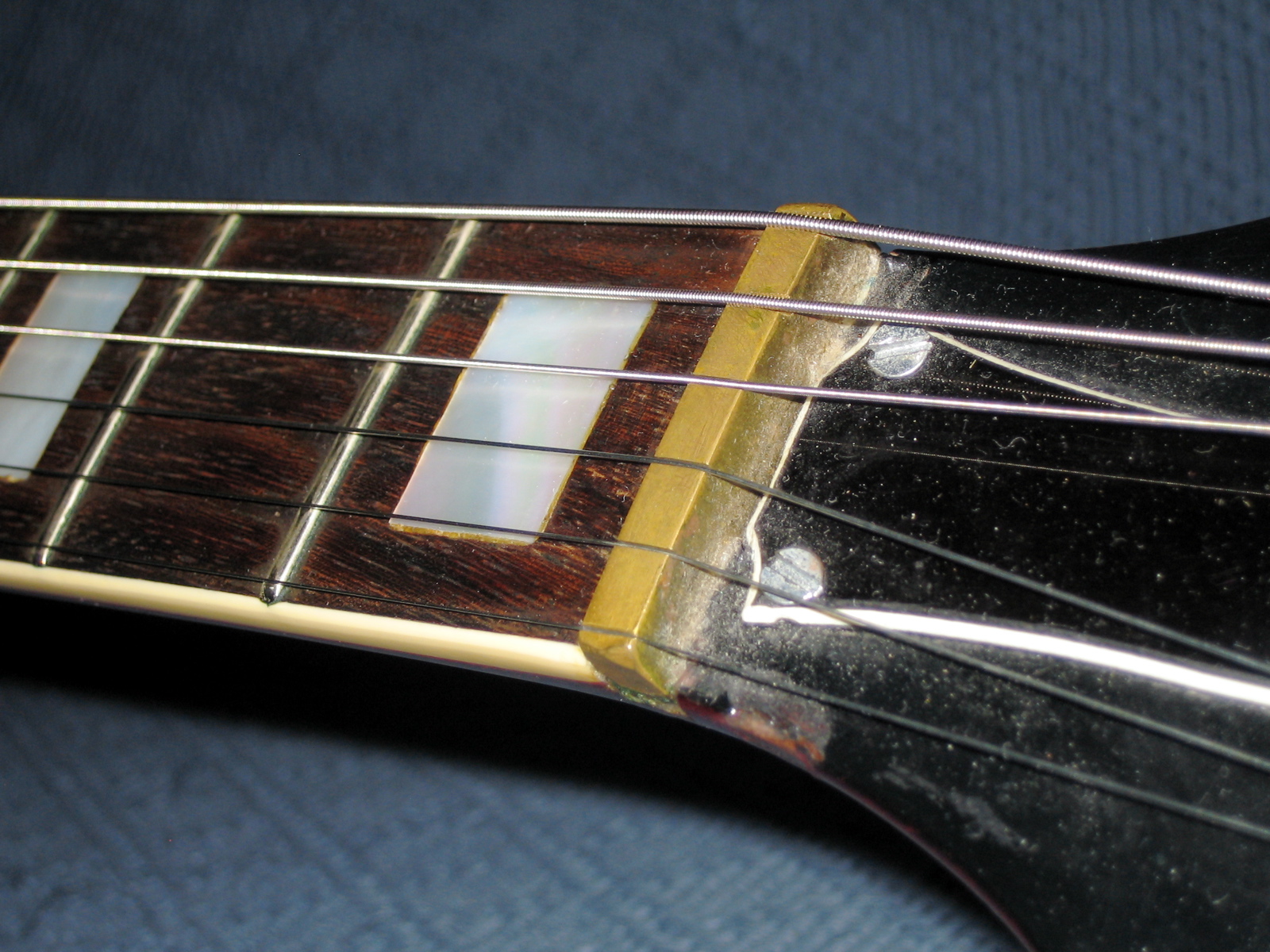
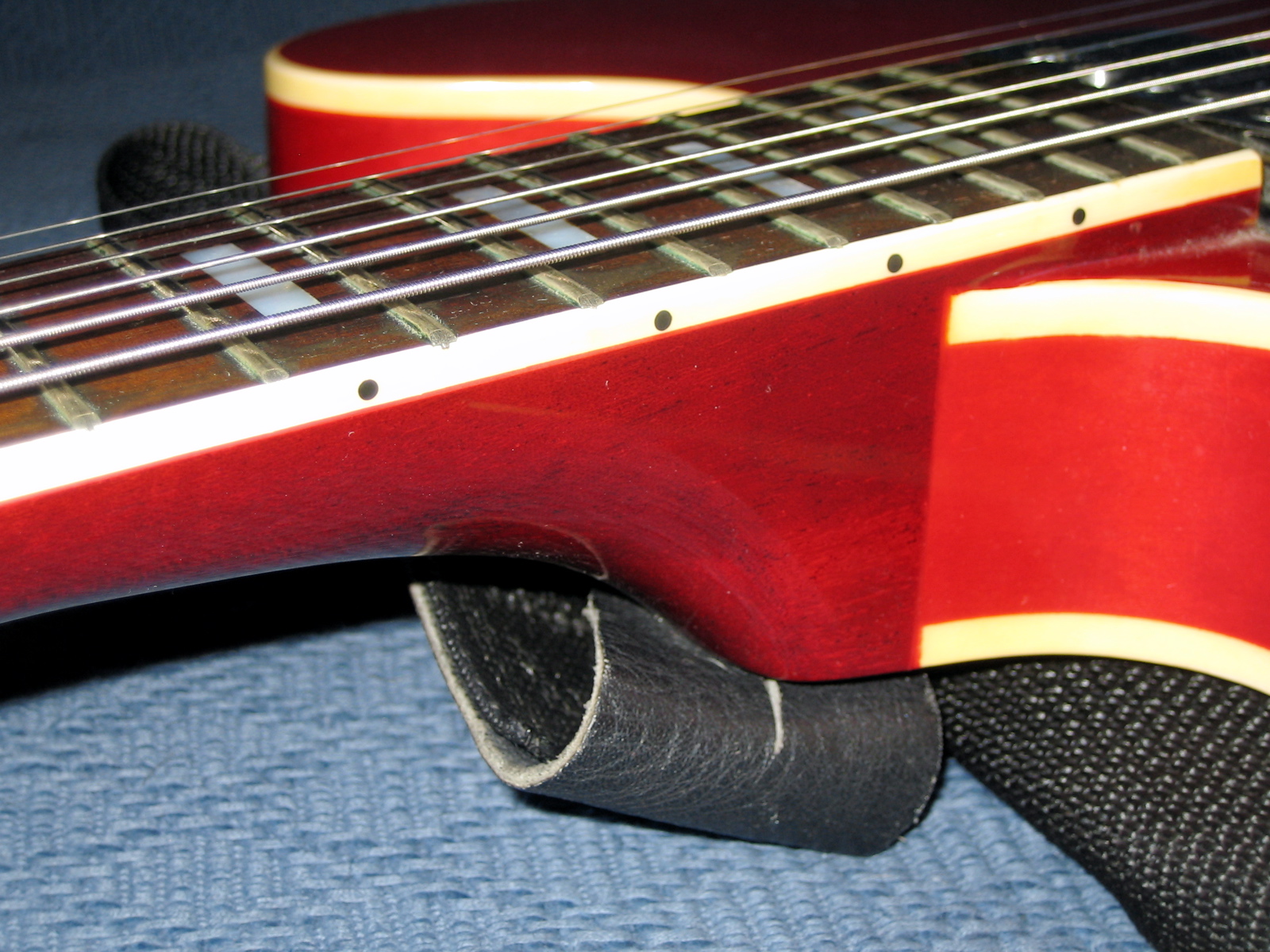
A previous owner had installed a brass nut – very much in fashion in the early Eighties. The extremely low frets are original, as are the large pearl inlays. The neck profile is a copy of Gibson’s 1970’s slim type.

The sealed tuners are of a make that I’ve never seen before or since. There’s the typical 1970s volute, meant to strengthen the neck’s wrist and the headstock.
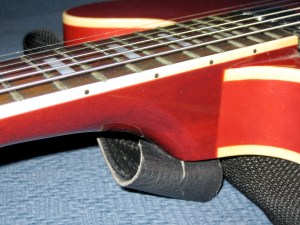
Genuine mahogany has been used for the set neck.

One of the f-holes reveals the body’s five-ply laminate, which seems to be maple/mahogany/maple/mahogany/maple.
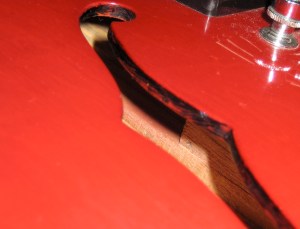
The Kasuga even mimics Gibson’s Seventies short centre block, that only starts at the bridge. The neck has its own little block. In this case the centre block has been fashioned from mahogany.

The electronics are high quality – the original pots all still work fine, as does the switch. I only had to replace the output jack some ten years ago.

Strangely enough the arch of the body is not as pronounced and graceful, as on the originals. The humbuckers are standard sized, but the bezels are wider than normal.

The body ears have been left completely flat on the Kasuga, while the original sports very attractive arching both on the top as well as the back. The ears are slightly pointed, as was usual in post-1964 Gibsons as well.

Here are some Kasuga soundbites:

Kasuga – neck PU

Kasuga – both PUs

Kasuga – bridge PU

Kasuga – plus lead

Punainen arvoitus – Kasuga ES-335 -kopio

Kaikki tuntevat Tokain, ja myös Ibanezin ja Grecon kopiosoittimista löytyy tietoa laajasti.

Harvinaisempi tapaus on japanilainen merkki Kasuga, joka oli rakentanut soittimia – monet niistä kopiosoittimia – 1960-luvulta lähtien.

Minulla on (luultavasti 1970-luvun loppupuolelta peräisin oleva) Kasugan kopio Gibson ES-335 -puoliakustisesta.

Löysin Kasugani sattumoisin yhdeltä kirpputorilta 1990-luvun alussa. Kitaran hinta oli niin alhainen, että ostos kannatti jo kaunottaren punaisen värin takia 😉

Gibsonin klassinen ES-335/345/355-muoto on mielestäni yksi kauniimmista kitaratyypeistä.

Tämän kopion yksityiskohdat sekoittavat hauskasti (eikä mitenkään vintage-tietoisesti) eri aikakausien ominaisuudet, ja valmistajakin on lisännyt soppaan muutaman oman ratkaisun.

Viritinlapa on kopio Gibson ES-355:n isommasta mallista, vaikka tässä tapauksessa koristus on selvästi ES-335:n mukainen (ei reunalistoitus, pieni kukka-upotus).

Edellinen omistaja oli asentanut 1980-luvun alussa niin suosittua messinkisatulaa. Alkuperäiset nauhat ovat erittäin matalat ja helmiäisupotukset isot – niin kuin tavallisesti ES-355-kitarassa. Kaula on siro kuin 1970-luvun Gibsoneissa.

Suljetut virittimet ovat minulle tuntemattomasta brändistä. Satulan vastapuolella on kaulassa 1970-luvulle tyyppillinen paksunnos (engl. volute), joka on tarkoitettu suojaamaan lapaa murtumisestä.

Kaula on veistetty oikeasta mahongista, ja se on liimattu vanerirunkoon perinteisellä tavalla.

F-aukon reunalla näkyy, että vaneri on viisikerroksinen – ilmeisesti vaahtera/mahonki/vaahtera/mahonki/vaahtera.

Kasugalla on 1970-luvulle tavanomaista lyhyttä keskipalkkia, joka menee tallasta runkoon loppuun. Kaula istuu omassa pienessä blokissa. Kitarani tapauksessa blokki on tehty mahongista.

Elektroniikka on toteutettu laadukkaasti – Kasugassa on yhä alkuperäinen kytkin ja potikat, ainoastaan jakin joutuin vaihtamaan jonkin aikaa sitten.

Rungon muotoilussa valmistaja on ollut yllättävän suurpiirteinen, eikä kansi kaareutuu ihan niin kauniisti kuin alkuperäisessä Gibsonissa. Humbuckerit ovat standardikokoa, mutta niiden kehykset ovat hieman perinteisiä isompia.

Rungon korvat ovat sitä hieman terävämpi sorttia, joka on tavallinen 1964-1981 välillä rakennetuissa oikeissa Gibsoneissa. Mutta myös tässä sekä kansi että pohja ovat tasaisia, eivät ne kaartu holvimaisesti niin kuin oikeassa Gibsonissa.

Tältä Kasugan ES-335-kopio kuulostaa:

Kasuga – kaulamikrofoni

Kasuga – molemmat mikrofonit

Kasuga – tallamikrofoni

Kasuga – komppi ja soolo

Epiphone-uutuudet syksylle 2011 ****** New Epiphone gear for autumn 2011

Epiphonelta on tulossa uusia malleja, joita pitäisi olla saatavilla lähiaikoina – juuri oikealla hetkellä joulutoiveitamme varten:

Epiphone will be releasing some tasty new models – just in time for your Christmas wish-lists:

****

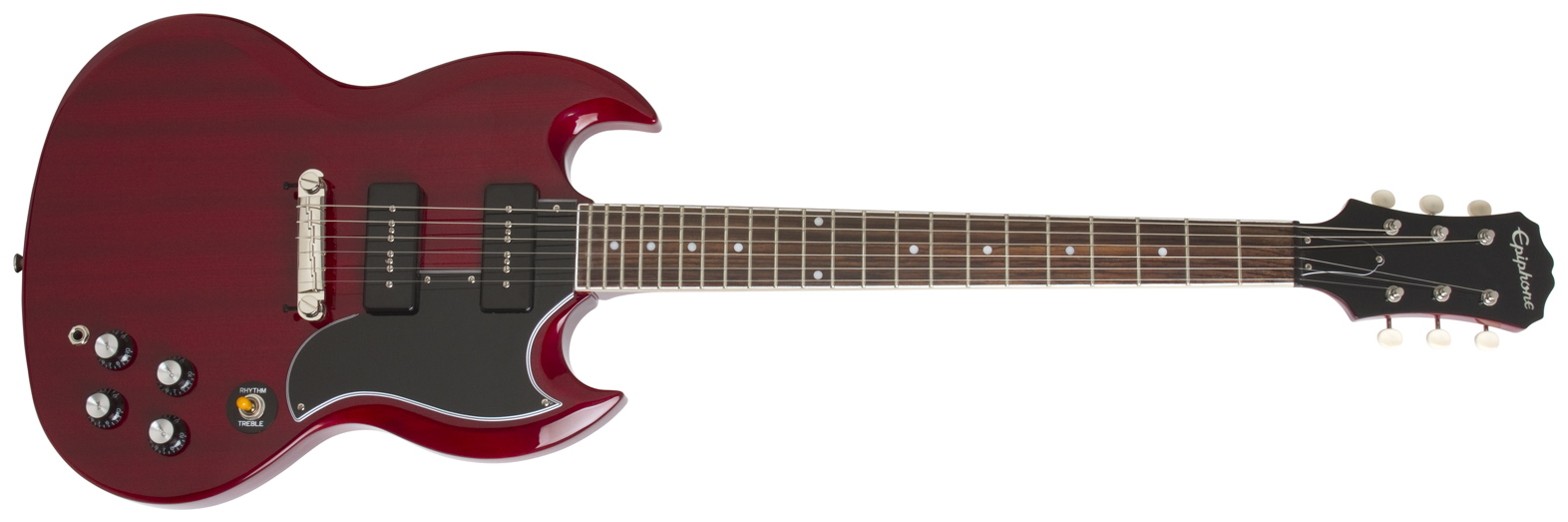
Pete Townshend -faneille tarjotaan viimein kunnon Epiphone-versio vanhasta SG Special -kitarasta. Reunalistoitettu, liimattu kaula, kaksi P-90-mikrofonia sekä kiinteä talla – todella jeeeeees!

At last Epiphone is releasing a Pete Townshend -style SG Special with a bound fretboard, a glued-in neck, two P-90s and a wraparound bridge – Who-tastic!

****

Les Paul Ultra III on päivitetty versio Ultra kakkosesta. Ultra III:lla on vielä paremmat humbuckerit sekä USB-lähtö (NI:n Guitar Rig LE -ohjelmapaketti kuuluu hintaan).

The Les Paul Ultra III is a further improvement on the Ultra II. The Ultra III has even better humbuckers, as well as a USB-port (NI’s Guitar Rig LE is included in the package).

****

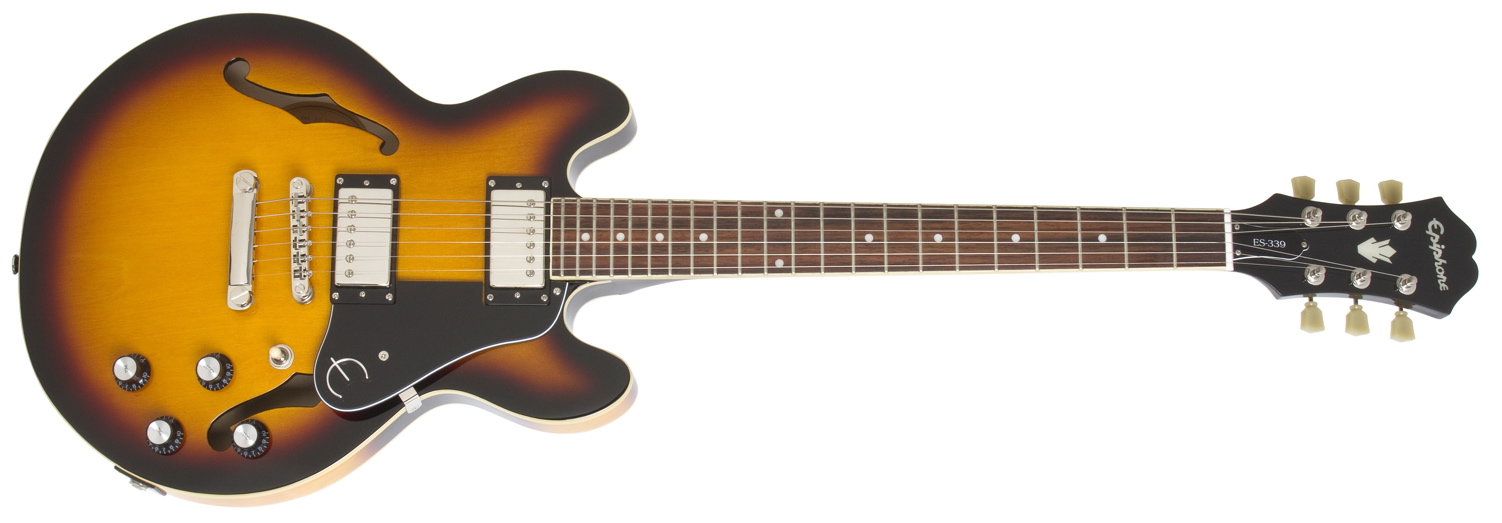
Ja puoliakustisen kitaran ystäville on tarjolla Epiphonen oma versio ES-339-mallista, jolla on ES-335:n rakenne, mutta pienemmällä kopalla klassikkoon verrattuna.

Friends of semis are treated to the Epiphone ES-339, which is basically an ES-335, only with a smaller body.

Classic Guitars, part 5: Gibson ES-335

Gibson’s ES-335, which was introduced in 1958, is one of the all-time bestselling models in the company’s history, and has been in production ever since, making it the Gibson model with the second longest uninterrupted production run (only the ES-175 has been in production longer, since 1949).

Ted McCarty, Gibson’s president from 1948 to 1966, has always stated that, looking back, he thought the ES-335 was his finest achievement.

The ES-335 has a thinline body made from steam-pressed maple plywood. Although the guitar does remind you of a classic Gibson hollow-body Jazz-box, this model is actually halfway solidbody in terms of its build.

This is because a semiacoustic electric guitar has a solid wood centre block running the length of the body from the neck joint all the way down to the back strap button. The centre block gives a semi a longer sustain, while keeping howling feedback at bay.

The block also allows the use of Gibson’s typical solidbody hardware – namely the Tune-o-matic-bridge and the stop bar – which add some clarity to the mix.

For their part, the ES-335’s hollow wings bring a bit of air to the mid-range, making the guitar sound more open and airy than a Les Paul for example.

Due to its relatively large body, a semi isn’t probably the best model for a small beginner (of less than 160 cm height), but as long as size isn’t an issue this lightweight and well-balanced ergonomic style of guitar is a fine choice.

Gibson’s subsidiary Epiphone has produced many of its own variants in the 335-style since the 1960s – from the glitzy Sheraton (the natural-coloured guitar in this post) to the minihumbucker-equipped Riviera, with its own, slightly brighter tone.

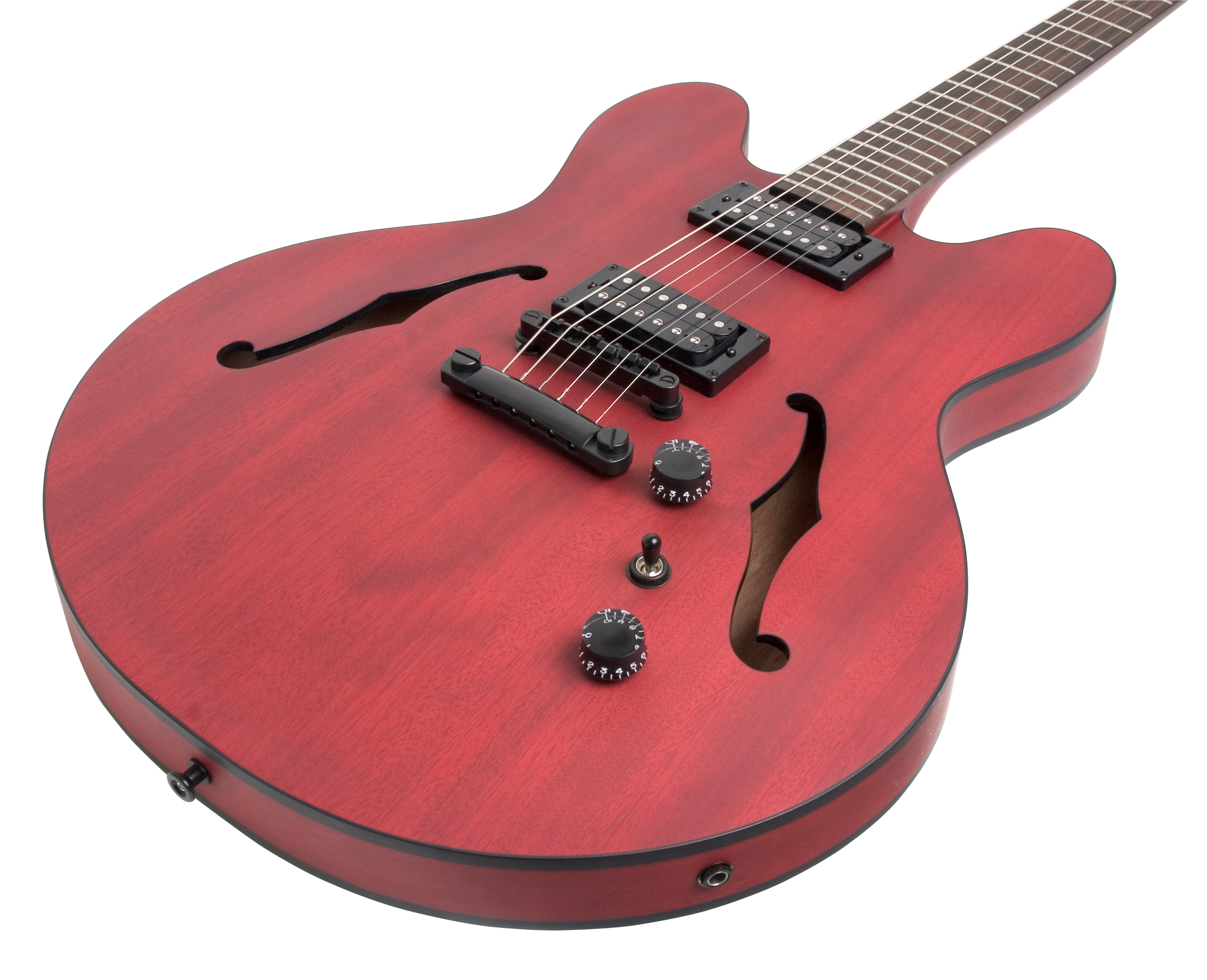
The relatively new Epiphone Dot Studio gives you superb bang-for-the-buck, with its pared down, no-nonsense looks. Here the body is made from mahogany plywood, with the controls streamlined to one master volume and one master tone.

____________________________________________________________

I’m an avid fan of the semi-style body.

Here’s a snapshot of my Epiphone Casino and a late-70s/early-80s ES-335-copy made in Japan by Kasuga:

Listen to both guitars here

Save

Save

Pidä blogia WordPress.comissa.

Ylös ↑