Review: Spin X guitar cable (aka Mad Professor RED Cable)

N.B.:

When I wrote the original (Finnish) version of this review, the company behind this guitar lead, Spindeco Oy, had been making tentative noises about marketing the cable using the Spin X brand name. Since then I have been informed that Spindeco won’t start marketing this lead, after all. The cable will continue to be sold as the Mad Professor RED Cable – same specifications, different colour.

For the sake of clarity, the English version the review will refer to the product as the Spin X cable, too.

Spin X 2

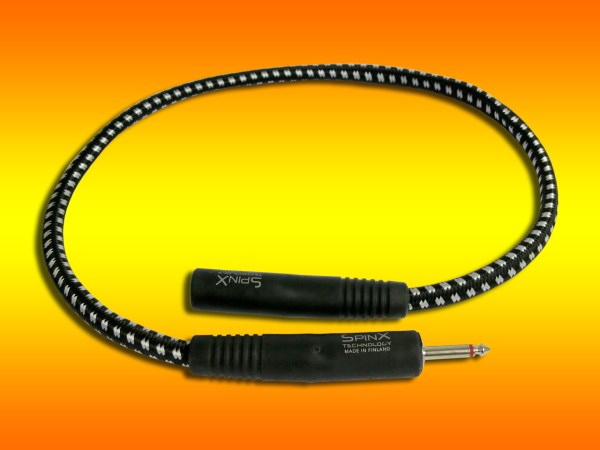
Seldom has there been this amount of Internet chatter and general hysteria about any guitar accessory, as there has been about the Finnish Spin X cable, which is only a guitar lead of approximately 75 cm length, with two giant 1/4-inch connectors (a female input; a male output).

The Spin X cable (sold for 129 € as the RED Cable by Mad Professor) is manufactured by a Finnish company called Spindeco Oy. The cable promises to improve the efficiency of its conductors by means of a nano-electrical phenomenon, known as the electron spin. Special graphite-coated conductors are meant to rearrange the signal-carrying electrons in such a way, that the signal flow is improved. Spindeco claim that the main benefit of this technology in a guitar lead is an improved phase correlation between the different frequency bands of the signal. Apparently, traditional leads tend to pass high frequencies quicker than low frequencies, which tend to arrive at the amplifier with a very tiny time lag.

Using the benefits of the noble search engine, I quickly ascertained that the electron spin is, in fact, no voodoo, but rather generally acknowledged quantum physics. Still, we guitarists are interested in audible results; we ask questions like:

Does the Spin X cable do what it says on the tin? Is there truly a discernible difference in sound? Do I have to own one if I want to be a Tone God?

****

I was given a Spin X cable for reviewing purposes.

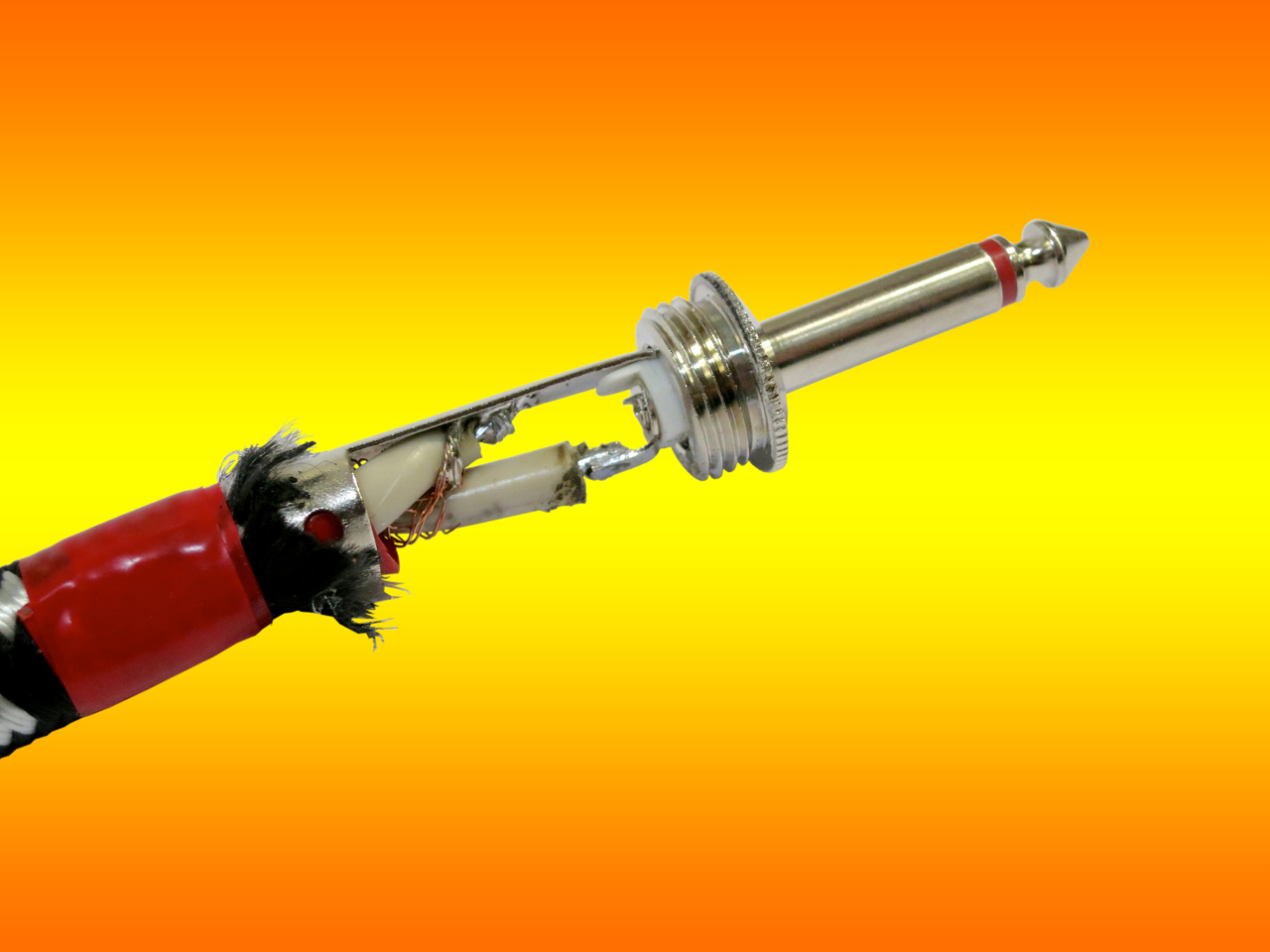
There’s been some rumours about miniature transformers, or buffers, inside the lead’s giant connectors, which is why I had to take a closer look inside. Nope, it’s just a bunch of different conductors – some left unused – attached with traditional soldering tin!

The short length of the Spin X cable has also been the centre of some speculation. Guitarists have been asking: ”Why is it just a short extension cord, instead of a full-length guitar lead?”

Take a closer look at these pictures (click on them for a larger view), and the answer becomes rather obvious:
Spin X cable – plug 2

Spin X Cable – jack 2

It seems that Spin X relies on two identical conductors to function in the desired way. One is the hot (signal) conductor, while the other goes to earth (ground). But using this type of cable results in a less-than-ideal setup, when it comes to mains hum and electromagnetic interference.

guitar cable

coaxcable

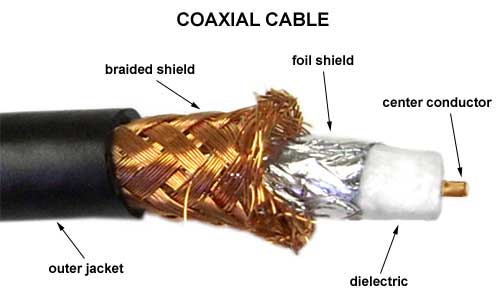
Traditional guitar cables are built as coaxial leads, where a centre conductor carries the guitar signal. The centre conductor runs inside a layer of insulation, which in turn is covered by one (or several) shields. The shield is connected to ground and serves two purposes – one: its the audio signal’s earth; two: it’s a Faraday cage that shields the signal conductor from extraneous interference, like mains hum.

If you connect only the Spin X cable to an amp, and turn up the volume, you will be greeted by an unacceptable amount of hum and microphonics, but as soon as you plug your regular lead into the Spin X, all the noises disappear. This means that the Spin X needs the traditional, coaxial guitar lead to do away with all the interference.

****

The Spin X cable seemed reasonably rugged and well made.

The only thing that bothered me in the road-worthiness department were the badly secured strain relief cuffs in both connectors of our review sample.

****

I wanted to find out, whether you could ”measure” any real speeding up of the guitar signal in the confines of a home studio. I came up with the following setup:

I recorded the acoustic sound of a Fender Stratocaster using an AKG C3000 condenser microphone onto the left channel of a stereo signal, while direct-injecting the high-impedance guitar signal going through a Whirlwind Leader cable into my sound card.

Whirlwind Wave

As you can see above, the DI’ed guitar signal (waveform on the bottom) is a tiny bit behind the miked up acoustic sound.

Spin X Wave

This picture shows clearly that the Spin X doesn’t ”speed up” the guitar signal in any way noticeable in a standard audio sequencer.

The listening test also doesn’t reveal any noticeable differences between using only the traditional lead or adding the Spin X cable. If anything, adding the Spin X might even add a minuscule amount of time lag to proceedings, at least to my ears:

****

I then recorded a series of sound clips, using my trusty Blackstar HT-1R valve combo. In each clip the first half is played through just the traditional Whirlwind lead, while the second half has the Spin X cable added into the signal chain.

For comparison purposes here’s a clip of a Fender Stratocaster DI’ed into the sequencer (first half Whirlwind only; second half Whirlwind plus Spin X):

A Strat through the Blackstar:

Gibson LP Junior:

Hamer USA Studio Custom:

Gibson Melody Maker SG:

****

Next I took the Spin X to the guitarist of Rock-Ola & The Freewheelers. Sami Saarinen went through several different vintage and custom shop guitars and amps at band rehearsal volumes – both straight into the amp, as well as using a pedalboard.

The differences in sound between using only a traditional guitar lead and adding the Spin X cable seemed a little bit more pronounced using Sami’s setup at higher volume levels, compared to what I could make out in my home studio.

****

Spin X 1

For the last bit I wanted to make sure that the Spin X cable’s function was not dependent on valve technology:

I borrowed my son’s Marshall MG30CFX combo for a short test run. All sound clips start with only the Whirlwind cable connected; the Spin X comes in at the halfway point.

Fender Telecaster (neck pickup):

Both pickups:

Bridge pickup:

****

Based on my tests I have to state that the Spin X cable really does add a little ”something” to the sound. The Spin X’ effect is more easily spotted with a quality guitar and a quality amp at slightly higher volume levels. It also seems that the tonal effects are more pronounced in singlecoil-equipped guitars – like a Stratocaster, a Telecaster, a Les Paul Junior, or a non-reverse Firebird – than when using humbucker-carrying guitar models.

The Spin X’ ”sound” is similar to the effect a buffer amp has on a long signal chain. You will get a slightly more refined top end, a whiff of added presence and openness, as well as a tighter and more pronounced bass. Strats and Teles will sound a tiny bit more HiFi, while a P-90 pickup will lose a little of its lower-mid congestion.

The Spin X seems to make the signal louder by an inkling, but this could also be a mere psychoacoustic effect, caused by the added presence.

****

Spin X 5

There’s no simple and straight answer to the question, whether the Spin X cable genuinely ”improves” your tone. Many Rockabilly, Punk or Metal guitarists wouldn’t want to make their guitars sound ”more polite”. Some styles and genres simply demand a gritty, unruly top end, and some chunky mid-range grind.

For some tone hounds and sound aesthetes, however – players following the in the footsteps of guitarists, such as David Gilmour, Michael Landau or Eric Johnson – the Spin X cable’s tiny tonal changes might make all the difference.

In any case, it is up to you to decide how much this minuscule fine-tuning of your guitar signal is worth to you.

****

Spin X Cable

For more info on the Mad Professor RED Cable go HERE.
Review: Vuorensaku Custom Pickups S. Kamiina set

Vuorensaku Pickups Package

Not all custom pickups are created equal.

Most custom winders seem to be on the hunt for the ”ultimate vintage experience”, whatever that really means. Those makers try to source the most vintage-correct materials and try to zone in on the right way to bring their pickups to the desired authentic NOS specifications. For a Fender Stratocaster this could mean either going for a dry and woody Fifties-style tone or for a juicier and grittier Sixties version.

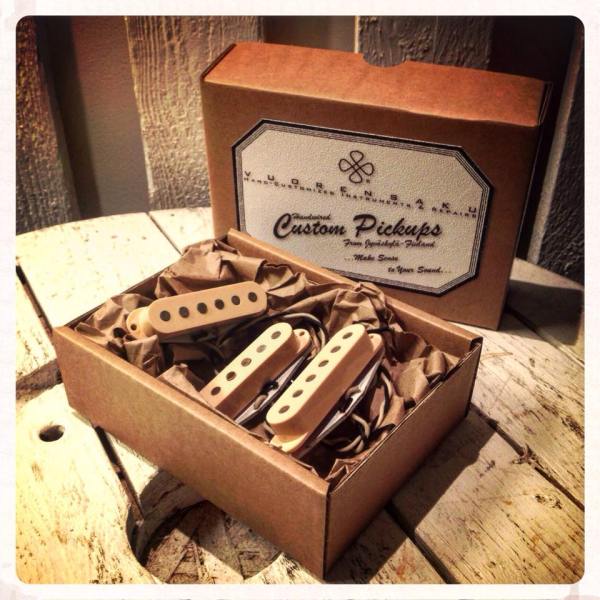
Vuorensaku’s Saku Vuori fearlessly approaches the subject of custom pickups from a different angle. The result is a pickup set with a refreshingly personal sound that isn’t frantically trying to reclaim past glories.

The Vuorensaku S. Kamiina set’s (prices starting at around 200 €) is based on thicker magnet wire, compared to what an original Fender pickup uses. The S. Kamiina set is wound using 40 AWG gauged wire, while most classic Fender creations use 42 AWG wire (except the Telecaster’s neck pickup, which is wound with a thinner 43 AWG wire). The thicker wire in the S. Kamiina set is complemented with Alnico II magnets, which are a milder type of magnet than Fender’s preferred Alnico V variety.

Vuorensaku’s set includes a reverse wound/reverse polarity middle pickup, resulting in hum-cancelling switch positions two and five. The set’s bridge pickup has received a few extra windings for a little bit of extra output.

In terms of its electronic values the Vuorensaku set clearly differs from your traditional Strat pickups:

The resistance of a regular Stratocaster singlecoil lies in the ballpark of around six kilo-ohms, with a typical inductance of  2,3-2,4 henries. The pickups in the S. Kamiina set read 2,2 kΩ for resistance (bridge pickup: 2,3 kΩ) with an inductance of two henries.

Judging by these numbers only, we can surmise that the Vuorensaku pickup set will probably sound brighter than a traditional vintage Strat set, while also having a slightly lower output.

****

Vuorensaku Custom Pickups S. Kamiina Set

Saku Vuori was kind enough to provide a S. Kamiina-equipped Classic Series Fender 70s Stratocaster for this review. The guitar has an ash body, as well as a maple neck with a maple fingerboard. For comparisons I used my own Fender Japan Stratocaster with one-piece maple neck and an alder body.

I was right in expecting the  Vuorensaku set to sound brighter than most vintage-style Stratocaster pickups, but the supposed drop in output level is of a more theoretical nature than of real practical importance. The S. Kamiina set imbues the 70s Reissue with a very cool Gretsch- or Rickenbacker-type jangly tone and grit. The Vuorensaku pickups also feature a cleaner lower mid-range, when compared to traditional Stratocaster pickups.

For comparison purposes the first (neck pickup) and last (bridge pickup) phrases of the sound clip have been played using my own vintage-style Strat, while the five phrases in between have been recorded with the S. Kamiina set (starting with the neck pickup):

The presence lift in the Vuorensaku set is also easy to spot in distorted sounds. The S. Kamiina’s delivery is a bit more aggressive and in-yer-face, which isn’t a bad thing at all.

For comparison purposes the first (neck pickup) and last (bridge pickup) phrases of the sound clip have been played using my own vintage-style Strat, while the five phrases in between have been recorded with the S. Kamiina set (starting with the neck pickup):

The demo song contains four guitar tracks:

• two rhythm guitar parts – left channel: neck and middle pickup; right channel: neck pickups

• a mystically floating backing guitar: middle and bridge pickup

• lead guitar: neck pickup with the tone control turned halfway down

****

Turenki Tonefest 2015 002

If you’re an stickler for authentic vintage specs, the Vuorensaku S. Kamiina set probably isn’t what you’re looking for – these pickups are no mere vintage clones.

If you’re after a brighter tone, though, especially if you dislike the neutrality of many active pickups, the S. Kamiina set is definitely one to check out! Vuorensaku’s pickups will breathe life into a dark-sounding guitar, while also giving your controls a wider tonal range to work with. These are pickups that won’t mush up.

By the way:

Saku Vuori applies his ”low output principle” to other Vuorensaku pickups, too, like the Telecaster- and P-90-style pickups he uses in his handcrafted Vuorensaku T. Family guitar models.

****

Vuorensaku Custom Pickups S. Kamiina set

Stratocaster sets start from 200 €

Additional options: pickup cover, relicing

Contact: Vuorensaku

****

Pros:

+ handmade in Finland

+ original sound, no vintage copies

+ rw/rp middle pickup

Testipenkissä: Vuorensaku Custom Pickups S. Kamiina -setti

Vuorensaku Pickups Package

On olemassa custom-mikrofonisettejä ja custom-mikrofonisettejä.

Suurin osa valmistajista näyttää olevan sen ”ultimatiivisen vintage-soundin” perässä, mikä ikinä se onkaan. Usein valmistajat etsivät suosittujen mikrofonilajien autenttiset speksit, osat ja valmistusmenetelmät. Fender Stratocasterin tapauksessa ollaan joko kuivan ja puuntuoksuisen 1950-luvun soundin perässä tai sitten mennään terävämmän ja mehukkaamman 60-luvun kaavan mukaan.

Vuorensakun Saku Vuori taas on lähestynyt aihetta hieman toisesta suunnasta, ja lopputulos on valtavirrasta poikkeava mikkisetti omaa, personallista soundia kaipaavalle kitaristille.

Vuorensaku S. Kamiina -setin (hinnat alk. 200 €) lähtökohtana toimii alkuperäistä selvästi paksumpi käämilanka. S. Kamiinassa käytetään 40 AWG:n paksuista lankaa, kun klassisissa Fender-mikrofoneissa löytyy 42 AWG:n käämilankaa (paitsi Telecasterin kaulamikrofonissa, jossa käytetään vielä ohuempaa 43 AWG:n lankaa). S. Kamiina -setissä magneetit taas ovat Fenderiä miedompaa Alnico II -lajia.

Setin mikrofonit on suunniteltu niin, että keskimikrofoni on käämitty vastakkaiseen suuntaan – mikä poistaa signaalista hurinat, silloin kun keskimikkiä käytetään muiden mikkien kanssa yhdessä. Tallamikrofoni taas on hieman setin muita mikkejä tehokkaampi.

Mittausarvoiltaan Vuorensaku-setti poikkeaa selvästi perinne-Stratomikeistä:

Tavallisen Stratocaster-mikrofonin resistanssi on noin kuuden kilo-ohmin paikkeilla, kun taas sen induktanssi on noin 2,3-2,4 henryä. S. Kamiina -setissä resistanssi on 2,2 kΩ (tallamikissä 2,3 kΩ) ja induktanssi kaksi henryä.

Nämä tekniset arvot viittaavat siihen, että Vuorensaku-setin soundi on todennäköisesti selvästi kirkkaampi, ja hieman matalatehoisempi, kuin vintage-tyylinen Stratocaster-mikkisetti.

****

Vuorensaku Custom Pickups S. Kamiina Set

Sain testiä varten Sakulta S. Kamiina -setillä varustetun Classic-sarjan Fender 70s Stratocasterin saarnirungolla ja vaahteraotelaudalla. Käytin omaa – vaahterakaulalla ja leppärungolla varustettua – Fender Japan -Stratoa vertailusoittimeksi.

Arvioni Vuorensaku-setin kirkkaammalta soundilta osuivat oikein, mutta lähtötasoiltaan nämä mikrofonit ovat vertailu-Stratoni kanssa samalla linjalla. S. Kamiina -mikrofonien soundi vie testi-Straton sointia lähemmäksi Gretsch- ja Rickenbacker-tyylistä kirkkautta ja helinä. Vuorensakuissa on myös alkuperäistä siistimpi ala-middle.

Ääniesimerkissä ensimmäinen (kaulamikki) ja viimeinen (tallamikki) fraasi on soitettu vertailu-Stratolla, kun taas keskimmäiset viisi fraasia on S. Kamiina -setin soundia (lähtee kaulamikistä):

Myös särösoundeissa Kamiina-setin perinne-Fenkusta poikkeava preesensalueen korostus on helppoa huomata – soundi on hieman brutaalimpi (mikä ei ole lainkaan huono juttu).

Ääniesimerkissä ensimmäinen (kaulamikki) ja viimeinen (tallamikki) fraasi on soitettu vertailu-Stratolla, kun taas keskimmäiset viisi fraasia on S. Kamiina -setin soundia (lähtee kaulamikistä):

Demobiisissä soivat neljä kitararaitaa:

• kaksi komppiraitaa – vasen kanava: etu- ja keskimikki yhdessä; oikea kanava: kaulamikrofoni

• mystisesti leijuva taustaraita: keski- ja tallamikki yhdessä

• soolokitara: etumikrofoni, tone-säädin puoliksi kiinni

****

Turenki Tonefest 2015 002

Vintage-tiukkapipolle Vuorensaku S. Kamiina -setti ei ole luultavasti ”oikea” valinta, koska tämä mikkisetti ei todellakaan lähde matkimaan vanhoja alkuperäismikrofoneja.

Jos taas etsitään enemmän kirkkautta ilman aktiivimikrofonien neutraaliutta, S. Kamiina on ehdottomasti mielenkiintoinen ja laadukas valinta. Vuorensaku-setti lisää eloa tummansoundiseen sähkökitaraan, ja myös kitaran säätimien luovaan käyttöön löytyy sen ansiosta erittäin hyvä lähtökohta. Tämä setti ei mene tukkoon.

Vuorensakun S. Kamiina -henkistä ”low output -ajatusta” on sovellettu myös erittäin onnistuneesti Telecaster- ja P-90-mallisiin mikrofoneihin, joita löytyy esimerkiksi Vuorensakun T. Family -sähkökitaroissa.

****

Vuorensaku Custom Pickups S. Kamiina -setti

Strato-setit alkaen 200 €

Maksulliset lisäoptiot: mikrofonikuoret, setin relikointi

Lisätiedot: Vuorensaku

****

Plussat:

+ suomalaista käsityötä

+ valtavirrasta poikkeava soundi

+ vastakkaiseen suuntaan käämitty keskimikrofoni

Testipenkissä: Spin X -johto (Mad Professor RED Cable)

Update 24.11.2015:

Spindecosta tuli viesti, että firma ei tulekaan markkinoimaan Spin X -johtoa omalla nimellään, vaan että myynti jatkuu Mad Professor RED Cable nimellä!

Spin X 2

Harva vempain on viime aikoina synnyttänyt kitaristien keskuudessa samankaltaista kuhinaa kuin suomalainen Spin X -johto, ja kyse on sentään ”vain” noin 75 cm pitkästä ja kahdella valtavalla liittimellä varustetusta kaapelista.

Spin X -johdon (hinta ei vielä vahvistettu) takana on suomalainen yritys Spindeco Oy. Spin X -johdossa johtimien hyötysuhdetta parannetaan hyödyntämällä elektronin spin -nimistä nanoteknologista ilmiötä. Johdossa olevilla hiilellä päällystetyillä erikoisjohtimilla järjestetään signaalia kuljettavat elektronit ikään kuin siistimpään järjestykseen, mikä ilmeisesti nopeuttaa signaalin kulkua johtimen läpi. Kitarajohdossa spin-ilmiön päähyöty on – valmistajan myyntivastaavan mukaan – että kaikki taajuuskaistat saapuvat samanaikaisesti vahvistimen tulojakkiin, kun perinteisessä johdossa bassot saapuvat hieman muita taajuuksia jäljessä.

Googlaamalla selviää hyvin nopeasti, että elektronien spin ei ole mitään huuhaata, vaan aitoa kvanttifysiikkaa. Meitä kitaristeja kuitenkin kiinnostavat eniten seuraavat kysymykset:

Toimiiko Spin X -johto toivotulla tavalla? Onko ero selvästi havaittavissa? Onko pakko hankkia tällainen johto?

****

Sain Spindecon Jerry Ala-Leppilammelta yhden Spin X -johdon testattavaksi.

Johdon isoja liittimiä auki ruuvaamalla selvisi heti, että johdossa käytetään todellakin ainoastaan johtimia, eikä esimerkiksi plugiin upotettuja muuntajia tai vastaavaa.

Monet kitaristit kysyvät myös miksi Spin X -johto on niin lyhyt, ja miksi se on saatavilla pelkästään ”jatkojohtona”, eikä tavallisena kitarajohtona. Näissä kuvissa näkyy vastaus:

Spin X cable – plug 2

Spin X Cable – jack 2

Spin X:n toimiminen ilmeisesti edellyttää sitä, että johdon kaksi johdinta (signaali ja maa) ovat rakenteeltaan täysin identtisiä, mutta tästä seuraa samalla, että erikoisjohto on selvästi häiriöherkempi kuin perinteinen koaksiaalinen kitarajohto.

guitar cable

coaxcable

Tavallisessa kitarajohdossa signaali kulkee johdon keskijohtimessa, sen ympärille on laitettu eristys (ja usein myös johdon staattisia käsittelyääniä vähentävää alumiini- tai grafiittifoliota). Tiivis kuparilangasta tehty verkko (vaippa) toimii maajohtimena, ja suojaa Faraday-häkkinä kitarasignaalia tehokkaasti ulkoisia elektromagneettisia häiriöitä vastaan.

Kun liittää vahvistimen tuloon pelkästään Spin X -johdon kuuluu (isoilla gain- ja/tai volume-asetuksilla) selkeästi vahvistimelta tulevan muuntajahuminan, sekä johdon hiplaamisessa syntyviä käsittelyääniä. Heti kun tavallinen kitarajohto on liitetty Spin X -johtoon, sekä brummi että mikrofoninen rähinä loppuu kuin seinään.

****

Spin X -johdon erikoisjohto vaikuttaa laadukkaalta ja mekaanisesti kestävältä. Myös juotokset olivat siistejä.

Testijohdossa vain hyvin löysästi ja huolimattomasti laitettu vedonpoisto (molemmissa liittimissä!) aiheutti hieman hämmennystä.

****

Halusin selvittää, onko elektronien nopeusero mitattavissa kotistudio-olosuhteissa, ja tein seuraavanlaisen kokeilun:

Äänitin Fender Stratocasterin akustista ääntä AKG C3000 -kondensaattorimikrofonilla vasempaan kanavaan, samalla kun korkea impendanssinen kitarasignaali meni tavallista kitarajohtoa (Whirlwind Leader) pitkin suoraan äänikortille.

Whirlwind Wave

Kitarasignaali (oikea kanava) oli aavistuksen verran mikkisignaalia jäljessä, kuten tässä kuvassa näkyy.

Spin X Wave

Spin X -johdon käyttö ei ainakaan nopeuttanut signaalin kulkua sen verran, että se olisi audiosekvensserillä näkyvissä.

Myös kuulohavainnolla viive kuulostaa hyvin samanlaiselta, ehkä jopa hiuksen verran pidemmältä Spin X -johtoa käytettäessä:

****

Äänitin koesarjan eri kitaroilla Blackstar HT-1R -putkikombolla niin, että jokaisessa klipissä ensimmäinen puolisko on äänitetty pelkästään Whirlwind-johdolla ja sitten toisessa on lisätty Spin X -johto signaalitiehen.

Ensin Fender Stratocaster ilman vahvistinta:

Strato Blackstarin kautta:

Gibson LP Junior:

Hamer USA Studio Custom:

Gibson Melody Maker SG:

****

Seuraavaksi menin Spin X -johdon kanssa Rock-Ola & The Freewheelers -yhtyen kitaristille. Sami Saarisen kanssa kokeiltiin Spin X -johdon vaikutuksia hieman suuremmalla volyymillä eri vintage- ja custom shop -kitaroiden ja -vahvistimien kanssa, pedaalilaudalla ja ilman.

Valitettavasti tästä sessiosta ei ole äänityksiä, mutta soundillisesti erot Spin X -johdolla ja ilman olivat jopa selvemmät kuin kotistudio-oloissa.

****

Spin X 1

Viimeisenä halusin saada selvillä, onko Spin X:n toiminta kytköksissä putkitekniikkaan vai toimiiko johto myös edullisen transistorivahvistimen kanssa.

Äänitin siis muutaman pätkän poikani Marshall MG30CFX -kombon kautta. Kaikki pätkät alkavat ilman erikoisjohtoa, joka tulee toisessa puoliskossa mukaan kuvaan.

Fender Telecasterin kaulamikrofoni:

Molemmat mikit yhdessä:

Telecasterin tallamikrofoni:

****

Testien perusteella minun täytyy todeta, että ”jotain” todella tapahtuu, silloin kun Spin X -johtoa käytetään. Johdon vaikutus tulee selkeämmin esiin laadukkailla vahvistimilla ja hieman isommalla volyymillä kuin kotisohvalla kerrostalossa. Jotenkin tuntuu myös siitä, että yksikelaisilla mikrofoneilla varustetut kitarat – esimerkiksi Stratot, Telet, LP Junior, non-reverse Firebird – hyötyvät erikoisjohdon tuomista muutoksista enemmän kuin humbucker-kitarat.

Spin X -johdon ”soundi” tavalliseen kitarajohtoon verrattuna on lähellä laadukkaan bufferin tuomia lisäyksiä pitkässä signaaliketjussa. Spin X:n kanssa soundissa on vähemmän raapivaa terävyyttä diskantissa, enemmän avoimuutta ja kiiltoa ylä-middlen preesensalueella, sekä tiukempi ja tarkempi bassotoisto. Fender Stratocasterit ja Telecasterit saavat aavistuksen verran lisää hifimäisyyttä ja P-90-mikrofoneista katoaa pieni annos tukkoisuutta etenkin clean-soundeissa.

Spin X:n kautta signaalitaso tuntuu myös aavistuksen verran korkeammalta, mikä toki voi olla pelkästään psykoakustinen ilmiö.

****

Spin X 5

Kysymykseen onko soundi ”parempi” Spin X -johdolla ei kuitenkaan pysty vastaamaan yksiselitteisesti. Rockabilly- tai Punk-kitaristeille kovan ja kirskuvan diskantin lievä vaimennus voi olla myös huono asia, myös keskialueen siistiminen ei ole välttämättä jokaisessa tapauksessa (perinne-Blues, Swamp Rock) toivottu lisäys.

Todelliselle soundiesteetikolle – siis David Gilmourin, Michael Landaun tai Eric Johnsonin kaltaiselle soittajalle – Spin X -johdon tuomat lievät, mutta tyylikkäät, muutokset voivat muodostaa sen paljon kaivatun pisteen iin päällä.

Siihen, kuinka paljon on valmis maksamaan Spin X:n tuomasta lisäsilauksesta, jokaisen itse on vastattava.

****

Spin X Cable

Lisätiedot: Spindeco

Spin X Cable – now on SoundCloud

In all clips the first half is recorded without the Spin X Cable, while the second half uses the Spin X in front of the sound card or amp.
++++
Mic + DI track (to check the delay between mic and DI):
• left channel – AKG C3000 close miking a Stratocaster
• right channel – Stratocaster DI’d via Focusrite Saffire 6 USB
++++
The signal chain used was:
Guitar –> 6 m Whirlwind Leader –> (Spin X Cable) –> Blackstar HT-1R –> 5 m Planet Waves Classic –> Focusrite Saffire 6 USB

Spin X 1

Review: Ogre Guitars Magnox-M1

MM 2015 – Ogre all-magnesium guitars

There was this strange booth at Frankfurt Musikmesse 2015 that had everybody stop and take notice:

A company called Ogre displayed a variety of very goth effect pedals, but the real show-stopper was a medieval-looking electric guitar made completely out of magnesium alloy, called the Magnox-M1.

Thanks to Finnish distributor R-Jam Group we were able to take a closer look at this intriguing new concept.

****

Ogre Magnox-M1 – S – full front LRG

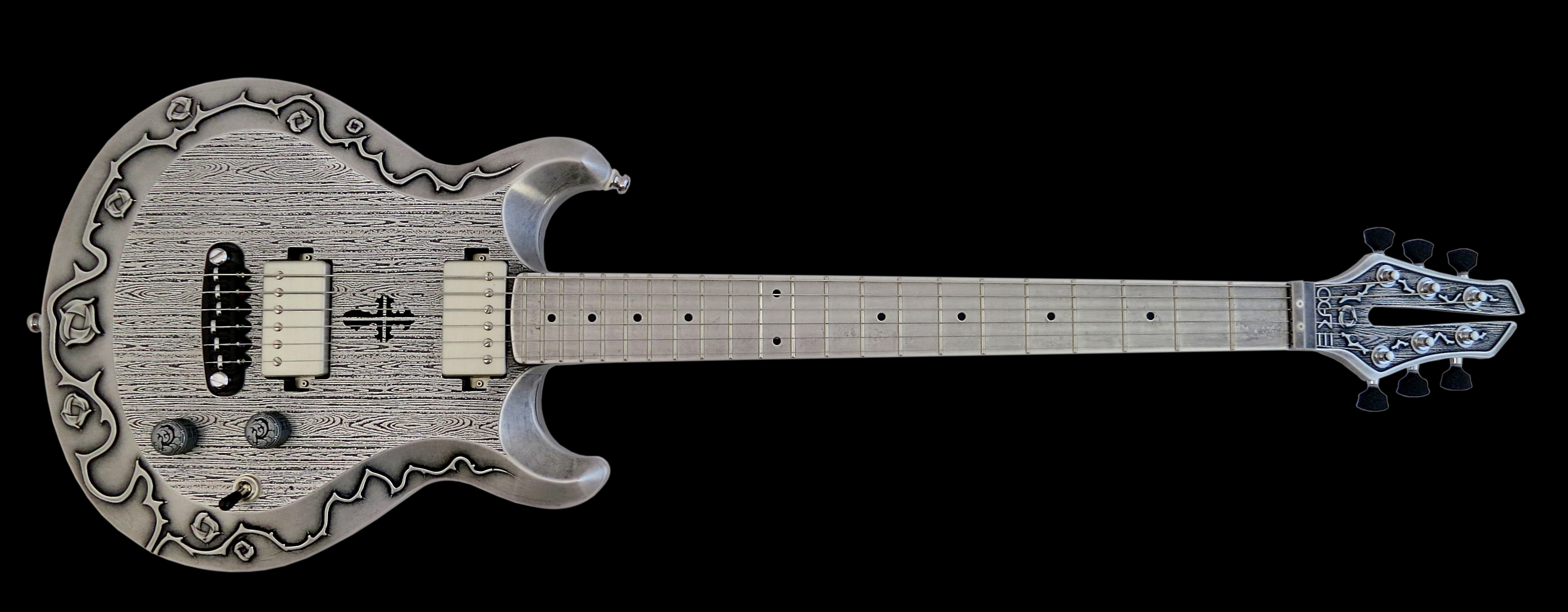
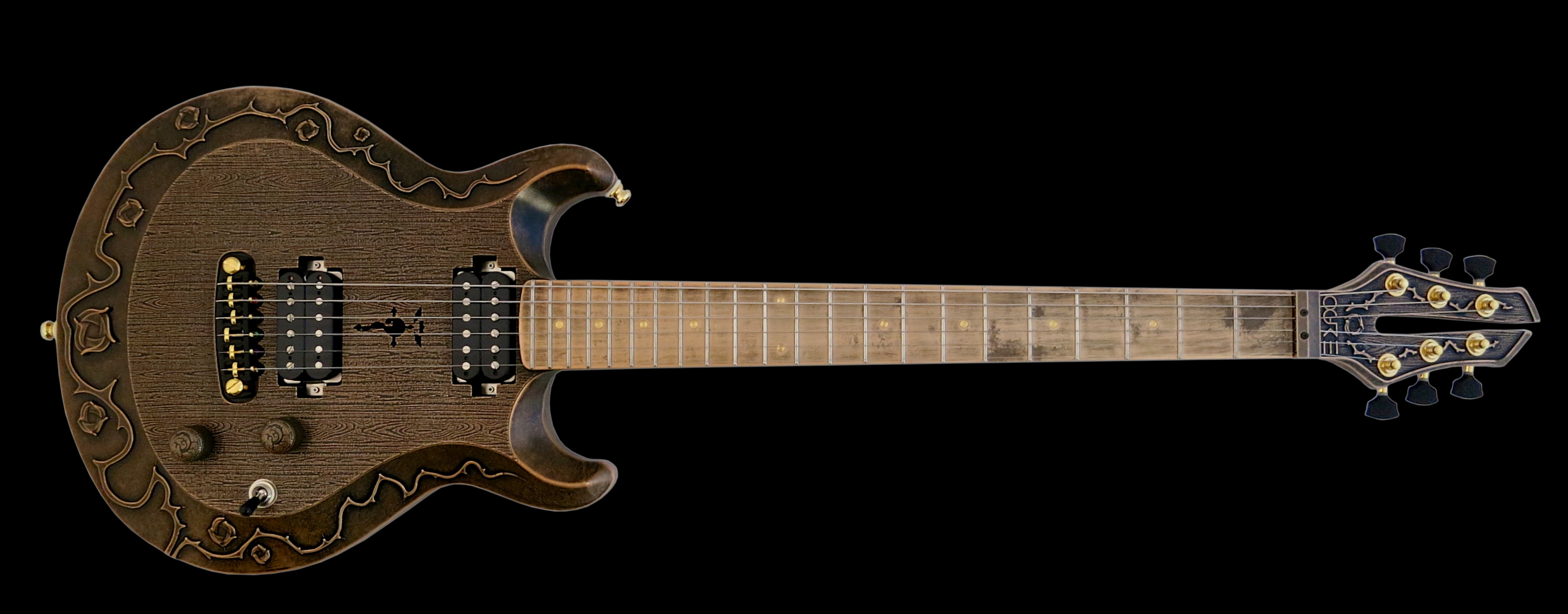
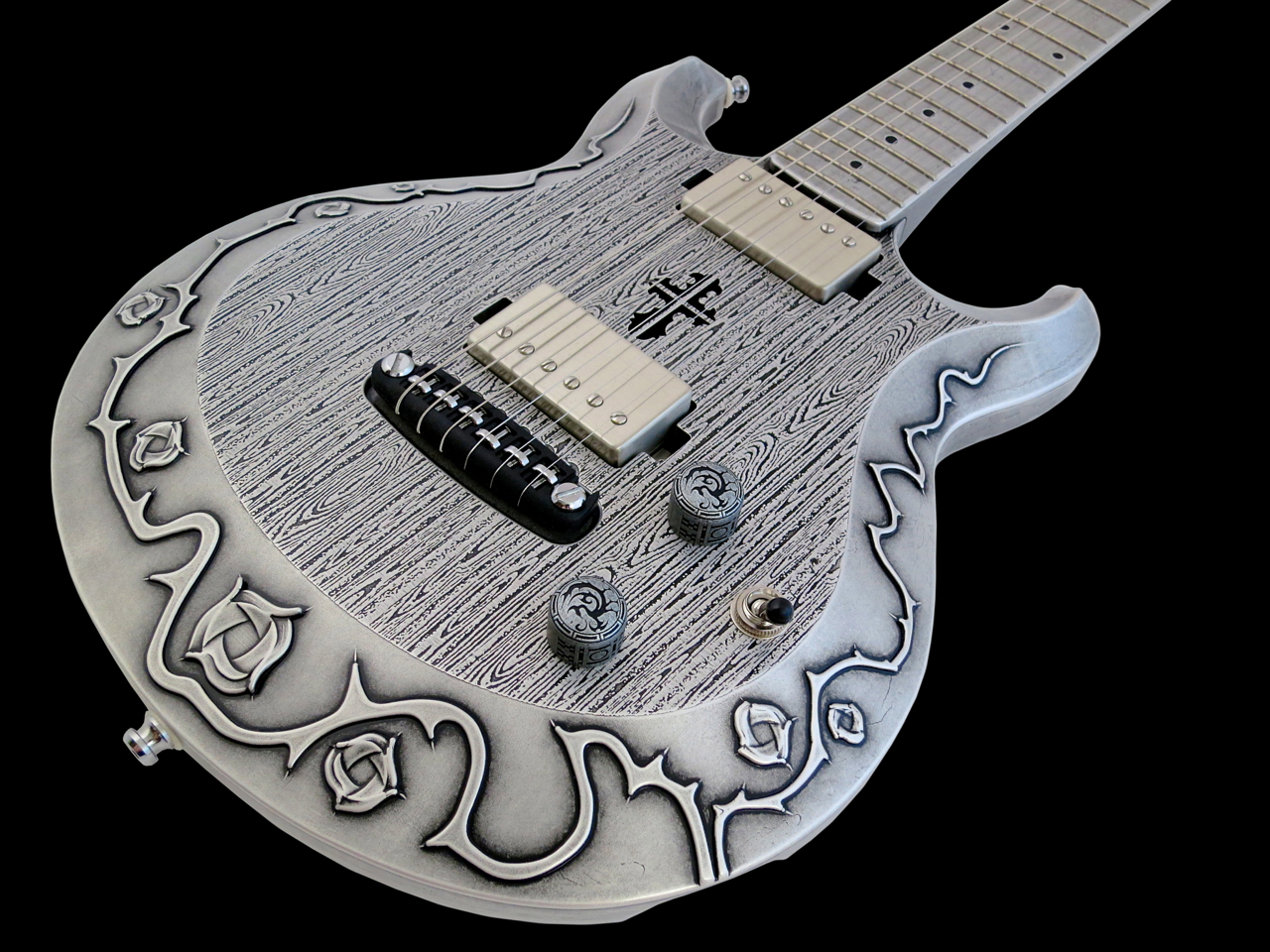
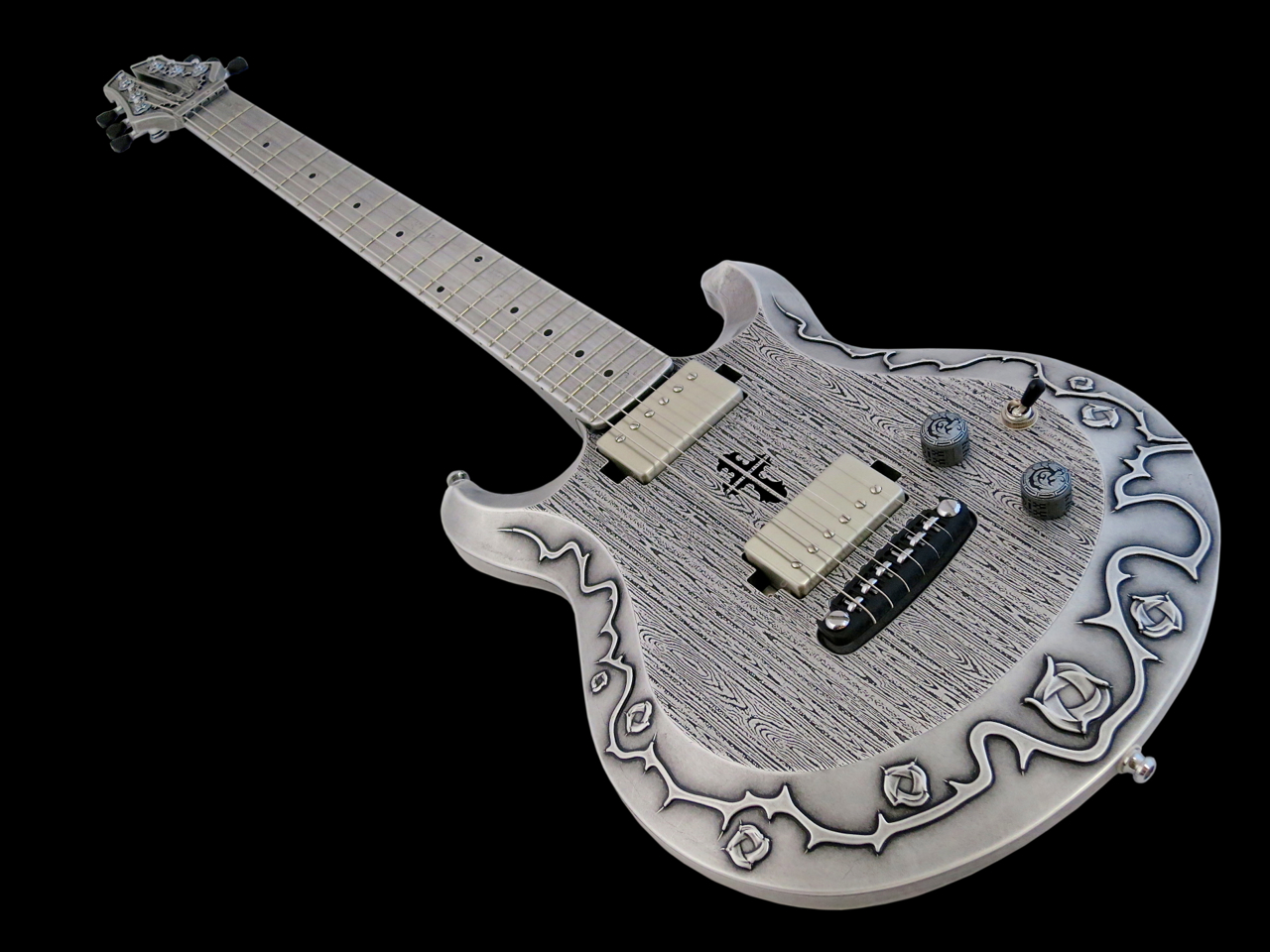
The all-metal Ogre Magnox-M1 (current price in Finland: 1,399 €) truly is a sight to behold. It isn’t often you get to see an instrument that looks like old metal, and which features beautiful rose-and-thorns reliefs on its body.

Ogre Magnox-M1 – B – full front LRG

The twin-cutaway Ogre Magnox-M1 has a scale of 25.5 inches (64.8 cm), and its thin body is partly hollow.

Our two review instruments both come with a pair of humbuckers, but there’s also an HSS-loaded Magnox-M1 available.

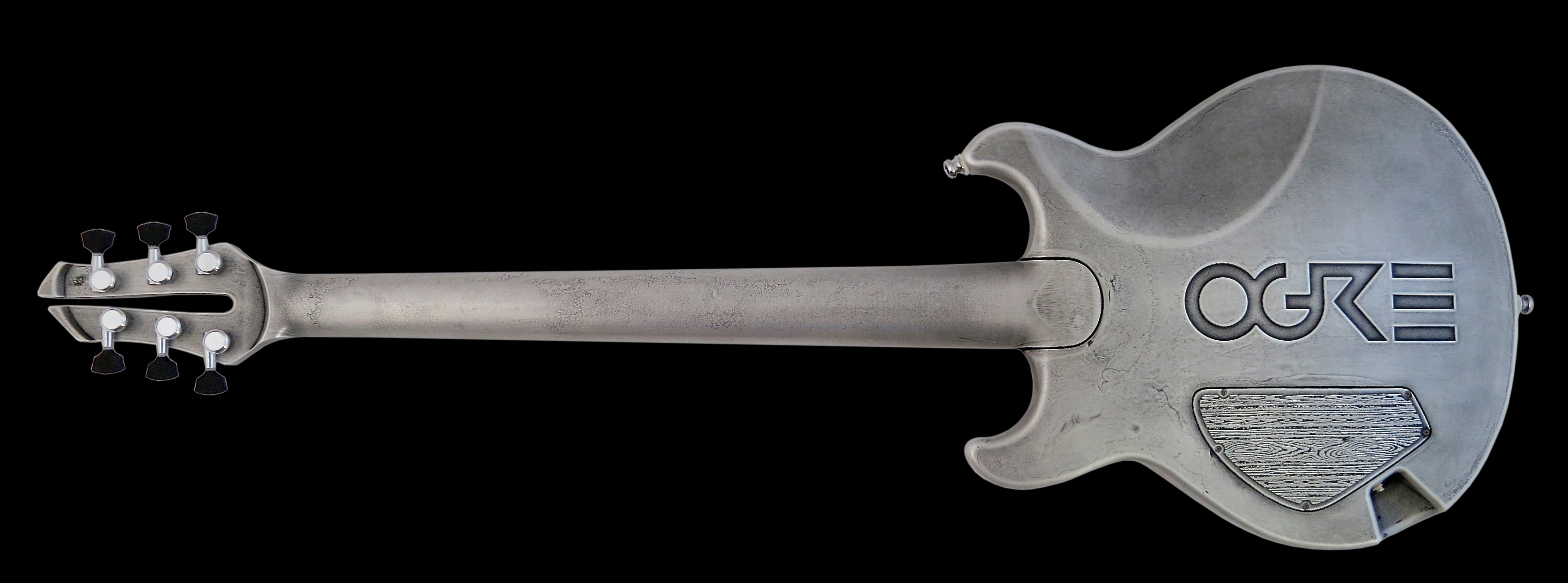
Ogre Magnox-M1 – S – full back LRG

The back of the body sports a deep ribcage bevel.

Ogre Magnox-M1 – B – full back LRG

The output jack sits in its own recess.

Ogre Magnox-M1 – S – headstock

The top nut is also made from magnesium alloy. Even though it looks a bit like a locking nut, the strings aren’t locked.

Ogre Magnox-M1 – B – tuners

Ogre go for top-drawer quality in the tuner department by using Sperzel locking tuners equipped with Ogre’s own metal tuner buttons.

Ogre Magnox-M1 – S – fretboard

The pewter-coloured Magnox-M1 sports black dot markers.

Ogre Magnox-M1 – B – fretboard

The position markers on the bronze-coloured Ogre are golden.

The Magnox comes with 22 medium jumbo frets.

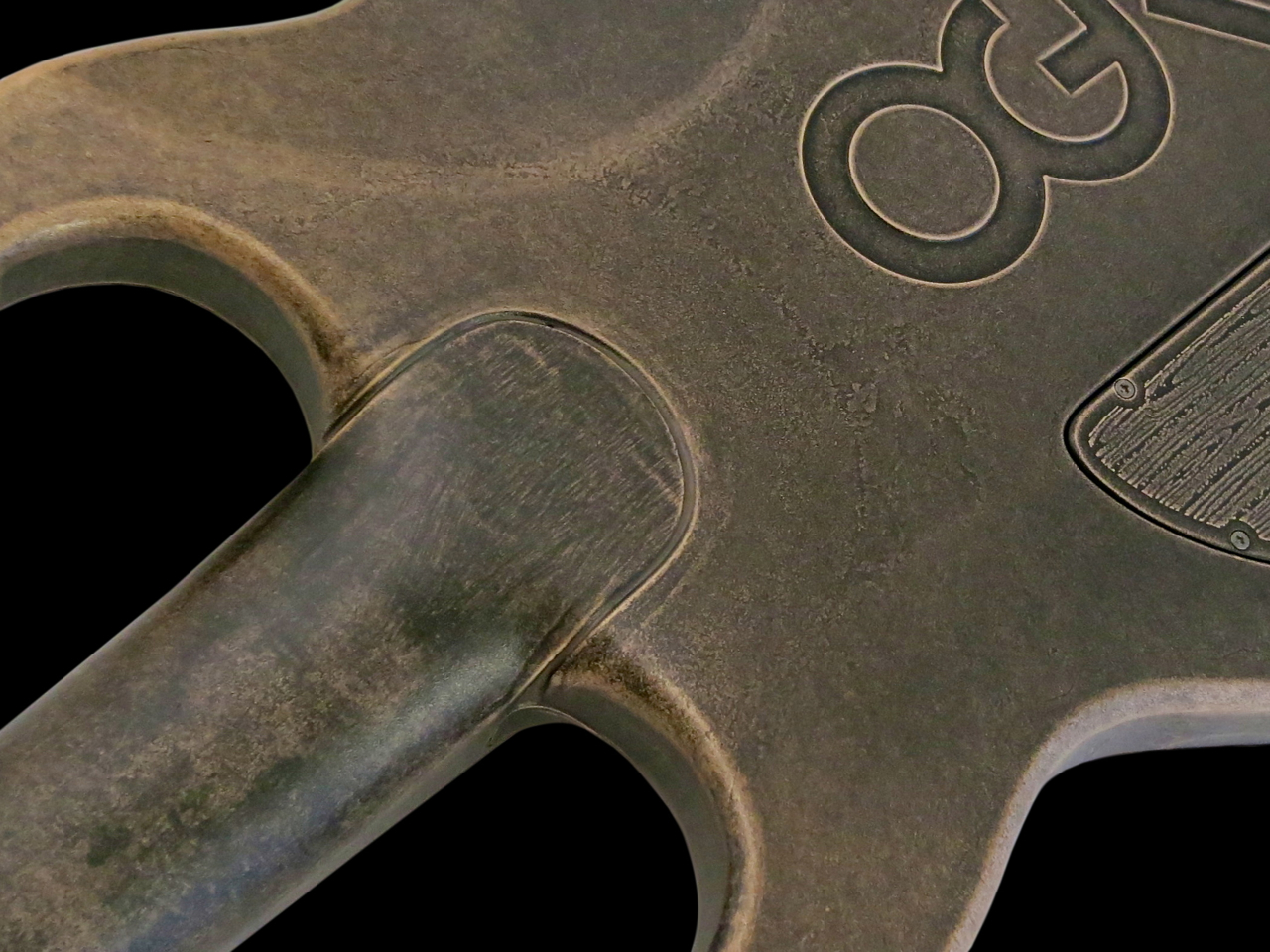
Ogre Magnox-M1 – B – neck joint

Ogre’s neck joint is very smooth, so you can widdle your way up to the dusty end with ease.

Ogre Magnox-M1 – S – bridge

The wraparound bridge is Ogre’s own design, its base cast from the same metal alloy as the rest of the guitar.

Ogre Magnox-M1 – S – pickups

Twin-humbucker equipped Magnox-M1 models are available with two different sets of pickups:

In our case, the pewter Ogre sports a pair of the company’s own PAF-style ’buckers.

Ogre Magnox-M1 – B – pickups

The bronze-coloured Magnox comes with a Seymour Duncan ’59 at the neck, and a JB model at the bridge.

Ogre Magnox-M1 – S – controls

These Ogres are equipped with a three-way toggle switch, as well as master volume and tone controls. There’s a push/pull-switch hidden in the master tone control, which allows you to split the humbuckers for singlecoil tones.

Ogre Magnox-M1 – S – control cavity

A close look under the hood reveals quality parts and clean workmanship.

Ogre Magnox-M1 – cases

A fancy carbon fibre hard case is included in the price.

****

Ogre Magnox-M1 – S – back beauty

Thanks to its semi-hollow body the Ogre Magnox-M1 only weighs a very comfortable 3.8 kg. Despite the fact that the neck and fingerboard are not hollowed out, the M1 stays perfectly balanced .

Ogre’s expertise in the finishing department is really something else:

Both guitars look old, rusty, and oxidised, and some parts even look coarse and scratched, but this is all a very cool illusion conjured up by the excellent finishing job. In reality the Magnox-M1 feels very smooth and friendly, even if it’s a tad cool when pulled out of its case. The only things that are real are the beautiful reliefs on the front and back of the body (as well as on the control cavity lid), all other dings and scratches are an optical effect.

In my opinion Ogre’s not-too-chunky C-profiled neck feels really great. The fretwork is excellent, and the fretboard’s edges are comfortably smooth.

Ogre Magnox-M1 – S – body beauty 1

Ogre’s own PAF-style humbuckers have a very dynamic, crisp and open sound, thanks to their moderate output levels. The split-coil settings sound remarkably Fender-like.

The sound clips both feature the split humbuckers first, followed by the full humbucker settings, both starting with the neck pickup:

Ogre Magnox-M1 – S – body beauty 2 from PS

Ogre Magnox-M1 – B – body beauty 1

The Seymour Duncan set is higher in output, and the sounds have a fatter mid-range character. Played into a clean channel, the bridge humbucker can sound a bit honky at times, but using crunchy settings will make the JB model rock even harder than the Ogre bridge humbucker.

The sound clips both feature the split humbuckers first, followed by the full humbucker settings, both starting with the neck pickup:

Ogre Magnox-M1 – B – body beauty 2

Ogre Magnox-M1 – S – beauty shot 1

The demo track features the pewter-hued Magnox-M1 exclusively for the first half, while all the guitar tracks in the second half have been played on the bronze Ogre model.

• rhythm guitars (split pickups) – left channel: both pickups, right channel: bridge pickup

• lead guitar – full neck humbucker

Ogre Magnox-M1 – B – beauty shot 2

****

Ogre Magnox-M1 – S – beauty shot 2

The Ogre Magnox-M1 is a very fine electric guitar, which offers a viable alternative to traditional wooden instruments. I really like the visual design of these guitars, too, but some might disagree. The best thing about the Magnox-M1 guitars, though, is the great sound they make. These are very inspiring instruments, indeed!

Ogre Magnox-M1 – B – beauty shot 1

****

Ogre Magnox-M1

1.399 €

Finnish distributor: R-JAM Group

****

Pros:

+ cool design

+ workmanship

+ playability

+ different pickup options available

+ sound

Review: Bogner Harlow, Wessex and Burnley

Reinhold Bogner

This time Kitarablogi has had the pleasure to review the fruits of a cooperation between two legendary designers:

Custom amp guru Reinhold Bogner

Rupert Neve

…and the grand old man of recording studio electronics Rupert Neve have unveiled a line of three Bogner effect pedals (made in the USA), which were designed around Rupert Neve’s famous audio transformers.

Bogner – Neve transformer

Audio transformers are rarely seen (or mentioned) when it comes to pedal effects, for both reasons of price and mass production.

In valve amplifiers audio transformers play a crucial role, because they are the last stage before the signal reaches the speaker. Audio transformers ”translate” the signal for the speaker, which is why they have a direct impact on the tone and dynamic behaviour of a tube amplifier.

Bogner-pedals teaser – w lights

At the moment three different Bogner/Neve-pedals are available – the Harlow booster (current price in Finland: 235 €), the Wessex overdrive (229 €), and the Burnley distortion (235 €).

Each pedal has a glowing ”eye” indicating the current signal strength of the stompbox.

****

Bogner Harlow – with box

The Bogner Harlow gives you two effects in one pedal:

In addition to it’s boost function, the Harlow also incorporates Bogner’s Bloom compression circuit, which promises to give you a very natural, three-dimensional and musical type of compression.

You’ll find three control knobs on the Harlow – a level control for the booster, a Bloom-control for the compressor, and a master tone.

Bogner Harlow – full front 2

****

Bogner Wessex – with box

Bogner’s Wessex is the overdrive pedal in the Bogner/Neve-family.

In addition to its gain and level controls the Wessex also includes a two-band EQ, as well as a E/N-switch. ”N” stands for ”normal” and this mode will give you a slightly more traditional, mid-range centred sound. Switching to ”E” (for ”enhanced”) there’s more gain on tap, coupled with a fatter, more full-range tone.

Bogner Wessex – full front 2

****

Bogner Burnley – with box

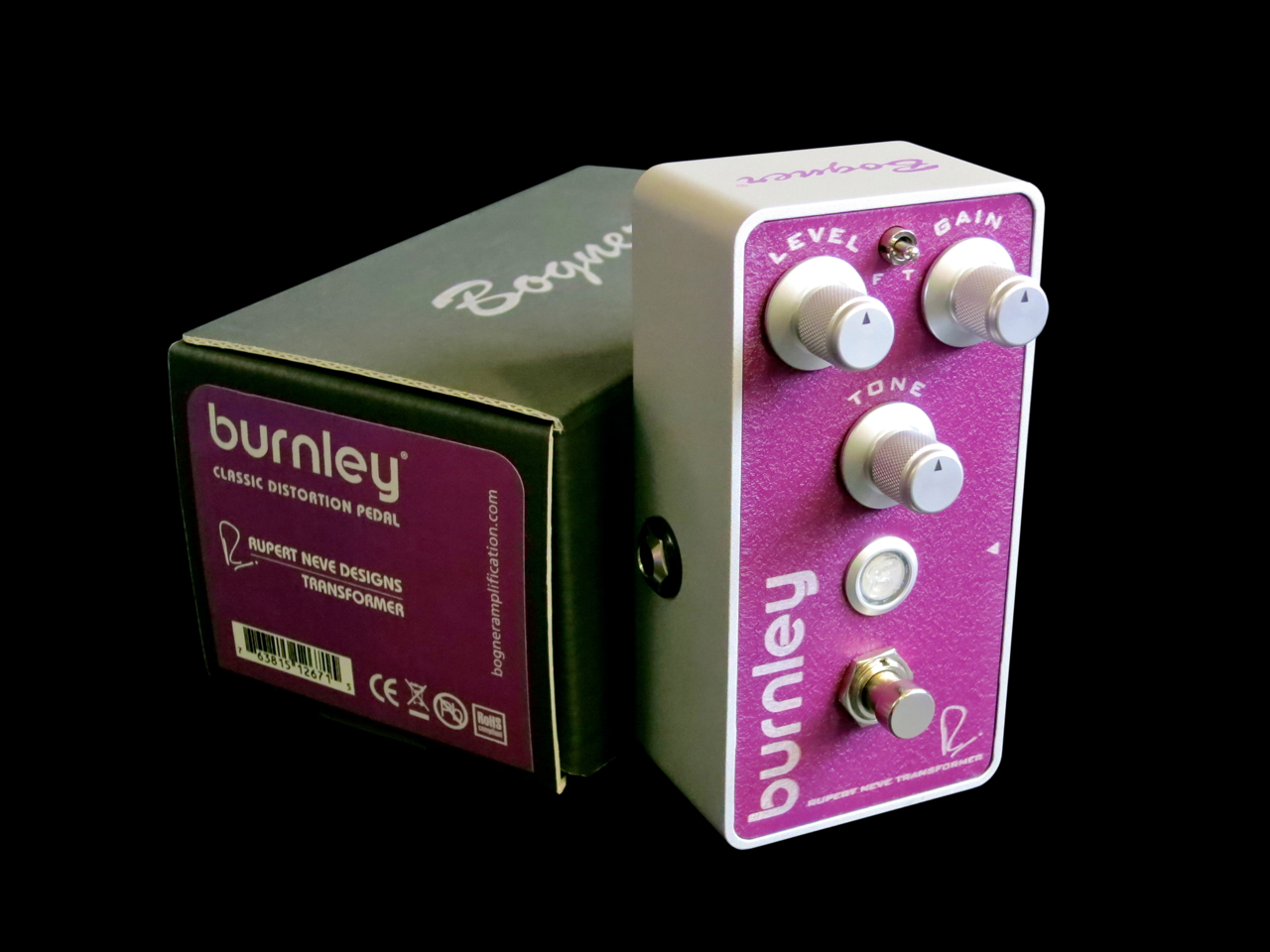
The third pedal, the Bogner Burnley, is a distortion effect.

The Burnley offers three controls – level, gain and tone – plus an F/T-switch. ”T” (for ”tight”) promises you a more aggressive distortion effect than the warmer and fatter ”F” mode.

Bogner Burnley – full front 2

****

Bogner Harlow – inside

Both Mr Bogner and Mr Neve are known for their uncompromising commitment to both sound and workmanship. This commitment is well represented in this range of pedal effects.

In the Bogner-pedals the circuit board is hidden inside a black plastic box. This is a workable solution weighing the risk of direct backwards engineering against the possible future need for repair or servicing. Components completely covered in black resin (some boutique manufacturers do this) are the bane of any guitar technician!

As you can clearly see in the pictures, all three stompboxes can be run using a nine volt battery or an external PSU (using the Boss-standard).

****

Bogner Harlow – left 2

Bogner doesn’t divulge the precise amount of boost that can be had from the Harlow, but let me tell you it will most probably be enough to overdrive even the cleanest of amplifiers.

The Bloom-circuit in the Bogner Harlow sounds deliciously chewy and reacts very musically.

Bogner’s Harlow is the type of pedal you want to leave on the whole time, because any guitar will sound better with this box running. This pedal also reacts very well to changes in your guitar’s volume control setting.

There’s a nice attack click, when played with a Stratocaster:

The Harlow stays clear and clean, even when you play a neck humbucker (I’m using my Hamer USA Studio Custom):

Bogner Wessex – right 2

The overdrive and distortion tones of Bogner amplifiers are already the stuff of legend, and the amp guru has managed to pack these sounds into two Bogner/Neve-pedals.

The Bogner Wessex luckily isn’t just another Tubescreamer clone; instead this stompbox gives you Mr Bogner’s vision of the perfect overdrive sound.

Even though there’s a healthy amount of gain on offer in the Wessex, the sound always stays transparent and well-defined. This pedal also keeps the inherent character of your guitar intact.

Wessex’s Enhanced mode will even make your vintage-styled Strat sing:

On the other hand there won’t be any boxiness, or mud, when using humbuckers:

Bogner Burnley – left 2

If you’re a Hendrix fan you should definitely try the Burnley’s Fat mode. It will make your Strat sing and growl in Woodstock-fashion, even when played into a clean amp channel at bedroom volume levels:

Bogner’s Burnley, too, is sensitive to guitar volume changes. Using Tight mode and humbuckers will give you a modern distortion tone:

Bogner-pedals teaser

Here’s the audio track off the Youtube video. All guitar parts have been played on a P-90-equipped Gibson Les Paul Junior:

****

Bogner Harlow – right 2

Bogner Wessex – left 2

Bogner Burnley – right 2

Rupert Neve and Reinhold Bogner aren’t men ho do things by half – and these pedals are a fitting testament to this commitment!

The Bogner/Neve-series of guitar effects offers you Bogner’s boutique tones in a very compact guise, and at a very fair price. Try these pedals out – you won’t be disappointed!

****

Bogner Amplification Harlow, Wessex & Burnley

Harlow – 235 €

Wessex – 229 €

Burnley – 235 €

Finnish distributor: Musamaailma

****

Pros:

+ workmanship

+ compact size

+ genuine boutique amp tones

Testipenkissä: Ogre Guitars Magnox-M1

MM 2015 – Ogre all-magnesium guitars

Ogre-nimisen firman ständi Frankfurt Musikmesse 2015 -messuilla oli oikea katseenvangitsija. Siellä nähtiin monta goottityylistä kitaraefektiä, sekä täysin magnesiumseoksesta valettuja Magnox-M1-sähkökitaroita, jotka muistuttavat keskiaikaisia koriste-esineitä.

Suomalainen maahantuoja R-Jam Group tuo tätä mielenkiintoista kitaramallia nyt myös meidän ulottuville.

****

Ogre Magnox-M1 – S – full front LRG

Täysin metallista valmistettu Ogre Magnox-M1 (promootiohinta 1.399 €) on kyllä erikoinen näky, etenkin sen reliefeillä koristetun rungon (ja lavan), sekä kitaran relikoidun viimeistelyn ansiosta.

Ogre Magnox-M1 – B – full front LRG

Kahdella soololovella varustetun Ogre Magnox-M1:n mensuuri on täyspitkä 25,5 tuumaa (64,8 cm), ja sen runko on osittain ontto.

Testillä käyneillä kitaroilla on kaksi humbucker-mikrofonia, mutta Magnox-M1-mallia saa myös HSS-varustuksella.

Ogre Magnox-M1 – S – full back LRG

Rungon takapuolella on reilunkokoinen mukavuusviiste.

Ogre Magnox-M1 – B – full back LRG

Lähtöjakki on upotettu omaan syvennykseen kitaran alareunaan.

Ogre Magnox-M1 – S – headstock

Kitaran (ei-lukittava) satula on – samoin kuin koko muu soitin – tehty magnesiumista.

Ogre Magnox-M1 – B – tuners

Virittimet ovat laadukkaat Sperzel-lukkokoneistot, jotka on varustettu Ogren omilla mustilla metallinupeilla.

Ogre Magnox-M1 – S – fretboard

Vaalealla – tinaa tai vanhaa hopeaa muistuttavalla – kitaralla on otelautaan upotettuja mustia otemerkkejä.

Ogre Magnox-M1 – B – fretboard

Pronssinvärisessä mallissa taas on kullanväriset otemerkit.

Magnoxeissa on 22 medium jumbo -kokoista nauhaa.

Ogre Magnox-M1 – B – neck joint

Ogren kaulaliitos on erittäin sulava, mikä mahdollistaa esteettömän pääsyn myös ylimmille nauhoille.

Ogre Magnox-M1 – S – bridge

Wraparound-tallan runko on valettu samasta magnesiumseoksesta, jota käytetään myös kitaran muita osia varten.

Ogre Magnox-M1 – S – pickups

Kahdella humbuckerilla varustetut Magnox-M1-kitarat saa kahdenlaisilla mikrofoneilla:

Tinanväriseen testisoittimeen on asennettu kaksi Ogren valmistamaa, PAF-tyylistä humbuckeria.

Ogre Magnox-M1 – B – pickups

Pronssi-Magnoxissa taas löytyy Seymour Duncanin ’59-kaulamikrofoni, sekä JB-malli tallahumbuckerina.

Ogre Magnox-M1 – S – controls

Ogressa käytetään kolmiasentoisen mikkikytkimen lisäksi master volume- ja master tone -säätimiä. Tonessa on lisäksi vielä nostokytkin, jolla puolitetaan humbuckerit.

Ogre Magnox-M1 – S – control cavity

Elektroniikkalokerossa näkyy laadukkaita osia ja siistiä työnjälkeä.

Ogre Magnox-M1 – cases

Kitaran hintaan kuuluu myös laadukas ja modernistinen hiilikuidusta valmistettu kova laukku.

****

Ogre Magnox-M1 – S – back beauty

Ohuen ja osittain onton runkonsa ansiosta Ogre Magnox-M1:n paino jää 3,3 kilolla jopa alle monen Stratocasterin painon. Koska kaula ja otelauaa on jätetty soundin ja sustainin maksimoinnin vuoksi massiivisemmaksi, malli on kuitenkin hivenen verran kaulapainoinen. Laadukkaalla nahkahihnalla tämä lievä taipumus saadaan kuitenkin hoidettua tehokkaasti.

UPDATE (15.09.2015): Testissä käyneet kitarat tulivat varhaisesta tuotantoerästä. Uusissa Ogre Magnox-M1 -erissä balanssiongelma on korjattu lisäämällä rungolle noin 500 grammaa painoa.

Ogren viimeistely on kyllä ihan omaa laatuaan:

Vaikka molemmat kitarat näyttävät vanhalta, hieman hapetetulta metallilta, ja niiden pinta näyttää karhealta ja osittain jopa naarmuuntuneelta, Magnoxit tuntuvat todellisuudessa hyvin sileiltä ja aluksi myös aavistuksen verran kylmiltä. Ainoastaan rungon ja lavan etupuolella (sekä elektroniikkalokeron kannessa) näkyvät reliefit ja kohokuvat ovat siis aitoja, kaikki muu karheus on vain illuusio.

Minun mielestäni Ogren valitsema keskipaksu ja pyöreähkö C-profiili tuntuu erittäin mukavalta. Nauhatyö on ensiluokkaista, ja myös otelaudan reunat on pyöristetty mukavan sileiksi.

Ogre Magnox-M1 – S – body beauty 1

Ogren omilla PAF-tyylisillä humbuckereilla on maltillinen teho ja hyvin avoin soundi. Puolitettu tallamikki kuulostaa yllättävän Fender-tyylisen kirkkaalta.

Audiopätkissä soitetaan aina ensin puolitetut vaihtoehdot ja sen jälkeen täysillä humbuckereilla. Järjestys on kaulamikki –> molemmat yhdessä –> tallamikki:

Ogre Magnox-M1 – S – body beauty 2 from PS

Ogre Magnox-M1 – B – body beauty 1

Seymour Duncan -mikrofoneilla on vähän enemmän tehoa, ja niiden keskialue on selvästi pyöreämpi. Puhtaissa soundeissa täysi tallahumbuckeri voi jopa kuulostaa hieman honottavalta, kun taas särösoundeissa JB-mallilla on ehkä hieman enemmän potkua kuin Ogre-tallamikissä.

Audiopätkissä soitetaan aina ensin puolitetut vaihtoehdot ja sen jälkeen täysillä humbuckereilla. Järjestys on kaulamikki –> molemmat yhdessä –> tallamikki:

Ogre Magnox-M1 – B – body beauty 2

Ogre Magnox-M1 – S – beauty shot 1

Demobiisissä ensimmäisen puoliskon kaikki kitararaidat on soitettu hopeanvärisellä Magnox-M1-kitaralla, ja toisessa puoliskossa kuullaan vain pronssivärisellä Ogrella soitettuja soundeja.

• komppikitarat (puolitetut mikit) – vasen kanava: molemmat mikit, oikea kanava: tallamikki

• soolokitara – täysi kaulahumbucker

Ogre Magnox-M1 – B – beauty shot 2

****

Ogre Magnox-M1 – S – beauty shot 2

Ogre Magnox-M1 on erittäin laadukas, hyväntuntuinen ja hyvältä kuulostava vaihtoehto puusta tehdylle sähkökitaralle. Minusta myös kitaroiden visuaalinen puoli on erittäin hyvin onnistunut, vaikka tämä on varmaan makukysymys. Olin kuitenkin positiivisesti yllättänyt, kuinka hyviltä nämä kitarat tuntuivat ja kuulostivat. Inspiroivia soittimia molemmat!

Ogre Magnox-M1 – B – beauty shot 1

****

Ogre Magnox-M1

1.399 € (promootiohinta)

Maahantuoja: R-JAM Group

****

Plussat:

+ massasta erottuva ulkonäkö

+ työnjälki

+ soittotuntuma

+ eri mikrofonivaihtoehdot

+ soundi

Miinukset:

– lievä kaulanpainoisuus (nyt korjattu – kts. teksti)

Pidä blogia WordPress.comissa.

Ylös ↑