

Juttuun pääsee TÄLLÄ LINKILLÄ.
****
Kitarablogi.com – Finland's premier Guitar and Bass blog
Juttuja kitaroista ja bassoista
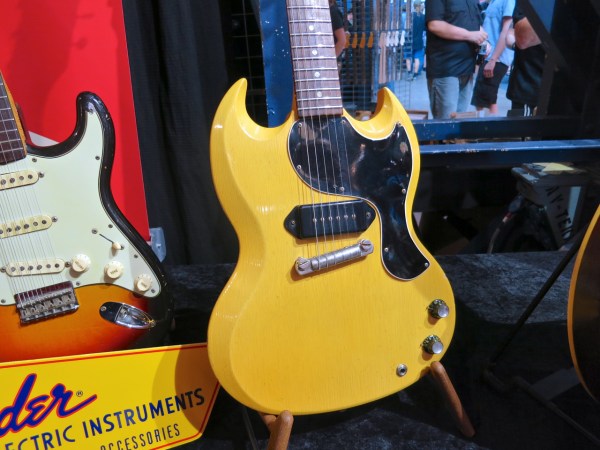
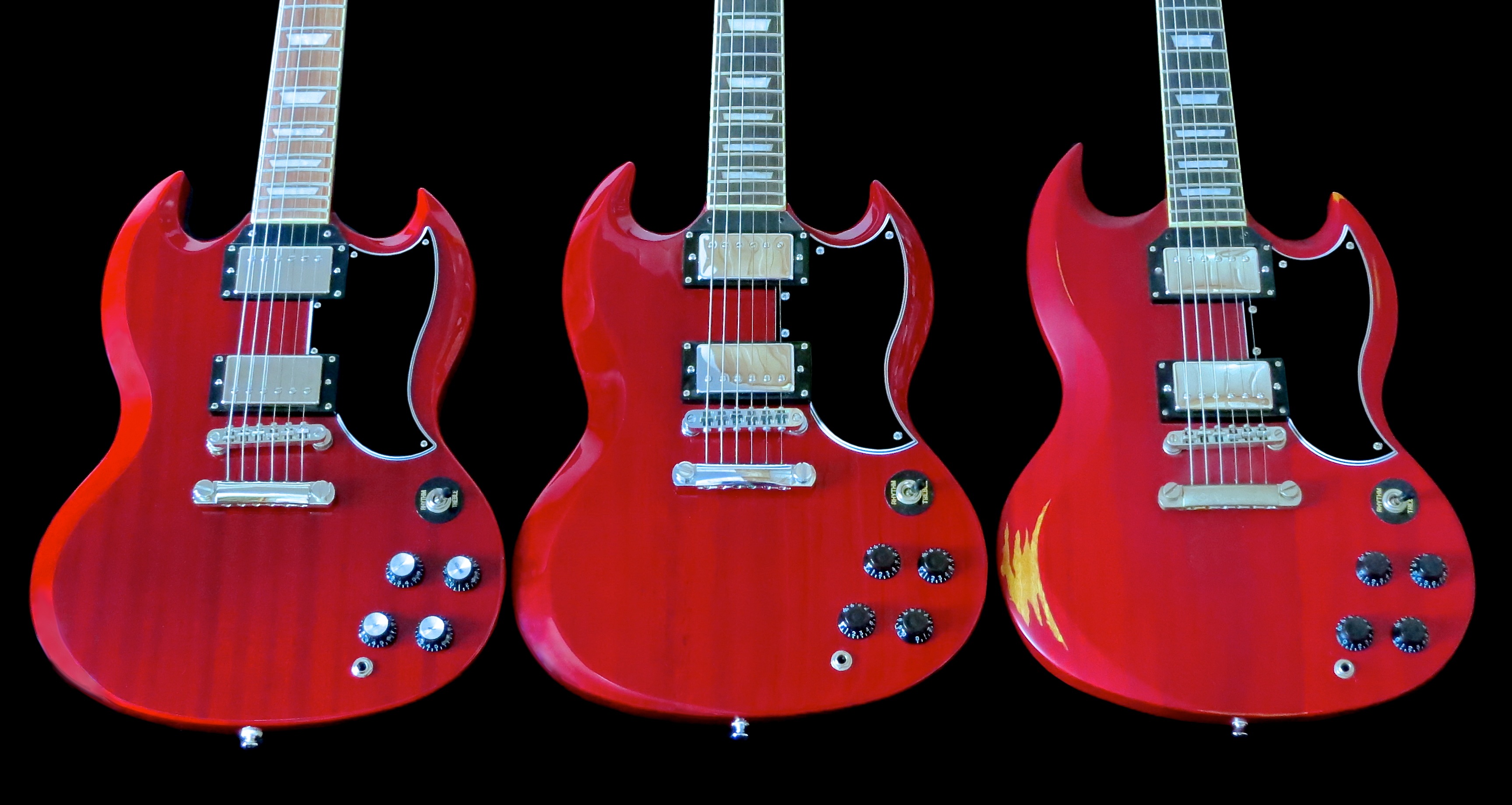
When I started getting interested in electric guitars I first gravitated towards Jazz boxes, for some strange reason. I was ten years old, and a Beatles and Stevie Wonder fan, but the most beautiful guitar guitar to me was the Ibanez George Benson model.
In the mid-Seventies I got into Paul McCartney’s post-Beatles band Wings. Their fabulous lead guitarist Jimmy McCulloch was my first Gibson SG ”hero”. Great bluesy playing style coupled with a fat tone.
But along came Punk (not my cup of tea), as well as New Wave and Synthpop, which were all genres that veered more towards the wiry tones of Teles and Strats.
I got into a band, but as singer and bassist, so my first ”proper” instrument was a Squier Jazz Bass. My first electric guitar was an inexpensive Aria, a black Strat-style instrument with a then-fashionable spiky ”hockey stick” headstock.

Over the years I found out that I’m more of a two-pickup or single-pickup guitarist. I got into Telecasters, Les Pauls Standards and Juniors. The few times SGs crossed my path, I found them a little uncomfortable to wear and cumbersome to use.
About fifteen years ago two players made me reconsider my attitude towards SG-style guitars.
A friend of mine invited me to watch the full DVD-version of the Woodstock Festival (1969), as well as The Who documentary ”The Kids Are Alright”. I was mesmerized by the energy and fat tones that Carlos Santana and Pete Townshend got from their 1960s Gibson SG Specials. I was already a P-90s fan, but the combination of this big-sounding single coil pickup and an SG somehow seemed to make a lot of sense.
Since then I have been fascinated by SG-style guitars. Yes, they can be a little more temperamental than, say, a Les Paul, and sometimes the long neck causes issues with dead notes – especially around the 12th fret on the D- and g-strings – but I still love their look, feel and sound. For me it was an acquired taste at first, but now my go-to guitars, especially for live work, are Teles and SGs.
Here are some SG-related videos from the Kitarablogi channel:
****
****
****
****
****
****
****
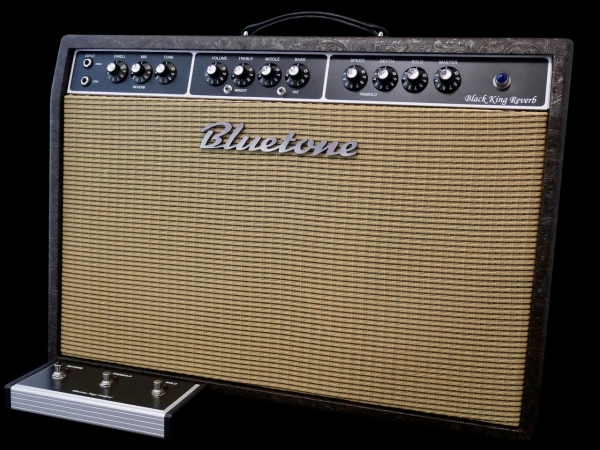
Finnish boutique amplifier company Bluetone Custom Amplifiers offers a wide range of different all-valve guitar amplifiers, from gnarly tweed-style combos to the full-on assault of modern high-gain Metal machines.
Over the last few years Bluetone’s dynamic duo of Harry Kneckt and Lauri Vuojolahti seem to have hit on a winning concept with their range of amplifiers with the word ”Black” as the first word in their name.
It all started in 2021, when Bluetone introduced a thoroughly updated version of the Black Prince Reverb. That particular model – which is basically a handmade cross between a Fender Blackface Princeton and a Deluxe, coupled with a very versatile power amp section – has very quickly become the company’s top selling model. This success has spawned several smaller Black Prince models, which have also become very popular. I own a Black Prince Reverb myself, and it has become my go-to guitar amplifier.
When Harry told me that Bluetone was about to introduce a new model – called the Black King Reverb – that would combine a Fender Vibro-King’s preamp section with Bluetone’s Black Prince-power amp, I was very eager to test drive one.
The first couple of Bluetone Black King combos were sold as quickly as the guys could make them, but now I’ve finally managed to grab one for a couple of days.
****
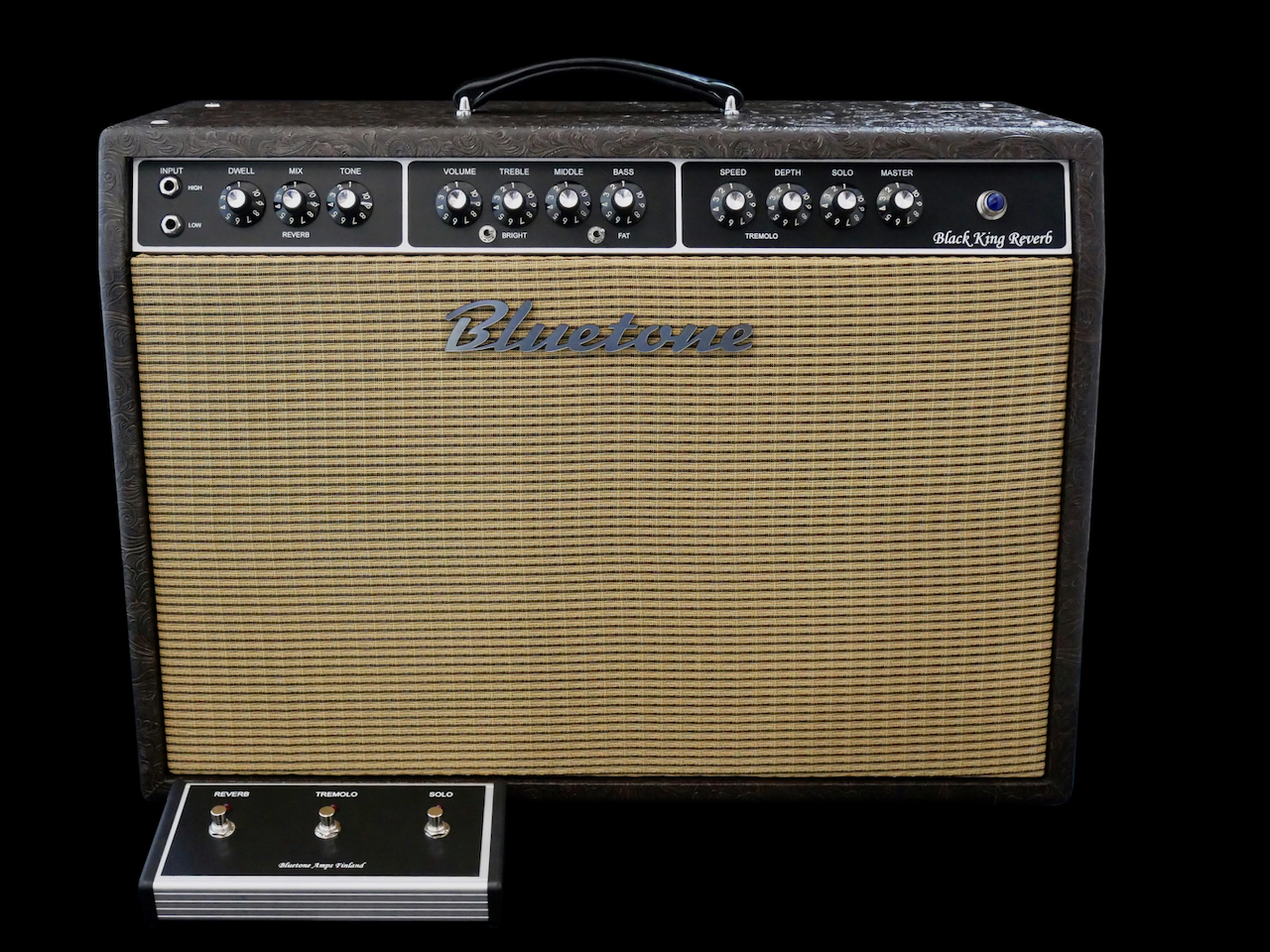
The Bluetone Black King Reverb (current price: 1,900 €) is twin-speaker all-tube combo, loaded with a pair of 10-inch speakers, but it still weighs in at less than 14 kilos. Most of the musician-friendly weight reduction is down to Bluetone using solid paulownia wood for its cabinets. Paulownia is an ecologically viable species that offers a superior strength-to-weight ratio for amplifier and speaker cabinets.
As mentioned before, the Black King lifts its extremely flexible power amp section from Bluetone’s Black Prince combo. The power amp runs off a pair of valves – virtually all available octal power tubes can be dropped in without the need for rebiasing. A pair of 6L6GCs or EL34s will give you approximately 28 to 30 watts of output power, while a pair of 6V6GTs will drop the output down to about 14 watts. Refer to the manual for details.

The Black King’s preamp is built around three 12AX7, but will also take other valves from the 12A_7-range, if you want to experiment with different gain structures (again, refer to the manual).
The toroidal power transformer (the black doughnut in the far left) is another long-standing hallmark of Bluetone amplifiers, which cuts down on the amp’s weight, as well as reducing hum interference noticeably.

The Black King Reverb normally leaves Bluetone’s workshop with a pair of 10-inch Warehouse Guitar Speakers Veterans, but – Bluetone being a custom builder – you can also request different speakers, should you so desire.

The long reverb tank is installed to the bottom of the combo’s cabinet.
Despite making all-valve amplifiers, Harry and Lauri are all about hard technical facts, leaving all the snake oil and tube voodoo for others. In the Black King’s case this means – among other things – that the reverb’s signal path is using their unique op-amp-powered circuit, for a cleaner, more dynamic and hiss-free tone.
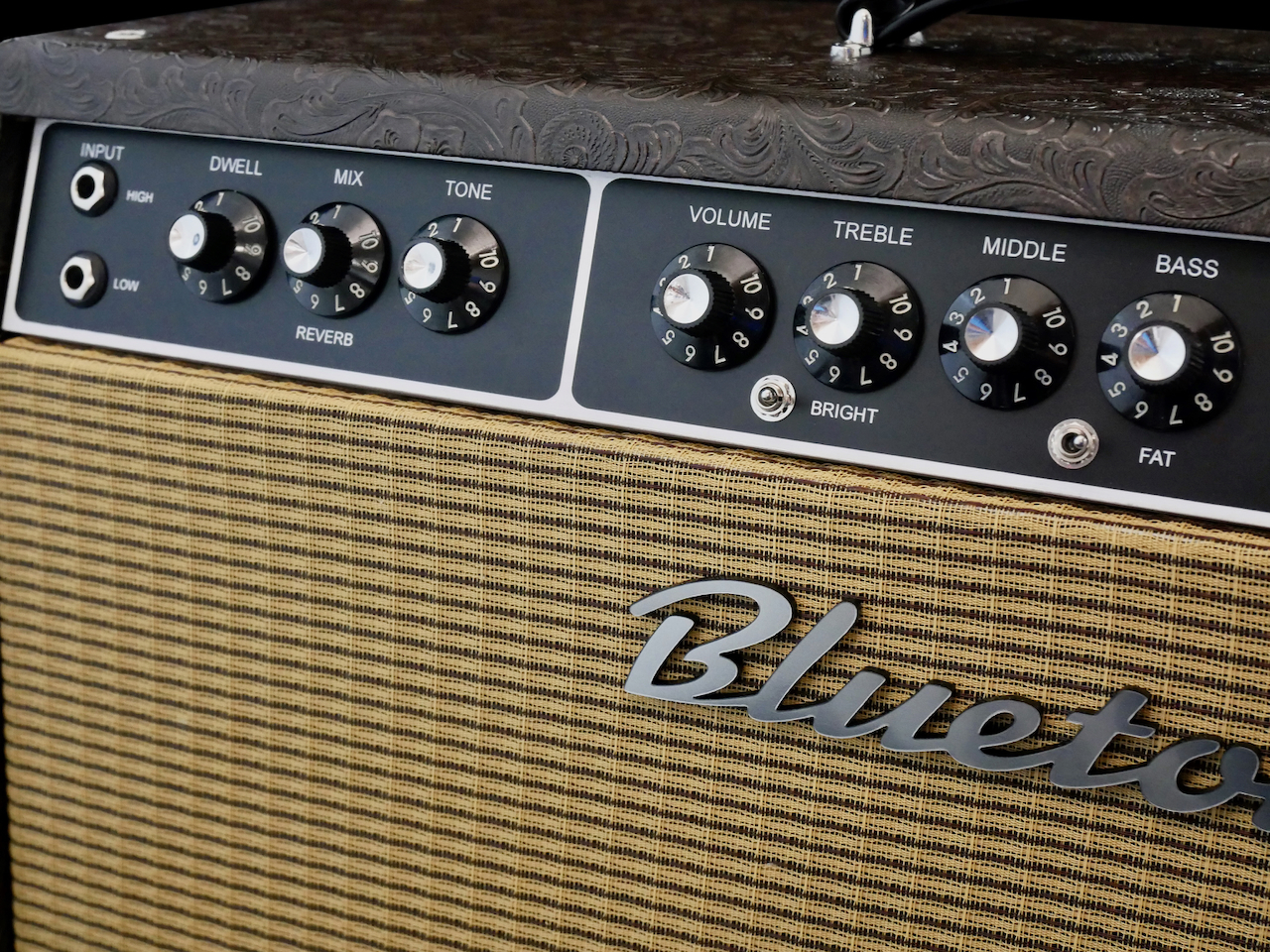
For a single-channel combo Bluetone’s Black King Reverb offers plenty of scope for adjustment:
The preamp section sports controls for volume and 3-band EQ with an additional two mini-switches for Bright- and Fat-boosts. Everything does what it says on the tin, offering a wide variety of fantastic guitar tones that keep the core character of each guitar intact.
The Black King is a reverb connoisseur’s nirvana, not only offering a top-quality full-length spring tank, but also a full set of three controls for maximum tonal range. Dwell adjusts how hard you drive the spring reverb’s input – higher Dwell-settings will result in longer reverb times, as well as more saturation. Tone controls the tone of the reverb’s output, from dark to bright, while Mix lets you choose how much of the Black King’s super lush reverb will be used to bolster your guitar signal.

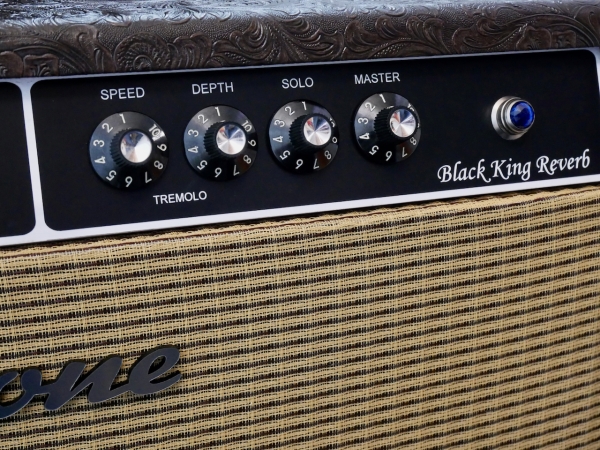
The output section offers you controls for the Band King’s scrumptious bias-modulated tremolo, the level of the solo-boost, and the master volume control. As the master volume is placed after the phase inverter stage, setting the master control to full will remove it completely from the power amp’s circuit.
All three amp effects – tremolo, soolo-boost, and reverb – are switched on or off with the supplied three-switch foot-switching unit.

There’s a lot going on on the Bluetone Black King Reverb’s back panel:
There’s an unbalanced line level output with its dedicated signal level control, so you can plug the combo straight into a speaker modeller. If you need to go completely silent, for example in the studio, the Black King includes a built-in switchable dummy load.
Next to the three speaker outputs we can find a mini-switch labelled ”NFB On/Off”. This allows you to choose whether or not you want to run so-called negative feedback in the combo’s power amp section.
A negative feedback loop will normally ”clean up” the power amp’s sonic footprint, giving you less power amp distortion and more clarity and articulation, while turning it off will give you a gnarlier and more distorted character. A wide generalisation would be that negative feedback takes the amp closer to Blackface territory, while no negative feedback gives it more of a Tweed- or Vox-style accent. Of course, your choice of power amp valves also has an important bearing on the overall character of the Black King.
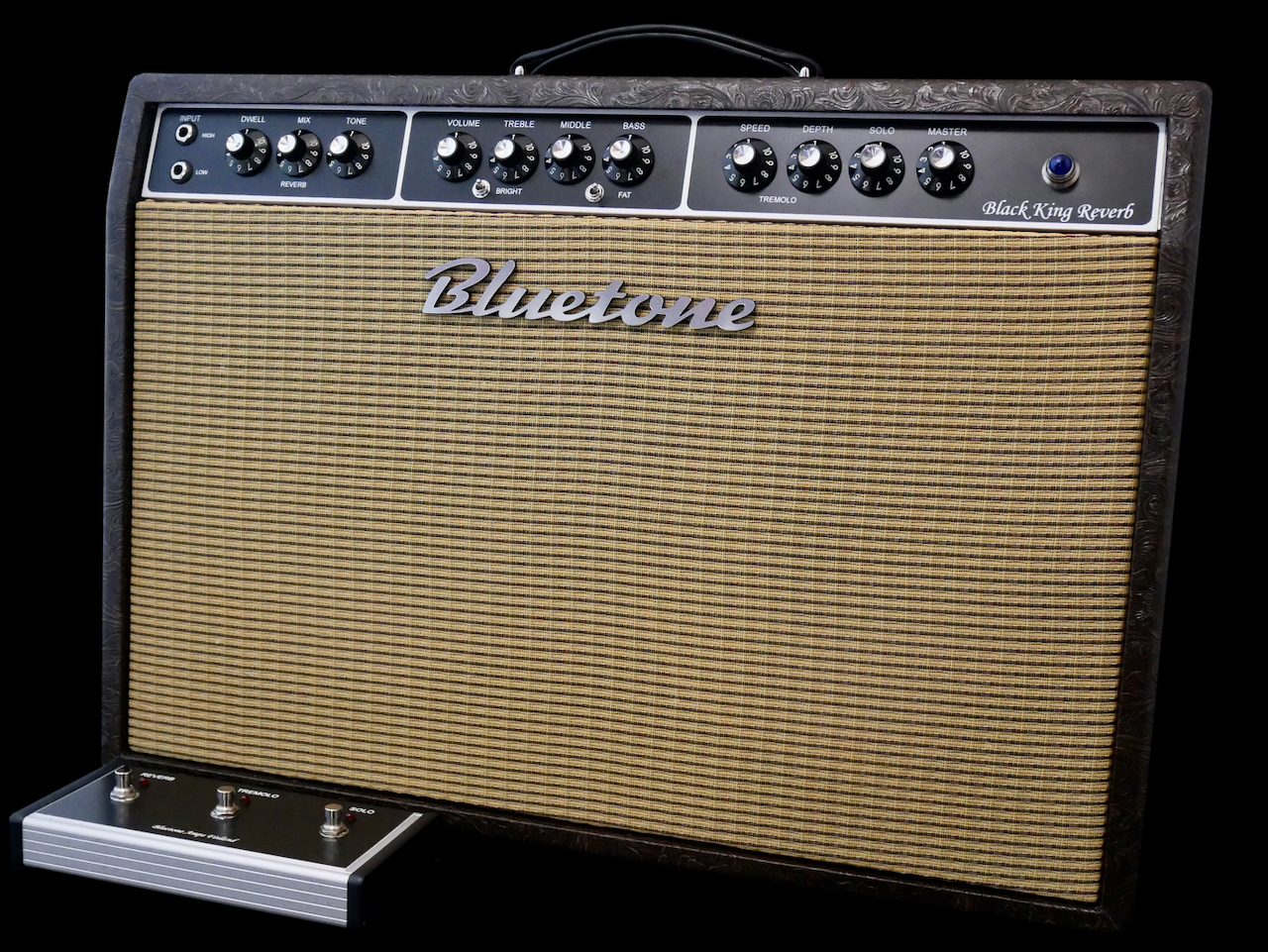
The Bluetone Black King Reverb ticks all the right boxes in my book.
The Black King offers some of the best clean sounds you are likely to experience, regardless of the type of guitar or pickup you throw at it. The genuine spring reverb is simply fantastic, and may even prove to be a dealbreaker in comparison to many other combos. The tremolo effect is luscious, with plenty of scope for adjustment of both speed and depth.
The overdriven/distorted tones you can glean from the Bluetone Black King Reverb are pleasantly gritty, but if you don’t like them, no problem – the Black King also loves pedal effects.
In my view, the Black King Reverb’s clean tones are this combo’s biggest forte. There’s plenty of headroom on offer, and the character is definitely in the Blackface-vein. There’s plenty of dynamic range on offer and the amp’s basic voice is big and open, seasoned with a crystal-clear top end. The three-band EQ offers more than enough scope for tone-shaping, and the Bright- and Fat-boosts work like a dream. What’s not to like?
For less than two grand you can get yourself a hand-made boutique valve combo that’s very versatile and great sounding. This is hands down one of the best amps you will find in its class, and it’s offered at a very fair price.


Alkuperäinen, laajempi suomenkielinen juttu on luettavissa TÄÄLTÄ.
Thanks to technological progress and cheap Asian labour, you can already get a very decent Les Paul Standard copy these days for somewhere between 500 and 700 euros.
Here are four of those guitars presented in alphabetical order. I tried to obtain one of the new Epiphone-models from their Finnish distributor for this round-up, but to no avail.
****

GrassRoots G-LP-60S Honey Sunburst
• Current price in Finland: 559, – (incl. gig bag)
• Distributor: Musamaailma
GrassRoots is a brand in the ESP Guitars family, and concentrates on traditional electric guitars and basses. Even though the LP-60S is the least expensive guitar in this round-up, it comes in its own, high-quality gig bag. The finish on our review sample is called Honey Sunburst.

The G-LP-60S’ body is made from four side-by-side pieces of mahogany, with a top crafted from maple. The flame maple veneer on the curved top looks gorgeous.
The set mahogany neck is one piece of mahogany (!), except for the top half of the headstock. The bound fretboard has been made from beautiful pau ferro, while the LP-60S’ top nut is genuine bovine bone. The fretwork looks very decent.
The machine heads are nice copies of vintage Kluson tuners. The GrassRoots’ bridge is a modernised version of a Tune-o-matic, sporting six separate small metal clips to keep the bridge saddles in place.
The LP-60S’ pickups are GrassRoots’ own GH-1G humbuckers with metal covers. Looking beneath the electronics cavity covers, we found a closed three-way toggle switch, as well as four small pots and very clean soldering.

The first thing I noticed when I picked up the GrassRoots guitar is how light it is. I don’t know if GrassRoots uses any type of weight relief on the LP-60S, but the review sample’s weight clocks in at only 3.3 kgs.
The neck profile is a very ”fast” version of Gibson’s famous 60s neck, meaning a nicely rounded, but relatively slim C-shape. Musamaailma’s in-house guitar technician has expertly set up the review guitar, resulting in a buzz-free action of only 1.6 mm (bass-E) and 1.5 mm (treble-e).
I’d describe the GrassRoots humbuckers as vintage-powered, meaning they give a lot of scope for dynamics and a nice, rounded top end response. The neck ’bucker is flutey, while the bridge pickup offers ample kick and mid-range push. The GrassRoots G-LP-60S is a versatile LP Standard style guitar, which sounds great, offers a comfortably slender neck profile, and which doesn’t weigh a tonne.
****

Green LP STD Lemon Drop
• Current price in Finland: 498, –
• Distributor: Nordsound
Green Guitars is a Swedish brand with Far Eastern production to keep the prices musician-friendly. Green’s LP STD model comes in a fetching Lemon Drop finish, as well as sporting a few features that differ from standard vintage-fare.
The Green’s body uses three pieces of very lively mahogany. The arched maple top has been spruced up with a tiger striped flame maple veneer. Green’s LP STD sports a deeper cutaway than its famous forebear, resulting in a more pointed horn.
The set-in neck is carved out of three side-by-side strips of mahogany, which – in all probability – should add a little stiffness to the neck. The neck wrist is protected from headstock breaks by a volute.
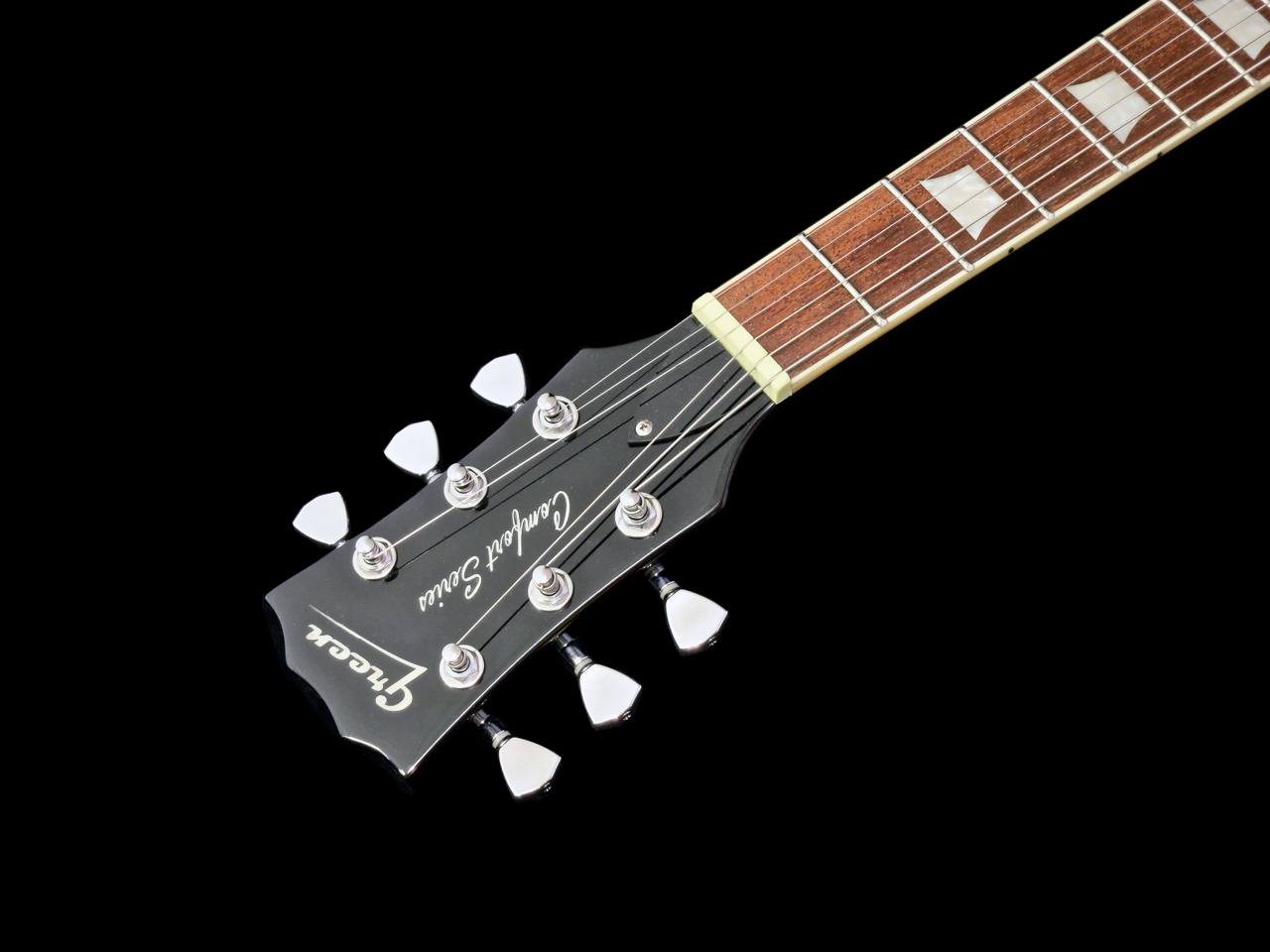
The Green features a set of modern tuning machines, as well as an up-to-date version of the Tune-o-matic bridge.
The bound rosewood fretboard comes with 22 well-installed medium-size frets. The nut is made from a cream coloured plastic.

Green’s LP STAD model sports a pair of open, zebra-coloured humbuckers. The electronics comprise a closed three-way toggle, as well as four small diameter pots. The soldering looks nice and clean.
Green’s neck profile is a smidgen bigger than that of the GrassRoots – I’d say the profile is somewhere halfway between a ’59 and a ’60 Gibson. The set-up on our test sample was very good, with the action clocking in at 1.7 mm (bass-E) and 1.5 mm (treble-e), without any fret buzz.
I’d describe the Green’s humbuckers as ”hot vintage”. This guitar has a big sound with a nice, fresh dose of treble. If you’re into Slash, this is the guitar I’d try out first.
****

Tokai Guitars ALS-62 Honey Burst
• Current price in Finland: 659, –
• Distributor: Tokai Guitars Nordic/Musamaailma
Tokai Guitars must be the most famous ”copy brand” in the world, whose instruments caused Fender and Gibson to do something about their sagging quality control back in the 1980s.
In addition to their top-of-the-line Japanese LS-models, Tokai also offers more affordable Chinese versions under the ALS-banner. The flame maple veneer – finished in a fetching Honey Burst – looks stunning, deep and chatoyant.
The Tokai ALS-62’s body uses four pieces of mahogany and a veneered arched maple top. In this series Tokai uses hard rock maple for their guitar necks – in this case we’re talking about a three-piece affair of neck, headstock, and neck heel.

Tokai uses jatoba as the material for its bound fretboard. We find 22 expertly-finished, medium-sized frets, as well as a genuine bone nut. The bridge is a fine version of the vintage Tune-o-matic, with a single metal bracket keeping the saddles in place. The bridge and stopbar ferrules have been sunk into the top wood for a very clean look.
The Tokai ALS-62 sports a pair of covered LSC-F-humbuckers. The electronics comprise a closed three-way toggle switch, plus four small pots. The soldering is very clean.

Tokai’s neck profile is my personal favourite, I must confess. It’s a rounded, not-too-fat 1959-style neck profile, offering your fretting had a good amount of ”meat” without too much bulk. The action is buzz-free, while being comfortably low at 1.6 mm (bass-E) and 1.4 mm (treble-e).
The Tokai ALS-62 sounds like ”the real thing”, leaving nothing to be desired. The neck pickup is creamy and flutey, while the bridge unit adds the right amount of grit to proceedings. The Tommi’s output is vintage-to-medium. This is a gorgeous guitar with a versatile sound to boot.
****

Vintage V100PGM Lemon Drop
• Current price in Finland: 576, –
• Distributor: Nordsound
Vintage Brand’s V100PGM Lemon Drop is an ”unofficial” signature guitar, offering you an affordable shot at the legendary LP played by three legends in a row – Peter Green, Gary Moore, and Kirk Hammett. The original guitar’s burst has long faded into an ”unburst” lemon drop shade, which is why the Vintage V100PGM Lemon Drop was first only available in that shade. Our test sample, on the other had, is Vintage’s view of what the guitar must have looked like brand new. So, here we have a beautiful cherry sunburst-coloured guitar, that is called ”Lemon Burst”, go figure.
Trev Wilkinson, who has designed this guitar for Vintage Brand, has added a few nifty updates to prevent the V100PGM from being a straight copy instrument:
The V100PGM’s mahogany body (three pieces) has a rounder bass-side shoulder and a much deeper cutaway that Gibson’s original. The top’s flame maple veneer sports extremely pretty and deep figuring.
The guitar’s neck – crafted from three side-by-side pieces of mahogany – is glued into the body by means of an asymmetrical neck joint, making excursions to the dusty end more comfortable.

The Vintage’s fingerboard is made from a trademarked material, called ”Lignum Rosa”, which translates from Latin as ”wood of the rose”. I can’t tell you what it actually is, but it looks and feels great, and it is home to 22 medium-sized, well-dressed frets. The top nut is Graph Tech’s NuBone material, which is a man-made alternative to ivory.
Surprisingly, the V100PGM comes with a set of Grover Deluxe vintage-type machine heads, instead of the Wilkinsons I’d have expected. The bridge on this Vintage is a Wilkinson-version of a modern Tune-o-matic.
The V100PGM comes with a pair of Wilkinson WVC-humbuckers. Like on the original, the neck unit has been installed ”upside down”, meaning with the adjustable pole screws facing the bridge, and with the wires hooked up in reverse, too. Gary Moore swapped the bridge pickup’s controls from the original bell-type to the early-Sixties ”reflectors”, because he wanted to be able to find the correct control without having to look at the guitar. This has been copied on the Vintage as well.
The V100PGM uses a closed three-way toggle switch and four small diameter pots. The soldering looks very decent.

The Vintage V100PGM comes with a slightly flatter version of a Gibson 60s C-neck, so we’re talking about a very ”fast” neck feel. The review guitars comfortable set-up gives you plenty of acoustic dynamic range at 1.9 mm (bass-E) and 1.7 mm (treble-e).
Thanks to their moderate output the Wilkinson-humbuckers offer plenty of dynamics and openness, with a nice, bell-like treble response. The neck pickup is warm, while the bridge unit sounds brighter.
On the Vintage V100PGM the three-way switch’s middle position opens the door to a wide spectrum of different tones, which differ from the usual LP middle-position sounds. With both volume controls turned up fully, you get a very wiry and bright sound, due to the out-of-phase pickups. Turning one of the volume controls down by a little, gradually adds bottom end and mid-range width. Depending on which volume knob is turned down, the resulting sounds will differ somewhat. Experimentation is allowed and will be rewarded with many different shadings. I think it’s fantastic that Vintage Brand offers somethign a bit out of the ordinary at this affordable price point.
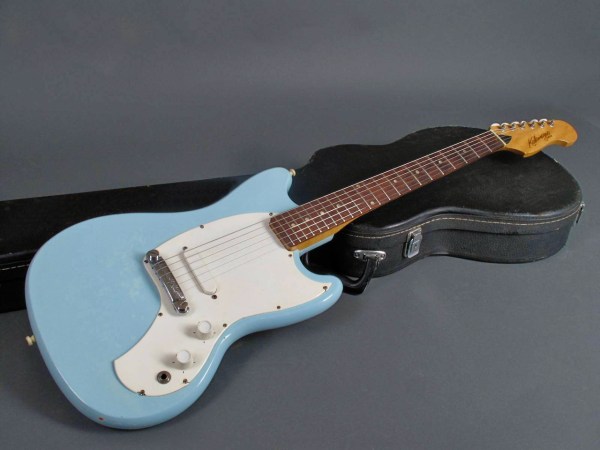
Vuonna 1965 Gibson Guitars etsi tapaa, jolla se voisi tehdä vielä Melody Makeria edullisempaa kitaraa aloittelijoille. Yhdellä mikrofonilla varustettu Gibson Melody Maker maksoi vuonna 1961 109,50 dollaria, mikä vastasi silloin noin tuhannen euron nykyistä ostovoimaa.
Rock’n’Roll -buumin ansiosta Yhdysvaltoihin tuotiin silloin runsaasti halpoja japanilaisia kitaroita.
Firman pomot päättivät kopioida Fenderiä, mutta ruuvikaulaisen sähkökitaramallin runkomateriaaliksi valittiin MDF-kuitulevyä kokopuun sijaan.
Koska Gibsonilla pelättiin, että uudet halpakitarat voisivat himmentää oman brändin loistoa, herätettiin 1930-luvun Kalamazoo-brändi uudelleen henkiin. Vuodesta 1933 vuoteen 1942 Kalamazoo-soittimet olivat edullisempia versioita Gibsonin akustisista kitaroista, mandoliineista ja banjoista. Näiden soittimien peruslaatu oli samankaltainen kuin Gibson-soittimissa, mutta Kalamazoot olivat kosmeettisesti vaatimattomampia, ja soittimissa ei myöskään ollut säädettävä kaularauta.
Koska uudet Kalamazoo-sähkikset olivat suunnattuja aloittelijoille, Gibson meni ja kopioi lähes yksi yhteen Fender ”oppilassoittimien” – Musicmaster, Duo-Sonic, sekä Mustang – ulkonäköä.
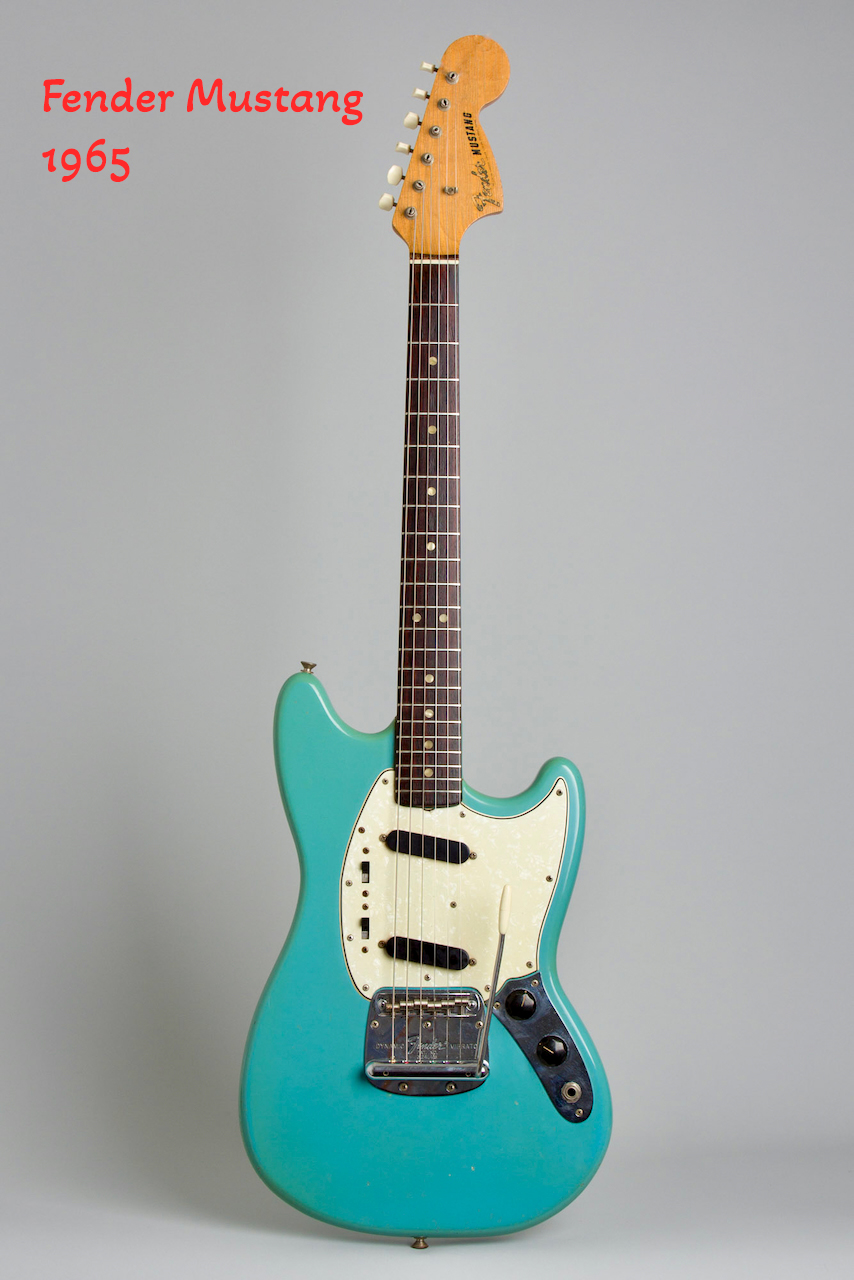
Uudet Kalamazoot saatiin neljänä mallina:
Kalamazoo KG-1 (yksi mikrofoni), KG-1A (yksi mikrofoni ja yksinkertainen vibrato), KG-2 (kaksi mikkiä), sekä KG-2A (kaksi mikkiä ja yksinkertainen vibrato). Värivaihtoehtoja oli tasan kolme – valkoinen, sininen ja punainen.

Vaikka Fender ei tietääkseni reagoinut tähän kopiointiin, muutettiin kuitenkin vuonna 1967 kaikkien neljä mallien rungot Gibson SG:n kaltaiseksi.
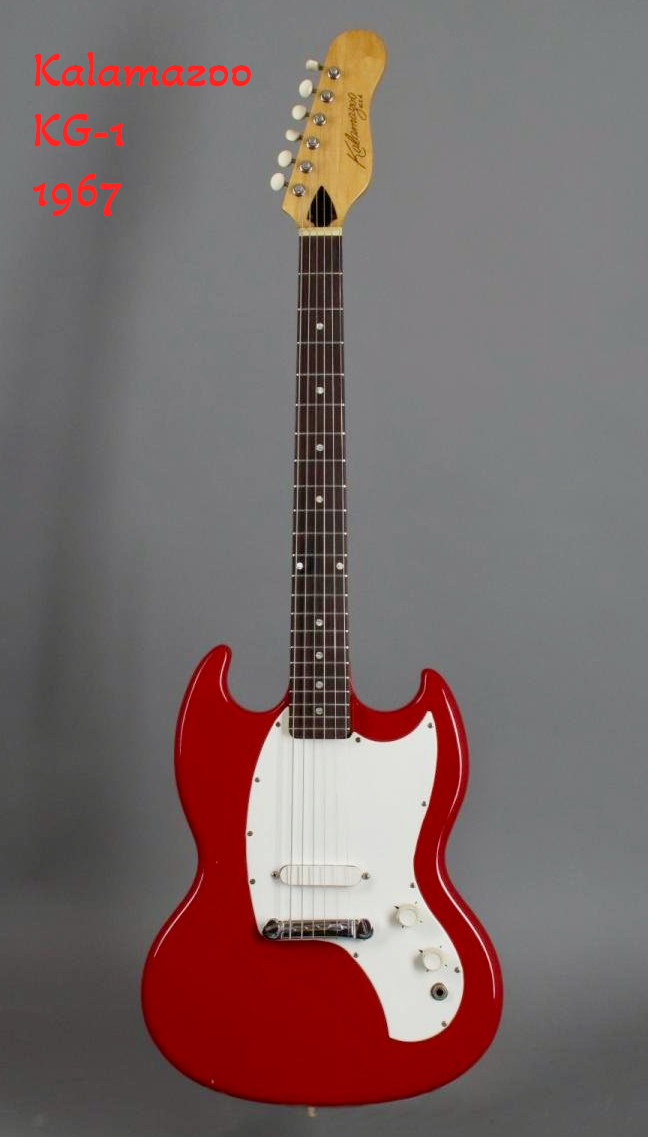
Vuoden 1969 lopussa Gibson kuitenkin lopetti koko Kalamazoo-brändin (ja myös Epiphonen US-tuotannon), koska oli päätetty teettää tästä eteenpäin edullisia soittimia Japanissa Epiphone-brändin alla.

Vuoden 1968 Kalamazoo-ilmoitus.

Voit lukea testin TÄÄLLÄ.
****


 Kitarablogi.com – Finland's premier Guitar and Bass blog