Check out the whole song HERE.
Kitarablogi.com – Finland's premier Guitar and Bass blog
Juttuja kitaroista ja bassoista


Gibson’s ES-335, which was introduced in 1958, is one of the all-time bestselling models in the company’s history, and has been in production ever since, making it the Gibson model with the second longest uninterrupted production run (only the ES-175 has been in production longer, since 1949).
Ted McCarty, Gibson’s president from 1948 to 1966, has always stated that, looking back, he thought the ES-335 was his finest achievement.

The ES-335 has a thinline body made from steam-pressed maple plywood. Although the guitar does remind you of a classic Gibson hollow-body Jazz-box, this model is actually halfway solidbody in terms of its build.
This is because a semiacoustic electric guitar has a solid wood centre block running the length of the body from the neck joint all the way down to the back strap button. The centre block gives a semi a longer sustain, while keeping howling feedback at bay.

The block also allows the use of Gibson’s typical solidbody hardware – namely the Tune-o-matic-bridge and the stop bar – which add some clarity to the mix.
For their part, the ES-335’s hollow wings bring a bit of air to the mid-range, making the guitar sound more open and airy than a Les Paul for example.
Due to its relatively large body, a semi isn’t probably the best model for a small beginner (of less than 160 cm height), but as long as size isn’t an issue this lightweight and well-balanced ergonomic style of guitar is a fine choice.

Gibson’s subsidiary Epiphone has produced many of its own variants in the 335-style since the 1960s – from the glitzy Sheraton (the natural-coloured guitar in this post) to the minihumbucker-equipped Riviera, with its own, slightly brighter tone.
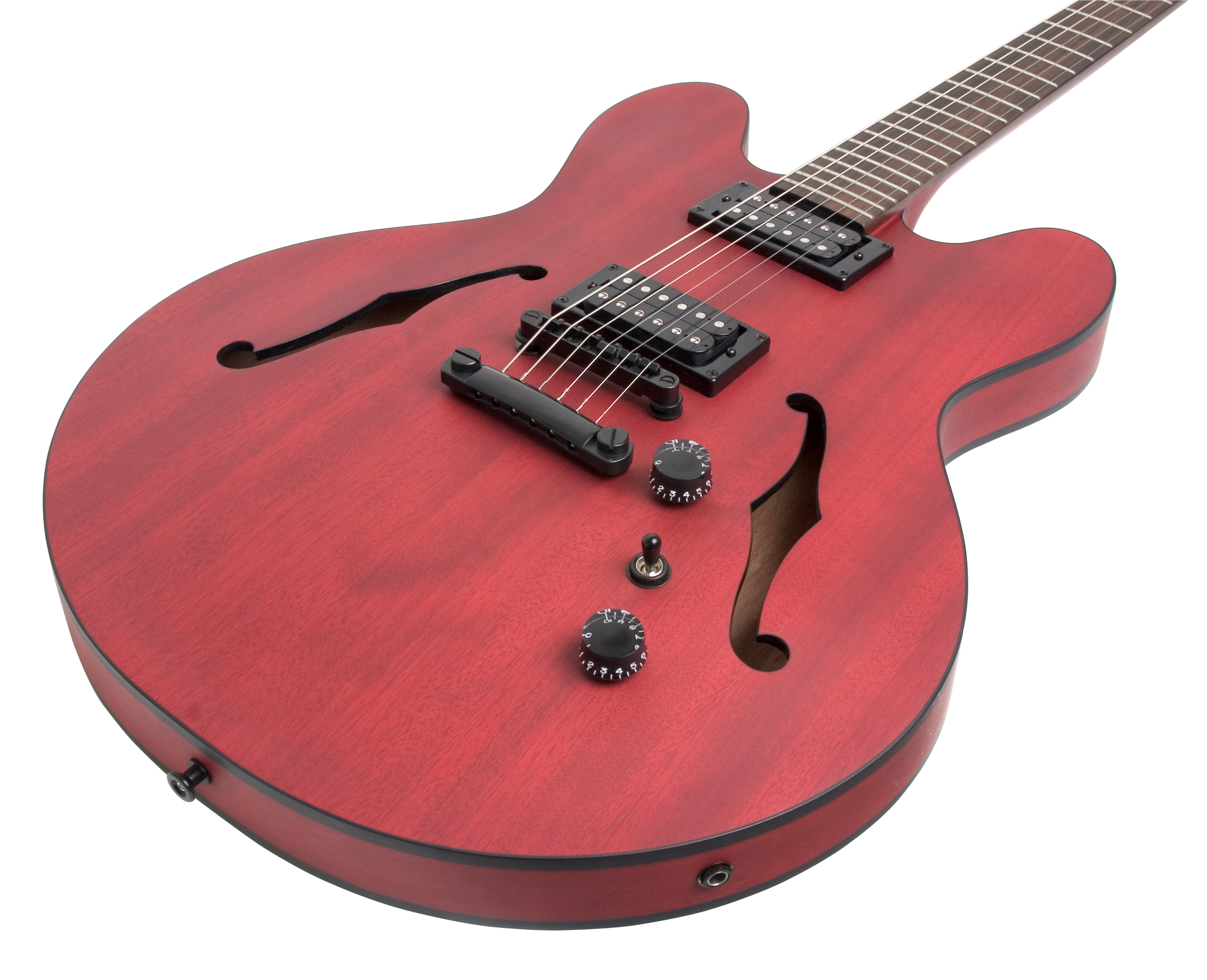
The relatively new Epiphone Dot Studio gives you superb bang-for-the-buck, with its pared down, no-nonsense looks. Here the body is made from mahogany plywood, with the controls streamlined to one master volume and one master tone.
____________________________________________________________
I’m an avid fan of the semi-style body.
Here’s a snapshot of my Epiphone Casino and a late-70s/early-80s ES-335-copy made in Japan by Kasuga:

Listen to both guitars here
Vuonna 1958 ilmestynyt ES-335 on yksi Gibsonin suurimmista myyntimenestyksistä ja firman toiseksi pisin yhtäjaksoisesti tuotannossa oleva sähkökitara (ES-175 jazzkitara on tullut ulos 1949).
Silloinen Gibsonin pomo Ted McCarty on sanonut useissa haastatteluissa, että ES-335 oli hänen mielestään hänen paras saavutus – sekä ergonomialtaan että soundiltaan.
ES-335:n ohut runko on valmistettu muotoon prässätystä vaahteravanerista. Vaikka kitaran ulkonäkö muistuttaa perinteistä jazzkitaraa, on malli kuitenkin lankkukitaran ja onttokoppaisen jazzmallin välimaastossa.
Puoliakustisen kitaran rungossa on nimittäin sustainea pidentävä, ja feedbackin ulinalta suojava keskipalkki, joka kulkee koko matkan kaulalta toiselle hihnatapille.
Keskipalkki mahdollistaa myös Gibson-lankkukitaroista tutun palkkimaisen kieltenpitimen käyttöä, mikä lisää hieman soinnin kiinteyttä.
Ontot sivuosat taas tuovat ES-335-tyyliseen kitaraan avoimemman keskialueen ja pyöreämmän atakin, jos vertaa vaikkapa Les Pauliin.
Verraten ison koppansa ansiosta perinteinen puoliakustinen ei ole ehkä sopivin valinta pienikokoiselle aloittelijalle (alle 160 cm), mutta muille suhteellisen kevyt ja hyvin balansoiva ergonominen malli sopii hyvin.
Gibsonin tytäryhtiö Epiphone on jo 1960-luvulla teyhnyt omia variaatioita ES-335 teemasta – esimerkiksi alkuperäismallia prameampi Sheraton (vaalea kitara tässä jutussa) tai pikkuhumbuckerilla varustettu Riviera, jolla on hieman kirkkaampi soundi.
Yllättävän edullinen Epiphone Dot Studio -malli taas on uudempaa tuotantoa, ja se tarjoaa ES-335:n konseptin sopivasti pelkistetyssä muodossa. Runko on tässä mahonkivanerista, ja kolmiasentoisen kytkimen lisäksi on tarjolla ainoastaan master volume ja master tone -säätimet.
____________________________________________________________
Itsekin pidän suuresti puoliakustisista kitaroista.
Tässä yksi kuva minun Epiphone Casinosta ja minun japanilaisesta Kasuga ES-335 -kopiosta (valmistettu joskus 70/80-luvun taitteessa):
Niiden soundeja voi kuunnella tässä.


At the moment the Gibson SG is extremely popular – the trendiest model on the block.
Unbelievable as it may seem with hindsight, the SG was designed in 1961 as the Les Paul’s replacement. Ted McCarty and his team were eager to come out with a sexier, lighter and more practical electric guitar, in place of the then somewhat unpopular Les Paul.
Les Paul himself wasn’t overly enthusiastic about the new model, so he decided not to renew his endorsement deal in 1963. From that moment on the ”new and improved Les Paul Standard” became the Gibson SG Standard (SG = solid guitar). By the way, Gibson brought back the original Les Paul in 1969.
The main new feature of the SG was its sleek and curvy body, crafted entirely from mahogany. The glued neck joint was moved so that all of the guitar’s frets were easy to access.
Due to the new neck joint the front humbucker had to be moved a little towards the bridge for added stability, which in turn slightly thins out the pickup’s sound.

The SG’s thin and light body results in a fresher, more resonant and transparent tone, when compared to a Les Paul.
Thanks to its thin body, light weight and (normally) fixed bridge the SG is a fine choice for a first guitar. Only its very slight tendency towards neck heaviness can sometimes mar the nigh-on perfect picture.
As with all Gibson models, I’d advise anybody to purchase a quality gig bag or case with an SG-style guitar, to protect it against neck or headstock breakage.
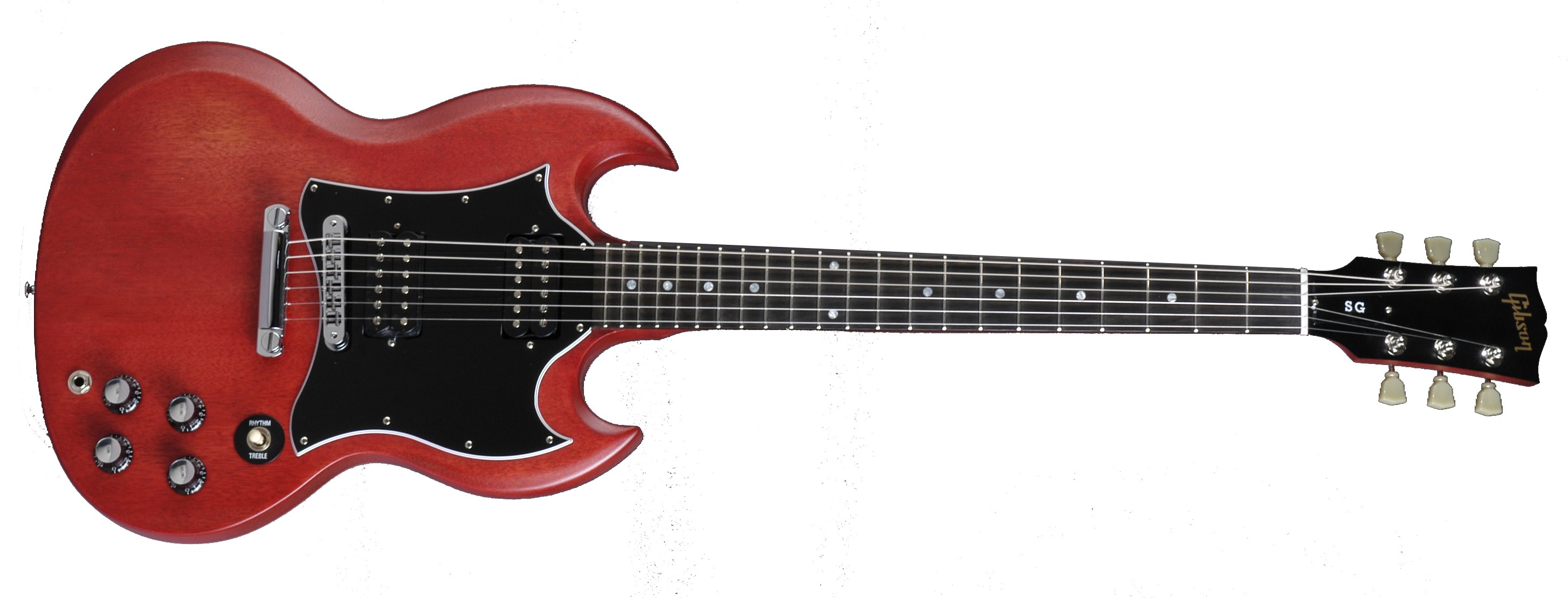
Gibson’s Faded-series offers amazing value for money. These USA-made models offer less bling by doing away with the fingerboard binding, the large crown inlays and the regular gloss finish. But apart from the more modest visuals, the Faded-instruments are thoroughbred Gibsons.


Gibsonin SG on viime aikoina ollut kovassa suosiossa – se on tällä hetkellä trendikkäin sähkökitara.
Uskomatonta kyllä, mutta SG syntyi vuonna 1961 uutena Les Pauli -mallina. Ted McCartyn tiimi halusi kevyemmän ja ergonomisemman kitaran, silloin epämuodikkaan, raskaan Les Paul -mallin tilalle.
Les Paul itse ei kuitenkin pitänyt uudesta nimikkosoittimesta kovinkaan paljon, eikä uusinut endorsement-sopimuksensa vuonna 1963. Silloin ”uudesta Les Paul Standardista” tuli Gibson SG -malli (alkuperäinen Les Paul -kitara tuotiin takaisin vuonna 1969).
SG:llä on ohut ja kurvikas mahonkirunko. Kaulan liimaliitos on muutettu niin, että kitaran kaikki 22 nauhat ovat rungon ulkopuolella, minkä ansiosta myös korkeisiin nuotteihin on helppo päästä.
Toisenlaisen kaulaliitoksen takia kaulahumbucker sijaitsee noin puolitoista senttimetriä lähemmäs tallaa, mikä ohentaa hieman mikrofonin soundia.
Ohuemmasta rungosta johtuen SG:n soundi on hieman raikkaampi, notkeampi ja jäntevämpi kuin Les Paul -mallin sointi.
Ohuen rungonsa, kevyen painonsa ja kiinteän tallansa ansiosta SG sopii hyvin ensikitaraksi. Ainoastaan lievä taipumus kaulapainoisuuteen voi joidenkin mielestä olla häiritsevä.
Suosittelen – niin kuin kaikkien Gibson-tyylisien kitaroiden kanssa – myös SG:n tapauksessa laadukkaan kuljetuspussin tai kovan laukun hankkiminen, ettei taakse kallistuva viritinlapa vahingoittuisi kuljetuksen yhteydessä.
Gibsonin Faded-sarja tarjoaa muuten USA:ssa valmistettuja soittimia yllättävän edullisesti. Gibson SG Special Faded – mallista puuttuu otelaudan reunalistoitus, upotukset ovat vaatimattomampia ja kitarassa on ohut mattalakkaus, mutta soitin on kuitenkin täysverinen SG.

Omistamastani kitaroista Epiphone Casino on se jolla soitan eniten.
Mallilla on myös ollut tärkeä paikka Beatles-yhtiön soundissa Help-albumista eteenpäin – bändin kaikki kolme kitaristit omistivat kyseisen mallin. Paul McCartney on usein kertonut haastatteluissa, että Casino on hänen lempisoittimensa.

Epiphone Casino ES-230TD on kitaran alkuperäinen mallitunnus, ja se oli firman vastine Gibsonin ES-330-mallille.
Gibson oli ostanut Epiphone-yrityksen 1950-luvun loppupuolella, ja siirtänyt tuotantoa oman tehtaansa läheisyyteen Kalamazoohon. Nykyään Epiphone on Gibsonin edullinen brändi, ja soittimet rakennetaan lähes kaikki Kiinassa.

Oma Casinoni on varhaisen 2000-luvun tuotantoa Koreasta. Alun perin kitarassa oli kiiltävä viimeistely, mutta ystäväni Sebastian Bunge (Soundhaus Lübeck) muutti sitä hiekkapaperilla Lennon-tyyliseksi mattaksi asiakkaan pyynnöstä. Samalla hän vaihtoi soittimeen paremmat P-90 mikrofonit, jotka tulivat Göldoltä.

Vaikka Casino näyttää samankaltaiselta puoliakustiselta kitaralta kuin Gibsonin ES-335/-345/-355, on sen runko kuitenkin täysin ontto (niin kuin myös Gibson ES-330:ssä). Rungosta puuttuu puoliakustisen kitaran keskipalkki vaahterasta, minkä takia Casinon mahonkikaula on liimattu vanerirunkoon jo 16:n nauhan kohdalla.

60-luvun originaaleissa kaula on yksiosainen, mutta minun kitarassa on tyypillinen korealainen kolmiosainen kaula, yhdestä pitkästä osasta, johon on liitetty kaulan korko sekä viritinlapa (liitoskohta on hieman E-virittimien alapuolella).

Ensimmäisillä Casinoilla oli – ainakin minun mielestä – kömpelön näköiset, leveät Gibson-tyyliset lavat. Vuonna 1965 muutetiin muotoa kauniimpaan tiimalasi-kaltaiseen tyyliin.
Kitarani on helpposoittoinen ja soundiltaan presiis mitä odotin. ”Minulla on tässä jotain, mitä voisi kiinnostaa sinua”, Sebastian sanoi – ja hän oli oikeassa! Soitin Casinon Soundhausissa Fender ’65 Deluxe reissue -kombon läpi, ja sointi oli juuri kuin Lennonin soundi Apple-talon katossa silloin tammikuun 1969 lopussa (OK, tiedän, että Johnilla oli Twin…).
Rakastan tätä kitaraa! Soitan Casinoni esimerkiksi tässä.
Yläoleva juttu on otettu minun toisesta blogista.
__________________________________________________________
Juttuni allaolevista kahdesta kaunottareista – Gibson ES-330L ja Epiphone Inspired By Revolution Casino – julkaistiin Riffi-lehden numerossa 4/2010.
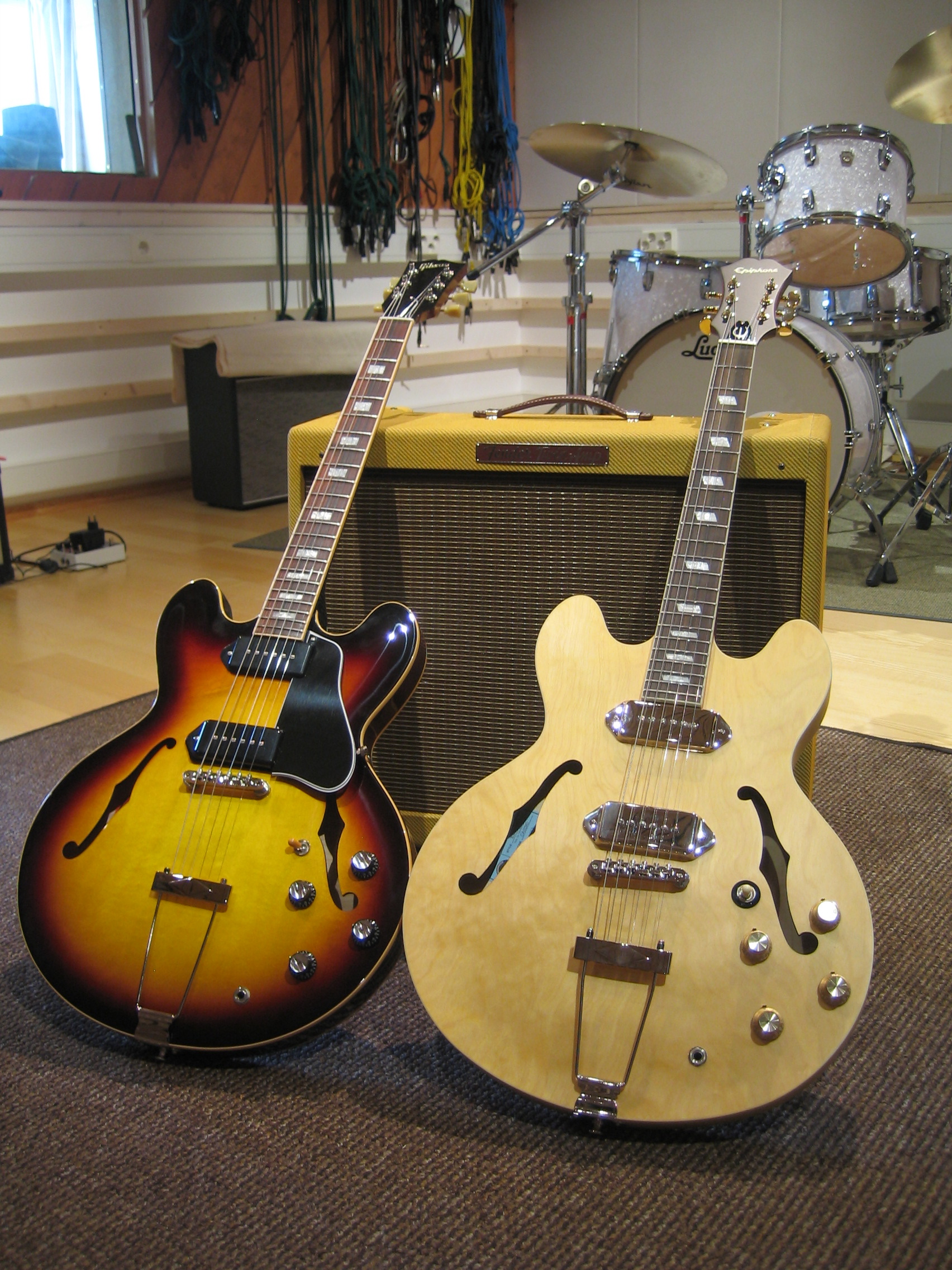
One of my all-time favourite guitars is the Epiphone Casino. It is the ultimate Beatle-guitar – all three guitar-playing Beatles have owned and played this model. Paul McCartney still rates the Casino as his personal favourite.
Originally called the Epiphone Casino ES-230TD it was the sister model to Gibson’s ES-330. Gibson had bought (the then US-firm) in the mid 1950s and produced Epiphone models alongside their own line in Kalamazoo (Michigan). Nowadays the Epi brand serves as Gibson’s cost-conscious line and the production has long been moved to the Far East (mostly China).
My Casino is an early Noughties Korean-manufactured guitar. Originally a natural (gloss) finished model, it has been Lennon-ised by my friend Sebastian Bunge of Soundhaus Lübeck (Germany). He dulled down the finish (at which point the serial number went missing) and installed higher quality P-90 pickups made by Göldo.
Although the Casino shares the double-cutaway thinline body of Gibson’s ES-335/-345/-355, it is nonetheless a completely hollow bodied model (like the ES-330). There is no maple centre block running the length of the plywood maple body, which is why the neck joint is at the 16th fret.
While the originals had one-piece mahogany necks, my guitar comes with a three-piece neck. Basically, the neck is one piece, save for an added bit to make up the height of the neck heel, as well as the headstock, which is joined to the rest north of the saddle/wrist area (not scarf-joined beneath the 2nd fret!).
While the first Casinos from the late 1950s/early 60s feature (rather ugly) wide Gibson-type headstocks, all post-65 models come with the much more distinctive Epi-hourglass design.
This guitar plays like a dream and sounds like it should. Sebastian pulled it out of its case and said ”I think you might be interested in this!” – damn right I was. He plugged the guitar into a Fender ’65 Deluxe reissue, and it sounded exactly like John on the Apple-building roof in January 1969 (OK, so John had played a Twin…).
I love this guitar. One example of myself playing the Epiphone Casino can be found here.
This post has been originally posted on my other blog in 2008.
__________________________________________________________
My review of these two beauties – the Gibson ES-330L and the Epiphone Inspired By Revolution Casino – can be found in Riffi Magazine’s issue 4/2010.


When Fender came out with its first creations – the Esquire and the Broadcaster (aka Telecaster) – in 1950, the small start-up from California was derided and its products put down as ”snow shovels” or ”toilet seats”.
But after a short while the Fenders started to get a following, especially among Country guitarists.
Gibson Guitar’s boss, Ted McCarty, decided something had to be done, unless they wanted to leave the whole marketplace to Fender without competition.
This ”something” became the world’s most successful signature model – the Gibson Les Paul Standard.
Les Paul was a huge guitar hero in the 1950s, who also did inventing as a sideline.
Naturally, Gibson decided to create a solid body guitar along their own design priciples, using a glued-in neck joint and a sandwich body with a beautifully carved top. The neck, as well as the back of the body, were made from mahogany, the bound fingerboard used rosewood and the carved top was made from maple.
The first version was equipped with two P-90 pickups, and the model’s top was painted in a gold metallic finish. The sound is somewhat softer that that of a typical Fender, but still surprisingly pokey and fresh.
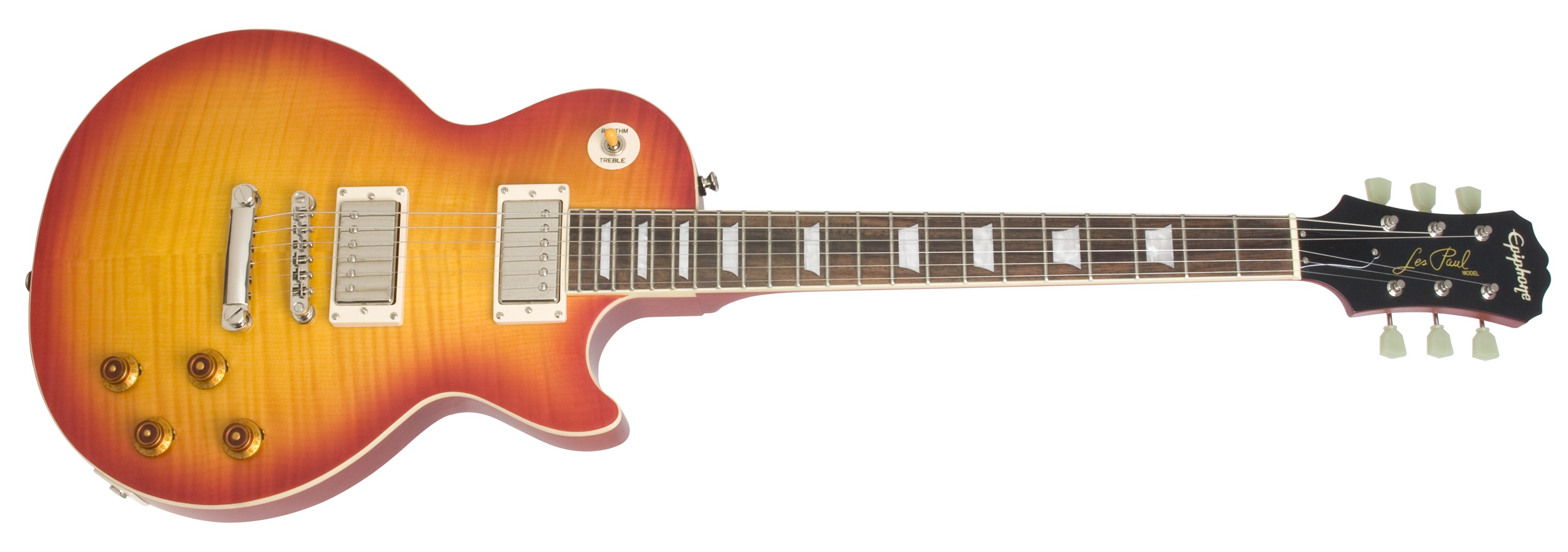
It took Gibson until 1957 to hit upon the now classic combination of two humbuckers and a cherry sunburst top.
The updated Les Paul Standard sounds bigger and fatter, leading to the Blues Boom of the late 60s and the birth of Heavy Rock. Guitarists started to lust after the model’s ”endless” sustain.
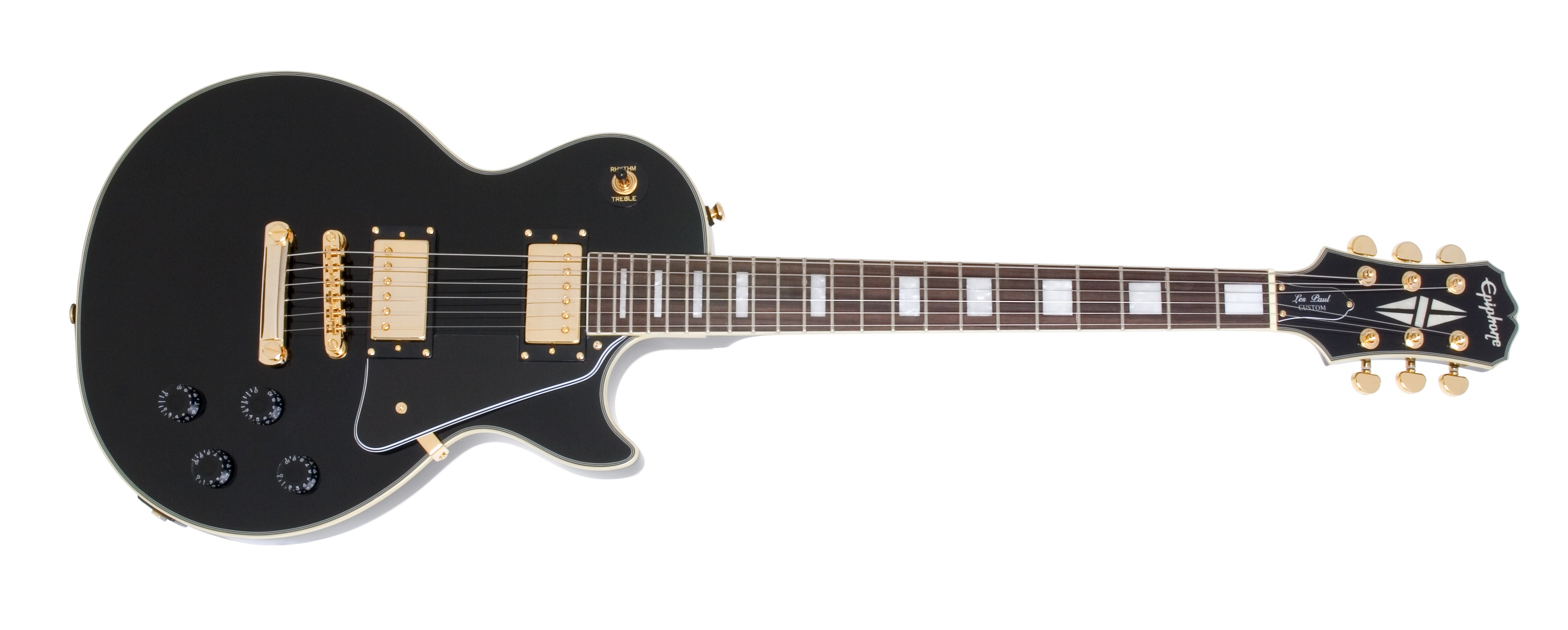
The posher Les Paul Custom – available mostly in solid black or white – features more intricate inlays and binding, and has also been a favourite of a lot of Rock and Metal guitarists from Keith Richards and Randy Rhoads to the likes of Zakk Wylde and Matt Heafy.
The Les Paul’s non-vibrato bridge keeps tuning problems at bay, which is a great plus for a beginner. And the model’s shorter (than Fender) scale, as well as the flatter fretboard radius, make for much easier string bending.
On the negative side is the Les Paul’s higher weight, and Gibson’s back-angled headstock, which makes the guitars more prone to headstock breakage should they fall over. A well-padded gigbag, or better still, a quality case is a useful investment should you buy a Gibson-style guitar (most US-originals include a bag or case in the price).

Kun Fender Esquire- ja Telecaster-kaksikko ilmestyi vuonna 1950, suuri enemmistö kitarajavalmistajia nauroi kalifornialaisen pikkupajan tuotokset nähtyään. Perinteikäiden firmojen edustajat halveksivat Fenderin ”WC:n istuimet”.
Melko pian huomattiin, että uuden pelaajan tuotteet alkoivat pikkuhiljaa myydä countrykitaristien piireissä.
Gibson Guitarsin silloinen toimitusjohtaja, Ted McCarty, huomasi myös asian, ajatteli että olisi parasta, jos Gibsonilla olisi omaa vastausta tähän haasteeseen.
Ja tästä vastauksesta tuli maailman myydyin nimikkokitara – Gibson Les Paul Standard.
Les Paul oli 50-luvulla erittäin suosittu kitaristi, joka oli vapaa-aikana myös keksijä.
Luonnollisesti Gibson loi oman näköisen kitaran, jolla on perinteinen liimattu kaula ja kaksikerroksinen runko kauniisti kaarevalla kannella. Kaula ja rungon takaosa veistettiin mahongista, reunalistoitettu otelauta oli palisanterista ja kansi vaahterasta.
Ensimmäinen versio oli varustettu kahdella P-90-mikrofoneilla ja vaahterakansi oli kullanvärinen. Tämän version soundi on hieman pehmeämpi kuin tavallisesti Fendereissä, mutta kuitenkin yllättävän jäntevä.
Varsinnaiseksi klassikoksi nousi kuitenkin vasta vuoden 1957 tulkinta aiheesta, joka on varustettu kahdella humbuckerilla ja viimeistelty kauniilla liukuvärityksellä.
Uudistetun version soinnissa oli nyt selvästi enemmän potkua ja lämpöä, mikä myöhemmin 60-luvulla auttoi kitaristejä loputomman sustainin metsästämisessä.
Hieman näyttävämpi musta (tai valkoinen) Les Paul Custom -mallikin on jo pitkään monien rock- ja metallikitaristien suosiossa (mm. Keith Richards, Randy Rhoads, Zakk Wylde).
Aloittelijan näkökulmasta Les Paul -kitaran hyvät puolet ovat sen kiinteä talla, jonka ansiosta virittäminen on helpompaa kuin esim. Stratocasterilla, ja Gibsonin pikkuisen lyhyempi mensuuri sekä loiva otelaudan kaarevuus, jotka tekevät kielten venytymisestä tuntuvasti helpompaa.
Huonoja puolija ovat Les Paul -kitaroiden suurempi paino, kun niitä vertaa Fender Stratocaster- tai Telecaster-malliin. Kaikissa Gibson-kitaroissa on myös taakse kallistuva viritinlapa, joka voi mennä helpompi rikki, jos kitaraa pudotetaan. Gibsonin tai kopion ostaessa kannatta siis hankkia myös ainakin paksusti topatun kuljetuskassin tai, jos budjetti salli, oikean kitaralaukun, jos sellainen ei kuulu hintaan.


 Kitarablogi.com – Finland's premier Guitar and Bass blog