
****
Testi on luettavissa TÄÄLTÄ.
Kitarablogi.com – Finland's premier Guitar and Bass blog
Juttuja kitaroista ja bassoista
Tämän jutun alkuperäinen versio löytyy ROCKWAY-blogista.
****
****
Who is a 3/4-size classical guitar for?
The classical – or nylon-string – guitar is still the first instrument for many beginners, which is why this type of guitar is also available in smaller versions, like stringed instruments.
A three-quarter-size guitar is suitable for people 130-155 centimeters tall. It is also a great choice as a travel or summer cottage guitar, because it takes up less space than a full-size guitar, and its 58-59 cm scale length does not feel too loose in larger hands.
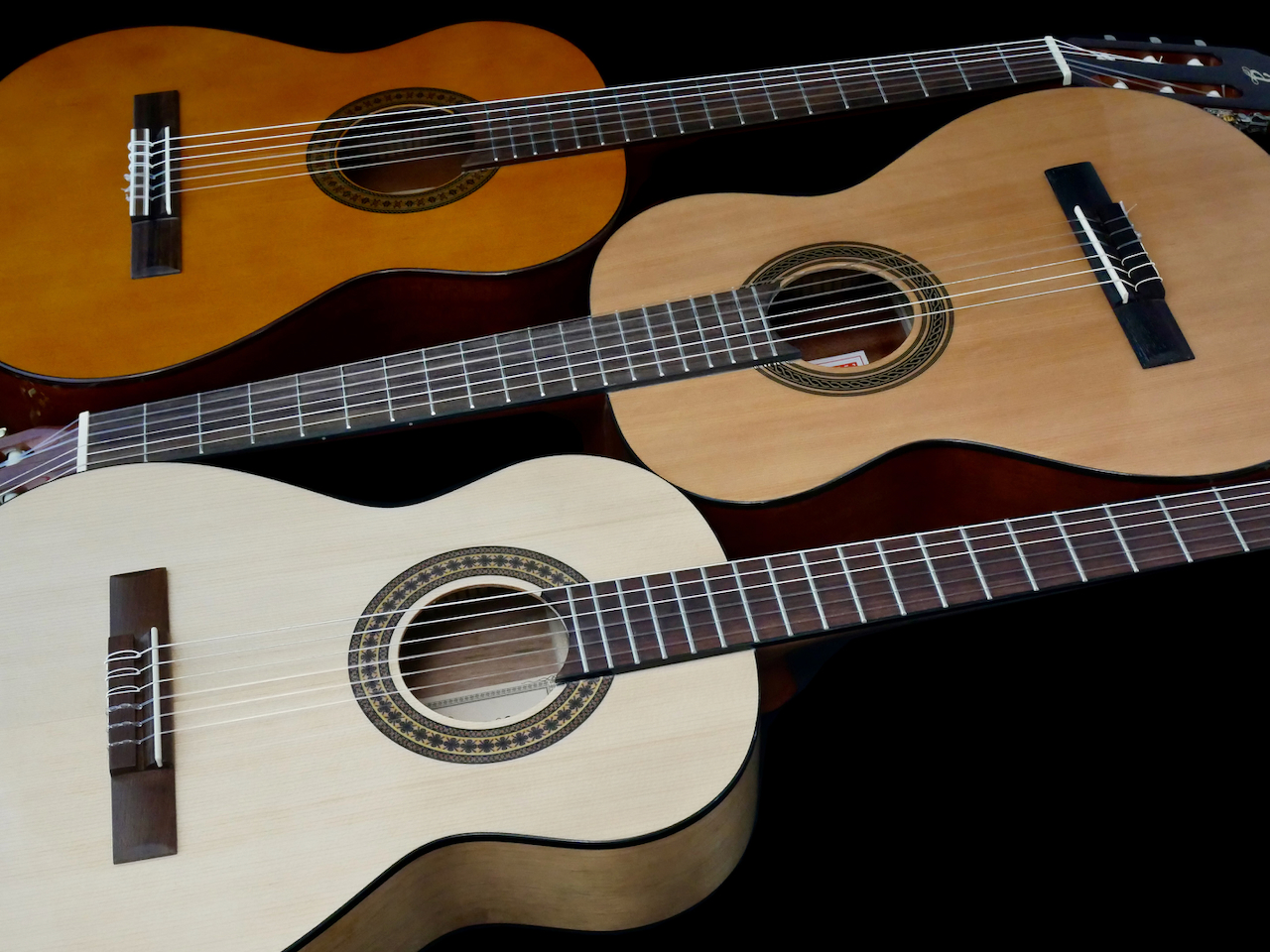
In this review, I will introduce you to three high-quality 3/4-size guitars in the 200 euro price range.
****

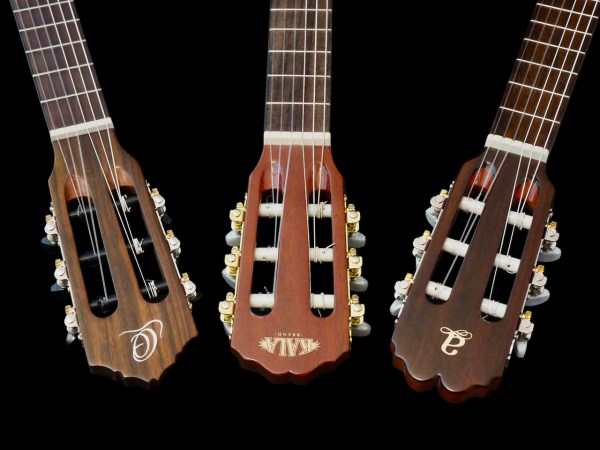
The Admira Juanita (€229; Musamaailma) is a beginner’s instrument from this well-known Spanish guitar manufacturer, available in all traditional sizes, and is made in Spain, despite its affordable price.
The top of the Juanita 3/4 model is made of Douglas fir plywood, while the back and sides are made of sapele mahogany. The long part of the mahogany neck, as well as the lower part of the headstock, are carved from three adjacent pieces of wood. An additional piece is glued to this to complete the headstock, as well as for the traditional neck heel of a classical guitar.
The fingerboard and bridge of the Admira Juanita are made of a beautiful wood called mangoy. The name was unknown to me, but after googling I found out that it is just another name for a familiar instrument wood, ovangkol. The fingerboard has 18 traditional, narrow frets, which have been installed very neatly. The chrome-plated tuners seem to be of high quality. The Juanita 3/4 model’s top nut and bridge saddle appear to be made of Graph Tech’s Tusq material.

In terms of appearance, the Admira Juanita clearly presents a beautiful traditional line with the guitar’s honey finish.
The guitar arrived in excellent trim and equipped with high-quality strings.
Three-quarter guitars usually also have a narrower neck than full-size classical guitars. In the Juanita 3/4 model, the reading at the top nut is 44 millimeters. The guitar’s neck profile is a flat D, but the traditional, relatively angular shoulders, have been softened quite a bit in this model, and that’s a good thing.
Anyway, the playing feel is excellent. The sound of a plywood-bodied guitar can never be as big and full-bodied as a solid-top one, but the Admira Juanita 3/4 is a far cry from the lifeless sound of cheap instruments. The Juanita 3/4 plays with a beautiful and warm sound, offering plenty of dynamic nuances.
****
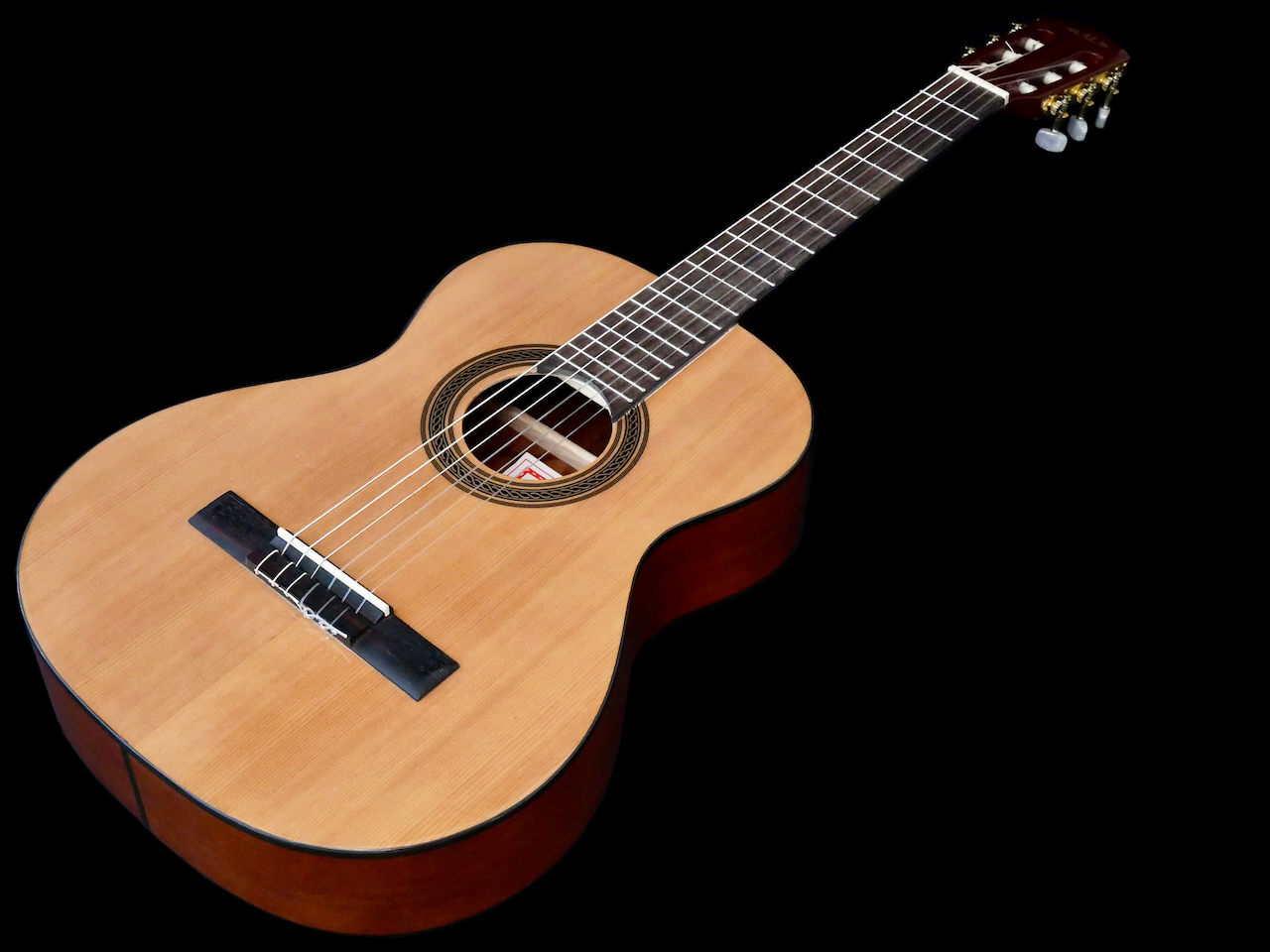
Kala Brand is known as a ukulele manufacturer with a very wide range of these small instruments. However, Kala also makes a few classical guitar models, of which the 3/4-size Kala NY-23 is one.
Made in China, the Kala NY-23 (€198; St. Paul’s Sound) has a beautiful natural finish that brings out the wood grain patterns very well.
The Kala NY-23’s plywood top is made of cedar, while the back and sides are made from mahogany. The long section of the mahogany neck is carved from a single piece, to which separate pieces for the headstock and neck heel are then glued. The grain pattern of the heel piece is so well matched to the neck in the instrument reviewed that it was very difficult to find a glue joint.
According to the manufacturer, the NY-23’s fingerboard and bridge are made of rosewood. The fingerboard has a thin black binding. The Kala model offers no less than 19 narrow frets. The tuners are gold-colored and have pearloid-patterned plastic buttons.

The test instrument’s high-quality plastic bridge saddle was left a bit too high at the factory, and the bass strings had also seemed to have taken taken a bit of a beating on the way from the Chinese factory to Finland. The trim on the test instrument didn’t match the high-quality image I have come to expect from Kala instruments thus far. This one must have slipped past quality control.
I usually try to always test instruments with the so-called factory settings, and I usually do not make fundamental adjustments either. Due to scheduling reasons and the poor playability of the guitar, however, I decided to lower the bridge saddle myself, and to also change the strings on the test guitar. In a purchase situation, such things are the responsibility of the instrument store, and St. Paul’s Sound in Nummela is known for its very good customer service. This time I was simply in a bit of a hurry.
The nut width on the Kala NY-23 is 48 mm. The guitar’s neck profile is closer to steel-string necks, as it is a very nice rounded C.
Lowering the bridge – and putting on a new set of strings – really paid off. The bass E height is now 3.4 mm at the 12th fret, and the playability of the NY-23 has become very comfortable. The sound of the Kala NY-23 has also come into full bloom, and is now beautifully lyrical and lively.
****
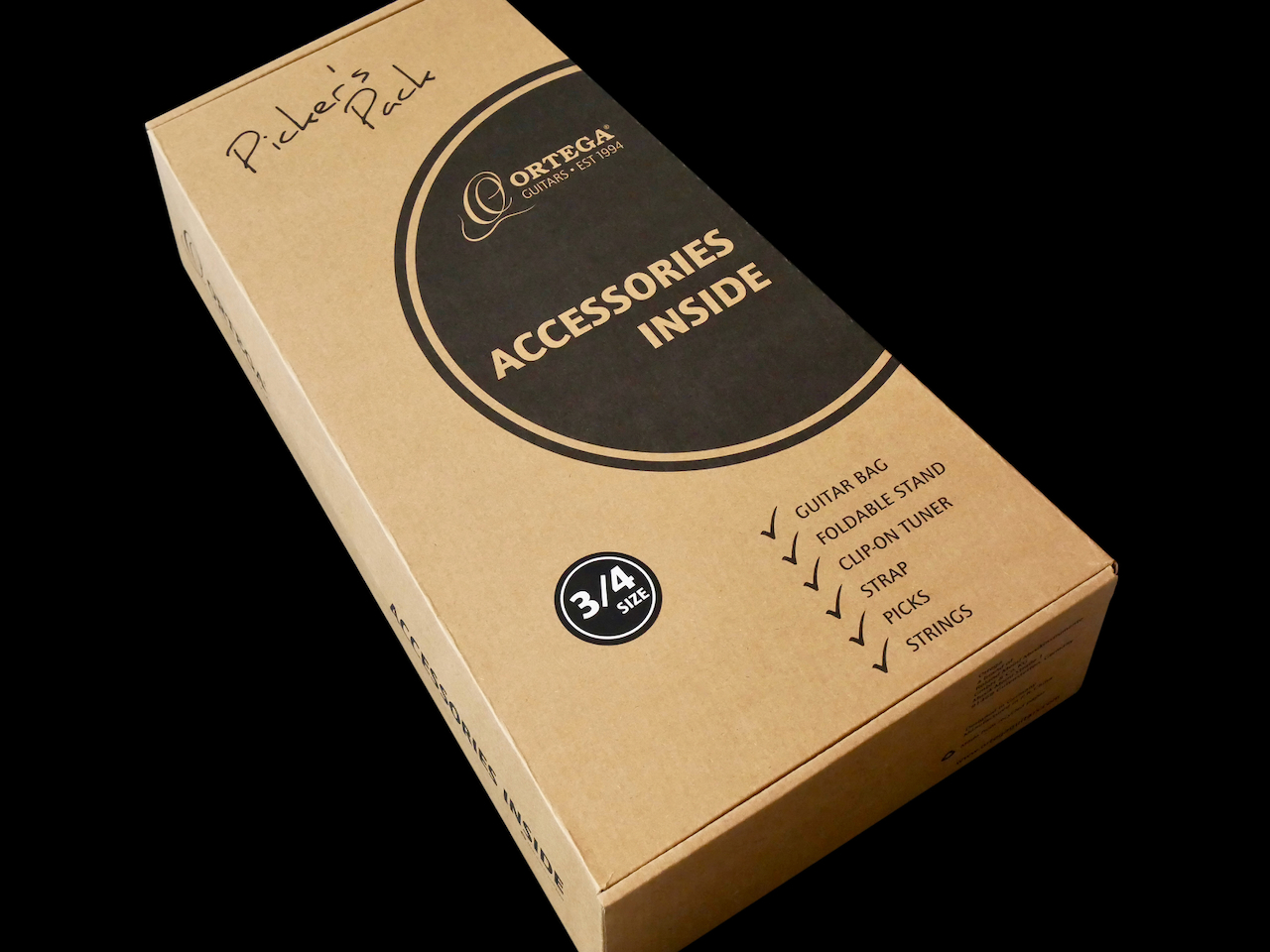
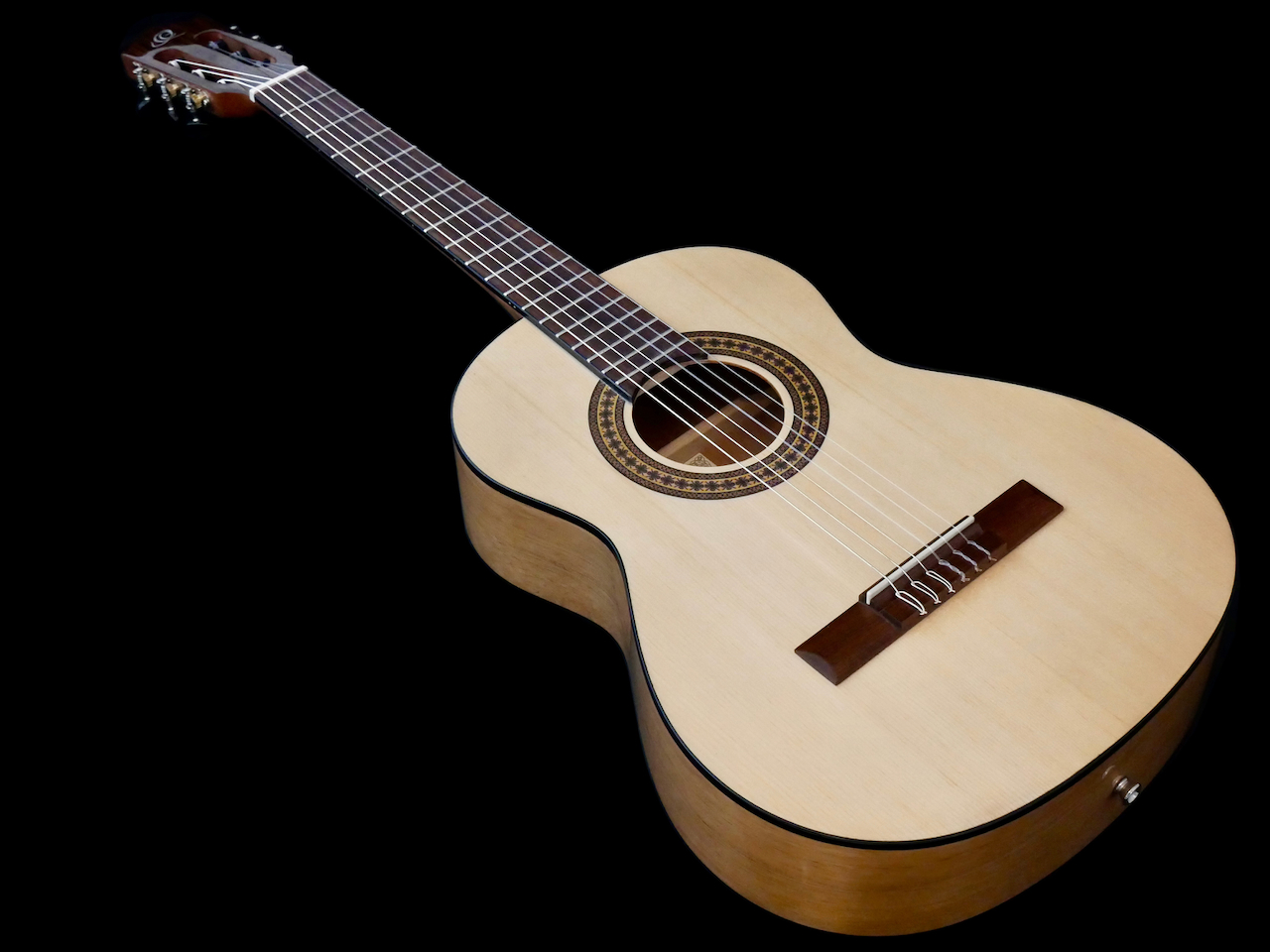
The Ortega Picker’s Pack Classic 3/4 (203 €; F-Musiikki) is a package aimed at beginners, which includes a lightly padded bag, a strap, three picks, a digital tuner, a set of strings, and a foldable guitar stand.
However, the main focus of this article is the excellent 3/4-size guitar in the package called the Ortega RPPC34. The RPPC34, made in China, has been given a beautiful natural finish. The plywood body has a spruce top, while the sides and back are made of very light-coloured catalpa wood. This gives the Ortega an appearance very much like that of a flamenco guitar, which traditionally use very light-coloured cypress or maple for the back. The RPPC34’s mahogany neck is carved from three parts, with additional parts for the neck heel and headstock glued to the long neck.
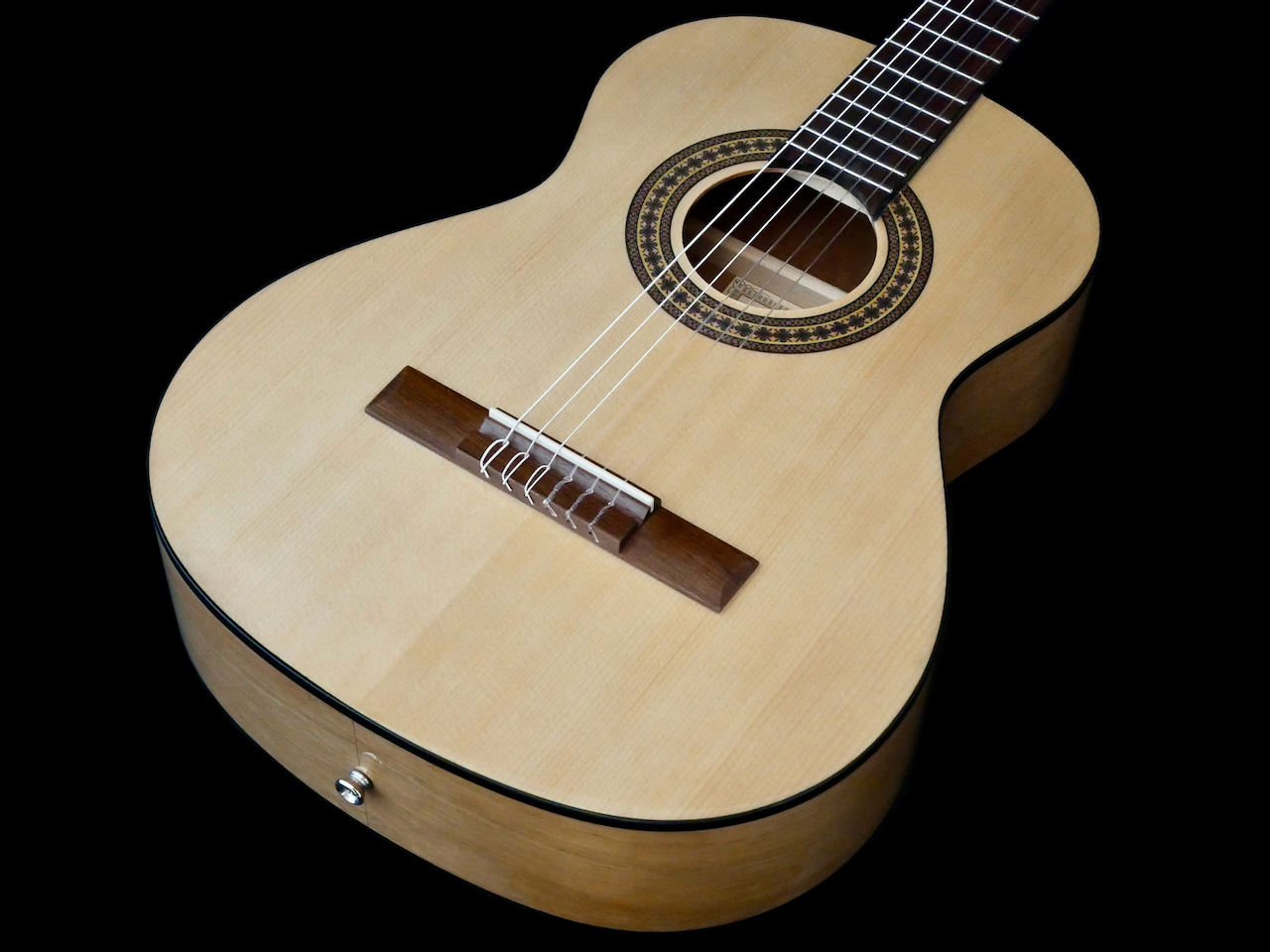
Both the Ortega’s fingerboard and bridge are made of walnut. A thin black binding has been added to the fingerboard. The RPPC34 has 18 narrow frets. The Ortega’s fretwork is of high quality. The chrome tuners have black buttons.
The guitar arrived in excellent trim and equipped with high-quality strings.
The Ortega RPPC34’s neck width at the nut is 45 mm. The neck profile is a bit unusual for a classical guitar, but at the same time very comfortable. It’s a nice mash-up of a C- and a soft V-profile.
The Ortega’s playing feel is excellent. The RPPC34 model plays with a very dynamic sound, with a tight bass register and a sparkling touch of treble.
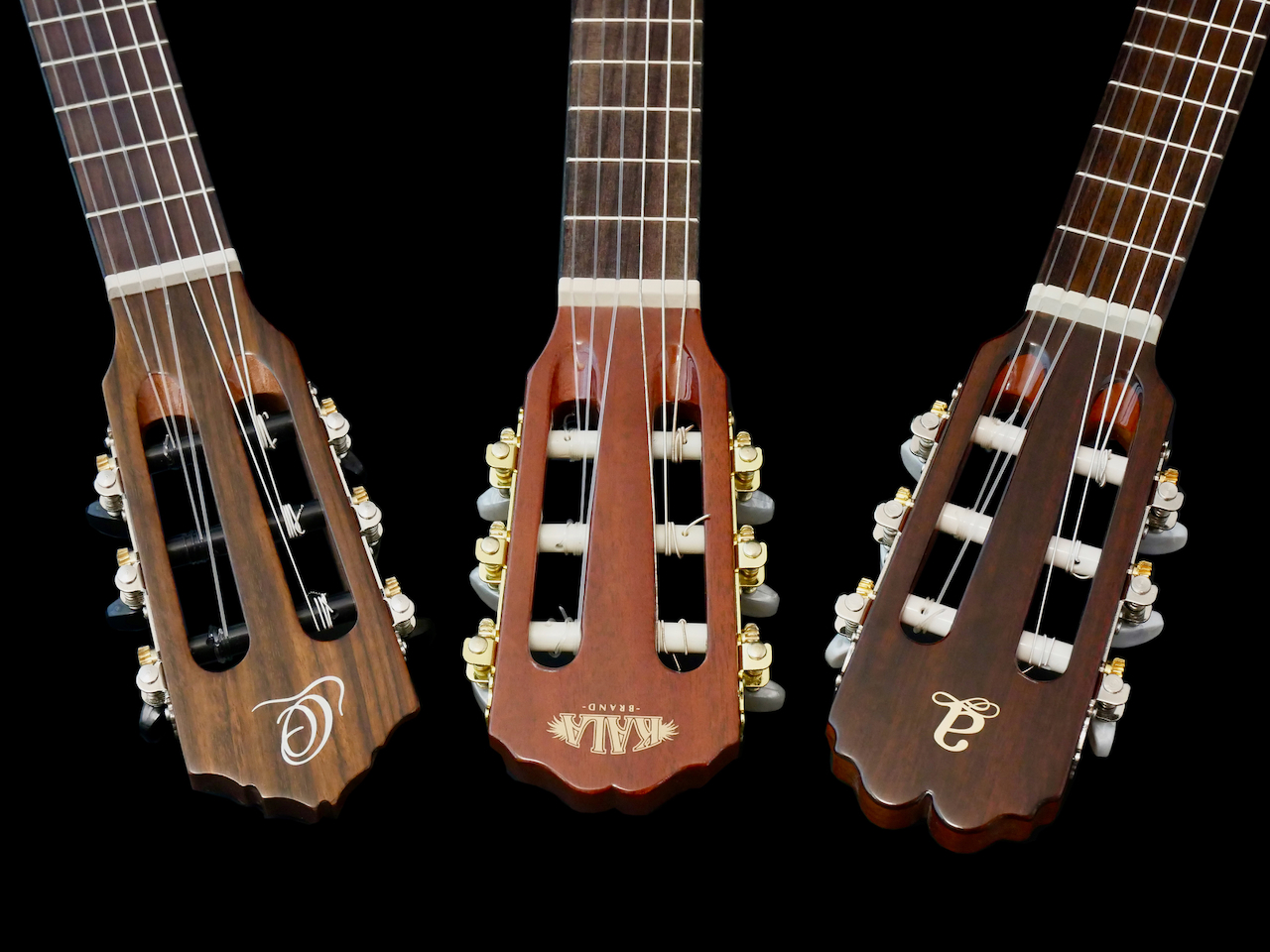
****
Testissä ovat mukana:
• Admira Juanita 3/4
• Kala NY-23
• Ortega RPPC34
****
Äänitetty RÖDE M5 -mikrofoniparilla ja CRANBORNE AUDIO EC2 -etuasteella.


Vuoden 2024 Tonefest-tapahtumaa järjestetään Helsingin Musiikkitalossa lauantaina 18.05.2024.
Soitinmessuilla (klo 10-18) voi kokeilla laajan skaalan erilaisia soittimia, efektejä ja vahvistimia.
Tonefest-konsertti (klo 19) taas tarjoaa runsaasti maukasta kitaravetoista musiikkia.
Kaikki infot löytyy Tonefestin nettisivuilta.
****

All pre-WWII guitar amps are muddy-sounding and uninspiring pieces of junk. Right? No, wrong!
Granted, some of those old-timers are almost completely geared towards clean Jazz tones, but you might be surprised by some of the forward-thinking features many of the early guitar amplifiers include.
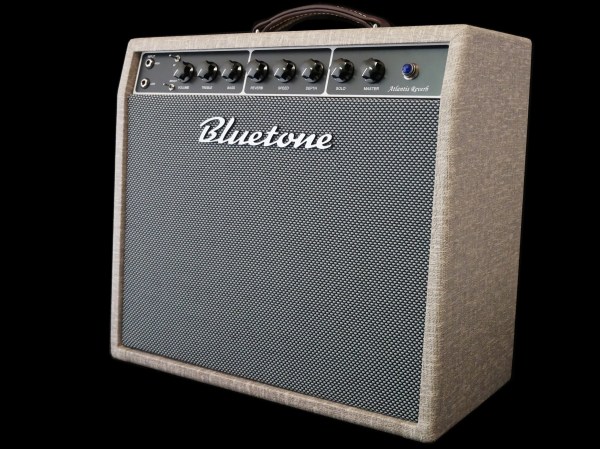
The brand-new Bluetone Atlantis Reverb combo (1,950 €) is a handcrafted Finnish all-valve amp, that is based on one of the most fascinating old designs, the Gibson EH-185 (c. 1940). The original Gibson combo included an active two-band tone stack, which is a feature still only found in a handful of guitar amp designs.
For Bluetone’s Harry and Lauri the ball started rolling, when a customer ordered a quasi-replica of the EH-185 from Bluetone. Intrigued by the challenge, the guys came up with a number of ways to realise the vintage circuit with modern components.
The Bluetone Atlantis Reverb takes these updated circuits, and combines them with a number of Bluetone’s modern features, to arrive at a modern and roadworthy alternative to the late-1930s original.
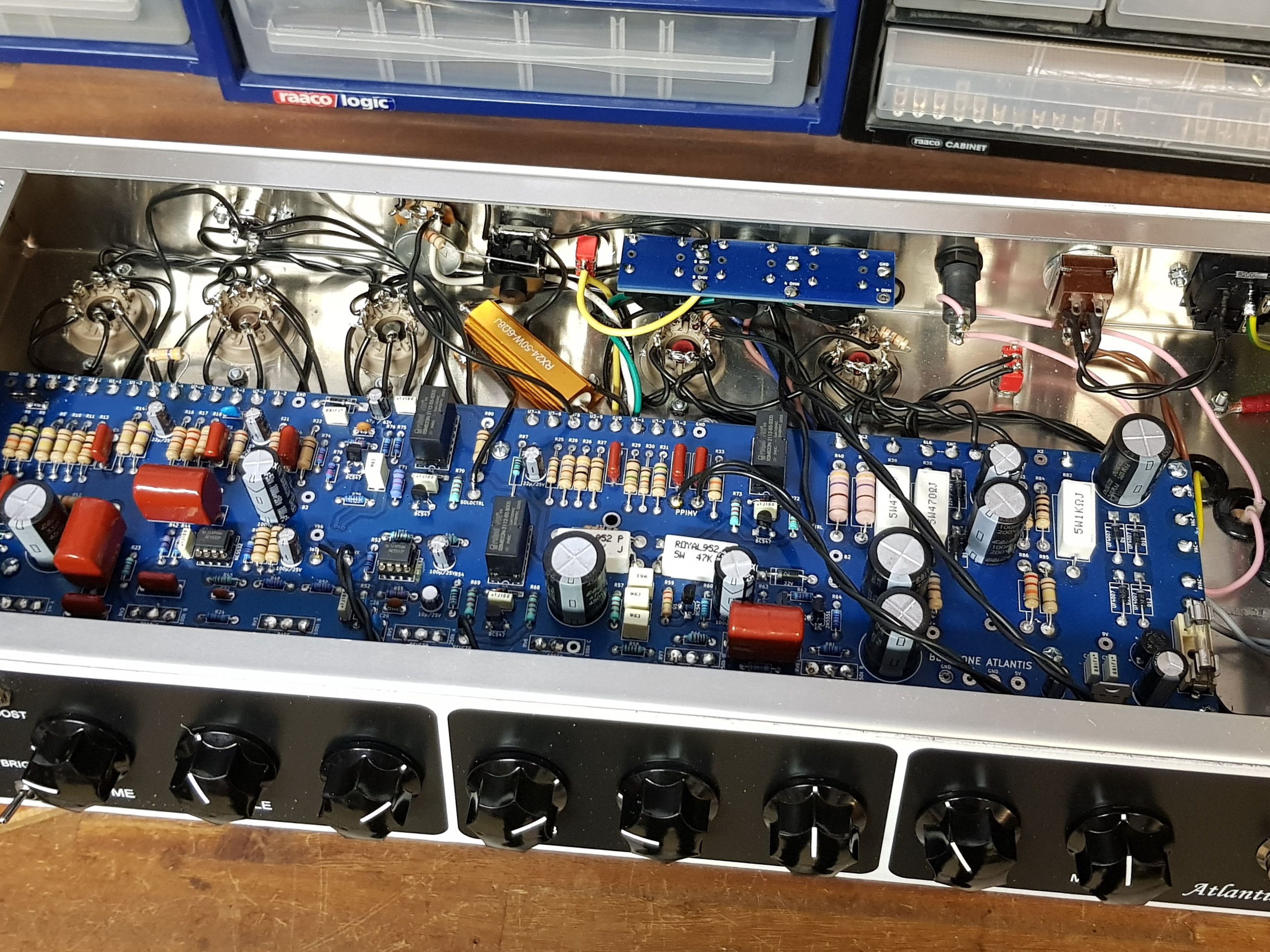
This is what the Atlantis Reverb looks like on the inside – super clean workmanship and top-notch components in a easy-to-service PCB layout.
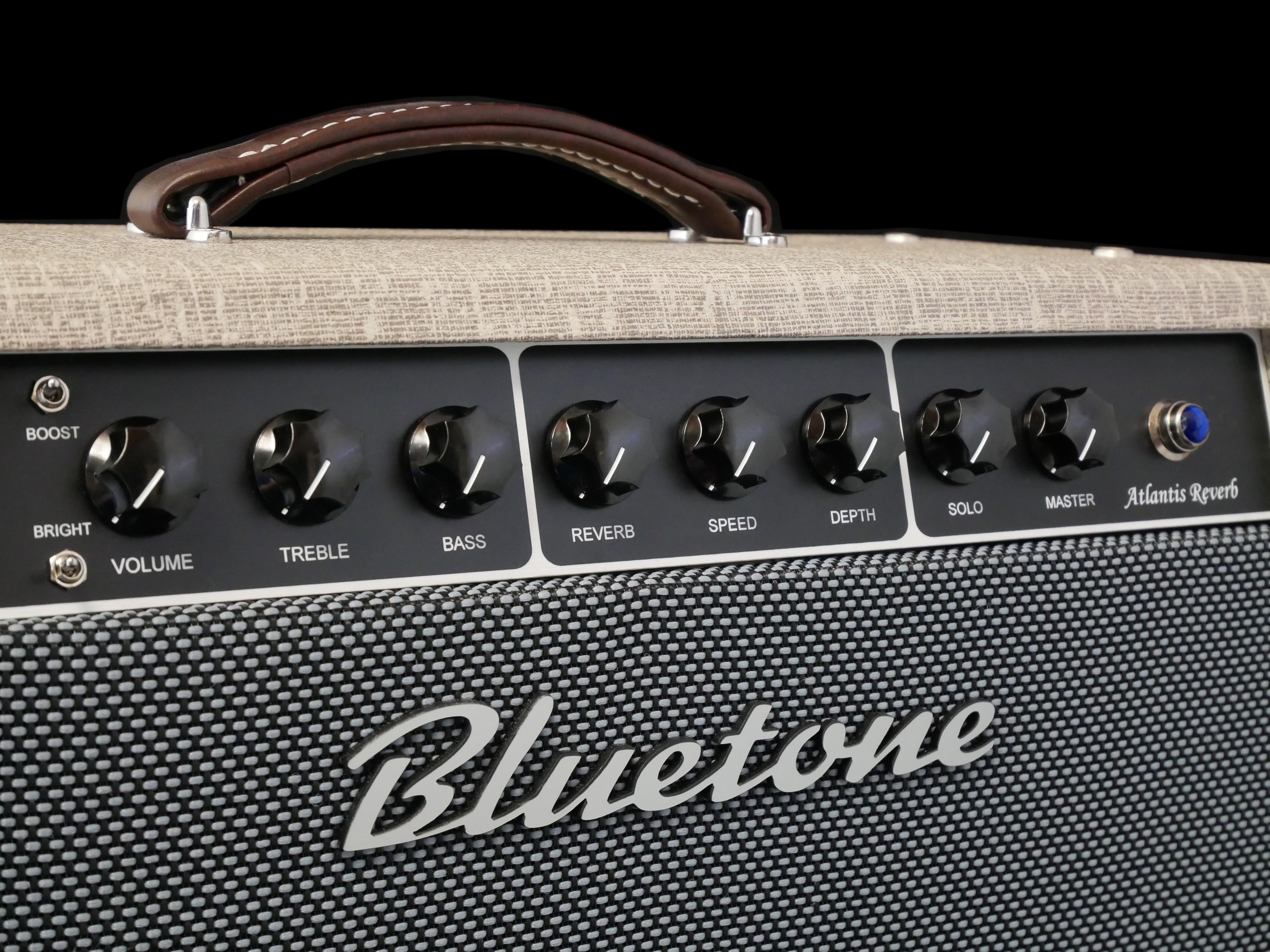
The Atlantis is a single-channel guitar amp; the input section comprises controls for volume (gain) and the two-band active EQ (cut and boost), as well as a switchable preamp boost and a Bright-switch.
The effect section features an Accutronics spring reverb unit and Bluetone’s own, beautiful bias-modulated tremolo. Both effects can be switched on and off.
The output section sports a switchable Solo-boost and a post phase-inverter Master-volume control. The post phase-inverter design means that turning the Master full up takes the control out of the circuit completely.
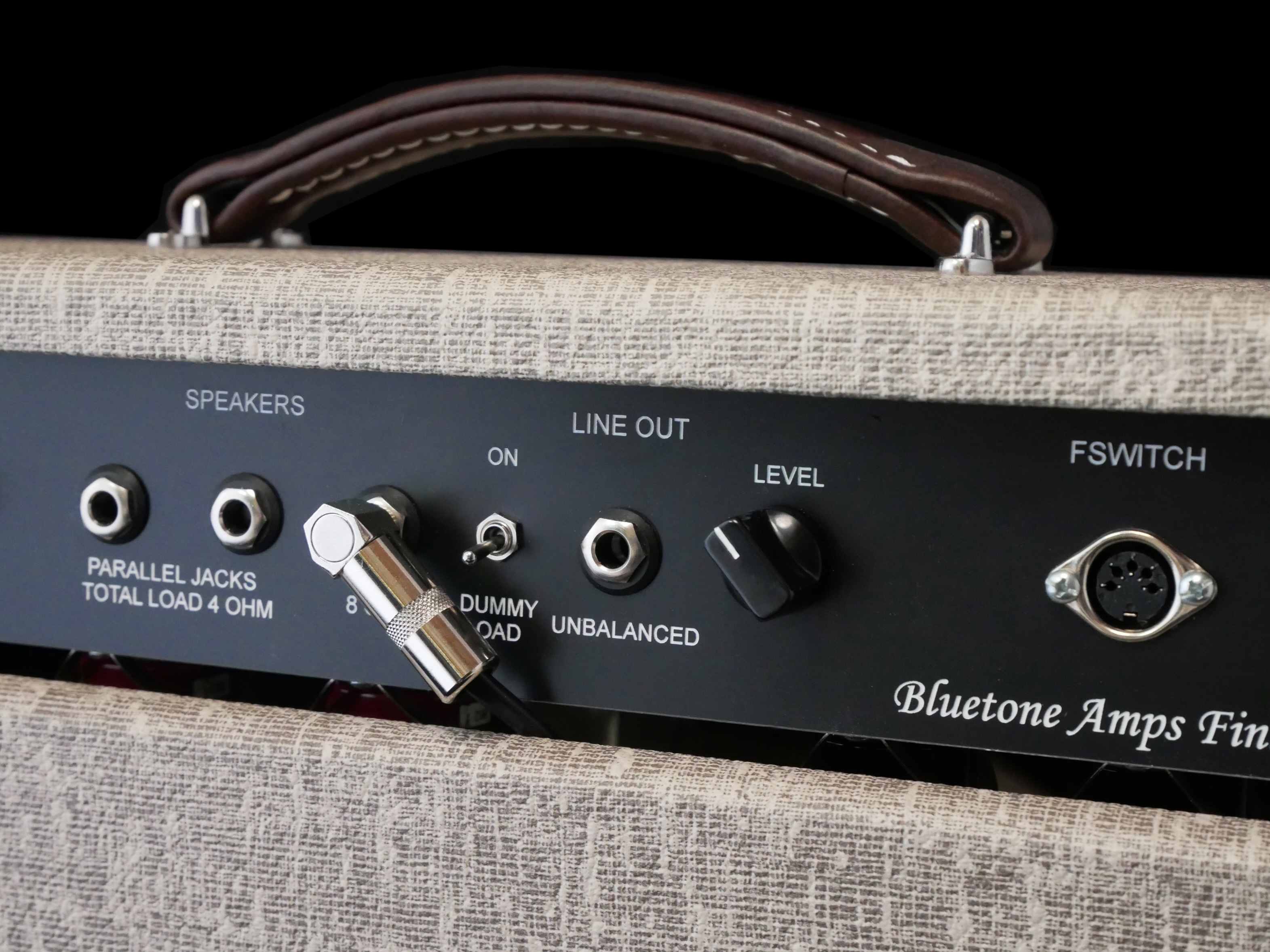
The back panel offers additional speaker outputs, an unbalanced line-level output – with its own, built-in dummy load and level control – as well as the DIN-port for the footswitch unit.
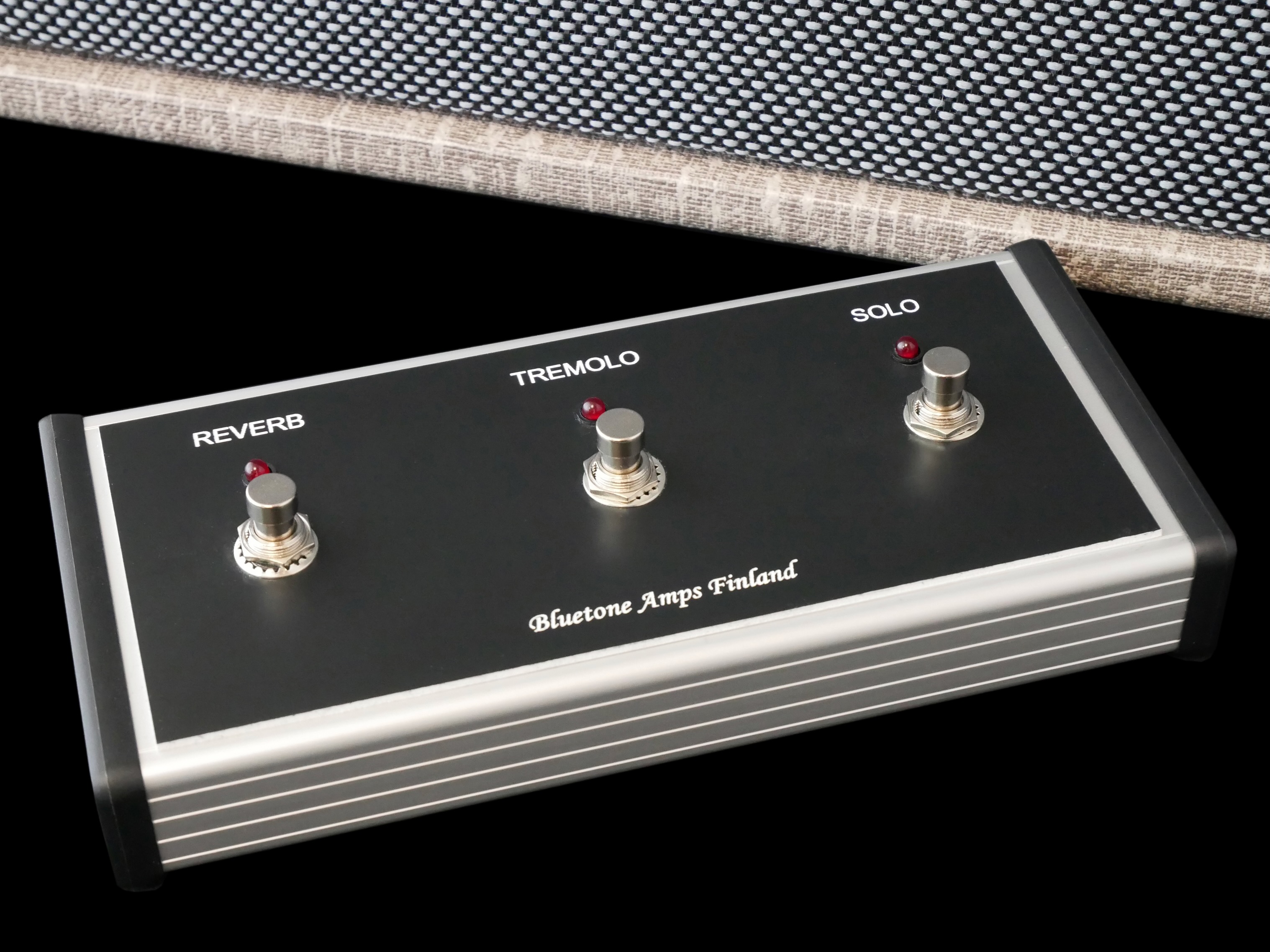
A three-switch footswitch unit is included with the Atlantis Reverb combo, as is the necessary cable.
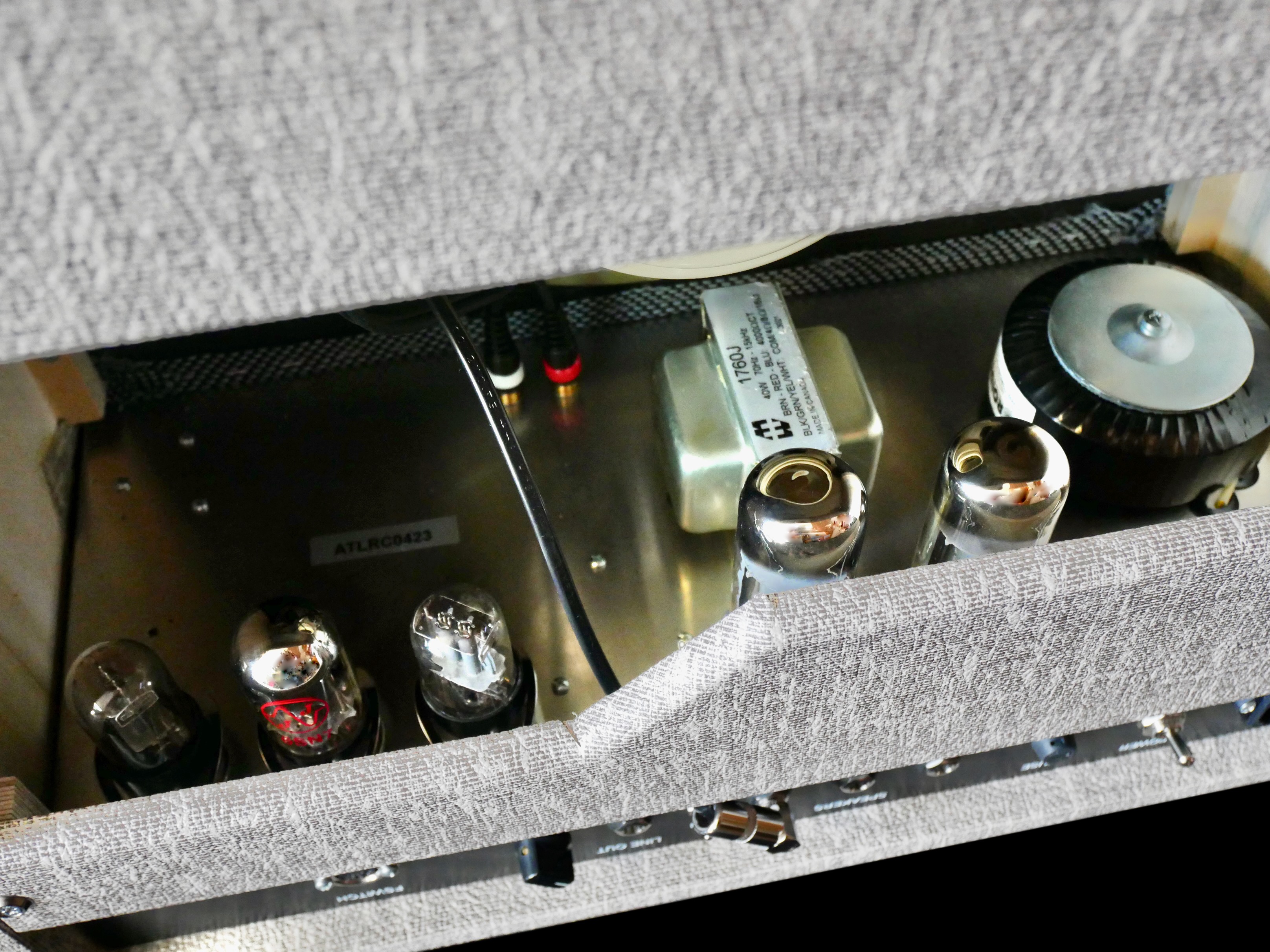
The Bluetone Atlantis’ preamp isn’t your run-in-the-mill 12AX7-based design, but instead runs a pair of NOS 6SL7-tubes and one 6SN7 to achieve its special tones. Both models were very popular among tube HiFi enthusiasts in the 1990s, but are extremely rarely seen in modern guitar amps.
The power amp can run most of the common octal power amp valves, such as the 6V6GT, the EL34, the 5881 or the KT66. The design is cathode-biased, which means you can drop in a new pair of tubes without the need for manual biasing. The only thing to remember is that if you want to use a pair of 6V6GTs you have to put the small switch (hidden in the picture by the back panel) to ”6V6GT” to prevent any damage to the amp. All other valves are supposed run on the 6L6GC setting.
From the workshop the Bluetone Atlantis Reverb comes equipped with a pair of 6L6GCs, giving you a Fender-style power amp with an output somewhere between 25 and 30 watts.
The black round thing in the picture’s right-hand corner is a toroidal mains transformer. The guys at Bluetone swear by toroidal mains transformers, because of their reduced weight, great reliability and superior (read: lower) hum-induction levels.
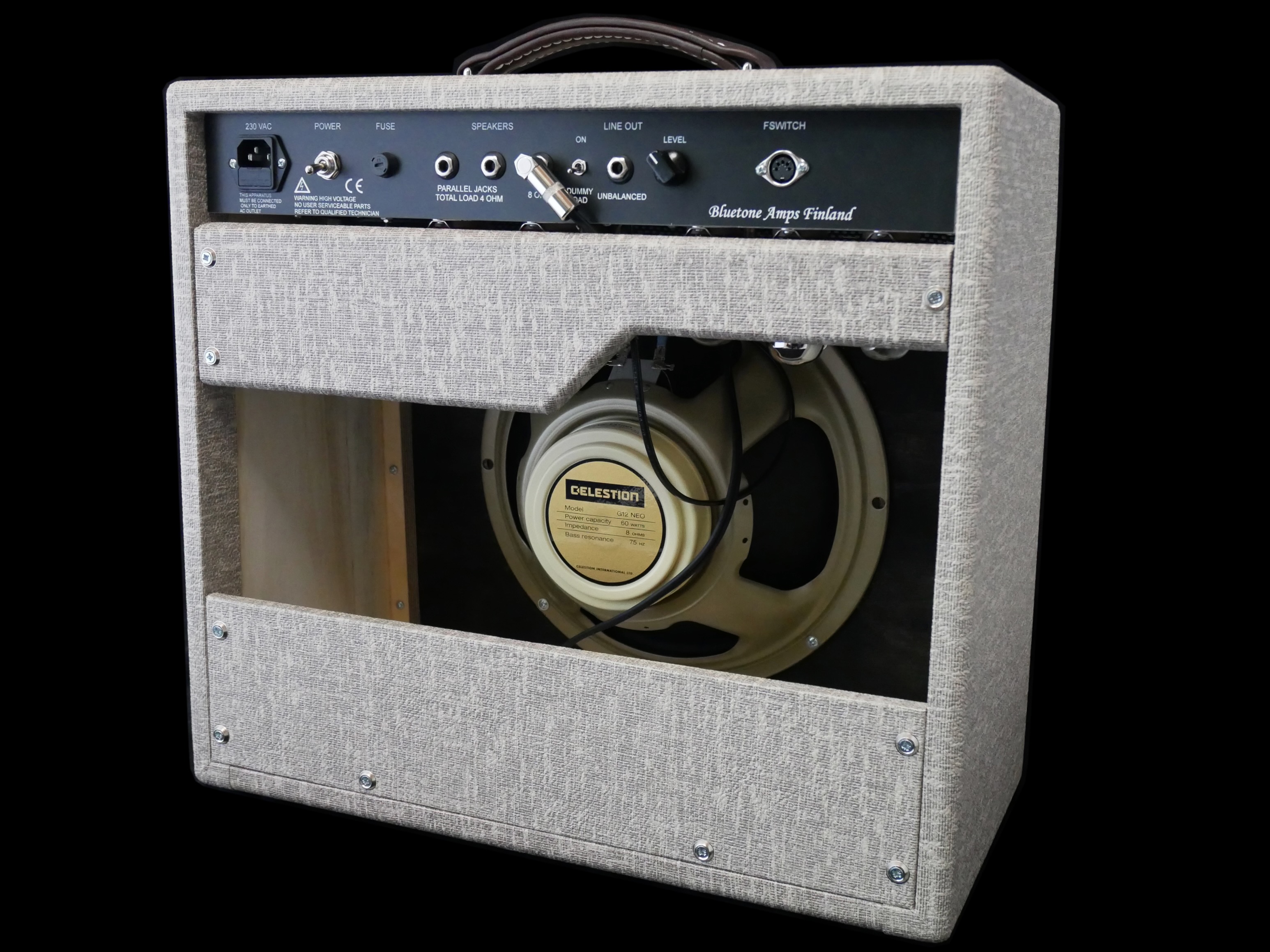
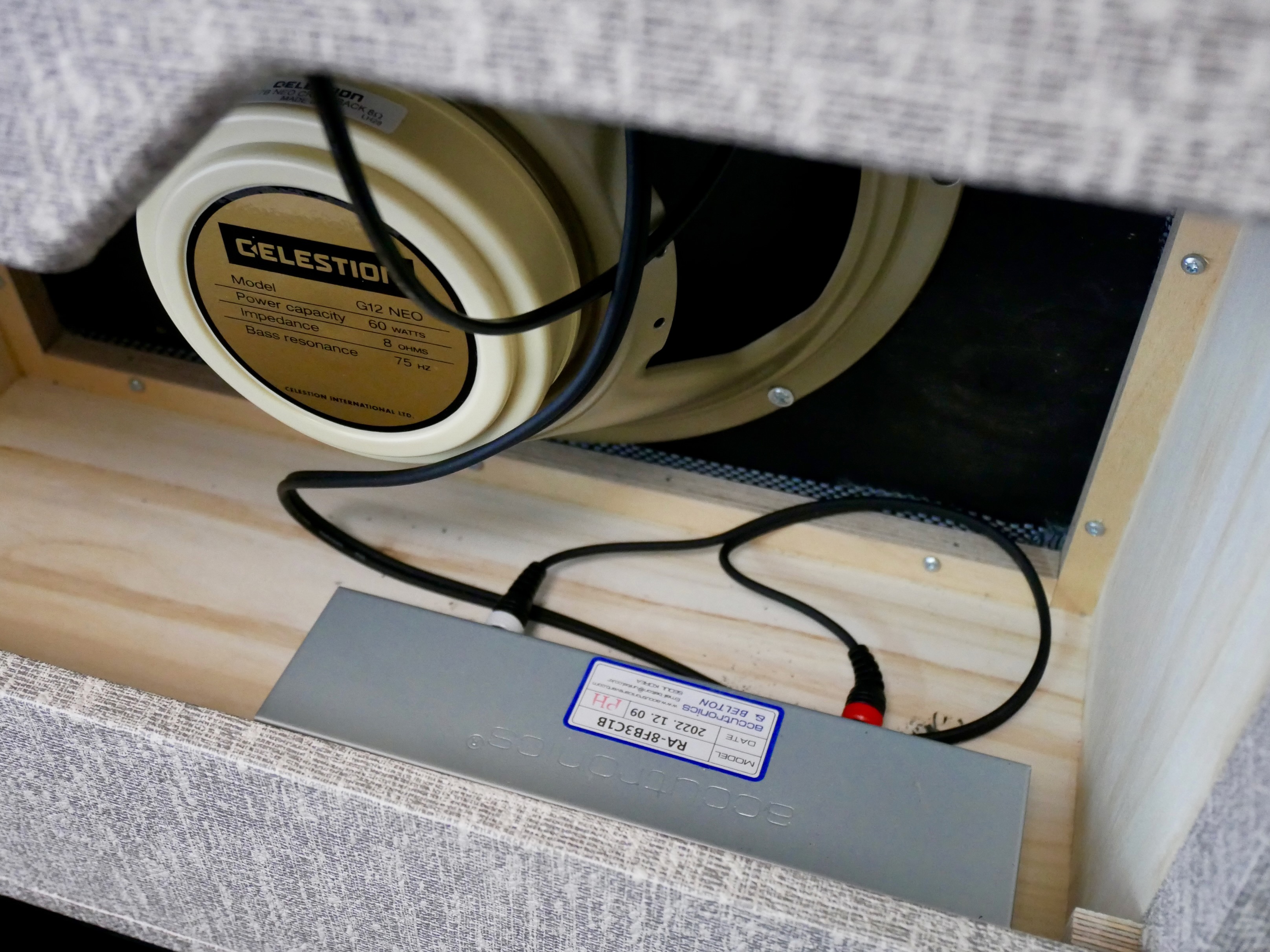
The combo’s cabinet is a traditional Fender-type open-back design. The speaker is a 12-inch Celestion Neo Creamback unit rated at 60 watts.
The cabinet is made of lightweight and ecologically sound solid paulownia wood, making the Bluetone Atlantis Reverb far lighter to carry than what you’d expect from a 12-inch speaker equipped traditional design.
****
****
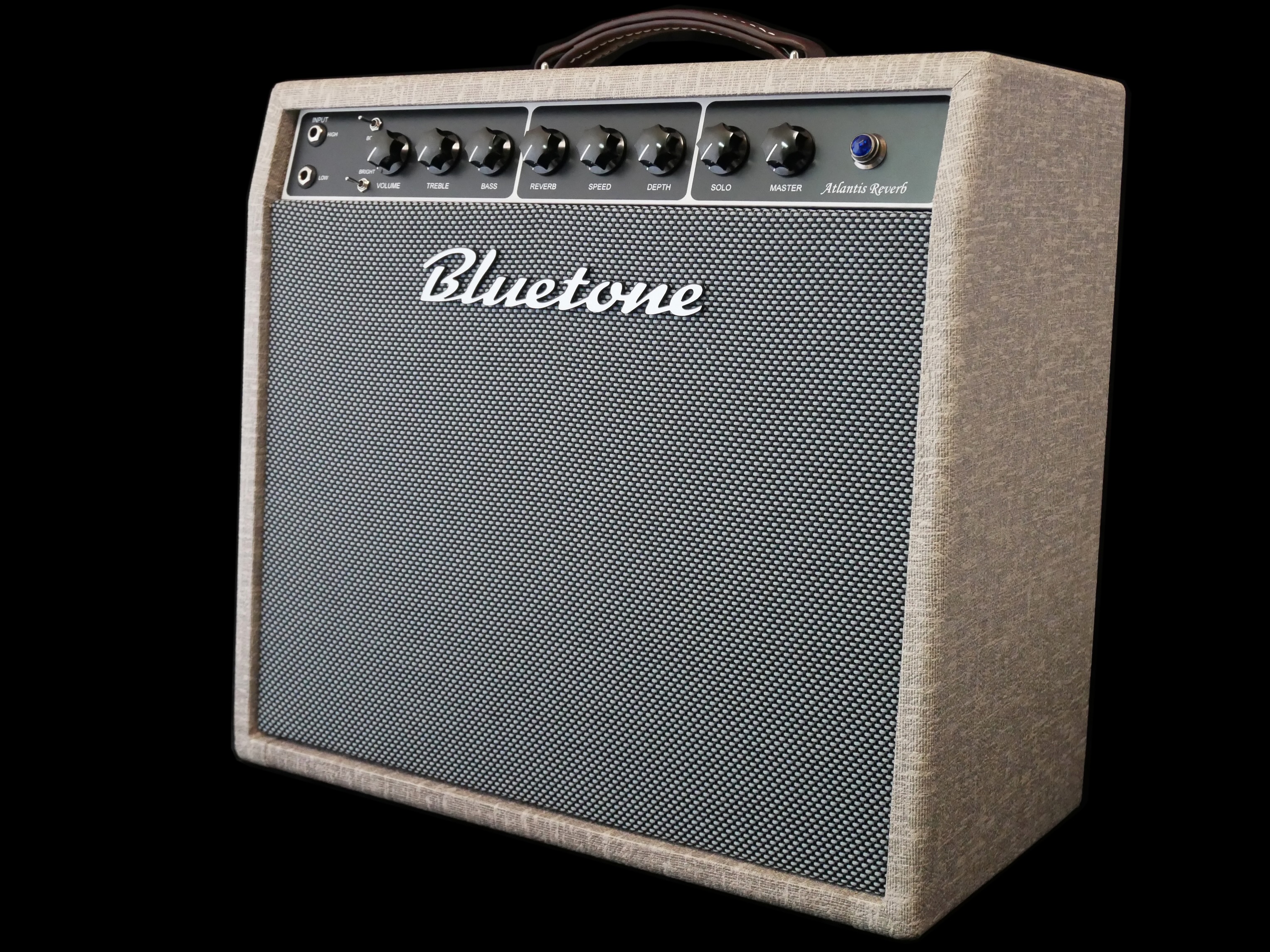
The Bluetone Atlantis Reverb combo’s forte definitely lies in its clean and break-up tones. The cleans have a charming chime to them that’s all their own – the sound, at least to my ears, is even sweeter than on a Fender ”Blackface” offering a lot of three-dimensional depth to your playing.
The two-band active EQ allows you to tailor the amp perfectly to any guitar you might pick, proving to be a very effective tool both on stage and in recording situations.
Overdriven sounds have their charms, too, as long as you don’t expect any creamy distortion from the Atlantis Reverb on its own. This combo’s crunch is of the late-Sixties/early-Seventies type, perfect for early-Santana, classic The Who, or T. Rex style excursions, which put dynamics and attitude front and centre.
The Atlantis also works exceedingly well with all types of effect pedals.
If you have an opportunity to test drive one of these beautiful handcrafted gems, you should definitely grab it!
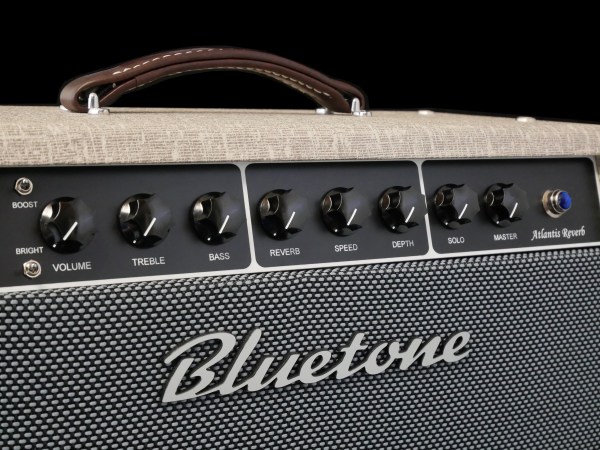
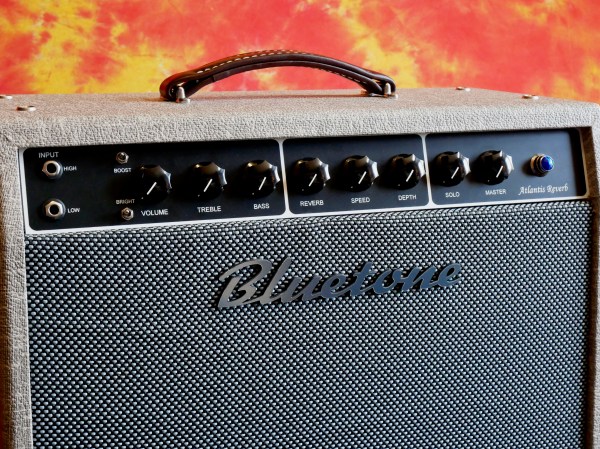
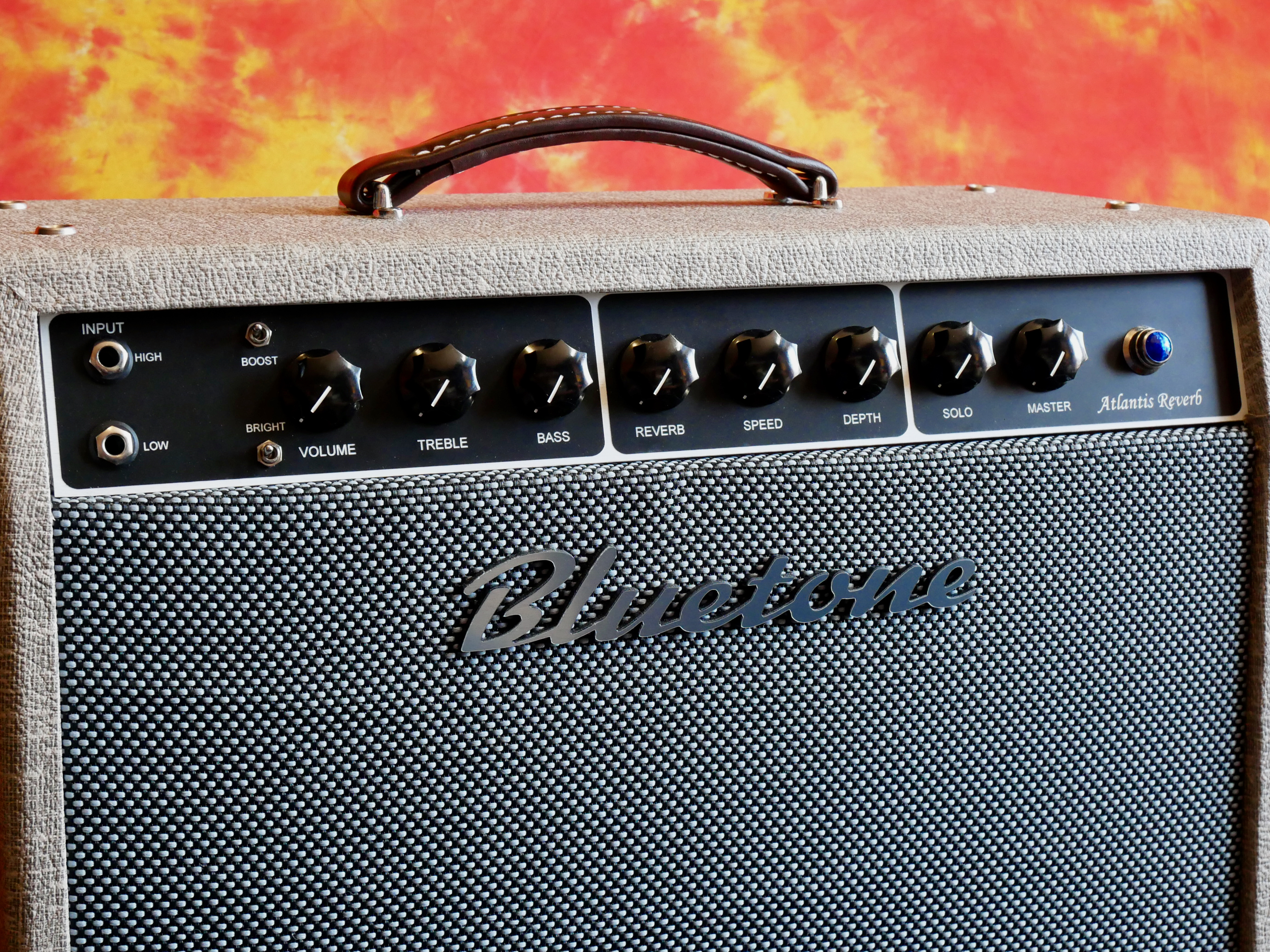
Bluetonen Atlantis Reverb -kombo on käsintehty suomalainen putkivahvistin, joka perustuu Gibson EH-185 -malliin nykyaikaisilla parannuksilla.
Demobiisi on coverversio Fleetwood Macin klassikosta ”Albatross”.
****
• Kaikki kitararaidat on soitettu Bluetone Atlantis Reverb -kombon läpi
• Kitarat: Epiphone Casino (päämelodia, stereokuvassa keskellä), Hamer USA Studio Custom (kaksiääninen melodia, vasemmalla ja oikealla, sekä komppikitara keskellä), Squier Bullet Stratocaster (bottleneck-kitara)
• Mikrofoni: Shure 545SD
• Esivahvistin: Cranborne Audio Camden EC2


 Kitarablogi.com – Finland's premier Guitar and Bass blog