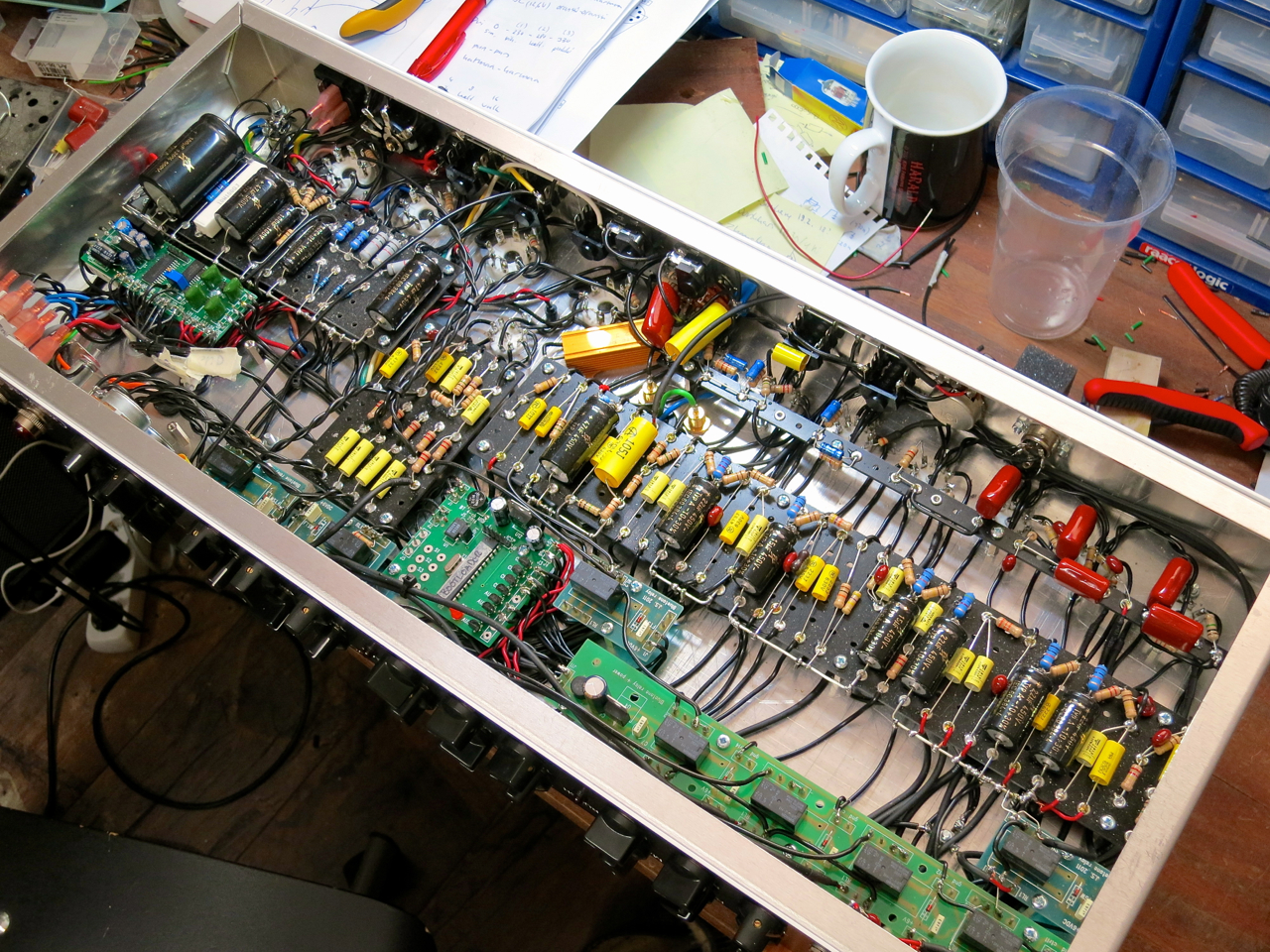
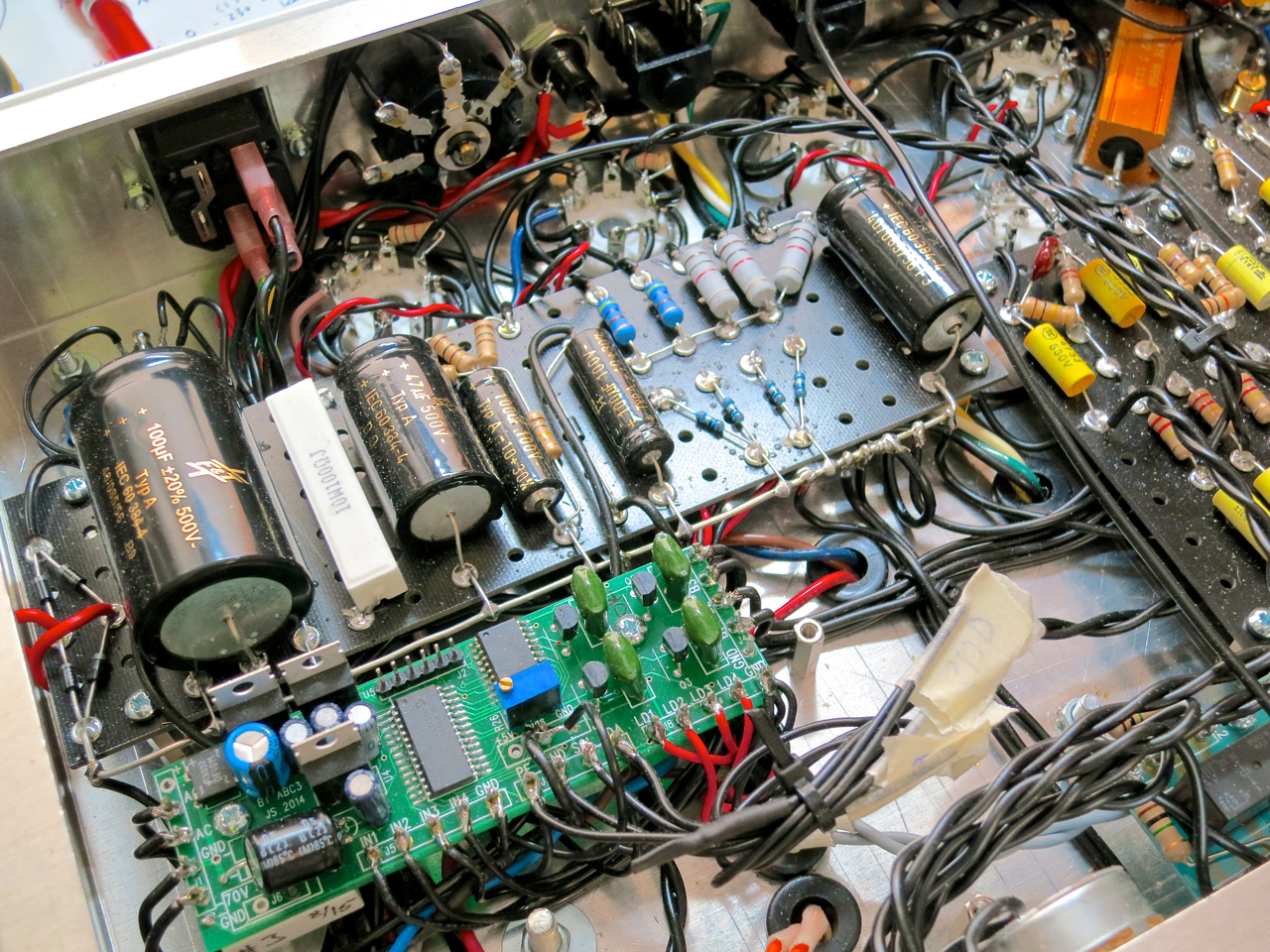
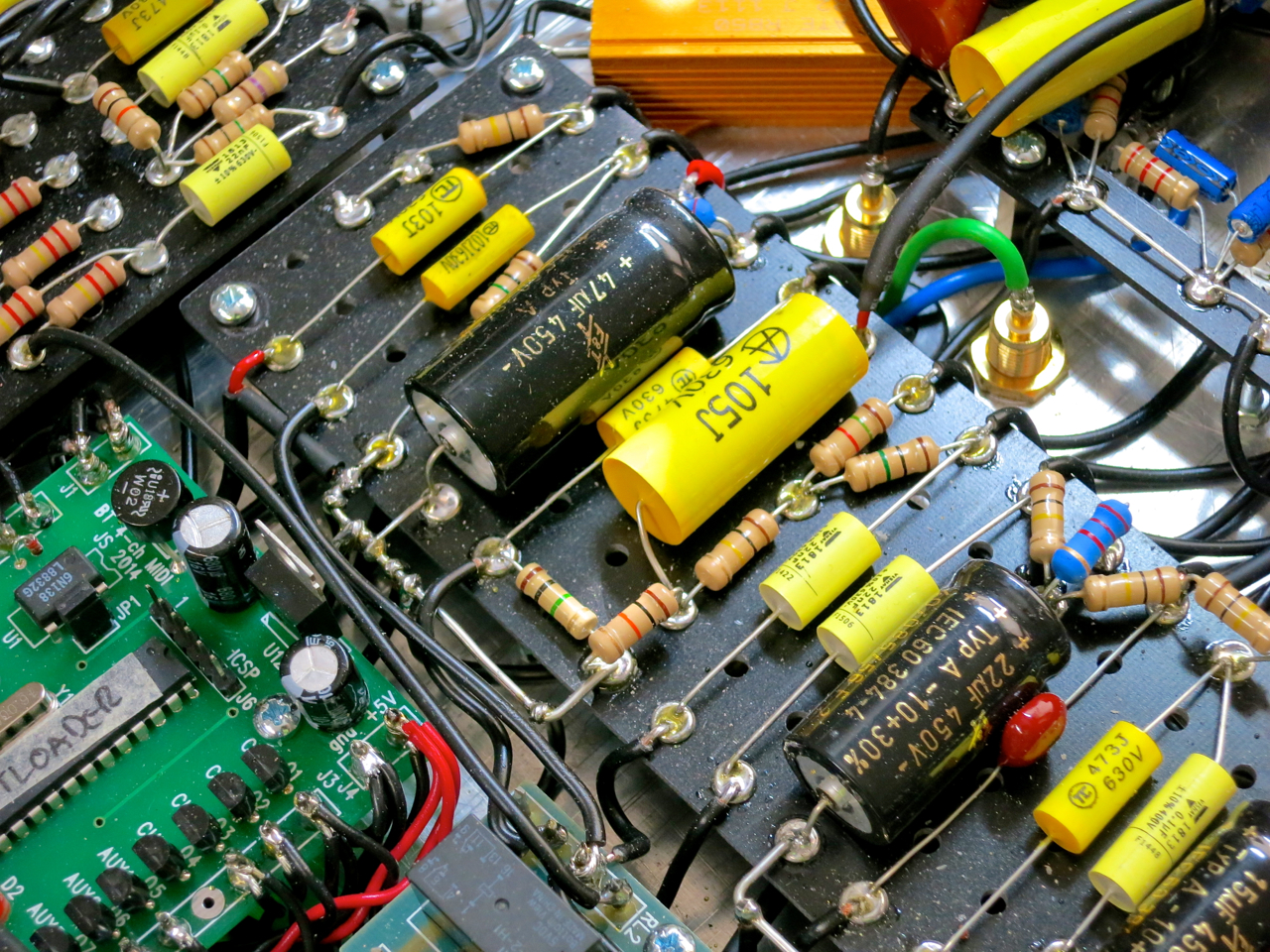
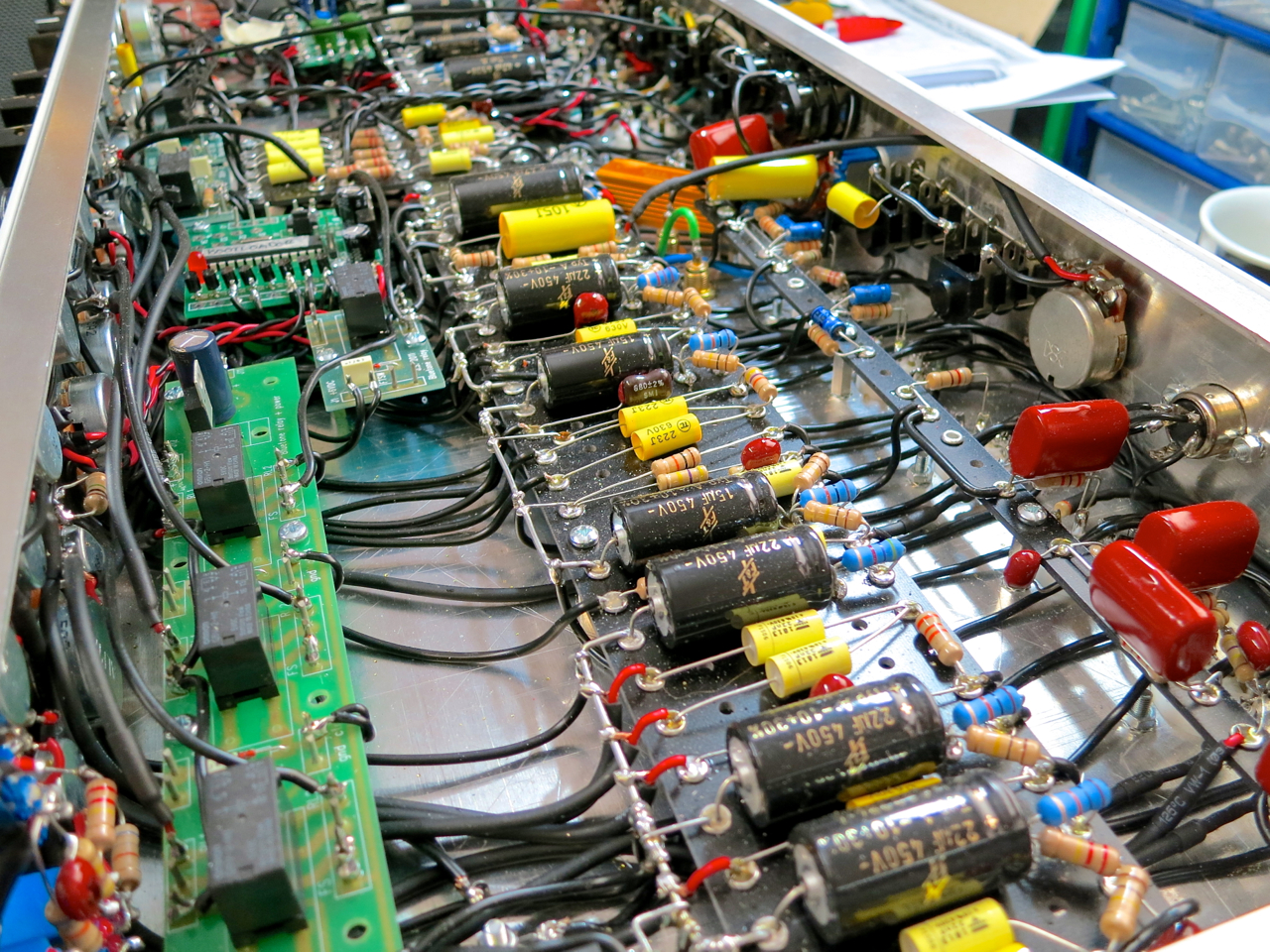
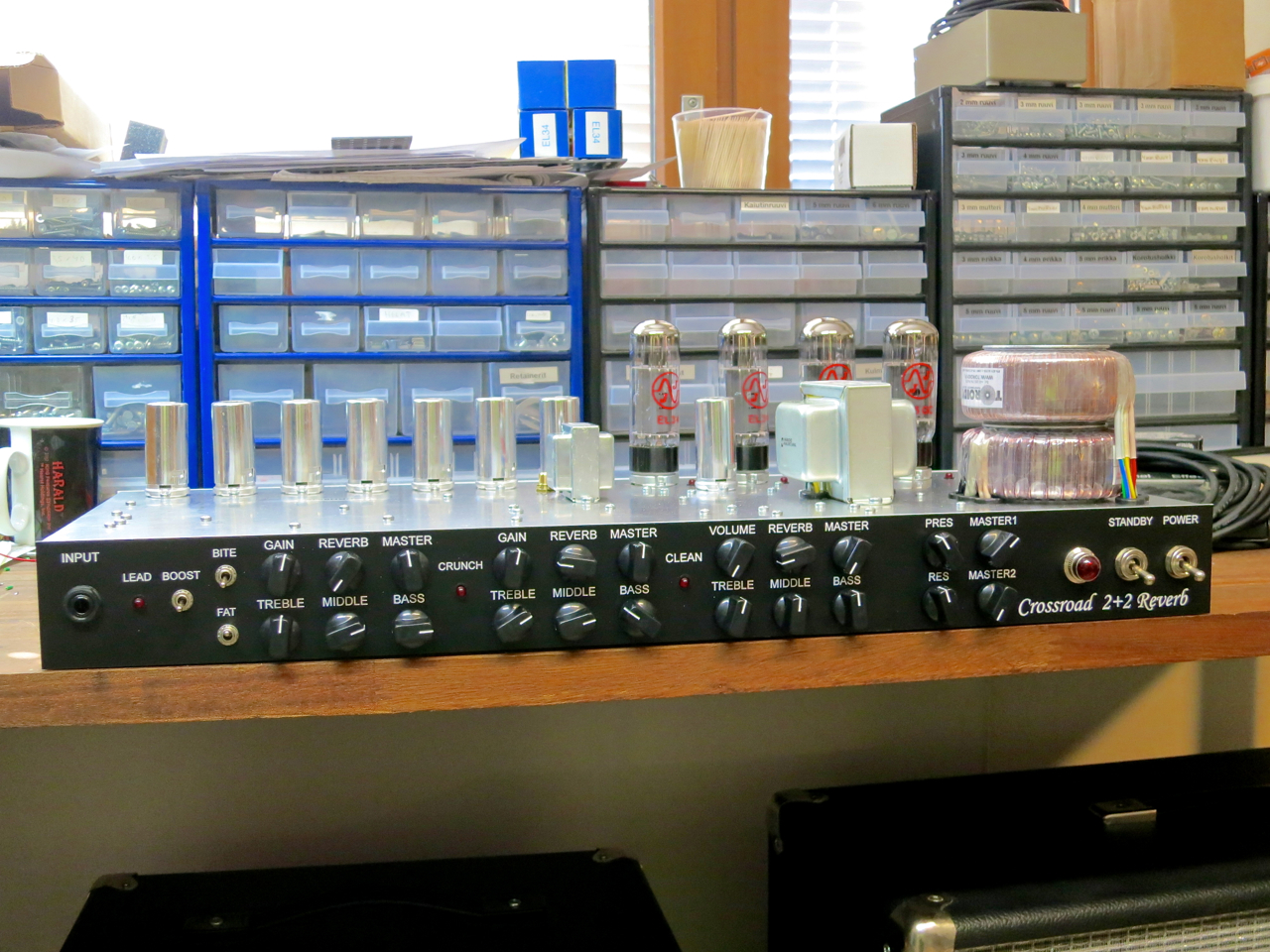
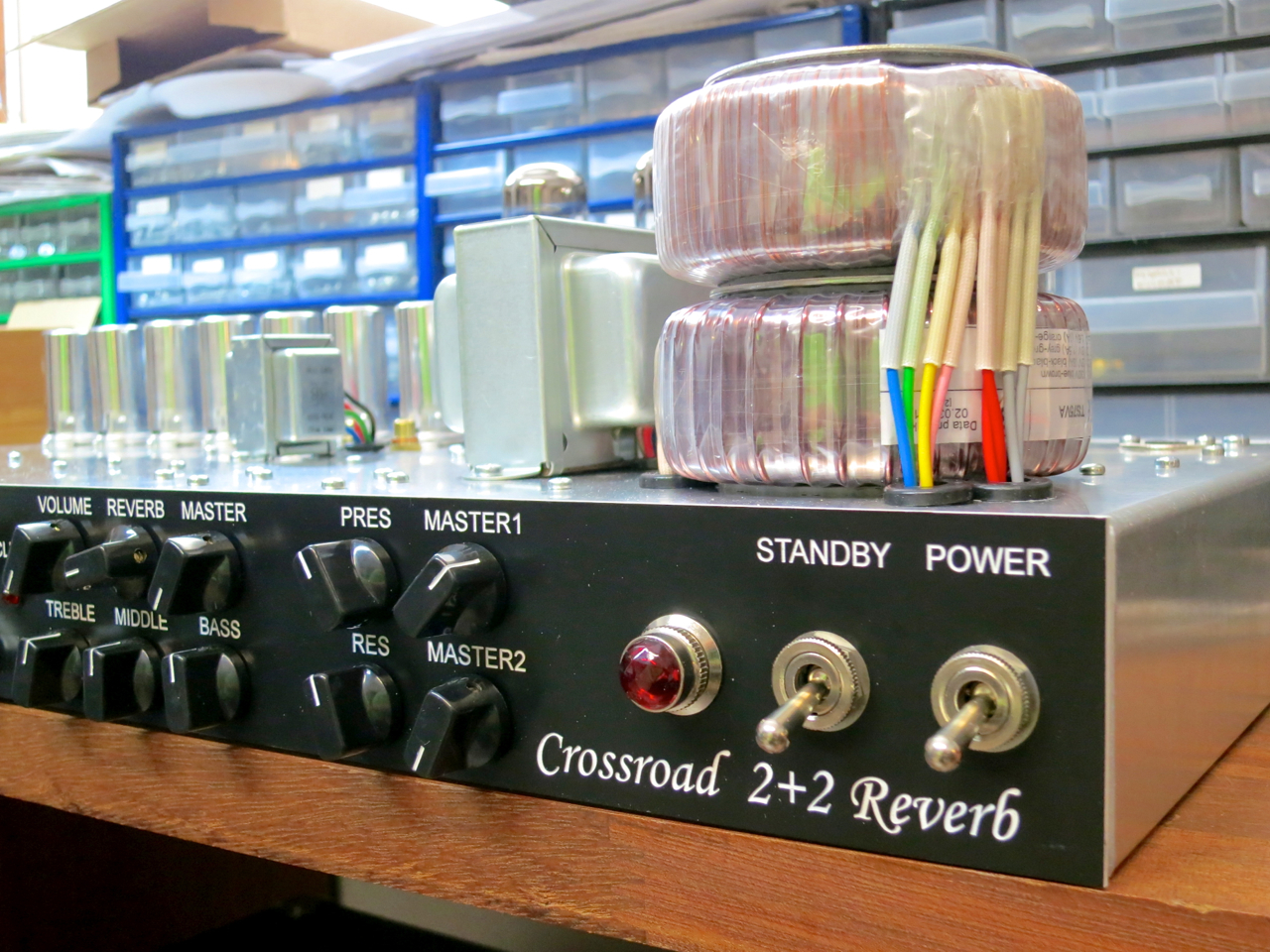
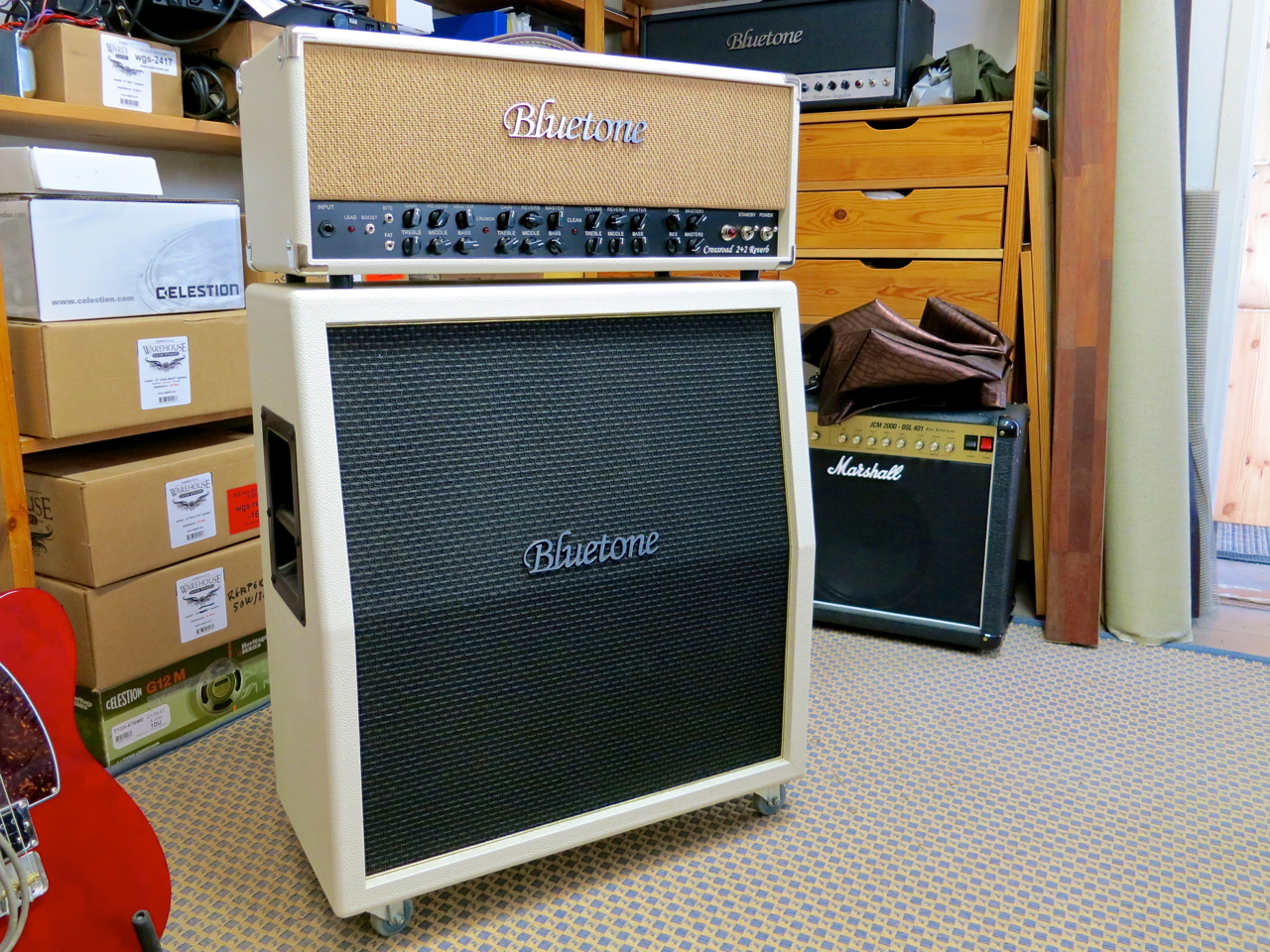
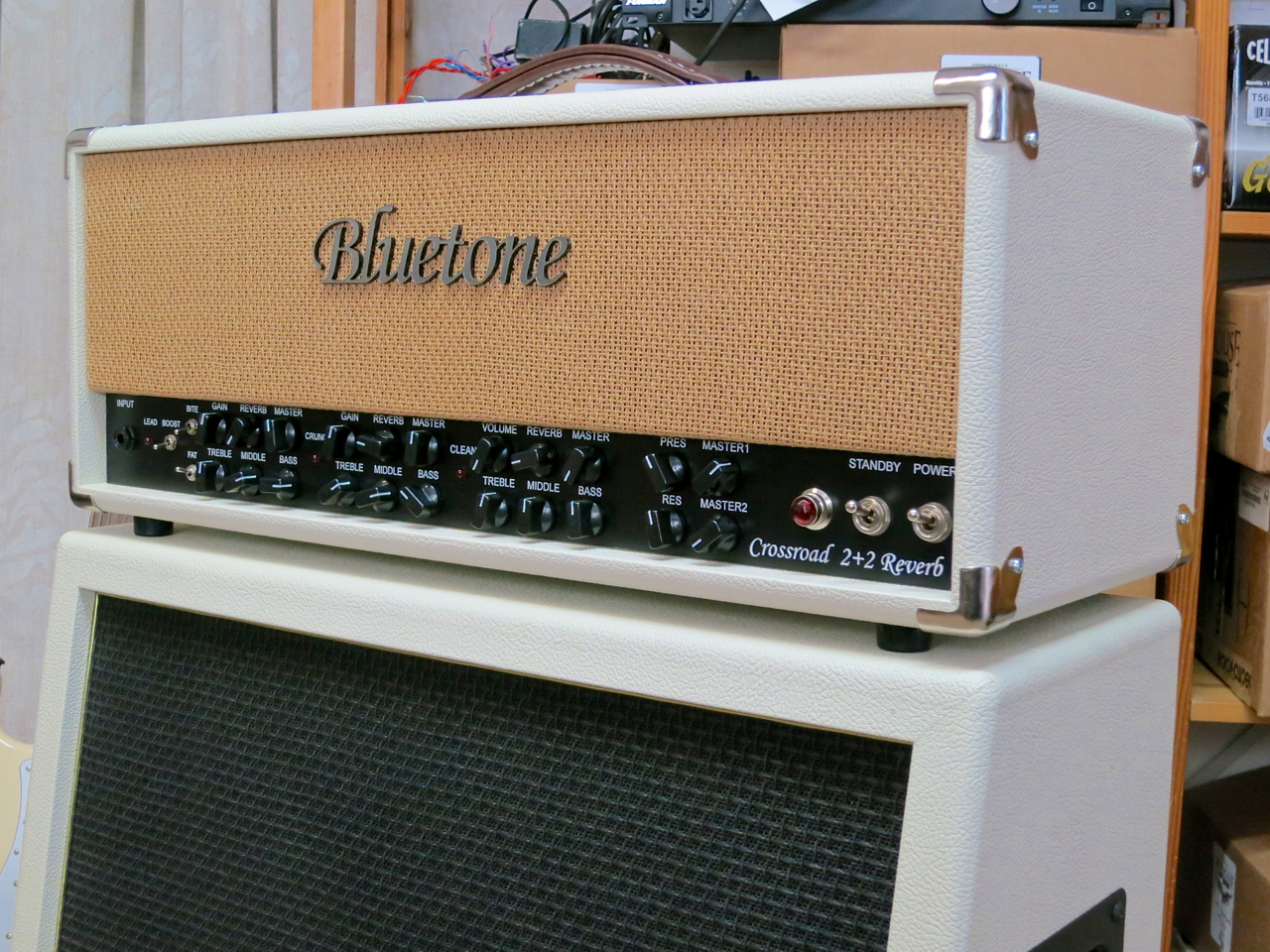
Aikaavievän ja tarkkuutta vaativan kokoamisvaiheen jälken uusi Bluetone Crossroad -nuppi on viitä vaille valmis. Ainoastaan wifi-biasoinnin softa puuttuu vielä (perinteinen biasointi johdoilla toimii toki tästä huolimatta).
Tällaisia custom-vahvistimien sisälmykset voivat näyttää parhaimmillaan – erittäin siistiä työtä ja laadukkaita komponentteja.
Nupin kotelo kaipaa vielä pientä hienosäätöä, koska se oli koesovituksessa hiuksen verran liian tiukka, eikä etupaneeli mahtunut sulavasti kokonaan aukosta läpi.
Tarkoitus on, että valmiissa vahvistimessa etupaneeli on samassa linjassa nupin etukankaan kanssa.
Uuden Crossroad-nupin elektroniikka on jo hienosäädetty, ja myös sen koesoitto on viety onnistuneesti läpi. Matti ja Harry esittivät minulle puolistäkin soundeja, ja erittäin hyvältä se kuulosti!
Sain juuri Bluetonelta viestin, että wlan-softa toimii nyt ja on valmis asennettavaksi – Crossroad-projekti lähestyy siis maaliviivaa.
Blackstar Amplificationin uusi Artist-sarja on tavallaan uusi aluevaltaus firmalle. Tähän mennessä Blackstar-vahvistimilla oli vahvat sukujuuret Marshall-perinteessä, mikä tarkoitti että päätevahvistimet on rakennettu EL34- tai EL84-putkien ympäri.
Uusissa Artist-komboissa taas päätevahvistimen perustana toimivat monista Fender-vahvistimista tutut 6L6-putket. Uutuuskombojen perusidea on valmistajan mukaan ollut nimenomaan yhdistää brittiläisen A-luokan soundi (etuvahvistimessa kaksi ECC83-putkia) kahden 6L6-putken dynamiikan ja helinän kanssa.
Kitarablogissa kävi nyt testissä Artist-kaksikon pienempi malli – Blackstar Artist 15 (799 €).
****
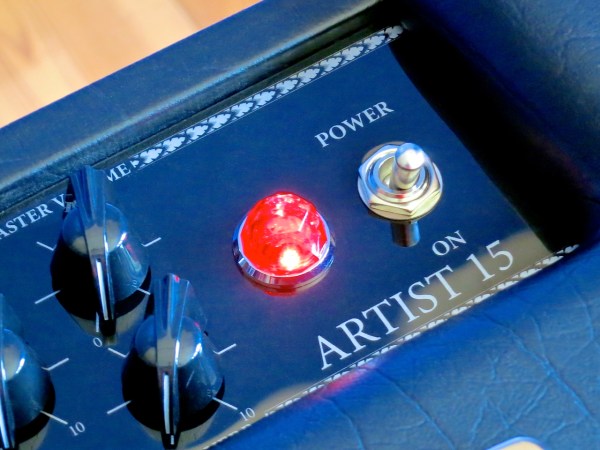
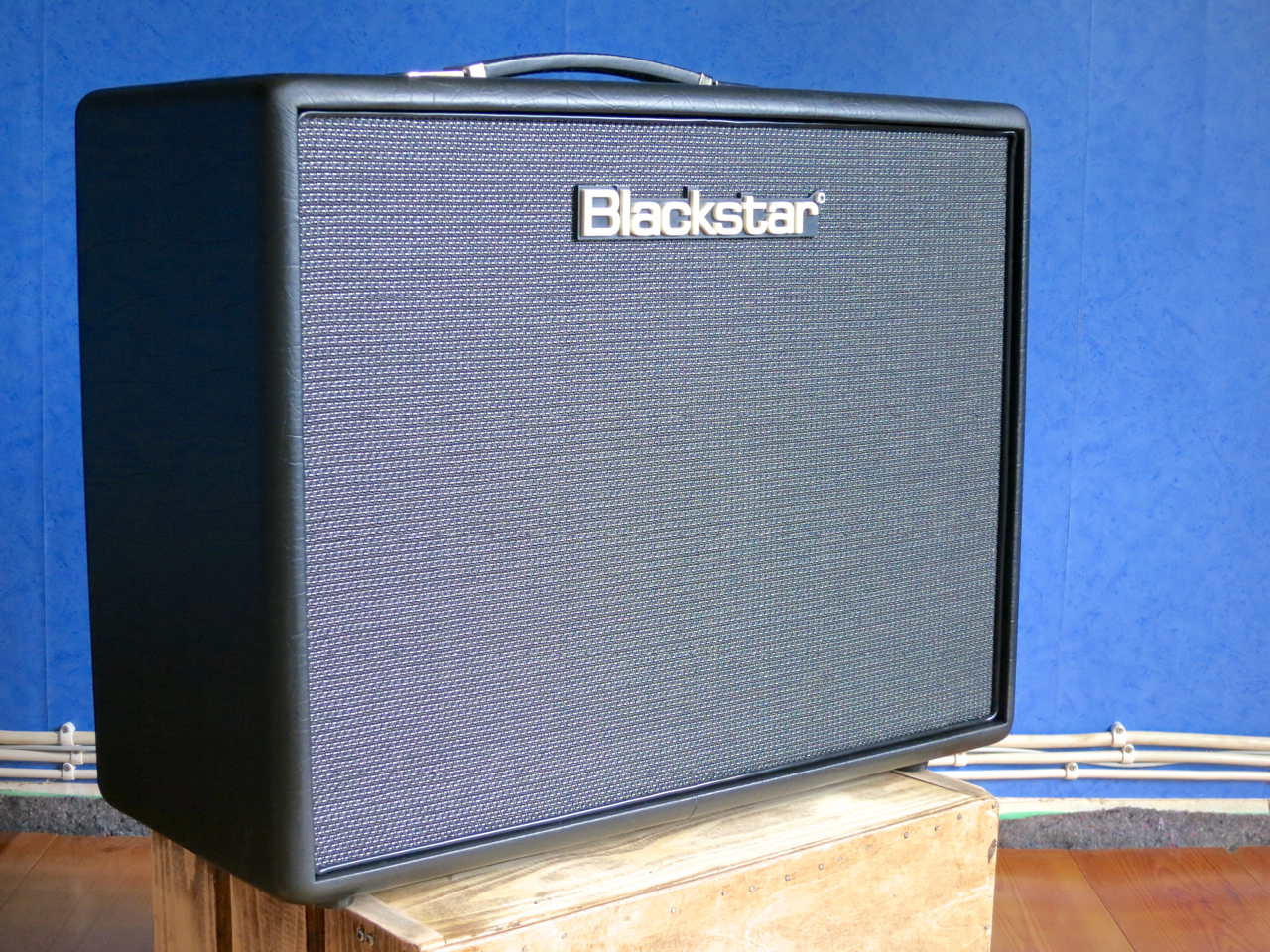
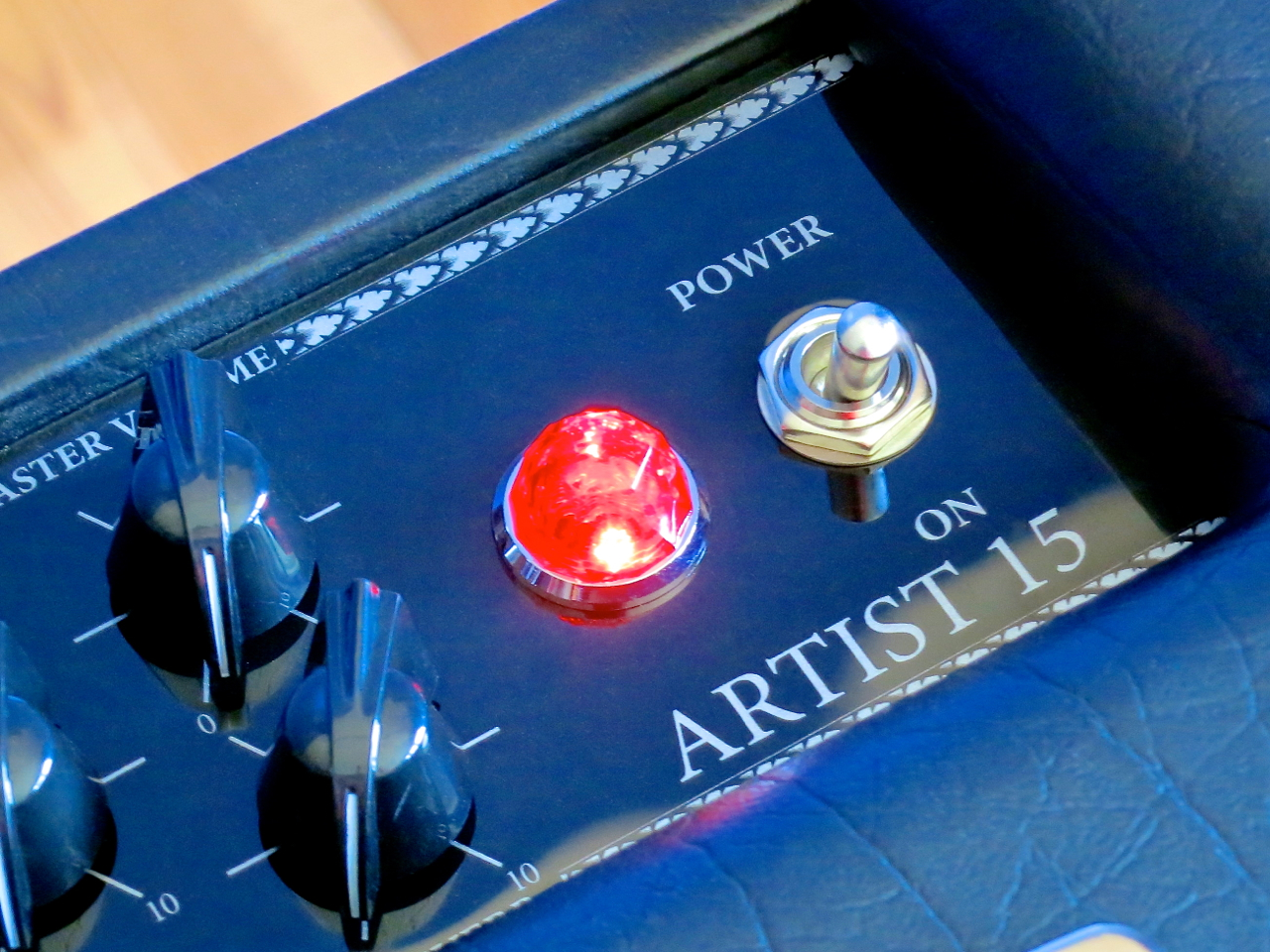
Blackstar Artist on ulkonäöltään tyypillinen Blackstar-kombo – musta keinonahkapäällyste, sekä tumman harmaa etukangas.
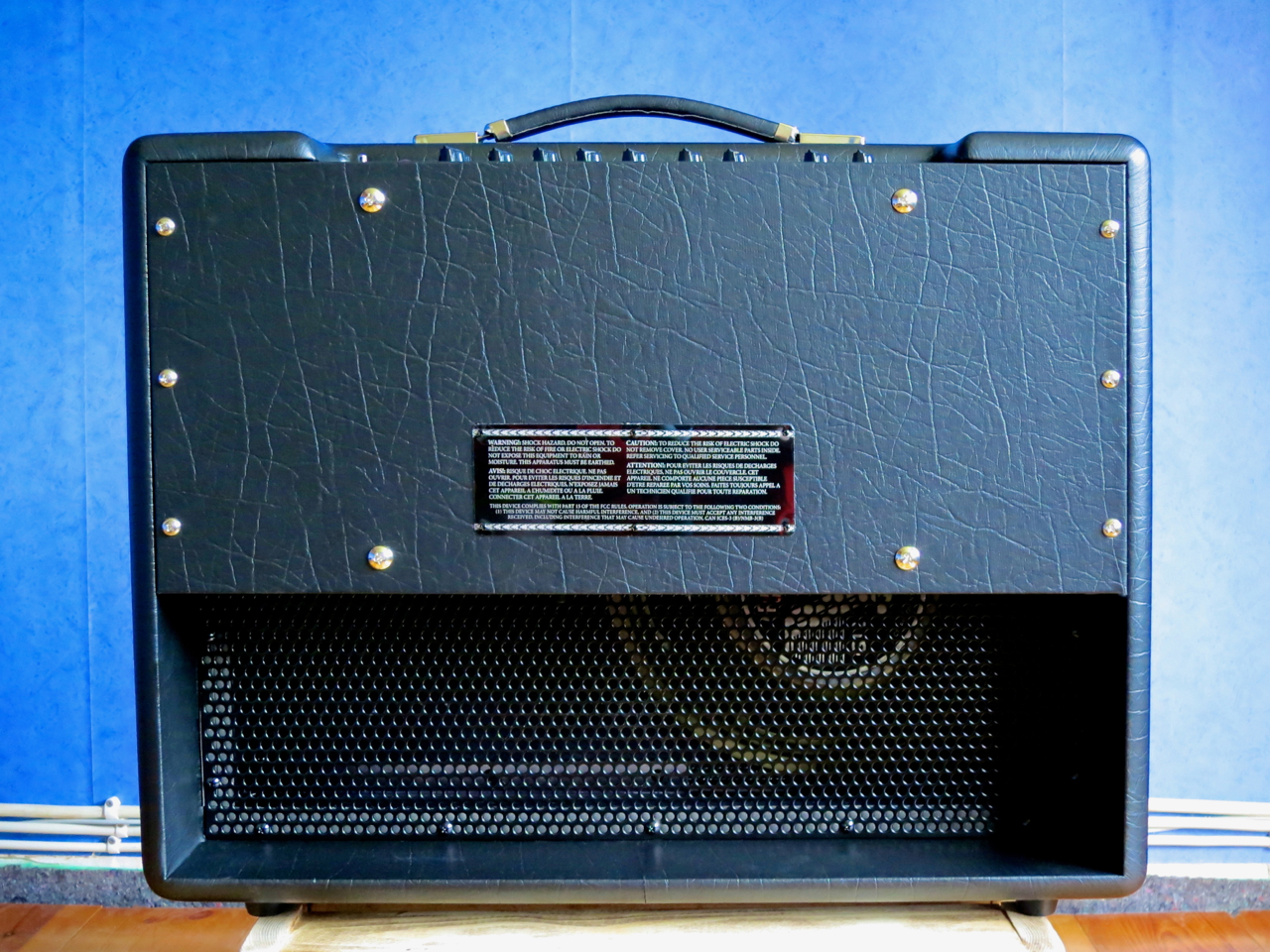
Vaikka kyse on ”vain” yhdellä 12-tuumaisella kaiuttimella varustetusta kombovahvistimesta, Artistin kotelo on suhteellisen iso. Syy tähän paljastuu kääntämällä koko komeus.
Artistin Celestion V-Type G12 -kaiutin on sijoitettu etuseinän reunalle tyypillisen keskipaikan sijasta. Blackstar ei kerro tarkkaa syytä tähän, mutta veikkaisin että tässä haettiin jäykän etulevyn ja ison kotelon soundillisien etujen yhdistämistä – siis tarkkaa atakkia ja lämmintä bassotoistoa.
Celestion V-Type on keraamisella magneetilla varustettu kaiutin, jolla on valmistajan mukaan klassinen sointi, mutta nykyaikainen tehonkesto.
Blackstar-kombon takapaneelista löytyy mm. liittimet lisäkaiuttimille, linjatasoinen lähtö kaiutinmallinnuksella, efektilenkki, sekä liitin vahvistimen mukana tulevalle kanavanvaihto-kytkimelle.
****
Viisitoistawattinen Blackstar Artist 15 on kaksikanavainen kombo:
Ykköskanava on kombon ns. boutique-kanava, jossa kitaran ja kaiuttimen väliin on sijoitettu mahdollisimman vähän komponentteja. Ykköskanavassa on ainoastaan kaksi säädintä – volume ja tone – ennen kuin signaali lähtee eteenpäin vahvistimen master-lohkoon.
Kakkoskanavasta taas löytyy täysi Blackstar-kattaus – erilliset gain- ja volume-säätimet, kolmikaistainen EQ-osasto, sekä firman kuuluisa yleisluonteen säädin (ISF). ISF-säädin nollassa saa esiin kakkoskanavasta Fender Blackface -tyylisiä kirkkaita ja jänteviä soundeja, kun taas täysin avattuna ISF antaa kombolle Marshall-tyylistä potkua ja tukevaa botnea.
Master-lohkoon on sijoitettu master volumen lisäksi vielä Artistin digitaalinen kaiku.
Ykköskanavan perussoundi on selvästi pyöreämpi kuin Blackstarin kakkoskanava. Puhtaissa soundeissa Channel 1 on lämpimämpi ja alamiddleä tuhdimpi kuin Fender-tyylisesti helisevässä Channel 2:ssa.
Tällaiset ovat ykköskanavan puhtaat soundit Epiphone Casinolla ja Gibson Melody Maker SG:llä soitettuna:
Särösoundeissä Artist-kombon kanavia erottaa myös tarjolla oleva gain-määrä:
Ykköskanava menee puhtaasta kevyelle Rockabilly- ja Blues-särölle, kun taas kakkoskanavasta irtoaa täydellä gainella jo hyvin lihaksikas Rock-särö.
Tässä ykköskanavan soundit täydellä gainella (Casino ja Melody Maker SG):
…ja tässä kakkoskanavan vastineet:
Demobiisin komppiraidat on soitettu Kasugan ES-335-kopiolla (vasen kanava) ja Fender Stratocasterilla (oikea kanava). Soolo-osuudet on äänitetty Kasugalla:
****
Blackstar Artist 15 ei ole ihan tyypillinen kaksikanavainen kitarakombo, jossa ykköskanava on puhdas ja kakkoskanava varattu pelkästään särösoundeille, vaan tässä on kyse monipuolisuudesta ja valinnanvarasta.
Blackstar on nimittäin huomannut, että isot pedaalilaudat ovat nykyään muodissa, minkä vuoksi firma tarjoaa Artist-sarjallaan kaksi komboa, joilla on kummassakin kanavassa riittävästi headroomia clean-käyttöön.
Artist 15:n arkkitehtuurin etu on, että pedaalien suurkuluttajille on nyt kaksi laadukasta puhdasta kanavaa käytettävissä. Ykköskanava on pelkistetty boutique-/AC30-kaltainen vaihtoehto, kun taas kakkoskanavasta irtoa laajempi kirjo clean-soundeja Blackfacesta nyky-Marshalliin.
Blackstar Artist 15 toimii toki myös perinteisellä tavalla, jolloin kakkoskanavan monipuolisuudesta on myös kombon omissa, laadukkaissa särösoundeissa todella paljon iloa.
Bogner Amplification has recently added a new member to its Goldfinger-family of guitar amps. In addition to the two-channel Goldfinger 45, there’s now also a single-channel amplifier available, called the Goldfinger 54 Phi.
****
The basic idea behind the Bogner Goldfinger 54 Phi combo (current price in Finland:3.091 €) was to develop the most versatile single-channel valve amp possible.
The 54 Phi’s starting point was the Goldfinger 45’s clean Alpha-channel. The new model is concentrating mainly on clean tones, and it is meant as the ideal combo for guitarists who achieve most of their sounds with the help of effect pedals.
In its combo version – the 54 Phi is also available as an amp head – weighs in at about 26 kilos.
The cabinet is made from pine ply and it sports an open back construction.
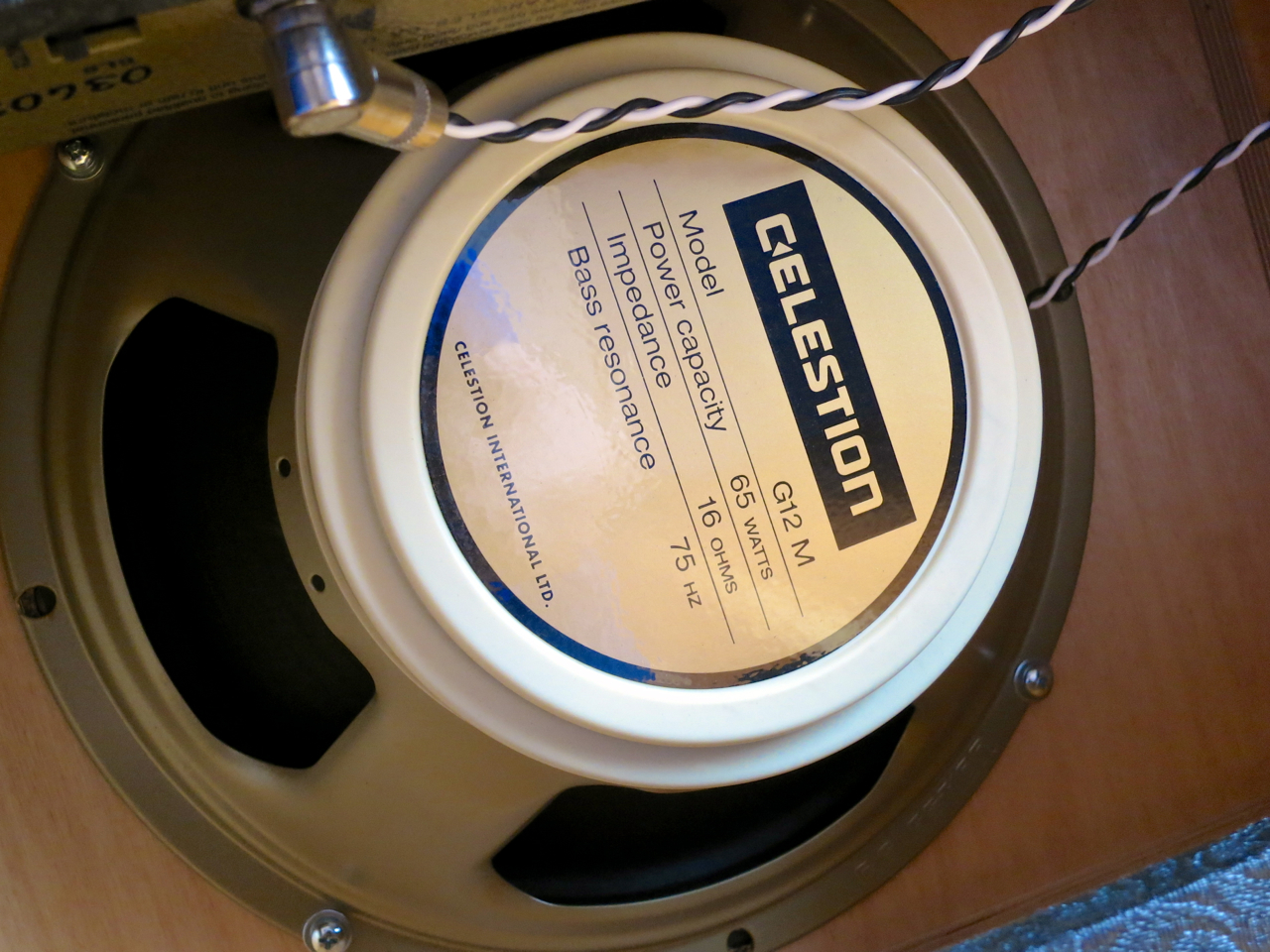
Bogner’s new tube combo comes equipped with a Celestion G12M-65 Creamback speaker, which combines a modern power rating with a classic, Greenback-type tonality.
A four-button footswitch unit is sold with the GF 54 Phi, and it gives us some hints regarding the combo’s versatility and features.
****
Bogner’s Goldfinger Phi offers a lot of scope for adjustment, so that every guitarist can dial in the sound he or she wants. Due to its versatility the 54 Phi needs you to get familiar with all its features, before plugging your guitar in and wailing away.
Actually, you should start your sonic journey with this Bogner’s back panel! The GF 54 Phi comes with a slightly unusual split power amp that employs two pairs of power amp valves – a pair of 6V6s and a pair of 6L6s. Each pair can be switched on or off individually, while the front panel’s Hi/Low-switch makes it possible to use only a single power amp tube from each pair, in effect halving the combo’s output power. By using the Hi/Low-switch and the power amp switches you can choose from six power modes. The lowest alternative lets the Goldfinger Phi run at approximately nine watts (6V6, Low), while the highest power mode (6L6+6V6, Hi) will give you the combo’s full 66 watts of output.
As were talking about a valve amp here, choosing between pairs (or single) power amp tubes doesn’t only have a bearing on the 54’s power rating, but it also affects the amp’s behaviour, especially when it comes to clean headroom and power amp compression (sag). You need to find the ”right” tube and Hi/Low-switch mix for your own, personal tone.
The Gain knob is used to set the preamp gain, while Loudness is what Bogner calls their master volume controls. There are two signal boosts implemented in the Goldfinger Phi’s preamp, but their are placed at different points in the signal chain, which makes them work and sound differently. The adjustable Boost booster is placed in front of the Gain control, even making it possible to achieve some distortion, if necessary. Solo, in turn, is a fixed booster that sits right at the end of the preamp.
Bogner’s GF 54 Phi offers you two different EQ-configurations. You can choose from Bogner’s own, modern tone stack or switch to a vintage Baxandall EQ. Originally, the Baxandall circuit was designed for Hi-Fi equipment, but it found its way into some guitar amps from the 1950s and 60s. Due to the way a Bax EQ works, there’s a perceivable drop in volume when you switch over without readjusting the EQ controls.
The EQ-section is complemented by a separate Presence control, as well as two Expand-switches (one adding bottom end, the other treble).
It may come as a shock to some valve purists, but Reinhold Bogner has deliberately chosen a digital reverb unit for his 54 Phi. In his view this digital unit offers more depth of sound and lushness than the type of spring tray he’d be able to fit into the 54 Phi combo. The reverb type features a little bit of chorus-style modulation to liven things up even further.
I’ve moaned about this before, and I’ll say it again: I’m not the biggest fan of Bogner’s downward-facing back panels. Unless you know the exact position of all connectors and switches by heart, you are forced to lie on your back to make sense of it all.
Be that as it may, the Bogner Goldfinger 54 Phi’s back panel gives you a wide array of different options for getting the most from your combo.
****
I was only given a weekend to test Bogner’s new baby, which is why I didn’t have enough time to record more audio demos. I still managed to come up with two, stylistically rather different demo songs.
The first track was recorded with the 54 Phi combo running in in 9 watts power mode, which made it possible to achieve overdriven sounds without the aid of pedals, simply by running hot humbucking pickups into the Goldfinger. The lead guitar is a Gibson Les Paul Junior with the tone knob turned down halfway, while all backwards guitar tracks were played on a Gibson Melody Maker SG. I recorded the combo (in both demo songs) with a Shure SM57:
The second demo track was recorded with the Bogner running at full tilt (66 W), and with a Boss SD-1 overdrive and a Joyo JF-37 chorus pedal in front of the combo. All guitar parts are played on a Flaxwood MTQ Hybrid guitar with a neck humbucker and a Telecaster-type single coil in the bridge position:
****
Bogner’s Goldfinger 54 Phi is a prime example of the versatility and quality of sound a well-designed, single-channel valve amp can offer.
This is a combo for the sound aesthete, who wants to build a strong foundation for his or her sound, regardless of whether this tone comes from just the fingers or a range of effect pedals.
Vox Amplification’s new AV-series comprises three affordable guitar combos. The Vox AV15, AV30 and AV60 – named according to their power amp wattage – are modelling valve hybrid amplifiers that combine the best elements of solid state and tube technology.
****
****
KitarablogiDotCom took the smallest of the trio, the Vox AV15 (street price in Finland approx. 269 €) for a spin.
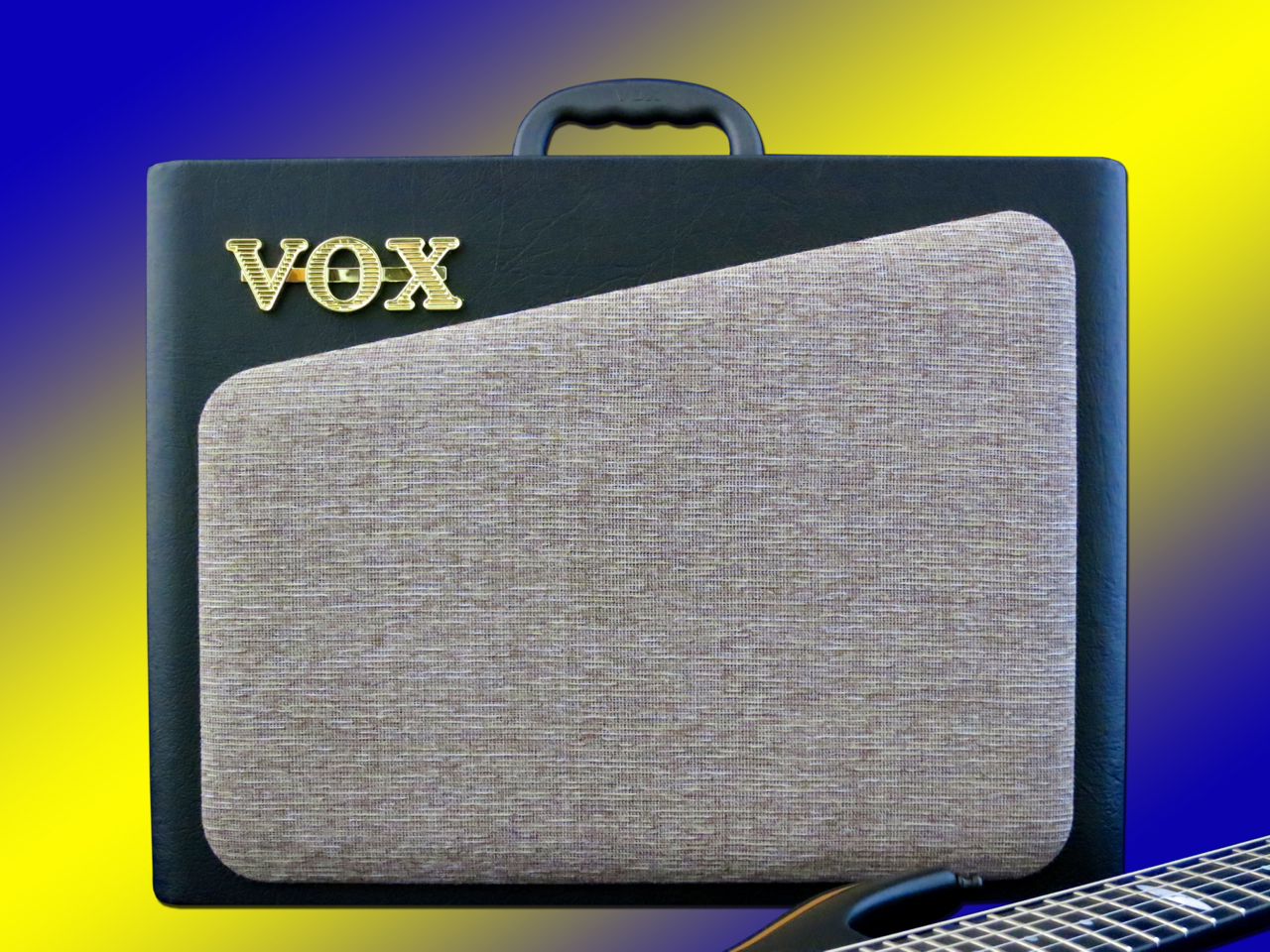
The AV15 is a compact little combo (height: 37 cm, width: 45 cm, depth: 23 cm), weighing in at just below eight kilos.
The combo’s cabinet has taken a big leaf out of the book of hi-fi speaker construction. Normally a guitar cab is meant to add its own bit of tonal modification into the mix, but when dealing with a modelling amplifier meant to imitate a number of different amp and speaker configurations, the more linear frequency response of a bass reflex cabinet is highly desirable.
The only thing you’ll find on the Vox AV15’s back panel is the connector for the amp’s external power supply unit (12 VDC, included).
****
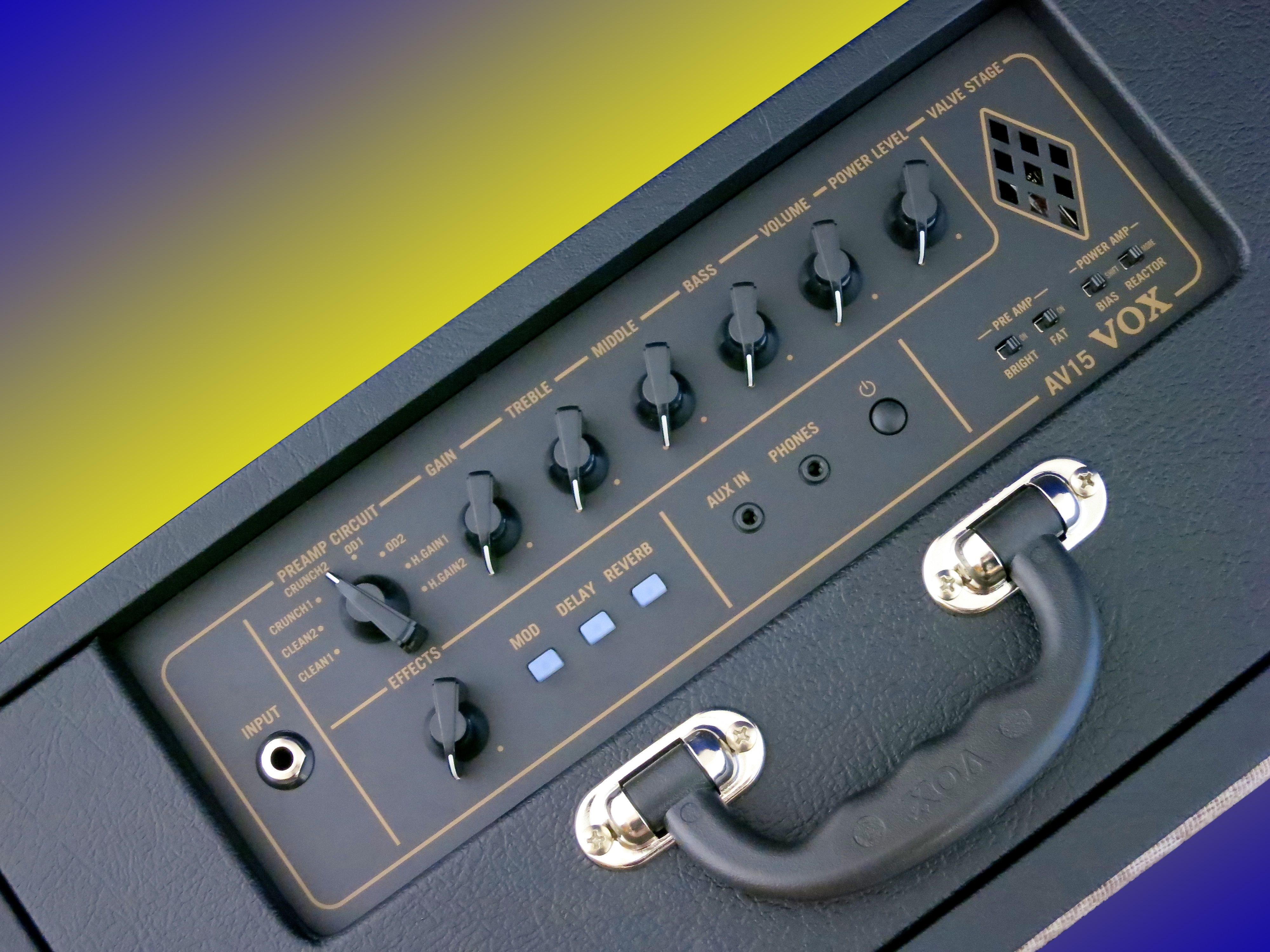
The Preamp Circuit-switch lets you select one of the eight amp models offered by the Vox. The selection takes you from Fender Twin-style cleans, and Vox- and Marshall-type crunch, all the way to Rectifier-like high gain tones.
You can fine-tune your tone using the three-band EQ section. The AV15 also comes equipped with an effects section made up of three different effects – reverb, delay and chorus (called modulation on the front panel). You are free to choose any or all of the effects. Each effect allows you to control a second parameter (in addition to the effect level) by keeping the respective effect’s effect button depressed while turning the Effects-control. You can change the modulation speed of the chorus, the delay time for the delay effect, and the length of the reverb tail of the reverb effect. The effects are the only digital bits in the AV-combo’s architecture, the rest of the Vox’ signal path – including the amp modelling – is kept all-analogue.
Here are three short clips illustrating the AV15’s effects (Gibson Les Paul Junior, Shure SM57):
CHORUS (with a little added reverb)
DELAY
REVERB
It may seem a bit unusual, but the AV15 features three different ”volume controls”, which all have a different bearing on the combo’s sound:
The Gain-knob sets the signal level before the signal is sent to the preamp’s valve stage. Low Gain settings result in a clean sound, while higher Gain settings will lead to preamp break-up and (depending on the chosen amp model) distortion. The Volume-control adjusts the signal level right in front of the power amp’s tube stage. Lower Volume settings will give you a clean and dynamic signal, while higher settings will bring in some power amp compression and saturation (= distortion). The last volume knob – called Power Level on the Vox AV15 – determines the final volume level in your room (or in your headphones).
While its bigger siblings – the AV30 and the AV60 – feature two valves in their architecture (one for the preamp, one for the power amp), the smaller Vox AV15 makes do with just a single tube for both pre- and power amp duties. This is made possible by the way the good-old 12AX7-valve is constructed, offering you two triodes in one single tube. This means, you can split this valve type to perform two jobs simultaneously.
This Vox’ Valve Stage-section features four small slider switches that you can use to modify the way the two valve stages react and sound:
The Pre Amp side of things sports a Bright-switch for adding sparkle to your top end, as well as a Fat-switch that will boost the bass response.
The switches labelled ”Power Amp” really do make a significant difference to this combo’s ”feel”. The Bias- and Reactor-switches let you select how much the power amp’s tube section is ”pushed” and how much power amp compression will be audible.
Listen to these two sound clips – clean and crunch – to get an idea of how the Valve Stage switches change the combo’s sound (Gibson Les Paul Junior, Shure SM57). Both clips start with all the switches in the left position. Then I put one switch after the other to its right position (starting with the Bright-switch, and continuing left to right):
****
Snobbism seems to be the fashion of the day – we’ve got cork sniffers, we’ve got vinyl snobs, and we’ve got valve amp anoraks.
But in our heart of hearts, most of us ”old farts” would have been more than happy, if we would have had such a great-sounding and versatile amp as the Vox AV15 when we started playing in the 1970s and 80s! The AV15 really wins you over with its array of inspiring tones and its affordable price tag.
The Vox AV15 is a real amp, not a plastic toy sucking all of the sheer joy of playing out of an eager novice. Vox AV-series hybrid combos can also serve more advanced players as fun living room amps, they can be used for backstage warm-up, and they also make a good figure as home studio amps (as you can hear in the demo songs).
In my opinion Vox Amplification’s new AV15 is a fine choice as a practice amp, for guitar teachers, or for school bands. The affordable Vox AV15 is easy to use and sounds great.
Bogner Amplificationin Goldfinger-vahvistinperhe on hiljattain kasvanut. Kaksikanavaisen Goldfinger 45 -vahvistimen lisäksi on nyt saatavilla yksikanavainen herkkupala nimeltään Goldfinger 54 Phi.
****
Bogner Goldfinger 54 Phi -kombon (3.091 €) idea on ollut kehittää mahdollisimman monipuolinen yksikanavainen putkivahvistin.
54 Phi:n lähtökohtana on toiminut Goldfinger 45:n puhdas Alpha-kanava. Uutuusmallin pääpaino on juuri puhtaissa soundeissa, sillä 54 Phi on tarkoitettu paljon efektipedaaleja käyttävän kitaristin unelmakoneeksi.
Goldfinger 54:n komboversio (54 Phi on saatavilla myös nuppina) painaa noin 26 kiloa.
Vahvistimen kotelo valmistetaan mäntyvanerista ja sen takaseinä on avoin.
Uuden kultasormen kaiuttimiksi on valittu Celestionin G12M-65 Creamback -malli, jossa nykyaikainen tehonkesto yhdistyy klassiseen Greenback-soundiin.
GF 54 Phi:n mukana tuleva kytkinlauta, jossa on neljä kytkintä, antaa jo ensimmäisen vihjeen uutuus-Bognerin ominaisuuksista.
****
Goldfinger Phi pyrkii siihen, että jokainen kitaristi löytää kombosta juuri sen haluamansa soundin tarjoamalla runsaasti mahdollisuuksia muokkaukseen. Kombon monipuolisuuden vuoksi kannattaa tutustua 54:n ominaisuuksiin perusteellisesti ja rauhassa.
Oikeasti soundien maistamista pitäisi aloittaa tässä Bognerissa takapaneelista! GF 54 Phi:ssä on nimittäin hieman epätavallinen päätevahvistin, jossa toimii kahdet, kytkettävissä olevat putkiparit – 6V6 ja 6L6. Etupaneelista taas löytyy Hi/Low-kytkin, jolla päätevahvistimen tehoa voi puolittaa kytkemällä toisen kummankin putkiparin putkista pois päältä. Näin vahvistimen tehoa voi muokata kuudessa askeleessa yhdeksänwattisesta (6V6, Low) 66-wattiseksi (6L6+6V6, Hi).
Pääteputkien valinnat eivät kuitenkaan ulota ainoastaan Goldfingerin päätetehoon, vaan koko kombon käyttäytyminen muuttuu, etenkin puhtaan headroomin ja päätevahvistimen kompression (engl. sag) suhteen. Tämän perustan päälle rakennetaan sitten oma soundimaailma etupaneelissa olevien säätimien ja kytkimien avulla.
Gain-säädin on etuvahvistusta varten ja Loudness on Bognerin nimi master-volyymille. Säädettävä Boost-vahvistus ja kiinteä Solo-buusteri toimivat molemmat etuvahvistimessa, mutta niiden tarkka sijainti signaaliketjussa on eri. Boost vaikuttaa signaaliin jopa ennen Gain-säädintä, mikä tarkoittaa että sillä voi myös saada tarvittaessa särösoundeja aikaiseksi, kun taas Solo sijaitsee etuvahvistimen loppupuolella.
GF 54 Phi:ssa on tarjolla peräti kaksi eri EQ-vaihtoehtoa – Bognerin nykyaikaisen tone-stäkin sijaan voi nimittäin myös valita hieman erikoisen Baxandall EQ:n. Se oli alun perin taajuuskorjain Hifi-laitteille, joka oli kuitenkin käytössä myös joissain 1950- ja 60-luvun vahvistimissa. Bax EQ:n valinta laskee toimintaperiaatteensa vuoksi hieman etuvahvistimen signaalitasoa.
EQ-osastoa täydentävät erillinen Presence-säädin, sekä kaksi Expand-kytkintä, joista yksi lisää signaaliin diskanttia ja toinen bassoa.
Joillekin putkipuristeille tulee varmaan yllätykseksi, että Reinhold Bogner on päättänyt käyttää 54 Phi:ssä digikaikua. Mies on kuitenkin sitä mieltä, että hänen käyttämä kaikumoduuli kuulostaa selvästi paremmalta kuin GF:een menevä jousikaikutankki. 54-kombon kaikusoundissa on lisämausteena kevyt chorus-tyylinen huojunta, joka pitää lopputuloksen mukavasti elävänä.
Olen sanonut sen ennenkin, mutta pidän takapaneelin sijaintia Bogner-komboissa hieman epäkäytännöllisenä. Lattiaa kohti osoittavien kytkimien ja liittimien takia kitaristin täytyy maata selällään, jos haluaa nähdä mitä hän juuri tekee.
Takapaneelinkin tarjoamat ominaisuudet kielivät joka tapauksessa siitä, että Bogner Goldfinger 54 Phi on aito pro-luokan putkikombo.
****
Uutuus-Bogner kävi testissä vain viikonlopun yli, minkä takia audiodemojen tekoon käytettävissä oleva aika oli tällä kertaa hyvin rajallinen. Ehdin kuitenkin äänittää kaksi, tyyliltään hyvin erilaisia demobiisiä.
Ensimmäisessä biisissä 54 Phi -kombo oli 9 Watts -moodissa, jolloin Goldfingeria sai humbuckereilla säröön vielä olohuone-volyymillä. Soolokitarana toimii Gibson Les Paul Junior (kitaran tone-potikka oli säädetty hieman alas), kun taas takaperin soivat kitaralinjat on soitettu Gibson Melody Maker SG -mallilla sisään (molemmissa biiseissä kitaramikkinä toimii Shure SM57):
Toisessa demobiisissä Bogner oli ns. täysillä (66 W) ja sen eteen oli kytketty Boss SD-1 -särö ja Joyo JF-37 -chorus. Kaikki kitararaidat on soitettu Flaxwood MTQ Hybrid -kitaralla, joka on kaulahumbuckerilla varustettu Tele-tyylinen soitin (testi tulossa):
****
Bognerin Goldfinger 54 Phi todistaa hyvinkin vakuuttavasti, kuinka monipuolinen ja moniulotteinen erittäin laadukkaasti toteutettu yksikanavainen putkikombo voi olla.
Tällä soundiesteetikon unelmakoneella voi luoda omalle kitarasoundille vankan perustan, riippumatta siitä tuleeko se oma soundi pelkästään sormilta vai onko käytössä hyvin varustettu pedaalilauta.















 Kitarablogi.com – Finland's premier Guitar and Bass blog