

****
****
Lisätiedot: Musamaailma
Kitarablogi.com – Finland's premier Guitar and Bass blog
Juttuja kitaroista ja bassoista

****
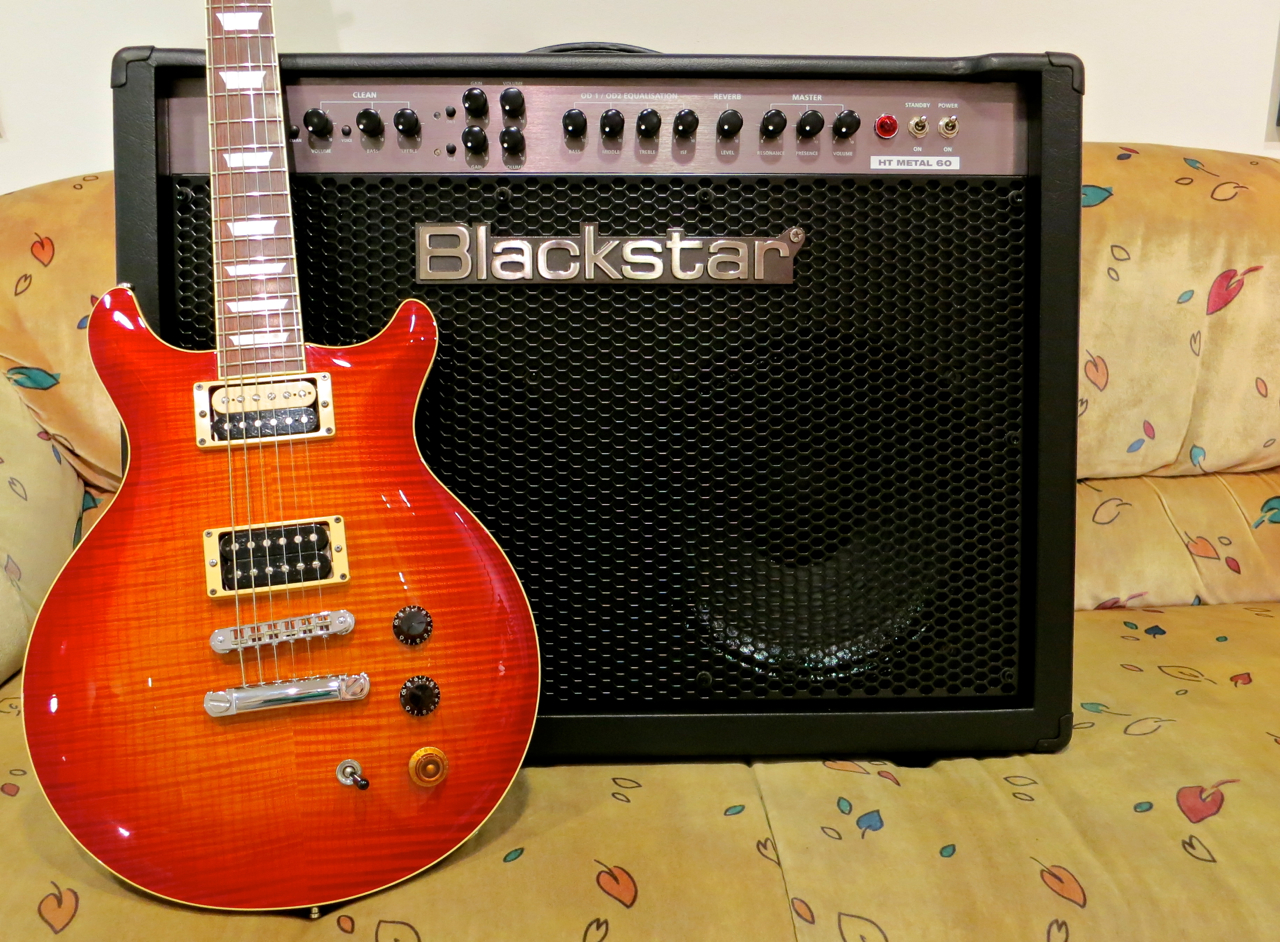
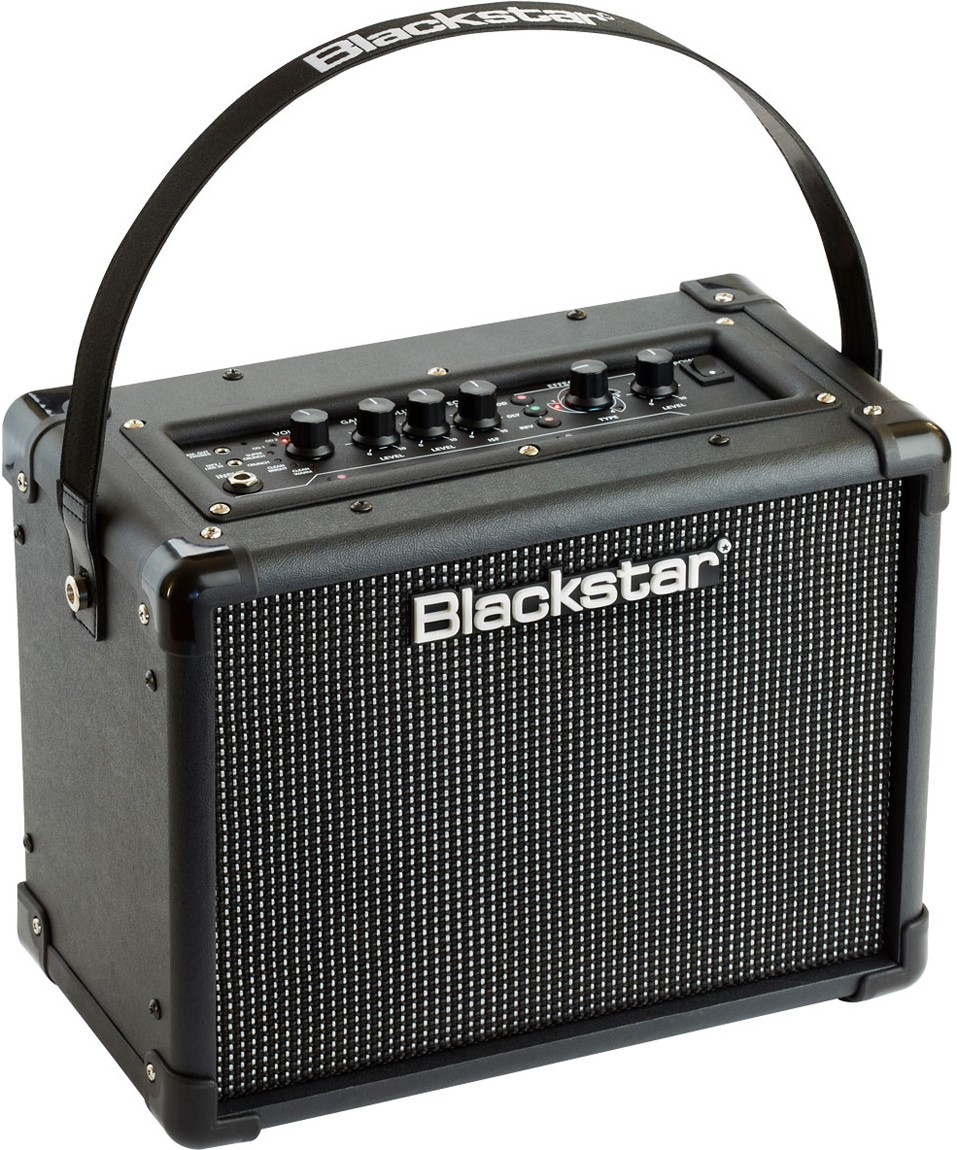
Blackstar Amplification’s new, affordable ID:Core Amplifier Series features the core attributes of Blackstar’s original ID:Series.
These programmable, wide-stereo guitar combo amps are small in size, but they deliver huge tone.
Well-suited for personal practice or bedroom jamming along with a CD or MP3 player, they’re available in 10-, 20- and 40-watt configurations. Additional features include six onboard voices, effects and INSIDER GUI software for creating, storing and sharing patches.


****

Suomalainen Bluetone on vielä melko uusi nimi vahvistinmaailmassa. Harry Knecktin ja Matti Vauhkosen käsintehdyillä putkivahvistimilla on kuitenkin jo monta ystävää, ja sana on leviämässä yhä laajemmin.
Helsinkiläinen Custom Sounds on nyt ottanut Bluetone-vahvistimia tuotevalikoimaansa, ja sieltä Kitarablogi sai testattavaksi Bluetone Princeton Reverb -kombon.
****

Bluetone Princeton Reverb (1.600 €) on firman laadukas käsinjuotettu – ja lempeällä kädellä päivitetty – näkemys 1960-luvun Fender Princeton Reverb -styrkkarista (AA1164-versio). Bluetonen tärkeimmät parannukset ovat vaihekääntäjän jälkeinen master volume -säädin (PPIMV), isompi kaiutin, sekä helpompi biasointi erillisillä biasointipisteellä. Kombon lähtötaso on 15 wattia.
Bluetonen Princetonia saa erilaisilla viimeistelyillä ja kaiuttimilla. Kitarablogin testiyksilö on varhaistuotannosta peräisin oleva kermanvaalealla tolexilla päällystetty perusversio, jolla on kuitenkin Tayden Smooth Alnico -kaiuttimen sijaan 12-tuumainen WGS Black Hawk Alnico -ämyri.

Bluetone rakentaa kotelonsa tavallisesti 15 milliä paksusta, suomalaisesta koivuvanerista, joka on kestävä, mutta kuitenkin suhteellisen kevyt materiaali.
Princeton Reverbin viimeistely ei todellakaan jätä pienintäkään moittimisen varaa – kombo edustaa ehtaa boutique-luokkaa!

Kotelo on Fender-tyylisesti takana avoin.

Bluetone Princetonissa käytetään esikuvan mukaan etuvahvistimessa kolme 12AX7-putkea ja yksi malli 12AT7.
Tasasuuntajaksi on valittu yksi 5AR4-putki, kun taas päätevahvistin toimii kahdella 6V6-mallilla.
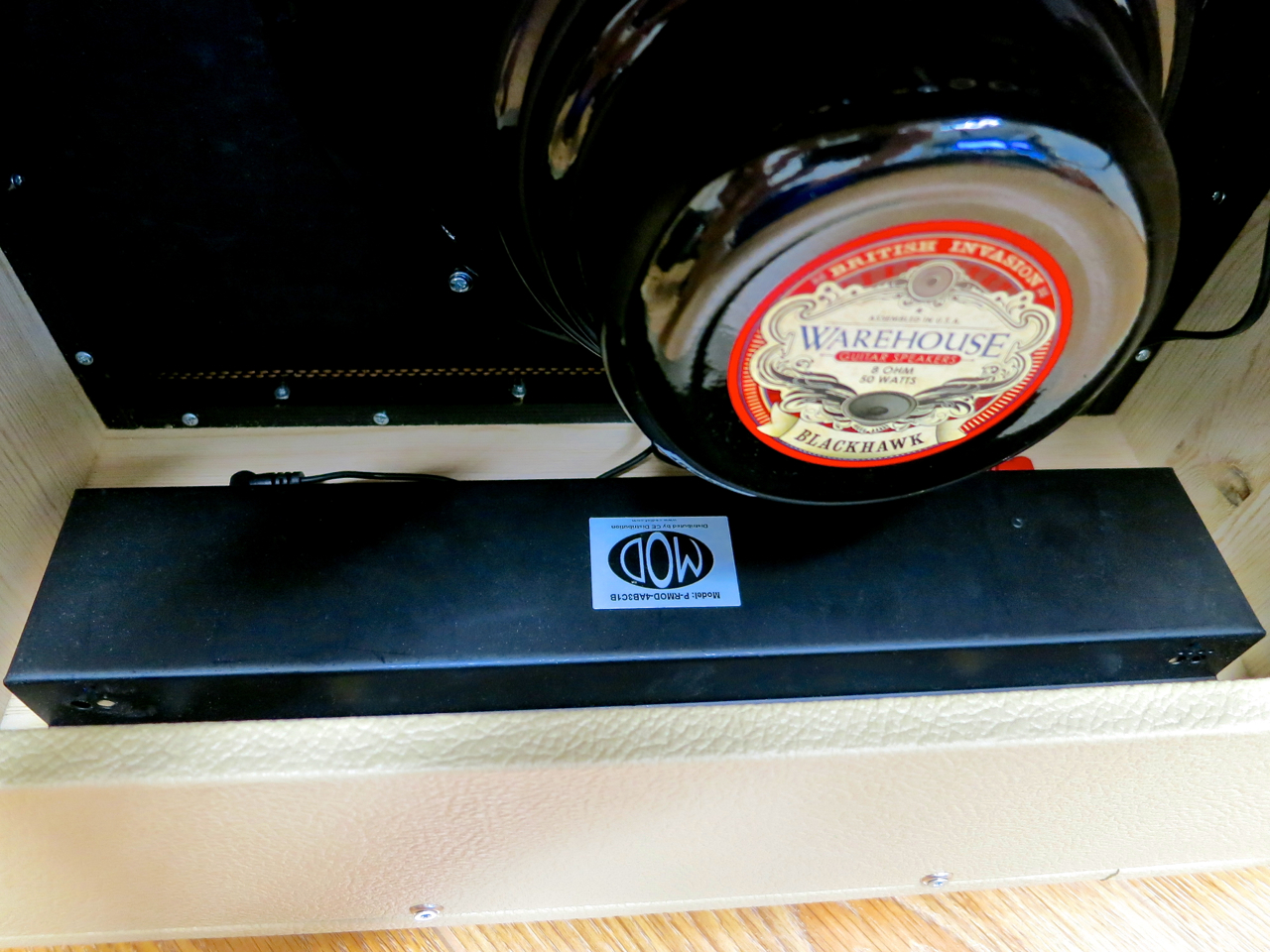
Täyspitkä jousikaiku tulee MOD Kitsiltä.

WGS:n 50-wattinen Black Hawk on periaatteessa suunniteltu Vox AC30:n kaiuttimeksi, ja siten mielenkiintoinen valinta pieneen Fender-tyyliseen komboon.
****

Bluetone on yksikanavainen kombo kolmikaistaisella taajuskorjainosastolla, kaiulla ja tremololla. Master volumen ansiosta etuasteen säröä voi käyttää myös maltillisella volyymitasolla.
Lopullisessa sarjatuotannossa etupaneelin teksti löytyy muuten nyt säätimien alta, mikä helpottaa tuntuvasti oikean nupin löytämistä.

Takapaneeli tarjoaa kaksi kaiutinlähtöä, sekä liittimen jalkakytkimellä.

Tämä jämäkkä tuplakytkin kuuluu hintaan, ja sillä voi kytkeä sekä tremoloefektin että jousikaiun päälle tai pois.
****
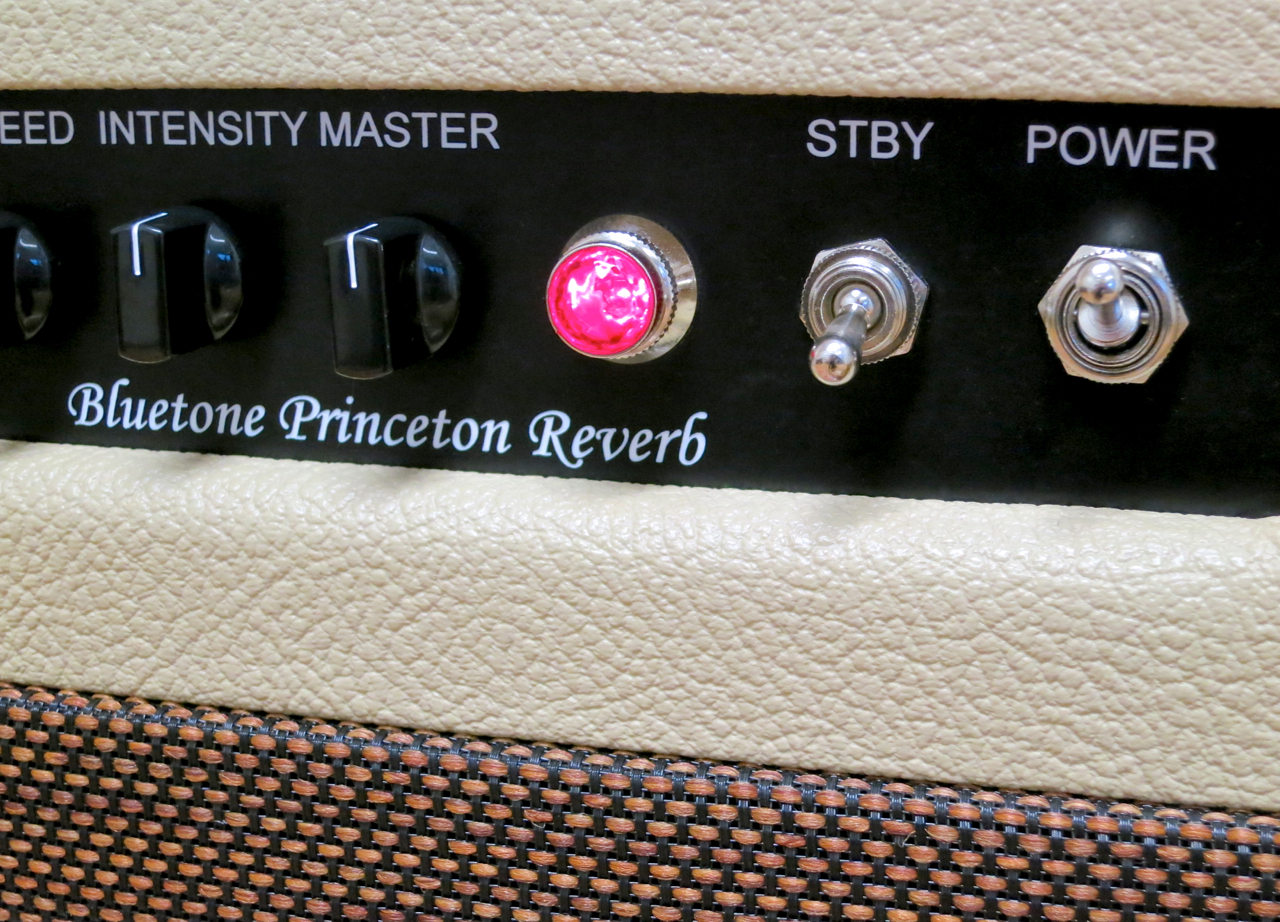
Putkivahvistimeksi keskikokoinen Bluetone Princeton Reverb -kombo on hyvin kevyt, mutta samalla kestävänoloinen.
Käytössä huomaa ensimmäiseksi Bluetone-vahvistimen hiljaisuutta ei-toivottujen sivuäänien kannalta. Tämä kombo ei humise eikä hurise, ja myös sen omakohina on hyvin maltillisella tasolla – loistohomma!
Monia vanhoja musta- ja hopeanaamaisia Fender Princeton -vahvistimia on modattu isommalla kaiuttimella – vanha Jensen kuulostaa sinänsä hyvältä, mutta on monille kuitenkin hieman liian ohut soundiltaan.
Bluetone Princetonilla kuulostaa – 12-tuumaisen kaiuttimen ansiosta – heti kättelyssä hieman isommalta.
Tältä kuulostaa Fender Telecaster, kun Bluetonessa on puhtaat asetukset:
Bluetonen tremolo on hyvin maukas tapaus:
Low-tuloa käyttäessä Princeton Reverbin headroomia riittää mainiosti myös puhtaille humbucker-soundeille (käytössä Hamer Studio Custom -kitara):
Pikkustyrkkarilla on kuitenkin myös kunnon hampaat, kun vaan lisätään gainea. Särön luonne on juuri sellainen kuin voi odottaa pieneltä, vintage-tyyliseltä ja Fender-pohjaiselta kombolta. Purevuutta ja kompressiota löytyy sopivasti ja keskialueen sointi pysyy suhteellisen avoimena. Erittäin kermaisia, keskialuevoittoisia särösoundeja on tällaisesta kombosta turha hakea, mutta 1960-luvun ja varhaisen 70-luvun Blues- ja Rock-meininkiin Bluetonen Princeton Reverbin ääni sopii kuin nakutettu.
Telecaster (High-tuloon kytkettynä) täysillä gainilla kuulostaa tällaiselta:
Tuplahumbucker-Hamerilla (Low-tuloon kytkettynä) sain tällaiset soundit aikaiseksi:
Bluetone-kombo reagoi erittäin hyvin kitaran volume-säätimeen, mikä mahdollistaa särösoundin siistimistä ilman muita apuvälineitä:

****

Bluetone Princeton Reverb tarjoaa mielestäni parasta kotimaista boutique-laatua kilpailukykyiseen hintaan. Bluetonen työnjälki on ensiluokkainen ja kombon soundi erinomainen. Bluetone Princeton Reverb on kuin taivaan lahja laadukkaan Blackface-soundin ystäville.
****
Bluetone Amps Princeton Reverb
1.600 € (Bluetone-suojahuppu: 50 €)
Lisätiedot: Custom Sounds Finland
****
Plussat:
+ aitoa custom shop -laatua
+ point-to-point-rakenne
+ Master Volume -säädin
+ laadukas 12-tuumainen kaiutin
+ kaiun ja tremolon soundi
+ jalkakytkin kuuluu hintaan


Roland’s popular Cube-series of COSM-combos has recently been updated.
The new Cube GX-amps boast some new features, like the iCube Link (first seen in the Cube Lite), which allows you to use the guitar combo as a soundcard with Apple iOS devices.
****

The Roland Micro Cube GX (current price in Finland 134 €) is the newest version of one of the most successful battery-powered practice amps ever.
At first glance the GX-version looks very similar to the Micro Cube’s previous incarnation, with only the large Cube logo on the metal grille hinting at the combo’s updated status.
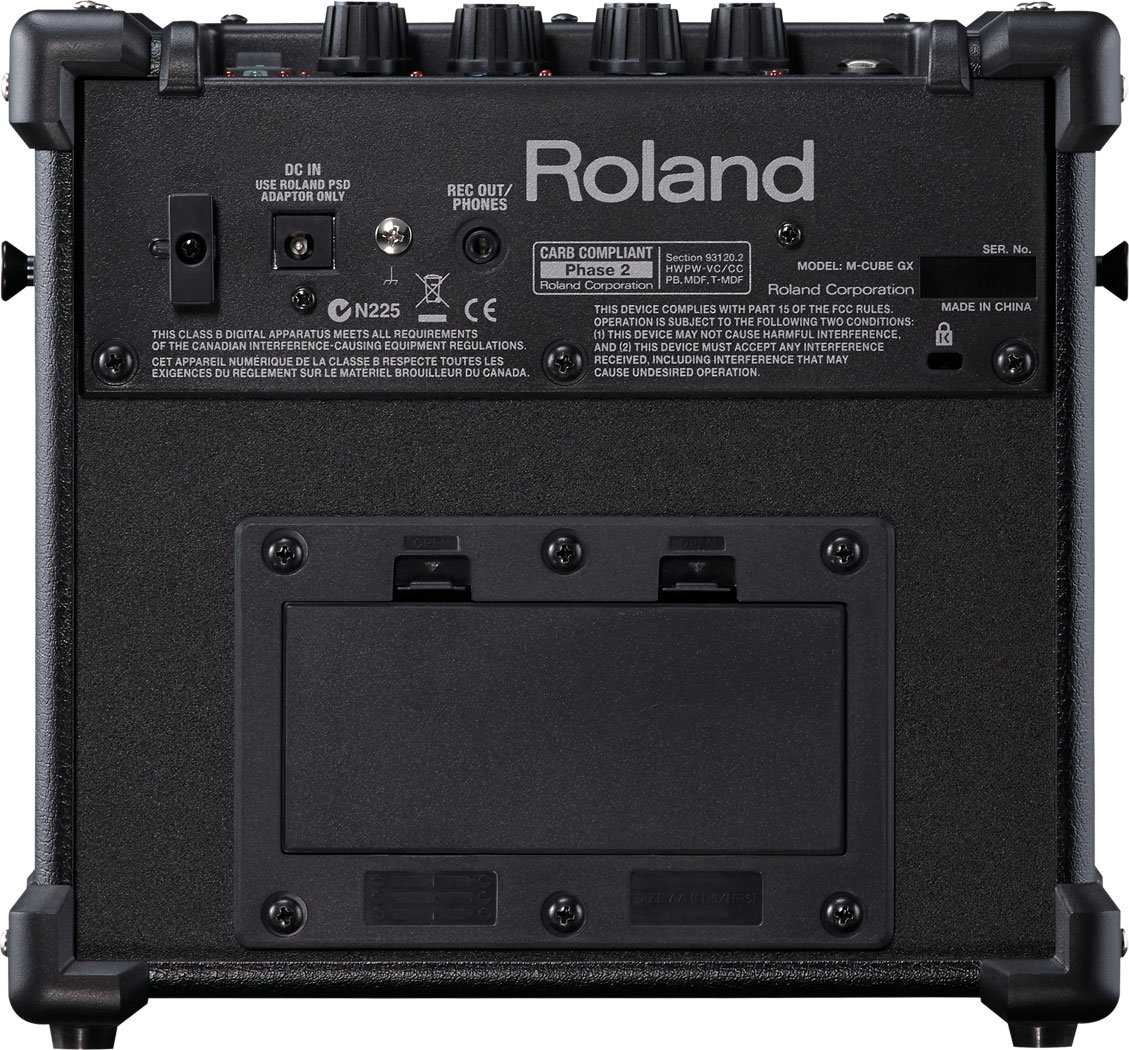
The Micro Cube GX’ back panel is a good deal smaller than on the last version.
The new combo sports mini-sized headphone and line-level outputs.

The GX still runs on six AA-batteries, but the new battery compartment is much easier to use.
A power supply can be found in the box.

The front panel has gotten a serious overhaul:
Above the guitar input you can find the i-Cube Link connector, which allows you to hook up you iPad or iPhone to the combo using the supplied cable. Thanks to the i-Cube Link you can use the GX-amp as the iDevice’s sound-card, as well as record and practice using Roland’s free Cube Jam-app. You can get more info on the Cube Jam-app in Kitarablogi’s Cube Lite review.
Another important new feature of the Micro Cube GX is the Memory-function, which offers you one memory slot per COSM Amp Type. Memory stores all settings of the chosen Amp Type, namely the settings of the Gain-, Volume-, EFX- and Delay-controls.
The tuner section has also received an overhaul. The old Micro Cube came with an electronic tuning fork on-board, giving you an ”a” (or Ab or Abb) to tune to. The brand-new Micro Cube GX comes equipped with a genuine digital tuner. The default setting for the tuner is chromatic, but it can also be set to A-only, which comes in handy when changing strings.
****
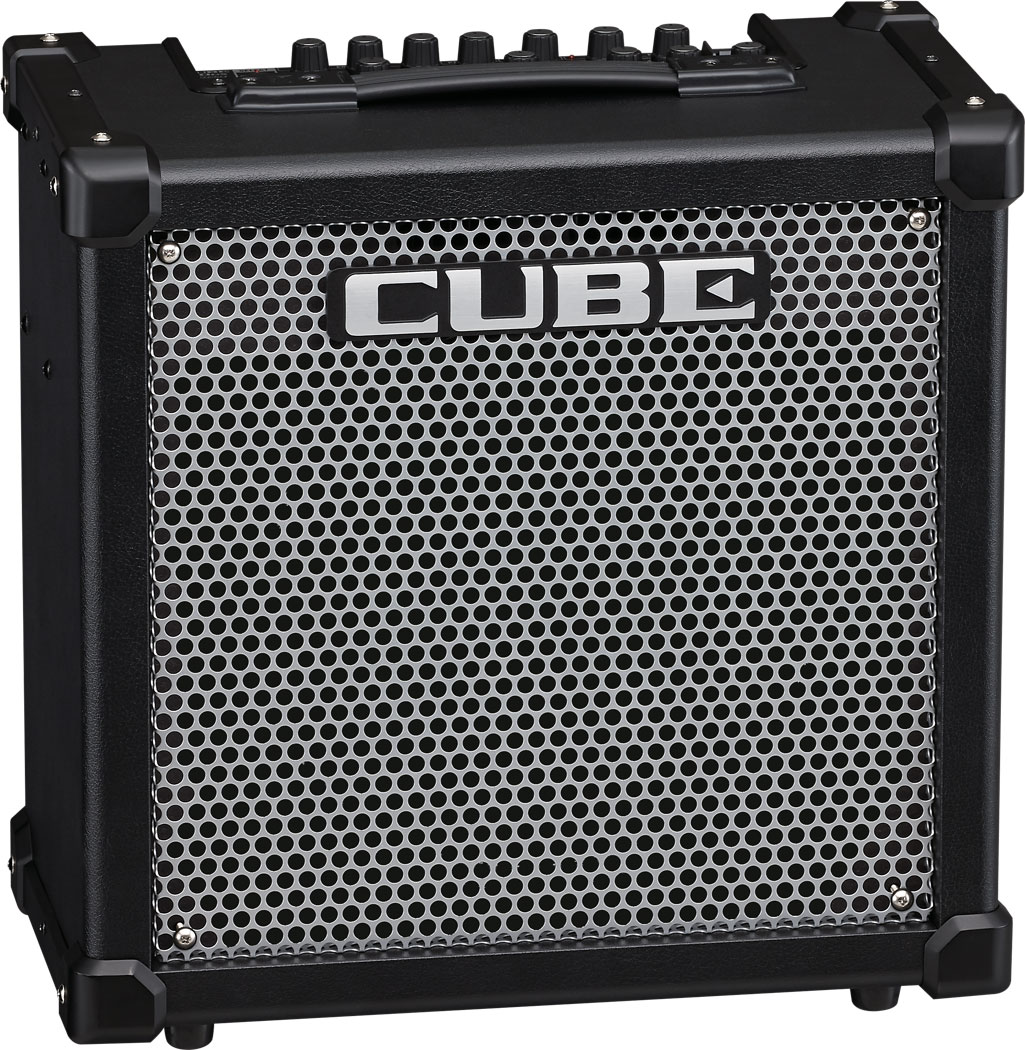
The Roland Cube-80 GX (current price in Finland 384 €) is the current top model in the GX-series, offering you 80 Watts of output power through a single 12-inch speaker.
The clearest difference between the predecessor – the Cube-80 XL – and the GX-version is the addition of the i-Cube Link in favour of the old model’s built-in looper.

Also new is the GA-FC-connector on the amp’s back panel, which allows you to use Roland’s guitar amp foot-controller the GA-FC (optional) with the Cube-80 GX.

This is what the foot-controller looks like. When used with the GX, you can switch amp channels and turn the combo’s EFX-, Delay- and Reverb-sections on/off separately. You can also connect two expression pedals to the GA-FC, if you want to adjust input and output levels on the fly. The Cube-80 GX comes supplied with a special overlay for the foot-controller, so you can change the GA-FC’s labelling to match the correct functions.
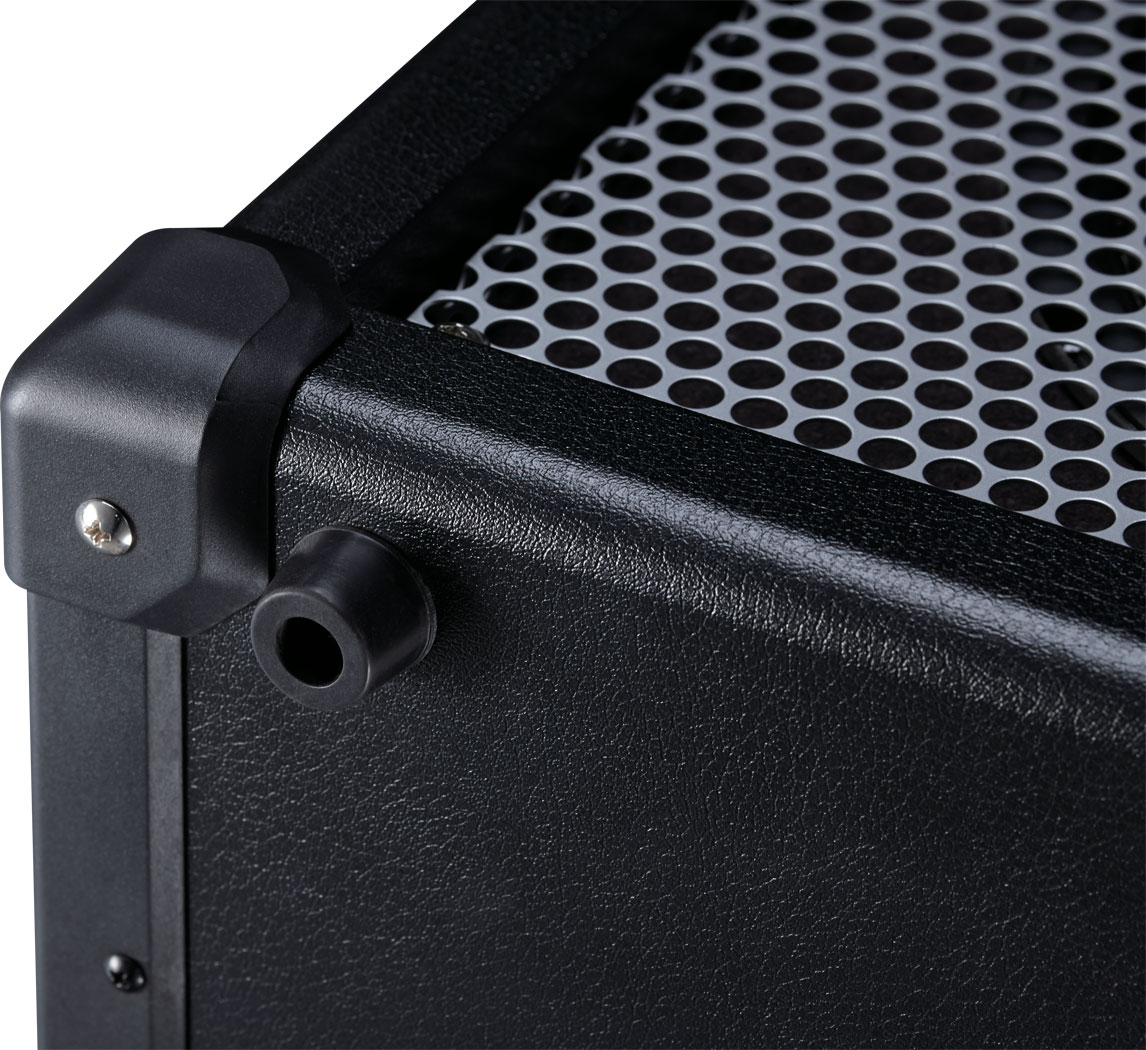
Some things have stayed the same, though, like the rugged design of the Cube-series.

The Cube-80 GX is a three-channel guitar amplifier:
The JC Clean-channel is reserved for ultra-clean tones in the style of Roland’s legendary Jazz Chorus-combo. The Lead-channel, on the other hand, offers you nine different COSM-models, as well as an acoustic simulator for your occasional steel-string needs.
The third channel is the so-called Solo-channel. I say ”so-called”, because actually the Solo-channel is the Cube-80 GX’ memory slot, which you can fill with any amp setting you wish, regardless of whether it is a setting for soloing or not. The crucial difference between the Solo-channel and the other two channels is the fact that the Solo-channel uses its own (stored) settings for the EQ-, EFX-, Delay- and Reverb-sections, while JC Clean- and Lead-channels have to share the current control settings.
Apart from the i-Cube Link, the Cube-80 GX’ features list is very similar to the Cube-80 XL-version. You can get more info on the i-Cube Link and Roland’s free Cube Jam-app in Kitarablogi’s Cube Lite review.
****

Roland’s brand-new Micro Cube GX offers you even more than its already legendary predecessor. The built-in tuner makes life much easier, and the new i-Cube Link/Cube Jam functionality genuinely adds value to this diminutive powerhouse. If you own an iDevice you will have your own practice set-up up and running in no time.
The little GX-combo also gives you three new sounds – the fantastically über-Metal amp type called Extreme, a fine polyphonic octaver effect, as well as a spring reverb model. The Micro Cube GX’ spring reverb simulation sounds good, but very small area designated for it on the Reverb-control doesn’t allow for much in terms of tailoring the spring reverb. It’s more of an on/off affair.
Overall the GX sounds better than the original Micro Cube, with more realistic amp simulations and clearly less hiss in the effect section.
These four clips have been recorded using a dynamic mic in front of the combo, and playing a Fender Stratocaster:
****

Roland’s new Cube-80 GX is a compact, yet powerful guitar combo for the gigging guitarist.
The sounds on offer cover all bases, and the amp types and effects all sound great. Depending on your guitar of choice there can be a very slight tendency toward a crowded lower-midrange – especially with clean sounds – but this can be easily kept in check with the amp’s nice EQ-section.
I feel that if you want to use the Cube-80 GX live, buying the GA-FC-controller is almost compulsory, as it is the only way you can fully control all the combo’s functions on the fly. 100 euros seems a bit steep in relation to the Cube’s own price tag, but from a practical standpoint the additional outlay makes a whole lot of sense.
Be that as it may, Roland’s Cube-80 GX is a cool amp for both gigging and studio use.
These four examples have been recorded with the same set-up are the Micro Cube GX-clips:
****

Roland’s Cube GX-series is a good choice if you want a wide variety of different amp tones and effect sounds to choose from. For teaching and/or practising purposes the iOS-compatibility and Roland’s own Cube Jam-app add a lot of value to an already very enticing package.
****
Roland Cube GX-series
Micro Cube GX – 134 €
Cube-80 GX – 384 €
Finnish distributor: Roland Scandinavia
****
Pros:
+ value for money
+ i-Cube Link
+ Micro Cube GX: new Memory-feature
+ Cube-80 GX: GA-FC-compatibility
+ sound
+ rugged build
Cons:
– Micro Cube GX: spring reverb effect hard to adjust
– Cube-80 GX: price of GA-FC-controller
Rolandin suosittu Cube -kitaravahvistinsarja on päivitetty.
Uusiin Cube GX -komboihin on lisätty useita uusia ominaisuuksia, kuten esimerkiksi Cube Lite -mallissa ensiesittelynsä saanut i-Cube Link, jonka ansiosta uusia Roland-vahvareita voi käyttää saumattomasti yhdessä Applen iOS-laitteiden kanssa.
****
Rolandin Micro Cube GX (134 €) on maailman suosituimman paristokäyttöisen harjoitusvahvistimen uusin versio.
Edestä katsottuna GX-versio on pysynyt lähes muuttumattomana – eturitilään kiinnitetty uusi Cube-logo on käytännössä ainoa visuaalinen vihje uudistuksesta.
Micro Cube GX:n metallinen takapaneeli on edeltäjään verrattuna pienempi.
Uudessa mallissa yhdistetty kuuloke-/linjalähtö on minikokoinen jakkiliitin.
Pikku-GX käyttää edelleen kuutta AA-paristoa, mutta uutukaisen paristolokero on isompi ja kätevämpi.
Verkkovirralla toimiva virtalähde kuuluu pakettiin.
Etupaneeli on uudistettu perusteellisesti:
Kitaratulon yltä löytyy Rolandin uusi i-Cube Link -liitin, johon liitetään iPhone tai iPad vahvistimen mukana tulevalla johdolla. i-Cube Linkin ansiosta kaikkia Cube GX -perheen vahvistimia voi käyttää iOS-laitteen äänikorttina sekä tehokkaina treenivälineinä Rolandin ilmaista Cube Jam -ohjelmaa hyödyntäen. Lisätietoa Cube Jam -ohjelmasta saat Kitarablogin Cube Lite -testistä.
Toinen tärkeä uudistus on Micro Cube GX:n Memory-muisti. Muistiin voi tallentaa jokaiselle Amp Type -vahvistimelle omat säädöt – siis Gain-, Volume-, Tone-, EFX- ja Delay/Reverb-säätimien asetukset.
Myös viritysosasto on uudistettu. Vanhassa Micro Cubessa oli elektroninen äänirauta, josta sai A:n sävelkorkeuden (vaihtoehtoisesti tarjolla oli myös Ab ja Abb=G). Uudessa Micro Cube GX:ssä on kunnon viritysmittari, joka toimii oletuksena kromaattisesti. Viritysmittaria voi kuitenkin myös käyttää pelkästään A-viritysmittarina, mikä on kätevä ominaisuus esimerkiksi kieltenvaihdon yhteydessä.
****
Rolandin Cube-80 GX (384 €) on Cube GX -perheen suuritehoisin malli, joka tarjoaa peräti 80 wattia tehoa 12-tuumaisen kaiuttimen kautta.
Tärkein ero sen edeltäjään – Cube-80 XL – nähden on, että GX-versiosta on jäänyt loopperi pois, joka on nyt puolestaan korvattu i-Cube Link -ominaisuudella.
Uusi on myös takapaneelin GA-FC-liitin, johon voi kytkeä Rolandin, varta vasten firman kitaravahvistimia kehitetyn GA-FC-kytkinlaudan (ostettava erikseen).
Tältä kytkinlauta näyttää. Cube-80 GX:n tapauksessa laudalla voi vaihtaa kombon kanavia, sekä kytkeä EFX-, Delay- ja Reverb-osastojen efektit yksitellen päälle tai pois. GA-FC:hen voi myös liittää tarvittaessa kaksi ekspressiopedaalia (lisävaruste), joilla voi säätää tulon äänenvoimakkuutta ja vahvistimen masterin tasoa. Cube-80 GF:n paketista löytyy suurikokoinen tarra, jolla kytkinlaudan merkinnät muutetaan kombolle sopiviksi.
Cube-kombojen tuttu, vankka perusluonne on säilynyt myös GX-sarjassa entisellään.
Cube-80 GX on kolmikanavainen vahvistin:
JC Clean -kanava tarjoaa vanhasta Roland Jazz Chorus -kombosta tuttuja putipuhtaita soundeja. Lead-kanavan vahvistinmallinustarjonta taas on huomattavasti isompi – se tarjoaa yhdeksän eri COSM-vahvistinta sekä teräskielisen akustisen kitaran mallinuksen.
Kolmas kanava on niin sanottu Solo-kanava. Käytän sanoja ”niin sanottu”, koska todellisuudessa Solo-kanava on Cube-80 GX:n muistipaikka, johon voi tallentaa yhden omavalintaisen soundin (JC Clean- tai Lead-kanavan) vahvistin- ja efektiasetukset, eikä sen tarvitse välttämättä olla soolokitaralle sopiva soundi. Ero Solo-kanavan ja kombon kahden muun kanavan välillä piilee siinä, että Solo-kanavalla on (tallennuksen ansiosta) täysin omat EQ-, EFX-, Delay- ja Reverb-asetukset, kun taas JC Clean- ja Lead-kanavat käyttävät EQ:ta ja efektejä niillä asetuksilla, joihin ne on käyttöhetkellä säädetty.
Uuden kombon vahvistin- ja efektivalikoima on pysynyt käytännössä samana kuin XL-versiossa, mutta lisänä löytyy jo alussa mainittu i-Cube Link -liitin, jolla Cube-80 GX:n saa kytkettyä esimerkiksi iPadiin. Lisätietoa uudesta i-Cube Link -liittimestä ja Rolandin Cube Jam -ohjelmasta saat TÄSTÄ.
****
Uusi Micro Cube GX tarjoaa selvästi enemmän kuin sen kuuluisa edeltäjä. Oikean viritysmittarin lisäys helpottaa kitaristin elämää entisestään, ja uusi i-Cube Link/Cube Jam -ominaisuus istuu tällaiseen kannettavaan harjoituskomboon kuin nakutettu. Tämän ansiosta Micro Cube GX:stä kuoriutuu iOS-laitteiden omistajalle oikea liikkuva harjoituspartneri ja sutjakka ideoiden tallennin.
Uuden pikku-GX:n valikoimaan kuuluu myös kolme uutta soundia – vallan mainio über-metal-vahvistin Extreme, loistava polyfoninen oktaaveri, sekä jousikaiun mallinnus. Micro Cube GX:n jousikaiku kuulostaa toki hyvältä, mutta minua häiritsee efektin varsin rajallinen säätövara, joka johtuu tälle efektille säätimessä varatusta lyhyestä liikeradasta. Jousikaiku on käytännössä täysillä tai pois päältä.
Käytössä uutukainen kuulostaa jopa paremmalta kuin vanha versio, ja GX:n kohinatasoa on parannettu entisestään – etenkin efektien kohdalla.
Tässä on neljä esimerkkiä, jotka on äänitetty dynaamisella mikrofonilla Fender Stratocasteria käyttäen:
****
Rolandin uusi Cube-80 GX on erittäin kompakti voimanpesä, jonka teho riittää ongelmitta myös useimmalle klubikeikalle.
Kombon soundivalikoima on hyvin laaja, ja sen vahvistinmallinnukset ja efektit kuulostavat erittäin terveeltä. Kitarasta riippuen tällä Rolandilla voi olla lievä taipumus kumiseville ala-keskitaajuuksille – etenkin puhtaissa soundeissa – mutta ei niin vahvasti, ettei sitä saisi kombon EQ:lla helposti aisoihin.
Mielestäni GA-FC-kytkinlauta on Cube-80 GX:n live-käyttöä varten käytännössä pakollinen hankita, koska se on ainoa järkevä tapa vaihtaa kanavia lennossa, samalla kun kytkee efektit päälle tai pois. Noin satasen maksava lauta on vahvistimen hintaan suhtautettuna melko kallis, mutta käytettävyyden kannalta mielestäni kuitenkin järkevä lisähankinta.
Niin tai näin – Roland Cube-80 GX on varsin mehukkaalta kuulostava tapaus, joka sopii sekä keikalle että studioon.
Myös nämä esimerkit on soitettu Fender Stratocasterilla ja äänitetty dynaamisella mikrofonilla:
****
Rolandin Cube-sarjan GX-kombot sopivat mainosti tilanteisiin, joissa tarvitaan hyvin monipuolista soundi- ja efektivalikoimaa sähkökitaralle. Opetus- tai harjoituskäytössä uuden sarjan i-Cube Link -tulo ja Rolandin Cube Jam -ohjelma antavat Cube-vahvistimelle mielestäni rutkasti lisäarvoa.
****
Roland Cube GX -sarja
Micro Cube GX – 134 €
Cube-80 GX – 384 €
Maahantuoja: Roland Scandinavia
****
Plussat:
+ hinta-laatu-suhde
+ i-Cube Link
+ Micro Cube GX: omia soundeja voi nyt tallentaa
+ Cube-80 GX: yhteensopiva GA-FC-kytkinlautaan
+ soundi
+ tukeva rakenne
Miinukset:
– Micro Cube GX: jousikaiun vähäinen säätövara
– Cube-80 GX: GA-FC-kytkinlaudan hinta

****

The brand-new Roland Cube Lite (current price in Finland: 155 €) is the latest model in Roland’s successful Cube-range, and the mega-selling Micro Cube’s little sibling.
Contrary to its name the Cube Lite isn’t square-shaped, but rather a stylish stereophonic (2.1) practice amp that looks more like the company’s acoustic combos. Due to its very compact size there wasn’t enough space left for batteries – the Cube Lite runs exclusively on its PSU, which is included in the package.
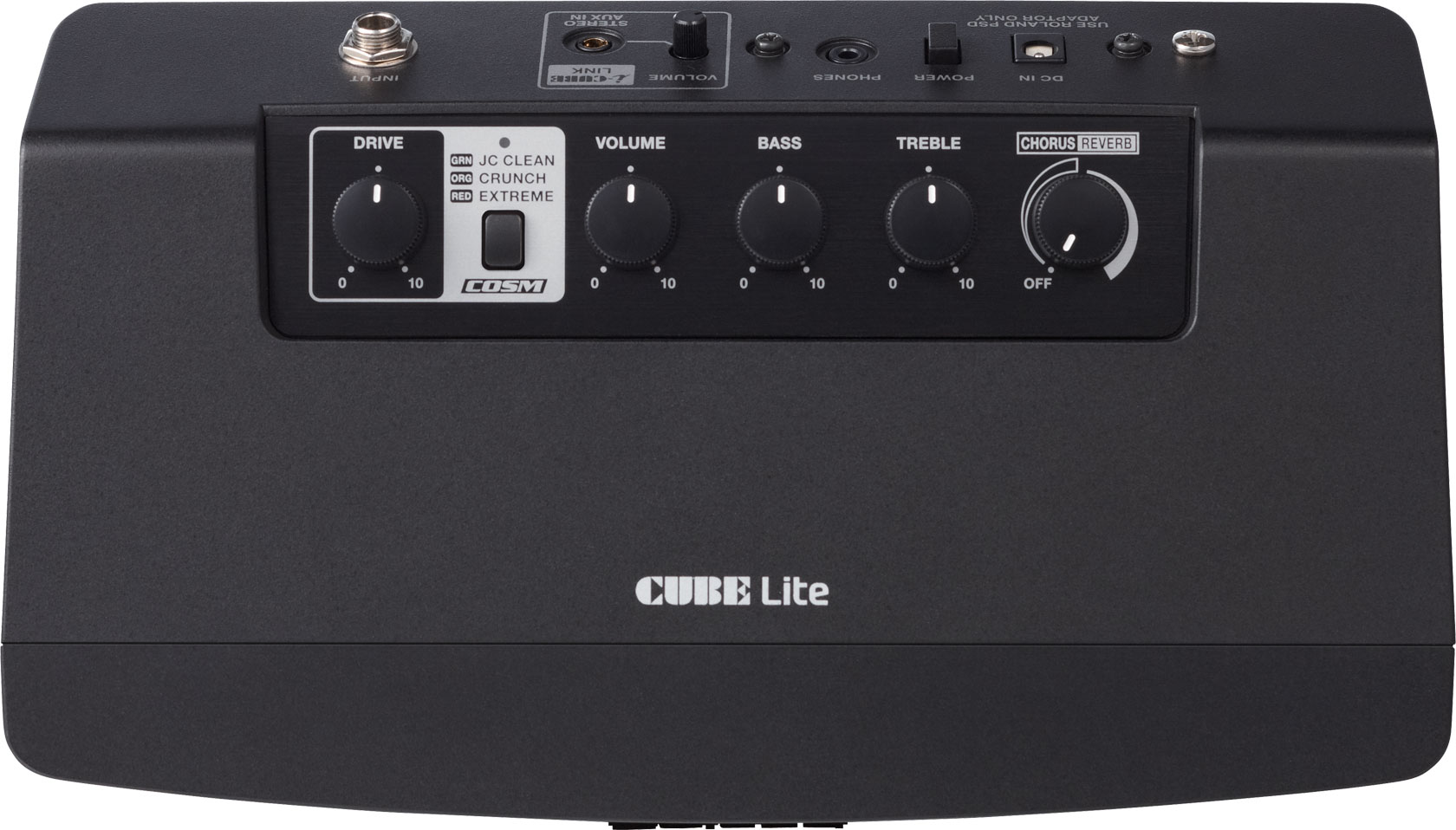
The Cube Lite offers you three different COSM-modelled amplifier choices, called JC Clean, Crunch and Extreme. Apart from the Drive- and Volume-controls you’ll also find a two-band EQ-section.
The combo’s effect selection has been simmered down to a chorus and a reverb.
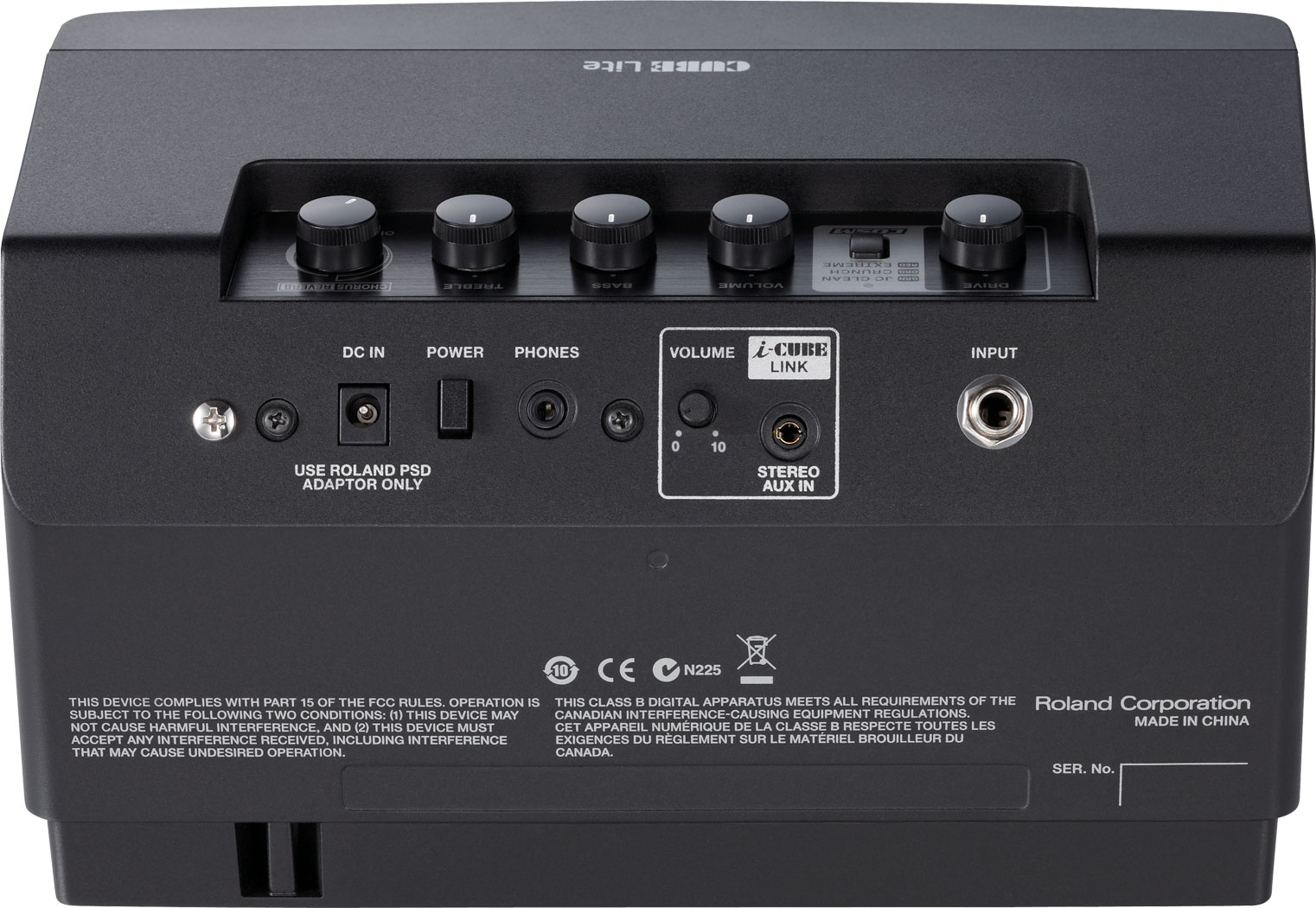
All of the Roland’s inputs and outputs are found on the combo’s back panel: In addition to the regular guitar input and the mini-jack for the headphones, you’ll find an input labelled ”i-Cube Link” with its own small volume control next to it.
Thanks to the i-Cube Link Roland’s Cube Lite is able to communicate directly with your Apple iPhone, iPad or iPod Touch. When hooked up with the special lead found in the box, the combo becomes your iWhatsit’s sound card.
Roland offers you their Cube Jam-app – which turns your iPhone/iPad into your own guitar practicing and recording machine – for free download.
The Cube Lite will also work as your personal stereo, when using a standard stereo cable with mini-plugs connected to the i-Cube Link input.
****

Roland’s Cube Lite is a refreshingly compact and lightweight piece of gear. Granted, its plastic chassis may not be as trustworthy as the Micro Cube’s sturdier exterior, but on the other hand the Cube Lite will look much nicer in your living room.
I was blown away by the surprisingly full-bodied sound coming off the combo’s speakers – thanks in no small part, I’d reckon, to the 2.1-system’s subwoofer. The sound quality is definitely on a par with most personal hi-fi systems, except maybe in terms of the Cube Lite’s slightly narrower stereo spread.
The combo’s three COSM-models cover virtually all bases of electric guitardom. I don’t think anyone will leave their gig rig at home in favour of the Cube Lite, but this dwarf is well up for inspiring training sessions and on-the-spot song demoing. I kind of missed a delay as an additional effect option, but you can’t have everything, now, can you?
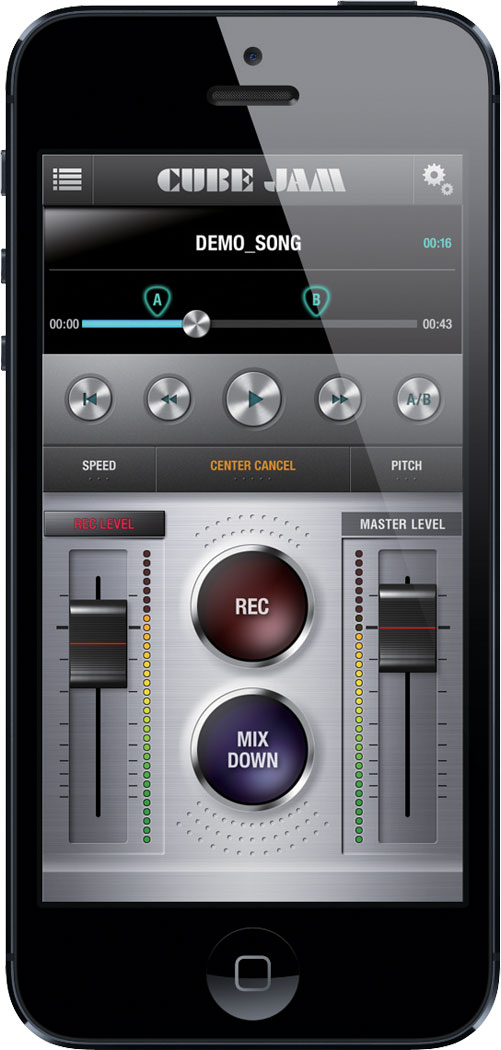
While this little Roland already works fine as a stand-alone practice amp, the cool Cube Jam-app adds a lot of fun and value to the whole package.
Cube Jam can use your iPhone’s/iPad’s whole music library as backing track material (except for copy-protected files). The app allows you to change playback speed and transpose your backing track, as well as to run a loop using the A/B-function. Center Cancel does what it says on the tin – you can dial out parts like the main vocal or lead guitar on-the-fly.
My favourite Cube Jam-features are Record and Mixdown, which allow you to play along to the backing track and record the whole thing. The app automatically stores each pass as a separate take, which makes it possible to select the best take for eventual mixdown, using the two virtual faders. Pressing the Mixdown-button creates a new WAV-file (44.1 kHz/16-bit) and stores it in your iThingy’s memory.
You can even overdub by selecting the latest mix as your new backing track and adding a new guitar track on top. The only drawback here is that the newly recorded track is always panned to centre, but that’s a compromise I could live with, as this app is meant mainly for practice and not for multitrack recording purposes.
I had prepared a backing track for this review using my iMac’s Garageband-software. I exported the backing track onto my iPad, and then recorded a guitar solo, playing my Epiphone Casino through the Roland Cube Lite (on Crunch), while recording it all onto Cube Jam.
Here’s what the Cube Jam-mix sounds like:
And here’s the guitar track on its own:
****
Here are two examples of the JC Clean- and Extreme-models played with a Stratocaster, and recorded with a Zoom H1:
****
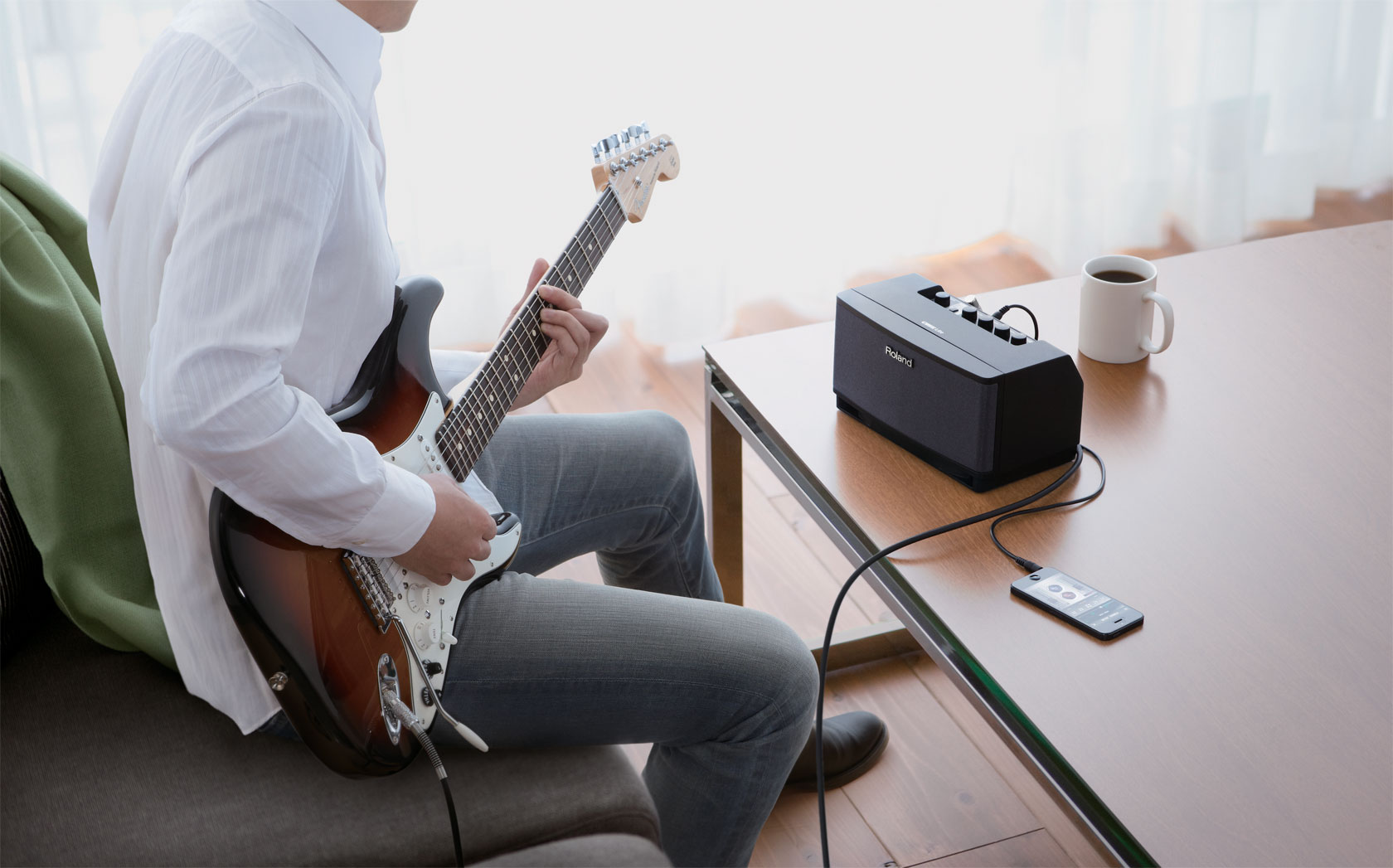
In my opinion the Roland Cube Lite is a fine little practicing amp. You’ll get the most fun out of it if you’re already an Apple iPhone or iPad user, but the Cube Lite also works nicely as a stand-alone combo.
****
Roland Cube Lite
155 €
Finnish distribution: Roland
****
Pros:
+ COSM-models
+ 2.1 stereo system
+ external sound card for iPhone/iPad
+ compact
+ Cube Jam-app
Cons:
– no battery option
****
Upouusi Roland Cube Lite (155 €) on Cube-perheen nuorin jäsen, ja suositun Micro Cube -harjoitusvahvistimen pikkuveli.
Muista Roland Cubeista poiketen Cube Lite ei ole neliön muotoinen, vaan tyylikäs stereofoninen (2.1) harjoitusvahvistin muistuttaa ulkonäöltään enemmän firman akustiselle kitaralle tarkoitettuja komboja. Erittäin kompaktiin laitteeseen ei mahtunut paristolokeroa subwooferin takia – Cube Lite toimii ainoastaan pakettiin kuuluvalla virtalähteellä.
Cube Liten vahvistintarjonta on supistettu kolmeen laadukkaaseen COSM-mallinnukseen, joiden nimet ovat JC Clean, Crunch ja Extreme. Drive- ja Volume-säätimien lisäksi on tarjolla erilliset nupit bassotaajuuksille ja diskantille.
Pikkuvahvistimen efektiosastolta saa joko chorusta tai kaikua.
Rolandin kaikki liittimet löytyvät takapaneelista: tavallisen kitaratulon ja minikokoisen kuulokelähdön väliin on sijoitettu i-Cube Link -niminen tulo omalla volume-säätimellä.
i-Cube Linkin ansiosta Roland Cube Lite pystyy kommunikoimaan suoraan iPhonen, iPadin tai iPod Touchin kanssa. Vahvistin voi silloin toimia suoraan puhelimen/tabletin äänikorttina – siihen tarvitaan ainoastaan paketista löytyvää johtoa.
Rolandin ilmainen Cube Jam -app tekee iPhonesta/iPadista ja Cube Litesta i-Cube-tulon kautta kätevän ja helppokäyttöisen harjoituskeskuksen.
Tavallisella stereojohdolla pystyy käyttämään kombon i-Link-tuloa myös perinteisena stereotulona muiden mp3- tai cd-soittimien kanssa.
****
Roland Cube Lite on hyvin kompakti ja kevyt laite. Sen muovikotelo ei ole ehkä yhtä kestävän oloinen kuin esimerkiksi Micro Cube, sen sijaan sopii Cube Liten kauniimpi ulkokuori huomattavasti paremmin yhteen Applen i-laitteiden kanssa.
Pikkukombosta lähtee uskomattoman täyteläinen ääni, kiitos 2.1-järjestelmän subwooferin. Cube Liten äänen laatu on samalla tasolla hyvien mikrokokoisten hifi-laitteiden kanssa, paitsi ehkä hieman stereokuvan leveydessä, joka on tässä vähän suppeampi hyvin lähellä toisiaan olevien kaiuttimien takia.
Cube Liten kolme COSM-kanavaa kattavat käytännössä kitarasoundien koko spektrin suvereenisti. Kukaan ei varmasti jätä keikkatilanteessa isoa laatuvahvistitaan kotiin Cube Liten takia, mutta tällaisen pienen kotivahvistimen puitteissa soundit toimivat loistavasti treenaamiseen tai kevyeen demoiluun. Efektiosastossa olisin mielellään nähnyt choruksen ja kaiun lisäksi vielä ehkä jonkin delayn – mutta kaikkea ei voi aina saada.
Jo yksinään pikku-Roland on oikein kiva harjoituskaveri, mutta mainio Cube Jam -sovellus antaa touhuun roimasti lisää käteviä toimintoja.
Cube Jamissa voi käyttää iPhonen tai iPadin koko musiikkikirjastoa taustanauhana harjoitteluun (paitsi kopiosuojattuja tiedostoja). Taustan nopeutta voi säätää, samoin sen sävelkorkeutta, ja A/B-napilla pystyy looppaamaan halutun kohdan biisissä. Center Cancel -toiminnolla taas voi monesta kappaleesta poistaa laulun tai soolokitaran lennossa.
Oma lempiominaisuuteni on kuitenkin Cube Jam -appin äänitys ja miksaus, jolla voi tallentaa omaa soittoa. Sovellus pitää jokaista ottoa taustabiisin kansiossa. Lopuksi voi valita parhaan ottoksen, sekä säätää kitarasignaalin tasoa ja master-tasoa sopiviksi. Tämän jälkeen saa painamalla Mixdown-nappia valmiin miksauksen uutena Wav-tiedostona (44,1 kHz/16 Bit) puhelimen (tai tabletin) muistiin.
Myös päällesoitto on mahdollista: kun asettaa juuri miksatun kappaleen uudeksi taustabiisiksi, voi tämän päälle äänittää uuden kitaraosuuden. Ainoa miinuspuoli tässä touhussa on, että kitararaita on säädetty kiinteäksi stereokuvan keskelle, koska Cube Jam on tarkoitettu pääsääntöisesti kitaraharjoitteluun, eikä ping-pong-äänitykseen.
Äänitin tätä juttua varten ensin iMacilla Garagebandissa Blues-taustan, jonka vein sen jälkeen iPadille. Äänitin sitten kitaraosuuden soittamalla Epiphone Casino -kitaraani Roland Cube Lite -kombon läpi (Crunch-kanava kaiulla) Cube Jam -ohjelmaan, jossa biisi on lopuksi myös miksattu. Tältä se kuulostaa:
Crunch + Reverb + Epiphone Casino
****
Tässä ovat vielä Zoom H1:llä äänitetyt esimerkit kombon JC Clean- ja Extreme-vaihtoehdoista:
JC Clean + Chorus + Fender Stratocaster
Mielestäni Roland Cube Lite on erittäin kätevä harjoituskumppani, jonka hankinta kannattaa etenkin silloin, kun on jo käytössä Cube Jam -sovelluksen kanssa yhteensopiva Apple iLaite.
****
Roland Cube Lite
155 €
Maahantuoja: Roland
****
Plussat:
+ COSM-vahvistinmallinnukset
+ 2.1-stereojärjestelmä
+ ulkoinen äänikortti iPhonelle/iPadille
+ pienikokoinen
+ Cube Jam -sovellus
Miinukset:
– ei toimi paristoilla

****

At last year’s Frankfurt Musikmesse Blackstar launched their ID-series of programmable guitar amps. Now these amps are finally available in Finland.
The new series is a first in Blackstar’s product range – guitar amps without any valves. These are the company’s first digital modelling amps, and Blackstar being Blackstar, they’ve come up with a couple of exciting new features for the occasion.
****

The Blackstar ID:60TVP (current price in Finland: 499 €) is a mid-size, 60 Watt guitar amp, equipped with a single 12-inch speaker.

The compact combo’s cabinet is covered in a black, leather-like vinyl, and sports black plastic corner protectors.

The ID:60TVP’s back is almost completely closed, which no doubt helps with achieving authentic stack tones.

Blackstar use their own Blackbird-series speakers for the ID-series, which are made under license in China, just like the amps themselves.

One downside to valve amplifiers has always been their substantial weight. The ID:60TVP has no such problems – it weighs in at only 18 kilos, which makes it relatively easy to lift and carry.

Behind the Blackstar’s stylishly restrained exterior there’s some lightning-fast digital signal processing at work. The combo is also equipped with a very generously-sized patch memory, which stores a whopping 128 patches.
The front panel only gives you access to the first 12 patches, however, so if you want to take advantage of all of the combo’s possibilities, I’d recommend buying the optional four-button footswitch unit (the ID:FS-10).
The front panel’s left half deals with the combo’s preamp. The three-band EQ is enhanced by Blackstar’s patented ISF-control, which lets you change the amp’s character from British to American, with many cool in-between settings.

The Voice rotary switch offers you six different amp models as raw materials for your own patches.
Thanks to its USB-connector the ID:60TVP can also be used as an external soundcard for recording your guitar tracks direct, as well as for re-amping already recorded, dry material.
With Blackstar’s own editor software you can access all of the amp’s parameters. Additionally, it also provides a very nifty phrase trainer for practicing.

The front panel’s right half is reserved for the combo’s effect and master sections, as well as Blackstar’s revolutionary TVP-function.

Up to now, most modelling amps have centered their sounds on combining a modelled amp with a cabinet model.
Blackstar’s approach is a little different, by adding a dedicated power amp modelling section into the mix. The TVP-selector (TVP = True Valve Power) gives you access to eight different virtual power amp valve types.
A physical power amp valve doesn’t just amplify the amp signal in a tonally neutral way, acting more like a multiband master compressor instead. Different valve types react differently to the same signal, resulting in different amounts of compression, as well as different frequency curves.
Power amp valves play an important part in the overall tone and punch of a genuine valve amp – they’re a huge part of what we call an amp’s character. Now Blackstar have addressed this issue and come up with a way to let the player choose between different power amp characteristics in a quick and easy manner.

The ID:60TVP’s effects section offers you the most important guitar effects and is easy to use.
There are four modulation effects to select from – chorus, flanger, phaser and tremolo – as well as the same amount of different delay and reverb types, respectively. Synchronising effects to your music is easy by using the Tap Tempo button (or the IF:FS10 board).

You will find an excellent speaker-emulated line level output on the ID:60TVP’s back panel, along with an auxiliary input, a MIDI IN socket, and the jack for the footswitch unit.
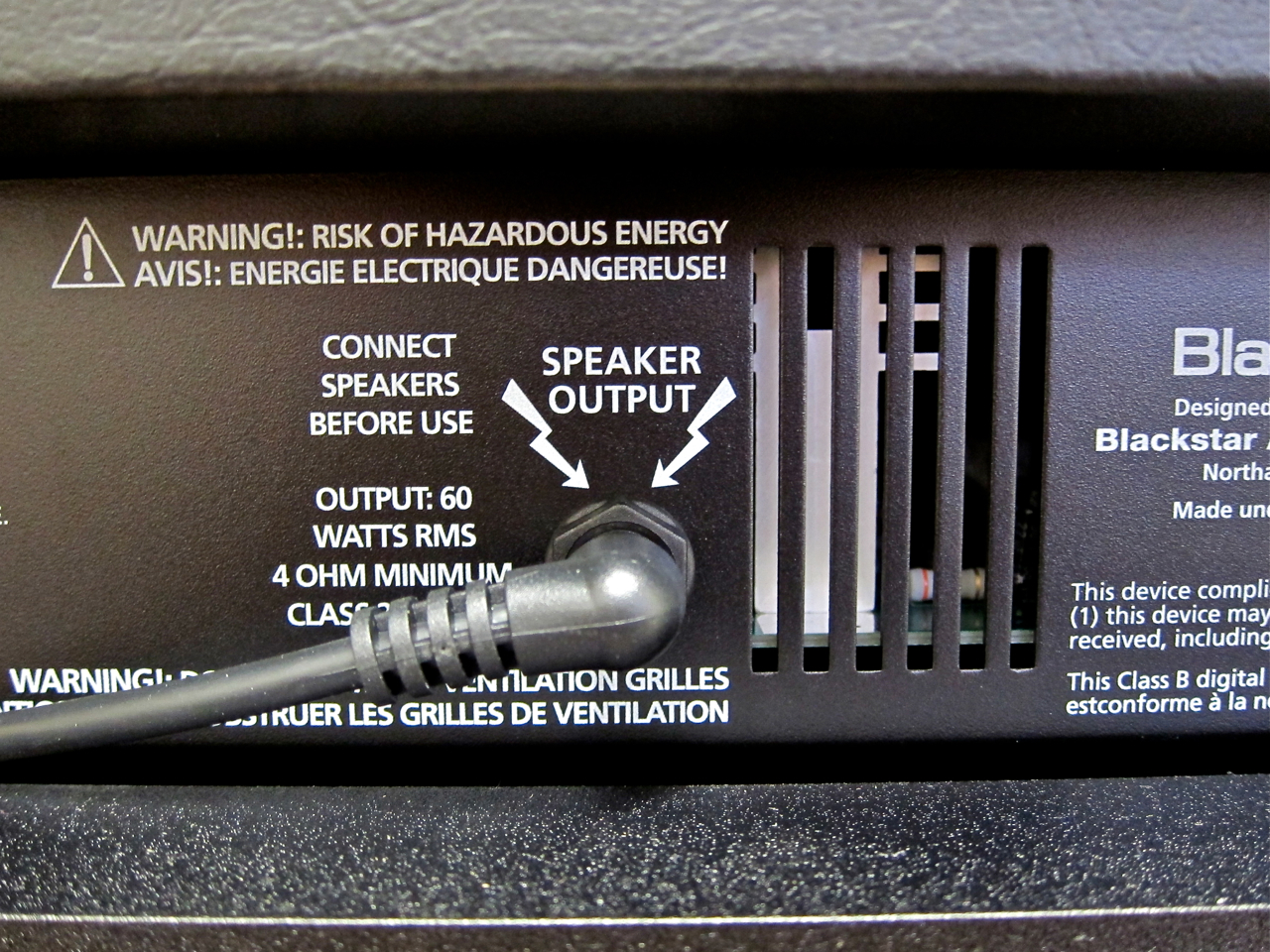
The combo sports a solitary speaker output.
****

Blackstar’s ID:FS-10 (current price in Finland: 72,60 €) is a four-button footswitch unit for use with ID-series amplifiers.
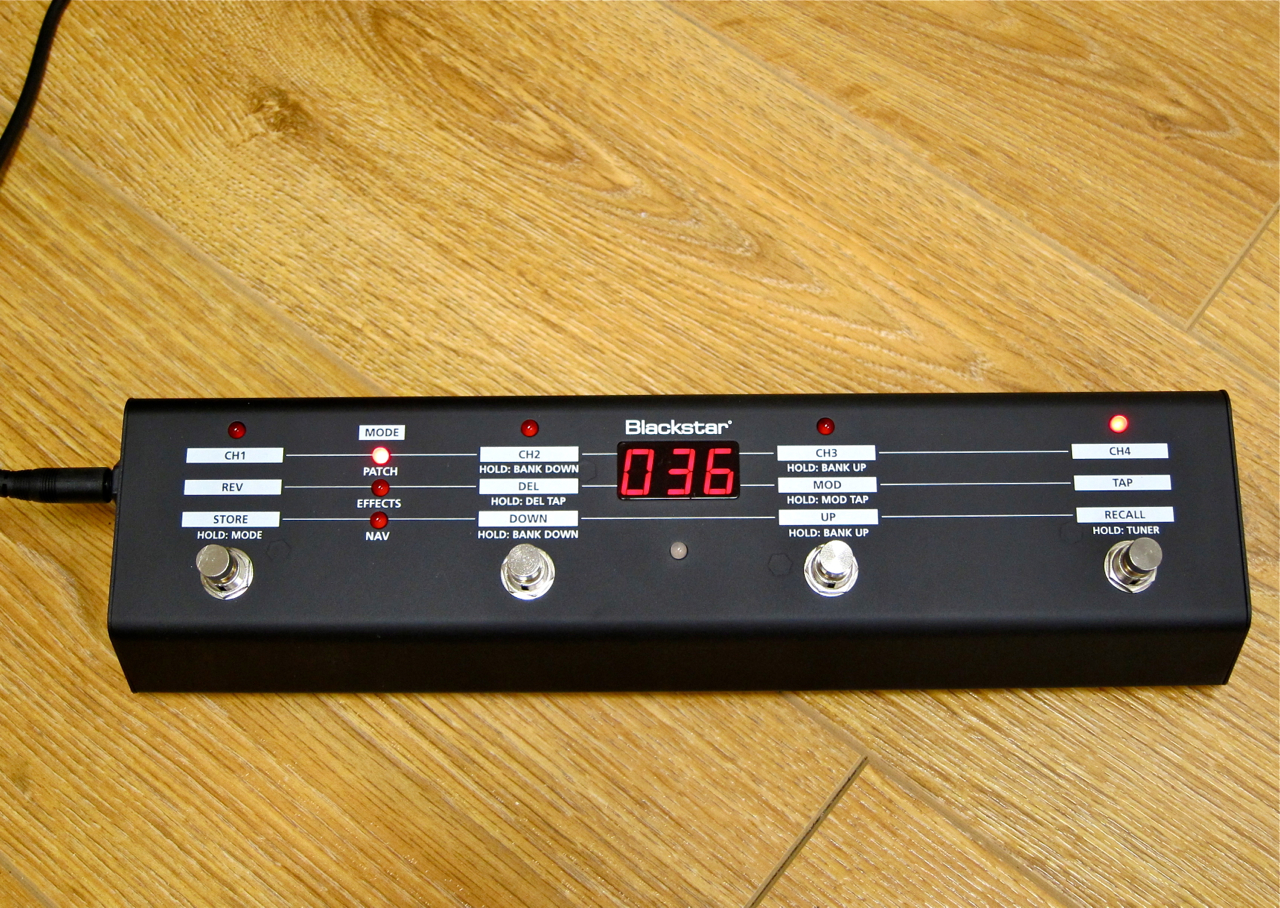
Using the footswitch unit will give you access to all of the combo’s 128 patches, and you’ll be able to switch effects on and off on-the-fly. Furthermore, using the built-in tuner is far easier with the footswitch unit.
****

In my view, the Blackstar ID:60TVP’s TVP-feature puts it head and shoulders above its direct competitors. True Valve Power clearly raises the bar for what a great modelling amp should sound like.
With TVP disengaged the Blackstar combo sounds quite good already, but it still lacks most of a good valve amp’s punch and multidimensional impact. The tones are like quality snapshots of the genuine article.
When you press the TVP-button the amp really springs to life and jumps into turbo mode. The tones become exciting and inspiring, and suddenly there’s that depth and the interaction between the player, his/her instrument and the amp that is missing from many lesser designs.
And yes, there are – sometimes dramatic – differences between the virtual power amp valves in their behaviour, which mimic their physical counterparts surprisingly faithfully. Thanks to the TVP-feature Blackstar’s ID-series manages to offer modelling guitar amps, which feel and sound ”real”, and which are imbued with a genuine valve amp’s sheen and punch.
Combining the different options brought to the mix via the Voice and TVP selectors, the fine EQ-section, the ISF-function, as well as the quality effects on offer leaves the player with a real wealth of fantastic guitar tones for final fine-tuning using the master section’s Resonance and Presence controls.
Due to their feature-packed nature, I’d recommend taking your time to get to know any ID-series amplifier thoroughly, so you can really take advantage of all the goodies on offer here.
Here are a few examples I recorded for you:
Blackstar ID:60TVP – Strat Clean delay reverb
Blackstar ID:60TVP – Hamer Clean tremolo delay reverb
Blackstar ID:60TVP – Strat Clean chorus reverb
Blackstar ID:60TVP – Strat Crunch flanger delay reverb
Blackstar ID:60TVP – Hamer Crunch flanger reverb
Blackstar ID:60TVP – Strat OD1 delay reverb
Blackstar ID:60TVP – Hamer OD1 reverb
Blackstar ID:60TVP – Strat OD2 delay reverb
Blackstar ID:60TVP – Hamer OD2 phaser delay reverb
****
In my opinion Blackstar have landed a bull’s eye with the ID:60TVP. The company have really put all their valve amp experience to good use, managing to come up with a revolutionary concept in digital modelling guitar amps.
****
Blackstar ID:60TVP
499 €
Finnish distributor: Musamaailma
****
Pros:
+ great value for money
+ weight
+ quality of amp models
+ TVP-feature
+ quality of effects
+ sound
+ stores 128 patches
Cons:
– footswitch unit optional
****


 Kitarablogi.com – Finland's premier Guitar and Bass blog