Review: Tokai ES-138/SR • ES-145G/BB • ES-162/TB

Tokai ES-162 – and case

Tokai Guitars have a well-earned reputation for making high-quality electric guitars and basses, often ”inspired” by vintage designs. This time we got three semis from the very top of Tokai’s Japanese model range for review.

****

Tokai ES-138SR – full front

The Tokai ES-138 (current price in Finland: 1,368 €, incl. hard case) is the company’s version of a 1958 Gibson ES-335, available in either see-through red or piano black.

Tokai ES-145G – full front

Tokai’s ES-145G (current price in Finland: 1,431 €, incl. hard case) is a lightly updated variation on the theme, which comes equipped with gold-coloured hardware and a black finish.
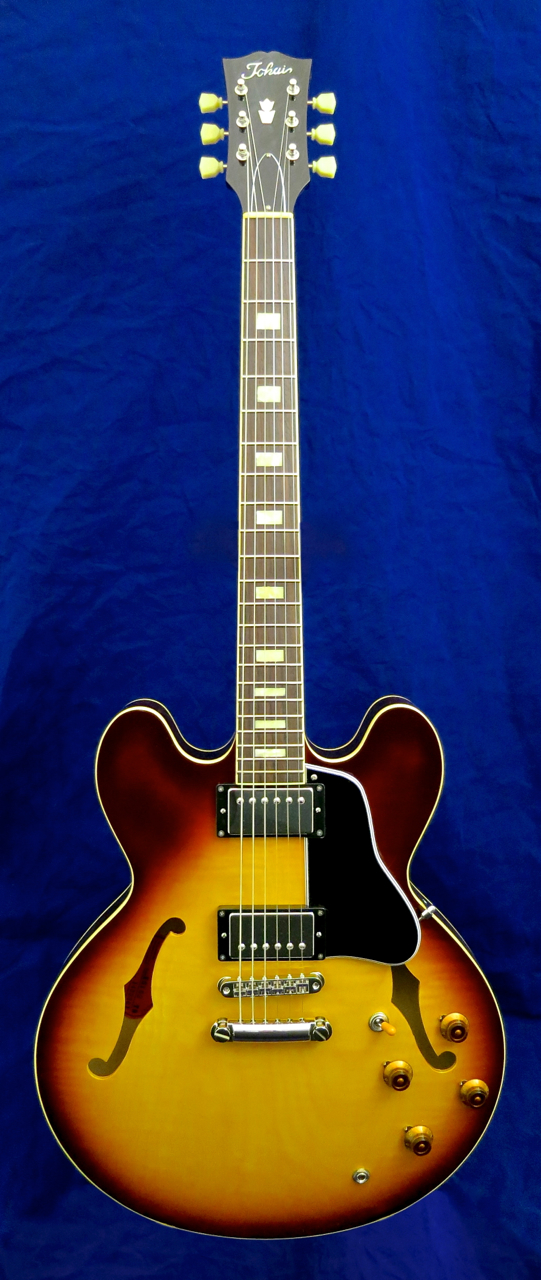
Tokai ES-162TB – full front

The Tokai ES-162 (current price in Finland: 1,628 €, incl. hard case) is the most expensive model of the three on review. The ES-162 comes with post-1962 style small block markers, brass bridge saddles, and a light aluminium stopbar. The icing on the cake is this model’s vintage-style nitrocellulose finish – you can choose between a tri-burst and red.

Tokai ES-138 – headstock

Tokai use top-drawer Gotoh tuners on the three tested models.

Tokai ES-138 – tuners

The ES-138 and ES-162 come equipped with vintage-style Kluson-copies.
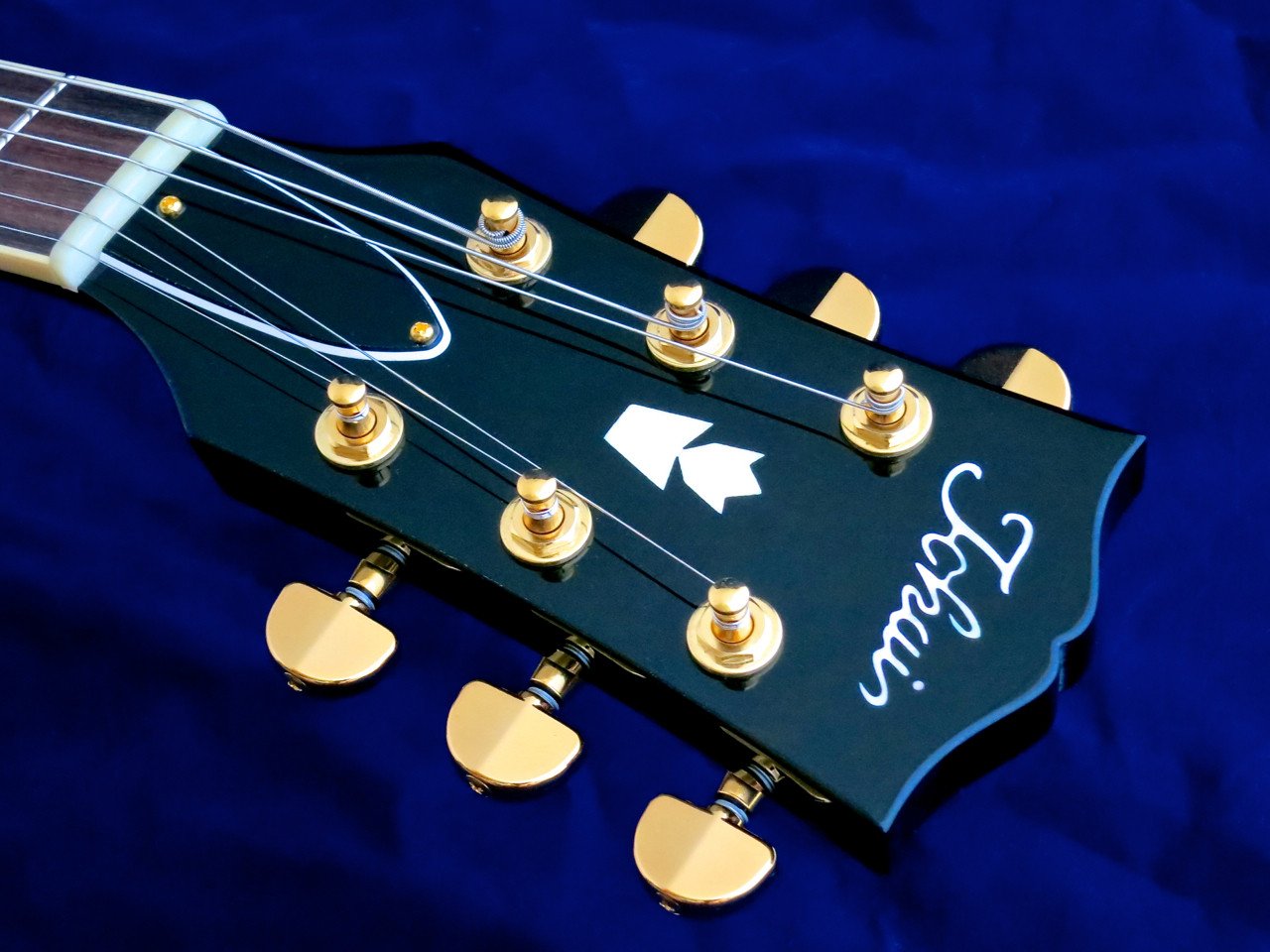
Tokai ES-145G – headstock

Tokai ES-145G – tuners

For the ES-145G Tokai have chosen a set of modern enclosed Gotohs.

Tokai ES-145G – fingerboard

These Tokai Japan -instruments all come with a one-piece mahogany neck, complete with a vintage-correct, steep headstock angle (17 degrees).

The bound rosewood fretboards on the ES-138 and ES-145G models sport dot markers.

Tokai ES-162 – fretboard

As the ES-162 is Tokai’s version of a 1962-’64 ”Block Marker” ES-335, this guitar comes with small rectangular inlays made of pearloid.

All three instruments come fitted with medium-size frets.

Tokai ES-138 – bridge

Tokai’s ES-guitars come with Gotoh Tune-o-matic-bridges and stopbar tailpieces.

Tokai ES-145G – bridge

On the ES-138 and the ES-145G we find Gotoh’s LS-series hardware – die-cast (Zamac) parts with steel bridge saddles.

The ES-162 goes one step more ”vintage” by using a Gotoh HLS -set, comprising an ultra-light aluminium stopbar tailpiece and chrome-plated brass saddles on the bridge.

Tokai ES-162 – pickups

This guitar trio is equipped with the same pickups – a pair of Tokai PAF-Vintage Mark II -humbuckers.

Tokai ES-145G – controls

All the electronic components are top quality Japanese parts.

Tokai ES-case

Certain Tokai Japan -models are now sold in Finland complete with Tokai’s cool hard cases.

****

Tokai ES-138 – beauty shot 1

The cherry red semi-acoustic is one of guitardom’s most iconic electric models. For many this curvy and well-rounded body, made from heat-pressed maple plywood, is the most beautiful body style ever.

Tokai’s ES-138 recreates this classic guitar in its earliest guise (c. 1958), complete with dot markers and a long pickguard, which extends past the bridge.

Even though an ES-335-type body is comparatively large (but thin), many of the best semi-acoustics are surprisingly lightweight. The Tokai ES-138 is very comfortable to play – both seated and strapped on – and balances superbly.

This model’s neck profile is a medium-thick ”D”, which feels great (at least in my hand). The fret job on the test sample was excellent, the set-up spot-on, and the action very light (with a set of 010s). The ES-138’s acoustic tone is typical of this type of guitar – very hollow and nasal with a clicking attack.

Tokai’s own rendition of the classic PAF-humbucker is superb, there’s no two ways about this! The output signal is moderate, and the basic sound is very open and dynamic. The neck pickup has a warm, round tone, but doesn’t mush up. The middle position on the selector switch gives you a very balanced and open sound. The bridge humbucker on its own sounds fresh and crispy, with not even a hint of annoying mid-range ”nagging”.

Tokai ES-138 – body beauty

****

Tokai ES-145G – beauty shot 1

The black-and-gold ES-145G sure looks very stylish – this is the distinguished gentleman in Tokai’s ES-range, who keeps his cool and looks dapper, no matter what.

Our test sample was the heaviest guitar of this trio, but still much, much lighter than may lesser contenders.

The ES-145G’s neck profile is also the chunkiest. This D-profile is a real palm-filler, giving you a real taste of late-Fifties goodness, and managing to stay just on the right side of ”fat”.

The workmanship displayed, and playability offered by the ES-145G are simply superb. Played acoustically there’s not a lot of difference between the ES-145G and the ES-138.

Through an amp, the ES-145G sounds just like a quality semi-acoustic should – humbucker power, balanced by a clean mid-range.

Tokai ES-145G – body beauty

****

Tokai ES-162 – beauty shot 1

Our review sample of the Tokai ES-162 is a real featherweight!

The ES-162’s Block Marker -personality is completed by an authentic early-Sixties style neck profile. It’s an oval ”C” that is less of a handful than the ES-138’s neck.

Top marks for the ES-162’s workmanship, finish and playability – this is a first-rate instrument.

This model’s thin nitro lacquer, its lightweight tailpiece, as well as the brass saddles on the Tune-o-matic combine into a very open-sounding and dynamic acoustic performance.

Standing in the same room with your amp, it is easy to notice an added degree of 3D-depth and scope in the guitar’s amplified tone. Interestingly – as is so often the case – recording the sound doesn’t seem to fully convey this added tonal dimension. You have to experience the ES-168 ”in the flesh” to get the full picture; the recordings sound remarkably similar to the other two models’ performances.

Tokai ES-162 – body beauty

****

Tokai ES-162 – label

The reputation of Tokai Japan -instruments has been legendary among players and collectors ever since the 1970s. This trio of ES-semis makes it crystal-clear that Tokai actually deserves this reputation thanks to the superb quality of it’s Made-in-Japan guitars.

Tokai’s ES-138, ES-145G and ES-162 offer you genuine Japanese quality at very fair prices.

****

Tokai Japan semi-acoustic electrics

Tokai ES-138 – 1,368 € (hard case included)

Tokai ES-145G – 1,431 € (hard case included)

Tokai ES-162 – 1,628 € (hard case included)

Finnish distributor: Musamaailma

****

Pros:

+ Japanese workmanship

+ one-piece neck

+ superb finish and set-up

+ Gotoh-hardware

+ authentic tone

Review: DigiTech HardWire Supernatural

****

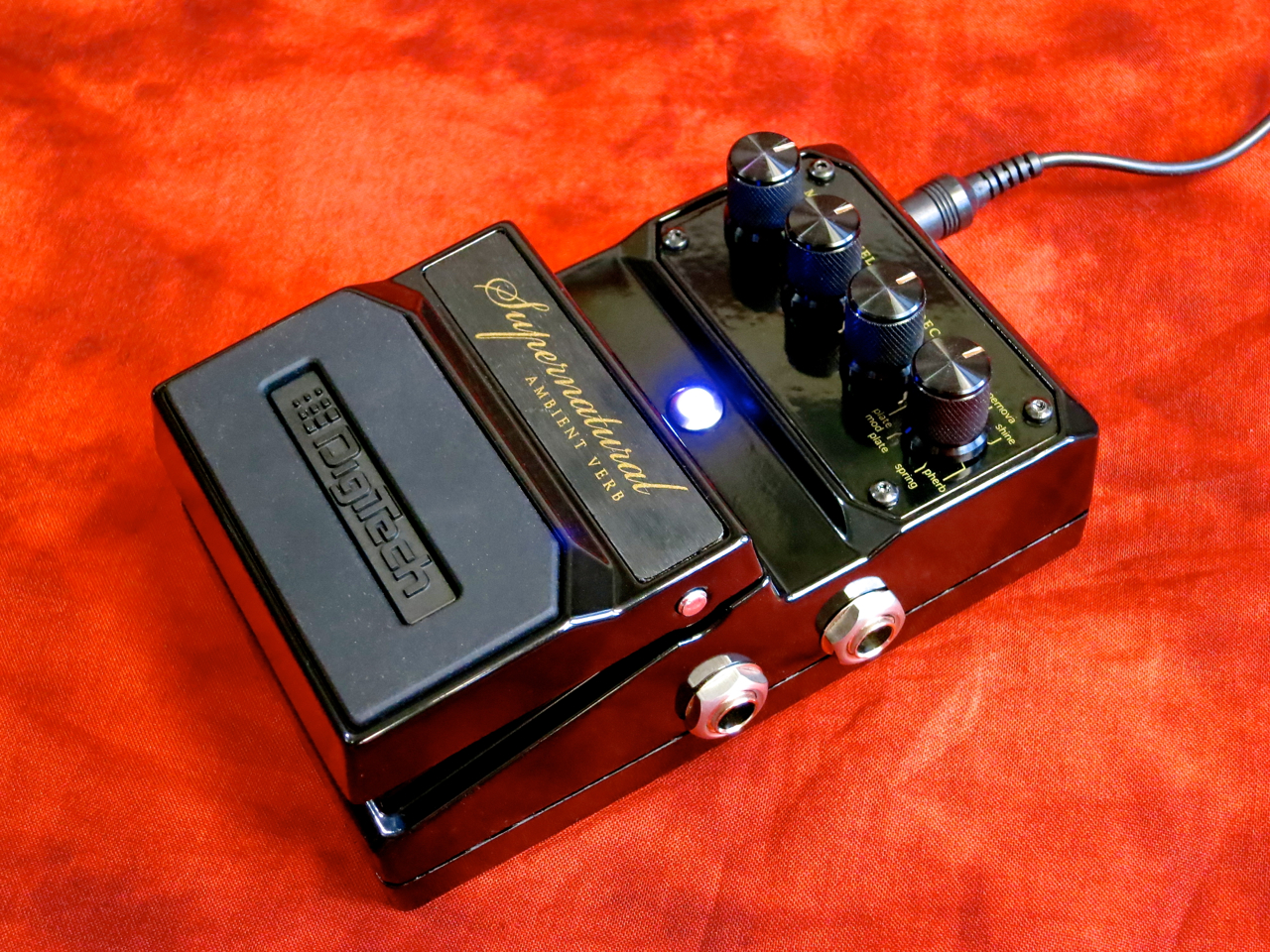
Digitech Hardwire Supernatural – angled w LED

Digitech’s new Hardwire Supernatural reverb pedal lays seven genuine Lexicon-reverb algorithms at your feet.

****

Digitech Hardwire Supernatural – top view

The Hardwire Supernatural (Finnish street price approx. 140 €) is Digitech’s newest digital reverb in pedal form.

The pedal sports three controls:

Mix is used for setting the mix of the dry and wet signals in the output. Liveliness lets you adjust the reverb’s treble content and brilliancy. The length of the delay is controlled using the Decay-knob.

The Supernatural can be used monophonically (mono signal in –> mono signal out), as well as in stereo (mono or stereo signal in –> stereo signal out). The pedal automatically detects which jacks are used at any given time and puts itself into the correct mode of operation accordingly.

Digitech Hardwire Supernatural – Stomplock

In addition to the manual, the box also includes a glow-in-the-dark sticker to put on the switch, Hardwire’s Stomplock rubber cover (which protects the controls from accidental parameter changes), as well as a velcro base for pedalboard installation.

Even though the new Hardwire pedal will work for an hour or two running on a 9 V block, you should really use a PSU with a power-hungry digital effect, such as this. A power supply isn’t included with the Supernatural, but the pedal is conforming to the (de facto) Boss-standard.

****

Digitech Hardwire Supernatural – right w LED

The Hardwire Supernatural offers you seven different reverb types, with a strong emphasis on processed reverbs. There are two ”pure” reverb types, with the rest offering combinations of reverb and modulation effects.

Plate reverb is one of the unmodulated, classic algorithms:

All the other sound clips have been recorded with the three controls set to 12 o’clock, but here’s a taste of the Plate type with Mix set to 3 o’clock and Decay turned up all the way:

Plate Mod adds a chorus effect on top of a plate reverb:

Shimmer combines an open-sounding Hall reverb with an octaver:

Supernova is a very intense-sounding reverb with a deep flanger and a pitch shifter modulating:

Shine is a chorus-endowed version of the Shimmer reverb:

Pherb modulates a Hall-style reverb with some hefty phasing:

Last, but not least, there’s a tasty version of an unadulterated spring reverb, called Spring:

****

Digitech Hardwire Supernatural – left

In my view, Digitech’s Hardwire Supernatural is a superb reverb pedal, which gives you the two most important traditional reverb types for guitar – namely Plate and Spring – along with some excitingly strange modulated reverb effects.

The Supernatural is a great pedal for it’s spring and plate reverbs alone, but you will get most out of this stompbox, if you’re into experimental and/or colourful guitar sounds.

****

Digitech Hardwire Supernatural

Finnish street price approx. 140 €

Finnish distributor: EM Nordic

A big thank you to DLX Music Helsinki for the loan of the review sample!

****

Pros:

+ seven genuine Lexicon-reverbs

+ Stomplock control cover

+ sound

Testipenkissä: Tokai ES-138/SR • ES-145G/BB • ES-162/TB

Tokai ES-162 – and case

Tokai Guitarsilla on erittäin hyvä maine laadukkaiden sähkökitaroiden ja -bassojen valmistajana. Tällä kertaa testissä kävi kolme Japanissa käsityönä valmistettua Tokai ES -sarjan soitinta hintaskaalan kalliimmasta päästä.

****

Tokai ES-138SR – full front

Tokai ES-138 (hinta: 1.368 €, sis. kovan kotelon) on firman versio vuoden 1958:n Gibson ES-335 -kitarasta, joka on saatavilla sekä punaisena että mustana.

Tokai ES-145G – full front

Tokai ES-145G (hinta: 1.431 €, sis. kovan kotelon) on kullanvärisillä metalliosilla varustettu ja kevyesti modernisoitu tulkinta aiheesta. Se on saatavana ainoastaan mustana.

Tokai ES-162TB – full front

Tokai ES-162 (hinta: 1.628 €, sis. kovan kotelon) on kolmikon kallein malli, jolla on suorakulmaiset otemerkit, tallapalat messingistä, sekä alumiininen kieltenpidin. Piste i:n päällä on kuitenkin ES-162:n viimeistely aidolla nitrolakalla. Malli on saatavana kolmivärisellä liukuvärityksellä tai punaisena.

Tokai ES-138 – headstock

Tokai käyttää näissä kitaroissa Gotohin valmistamia laatuvirittimiä.

Tokai ES-138 – tuners

ES-138- ja ES-162-kitarat on varustettu Kluson-tyylisillä vintage-koneistoilla.

Tokai ES-145G – headstock

Tokai ES-145G – tuners

ES-145G:n lapaan taas on asennettu nykyaikaisia suljettuja Gotoh-virittimia.

Tokai ES-145G – fingerboard

Näissä Tokai Japan -soittimissa on yhdestä palasta veistettyjä mahonkikauloja vintage-tyylisellä, jyrkällä lapakulmalla (17 astetta).

ES-138- ja ES-145G-malleissa käytetään pieniä pyöreitä otemerkkejä reunalistoitetussa palisanteriotelaudassa.

Tokai ES-162 – fretboard

ES-162 taas on Tokain versio vuoden 1962-’64 ns. ”Block Marker” ES-335:sta, jossa upotukset ovat keskikokoisia suorakulmia.

Nauhakoko on näissä kolmessa ES-mallissa medium.

Tokai ES-138 – bridge

Kaikissa kolmessa Tokai ES -kitaroissa on Gotohin valmistama palkkimainen kieltenpidin, sekä kevyesti nykyaikaistettu versio Tune-o-Matic-tallasta.

Tokai ES-145G – bridge

ES-138:ssä ja ES-145G:ssä käytettään Gotoh LS -settiä sinkkipitoisesta valumetallista teräksisillä tallapaloilla.

ES-162:n Gotoh HLS -setti on muutaman asteen verran vintagemaisempi, kun käytössä on erittäin kevyt alumiinista valmistettu kieltenpidin, sekä kromattuja tallapaloja messingistä.

Tokai ES-162 – pickups

Kolmikon mikrofonivarustus on sama – kitaroissa on kaksi Tokai PAF-Vintage Mark II -humbuckeria.

Tokai ES-145G – controls

Huippulaadukas linja jatkuu luonnollisesti myös ES-kolmikon japanilaisissa elektroniikkaosissa.

Tokai ES-case

Tokai Japanin hienoimpia kitaramalleja myydään nykyään firman omissa laadukkaissa koteloissa.

****

Tokai ES-138 – beauty shot 1

Kirsikanpunainen puoliakustinen on yksi legendaarisimmista sähkökitaramalleista. Useimpien mielestä tämä kurvikas, muottiin prässätystä nelikerroksisesta vaahteravanerista tehty koppa on kaunein muoto ikinä.

Tokain ES-138 on kyllä upea tulkinta klassikkomallin varhaisesta versiosta, jolla on asianmukainen erikoispitkä plektrasuoja ja pyöreät otemerkit.

Vaikka ES-kitaroiden runko on pinta-alalta varsin mittava, on laadukas lajinsa edustaja kuitenkin useimmiten yllättävän kevyt. Tokai ES-138 on erittäin mukava pitää sylissä tai kantaa hihnassa, ja se asettuu hyvin nätisti tasapainoon.

Kaulaprofiili on keskituhti ”D”, joka istuu todella mukavasti ainakin minun käteeni. Nauhatyö oli testisoittimessa ensiluokkaista, ja kitara oli säädetty hyvin mukavaksi 010-kielisatsilla. ES-138:n akustinen klangi on mallityypin mukainen – ontto ja nasaali maiskuttavalla atakilla.

Täytyy kyllä sanoa, että Tokain omat PAF-tyyliset humbuckerit kuulostavat loistavilta! Lähtötaso on hyvin maltillinen ja perussoundi on mukavan avoin. Kaulamikki on lämmin, mutta erotteleva, ja valitsimen keskiasennossa soundi on ilmava. Tallahumbucker taas soi hyvin tuoreella äänellä, mutta ei ”marise” häiritsevästi keskialueella.

Tokai ES-138 – body beauty

****

Tokai ES-145G – beauty shot 1

Musta ja kultainen ES-145G on mielestäni erittäin tyylikäs soitin – Tokai ES -sarjan oikea herrasmies, joka näyttää hyvältä tilanteessa kuin tilanteessa.

Testiyksilö on aavistuksen verran painavampi kuin testissä käynyt ES-138, mutta silti vielä huomattavasti kevyempi kuin moni edullinen tulkinta samasta aiheesta.

ES-145G:n kaulaprofiili on tämän kolmikon tuhdein. Tällainen täyteläinen D-profiili antaa aitoa myöhäisen 1950-luvun makua. Kaula ei ole missään nimessä liian paksu, mutta se täyttää käden vakuuttavasti.

Työnjälki ja soitettavuus ovat myös ES-145G:ssä esimerkillisiä. Akustisesti soitettuna ES-145G:n ja ES-138:n soundit ovat käytännössä identtisiä.

Myös vahvistettuna on vaikea huomata selkeitä eroja – Tokai ES-145G soi kuin mitä erittäin laadukkaalta puoliakustiselta sopii odottaa.

Tokai ES-145G – body beauty

****

Tokai ES-162 – beauty shot 1

Testissä käynyt ES-162 on selvästi kolmikon kevyin yksilö!

ES-162:n Block Marker -ulkonäköön sopii myös kaulan autenttinen profiili, joka on ovaali ”C” ja hieman ohuempi kuin ES-138:ssa.

Työnjälki ja soitettavuus on myös ES-162:n tapauksessa ensiluokkaista.

Tämän kitaran ohut viimeistely nitrolakalla, sen kevyempi kieltenpidin, sekä tallan messingistä tehdyt tallapalat antavat Tokai ES-162:lle erittäin avoimen ja dynaamisen akustisen klangin.

Myös ”livenä” vahvistimen kanssa samassa huoneessa huomaa, että tämän kitaran soundissa on aavistuksen verran enemmän syvyyttä ja laajuutta. Mutta, kuten usein, äänitetyssä materiaalissa tämä ”kolmas ulottuvuus” katoaa melkein kokonaan, ja ES-162 kuulostaa miltei samalta kuin testikolmikon kaksi muuta mallia.

Tokai ES-162 – body beauty

****

Tokai ES-162 – label

Tokai Japan -soittimien maine on jo 1970-luvulta lähtien ollut legendaarinen, ja tämä ES-sarjan kärkkikolmikko tekee hyvinkin selväksi, että Tokain tapauksessa firman maine ja sen kitaroiden laatu käyvät saumattomasti yksi yhteen.

Tokain ES-138, ES-145G ja ES-162 tarjoavat japanilaista huippulaatua erittäin reiluun hintaan.

****

Tokai Japan -puoliakustiset

Tokai ES-138 – 1.368 € (kotelo sis. hintaan)

Tokai ES-145G – 1.431 € (kotelo sis. hintaan)

Tokai ES-162 – 1.628 € (kotelo sis. hintaan)

Maahantuoja: Musamaailma

****

Plussat:

+ japanilainen työnjälki

+ yksiosainen kaula

+ viimeistelyn taso

+ Gotoh-metalliosat

+ mikrofonien soundi

Testipenkissä: DigiTech HardWire Supernatural

****

Digitech Hardwire Supernatural – angled w LED

Digitechin uusi Hardwire Supernatural -kaikupedaali tuo seitsemän aitoa Lexicon-kaikutyyppiä kitaristien ulottuville.

****

Digitech Hardwire Supernatural – top view

Hardwire Supernatural (katuhinta noin 140 €) on Digitechin uusi, pedaalimuotoinen digikaiku.

Pedaali tarjoaa kolme säädintä: Mix-säätimellä määrätään kuivan signaalin ja kaiun keskenäinen suhde, Liveliness-nupilla säädetään kaiun kirkkautta ja eloisuutta kohdalleen, ja Decayllä valitaan kaiun pituus.

Supernatural toimii sekä monona (monosignaali sisään –> monosignaali ulos) että stereona (mono- tai stereosignaali sisään –> stereosignaali ulos). Efektipedaali tunnistaa automaattisesti mitkä tulot ja lähdöt on kytketty ja asettaa itsensä sitten oikeaan toimitilaan.

Digitech Hardwire Supernatural – Stomplock

Paketista löytyy englanninkielisen käyttöoppaan lisäksi vielä pimeässä hohtavan tarran jalkakytkintä varten, Hardwiren Stomplock-kumikuvun – joka suojaa pedaalin säätimiä tahatonta muuttamista vastaan – sekä tarranauhalta tehdyn vaihtopohjan, jolla Supernaturalia voi asentaa pedaalilautaan.

Uusi Hardwire-pedaali toki toimii jonkun aikaa yhdeksän voltin paristolla, mutta koska kyseessä on kuitenkin virtaa ahmiva digitaalinen efekti, valmistaja suosittelee virtalähteen käyttöä (Boss-standardin mukainen; ei kuulu hintaan) Supernatural-efektin kanssa.

****

Digitech Hardwire Supernatural – right w LED

Hardwire Supernatural tarjoaa seitsemän eri kaikuefektiä. Painopiste on sanassa efekti, sillä uutuuspedaalin tarjonnassa on mukana ainoastaan kaksi ”puhtasta” kaikuja. Muut kaikutyypit yhdistävät kaikuun vielä erilaisia modulaatio-efektejä.

Plate-kaiku on toinen Supernaturalin kahdesta perinteisestä kaikutyypistä:

Muut audiopätkät on soitettu kaikki säätimet keskiasennolla, mutta seuraavalla Plate-pätkällä Mix-säädin on kello kolmessa ja Decay avattu täysille:

Plate Modissa kaikuun on lisätty chorusefekti:

Shimmer yhdistää avoimen Hall-kaiun ja oktaaverin:

Supernova on soundiltaan hyvin laaja ja syvä kaiku, johon on lisätty sekä flangeri että pitch shifter -efekti:

Shine tarjoaa Shimmer-kaiun paksulla choruksella höystettynä:

Pherb yhdistää hallikaiun voimakkaan phaserin kanssa:

Viimeisenä on Hardwire Supernaturalin näkemys perinteisestä jousikaiusta:

****

Digitech Hardwire Supernatural – left

Digitechin Hardwire Supernatural on mielestäni erittäin laadukas ja maukas kaikupedaali. Kitaristi saa pedaalista kahden tärkeimmän peruskaiun (Spring ja Plate) lisäksi myös viisi muhkeansoundista kaikutyyppiä lisämausteilla.

Jo pelkästään Supernaturalin herkullisten Plate- ja Spring-kaikujen takia uuden pedaalin hankinta kannattaa mielestäni, mutta eniten hyötyä uudesta Hardwiresta saa irti kokeiluhalukas, erilaisia soundimaailmoja piirtävä kitaristi.

****

Digitech Hardwire Supernatural

katuhinta noin 140 €

Maahantuoja: EM Nordic

Kiitos DLX Musiikille testipedaalin lainasta!

****

Plussat:

+ seitsemän aitoa Lexicon-kaikua

+ Stomplock-suojakupu

+ soundi

Review: Hotone Audio Skyline pedals

****

Hotone Skyline – spread

Some of the cuddliest pieces of equipment at this year’s Frankfurt Musikmesse came in the guise of Hotone Audio’s ranges of micro-sized effect pedals and amplifier heads.

Hotone Skyline – row angle 2

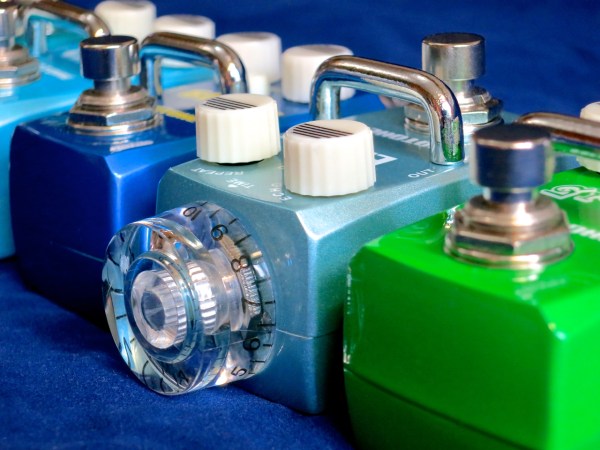
The special eye-catcher with the Skyline-series pedals is the transparent Gibson-style control at their front end.

Hotone Skyline – front LEDs

Two coloured status-LEDs behind the transparent knob light up, whenever the effect is switched on.

Naturally, you cannot fit a nine volt battery inside such a tiny pedal, which is why Hotone Skyline pedals have to get their juice from a power supply (9 V, negative centre – not included).

****

Hotone Skyline – Blues top

The dark blue Hotone Blues (current price in Finland: 65 €) is an overdrive pedal specialised in producing juicy Blues tones by using a pair of overdrive circuits wired up in series.

Hotone Skyline – Blues right

The big knob is for gain adjustment, while the two noctilucent (meaning: they glow in the dark) knobs deal with tone and master volume, respectively.
Hotone Skyline – Blues left

Engaging the Fat-button adds a bigger bottom end to proceedings.

Listen to Hotone’s own demo of the Blues pedal:

****

Hotone Skyline – Choir top

Hotone’s Choir pedal (65 €) comes in a fetching baby blue colour scheme. This is the analogue chorus pedal of the Skyline series, built around a Panasonic BBD MN3207 bucket-brigade chip.

Hotone Skyline – Choir right

The Gibson-knob controls speed, while chorus depth and effect are controlled by the smaller knobs.

Hotone Skyline – Choir left

Depressing the Deep-switch will send you to the bubbly depths of psychedelia.

****

Hotone Skyline – Eko top

The Hotone Eko (65 €) is a delay offering you some analogue character.

Hotone Skyline – Eko right

The Eko’s maximum delay time is around 500 ms, which is long enough for most Rockabilly, Rock and Pop applications, but maybe just a bit too short for serious Brian May-style layering.

Hotone Skyline – Eko left

The Mod feature adds a sprinkle of tape-style wow and flutter to your delay sound.

****

Hotone Skyline – Grass top

The Skyline series also includes a Tube Screamer-inspired vintage overdrive, called the Hotone Grass (65 €).

Hotone Skyline – Grass right

The pedal offers you controls for gain, volume and Voice (tone).

Hotone Skyline – Grass left

The BRT-switch (for ”bright”) adds top end bite to your tone.

****

Hotone Skyline – Octa top

One of Hotone’s newest pedals – the Octa (80 €) – is an octaver that features both ”octave down” (OCT1), as well as ”octave up” (OCT2) signal in two different operating modes.

Hotone Skyline – Octa right

The regular Clean-mode is polyphonic, meaning you can play chords, too.

Hotone Skyline – Octa left

Octa’s Dirty-mode gives you a vintage-style, monophonic experience (you can only play single note runs), and sounds funky and greasy (in a good way).

And yes, you can use the Hotone Octa with your bass, too!

****

Hotone Skyline – Trem top

Hotone’s Trem (65 €) is an über-compact – yes, you guessed it – opto-tremolo pedal.

Hotone Skyline – Trem right

In addition to tremolo speed and depth you can also adjust the tone colour of the effect.

Hotone Skyline – Trem left

When choosing the Hard-mode the trem effect changes from a smooth, sine-style wobble to a harder on/off-type effect.

****

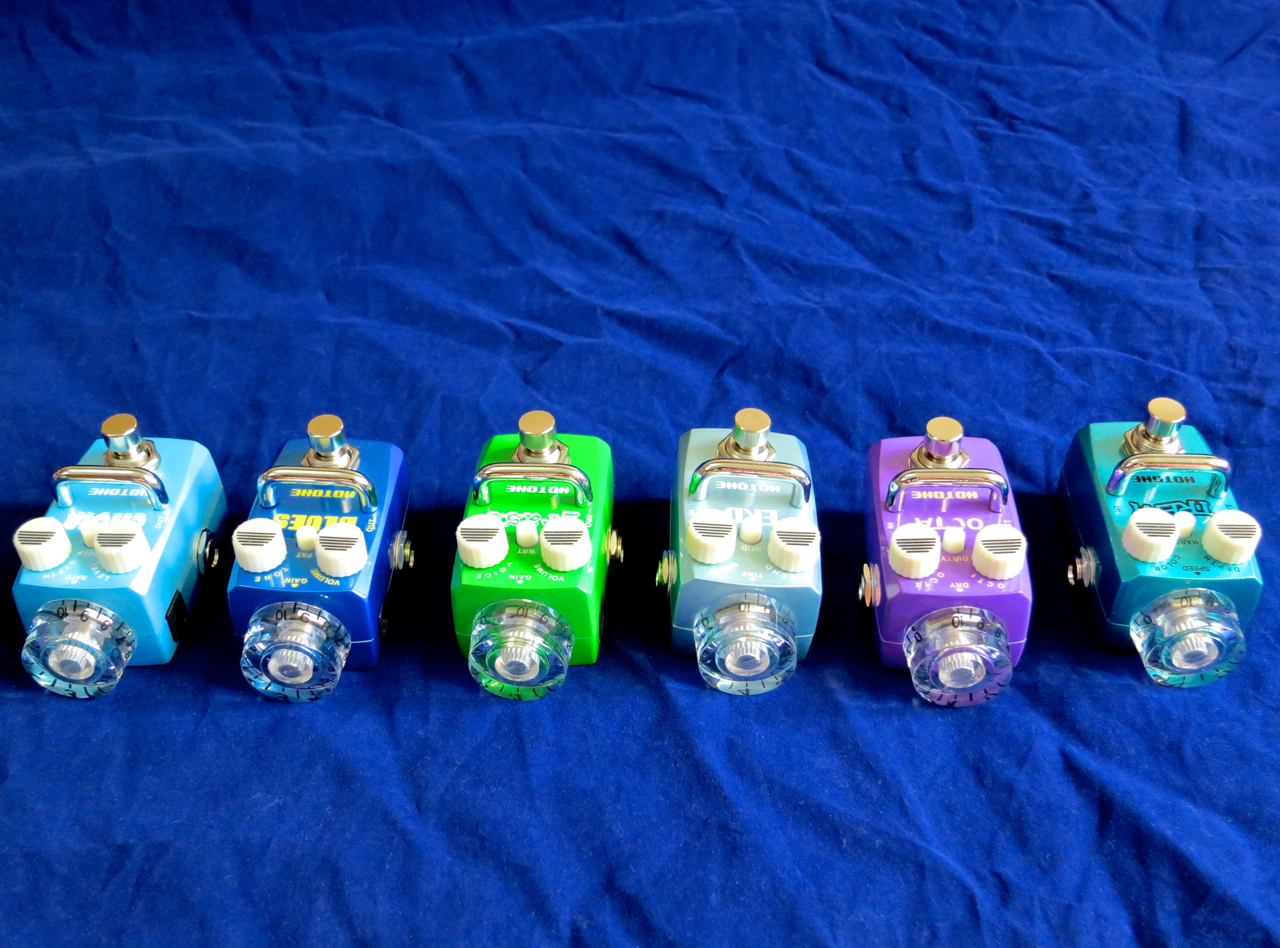
Hotone Skyline – six in a row

Despite their diminutive size Hotone’s Skyline-pedals aren’t toys, but grown up guitar effects!

Their zinc-alloy casing seems to be very sturdy, while the bent metal rod north of the footswitch works effectively in preventing your foot from hitting the pedal controls. Each pedal comes with two stick-on base covers – the non-slip rubber-type cover is for straight-on-the-floor use, while the velcro-style counterpart makes creating a micro-sized pedalboard possible.

The large control knobs aren’t just a visual gimmick, but also make it much easier to place three controls on such small pedals.

In terms of effect quality Hotone’s Skyline series is straightforward in the best sense of the word. Each of the six pedals I tried does exactly what you’d expect it to do, winning me over with a very decent sound. At these low prices you’d be crazy to expect esoteric boutique-quality effects, instead the Hotone Skyline pedals proved to be great guitar effects for your everyday needs.

I recorded a demo song with the review sextet:

• rhythm guitars: Hotone Choir (panned left), Hotone Trem (centre) and Hotone Eko (right)

• lead guitars: 1. Hotone Blues, 2. Hotone Octa, and 3. Hotone Grass

I used my Gibson SG Melody Maker for all of the guitar tracks, played through a Blackstar HT-1R valve combo:

Hotone Skyline – row angle 1

****

Hotone Audio Skyline Series

Current prices in Finland: 65-80 €

Finnish distributor: R-Jam Group

****

Pros:

+ size

+ value-for-money

+ sound

Hotone Skyline – all knobs

Testipenkissä: Hotone Audio Skyline -pedaalit

****

Hotone Skyline – spread

Yksi todellinen valopilkku tämänvuotisessa Frankfurt Musikmessessä oli Hotone Audion mallisto mikrokokoisia efektipedaaleja ja vahvistinnuppeja.

Hotone Skyline – row angle 2

Skyline-sarjan pikkupedaalien visuaalinen juju piilee niiden isokokoisissa, Gibson-tyylisissä säätimissä kotelon etupuolella.

Hotone Skyline – front LEDs

Nupin takana on upotettu kaksi värillistä LEDiä.

Tällaisiin pikkulootiin ei luonnollisesti mahdu paristoja sisään, minkä takia Hotone Skyline -efektit toimivat Boss-standardia noutavalla virtalähteellä (9 V, miinus keskellä – ei kuulu hintaan).

****

Hotone Skyline – Blues top

Sininen Hotone Blues (65 €) on Blues-säröihin erikoistunut säröpedaali, joka saa kermaiset soundinsa kaksivaiheisesta overdrive-piiristä.

Hotone Skyline – Blues right

Isolla nupilla säädetään efektin gain-määrää, kun taas pienet valkoiset säätimet toimivat tonena ja master volumena.

Hotone Skyline – Blues left

Fat-kytkimellä saadaan lisää tuhtia alakertaa menoihin.

Tässä on Hotonen oma Blues-pedaalin demo:

****

Hotone Skyline – Choir top

Vaaleansininen Hotone Choir (65 €) on Skyline-sarjan analoginen choruspedaali, ja se perustuu Panasonic BBD MN3207 -”ämpäriketjuun”.

Hotone Skyline – Choir right

Gibson-nupilla määrätään vatkauksen nopeutta, kun taas pikkusäätimillä säädetään efektoidun signaalin voimakkuutta ja efektin syvyyttä.

Hotone Skyline – Choir left

Deep-kytkintä painamalla saa efektistä vielä syvemmän.

****

Hotone Skyline – Eko top

Hotone Eko (65 €) on firman analogimallinnuksella varustettu digitaalinen viive.

Hotone Skyline – Eko right

Ekon maksimaalinen viiveaika on noin 500 ms, mikä kattaa hyvin tyypilliset Rautalanka-, Pop- ja Rock-musiikin tarpeet.

Hotone Skyline – Eko left

Mod-kytkimellä voi lisätä viive-efektiin nauhakaiku-tyylistä huojuntaa ja modulaatiota.

****

Hotone Skyline – Grass top

Skyline-sarjan vintage-tyylinen overdrive-särö on nimeltään Hotone Grass (65 €).

Hotone Skyline – Grass right

Pedaalissa on säätimet gainea, äänensävyä ja lähtötasoa varten.

Hotone Skyline – Grass left

BRT-kytkimellä saa esiin lisää purevuutta.

****

Hotone Skyline – Octa top

Hotonen uusin pedaali – Octa (80 €) – on oktaaveri, joka tarjoaa sekä ala- (OCT1) että yläoktaavin (OCT2), ja sillä on sen lisäksi vielä kaksi eri toimintamoodia.

Hotone Skyline – Octa right

Puhtaassa ja polyfonisessa perusmoodissa on mahdollista soittaa jopa sointuja.

Hotone Skyline – Octa left

Dirty-moodissa pedaali muuttuu monofoniseksi, ja efektin soundista tulee – vanhan analogioktaaverin tavoin – herkullisen likainen.

Hotone Octa -pedaalia voi muuten käyttää myös basson kanssa!

****

Hotone Skyline – Trem top

Hotone Trem (65 €) on optotremolo erittäin kompaktissa koossa.

Hotone Skyline – Trem right

Tremoloefektin nopeuden ja syvyyden lisäksi pystyy Trem-pedaalissa säätämään myös efektin soundia.

Hotone Skyline – Trem left

Painamalla Hard-kytkimen sisään tremoloefekti muuttuu pehmeästä siniaalto-kaltaisesta soundista, enemmän on/off-tyyppiseen soundiin.

****

Hotone Skyline – six in a row

Pienuudesta ja hauskasta ulkonäöstä huolimatta Hotonen Skyline -sarjan pedaalit eivät ole leluja, vaan ihan oikeita kitaraefektejä.

Sinkistä valettu kotelo tuntuu hyvin kestävältä, ja jalkakytkimen yläpuolelle asennettu metallikaari suojaa pieniä säätimiä tehokkaasti polkaisujen voimalta. Jokaisen pedaalin mukaan tulee sekä paksu kumimainen pohja että tarranauhapohja – käyttäjä voi liimata sopivimman pohjan käyttötarkoituksen mukaan efektipedaalin pohjaan.

Kotelon etupuoleen sijoitettu säädin ei ole vain visuaalinen kikka, vaan se helpottaa myös tuntuvasti kolmen säätimien (ja yhden kytkimen) käyttöä näin pienikokoisessa paketissa.

Soundillisesti Hotonen Skyline-sarja on suoraviivainen ja mutkaton sanojen parhaassa merkityksessä. Jokainen kokeilemani pedaali teki juuri sitä mitä siltä odotin, ja pedaalimallisto vakuutti minut hyvillä soundeillaan. Tarjolla ei ehkä ole esoterista putiikkilaatua – ja olisi hullua odottaa sellaista näin edullisista efekteistä – mutta jokainen testaamani Hotone Skyline -pedaali on hyvin käyttökelpoinen ja inspiroiva ”jokapäivän efekti”.

Äänitin seuraavan demobiisin kaikki kitararaidat Hotone-pikkupedaaleilla:

• komppiraidat: Hotone Choir (vasemmalla), Hotone Trem (keskellä) ja Hotone Eko (oikealla)

• liidit: 1. Hotone Blues, 2. Hotone Octa ja 3. Hotone Grass

Käytin kaikissa raidoissa Gibson SG Melody Maker -kitarani, sekä Blackstar HT-1R -putkikombon:

Hotone Skyline – row angle 1

****

Hotone Audio Skyline Series

Hinnat: 65-80 €

Maahantuoja: R-Jam Group

****

Plussat:

+ koko

+ hinta-laatu-suhde

+ soundi

Hotone Skyline – all knobs

Pidä blogia WordPress.comissa.

Ylös ↑