
****
Testi on luettavissa TÄÄLTÄ.
Kitarablogi.com – Finland's premier Guitar and Bass blog
Juttuja kitaroista ja bassoista


Tämän vuoden Finland Tonefest pidetään ensi viikonloppuna Järvenpään Aino Areenassa.
Lisätiedot ja ohjelma löytyy Tonefestin nettisivuilta.
Liput on saatavilla myös ennakkoon Lippu.fi-sivulta.
Älä unohda Uraltonen kolvauspaja, jossa voi rakentaa omaa säröpedaalia Uraltonen henkilökunnan avustuksella. Paikan täytyy varata etukäteen!
Nähdään siis siellä.
Tämän jutun alkuperäinen versio löytyy ROCKWAY-blogista.
****
****
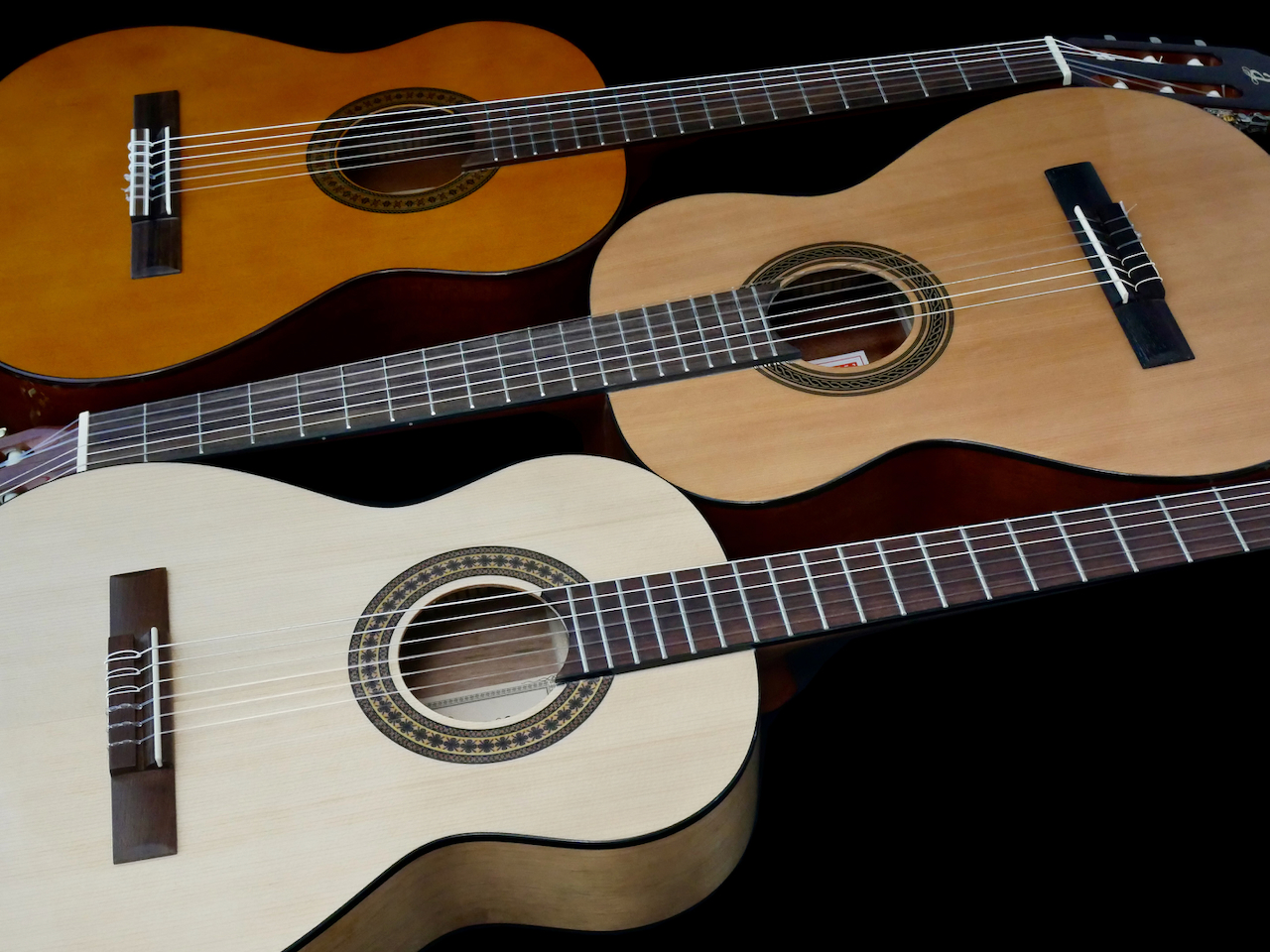
Who is a 3/4-size classical guitar for?
The classical – or nylon-string – guitar is still the first instrument for many beginners, which is why this type of guitar is also available in smaller versions, like stringed instruments.
A three-quarter-size guitar is suitable for people 130-155 centimeters tall. It is also a great choice as a travel or summer cottage guitar, because it takes up less space than a full-size guitar, and its 58-59 cm scale length does not feel too loose in larger hands.
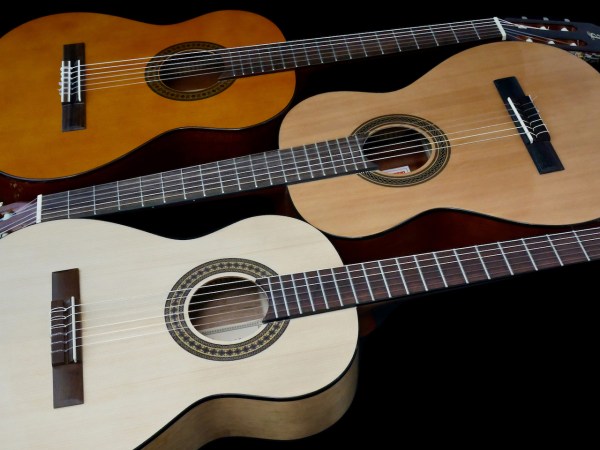
In this review, I will introduce you to three high-quality 3/4-size guitars in the 200 euro price range.
****

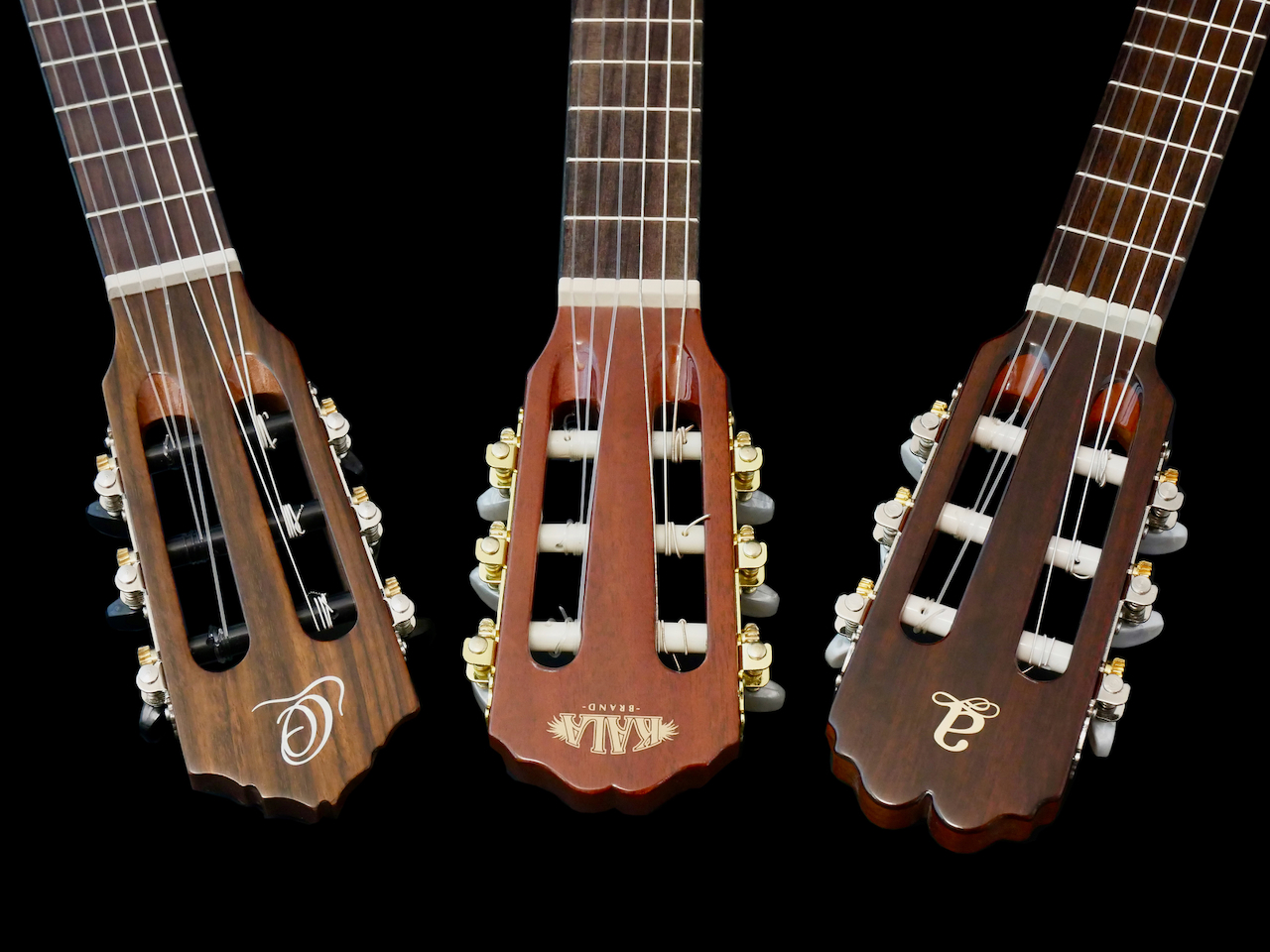
The Admira Juanita (€229; Musamaailma) is a beginner’s instrument from this well-known Spanish guitar manufacturer, available in all traditional sizes, and is made in Spain, despite its affordable price.
The top of the Juanita 3/4 model is made of Douglas fir plywood, while the back and sides are made of sapele mahogany. The long part of the mahogany neck, as well as the lower part of the headstock, are carved from three adjacent pieces of wood. An additional piece is glued to this to complete the headstock, as well as for the traditional neck heel of a classical guitar.
The fingerboard and bridge of the Admira Juanita are made of a beautiful wood called mangoy. The name was unknown to me, but after googling I found out that it is just another name for a familiar instrument wood, ovangkol. The fingerboard has 18 traditional, narrow frets, which have been installed very neatly. The chrome-plated tuners seem to be of high quality. The Juanita 3/4 model’s top nut and bridge saddle appear to be made of Graph Tech’s Tusq material.

In terms of appearance, the Admira Juanita clearly presents a beautiful traditional line with the guitar’s honey finish.
The guitar arrived in excellent trim and equipped with high-quality strings.
Three-quarter guitars usually also have a narrower neck than full-size classical guitars. In the Juanita 3/4 model, the reading at the top nut is 44 millimeters. The guitar’s neck profile is a flat D, but the traditional, relatively angular shoulders, have been softened quite a bit in this model, and that’s a good thing.
Anyway, the playing feel is excellent. The sound of a plywood-bodied guitar can never be as big and full-bodied as a solid-top one, but the Admira Juanita 3/4 is a far cry from the lifeless sound of cheap instruments. The Juanita 3/4 plays with a beautiful and warm sound, offering plenty of dynamic nuances.
****
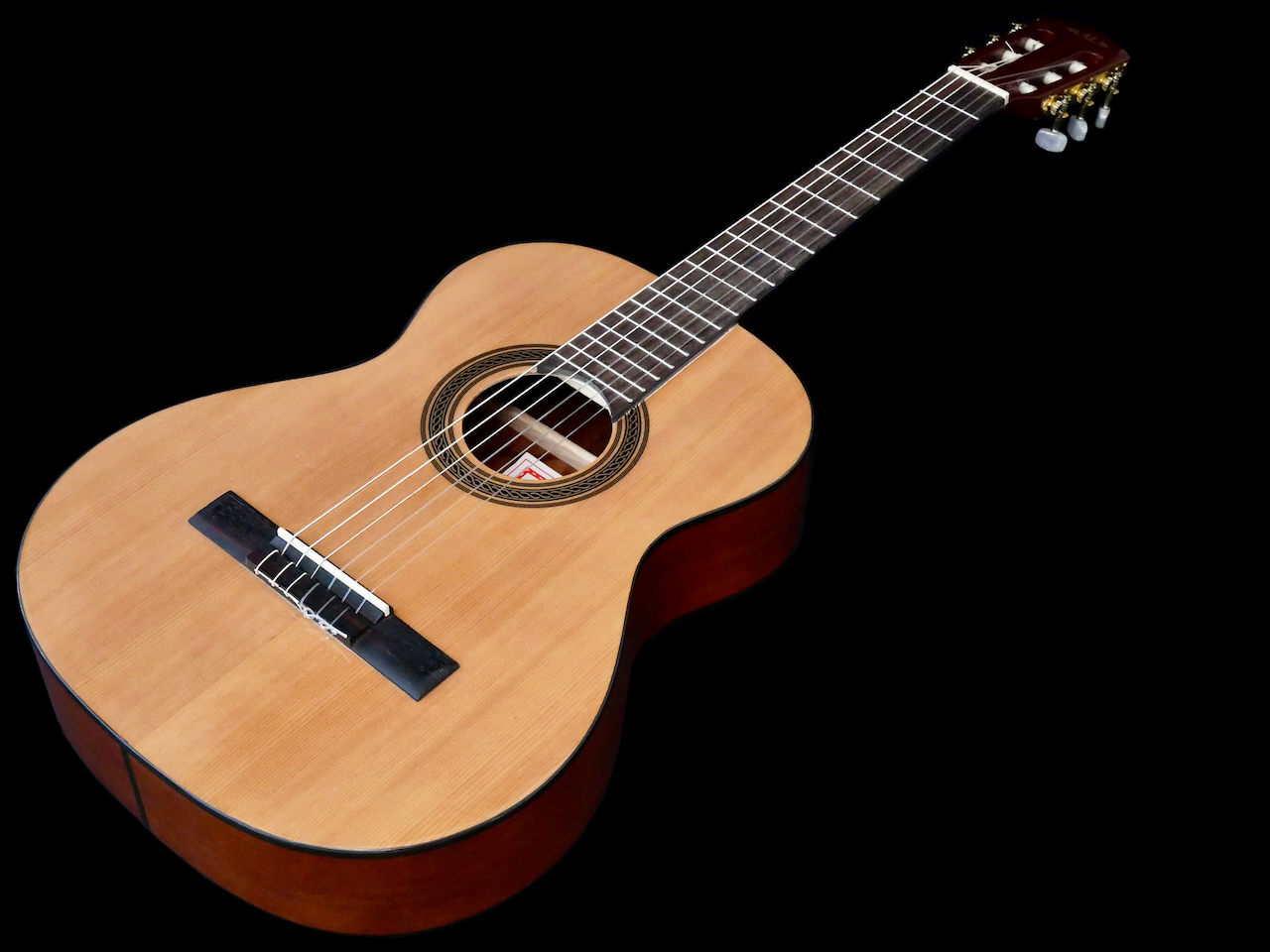
Kala Brand is known as a ukulele manufacturer with a very wide range of these small instruments. However, Kala also makes a few classical guitar models, of which the 3/4-size Kala NY-23 is one.
Made in China, the Kala NY-23 (€198; St. Paul’s Sound) has a beautiful natural finish that brings out the wood grain patterns very well.
The Kala NY-23’s plywood top is made of cedar, while the back and sides are made from mahogany. The long section of the mahogany neck is carved from a single piece, to which separate pieces for the headstock and neck heel are then glued. The grain pattern of the heel piece is so well matched to the neck in the instrument reviewed that it was very difficult to find a glue joint.
According to the manufacturer, the NY-23’s fingerboard and bridge are made of rosewood. The fingerboard has a thin black binding. The Kala model offers no less than 19 narrow frets. The tuners are gold-colored and have pearloid-patterned plastic buttons.

The test instrument’s high-quality plastic bridge saddle was left a bit too high at the factory, and the bass strings had also seemed to have taken taken a bit of a beating on the way from the Chinese factory to Finland. The trim on the test instrument didn’t match the high-quality image I have come to expect from Kala instruments thus far. This one must have slipped past quality control.
I usually try to always test instruments with the so-called factory settings, and I usually do not make fundamental adjustments either. Due to scheduling reasons and the poor playability of the guitar, however, I decided to lower the bridge saddle myself, and to also change the strings on the test guitar. In a purchase situation, such things are the responsibility of the instrument store, and St. Paul’s Sound in Nummela is known for its very good customer service. This time I was simply in a bit of a hurry.
The nut width on the Kala NY-23 is 48 mm. The guitar’s neck profile is closer to steel-string necks, as it is a very nice rounded C.
Lowering the bridge – and putting on a new set of strings – really paid off. The bass E height is now 3.4 mm at the 12th fret, and the playability of the NY-23 has become very comfortable. The sound of the Kala NY-23 has also come into full bloom, and is now beautifully lyrical and lively.
****
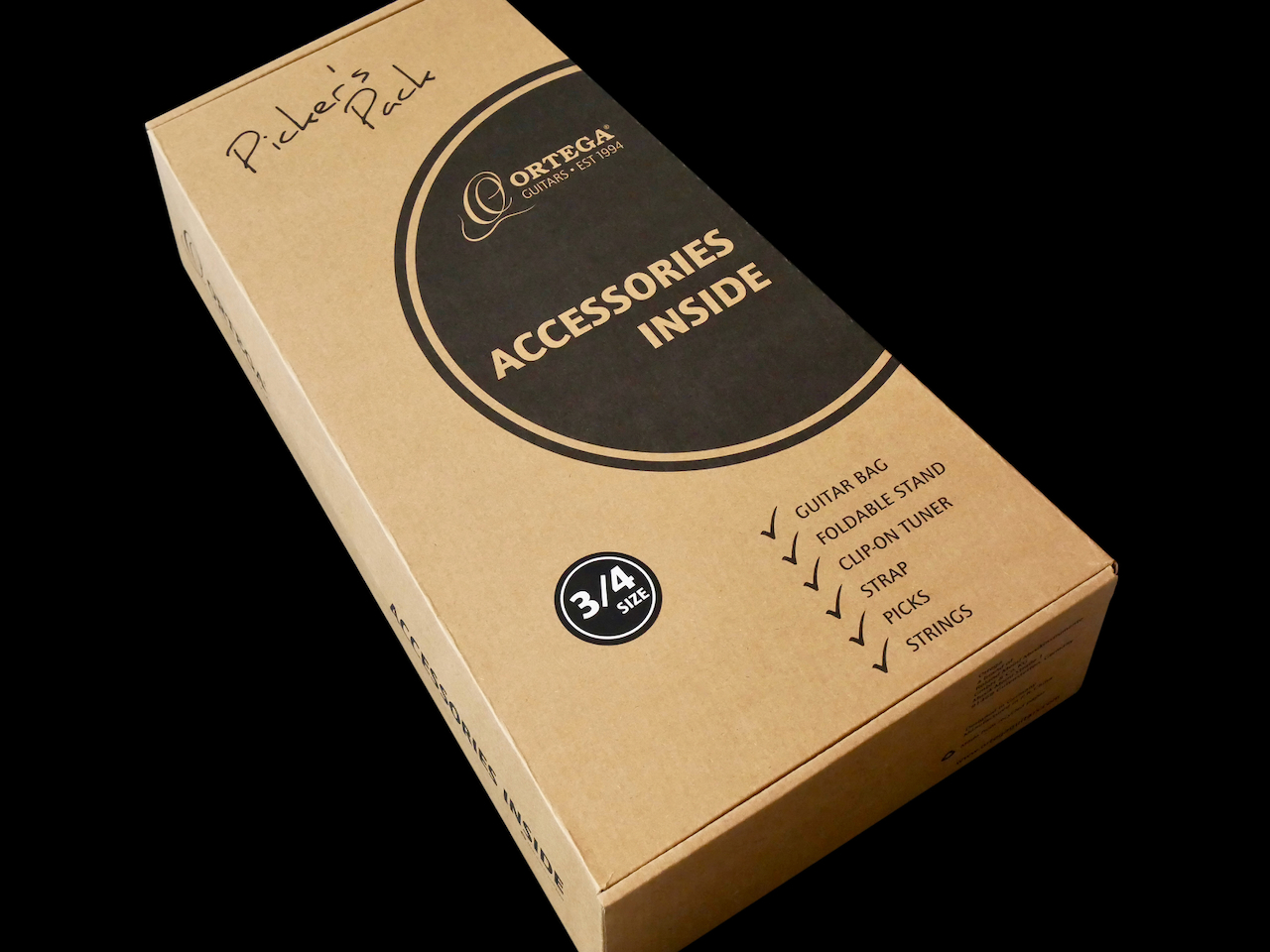
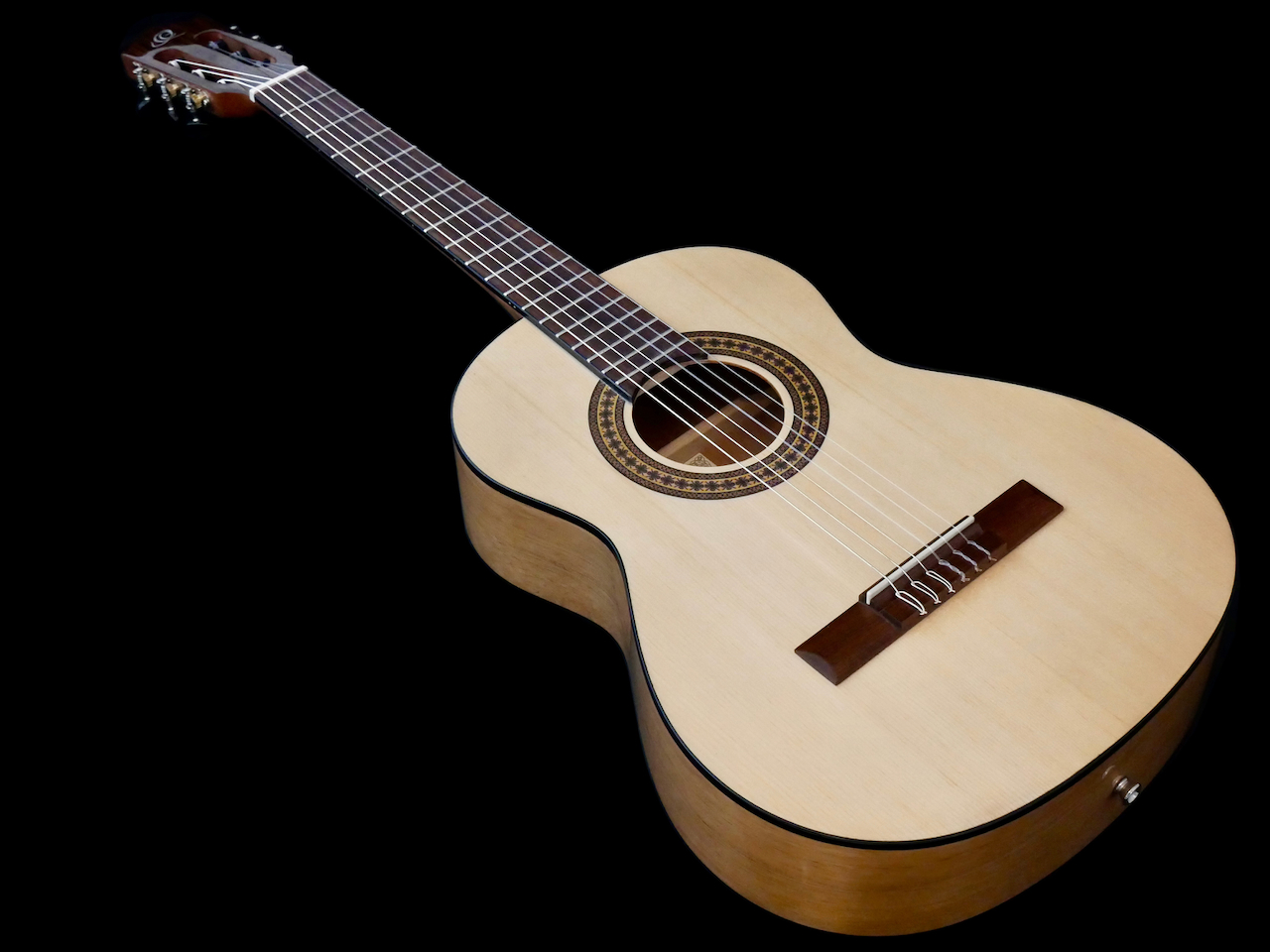
The Ortega Picker’s Pack Classic 3/4 (203 €; F-Musiikki) is a package aimed at beginners, which includes a lightly padded bag, a strap, three picks, a digital tuner, a set of strings, and a foldable guitar stand.
However, the main focus of this article is the excellent 3/4-size guitar in the package called the Ortega RPPC34. The RPPC34, made in China, has been given a beautiful natural finish. The plywood body has a spruce top, while the sides and back are made of very light-coloured catalpa wood. This gives the Ortega an appearance very much like that of a flamenco guitar, which traditionally use very light-coloured cypress or maple for the back. The RPPC34’s mahogany neck is carved from three parts, with additional parts for the neck heel and headstock glued to the long neck.
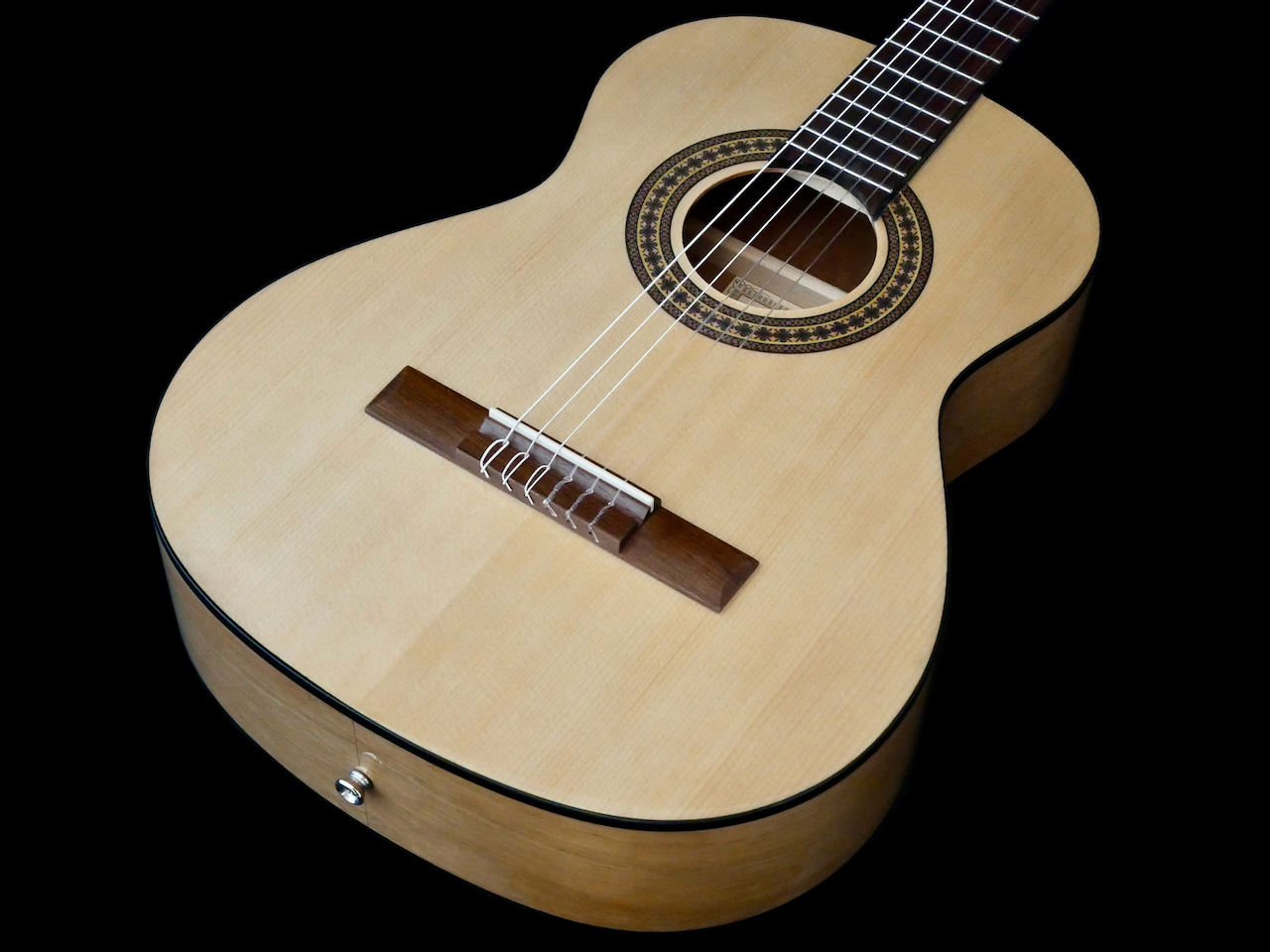
Both the Ortega’s fingerboard and bridge are made of walnut. A thin black binding has been added to the fingerboard. The RPPC34 has 18 narrow frets. The Ortega’s fretwork is of high quality. The chrome tuners have black buttons.
The guitar arrived in excellent trim and equipped with high-quality strings.
The Ortega RPPC34’s neck width at the nut is 45 mm. The neck profile is a bit unusual for a classical guitar, but at the same time very comfortable. It’s a nice mash-up of a C- and a soft V-profile.
The Ortega’s playing feel is excellent. The RPPC34 model plays with a very dynamic sound, with a tight bass register and a sparkling touch of treble.
****
Testissä ovat mukana:
• Admira Juanita 3/4
• Kala NY-23
• Ortega RPPC34
****
Äänitetty RÖDE M5 -mikrofoniparilla ja CRANBORNE AUDIO EC2 -etuasteella.


Vuoden 2024 Tonefest-tapahtumaa järjestetään Helsingin Musiikkitalossa lauantaina 18.05.2024.
Soitinmessuilla (klo 10-18) voi kokeilla laajan skaalan erilaisia soittimia, efektejä ja vahvistimia.
Tonefest-konsertti (klo 19) taas tarjoaa runsaasti maukasta kitaravetoista musiikkia.
Kaikki infot löytyy Tonefestin nettisivuilta.
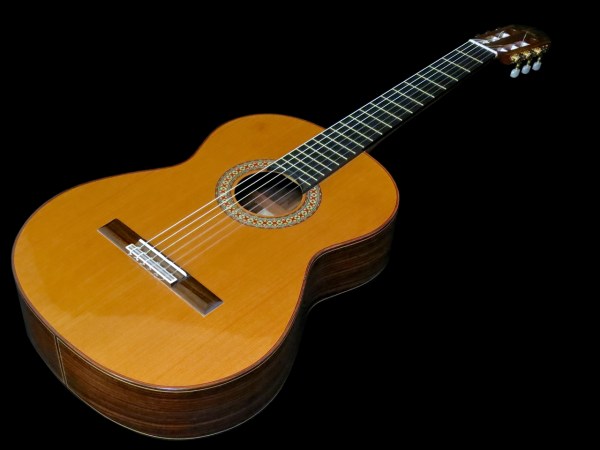
Guitarras Manuel Rodriguez on hyvin arvostettu klassisten ja Flamenco-kitaroiden valmistaja, joka tekee niiden lisäksi myös cajoneja. Alun perin Manuel Rodriguez perusti yrityksensä vuonna 1905 Madridissa. Yhdeksänkymmentä vuotta myöhemmin hyvin menestynyt kitarapaja muutti Esquivias nimiseen kaupunkiin (Toledon maakunnassa), jonne he olivat rakentaneet itselleen nykyaikaiseen soitinvalmistukseen sopivat isot tuotantotilat.
Manuel Rodriguezin Model Clásica A on kokopuisella kannella varustettu espanjalainen klassinen kitara, joka on tarkoitettu jo selvästi edenneelle soittajalle.
****

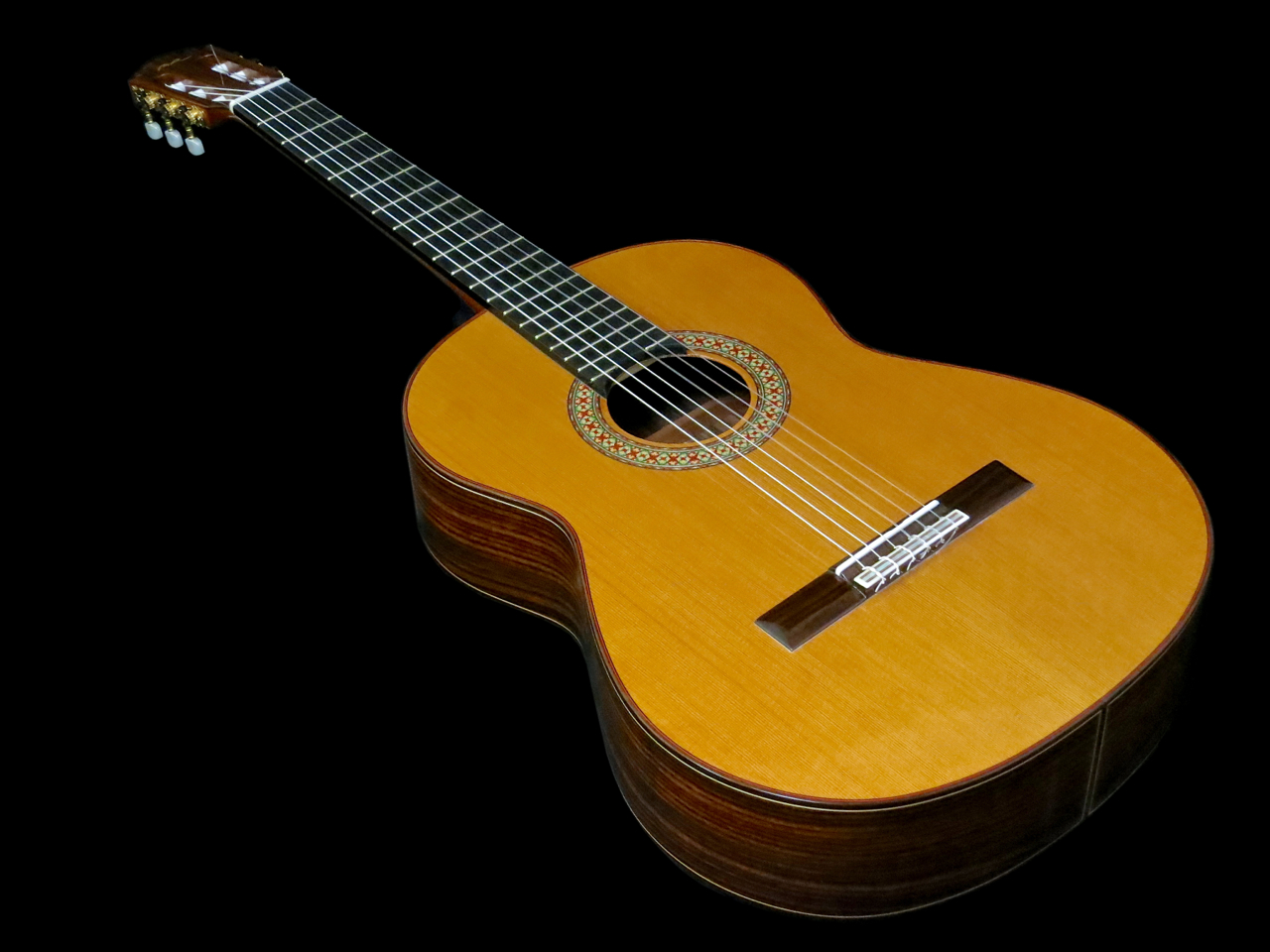
MR Model A (650 €) -kitara tarjoaa kaikki tärkeimmät espanjalaisen laatukitaran tunnusmerkit.
Testikitaran kaula on veistetty erittäin kauniista afrikkalaisesta mahongista, ja sillä on espanjalainen kaulakorko. Soittimen kaula on tehty perinteisellä tavalla, jossa yksiosaiseen pitkään aihioon on lisätty erillisiä paloja korkoa ja viritinlavan ylempää osaa varten.
Kokopuinen kansi on laadukasta kanadalaista seetriä.

Model A:n ainoa myönnytys hintalapulle näkyy kopan pohjassa ja sivuissa, jotka on tehty vanerista. Vaikka kyse ei siis ole kokopuusta, on tähän malliin käytetty intialainen ruusupuu erittäin kaunista – sekä ulkopuolelta että sisältä päin katsottuna.
Sekä kannessa että pohjassa on monikerroksista puista reunalistoitusta.
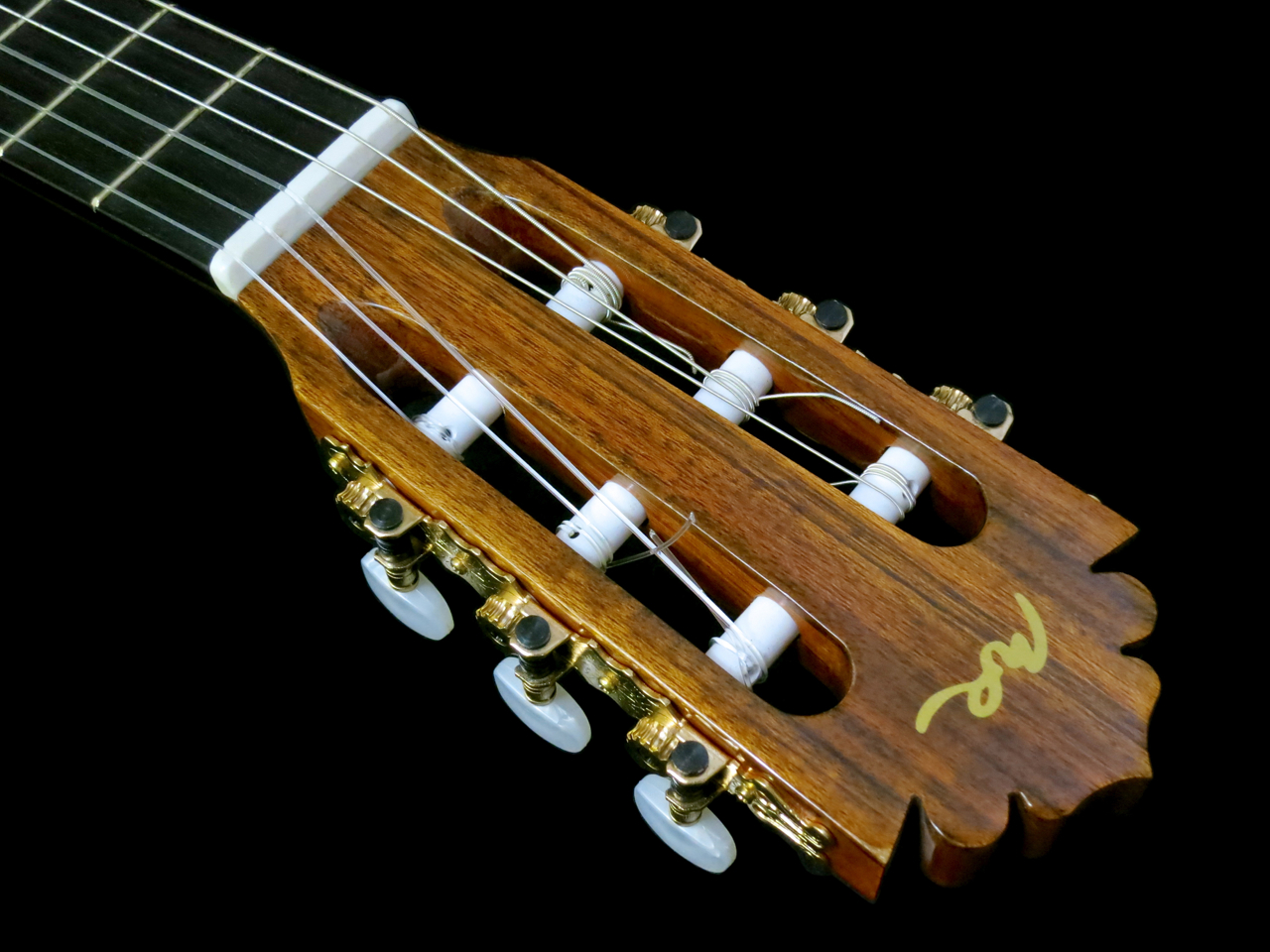
Manuel Rodriguezin perinteiset virityskoneistot toimivat hyvin luotettavasti.
Viritinlavan etupuoli on koristeltu ruusupuuviilulla. Kitaran otelauta on eebenpuuta.
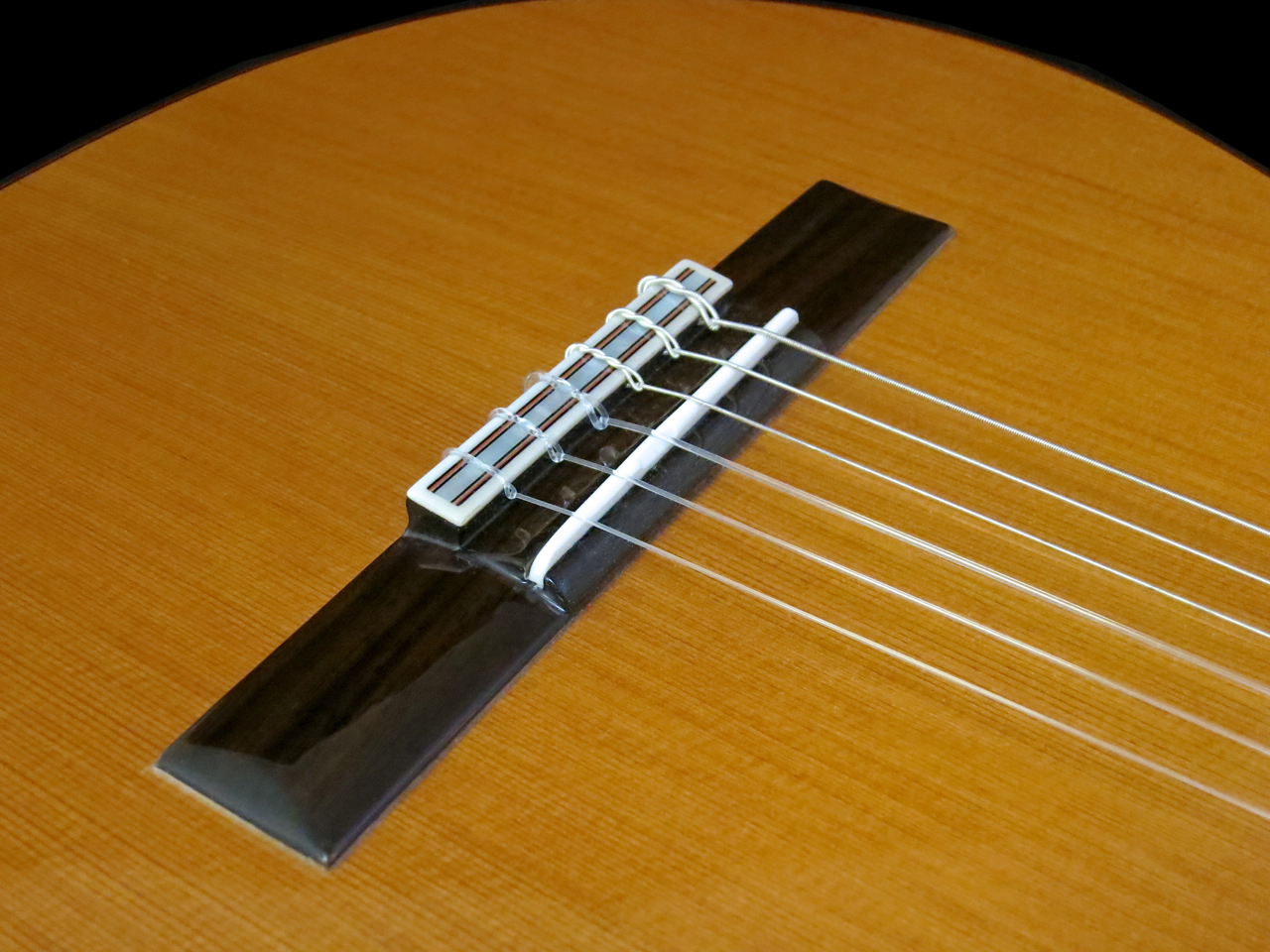
Satulan lisäksi myös Model A:n kompensoitu (!) tallaluu ovat aitoa naudanluuta.
Talla on veistetty kuvankauniista ruusupuusta.
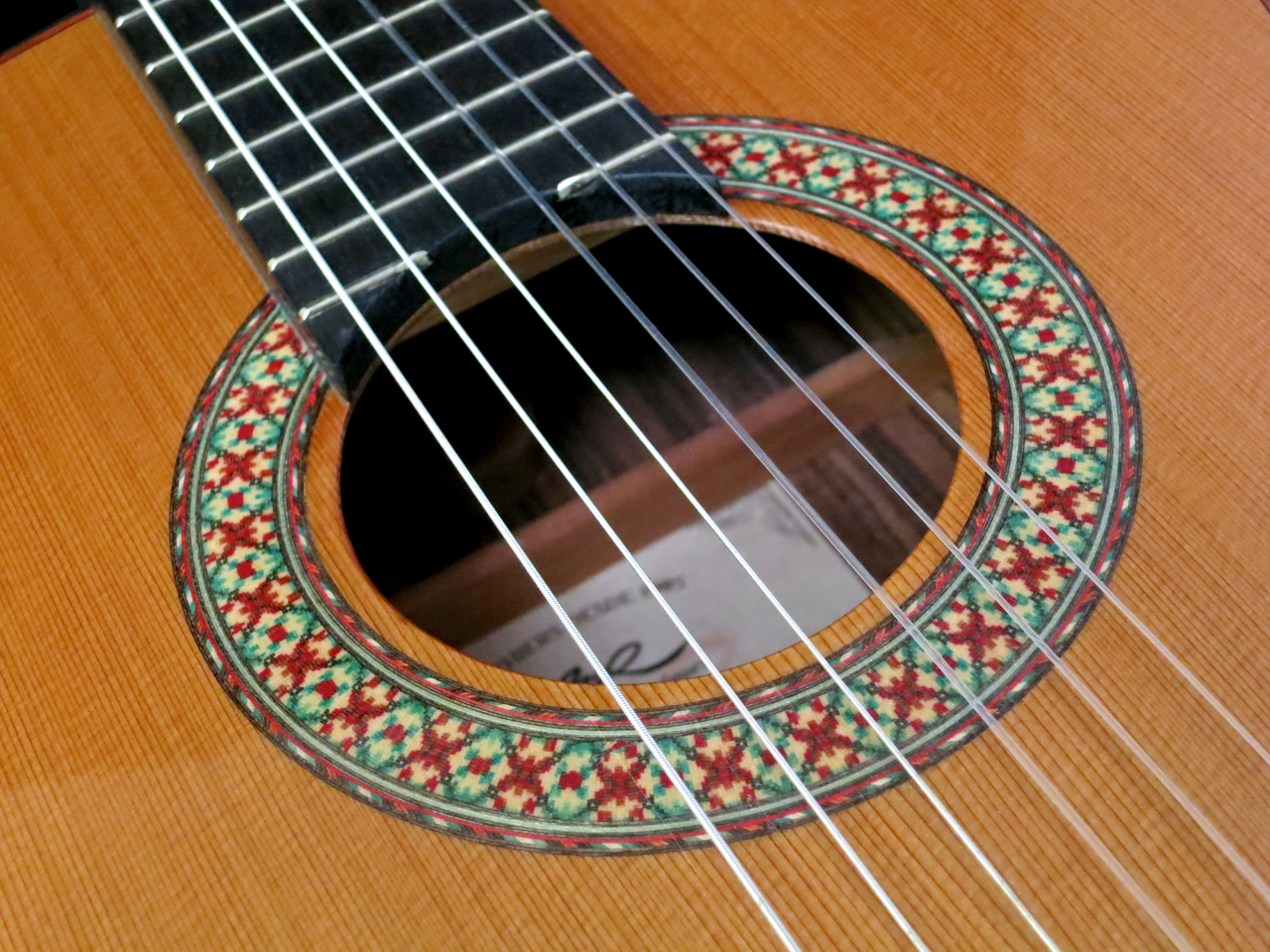
Manuel Rodriguezin värikäs ja hienostunut rosetti on hyvin tyylikäs lisäys.
Koko soitin on kiiltäväksi lakattu.
****
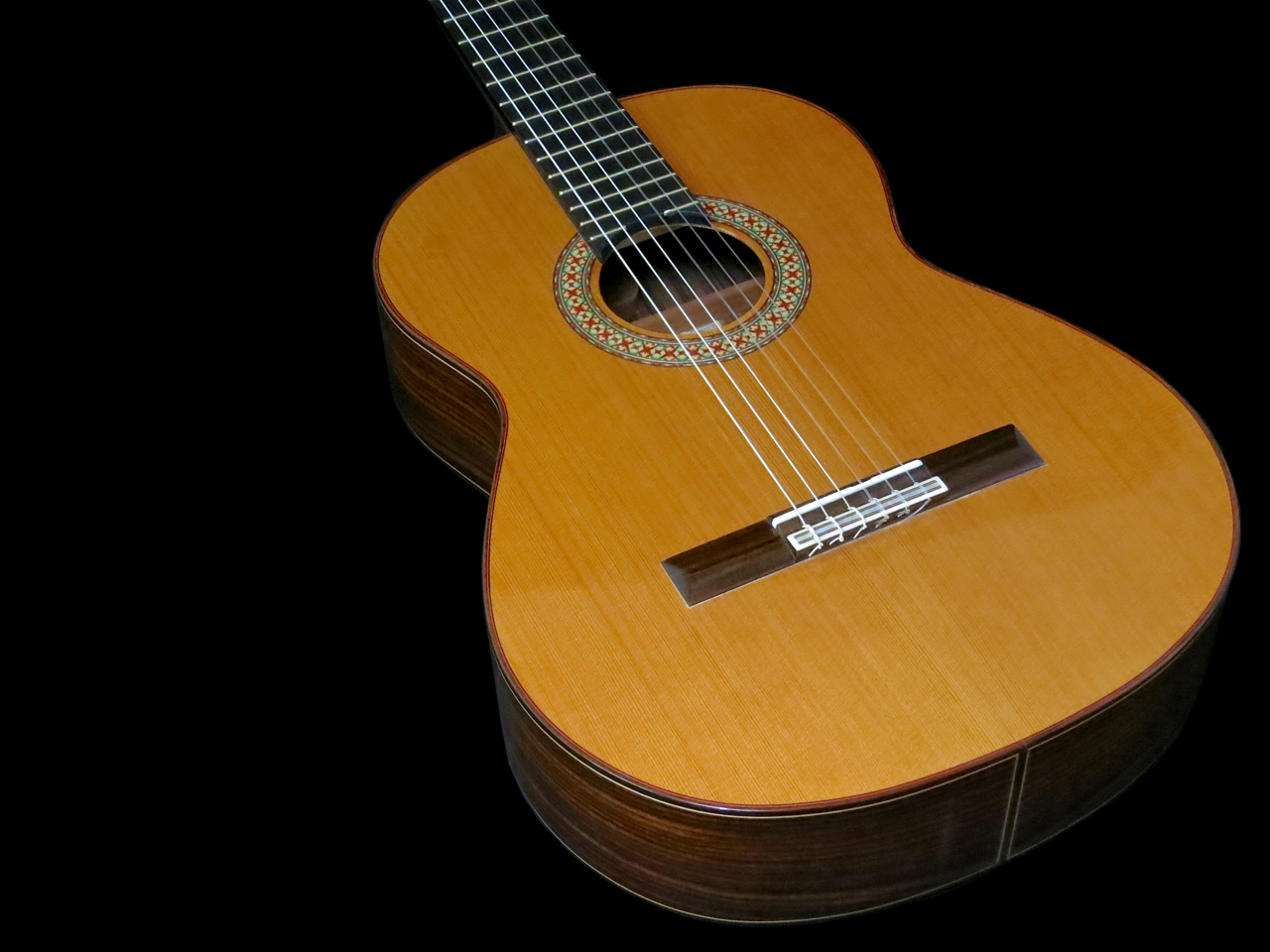
Manuel Rodriguezin Model A on mielestäni erittäin hieno vaihtoehto täysin kokopuusta tehdylle klassiselle kitaralle.
Tässä on kyse herkästi resonoivasta, isoäänisestä soittimesta, jossa myös työnjälki on kiitettävällä tasolla.
Kaulaprofiiliksi on valittu hivenen verran nykyaikaisempi ja pyöreämpi versio perinteisestä, suhteellisen kulmikkaasta versiosta. Satulan kohdalla kaulalla on kyllä perinteinen 52 millin leveys, mutta tässä puuttuvat ne klassiselle kitaralle hyvin tyypilliset kulmikkaat hartiat.
Kielten korkeus oli testiyksilössä 3.6 mm basso-E:ssä ja 3.3 mm diskantti-e:ssä. Nämä säädöt ovat soittajalle ystävällisiä, mutta jättävät kuitenkin runsaasti varaa hyvin dynaamiselle soitolle ilman nauhojen aiheuttamaa särinää.
Kompensoidun tallaluun ansiosta Model A soi erittäin puhtaasti koko otelaudassa.
Niin kuin kokopuisella kannella varustetut akustiset kitarat yleensä, myös Manuel Rodriguezin A kaipasi aluksi hieman sisäänsoittoa, ennen kuin kitaran keskialueelta katosi viimeiset rippeet uudenkarheasta kireydestä. Kannattaa siis soittaa tätä mallia intensiivisesti muutaman päivän ajan, ennen kuin Model A:n ääni nousee täyteen kukoistukseen. Tässä kitarassa on kyllä niin viehättävän selkeä ja laulava ääni, että on jo melkein hankala lopettaa soittamista. Tehdasvarustukseen kuuluvat Savarez-kielet tuntuvat todella hyviltä ja pitävät vireensä kiitettävästi.
****
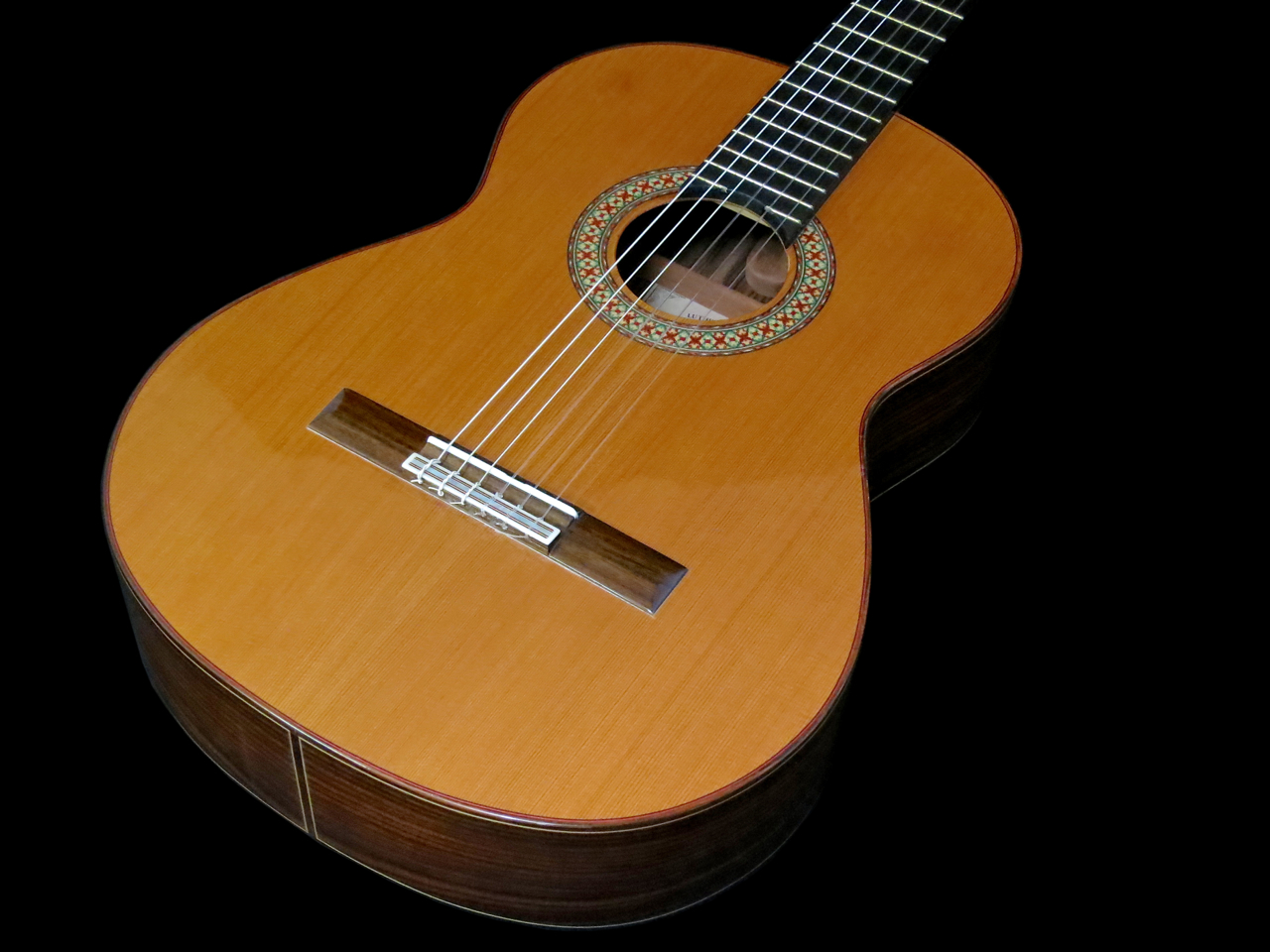
Manuel Rodriguez Clásica A on erittäin laadukas tapaus, joka näyttää hyvin kauniilta, ja joka soi erittäin kauniilla äänellä.
Joissakin forumeissa väitetään, että vaneripohjaisessa klassisessa kitarassa olisi automaattisesti lattea ja eloton ääni. Pötyä, sanoisin minä. MR:n Model A soi kuin unelma – tämä on hyvin dynaaminen ja inspiroiva soitin!
****
Manuel Rodriguez Model A
650 €
Lisätiedot: Musamaailma
Plussat:
+ aito espanjalainen soitin
+ työnjälki
+ soitettavuus
+ soundi
Guitarras Manuel Rodriguez is a well-known maker of classical and Flamenco guitars, as well as cajons. Originally, Manuel Rodriguez was founded in Madrid in 1905. By 1994 the company had outgrown their original workshops, and made the move to a large, purpose-built facility in Esquivias in the the province of Toledo (central Spain).
The Manuel Rodriguez Model Clásica A is a solid-topped Spanish guitar aimed at the ambitious student or amateur, who wants to move up a few steps from the guitar he (or she) has started learning on.
****
The MR Model A (current price in Finland: 650 €) bears all the important hallmarks of a quality Spanish classical guitar.
The neck – which features a Spanish Heel – has been crafted from a gorgeous looking piece of African mahogany. The neck is a one-piece affair, save for the traditional addition of small pieces for the lower heel portion and part of the headstock.
The solid top uses tight-grained, bookmatched Canadian red cedar.
The only concession to price in the Model A comes in its use of laminated back and sides. But even if this isn’t solid wood, the Indian rosewood used is breathtakingly beautiful, both from the outside as well as looking in through the soundhole.
Both the top and the back sport intricate wooden binding.
The machine heads are traditional and of very decent quality.
The headstock veneer is rosewood, while the fingerboard has been made from a thick slab of ebony.
Both the top nut and the compensated (!) bridge saddle have been crafted from genuine bone.
Once again, very beautiful Indian rosewood is the material of choice for the Model A’s bridge.
Manuel Rodriguez’ intricate and colourful soundhole rosette is a very stylish touch.
The whole guitar comes in a natural gloss finish.
****
The Manuel Rodriguez Model A ticks all the right boxes if you’re looking for a high-quality alternative to an all-solid classical guitar.
This is a resonant and beautiful instrument that displays top-notch workmanship in every detail.
The neck profile is a slightly friendlier, more modern version of the traditional squarish design. The nut width is kept at a traditional 52 mm, but the transition between the flat back of the neck into its shoulders has been made a lot smoother and much less angular.
The action has been set at 3.6 mm for the low E-string and at 3.3 mm for the treble E. This gives you a player-friendly playing feel, but leaves enough fretboard clearance to really dig in for loud passages without fret buzz.
The compensated bridge saddle gives the Model A a very true intonation.
Being a solid-topped instrument, the Manuel Rodriguez A required a little bit of playing in to open up the guitar’s mid-range, but spending a few days of intensive playing will reap the rewards. This guitar has a charming clear and sweet voice that just makes you want to carry on playing. The factory-installed Savarez strings feel great and keep their tuning.
****
The Manuel Rodriguez Clásica A is a top-quality guitar. This instrument looks beautiful and plays like dream.
Don’t let anybody tell you that a laminated back automatically results in a dull and lifeless tone. The MR Model A’s sound is beautiful, dynamic and utterly inspiring!
****
Manuel Rodriguez Model A
650 €
Finnish distributor: Musamaailma
Pros:
+ made in Spain
+ workmanship
+ playability
+ sound
A short cover of the Beatles classic ”And I Love Her”.
Recorded with an AKG C3000.
Manuel Rodriguez Model A
• Made in Spain
• Top: solid Canadian cedar
• Sides: laminated Indian rosewood
• Back: laminated Indian rosewood
• Neck: African mahogany
• Headstock veneer: Indian rosewood
• Fingerboard: ebony
• Frets: 19
• Nut: Bone, 52mm
• Machine Heads: gold coloured
• Bridge: Indian rosewood
• Bindings: Indian rosewood
• Strings: Savarez
Finnish distributor: Musamaailma

 Kitarablogi.com – Finland's premier Guitar and Bass blog