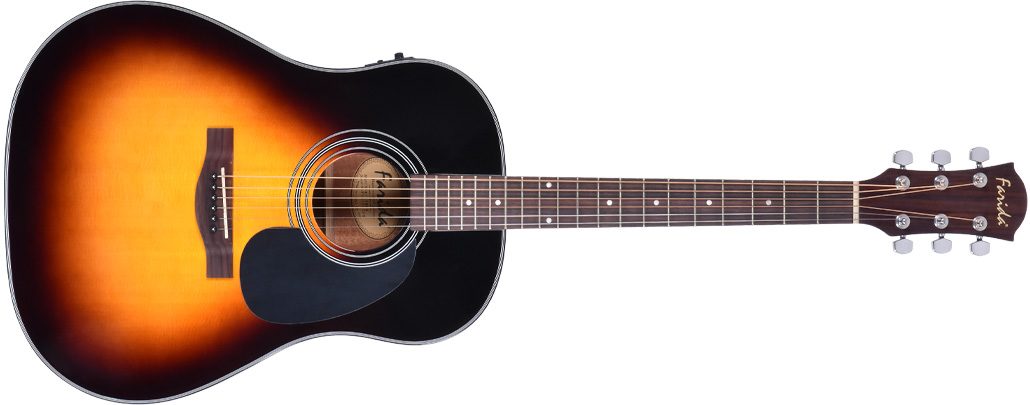
Farida M-2NS + B-10E
• solid tops (M-2NS: cedar; B-10E: spruce)
• mahogany backs and sides
• set mahogany necks
• rosewood fretboards
• rosewood bridges with compensated bridge saddles
• Farida B-10E equipped with Fishman Isys pickup and preamp
**** Demo Track
• left rhythm guitar: M-2NS parlour
• right rhythm guitar: B-10E round shoulder dreadnought
• all tracks recorded with a pair of Shure SM57 microphones
Parlour-kokoiset Lottoset löytyy nykyään jo monen soittajan arsenaalissa.
You should really try Lottonen’s parlour-sized acoustic guitars!
****
Juha Ruokankaan Ruokangas Guitars on nykyään jo käsite myös muualla maailmassa. Tämän Mojo-mallin kannessa on Juhan tyttären maalaus.
Juha Ruokangas’ company, Ruokangas Guitars, is already well-established in the field of boutique guitars. This Mojo-model comes with a top that was hand-painted by Juha’s daughter.
Uudessa Unicorn Supersonic-kitarassa on erikoisviimeistelty loimukoivukansi.
The brand-new Unicorn Supersonic comes with Ruokangas’ special Bare Bones finish.
Mr Fastfingerin luoja Mika Tyyskä saapuu Ruokangas-ständille.
Mika Tyyskä, Mr Fastfinger’s human alter ego, arrives at the Ruokangas stand.
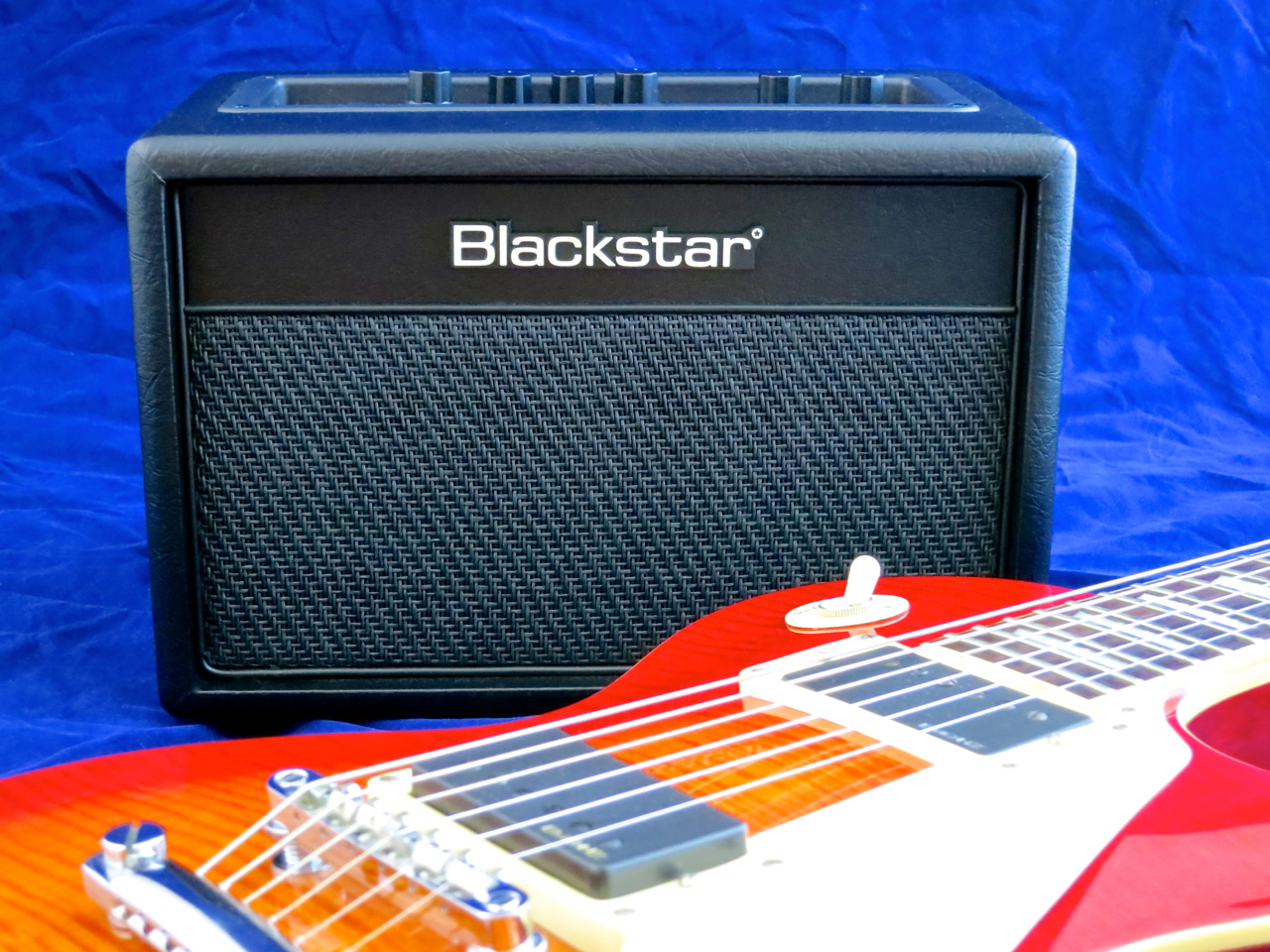
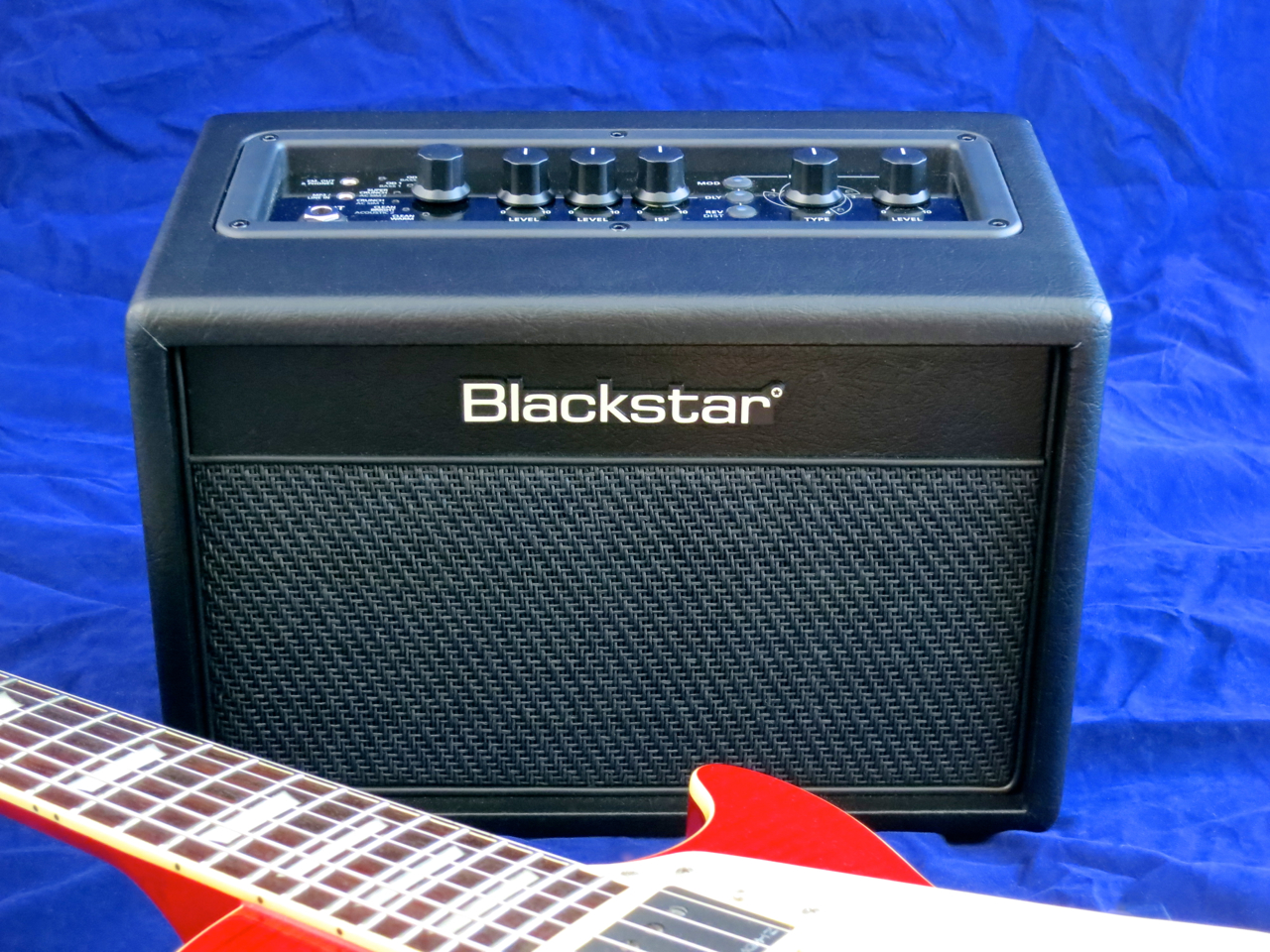
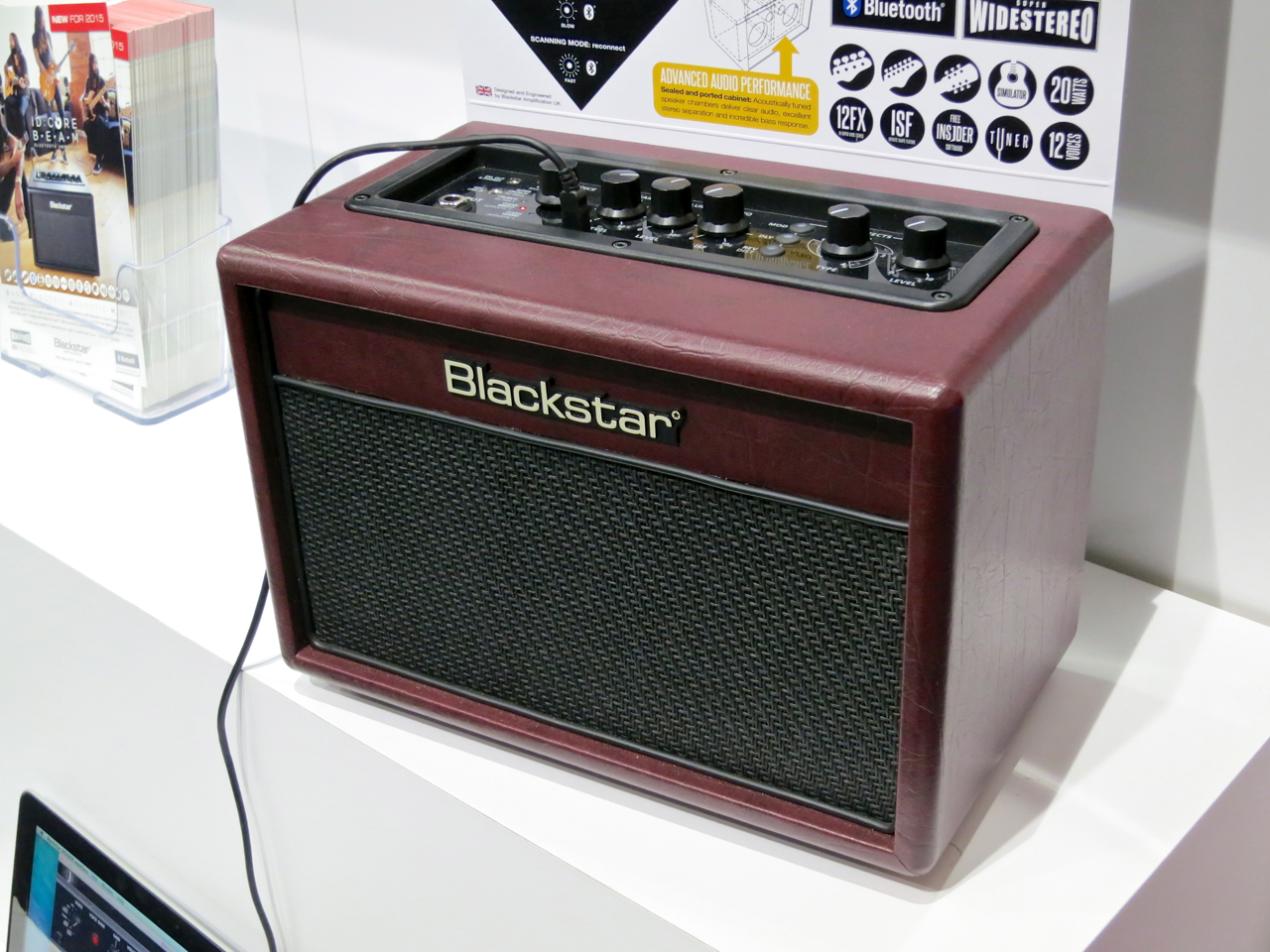
Blackstar’s ID:Core BEAM (current price in Finland: 299 €), which was introduced at this year’s NAMM Show, is one of a new breed of amplifiers:
The BEAM is a so-called ”lifestyle amp” that combines a practical solution for living room practising with a Bluetooth stereo system with a suitable Rock look.
****
The Blackstar ID:Core BEAM is a genuine ID:Core-combo, which means that all its parameters are accessible via Blackstar’s Insider software.
The newcomer is a stereophonic amp with its 20 watts of power running into a pair of three-inch speakers. Blackstar’s Super Wide Stereo-effect – a feature taken from the company’s larger ID:Core combos – can also be applied to the BEAM’s music player, with its own, separate width adjustment.
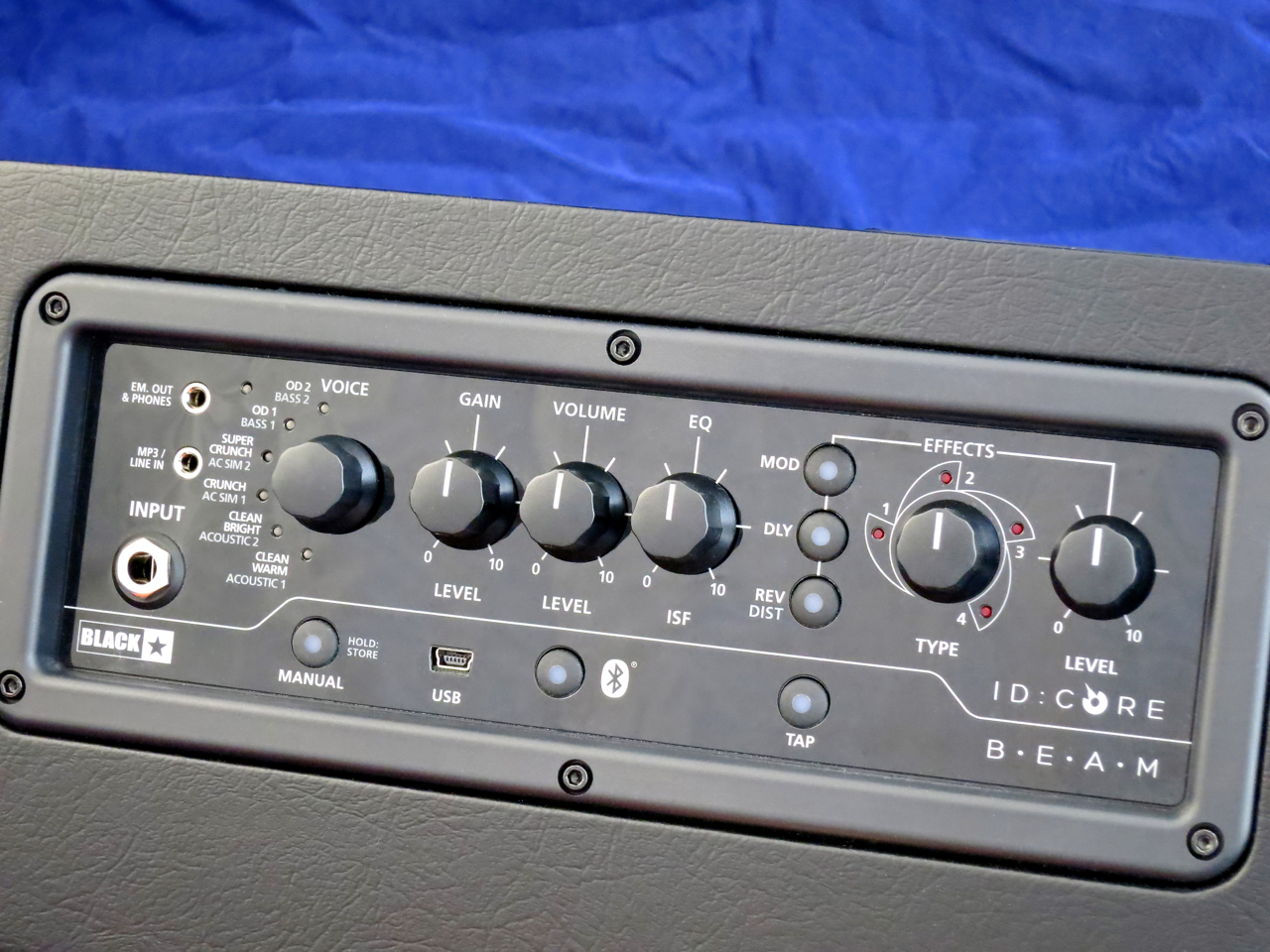
Apart from the power switch, the ID:Core BEAM’s back panel features the input jack for the (optional) footswitch. The rest of the combo’s controls and connectors can be found on the top-mounted control panel.
The larger ID:Core combos are well-equipped practice amps, but the BEAM has a couple of additional aces up its sleeve:
The ID:Core BEAM offers you 12 amp models (Voices). The first set (the Voices LED glows red) deals with six amp models for electric guitar, while the second set (green LED) gives you two Voices each for acoustic guitar, electric bass, and acoustic guitar simulation.
The amp section has three physical knobs for adjustment – gain, volume, and Blackstar’s patented ISF-control, which control’s the amp’s overall tonal character. Using the Insider-software you will be able to access additional parameters for deep editing, like a three-band EQ-section or a noise gate.
The effects department features four different modulation effects, four delay types, and four reverbs. The two Voices for bass swap the reverbs for bass distortion. You can choose one effect from each effect section for a Voice (meaning up to three simultaneous effects).
The small combo also features a built-in tuner.
The music signal, sent to the BEAM from your mobile device via Bluetooth, naturally isn’t sent through the combo’s amp modelling circuits. It is fed into the signal chain just before the power amp section. The ID:Core BEAM allows you to play along to the Bluetooth signal, of course!
The USB-port isn’t only used to remote control the amp’s parameters via Insider – this lifestyle combo doubles as a full-blown USB sound card. The BEAM can be run in three different USB-modes, which allows you to either send a stereo signal of the amp sound to your sequencer, or send two discrete mono signals (with one channel completely dry, and the second channel with all the amp modelling and effects) to your recording software. The third USB-mode is called Reamping, and it’s used to feed a dry guitar signal off your audio sequencer into the ID:Core BEAM and record the effected signal onto a separate recording track simultaneously.
The signal level of the USB-audio can be controlled directly (and independently of the amp’s master volume settings), making it very easy to set the correct recording levels for your personal studio setup.
****
Blackstar have really hit the bull’s eye with their new lifestyle combo!
Listening to music with a very critical ear you can hear a little bit of hiss, but it isn’t loud enough to spoil the fun. Remember, the ID:Core BEAM isn’t meant to be a studio monitor, but rather a nifty, compact music player for your bookcase – something this little combo handles with much aplomb. You wouldn’t necessarily expect such a full and strong delivery from such a compact unit.
The ID:Core BEAM also sounds great as a guitar and bass amp, which isn’t quite as surprising, considering this combo’s pedigree.
The guitar amp voices have plenty of character, and the effects have more than ample depth and width:
The high quality of the acoustic simulator was something of a positive surprise:
Despite its diminutive size, the BEAM also delivers when it comes to electric bass tones:
****
The Blackstar ID:Core BEAM succeeds to combine a programmable practice combo for guitar and bass, a Bluetooth-player, and a USB sound card into a very enticing package. In addition to being a great living room amp, the BEAM could also prove a handy little amp for guitar instructors.
Vuoden alussa NAMM-messuilla esitelty Blackstar ID:Core BEAM (299 €) kuuluu uuteen, nopeasti kasvavaan vahvistinkategoriaan:
Se on niin kutsuttu ”lifestyle amp”, joka on samalla sekä hyödyllinen pikkukombo harjoitteluun että kitaristin imagoon sopiva Bluetooth-vahvistin musiikin kuuntelua varten.
****
Blackstar ID:Core BEAM on aito ID:Core-kombo mikä tarkoittaa, että sen kaikkiin parametreihin pääsee käsiksi Blackstarin oman Insider-softan kautta.
Uutuuskombo on stereofoninen, ja sen 20 watin tehoa pusketaan ulos kahdesta kolmen tuuman kaiuttimista. Isoista ID:Coreista tuttu Super Wide Stereo -efekti toimii BEAM-kombossa myös musiikin kuuntelussa, ja sen vaikutusta voi säätää erikseen.
ID:Core BEAM:n takaseinästä löytyy sähköliittimen lisäksi jakki jalkakytkimelle (maksullinen lisävaruste). Kaikki muut liittimet on sijoitettu isolle etupaneelille.
BEAM:n isot sisarukset ovat jo todella hyvin varustettuja, mutta pikkukombo panee ominaisuutensa runsaudella vielä selvästi paremmaksi:
Vahvistinmallinnuksia löytyy tässä peräti 12 kappaletta. Ensimmäinen satsi (Voice-ledi palaa punaisena) on varattu kuudelle eri sähkökitarakanavalle, kun taas toisesta satsista (vihreä ledi) löytyy kaksi vahvistintyyppiä akustiselle kitaralle, kaksi akustisen kitaran mallinnusta, sekä kaksi ohjelmaa sähköbassolle.
Vahvistinosasto tarjoaa kolme fyysistä säädintä soundien muokkaamiseksi – gainin ja volumen lisäksi löytyy vielä Blackstarin patentoima, yleissoundiin vaikuttava ISF-toiminto. Insider-softalla pääsee säätämään sitten tarkemmin muitakin parametrejä, kuten EQ:t tai kohinaporttia.
Efektiosasto tarjoaa neljä modulaatioefektiä, neljä viivetyyppiä, sekä neljä eri kaikua. Bassovahvistimien kanssa on kaiun sijaan lisätty bassosärö. Jokaisesta efektityypistä voi valita yhden per vahvistinmalli, siis samanaikaisesti voidaan käyttää korkeintaan kolmea efektiä.
Pikkukombossa on myös kätevä sisäinen viritysmittari.
Bluetooth:n kautta vastaanotettu audiosignaali ei luonnollisesti kulje mallinnusosion läpi, vaan se lisätään ID:Core BEAM -kombon signaalitielle vasta kitaravahvistimen jälkeen. Bluetooth-musiikin kanssa voi tietysti soittaa mukaan!
USB-liitintä ei käytetä ainoastaan Insider-softan pyörittämiseen, vaan tämä lifestyle-kombo on myös täysverinen usb-äänikortti. BEAM:lla on kolme eri USB Audio -moodia – vahvistin pystyy lähettämään joko stereofonista kitarasignaalia efekteillä höystettynä sekvensserille tai kaksi monosignaalia, joista yksi on kuiva tulosignaali ja toinen koko mallinnuksen läpi käynyt monosignaali. Näiden kahden lisäksi on tarjolla vielä erittäin kätevä Reamping-tila, jossa sekvensseristä lähetetty prosessoimaton kitararaita viedään ID:Core-kombon läpi ja mallinnettu signaali äänitetään toiseen sekvensseriraitaan.
USB-signaalitasoa pystyy säätämään itsenäisesti ja riippumatta kombon masterista, minkä ansiosta usb:n kautta lähetetyn voimakkuuden saa aina omalle äänityssoftalle sopivaksi.
****
Kyllä, nyt täytyy sanoa, että Blackstarin uusi lifestyle-kombo on täysosuma!
Musiikin kuuntelussa on havaittavissa pikkusen kohinaa, mutta se ei nouse lainkaan häiritsevästi esiin. ID:Core BEAM ei ole tarkoitettukaan studiomonoriksi, vaan kirjahyllyn musiikkikeskukseksi, ja se asia on kombolla suveräänisti hallussa. Musiikki kuulostaa yllättävän täyteläiseltä, ja myös sitä volyymin määrää on tarjolla kiitettävän runsaasti.
Myös kitara- ja bassosoundien osilta Blackstar-uutuus ei jätä mielestäni toivomiseen varaa!
Kitarasoundit soivat erittäin hyvin, ja myös BEAM:n efektitarjonta on varsin maukas:
Akustisen kitaran mallintaminen onnistuu pikkukombolla yllättävän hyvin:
Vaikka tämä Blackstar-uutuus on hyvin kompakti tapaus, jopa BEAM-kombon bassosoundit kuulostavat mukavan meheviltä:
****
Blackstar ID:Core BEAM yhdistää erittäin onnistuneesti mallintavan harjoituskombon kitaralle (ja bassolle), usb-äänikortin, sekä tehokkaan Bluetooth-kaiuttimen. Ainakin omasta mielestäni tämä uutuuskombo sopii todella hyvin – olohuonekäytön ohella – myös opetusvahvistimeksi.
Yamaha has recently upgraded its very successful L-Series of steel-string guitars.
The most important update, at least in terms of sound quality, is the use of A.R.E.-treated spruce tops across the whole range of models. Yamaha’s proprietary Acoustic Resonance Enhancement is a wood treatment that uses heat, changes in humidity and pressure, to artificially age tonewoods. The aim is to produce brand-new acoustic instruments, which sound played-in from the get-go.
L-Series guitars come in three body sizes – LJ (Medium Jumbo), LS (Small Body = Folk-sized) and LL (Original Jumbo = Dreadnought-sized).
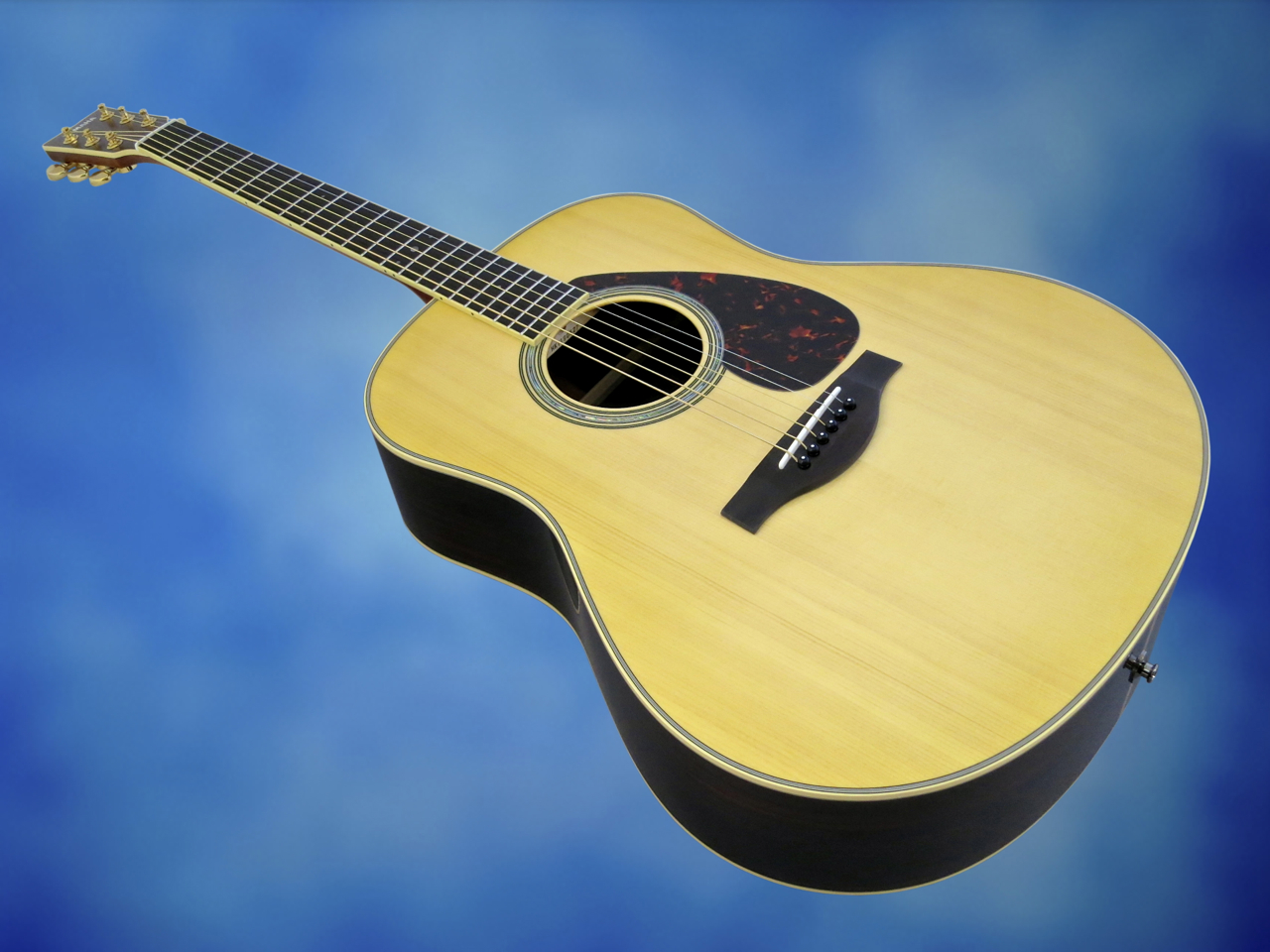
Kitarablogi had the pleasure to take a Yamaha LL6 ARE (current price in Finland:534,90 €) for a spin.
****
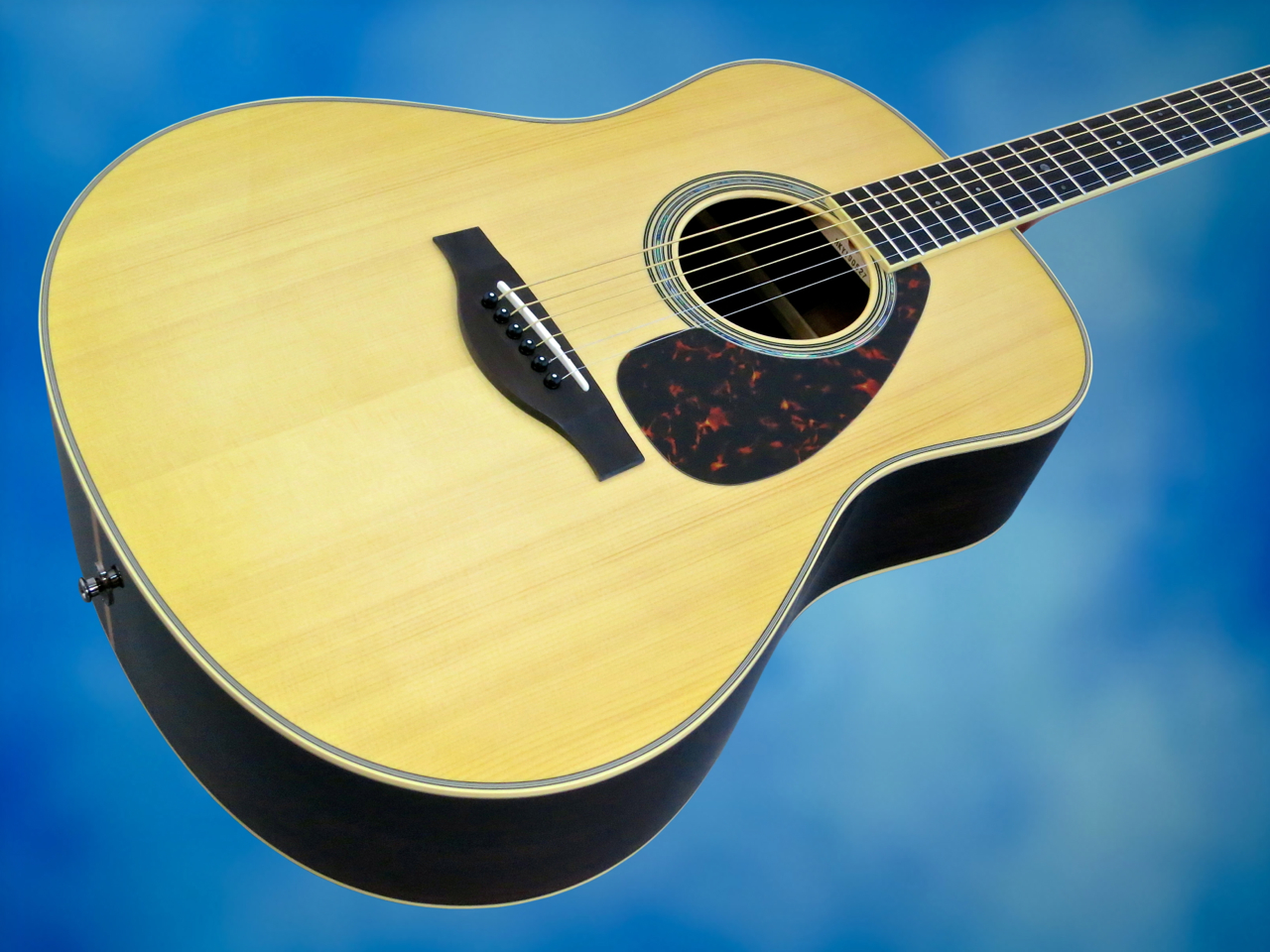
Yamaha’s Original Jumbo body style is the company’s own design, set apart from a traditional Dreadnought by its slimmer shoulders and its more rounded lower bout. The result looks nicely balanced.
Yamaha uses solid Engelmann spruce for all of their L-Series tops. Engelmann spruce has a reputation for sounding warmer and less constricted, when compared to Sitka spruce.
The LL6 is available in four different finishes – natural, brown sunburst, black and Dark Tinted (a deep reddish-brown hue).
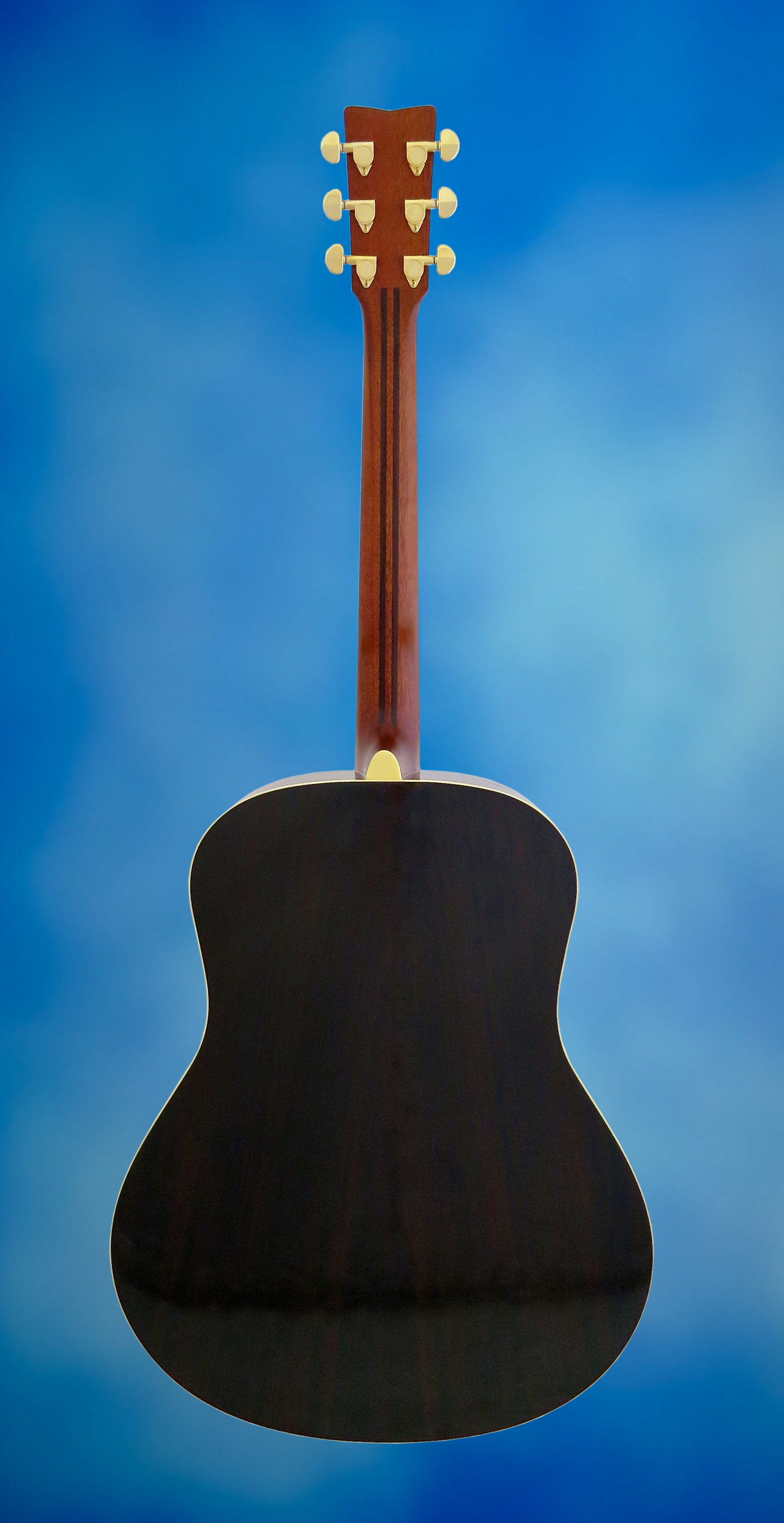
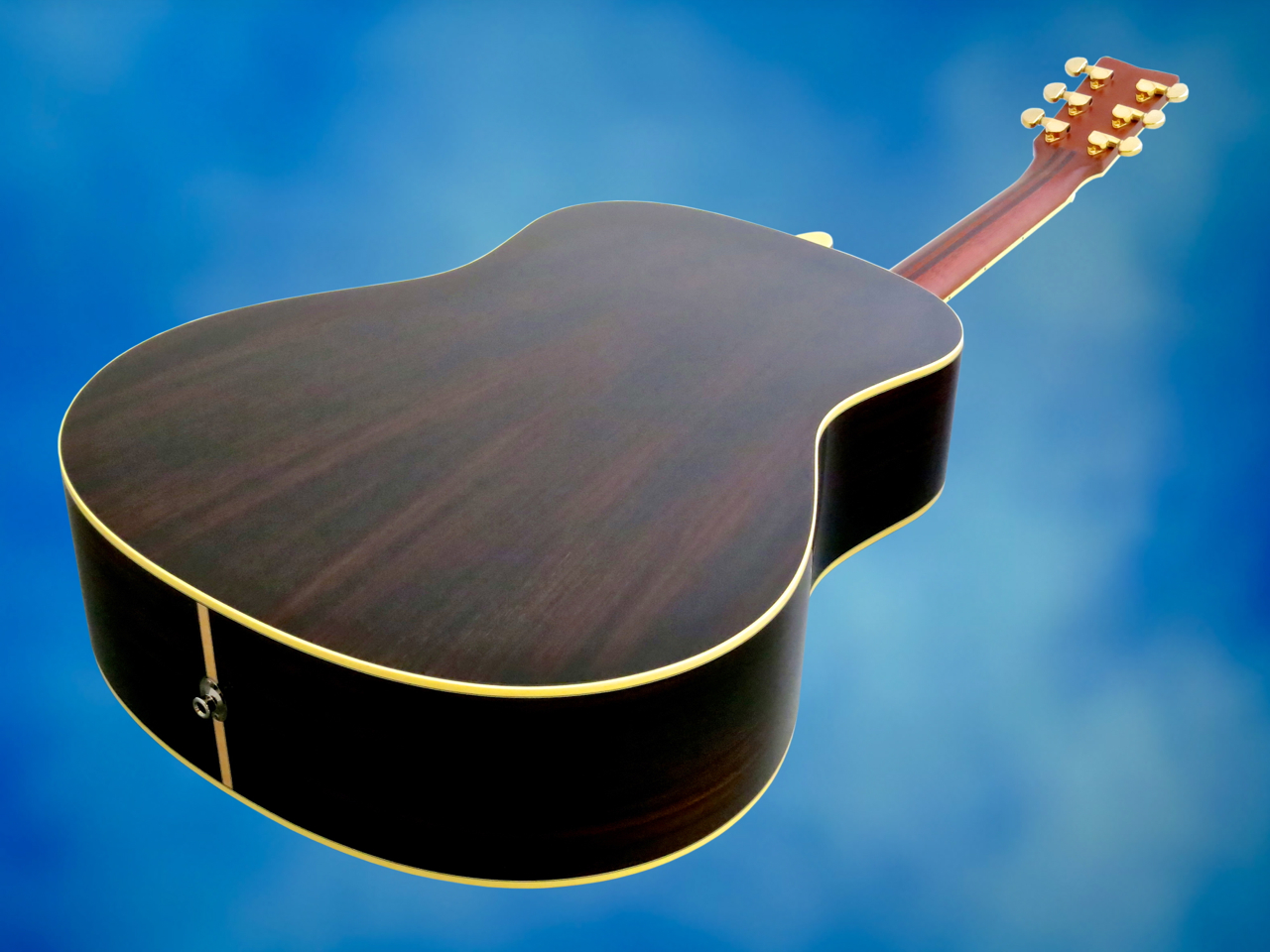
The Yamaha LL6’s sides and back are made from beautifully grained laminated rosewood. There’s a mahogany backed version available, too, the Yamaha LL6M ARE.
The guitar’s body has received a gloss finish, while the back of the neck sports a thin satin finish.
The bound headstock is home to a set of TM-29G tuning machines.
All new L-Series instruments come with five-piece necks. In the LL6’s case this means three pieces of mahogany with two strips of rosewood sandwiched between them. The idea behind this type of construction is to add stiffness to the neck, and thus sustain.
The LL6’s headstock and neck heel are crafted from separate pieces of mahogany, which are then glued to the main part.
The quality of the fretwork on this Yamaha is very good.
Another new feature across all L-Series models are rolled-in fingerboard edges for an even more comfortable playing experience.
Yamaha uses a modified type of non-scalloped X-bracing on all L-Series tops, which is meant to add a healthy dose of punch and warmth into the mix.
The centre ring of this beautiful soundhole rosette has been crafted from genuine abalone shell.
There’s multiple binding on the Yamaha’s top, as well as single ply cream binding around the back.
The LL6 comes with a Yamaha SRT Zero Impact piezo pickup hidden beneath its compensated bridge saddle.
As the main focus of the LL6 lies on its acoustic performance, Yamaha wanted an unobtrusive pickup system without the need for an on-board preamp or a battery compartment. This is why the LL6 comes equipped with a passive pickup that is wired directly to the output jack.
Yamaha’s LL6 ARE is sold in its own soft case, which is a nice hybrid of a gig bag and a hard case.
****
It speaks volumes about Yamaha’s high standards of craftsmanship, as well as the company’s stringent quality control, when the importer’s product specialist takes you to the warehouse, and simply hands you an untouched shipping carton, without even opening it. His only question was: ”Which colour would you prefer?”
And, judging from the review guitar, this trust in Yamaha’s quality control seems totally justified. When I opened the soft case I found a great instrument in fine fettle.
The neck’s new-and-improved oval C-profile feels fantastic, and the nut width of 44 mm offers enough room for complex fingerings. Yamaha have gone for a good working compromise at the bridge, too, with an E-to-e-string spacing of 55 mm, that most strummers and fingerpickers will get to grips with nicely.
The playability was first rate (remember this is a sub-600 € guitar):
The action with the factory-installed 012-gauge set was really comfortable (string height at the 12th fret: low E – 2.1 mm/high e – 1.6 mm), and the guitar played beautifully, without any rattles or buzzes whatsoever.
It’s virtually impossible to verify any claims that Yamaha’s A.R.E.-treatment makes the LL6 ARE sound like well played-in ”old ’un”, because no two vintage guitars are the same, and also because I didn’t have a ”non-A.R.E.” Yamaha to hand.
What I can say, though, is that the Yamaha LL6 ARE sounds very open, dynamic and mature, right out of the shipping carton. Many brand-new steel-string acoustics require a playing-in period to lose a certain restricted sense of dynamics and a spiky top end. The LL6 ARE sounds warm, well-balanced and open right from the start.
Fingerstyle playing comes across well-articulated. The LL6 has a clear top end and a rich bass register; it’s a warm tone, but the bottom end never gets overbearing.
The first example has been close-miked with an AKG C3000 microphone:
For a no-frills, passive piezo system the LL6’s SRT-pickup sounds rather nice:
Combining both signals works well, too:
Strumming the LL6 gives you great punch, a sparkling top end, and plenty of mid-range character (AKG C3000):
The piezo-powered version is a bit drier, but still work well in my view:
Using both signals together sounds like this:
The rhythm guitar tracks in this short Beatles-cover have been recorded with a Shure SM57, while the lead guitar parts have been recorded direct off the built-in pickup:
****
The Yamaha LL6 ARE might be the most-affordable member of the L-Series, but it most certainly is a thoroughbred example of its species. The improved neck profile is a real treat, and the A.R.E.-treatment seems to make a clear difference. This is a beautiful instrument with a voice to match. I also like the straightforward pickup system, which offers a decent sound with no fuss. I’d really recommend you try out one of these guitars, as the LL6 ARE punches well above its weight.




























 Kitarablogi.com – Finland's premier Guitar and Bass blog