Vox Amplificationin upouusi AV-sarja koostuu kolmesta edullisesta kombovahvistimesta kitaralle. Lähtötehonsa mukaan nimetyt Vox AV15-, AV30- ja AV60 -vahvistimet ovat mallintavia putkihybridejä, jotka yhdistävät puolijohde- ja putkielektroniikan parhaimpia puolia.
****
****
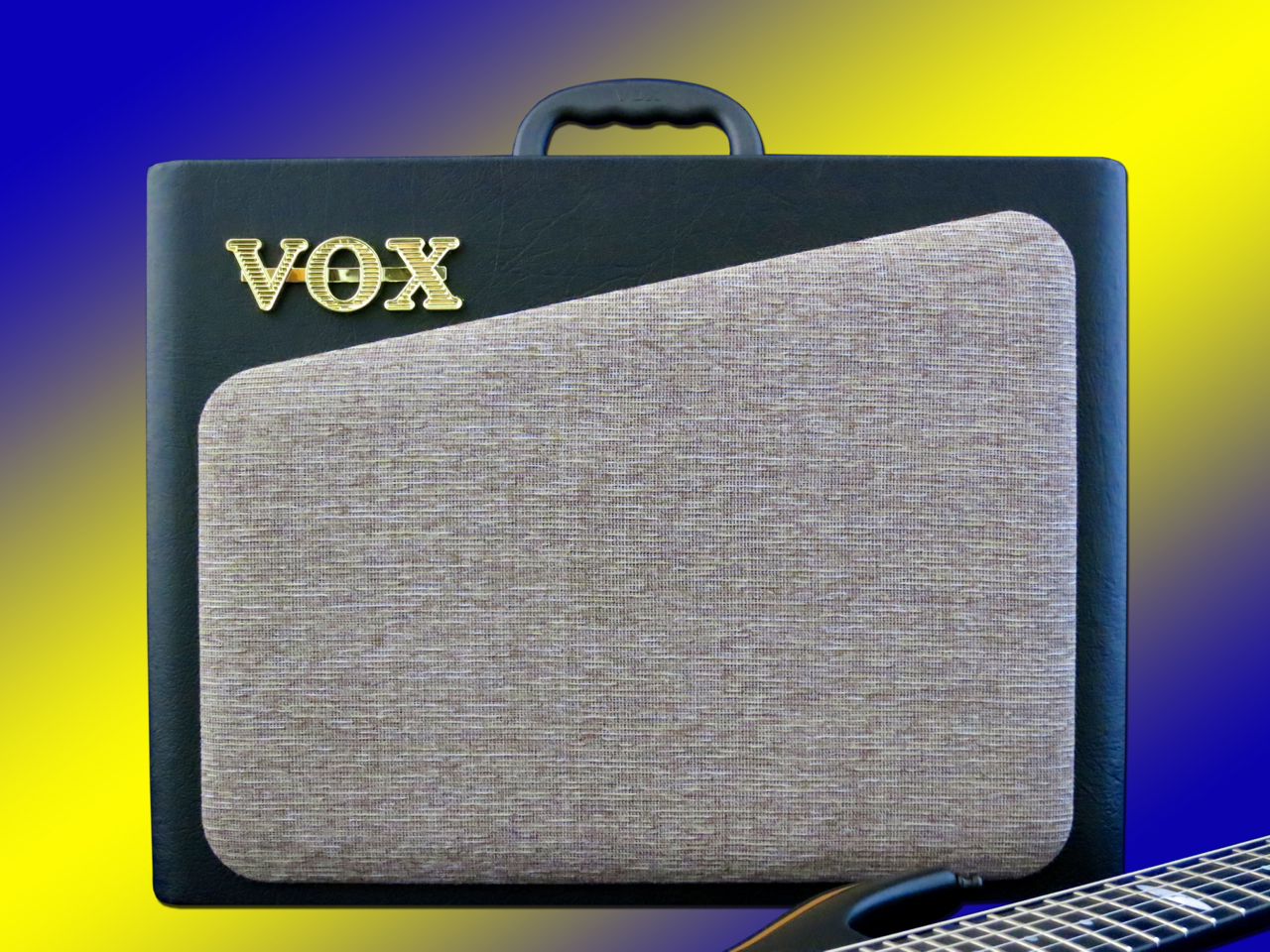
Kitarablogi sai testiin Vox AV15 -kombon (arvioitu katuhinta noin 269 €), joka on AV-perheen kuopus.
AV15 on mukavan kompakti kokonaisuus (korkeus: 37 cm, leveys: 45 cm, syvyys: 23 cm), ja se painaa vain hieman alle kahdeksan kiloa.
Vahvistinkotelon (= kaiutinkaapin) rakenne on selvästi ottanut inspiraatiota hifi-kaapeista. Tavallisesti kitarakaappi antaa oman lisämausteensa lopulliselle kitarasoundille, mutta AV-sarjan kaltaisissa mallintavissa vahvistimissa refleksikaapin lineaarisempi taajuusvaste auttaa useiden eri soundien jäljittämisessä.
Vox AV15:n takaseinästä löytyy ainoastaan virtaliitin kombon mukana tulevalle ulkoiselle virtalähteelle (12 V DC).
****
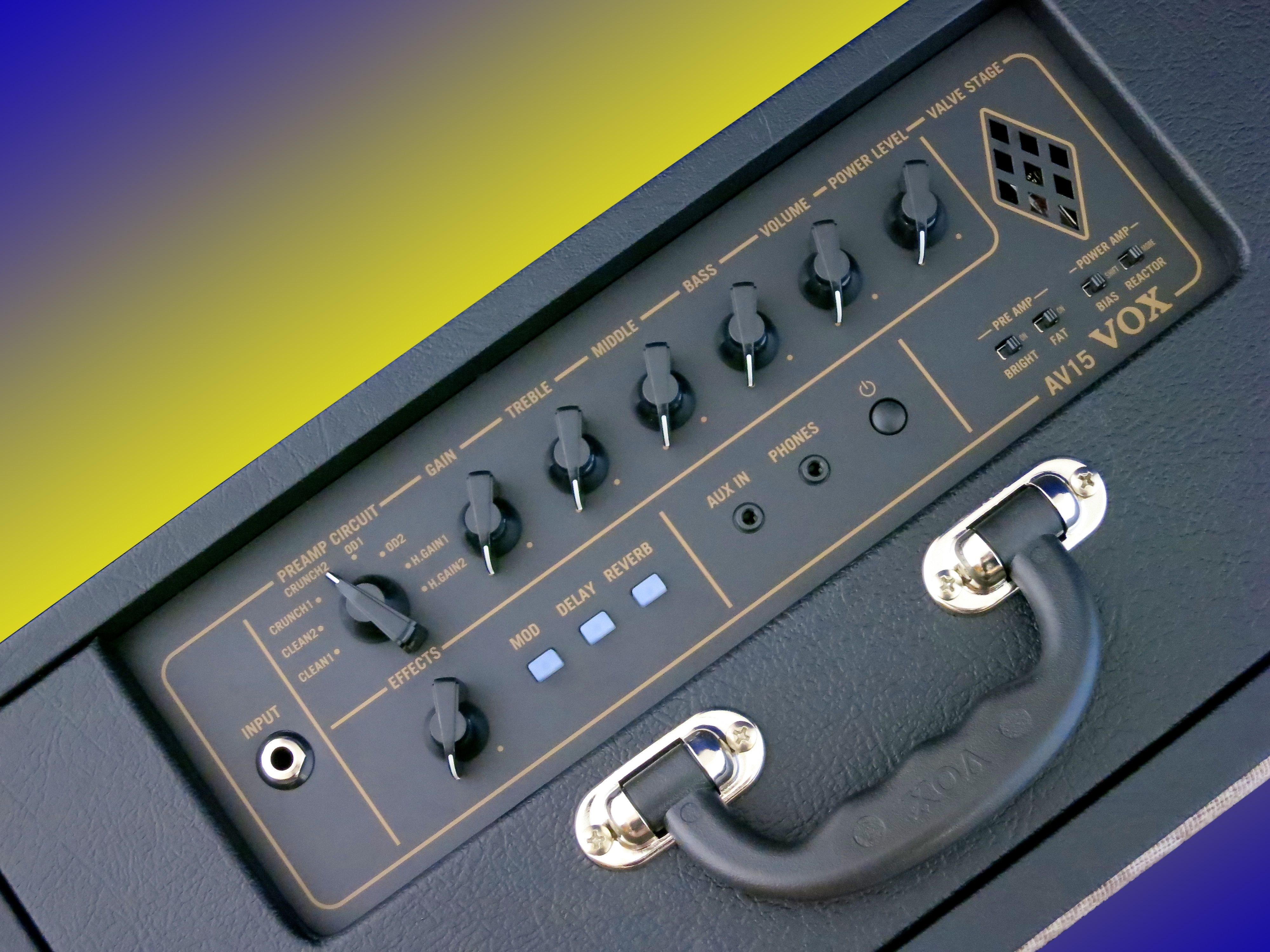
Preamp Circuit -kytkimellä saa valittua yhden Vox-kombon kahdeksasta vahvistinmallista. Tarjolla on riittävästi vaihtoehtoja Fender Twin -tyylisestä cleanista, sekä Vox- ja Marshall-mallinnuksien kautta jopa Rectifier-tyyliseen High Gain -meininkiin.
Vahvistinsoundien maustamiseksi tämä Voxi tarjoaa kolmikaistaisen EQ-osaston, sekä kolme efektiä (chorus, viive, kaiku). Kaikkia kolmea efektiä voi käyttää samanaikaisesti. Jokaisessa efektissä pystyy säätämään efektitason lisäksi vielä toisen parametrin (pitämällä efektinappia alas painettuna, samalla kun kääntää Effects-säädintä) – vatkaamisnopeutta choruksessa, viiveaikaa delayssä, sekä kaiun pituutta reverbissä. AV-kombon efektit ovat muuten vahvistimen ainoat digitaalisesti toteutetut osat, Voxin muu signaalitie – mallinnusta myöten – on täysin analoginen.
Tässä kolme lyhyttä pätkää efektiosaston soundeista (Gibson Les Paul Junior, Shure SM57):
CHORUS (ja pieni annos kaikua)
DELAY
REVERB
Hieman epätavallisesti löytyy AV15-kombosta jopa kolme eri ”volyymi-säädintä”, joiden toiminta vaikuttaa soundiin eri lailla:
Gain-säätimellä säädetään tulosignaalin tasoa, ennen kun signaali menee etuvahvistimen putkiasteelle. Pienillä Gain-asetuksilla soundi pysyy puhtaana, kun taas isommat Gain-asetukset tuovat signaaliin rosoisuutta ja/tai (vahvistinmallista riippuen) selkeätä etuastesäröä. Kombon Volume-säätimen rooli taas on säätää etuvahvistimesta tulevan signaalin tasoa juuri ennen päätevahvistimen putkiastetta. Pienillä Volume-asetuksilla signaali pysyy puhtaampana ja dynaamisempana, kun taas isot Volume-asetukset lisäävät signaaliin hieman kompressiota ja päätevahvistimen saturaatiota (= säröä). Power Level -nupilla sitten säädetään kuinka kovalla kitarasoittosi kuuluu kaiuttimen (tai kuulokkeiden) kautta.
Vaikka AV30:ssä ja AV60:ssä on kahdet putket – yksi etu- ja toinen päätevahvistimelle – Vox AV15 tulee toimeen vain yhdellä putkella, joka toimii sekä etu- että päätevahvistimessa. Tämän mahdollistaa perinteikkään 12AX7-putken nerokas rakenne, joka tarjoaa kaksi erillistä triodia samassa kuoressa, minkä ansiosta tätä putkityyppiä voi ja saa splitata.
Valve Stage -osio tarjoaa neljä liukukytkintä, joilla voi vaikuttaa suoraan putkiasteiden toimintaan ja soundiin:
Etuvahvistimelle (Pre Amp) löytyy sekä Bright-kytkin diskantin lisäämiseksi että Fat-kytkin, jolla bassontoistoa saadaan muhkeammaksi.
Päätevahvistimen (Power Amp) kytkimillä on vielä suurempi vaikutus vahvistimen soundiin ja ”tuntumaan”. Bias- ja Reactor-kytkimillä valitaan kuinka ”kuumana” päätevahvistimen putkipuolikas toimii ja miten dynaamisesti päätevahvistin reagoi etuvahvistimesta tulevaan signaaliin.
Tässä kaksi ääniesimerkkiä – clean ja crunch – joissa aloitetaan kaikilla kytkimillä vasemmassa asennossa, ja jossa laitan sitten kytkimet peräkkäin (aloitan Bright-kytkimestä) oikeaan asentoon (Gibson Les Paul Junior, Shure SM57):
****
Snobismi näyttää olevan tällä hetkellä muodissa – on viinisnobismi, on vinyylisnobismi, on putkisnobismi.
Mutta kun ollaan ihan rehellisiä olen ihan varma, että moni meistä ”vanhoista pieruista” olisi ollut enemmän kuin onnellinen, jos hänellä olisi ollut aloittelijana 1970-/80-luvun taitteessa ollut näin hieno vekotin kuin Vox AV15! AV15 on nimittäin hyvin monipuolinen – ja todella hyvällä soundillaan vakuuttava – hybridikombo erittäin soittajaystävällisellä hinnalla.
Vox AV15 on kunnon vahvistin kunnon soundilla, eikä muovinen lelu, joka lannistaisi kitarauntuvikon heti alkumetreillä. Varttuneellekin soittajalle AV-sarjalaiset voivat olla järkevä hankinta olohuonekomboksi tai backstage-lämmittelyyn, ja myös kotistudiossa AV15-kombosta on paljon iloa (kuten demobiiseissä kuulee).
BLUES-demo
Komppikitarat: Fender Telecaster (vasen kanava) ja Epiphone Casino (oikea kanava)
Soolokitara: Fender Stratocaster
ROCK-demo
Komppikitarat: Fender Telecaster (vasen kanava) ja Gibson Les Paul Junior (oikea kanava)
Minun mielestäni Vox Amplificationin AV-uutuussarja on oiva valinta esimerkiksi omaksi harjoitusvahvistimeksi, opetuskäyttöön tai vaikkapa bändikerholaisille. Edullinen Vox AV15 on helppo käyttää ja se kuulostaa mielestäni todella hyvältä.
A versatile tube amp, such as Bluetone’s Crossroad, is quite an involved design containing many different components. The exact component layout requires a good deal of planning.
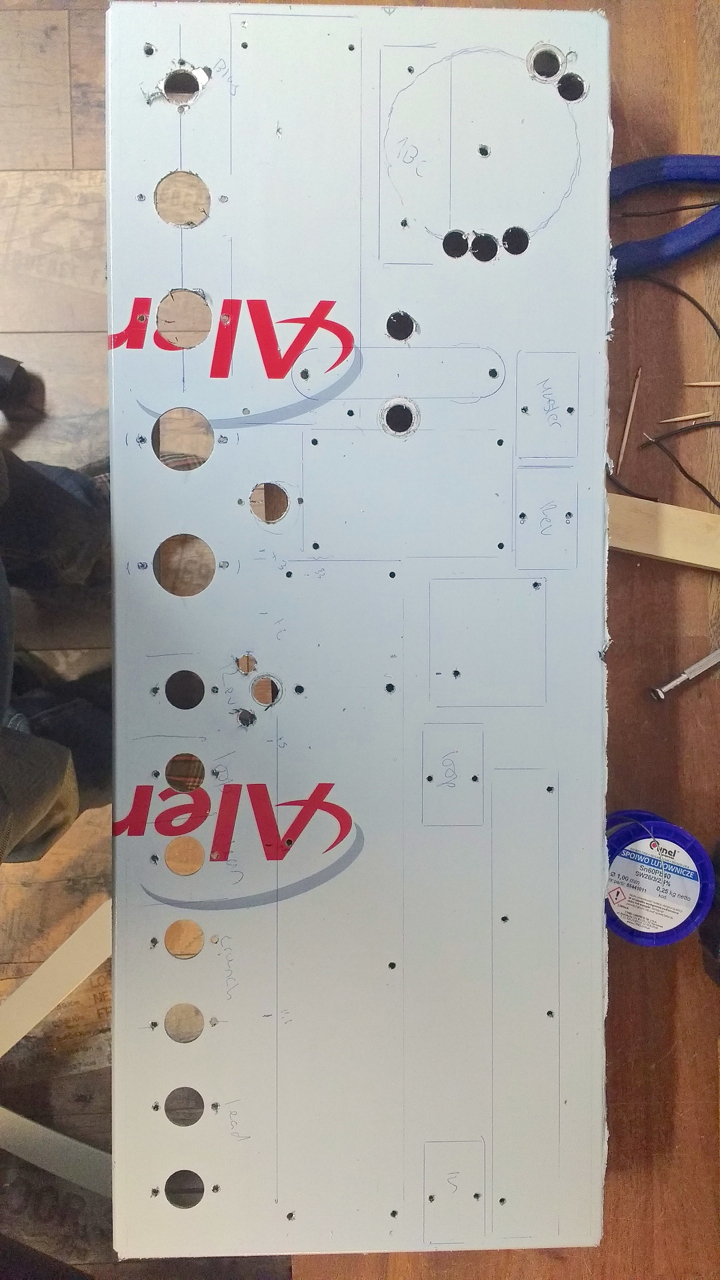
As you can see in the picture above, Matti Vauhkonen has sketched the outlines of all the necessary parts going into the Crossroad onto the chassis’ protective foil. Next he has drilled the holes needed to mount the valve sockets, the circuit boards, the transformers, and the leads going through the chassis.
Designing a tube amp is all about balancing the different requirements of the different parts working inside the amp – you can’t simply throw the components together haphazardly.
The large power transformer mustn’t radiate electromagnetic hum into the audio signal, which is why it is always placed as far as possible from the preamp valves. The power amp tubes, for their part, are best kept some distance from the audio transformer, to avoid hum and buzz induction. The audio transformer also has to be angled correctly in relation to the power transformer to keep things as quiet as possible.
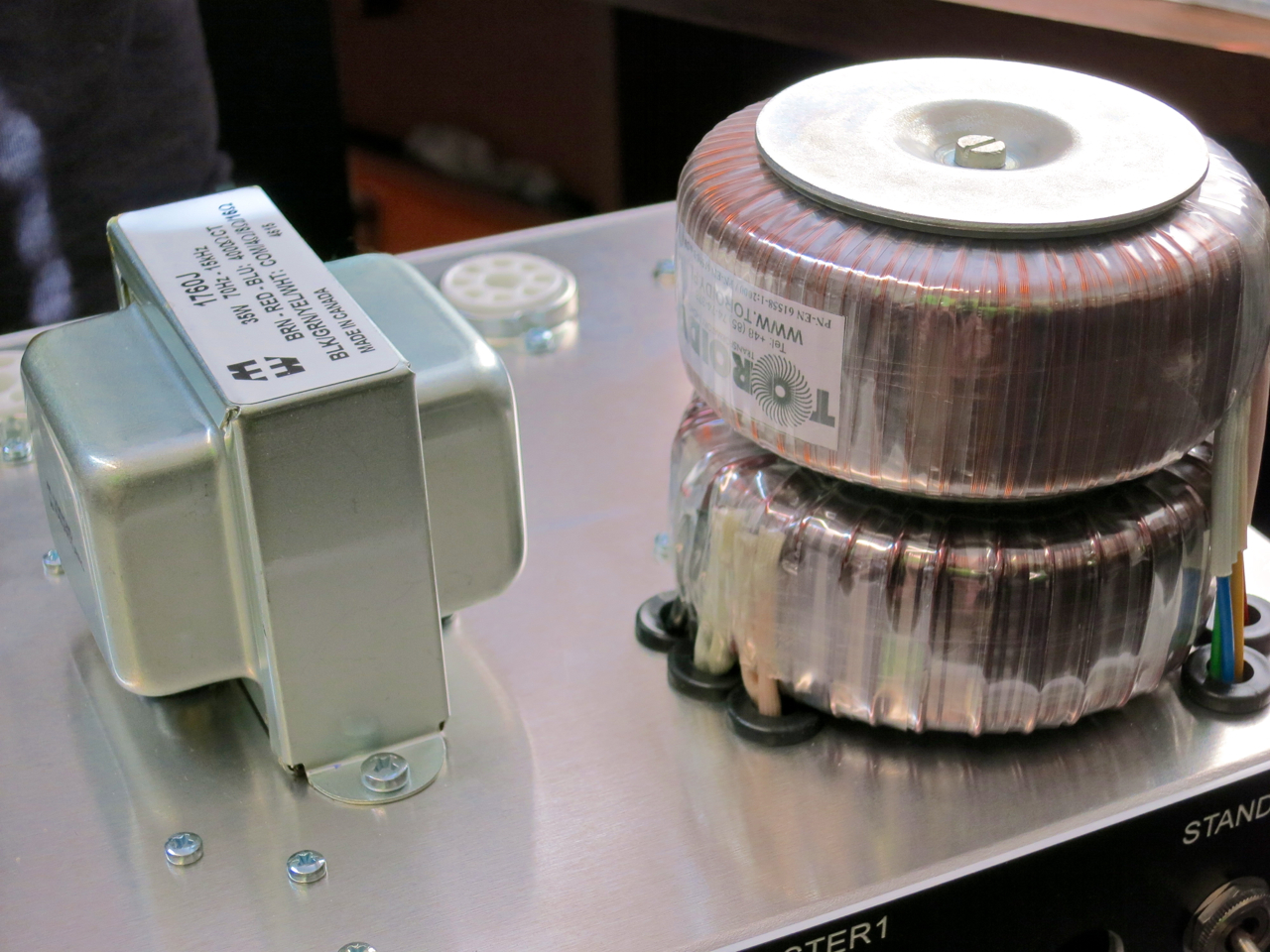
One special feature of Bluetone-amps is their use of (doughnut-shaped) toroidal transformers as power transformers, which is still quite rare in guitar amplifiers.
This is despite the advantages a toroidal transformer offers in comparison to a traditional laminated core transformer. A toroidal transformer weighs less than a similarly spec’ed traditional design, and it also radiates less electromagnetic hum, which makes it easier to find a good spot for the power transformer in the amp.
Bluetone’s Harry Kneckt puts it like this: ”If the toroidal transformer had been available to Leo Fender back in the 1950s, he would have used it in all his amps. I’m pretty sure of this!”
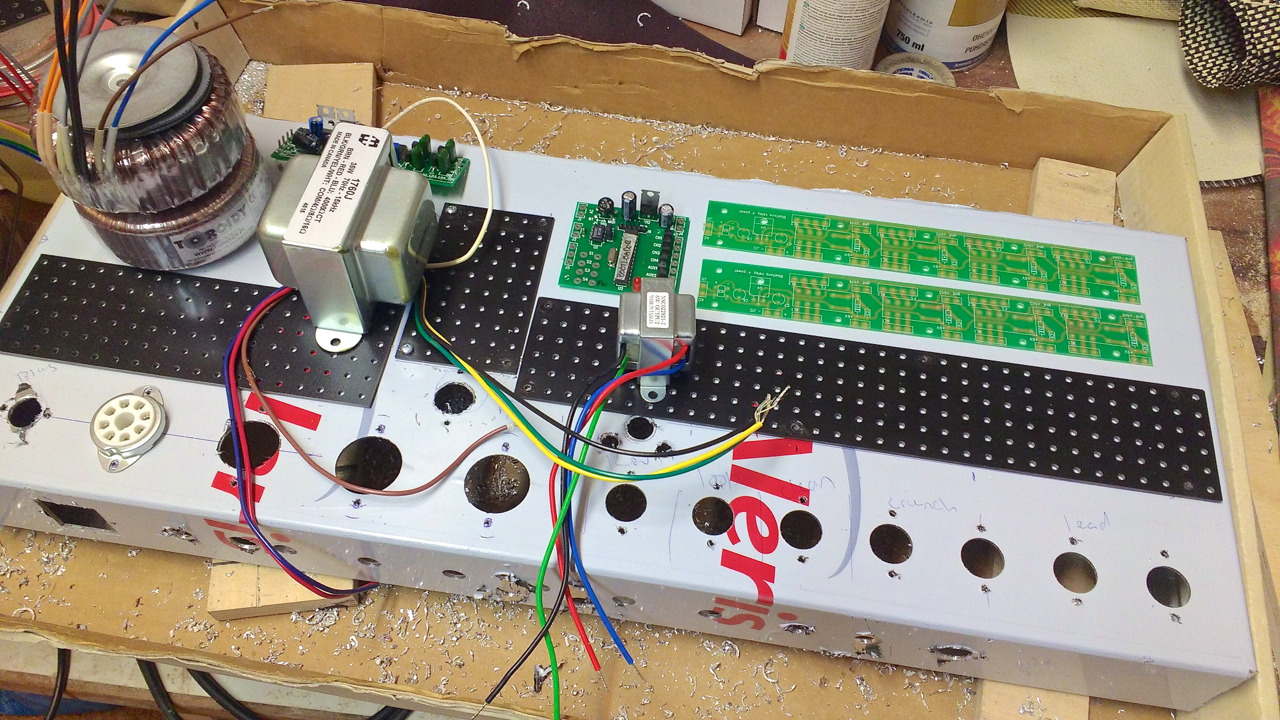
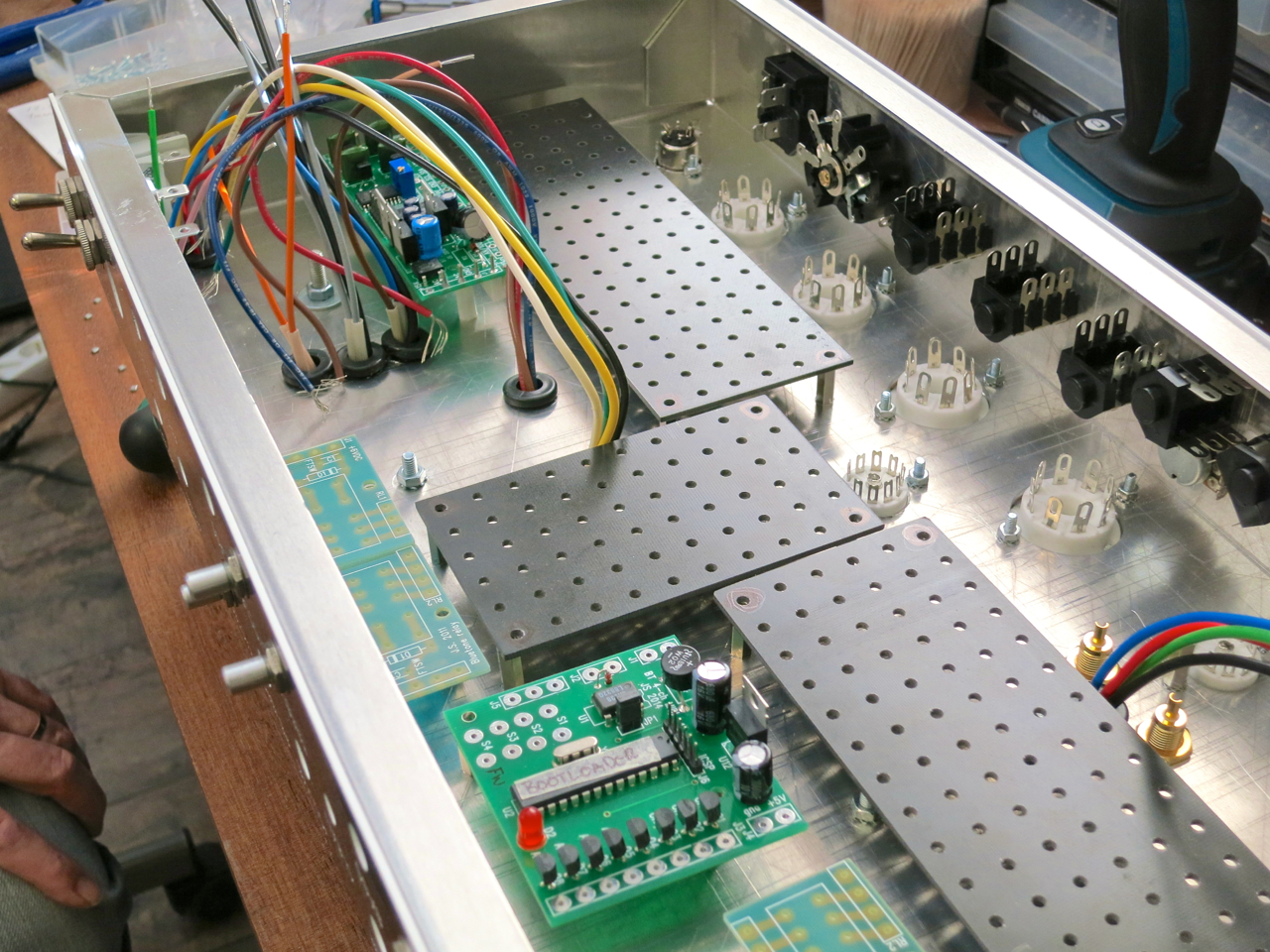
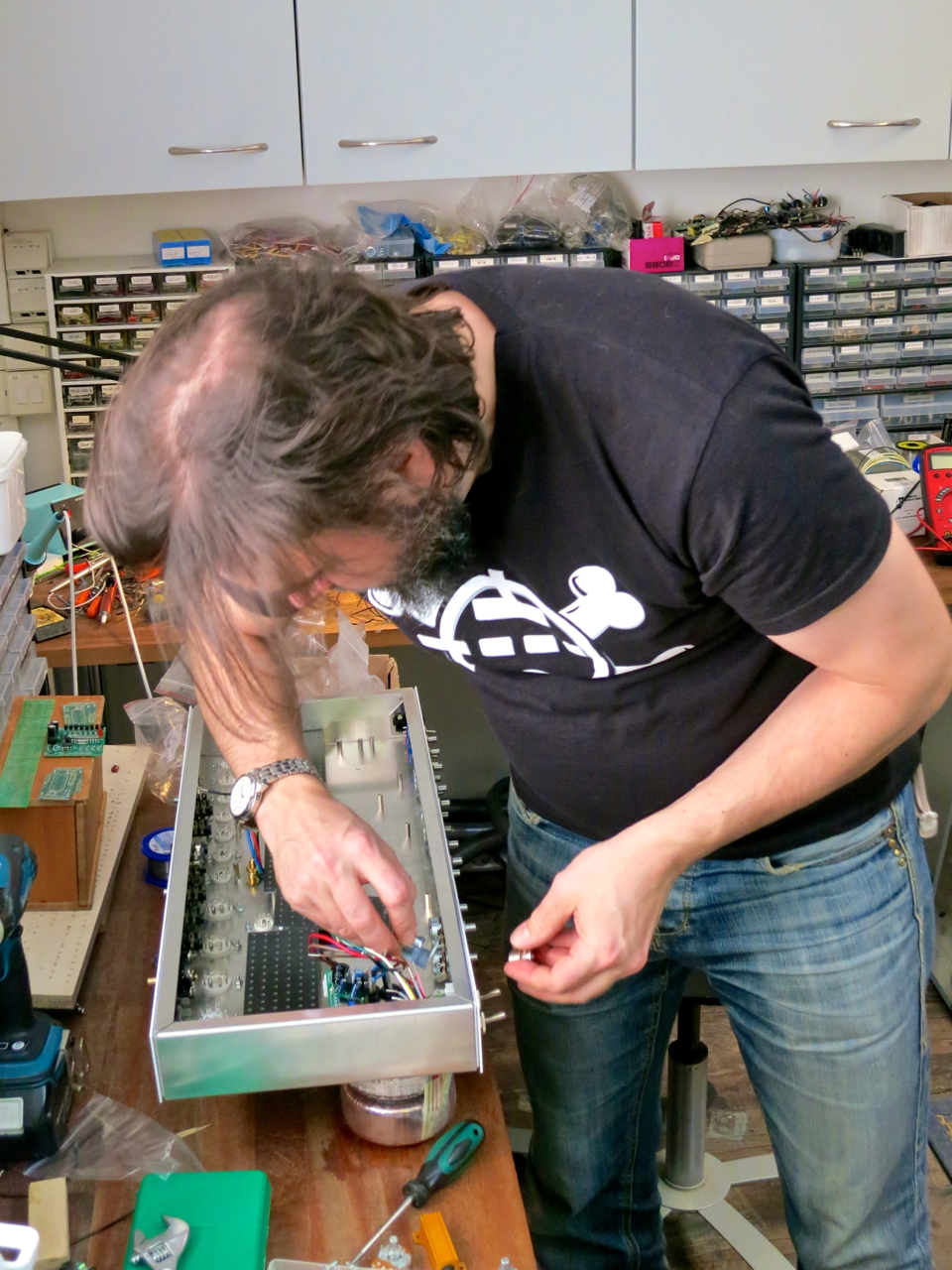
Matti Vauhkonen has first installed the transformers, tube sockets (the white components), and the output jacks (the black parts on the right) into the amp chassis.
The eyelet-boards and PCBs were added for these pictures only to give an idea of their placement inside the Crossroad head. The audio signal in all Bluetone amps runs through a pure, point-to-point soldered analogue-and-valve path, but for modern control features, such as channel switching via MIDI or tube biasing via WiFi, the company naturally uses modern technology.
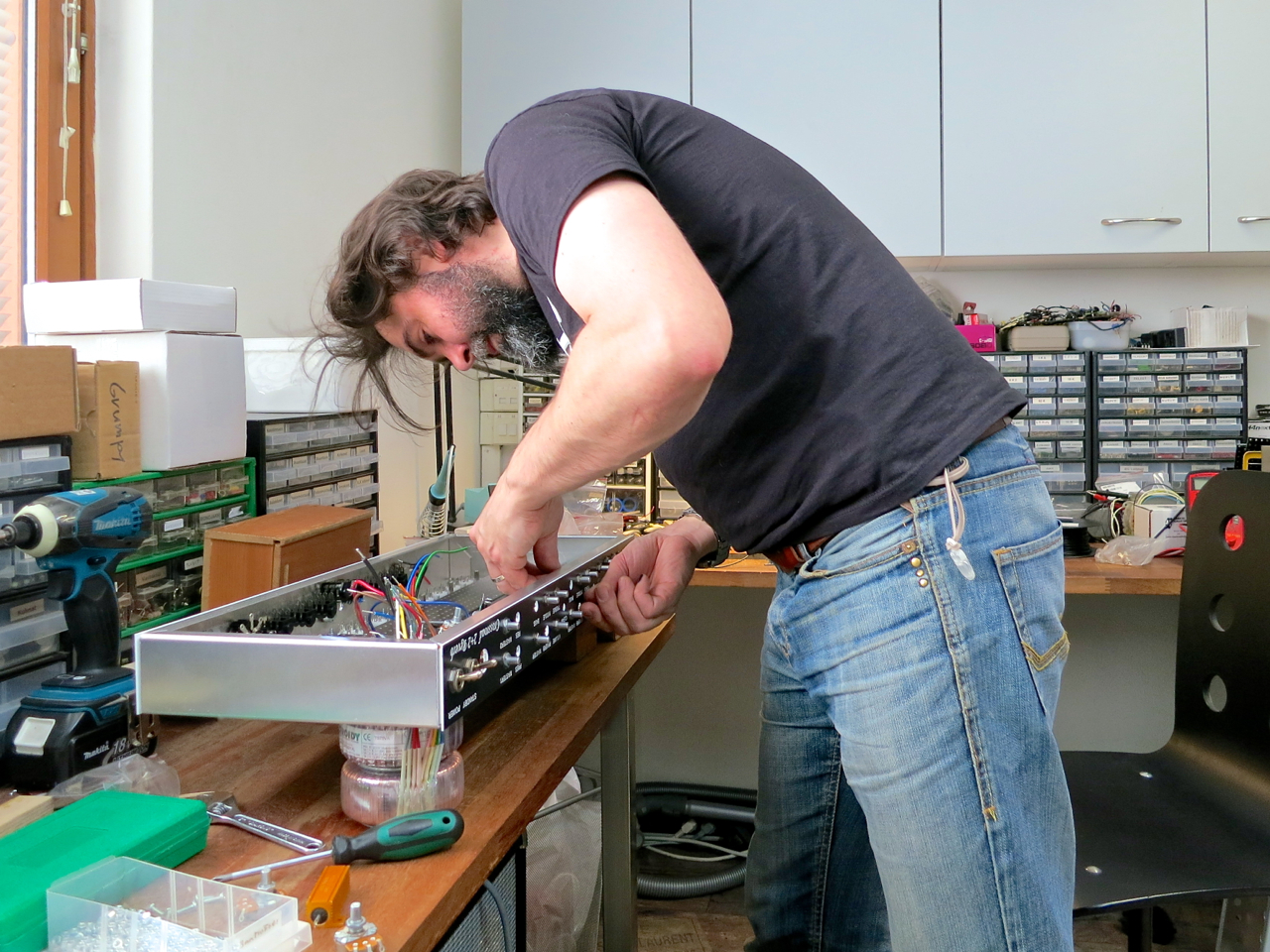
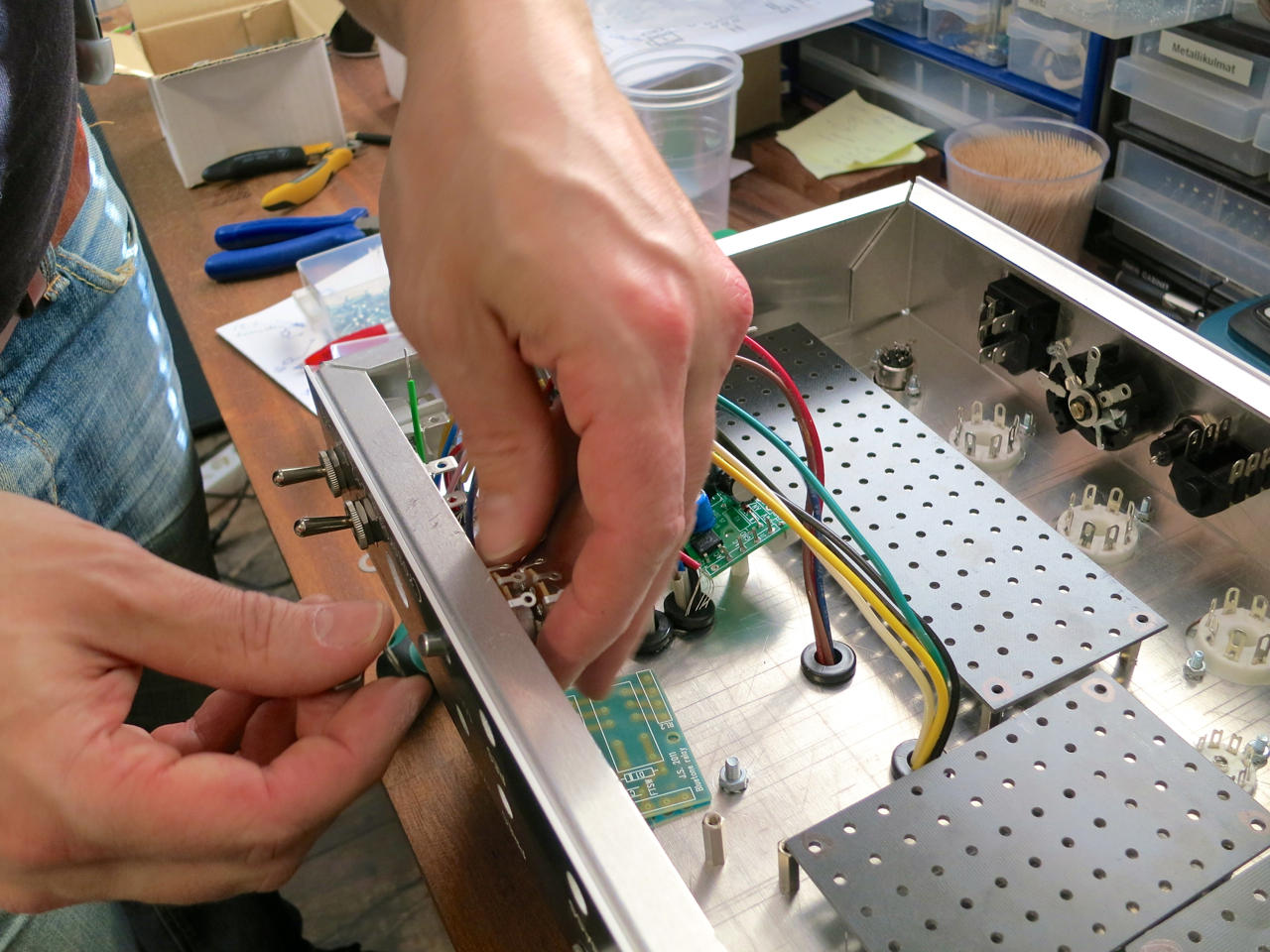
The next step is the installation of all the front panel parts, such as the control pots, switches, and the pilot light.
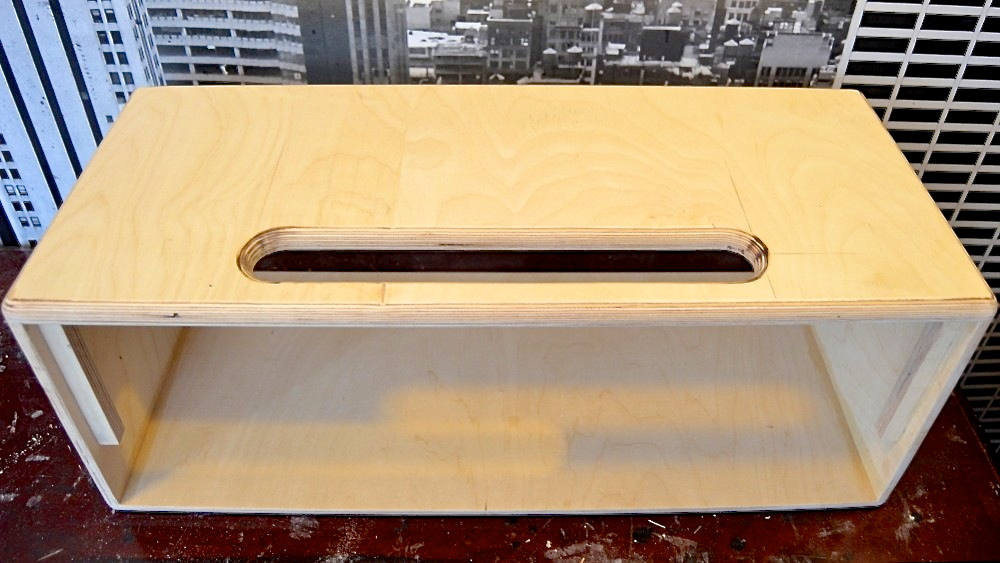
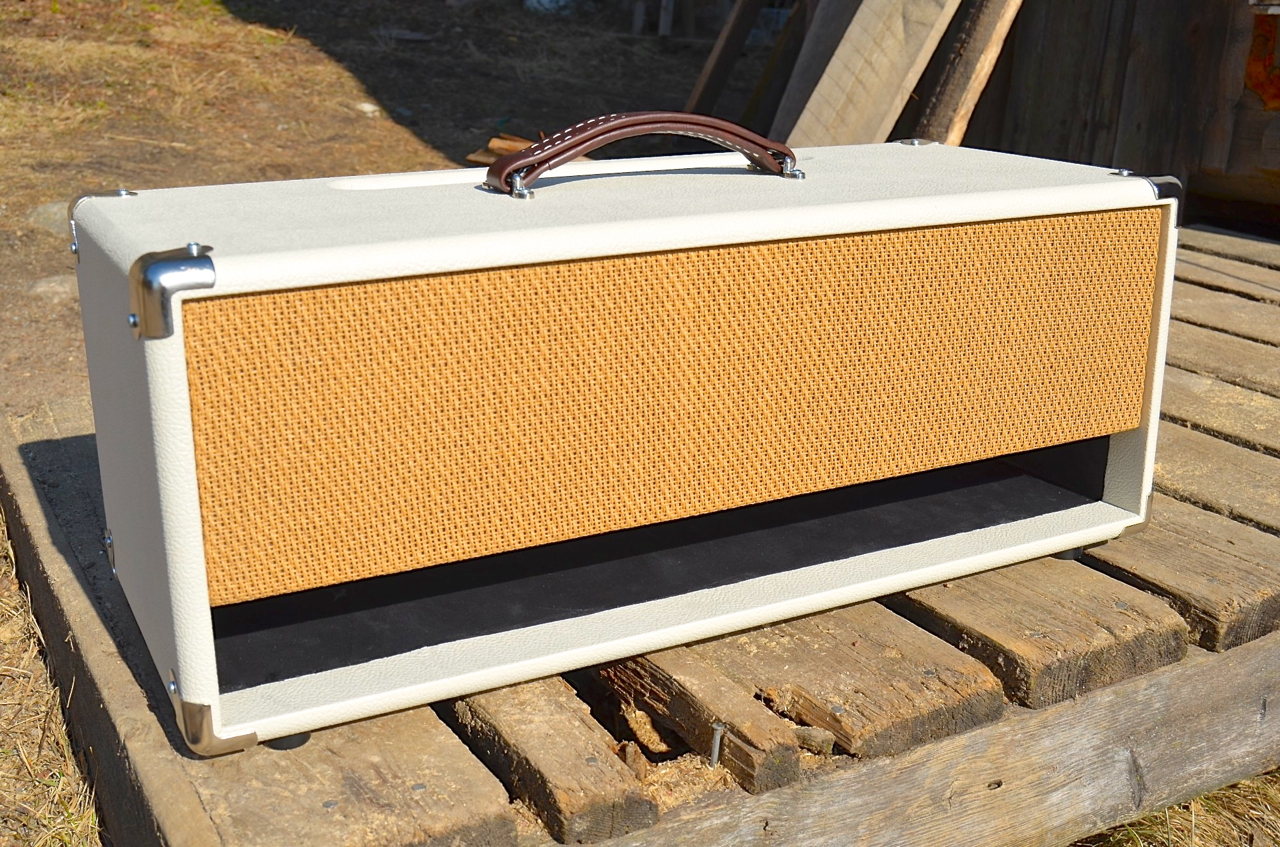
Bluetone makes some of their cabinets in-house, depending on their current workload. For the head featured here, Bluetone ordered the arctic birch ply amp cabinet from their subcontractor.
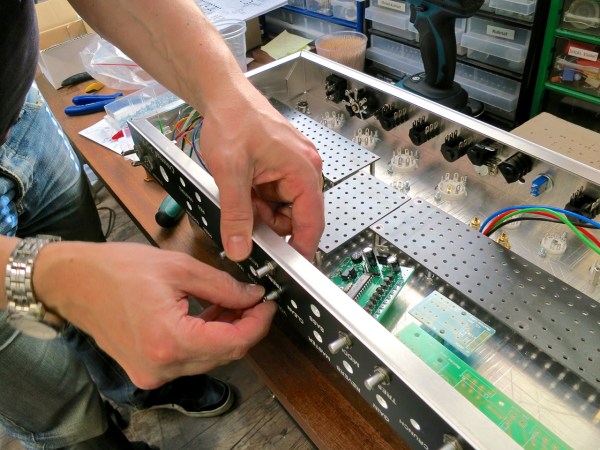
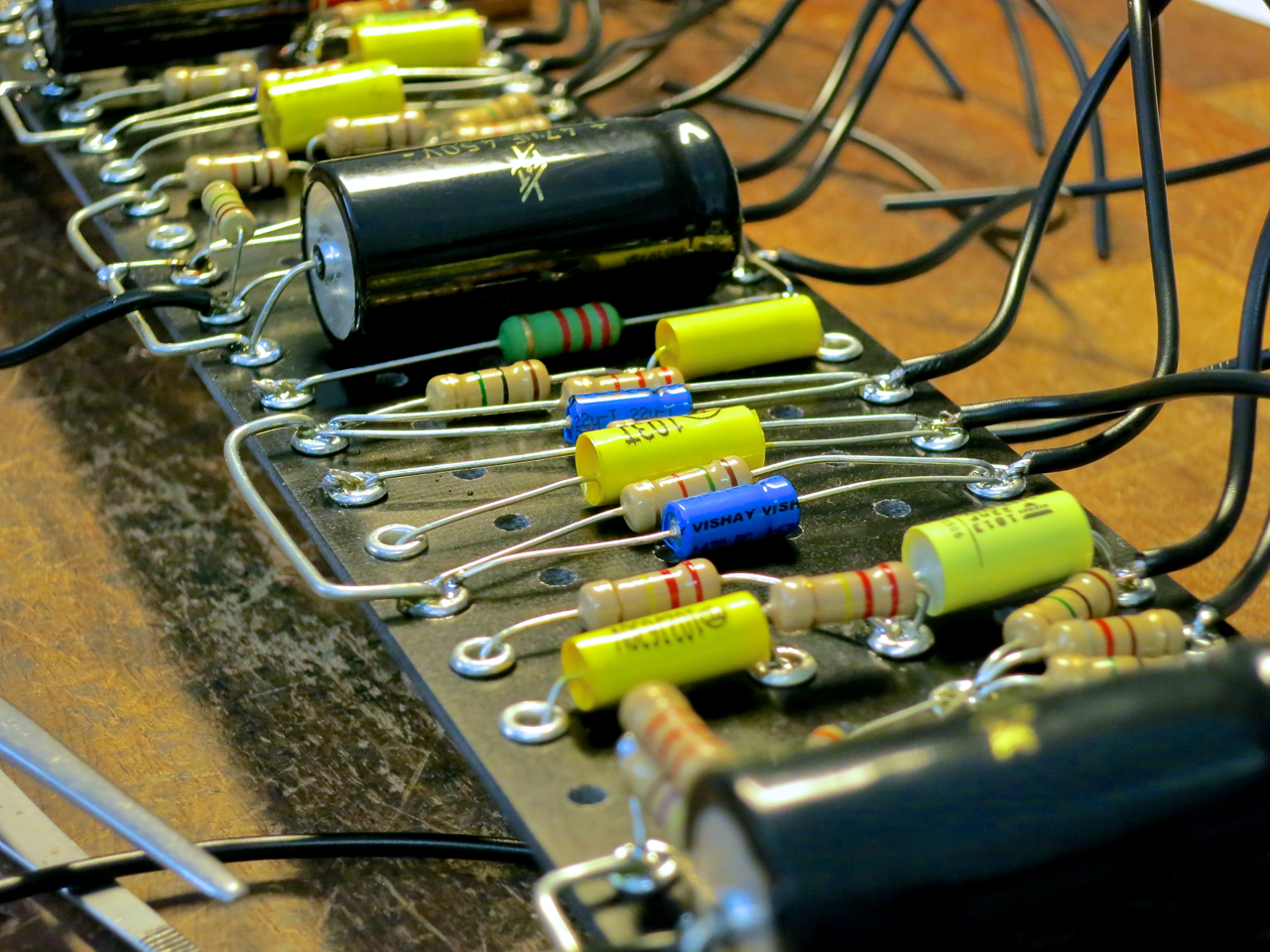
At this moment Matti Vauhkonen is dealing with the time-consuming business of soldering and assembling the heart of the amp (here’s a picture of another Bluetone-model). Hand-soldering a point-to-point valve amp is something you shouldn’t do in a rush, if you want to avoid very time-consuming troubleshooting.
Bluetone Crossroadin kaltaisessa, hyvin monipuolisessa putkinupissa on monta eri komponenttia. Osien toimiva sijoittelu vaatii hyvää suunnittelua.
Kuvassa näkyy Matti Vauhkosen merkinnät piiri- ja eyeletlevyjä, sekä muuntajia varten. Koteloon on porattu kaikki tarvittavat reiät putkikannoille, säätimille, tuloille ja lähdöille, levyjen kiinnikkeille, sekä johtojen läpivientiin.
Putkivahvistimen tekijän täytyy miettiä nupin suunnittelussa osien sijoittelua useasta eri näkökulmasta – ei riitä, että kaikki osat vain mahtuvat koteloon.
Esimerkiksi isokokoinen verkkomuuntaja ei saa säteillä elektromagneetista huminaa kitarasignaaliin, minkä vuoksi muuntaja ja etuvahvistimen putket sijoitetaan aina niin kauas toisistaan kuin mahdollista. Audiomuuntaja ja päätevahvistimen putket taas ei kannata sijoittaa liian lähellä etuasteputkia, koska näidenkin osien välillä syntyy elektronista häirintää. Myös audiomuuntajan kelojen oikea fyysinen suuntaaminen verkkomuuntajaa nähden pitää häiriöääniä loitolla.
Yksi Bluetone-vahvistinten erikoisuuksista on rengassydänmuuntajan (engl. toroidal transformer) käyttäminen verkkomuuntajana, mikä nähdään – ainakin vielä – melko harvoin kitaravahvistimissa.
Rengassydänmuuntajalla on useampi etu perinteiseen malliin nähden. Rengassydänmuuntaja on mm. kevyempi kuin perinteinen muuntaja samoilla spekseillä, ja laadukkaan rengassydänmuuntajan elektromagneettinen säteily on myös perinteistä huomattavasti pienempi, mikä helpottaa muuntajan sijoittelua vahvistimessa.
Tai miten Bluetonen Harry Kneckt sanoo: ”Jos Leo Fenderillä olisi ollut 1950-luvulla mahdollisuus käyttää rengassydänmuuntajia, hän olisi käyttänyt niitä. Tästä olen varma!”
Matti Vauhkonen on ensin kiinnittänyt koteloon Crossroad-nupin muuntajat, putkikannat (näkyvät valkoisina) ja takapaneelin jakit (mustat osat).
Eyelet- ja piirilevyt on lisätty koteloon vain näitä kuvia varten havainnollistamaan niiden lopulliset sijainnit. Vaikka Bluetone-vahvistimissa kitarasignaali kulkee aina ja vain käsinjuotetun point-to-point putki- ja analogielektroniikan kautta, käytetään luonnollisesti nykyelektroniikka, kun toteutetaan sellaiset ominaisuudet kuin esimerkiksi kanavanvaihdot MIDI:llä tai pääteputkien seurantaa ja biasointia Wifin kautta.
Seuraavaksi lisätään etupaneelin osia, kuten säätimet, kytkimet ja statusvalo.
Samanaikaisesti Bluetonen alihankkija on jo saanut nupin vanerikotelon valmiiksi. Aikataulusta riippuen Bluetone valmistaa myös osan koteloista omassa verstaassa.
Seuraava vaihe – joka on tällä hetkellä meneillään – on vahvistimen varsinaisen ”sydämen” valmistus (tässä kuva toisesta Bluetone-mallista). Näitä point-to-point juotostöitä ei kannata tehdä kiireellä, jos halutaan välttää turhauttava ja aikaa vievä vianetsintä. Maltti on valttia myös putkivahvistimen rakentamisessa!
Finland’s Bluetone Amps, which is run by Harry Kneckt and Matti Vauhkonen, has already garnered quite a reputation as a maker of high-quality valve amplifiers.
The company offers quite a large range of different models – starting with small combos, such as the Barfly, with large-wattage tube heads, such as the AcDcII– or the Bugaboo, at the other end of the spectrum. Bluetone also make bass amps, as well as guitar and bass cabinets.
Each and every Bluetone amp is made by hand, using point-to-point construction and top drawer components. This type of dedication to a pure tube signal path doesn’t mean, however, that we’re dealing with a backward-facing company. Quite the opposite is true – Bluetone amps include some of the most cutting edge features, when it comes to making their products user-friendly. One great example is a special metering tool the company sells, which makes it possible for a regular Jane or Joe to bias their amplifier’s output valves by themselves with the least possible amount of fuss.
Bluetone is a genuine custom maker, because virtually all of their amps leave their workshop with customer-specified modifications. Bluetone have their basic model range, but there’s a lot of scope for customisation, both when it comes to the technical specifications as well as on the cosmetic side of things (you can even specify the font used for lettering the front panel).
Kitarablogi.com has been offered a chance to follow the making of a Bluetone head, all the way from the customer’s order to the finished product:
This specific head is basically a Bluetone Crossroad amplifier with a 2+2 power amp. Bluetone’s own 2+2 power amp uses the four output valves in two pairs, with one pair being dedicated solely to the clean channel (usually running a pair of 6V6 or 6L6 tubes), with the second pair being reserved to handle all crunchy and lead tones (normally a pair of EL34s). The advantage of Bluetone’s 2+2-system lies in the fact that you’re dealing with the ”correct” classic tones of the power valves used, so there’s no need for any modelling or tube amp ”voodoo” to achieve Marshall-type drive tones from Fender-type tubes, or vice versa.
The list of specifications on this Crossroad 2+2 is more than impressive:
• Lead-channel: modified Friedman Brown Eye-type
• Crunch-channel: modified Marshall JCM800-type
• Clean-channel: modified Fender Deluxe Reverb-type
• Bluetone’s special valve spring reverb with dedicated controls for each channel
• Bluetone’s own buffered tube-based effects loop (with level controls)
• Channel- and effects-switching controllable via MIDI
• Main valve status control and biasing using the Bluetone ABC-system (Auto Bias Control)
• Power tubes can be biased either with a Bluetone ABC-metering tool or using a mobile device app via WLAN
• Power amp has built-in Variac (think: ”EVH Brown Sound”)
• Adjustable line output
• Adjustable headphone output
• Presence- and Resonance-control in master section
This is how the journey begins:
An empty steel chassis, a fibreglass eyelet-board of the correct size, and the customer’s order, which Harry Kneckt has already used to draw the necessary schematics and put together a list of the necessary components.
Gretsch Guitars’ brand new Streamliner series offers access to the legendary brand name at a very affordable price point.
At the moment, the new range includes three different guitar models:
The G2622 Streamliner Center Block (also available left handed) is a centre block-equipped version of a Sixties double cutaway Country Gentleman, while the G2655 Streamliner Center Block offers you similar looks in a more compact package. The G2420 Streamliner Hollow Body, for its part, is a full-blown, big-bodied archtop guitar in a similar vein to Gretsch’s legendary 6120.
All three guitars are also available as T-versions with a Bigsby Lightning Series vibrato. The Streamliner Series is handmade in Indonesia.
****
The Gretsch Streamliner G2420T Hollow Body (street price in Finland approx. 560 €) is a very foxy looking guitar, despite its quite affordable pedigree.
The G2420T can be had in see-though red or gold metallic, while the standard model (equipped with a lyre-style tailpiece) comes in brown sunburst only.
The G2420T’s full-depth body is made from steam-pressed laminated maple. The top is stiffened by Gretsch’s traditional parallel bracing.
The nato (an Asian wood species somewhat similar to mahogany) neck is glued into the body.
There’s plenty of binding on the Streamliner Hollow Body – in addition to the multiple binding on the body the guitar also sports a bound fretboard and even a bound headstock.
This Gretsch comes equipped with a very decent set of sealed tuning machines.
The vintage-sized frets have been neatly seated. The G2420T features large rectangular position markers made from pearloid.
Bigsby’s mid-priced Lightning Series vibratos are produced in the Far East to exacting standards. The Bigsby B60 has been specifically designed for use with large-bodied archtops, such as the Gretsch G2420T.
This Streamliner’s Adjusto-matic bridge may seem to be held in place simply by string pressure, but there’s more to the bridge than meets the eye. The rosewood base is ”secured”, which means reverse pinned. The bridge posts continue all the way through the rosewood base and into two holes in the guitar’s top, which keeps the whole bridge in the correct place.
The biggest difference between the Streamliner G2420T and similar models in Gretsch’s Electromatic- and Pro-ranges can be found in the new guitar’s pickups:
Depending on the ”era”, or an artists wishes, a Pro Series Model G6120 will either come with a pair of DeArmond single coils, Gretsch’s own Filter’Tron humbuckers or similar TV Jones pickups. Recent Electromatic G5420’s are now equipped with Gretsch’s new Black Top Filter’Trons, which are licensed Far Eastern copies of the original pickups.
All new Streamliners sport a pair of Broad’Tron pickups. Broad’Trons are full-sized humbuckers designed to offer a tone somewhere in-between the twang and bite of Filter’Trons and the lush warmth of PAF-style ’buckers.
The controls on the G2420T are pure Gretsch:
Below the f-hole you will find separate volume knobs for each pickup, as well as a joint master tone control. An additional master volume control is placed next to the cutaway.
****
Let me start this section by stressing how well-made this budget-Gretsch really is! The review sample wasn’t a ”review instrument”, breathed on by distributors Fender Scandinavia, instead I took the guitar straight off the wall at a local music shop (DLX Music).
The Gretsch G2420T Streamliner Hollow Body is a very cleanly put together archtop electric, and I genuinely couldn’t find anything to criticise (especially when considering the instruments pocket-friendly price). The very nice fretwork on the Streamliner is a definite plus when it comes to this guitar’s comfortable playability.
Officially Gretsch call this neck profile a ”Thin U”, but I would describe it as a very comfy D shape with a slightly flattened back.
The Bigsby B60 is buttery and doesn’t throw the Hollow Body out of tune too much, if used sensibly (a word of advice: if you’re very sensitive when it comes tuning stability, a Bigsby probably isn’t right for you). Because a Bigsby B6/B60 makes do without the additional roller of other Bigsby models, this vibrato is more sensitive and immediate in use (which is a good thing in my view). You get the all the Bigsby shine and shimmer with less ”work”.
Played acoustically, the Streamliner Hollow Body sounds just like the laminated-body archtop it is – open and dry with a strong focus on mid-range frequencies.
I feel that Gretsch’s plan of taking its new Streamliners closer towards the mainstream really seems to hit the mark. The Broad’Trons may not give you the traditional clucky, chicken picking, bright and sparkly sound of a set of Filter’Trons, but there’s still enough presence and treble left in the new pickups’ tone for a gretsch-y sound.
Thanks to the new pickups’ broader tone the Gretsch G2420T also works well for Jazz, apart from the usual Country and Rock (-abilly) genres. This clip starts with the neck pickup:
The Streamliner Hollow Body also sounds great with a light amount of crunch. There’s a nice balance between the low end and the treble in the G2420T’s sound, coupled with the dry delivery so typical of big box archtops.
You should be aware, though, that high gain settings and/or very high volume levels will result in howling feedback sooner or later. This isn’t really a fault, but rather a normal feature of this type of instrument, and the Streamliner Hollow Body isn’t any more ”problematic” than other guitars of this type.
This sound clip, too, has been recorded with Blackstar HT-1R valve combo:
Here’s the demo track off the Youtube video, whose guitar tracks were recorded using Apple Garageband’s own amp plug-ins. The lead guitar uses the bridge pickup, while the rhythm parts have been recorded using both pickups (left channel) and the neck pickup (right channel), respectively:
****
In my opinion the Gretsch Streamliner G2420T Hollow Body is one of the best full-size archtops in this price range – possibly even the best! This is a surprisingly well-made instrument that punches far above its ”weight”.
If you’re looking for the ”genuine Gretsch Sound”, warts-and-all, I would point you to the (much pricier) Electromatic Series and its Filter’Tron pickups.
One of the Streamliner Series’ main objectives, though, is to broaden and widen the appeal of these guitars, and take the Gretsch name closer to the mainstream. I feel Gretsch have succeeded very well in this endeavour!
Bluetone-vahvistimissa signaalitie rakennetaan täysin vailla kompromisseja käsin point-to-point-periaatteella. Mutta tästä huolimatta tämä firma ei toimi katse taakse käännettynä, vaan uusia teknisiä ratkaisuja ja ominaisuuksia lisätään vahvistimiin tekemään käyttäjien elämästä helpomman. Bluetone valmistaa esimerkiksi vahvistimiin kätevän lisälaitteen, jolla maalikkokin voi biasoida firman vahvistimia vaivattomasti itse.
Bluetone on todellinen custom-paja, sillä käytännössä jokainen heidän rakentama vahvistin on asiakkaan toiveiden mukaan tehty, vaikka se perustuukin johonkin firman perusmalliin. Asiakas voi vaikuttaa niin styrkkarin teknisiin ominaisuuksiin kuin myös kosmeettisiin ratkaisuihin (jopa naamataulun fonttiin).
Kitarablogi.com sai nyt tilaisuuden seurata uuden Bluetone-nupin syntymää tyhjästä metallikotelosta valmiiseen vahvistimeen:
Asiakas on tilannut kolmikanavaisen Crossroad-nupin Bluetonen omalla 2+2-pääteasteella. 2+2-pääte tarkoittaa, että vahvistimen neljää pääteputkea käytetään niin, että yksi pari hoitaa puhtaan kanavan (tavallisesti joko 6V6- tai 6L6-putket), kun toinen pari on käytössä särösoundien kanssa (tavallisesti EL34). Bluetonen 2+2-systeemin suuri etu on, että soittaja saa käyttöön näiden eri pääteputkityyppien ominaiset, aidot soundit ilman mitään tarvetta mallinnukseen tai muuhun elektroniseen voodoohon.
Tämän Crossroad 2+2 -nupin speksilista on todella vaikuttava:
• Lead-kanava: modattu Friedman Brown Eye
• Crunch-kanava: modattu Marshall JCM800
• Clean-kanava: modattu Fender Deluxe Reverb
• Bluetonen omaan suunnitteluun perustuva putkijousikaiku omilla kanavakohtaisilla tason säädöillä
• Bluetonen omaan suunnitteluun perustuva bufferoitu putkiefektilenkki lähtötason säädöllä
• Kanavanvaihto ja efektien hallinta MIDI-ohjauksella
• Pääteputkien hallinta ja biasointi ohjelmistopohjaisella Bluetone ABC (Auto Bias Control) -järjestelmällä
• Putkien biakset voidaan säätää joko ABC-mittarilla tai langattomasti älypuhelimella/läppärillä WLAN-sovelluksella
• Virtalähteessä vahvarin sisäisen päätetehon ja putkien jännitteiden säätö (Variac, eli ”EVH Brown Sound”)
• Säädettävä line out -lähtö
• Säädettävä kuulokelähtö
• Presence ja Resonance-säätimet pääteasteessa
Ja tästä matkamme valmiiseen custom-nuppiin siis alkaa:
Tyhjä metallikotelo, sopivan kokoinen eyelet-levy lasikuidusta, sekä asiakkaan tilaus, jonka perusteella Harry Kneckt on jo kasannut osien listan ja piirtänyt kytkentäkaavion.