
****
Lisätiedot: Musamaailma
Kitarablogi.com – Finland's premier Guitar and Bass blog
Juttuja kitaroista ja bassoista

****

Bassovahvistimiin keskittyvän Eden Electronicsin tuotteita on jälleen saatavilla Suomessa.
Monille basisteille Eden on jo tuttu nimi, joka tuo mieleen USA:ssa valmistettuja huippuluokan vahvistimia ja kaappeja. Edenilla on kuitenkin mallistossaan myös hyvin kompakteja ratkaisuja, joihin ei tarvitse ison staran budjettia.
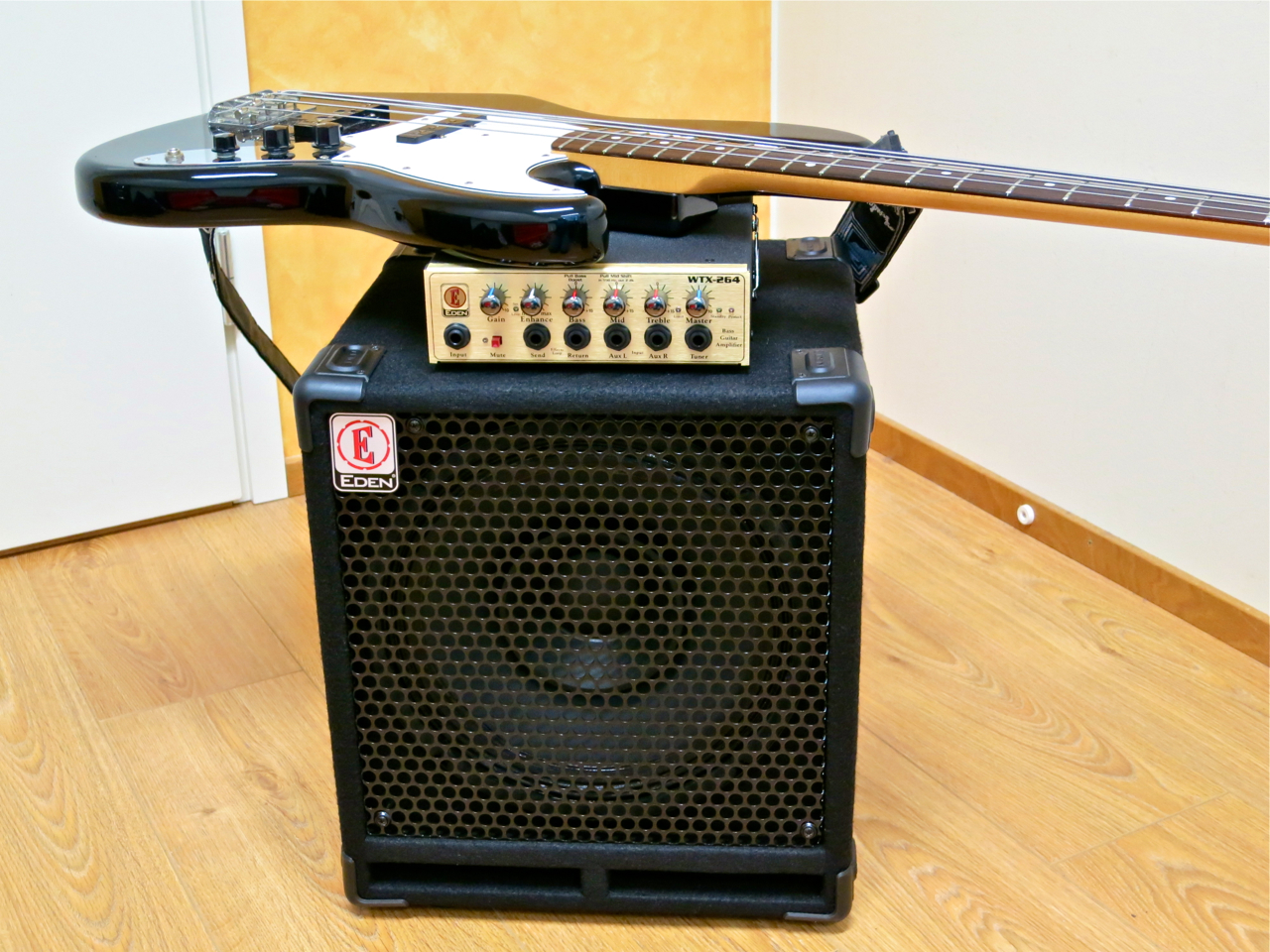
Onko koskaan ollut parempi aika olla basisti kuin nykyään? Tänä päivänä ei välttämättä tarvitse roudata valtavia nuppeja ja kaappeja saadakseen lavalle tai studiolle ison bassosoundin.
Hyvä esimerkki tästä on Eden Electronicsin Gig Ready -bundle, jolla on mallitunnus EGRW1264. Edenin EGRW1264-setti (katuhinta noin 790 €) tarjoaa peräti 260 wattia laatusoundia erittäin kompaktissa muodossa.

Settiin kuuluu myös topattu olkalaukku nupille. Basso yhteen käteen, kaappi toiseen ja nuppi ollalle – roudaus ei ole koskaan ollut näin helppoa.
****

Eden EGRW1264 -setti koostuu WTX-264-nupista ja EX112-kaapista. Molemmat valmistetaan lisenssillä Kiinassa, minkä ansiosta setin hinta on muusikoille niin ystävällinen.
Tällä hetkellä setin nuppia tai kaappia ei voi (vielä?) ostaa Suomessa erikseen.

Eden WTX-264 on 260-wattinen (300 W peak), D-luokan päätevahvistimella varustettu bassonuppi. Laite on ultrakevyt ja painaa vain kaksi kiloa. Jatkuvasti pyörivä tuuletin on vastuussa nupin asianmukaisesta jäähdytyksestä.
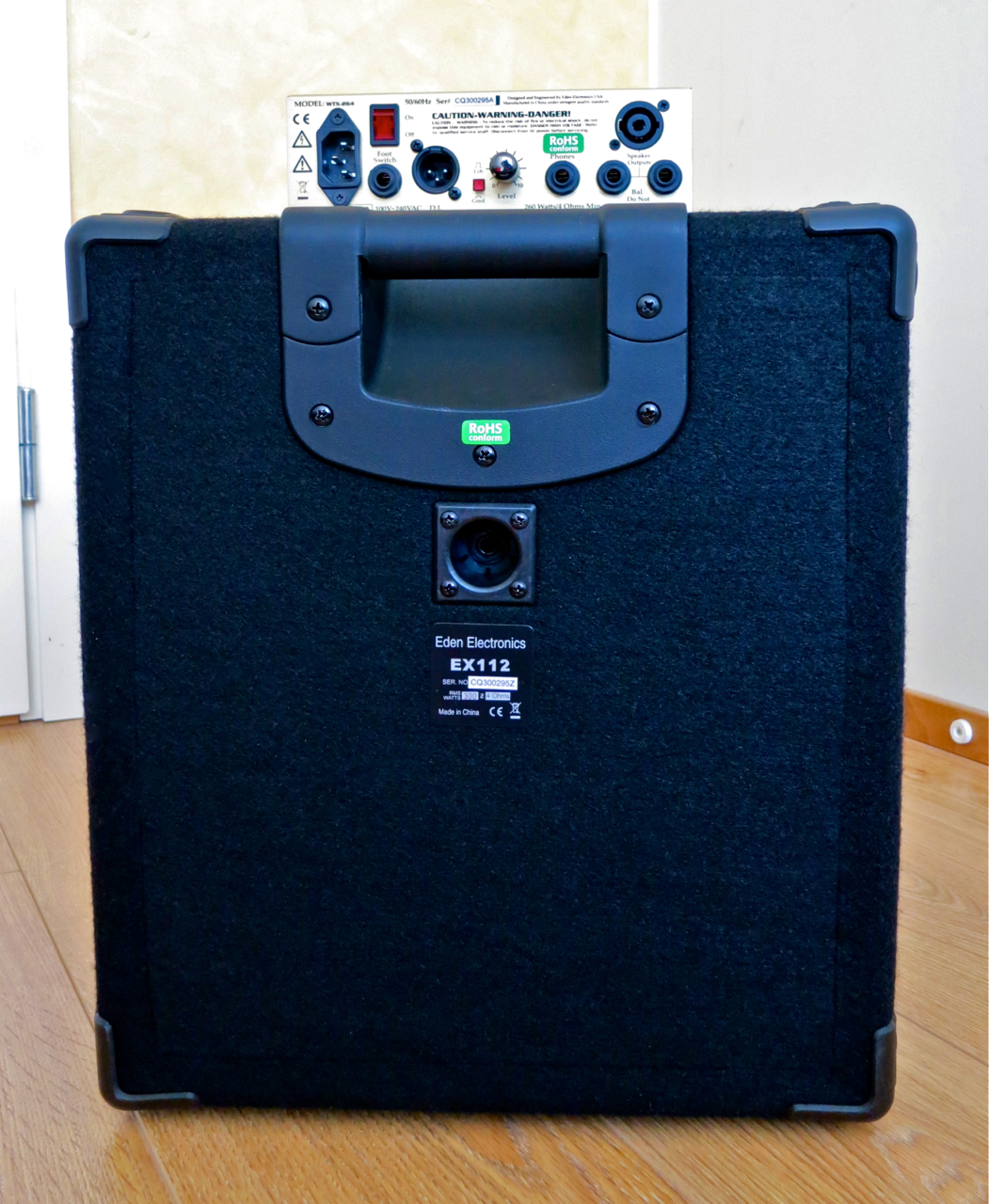
Edenin EX112-kaappi on sekin painoltaan varsinainen kärpässarjalainen. Mattopäällysteinen kaappi painaa vain 15 kiloa, ja sitä on erittäin helppo kantaa sen kahvasta. Refleksikaapin 12-tuumainen kaiutin on firman omasta tuotannosta.
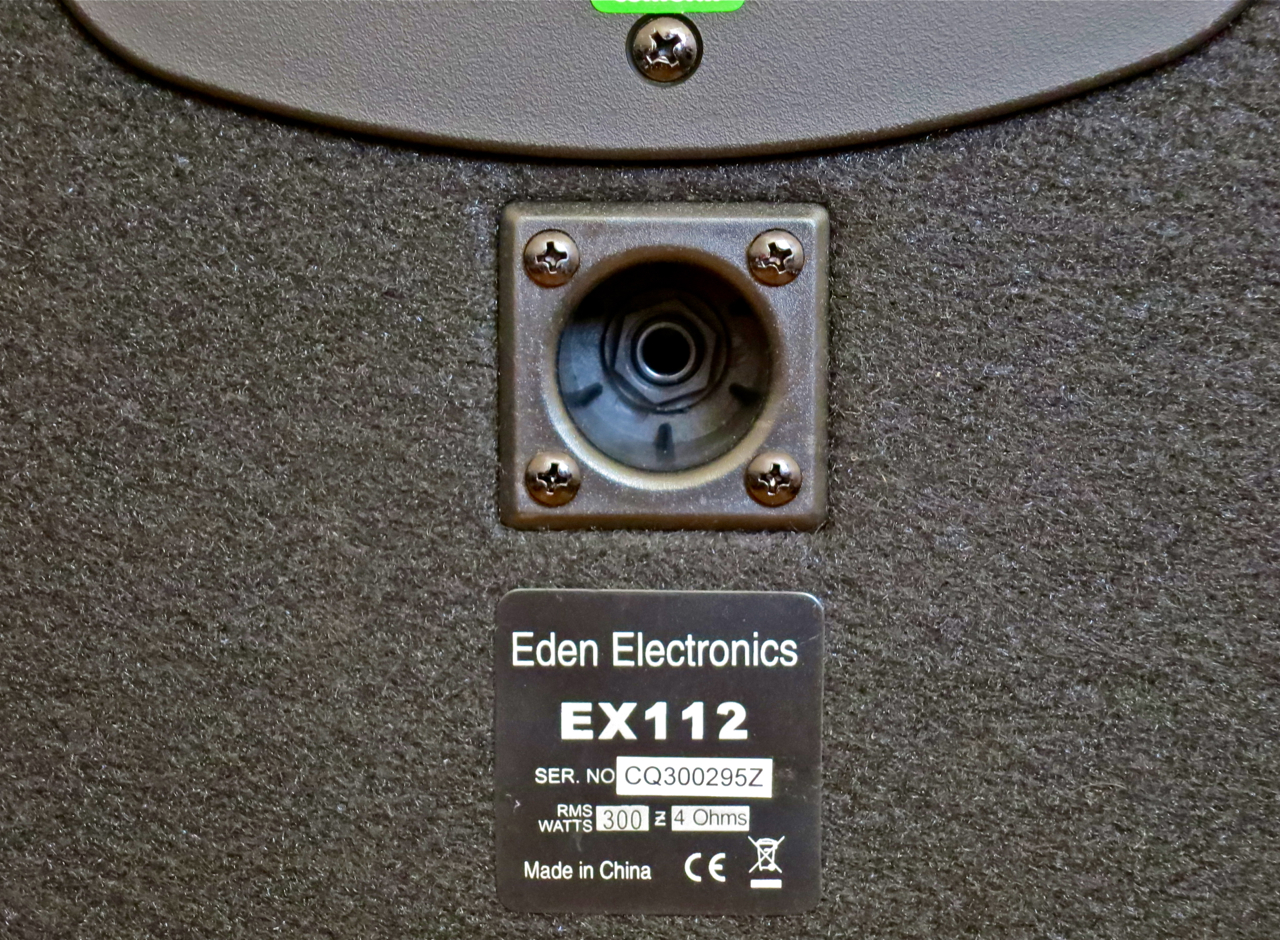
EX112:n tehonkestoksi ilmoitetaan 300 wattia, ja sen impedanssi on neljä ohmia. Kaapilla on plugitulo.
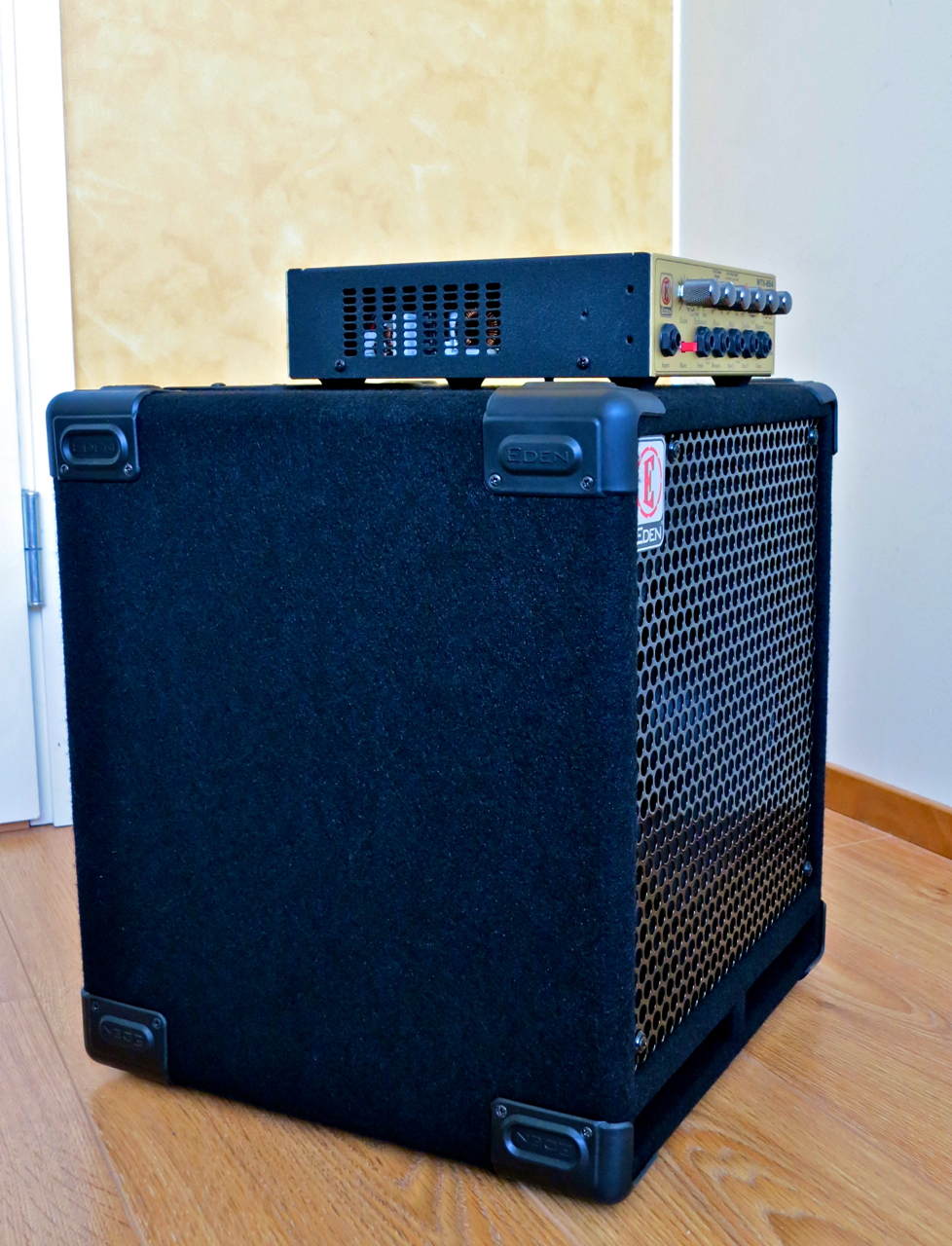
Eden-kaapissa on reilunkokoiset kulmasuojat mustasta muovista, sekä kaiuttimen edessä erittäin vahva metalliritilä.
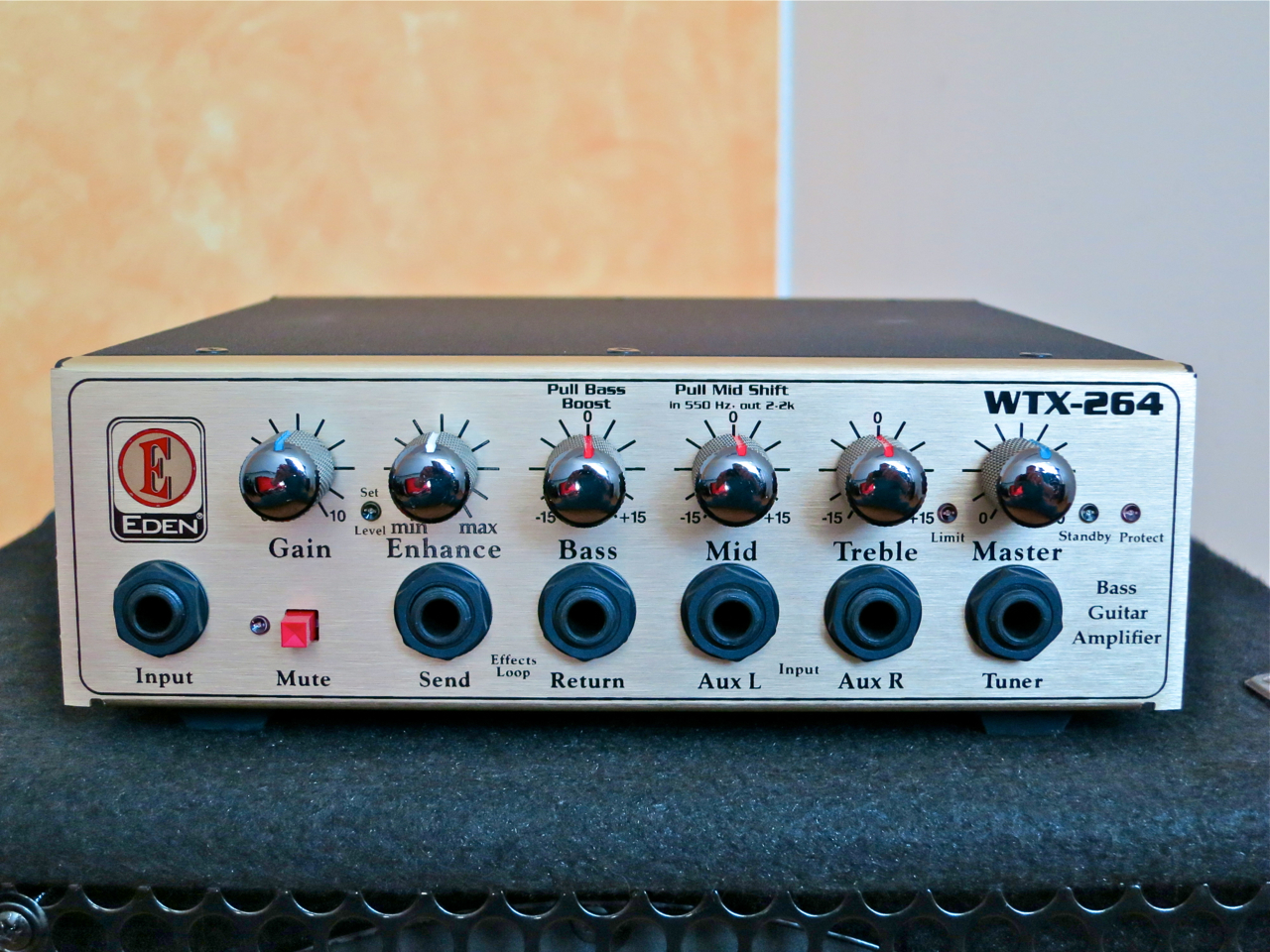
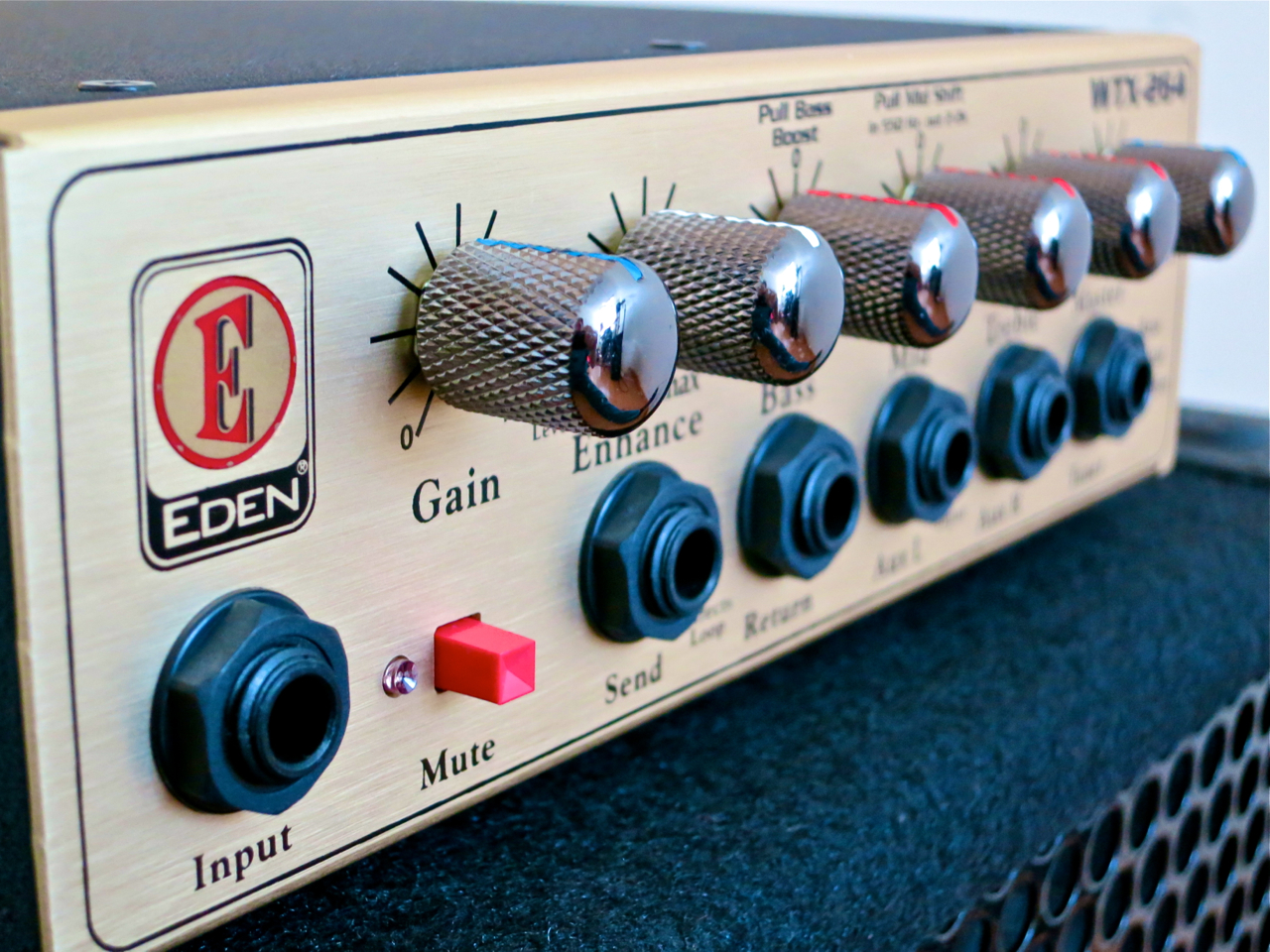
Vaikka Eden WTX-264 on pinikokoinen nuppi, sillä on kuitenkin täysi kattaus ominaisuuksien suhteen:
Heti nupin gain-säätimen jälkeen tulee Edenin kuuluisa Enhance-säädin, jolla säädetään erikoisfiltterin vaikutusta. Enhance-säätimellä lisätään soundiin hyvin matalat bassot ja preesensalueen keskikaistaa, samanaikaisesti kun (hyvin usein) kumisevat alemman keskialueen taajuudet vaimennetaan. Lopputulos on hyvällä tavalla tuotetun-kuuloinen, amerikkalainen bassosoundi.
Enhance-sätimeen on myös piilotettu nupin automaattisen kompressorin päälle/pois-painokytkin. Oivaa kompressoria voi säätää vähemmän/enemmän-periaatteella muuttamalla signaalin gainea.
Kolmialueisen EQ-osaston bassokaistan ja keskialueen säätimiin on upotettu nostokytkin. Bass-nupin nostokytkimellä laitetaan tarvittaessa WTX-264:n dynaaminen bassoboosteri päälle, kun taas keskialueen säädin antaa valintamahdollisuuden EQ:n keskitaajuuden suhteen (500 Hz tai 2 kHz).
Säätimien alle on sijoitettu efektilenkin, aux-tulon ja viritymittarilähdön liittimet, sekä nupin punainen mykistyskytkin.

Tältä Edenin Enhance-, Bass Boost ja Mid-Shift-toiminnot kuulostavat käytännössä (soitan tässä passiivista Jazz-bassoani):
Neutraaliasento –-> Enhance –-> Bass Boost –-> Mid-Shift

Takapaneelista löytyy kaappilähtöjen ja kuulokelähdön lisäksi vielä tulo jalkakytkimelle – tuplapedaalilla voi mykistää vahvistimen ja/tai laittaa lennossa Enhance-toiminnon päälle tai pois – sekä balansoitu XLR-lähtö mikserille omalla signaalitason säätimellä.

****
Eden EGRW1264 on vallan mainio pikkustäkki, jolla on riittävästi tehoa pieniä ja keskikokoisia keikkoja varten, ja joka on studioissa ihan kuin kotonaan. Kovaotteisessa Metal-bändissä tulevat varmasti jossain vaiheessa fysiikan lait vastaan, mutta muuten en näe mitään rajoiteitta Eden-stäkin käytössä.
Enhance-toiminto toimii hyvin, jos sitä annostellaan maltillisesti – täysin avattuna sointi voi muuttaa jo hieman ponnettommaksi. Loistavalla EQ-osastolla saa sitten säädettyä omat soundit kohdalleen.
Sisäänrakennettu kompressoi on maukas ”säädä-kerran-ja-unohda-sen-jälkeen” tapaus, joka kiinteyttää bassosoittosi mukavan musikaalisella ja tuoreella otteella.
Jos tekee mieli laadukasta, amerikkalaistyylistä soundia, niin Edenin pikkustäkki on mielestäni erinomainen – ja varsin edullinenkin – portti siihen maailmaan.
Tässä muutama esimerkki Eden EGRW1264 -setin soundeista (soitettu japanilaisella Jazz-bassolla):
****
Eden EGRW1264 Gig Ready -pikkustäkki
katuhinta noin 790 €
Maahantuoja: EM Nordic
Kiitos DLX Musiikille testilaitteiden lainaamisesta!
****
Plussat:
+ hinta-laatu-suhde
+ erittäin kompakti
+ kevyt
+ topattu laukku kuuluu hintaan
+ työnjälki
+ soundi
Miinukset:
– tuulettimen käyntiääni voi olla häiritsevä studiossa


****

Yamaha’s popular series of THR practice amps has recently got three new members:
The brass-metallic coloured THR5A is a 5 Watts combo aimed specifically at electroacoustic guitars, and features digital microphone modelling, amongst other things.
The regular Yamaha THR10 has now gotten two sister models. The black THR10C concentrates on ”classic” and ”boutique” tones to satisfy the friends of classic Sixties and Seventies Rock and Blues. The army-green THR10X is aimed squarely at the connoisseurs of all things hard and heavy, concentrating on Hard Rock-, Metal- and Thrash-tones.
****
The main design concept is uniform across the THR-range:

All combos have a sturdy metal chassis with plastic sides. The overall design clearly takes a lot of cues from today’s high-end tube Hi-Fi gear.
All THRs come equipped with a digital tuner.

All of the small amps feature a built-in USB-soundcard, which can be utilised for recording purposes (Steinberg’s Cubase AI comes with each amp), as well as for using the amp as your personal stereo system.
With the help of Yamaha’s THR Editor software you can also programme your own amp settings via the USB-port. As an added bonus, the THR Editor gives you access to some hidden functions (like the noise gate, or in the THR5A’s case also additional effects) that cannot be accessed from the front panel.

The Yamahas can be run on AA-batteries, if necessary. The THR5A’s battery compartment has been placed on the combo’s back…

…while on all THR10-models it has been sunk into the amp’s base plate.
Naturally, a quality, laptop-type PSU is supplied with all models.
****

Regardless of the fact that the Yamaha THR5A (current price in Finland: 199,99 €) is one of the world’s smallest acoustic amps, it is still packed chock-full with tasty features.

The THR5A offers you four different virtual microphones to turn your piezo’s tone into the sound of a mic’ed up acoustic. Three settings are meant for steel-string acoustics, with the fourth being reserved for nylon-string electroacoustic guitars.
The last Mic Type selection reads ”EG Clean”, being a clean electric guitar amp model for your occasional Jazz Box meanderings.
The Blend-control lets you change the balance between the dry piezo signal and the modelled virtual mic.
Offering only a single master tone the THR5A’s EQ-section is rather spartan, but the effect section is far better endowed: The Effect knob gives you compression, chorus or a combination of both. Delay/Reverb delivers delay, reverb and a combination effect.
You can adjust delay times using the Tap Tempo button on the far left.
****

The vintage-inclined Yamaha THR10C (current price in Finland: 299,99 €) is larger than the THR5A, and it also offers more features.

The THR10C comes loaded with five guitar amp models, whose names already give you a very good idea of their soundscape:.
In addition, there’s one bass amp model, as well as a setting for acoustic guitar. The neutral sounding Flat-selection is a good choice if you want to amplify a synth or digital piano.
The THR10C’s EQ-section is a three-band affair, while the effect department offers eight different effects. Turning the Effect-knob gives you access to a chorus, a flanger, a phaser and a tremolo effect. Delay/Reverb offers you tape echo, spring reverb, hall reverb, as well as a echo/reverb-combination setting.
All THR10-models sport five memory slots to store your favourite amp settings.
The Output-section offers you two volume controls, with one being the guitar section’s master volume and the other dealing with the signal coming in via USB (or the auxiliary input).
****

It may be small, but it still is fierce – the Yamaha THR10X (current price in Finland: 299,99 €) is tailoured to all Rock and Metal.

The THR10X’s Amp-department holds in store five high gain amp models, each with its own tonal footprint, with differences in areas such as bass punch and overall compression.
A Clean model is also supplied for the occasional ballad or two, along with a Bass amp and the Flat setting.
The THR10X features the same type of three-band EQ as it’s sister model.
The effect department is also nearly identical, save for the THR10X’s brighter Delay-effect.
****

I think it’s great that Yamaha have designed their entire THR-range as stereophonic combos, because this way the amps also have a clear appeal as ”lifestyle accessories”. As pure guitar amps, stereo brings out the depth in some effects, especially reverbs, but when used as a personal micro-Hi-Fi stereo is the only way to go.
Yamaha’s decades-long experience in the Hi-Fi-field really shows in the sound of these small combos. The sound is full, clear, punchy and dynamic. The tiny THR5A already sounds better than most built-in computer sound systems, even if the breadth of the stereo picture isn’t as wide, and the bass response as deep as in the larger combos. The THR10s really hit the sonic jackpot, and will blow many micro-Hi-Fis off the table, hands down. For a guitarist the THR-series is a stylish way to combine an mp3-boombox with a practice amp.
****
THR5A
I must admit that the THR5A’s raison d’être is not quite clear to me. At home you normally wouldn’t need to use and amp with an acoustic guitar, but on the other hand this tiny combo really doesn’t cut it at, say, a pub gig. Maybe the THR5A is meant mainly for busking.
On the other hand I can’t deny that this dwarf’s virtual microphones sound surprisingly realistic, so maybe this combo’s main function is to serve as a specialised soundcard in your home or project studio. The amp’s cool mic modelling really manages to turn those dry and upfront piezo tones into something organic and beautiful.
The effects also sound very good.
I have recorded these examples with a Zoom H1 recorder. I played a Taylor 110CE:
Yamaha THR5A – Condenser + Compressor + Hall
Yamaha THR5A – Dynamic + Compressor + Hall
Yamaha THR5A – Tube + Compressor + Hall
****
THR10C
Ooh, man, I really dig this combo! I wouldn’t change a single amp model on the Yamaha THR10C – each sounds great and has plenty of depth and character.
The effects also sound great, with the spring reverb coming over especially realistically.
These three examples have been recorded using a Les Paul -style guitar:
Yamaha THR10C – British Blues + Hall
Yamaha THR10C – Class A + Chorus + Tape Echo
Yamaha THR10C – Deluxe + Tremolo + Spring Reverb
****
THR10X
Some jokers occasionally quip that all Heavy and Metal guitar tones sound alike.
The truth is nevertheless that there are all sorts of different types of overdriven and distorted guitar tones to be found in Hard Rock, Metal and Thrash. The most distinct differences are usually found in the mid-range character and the bass response of saturated distortion tones.
To my knowledge, Yamaha’s THR10X is the world’s first and only practice amp devoted specifically to full-on Hard Rock and Metal. And what a great job it does!
These three examples have been recorded using a Les Paul -style guitar:
Yamaha THR10X – Brown II + Hall
Yamaha THR10X – Power II + Flanger + Delay
Yamaha THR10X – Southern Hi + Phaser + Delay
****

In my opinion these new THR-models are a great move by Yamaha. These specialised combos will satisfy those guitarists who have wished for more of their own genre in the same combo, while leaving the successful basic models – the THR5 and THR10 – untouched, and the overall concept of the THR-series intact.
****
Three new Yamaha THR -models
• THR5A – 199,99 €
• THR10C and THR10X – 299,99 €
Finnish distributor: F-Musiikki
****
Pros (all models):
+ sturdy chassis
+ USB-soundcard
+ quality of amp/mic models
+ quality of effects
+ great sound as micro-Hi-Fis
+ value-for-money

****
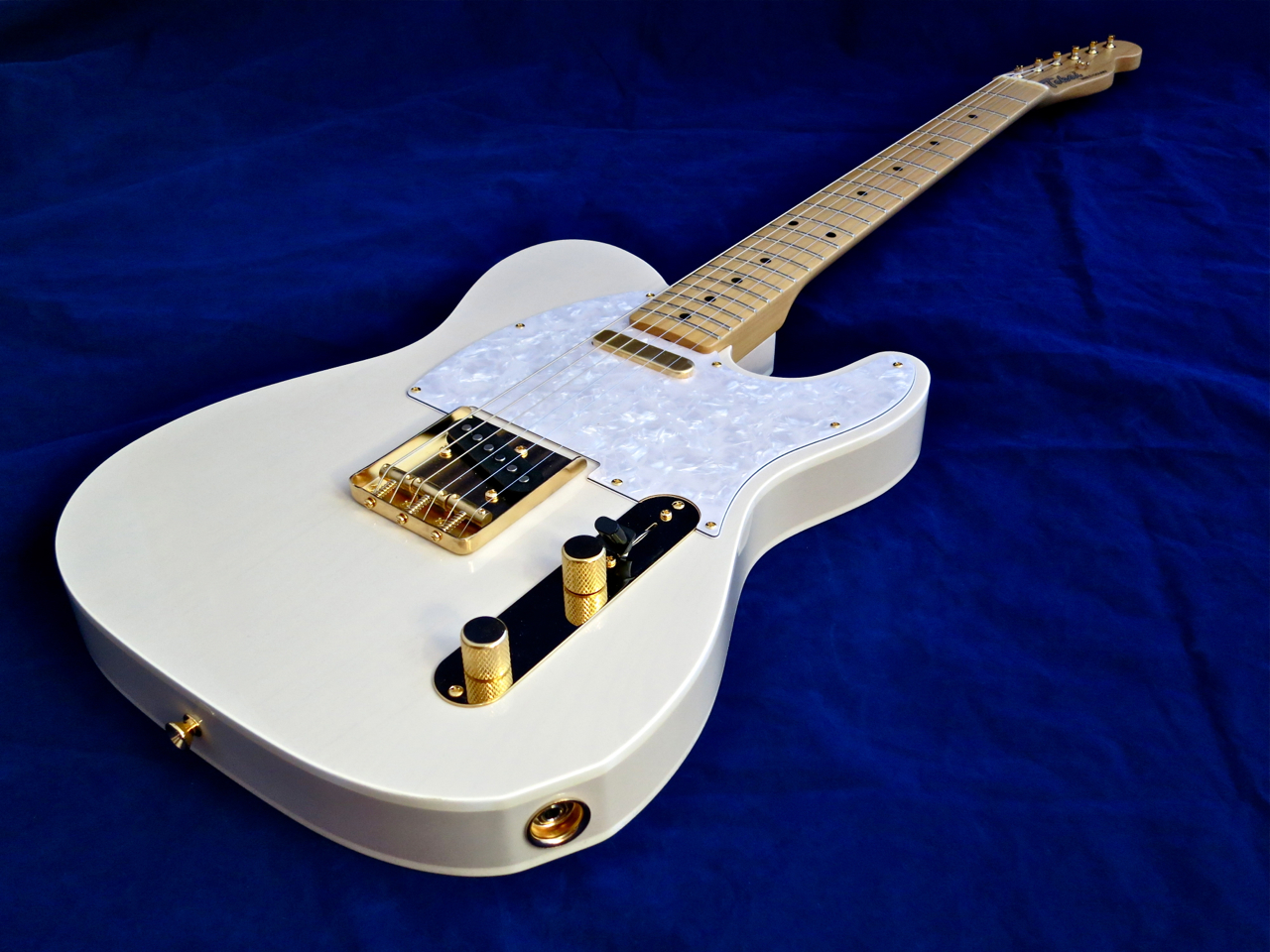
Japanissa valmistettu Tokai TTE-55 on firman uusin Tele-tyylinen kitara. TTE-55 ei ole yhden tietyn Tele-aikakauden jäljitelmä, vaan Tokain tyylikäs ”Best of” -ratkaisu.
****
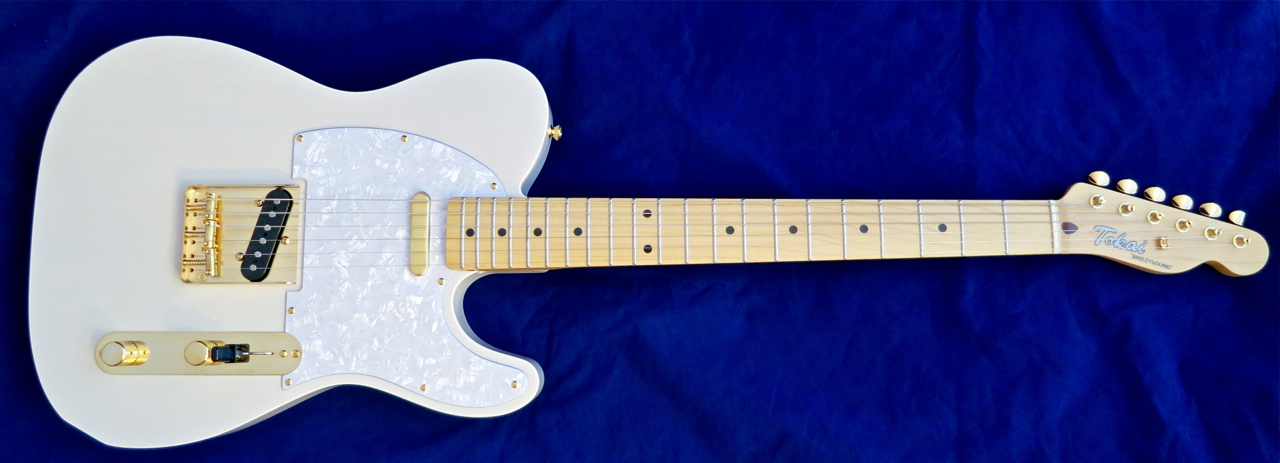
Tokai TTE-55 (848 €) on saatavilla joko yksiosaisella vaahterakaulalla – niin kuin White Blonde -värinen testiyksilö – tai palisanteriotelaudalla.
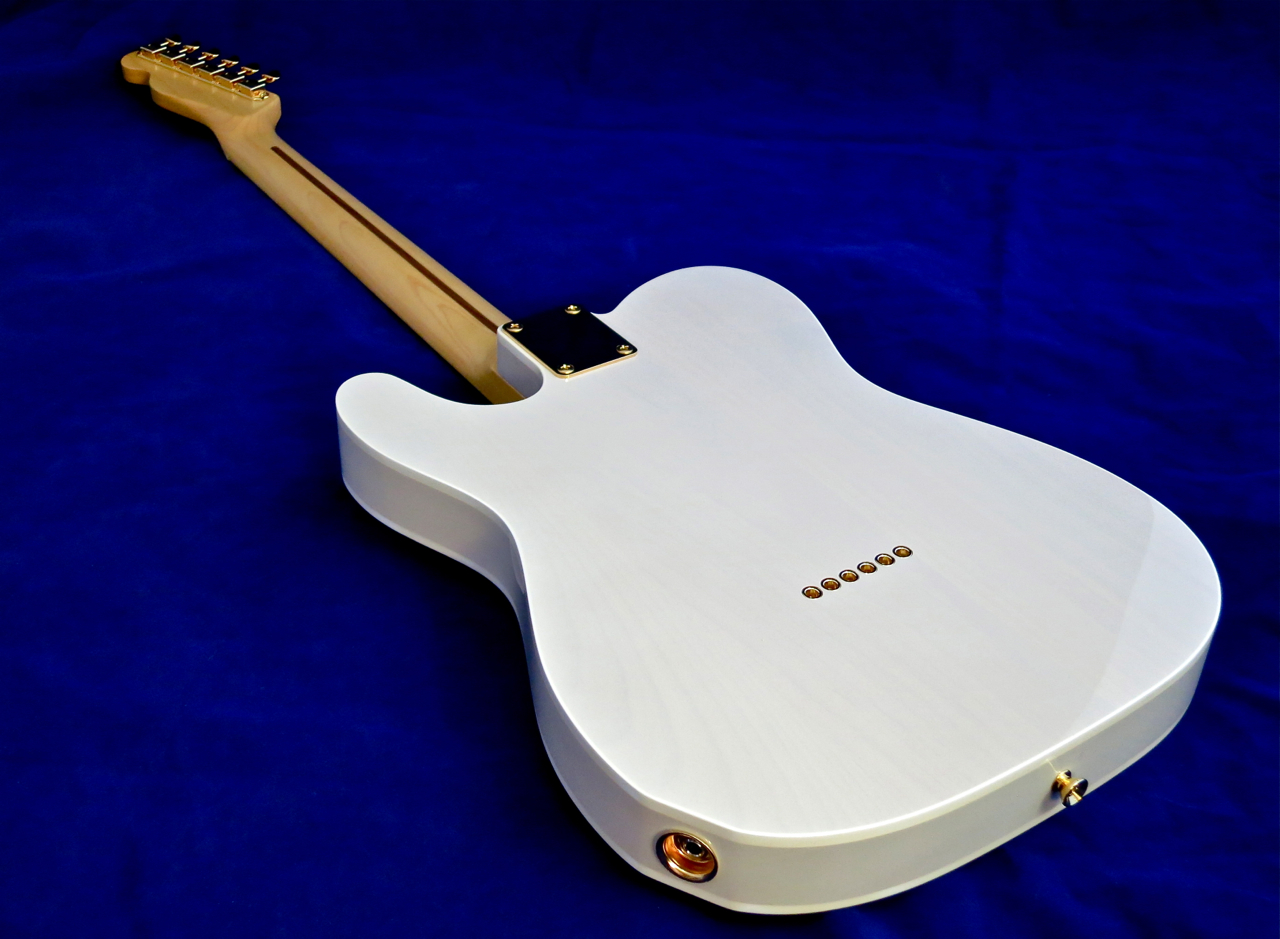
Rungon väristä riippuu myös metalliosien väri – tässä tapauksessa kaikki metalliosat ovat kullanväriset, mikä antaa soittimelle varsin juhlallisen ulkonäön.
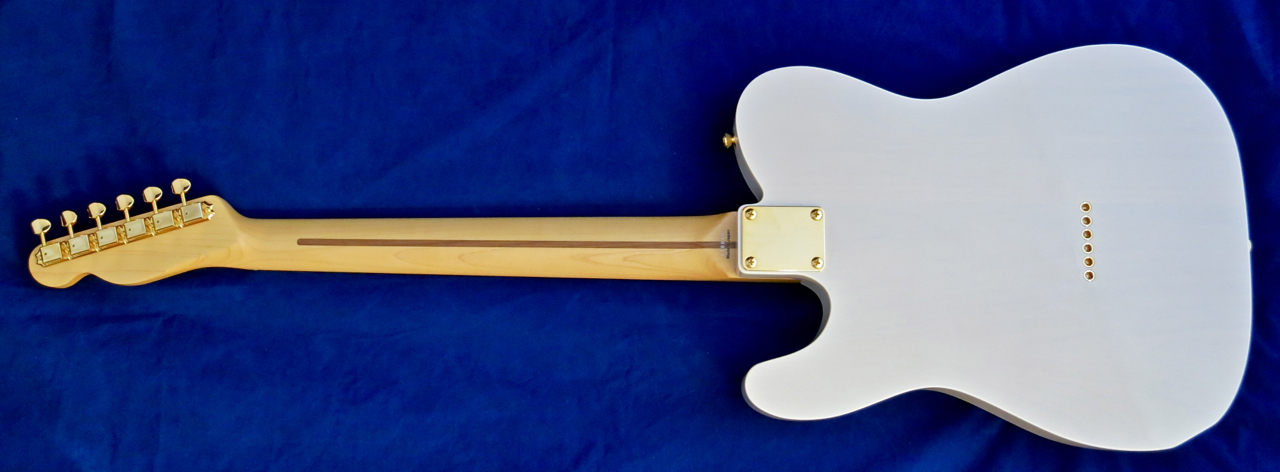
1950-luvun tyylinen vaahterakaula on kiinnitetty vankalla ruuviliitoksella 1960-luvun tyyliseen, reunalistoitettuun leppärunkoon.
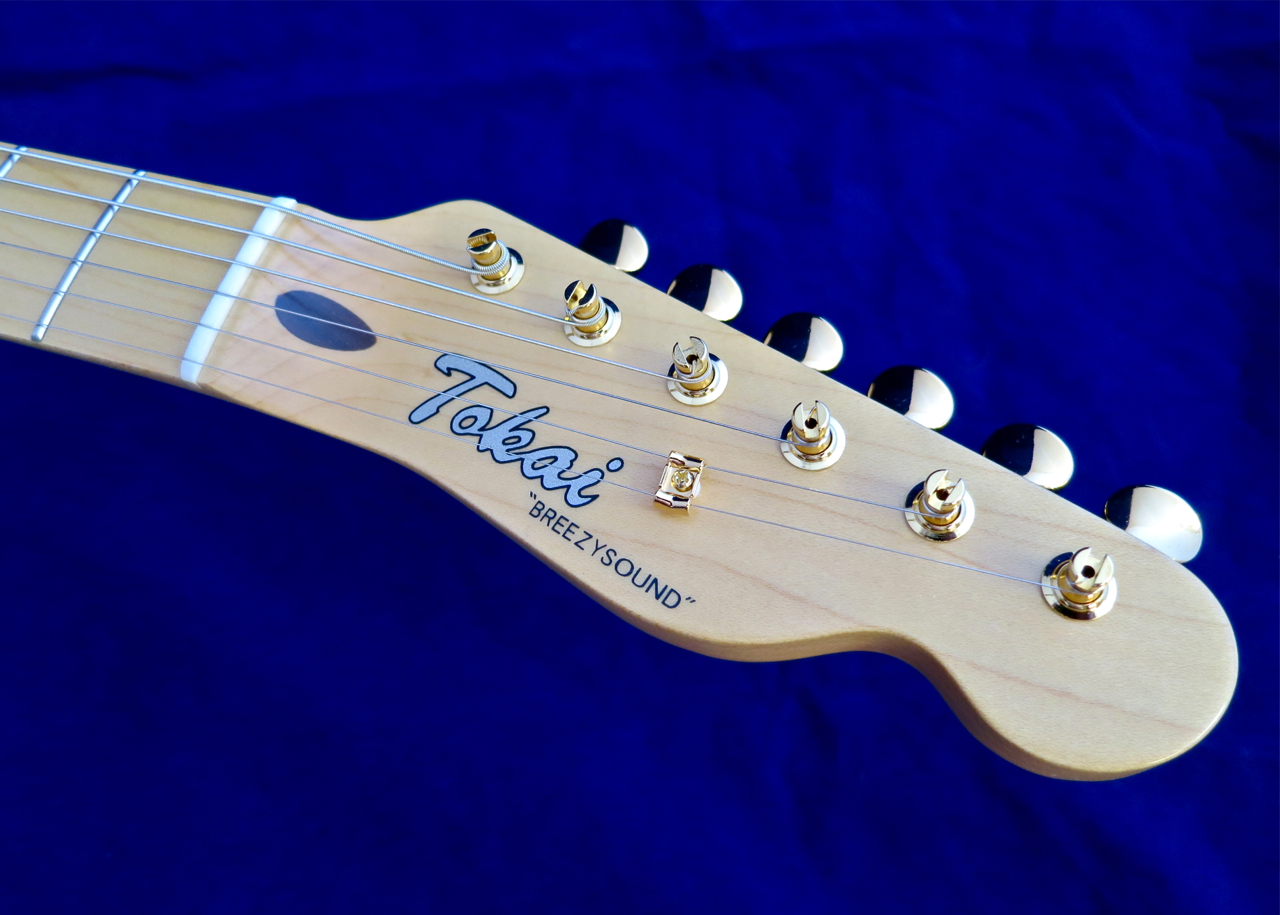
Laadukkaiden Kluson-kopioden suuri etu on, että terävät kieltenpäät on upotettu turvallisesti viritystapeihin.
Mattaviimeisteltyyn kaulaan on asennettu 21 jumbo-kokoista nauhaa. Erittäin siisti nauhatyö saa täydet pisteet!
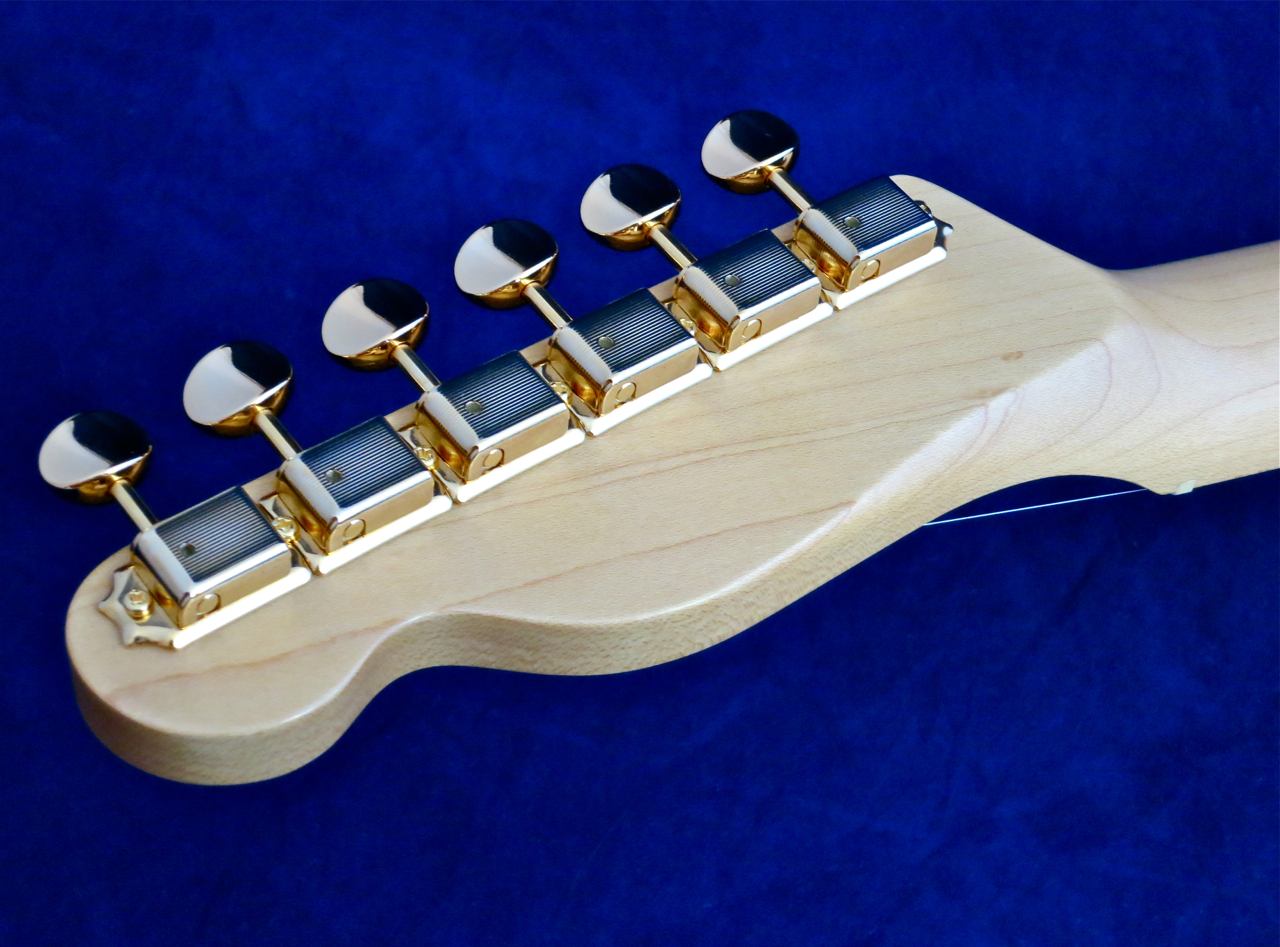
Ajatonta kauneutta on aina kaunista katsella…
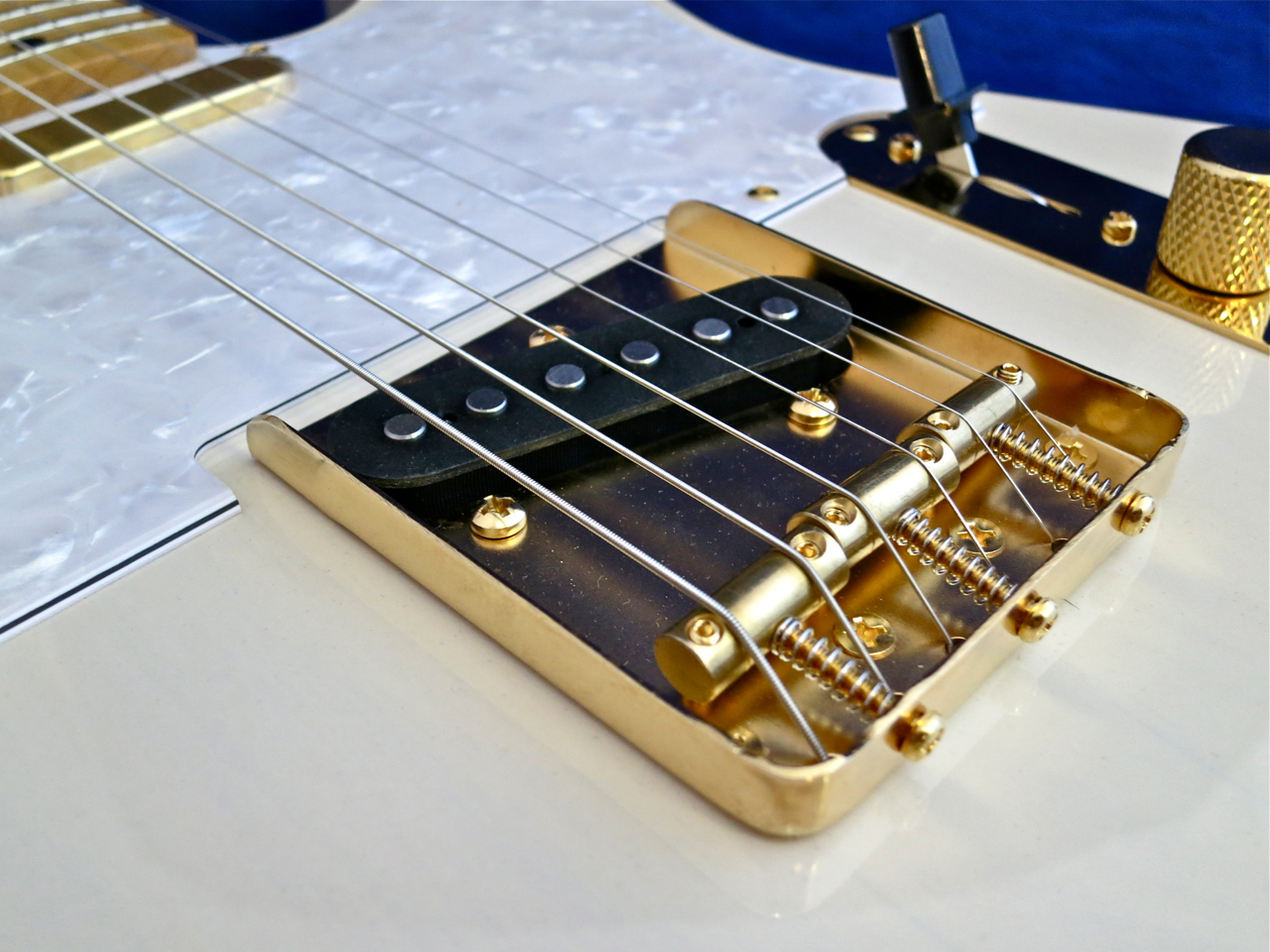
Vintage-tyylisestä Tele-tallasta on olemassa muutamia eri versioita, mikä tulee tallapalojen materiaaliin. Tokai käyttää TTE-55-mallissaan Tele-fanien keskuudessa suosituinta vaihtoehtoa messinkitallapaloilla.
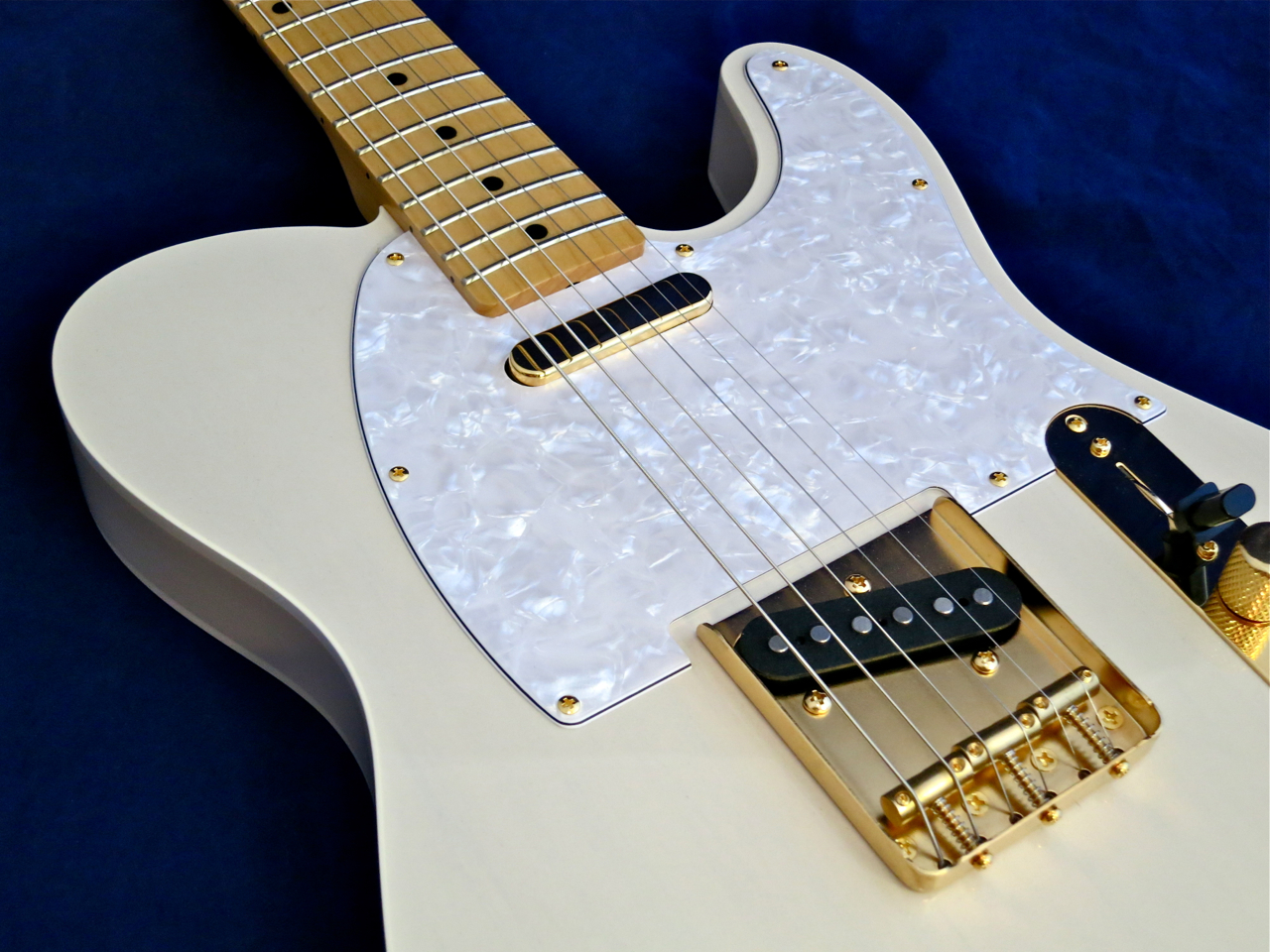
Mikrofonivarustus on sekin jo pitkään ollut klassikko: kaulan lähelle on sijoitettu melko kapea, metallikuorella varustettu mikrofoni, kun taas leveämpi tallamikrofoni on kiinnitetty suoraan tallan pohjalevyyn.
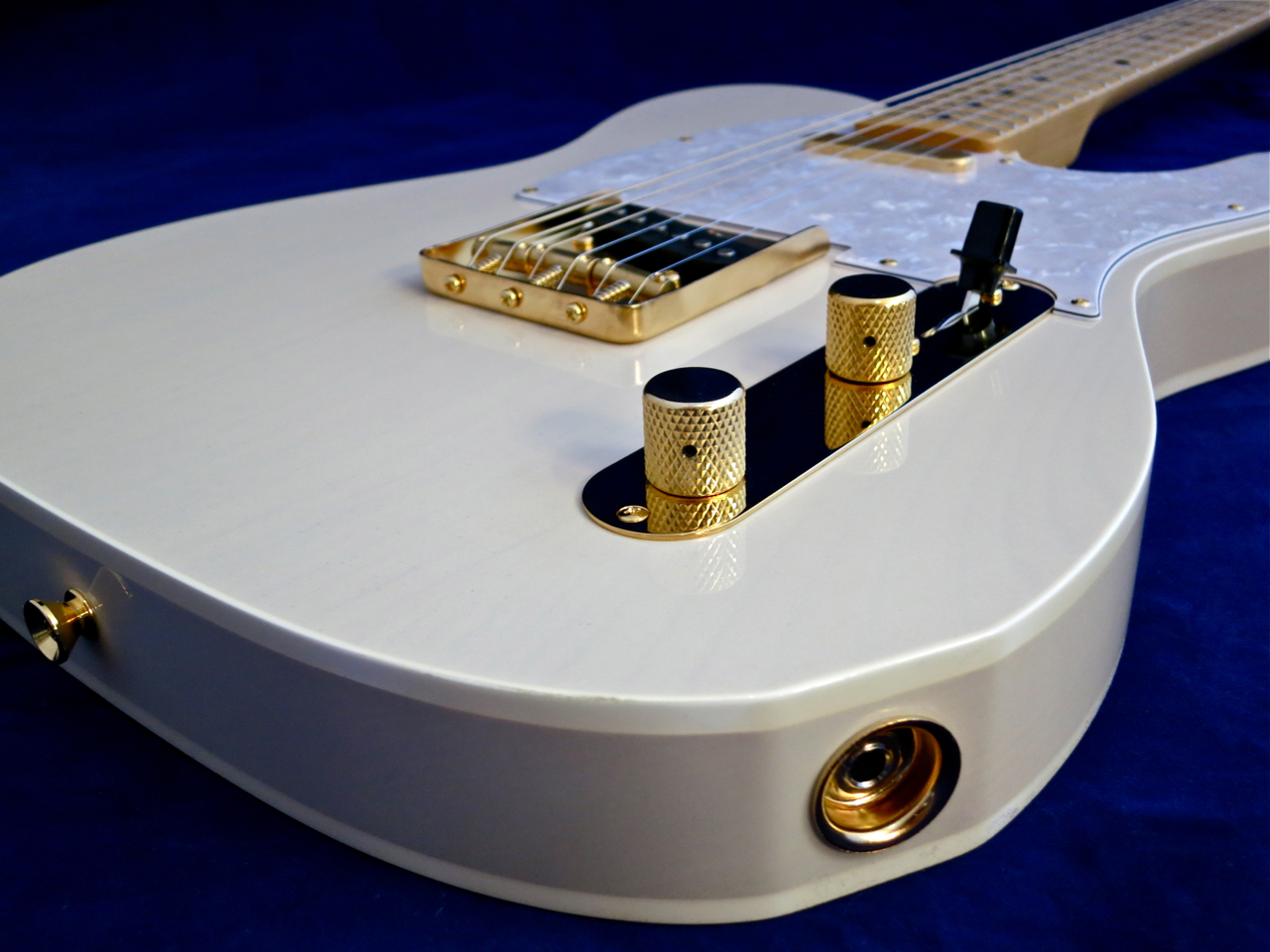
Vuoden 1967:n kytkentä on Tele-tyylisissä kitaroissa se kultastandardi – kolmiasentoinen kytkin, sekä master volume ja master tone.
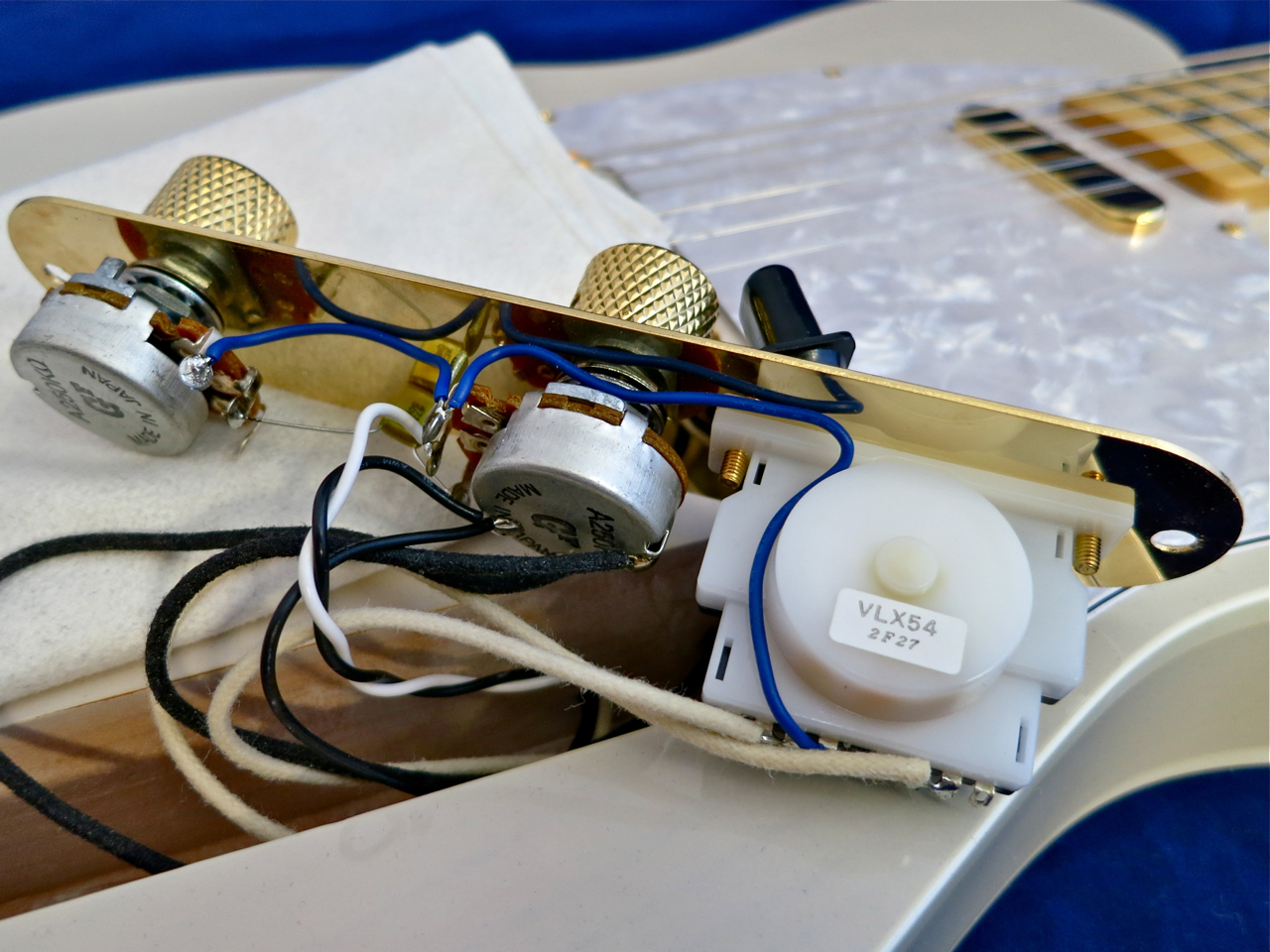
Pölysuojattu VLX-kytkin ja laadukkaat GF-potentiometrit takaavat, että Tokain huoltoväleistä tulee tosi pitkät.
Vintage-fanit taas iloitsevat mikkijohtojen kangaseristyksistä.
****
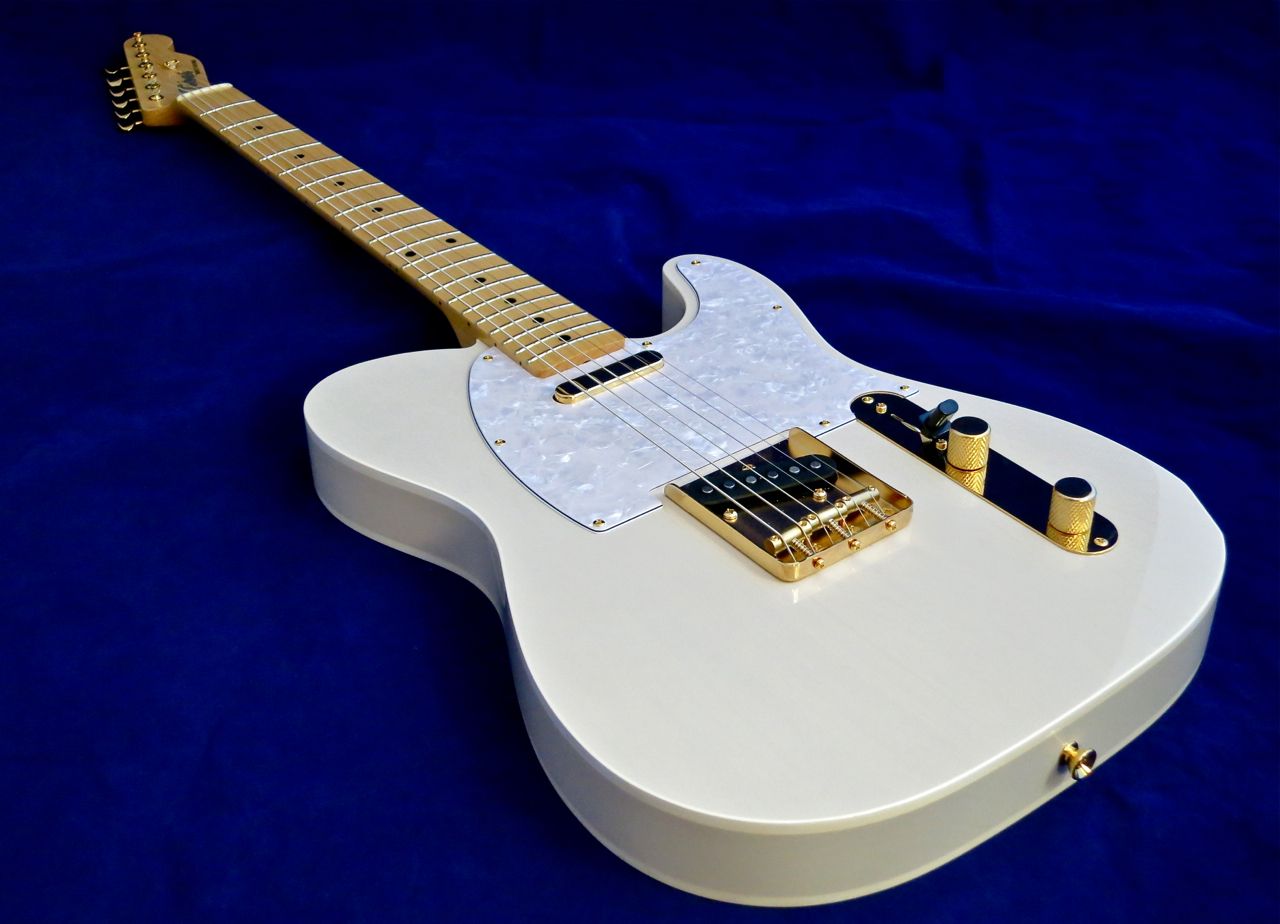
Testisoitin kuuluu painonsa suhteen mukavaan keskikastiin – se ei ole raskas kitara, muttei myöskään erityisen kevyt.
Tokai TTE-55:n kaulaprofiili on suoraan minun henkilökohtaiselta suosikkiosastolta – se on pyöreä ja täyteläinen D-profiili. Kaulassa on juuri sillä oikealla tavalla paksuutta, joka tukee sopivasti vasenta kättä, olematta kuitenkaan liian paksu tai raskas soittaa.
Nykypäiväiset paksut nauhat, sekä kaulan satiinipintainen viimeistely, tekevät hyvin säädetyn (E: 1,9 mm/e: 1,7 mm) kitaran soittamisesta helppoa. Etenkin venytykset onnistuvat huomattavasti paremmin kuin pienillä vintage-tyylisillä nauhoilla.
Tele-tyylisen kitaran intonaatiossa on aina tietynlainen kompromissi, kun tallassa on ainoastaan kolme tallapalaa, mutta tämä ei estänyt, että tästä kitaratyypistä tuli klassikko. Kompromissin kanssa voi hyvinkin elää.
Se on rakennettu kuin Tele, se näyttää Teleltä, ja, kyllä, Tokai TTE-55 myös kuulostaa Teleltä. Kaulamikrofonin soundi on herkullisen pyöreä, mutta samalla myös notkea. Kytkimen keskiasennosta taas saa selville, mista Prince sai aikoinaan oman Funkynsä. Ja tallamikrofonin twang on herkkua Countryn, Rockabillyn ja Bluesin ystäville.
Tokai TTE-55 sopii loistavasti lähes kaikkiin musiikkityyleihin – ainoastaan Metal-osastolle en suosittelisi tätä vintage-tyylistä mallia.
Tämän testin perusteella voin vain todeta, että Tokai TTE-55 on hyvin laadukas ja perinnetietoinen Tele-tyylinen kitara erittäin kohtuulliseen hintaan.
****
Tokai TTE-55
848 €
Maahantuoja: Musamaailma
****
Plussat:
+ hinta-laatu-suhde
+ työnjälki
+ osien laatu
+ kaulaprofiili
+ soundi
Miinukset:
– perinteinen Tele-kompromissi soundin ja intonaation välillä


The AKG WMS470 Instrumental Set is the company’s new mid-price wireless system for guitarists and bassists. The system consists of the PT470 bodypack transmitter and the SR470 diversity receiver. The AKG WMS470 (current street price in Finland approx. 550 €) is a pro-level system offering plethora of handy features. AKG’s main focus point, however, is to ensure the highest possible reliability in all situations. The engineers have managed to couple this with an ease-of-use that makes the WMS470 Instrumental Set suitable for wireless novices, as well as seasoned pros.
****

A wireless system is always made up of a transmitter and a receiver.
The WMS470 comes with AKG’s lightweight PT470 transmitter. The Instrumental Set naturally contains the company’s special MKG L guitar lead compatible with the PT470.
For some strange reason I experienced problems with the phone plug – it wouldn’t stay put in a closed, tubular Switchcraft jack. There is the slight possibility of the jack socket being faulty, as the plug worked well on all my other instruments. Besides, soldering on a different phone plug is a simple operation to carry out, so I wouldn’t worry too much about this glitch.

There’s a nifty little window on the back of the PT470, which allows you to ascertain quickly, whether a battery is currently inserted, and which type of battery it is. AKG promise up to 14 hours of continuous service from a regular alkaline AA-sized battery. For use with rechargeables AKG also offer their CU 400 recharging station (as an optional accessory), which allows you to recharge the battery without having to remove it from the bodypack.

The tiny gain control above the battery allows you to adjust the correct amount of signal gain for your chosen instrument.

Between the PT470’s antenna and the input jack you can see a small infrared sensor, which hints at one of the WMS470’s cool features. This AKG wireless disposes of the need to manually set the transmission frequency for both the transmitter and the receiver. Here you only have to set the channel at the receiver, which then tunes/programmes the transmitter remotely via an infrared signal. This saves time and reduces the possibility of an inadvertent foul-up.
The slider switch gives you three operating modes to choose from – OFF, MUTE/PRG (while muted, the transmitter is also on standby for remote programing) and ON.

While the PT470’s On/Off/Mute-switch has been deliberately designed with a stiff action, it can also be completely taken out of the equation. Inserting a blind plug (comes with the set) into the Mute-input disengages the transmitter’s switch and locks the PT470 in its current operating mode. This helps to prevent accidental on-stage muting.
****

The AKG SR470 receiver is a so-called diversity receiver. This means it uses two discreet antennae with their own gain stages for reception. The unit’s electronics constantly monitor the radio signal coming off each antenna and automatically (and completely silently) switches to the antenna which offers the best radio signal quality at any given moment.
One point which puzzles me regarding many modern pieces of equipment, is the prevalent use of wall-wart AC adapters with flimsy leads. This isn’t a brand-specific issue – you see it across the board. I cannot help, but wonder how reliable these thin power cords really are, when it comes to big productions and touring.
Notwithstanding its power supply, the AKG SR470 itself seems like a roadworthy piece of gear, with its metal chassis. Included with the Instrumental Set are a pair of rack mount brackets, if you want to install the SR470 in your effects rack.
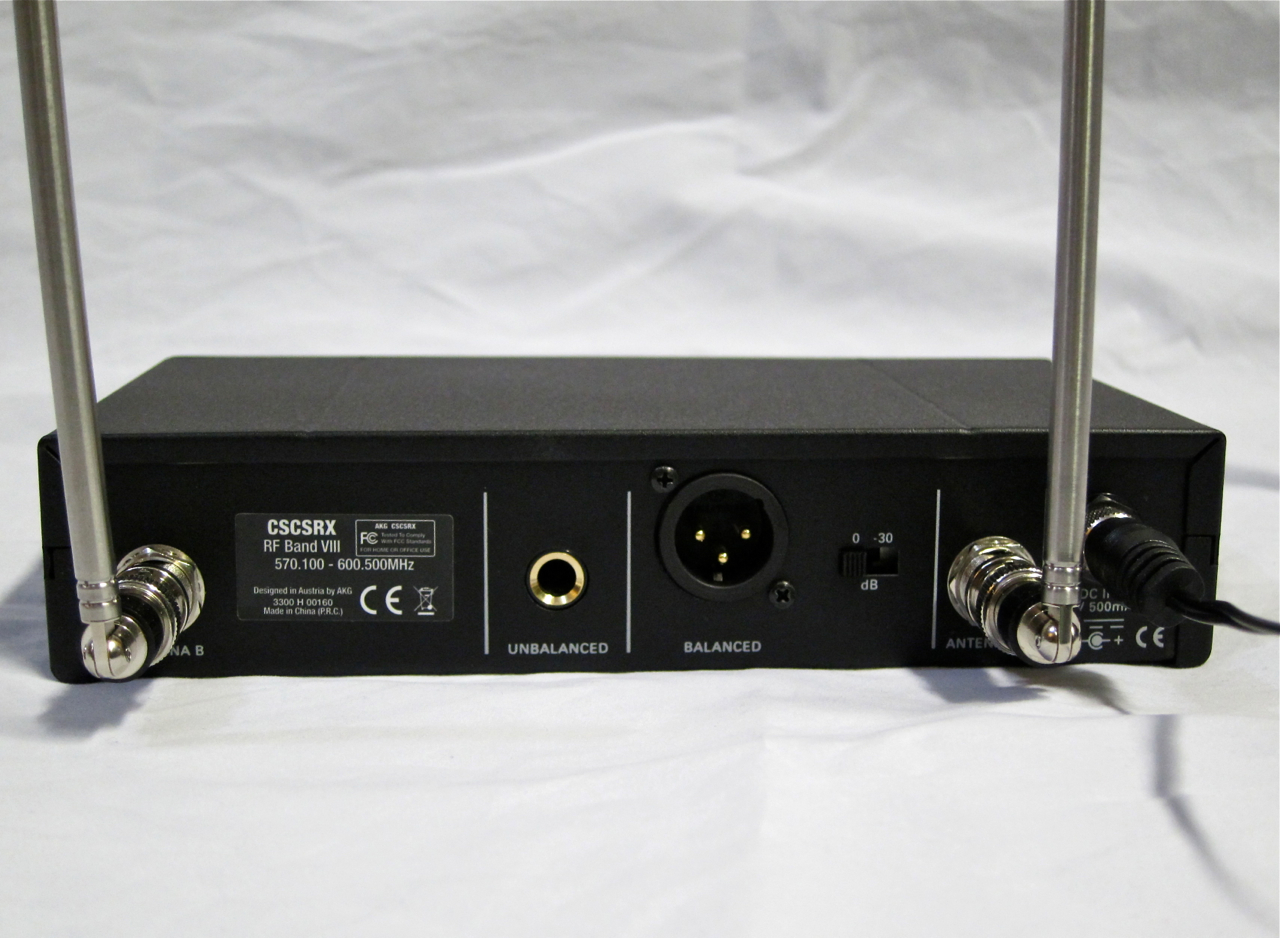
The SR470’s back panel offers two different audio outputs:
There’s a balnaced XLR-output, which is a good choice for hooking up straight to a mixing console. In addition to the volume knob on the front panel there’s also a 30 dB pad available on the back panel, in case the output signal is still too hot.
The unbalanced output is the right choice for direct connection to your amp.

Screw-on connectors make sure that all everything stays firmly in place.
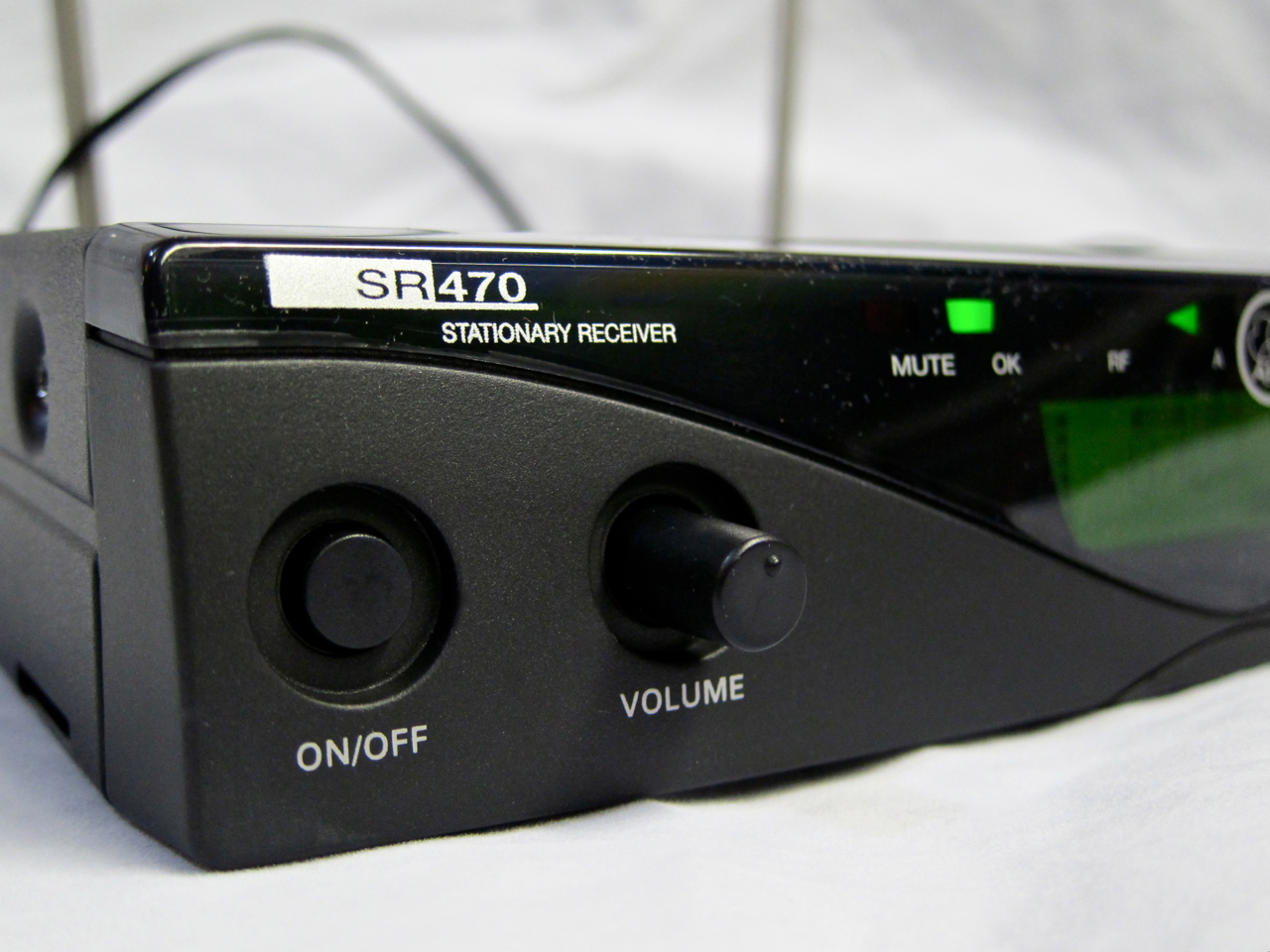
The volume control on the SR470’s front panel…
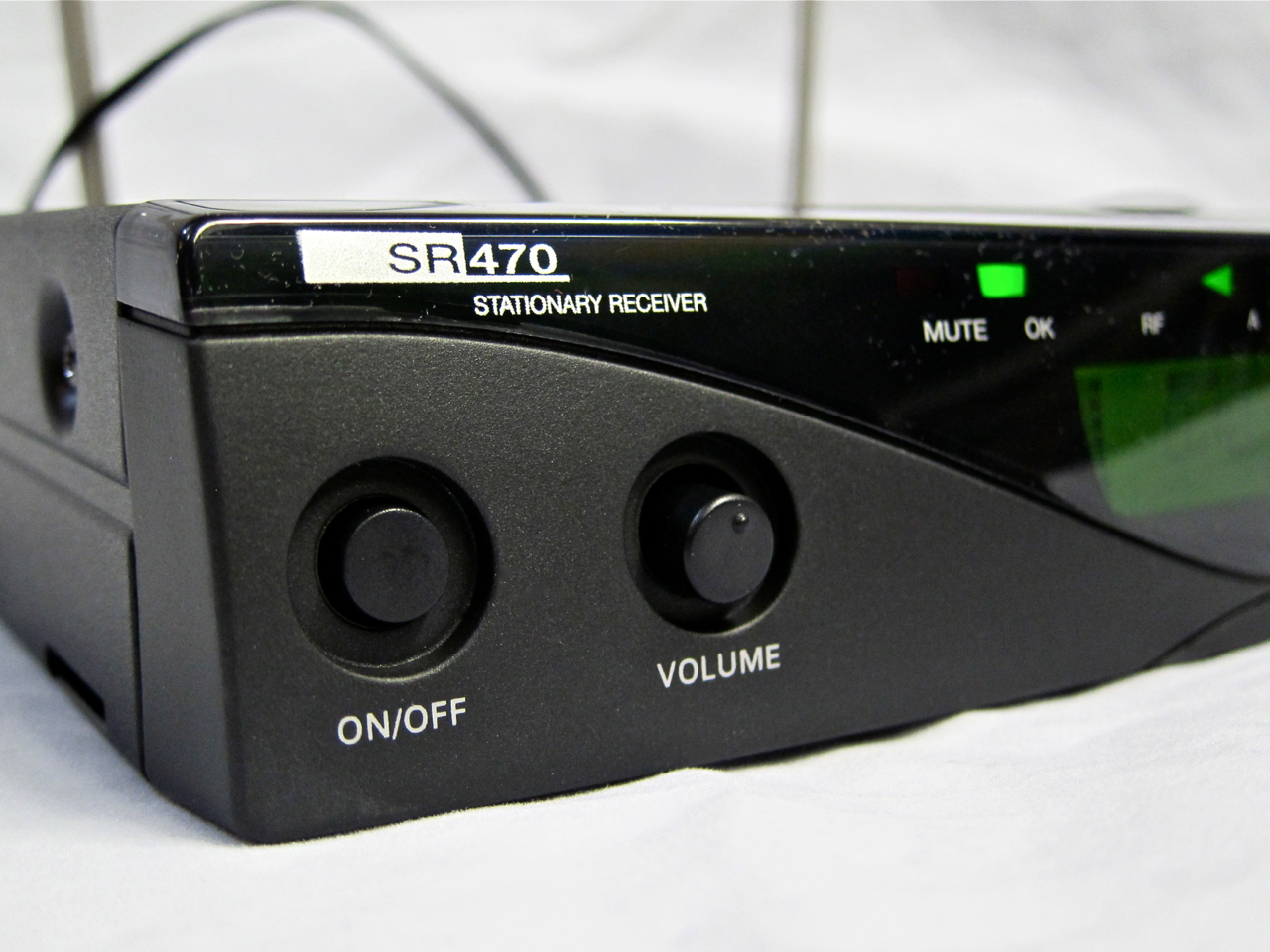
…is spring-loaded so you won’t have to worry about accidentally changing your volume settings.

The pushbuttons on the SR470’s front panel are for menu navigation and adjustment of parameters. Pressing the middle button also toggles between the set-up and lock modes.
****
Firing up the AKG WMS470 system is really fast and easy. With only a few pushes of the navigation buttons you activate the receiver’s automatic set-up mode, which sees the SR470 automatically scanning for clean frequencies. You select a frequency and send the correct data to the PT470 via the IR-remote. Then you only have to set the correct gain and audio levels, and you’re good to go.
Naturally the AKG:n WMS470 Instrumental Set also allows for complete manual set-up by a technician, if this system is only one part of a large production. AKG’s WMS-systems allow for running up to 48 individual systems simultaneously with up to 16 channels in the same group (= specific frequency band).

The AKG’s many user-friendly features really make life easier. One good example is battery life, which is indicated clearly (given in hours left) in the PT470’s display, with a low battery warning kicking in early enough.
AKG’s Pilot-function is a great way to make absolutely sure the right signal is picked up by the right receiver. When Pilot is switched on a digital pilot signal is transmitted by the bodypack, which works like a key code. The receiver will then only output a signal if it comes from this transmitter with its specific pilot signal. This is good news in hectic situations, like when playing festivals, where you want to be sure that you’re not picking up anyone else’s signal by mistake.

In my opinion the AKG WMS470 Instrumental Set is a very well-designed system. Once your audio gain settings have been adjusted for your instrument, and the output volume set for your amp, set-up is quick and easy at the gig.
The WMS470 system proved to work extremely reliably and with top drawer audio quality.
There’s really no comparison to wireless systems from the 1990s or early 2000s, which were often prone to audio artifacts. The AKG WMS470 has a clean, crisp and natural sound, and it leaves all of your dynamics nuances, as well as your instrument’s natural timbre, intact.
I didn’t experience any drop-outs – or any other problems, for that matter – instead the system proved to work faultlessly and extremely reliably.
****
AKG WMS470 Instrumental Set
current street price in Finland approximately 550 €
Finnish distributor: Studiotec
****
Pros:
+ easy to use
+ reliable
+ sound
+ runs on a single AA-battery (PT470)
+ low power consumption (PT470)
+ rack mount kit included (SR470)
+ Pilot-function
Cons:
– flimsy PSU (SR470)

Mannedesign on italialaisen Manne Guitarsin edullisempi, Kauko-Idässä valmistettu kitaramerkki.
Mannedesignin valikoimaan kuuluu sähkösoittimien ohella myös pieni akustisten kitaroiden mallisto, josta valittiin tällä kertaa kaksi kitaraa testiin: Parlour-kokoinen Mannedesign PFM, sekä Roberto Dalla Vecchian nimikko-Dreadnought RDV.
****

Kauttaaltaan kokopuinen Mannedesign PFM (660 €) on suunniteltu Blues-, Folk- ja juurimusiikin ystäville, jotka hakevat soittimestaan juuri sitä autenttista 1930-luvun soundia.
Setrikannen mattaviimeistelty tumma sunburst-väritys antaa kitaralle hienosti lisää katu-uskottavuutta.

PFM-mallin mahonkikaula on veistetty yhdestä pitkästä palasta, johon on lisätty viritinlavan yläosa, sekä toinen pala kaulakorkoa varten. Kaulan ja rungon liitoskohta on perinteen mukaisesti 12. nauhan kohdalla.
Rungon sivut ja pohja on tehty kauniista mahongista.
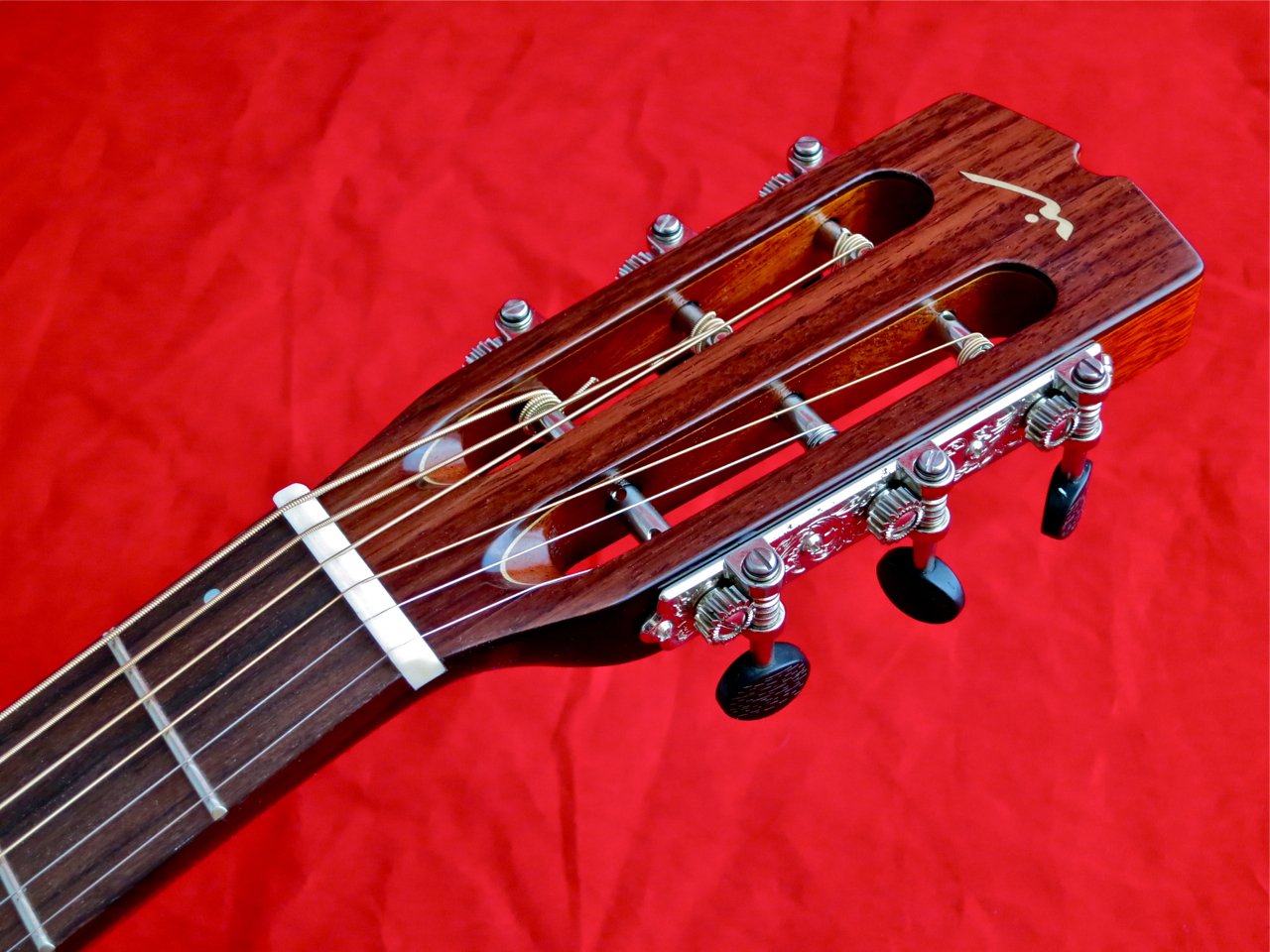
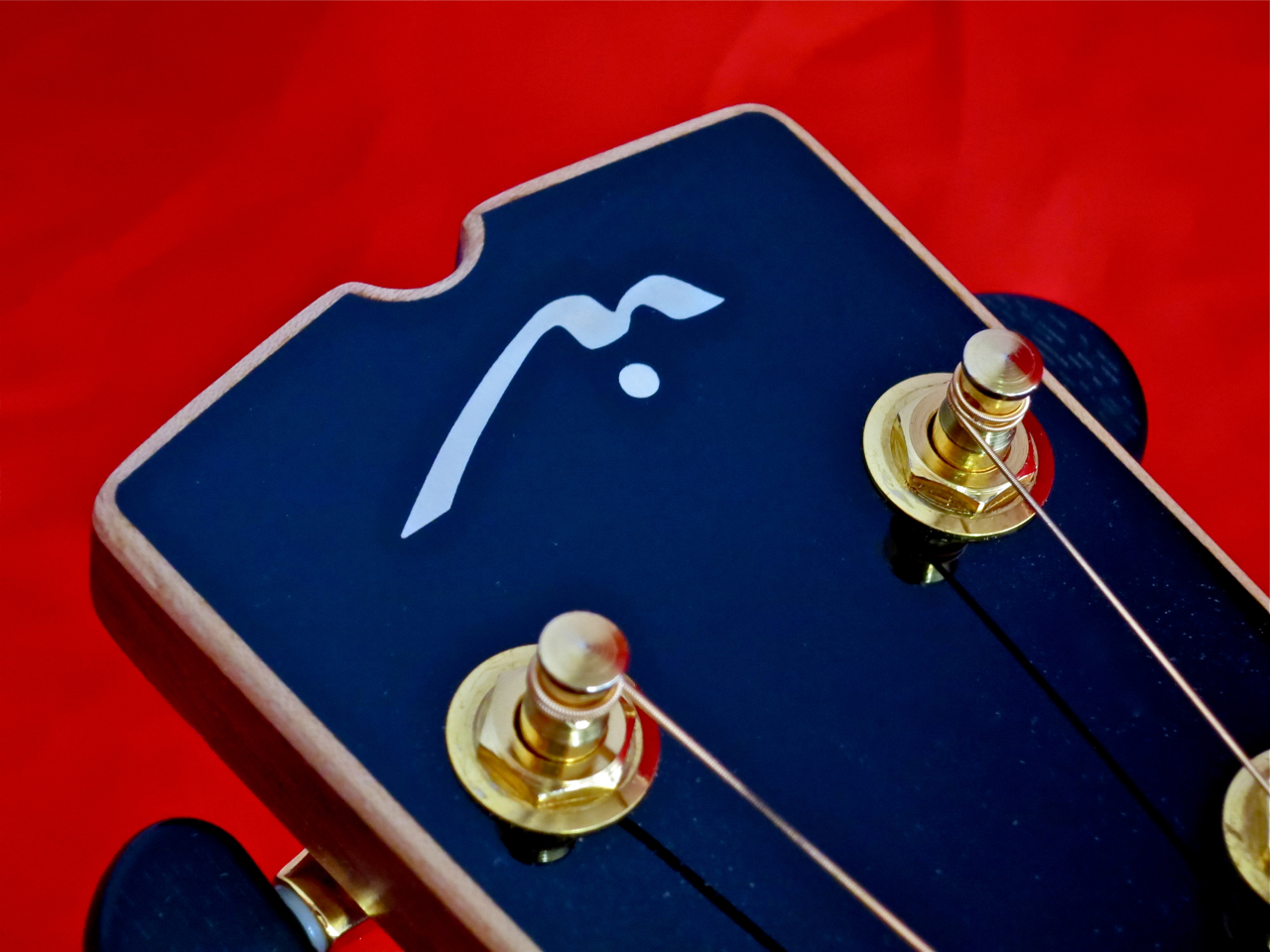
Lavan etupuoli on päällystetty palisanterilla, johon on upotettu vaahterasta veistetty Mannedesign-logo.
Satula aitoa naudanluuta.

Ladukkaat vintage-tyyliset virittimet tulevat Gotohilta. Nykyaikaisena parannuksena niissä löytyy virittimien kireyttä säätävät ruuvit.

Mannedesignin palisanteriotelautaan on siististi asennettu 19 keskikokoista nauhaa.

PFM-mallin koppa on koristeltu upealla loimuvaahtera-reunalistoituksella. Rosetti taas on taidokkaasti kasattu aidoista helmiäispaloista.
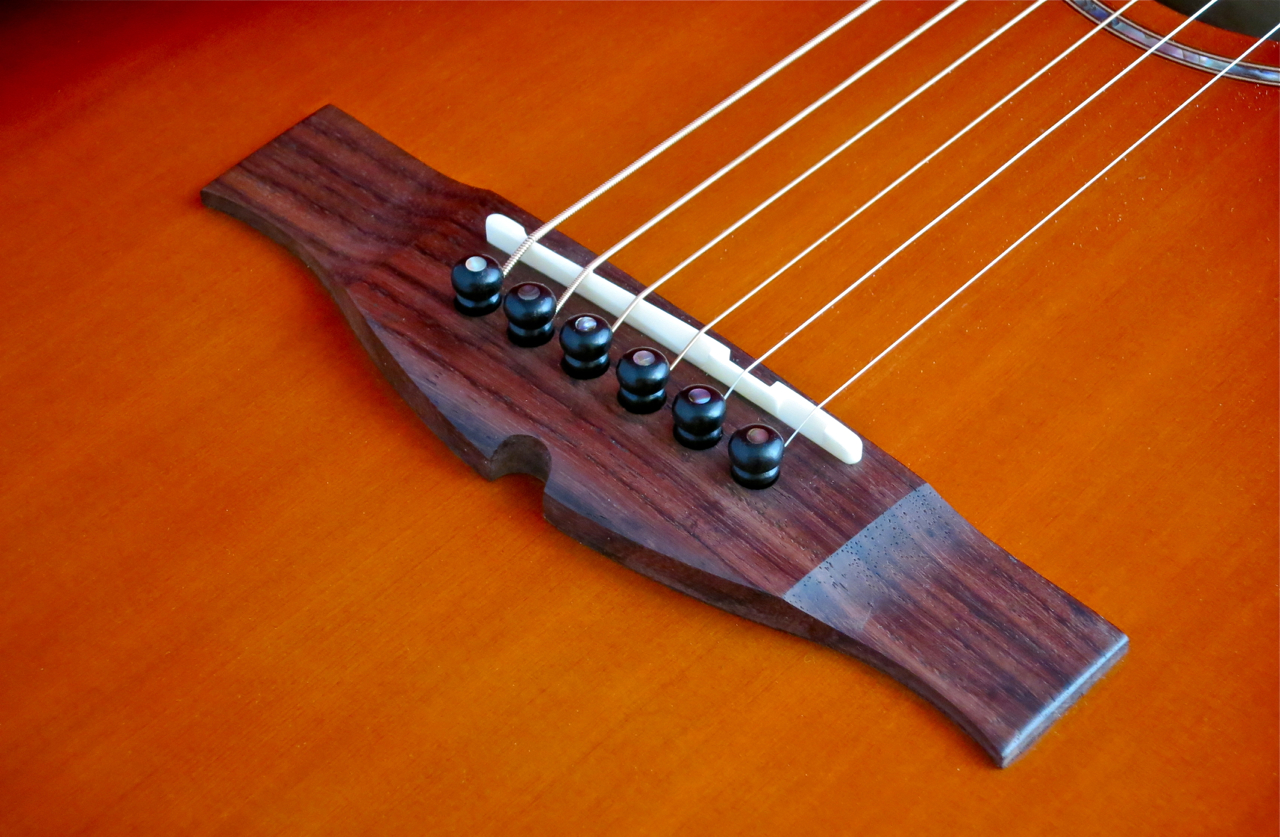
Palisanteritallan alareuna on ikäänkuin viritinlavan yläreunan peilikuva – molemmissa on pyöreä lovi.
Kompensoitu tallaluu on – satulan lailla – tehty naudanluusta, mikä on edelleenkin yksi parhaista materiaaleista tähän tarkoitukseen.

****

Roberto Della Vecchia on italialainen Fingerstyle-mestari, jonka tuotantoon kannattaa ehdottomasti tutustua!
Della Vecchian Mannedesign RDV -nimikkomalli (950 €) on erittäin tyylikäs, perinteisistä ainesosista tehty Dreadnought-teräskielinen. Kitaran kokopuiseen kanteen käytetään laadukasta AA-luokan sitkakuusta.

RDV:n mahonkikaula on veistetty yhdestä palasta, lukuunottamatta kaulakorkoa, joka on ekologisista syistä erillinen pala.
Rungon kokopuiset sivut ja pohja on veistetty kuvankauniista intialaisesta palisanterista.
Kitaran koppa on viimeistelty kiiltävällä lakalla, kun taas kaulassa on satiinipintainen viimeistely.

Reunalistoitetun lavan koristeeksi käytetään eebenpuuta, sekä helmiäisesta tehtyä upotusta.
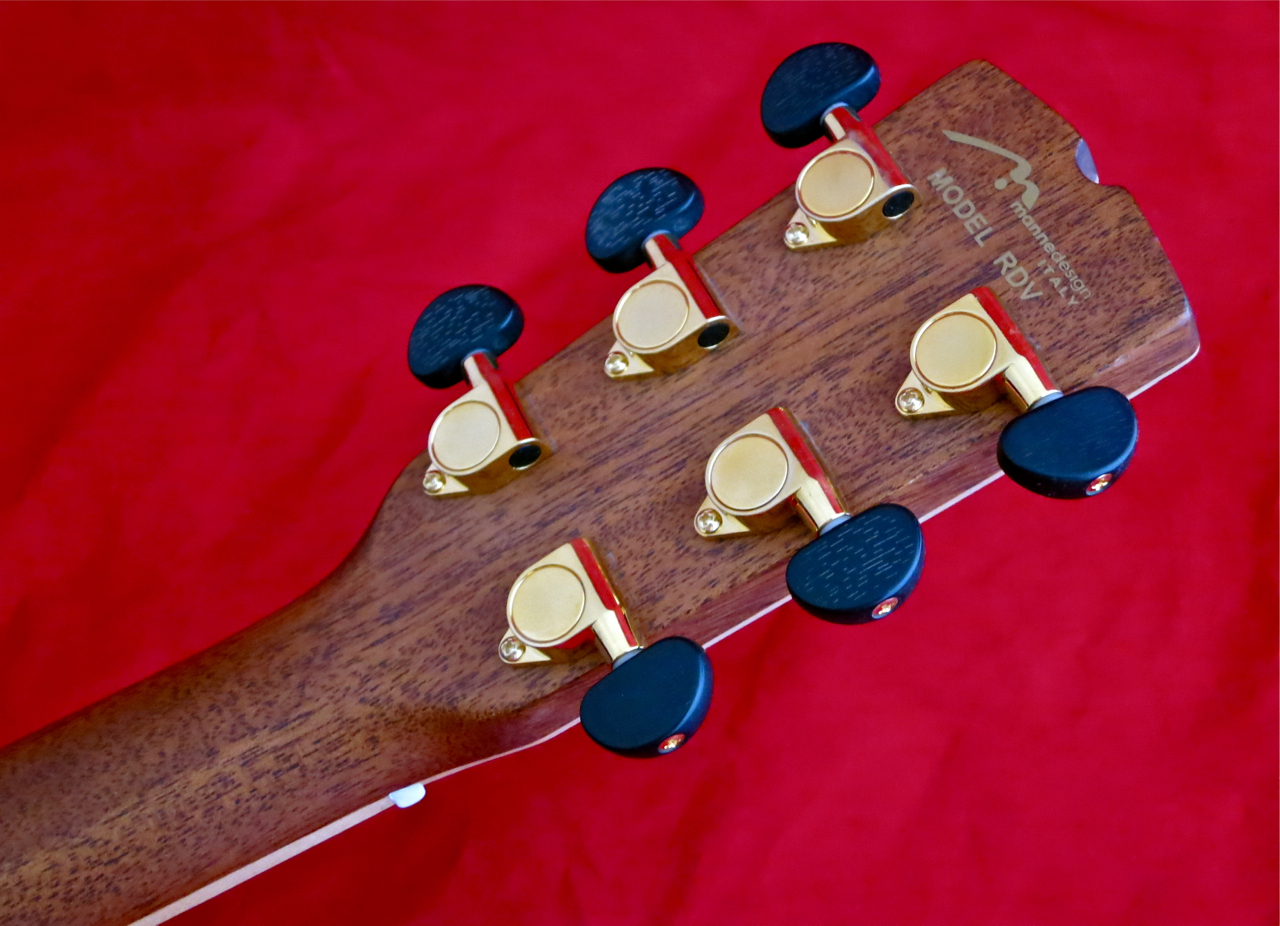
Kullanvärisillä Gotoh-virittimillä on eebenpuuta matkivia muovinuppeja.

Eebenpuisen otelaudan reunalistoitus on vaahteraa. RDV:ssä on 20 keskikokoista nauhaa.

Rungon pohjaan on upotettu hieno mustavalkoinen keskilinjan koriste. Reunalistoitus on veistetty vaahterasta.
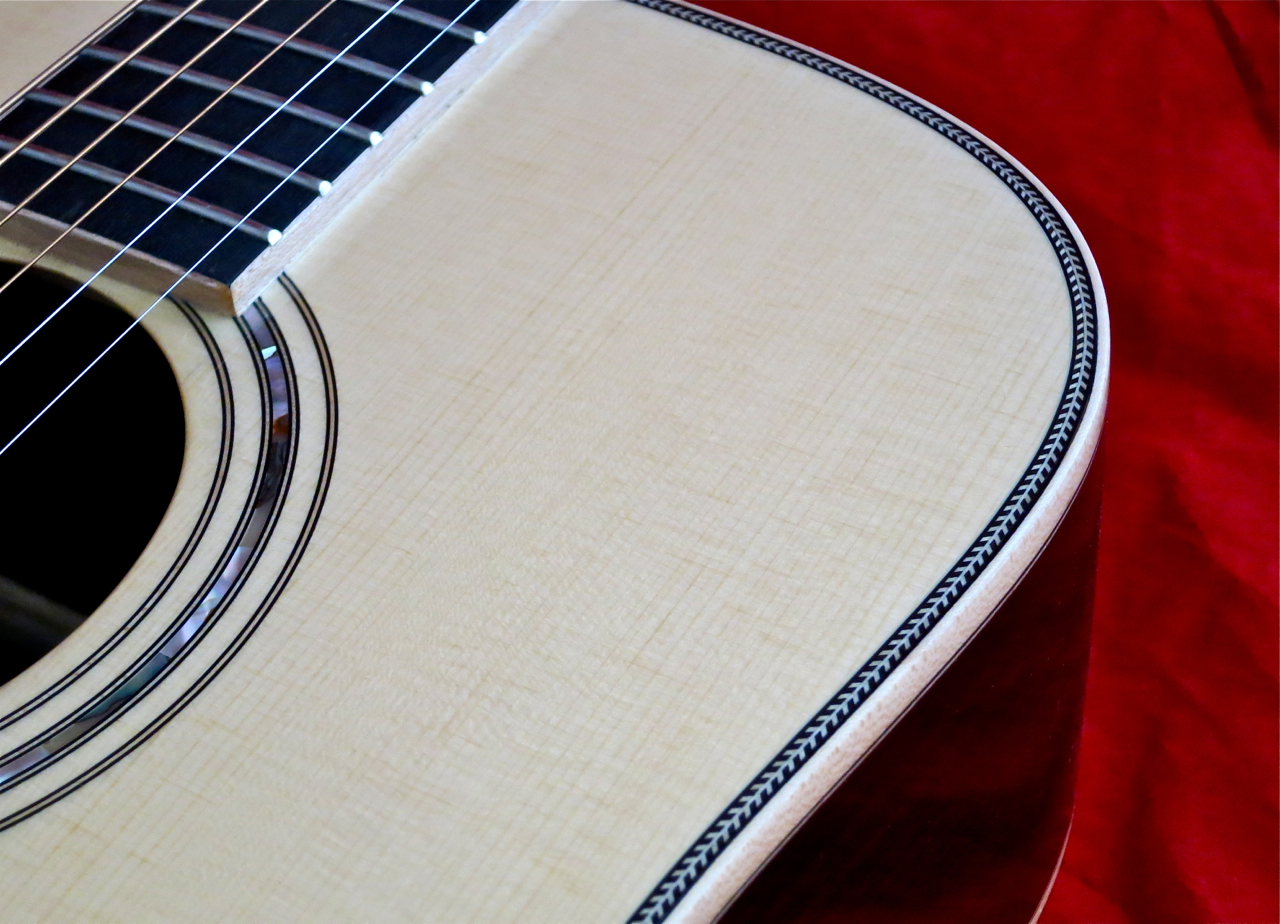
Kannessa käytetään vaahterareunalistan lisäksi vielä kaunista herringbone-koristereunaa.
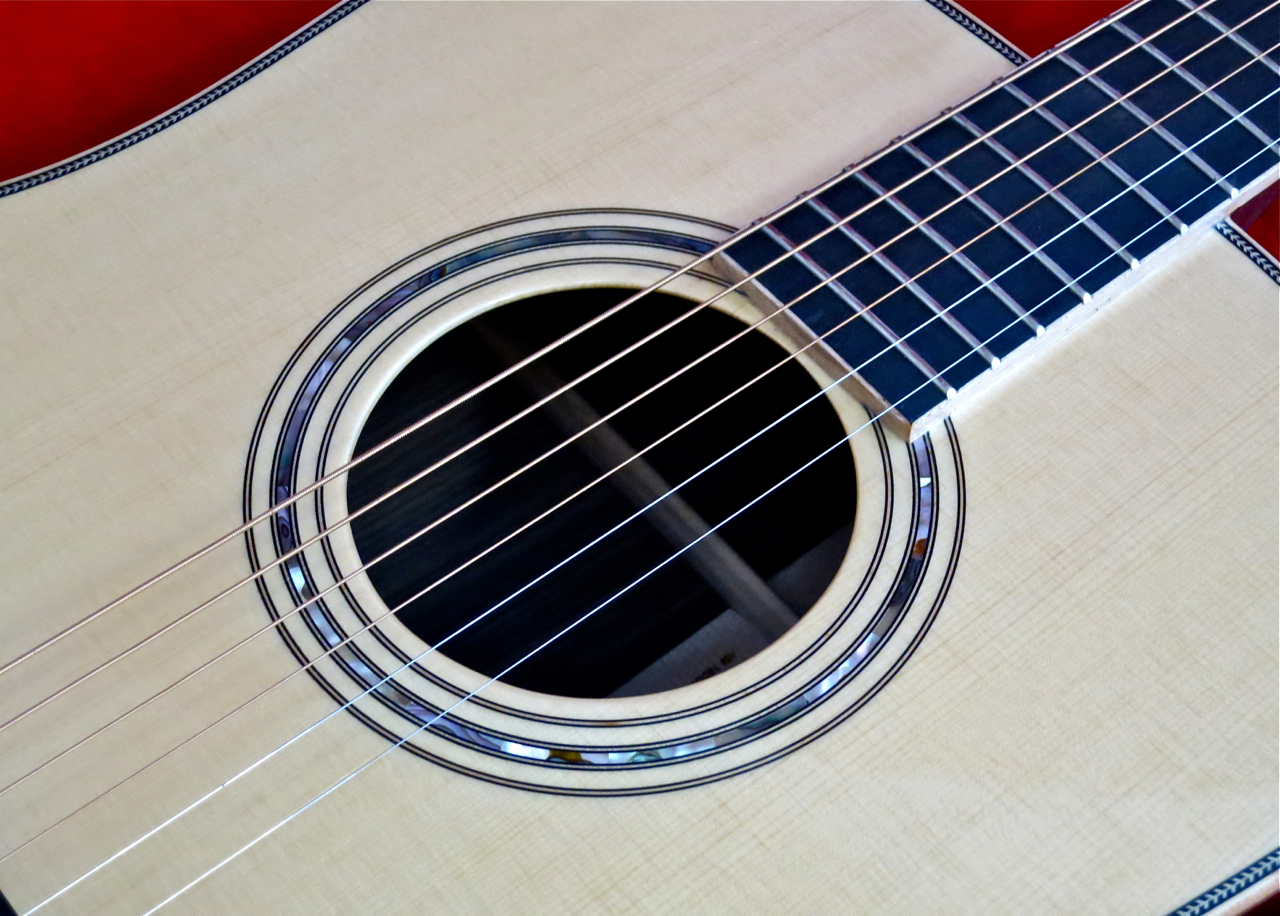
Rosetin keskimmäiseen renkaaseen on käytetty aitoja helmiäispaloja.

RDV:n talla on samanmuotoinen kuin PFM-mallissa käytetty vastine, mutta tällä kertaa se on veistetty sysimustasta eebenpuusta.

****
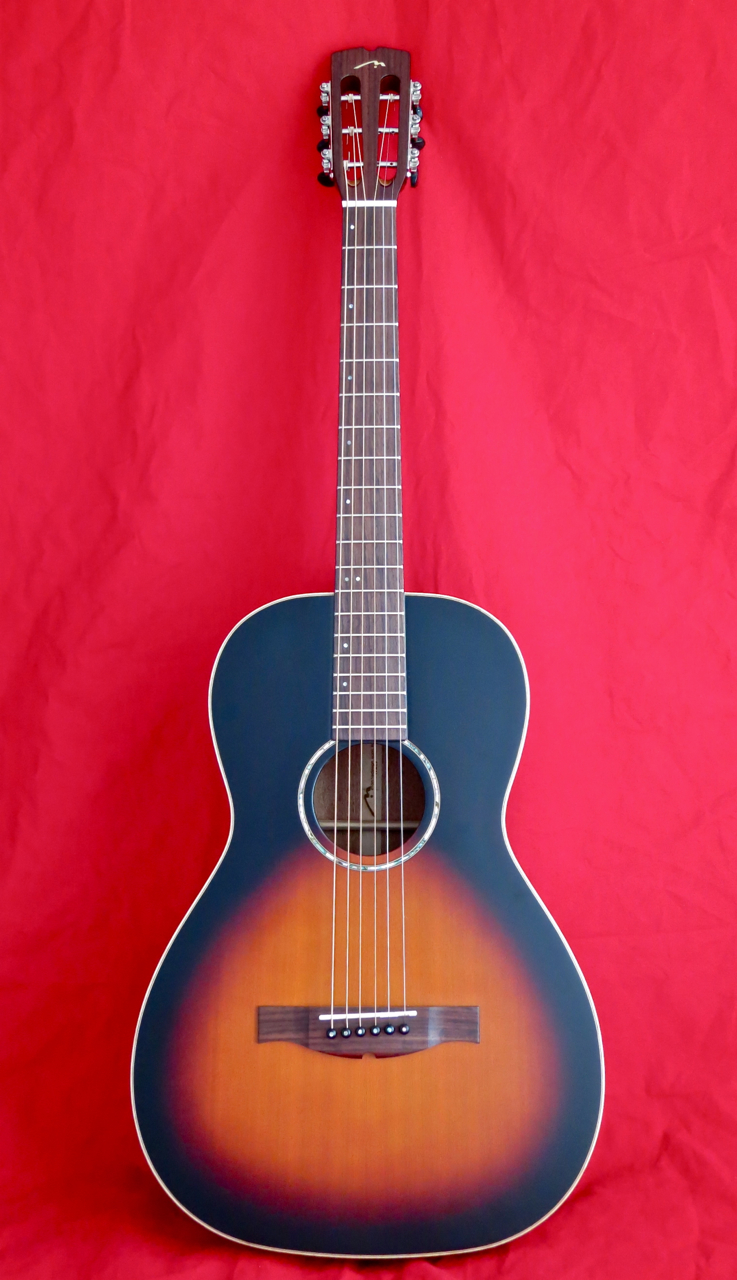
Mannedesign PFM -mallilla on Parlour-kitaroille tyypillinen keskipitkä mensuuri (63 cm), jonka ansiosta kitaran 012-satsin kieliä pystyy venyttämään vielä suhteellisen helposti. Mielipiteitä usein jakaavan, perinteisen V-tyylisen kaulaprofiilin sijaan PFM on varustettu yleispätevällä – ja hyvin mukavalla – D-profiililla. Kaulan leveys on satulan kohdalla 4,4 cm, ja E-kielten välinen etäisyys tallassa 5,4 cm – tämän kitaran kanssa tulee siis hyvin helposti toimeen. Testikitaran tatsia oli säädetty erittäin mukavaksi (E: 1,9 mm/e: 1,5 mm).
Mannedesign PFM on tyypillinen Parlour-kitara sanan parhaassa merkityksessä. Kitaran soinnissa on hyvin kuiva ja yskivä atakki, sekä keskialuevoittoinen, hieman honottava yleissoundi. Sormisoittoa harrastavat Folk-kitaristit tykkävät varmasti PFM-mallin kevyestä bassorekisteristä, koska sen ansiosta soiton erottelevuus säilyy kaikissa tilanteissa. Plektrasoitossa taas tämän Mannedesignin jäntevä sointi lyö itsensä hyvin läpi, ja sen soundi sopii erinomaisesti Ragtime-musiikkiin tai varhaiseen Blues-meininkiin. Äänityskäytössäkin PFM voi olla loistava työkalu, jolla saadaan komppikitarat istutettua ilmaavammin miksaukseen.

****

Mannedesign RDV -kitaralla on luonnollisesti Dreadnoughtin perinteinen pitkä mensuuri (65 cm). Roberto Della Vecchian erikoistoive oli sormityylille mukavampi, väljempi E-kielten välinen etäisyys (5,9 cm) kuin monissa muissa tämän lajin kitaroissa. Näin oikealle kädelle on tuntuvasti enemmän tilaa toteuttaa myös hieman hankalampia sovituksia. Kaulaprofiili on ainakin minun käteeni mukavasti sopiva ovaali C. Myös Della Vecchia -malli saapui testiin loistavassa trimmissä (E: 2,0 mm/e: 1,5).
Palisanterikoppainen Dread’ kuusikannella on yleensä melkoinen voimanpesä, niin kuin esimerkiksi Mannedesignin RDV. Täällä tarjotaan hyvin muhkeata bassorekisteriä, lämmintä keskialuetta sekä hyvin tuoretta diskantin loistoa. RDV on loistava esimerkki laadukkaasta Dreadnought-soundista, ja se tarjoaa sekä paljon volyymiä että tarkkaa ja hyvin eloisaa dynamiikan toistoa.


****
Mannedesign-soittimilla on Suomessa vielä melko matala profiili. Tämän testin perusteella voin kuitenkin vain suositella lämpimästi lähempää tutustumista brändin akustisiin kitaroihin.
****
Mannedesign PFM + RDV
PFM – 660 €
RDV – 950 €
Maahantuoja: Nordsound
****
Plussat (molemmat mallit):
+ hinta-laatu-suhde
+ työnjälki
+ soitettavuus
+ soundi
****


 Kitarablogi.com – Finland's premier Guitar and Bass blog