


Review: Vox AmPhones

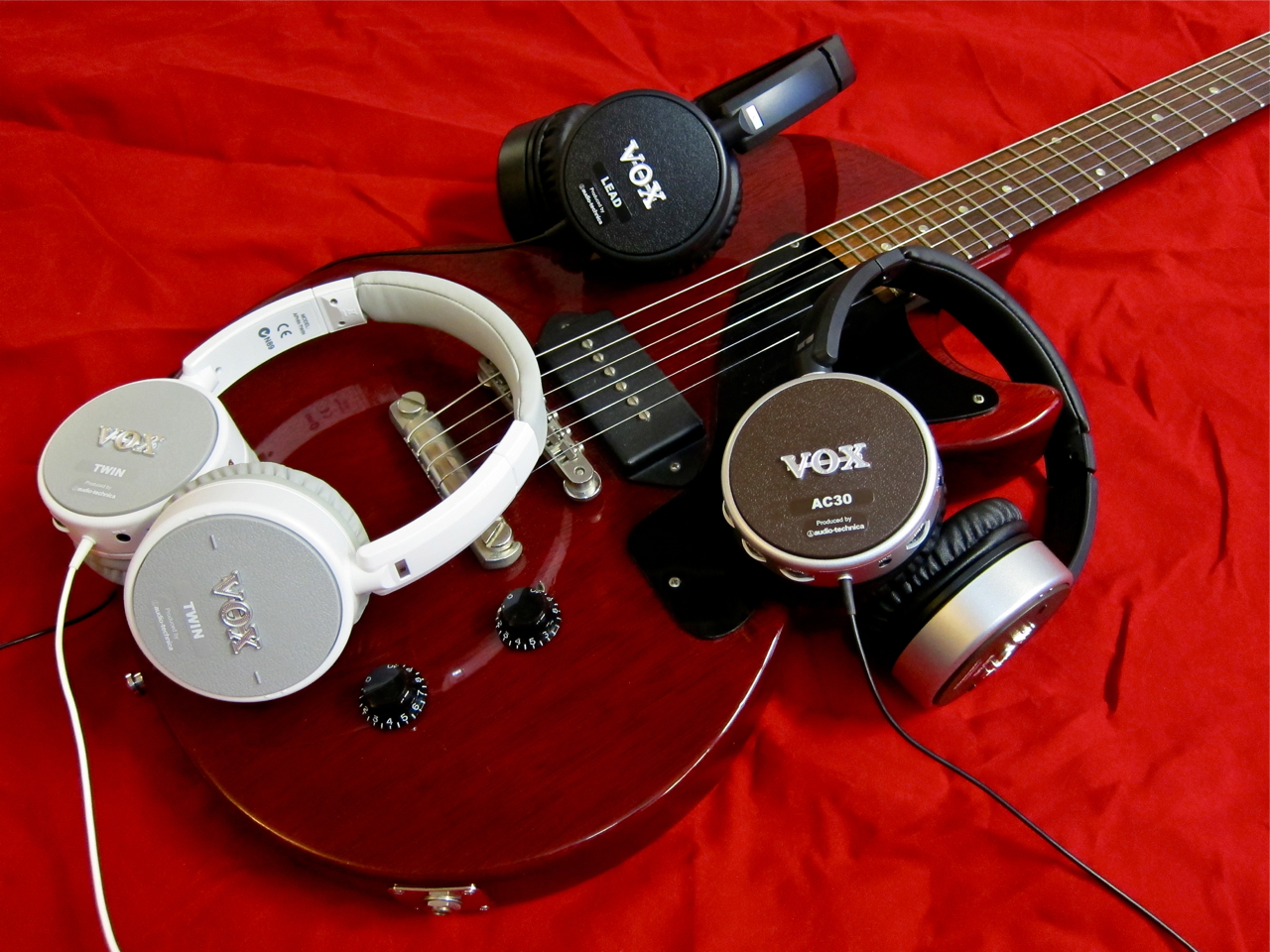
Vox Amplification have given their headphone practice amps a new twist by taking their successful AmPlugs and transplanting them directly into a pair of quality headphones. So now they give us the Vox AmPhones (current street price in Finland approx. 120 € each), made in co-operation with Audio-Technica.
At this moment the AmPhone-range comprises three guitar models – the white and grey AmPhone Twin, the silver/brown AmPhone AC30, as well as the none-more-black AmPhone Lead – plus…

…a red and black AmPhone-model tailored for use with electric bass.
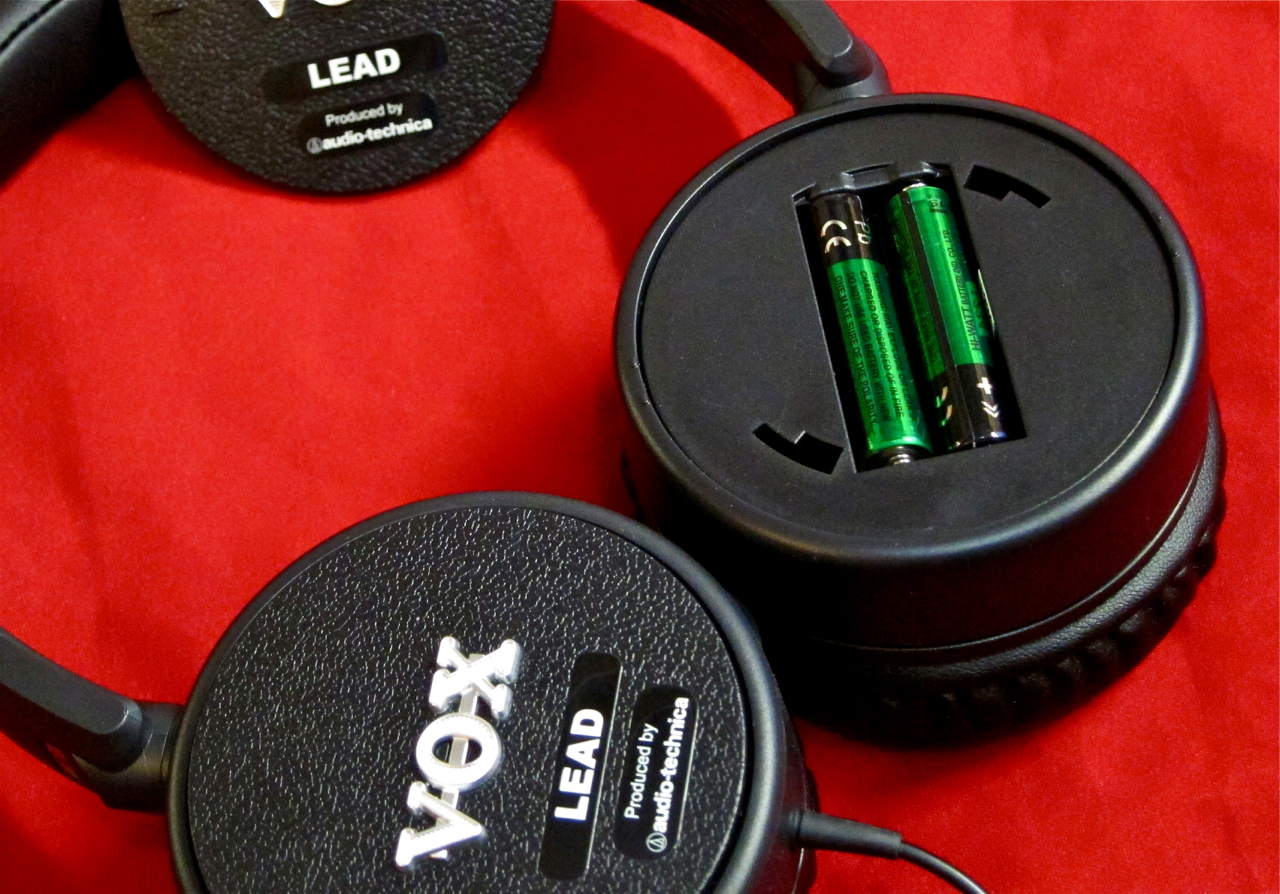
In standard headphone use the Vox AmPhones naturally don’t require batteries. The headphone amp, on the other hand, runs on a pair of AAA-batteries, which are inserted into the right side headphone.

All of the Voxes are equipped both with a mini phone jack, as well as the standard size counterpart.
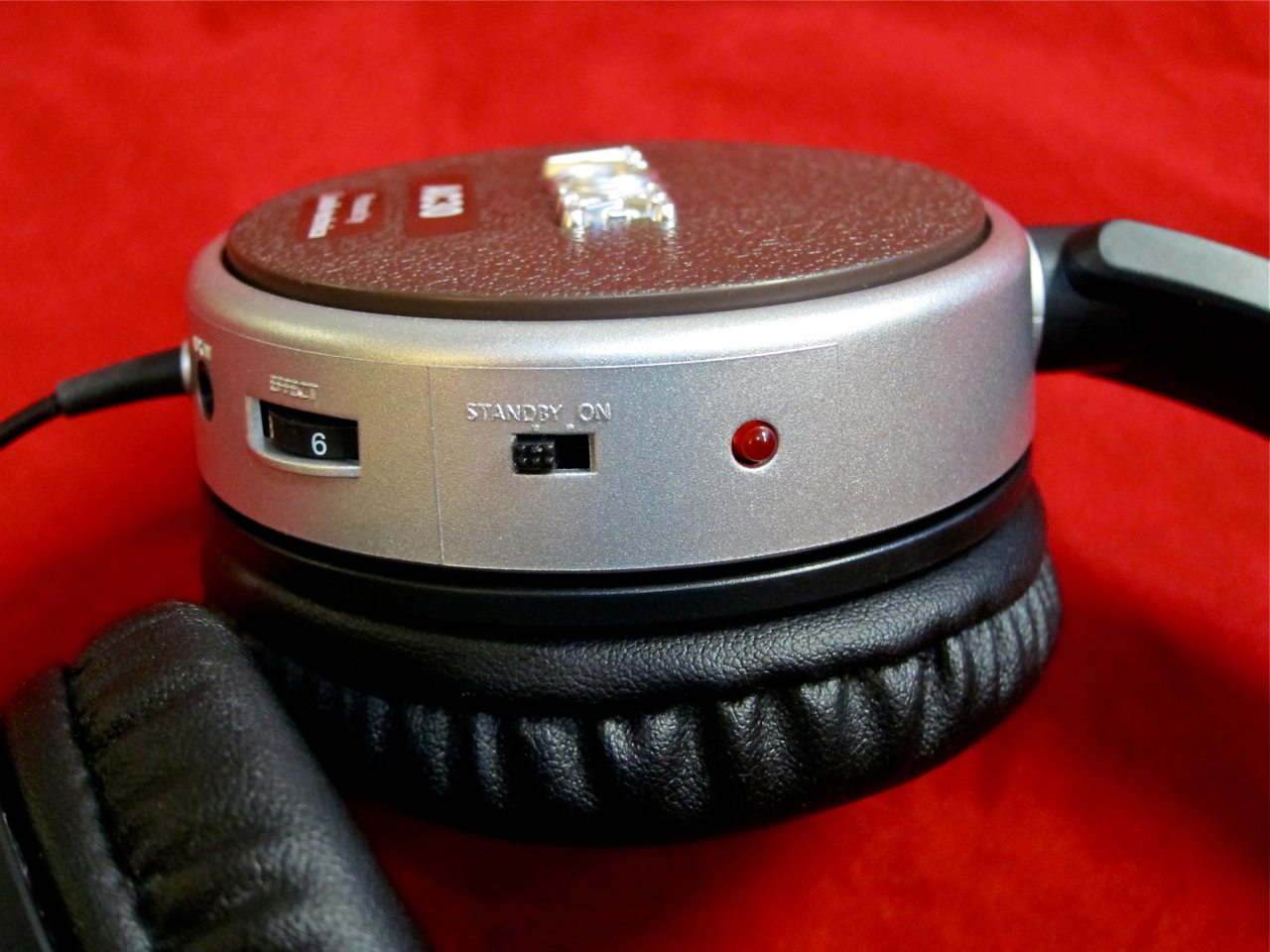
The headphone amp’s electronics and corresponding controls have been fitted into the left side can. Next to the power switch you will find the effect control, along with a mini auxiliary input jack.
The guitar AmPhones offer three different effects along the control’s travel – chorus, delay and reverb – as well as effects off. At the point where one effect changes to another you will hear a small chirping noise as an audible pointer, which is a cool way to do it. Modulation and delay times are fixed, but Vox have managed to come up with workable compromises. The effects sound very nice.
The AmPhone Bass model has a compressor as its sole effect, with the control adjusting the amount of compression, and thus the loudness of the signal. The compressor has been designed specifically for bass use, and works surprisingly well.
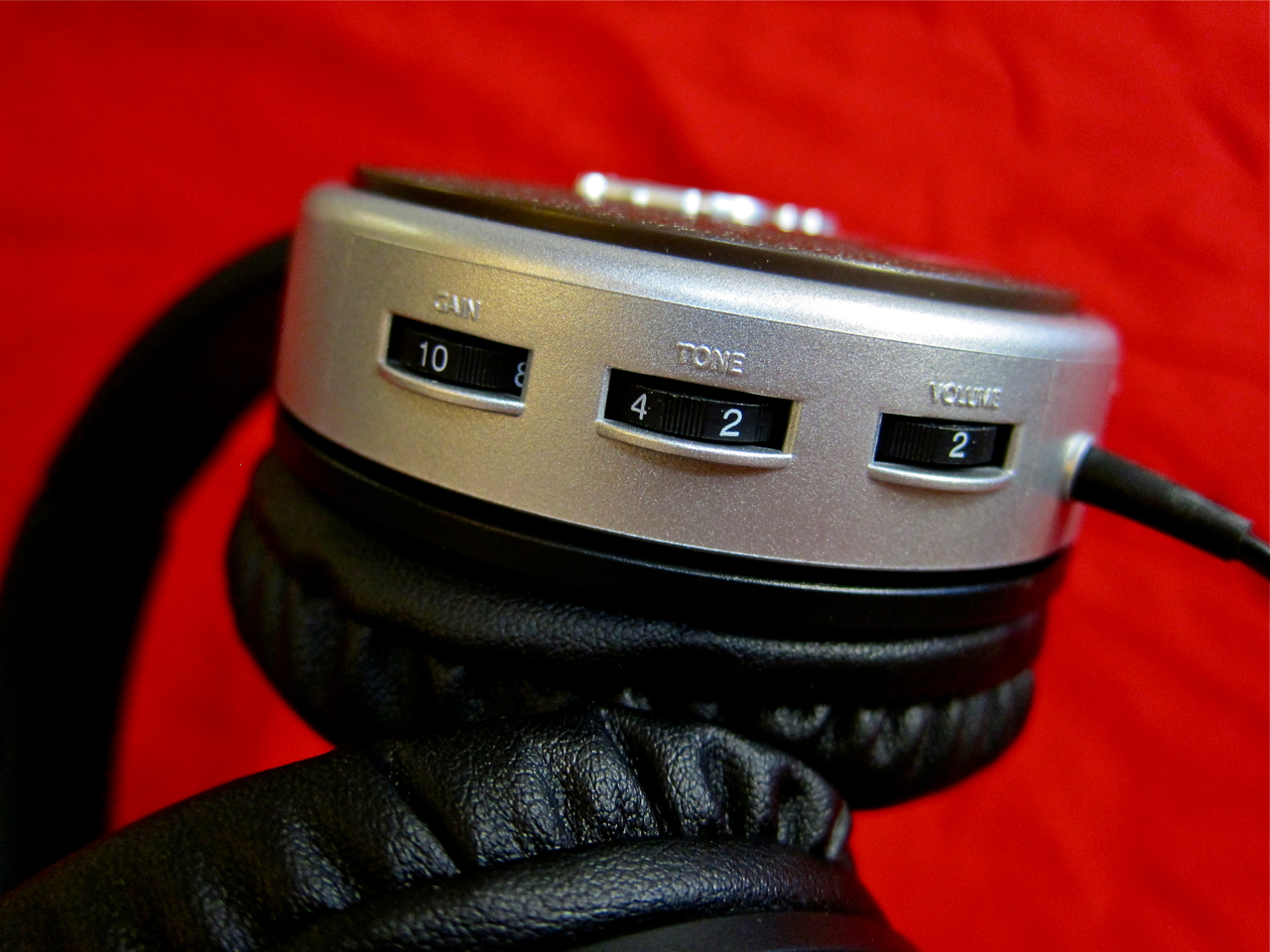
On the other side of the lead, all Voxes feature gain, tone and volume controls.
****

The Vox Amphones are comfortable headphones, and are still pretty lightweight, in spite of the added batteries and electronics hidden inside.
Producing the AmPhones in co-operation with a renowned maker, such as Audio-Technica, has really paid off, as the headphones sound very good. Personally, I would like to see slightly more substantial, tougher leads on the Voxes, but the AmPhones work just fine regardless.
The practice amps will run about 16 hours on fresh alkaline batteries for the guitar models, and up to 20 hours for the bass model.
To my ears the AmPhones’ guitar (and bass) sounds are even better than what the AmPlugs have to offer:
The Twin model has just the right kind of top end chime in clean settings, as well as charming filth when driven hard. The AmPhone AC30 has more clean bite, as well as bags of gain for all those Brian May -style escapades. And it surely comes as no surprise that the AmPhone Lead is a dead ringer for a Marshall stack. Even getting a punchy bass tone going is really easy with the AmPlug Bass – something you can’t take for granted with headphones!
Here are links to Vox’ own soundbites:
****
I must say I feel that the Vox AmPhones are an even more exciting product than the company’s very successful AmPlugs, because the headphones offer you a real all-in-one piece of equipment. You’ve got a great headphone amp and a decent pair of cans all rolled into one easy-to-use product. Now you can switch from listening to music to practicing without skipping a beat – that’s handy in my book!
****
Vox AmPhone – headphone amps
Current street price approximately 120 €
Finnish distributor: EM Nordic
Thanks to DLX Music Helsinki for the loan of the test samples!
****
Pros:
+ headphone sound
+ amp sounds
+ quality of effects
+ comfortable to wear
+ cool concept
Cons:
– skinny lead


Review: Blackstar ID:60TVP

****

At last year’s Frankfurt Musikmesse Blackstar launched their ID-series of programmable guitar amps. Now these amps are finally available in Finland.
The new series is a first in Blackstar’s product range – guitar amps without any valves. These are the company’s first digital modelling amps, and Blackstar being Blackstar, they’ve come up with a couple of exciting new features for the occasion.
****

The Blackstar ID:60TVP (current price in Finland: 499 €) is a mid-size, 60 Watt guitar amp, equipped with a single 12-inch speaker.

The compact combo’s cabinet is covered in a black, leather-like vinyl, and sports black plastic corner protectors.

The ID:60TVP’s back is almost completely closed, which no doubt helps with achieving authentic stack tones.

Blackstar use their own Blackbird-series speakers for the ID-series, which are made under license in China, just like the amps themselves.

One downside to valve amplifiers has always been their substantial weight. The ID:60TVP has no such problems – it weighs in at only 18 kilos, which makes it relatively easy to lift and carry.

Behind the Blackstar’s stylishly restrained exterior there’s some lightning-fast digital signal processing at work. The combo is also equipped with a very generously-sized patch memory, which stores a whopping 128 patches.
The front panel only gives you access to the first 12 patches, however, so if you want to take advantage of all of the combo’s possibilities, I’d recommend buying the optional four-button footswitch unit (the ID:FS-10).
The front panel’s left half deals with the combo’s preamp. The three-band EQ is enhanced by Blackstar’s patented ISF-control, which lets you change the amp’s character from British to American, with many cool in-between settings.

The Voice rotary switch offers you six different amp models as raw materials for your own patches.
Thanks to its USB-connector the ID:60TVP can also be used as an external soundcard for recording your guitar tracks direct, as well as for re-amping already recorded, dry material.
With Blackstar’s own editor software you can access all of the amp’s parameters. Additionally, it also provides a very nifty phrase trainer for practicing.

The front panel’s right half is reserved for the combo’s effect and master sections, as well as Blackstar’s revolutionary TVP-function.

Up to now, most modelling amps have centered their sounds on combining a modelled amp with a cabinet model.
Blackstar’s approach is a little different, by adding a dedicated power amp modelling section into the mix. The TVP-selector (TVP = True Valve Power) gives you access to eight different virtual power amp valve types.
A physical power amp valve doesn’t just amplify the amp signal in a tonally neutral way, acting more like a multiband master compressor instead. Different valve types react differently to the same signal, resulting in different amounts of compression, as well as different frequency curves.
Power amp valves play an important part in the overall tone and punch of a genuine valve amp – they’re a huge part of what we call an amp’s character. Now Blackstar have addressed this issue and come up with a way to let the player choose between different power amp characteristics in a quick and easy manner.

The ID:60TVP’s effects section offers you the most important guitar effects and is easy to use.
There are four modulation effects to select from – chorus, flanger, phaser and tremolo – as well as the same amount of different delay and reverb types, respectively. Synchronising effects to your music is easy by using the Tap Tempo button (or the IF:FS10 board).

You will find an excellent speaker-emulated line level output on the ID:60TVP’s back panel, along with an auxiliary input, a MIDI IN socket, and the jack for the footswitch unit.
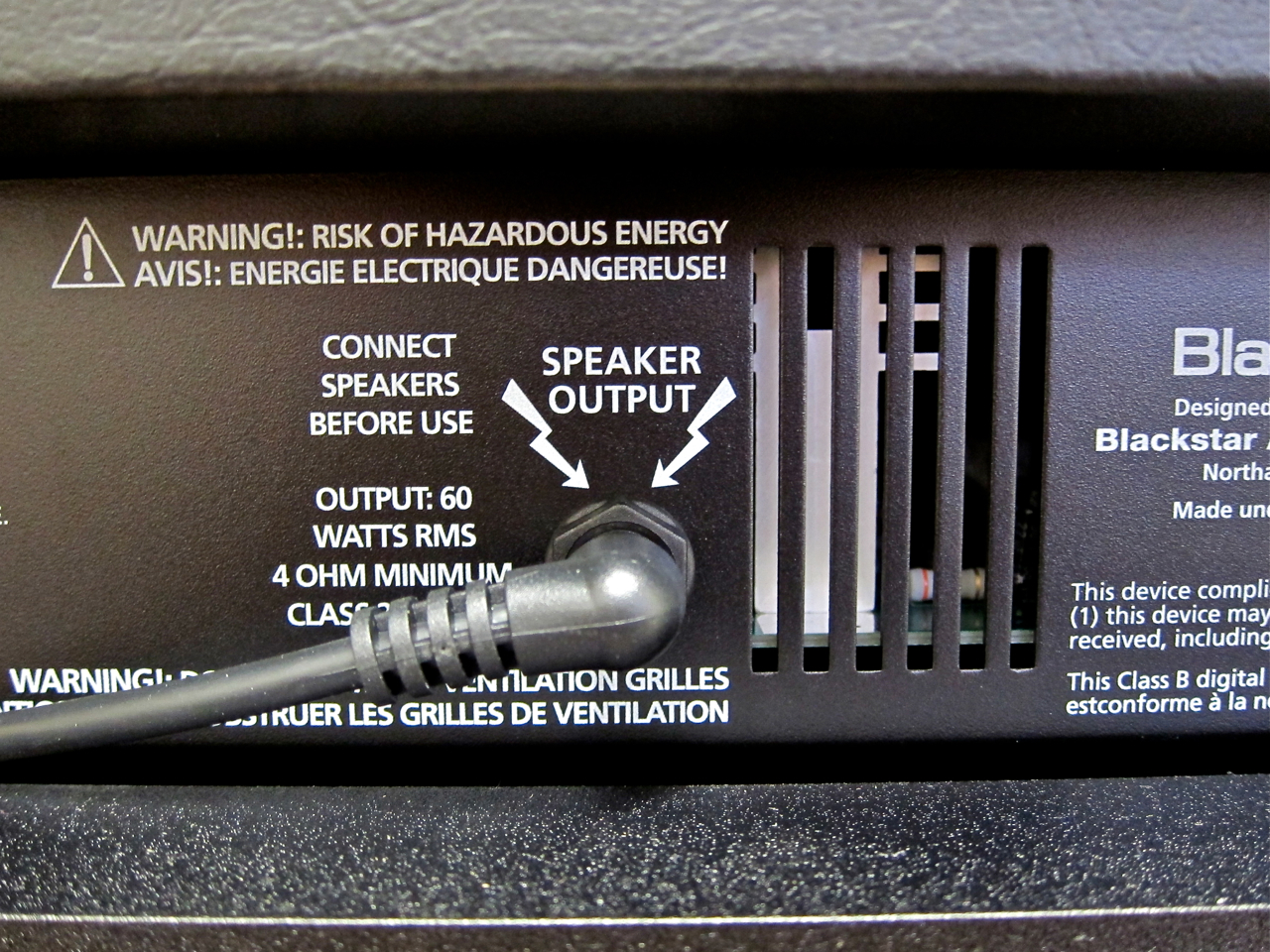
The combo sports a solitary speaker output.
****

Blackstar’s ID:FS-10 (current price in Finland: 72,60 €) is a four-button footswitch unit for use with ID-series amplifiers.
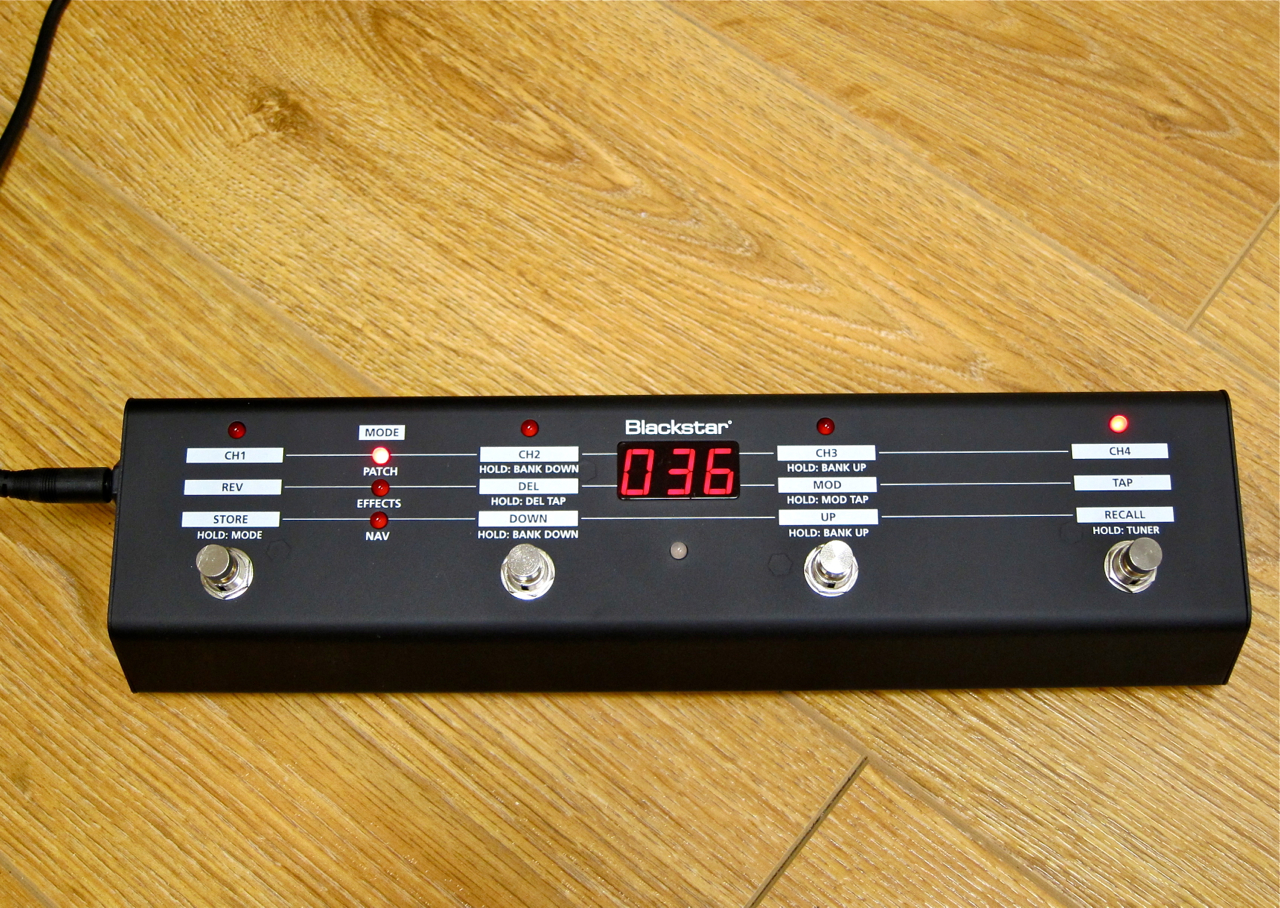
Using the footswitch unit will give you access to all of the combo’s 128 patches, and you’ll be able to switch effects on and off on-the-fly. Furthermore, using the built-in tuner is far easier with the footswitch unit.
****

In my view, the Blackstar ID:60TVP’s TVP-feature puts it head and shoulders above its direct competitors. True Valve Power clearly raises the bar for what a great modelling amp should sound like.
With TVP disengaged the Blackstar combo sounds quite good already, but it still lacks most of a good valve amp’s punch and multidimensional impact. The tones are like quality snapshots of the genuine article.
When you press the TVP-button the amp really springs to life and jumps into turbo mode. The tones become exciting and inspiring, and suddenly there’s that depth and the interaction between the player, his/her instrument and the amp that is missing from many lesser designs.
And yes, there are – sometimes dramatic – differences between the virtual power amp valves in their behaviour, which mimic their physical counterparts surprisingly faithfully. Thanks to the TVP-feature Blackstar’s ID-series manages to offer modelling guitar amps, which feel and sound ”real”, and which are imbued with a genuine valve amp’s sheen and punch.
Combining the different options brought to the mix via the Voice and TVP selectors, the fine EQ-section, the ISF-function, as well as the quality effects on offer leaves the player with a real wealth of fantastic guitar tones for final fine-tuning using the master section’s Resonance and Presence controls.
Due to their feature-packed nature, I’d recommend taking your time to get to know any ID-series amplifier thoroughly, so you can really take advantage of all the goodies on offer here.
Here are a few examples I recorded for you:
Blackstar ID:60TVP – Strat Clean delay reverb
Blackstar ID:60TVP – Hamer Clean tremolo delay reverb
Blackstar ID:60TVP – Strat Clean chorus reverb
Blackstar ID:60TVP – Strat Crunch flanger delay reverb
Blackstar ID:60TVP – Hamer Crunch flanger reverb
Blackstar ID:60TVP – Strat OD1 delay reverb
Blackstar ID:60TVP – Hamer OD1 reverb
Blackstar ID:60TVP – Strat OD2 delay reverb
Blackstar ID:60TVP – Hamer OD2 phaser delay reverb
****
In my opinion Blackstar have landed a bull’s eye with the ID:60TVP. The company have really put all their valve amp experience to good use, managing to come up with a revolutionary concept in digital modelling guitar amps.
****
Blackstar ID:60TVP
499 €
Finnish distributor: Musamaailma
****
Pros:
+ great value for money
+ weight
+ quality of amp models
+ TVP-feature
+ quality of effects
+ sound
+ stores 128 patches
Cons:
– footswitch unit optional
****
Testipenkissä: Yamaha THR5A, THR10C ja THR10X

****

Yamahan suosittu THR-harjoitusvahvistimien perhe on hiljattain saanut kolme uutta jäsentä:
Messinginhohtoinen THR5A on viisiwattinen pikkukombo akustiselle kitaralle, joka on varustettu mm. mikrofonimallinnuksilla.
Yamaha THR10 on saanut kaksi rinnakaismallia, joista musta THR10C on tarkoitettu 1960- ja 70-luvun Rock- ja Blues-klasikkosoundien ystäville, kun taas armeijanvihreän THR10X:n erikoisalaa ovat Hard Rock-, Metal- ja Thrash-genrejä.
****
Koko THR-malliston pääpiirteet ovat yhteisiä:

Komboilla on kestävä kotelo taitetusta metallista, sekä muovista. Vahvarien tyylitelty ulkonäkö on saanut selviä vaikutteita high end -audiolaitteista.
Kaikissa THR-komboissa on sisäinen viritysmittari.

Kaikissa THR:eissä on sisäänrakennettu usb-äänikortti. Komboja voi käyttää sekä kitararaitojen tietokonepohjaiseen äänittämiseen (Steinberg Cubase AI kuuluu hintaan) että muusiikin kuunteluun.
Yamahan THR Editor -softalla pystyy usb:n kautta myös ohjelmoimaan oman THR-kombonsa. Softalla pääsee käsiksi myös muutamaan ”piilotettuun”, sisäiseen parametriin (esimerkiksi kohinaportin asetuksiin), sekä THR5A:n tapauksessa myös lisäefekteihin.

Yamaha-komboja voi käyttää myös AA-paristoilla. THR5A:ssa paristolokero sijaitsee laitteen takaseinässä…

…kun taas THR10-malleissa se on upotettu vahvistimen pohjaan.
Laadukas virtalähde kuuluu luonnollisesti kaikissa malleissa pakettiin.
****

Vaikka Yamaha THR5A (199,99 €) on yksi maailman pienimmistä vahvistimista akustisille kitaroille, on kärpässarjalaiseen kuitenkin mahdutettu pitkä lista ominaisuuksia.

THR5A tarjoaa neljä virtuaalimikrofonia pietsomikrofonilla varustetuille akustisille. Näistä kolme on tarkoitettu käytettäviksi teräskielisten kanssa, ja viimeinen on erikoistunut nailonkielisiin.
Mic Type -valitsimen viimeinen pykälä – EG Clean – on puhtaan kitarakombon vahvistinmallinnus, jonka voi valita silloin, kun haluaa soittaa THR5A:n kautta sähkökitaraa.
Blend-säätimellä voi asettaa pietsosignaalin ja mikkimallinnuksen keskenäistä suhdetta.
Pikku-Yamahan EQ-osasto on yhdellä Tone-säätimellä hyvin pelkistetty, sen sijaan kombo tarjoaa peräti kuutta efektiä. Effect-lohkosta saa joko kompressorin tai choruksen tai sitten yhdistelmän näistä kahdesta. Delay/Reverb-osasto tarjoaa nimensä mukaisesti viivettä, kaikua tai viiveen ja kaiun komboefektiä.
Viiveajan voi säätää kätevästi Tap Tempo -napilla.
****

Vintage-puoleen kallistuva Yamaha THR10C (299,99 €) on hieman THR5A:ta isompi värkki, ja isoveljellä on myös enemmän ominaisuuksia tarjottavana.

THR10C:ssä on viisi vahvistinmallinnusta, joiden nimistä saa jo hyvän vihjeen, millaisia soundeja on odotettavissa.
Niiden lisäksi löytyy basistille myös kelpo bassovahvistinmalli, sekä yksi akustiselle kitaralle tarkoitettu asetus. Neutraali Flat-pykälä taas sopii hyvin esimerkiksi synan vahvistamiseen.
THR10C:n EQ-osasto on kolmialueinen, kun taas efektejä on tarjolla kahdeksan kappaletta. Effect-puolelta löytyy chorus, flanger, phaser ja tremolo, kun taas Delay/Reverb-lohkosta irtoavat nauhakaiun, jousikaiun ja hallikaiun vaihtoehtoja, kuten myös yksi viiveen ja kaiun yhdistelmä.
Kaikissa THR10-malleissa on viisi muistipaikkaa soittajan omia luomuksia varten.
Output-osasto tarjoaa peräti kaksi volume-säädintä – yksi kitarapuolelle ja toinen usb-väylältä (tai Aux-tulolta) tulevalle ulkoiselle signaalille.
****

Pieni, mutta pippurinen Yamaha THR10X (299,99 €) on optimoitu metallimiehille (ja tietysti -naisillekin) sopivaksi.

THR10X:n Amp-lohkosta löytyy peräti viisi erilaista high gain -särökanavaa, joista jokaisella on oma soundinsa, sekä erilaisia luonteita esimerkiksi basson tiukkuudessa tai kompressoinnissa.
Satunnaista heavy-balladihetkiä varten mukaan on mahdutettu myös yksi puhdas virtuaalivahvistin, sekä Bass- ja Flat-asetukset.
Myös THR10X:ssä on kolmialueinen taajuskorjain.
Efektiosastot ovat lähes samat kuin THR10C-kombossa, THR10X:n kirkkaampaa Delay-efektiä lukuunotamatta.
****

Mielestäni on erittäin hienoa, että Yamaha on suunnittellut koko THR-mallistonsa stereofoniseksi, koska nämä kombot toimivat tällä tavoin loistavasti myös lifestyle-lisälaitteina. Stereofonia tarjoaa kitarakäytössä etenkin laajempia kaikuja, mutta erittäin tärkeää se onkin musiikin toistossa.
Yamaha-konsernin pitkä kokemus laadukkaiden hifi-laitteiden valmistajana kuuluu selvästi. Soundi on mehevä, puhdas ja dynaaminen. Pieneltä THR5A-kombolta saa jo huomattavasti paremman musiikkinautinnon kuin tavallisista tietokonekaiuttimista, vaikka stereokuva ei ole niin leveä, eikä bassotoisto niin muhkea kuin THR10-sarjalaisilla. Isojen kombojen soundi taas on todella ällystättävä ja pyyhkii monet pikkustereot pöydältä. Kitaristille Yamahan THR-sarjalaiset korvaavat tyylikkästi mp3-soittimen vahvistinjärjestelmää, samalla kun toimivat laadukkaina kotivahvistimina.
****
THR5A
Pienen, elektroakustiselle tarkoitetun vahvistimen järkevyydestä voi toki olla montaa mieltä, kun kotona soitettaessa vahvistinta yleensä ei tarvita eikä haluta. Keikoissa taas Yamaha THR5A:n kokoinen laite on yleensä tehojensa vuoksi melko alakynnessä. Kombon olemassaolon tarkoitus on kenties katusoitossa.
Toisaalta täytyy myöntää, että pikku-Yamahan mikrofonimallinnukset toimivat yllättävän hienosti ja uskottavasti, joten on ehkä luontevinta käyttää THR5A-komboa elektroakustiselle erkoistuneena äänikorttina kotiäänityksissä tai projektistudiossa. Vahvarin mikrofonimallinnukset nimittäin onnistuvat kiitettävästi pietsosysteemin kuivuuden ja suorasukkaisuuden poistamisessa.
Myös pikkukombon efektiosasto toimii hyvin, ja tarjoaa akustiselle sopivimmat efektit.
Ääniesimerkit on äänitetty Zoom H1 -tallentimilla. Käytin Taylor Guitarsin 110CE-mallia:
Yamaha THR5A – Condenser + Compressor + Hall
Yamaha THR5A – Dynamic + Compressor + Hall
Yamaha THR5A – Tube + Compressor + Hall
****
THR10C
Mahtavaa meininkiä! En vaihtaisi Yamaha THR10C:n vahvistinmallinnuksista yhtäkään pois – jokainen vahvistintyyppi kuulostaa hyvältä ja vastaa ainakin omat odotukseni siihen.
Myös efektien laatu on hieno sekä modulaatioefektien kannalta että kaikujen ja viiveiden osilta. Jousikaiun mallinnuksessa on onnistettu mielestäni erittäin hyvin.
Kaikki kolme ääniesimerkkiä on soitettu Les Paul -tyylisellä kitaralla:
Yamaha THR10C – British Blues + Hall
Yamaha THR10C – Class A + Chorus + Tape Echo
Yamaha THR10C – Deluxe + Tremolo + Spring Reverb
****
THR10X
Pintapuoliset kriitikot väittävät, että kaikki Heavy- ja Metal-soundit kuulostavat samalta moottorisahalta.
Totuus on kuitenkin, että myös Hard Rockissa, Metal-genressä ja Thrashissa käytetään monia eri särösoundeja ja vivahteita. Etenkin keskialueen soinnissa ja basson tiukkuudessa on olemassa monta eri vaihtoehtoa.
Yamahan THR10X on tietääkseni maailman ainoa harjoitusvahvistin, joka on kokonaan omistettu raskaalle musiikille, ja se lunastaa kaikki lupauksensa avokätisesti!
Myös THR10X:n tapauksessa käytin LP-tyylistä kitaraa:
Yamaha THR10X – Brown II + Hall
Yamaha THR10X – Power II + Flanger + Delay
Yamaha THR10X – Southern Hi + Phaser + Delay
****

Uudet THR-mallit ovat mielestäni todella hyvä veto Yamahalta. Erikoismalleilla tyydytetään sellaisten kitaristien toiveita, jotka toivoivat tietyille genreille enemmän vaihtoehtoisia soundeja, kuin mihin yleishyödylliset perusmallit – THR5 ja THR10 – pystyvät, mutta ilman että THR-sarjan hyvin toimiva yleiskonsepti muuttuu.
****
Uudet Yamaha THR-mallit
• THR5A – 199,99 €
• THR10C ja THR10X – 299,99 €
Maahantuoja: F-Musiikki
****
Plussat (kaikki mallit):
+ vankka kotelo
+ usb-äänikortti
+ mallinnuksien laatu
+ efektien laatu
+ äänenlaatu musiikin toistossa
+ hinta-laatu-suhde
Testipenkissä: Tokai AJG-88

****

Etsitkö mielenkiintoista vaihtoehtoa ainaisille Stratocaster- ja Les Paul -johdannaisille? Ratkaisu pulmaasi voisi hyvinkin olla Tokai AJG-88 – firman valmiiksi modattu kunnianosoitus Fender Jazzmasterille.
****

Tokai AJG-88 (1.099 €) on pitkällä mensuurilla varustettu ruuvikaulainen sähkökitara.

Soitin on rakennettu vaahterakaulasta, sekä sulavanlinjaisesta, kolmesta vierekkäisestä palasta kootusta rungosta.
Sekä kaulaa että runkoa on viimeistelty vintage-tyylisesti kiiltävällä lakalla: kaulaan käytetään kirkaslakkaa, kun taas runko on saanut ylleen erittäin kauniin kolmivärisen liukuvärityksen.

Yksi selvä parannus esikuvaansa nähden on Tokain nykyaikainen kaularauta, jota voi mukavasti säätää suoraan lavan puolelta.

AJG-88 on varustettu Gotohin laatuosilla – virittimet ovat nykyaikaisia suljettuja malleja.

Palisanteriotelautaan on asennettu 22 medium jumbo -nauhaa. Tokain nauhatyö on ensiluokkaista.

AJG-88:ssa on käytössä perinteinen ruuviliitos, joka on toteutettu japanilaisella tarkkuudella.

Tähän asti Tokai AJG-88 olisi voinut kuvailla suoraksi Jazzmaster-kopioksi, mutta soittimen elektroniikka, mikrofonivarustus, sekä tallaratkaisu tekevät selväksi, että testikitara menee paljon nykyaikaisempaan suuntaan.

Alkuperäisessä Jazzmasterissa on edestä asennettu vibrato sekä keinuva talla, joka toimii oikeastaan vain vintage-tyylisellä kielisatsilla (012 tai isompi) tyydyttävästi. Nykysetillä Jazzmaster-tallan tallapalat usein liikkuvat ja sirisevät, kielet tahtovat hypätä ulos uristaan, ja seurauksena sustain kärsii.
Tokai AJG-88 -kitaralla sellaiset ongelmat eivät pääse edes syntymään, koska soitin on varustettu vankalla Gotoh-tallalla ja -kieltenpitimellä. Viritys pitää ja sustainea riittää tämän ansiosta, riippumatta musiikkigenrestä tai soittotyylistä. Gotohin laadukas parivaljakko kestää mukisematta myös matalat Metal-viritykset.

Jazzmasterilla oli P90-tyylisiä, häiriöherkkiä mikrofoneja, ja sen Jaguar-sisarmallilla parannettuja kapeita yksikelaisia. Molemmissa malleissa oli monimutkainen kytkentä erillisine säädinosastoineen vain kaulamikrofonille.
Epäsuosittujen alkuperäisten ratkaisujen sijaan, Tokai tarjoaa kaksi aitoa Seymour Duncan -humbuckeria – kaulassa Jazz-malli (SH-2N) ja tallan vieressä vintagea tuhdimpaa Jeff Beck -mikrofoni (SH-4).

Elektroniikka on virtaviivaistettu niin, että AJG-88:ssä on tarjolla kolmiasentoinen vipukytkin, sekä master volume ja tone -säätimet.
****

Jos et ole koskaan kokeillut Jazzmaster-tyylistä kitaraa, voin vain suositella Tokai AJG-88:n kokeilemista. Isokokoisen rungon ja erilaisen geometriansa ansiosta soittokokemus on positiivisella tavalla hieman erilainen. Virtaviivaista, 1950-luvun autoista vaikutteita saanutta soitinta on joka tapauksessa erittäin mukava soittaa sekä istuen että seisten.
Kaulaprofiiliksi on valittu mukava, vintage-tyylinen ja keskipaksu ”D”. Erinomaisen nauhatyön ansiosta kielet on voitu säätää erittäin matalaksi (matala E: 1,6 mm, korkea e: 1,0 mm), ilman että kielet rämisisivät häiritsevästi akustisessa soitossa.
Tokai AJG-88:n akustinen ääni on avoin, ja sillä on tiukka bassorekisteri, sekä hyvin viehättävä, hieman ontto keskirekisteri.
Puhtaaseen vahvstinkanavaan soitettuna saa Tokain kaulamikrofonilta kauniita täyteläisiä soundeja, joissa on kuitenkin myös riittävästi diskantin tuomaa hohtoa. Kuten monissa kahdella kaksikelaisilla varustetuissa kitaroissa, myös AJG-88:ssa vipukytkimen keskiasennosta saa soittimen parhaita puhtaita. Keskiasennossa sointi on avoin, ja sillä on kauniisti selkeyttä lisäävää atakkia. Vintagea hieman vahvempi tallahumbuckeri tarjoaa tehonsa lisäksi myös selvästi tiheämpää keskirekisteriä – enemmän kuin käyttökelpoinen clean-soundi, siis, vaikka se ei tarjoakaan F-tyylistä twängiä tai purevuutta.
Tämä Tokai todella tykkää säröstä, ja soittimen humbuckerit tarjoavat erittäin maukkaita Blues-, Rock- ja Metal-soundeja. Tällaista voimaa ja sustainea on tavallisesti turha hakea perinne-Jazzmasterista, mutta AJG-88 on heti valmis kovaan menoon.
Tokai AJG-88 on todella hieno laatukitara Japanista. Se on mielestäni erittäin toimiva sekoitus Fender-tyylisestä ulkonäöstä (ja soitettavuudesta) ja Gibson-tyylisestä soundista, ja se tarjoaa roimasti vastinetta rahelle.
****
Tokai AJG-88
1.099 €
Maahantuoja: Musamaailma
****
Plussat:
+ japanilainen laatusoitin
+ hinta
+ työnjälki
+ soitettavuus
+ Seymour Duncan -mikrofonit
+ soundi
****

Review: Rotosound 1960s Reissue Fuzz

****

The Rotosound 1960s Reissue Fuzz is a reissue of a legendary effect pedal which originally never made it to full-blown production. The great sound of the few existing pre-production prototypes, their scarcity, and the fact that this pedal has been spotted repeatedly on a certain Mr Jimmy Page’s equipment list have made this fuzz the stuff of legends.
At last year’s Musikmesse in Frankfurt Rotosound announced a limited run of 2,000 Fuzz reissues, assembled by hand at the company’s UK plant.

Rotosound’s Fuzz (current price in Finland 349 €) is an old-school guitar effect – meaning it’s huge and built like a tank.

The large casing makes it possible to place the controls well out of your stomping foot’s way.
The major drawback of course is that this Fuzz takes up considerable space on your pedalboard.

One in, one out – no need for anything more.

When Rotosound say ”1960s Reissue” they mean it – the pedal runs on batteries only.
So, you’d better be equipped with a spare 9 V block at your next gig, and better take along the correct screwdriver also!

The sticker on the bottom gives you each pedal’s number in the sequence of 2,000. Quality is guaranteed by the Rotosound chairman himself, Mr Jason How.

Everything is lined up neat and tidy – that’s boutique-level workmanship for you!

This is what Fuzz-anoraks fantasize about: Original NOS germanium transistors are at work here!
Old germanium transistors are famed for their fat clipping tone and musically organic behaviour, sounding less bland and brutal than newer silicone-based designs.
****

The fuzz is the forefather of all overdrive and distortion pedals, and one of the first ever effects available for guitar.
Modern overdrive and distortion effects try to mimic the natural distortion and break-up of valve amplifiers, with a gradual onset, nice harmonics and a good helping of compression.
A fuzz pedal is a much rawer affair, more like the Neanderthal of distortion. A fuzz uses the hard clipping of an overloading transistor to mess up your guitar’s tone. The end result is much more grating and less compromising, more all-or-nothing. A good fuzz has lots of hair on its chest, and it snarls and bites with a good dose of aggression.
In my view, the Rotosound Fuzz clearly belongs in the top echelons of Fuzzdom. Its tone is pleasingly dense, and there’s a nice fat bottom to go with its uncompromising top end.
For a fuzz pedal the Rotosound reacts surprisingly nicely to guitar volume changes. If you keep the Fuzz-control at a moderate level, you will be able to turn down to almost completely clean from your guitar. The Rotosound 1960s Reissue is also reassuringly low on hiss and extraneous noise.
Here are two sound examples:
Rotosound Fuzz – Telecaster (with volume control)
For me the Rotosound 1960s Reissue Fuzz is one of the best fuzzes I’ve ever come across. Yes, its price may be steep, but your money will buy you an instant collectible that sounds even better than it looks. For a fuzz the Rotosound is surprisingly rich on nuances and tonal variations.
****
Rotosound 1960s Reissue Fuzz
349 €
Finnish distributor: F-Musiikki
****
Pros:
+ hand-assembled
+ instant collectible
+ sturdy build
+ accurate reissue
+ NOS germanium transistors
+ sound
Cons:
– not cheap
– size
– batteries-only
 Kitarablogi.com – Finland's premier Guitar and Bass blog