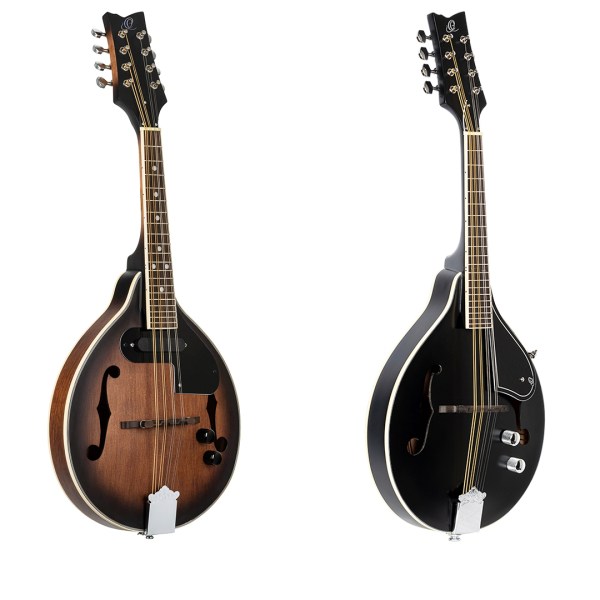
Here’s a version of the Irish folk tune ”Lough Erin Shore” featuring two Ortega mandolins – the RMAE-30 (with built-in magnetic pickup) and the RMAE-40 (with built-in piezo pickup). • Rhythm mandolins – Ortega RMAE-30 (left channel), Ortega RMAE-40 (right channel) • Lead parts as pointed out in the video The rhythm mandolin parts were recorded with an AKG C3000 condenser mic, while I used a Shure SM7B for the lead parts. Both mics were plugged into a Cranborne Audio Camden EC2 preamp.
Here’s a short version of the REM classic ”Losing My Religion” featuring two Ortega mandolins – the RMAE-30 (with built-in magnetic pickup) and the RMAE-40 (with built-in piezo pickup). • Rhythm mandolins – Ortega RMAE-30 (left channel), Ortega RMAE-40 (right channel) • Lead parts as pointed out in the video All mandolin tracks were recorded with the instruments plugged straight into a Cranborne Audio Camden EC2 preamp.
Alkuperäinen, laajempi suomenkielinen juttu on luettavissa TÄÄLTÄ.
Thanks to technological progress and cheap Asian labour, you can already get a very decent Les Paul Standard copy these days for somewhere between 500 and 700 euros.
Here are four of those guitars presented in alphabetical order. I tried to obtain one of the new Epiphone-models from their Finnish distributor for this round-up, but to no avail.
****
GrassRoots G-LP-60S Honey Sunburst
• Current price in Finland: 559, – (incl. gig bag)
• Distributor: Musamaailma
GrassRoots is a brand in the ESP Guitars family, and concentrates on traditional electric guitars and basses. Even though the LP-60S is the least expensive guitar in this round-up, it comes in its own, high-quality gig bag. The finish on our review sample is called Honey Sunburst.
The G-LP-60S’ body is made from four side-by-side pieces of mahogany, with a top crafted from maple. The flame maple veneer on the curved top looks gorgeous.
The set mahogany neck is one piece of mahogany (!), except for the top half of the headstock. The bound fretboard has been made from beautiful pau ferro, while the LP-60S’ top nut is genuine bovine bone. The fretwork looks very decent.
The machine heads are nice copies of vintage Kluson tuners. The GrassRoots’ bridge is a modernised version of a Tune-o-matic, sporting six separate small metal clips to keep the bridge saddles in place.
The LP-60S’ pickups are GrassRoots’ own GH-1G humbuckers with metal covers. Looking beneath the electronics cavity covers, we found a closed three-way toggle switch, as well as four small pots and very clean soldering.
The first thing I noticed when I picked up the GrassRoots guitar is how light it is. I don’t know if GrassRoots uses any type of weight relief on the LP-60S, but the review sample’s weight clocks in at only 3.3 kgs.
The neck profile is a very ”fast” version of Gibson’s famous 60s neck, meaning a nicely rounded, but relatively slim C-shape. Musamaailma’s in-house guitar technician has expertly set up the review guitar, resulting in a buzz-free action of only 1.6 mm (bass-E) and 1.5 mm (treble-e).
I’d describe the GrassRoots humbuckers as vintage-powered, meaning they give a lot of scope for dynamics and a nice, rounded top end response. The neck ’bucker is flutey, while the bridge pickup offers ample kick and mid-range push. The GrassRoots G-LP-60S is a versatile LP Standard style guitar, which sounds great, offers a comfortably slender neck profile, and which doesn’t weigh a tonne.
****
Green LP STD Lemon Drop
• Current price in Finland: 498, –
• Distributor: Nordsound
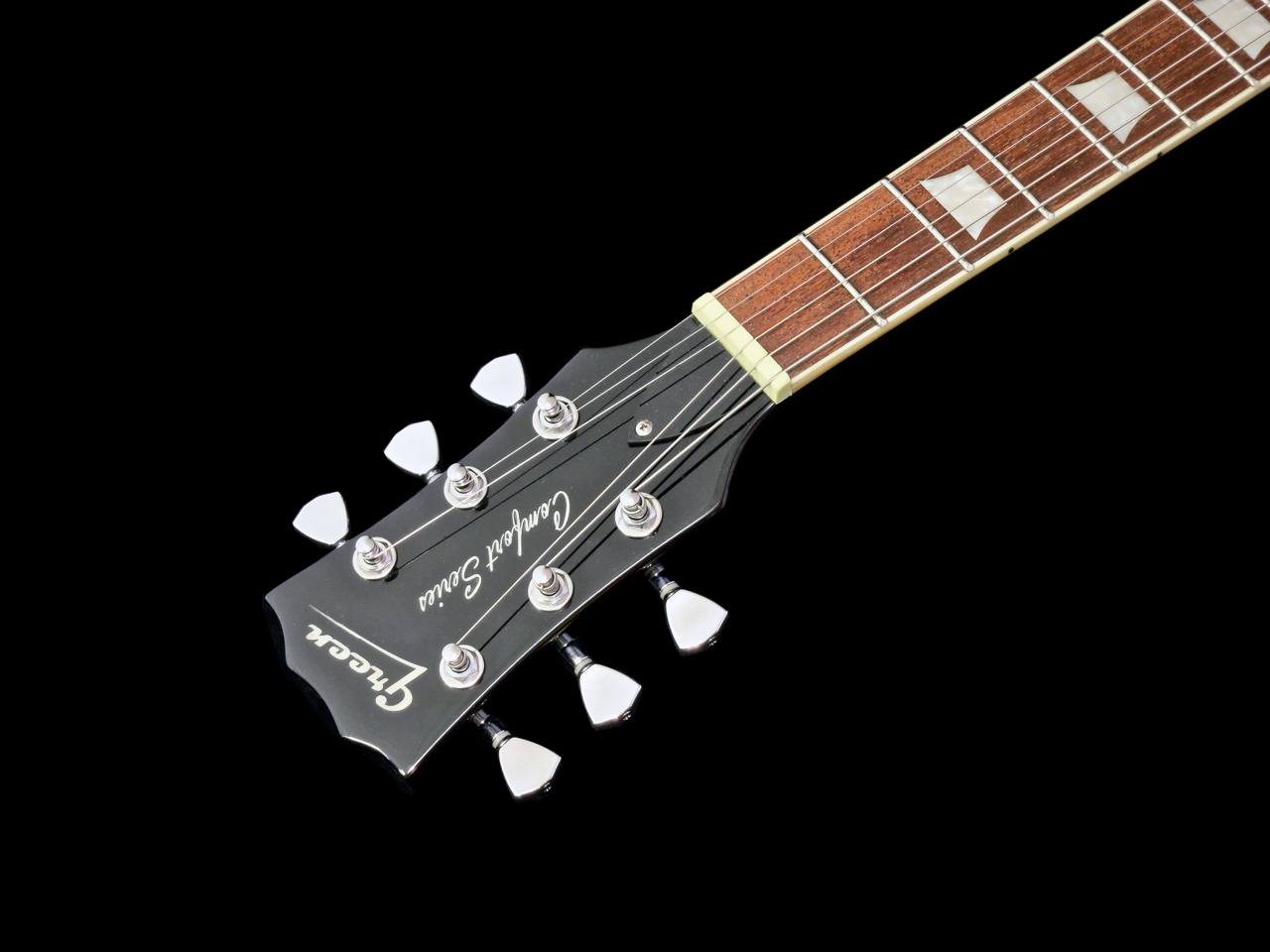
Green Guitars is a Swedish brand with Far Eastern production to keep the prices musician-friendly. Green’s LP STD model comes in a fetching Lemon Drop finish, as well as sporting a few features that differ from standard vintage-fare.
The Green’s body uses three pieces of very lively mahogany. The arched maple top has been spruced up with a tiger striped flame maple veneer. Green’s LP STD sports a deeper cutaway than its famous forebear, resulting in a more pointed horn.
The set-in neck is carved out of three side-by-side strips of mahogany, which – in all probability – should add a little stiffness to the neck. The neck wrist is protected from headstock breaks by a volute.
The Green features a set of modern tuning machines, as well as an up-to-date version of the Tune-o-matic bridge.
The bound rosewood fretboard comes with 22 well-installed medium-size frets. The nut is made from a cream coloured plastic.
Green’s LP STAD model sports a pair of open, zebra-coloured humbuckers. The electronics comprise a closed three-way toggle, as well as four small diameter pots. The soldering looks nice and clean.
Green’s neck profile is a smidgen bigger than that of the GrassRoots – I’d say the profile is somewhere halfway between a ’59 and a ’60 Gibson. The set-up on our test sample was very good, with the action clocking in at 1.7 mm (bass-E) and 1.5 mm (treble-e), without any fret buzz.
I’d describe the Green’s humbuckers as ”hot vintage”. This guitar has a big sound with a nice, fresh dose of treble. If you’re into Slash, this is the guitar I’d try out first.
****
Tokai Guitars ALS-62 Honey Burst
• Current price in Finland: 659, –
• Distributor: Tokai Guitars Nordic/Musamaailma
Tokai Guitars must be the most famous ”copy brand” in the world, whose instruments caused Fender and Gibson to do something about their sagging quality control back in the 1980s.
In addition to their top-of-the-line Japanese LS-models, Tokai also offers more affordable Chinese versions under the ALS-banner. The flame maple veneer – finished in a fetching Honey Burst – looks stunning, deep and chatoyant.
The Tokai ALS-62’s body uses four pieces of mahogany and a veneered arched maple top. In this series Tokai uses hard rock maple for their guitar necks – in this case we’re talking about a three-piece affair of neck, headstock, and neck heel.
Tokai uses jatoba as the material for its bound fretboard. We find 22 expertly-finished, medium-sized frets, as well as a genuine bone nut. The bridge is a fine version of the vintage Tune-o-matic, with a single metal bracket keeping the saddles in place. The bridge and stopbar ferrules have been sunk into the top wood for a very clean look.
The Tokai ALS-62 sports a pair of covered LSC-F-humbuckers. The electronics comprise a closed three-way toggle switch, plus four small pots. The soldering is very clean.
Tokai’s neck profile is my personal favourite, I must confess. It’s a rounded, not-too-fat 1959-style neck profile, offering your fretting had a good amount of ”meat” without too much bulk. The action is buzz-free, while being comfortably low at 1.6 mm (bass-E) and 1.4 mm (treble-e).
The Tokai ALS-62 sounds like ”the real thing”, leaving nothing to be desired. The neck pickup is creamy and flutey, while the bridge unit adds the right amount of grit to proceedings. The Tommi’s output is vintage-to-medium. This is a gorgeous guitar with a versatile sound to boot.
****
Vintage V100PGM Lemon Drop
• Current price in Finland: 576, –
• Distributor: Nordsound
Vintage Brand’s V100PGM Lemon Drop is an ”unofficial” signature guitar, offering you an affordable shot at the legendary LP played by three legends in a row – Peter Green, Gary Moore, and Kirk Hammett. The original guitar’s burst has long faded into an ”unburst” lemon drop shade, which is why the Vintage V100PGM Lemon Drop was first only available in that shade. Our test sample, on the other had, is Vintage’s view of what the guitar must have looked like brand new. So, here we have a beautiful cherry sunburst-coloured guitar, that is called ”Lemon Burst”, go figure.
Trev Wilkinson, who has designed this guitar for Vintage Brand, has added a few nifty updates to prevent the V100PGM from being a straight copy instrument:
The V100PGM’s mahogany body (three pieces) has a rounder bass-side shoulder and a much deeper cutaway that Gibson’s original. The top’s flame maple veneer sports extremely pretty and deep figuring.
The guitar’s neck – crafted from three side-by-side pieces of mahogany – is glued into the body by means of an asymmetrical neck joint, making excursions to the dusty end more comfortable.
The Vintage’s fingerboard is made from a trademarked material, called ”Lignum Rosa”, which translates from Latin as ”wood of the rose”. I can’t tell you what it actually is, but it looks and feels great, and it is home to 22 medium-sized, well-dressed frets. The top nut is Graph Tech’s NuBone material, which is a man-made alternative to ivory.
Surprisingly, the V100PGM comes with a set of Grover Deluxe vintage-type machine heads, instead of the Wilkinsons I’d have expected. The bridge on this Vintage is a Wilkinson-version of a modern Tune-o-matic.
The V100PGM comes with a pair of Wilkinson WVC-humbuckers. Like on the original, the neck unit has been installed ”upside down”, meaning with the adjustable pole screws facing the bridge, and with the wires hooked up in reverse, too. Gary Moore swapped the bridge pickup’s controls from the original bell-type to the early-Sixties ”reflectors”, because he wanted to be able to find the correct control without having to look at the guitar. This has been copied on the Vintage as well.
The V100PGM uses a closed three-way toggle switch and four small diameter pots. The soldering looks very decent.
The Vintage V100PGM comes with a slightly flatter version of a Gibson 60s C-neck, so we’re talking about a very ”fast” neck feel. The review guitars comfortable set-up gives you plenty of acoustic dynamic range at 1.9 mm (bass-E) and 1.7 mm (treble-e).
Thanks to their moderate output the Wilkinson-humbuckers offer plenty of dynamics and openness, with a nice, bell-like treble response. The neck pickup is warm, while the bridge unit sounds brighter.
On the Vintage V100PGM the three-way switch’s middle position opens the door to a wide spectrum of different tones, which differ from the usual LP middle-position sounds. With both volume controls turned up fully, you get a very wiry and bright sound, due to the out-of-phase pickups. Turning one of the volume controls down by a little, gradually adds bottom end and mid-range width. Depending on which volume knob is turned down, the resulting sounds will differ somewhat. Experimentation is allowed and will be rewarded with many different shadings. I think it’s fantastic that Vintage Brand offers somethign a bit out of the ordinary at this affordable price point.
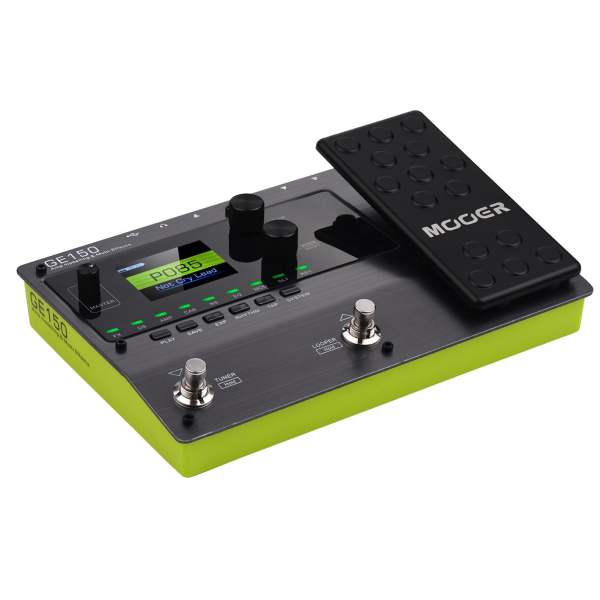
Here’s a short demo song featuring the MOOER GE150 multi-effect and amp modeller. The GE150 was recorded direct to a Universal Audio Volt2 sound card. • Rhythm guitars: Epiphone Casino, Fame SE TL Deluxe Amber & Harley Benton DC-60 Junior • Lead guitar: Harley Benton DC-60 Junior **** Find more info about the MOOER GE150 here: https://www.musamaailma.fi/fi/mooer-ge150-multiefektipedaali