Review: Blackstar HT Metal 5 + HT Metal 60

Blackstar HT Metal 60 – logo

Blackstar Amplification’s very popular HT Venue-series has recently been joined by the company’s brand-new HT Metal-range, which offers you valve amplifiers tailored specifically to the needs of Metal-guitarists.

Kitarablogi has received the compact five Watt HT Metal 5-combo – meant for use at home, for warm-up and in the studio – and the chunky three-channel, 60 Watt HT Metal 60 -combo for this review.

****
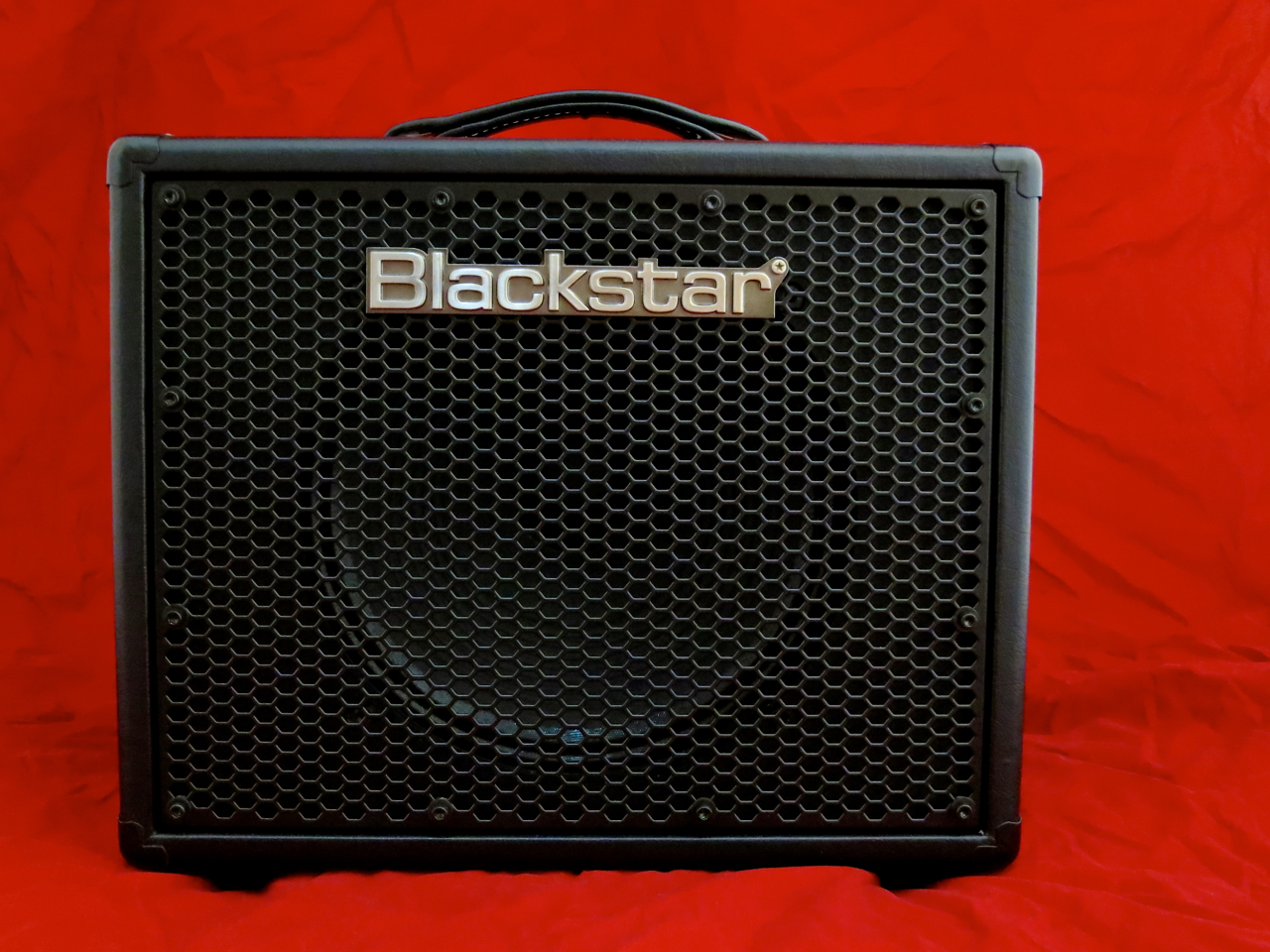
Blackstar HT Metal 5 – full front

The Blackstar HT Metal 5 (street price around 450 €) is based on the company’s extremely successful HT-5R-valve combo, with the new amp sharing the older model’s main architecture and push-pull power amp.

The HT Metal 5 uses two different valves to amplify your guitar signal – one is an ECC83 (aka 12AX7), the other a model 12BH7.

Instead of a woven speaker cloth – like on the HT-5R – the HT Metal 5-combo sports a very sturdy metal grille.
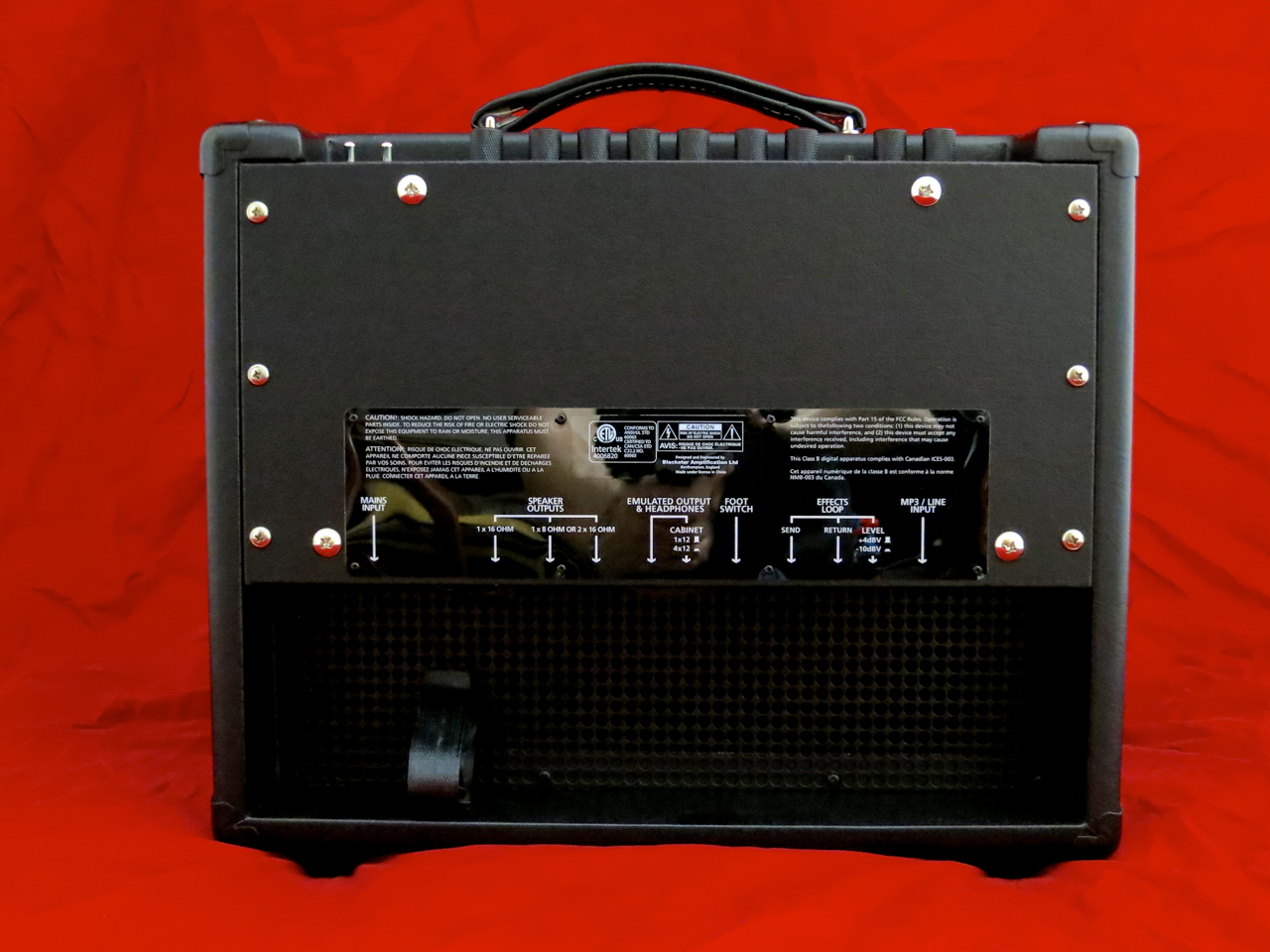
Blackstar HT Metal 5 – full back

The cabinet is a half-closed affair. The lower third of the back is covered by a metal grille, through which you can spot this Blackstar’s Chinese 12-inch speaker.

This compact combo weighs only 14 kilos, making it very easy to lift and carry around by its single top handle.

Blackstar HT Metal 5 – control panel

The Metal 5’s control panel looks like this (click for a larger picture):

This valve combo features two channels, called Clean and Overdrive. The Clean channel is equipped with a simple tone control, while Overdrive comes with a full 3-band EQ, as well as Blackstar’s patented ISF-control. Turning the ISF-control (ISF stands for Infinite Shape Feature) you can go from a USA-type response (with a loudness-style sound) all the way to what is known as a British tone (with its fatter mid-range).

The HT Metal 5 also comes equipped with a very nice digital reverb.
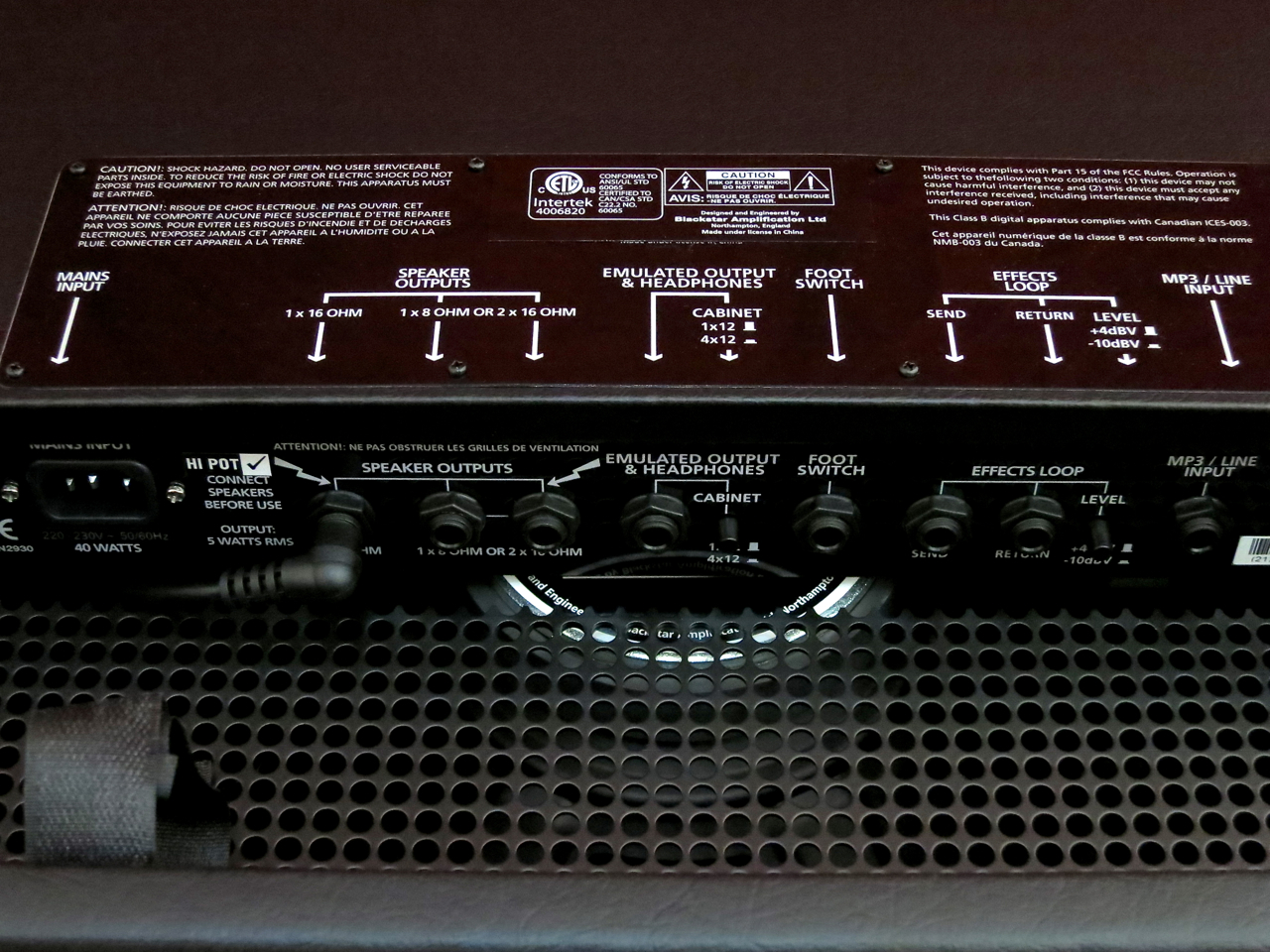
Blackstar HT Metal 5 – back panel

It is rather surprising to find so many different connectors and pushbuttons on such a small amp:

On the left, you will find the combo’s three speaker outputs.

Next up is Blackstar’s speaker-emulated output. A switch lets you choose between a virtual combo and an emulated stack sound. This output also works with headphones, and when the combo runs on standby.

The effects loop on the Metal 5 can be switched from a nominal signal level of -10 dB to +4 dB.

The line input on the far right allows you to connect your mp3-player to the combo.

Blackstar HT Metal 5 – footswitch

A footswitch for channel switching is included in the price of Blackstar HT Metal 5!

****

Blackstar HT Metal 60 – full front

Blackstar’s HT Metal 60 (street price around 1.000 €) is a three-channel powerhouse meant for live use.

This combo is build around a pair of ECC83-preamp valves and two 6L6s in the power amp.

The HT Metal 60 is equipped with two 12-inch Celestion speakers.
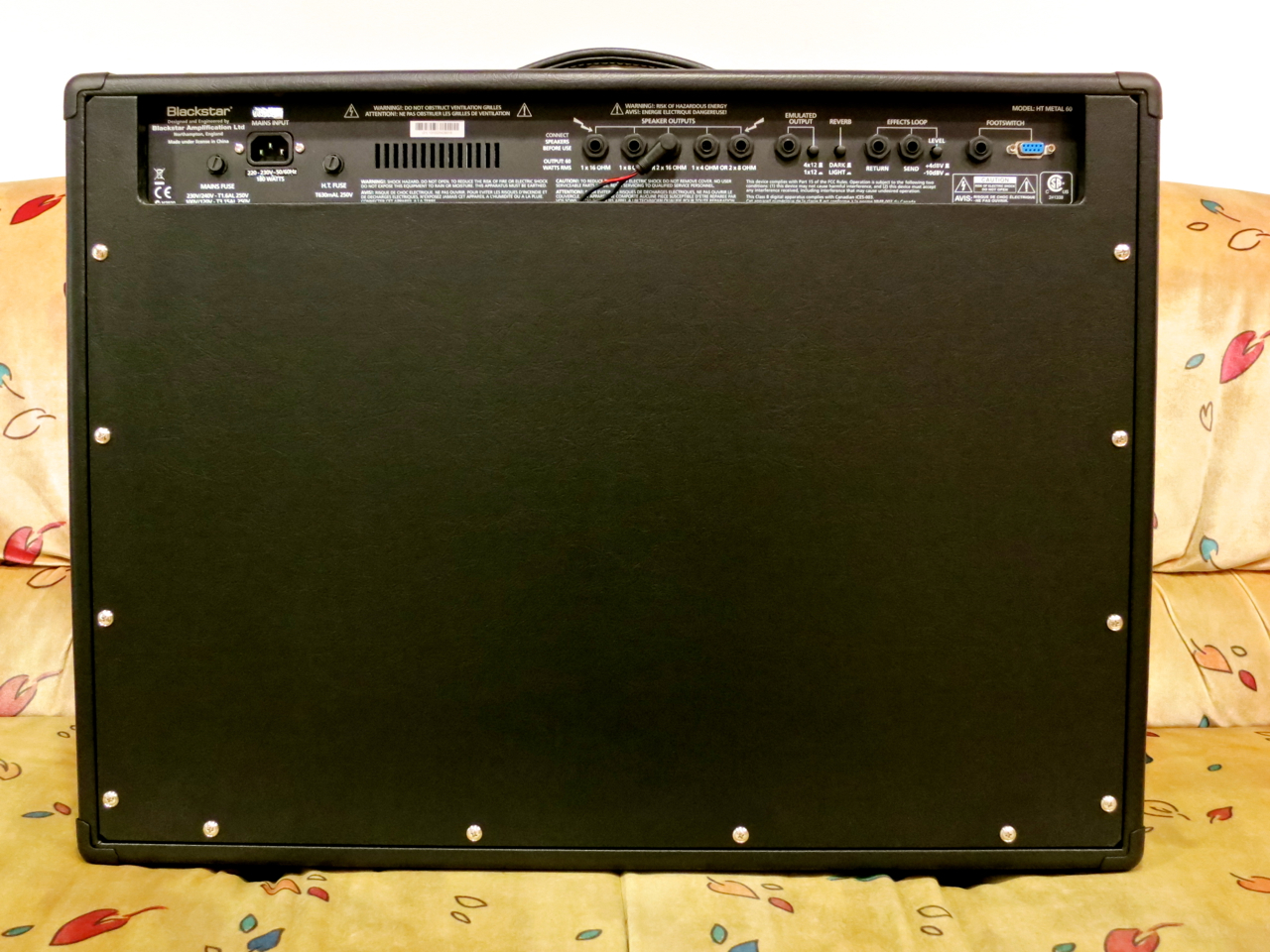
Blackstar HT Metal 60 – full back

The closed-back cabinet aims at giving this amp a stack-style tonality and punch.

Blackstar HT Metal 60 – side handle

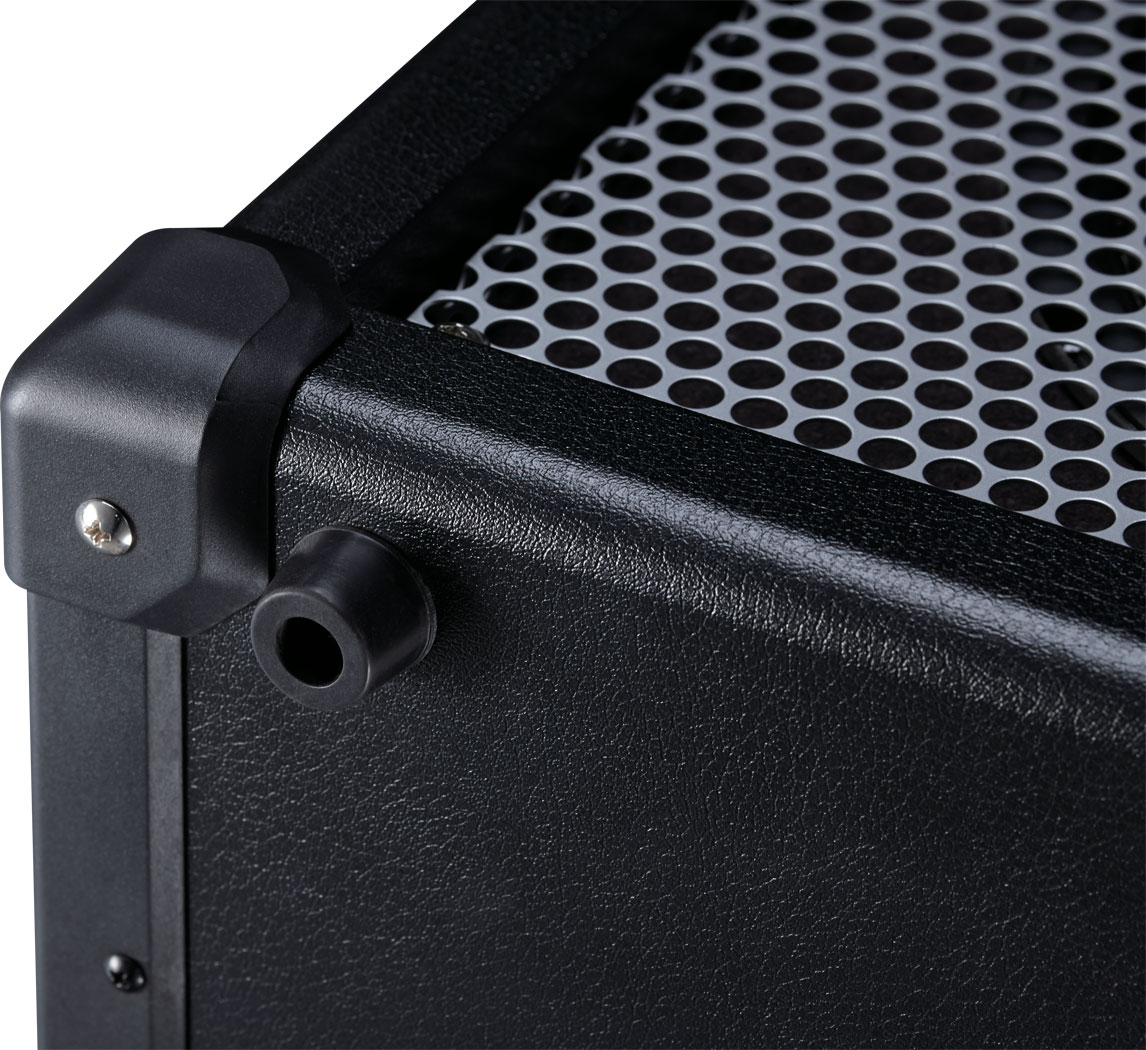
Because of the considerable weight (30 kg) of a large tube combo, such as this, the HT Metal 60 has been equipped with two metal handles, installed into the amp’s sides.
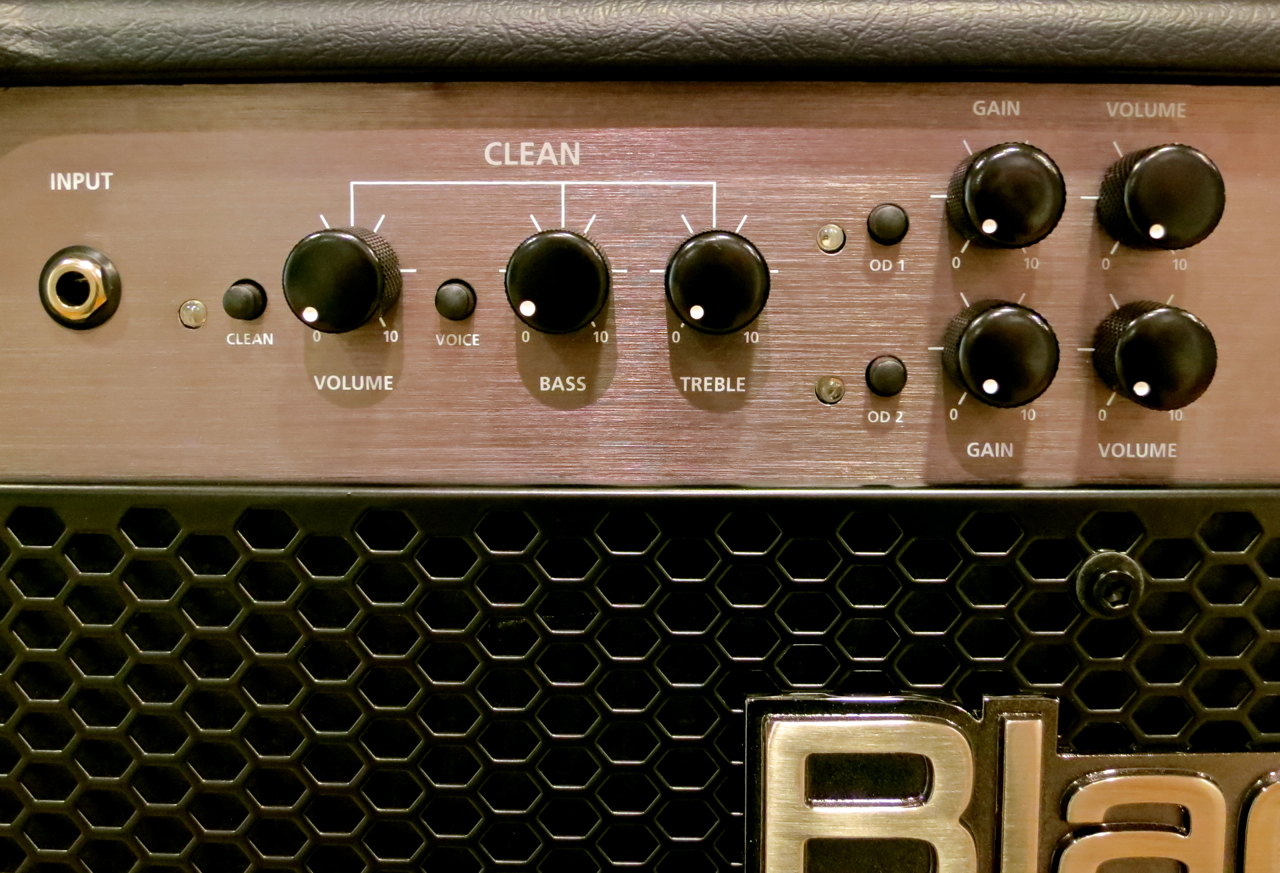
Blackstar HT Metal 60 – clean channel

You can choose between two different tonal characters in this Blackstar’s Clean channel, using the Voice-switch: Boutique Clean puts the amp in Class A mode, giving you a very dynamic response, but with less clean headroom than the voicing called Modern Clean.

The channel’s Bass- and Treble-controls make it very easy to find your sound.
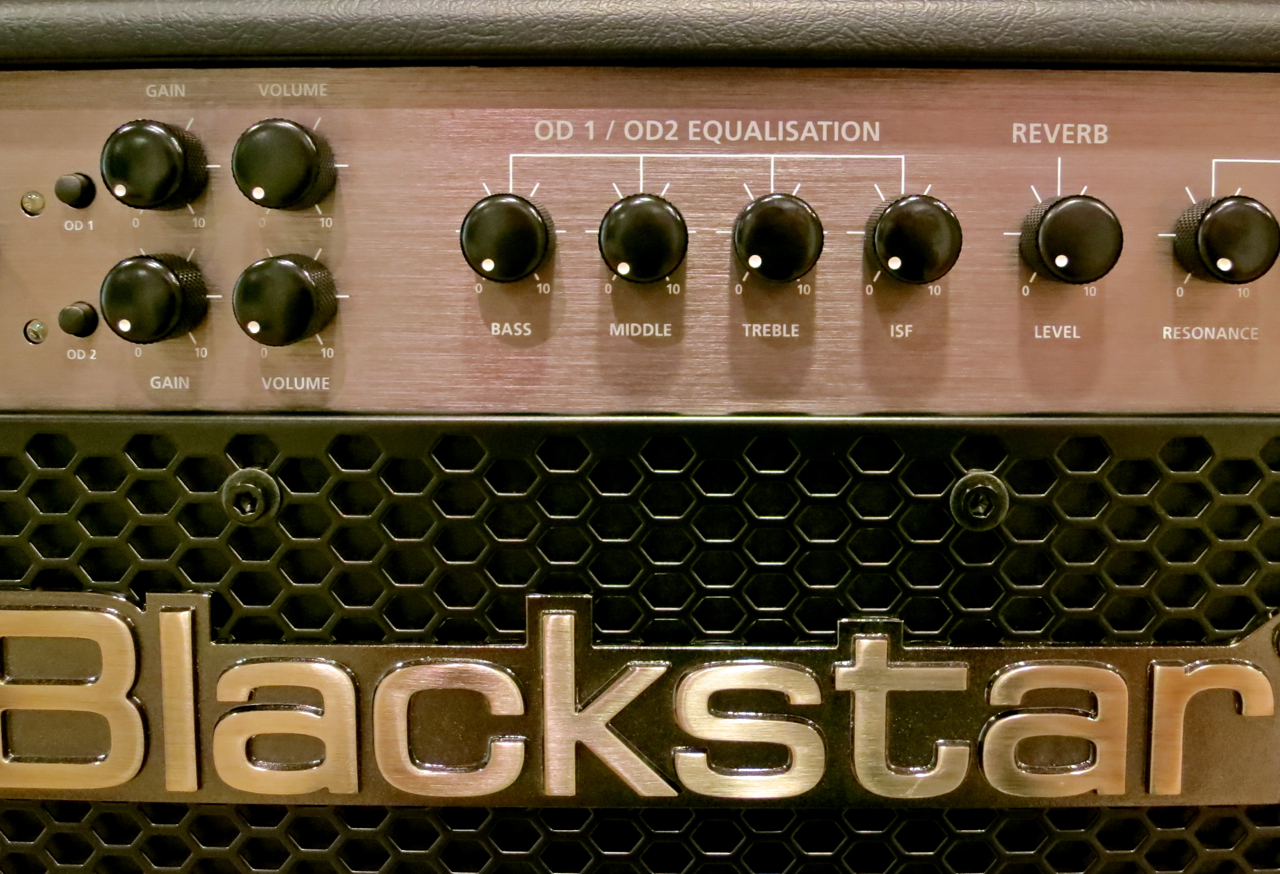
Blackstar HT Metal 60 – OD1 + OD2

The HT Metal 60 offers you two distinct overdrive channels – named OD1 and OD2 – which share the three-band-plus-ISF equalisation section.

OD1 has a tad less gain than OD2. Thanks to its slightly less compressed sound, as well as its drier bottom end, OD1 is the ideal choice for chunky and precise rhythm parts.

OD2’s massive gain reserves are combined with very creamy compression, but there’s plenty of bite here, too, to make sure your lead lines cut through with authority.

Blackstar HT Metal 60 – master section

The master section comprises controls for the HT Metal 60’s digital reverb, overall resonance and presence, as well as master volume.

Blackstar HT Metal 60 – back panel 1

You can connect the HT Metal 60 to virtually any other speaker cabinet, thanks to the five speaker outputs found on the back panel.

In addition to Blackstar’s well-designed speaker-emulated output, and the combo’s effects loop, there’s also a switch to access two different types of reverb (labelled ”light” and ”dark”).

Blackstar HT Metal 60 – back panel 2

The blue D-SUB-port is meant for the combo’s chunky FS-7-board (included, see below), that handles channel-switching duties and allows you to turn off the reverb on the fly.

The regular Footswitch-jack allows you to connect an additional footswitch to activate the combo’s internal boost. This boost is factory preset, and its amount cannot be changed by the user.

Blackstar HT Metal 60 – footswitch

****

Blackstar HT Metal 5 – opener

The Clean-channel on the Blackstar HT Metal 5 takes you from totally clean all the way to a mild Blues-crunch.

There’s more than enough volume on tap for living room and studio use. There’s a limited amount of clean headroom, though, which means that you will have to turn down the volume pot on a humbucker-equipped guitar.

This clip is played on a Hamer USA Studio Custom into the Blackstar’s Clean-channel, and recorded using a Shure SM57:

Here’s what the same clip sounds like recorded direct via the speaker-emulated output:

The HT Metal 5 dishes out delicious overdriven and distorted tones by the bucket load. Blackstar’s 12-inch speaker sounds fat and muscular, and makes it hard to believe that you’re listening to such a compact little combo!

Turning the ISF-control up full gives you a great Marshall-style tone, regardless of whether you’re using a mic…

…or the built in DI-output.

With ISF turned to zero the sound leans heavily in a Rectifier-type direction (first the SM57-clip, then the speaker-emulated output):

****
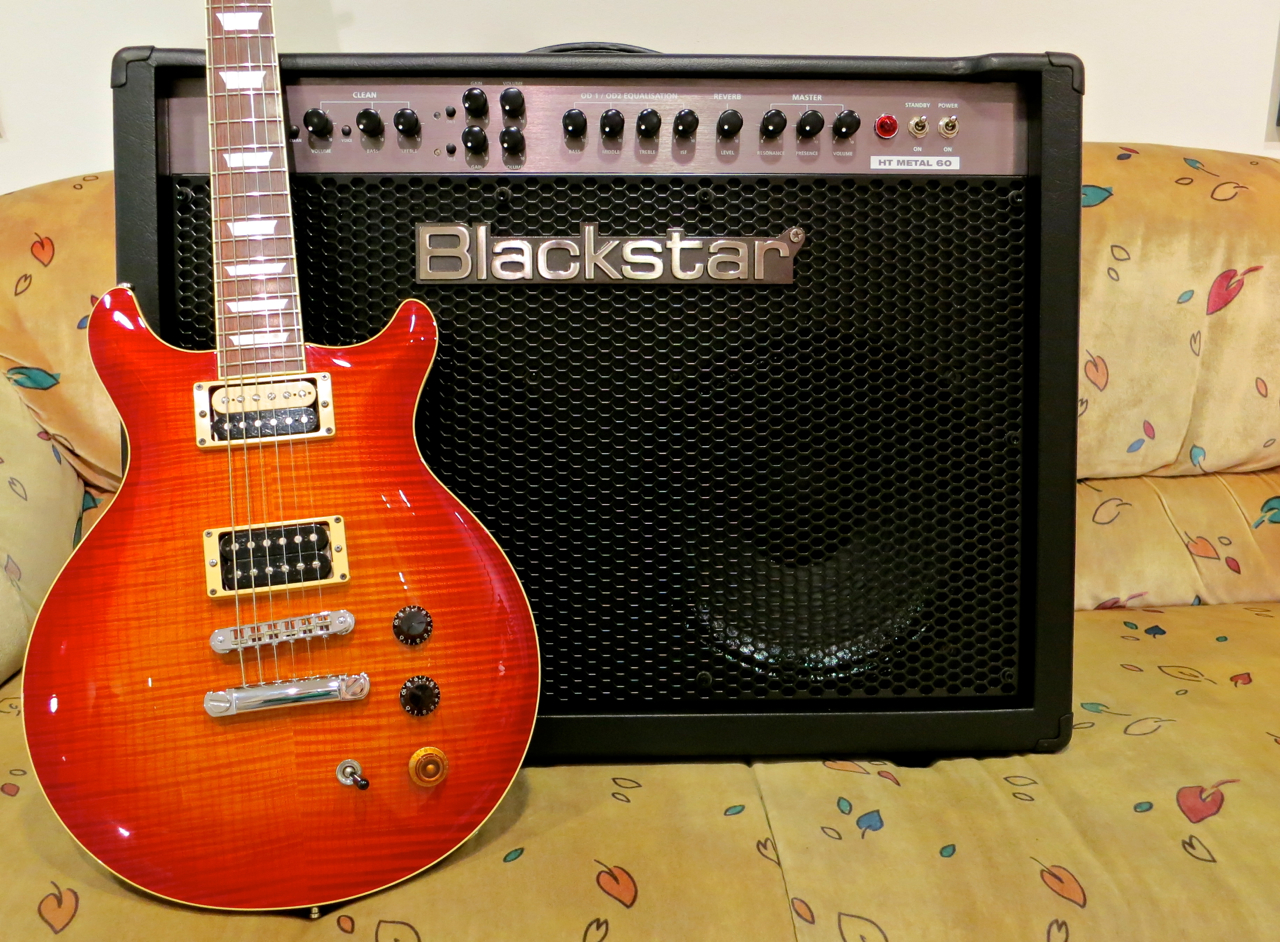
Blackstar HT Metal 60 – opener

Blackstar’s HT Metal 60 naturally offers a much wider tonal palette than its small brother.

You can get two different types of clean sounds, with Boutique Clean being the rounder alternative of the two.

SM57:

Line output:

Modern Clean comes across as brighter and somewhat more compact (first the Shure SM57 -clip, then the speaker emulated output):

Here’s an example of the OD1-channel with the guitar tuned to drop-D.

First the ”British” version (ISF=10):

Then its ”US” counterpart (ISF=0):

With the exact same EQ settings, OD2 has more bite.

ISF=10 (”UK”):

ISF=0 (”USA”):

****

Blackstar-logo 2

In my view, Blackstar’s new HT Metal-series is a fantastic addition to the company’s line-up, which takes the needs of modern Metal-guitarists into full account.

The HT Metal 5’s clean sound is very decent, even if the available headroom isn’t on a par with some larger amps. The distortion-channel is really where it’s all at with this compact combo – you will be floored by the big and fearless nature of the Metal 5’s mighty roar!

The Blackstar HT Metal 60 is the workingman’s Metal-combo. This is a professional grade combo offering both very tasty clean tones, as well as bone-crushingly powerful overdrive and distortion with spades of creamy compression. In all but the largest of venues this combo’s volume levels will surely be more than sufficient, even without adding any external cabinets.

****

Blackstar HT Metal 5 & HT Metal 60

HT Metal 5 – street price ca 450 €

HT Metal 60 – street price ca 1.000 €

Finnish distributor: Musamaailma

****

Blackstar HT Metal 5

Pros:

+ workmanship and finish

+ separate tone-control for Clean-channel

+ OD-channel’s 3-band EQ and ISF

+ big tone

+ speaker-emulated DI-output

+ footswitch inluded

Cons:

– Clean-channel’s restricted headroom

****

Blackstar HT Metal 60

Pros:

+ workmanship and finish

+ metal grips

+ Clean-channel’s Voice-feature

+ Clean-channel has own EQ-section

+ OD-channels’ 3-band EQ and ISF

+ big tone

+ speaker-emulated DI-output

+ FS-7-board included

Review: Bluetone Amps Princeton Reverb

****

Bluetone Princeton Reverb – opener

Finnish boutique amp company Bluetone is yet to become a household word. Nevertheless, Bluetone’s dynamic duo of Harry Kneckt and Matti Vauhkonen have already garnered lots of praise with their all-valve designs, and the word keeps on spreading steadily.

Custom Sounds in Helsinki have recently started to stock Bluetone-amplifiers, and they were kind enough to supply Kitarablogi with a Bluetone Princeton Reverb combo for testing.

****

Bluetone Princeton Reverb – full front

The Bluetone Princeton Reverb (current price in Finland approx. 1,600 €) is Bluetone’s handwired – and slightly updated – version of a 1960s Fender Princeton Reverb (in its AA1164 guise). Bluetone’s improvements over the original issue include a post phase-inverter master volume (PPIMV), a larger speaker, as well as an external bias point. The Bluetone Princeton Reverb is rated at 15 Watts.

Bluetone’s Princeton is factory-equipped with a 12-inch WGS Black Hawk Alnico speaker, but you can order yours with a different speaker, if you wish.

Bluetone Princeton Reverb – side view

Bluetone’s cabinets are made from 15 millimetres thick Finnish birch plywood, resulting in a very sturdy, yet lightweight combo.

The level of workmanship displayed on the Princeton Reverb really doesn’t leave anything to be desired – this combo is the real boutique deal!

Bluetone Princeton Reverb – full back

True to form the cabinet is open-backed.

Bluetone Princeton Reverb – valves + transformers

Bluetone’s Princeton uses three 12AX7-valves and one 12AT7 in its preamp.

A 5AR4-valve deals with the combo’s tube rectification, while the output section employs two 6V6s.

Bluetone Princeton Reverb – spring reverb

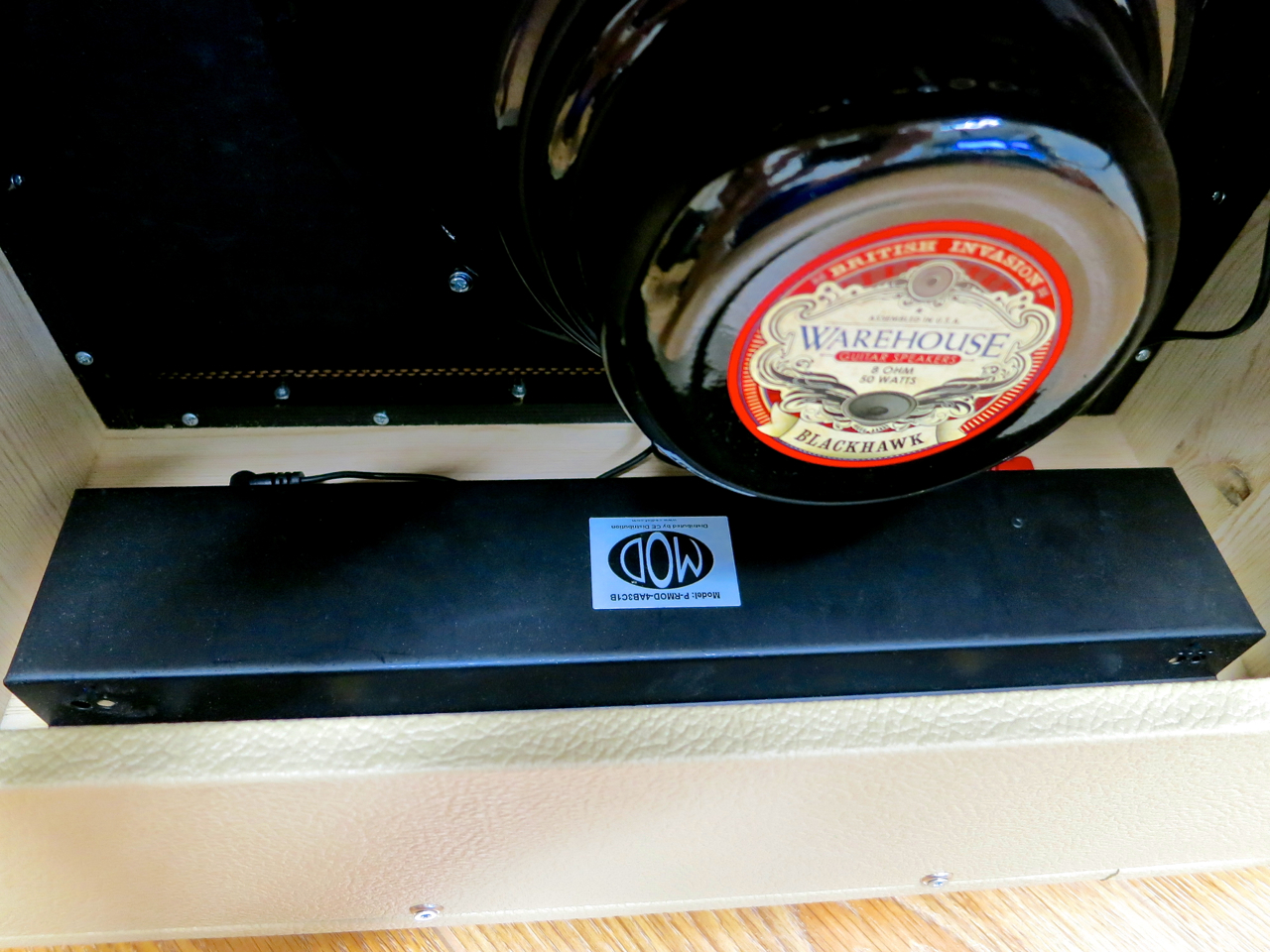
The amp’s full-length spring reverb comes from MOD Kits.

Bluetone Princeton Reverb – Warehouse Blackhawk speaker

The 50 W WGS Black Hawk speaker has originally been designed with Vox AC30-type tones in mind, and seems like a strange choice for a small Fender-style combo.

****

Bluetone Princeton Reverb – control panel

This Bluetone is a single-channel combo equipped with a three-band EQ-section, reverb and tremolo. Thanks to its master volume control you can drive the combo’s preamp hard while keeping the volume levels down.

Our test sample was one of the last pre-production models; the final series has all the front panel lettering placed below the controls for improved visibility.

Bluetone Princeton Reverb – back panel

On the back panel you’ll find two speaker outputs, plus a jack for the footswitch.

Bluetone Princeton Reverb – footswitch

This rugged footswitch comes included with the amp.
****

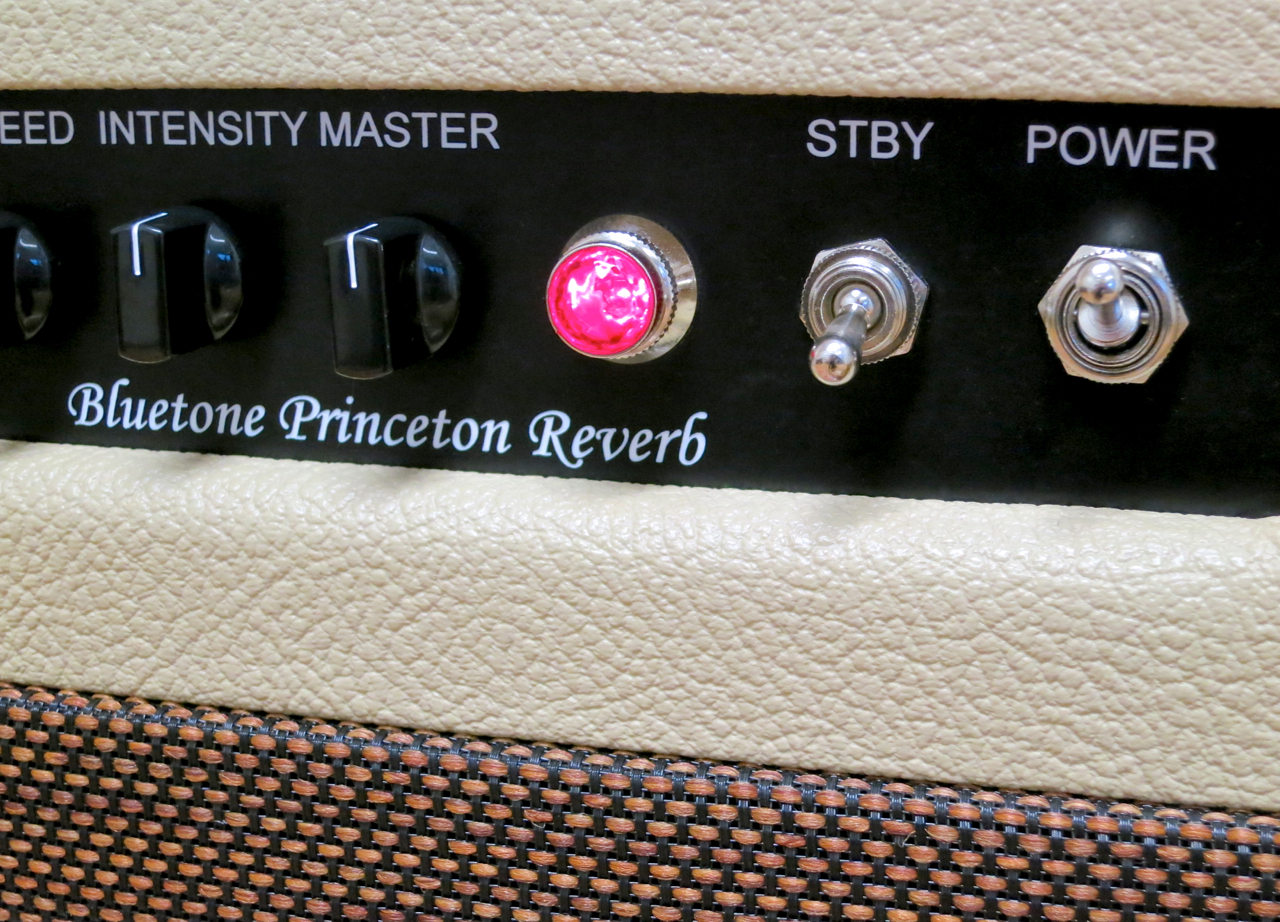
Bluetone Princeton Reverb – pilot light

For a mid-sized valve amp Bluetone’s Princeton Reverb is quite lightweight, yet it feels very sturdy.

Switch the combo on, and you’ll be surprised at the absence of mains hum and noise in general. This beauty is really quiet – great!

Many original Blackface and Silverface Fender Princetons have been modified along the way with a larger speaker. The original 10-inch Jensen sounds OK, but many find the tone to be a little too thin for their taste.

The Bluetone Princeton sounds much bigger and fatter from the get-go, thanks to its larger, 12-inch speaker.

This is what my Fender Telecaster sounds played through the Bluetone with clean amp settings:

Bluetone’s tremolo circuit sounds very tasty:

If you use the Low input there’s plenty of headroom to be had from the Princeton Reverb for clean humbucker tones (played on a Hamer USA Studio Custom):

But this little combo can also bare its fangs if you add some gain. Soundwise you’ll get just the type of distortion you’d expect from a low-powered, Fender-style amp. There’s plenty of bite with a healthy dose of compression and an open-sounding mid-range. Don’t expect oodles of cream from this combo, but if you’re after a gritty Sixties and early Seventies Blues- and Rock-vibe, the Bluetone Princeton Reverb is just the ticket.

Here’s the Telecaster, plugged into the High input, with Gain turned up all the way:

Plugging the double-humbucker Hamer into the combo’s Low input resulted in these sounds:

The Bluetone reacts very nicely to your guitar’s volume control, allowing you to turn down for clean-ish tones and turn up for overdrive:

Bluetone Princeton Reverb – front panel angle

****

Bluetone Princeton Reverb – Telecaster

In my view Bluetone’s Princeton Reverb offers genuine Finnish boutique quality at a very fair price. The workmanship is outstanding and the combo sounds fantastic. The Bluetone Princeton Reverb could be described as the ultimate Blackface-combo.

****

Bluetone Amps Princeton Reverb

Current price in Finland approximately 1,600 € (Bluetone amp cover: 50 €)

Contact: Custom Sounds Finland

****

Pros:

+ genuine custom shop quality

+ point-to-point-wiring

+ Master Volume control

+ high-quality, 12-inch speaker

+ fine reverb and tremolo-effect

+ footswitch included

Bluetone Princeton Reverb – logo

Testipenkissä: Blackstar HT Metal 5 + HT Metal 60

Blackstar HT Metal 60 – logo

Blackstar Amplificationin suosittu HT Venue -sarja on saanut rinnalleen uuden HT Metal -sarjan, joiden putkivahvistimet ovat suunnattuja nimenomaan rankkojen musiikkityylien soittajille.

Kitarablogi sai testiin viisiwattisen HT Metal 5 -kombon, joka on suunnattu koti-, treeni- ja studiokäyttöön, sekä tuhdin, 60-wattisen HT Metal 60 -kombon, joka on varustettu peräti kolmella kanavalla.

****

Blackstar HT Metal 5 – full front

Blackstar HT Metal 5 (495 €) perustuu valmistajan suosittuun HT-5R-putkikomboon, ja uutukaisella on myös sama peruskytkentä firman omalla push-pull-periaatteella toimivalla päätevahvistimella.

HT Metal 5 käyttää kahta putkea – yksi ECC83 (tunnetaan myös tunnuksella 12AX7), sekä yksi 12BH7-malli.

HT-5R:n etukangas on vaihtunut HT Metal 5 -kombossa erittäin tukevaan metalliritilään.

Blackstar HT Metal 5 – full back

Kotelo on rakennettu puolisuojelluksi. Takaseinän alimpaan kolmasosaan on käytetty metalliritilää, jonka läpi näkyy Blackstarin Kiinassa valmistettu 12-tuumainen kaiutin.

Pieni vahvistin painaa vain 14 kiloa, ja on näin ollen helppoa kantaa kombon yhdestä nahkakahvasta.

Blackstar HT Metal 5 – control panel

Metal 5:n säädinpaneeli on erittäin selkeä:

Putkikombo tarjoaa kaksi kanavaa, jotka ovat Clean ja Overdrive. Clean-kanavassa on yksinkertainen Tone-säädin, kun taas särökanavassa on tarjolla kolmikaistainen EQ Blackstarin patentoimalla ISF-toiminnolla. ISF-säätimellä (Infinite Shape Feature) voi muuttaa vahvistimen perusluonnetta portaattomasti USA:n tyyliseltä (loudness-mainen taajuuskäyrä) brittimäiseen (paksumpi keskialue).

Viimeinen lenkki signaaliketjussa on HT Metal 5:n kaunisääninen digitaalinen kaiku.

Blackstar HT Metal 5 – back panel

Takapaneelin liittimien runsaus on suorastaan hämmästyttävä näin pienessä vahvistimessa:

Vasemmalla näkyy kombon kolme kaiutinlähtöä.

Seuraavaksi tulee Blackstarin kaiutinmallinnuksella varustettu lähtö. Lähdössä on valintanappi, jolla voi vaihtaa virtuaalisen kombo- ja stäkkisoundin välillä. Lähtö toimii myös kuulokkeilla ja/tai silloin, kun vahvistimen kaiutin on standby-kytkimellä mykistetty.

Metal 5:n efektilenkin nimellistasoa voi muuttaa -10 desibelistä +4:ään.

Oikealla reunalla näkyy kombon linjatasoista tuloa, joka sopii esimerkiksi mp3-soittimen kytkemiseen.

Blackstar HT Metal 5 – footswitch

Jalkakytkin kanavavaihtoon kuuluu Blackstar HT Metal 5 -kombon hintaan!

****

Blackstar HT Metal 60 – full front

Blackstar HT Metal 60 (1.120 €) on livekäyttöön tarkoitettu kolmikanavainen voimapesä.

Putkikombon kytkentä on rakennettu kahden ECC83-etuasteputkien sekä kahden 6L6-pääteputkien ympärille.

Koteloon on asennettu kaksi Celestion-kaiutinta.

Blackstar HT Metal 60 – full back

Täysin suljetulla kotelolla haetaan HT Metal 60 -komboon stäkin tyylistä suunnattavuutta ja potkua.

Blackstar HT Metal 60 – side handle

Koska tällaisen putkikombon paino on jo huomattava (30 kg), on HT Metal 60:een lisätty kotelon sivuun upotettuja metallikahvoja, mikä on mielestäni erittäin tervetullut ratkaisu.

Blackstar HT Metal 60 – clean channel

Blackstarin puhdas kanava tarjoaa kaksi erilaista karakteeriä (Voice): Boutique Clean -niminen vaihtoehto toimii A-luokan kytkennöillä, ja on hieman dynaamisempi, mutta samalla myös aavistuksen verran rosoisempi, kuin isompaa puhdasta headroomia omaavaa Modern Clean -vastine.

Erillisillä Bass- ja Treble-sävynsäätimillä oman soundin löytäminen on helppoa.

Blackstar HT Metal 60 – OD1 + OD2

HT Metal 60:n kahdella särökanavilla – OD1 ja OD2 – on yhteiset EQ:t, mutta hieman erilainen perusluonne.

OD1 tarjoaa hieman vähemmän säröä kuin OD2. Kanavan miedompi kompressio ja pikkuisen kuivempi alapää vie OD1:stä enemmän tuhtien komppiosuuksien suuntaan.

OD2:lta taas saa enemmän säröä, ja kanavan kompressio on todella kermainen. Samalla löytyy kuitenkin juuri se oikea määrä purevuutta, että kitarasoolo ei huku muun bändin alle.

Blackstar HT Metal 60 – master section

Masterosastolta löytyy digikaiun ja master volumen lisäksi vielä alamiddleen ja bassoon vaikuttava Resonance-säädin, sekä preesensaluetta muokkaava Presence-säädin.

Blackstar HT Metal 60 – back panel 1

HT Metal 60 -kombon viiden kaiutinlähdön ansiosta löytyy varmasti omalle setupille se oikea vaihtoehto.

Kaiutinmallinuksella varustettu linjatasoinen lähtö, sekä Blackstarin mainio efektilenkki ovat tuttuja jo HT Metal viitosesta, mutta isossa kombossa voi myös valita kahden eri kaikusoundin välillä.

Blackstar HT Metal 60 – back panel 2

Siniseen tietokoneliittimeen menee pakettiin kuuluva reilunkokoinen FS-7-kytkinlauta (kts. alle), jolla voi vaihtaa kanavia ja kytkeä halutessa kaiun pois päältä.

Toiseen Footswitch-jakkiin voi liittää yksittäisen kytkimen, jolla saa tarvittaessa vielä lisäboostin kaikille kanaville. Lisävahvistus on säädetty valmiiksi tehtaassa, eikä sen tasoon pysty vaikuttamaan itse.

Blackstar HT Metal 60 – footswitch

****

Blackstar HT Metal 5 – opener

Blackstar HT Metal 5:n Clean-kanavalta saa soundeja putipuhtaasta mietoon Blues-säröön asti.

Volyymiä löytyy pikkukombosta enemmän kuin riittävästi olohuone- tai studiokäyttöön. Blackstarin puhdas headroom ei ole kuitenkin erityisen suuri, minkä takia humbuckereilla varustetuissa kitaroissa kitaran volume-säätimen käyttö on lähes pakollinen.

Tällainen on Hamer USA Studio Custom -kitaralla soitettu Clean-kanava äänitettynä Shure SM57 -mikrofonin kautta:

Sama pätkä äänitetty takapaneelin linjalähdön kautta:

HT Metal 5:n särökanava on erittäin mainio ja maukas. Blackstarin 12-tuumaisesta kaiuttimesta lähtee niin täyteläinen, voimakas ja dynaaminen ääni, että on vaikea uskoa, että se lähtee tällaisesta pikkustyrkkarista!

ISF-säädin täysille avattuna antaa kombolle hyvin uskottavan vanhan liiton Marshall-soundin, sekä mikrofonilla…

…että linjalähdon kautta poimittuna.

ISF nollalla tuo esiin Rectifier-tyylisiä vaihtoehoja (ensin SM57, sitten linjalähtö):

****

Blackstar HT Metal 60 – opener

Blackstar HT Metal 60 -kombon soundivalikoima on luonnollisesti pikkukomboon nähden huomattavasti laajempi.

Puhtaita soundeja on saatavilla kahtena hieman erilaisena versiona, joista Boutique Clean on se täyteläisempi vaihtoehto.

SM57:

Linjalähtö:

Modern Clean taas soi mielestäni hieman kompaktimmin ja kirkkaammin (ensin Shure SM57, sen alla linjalähdön kautta poimittuna):

OD1-kanavan esimerkkejä on soitettu drop-D-virityksessä.

Ensin ”Britti-versio” (ISF=10):

Sitten ”US-versio” (ISF=0):

Samoilla EQ-asetuksilla OD2-kanava on hieman kirkkaampi kuin ykkösvaihtoehto.

ISF=10 (”UK”):

ISF=0 (”USA”):

****

Blackstar-logo 2

Minun mielestäni HT Metal -sarja on loistava lisäys Blackstarin tuotevalikoimaan, joka ottaa nykyaikaisen Metal-soittajan tarpeet huomioon.

HT Metal 5 -kombon puhdas soundi on hyvin käyttökelpoinen, vaikka kanavalla on tarjolla headroomia vain rajoitetusti. Pikkukombon loistavuus piilee sen sijaan tämän putkivahvistimen särösoundeissa, jotka kuulostavat hämmästyttävän isoilta.

Blackstar HT Metal 60 on metallimiehen uskollinen keikkakone. Ammattitason putkikombosta löytyy sekä erittäin maukkaita puhtaita soundeja että yllin kyllin rankkaa säröä kermaisella kompressiolla höystettynä. Kovaäänisen kombon puhti riittää varmasti useimmissa tapauksissa ilman lisäkaappiakin.

****

Blackstar HT Metal 5 & HT Metal 60

HT Metal 5 – 495 €

HT Metal 60 – 1.120 €

Maahantuoja: Musamaailma

****

Blackstar HT Metal 5

Plussat:

+ työnjälki

+ Clean-kanavalla oma tone-säädin

+ OD-kanavalla kolmialueinen EQ ja ISF

+ tuhti soundi

+ linjalähtö kaiutinmallinnuksella

+ jalkakytkin kuuluu hintaan

Miinukset:

– Clean-kanavan headroom rajallinen

****

Blackstar HT Metal 60

Plussat:

+ työnjälki

+ metallikahvat

+ Clean-kanavan Voice-toiminto

+ Clean-kanavalla omat tone-säätimet

+ OD-kanavilla kolmialueinen EQ ja ISF

+ tuhti soundi

+ linjalähtö kaiutinmallinnuksella

+ FS-7-kytkinlauta kuuluu hintaan

Namm 2014 – Blackstar ID:Core

****

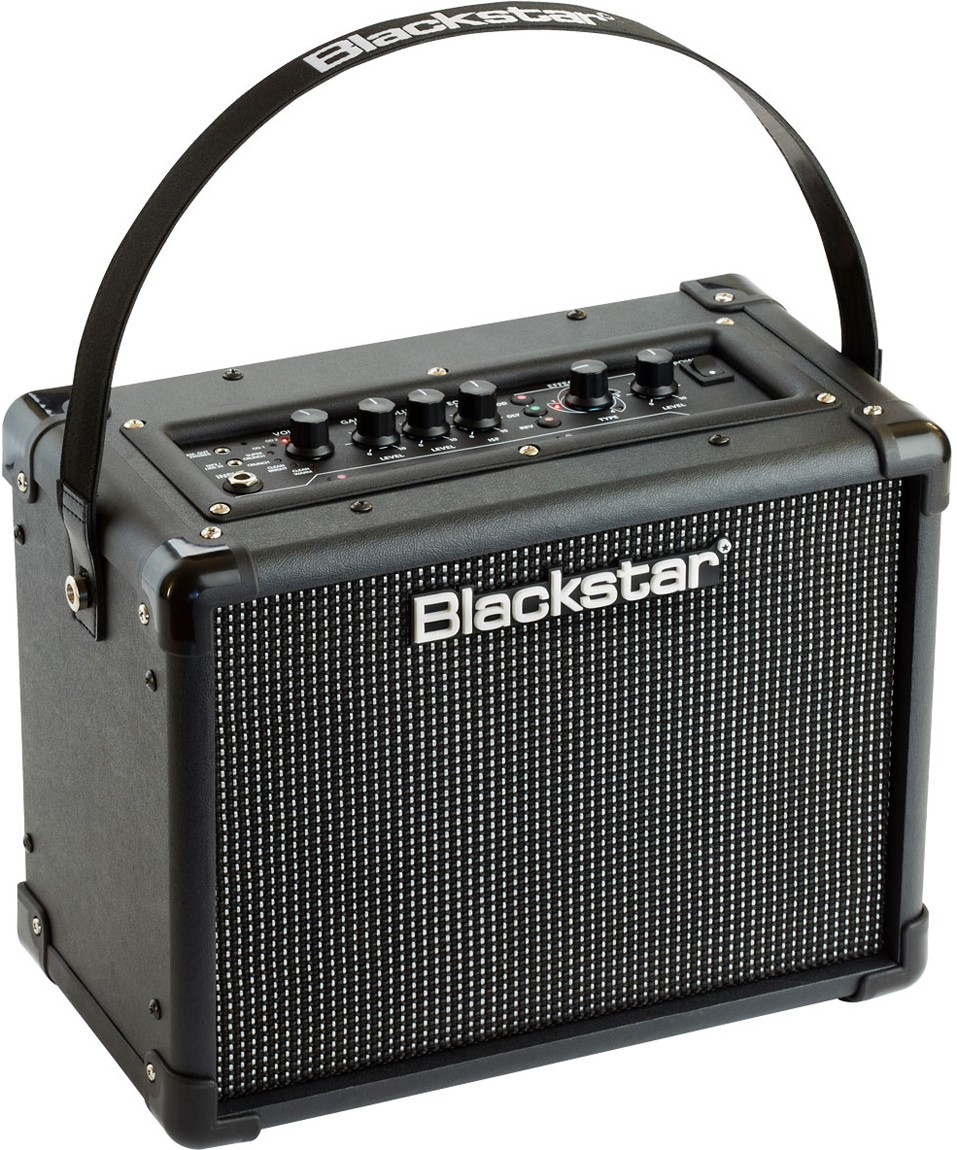
Blackstar Amplification’s new, affordable ID:Core Amplifier Series features the core attributes of Blackstar’s original ID:Series.

These programmable, wide-stereo guitar combo amps are small in size, but they deliver huge tone.

Well-suited for personal practice or bedroom jamming along with a CD or MP3 player, they’re available in 10-, 20- and 40-watt configurations. Additional features include six onboard voices, effects and INSIDER GUI software for creating, storing and sharing patches.

blackstar-id-core-stereo-10-guitar-amp-angle

Blackstar_ID-Core_Stereo_10_top

Testipenkissä: Bluetone Amps Princeton Reverb

****

Bluetone Princeton Reverb – opener

Suomalainen Bluetone on vielä melko uusi nimi vahvistinmaailmassa. Harry Knecktin ja Matti Vauhkosen käsintehdyillä putkivahvistimilla on kuitenkin jo monta ystävää, ja sana on leviämässä yhä laajemmin.

Helsinkiläinen Custom Sounds on nyt ottanut Bluetone-vahvistimia tuotevalikoimaansa, ja sieltä Kitarablogi sai testattavaksi Bluetone Princeton Reverb -kombon.

****

Bluetone Princeton Reverb – full front

Bluetone Princeton Reverb (1.600 €) on firman laadukas käsinjuotettu – ja lempeällä kädellä päivitetty – näkemys 1960-luvun Fender Princeton Reverb -styrkkarista (AA1164-versio). Bluetonen tärkeimmät parannukset ovat vaihekääntäjän jälkeinen master volume -säädin (PPIMV), isompi kaiutin, sekä helpompi biasointi erillisillä biasointipisteellä. Kombon lähtötaso on 15 wattia.

Bluetonen Princetonia saa erilaisilla viimeistelyillä ja kaiuttimilla. Kitarablogin testiyksilö on varhaistuotannosta peräisin oleva kermanvaalealla tolexilla päällystetty perusversio, jolla on kuitenkin Tayden Smooth Alnico -kaiuttimen sijaan 12-tuumainen WGS Black Hawk Alnico -ämyri.

Bluetone Princeton Reverb – side view

Bluetone rakentaa kotelonsa tavallisesti 15 milliä paksusta, suomalaisesta koivuvanerista, joka on kestävä, mutta kuitenkin suhteellisen kevyt materiaali.

Princeton Reverbin viimeistely ei todellakaan jätä pienintäkään moittimisen varaa – kombo edustaa ehtaa boutique-luokkaa!

Bluetone Princeton Reverb – full back

Kotelo on Fender-tyylisesti takana avoin.

Bluetone Princeton Reverb – valves + transformers

Bluetone Princetonissa käytetään esikuvan mukaan etuvahvistimessa kolme 12AX7-putkea ja yksi malli 12AT7.

Tasasuuntajaksi on valittu yksi 5AR4-putki, kun taas päätevahvistin toimii kahdella 6V6-mallilla.

Bluetone Princeton Reverb – spring reverb

Täyspitkä jousikaiku tulee MOD Kitsiltä.

Bluetone Princeton Reverb – Warehouse Blackhawk speaker

WGS:n 50-wattinen Black Hawk on periaatteessa suunniteltu Vox AC30:n kaiuttimeksi, ja siten mielenkiintoinen valinta pieneen Fender-tyyliseen komboon.

****

Bluetone Princeton Reverb – control panel

Bluetone on yksikanavainen kombo kolmikaistaisella taajuskorjainosastolla, kaiulla ja tremololla. Master volumen ansiosta etuasteen säröä voi käyttää myös maltillisella volyymitasolla.

Lopullisessa sarjatuotannossa etupaneelin teksti löytyy muuten nyt säätimien alta, mikä helpottaa tuntuvasti oikean nupin löytämistä.

Bluetone Princeton Reverb – back panel

Takapaneeli tarjoaa kaksi kaiutinlähtöä, sekä liittimen jalkakytkimellä.

Bluetone Princeton Reverb – footswitch

Tämä jämäkkä tuplakytkin kuuluu hintaan, ja sillä voi kytkeä sekä tremoloefektin että jousikaiun päälle tai pois.

****

Bluetone Princeton Reverb – pilot light

Putkivahvistimeksi keskikokoinen Bluetone Princeton Reverb -kombo on hyvin kevyt, mutta samalla kestävänoloinen.

Käytössä huomaa ensimmäiseksi Bluetone-vahvistimen hiljaisuutta ei-toivottujen sivuäänien kannalta. Tämä kombo ei humise eikä hurise, ja myös sen omakohina on hyvin maltillisella tasolla – loistohomma!

Monia vanhoja musta- ja hopeanaamaisia Fender Princeton -vahvistimia on modattu isommalla kaiuttimella – vanha Jensen kuulostaa sinänsä hyvältä, mutta on monille kuitenkin hieman liian ohut soundiltaan.

Bluetone Princetonilla kuulostaa – 12-tuumaisen kaiuttimen ansiosta – heti kättelyssä hieman isommalta.

Tältä kuulostaa Fender Telecaster, kun Bluetonessa on puhtaat asetukset:

Bluetonen tremolo on hyvin maukas tapaus:

Low-tuloa käyttäessä Princeton Reverbin headroomia riittää mainiosti myös puhtaille humbucker-soundeille (käytössä Hamer Studio Custom -kitara):

Pikkustyrkkarilla on kuitenkin myös kunnon hampaat, kun vaan lisätään gainea. Särön luonne on juuri sellainen kuin voi odottaa pieneltä, vintage-tyyliseltä ja Fender-pohjaiselta kombolta. Purevuutta ja kompressiota löytyy sopivasti ja keskialueen sointi pysyy suhteellisen avoimena. Erittäin kermaisia, keskialuevoittoisia särösoundeja on tällaisesta kombosta turha hakea, mutta 1960-luvun ja varhaisen 70-luvun Blues- ja Rock-meininkiin Bluetonen Princeton Reverbin ääni sopii kuin nakutettu.

Telecaster (High-tuloon kytkettynä) täysillä gainilla kuulostaa tällaiselta:

Tuplahumbucker-Hamerilla (Low-tuloon kytkettynä) sain tällaiset soundit aikaiseksi:

Bluetone-kombo reagoi erittäin hyvin kitaran volume-säätimeen, mikä mahdollistaa särösoundin siistimistä ilman muita apuvälineitä:

Bluetone Princeton Reverb – front panel angle

****

Bluetone Princeton Reverb – Telecaster

Bluetone Princeton Reverb tarjoaa mielestäni parasta kotimaista boutique-laatua kilpailukykyiseen hintaan. Bluetonen työnjälki on ensiluokkainen ja kombon soundi erinomainen. Bluetone Princeton Reverb on kuin taivaan lahja laadukkaan Blackface-soundin ystäville.

****

Bluetone Amps Princeton Reverb

1.600 € (Bluetone-suojahuppu: 50 €)

Lisätiedot: Custom Sounds Finland

****

Plussat:

+ aitoa custom shop -laatua

+ point-to-point-rakenne

+ Master Volume -säädin

+ laadukas 12-tuumainen kaiutin

+ kaiun ja tremolon soundi

+ jalkakytkin kuuluu hintaan

Bluetone Princeton Reverb – logo

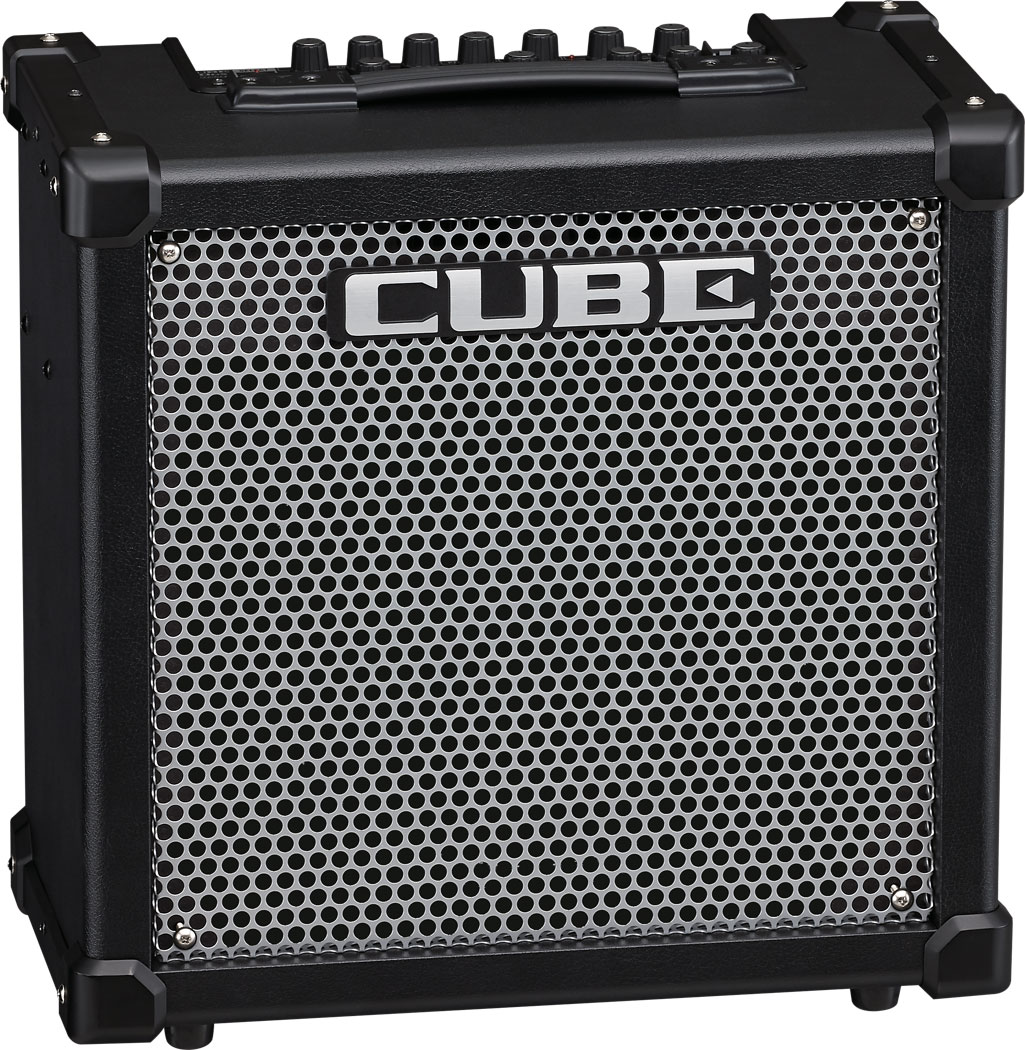
Review: Roland Micro Cube GX + Cube-80 GX

cube_gx_family_2_gal

Roland’s popular Cube-series of COSM-combos has recently been updated.

The new Cube GX-amps boast some new features, like the iCube Link (first seen in the Cube Lite), which allows you to use the guitar combo as a soundcard with Apple iOS devices.

****

micro_cube_gx_r_angle_2_gal

The Roland Micro Cube GX (current price in Finland 134 €) is the newest version of one of the most successful battery-powered practice amps ever.

At first glance the GX-version looks very similar to the Micro Cube’s previous incarnation, with only the large Cube logo on the metal grille hinting at the combo’s updated status.

micro_cube_gx_b_back_gal

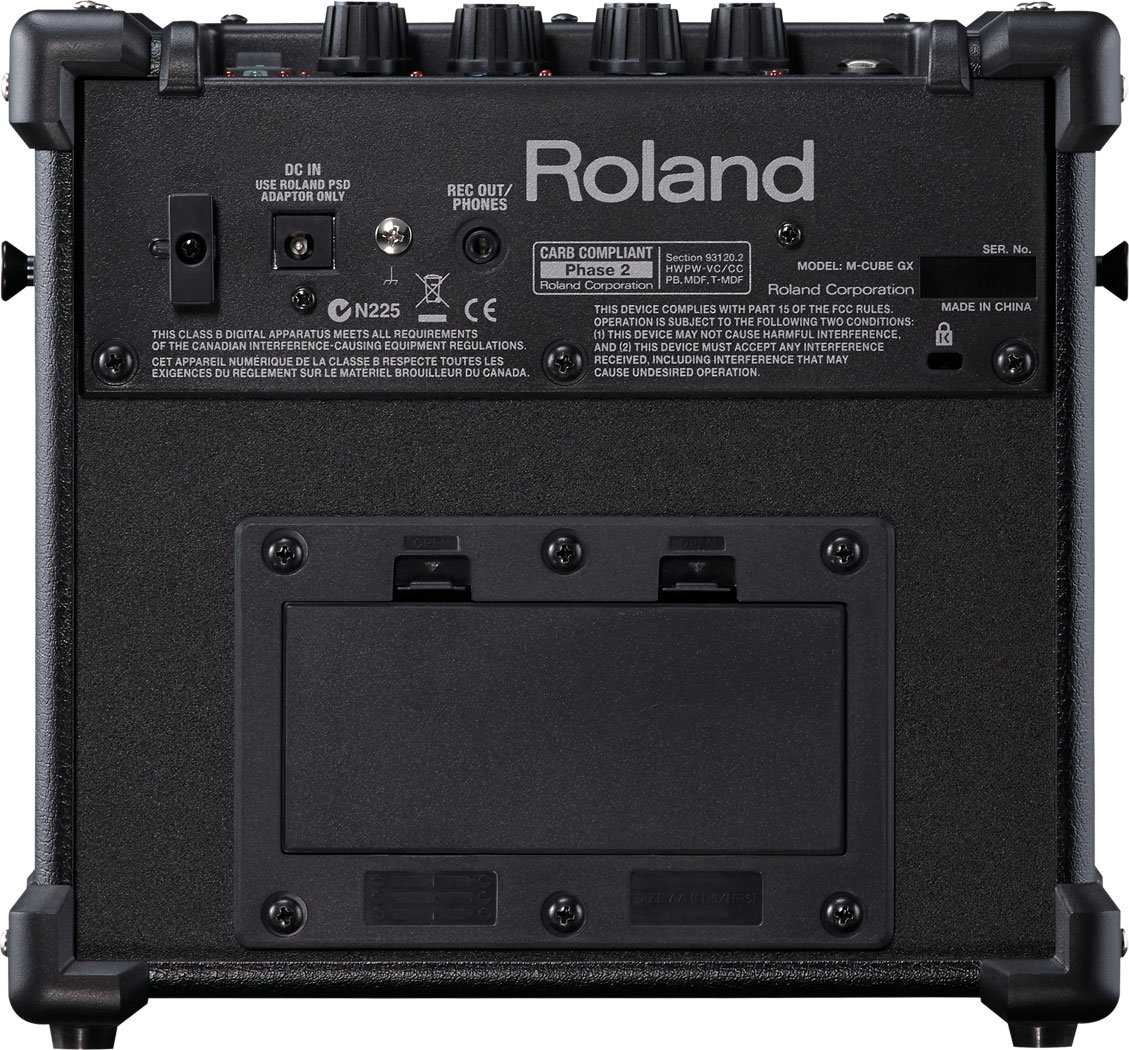
The Micro Cube GX’ back panel is a good deal smaller than on the last version.

The new combo sports mini-sized headphone and line-level outputs.

micro_cube_gx_batteries_gal

The GX still runs on six AA-batteries, but the new battery compartment is much easier to use.

A power supply can be found in the box.

micro_cube_gx_r_top_gal

The front panel has gotten a serious overhaul:

Above the guitar input you can find the i-Cube Link connector, which allows you to hook up you iPad or iPhone to the combo using the supplied cable. Thanks to the i-Cube Link you can use the GX-amp as the iDevice’s sound-card, as well as record and practice using Roland’s free Cube Jam-app. You can get more info on the Cube Jam-app in Kitarablogi’s Cube Lite review.

Another important new feature of the Micro Cube GX is the Memory-function, which offers you one memory slot per COSM Amp Type. Memory stores all settings of the chosen Amp Type, namely the settings of the Gain-, Volume-, EFX- and Delay-controls.

The tuner section has also received an overhaul. The old Micro Cube came with an electronic tuning fork on-board, giving you an ”a” (or Ab or Abb) to tune to. The brand-new Micro Cube GX comes equipped with a genuine digital tuner. The default setting for the tuner is chromatic, but it can also be set to A-only, which comes in handy when changing strings.

****

cube-80gx_angle_2_gal

The Roland Cube-80 GX (current price in Finland 384 €) is the current top model in the GX-series, offering you 80 Watts of output power through a single 12-inch speaker.

The clearest difference between the predecessor – the Cube-80 XL – and the GX-version is the addition of the i-Cube Link in favour of the old model’s built-in looper.

cube-80gx_back_gal

Also new is the GA-FC-connector on the amp’s back panel, which allows you to use Roland’s guitar amp foot-controller the GA-FC (optional) with the Cube-80 GX.

top_L

This is what the foot-controller looks like. When used with the GX, you can switch amp channels and turn the combo’s EFX-, Delay- and Reverb-sections on/off separately. You can also connect two expression pedals to the GA-FC, if you want to adjust input and output levels on the fly. The Cube-80 GX comes supplied with a special overlay for the foot-controller, so you can change the GA-FC’s labelling to match the correct functions.

cube-80gx_foot_gal

Some things have stayed the same, though, like the rugged design of the Cube-series.

cube-80gx_top_gal

The Cube-80 GX is a three-channel guitar amplifier:

The JC Clean-channel is reserved for ultra-clean tones in the style of Roland’s legendary Jazz Chorus-combo. The Lead-channel, on the other hand, offers you nine different COSM-models, as well as an acoustic simulator for your occasional steel-string needs.

The third channel is the so-called Solo-channel. I say ”so-called”, because actually the Solo-channel is the Cube-80 GX’ memory slot, which you can fill with any amp setting you wish, regardless of whether it is a setting for soloing or not. The crucial difference between the Solo-channel and the other two channels is the fact that the Solo-channel uses its own (stored) settings for the EQ-, EFX-, Delay- and Reverb-sections, while JC Clean- and Lead-channels have to share the current control settings.

Apart from the i-Cube Link, the Cube-80 GX’ features list is very similar to the Cube-80 XL-version. You can get more info on the i-Cube Link and Roland’s free Cube Jam-app in Kitarablogi’s Cube Lite review.

****

micro_cube_gx_r_front_gal

Roland’s brand-new Micro Cube GX offers you even more than its already legendary predecessor. The built-in tuner makes life much easier, and the new i-Cube Link/Cube Jam functionality genuinely adds value to this diminutive powerhouse. If you own an iDevice you will have your own practice set-up up and running in no time.

The little GX-combo also gives you three new sounds – the fantastically über-Metal amp type called Extreme, a fine polyphonic octaver effect, as well as a spring reverb model. The Micro Cube GX’ spring reverb simulation sounds good, but very small area designated for it on the Reverb-control doesn’t allow for much in terms of tailoring the spring reverb. It’s more of an on/off affair.

Overall the GX sounds better than the original Micro Cube, with more realistic amp simulations and clearly less hiss in the effect section.

These four clips have been recorded using a dynamic mic in front of the combo, and playing a Fender Stratocaster:

****

cube-80gx_front_gal

Roland’s new Cube-80 GX is a compact, yet powerful guitar combo for the gigging guitarist.

The sounds on offer cover all bases, and the amp types and effects all sound great. Depending on your guitar of choice there can be a very slight tendency toward a crowded lower-midrange – especially with clean sounds – but this can be easily kept in check with the amp’s nice EQ-section.

I feel that if you want to use the Cube-80 GX live, buying the GA-FC-controller is almost compulsory, as it is the only way you can fully control all the combo’s functions on the fly. 100 euros seems a bit steep in relation to the Cube’s own price tag, but from a practical standpoint the additional outlay makes a whole lot of sense.

Be that as it may, Roland’s Cube-80 GX is a cool amp for both gigging and studio use.

These four examples have been recorded with the same set-up are the Micro Cube GX-clips:

****

cube_gx_family_1_gal

Roland’s Cube GX-series is a good choice if you want a wide variety of different amp tones and effect sounds to choose from. For teaching and/or practising purposes the iOS-compatibility and Roland’s own Cube Jam-app add a lot of value to an already very enticing package.

****

Roland Cube GX-series

Micro Cube GX – 134 €

Cube-80 GX – 384 €

Finnish distributor: Roland Scandinavia

****

Pros:

+ value for money

+ i-Cube Link

+ Micro Cube GX: new Memory-feature 

+ Cube-80 GX: GA-FC-compatibility

+ sound

+ rugged build

Cons:

– Micro Cube GX: spring reverb effect hard to adjust

– Cube-80 GX: price of GA-FC-controller

Pidä blogia WordPress.comissa.

Ylös ↑