

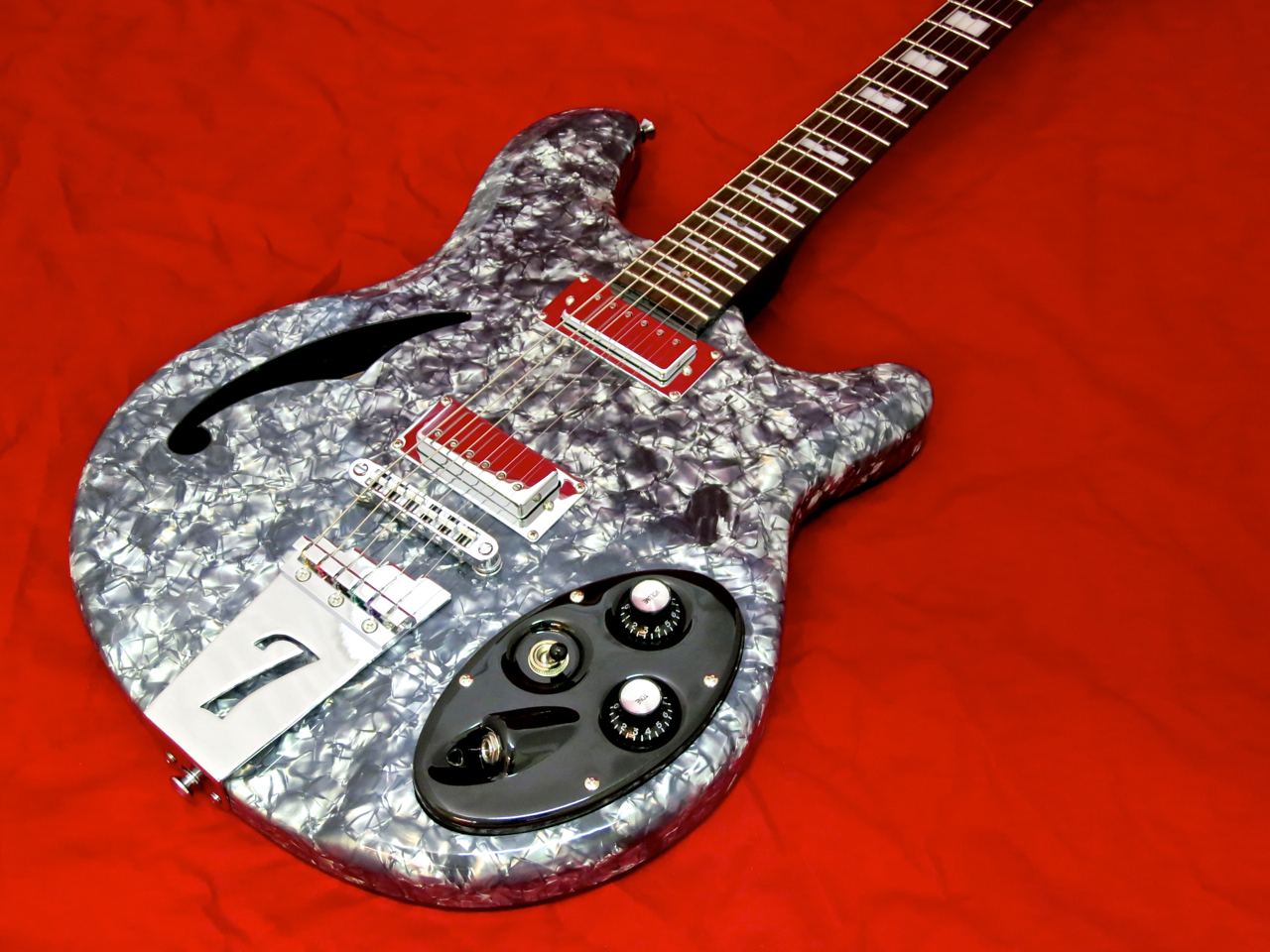
Juuri työn alla…
Reviews are in the works…


****
Lisätiedot: R-Jam Group
Kitarablogi.com – Finland's premier Guitar and Bass blog
Juttuja kitaroista ja bassoista

****

German maker Duesenberg is known for its high-quality guitars and basses, that combine seamlessly Art Deco-chic and ingenious improvements in many details, such as the hardware and electronics departments.
The Duesenberg D-Bass is a good example of this, promising both P- and J-style tones from a passive, one-pickup instrument.
****

The Duesenberg D-Bass (current price in Finland: 1.729,90 €) proves that you can build a bass from classic tonewoods without having to resort to copying others.
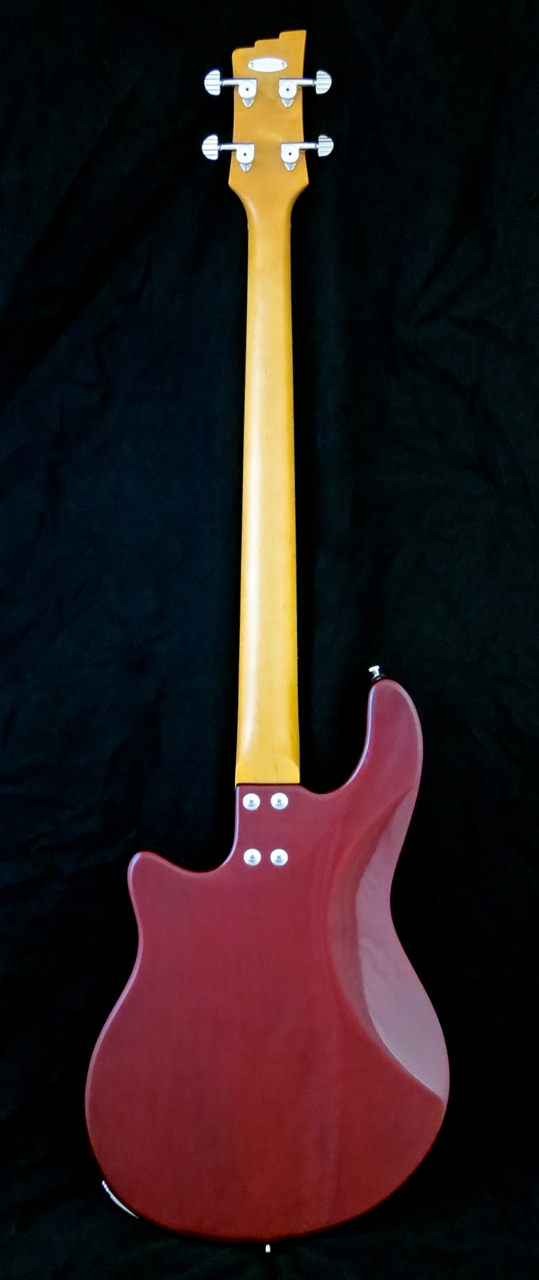
This is a four-string, passive bass, built using a bolt-on maple neck with a rosewood fretboard mated to a bound alder body. The top of the body sports elegant carving.

The generous rib cage bevel adds a great deal of comfort to the D-Bass.
The body comes in a fetching gloss finish, while the neck has received a thin, vintage-tinted satin finish.

I feel that Duesenberg’s three step headstock looks even better in its bass guise than the smaller guitar version.
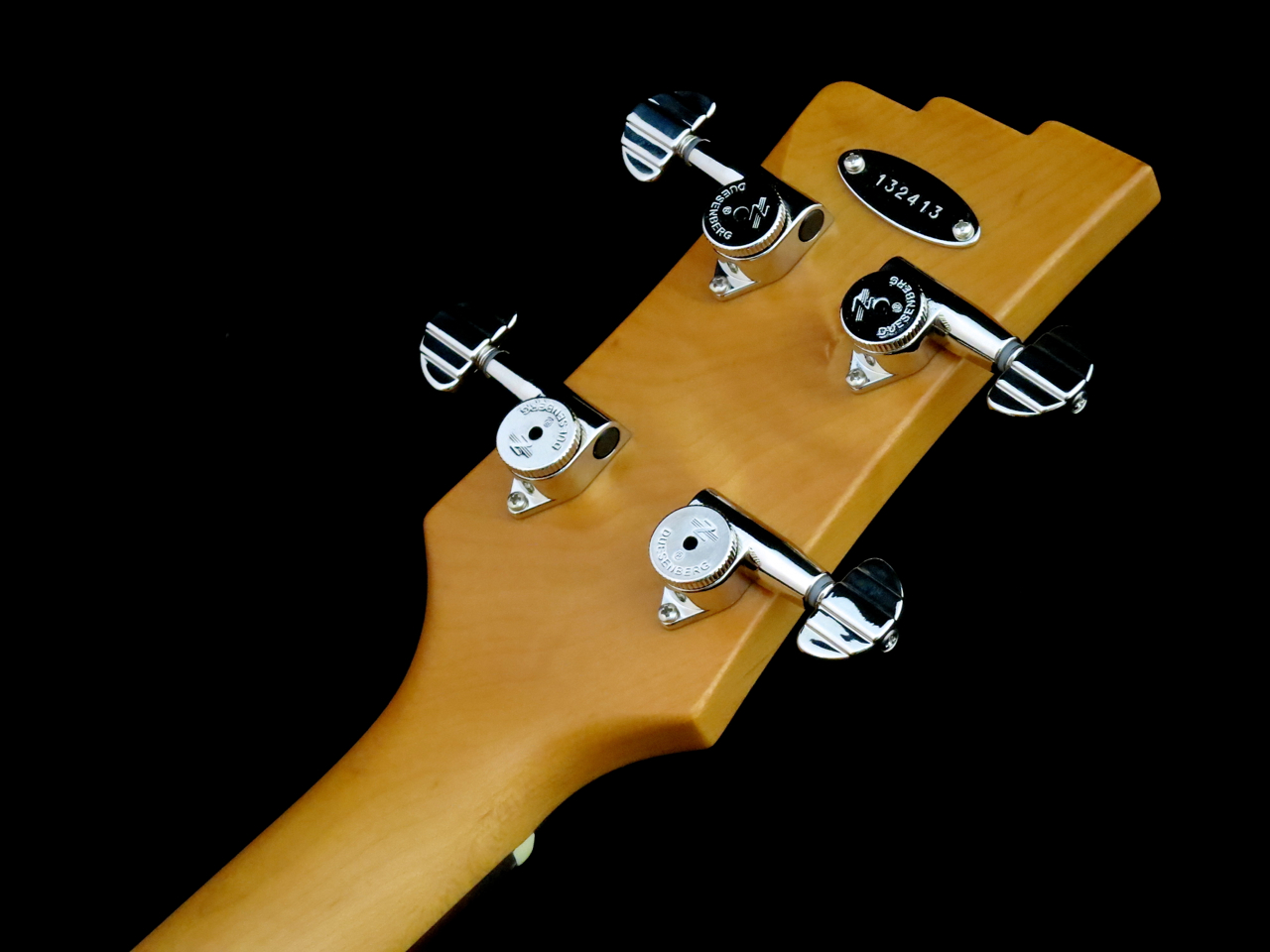
Duesenberg use their own locking Z-Tuners on the D-Bass. The string is first fed into a well in the tuning post until it comes out of a small hole in the tuning machine’s back. You cut off the surplus length of string, pull back the string by a couple of millimetres, lock it in place and tune up. Voila, a clean and uncluttered solution that leaves no sharp string ends.

Duesenberg employ a PLEK-robot to give all their instruments a perfect fret job and set-up.

Thanks to the angled neck joint an excursion to the dusty end of the fretboard is fast and easy on the D-Bass.

Duesenberg’s bridge and tailpiece combo are made of chunky bits of milled brass.
In addition to action and intonation the bridge also offers the adjustment of string-to-string distance. After adjustment you can lock everything in place with allen grub screws.

The D-Bass’ two-part pickup is situated on its own, oval pickguard.
Duesenberg’s Toaster-pickup may resemble a Fender Precision-pickup, but it really has its own thing going on in terms of construction. While the venerable P-Bass is equipped with two singlecoil pickups (one for each pair of strings), which are hooked up to form a humbucking unit, Duesenberg’s design uses two small humbuckers with open covers.

The passive controls are found on the bass’ larger pickguard and comprise a master volume, the Mid-Shift control and a master tone.

The Mid-Shift control uses a nifty bit of wiring voodoo:
When Mid-Shift is fully turned up, both coils of each pickup are used fully, but some of the top end signal is filtered by a capacitor. This is how the D-Bass achieves a P-style sound.
Turning the potentiometer counterclockwise fades out the signal of one of each humbucker’s coils, while lessening the capacitor’s effect on the signal. Fully counterclockwise, this gives you a brighter and more focussed, J-type tone.
You can find a similar wiring trick on Seymour Duncan’s web page, showing you how to wire up a humbucker in such a way that you can use a control pot for going from humbucking to singlecoil by feeding one of the pickup coils to earth.


The Duesenberg D-Bass comes in its own quality hard case.
****

Duesenberg’s bass is a beautiful instrument with a nice, medium weight and a great balance, both in you lap or hanging on a strap.
The neck profile is a Precision-style wide ”D”, but combined with the D-Bass’ larger fingerboard radius and its jumbo frets the playing feel is decidedly more modern and slinky than vintage.
My only small gripe is a strictly cosmetic one: I would like to see one or two screws added to the larger control scratchplate, as the current layout doesn’t make the plate fit snugly on top of the body’s top contour, leaving a few edges standing proud of the body surface.
This Duesenberg has a very healthy acoustic ring, completely devoid of any of the quirks often associated with vintage basses (like an over-enthusiastic low G or a dead spot around the high c).
Amped up you’re in for a real treat, as long as you’re not after that type of extreme EQ, only achievable with active preamps. Duesenberg’s Mid-Shift control is a really ingenious addition to the D-Bass, resulting in a much more organic palette of sounds than a mere coil-split could provide. The volume drop going from the P- to the J-variant is negligible, which is another positive effect of not using a straight coil-split.
I always play the same motif twice in each sound clip – first with Mid-Shift full on (P), then with Mid-Shift turned down fully (J).

****

I must say, I liked the Duesenberg D-Bass very much. It is a great instrument for connoisseurs of passive bass tones. The Mid-Shift control isn’t ”in your face”, but still manages to provide you with an ingenious way of tailoring the bass’ sound to your needs.
****
Duesenberg D-Bass
1.729,90 €
Finnish distributor: F-Musiikki
****
Pros:
+ workmanship
+ Mid-Shift control
+ playability
+ design
+ sound
Cons:
– pickguard fit (read the review)
****


The humble ukulele’s popularity has been on the rise over the last few years, not least because these instruments are easy to carry around and plenty of fun to play.
This fact hasn’t gone unnoticed by British brand Tanglewood, who have recently broadened their range of ukes.
****

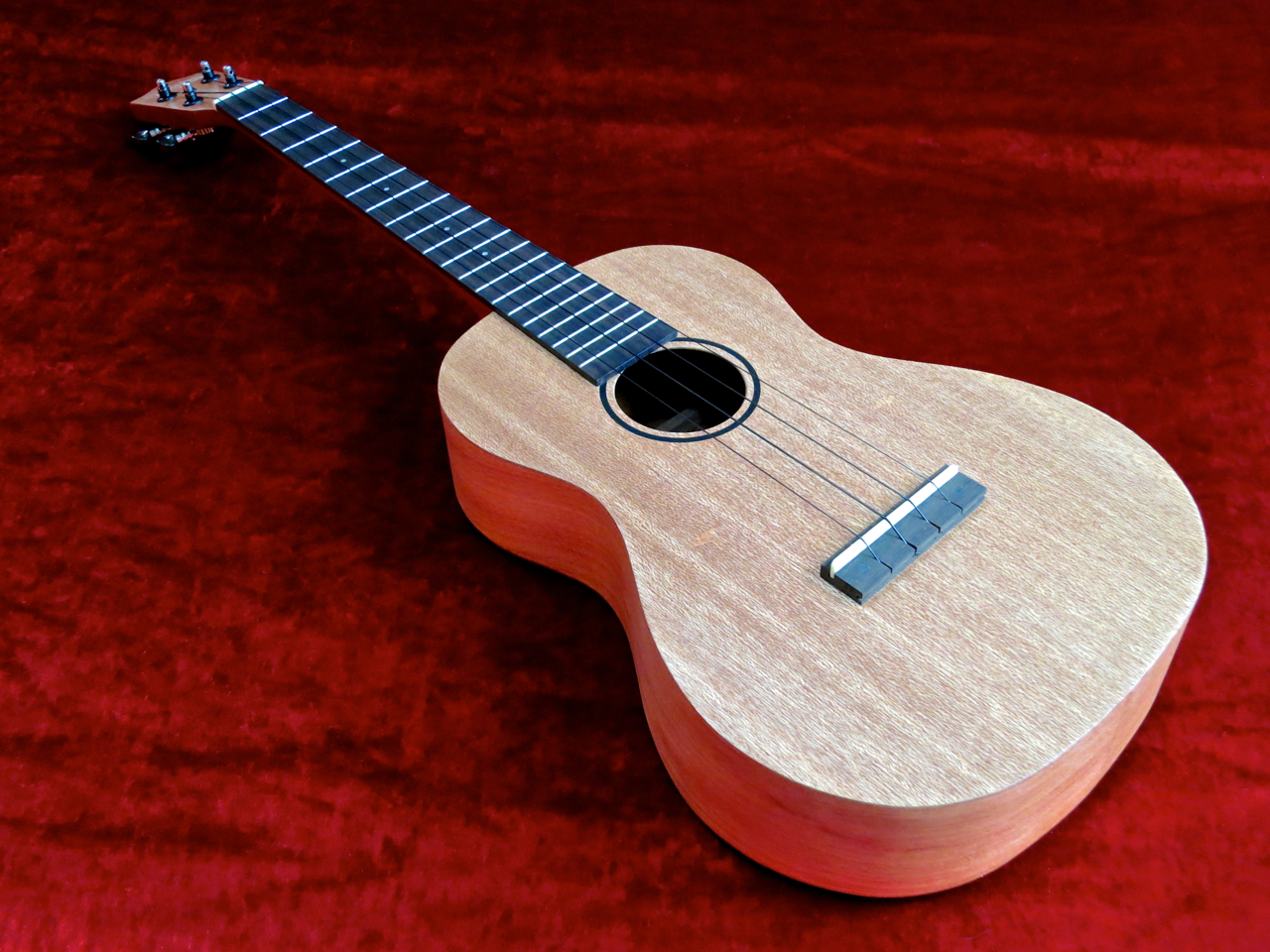
The quartet of ukes we’ve received for testing – the TU-1CE, the TU-3, the TU-3E and the TU-5 – are all part of Tanglewood’s mahogany-bodied Union-series.
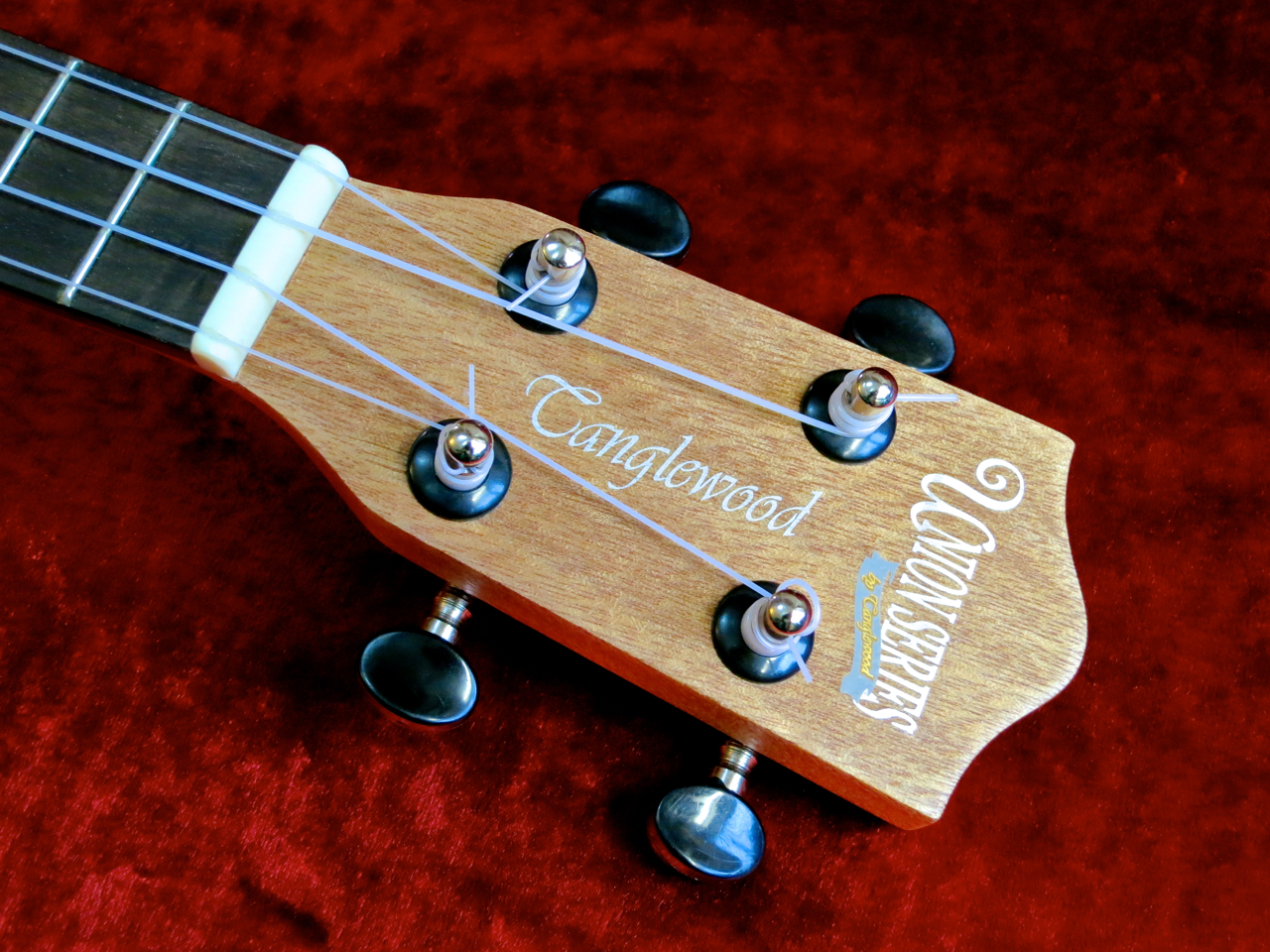
All Union-series ukuleles have mahogany necks with glued-on neck heels and headstocks.
The fingerboards have been crafted from rosewood.

Tanglewood’s geared, open tuners work very well.
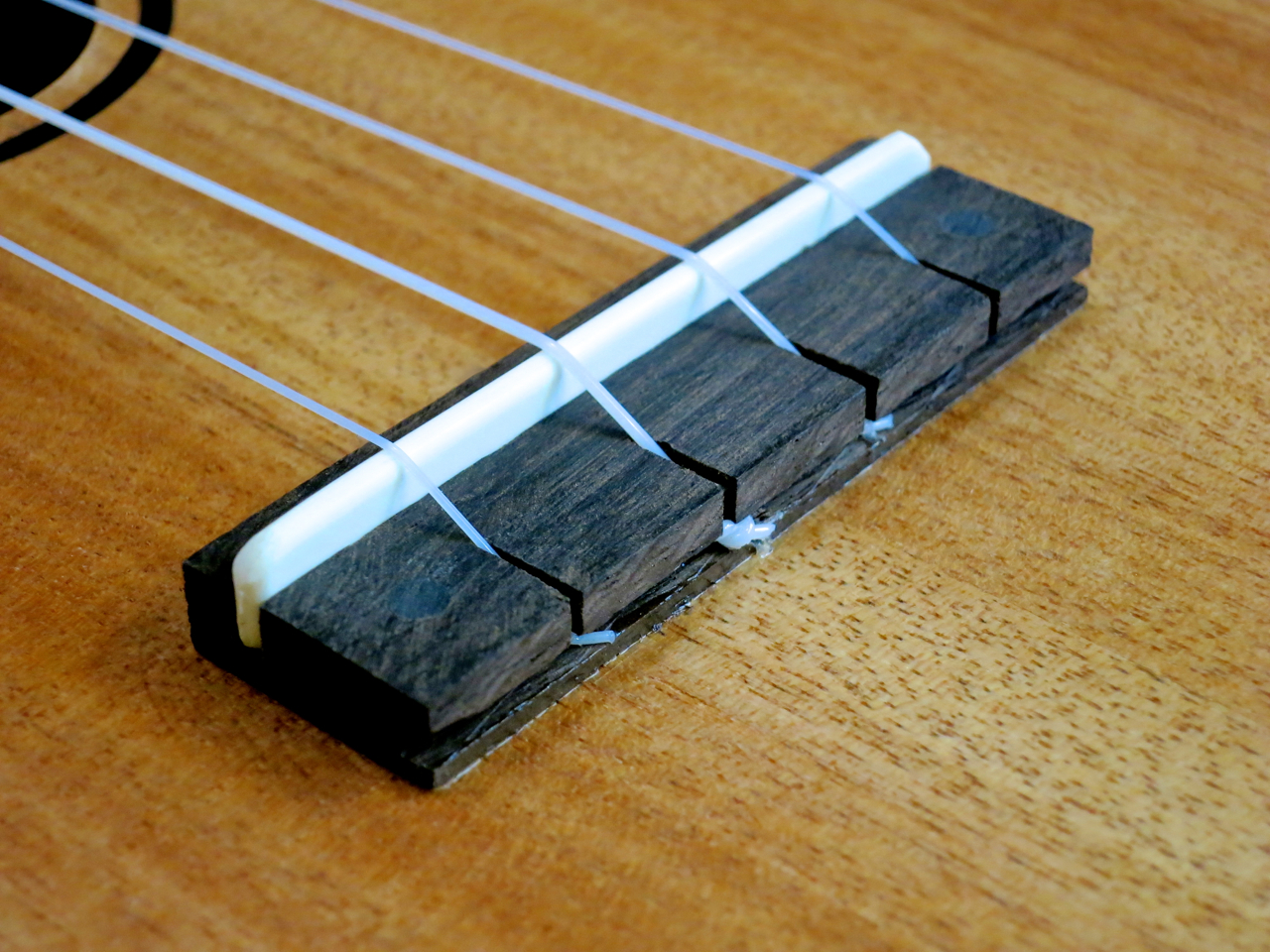
Ukuleles come with one of several different bridge designs, depending on the manufacturer.
Tanglewood has chosen the most practical ukulele bridge, which anchors the knotted string ends in little slots cut into the top of the bridge.

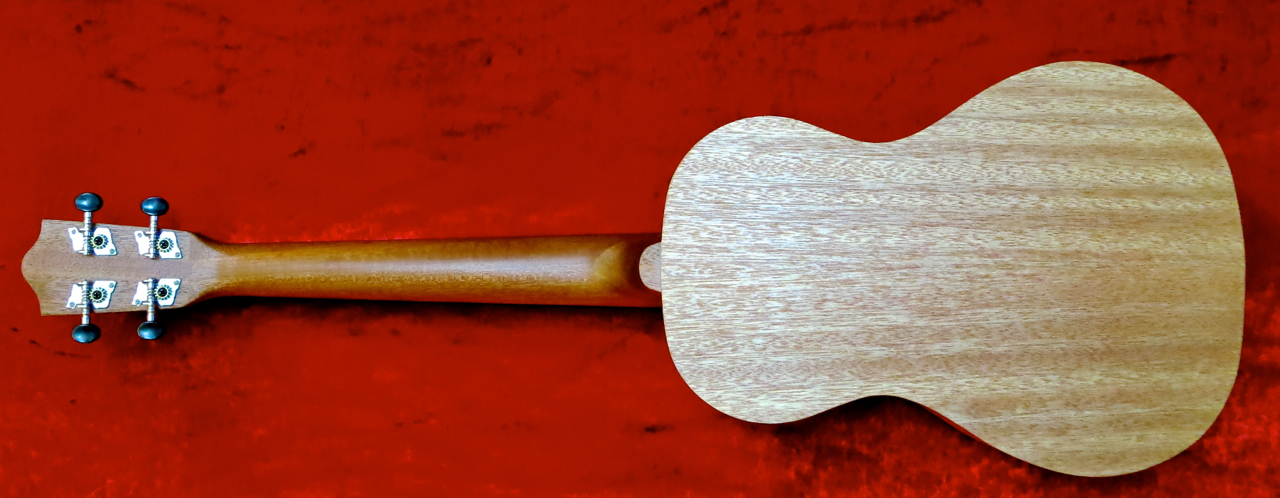
All Union-series ukuleles have a sound box made from laminated mahogany.
The instruments have received a clear satin finish.
****

Tanglewood’s TU-1CE (current price in Finland 116 €) is a soprano ukulele with a deep cutaway. It comes with a pickup and preamp installed.
The soprano is the smallest of the common four ukulele sizes. The TU-1CE has a scale of only 34.5 cm.
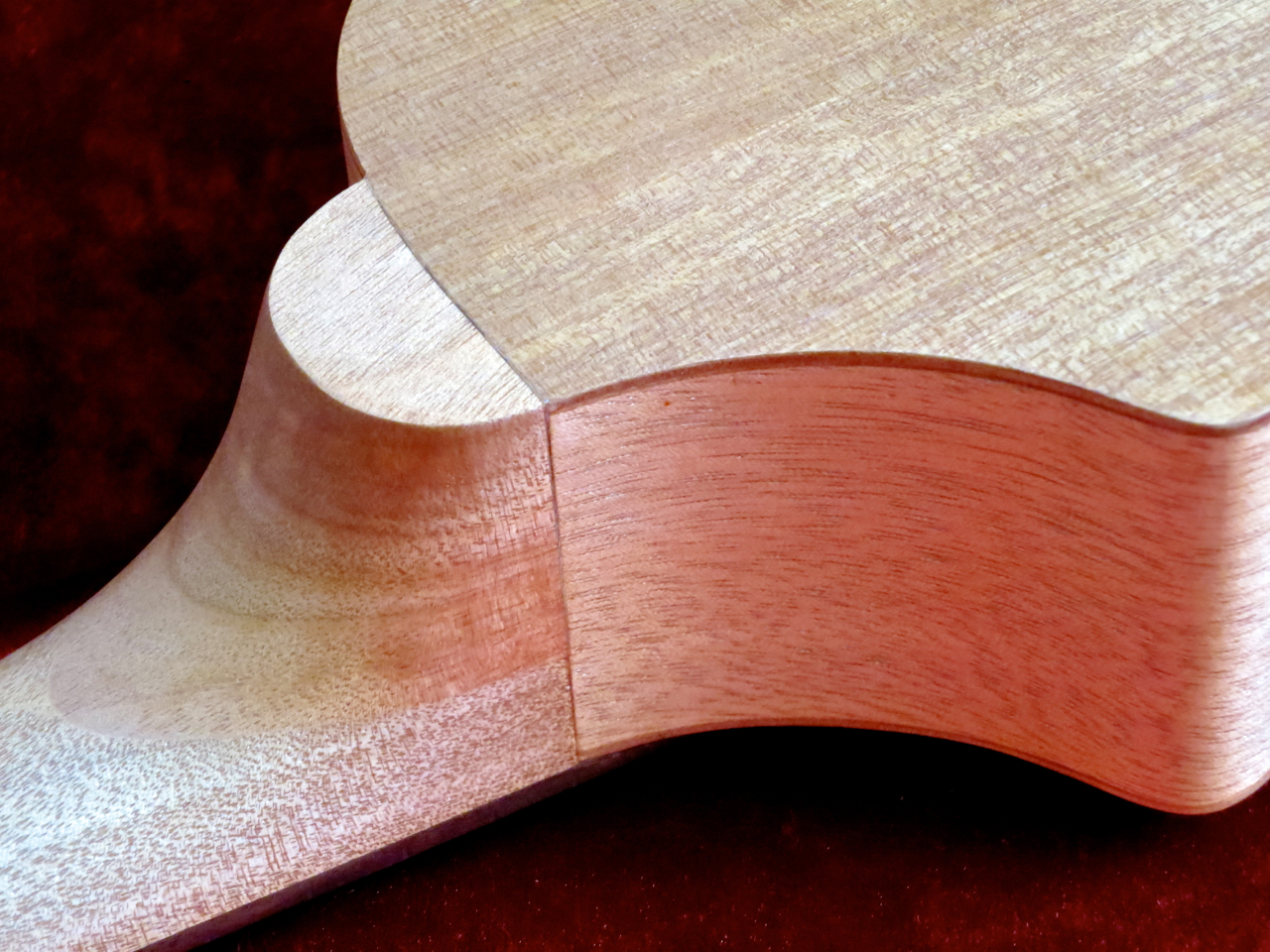
The workmanship on this Tanglewood (built in the Far East) is very good in relation to its low price. Look at that clean neck joint!

The TU-1CE sports 16 small frets, as well as dot position markers.
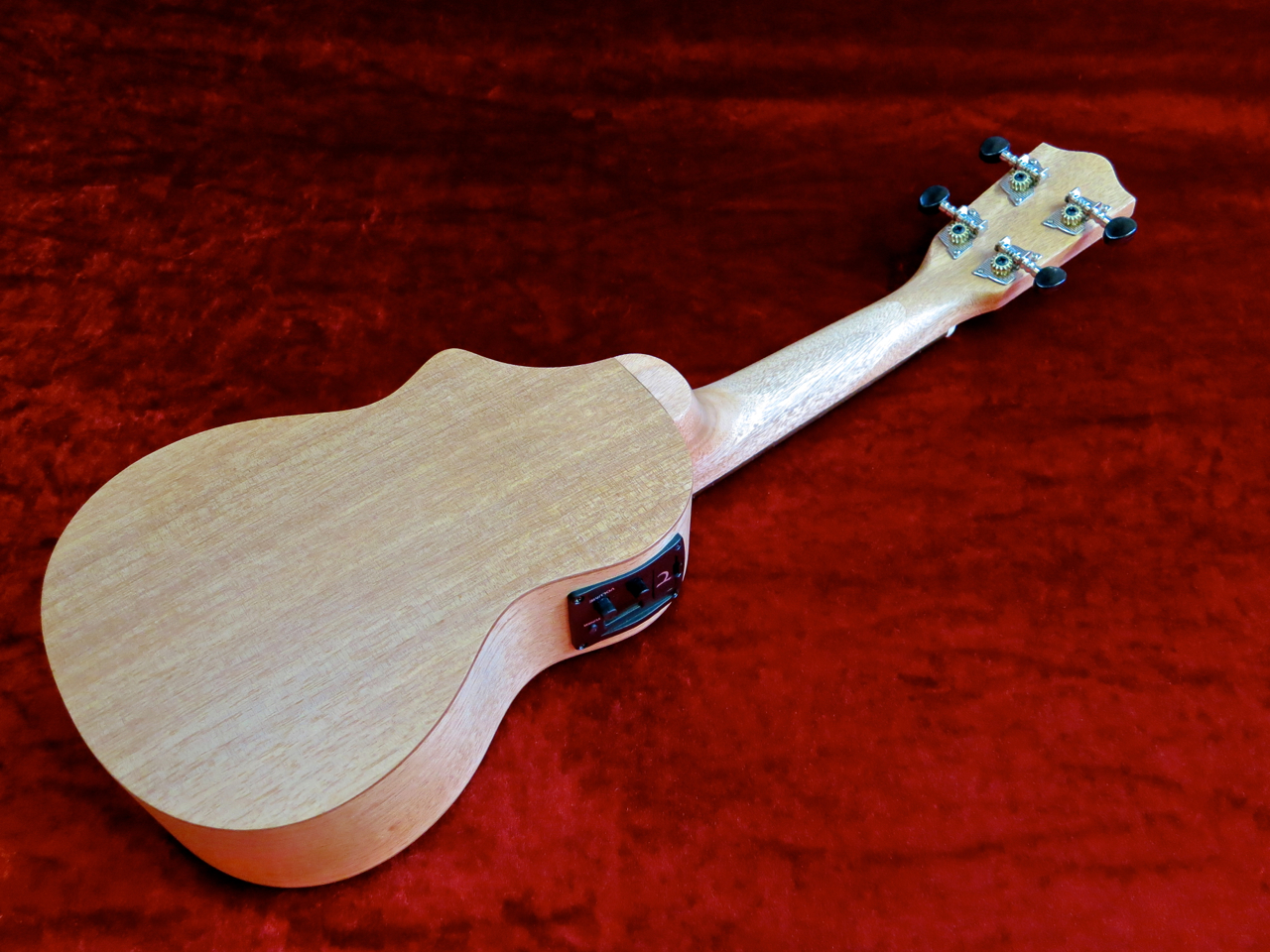
This soprano comes factory-equipped with top quality Aquila Nylgut strings.
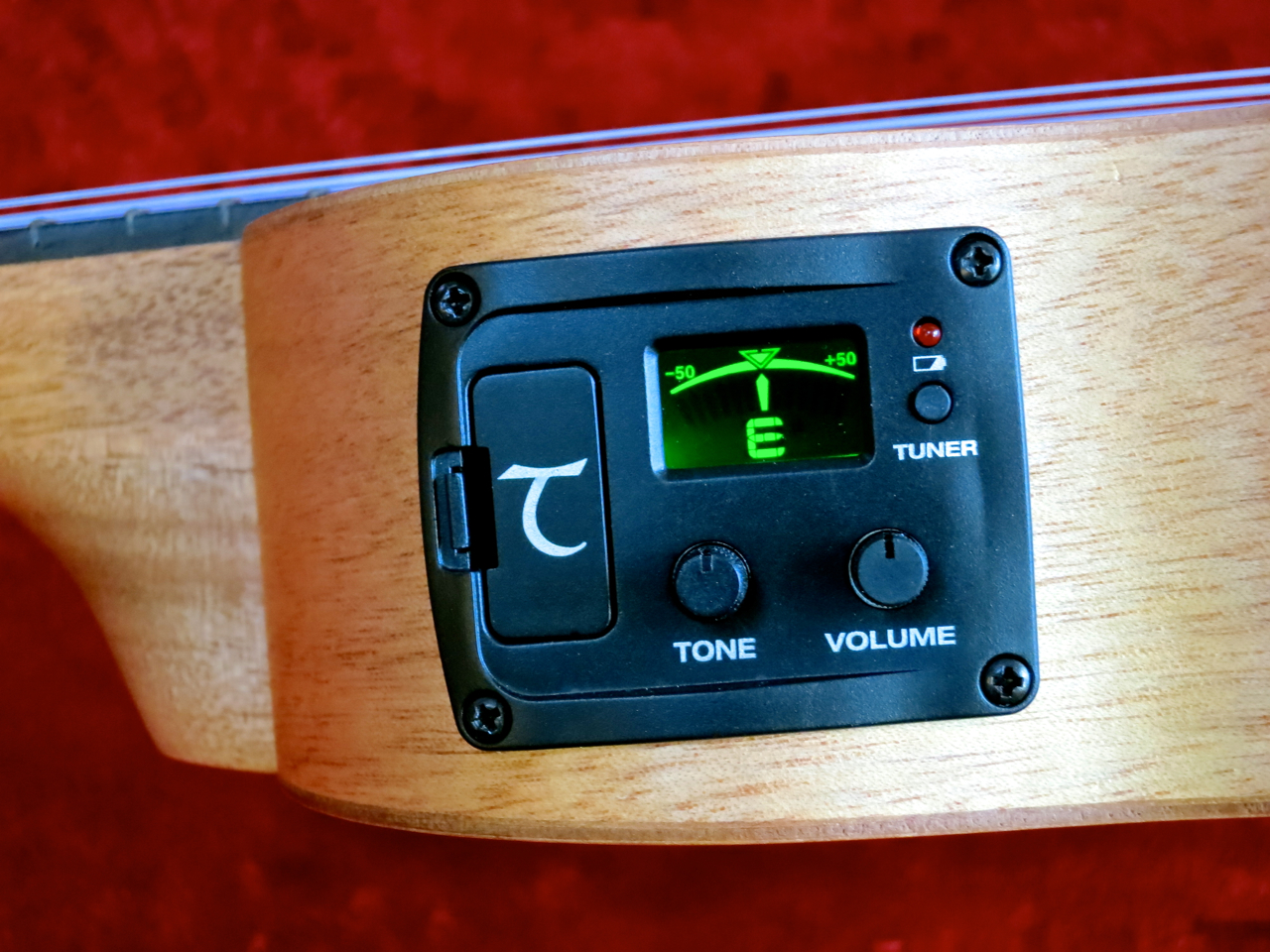
The Tanglewood’s preamplifier is powered by a button cell and offers controls for volume and tone, as well as a chromatic tuner.
****

The Tanglewood TU-3 (119 €) is a concert-sized uke. A stylish hardcase is included in the price.
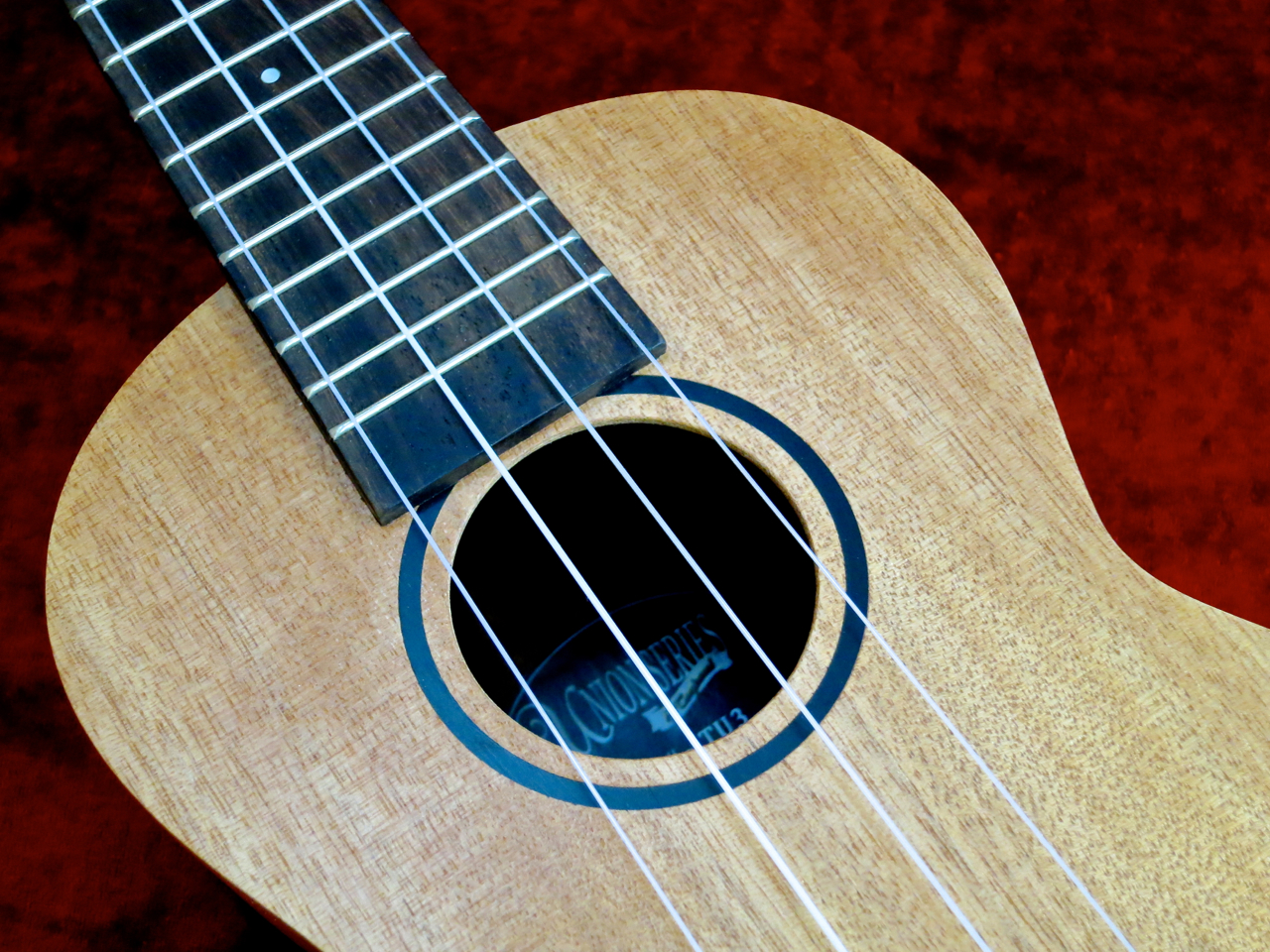
A Concert-ukulele is the next bigger size to a soprano.
This model has a 37.5 cm scale.

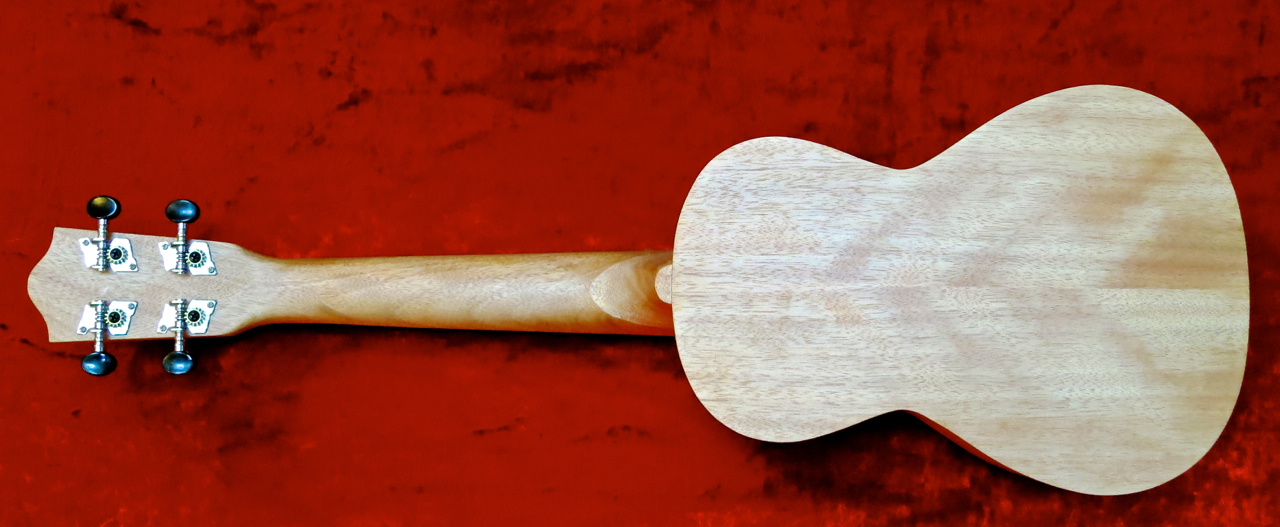
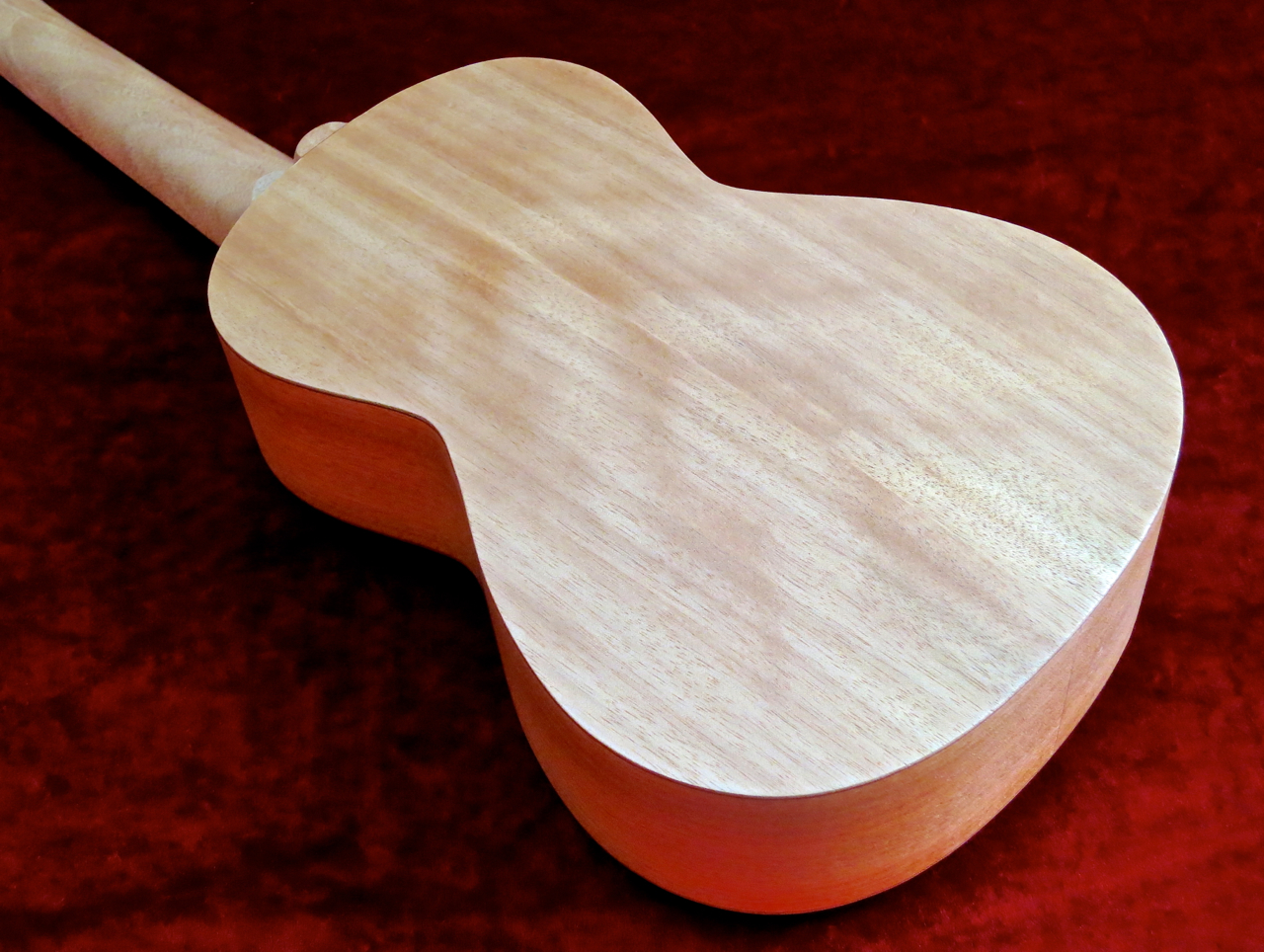
This TU-3 has an exceptionally nicely grained body…
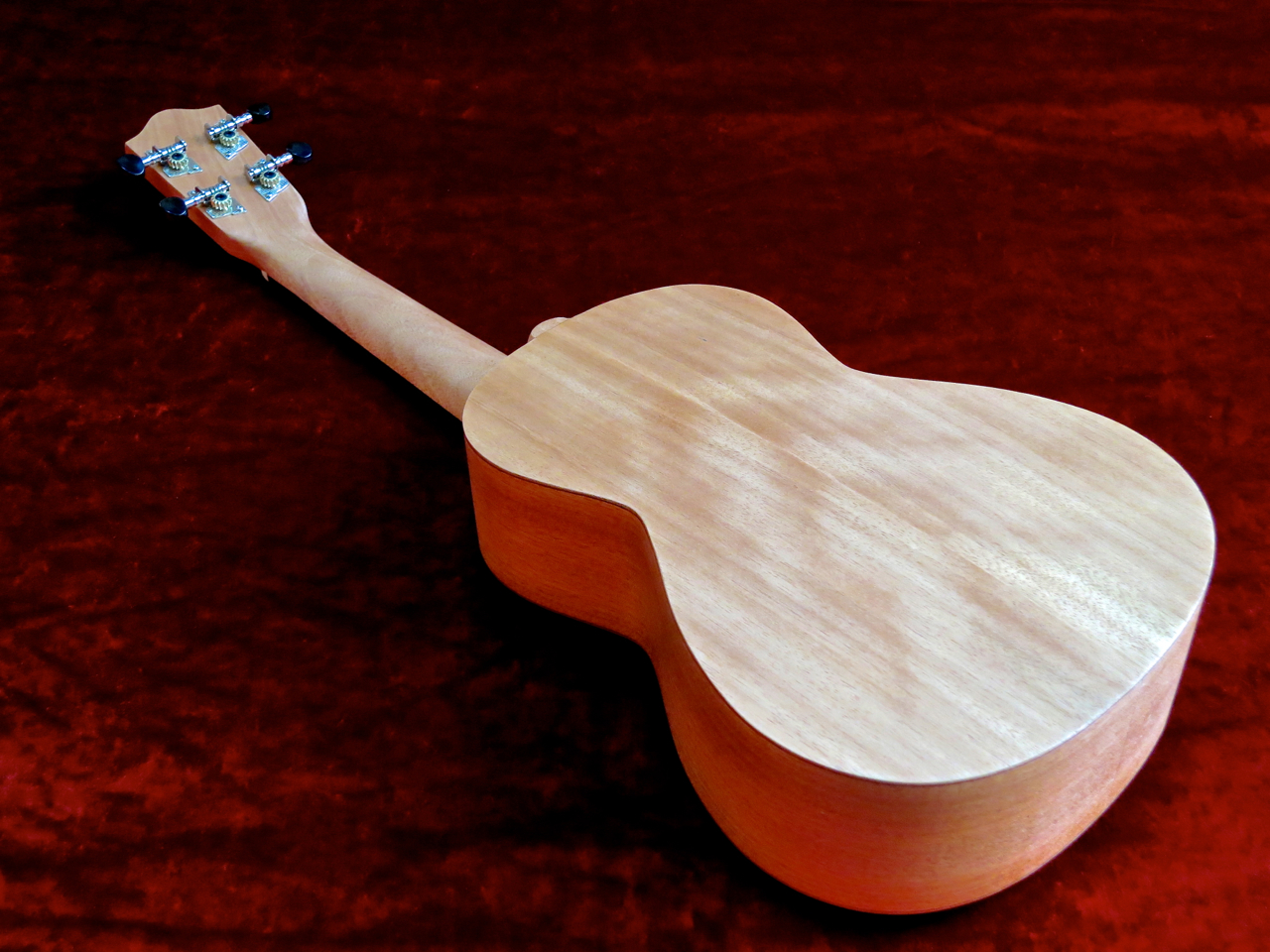
…with a highly figured back.
****

The TU-3’s electroacoustic version – the Tanglewood TU-3E (129 €) – comes equipped with the same preamp model we’ve already seen on the TU-1CE.
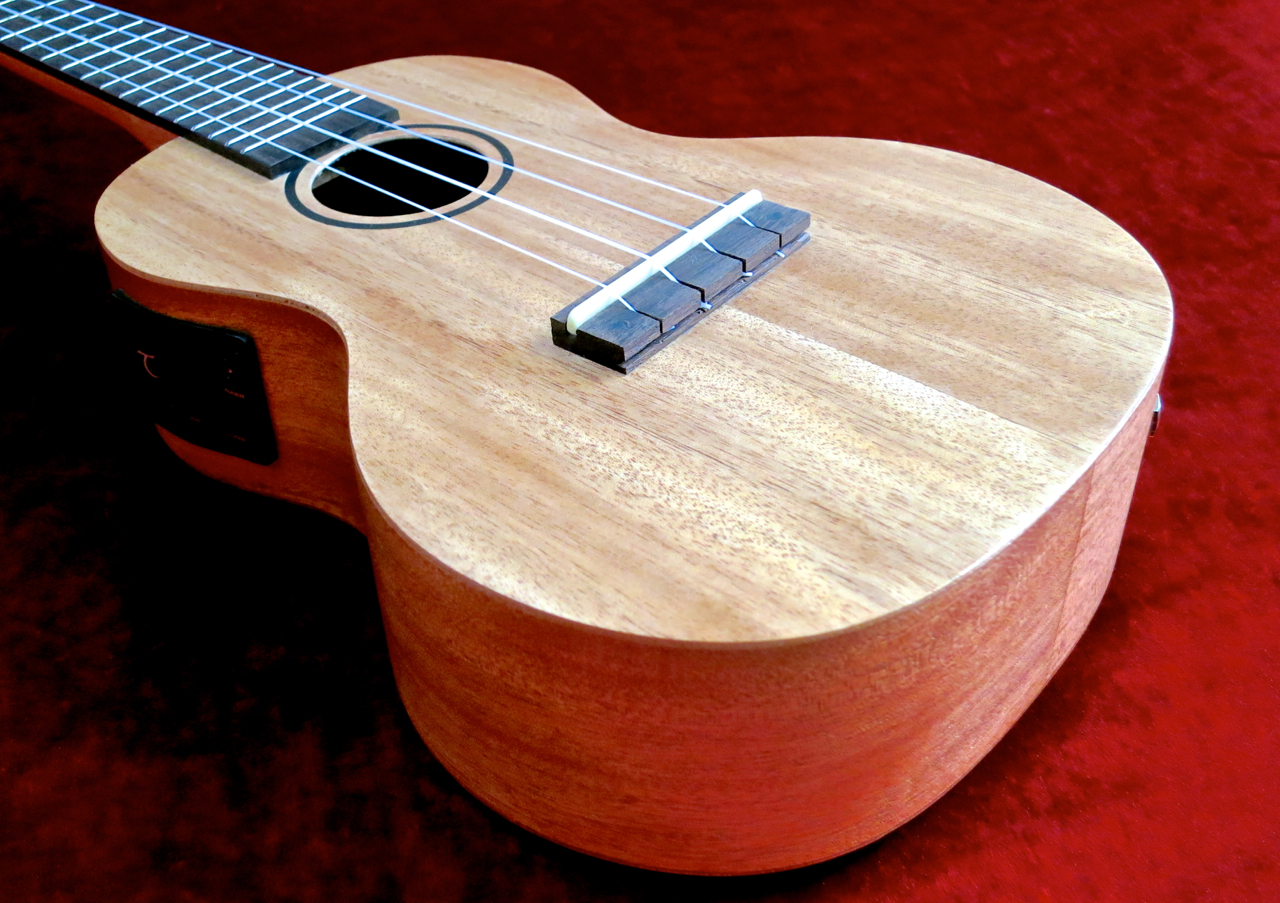
The TU-3E’s fingerboard offers you 18 small frets.

The simple rosette found on all Union-series ukuleles complements the organic, woody look of the instruments very well.

The output jack is situated on the lower rim.
****
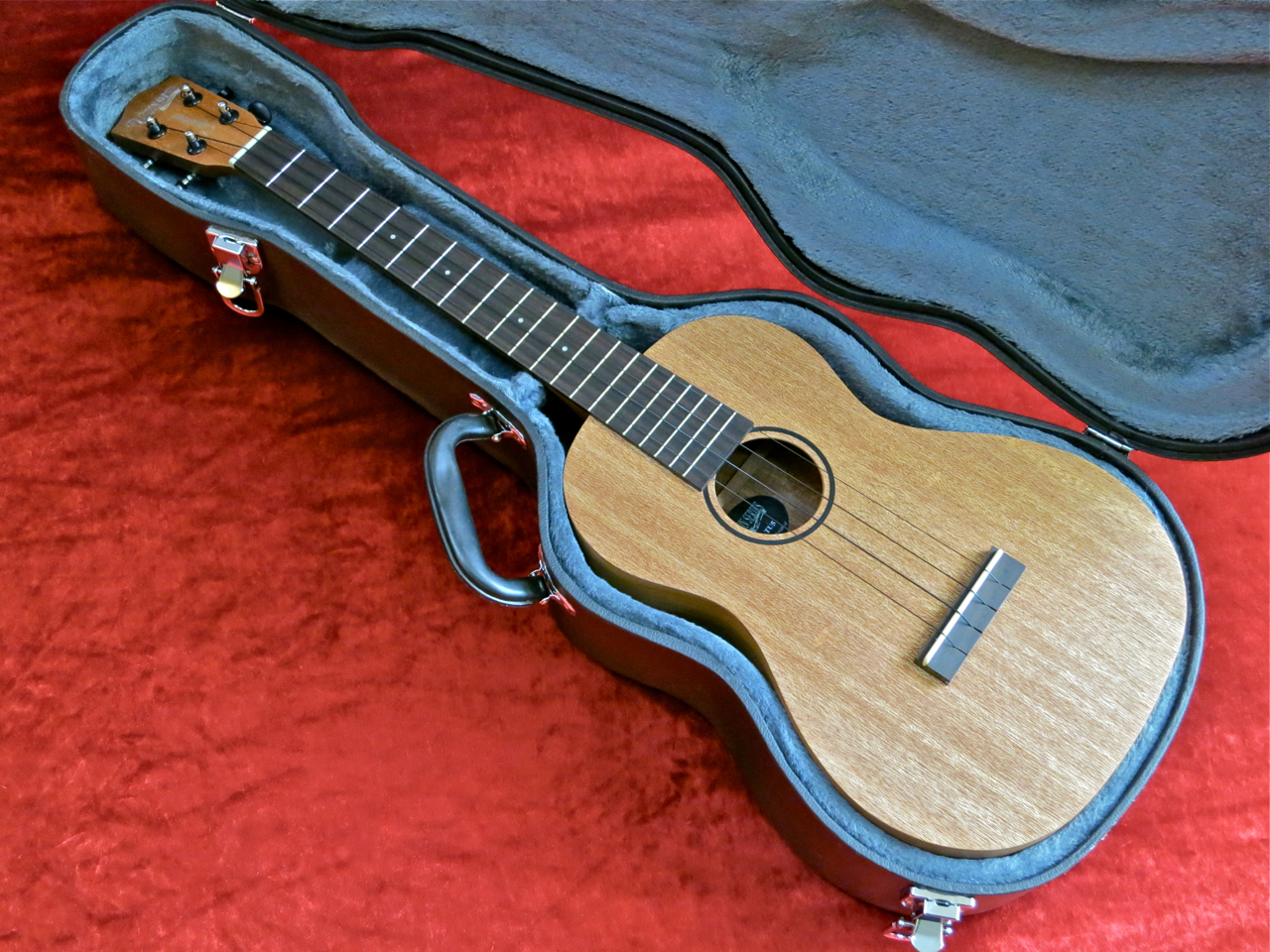
Just like the two Union concert-ukuleles, Tanglewood’s baritone uke, the TU-5-ukulelessa (149 €), also comes in its sturdy case.

The baritone is the largest traditional ukulele size, with the TU-5’s scale length measuring 51.2 cm.

The TU-5is equipped with 20 small frets. Our test sample came with a set of black nylon strings tuned to High-g-tuning (d4-g3-h3-e4), meaning that the fourth string is one octave above a regular guitar string.

****
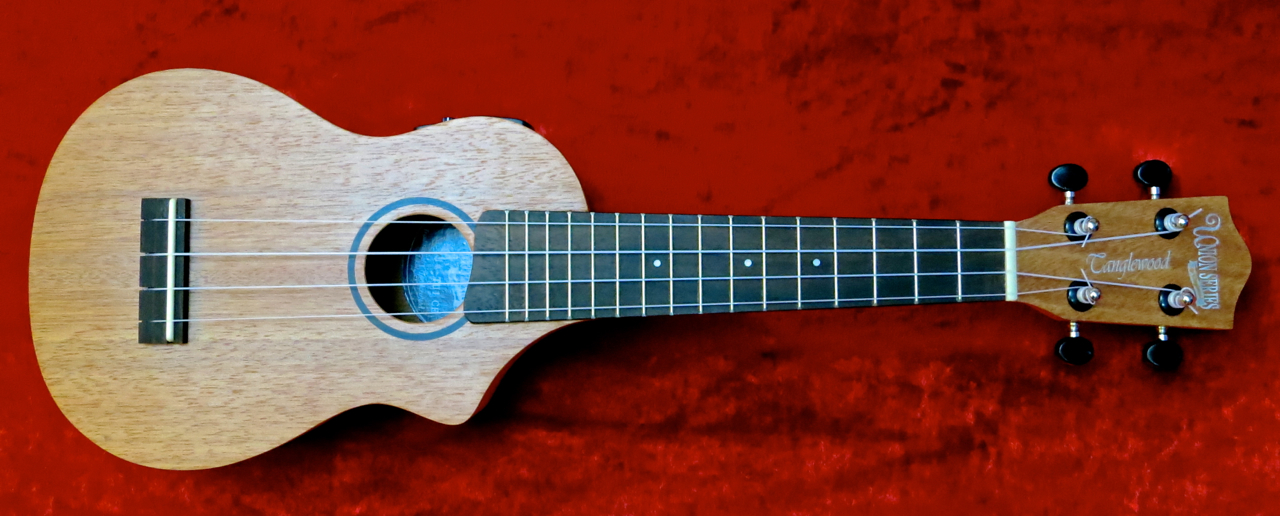
This is what the TU-1CE sounds like when recorded with a condenser microphone:
The built-in piezo system results in a very decent direct sound:
This clips mixes the microphone with the piezo output:

****
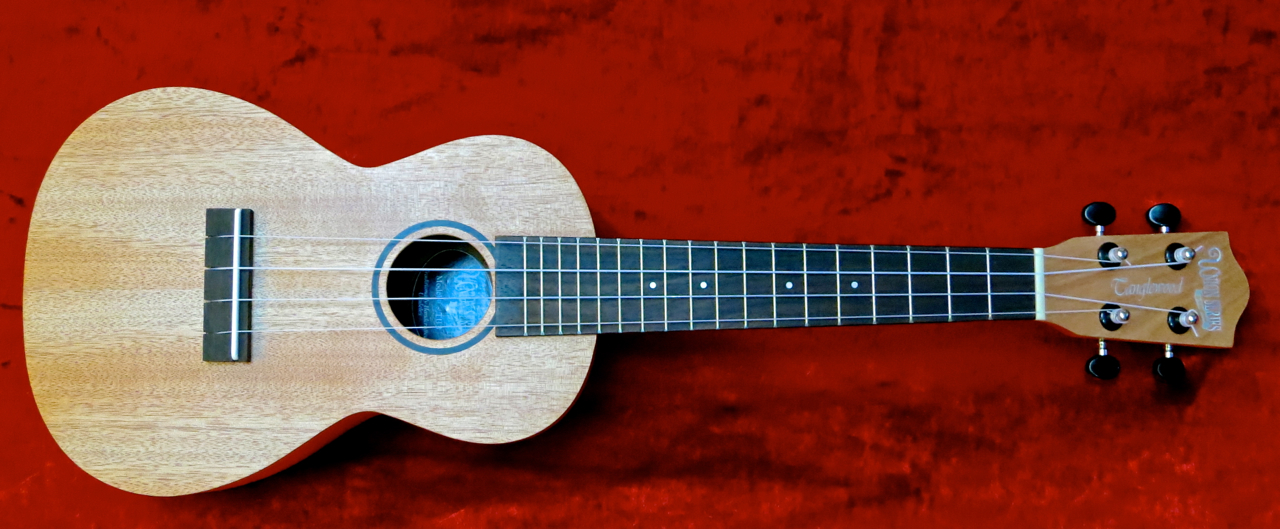
I recorded the concert-sized Tanglewoodin TU-3 with an AKG C3000 and a Shure SM57:
****

Acoustically, the piezo-equipped TU-3E sounds virtually indentical to the all-acoustic TU-3:
Sadly, our test sample displayed some sort of trouble with its under-saddle transducer (probably an uneven bridge slot), which rendered the pickup sound rather useless, because the middle pair of strings was much louder than the two outermost strings:
Here’s a mix of the TU-3E’s electric and acoustic signals:

****
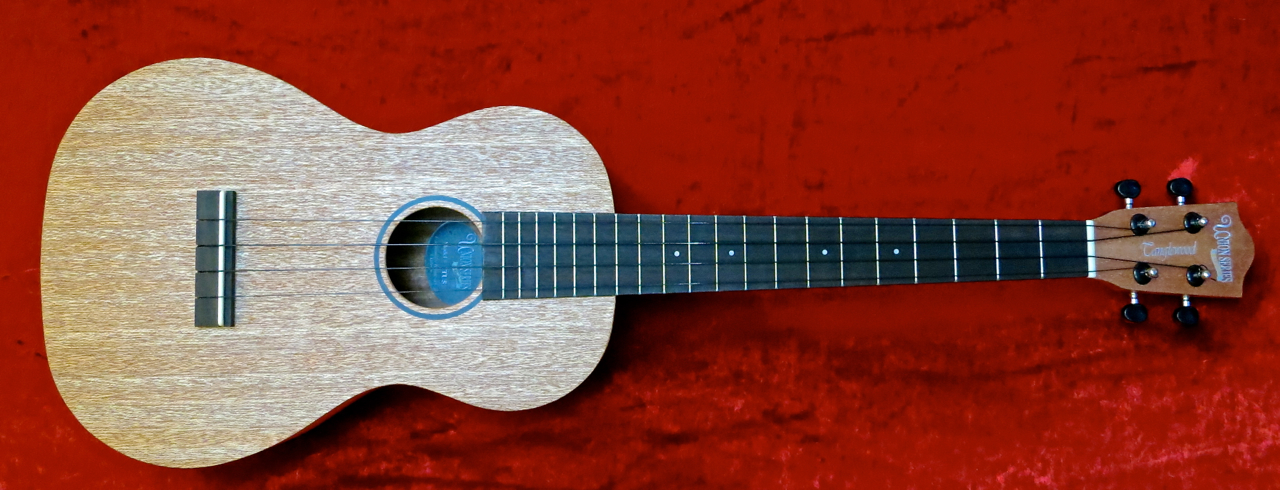
I recorded Tanglewood’s TU-5 baritone uke using an AKG C3000 condenser microphone and Shure’s dynamic model SM57:
****

Tanglewood’s Union-series ukes are well-made, lightweight instruments with a very down-to-earth charm.
Regardless of their low price tags these ukes are decent musical instruments, not toys!
I must say I enjoyed Tanglewood’s fat neck profiles a lot. These are neck a grown-up man can hold on to!
Judging by the fine performance of the TU-1CE’s pickup system, I’m willing to believe that the TU-3E’s underwhelming pickup sound is just a one-off oversight in quality control.
Still, the whole picture is really very positive, both in terms of workmanship and sound. The inclusion on classy-looking hard cases in the price of the three ”bigger” models on test makes these Tanglewoods even more enticing. In my view, Tanglewood’s Union-series ukuleles are a great, and affordable, way to get to know the Hawaiian cousin of the guitar.
****
Tanglewood Union-sarja ukuleles
Finnish distributor: Musamaailma
TU-1CE – 116 €
TU-3 – 119 €
TU-3E – 129 €
TU-5 – 149 €
****
Pros (all models):
+ workmanship
+ satin finish
+ fretwork
+ Aquila-strings (except for TU-5)
+ case included (not with TU-1CE)
+ TU-1CE: good-sounding piezo system
Cons:
– TU-3E: piezo system’s performance in review sample
– TU-5: spongy feel of factory-installed strings
****
****
Saksalainen Duesenberg on valmistaja, joka on tunnettu laadukkaista kielisoittimista, joissa vintage-mainen tyylikkyys yhdistyy saumattomasti uusiin, kekseliäisiin ratkaisuihin yksityiskohdissa.
Duesenberg D-Bass on juuri tällainen soitin, sillä valmistajan mukaan bassosta saa irti sekä Presari- että Jazz-maisia soundeja firman passiivisella Mid-Shift-säätimellä.
****
Duesenberg D-Bass (1.729,90 €) on hyvä osoitus siitä, että hyväksi havaittuja perusaineksia voi yhdistellä tyylikkäästi kopioimatta muita soittimia.
Soitin on passiivinen nelikielinen basso, jolla on ruuvikaula vaahterasta ruusupuisella otelaudalla, sekä reunalistoitettu leppärunko kaarevalla etupuolella.
Rungon syvä viiste lisää D-Basson mukavuutta.
Soittimen runko viimeistellään kiiltävällä lakkauksella, kun taas kaulassa on ohut mattapintainen viimeistely.
Minun mielestäni Duesenbergin kolmiaskelmainen viritinlapa näyttää isona bassoversiona vielä paremmalta kuin firman kitaroissa.
D-Bassossa käytetään Duesenbergin omia, lukittavia Z-Tuner-virittimiä, joissa kieli ensin pujotetaan virittimen akselissa olevaan käytävään, ennen kuin kieli lukitaan paikoilleen.
Duesenbergin erittäin siisti nauhatyö viimeistellään PLEK-robotilla.
D-Basson 22. nauhaan pääsee vaivattomasti sulavan kaulaliitoksen ansiosta.
Duesenbergin messinkinen talla on erittäin lujaa tekoa.
Kielten korkeuden ja intonaation lisäksi voi säätää vapaasti myös kielten väliset etäisyydet. Säätämisen jälkeen tallapalat lukitaan paikoilleen kuusiokoloruuveilla.
D-Basson kaksiosainen mikrofoni on asennettu omaa ovaaliin pleksiin.
Duesenbergin Toaster-bassomikrofonin juju piilee siinä, että jokaisessa puoliskossa on kaksi kelaa. Tässä mallissa kytketään siis kaksi humbuckeria yhteen, kun taas vanhassa Presarissa käytetään kaksi yksikelaista puoliskoa, jotka vasta yhdessä muodostavat häiriöitä torjuvan yhdistelmän.
Duesenbergin passiivinen elektroniikka löytyy basson isommasta plektrasuojasta – master volume, Mid-Shift-säädin ja master tone.
Tässä Mid-Shiftin toimintaperiaate paljastuu:
Silloin kun Mid-Shift-säädin on täysin avattu, kummankin puoliskon molempia keloja käytetään soundin tuottamisessa, mutta signaalin diskanttia suodatetaan hieman kondesaattorilla. Tästä syntyy D-Basson Presari-tyylinen soundi.
Mitä enemmän säädintä käännetään vastapäivään, sitä enemmän kummankin mikrofonipuoliskon toisen kelan signaalista vaimennetaan potentiometrin omalla vastuksella, mutta samalla kondensaattorin vaikutus vähenee. Säätimen toisessa ääripäässä syntyy siis hieman kirkkaampi ja ohuempi J-tyylinen soundi.
Seymour Duncanin sivuilla löytyy samankaltainen kytkentä, jolla kitaran humbuckeria muutetaan portaattomasti humbuckerista yksikelaiseen kytkemällä toinen kela säätimen kautta maahan.
Duesenberg D-Bassoa myydään omassa kovassa laukussaan.
****
Duesenberg-basso on kaunis soitin mukavalla keskivertopainolla ja erinomaisella tasapainolla, sekä sylissä että hihnasta roikkuen.
Kaulaprofiiliksi on valittu hyvin Presari-mainen matala, mutta leveä ”D”. Soittotuntuma on kuitenkin hyvin nopea ja nykyaikainen, koska D-Basson palisanteriotelaudan kaarevuus on melko loiva, ja myös koska käytössä ovat jumbo-kokoiset nauhat.
Ainoa huomautukseni on kosmeettisesta seikasta: Näkisin kernaasti yksi tai kaksi ruuvia lisää säätimiä kantavassa pleksissä, jotta kolmikerroksinen muovi istuisi tiukemmin D-Basson kaarevaa runkoa vasten.
Duesenbergin akustinen soundi on erinomainen, eikä soittimesta löydy lainkaan monista vintage-bassoista tuttuja soundillisia ongelmakohtia (esimerkiksi ”yli-innokas” matala G tai nopeasti ”kuoleva” korkea c).
Vahvistettu soundi on loistava, jos ei haeta aktiivisoittimista tuttua äärimmäistä muokattavuutta. Mid-Shift-säädin toimii kiitettävästi, ja sen vaikutus on paljon orgaanisempi kuin raju päälle/pois-tyypistä kelojen kytkemistä. Koska kytkentä ainoastaan filtteroi ja vaimentaa osan signaalista, Mid-Shift-säätimen ääriasentojen välillä ei myöskään synny huomattavia eroja signaalitasossa, vaan ainoastaan äänen karakteri muuttuu hieman savuisemmasta P-basson soundista vähän kirkkaampaan J-tyyliseen sointiin.
Esimerkkipätkissä soitan aina saman kuvion kahdesti – ensin Mid-Shiftiä täysin avattuna (P) ja sen jälkeen säätimellä toisessa ääriasennossa (J).
****
Duesenberg D-Bass on mielestäni upea sähköbasso laadukasta passivisoundia etsiville. Soittimen Mid-Shift-toiminto on hienovarainen, mutta silti erittäin toimiva tapa räätälöidä Duesenbergin soundia itselleen sopivaksi.
****
Duesenberg D-Bass
1.729,90 €
Maahantuoja: F-Musiikki
****
Plussat:
+ työnjälki
+ Mid-Shift-säädin
+ soitettavuus
+ ulkonäkö
+ soundi
Miinukset:
– plektrasuojan kiinnitys (katso teksti)
****

Amfisound Guitars is run by two master luthiers in the outskirts of the northern Finnish city of Oulu.
Sampo Leppävuori (say ’SUM-poe’) and Tomi Korkalainen (’Tommy’) met while studying at the Ikaalinen College of Crafts and Design. They became friends and decided to set up shop together near Sampo’s hometown.
Amfisound is able to offer a very wide selection of different guitar and bass models, because the company combines both Sampo’s and Tomi’s strengths.

Sampo Leppävuori loves classic bass and guitar designs, as you can see in Amfisound Guitars’ tasty Classic Line -models, such as the Halti-, Kaira-, Halla- and Kobalt-guitars.
These instruments are far from being straight copies of vintage guitars, though, as all Amfisound models feature a long list of updates and improvements (mostly in the hardware, electronics and pickup departments), as well as special Amfisound-features, such as the company’s special, heel-less set-neck joint.

Tomi Korkalainen’s creative activities are mostly zoned in on the Metal and Hard Rock genres, where he strives to come up with the ultimate Metal-guitars in terms of playablity, tone and visual impact.
Amfisound’s Extreme Line of Metal axes – comprising such guitars, as the Routa, Atrain, Railo and Roster models – bears clear testament to Tomi’s creative genius.
****
Kitarablogi: What’s the philosophy behind Amfisound Guitars?
Tomi: We wanted to set in motion a fresh and youthful custom guitar culture in Finland. Being based up here in the north strengthens our North-European image and appeal, which we try to underline further by making our guitars very visual. We came up with our Finnish model names around 2003/2004. The model names are quite easy to get to grips with even for foreigners, and it’s cool to hear them spoken in different accents at trade shows.
KB: Your visual approach sets you apart from many other makers.
Sampo: We had to come up ourselves with practically all of our special finishes, treatments and woodworking techniques. And you still keep on learning something new while working on new designs. When it comes to making guitars for the Hard ’n’ Heavy -crowd, there was basically no precedent over here in Finland. We simply had to dig in and come up with all the solutions by ourselves. All this hard graft has reaped rewards and Amfisound instruments are held in high regard at home as well as abroad. It is also great to be involved in the evolution of the art and culture of guitar-making in Finland. Since we started our company, people’s attitudes towards Finnish Metal guitars have changed dramatically for the better, which is a good indicator for the kind of mind-boggling progress guitar-making in this country has seen.
KB: How do you approach the building process?
Tomi: At the moment most of our instruments are ordered from abroad. Each order is treated individually, and each guitar is built by hand from start to finish. We don’t build in production runs, and we never use prefabricated bodies or necks, which is actually a great advantage for our customers. Our instruments are played by a lot of great artists from all sorts of different musical genres, in Finland and abroad. Our branding has taken a large leap in my opinion, when we introduced our current, round company logo. For us it means that we can make Amfisound Guitars a real Finnish guitar brand, instead of us being merely some small custom maker from northern Finland.
****
Amfisound Guitars’ range of models offers a very broad scope for customisation, because Sampo and Tomi want to make sure that each and every customer gets exactly the guitar or bass he or she wants.
Amfisound’s unbelievable custom finishes are fast becoming the stuff of guitar legend. These guys are real wizards when it comes to using the spray gun and the airbrush! Regardless of whether you want an instrument that looks like and ancient piece of wood, complete with runic writings, or rather a real shocker in neon green with leopard spots, the dynamic duo of Amfisound will do it with style.
****
Besides making their own models Amfisound Guitars also take on repair and customising work.
****

Every Amfisound instrument once started out as a heap of wooden planks.

Amfisound very often use native Finnish wood species, like figured arctic birch and black alder, in their body designs, alongside more exotic timber, such as African mahogany (khaya ivorensis).

Here’s a close-up of a stack of ebony fingerboard blanks. Naturally, Amfisound has all the necessary paperwork to prove it comes from legal sources.
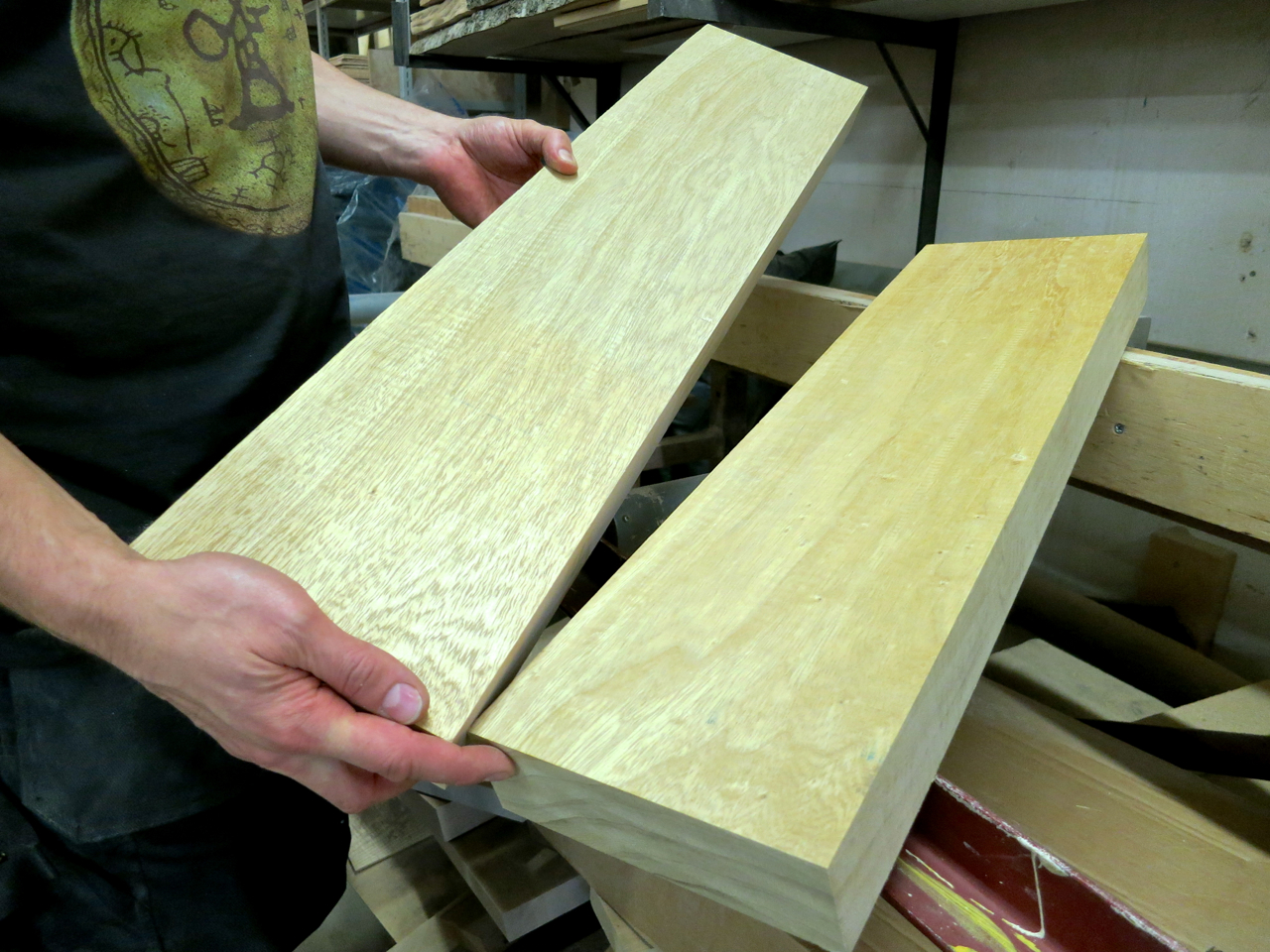
If you’d rather have something more exotic for your guitar’s body, there are such alternatives as korina, which is also known as (black) limba.

A lot of work has gone into Sampo’s and Tomi’s own routing templates, jigs and fixtures. Most of the building process at Amfisound Guitars is old-school instrument-making.
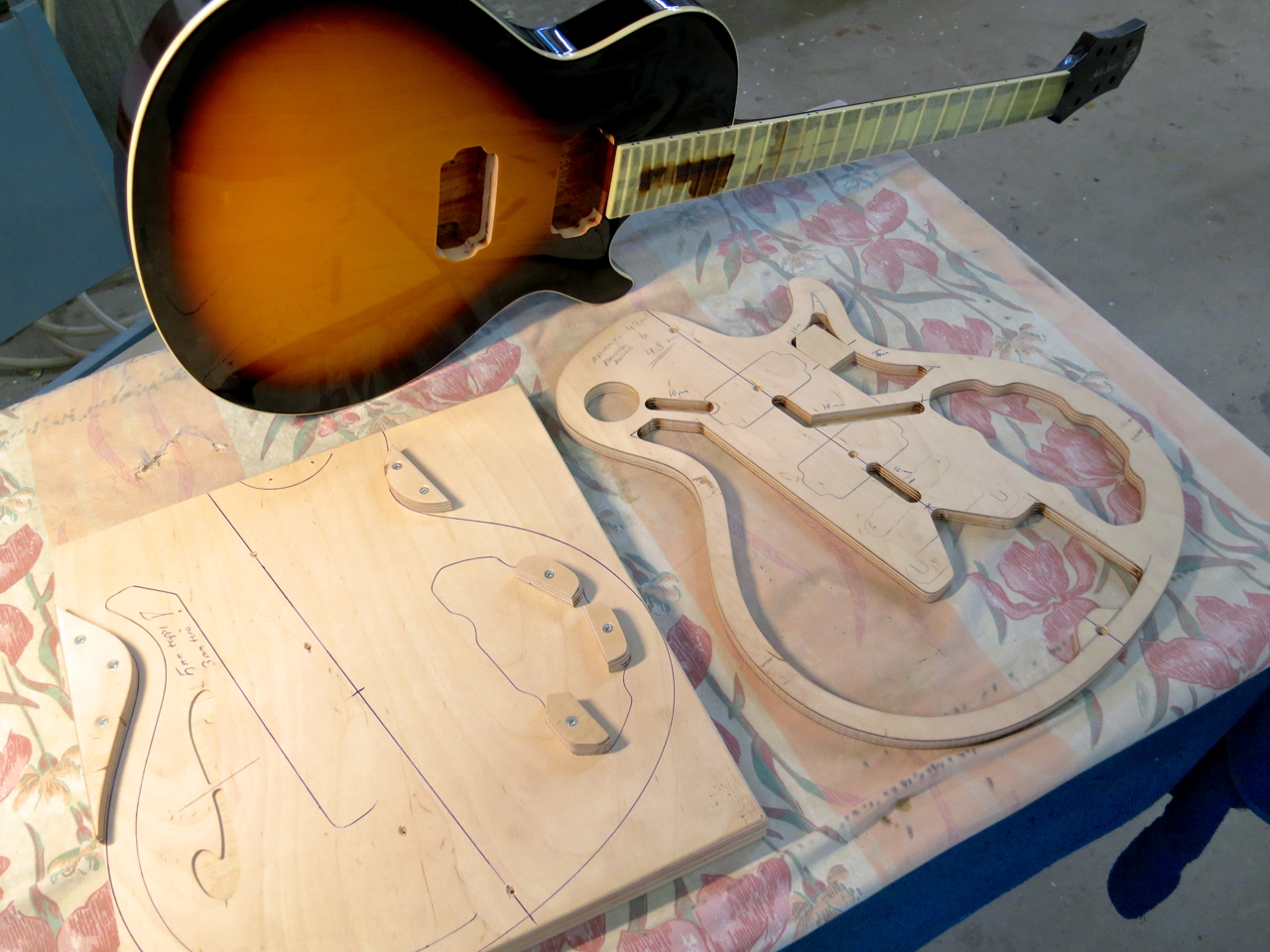
A semi-solid version of the Amfisound Halti is in the works. The routing template gives you a good view on all the cavities that will be covered by the carved top.

On through-neck designs the neck blank is glued together from three strips of maple.
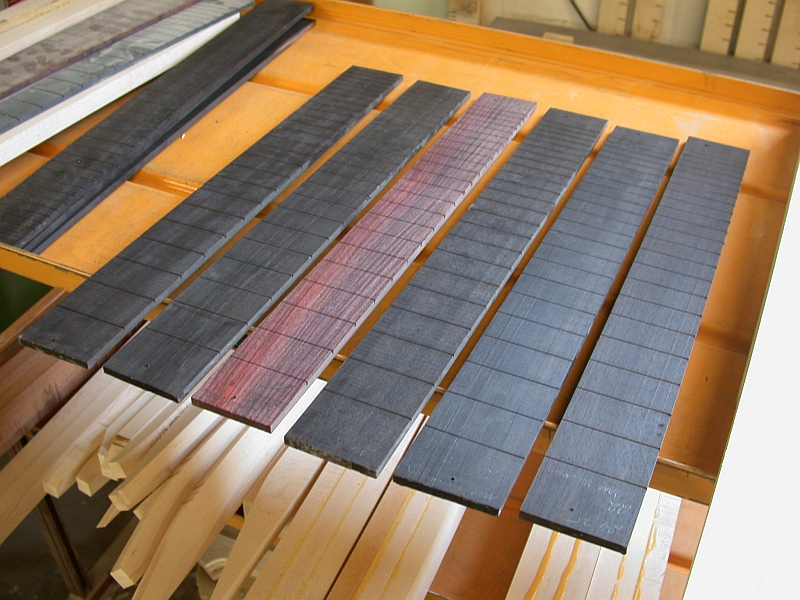
Here we have some rosewood and ebony fingerboards with the fret slots already sawn.

For some more demanding operations a copy carver is used to ensure consistency.
In this picture a Halti-model receives its deep neck joint cutaway…
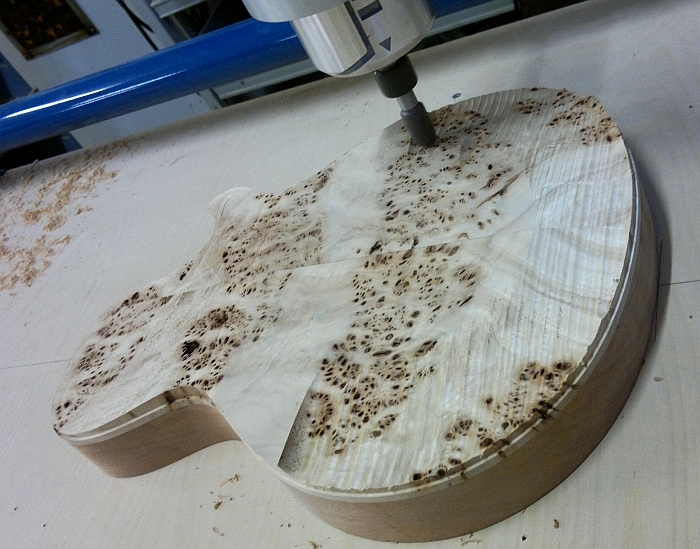
…while here the copy carver is used to rough out the dished shape of the top.
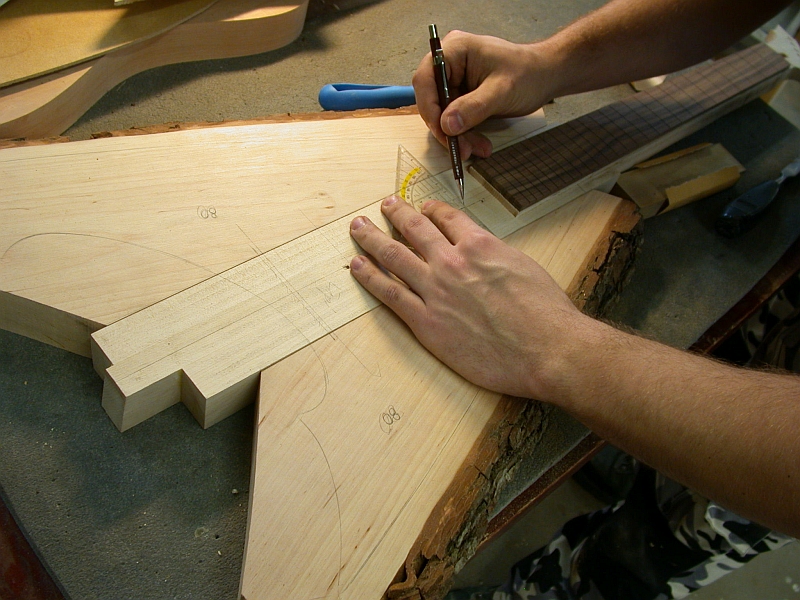
But often only handwork will do for an Amfisound guitar:
The outlines of an Atrain-guitar, as well as the positions of the bridge and the pickups, are drawn onto the wood with a pencil.

A wood rasp is a good tool to start shaping a smooth neck heel, if you know what you do.

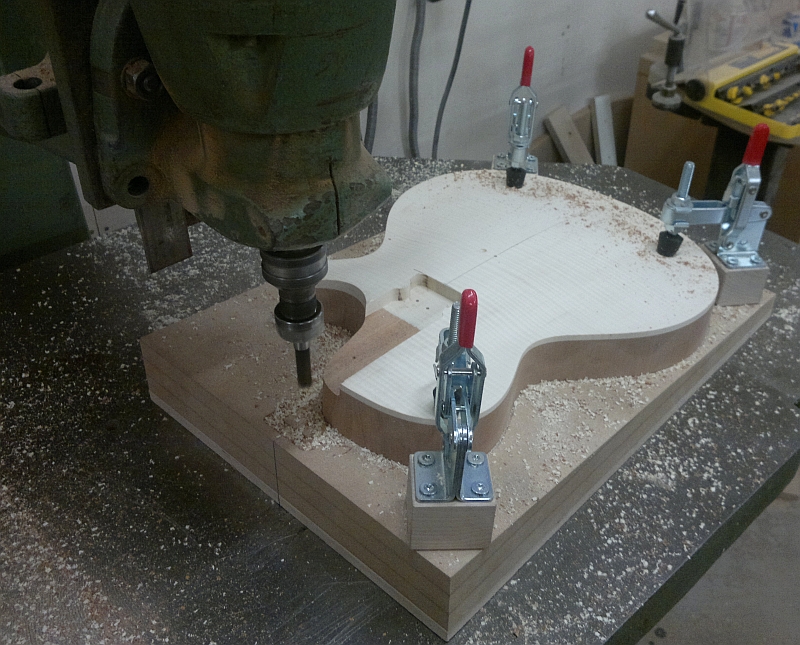
A router table is used for a lot of things in guitar-building:
Here a pickup cavity is routed into a bass body…
…while this picture shows a neck slot being cut…

…and this picture shows a pickup cavity and the necessary recesses for a vibrato being routed out.
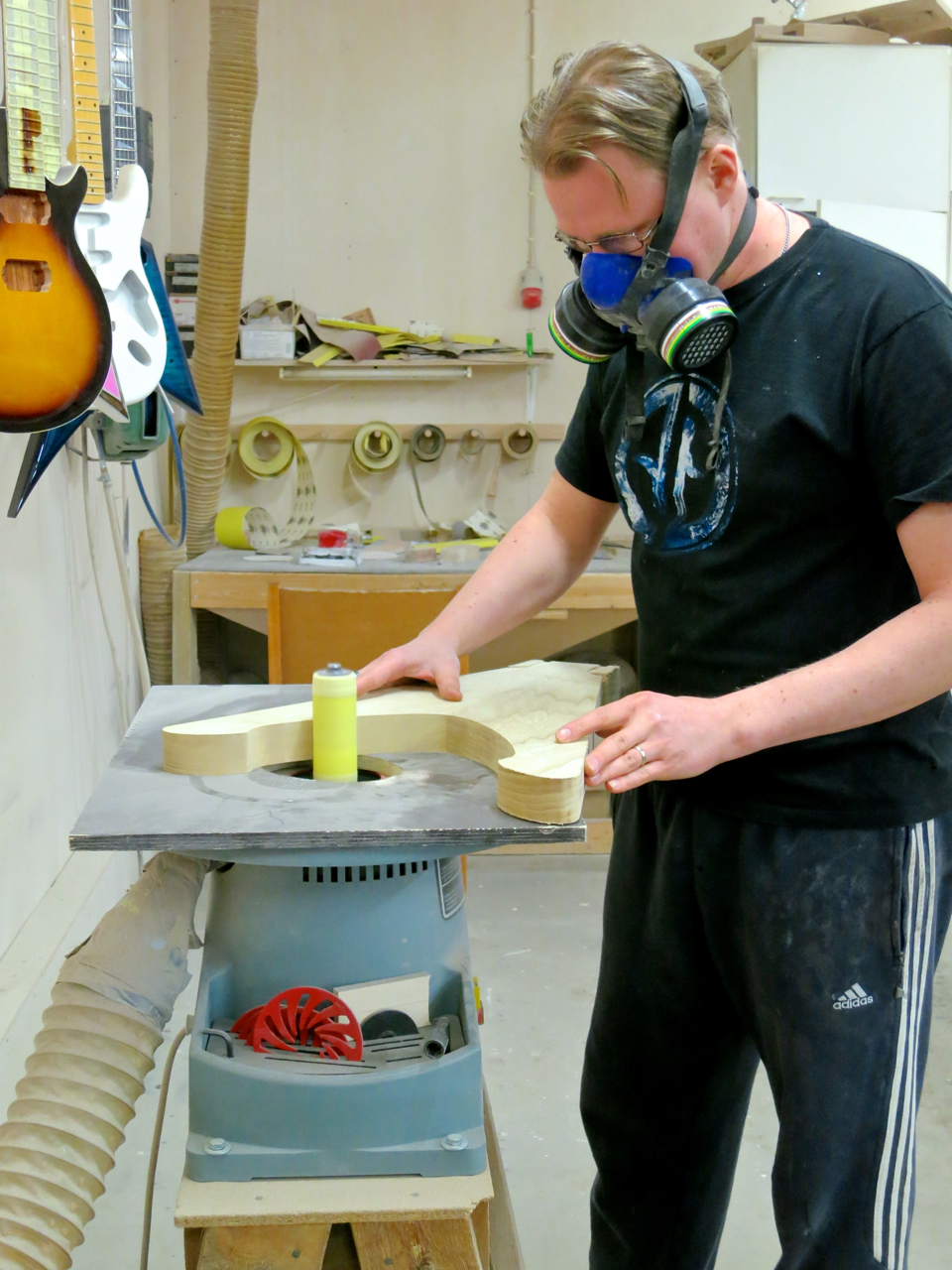
Tomi makes sure the outlines of this Railo-body are crisp and clean.

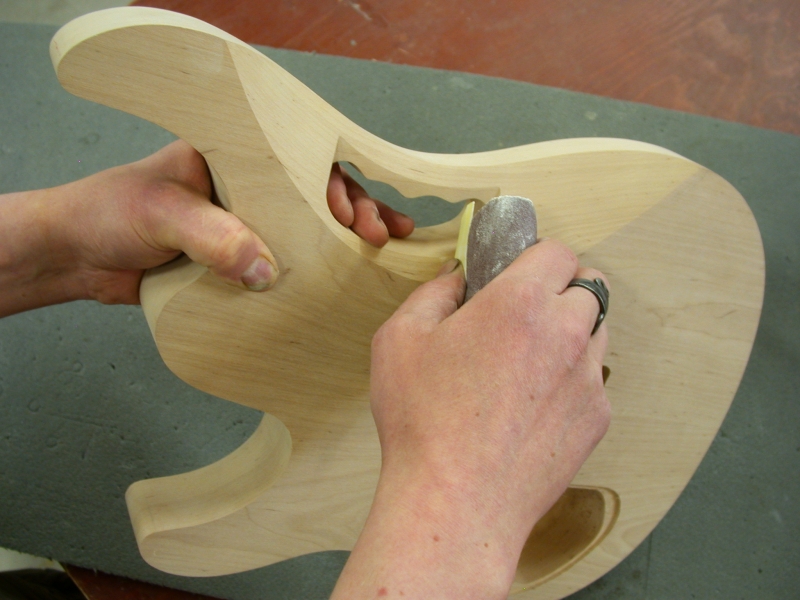
Many spots need hand-sanding, though.

After levelling a special file is used to put the rounded playing surface back into the frets.
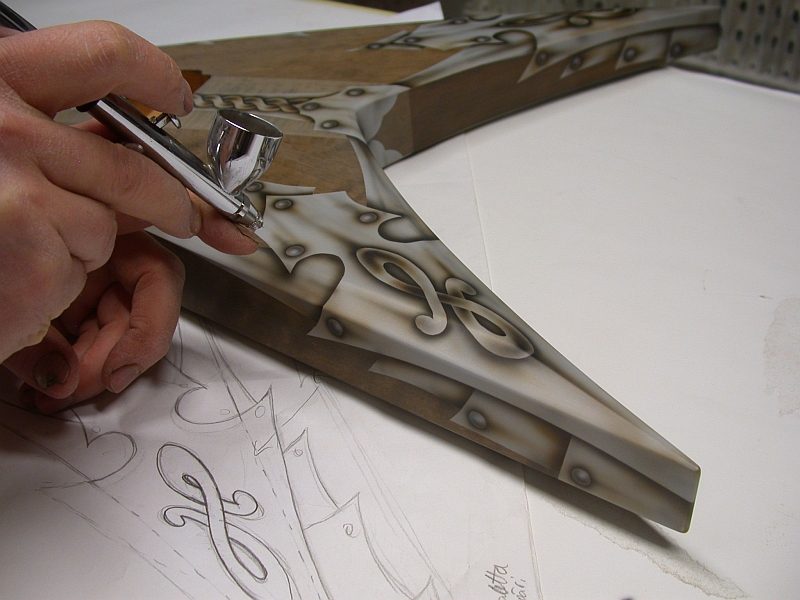
Stunning visuals need a good amount of planning and a very steady hand.


When it comes to graphic finishes, at Amfisound only the sky’s the limit.
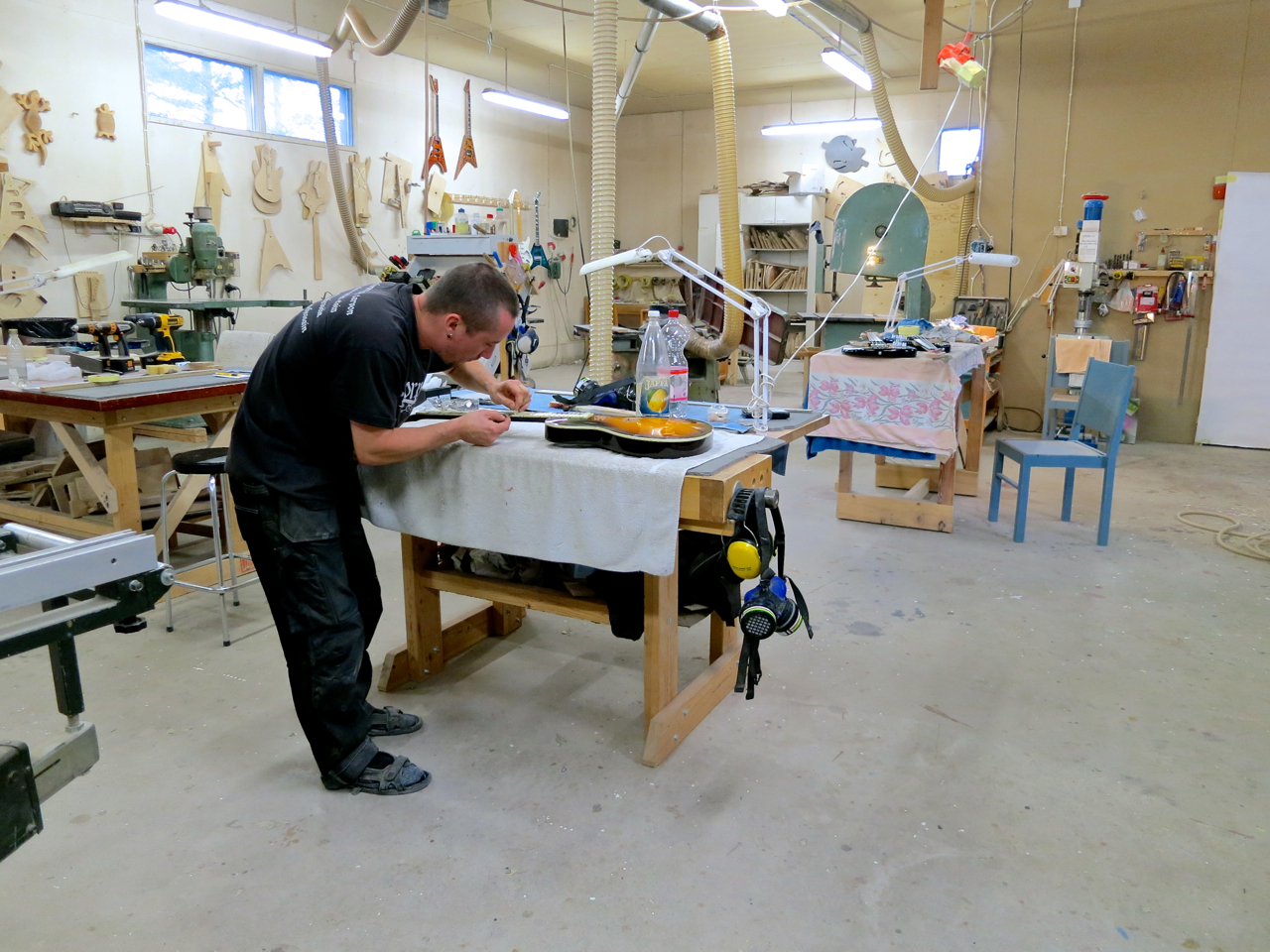
Sampo scrapes the fingerboard binding after the finish has dried.
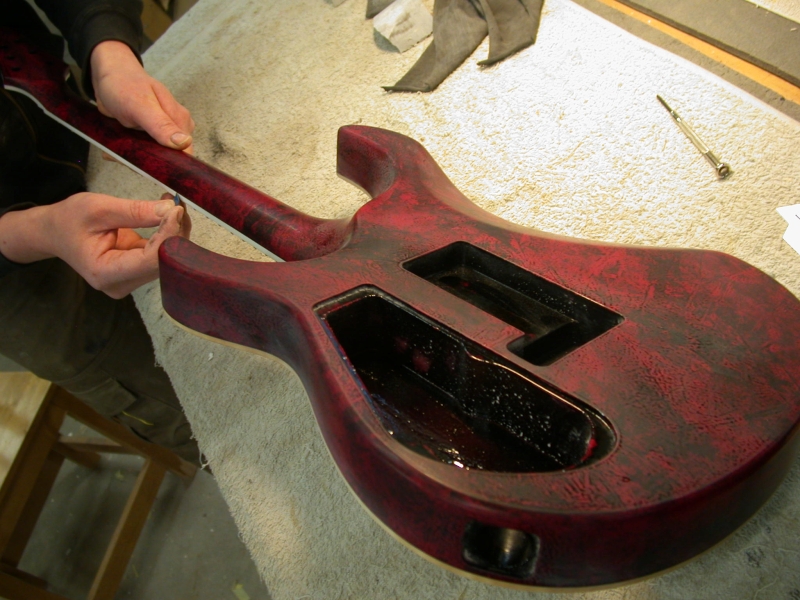
Same procedure, different guitar.

The holes for the switches, pots and the hardware are drilled quite late in the process.


A Sustainer-equipped guitar in final assembly.
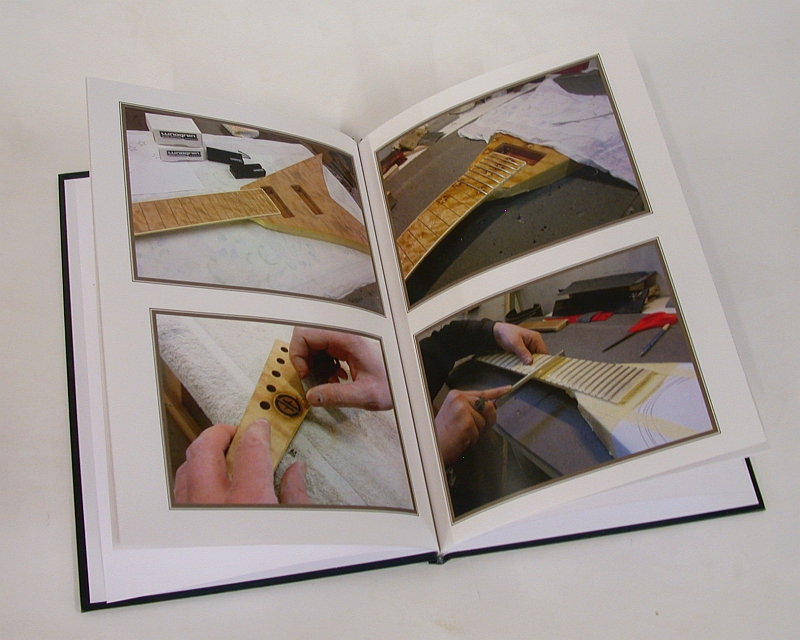
Amfisound offer their customers the option to order a Building Process -book along with their guitar or bass, detailing its genesis from raw wood into a fine instrument.
****
Amfisound’s Sampo Leppävuori and Tomi Korkalainen are both members of The Finnish Guild Of Luthiers.
****
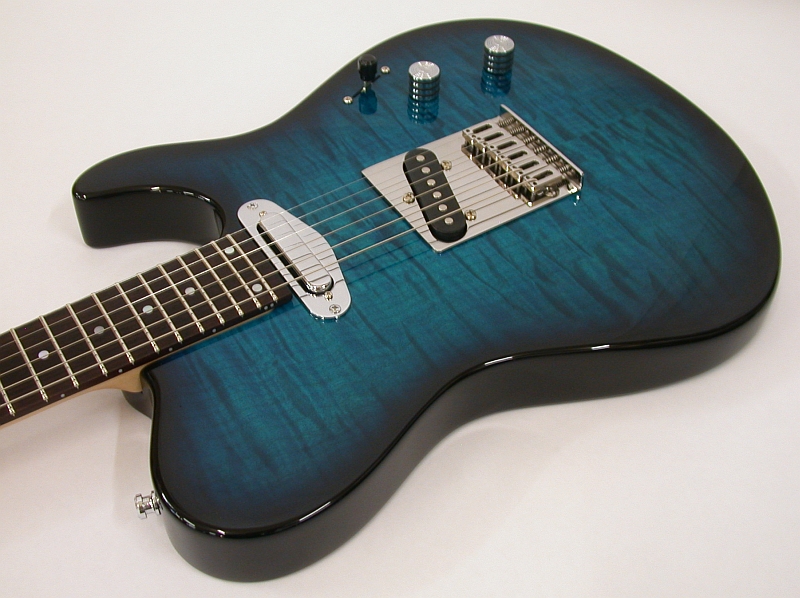
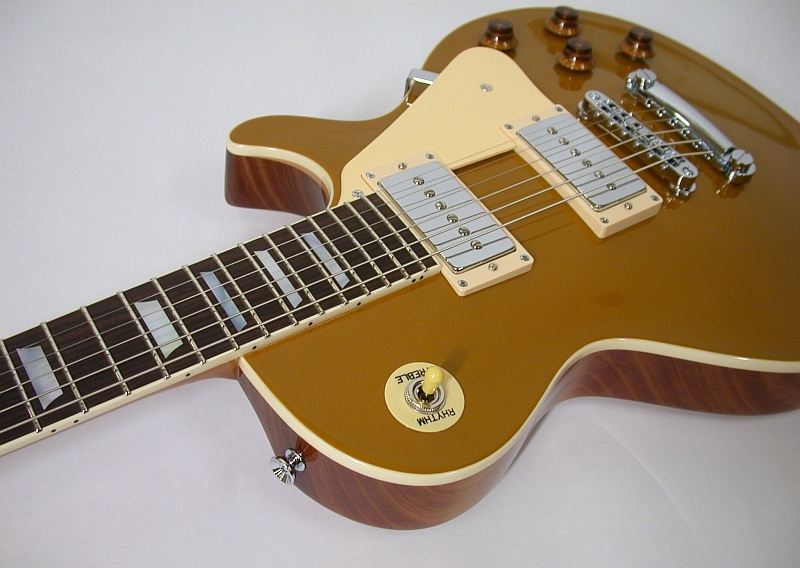
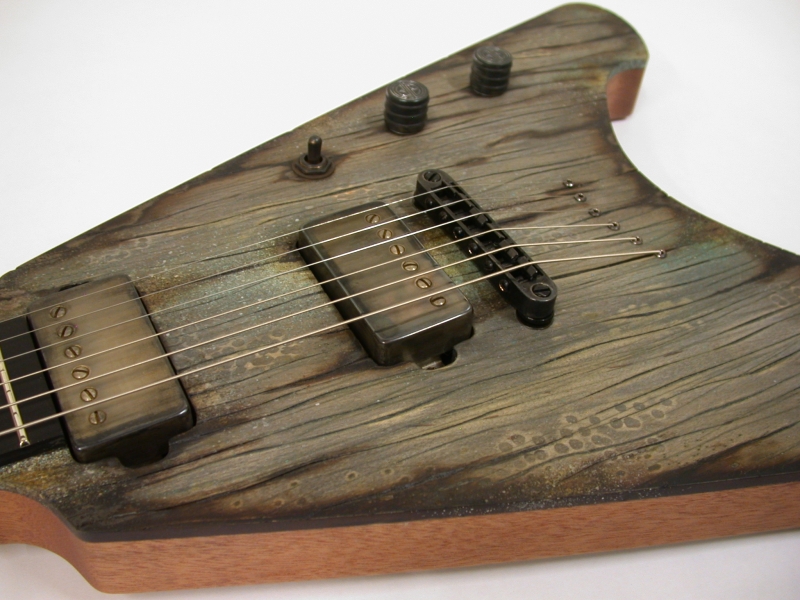
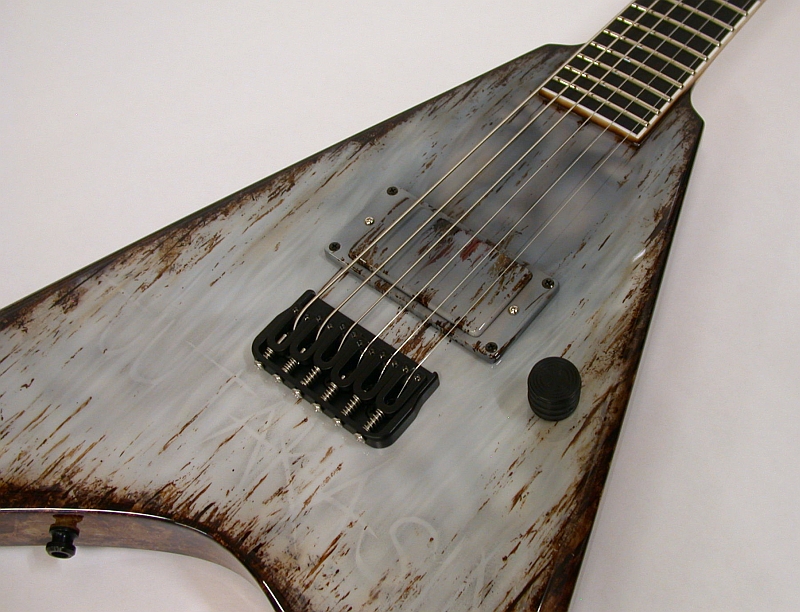
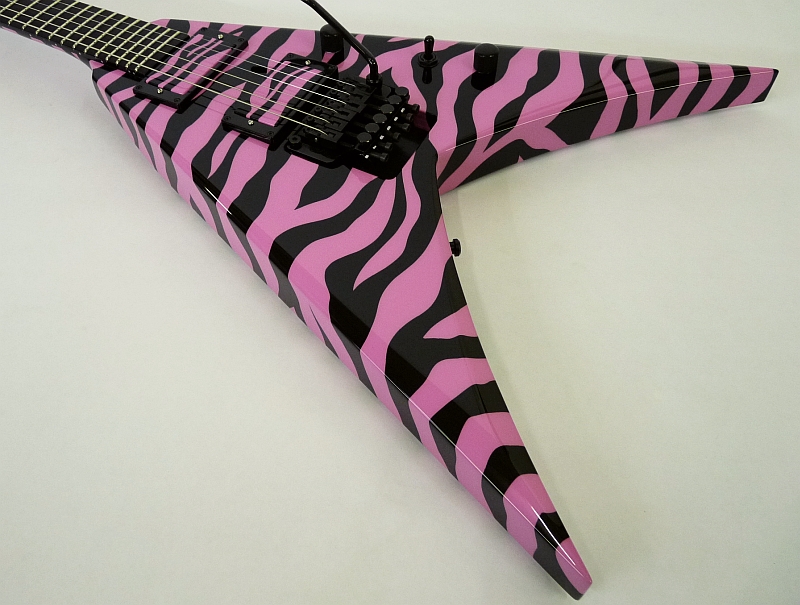
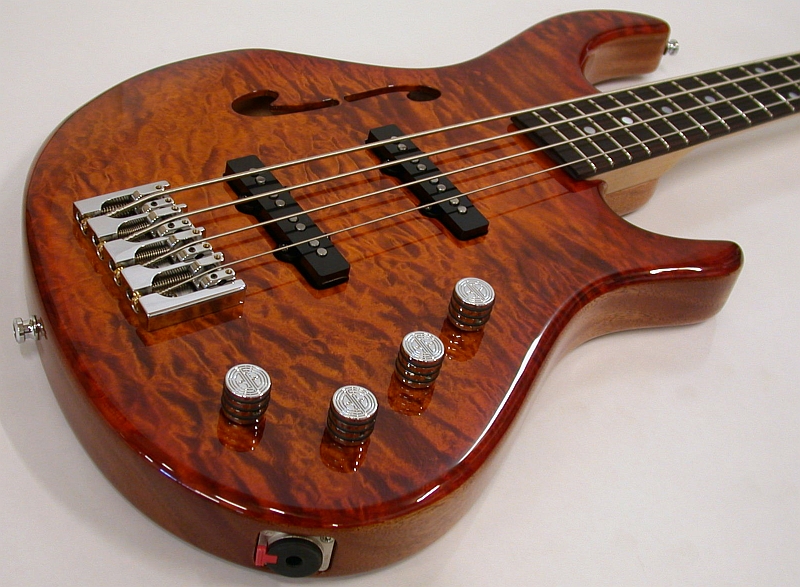
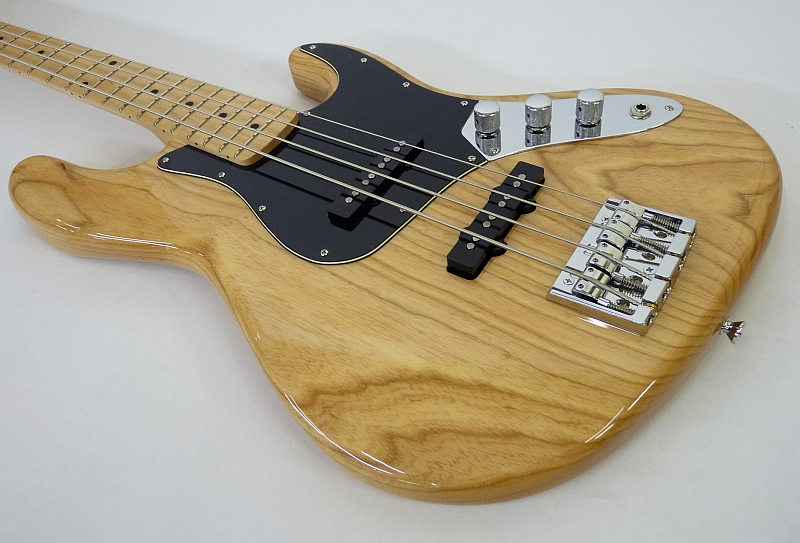
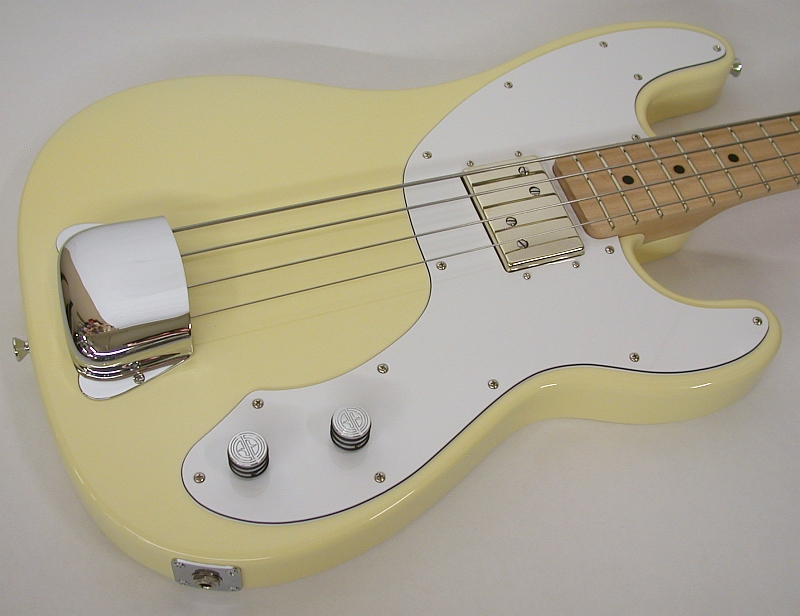
Here are a few examples of finished instruments (photos: Amfisound).

****




****

****


****

****

****
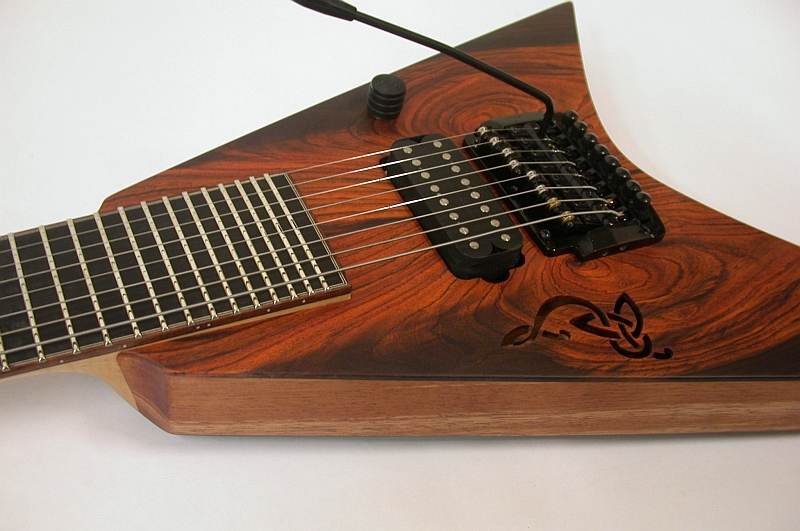
Eight-string!
****

****


****
Amfisound Guitars on kahden soitinrakentajamestarin yhdessä vetämä kitarapaja Oulun Haukiputaassa.
Sampo Leppävuori ja Tomi Korkalainen tapasivat IKATA:n kitararakennuslinjalla, ystävystyivät, ja päätyivät perustamaan oman yrityksensä Pohjois-Suomeen, Sampon kotiseudulle.
Amfisoundin mallisto on erittäin laaja, koska Sampon ja Tomin eri mieltymykset ja vahvat alueet täydentävät toisiaan.
Sampo Leppävuori saa inspiraatiota klassikkokitara- ja -bassomalleista, joihin esimerkiksi Amfisoundin Classic Line -malliston Halti-, Kaira-, Halla- ja Kobalt-kitarat perustuvat.
Näissä kitaroissa ei kuitenkaan ole kysymys väsyneistä kopioista tai vintage-voodoon metsästämisestä, koska Amfisound-kitaroissa on pitkä lista detaljipäivityksiä (esim. mikrofoneissa ja metalliosissa) ja omia ominaisuuksia (esim. puuvalinnoissa ja kaulaliitoksissa).
Tomi Korkalainen taas on parivaljakon vannoutunut heavymies, joka visioi ja toteuttaa metallikitaristeille äärimmäisen hienoja erikoissoittimia – ei ainoastaan soitettavuuden ja soundin kannalta, vaan myös mikä tulee kitaroiden ulkonäköön.
Tomin käsiala näkyy parhaiten Amfisoundin Extreme Line -mallistossa, johon kuuluvat mm. sellaiset soittimet kuin Routa, Atrain, Railo ja Roster.
****
Kitarablogi: Mikä on Amfisound Guitarsin filosofia?
Tomi: Haluttiin luoda Suomeen varsinainen täysin uusi ja nuorekas customkitara-kulttuuri. Pohjoinen sijainti edesauttaa myös pohjois-eurooppalaista imagoa, koska varsinkin visuaalisuus näyttelee suurta osaa työssämme. Mallien suomalaiset nimet keksittiin vuonna 2003-2004. Nimet ovat helposti lausuttavia myös ulkomaalaisille, ja onkin hienoa messuilla aina kuulla jos jonkinlaista versiota näistä.
KB: Visuaalisuudella näyttää olevan iso rooli teidän soittimissa.
Sampo: Kaikki erikoispintakäsittelyt ja puuntyöstötaidot on pitänyt opiskella itse käytännön kautta. Tämä opiskelu on jatkuvaa ja jatkuu edelleen. Varsinkin heavykitara-alalla Suomessa ei ole ollut minkäänlaista historiaa, joten kaikki tämä on pitänyt opiskella ja luoda itse. Kova työ on tuottanut tulosta ja olemme saaneet suurta arvostusta niin Suomessa kuin ulkomaillakin. On myös itse ollut ilo seurata kuinka paljon tämä on vaikuttanut tämähetkisen suomalaisen soitinrakennuskulttuurin kehittymiseen. Asenteet varsinkin heavykitaroiden suhteen ovat parantuneet firman perustamisen ajoista 100%. Se kertoo kyllä alan huimasta kehityksestä Suomessa.
KB: Millainen on Amfisoundin toimintaperiaate? Perustuuko toimintanne sarjatuotantoon?
Tomi: Tällä hetkellä suurin osa tilauksista menee ulkomaille ja jokainen tilaus on aina yksilö, joka valmistetaan käsin alusta loppuun saakka. Sarjatyötä tai valmiita aihioita emme tee, emmekä käytä ollenkaan. Tämä tuo todella paljon lisäarvoa asiakkaalle. Meillä on myös aika laaja ja nimekäs artistiperhe. Löytyypi artisteja kevyen ja raskaan musiikin nimiä niin Suomesta kuin ulkomailtakin. Vuonna 2007 muutettiin myös se meidän vanha logo uudeksi ympyränmuotoiseksi logoksi. Pidän tuota itse merkittävänä tapahtumana, koska silloin viimeistään päästiin kehittämään omaa brändiä suomalaisena kitaramerkkinä. Haluttiin tehdä Amfisound-merkkistä kitaraa eikä pysyä ainoastaan paikallisena soitinrakentajana.
****
Amfisound Guitarsin omille kitaramalleille tarjoamat kustomointimahdollisuudet ovat lähes loputtomat, koska Sampo ja Tomi haluavat, että jokainen asiakas saa juuri sellaisen kitaran tai basson, jonka hän itse haluaa.
Uskomattoman hienot graafiset viimeistellyt ovat muuten Amfisoundin erikoisalaa. Riippumatta siitä onko hakusessa kitara, joka näyttää monta sataa vuotta vanhalta mökin ovelta, jossa on riimukirjoitukset, tai haluaako asiakas limettivihreän soittimen leopardikuviolla, Amfisoundilta sellaisen saa.
****
Oman kitaratuotannon ohella Amfisoundissa hoidetaan laadukkaasti myös sähkökitaroiden ja -bassojen korjaukset ja kustomoinnit.
****
Jokainen Amfisound-kitara on joskus ollut pelkkä puulankkujen kasa.
Amfisound käyttää ulkomaisten jalopuulajien (kuten khaya-mahongin) ohella usein myös kotimaisia puulajeja, kuten tervaleppää ja loimukoivua, runkopuuksi.
Tässä kuvassa näkyy otelauta-aihiot eebenpuusta.
Oman kitaran voi myös tilata hieman harvinaisemmasta puusta veistettynä. Tässä näkyy kaksi korina-lankkua.
Sampo ja Tomi luottavat perinteisiin rakennusmenetelmiin, mikä tarkoittaa, että jokaiseen Amfisound-soittimeen valmistukseen menee paljon käsityötä.
Pajassa käytetään itse tehtyjä jigejä ja sapluunoita jyrsimelle.
Tällaiset ovat Halti-kitaran puoliakustisen version kanavat ja kolot, jotka jäävät valmiissa kitarassa kaarevan kannen alle.
Kaula-läpi-rungon-rakenteisten soittimien kaulat liimataan kolmesta vierekkäisestä vaahterapalaista.
Eeben- ja ruusupuisia otelautoja nauhaurilla.
Joitakin vaativia työvaiheita varten käytetään kopiojyrsintä tasaisen laadun varmistamiseksi.
Tässä kuvassa Halti-kitaran syvä kaulaliitos saa muotonsa…
…kun taas tässä kitaran kanteen jyrsitään raakaversio sen lopullisesta kaarevuudesta.
Käsityöllä on kuitenkin erittäin tärkeä asema Amfisound-soitinten valmistuksessa:
Tässä kuvassa Atrain-mallin ulkomuodot, sekä mikrofonien ja tallan paikat merkitään suoraan puuhun lyijykynällä.
Osaavissa käsissä raspi on sulavan kaulaliitoksen alku.
Jyrsimellä työstetään runkoon kaikki tarvittavat kolot, niin kuin esimerkiksi mikrofonikolot…
…kaulataskut…
…sekä elektroniikkalokerot ja kolot vibratalloille.
Tomi hioo Railo-kitaran ulkoreunat hiomakoneella.
Monet kohtat vaativat kuitenkin loppusilauksen hiomapaperilla käsin.
Tasoittamisen jälkeen palautetaan nauhaviilulla nauhojen puolipyöreätä profiilia.
Onnistunut grafiikka vaati tarkkaa suunnittelua ja erittäin rauhallista kättä.
Amfisoundin graafisissa viimeistelyissä vain taivas on rajana.
Sampo siistimässä otelaudan reunalistoja lakkauksen jälkeen.
Sama työvaihe, mutta toinen soitin.
Säätimille ja tallalle tarvitsemat reiät porataan vasta melko myöhäisessä vaiheessa.
Sustainer-elektroniikalla varustetun, keinotekoisesti esikulutetun kitaran loppuasennus.
Amfisound-soittimen omistaja voi halutessaan tilata myös oman kitaran (tai basson) rakentamisesta kertovan kuvakirjan.
****
Amfisoundin Sampo Leppävuori ja Tomi Korkalainen ovat Suomen Soitinrakentajien Killan jäseniä.
****
Tässä vielä muutama kuva valmiista Amfisound-soittimista (kuvat: Amfisound).
****
****
****
****
****
****
8-kielinen
****
****
****


****
Testi tulossa joulukuussa…
Review coming up in December…



 Kitarablogi.com – Finland's premier Guitar and Bass blog