Testipenkissä: Brunetti SingleMan 16

brunetti-singleman-16-logo-2

Brunetti Amplification on maineikas vahvistinpaja Pohjois-Italian Modenasta.

Marco Brunettin tiimi valmistaa käsityönä laadukkaita ja tyylikkäitä kitaravahvistimia sekä efektipedaaleja. Custom-töiden lisäksi Brunettin valikoimasta löytyy myös useita omia vahvistinmalleja, joista SingleMan 16 on teholtaan pienin kombo.

Brunettin tuotteita tuo maahan Pohjanmaalainen yritys NordSound.

****
brunetti-singleman-16-front-straight

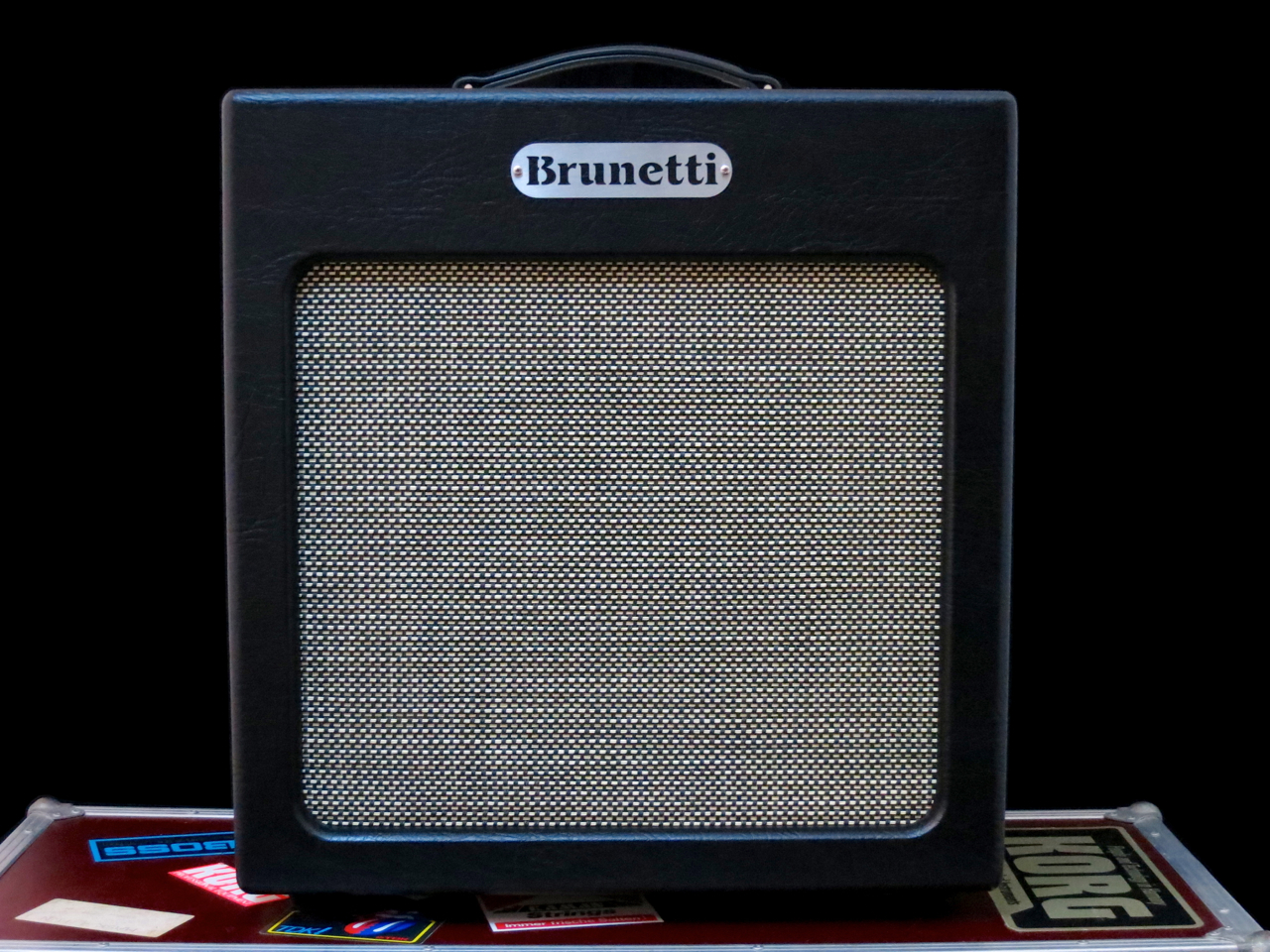
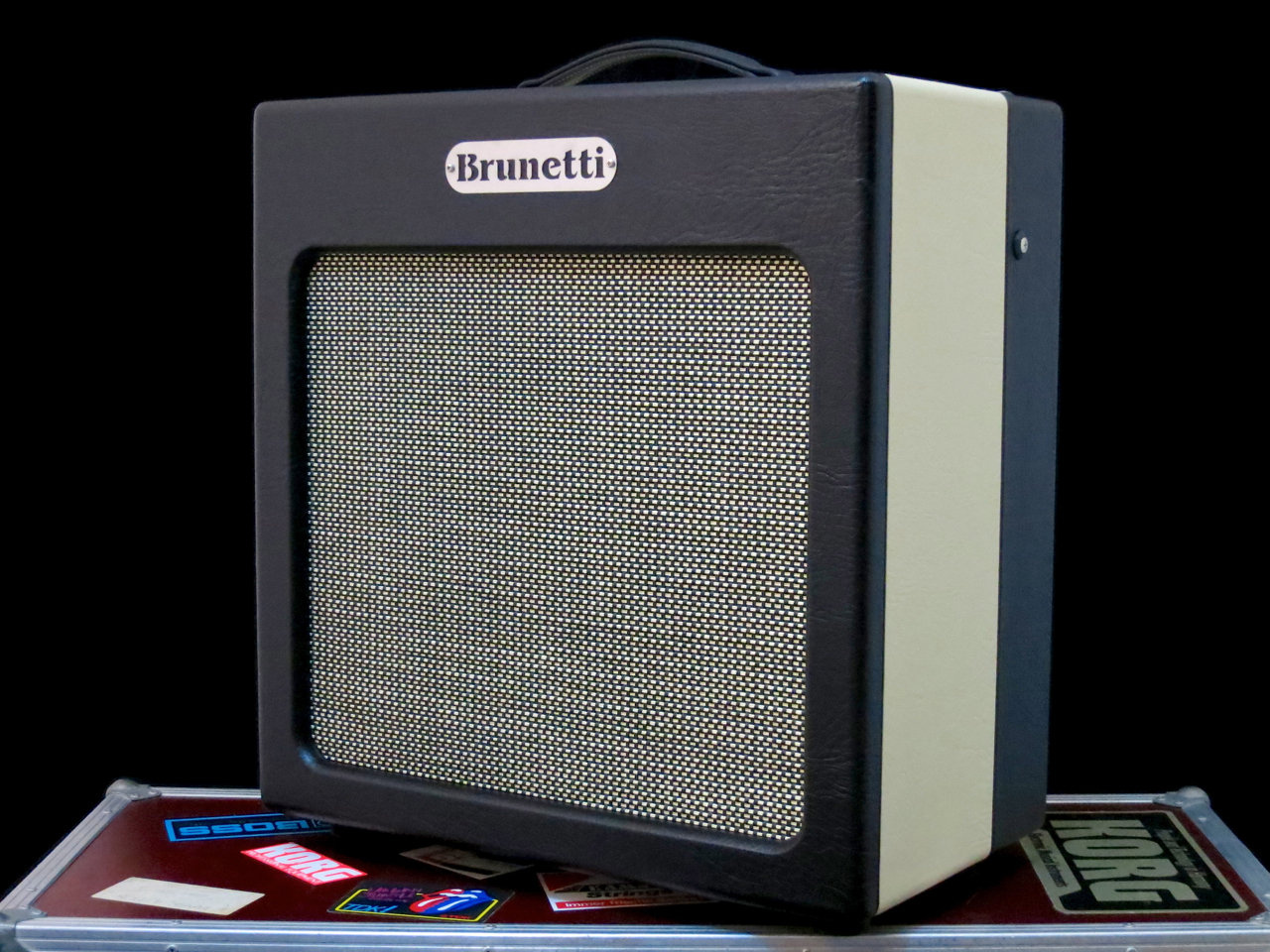
Perusidea Brunetti SingleMan 16:ta (1.348 €) suunniteltaessa pääasiallinen tavoite oli toteuttaa mahdollisimman monipuolinen ja hyväsoundinen yksikanavainen kombo kätevässä ja kevyessä formaatissa.
brunetti-singleman-16-front-angle-2

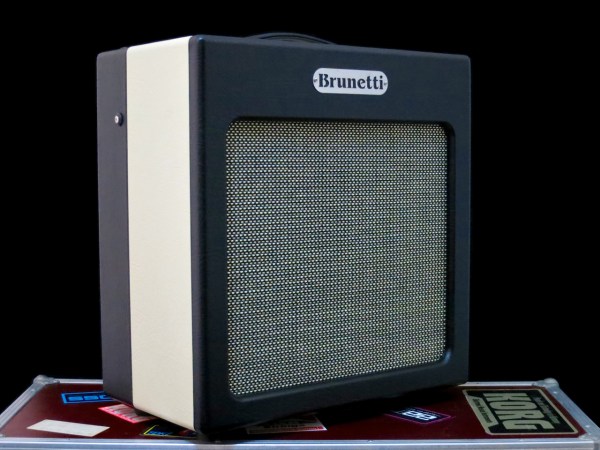
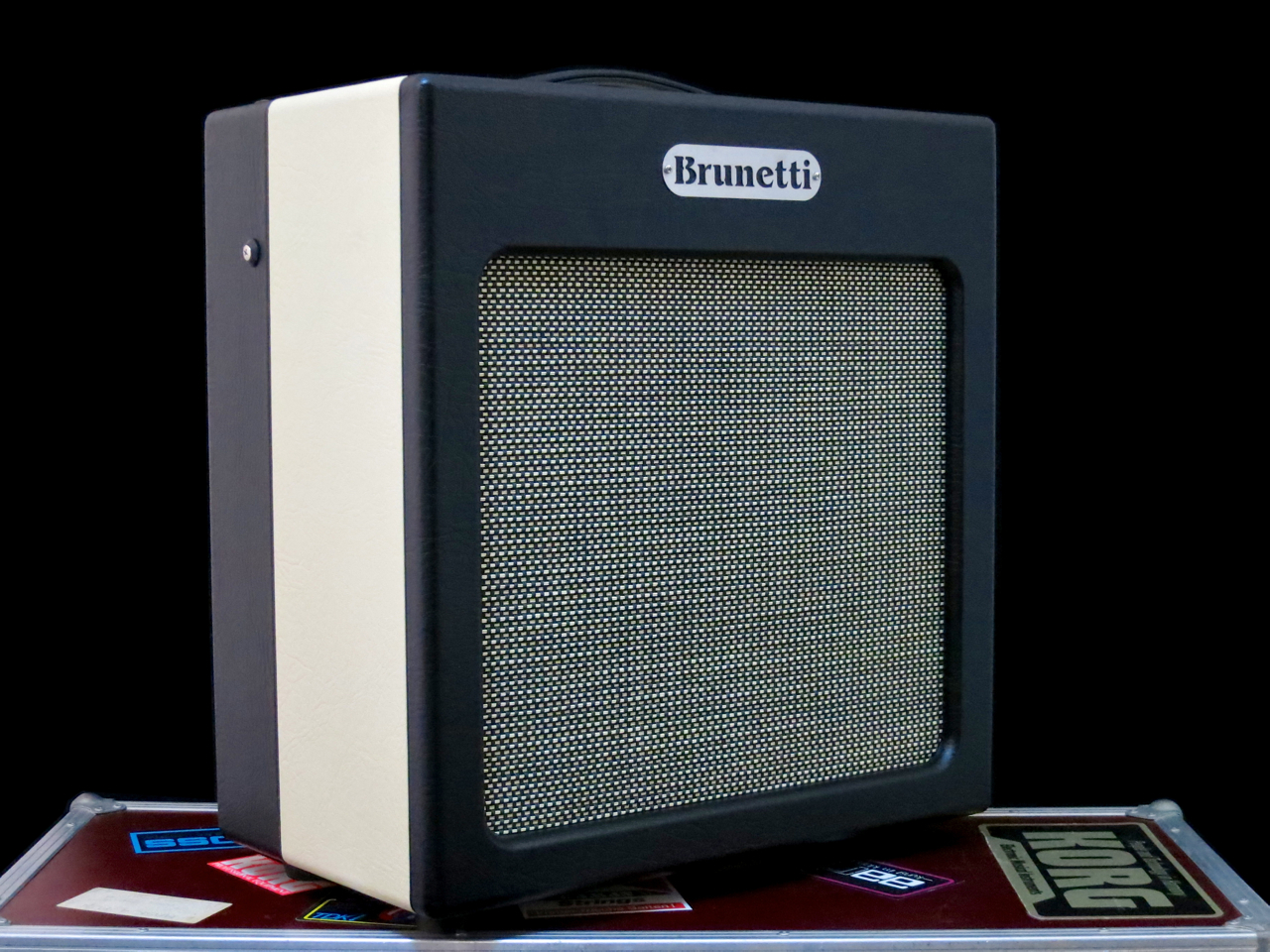
Kaksivärinen viimeistely ja SingleManin selkeät linjat tekevät kombosta erittäin tyylikkään.
brunetti-singleman-16-full-back

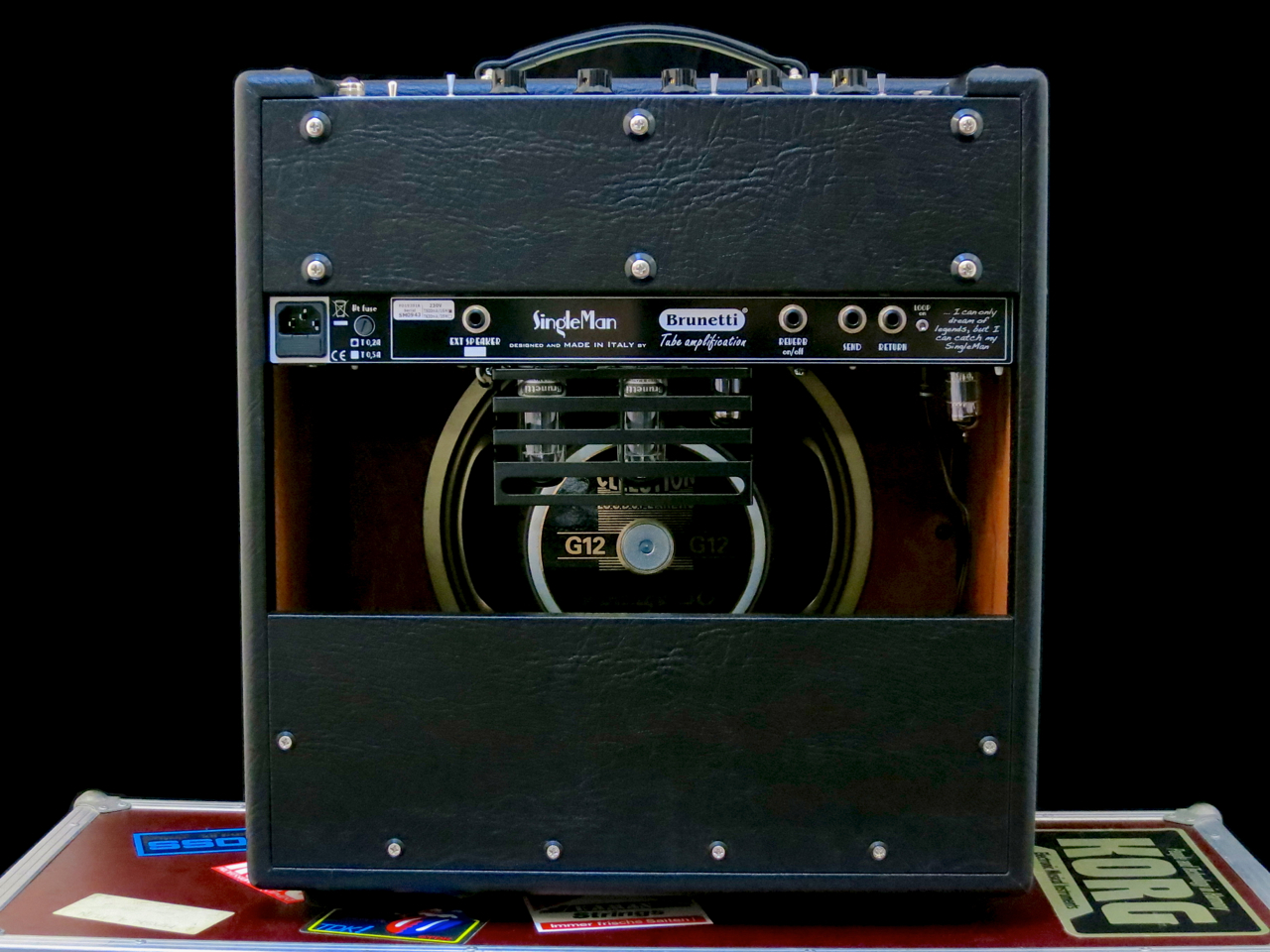
Kombo painaa 20 kiloa, ja sen kotelo on tehty laadukkaasta vanerista.
brunetti-singleman-16-speaker-and-valves

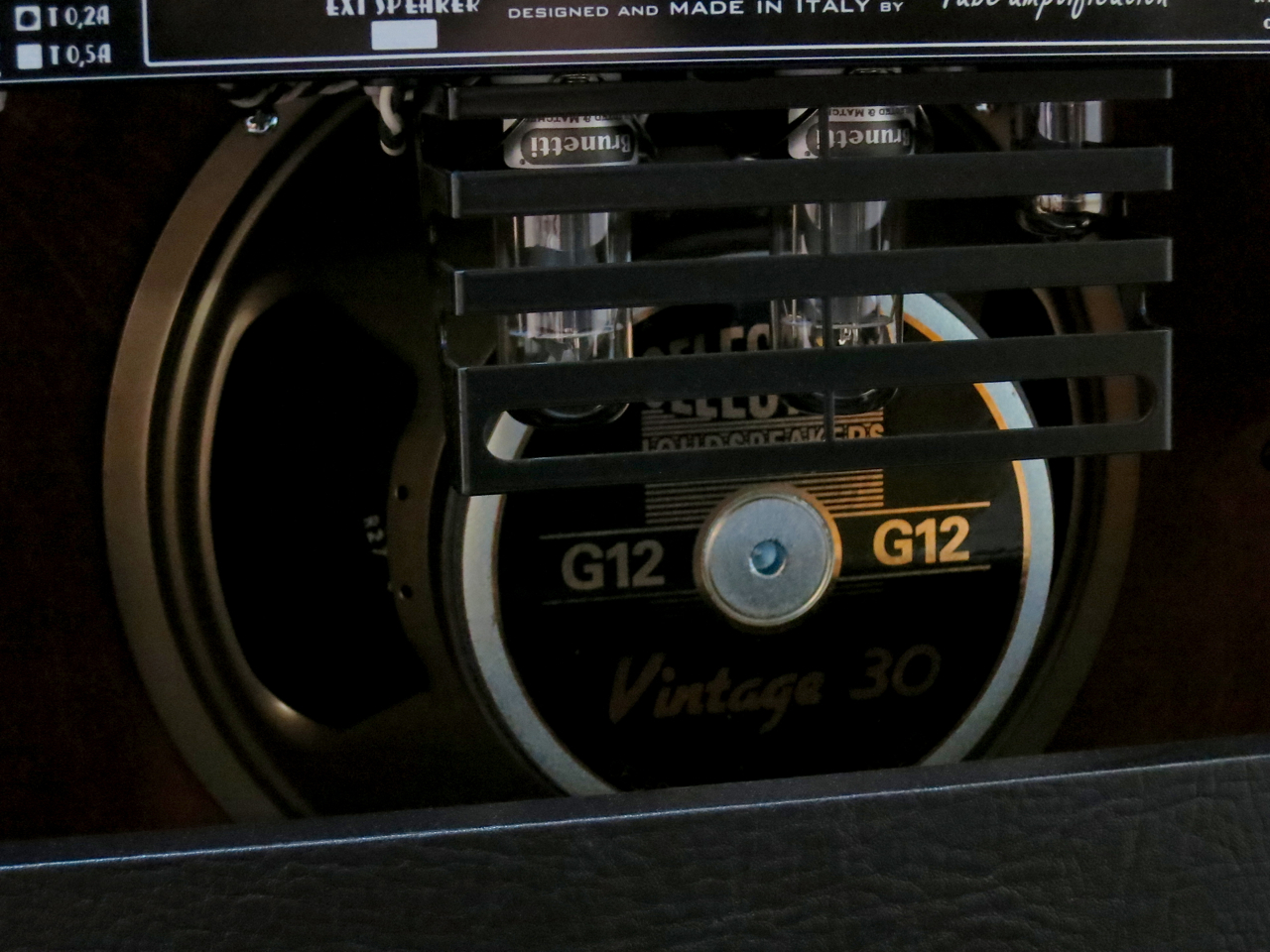
Kaiuttimeksi on valittu Celestionin maineikas 12-tuumainen Vintage 30, joka tunnetaan tarkasta ja kolmiulotteisesta soundistaan.

Brunetti SingleMan 16 on aito A-luokan täysputkivahvistin. Etuaste pohjautuu kahteen 12AX7-putkeen, ja pääte on rakennettu kahden 6V6GT-putken ympärille.

Kombon pohjaan on asennettu laadukas Accutronics-jousikaiku, jonka voi kytkeä päälle tai pois myyntipakettiin sisältyvällä jalkakytkimellä.
brunetti-singleman-16-electronics

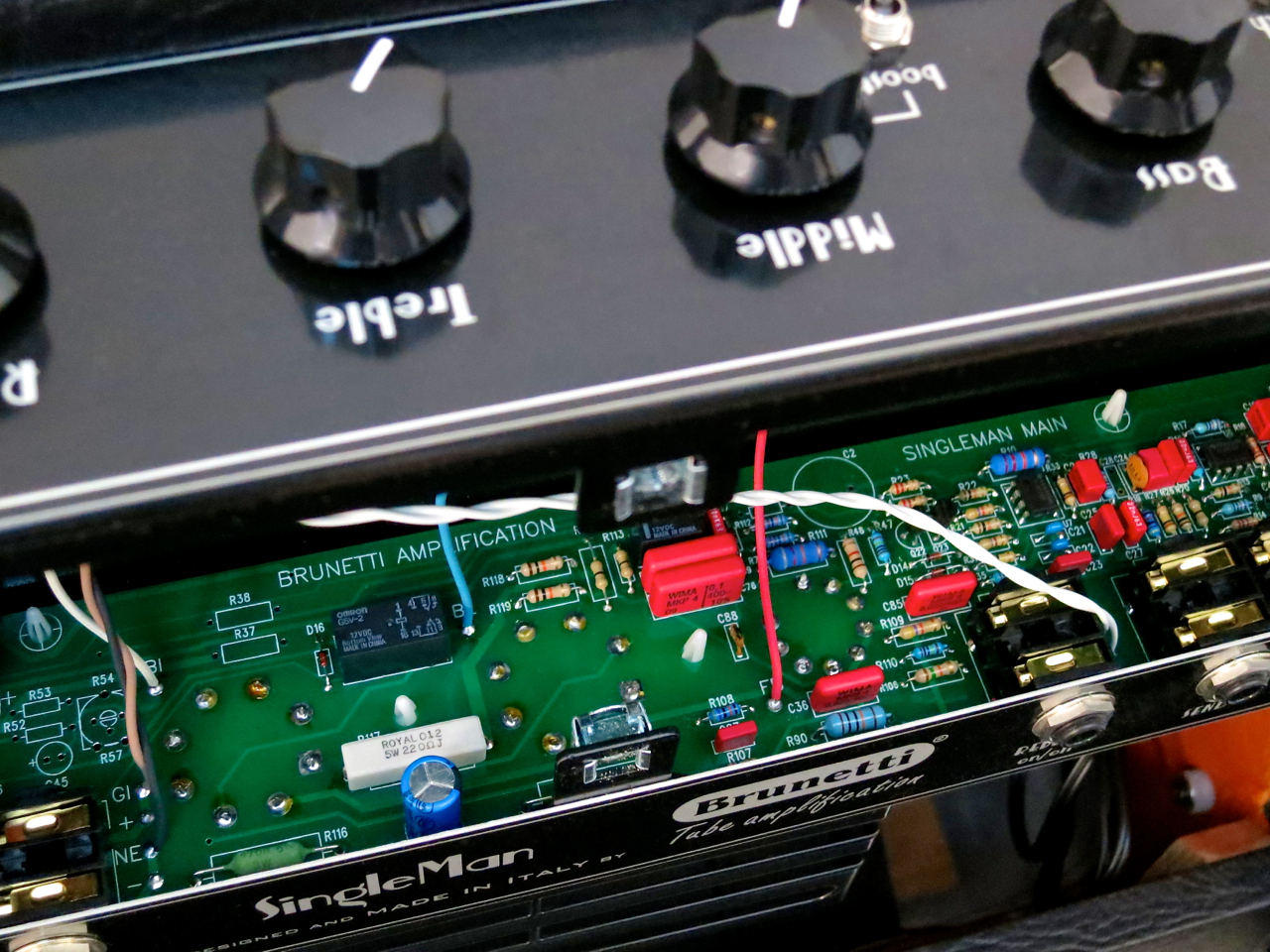
Vahvistinkotelo on leikattu laserilla ruostamattomasta teräksestä.

Kotelon uumenista löytyy kauttaaltaan erittäin laadukkaita komponentteja, ja työnjälki on esimerkillisen siistiä. Toisin kuin monien muiden vahvistinvalmistajien tehtaissa, Brunettin elektroniikka juotetaan käsin, eikä robotin avulla.
brunetti-singleman-16-back-panel

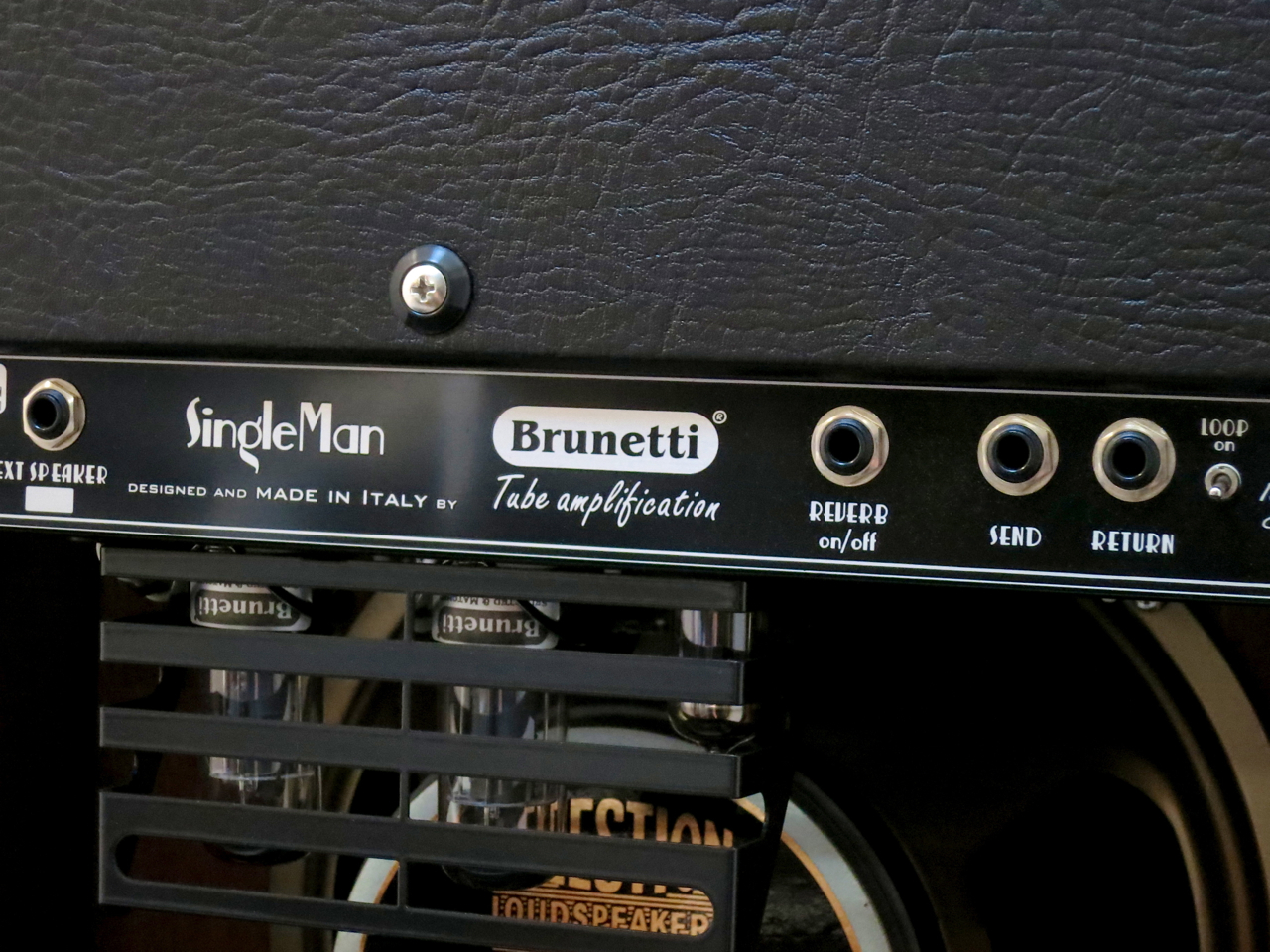
SingleMan 16 -kombon takapaneelista löytyy liittimet lisäkaiuttimelle, kaikukytkimelle, sekä efektilenkki omalla päälle/pois-minikytkimellä.

****
brunetti-singleman-16-control-panel

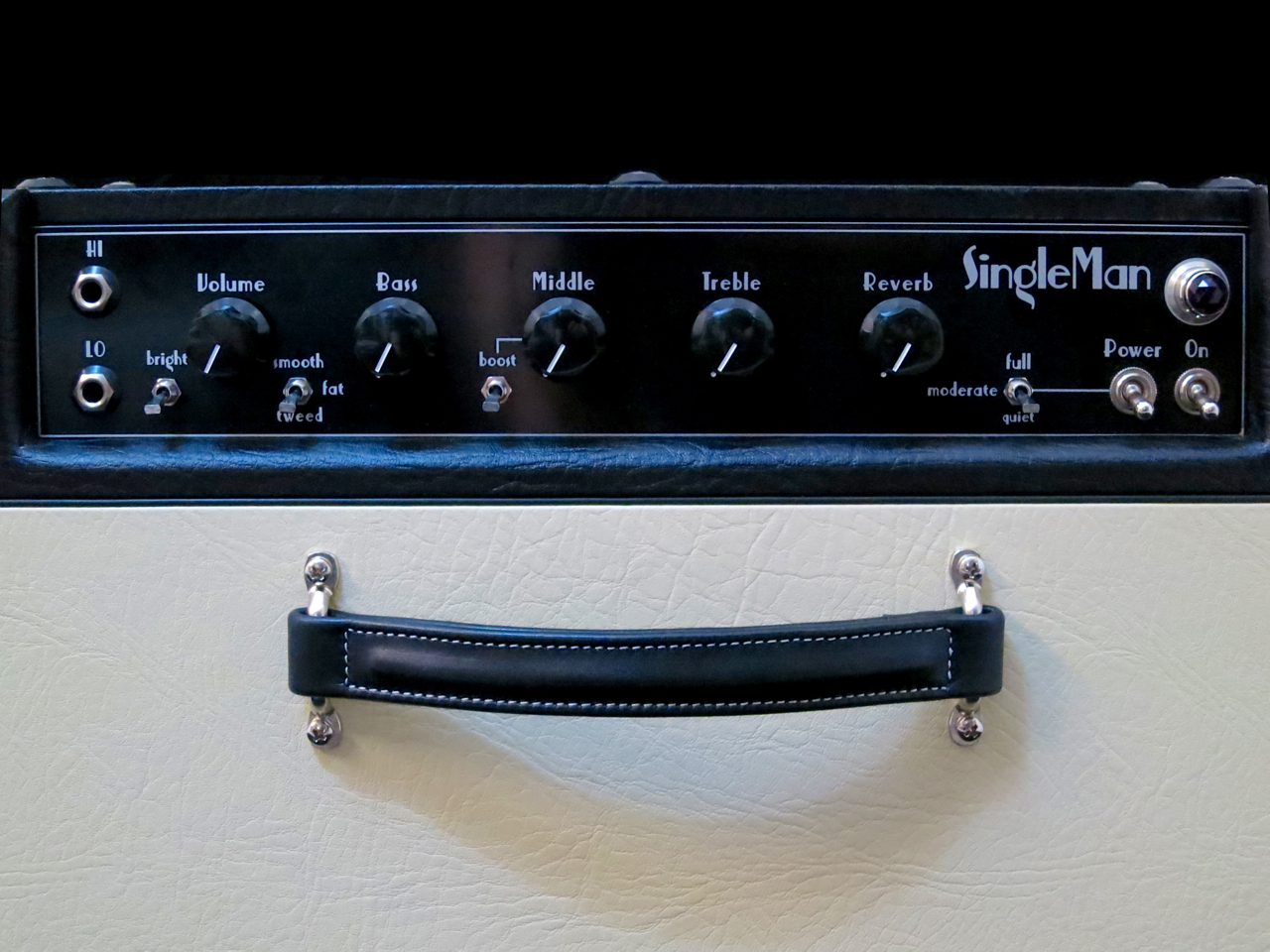
Brunetti SingleMan 16:n monipuolisen soundin mahdollistavat kombon tarjoamat kuusi toimintamoodia.

Etuasteen jämäkkä pikkukytkin tarjoaa kolme moodia – Tweed, Fat ja Smooth – joiden toiminta ulottuu pelkkiä EQ-käyriä syvemmälle. Tweed on moodeista kulmikkain ja kuivin, ja se tarjoaa hyvin laajan dynamiikka-alueen. Fat vie SingleManin soundia lämpimämpään suuntaan, joka on luonteeltaan selvästi brittihenkisempi. Smooth-moodi taas tarjoaa erikoisannoksen kermaa ja muhkeutta. Riippuu käytetystä kitaramallista, onko Smoothin kermaisuudesta hyötyä vai meneekö se jopa liian pitkälle. Yksikelaisilla mikrofoneilla Smooth kuulostaa taivaalliselta, mutta paksunsoundisella kaulahumbuckerilla soundi voi muuttua hieman puuroiseksi.

Tällaisilta Brunettin etuvahvistinmoodit kuulostavat Fender Telecasterilla (’62 Custom Reissue). Kitara on liitetty Hi-tuloon ja Volume-säädin on kello kymmenessä:

Tässä samantyyppinen pätkä Epiphone Les Paul Standardilla soitettuna (kitarassa vintage-tyyliset EMG-HZ-mikit). Pätkän alussa laitan Bright-kytkimen päälle. Kitara on liitetty Lo-tuloon ja Volume on kello kymmennessä:

****

Brunetti SingleMan 16 -kombon päätteellä on kolme eri tehomoodia. Tarjolla on Full, Moderate (25%) ja Quiet (6,25%). Koska tehon rajoitus on toteutettu laskemalla kombon pääteputkien sisäisiä sähköjännitteitä, muuttuu moodivaihdon seurauksena myös SingleManin dynamiikka ja soundi. Quiet-moodissa soundi on Full-moodiin verrattuna selvästi paksumpi, runsaalla kompressiolla ja kermaisella säröllä höystettynä.

Tässä on päätemoodien esittelypätkä Fender Telellä soitettuna (Volume kello kaksi):

Ja sama Epiphone Les Paulilla (Volume kello yksi):

****

Demobiisissä on kaksi komppikitaraa – Fender Stratocaster (vasen kanava) ja Gibson Les Paul Junior (oikea kanava). Soolo-osuudet on soitettu Epiphone Les Paul Standardilla:

****
brunetti-singleman-16-front-angle-1

Italialainen Brunetti SingleMan 16 on erittäin maukas ja monipuolinen tapaus yksikanavaiseksi komboksi. Se kattaa yllättävän laajan skaalan erialisia laatusoundeja, ja päätteen toimintamoodien ansiosta kombo sopii käytettäväksi kaikkialla, olohuoneesta studion kautta klubilavoille. Jos on suuritehoista stäkkiä vailla tai tarvitsee vahvistimeltaan ehdottomasti paljon puhdasta headroomia, SingleMan 16 ei ehkä ole paras vaihtoehto, mutta muille sillä on kosolti annettavaa.

****

Brunetti SingleMan 16

1.348 € (sis. kytkin kaiulle sekä suojahuppu)

Maahantuoja: NordSound

Plussat:

+ käsintehty

+ monipuolinen soundi

+ tehonpudotus

+ kaiun soundi

Save

Save

Save

Save

Save

Save

Save

Save

Save

Save

Save

Save

Save

Save

Save

More Sounds: Brunetti Singleman 16

BRUNETTI SINGLEMAN 16

• Single-channel all-valve combo with spring reverb
• Made in Italy

****
These clips give you an idea of the behaviour of the SingleMan 16’s preamp and power amp modes.
• Preamp Modes – Tweed, Fat & Smooth
• Power Amp Modes – Full, Moderate & Quiet
• Guitars used – Fender Japan ’62 Custom Telecaster reissue (Hi input, Bright off); Epiphone Les Paul Standard with vintage-voiced EMG-HZ pickups (Lo input, Bright on/clean clip starts off with Bright off)

brunetti-singleman-16-electronics

Contact: Nordsound

Save

Save

Save

Save

Review: Blackstar ID:Core BEAM

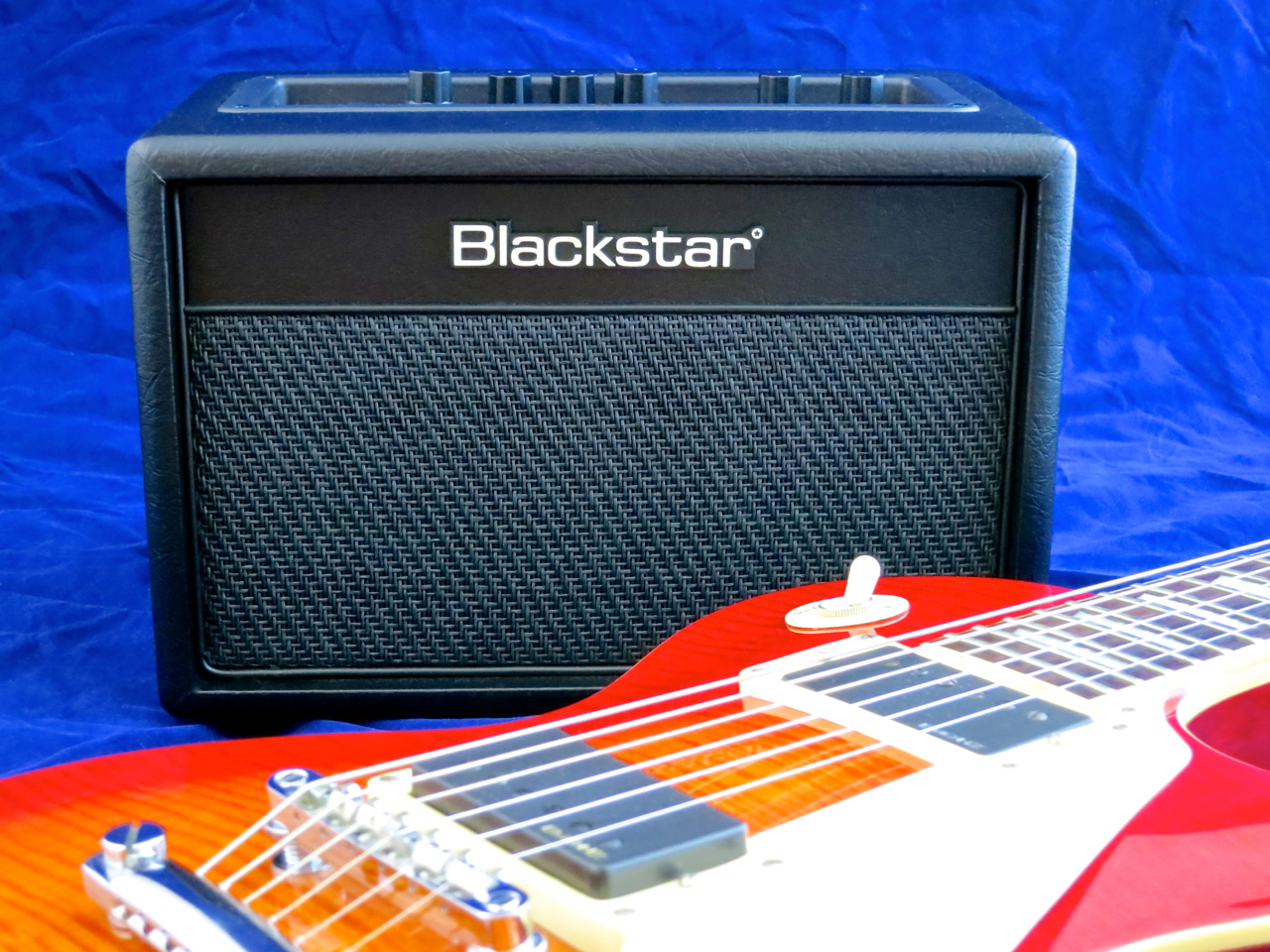
Blackstar ID_Core Beam – front

Blackstar’s ID:Core BEAM (current price in Finland: 299 €), which was introduced at this year’s NAMM Show, is one of a new breed of amplifiers:

The BEAM is a so-called ”lifestyle amp” that combines a practical solution for living room practising with a Bluetooth stereo system with a suitable Rock look.

****

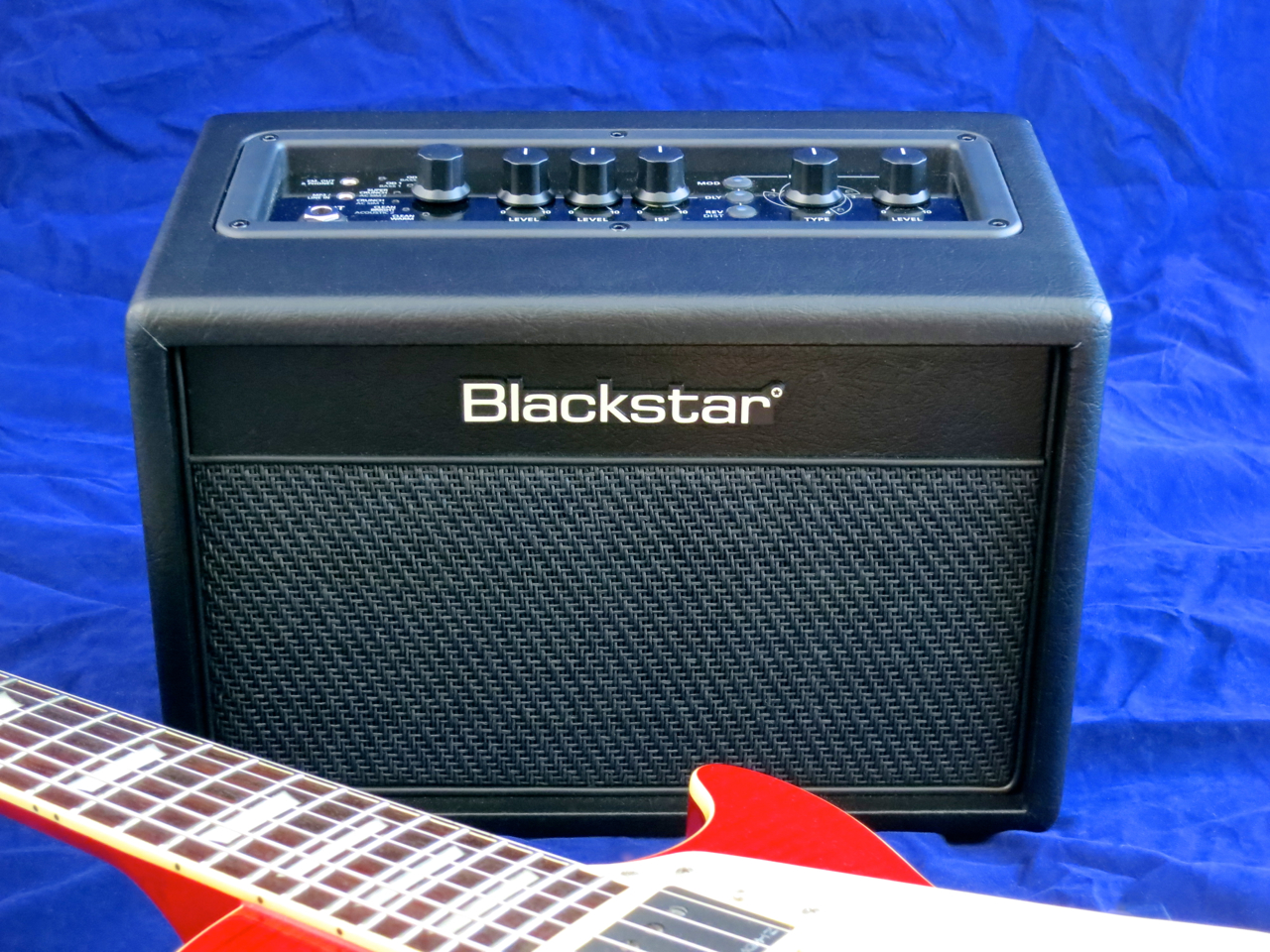
Blackstar ID_Core Beam – angle right

The Blackstar ID:Core BEAM is a genuine ID:Core-combo, which means that all its parameters are accessible via Blackstar’s Insider software.

The newcomer is a stereophonic amp with its 20 watts of power running into a pair of three-inch speakers. Blackstar’s Super Wide Stereo-effect – a feature taken from the company’s larger ID:Core combos – can also be applied to the BEAM’s music player, with its own, separate width adjustment.

Blackstar ID_Core Beam – back

Apart from the power switch, the ID:Core BEAM’s back panel features the input jack for the (optional) footswitch. The rest of the combo’s controls and connectors can be found on the top-mounted control panel.

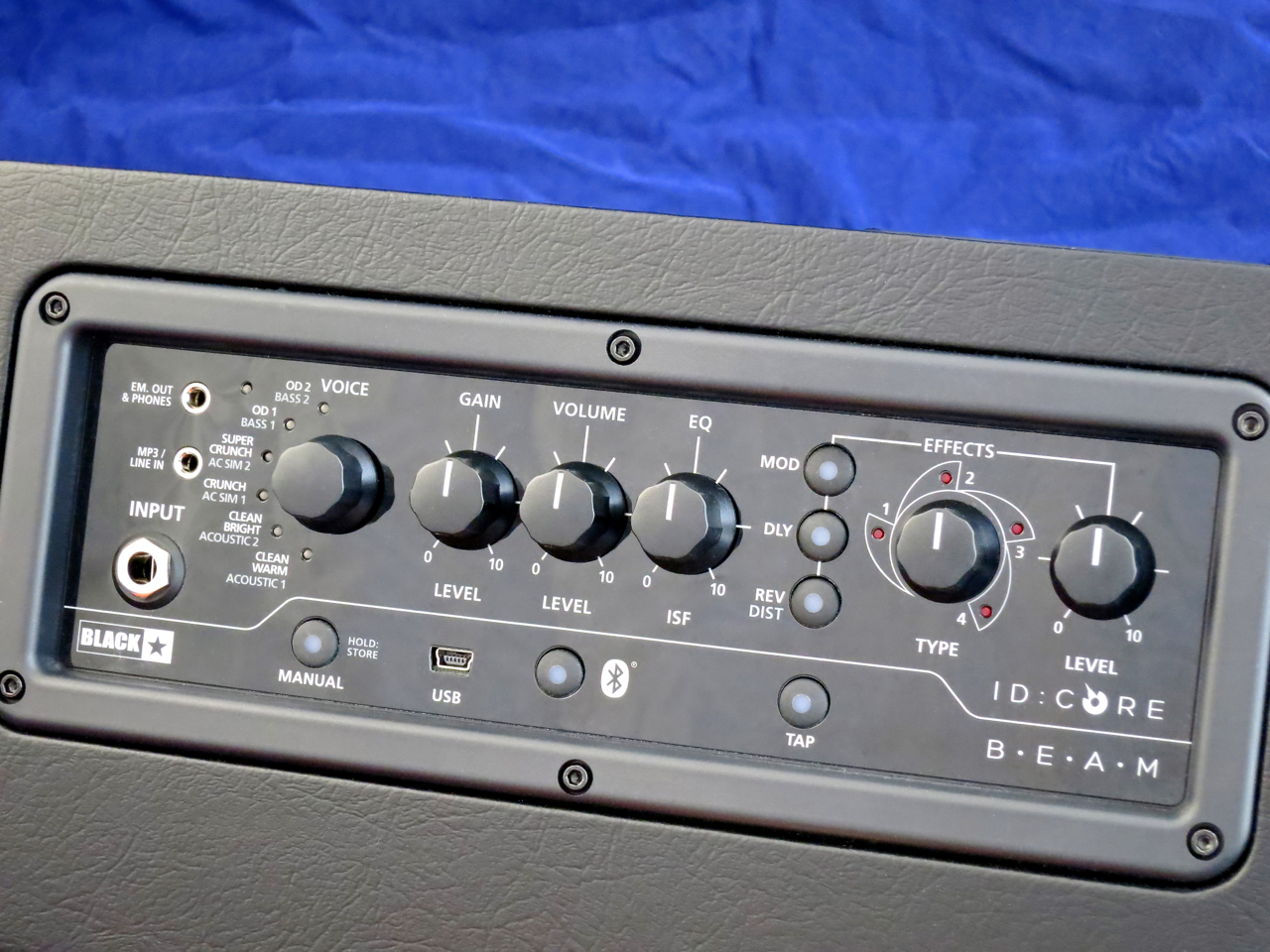
Blackstar ID_Core Beam – control panel

The larger ID:Core combos are well-equipped practice amps, but the BEAM has a couple of additional aces up its sleeve:

The ID:Core BEAM offers you 12 amp models (Voices). The first set (the Voices LED glows red) deals with six amp models for electric guitar, while the second set (green LED) gives you two Voices each for acoustic guitar, electric bass, and acoustic guitar simulation.

The amp section has three physical knobs for adjustment – gain, volume, and Blackstar’s patented ISF-control, which control’s the amp’s overall tonal character. Using the Insider-software you will be able to access additional parameters for deep editing, like a three-band EQ-section or a noise gate.

The effects department features four different modulation effects, four delay types, and four reverbs. The two Voices for bass swap the reverbs for bass distortion. You can choose one effect from each effect section for a Voice (meaning up to three simultaneous effects).

The small combo also features a built-in tuner.

The music signal, sent to the BEAM from your mobile device via Bluetooth, naturally isn’t sent through the combo’s amp modelling circuits. It is fed into the signal chain just before the power amp section. The ID:Core BEAM allows you to play along to the Bluetooth signal, of course!

The USB-port isn’t only used to remote control the amp’s parameters via Insider – this lifestyle combo doubles as a full-blown USB sound card. The BEAM can be run in three different USB-modes, which allows you to either send a stereo signal of the amp sound to your sequencer, or send two discrete mono signals (with one channel completely dry, and the second channel with all the amp modelling and effects) to your recording software. The third USB-mode is called Reamping, and it’s used to feed a dry guitar signal off your audio sequencer into the ID:Core BEAM and record the effected signal onto a separate recording track simultaneously.

The signal level of the USB-audio can be controlled directly (and independently of the amp’s master volume settings), making it very easy to set the correct recording levels for your personal studio setup.

****

Blackstar ID_Core Beam – front angle

Blackstar have really hit the bull’s eye with their new lifestyle combo!

Listening to music with a very critical ear you can hear a little bit of hiss, but it isn’t loud enough to spoil the fun. Remember, the ID:Core BEAM isn’t meant to be a studio monitor, but rather a nifty, compact music player for your bookcase – something this little combo handles with much aplomb. You wouldn’t necessarily expect such a full and strong delivery from such a compact unit.

The ID:Core BEAM also sounds great as a guitar and bass amp, which isn’t quite as surprising, considering this combo’s pedigree.

The guitar amp voices have plenty of character, and the effects have more than ample depth and width:

The high quality of the acoustic simulator was something of a positive surprise:

Despite its diminutive size, the BEAM also delivers when it comes to electric bass tones:

****

Blackstar ID_Core Beam – angle left

The Blackstar ID:Core BEAM succeeds to combine a programmable practice combo for guitar and bass, a Bluetooth-player, and a USB sound card into a very enticing package. In addition to being a great living room amp, the BEAM could also prove a handy little amp for guitar instructors.

****

Blackstar ID:Core BEAM

299 €

Finnish distributor: Musamaailma

****

Pros:

+ well thought-out concept

+ value for money

+ feature-packed guitar and bass amp

+ adjustable Super Wide Stereo-function

+ USB sound card

+ full sound

Cons:

– high noise gate setting on default bass distortion

Testipenkissä: Blackstar ID:Core BEAM

Blackstar ID_Core Beam – front

Vuoden alussa NAMM-messuilla esitelty Blackstar ID:Core BEAM (299 €) kuuluu uuteen, nopeasti kasvavaan vahvistinkategoriaan:

Se on niin kutsuttu ”lifestyle amp”, joka on samalla sekä hyödyllinen pikkukombo harjoitteluun että kitaristin imagoon sopiva Bluetooth-vahvistin musiikin kuuntelua varten.

****

Blackstar ID_Core Beam – angle right

Blackstar ID:Core BEAM on aito ID:Core-kombo mikä tarkoittaa, että sen kaikkiin parametreihin pääsee käsiksi Blackstarin oman Insider-softan kautta.

Uutuuskombo on stereofoninen, ja sen 20 watin tehoa pusketaan ulos kahdesta kolmen tuuman kaiuttimista. Isoista ID:Coreista tuttu Super Wide Stereo -efekti toimii BEAM-kombossa myös musiikin kuuntelussa, ja sen vaikutusta voi säätää erikseen.

Blackstar ID_Core Beam – back

ID:Core BEAM:n takaseinästä löytyy sähköliittimen lisäksi jakki jalkakytkimelle (maksullinen lisävaruste). Kaikki muut liittimet on sijoitettu isolle etupaneelille.

Blackstar ID_Core Beam – control panel

BEAM:n isot sisarukset ovat jo todella hyvin varustettuja, mutta pikkukombo panee ominaisuutensa runsaudella vielä selvästi paremmaksi:

Vahvistinmallinnuksia löytyy tässä peräti 12 kappaletta. Ensimmäinen satsi (Voice-ledi palaa punaisena) on varattu kuudelle eri sähkökitarakanavalle, kun taas toisesta satsista (vihreä ledi) löytyy kaksi vahvistintyyppiä akustiselle kitaralle, kaksi akustisen kitaran mallinnusta, sekä kaksi ohjelmaa sähköbassolle.

Vahvistinosasto tarjoaa kolme fyysistä säädintä soundien muokkaamiseksi – gainin ja volumen lisäksi löytyy vielä Blackstarin patentoima, yleissoundiin vaikuttava ISF-toiminto. Insider-softalla pääsee säätämään sitten tarkemmin muitakin parametrejä, kuten EQ:t tai kohinaporttia.

Efektiosasto tarjoaa neljä modulaatioefektiä, neljä viivetyyppiä, sekä neljä eri kaikua. Bassovahvistimien kanssa on kaiun sijaan lisätty bassosärö. Jokaisesta efektityypistä voi valita yhden per vahvistinmalli, siis samanaikaisesti voidaan käyttää korkeintaan kolmea efektiä.

Pikkukombossa on myös kätevä sisäinen viritysmittari.

Bluetooth:n kautta vastaanotettu audiosignaali ei luonnollisesti kulje mallinnusosion läpi, vaan se lisätään ID:Core BEAM -kombon signaalitielle vasta kitaravahvistimen jälkeen. Bluetooth-musiikin kanssa voi tietysti soittaa mukaan!

USB-liitintä ei käytetä ainoastaan Insider-softan pyörittämiseen, vaan tämä lifestyle-kombo on myös täysverinen usb-äänikortti. BEAM:lla on kolme eri USB Audio -moodia – vahvistin pystyy lähettämään joko stereofonista kitarasignaalia efekteillä höystettynä sekvensserille tai kaksi monosignaalia, joista yksi on kuiva tulosignaali ja toinen koko mallinnuksen läpi käynyt monosignaali. Näiden kahden lisäksi on tarjolla vielä erittäin kätevä Reamping-tila, jossa sekvensseristä lähetetty prosessoimaton kitararaita viedään ID:Core-kombon läpi ja mallinnettu signaali äänitetään toiseen sekvensseriraitaan.

USB-signaalitasoa pystyy säätämään itsenäisesti ja riippumatta kombon masterista, minkä ansiosta usb:n kautta lähetetyn voimakkuuden saa aina omalle äänityssoftalle sopivaksi.

****

Blackstar ID_Core Beam – front angle

Kyllä, nyt täytyy sanoa, että Blackstarin uusi lifestyle-kombo on täysosuma!

Musiikin kuuntelussa on havaittavissa pikkusen kohinaa, mutta se ei nouse lainkaan häiritsevästi esiin. ID:Core BEAM ei ole tarkoitettukaan studiomonoriksi, vaan kirjahyllyn musiikkikeskukseksi, ja se asia on kombolla suveräänisti hallussa. Musiikki kuulostaa yllättävän täyteläiseltä, ja myös sitä volyymin määrää on tarjolla kiitettävän runsaasti.

Myös kitara- ja bassosoundien osilta Blackstar-uutuus ei jätä mielestäni toivomiseen varaa!

Kitarasoundit soivat erittäin hyvin, ja myös BEAM:n efektitarjonta on varsin maukas:

Akustisen kitaran mallintaminen onnistuu pikkukombolla yllättävän hyvin:

Vaikka tämä Blackstar-uutuus on hyvin kompakti tapaus, jopa BEAM-kombon bassosoundit kuulostavat mukavan meheviltä:

****

Blackstar ID_Core Beam – angle left

Blackstar ID:Core BEAM yhdistää erittäin onnistuneesti mallintavan harjoituskombon kitaralle (ja bassolle), usb-äänikortin, sekä tehokkaan Bluetooth-kaiuttimen. Ainakin omasta mielestäni tämä uutuuskombo sopii todella hyvin – olohuonekäytön ohella – myös opetusvahvistimeksi.

****

Blackstar ID:Core BEAM

299 €

Lisätiedot: Musamaailma

****

Plussat:

+ toimiva konsepti

+ hinta-laatu-suhde

+ hyvin varusteltu, ohjelmoitava kitara- ja basso-osasto

+ säädettävä Super Wide Stereo -toiminto

+ USB-äänikortti

+ täyteläinen soundi

Miinukset:

– voimakas kohinaportti bassosärön tehdasasetuksissa

Review: Boss Waza Craft BD-2W + SD-1W

bd-2w_angle_zoom_gal

sd-1w_side_zoom_gal

Boss’ Waza Craft pedals are the company’s brand-new all-analogue, top-of-the line compact effects. The Waza Craft range has been designed to give the quality-conscious guitarist the full boutique-pedal experience in the well-loved Boss format.

The Japanese word ”waza” can be translated as art, artistry or technology, and hints at the fact that the three new pedals (the overdrives reviewed here, plus the DM-2W delay) are a return to old-school, all-analogue circuitry, and that the effects are factory-modded for your convenience.

****

bd-2w_top_gal

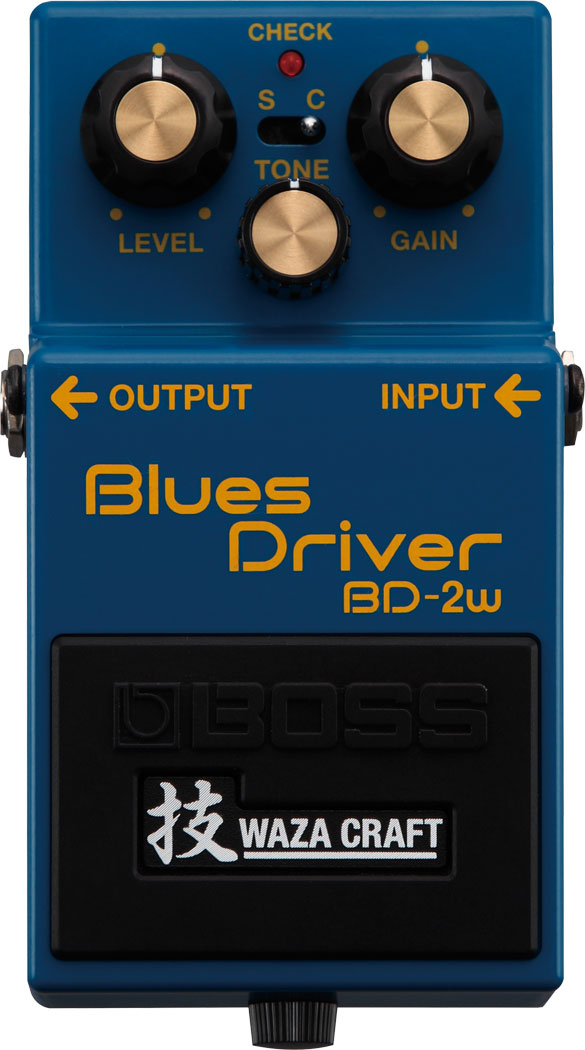
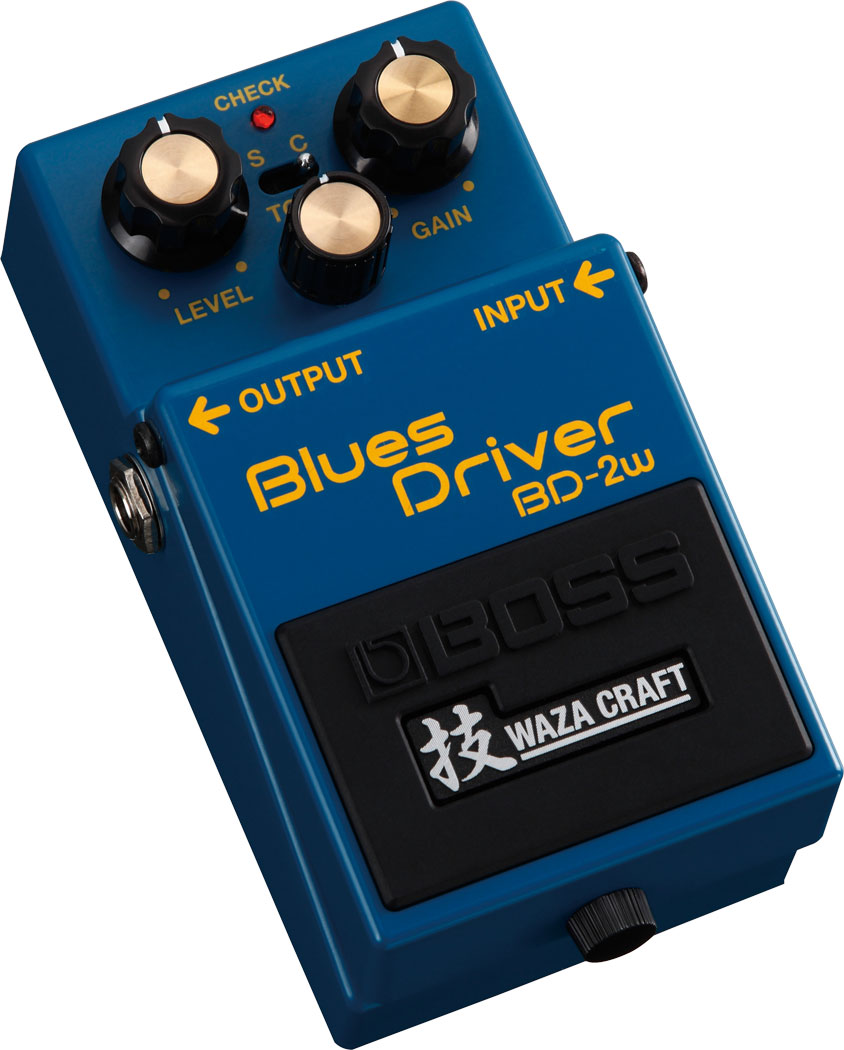
The Boss Blues Driver BD-2W Waza Craft (current price in Finland around 155 €) is a ”waza-treated” update of the popular Blues Driver overdrive.

In the late 1970s Boss came up with the now-legendary, compact guitar pedal format, which has since become an industry standard. The typical Boss pedal is made from a cast metal casing with the quick-access battery compartment tucked away beneath the pedal’s switch flap.

The BD-2W comes with the standard three controls for Gain, Tone and Level.

The Waza Craft range’s special feature lies in their twin mode set-up. You can use the mini-switch to toggle between Standard- and Custom-mode. Standard will give you a boutique version of the regular Boss Blues Driver experience, while Custom ups the ante by offering you a wider dynamic range, as well as a warmer tonality with added top-end sparkle.

The first clip gives you an idea of the BD-2W’s sound with the Gain control at 12 o’clock. The first half is played in Standard-mode, switching over to Custom-mode for the second half:

For the second clip I turned Gain up to full:

bd-2w_angle_gal

****

sd-1w_top_gal

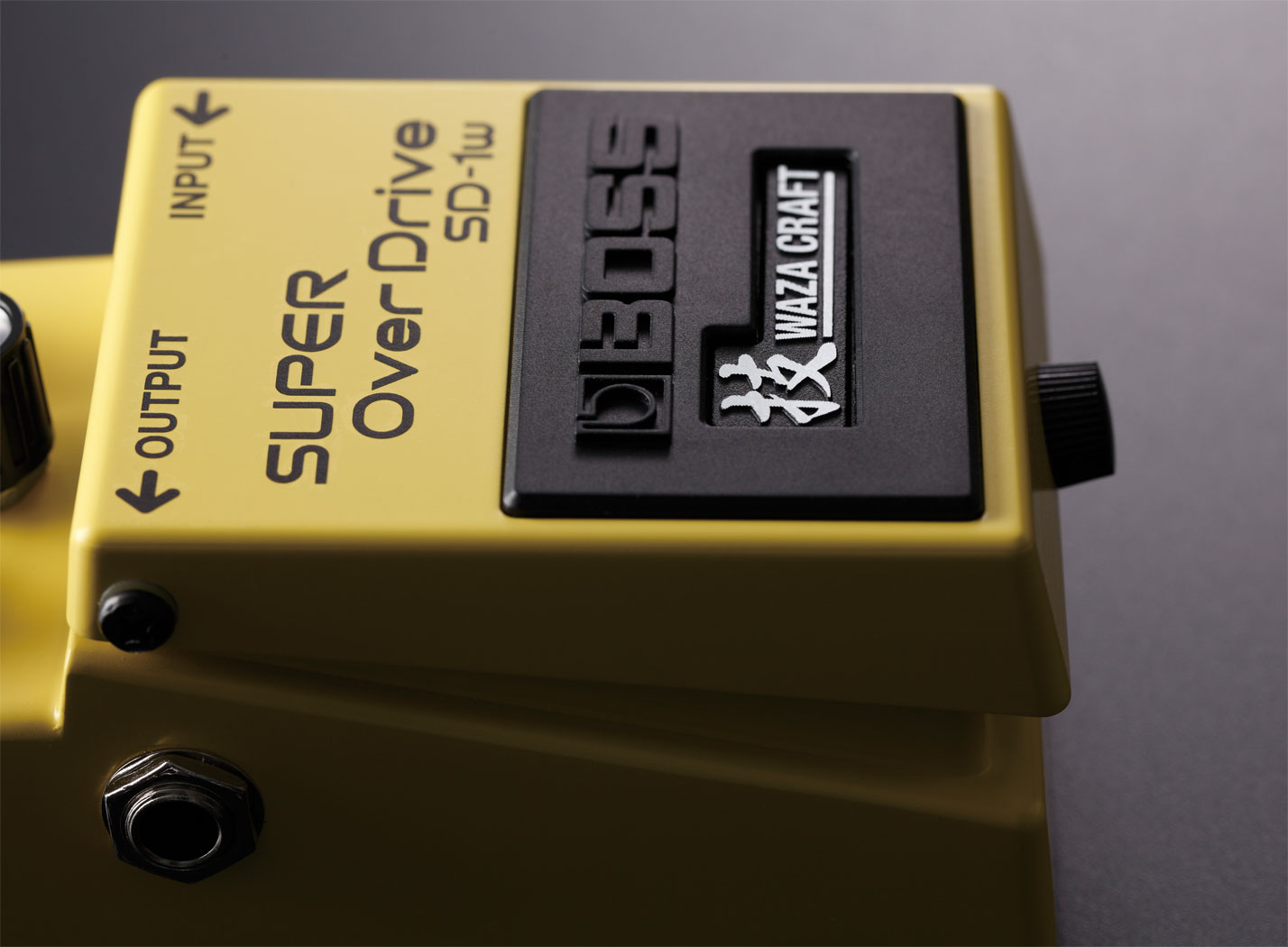
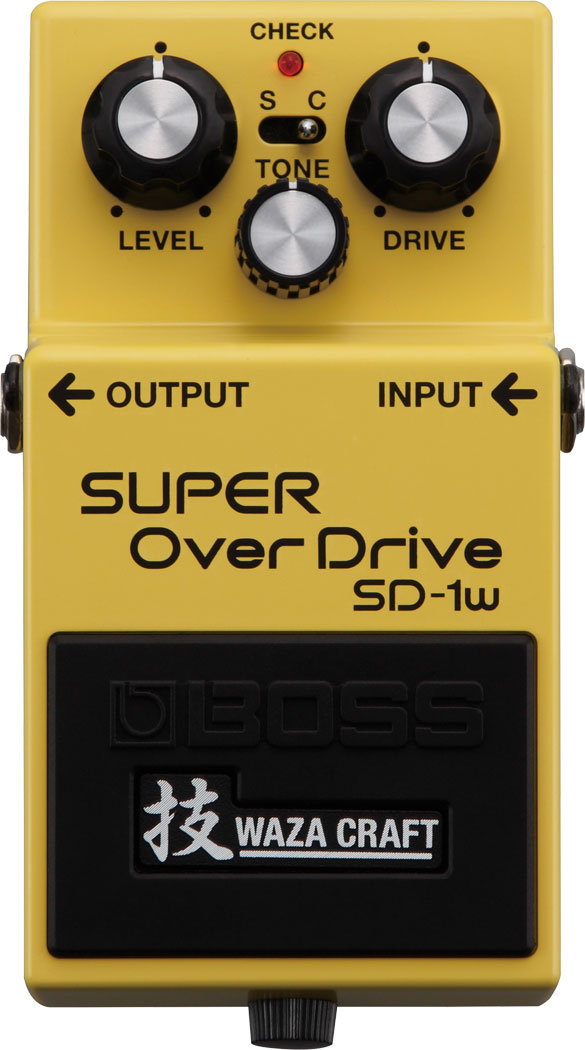
The Boss Super OverDrive SD-1W Waza Craft (current price in Finland around 155 €) is the top-of-the-line version of the company’s yellow-clad classic.

The name gives it away – we’re looking at an overdrive stompbox, so we should expect a dynamic performance with a dense mid-range. As a rule of thumb, distortion-type effects tend to have more bite and a creamier compression than an overdrive.

The Boss SD-1W, too, sports three controls – Drive, Tone and Level – and a mode switch. Standard-mode is meant to give you an upmarket counterpart of the regular SD-1 pedal, while Custom-mode promises a wider frequency range (especially handy for ultra-low tunings).

Here’s a clip of the SD-1W with Drive set to 12 o’clock. Standard-mode comes first, followed by Custom-mode:

And this will give you an idea of this pedal’s sound with Drive turned all the way up:

sd-1w_angle_gal

****

bd-2w_angle_2_gal

What do terms like ”boutique-pedal” and ”premium range” really mean?

In the case of the Waza Craft pedals the answer lies in both the sound and the ”feel” of these effects:

Both overdrive boxes sound even creamier than the standard versions, while also adding a small degree of clarity to proceedings. These premium versions also manage to keep hiss levels even lower than their ”ordinary” counterparts. Both the BD-2W and the SD-1W feel somewhat more organic and responsive, when compared to their (well-made) standard range brethren. The overdrive tones are very natural, and both effects react very nicely to changes in playing dynamics or guitar volume settings. You never get the feeling of the effect being pasted on, instead there’s a real interaction going on between the player, his guitar and the effect pedal.

In isolation Boss’ Waza Craft overdrives might even seem a little underwhelming, but when you A/B them with their standard series counterparts the differences become quite clear rather quickly. Don’t get me wrong, the standard versions are reliable industry standards with a more than decent sound, but for the ultimate Boss-experience you should take the path to Waza Craft.

sd-1w_angle_2_gal

****

Boss BD-2W + SD-1W Waza Craft

approx. 155 €

Finnish distribution: Roland Suomi

****

Pros:

+ classic format

+ all-analogue

+ two modes

+ sound

Review: DOD Bifet Boost 410

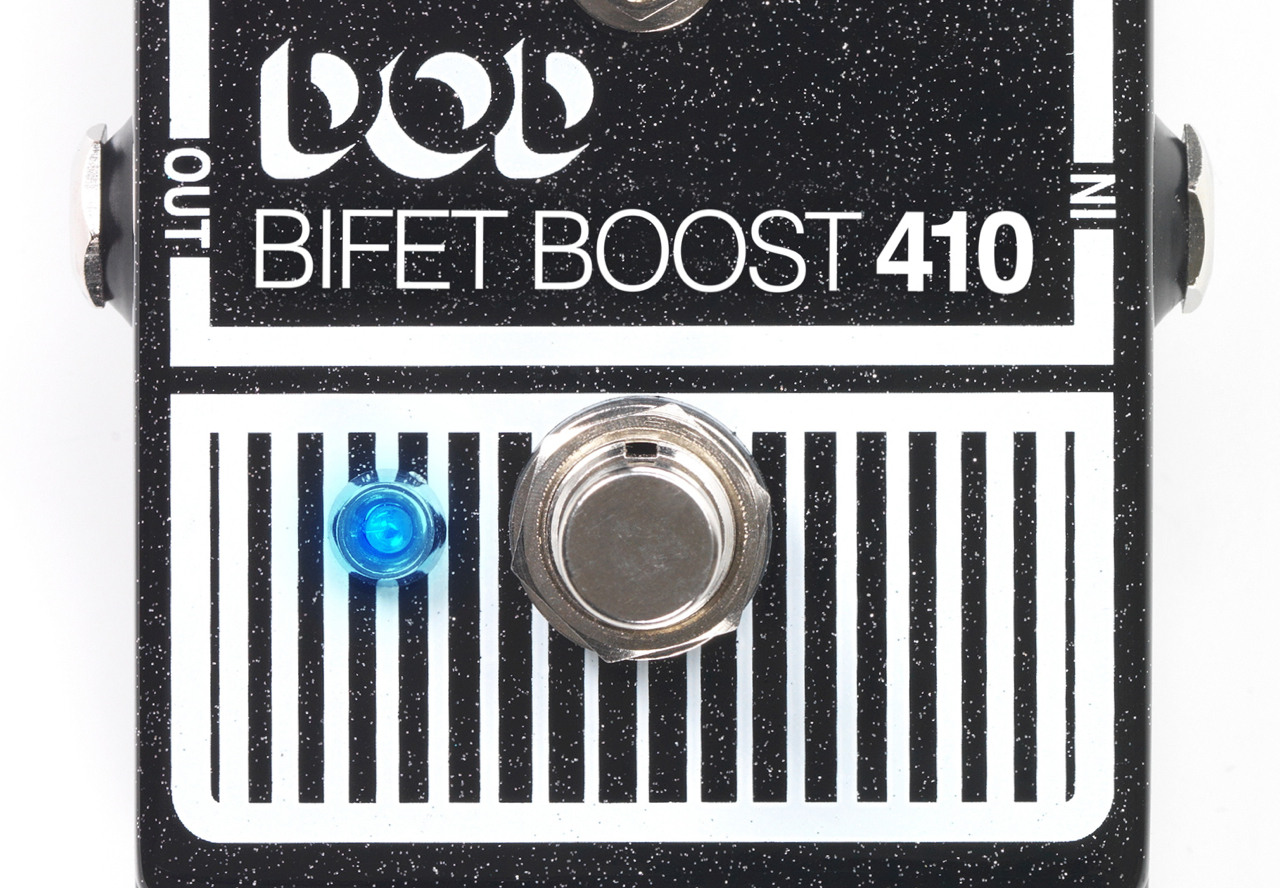
DOD Bifet Boost 410 – status led

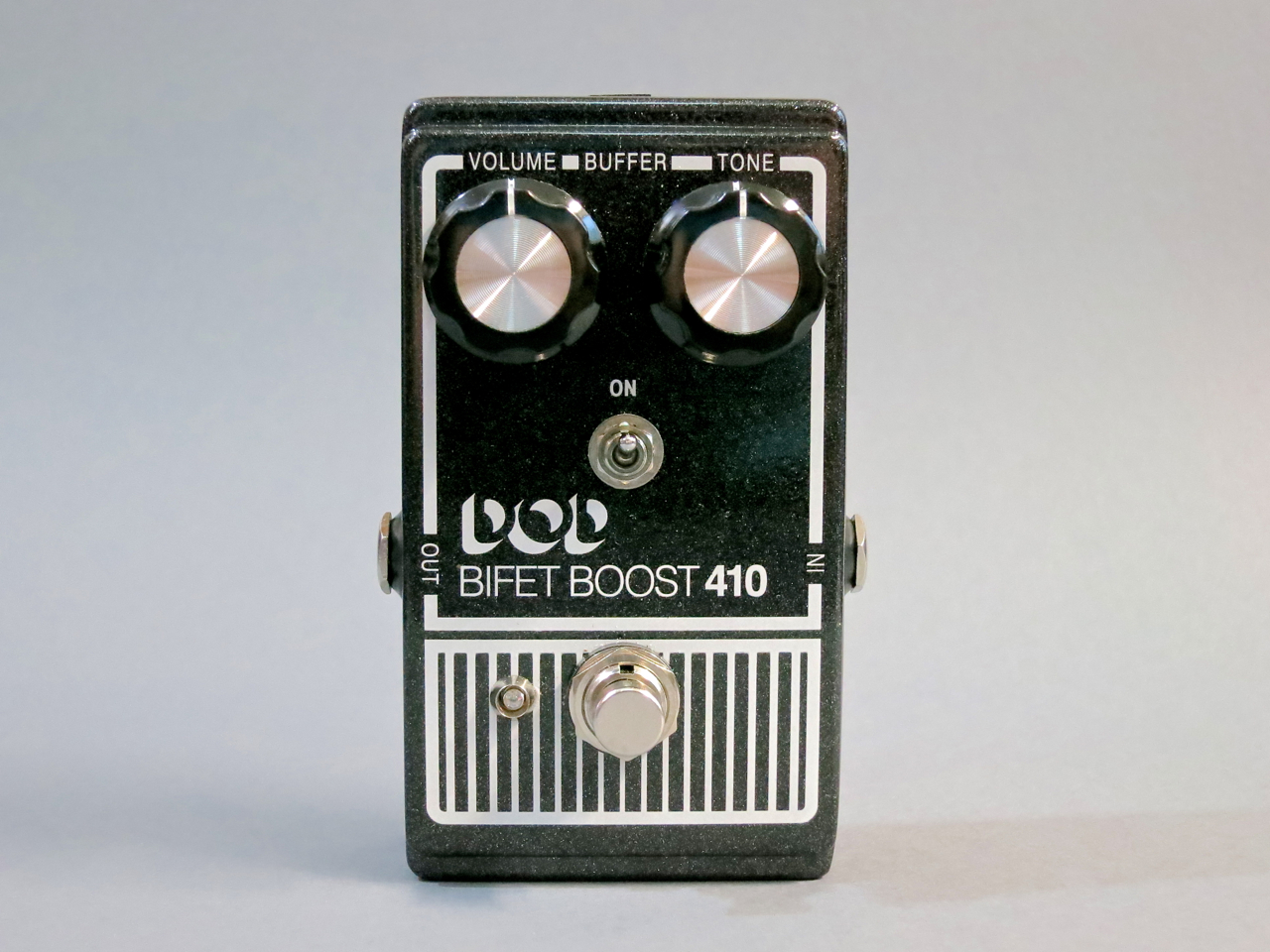
DOD has introduced an updated version of its Bifet Boost 410 pedal this year – the 2014-version adds a switchable buffer to the circuit.

****

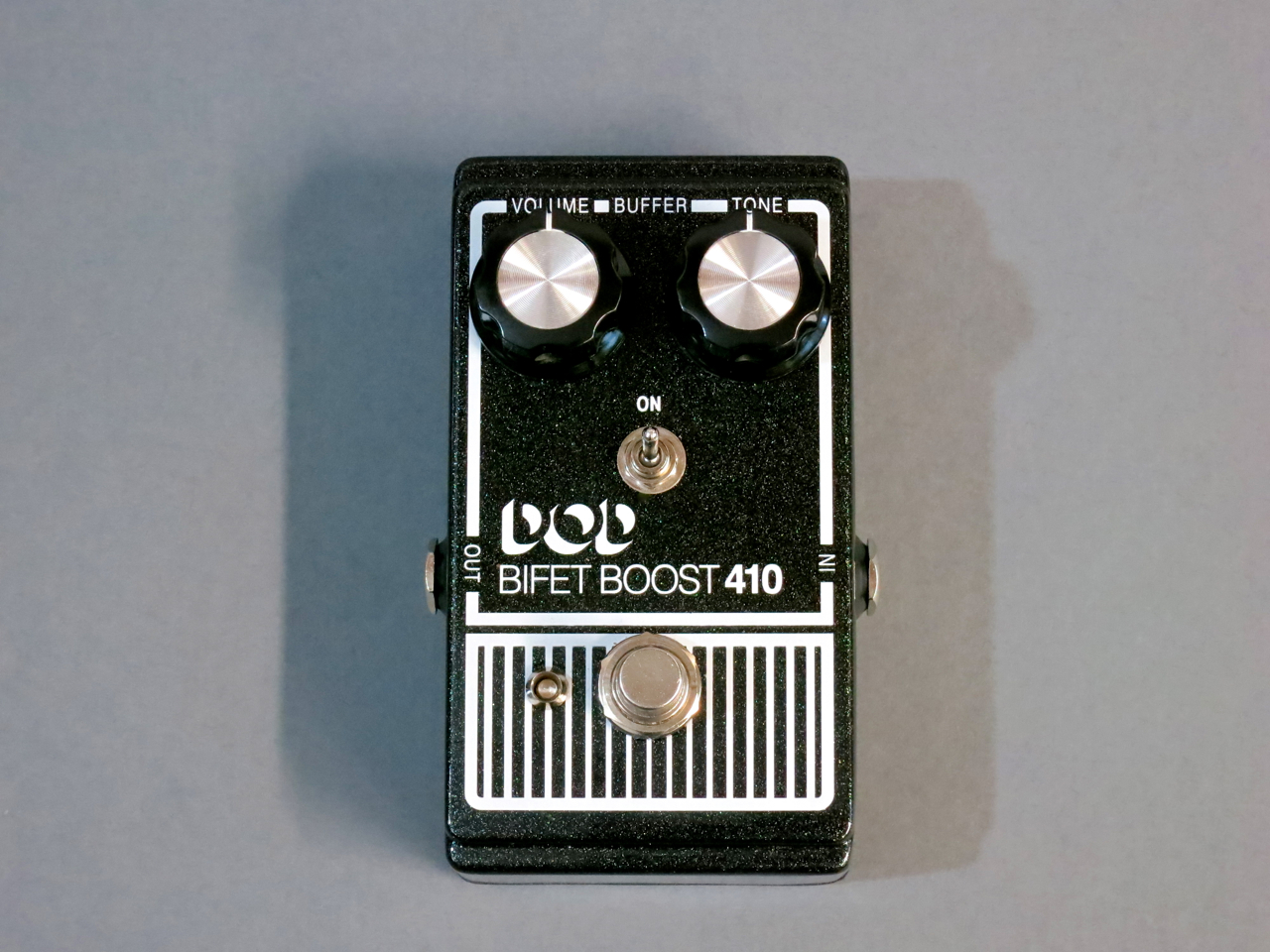
DOD Bifet Boost 410 – full top

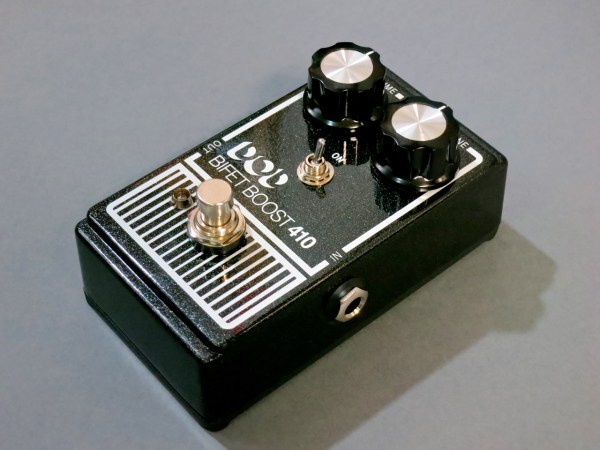
The DOD Bifet Boost 410 (current price in Finland: 99 €) is a signal level booster, giving you up to a whopping 20 dB of amplification.

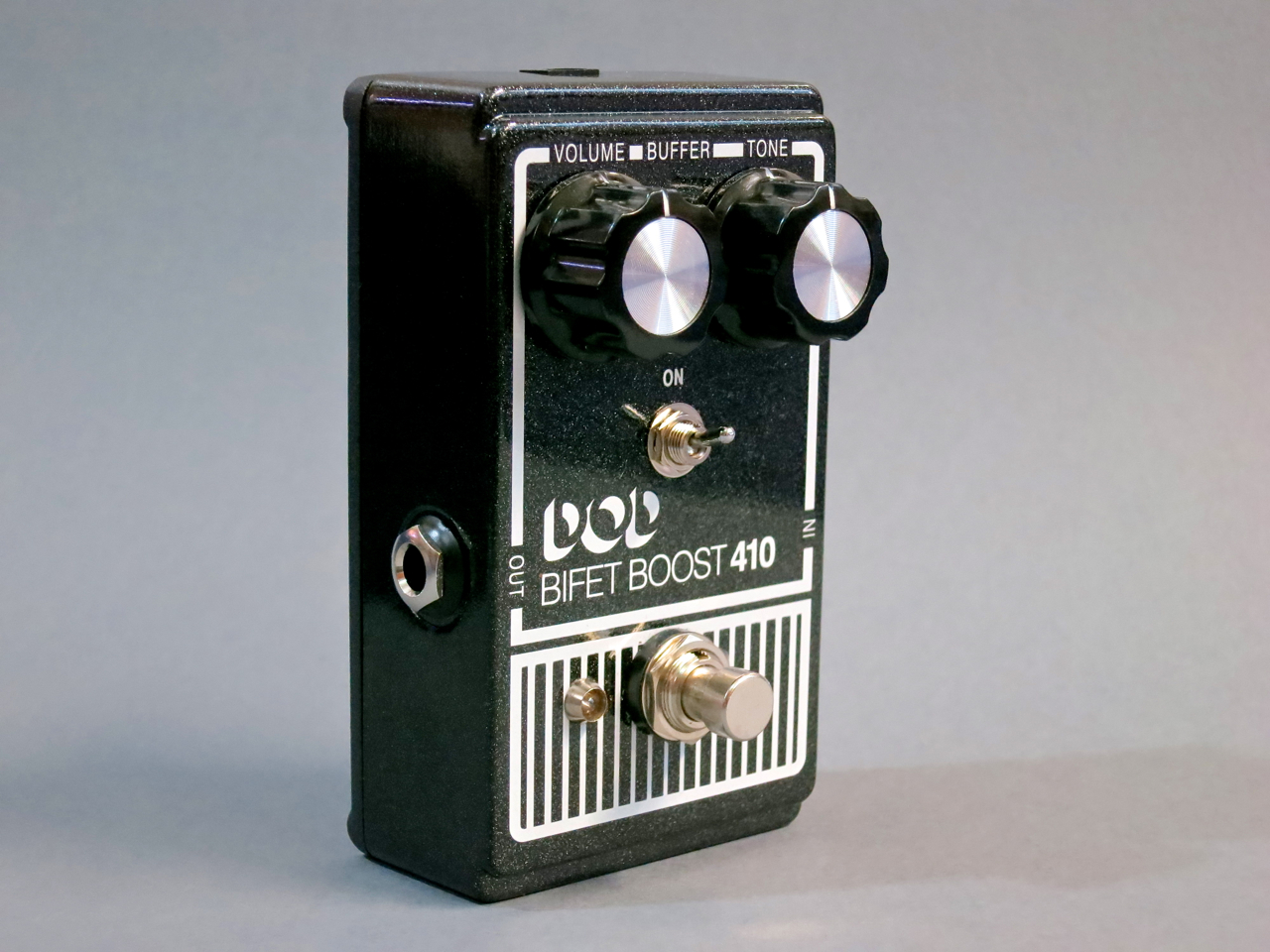
DOD Bifet Boost 410 – right 1

The booster sports two controls – one for volume and one for tone.

Over the last few years, the term ”true bypass” has become the new marketing buzzword, bandied about frequently to ”prove” one pedal’s superiority over another. In reality there’s no mystique attached to true bypass – it simply means that when the pedal is switched off the input is hardwired straight to the output, without passing through any of the effect’s circuitry. If a pedal’s manufacturer doesn’t state true bypass in the spec list, chances are the pedal in question has an internal buffer, which stays in the signal chain even when the effect is off. A buffer is a small amplifier, whose main purpose lies in changing the signal’s impedance from high to low. Most buffer amps don’t amplify the signal level at all (= a gain ratio of 1:1), while some add a tiny bit of treble boost. A high impedance signal suffers from far greater degradation, when fed through a long signal chain (or very long guitar leads), than a low impedance signal. This means that a buffered bypass can come in handy, if you’re using a lot of effect pedals in series. True bypass is usually preferable in smaller set-ups, or if the effect in question sits in front of a fuzz pedal (fuzz pedals generally need a high impedance signal to function properly).

The updated DOD Bifet Boost 410 pedal offers a switchable buffer, so you can decide whether you want to use a buffer or not. You get the buffer in the mini-switch’s On-position, or true bypass with the switch turned off.

DOD Bifet Boost 410 – DC input

The Bifet Boost 410 can be run using a 9 volt battery or a (Boss-type) power supply (not included).

DOD Bifet Boost 410 – base plate

You need to take off the pedal’s metal base plate to change batteries.

The package includes four small stick-on rubber feet, which you can use when the pedal’s not used on a pedalboard.

****

DOD Bifet Boost 410 – left 2

Usually, boost pedals can be divided into two categories: Those who provide a completely clean and neutral boost, and those who add a little colour and/or grit to the signal. The DOD Bifet Boost 410 belongs in the latter category, adding a little extra character to the mid-range frequencies, along with the raise in signal level.

Using the booster on a clean amp channel may push the guitar signal into overdrive, depending on the amount of headroom offered by the amp used. In this example you can clearly hear the Blackstar HT-1R’s sound break up and distort:

Used into a crunchy channel, the DOD-booster will add more chunky gain to to your tone:

You can use the tone control to add quite a lot of top end to your sound. You have to remember, though, that the sheer amount of gain on tap in this pedal will also boost any noise (hiss, hum) in your signal chain:

DOD Bifet Boost 410 – right 2

****

DOD Bifet Boost 410 – upright

DOD’s Bifet Boost 410 is a pro-quality boost pedal and very easy to use. The added buffer switch lets you decide for yourself, whether you need a bypass buffer or not.

****

DOD Bifet Boost 410 (2014)

Current price in Finland: 99 €

Finnish distributor: EM Nordic

Thanks to DLX Music Helsinki for the loan of the review sample!

****

Pros:

+ up to 20 dB boost

+ tone control

+ switchable buffer

Pidä blogia WordPress.comissa.

Ylös ↑