

****
Kitarablogi.com – Finland's premier Guitar and Bass blog
Juttuja kitaroista ja bassoista

****

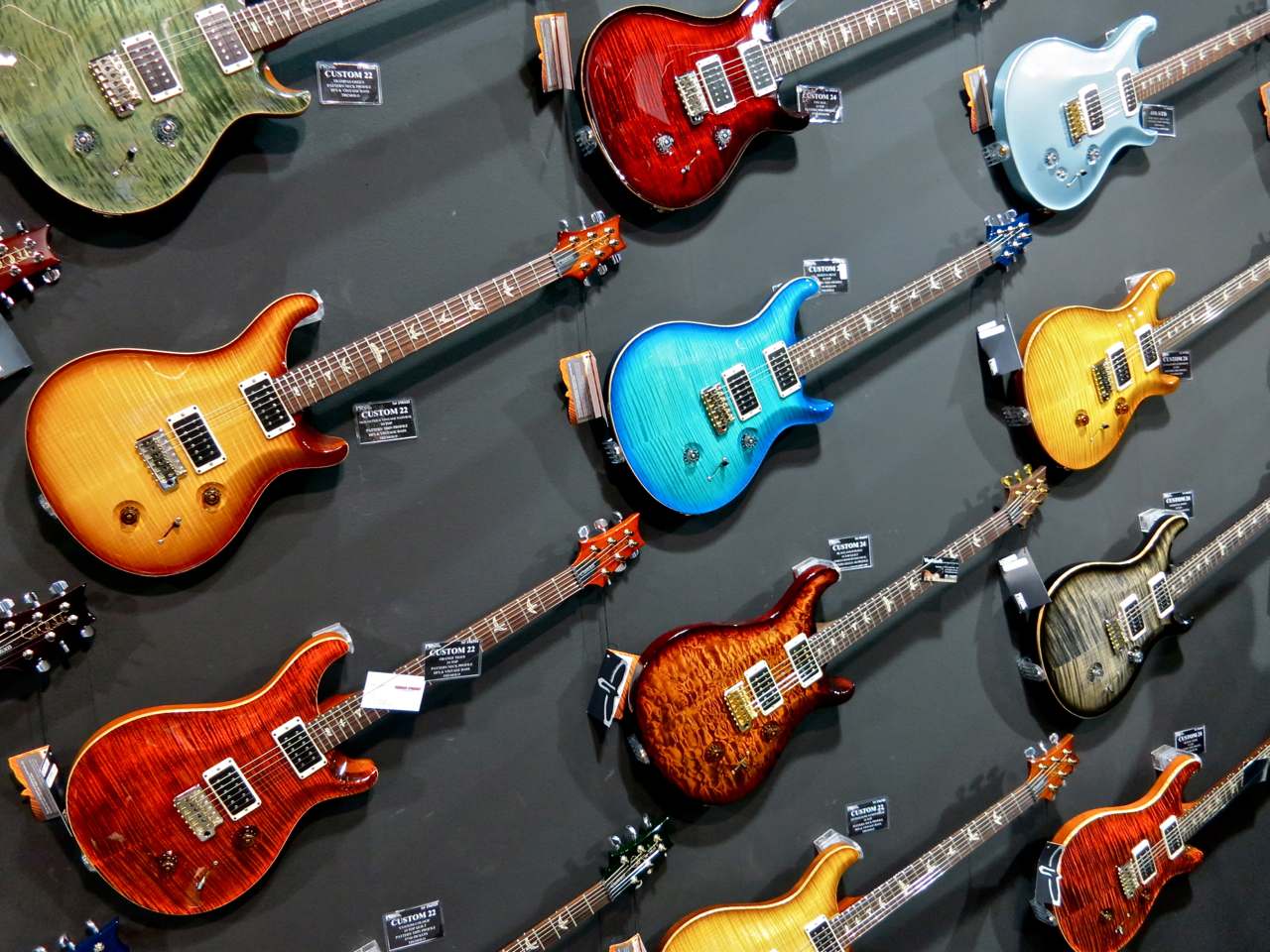
Upouusi PRS P22 Trem on vibratallalla varustettu versio P22-hybridimallista.
P22 Trem -kitarassa on passiivinen elektroniikka PRS:n omia 57/07-humbuckereita varten, sekä aktiivinen L R Baggs -piezosysteemi. Magneettiselle ja piezosignaalille on kummallakin oma lähtöjakki, mutta Blend-säätimen ansiosta piezosignaalia voi myös lisätä humbuckersignaaliin.
Lisätiedot: EM Nordic
****

****

A pre-aged guitar – to some people it’s the daftest idea ever, while others think relicing imbues the instrument with its own type of charm.
But one thing is clear: artificial ageing is here to stay!
This time we will take a new-old ESP for a spin – the Eclipse II FM FT Distressed.
****

The ESP Eclipse II Distressed (current price in Finland: 1.889 €) is a Japanese quality instrument treated to look and feel like a 50-year-plus veteran of the stage and studio.
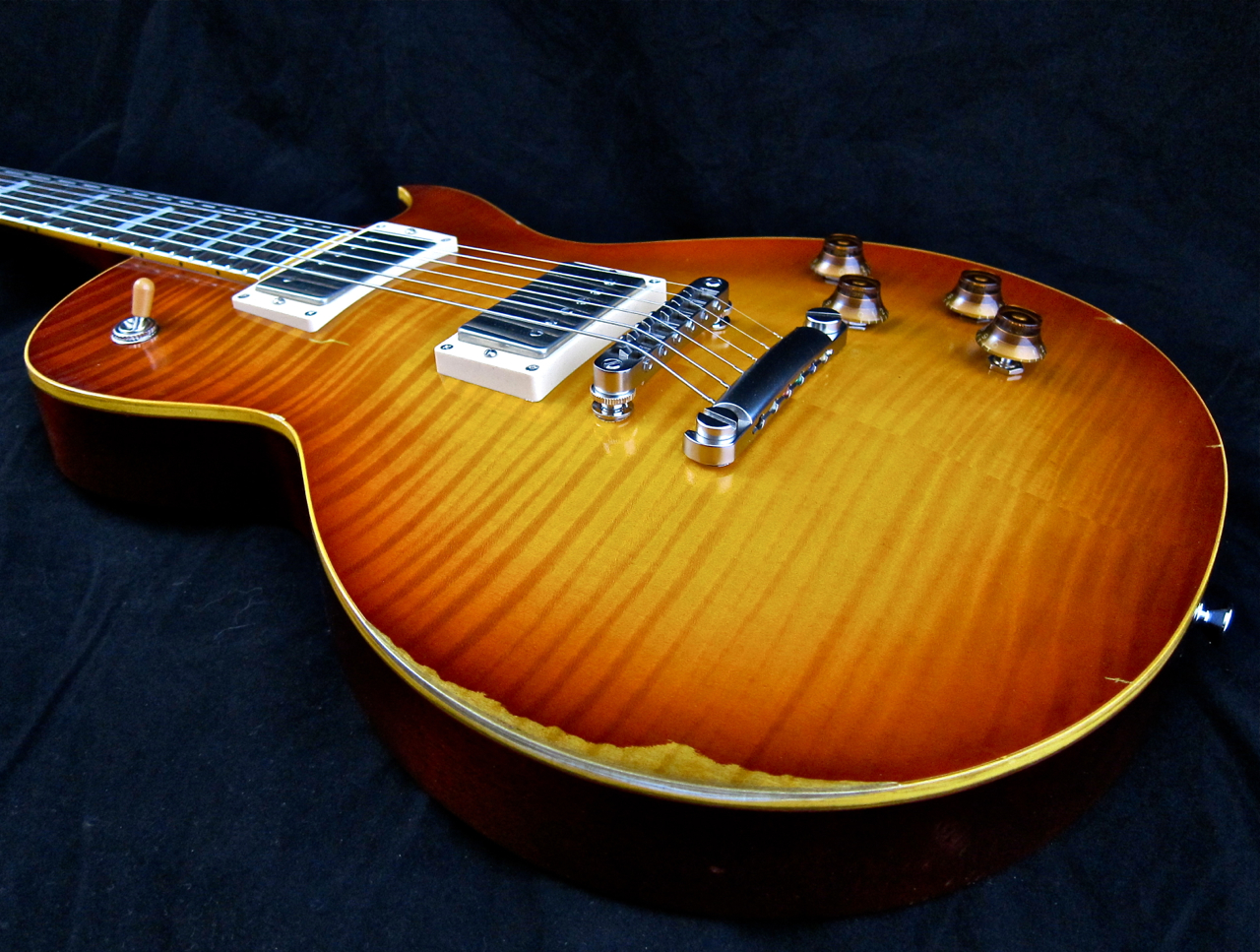
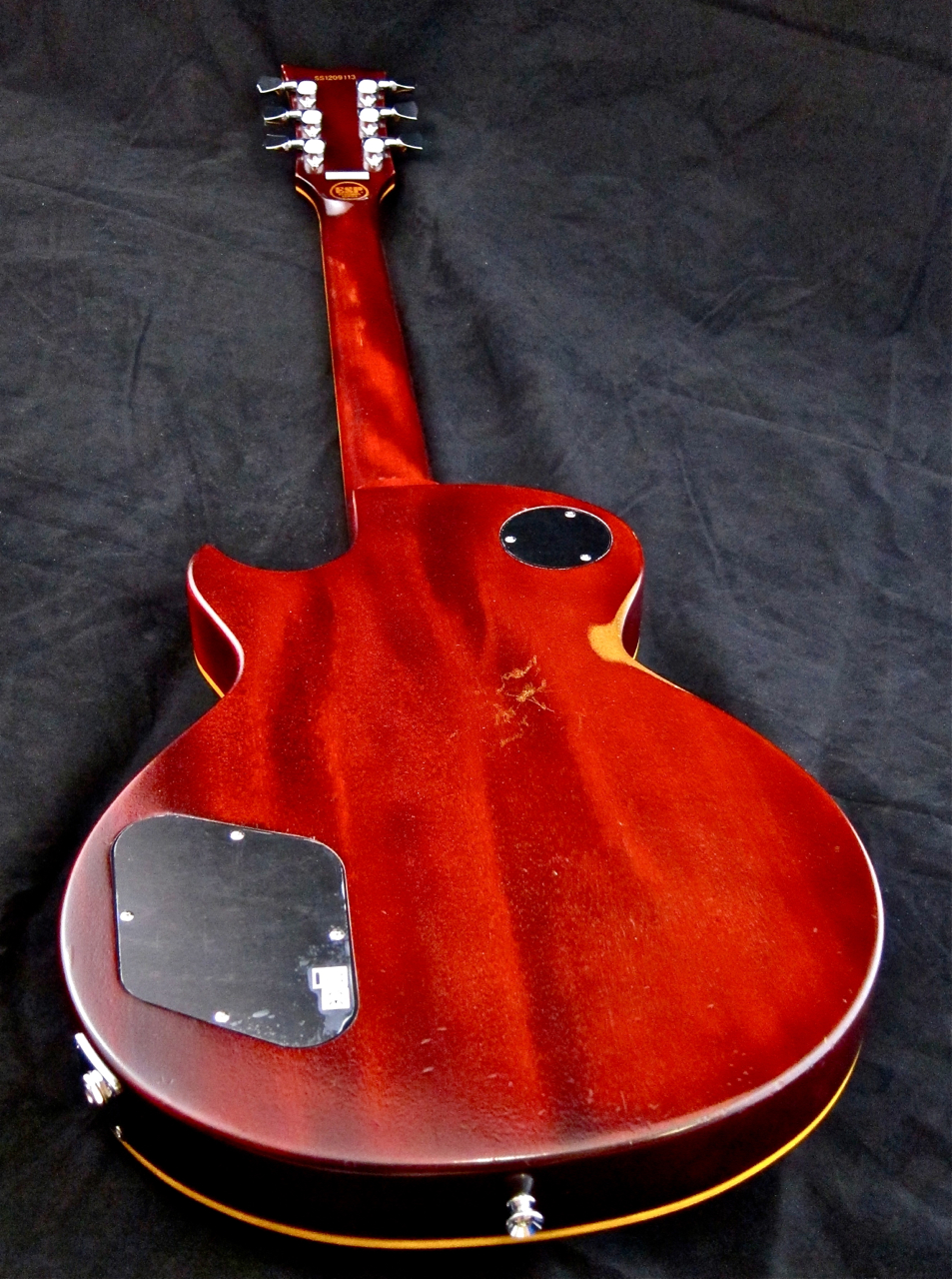
The rather realistic impression is achieved not only by dings, dents and scratches, but also by using a laqcuer that looks old and sunken in.

The flip side of the Eclipse II Distressed’s body has also received lots of scratches and a bout of artificial belt buckle rash. The neck, though, has been left fairly clean.
The mahogany looks scrumptious, and the finish does its bit to underscore the lively wood grain.

ESP have restrained themselves from adding over-the-top finish cracks, which is a good decision, in my opinion.
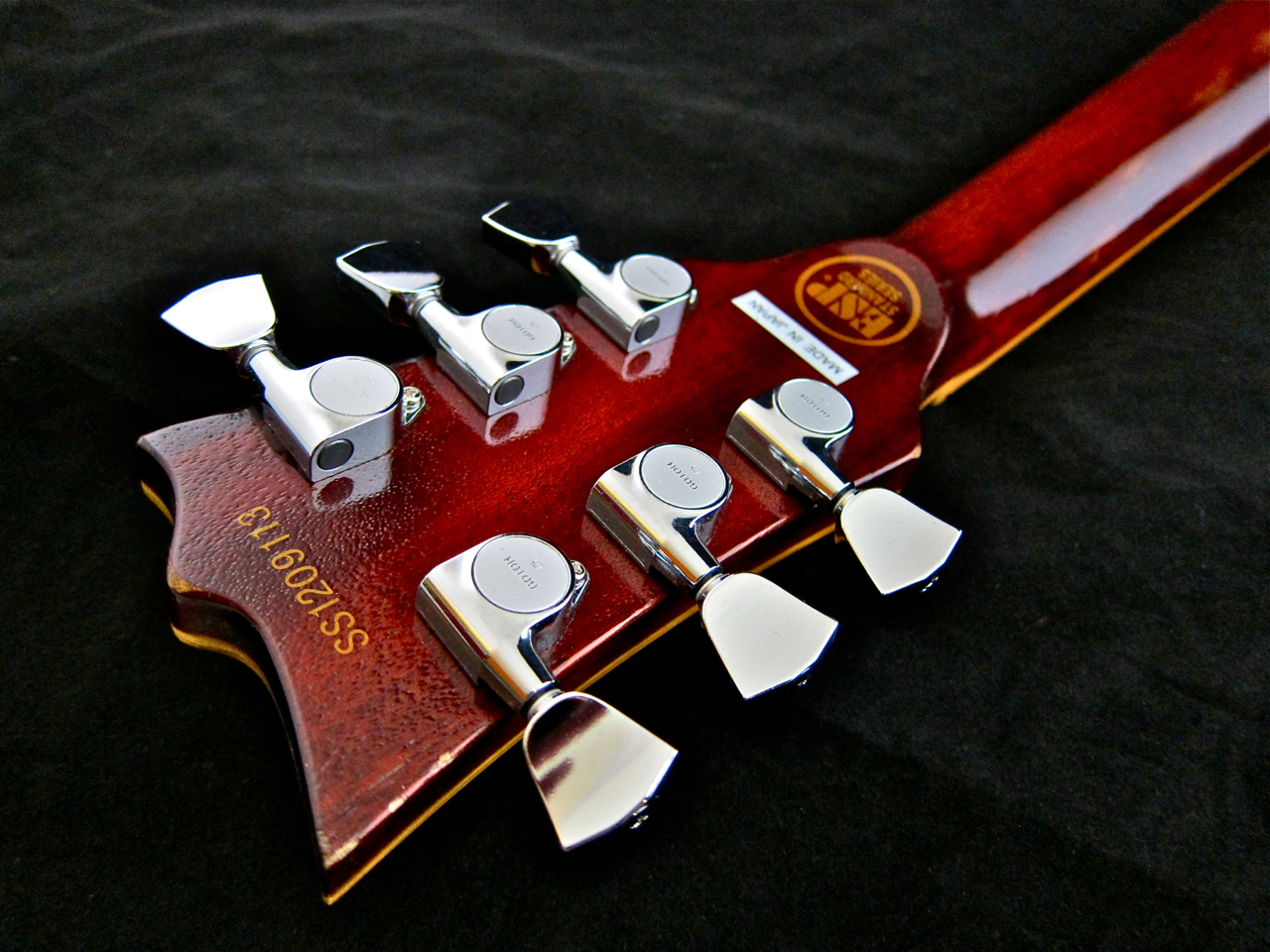
The Gotoh-machines look traditional, but are in fact up-to-date locking tuners.

The Eclipse’s beautiful rosewood ’board and jumbo-sized frets have been left untouched by relicing – this is a brand-new guitar with a pristine playing feel, great!

The neck joint is a traditional set-in job.

This viewing angle makes it easy to spot all the dents in the sunken in finish (click the picture for a larger view).

The Distressed-model comes fitted with Seymour Duncans: The neck unit is a ’59-model, while a Duncan JB -humbucker has been installed near the bridge.
The brushed metal covers fit the ESP’s lightly-aged look to a tee.
The neck pickup’s tone control is equipped with a push/push-switch that splits the humbuckers in the up-position.

Everything’s hunky-dory in the control cavity – quality parts, clean workmanship and thorough shielding wherever you look.
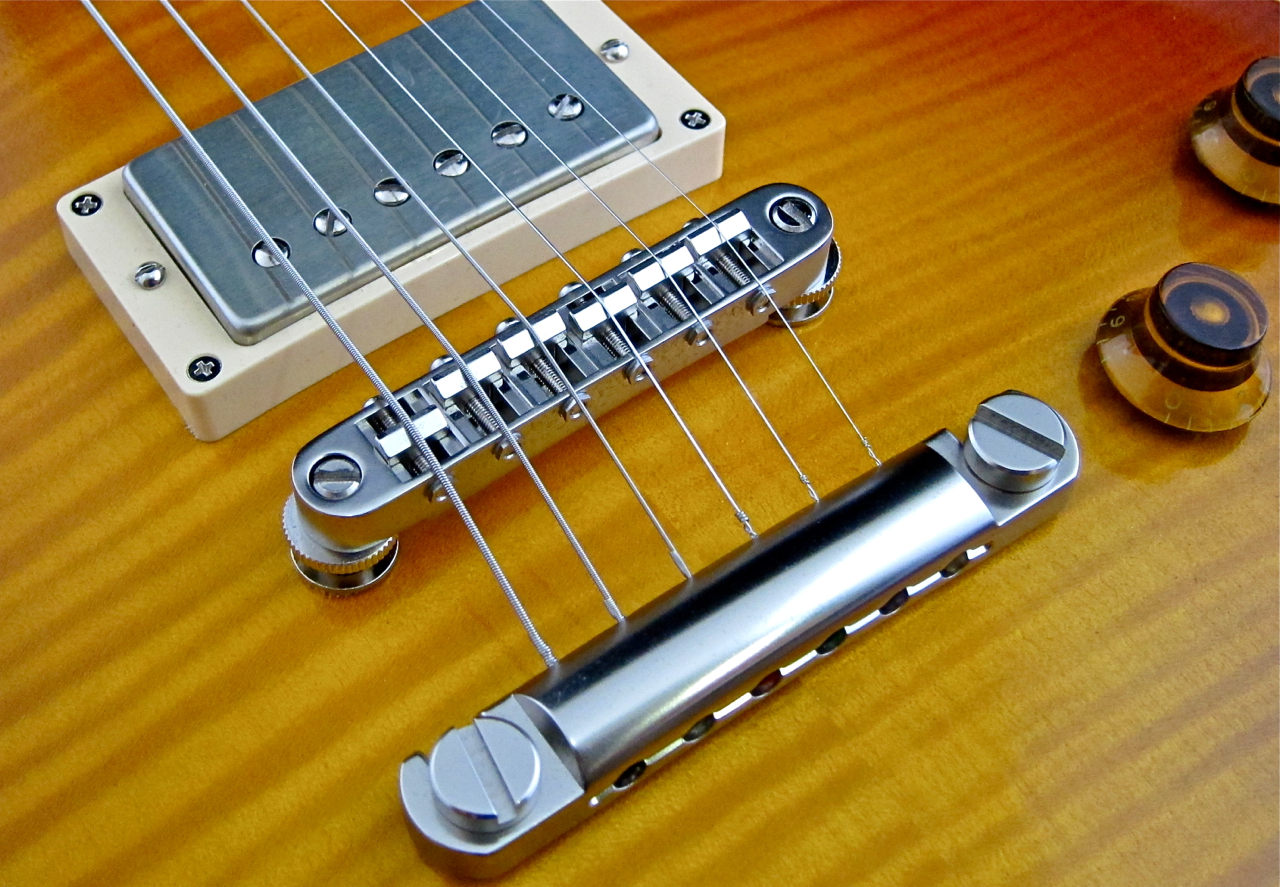
The tune-o-matic-type bridge and the guitars tailpiece are quality parts made by Gotoh.
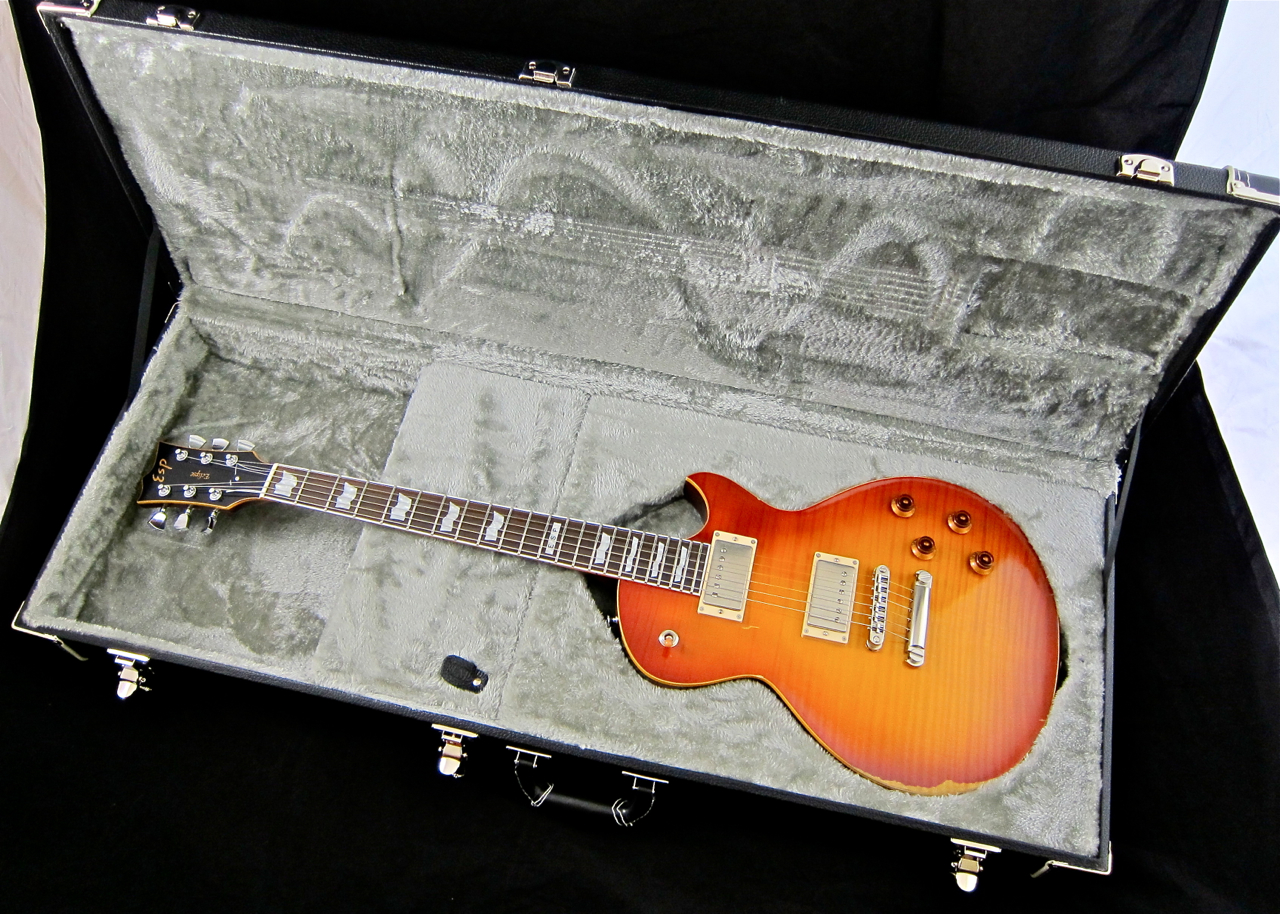
The ESP Eclipse II Distressed is sold in its own, beautiful case.
****

Many players complain about the weight of a good deal of LP-type electrics, which can give you a sore shoulder or a hurting back. I can only suggest that these guitarists take a stoll to their friendly ESP-dealer, if this test sample is anything to go by!
I don’t know whether it’s in the wood selection or whether ESP employ an Emmental-method (like Gibson) for weight-relief – by drilling large-diameter holes into the mahogany before gluing the maple top on – but this ESP is the most lightweight LP-style guitar I have ever played!
The neck profile is a very friendly medium-depth ”D”, not far removed from Gibson’s 60s-neck. The sunken-in finish feels smooth and fast, and the fine fretwork and large fretboard radius make for an easy playability.
It’s hard to gauge whether this is due to the relicing or not, but the ESP Eclipse II Distressed feels really live. The guitar breathes and resonates freely, and its fine acoustic tone has a nice warmth and a sinewy midrange.
Seymour Duncan’s ’59/JB-pairing is an excellent choice for the ESP Eclipse II. The pickups have a good balance between themselves, and manage to convey this instrument’s tonefulness onwards to the amp with fine detail. The ability to split the ’buckers adds three fresh and springy selections to your arsenal.
Both sound examples start with the split neck pickup, followed by the full neck pickup, and so on:
ESP Eclipse II Distressed – clean
ESP Eclipse II Distressed – distorted
Regardless of your stance towards pre-aged guitars, there’s no denying that ESP’s Eclipse II Distressed is a fine, high-quality instrument, with its own hefty dose of charm. Shame we had to give it back…
****
ESP Eclipse II FM FT Distressed
Current price in Finland: 1.889 €
Finnish distributor: Musamaailma
Pros:
+ looks
+ sound
+ weight
+ playability
+ coil-split
+ workmanship
****

****
Esivanhennettu kitara – joidenkin mielestä se on typerin keksintö ikinä, kun taas toisten mielestä naarmuuntuneissa kitaroissa on oma charminsa.
Yksi asia on kuitenkin selvä: relic-ilmiö on tullut jäädäkseen!
Tällä kertaa testissä kävi ESP:n näkemys uusvanhasta kitarasta – Eclipse II FM FT Distressed.
****
ESP Eclipse II Distressed (1.889 €) on laadukas japanilainen sähkökitara, joka on esikulutettu näyttämään yli 50-vuotiaalta, paljon käytetyltä soittimelta.
Hyvin realistinen tuntuma on saatu aikaiseksi käyttämällä kolhujen, naarmujen ja lommojen lisäksi myös sellaista lakkausta, joka näyttää hieman ajan jälkeen kuluneelta ja puun syykuvioihin uponneelta.
Myös Eclipse II Distressed -rungon takapuoli on täynnä pieniä naarmuja ja painaumia, mutta kitaran kaula on jätetty lähes kokonaan siistiksi.
Runkoon ja kaulaan käytetty mahonki näyttää herkullisen eloiselta.
ESP ei kuitenkaan vetänyt relikoinnilla överiksi, eikä viimeistelyssä ole keinotekoisia halkeamia.
Gotohin kromatut virittimet näyttävät hyvin perinteisiltä, mutta kyseessä ovat nykyaikaiset lukkovirittimet.
Eclipsen kaunista palisanteriotelauta ja sen jumbokokoiset nauhat on jätetty tarkoituksella neitseelliseksi: uudella kitaralla on uuden kitaran tatsi ja soitettavuus, hyvä niin!
Kaula on liitetty runkoon perinteisesti liimaliitoksella.
Tässä kuvassa näkyvät hyvin relikoidun Eclipse II Distressed -kitaran kulumat, naarmut ja viimeistelyn epätasainen pinta.
Distressed-mallin mikrofonit tulevat Seymour Duncanilta: kaulamikrofoniksi on valittu ’59-humbuckeri, kun taas tallan viereen on asennettu firman JB-malli.
Mikkien harjatut suojakuoret tukevat omalta osaltaan vanhan soittimen vaikutelmaa.
Kaulan tone-potikkaan on lisätty push/push-kytkin, jolla saa molemmat mikrofonit puolitettua.
Elektroniikkalokerosta löytyy laadukkaita osia, siistiä juotostyötä, sekä huolellista häiriösuojausta grafiittimaalilla ja alumiinilla vuoratulla kannella.
Samoin kuin Eclipse II:n virittimet myös tune-o-matic-tyylinen talla ja palkkimainen kieltenpidin ovat laatuosia Gotohin valikoimasta.
Erittäin hieno kova laukku kuuluu ESP:n hintaan.
****
Monet valittavat LP-tyylisten kitaroiden paino-ongelmista, jotka tekevät kitaran soitosta epämukavan. Näille soittajille voin vain suosittaa ESP Eclipse II Distressed -mallin koeajoa, koska ainakin testiyksilö on uskomattoman kevyt!
En tiedä johtuuko tämä ominaisuus huolellisesta puuvalinnasta vai käytetäänkö myös ESP:n tehtaalla Gibsonilta tuttua ”Emmental-menetelmää”, jossa porataan rungon mahonkiin ensin isokokoisia reikiä, ennen kuin vaahterakansi liimataan paikkoilleen. Oli miten oli – tämä ESP on kevyin soittamani LP-tyylinen kitara ikinä!
Kaulaprofiili on erittäin mukavantuntuinen keskikokoinen ”D”, joka on hyvinkin lähellä Gibson-kitaroista tuttua 60s-kaulaa. Hiukan epätasainen ”vanhennettu” lakka tuntuu liukkaalta ja luonnolliselta. Esimerkkillisen nauhatyön ja otelaudan loivan kaarevuuden ansiosta, soittotatsi on nopea ja vaivaton.
En tiedä johtuuko tämä relikoinnista tai muista seikkoista, mutta ESP Eclipse II Distressed tuntuu suorastaan elävältä. Kitara resonoi vapaasti ja sen loistavassa akustisessa äänessä löytyy sopivasti sekä ryhdikkyyttä, että lämpöä.
Seymour Duncanin ’59/JB-kattaus on ESP Eclipse II:lle mahtava valinta. Mikrofonit ovat keskenään loistavassa tasapainossa, ja ne onnistuvat täydellisesti välittämään kitaran oman äänen uskollisesti eteenpäin vahvistimelle. Lisäksi humbuckerien puolitus yksikelaisiksi lisää tutuille humbucker-soundeille vielä hyvin hyödylliset kevyemmät ja kirkkaammat vaihtoehdot.
Esimerkkipätkissä aloitan aina puolitetusta kaulamikrofonista, sen jälkeen tulee täysi kaulamikki ja niin edelleen:
ESP Eclipse II Distressed – puhtaat
ESP Eclipse II Distressed – säröllä
Kitaroiden keinotekoisesta vanhenemisesta voi olla mitä mieltä tahansa, mutta ESP Eclipse II Distressed on mielestäni loistava laatusoitin, jolla on omaa luonetta ja charmia vaikka muille jakaa. Sääli, että se piti palauttaa…
****
ESP Eclipse II FM FT Distressed
1.889 €
Maahantuoja: Musamaailma
Plussat:
+ ulkonäkö
+ soundi
+ paino
+ soitettavuus
+ mikkien puolitus
+ työnjälki
****

****
The Legend 4 Classic and Legend 4 Custom basses are Spector Bass’ affordable, Korean versions of the company’s NS-2-bass, the famous model that Stuart Spector designed in co-operation with Ned Steinberger.
****

The Spector Legend 4 Classic (current RRP in Finland: 672 €) is a long-scale active bass.
The body is crafted from three pieces of maple, with its frontside spruced up with a very pretty quilted maple veneer.

The bass’ bolt-on neck is put together using three long strips of hard rock maple.

The neck joint features rounded edges for added comfort, while five screws with separate, countersunk washers make for a very precise and sturdy fit.

The pearl SSD-logo has been cleanly inlaid into the back-angled headstock.
A self-lubricating top nut makes tuning a smooth experience. The nut’s corners have been rounded – a nice upmarket touch in this price bracket.
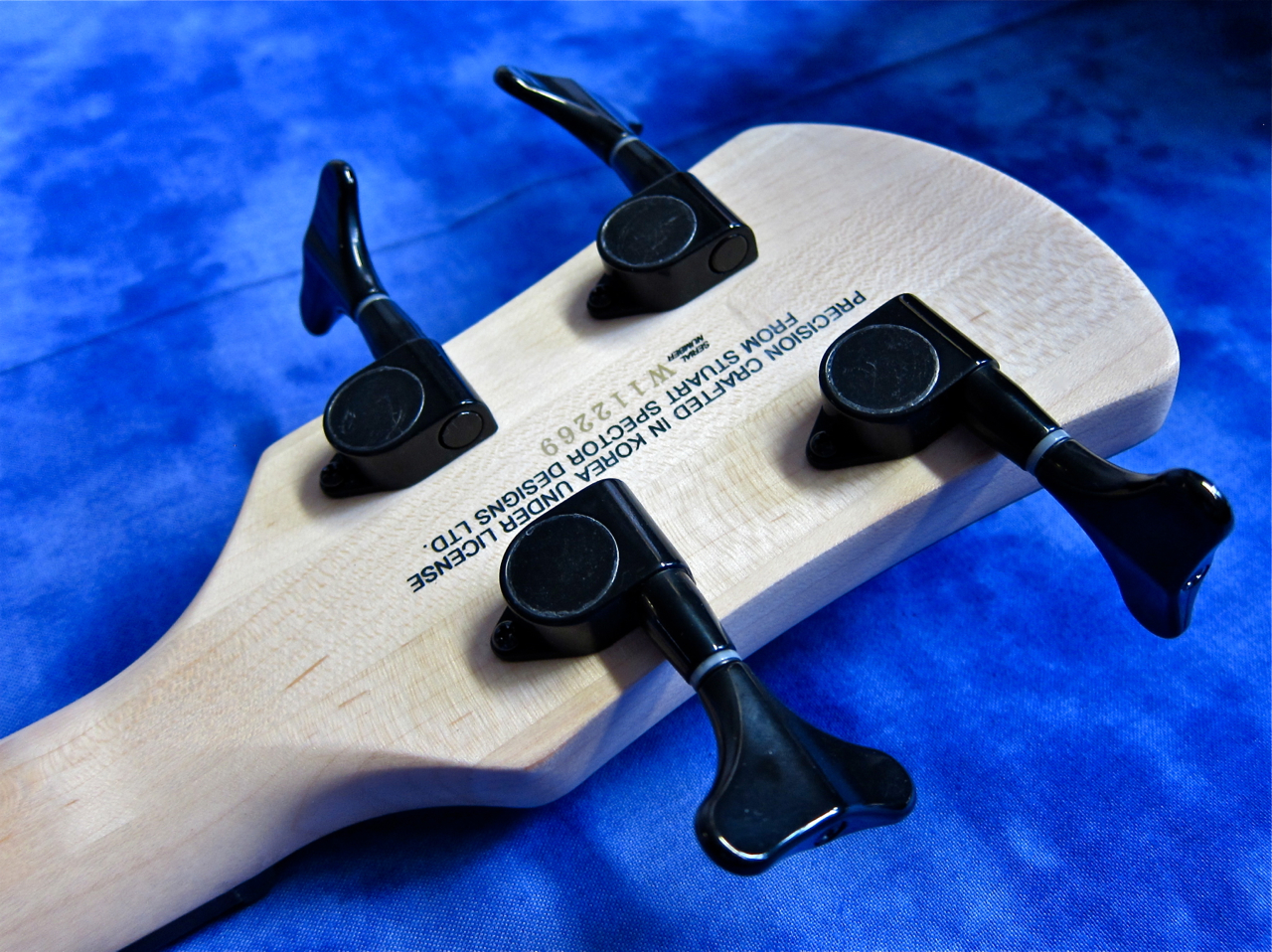
Black is the colour of choice for all of the Legend 4 Classic’s hardware. The modern, sealed tuners keep the tuning rock steady.

The rosewood fingerboard sports 24 jumbo frets, which are well seated and nicely polished, making for a smooth playing surface.
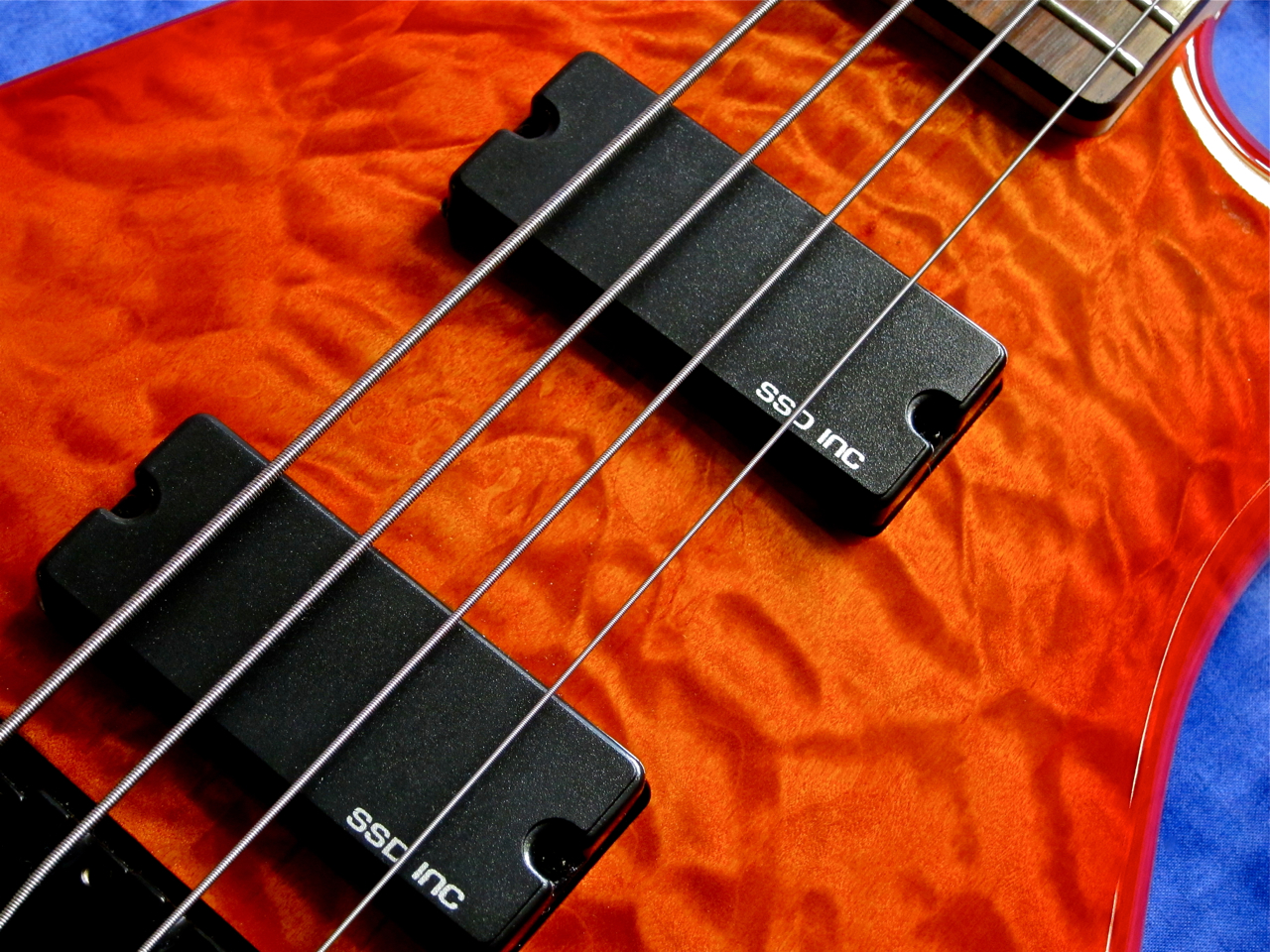
The Classic-model’s passive SSD-humbuckers are manufactured by EMG. These units – designed specifically for this bass – use the EMG-HZ-pickups as a starting point, but add a good helping of mid-range for a meatier tone.

This Spector’s controls comprise two separate volume knobs (one for each pickup), as well as active boost controls for bass and treble, respectively.

The preamp – which is boost-only – is Spector’s own Tone Pump Jr -circuit, which has been glued to the control cavity’s side wall.
To minimise interference buzz the whole cavity has been covered in conductive paint, and the lid lined with aluminium foil. The lid is fixed to the body using machine screws and threaded inlets – a much better choice on an active bass than plain wood screws.
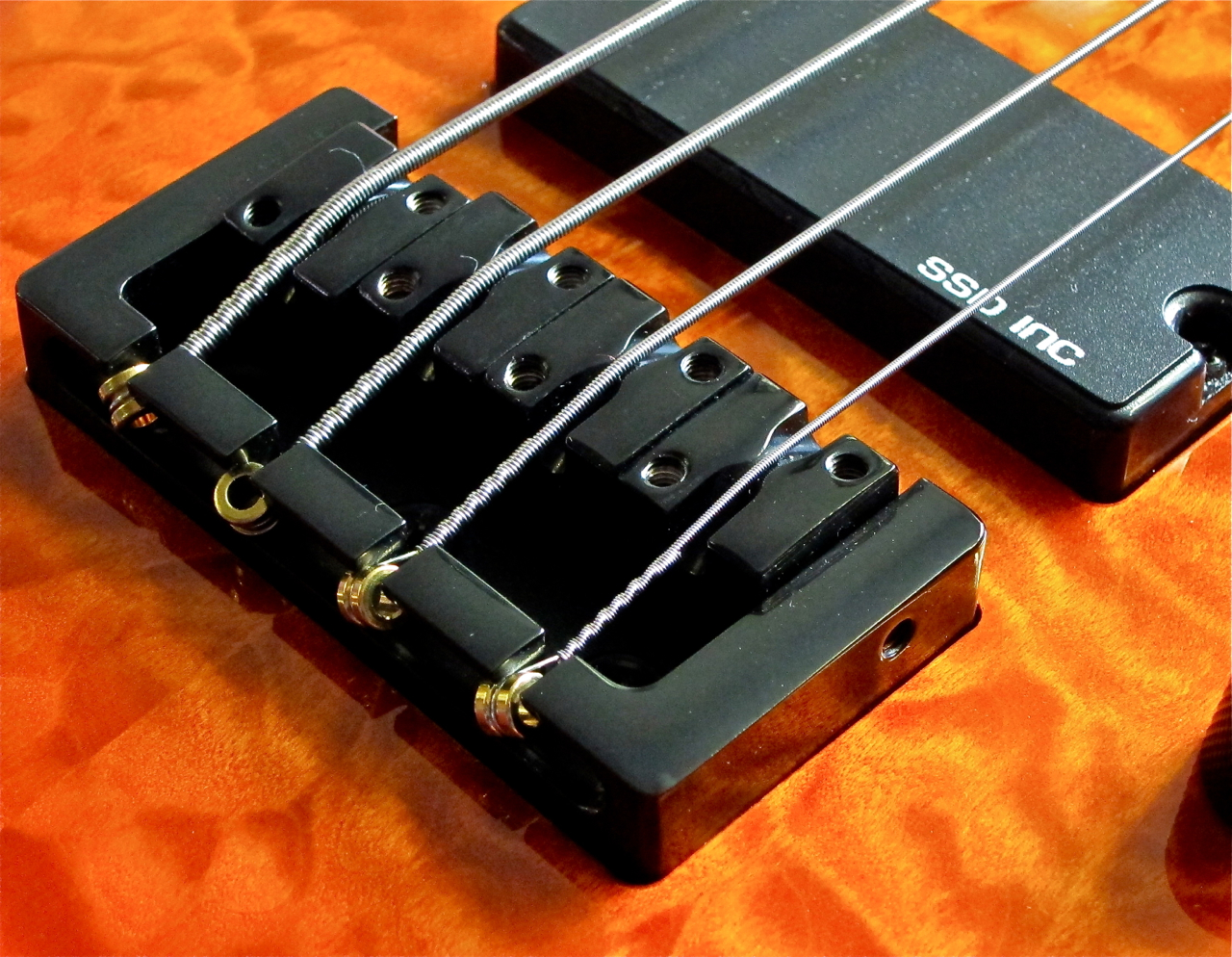
The Legend 4 Classic’s bridge is a hefty design. The saddles are locked in place with grub screws to prevent any rattling, thus enhancing the instrument’s sustain.
****

The Spector Legend 4 Custom (current RRP in Finland: 855 €) is the Classic’s higher-spec’d sibling.
Here the body uses two, centre-joined pieces of basswood with a quilted maple veneer on top.

The Custom’s neck is glued into the body, and features graphite rods reinforcing the neck.

Just like the NS-2, both basses reviewed here feature curved bodies, even though the arch is much less pronounced in these more affordable instruments.
The beer-belly chamfer adds to the bass’ strapped-on comfort.

The Custom features the same graceful headstock as the classic…

…but here the back of the neck is finished in gloss lacquer, and all the hardware is gold-coloured.
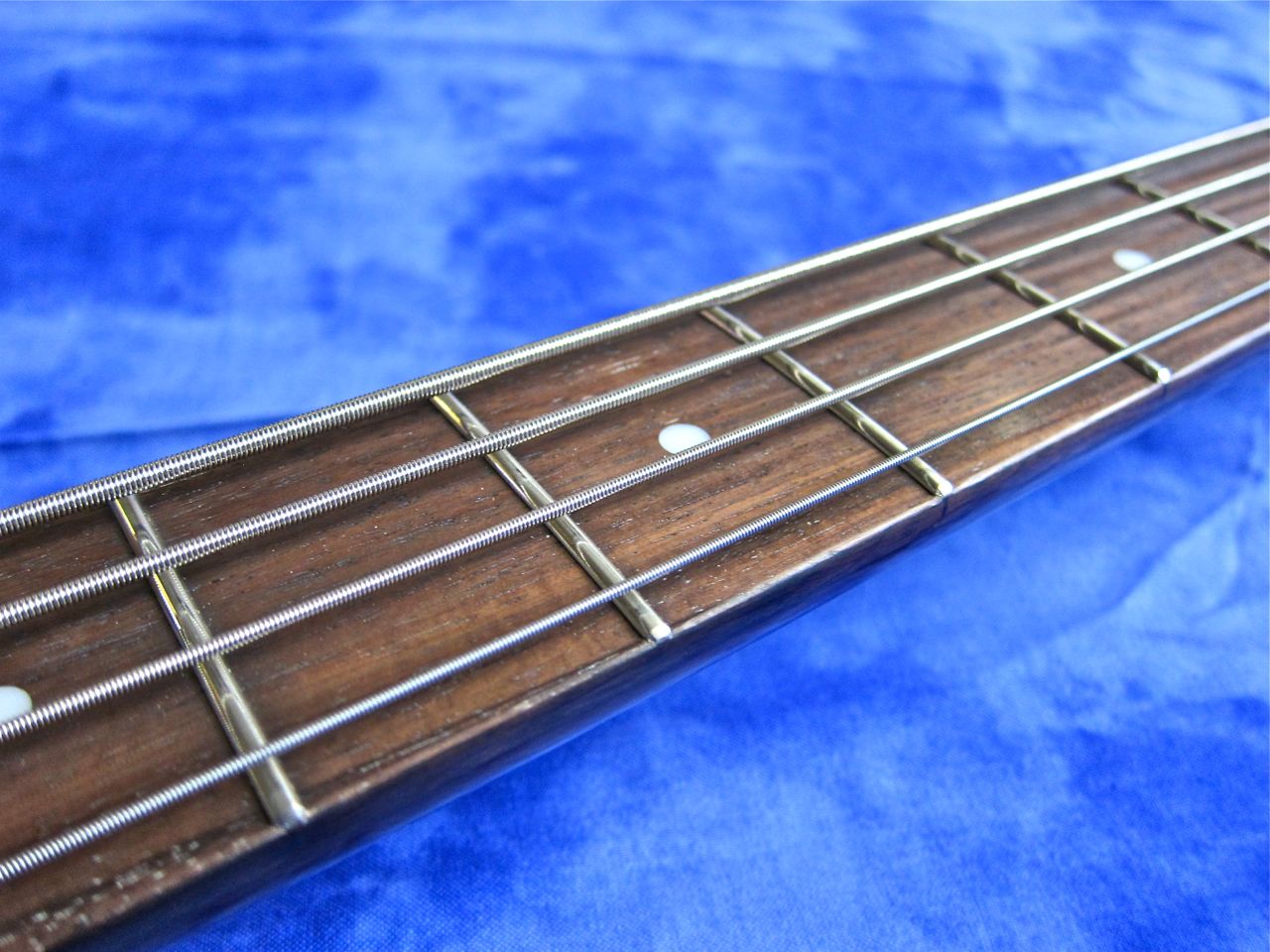
The fretwork on the Legend 4 Custom is of an even higher standard than on the Classic – you can clearly spot the well-rounded fret ends in the photo.

EMG’s HZ bass humbuckers are known for their excellent, wide-range tone.

The preamp is an EMG B30, which offers you a full three-band EQ-section in addition to the separate pickup volume knobs. The mid-range has it’s own full-sized control, while the stack knob deals with treble (tip) and bass (ring).

Here’s a peek into the Custom’s control cavity – everything’s clean, neat and tidy.

And here we have the excellent Spector-bridge in a golden finish.
****

The neck profile on the Spector Legend 4 Classic is a very comfortable D-shape. The neck is a close cousin to a Jazz Bass neck, but offers a slightly more contemporary, flatter slant on the theme.
The large fretboard radius combined with the jumbo frets lends this bass a slick and fast action and feel.
Our test sample’s considerable weight is really the only point that I can criticise – get yourselves a wide, comfortable strap, and everything will work out fine.
The Legend 4 Classic’s SSD-pickups have quite a high output, with the signal being rich in deliciously growling mids. I also enjoyed the Classic’s clear, yet warm high-mid presence, which keeps the sound nicely organic.
This bass’ basic tone is really good, so I didn’t particularly miss the ability to cut any frequencies – the Tone Pump Jr’s bass and treble boosts work fine in this context.
I recorded the audio clips via a Focusrite Saffirer 6 USB -soundcard straight into the audiosequencer, without any kind of amplifier modelling. Each clip starts with the neck pickup:
Spector Legend 4 Classic – fingerstyle
Spector Legend 4 Classic – Reggae
Spector Legend 4 Classic – slap
Spector Legend 4 Classic – pleck
****

The Spector Legend 4 Custom’s neck profile is a tiny bit meatier and rounder, when compared to the Classic. Together with the gloss finish this results in a slightly more grown-up and steadier feel. Somehow the Custom feels like a more expensive bass to this reviewer.
Due to the set neck and the stiffening graphite rods inside the neck the Custom’s acoustic tone is clearly punchier and fatter, with a nice bit of ”wire” in its attack.
The neutral-sounding – in the best sense of the word – EMG-HZs, combined with the bass’ nice preamp, lend the Custom an air that is distinctly ”active”, with a healthy dose of presence, clarity and a fresh top end.
The three-band EQ – offering boost as well as cut – naturally is a more versatile tone-shaping tool than the Classic’s more concise Tone Pump Jr.
Here are the same bass lines as above, this time played on the Legend 4 Custom:
Spector Legend 4 Custom – fingerstyle
Spector Legend 4 Custom – Reggae
Spector Legend 4 Custom – slap
Spector Legend 4 Custom – pleck
****
I think it is great that Spector is offering us bassists more affordable versions of its US- and Euro-models. Both the Legend 4 Classic as well as the Legend 4 Custom are quality instruments and a pleasure to play.
The Spector Legend 4 Classic is your key to Stuart Spector’s world, offering you a straightforward, streamlined and easy-to-use active bass for a very reasonable price.
The Legend 4 Custom, for its part, clearly is a large step towards the full-blown Spector-experience, in both playability and sound. This beautiful quality instrument could easily become a professional’s main squeeze.
****
Spector-basses
Finnish distributor: Musamaailma
****
Spector Legend 4 Classic
Current price in Finland: 672 €
Pros:
+ price
+ finish
+ workmanship
+ playability
+ high-output SSD-pickups
+ easy-to-use preamp
+ sound
Cons:
– review sample’s weight
****
Spector Legend 4 Custom
Current price in Finland: 855 €
Pros:
+ price
+ finish
+ workmanship
+ playability
+ graphite-reinforced neck
+ versatile preamp
+ sound
****
****
Legend 4 Classic ja Legend 4 Custom ovat Spector Bassin edulliset, korealaiset versiot Spectorin kuuluisasta NS-2-bassosta, jonka Stuart Spector aikoinaan suunnitteli yhteistyössä Ned Steinbergerin kanssa.
****
Spector Legend 4 Classic (672 €) on pitkällä mensuurilla varustettu aktiivibasso.
Runko on veistetty kolmesta vaahterapalasta, ja etupuoleen on liimattu näyttävä loimuvaahteraviilu.
Ruuvikaula taas on koottu kolmesta vierekkäisistä vaahterapalasta.
Liitoskohta on veistetty hyvin sulavaksi, ja viidellä ruuvilla toteutettu kiinnitys on hyvin luja.
Taakse kalistuvassa viritinlavassa komeilee siististi upotettu helmiäisupotus.
Itsevoitelevan satulan reunat on muotoiltu mukavan sulavaksi.
Legend 4 Classic -mallissa käytetään mustia metalliosia. Nykyaikaiset virityskoneistot toimivat tarkasti ja pitävät basson hyvässä vireessä.
Palisanteriotelautaan on asennettu huolellisesti 24 jumbokokoista nauhaa.
Classic-basson passiiviset SSD-humbuckerit tulevat EMG:ltä, ja niitä on kehitelty EMG-HZ-mikrofonien pohjalta juuri tätä mallia varten.
Spectorin neljästä säätimestä kaksi ovat volume-säätimet kummallekin mikrofonille, kun taas toinen pari tarjoaa aktiivista korostusta basso- ja diskanttitaajuuksille.
Etuvahvistin – joka siis tarjoaa ainoastaan boostin – on Spector Bassin oma Tone Pump Jr -piiri, joka on liimattu elektroniikkalokeron reunaan.
Ulkoisten häiriöiden minimointia varten lokero on penslattu grafiittimaalilla ja muovikansi taas on vuorattu alumiinifoliolla. Kannen kiinnitys hoidetaan mallikkaasti koneruuveilla ja runkopuuhun upotetuilla vastakappaleilla.
Legend 4 Classic -mallin talla on varsin jämäkkää sorttia. Tallapalat voi lukita säätämisen jälkeen paikoilleen kuusiokoloruuveilla, mikä parantaa basson sustainea.
****
Spector Legend 4 Custom (855 €) on Classic-mallin isoveli.
Basson runko on tässä mallissa valmistettu kahdesta lehmuspalasta. Etupuoli on tässäkin tapauksessa loimuvaahteralla koristeltu.
Customissa on runkoon liimattu vaahterakaula, jota on vahvistettu kaulapuuhun upotetuilla grafiittitangoilla.
Molempien bassojen rungot ovat (NS-2:n tavoin) hieman kaarevat, vaikka niiden kaari on selvästi loivempi kuin amerikkalaisessa alkuperäisversiossa.
Yläreunan viisteen ansiosta molemmat mallit istuvat mukavasti soittajan kehoa vasten.
Customissa on sama tuttu lapa kuin Classic-bassossa…
…mutta sen kaula on viimeistelty kiiltävällä lakalla, ja sen metalliosat ovat kullanväriset.
Legend 4 Custom -basson nauhatyön laatu on vielä huolellisempi kuin Classicissa – kuvassa näkyy hyvin nauhojen sulavaksi pyöristetyt päät.
EMG-HZ-humbuckereille luvataan hieman neutraalimpaa sointia, kuin mikä Classic-basson SSD-mikeistä lähtee.
EMG B30 -etuvahvistin tarjoaa kahden erillisten volumesäätimien lisäksi sekä vaimennusta että vahvistusta keskialueelle, bassolle ja diskantille.
Tältä näyttää Legend 4 Customin siististi toteutettu elektroniikka.
Customissa vankalla Spector-tallalla on kullanvärinen viimeistely.
****
Spector Legend 4 Classicin kaulaprofiili on erittäin mukavantuntuinen D. Mitoiltaan kaula on läheistä sukua Jazz-bassolle, mutta nykyaikaistetulla, aavistuksen verran matalammalla läpileikkauksella.
Otelaudan loiva kaarevuus ja jumbokokoiset nauhat antavat bassolle hyvin nopean ja modernin tuntuman.
Testisoittimen ainoa miinuspiste menee basson painon tilille – hyvin vuorattu, leveä hihna on tässä käytännössä pakollinen lisävaruste.
Legend 4 Classic -basson SDD-humbuckereistä lähtee hyvin voimakas signaali, jolla on herkullisesti muriseva keskialue. Pidin myös Classicin selkeästä, mutta lämpimästä preesensalueesta, jonka ansiosta tämän basson soundi pysyy aina mukavan maanläheisenä.
Perusääni on mielestäni niin hyvä, etten kaivannut lainkaan vaimennusta aktiivielektroniikasta – tulin mainiosti toimeen pelkällä boostilla.
Ääniesimerkit on äänitetty suoraan Focusrite Saffire 6 USB -äänikortin kautta audiosekvensseriin, ilman mitään vahvistinmallinnusta. Jokainen pätkä lähtee liikkeelle kaulamikrofonista:
Spector Legend 4 Classic – sormisoitto
Spector Legend 4 Classic – Reggae
Spector Legend 4 Classic – slap
Spector Legend 4 Classic – plektralla
****
Spector Legend 4 Customin kaulaprofiili on hivenen verran paksumpi ja pyöreämpi kuin Classicin kaula. Sen kiiltävän lakkauksen seurauksena Customin soittotuntuma on jotenkin ”aikuisempi” ja tasaisempi. Ainakin minun mielestä tämä Spector tuntuu kalliimmalta, kuin mitä se on.
Liimaliitoksen ja kaulan grafiitivahvistuksien ansiosta Legend Customin akustisessa soinnissa on enemmän alakertaa ja potkua, sekä aavistuksen verran purevampi atakki.
Positiivisella tavalla värjäämättömät EMG-HZ-humbuckerit ja saman firman etuvahvistin antavat Custom-bassolle selkeästi ”aktiivisemman” soundin, jossa on aina läsnä tietty annos preesensalueen selkeys ja diskantin tuore pirteys.
Kolmialueinen EQ, jossa on sekä vaimennus että korostus, on luonnollisesti selvästi monipuolisempi työkalu kuin Classicin yksinkertaisempi Tone Pump Jr -etunen.
Tässä ovat samanlaiset esimerkkipätkät Spector Legend 4 Custom -bassolla soitettuna:
Spector Legend 4 Custom – sormisoitto
Spector Legend 4 Custom – Reggae
Spector Legend 4 Custom – slap
Spector Legend 4 Custom – plektralla
****
Mielestäni on loistava asia, että Spector tarjoaa basistille US- tai Euro-malliensa edullisempia vaihtoehtoja. Sekä Legend 4 Classic, että Legend 4 Custom ovat laadukkaita soittimia, joilla on ilo soittaa.
Spector Legend 4 Classic toimii avaimena Stuart Spectorin maailmaan, ja basso on mukavan suoraviiveinen aktiivibasso erittäin reilulla hinnalla.
Legend 4 Custom taas on soundiltaan ja soittotuntemukseltaan selvästi muutaman askeleen lähempänä Spectorin USA-soittimia. Tämän kauniin laatubasson rahkeet riittävät mielestäni mainiosti myös ammattikäyttöön.
****
Spector-bassoja
Maahantuoja: Musamaailma
****
Spector Legend 4 Classic
672 €
Plussat:
+ hinta
+ viimeistely
+ työnjälki
+ soittotuntuma
+ voimakkaat SDD-mikrofonit
+ helppokäyttöinen etuvahvistin
+ soundi
Miinukset:
– testiyksilön paino
****
Spector Legend 4 Custom
855 €
Plussat:
+ hinta
+ viimeistely
+ työnjälki
+ soittotuntuma
+ grafiittivahvisteinen kaula
+ monipuolinen etuvahvistin
+ soundi
****

****
When Yamaha introduced the first Pacifica-model, way back in the 1990s, no-one would have thought that this guitar would become such a runaway success, spawning a whole range of Pacificas over the years. Originally the Pacifica was developed as a sort of test instrument by Yamaha’s West Coast Custom Shop, with its fathers being Rich Lasner and Leo Knapp.
Over the years different guitars have carried the Pacifica monicker, but most Pacificas were (and still are) loosely related to the Strat – just like the current top production-line model, the Pacifica 611H.
****

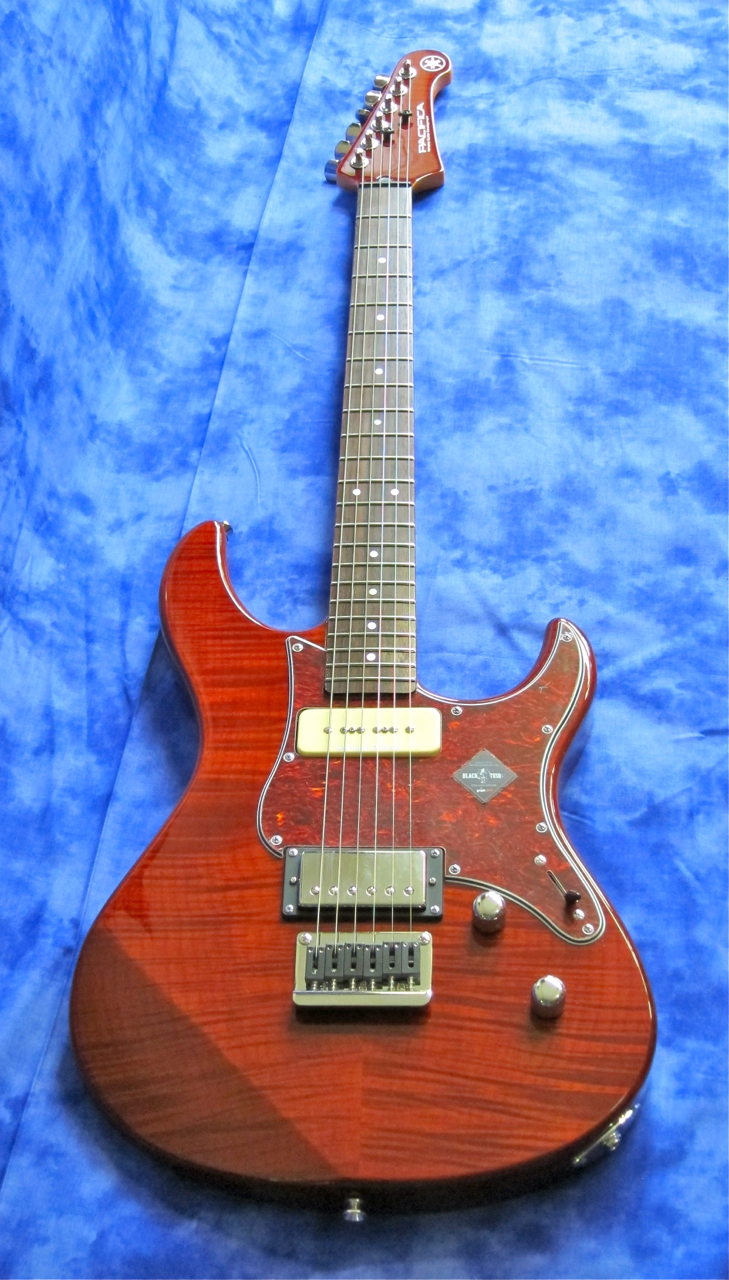
Unbelievable as it may sound: This beauty of a guitar comes out of Yamaha’s Indonesian factory, which explains the Yamaha Pacifica 611H’s very moderate price (current price at F-Musiikki 595 €).
The Pacifica sticks with traditional tonewoods: The bolt-on neck has been carved from hard rock maple and carries a rosewood fingerboard. The body is almost entirely made of alder – three pieces in our review sample’s case – with just a beautiful bookmatched flame maple veneer glued onto its front for embellishment.

The deep chamfers on the body make for a very comfortable feel.
Vintage-type specs seem to be on the rise again – the Pacifica 611H’s neck comes with a tinted gloss finish.
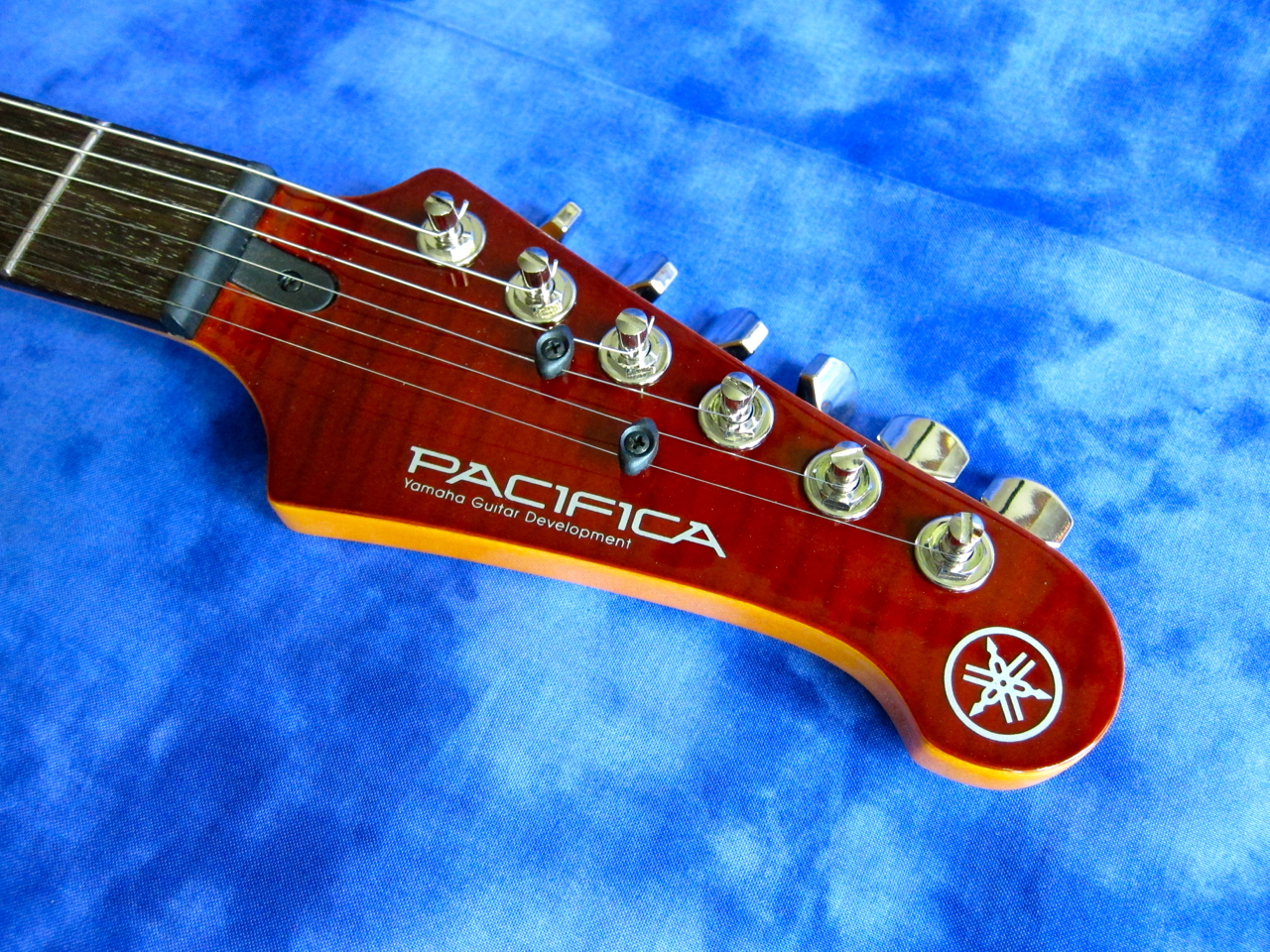
The headstock matches the body with its flame maple veneer and Root Beer finish.
The top nut, as well as the string trees, are made from Graph Tech’s Black Tusq. This Teflon-impregnated ceramic material is hard and slippery, resulting in better tone and improved tuning stability.
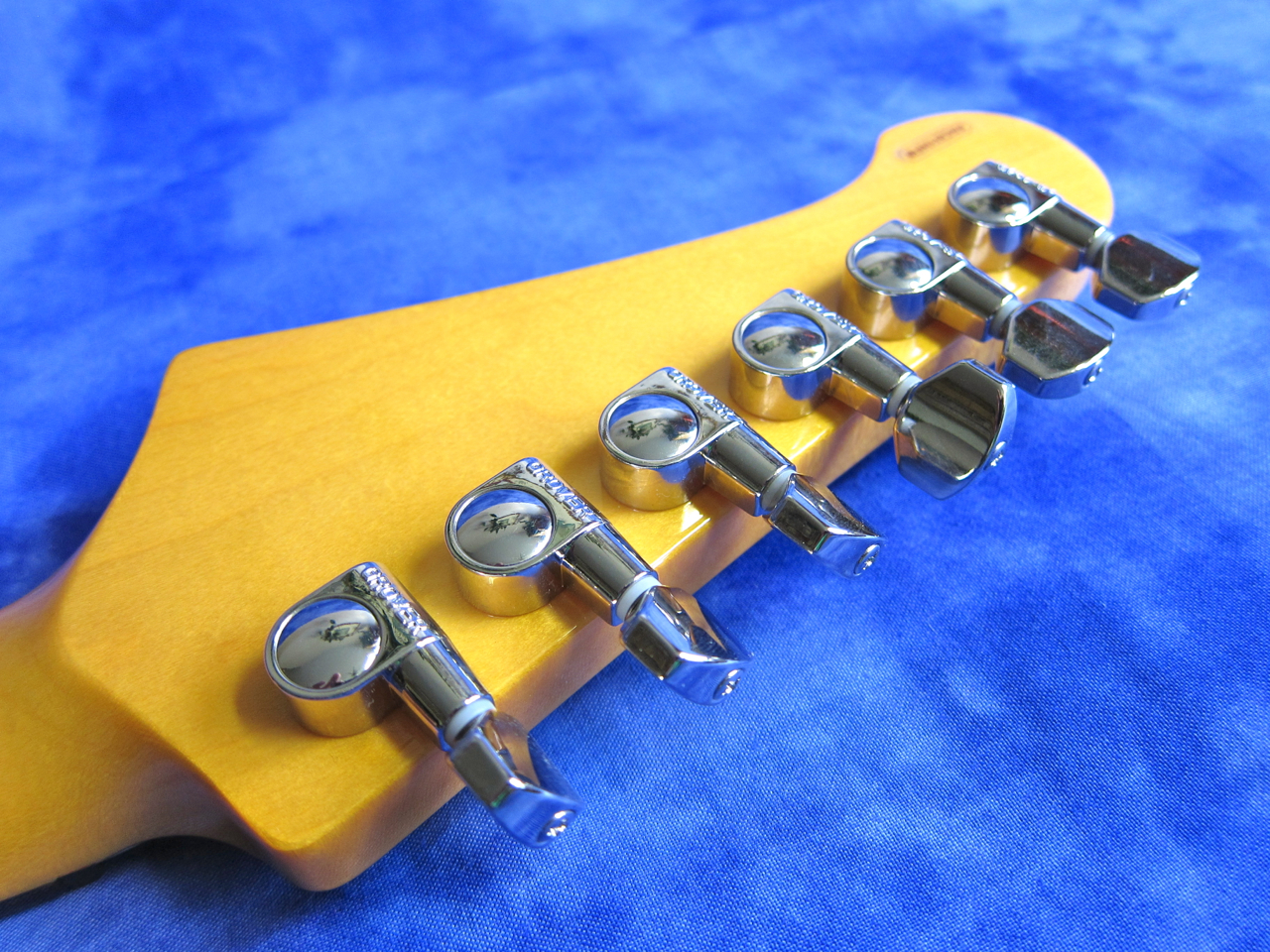
Even though this model isn’t equipped with a vibrato bridge, Yamaha have nonetheless chosen to use a set of Grover locking tuners. The biggest advantage of the Grover units is that you don’t need any tools to change strings. You simply thread the string through the tuning post, and then turn the tuner head. This first engages the locking mechanism, and once the string is locked, the tuning post starts to turn.

Whatever Yamaha do regarding their quality control, they must be doing it dead right! The fret job on our test sample is remarkably clean, which makes the guitar feel far pricier than it really is.

A traditional neck joint – why change something, when it works so well?
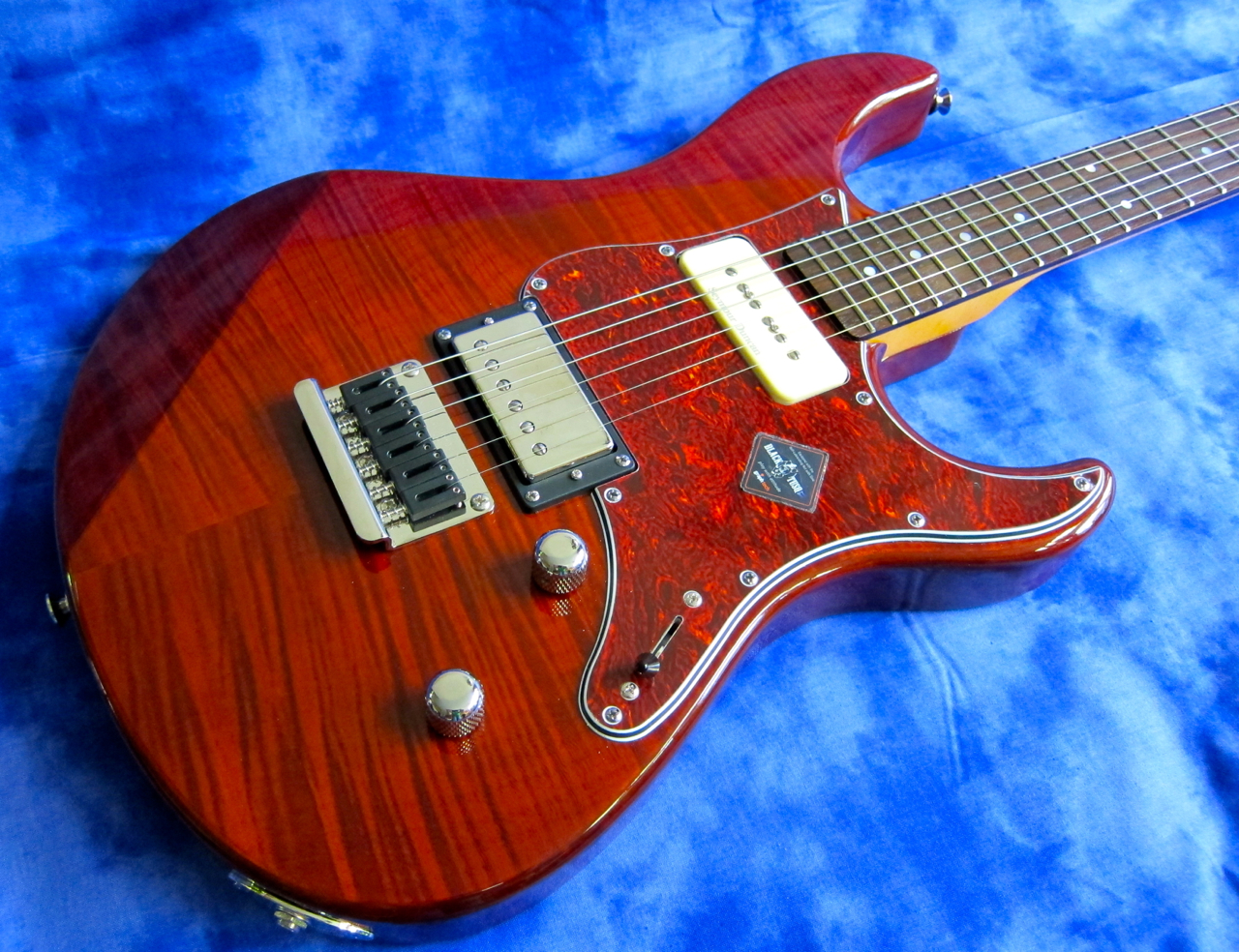
The faux-tortie scratchplate is the perfect companion to the 611H’s Root Beer finish – yummy.

Yamaha uses Graph Tech’s String Saver bridge saddles on this Pacifica-model. This self-lubricating material prolongs string-life and takes away some of the nasty twang of many metal saddles.
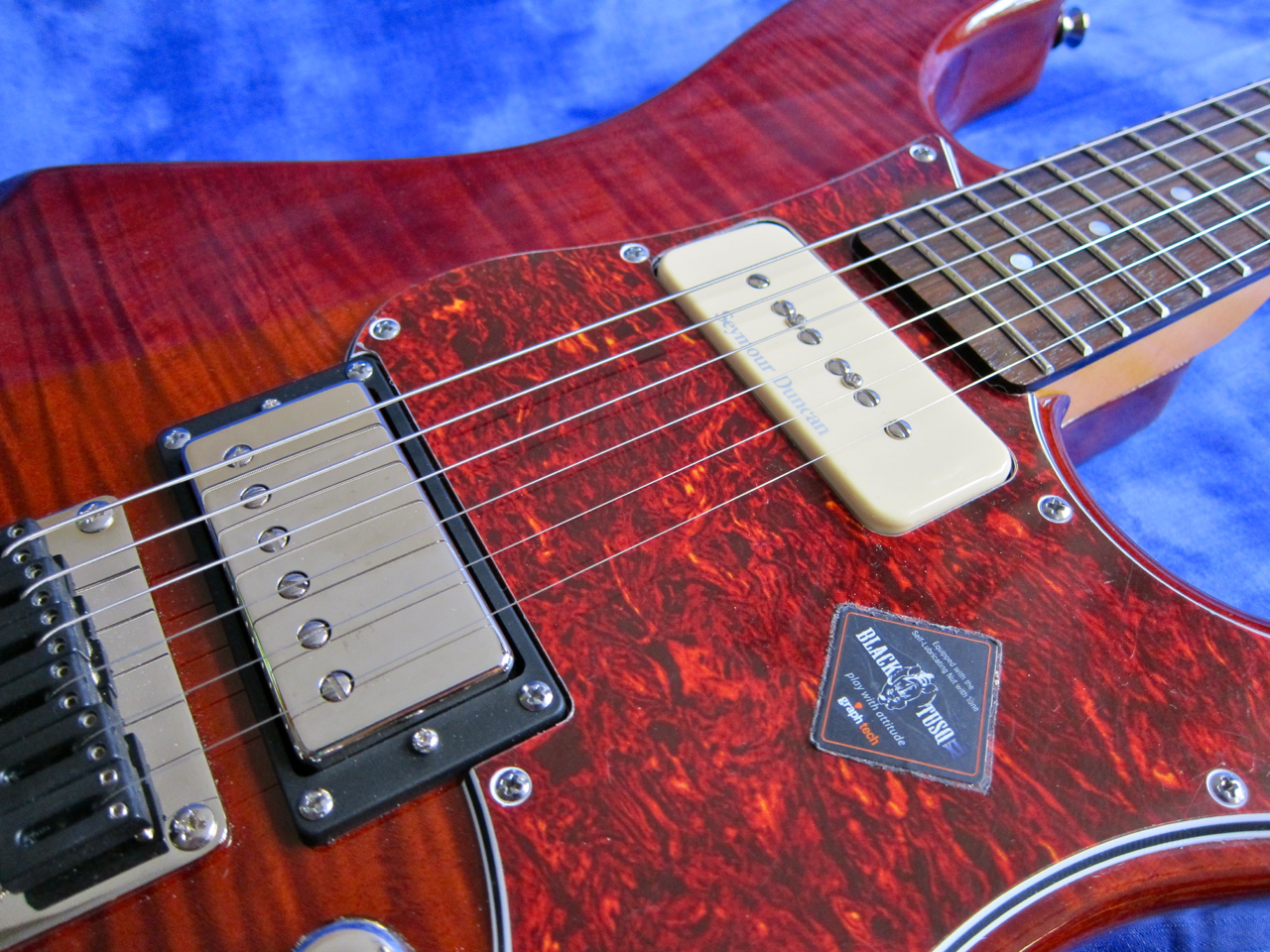
This quality guitar comes loaded with quality pickups: The P-90/humbucker-combination seems to be en vogue these days – in the case of the Pacifica 611H we find a Seymour Duncan SP-90 in the neck position, with the same manufacturer’s Custom 5 -humbucker mounted next to the bridge. Seymour Duncan say the SP-90 is their most authentic reproduction of a Gibson P-90 from the late Forties, while the Custom 5 is an Alnico V -powered humbucker with a moderate output level.
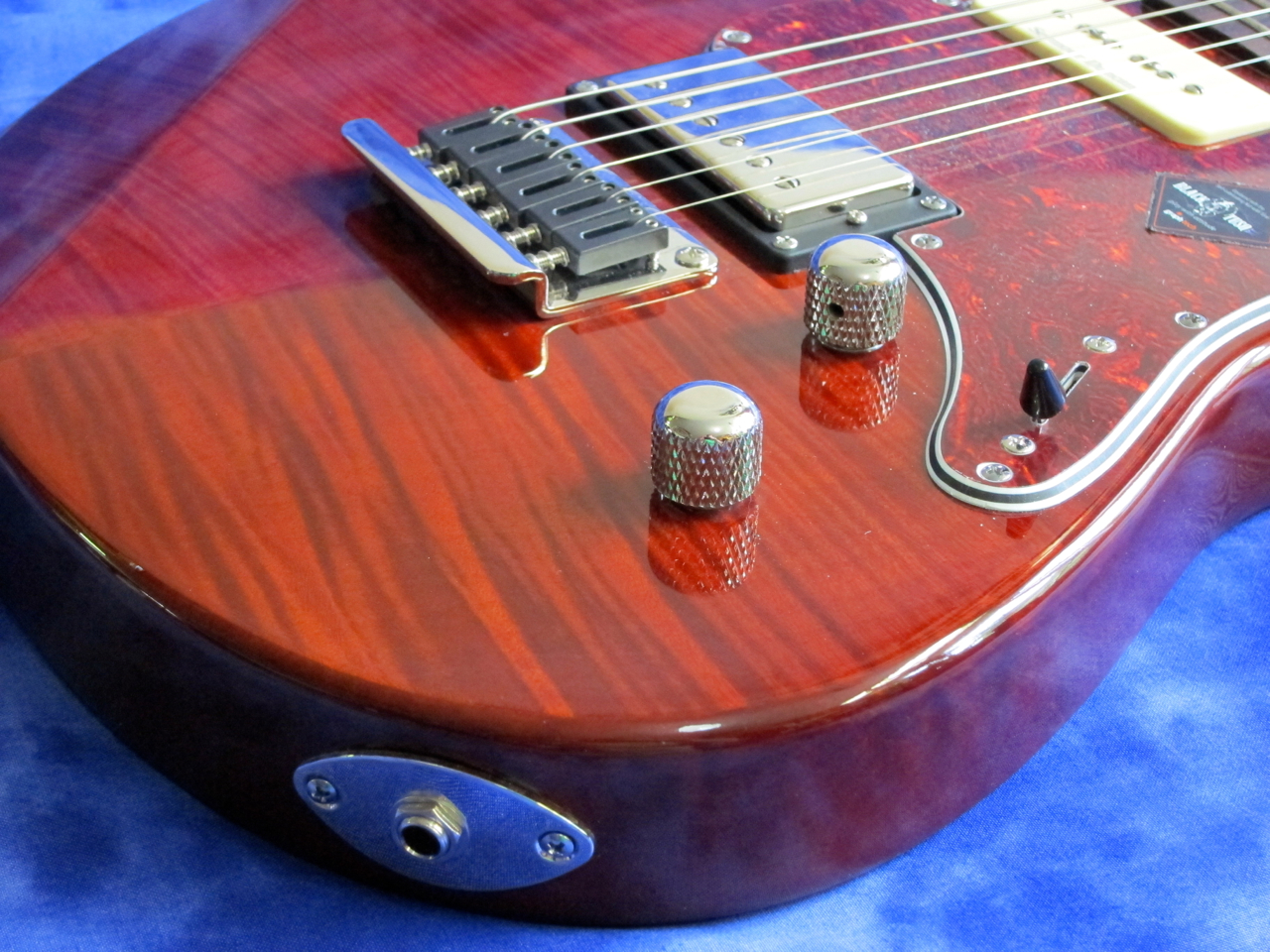
The controls comprise a master volume and a master tone control, plus a three-way blade switch. The tone control sports a push/pull-switch, splitting the humbucker in the ”up” position.
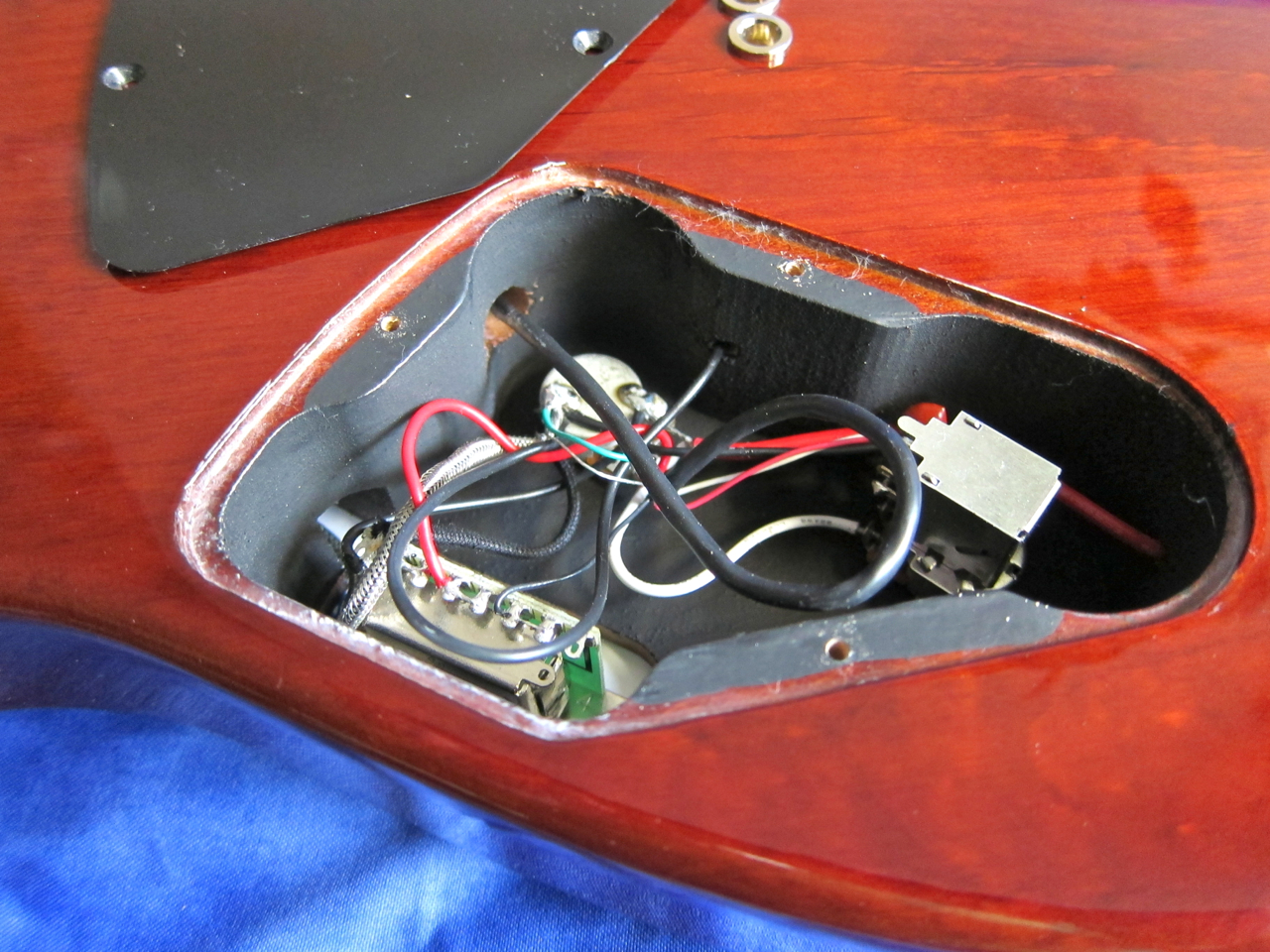
Clean and competent workmanship can also be found in the control cavity, which has been thoroughly shielded with conductive paint.
****
The Pacifica 611H feels great, thanks to the fine fret job and the very comfortable, oval C-shaped neck profile. Our review sample was also nicely lightweight.
The Yamaha’s clean and transparent acoustic character translates into a healthy amplified tone. In the Pacifica’s case combining a P-90 with a humbucker works exceedingly well. The fat singlecoil easily holds its own against the bridge humbucker, and keeps the signal devoid of any trace of muddiness.
Both soundbites start with the neck singlecoil, then switch to both pickups with the humbucker split, and lastly to the split humbucker on its own. The last two motifs are the combined setting, followed by the bridge pickup on its own, both with the full humbucker switched on:
In my opinion the Yamaha Pacifica 611H represents fantastic value-for-money. I wouldn’t hesitate dragging one onto stage (or into a studio) straight out of its shipping box!
****
Yamaha Pacifica 611H
Current price at F-Musiikki: 595 €
Finnish distributor: F-Musiikki
Pros:
• great value-for-money
• locking tuners
• Graph Tech -nut and -bridge
• workmanship
• playability
• sound
• versatility
****
Yamaha Pacifica 611H – the track from the video
****

****

The PRS Studio -model, which was introduced last year, bundles all the improvements of the last few years in one single instrument. The Studio sports a long list of new – or improved – features, such as the Narrowfield-humbuckers.
****

In Gibson-speak ”studio” usually means a less expensive, slightly scaled-down model. In the PRS Studio’s case the word ”studio” denotes a guitar that is meant to be very versatile.
The PRS Studio (current price in Finland around 3,000 €) is a set-neck electric guitar, with the company’s traditional 25-inch (63,5 cm) scale. A great-looking flame maple top comes as standard on the Studio. PRS offer several different colour finishes, as well as a choice between a wraparound bridge or a PRS vibrato.
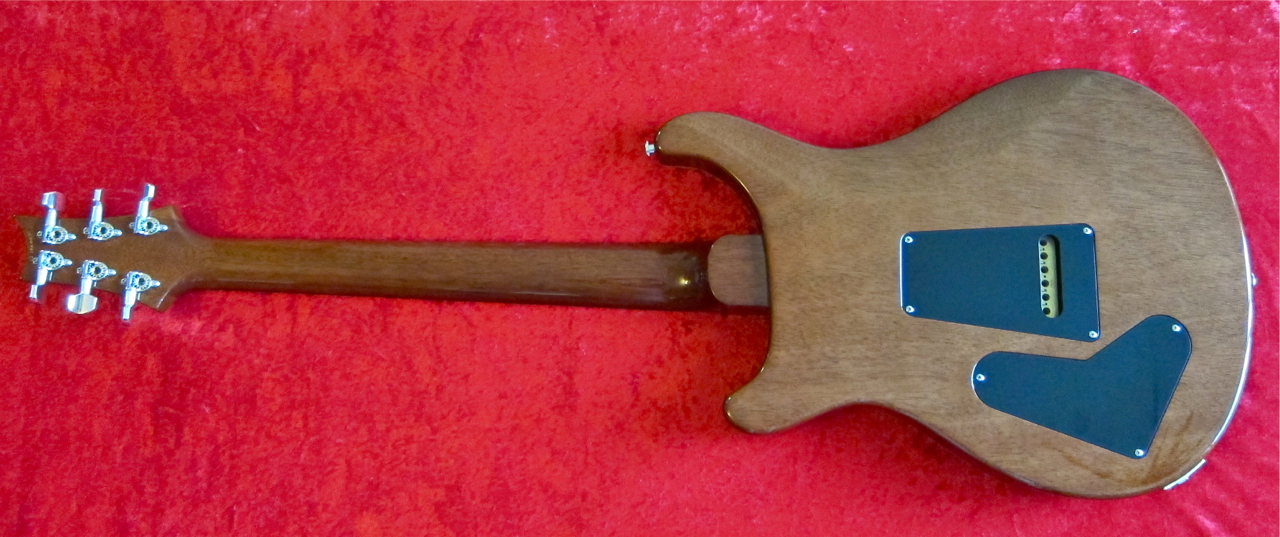
Both the neck and the back of the body are crafted from top-quality mahogany. The Studio is offered with two new neck profiles: The fuller version is called Pattern Neck, while its slimmer counterpart is designated as Pattern Thin.
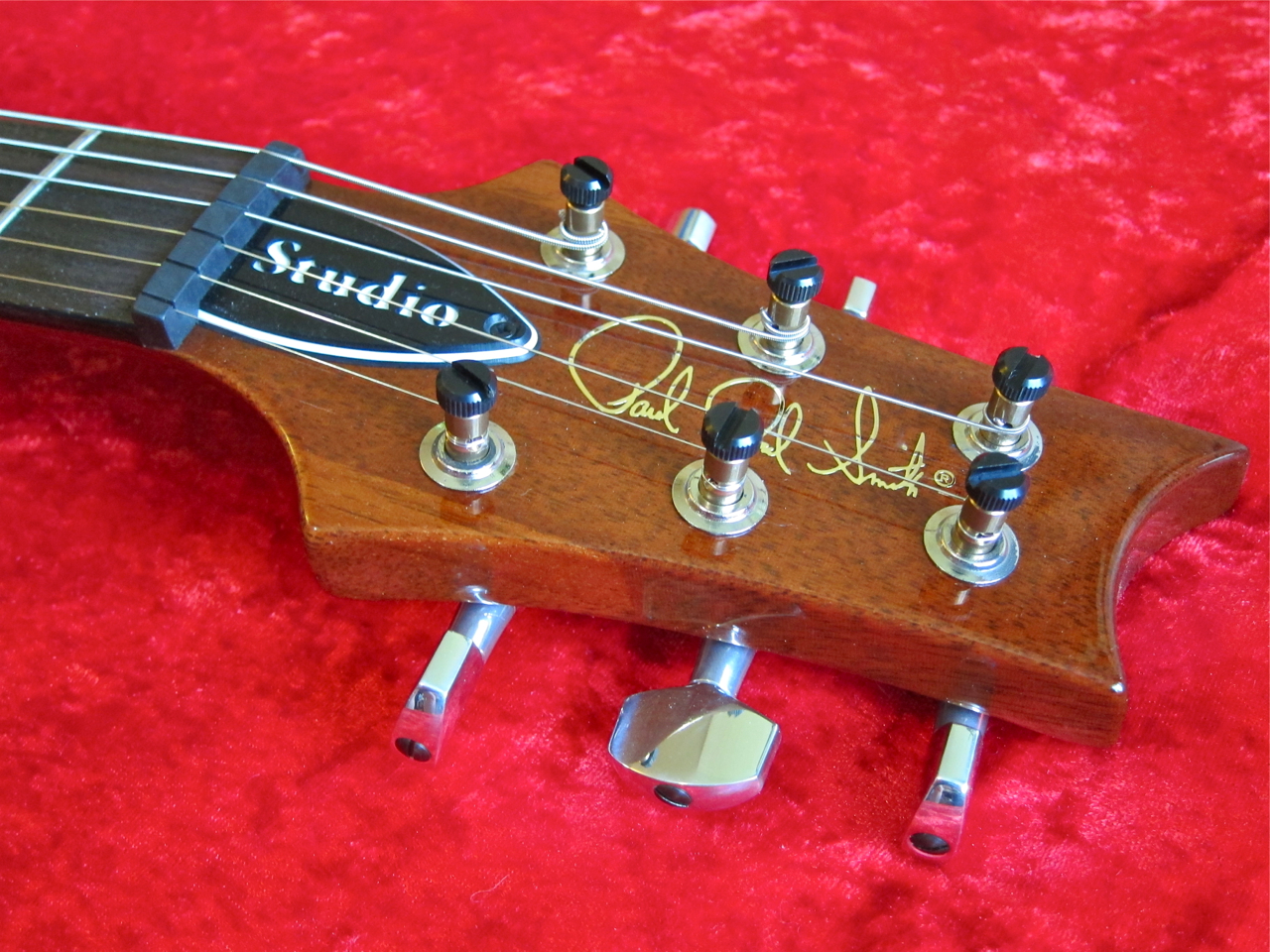
The new PRS Phase III locking tuners feature brass string posts and bushings with a much tighter fit.

I assumed that the reason for the open casings was weight reduction, but I was wrong. In one of PRS’ You Tube videos Mr Smith states that the main reason for this design change were the cool looks.

The company’s new bird inlays are standard on the Studio-model – cream coloured outlines filled with walnut.
The fretwork on our test sample was truly exemplary.

Here’s a good look at PRS’ customary neck joint – its big heel is good for sustain.

Over the past decades the PRS body shape has become a classic design in itself.

A breath-taking view for most guitar connoisseurs – the famous ”fake” binding, which is achieved by leaving the rim of the maple top unstained.
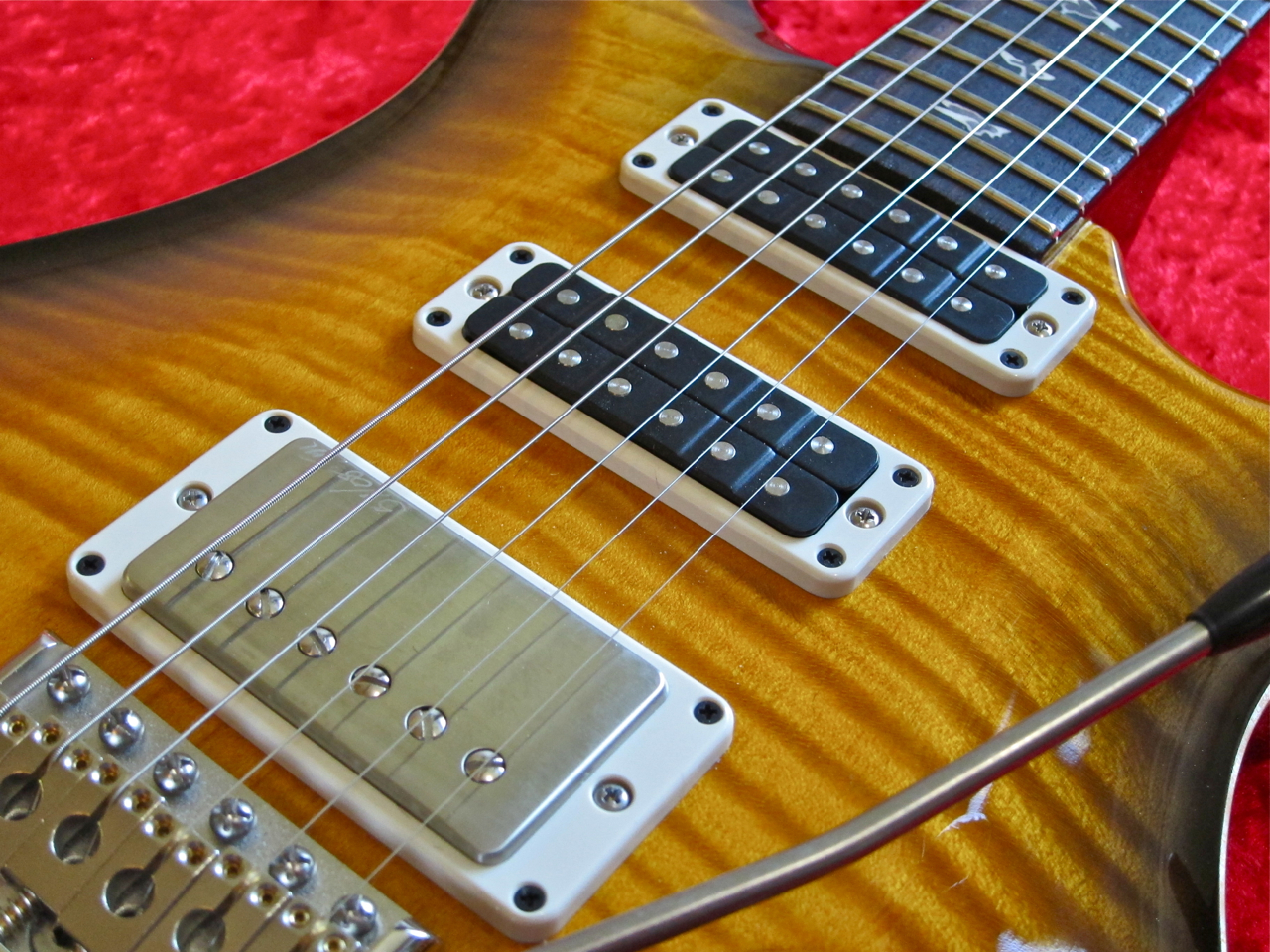
In the last years PRS has given its pickups a thorough overhaul, which has spawned a few new models: The Studio comes equipped with the new PRS 57/08 -humbucker in the bridge position. Many PRS-fans claim that this is the company’s best-ever vintage-type humbucker. The 57/08’s metal cover is brushed aluminium, and bridge versions have their model number deliberately engraved upside-down.
The brand new Narrowfield-humbuckers are very special beasts, indeed, with a sound of their own. The Narrowfield has a full-size humbucker’s output level and warm basic character, but thanks to its much narrower magnetic window the higher-mids and treble range both sound fresher and more transparent.

A push-pull-switch inside the tone control lets you split the bridge pickup.

PRS’ vintage-style vibrato is a fine improvement on Leo Fender’s original Stratocaster-bridge.

The vibrato block is milled from solid brass.

This is what the review sample’s control cavity looks like – not the cleanest PRS I’ve ever seen. Luckily the sawdust doesn’t seem to hamper the guitar’s functionality.

A classy hard case rounds out this package.
****

According to Paul Reed Smith himself, the Studio’s new Pattern neck profile is actually a return to the very beginning of PRS Guitars, when PRS was a tiny little workshop. The Pattern Neck isn’t miles away from the famous Wide-Fat-profile, but it is clearly rounder with much less shoulders to it.
The Studio’s ergonomics and playability can be summed up in one word – fantastic. The guitar is feather-light, and its slender body with the long upper horn balances perfectly on a strap – despite the neck joining the body at the 20th fret.
The PRS vibrato comes set up with four springs and works buttery and precisely with perfect return-to-pitch.
Acoustically the Studio performs like a true PRS – there’s a good dose of Gibson-ish set-neck character, mixed with a drier and and tighter attack. The warm, well-rounded, but fresh character is carried evenly across the whole fretboard.
The Narrowfield-pickups are a very interisting new breed. They don’t pretend to be sound like Strat-sized ’buckers, but give you plenty of humbucker warmth, coupled with more presence and a nice top end sheen. The Narrowfields work well in combinations, where you’d normally expect a couple of Fender-style singlecoils. In my opinion this is the first time I’ve heard a guitar, where a third humbucker makes tonal sense.
The moderately-powered PRS 57/08 -humbucker is the perfect partner for the Narrowfields, because it, too, has a fresh and dynamic tone. Splitting the 57/08 even gives you quite credible Fender-sound approximations.
The soundbites all start with the neck pickup on its own, flicking through all the switch positions with the bridge humbucker split. The final two repeats are the middle-plus-bridge and bridge-alone selections with the full humbucker in use:
****

Three thousand Euros is quite a lot of money for one guitars. True, but I feel the PRS Studio is really worth each Cent – it is a guitar crafted to the highest standards from top-quality materials. The result is one of the best guitars coming from a large-volume manufacturer. Outstanding playability, coupled with the fantastic tone of the new pickups put this PRS in a league of its own.
****
PRS Guitars Studio
Current price in Finland: approx. 3,000 €
Finnish distributor: EM Nordic
A big thank you to DLX Music Helsinki for the loan of the review sample!
Pros:
• sheer quality
• workmanship
• playability
• smooth vibrato
• sound
• versatility
Cons:
• sawdust in the control cavity
****
Kun Yamaha esitteli ensimmäisen Pacifica-mallinsa 1990-luvun alussa, varmasti kukaan ei olisi uskonnut, että kyseisestä mallista syntyisi näin menestyksekäs ja laaja mallisto. Alkuperäinen Pacifica kehiteltiin kokeilumielessä Yamahan USA Westcoast Custom Shopissa, ja soittimen isät ovat Rich Lasner ja Leo Knapp.
Vuosien aikana Pacifica-nimitystä kantoi hieman laajempi katras erimuotoisia kitaroita, mutta pääsääntöisesti Pacificat ovat olleet Strato-tyylisiä – näin myös tämänhetkinen top-malli Pacifica 611H.
****
Uskomatonta, mutta totta: laadukas ja kaunis Yamaha Pacifica 611H –kitara valmistetaan Indonesiassa, mikä selittää sen erittäin maltillisen hinnan (F-Musiikin hinta: 595 €).
Puut on valittu perinteitä kunnioittaen: ruuvikaula on veistetty vaahterasta, otelauta palisanterista, ja runkopuuna on käytetty kolme palaa leppää. Koristeeksi on liimattu loimuvaahteraviilut sekä rungon että lavan etupuolelle.
Rungon viisteiden ansiosta kitara istuu mukavasti soittajan sylissä.
Vintage on tulossa jälleen muotiin – Pacifica 611H:lla on uutena ominaisuutena kiiltävä (ja kellertävä) lakkaus kaulassa.
Sekä satula että kieliohjaimet tulevat Graph Techiltä, ja niiden materiaali on Teflonia sisältävä, itsevoiteleva keraaminen Black Tusq. Black Tusqin lujuus parantaa kitaran sointia, samalla kun itsevoitelu vähentää tehokkaasti kitkaa virittäessä.
Vaikka tässä Yamahassa ei ole vibratallaa, on soittimen virittimiksi valittu laadukkaat Grover-lukkovirittimet. Uusien Groverien suuri etu on, että kielten vaihtoon ei tarvitse työkaluja, vaan nuppia kääntämällä kieli ensin lukitetaan viritintappiin, ennen kuin tappi alkaa kääntyä.
Miksi ei kaikilla valmistajilla voi olla näin tiukka laadunvalvonta? Pacifican nauhatyö on hintaluokassaan esimerkkilistä sorttia – sileän soittopinnan sekä pyöristettyjen nauhapääiden ansiosta 611H tuntuu huomattavasti kaliimmalta soittimelta kuin mikä se on.
Perinteinen ruuviliitos – kun se kerran toimii, niin miksi sitä pitäisi muuttaa?
Kilpikonnakuvioinen plektrasuoja istuu tyylikkäästi Yamahan kauniiseen punaruskeaan Root Beer -väritykseen.
Yamaha käyttää Graph Techin String Saver -tallapaloja 611-mallin kiinteassä tallassa. Itsevoiteleva materiaali pidentää kielten käyttöaikaa ja vähentää huomattavasti joistakin metallisatuloista tuttua, ikävää nasaalisuutta.
Laatukitaraa on varustettu laatumikrofoneilla: monissa kitaroissa näkyy nykyään P-90:n ja tallahumbuckerin yhdistelmää. Pacifica 611H:n tapauksessa kaulamikrofoniksi on valittu Seymour Duncanin SP-90-mikkiä, joka on firman pikkutarkka jäljennös alkuperäisestä 1950-luvun Gibson P-90:stä. Kitaran tallahumbucker on Duncanin Custom 5 -malli, joka on keskivahva mikrofoni Alnico 5 -magneettilla.
Säädinosasto koostuu yhdestä kolmiasentoisesta vipukytkimestä, sekä master volumesta ja master tonesta. Tone-potikassa on nostokytkin, jolla voi puolittaa tallahumbuckerin.
Erittäin siistiä työtä voi löytyä myös elektroniikkalokerossa, joka on suojattu ulkoisilta häiriöiltä grafiittimaalilla.
****
Pacifica 611H:n soittotuntuma on hyvin mukava, loistavan nauhatyön, sekä kaulan hyvin mukavan, keskipaksun C-läpileikkauksen ansiosta. Testiyksilö oli myös miellyttävän kevyt.
Yamahan selkeä ja avoin akustinen luonne säilyy myös vahvistetussa soundissa. Yksikelaisen P-90:n yhdistäminen tallahumbuckeriin on Pacifican tapauksessa hyvin toimiva ratkaisu. Kaulamikrofoni ei jää teholtaan lainkaan humbuckein varjoon, ja yksikelainen pystyy tuottamaan huomattavasti selkeämpää soundia kaulan lähellä kuin monet humbuckerit.
Esimerkkipätkissä aloitan kaulamikrofonista, minkä jälkeen kuullaan puolitettua humbuckeria ensin kaulamikrofonin kanssa ja sen jälkeen ilman. Lopuksi tulevat kytkimen keski- ja talla-asento täydellä humbuckerilla soitettuna:
Yamaha Pacifica 611H – säröllä
Mielestäni Yamaha Pacifica 611H tarjoaa uskomattoman hyvää vastinetta rahalle. Tällä soittimella riittää rahkeet myös ammattimuusikon käyttöön, suoraan paketista ja ilman modausta!
****
Yamaha Pacifica 611H
F-Musiikin hinta: 595 €
Maahantuoja: F-Musiikki
Plussat:
• hinta-laatu-suhde
• lukkovirittimet
• Graph Tech -satula ja -tallapalat
• työnjälki
• soitettavuus
• soundi
• monipuolisuus
****
****
Yamaha Pacifica 611H – videon audioraita
****
****
Viime vuoden puolella ilmestynyt PRS Studio -malli on firman jatkuvan kehityksen tämänhetkinen huipentuma. Tähän kitaraan sisältyy pitkä lista parannuksia monissa yksityiskohdisssa, sekä PRS:n uudet Narrowfield-humbuckerit.
****
Gibsonilla sana ”studio” viittaa tavallisesti ”standardia” edullisempaan versioon. PRS Guitarsin Studio-mallissa ei todellakaan ole kyse säästöversiosta, vaan nimi tulee tämän mallin monipuolisista soundimahdollisuuksista.
PRS Studio (DLX Musicin hinta 2.995 €) on liimakaulainen sähkökitara firman perinteisellä 25-tuumaisella (63,5 cm) mensuurilla. Pramea loimuvaahterakansi on jokaisessa Studiossa vakiona. Malli on saatavana usealla eri värityksellä, sekä PRS-vibratallalla tai firman wrapover-tallalla varustettuna.
Sekä kaula että rungon takaosa ovat ensiluokkaista mahonkia. Studiota valmistetaan kahdella uudella kaulaprofiililla: Pattern Neck on täyteläisempi vaihtoehto, kun taas Pattern Thin Neck on ohuempi.
Uusissa PRS Phase III -virittimissä on kielten lukitus, messingistä tehdyt tapit, sekä vintagea tiukemmin lapaan istuvat kaulukset.
Oletin, että virittimien puoliavoimiim koteloihin on päädytty painosyistä, mutta yhdessä firman You Tube -videossa Herra Smith kertoo, että tämä ratkaisu on valittu, koska ”se näyttää niin kivalta”.
PRS Studion vakiovarustukseen kuuluvat myös ruusupuisen otelaudan lintu-upotukset. Uusimmassa versiossa on kermanvaalea ulkoreuna ja pähkinäpuusta veistetty sisäosa.
Nauhatyö on testisoittimessa suorastaan esimerkkillistä.
Tältä näyttää Paul Reed Smith Guitarsin perinteinen liimaliitos sustainea lisäävällä, tukevalla kaulakorolla.
Firman rungon muotoilusta on tullut vuosien myötä klassikko.
Kitarafaneille tämä on suorastaan henkeäsalpaava näky – PRS:n kuuluisa ”feikki” reunalistoitus, jossa kannen reuna jätetään värjäämättä.
Viime vuosina PRS:n mikrofonivalikoima on käynyt läpi perusteellisen uudistusprosessin: tallamikrofoniksi on valittu PRS:n vintage-tyylinen 57/08-humbucker, joka on monien mielestä paras PRS-humbucker ikinä. 57/08:n metallikansi on harjattua alumiinia, ja pikanttina detaljina mikin mallitunnus on tallaversioissa aina päälaellaan.
Uusinta uutta on kaula- ja keskiasemaan asennettu Narrowfield-humbucker, joka on ihan uusi mikrofonityyppi omalla soundillaan. Narrowfieldissä on vintage-humbuckerin lähtöteho ja lämmin perusluonne, mutta kapeamman magneettisen ikkunan ansiosta erilainen preesensalueen rakenne ja hieman tuoreempi diskantti.
Tone-potikassa on nostokytkin, joka puolittaa yläasennossa tallahumbuckerin.
PRS:n vintage-tyylinen vibrato on itsekin legendaarinen parannus Leo Fenderin alkuperäisestä Strato-vibrasta.
Vibrablokki on valmistettu isosta messinkipalasta.
Tällaiselta testisoittimen elektroniikkalokero näyttää – ei ehkä siistein näkemäni PRS-kitara, mutta puupöly ei haittaa mitenkään kitaran toimivuutta.
Laadukas laukku kuuluu luonnollisesti PRS Studion hintaan.
****
Studion uusi Pattern-kaulaprofiili on itseasiassa PRS-kitaroiden alkuperäinen profiili sitä ajasta, kun PRS oli vielä pikkuinen custom-paja. Pattern Neck on lähellä vanhaa Wide Fat -profiilia, mutta aavistuksen verran lihaksikkaampi ja selvästi pyöreämpi. Wide Fat -kaulan hartiat on poistettu PRS:n uudesta Pattern Neckistä.
Studio-mallin soittettavuutta ja ergonomiaa voi kuvailla yhdellä sanalla – ensiluokkainen. Kitara on kevyt, ja sen ohut – ja yläsarvella varustettu – runko roikkuu tasapainoisesti hihnassa, vaikka kaulaliitos on vasta 20:n nauhan kohdalla.
Neljällä jousella varustettu PRS-vibra toimii hyvin jouhevasti ja tarkasti, ja se palaa käytön jälkeen nätisti nolla-asentoonsa ilman vireongelmia.
Akustisesti soitettuna PRS Studio soi kuin tyyppillinen PRS – Gibson-tyylinen perusluonne, mutta hieman kuivemmalla ja tiukemmalla atakilla. Kuulas, mutta lämmin karakteeri, sekä pitkä sustain ovat tasaisesti läsnä koko kitarassa.
Narrowfield-mikrofonit ovat erittäin mielenkiintoinen uutuus. Ne eivät yritäkään olla häriövapaita, Strato-tyylisiä mikrofoneja. Sen sijaan Narrowfieldistä saa loistavia solakkaampia humbucker-soundeja, jotka todellakin toimivat loistavasti kolmen mikrofonin kattauksessa. Etenkin viisipykäläisen vipukytkimen väliasennoissa eron tavallisien ja NF-humbuckereiden välillä on helppo havaita.
Hyvin maltillisella teholla toimiva PRS 57/08 -humbucker sopii tähän settiin täydellisesti, koska senkin sointi on dynaaminen ja hienostuneen raikas. Splitattuna 57/08:sta saa irti jopa melko uskottavia Fender-kaltaisia soundeja.
Seuraavissa esimerkeissä soitan kytkimen asennot läpi kaulamikistä ensin puolitettuun tallamikrofoniin. Lopuksi tulevat vielä ne kaksi asentoa, joissa tallahumbuckeri on kytketty täysille:
****
Kolmetuhatta euroa on aika paljon rahaa yhdestä sähkökitarasta. PRS Studio on kuitenkin täysin hintansa arvoinen: soitin on valmistettu parhaista osista suurella huolella. Lopputulos on mielestäni yksi parhaimmista, sarjatuotannossa valmistettavista kitaroista. Soitettavuus on ensiluokkainen, ja uusien mikrofonien ansiosta tämä PRS on monipuolisuudessaan ihan omaa luokkaansa.
****
PRS Guitars Studio
DLX Musicin hinta: 2.995 €
Maahantuoja: EM Nordic
Kiitos DLX Music Helsingille testikitaran lainaamisesta!
Plussat:
• laatu
• työnjälki
• soitettavuus
• vibran toiminta
• soundi
• monipuolisuus
Miinukset:
• hieman puupölyä testiyksilön elektroniikkalokerossa
****
 Kitarablogi.com – Finland's premier Guitar and Bass blog