Now on Soundcloud: Tokai TST-50-FS Modern
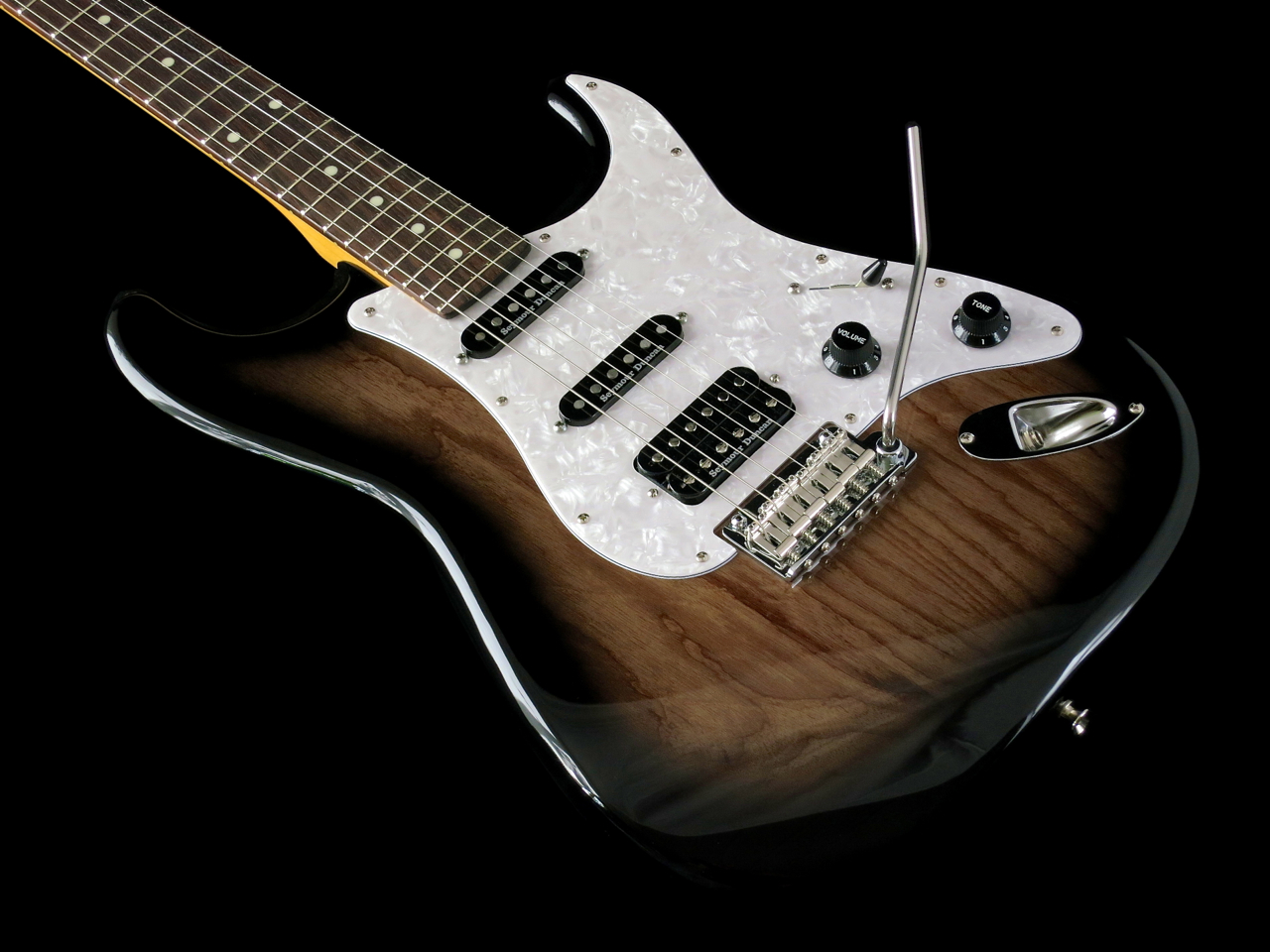
Tokai TST-50-FS Modern
• Premium Series model
• Made in Japan
• Premium swamp ash body (two-piece, centre-joined)
• Rosewood fingerboard with 9.5″ radius
• 22 Dunlop 6105 frets
• Locking Gotoh tuners
• Two-post Gotoh vibrato
• Sienna Sunburst version: 2 x Seymour Duncan STK-S4 + TB-4
• Ebony Transparent version: 2 x STK-S7 + TB-14
• Three-Tone Sunburst version: 2 x SSL-1 + ’59
****
The demo track has the three guitars in the order Sienna Sunburst –> Ebony Transparent –> Three-Tone Sunburst.
Tiistai on fuzzia täynnä! Guitar face galore!
Playing my Kasuga semi through an EH Nano Big Muff Pi, and making a few ”guitar faces” for good measure. 🙂
****
Kasuga –> Nano Big Muff Pi –> Blackstar HT-1R –> Focusrite Saffire 6 USB –> Garageband
Tokai TST-50-FS – the Kitarablogi-video

Uusi Tokai TST-50-FS on tällä hetkellä saatavilla kolmella eri mikrofonivarustuksilla:
• Three-Tone Sunburst -versiossa on kaksi yksikelaista SSL-1-mikrofonia, sekä Seymour Duncan ’59 -humbucker.
• Sienna Sunburst -mallissa on kaksi SD Classic Stack Plus -mikrofonia (hurinattomia, stacked-coil mikrofonia), sekä JB-humbucker metallikuorella.
• Ebony Transparent -kitarassa taas on kaksi Duncanin Vintage Hot Stack -mikrofonia (hurinattomia) ja tallamikrofonina toimii saman firman Custom 5 -humbucker.
Kitarablogin testi on tulossa lähiaikoina!
****
The new Tokai TST-50-FS is currently available with three different pickup configurations:
• The Three-Tone Sunburst version has a pair of SSL-1 single-coils and a Seymour Duncan ’59 humbucker.
• The Sienna Sunburst model comes with two noiseless SD Classic Stack Plus pickups, as well as a covered JB model.
• The Ebony Transparent guitar sports two noiseless Duncan Vintage Hot Stacks and a Custom 5 in the bridge position.
Watch this space for a full review in the very near future!




Review: Farida M-2 & B-10E


Kitarablogi.com had the pleasure to review two acoustic steel-string guitars from Chinese brand Farida Guitars:
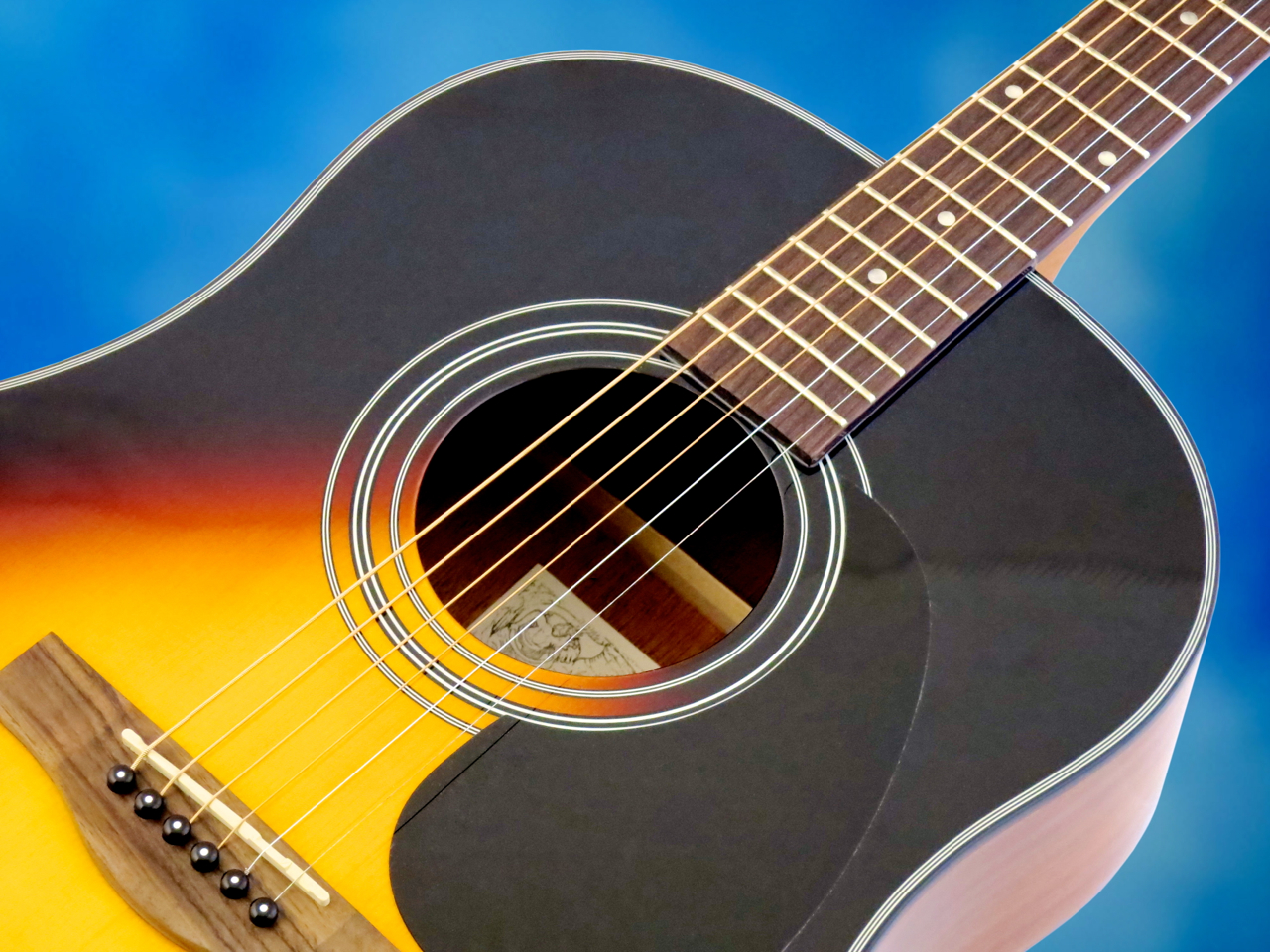
The Farida M-2 is a parlour-sized guitar, while the Farida B-10E gives you this company’s take on a miked-up, slope-shouldered Gibson steel-string.
****

These days a guitar is called a parlour (or parlor, if you’re so inclined), if its soundbox is smaller than a Martin OM- or 000-body. While parlour guitars have gained a growing followership over the last few years, it is still surprisingly difficult to find reasonably priced exponents of this species.
Farida Guitars’ M-2 (current price in Finland: 465 €) ticks all the right boxes to whet a parlour lover’s appetite – a slightly shorter scale length (62.8 cm/24.7″), a 12th fret neck joint, and a classical-type open headstock.
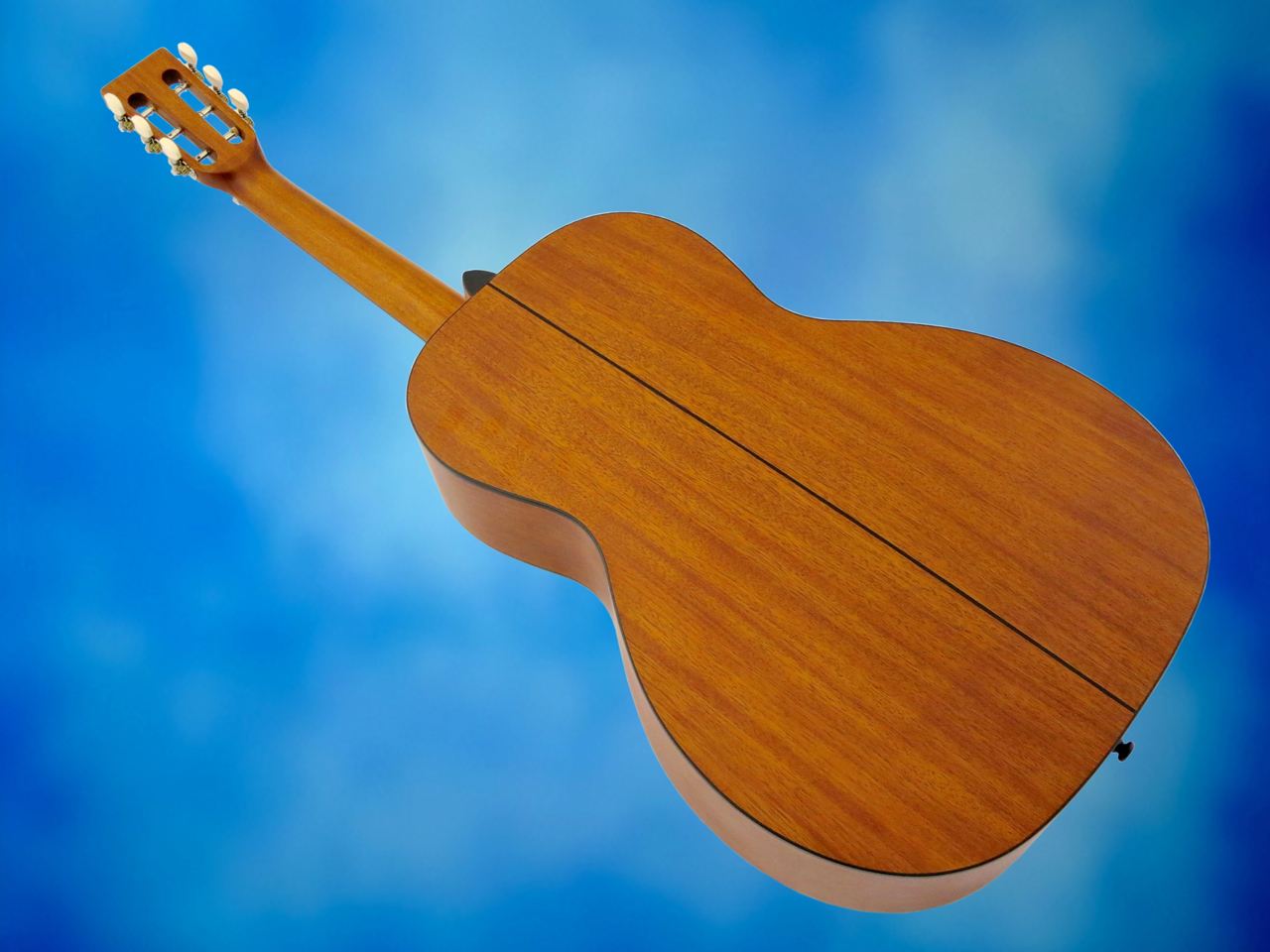
The M-2’s soundbox is made from a beautiful solid red cedar top, and laminated mahogany for the rims and the back.
The mahogany neck is glued into the body in traditional fashion.

The three-on-a-strip tuners are of a decent quality.

The Farida M2’s top nut and compensated bridge saddle are both made from a man-made bone substitute.
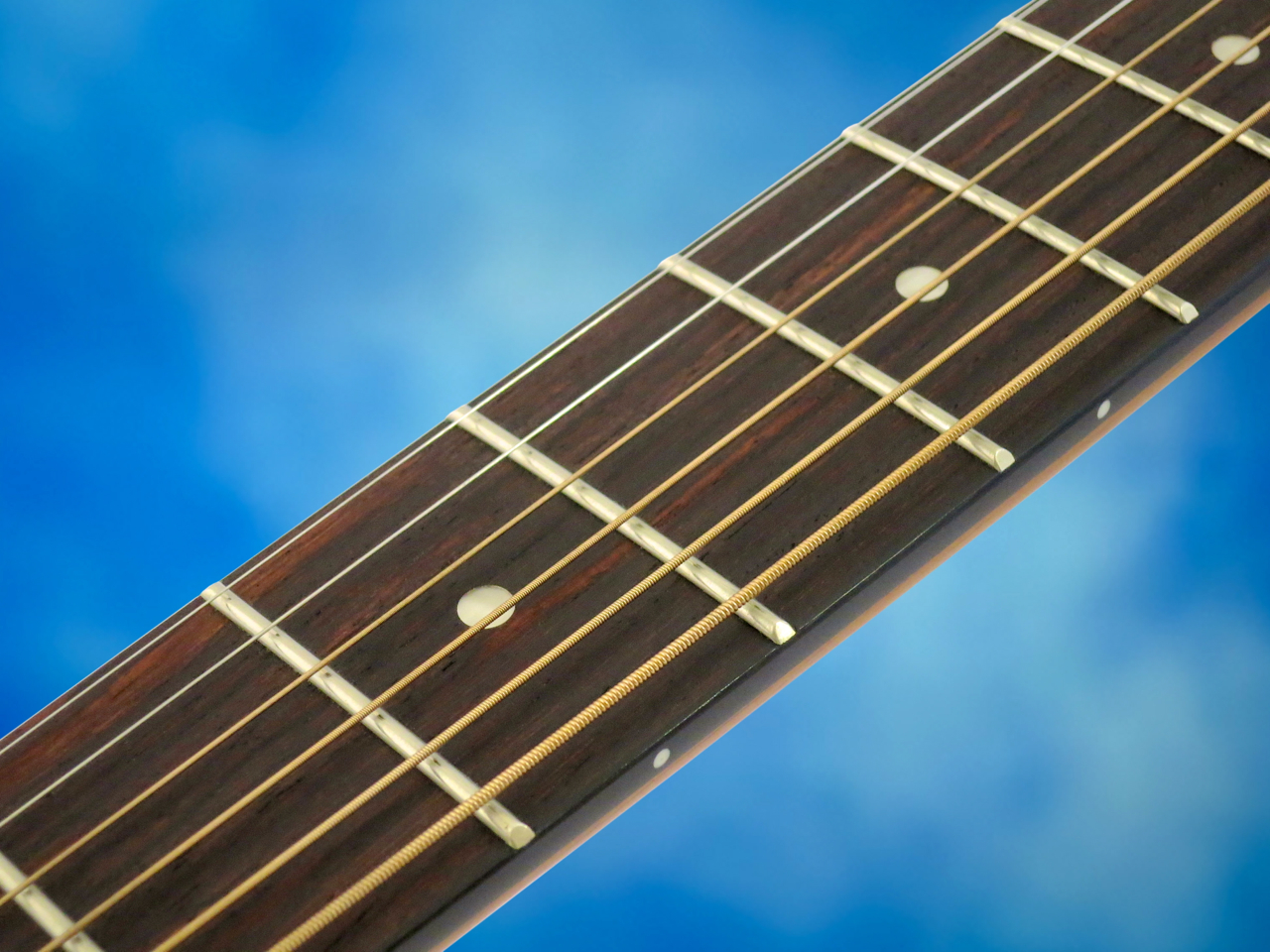
The fretwire used on this parlour has a narrow and medium-height profile.
There’s a very nice red hue to the M-2’s rosewood fretboard.
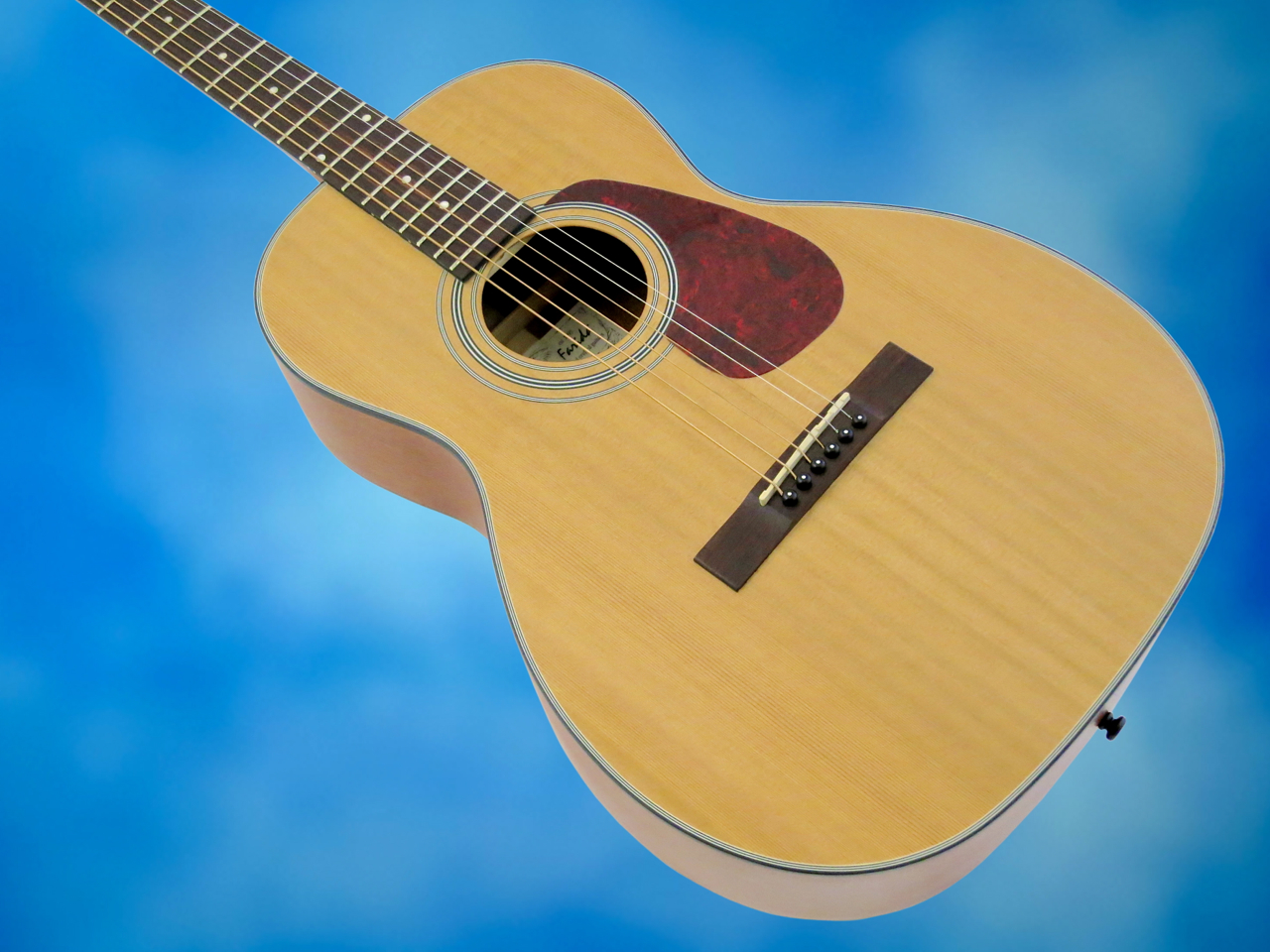
This very cleanly built acoustic instrument comes in a thin natural satin finish.
****

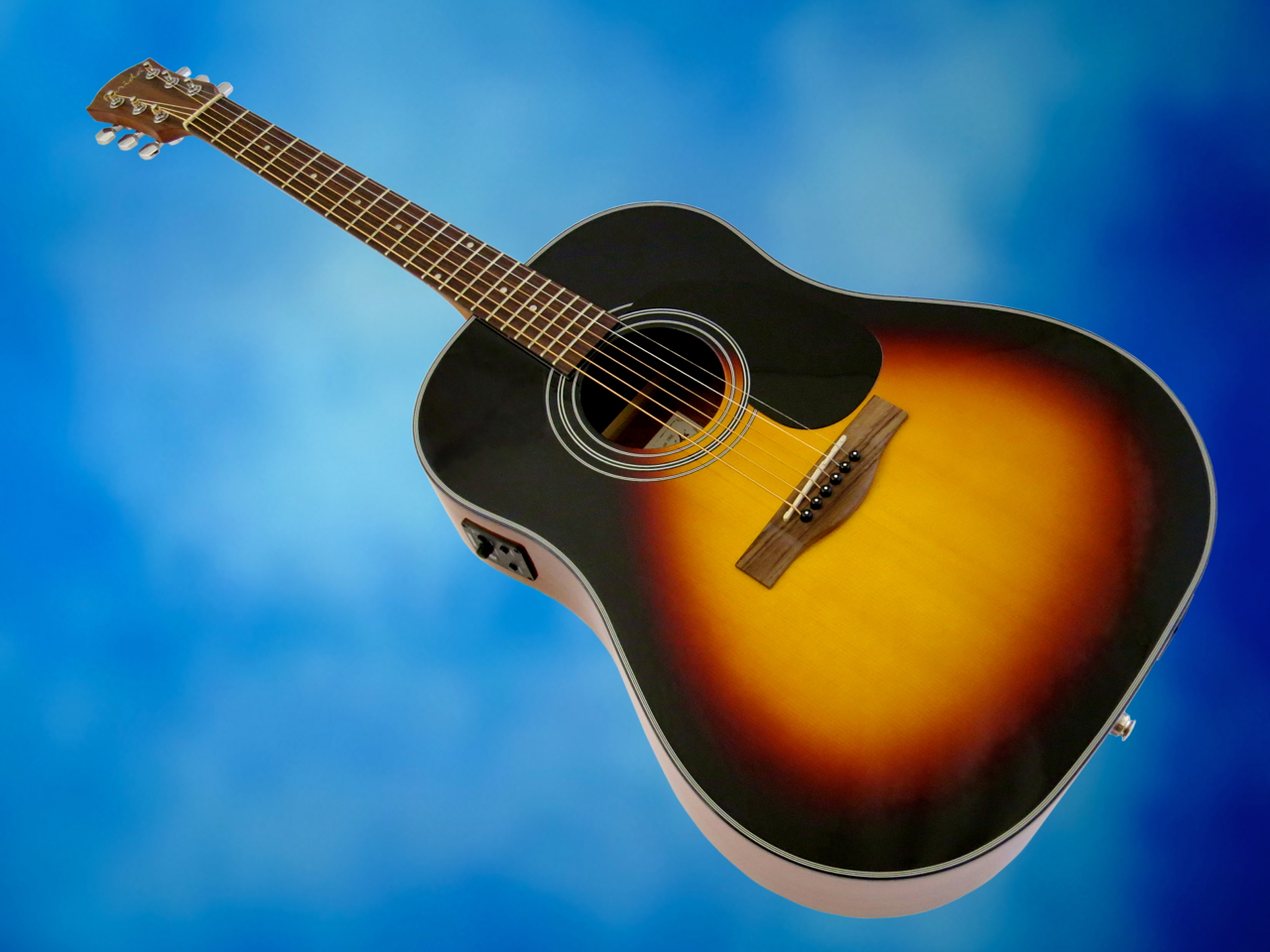
Farida’s B-10E (425 €) is the brand’s affordable version of Gibson’s famous slope shoulder (or round shoulder) dreadnought design (first released in the mid-1930s as the Advanced Jumbo). Like the name says, this guitar type differs from the more common Martin dreadnought by virtue of its rounded ”shoulders”.
The B-10E sports a solid spruce top finished in a gorgeously deep gloss sunburst.

The mahogany soundbox has also received a gloss finish, while the mahogany neck goes for a modern satin finish.

Farida have come up with a good-looking headstock shape, at least in my opinion. The B-10E’s headstock face sports a beautiful rosewood veneer.
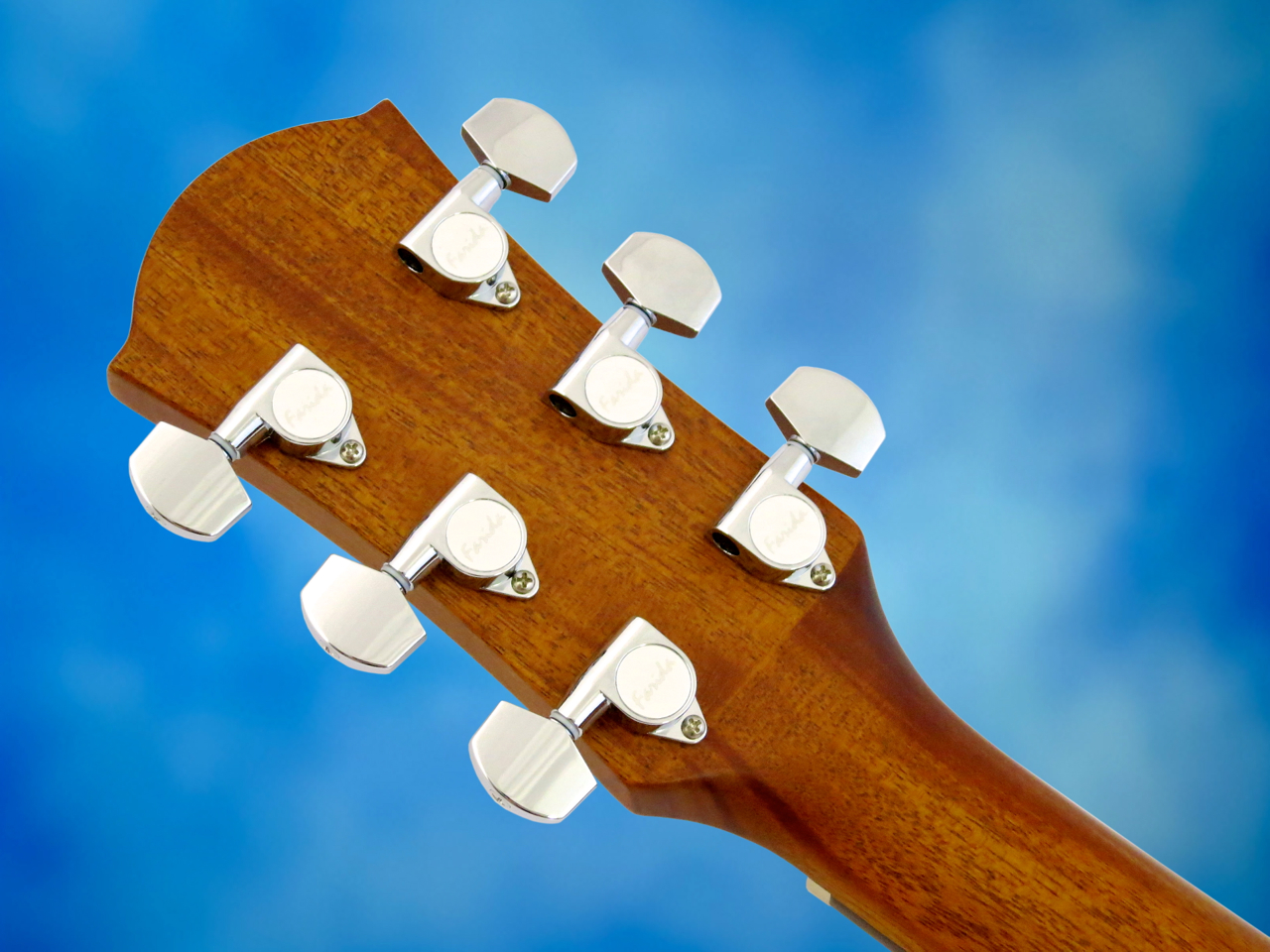
The machine heads are very decent Schaller-style models.

As with the parlour model, Farida’s slope shoulder dread also comes equipped with a self-lubricating Tusq-type nut and compensated bridge saddle.
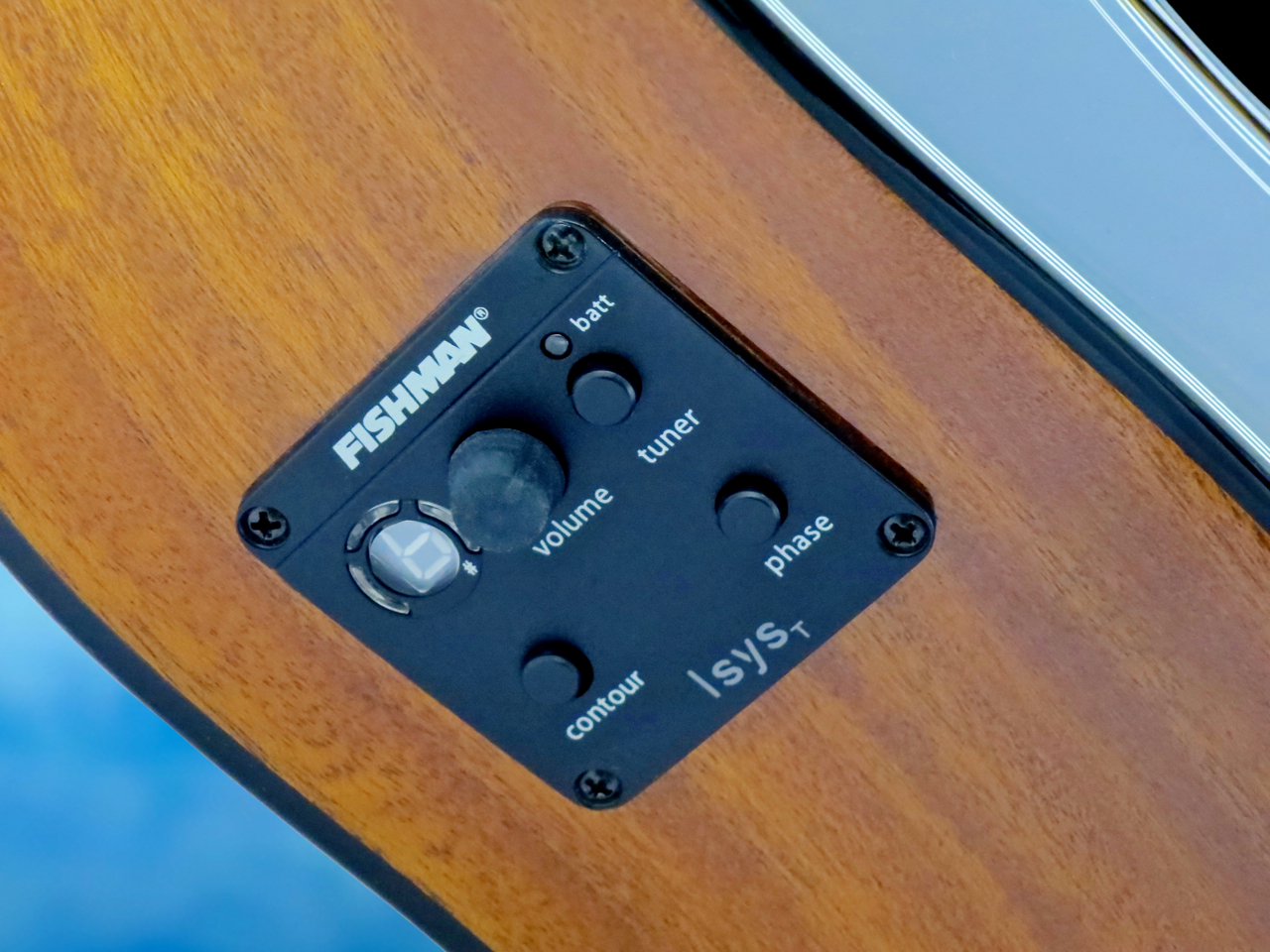
The B-10E features a Fishman Sonicore under-saddle transducer connected to an Isys T preamp.
In addition to the large volume control, the preamp also comes with a phase inverse switch (to combat feedback), a pre-EQ curve (called Contour), and a digital tuner.

The output jack is found in the end pin, with the easy access battery compartment nearby.

Despite this model’s rather affordable status, the fret job on the B-10 is actually surprisingly clean.

****

To some parlour snobs – yes, there are such people – the only ”correct” neck profile for a guitar of this type is a wide and massive V-neck (also called a boat neck). True, a boat neck is the authentic option, but many modern players do feel quite alienated by such a profile.
Luckily (and sensibly) the Farida Guitars M-2 comes with a very player-friendly, modern D-style neck profile.
Talking about comfortable: The M-2 is a very lightweight and compact little instrument, which fits effortlessly in your lap. This means that this parlour is a great choice for young players and many women, too. You don’t need to be a Folk music fan.
Farida’s M-2 delivers the sound you’d expect from a small-bodied steel-string guitar. There’s not a lot of deep bass, the mid-range has a certain boxy quality, and the whole is rounded off by a healthy dose of chiming top end.
The M-2 is a fabulous choice for fingerstyle players, because the tight bass response of a parlour leaves ample room for the full character of the mid-range to shine through:
But a small body doesn’t necessarily mean a puny sound – this Farida is a nice little barker when played with a plectrum. Thanks to its sinewy bass register this guitar is also easy to record:
The rhythm guitar parts on this demo song feature both test guitars. The Farida M-2 is in the left channel and the B-10E can be heard coming from the right:
****

Farida’s B-10E offers a lot of value and enjoyment for a very moderate price.
Here the neck profile is a slightly more rounded, oval C.
This Farida gives you the punch you’d associate with a well-made dreadnought guitar, suitably seasoned with the warmth this model’s Gibson-type scale length brings into the mix.
In contrast to the parlour, the much larger body of the B-10E equates a hefty boost in the bass and treble registers.
Played fingerstyle you’ll get a stronger bass content and more top end sparkle:
This larger-than-life persona, so typical of dreadnoughts, is also present when you switch over to a plectrum:
Fishman’s Isys T system is a very workable addition for live use. A piezo-only pickup system is always a bit of a compromise, in terms of sound fidelity, but the Isys T does a good job. In these clips the first phrase has been recorded with Contour off and the second phrase with Contour on:
The rhythm guitar parts on this demo song feature both test guitars. The Farida M-2 is in the left channel and the B-10E can be heard coming from the right:
****
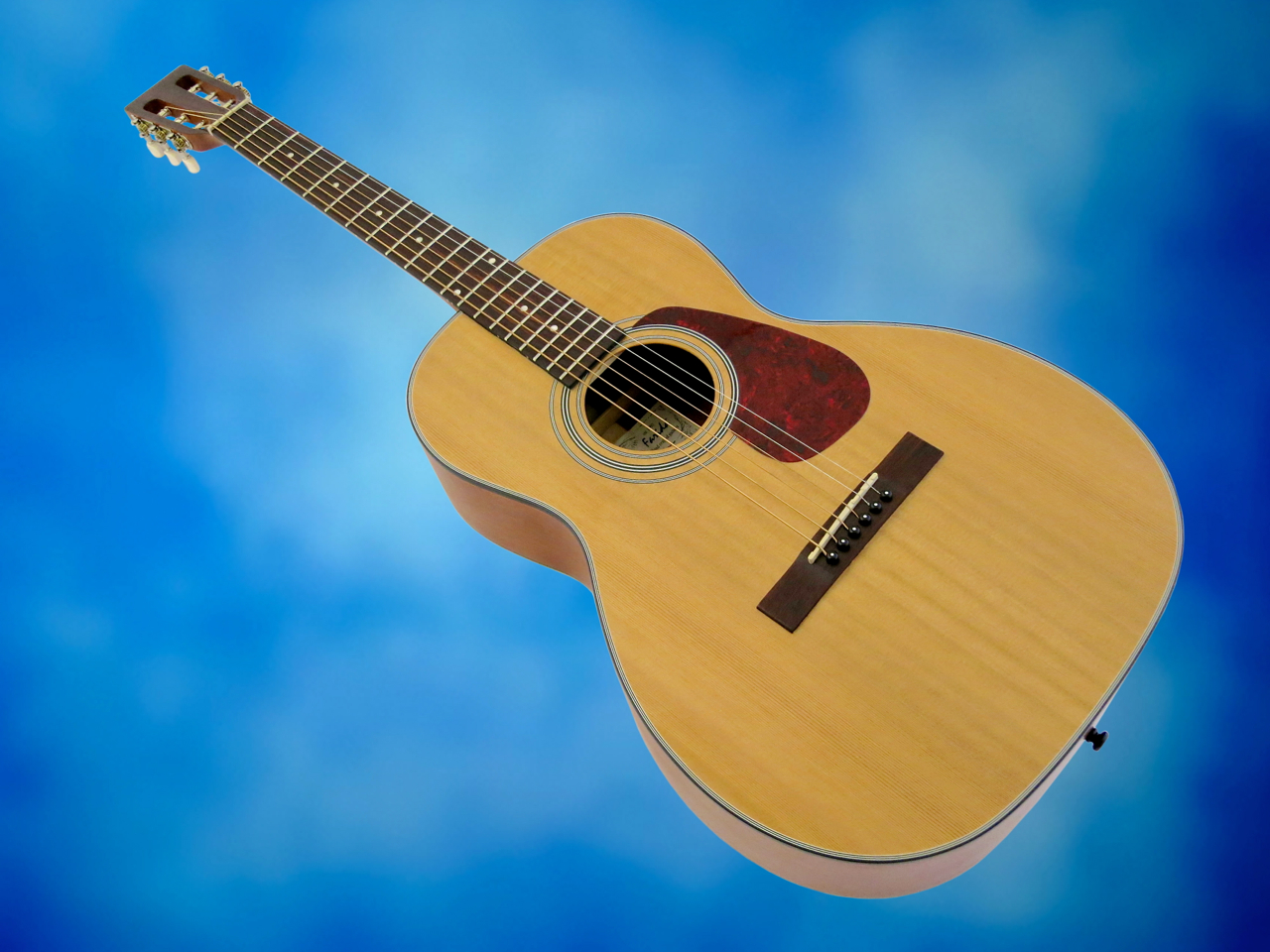
Based on this review, Farida seem to offer a lot of guitar at very fair prices. Both the Farida M-2 and the B10E are beautiful steel-string guitars that offer easy playability and inspiring sounds.
****
Farida Guitars M-2 + B-10E
M-2 – 465 €
B-10E – 425 €
Finnish distribution: Vantaan Musiikki
****
Pros (both models):
+ value-for-money
+ finish
+ fretwork
+ acoustic sound
+ easy to use pickup system (B-10E only)
Review: Bluetone Black Prince Reverb
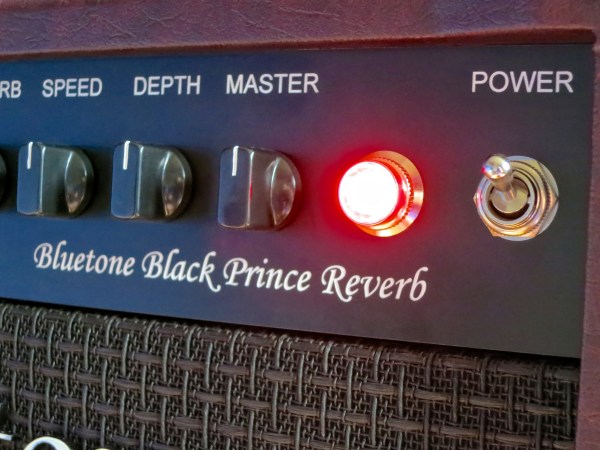
The Bluetone Black Prince Reverb guitar combo sees the boutique amp makers from Helsinki branch out into a new and interesting direction.
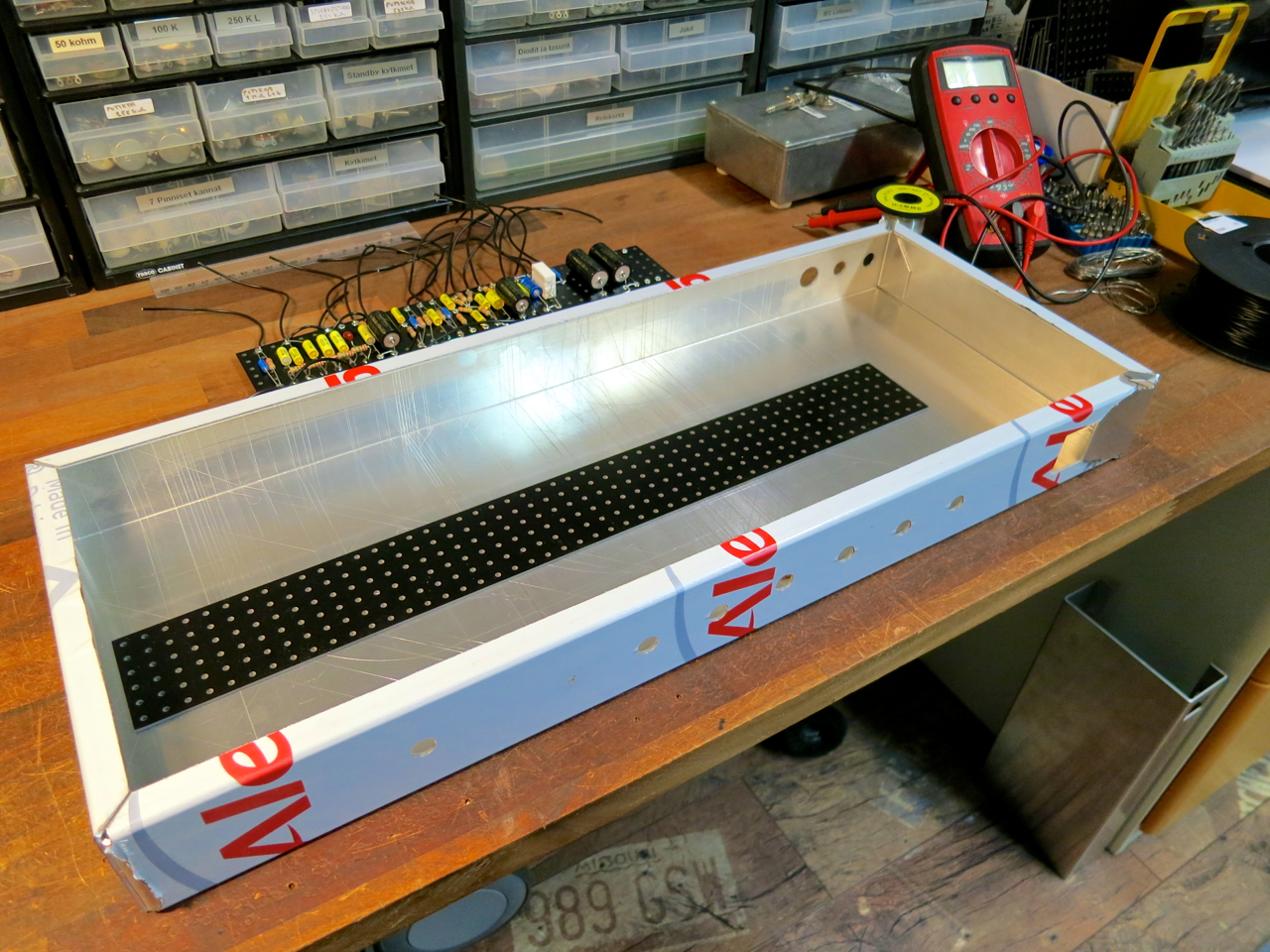
All the Bluetone models we have known thus far have been (and still are) produced as pure and genuine custom-made valve amplifiers.
This means that each new amp is ordered by the customer based on a certain Bluetone configuration on their website – like an à la carte-menu. The chosen model is then tweaked according to the customer’s wishes, and there are plenty of different options available – from the details of the amplifier’s internal specifications all the way to the type of finish of the cabinet and the font on the control panel.
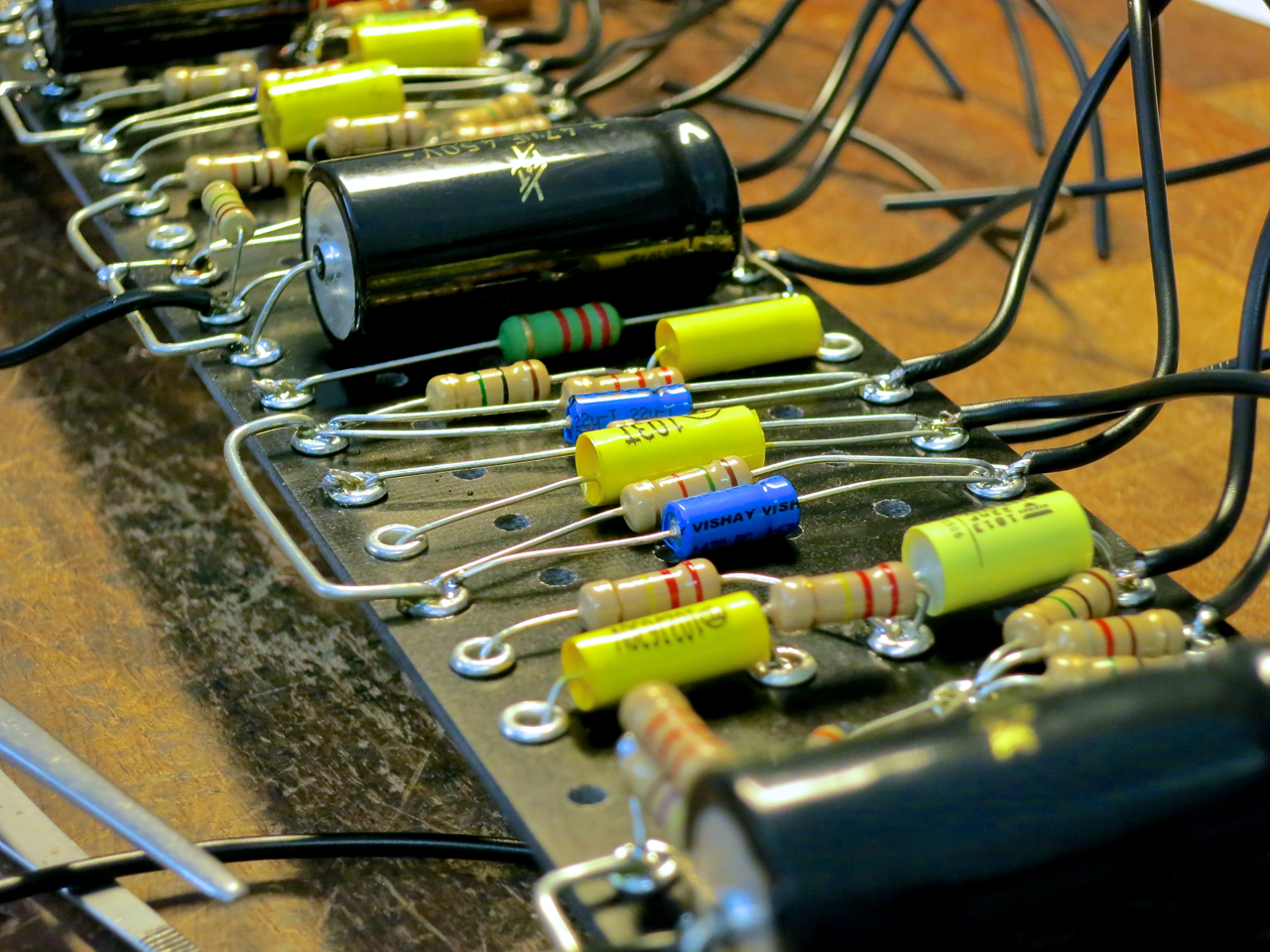
Due to the nature of custom amps, such as these, every Bluetone Custom amp is built completely by hand, starting with a clean slate – meaning: an empty metal chassis, and an empty fibreglass eyelet-board.
The board is then riveted at the right spots to take all the necessary wiring and electronic components going into this specific custom order. Everything is soldered into place by hand (point-to-point).
This is a very involved and time-consuming process, requiring a steady hand and a keen eye, which of course is reflected in the price of a Bluetone Custom amp. The advantage of building this type of point-to-point amp is, of course, that it gives the customer free reign to have his dream amp built.
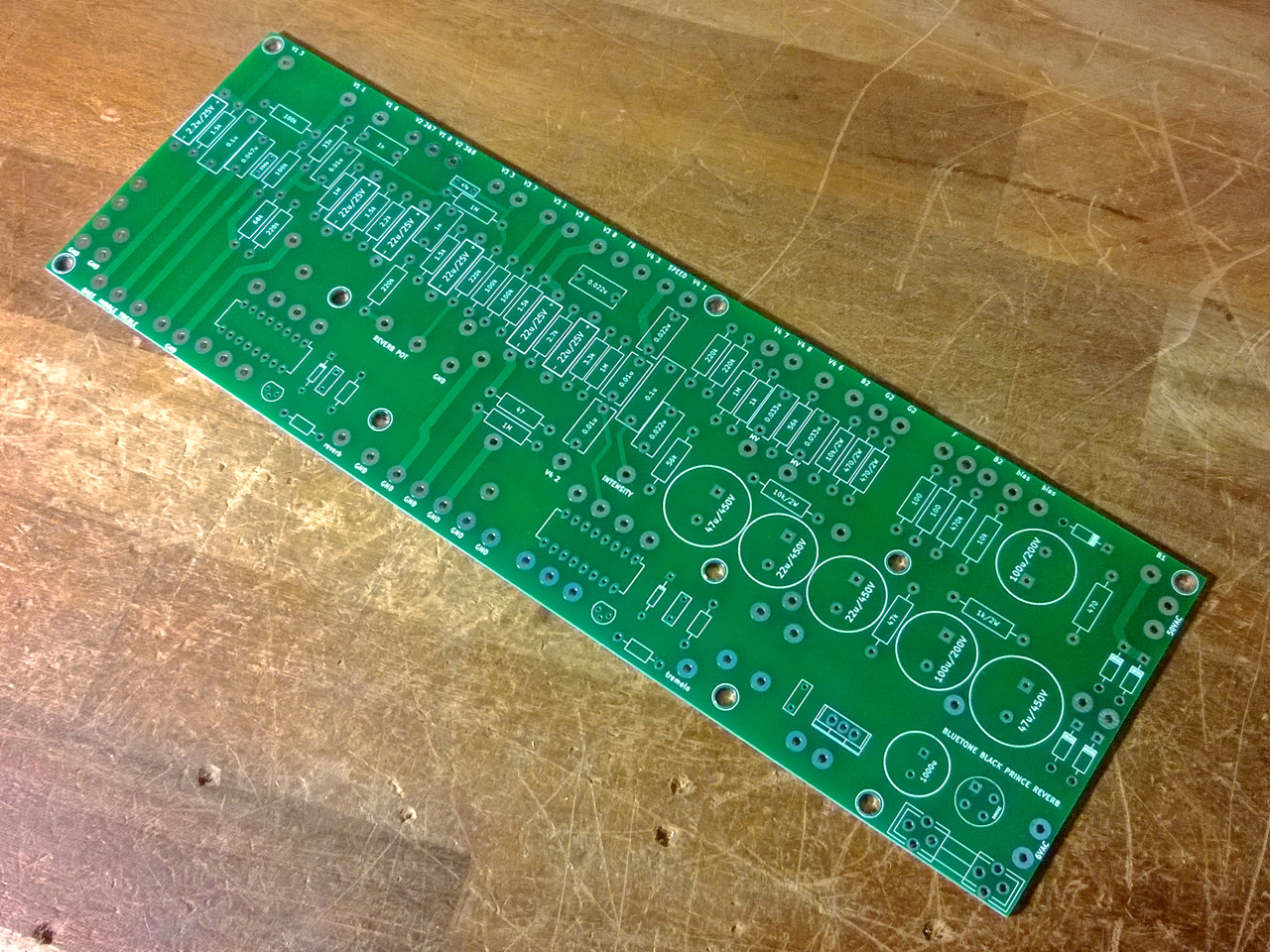
Bluetone’s dynamic duo – Harry Kneckt and Matti Vauhkonen – have recently decided to launch a second model range alongside their strictly custom-made amps. The new range will include a few models that will be made and sold ”as is”, with only very limited options to choose from.
These new amps will be made using so-called hybrid boards.
Bluetone’s hybrid boards are very sturdy PCBs made of fibreglass, and are of a considerably higher quality than what you’d find in mass-produced valve amplifiers. Each component’s place on the hybrid is clearly labelled, and some of the ”wiring” is already incorporated into the board itself. In contrast to many mass-produced affordable amps, Bluetone’s new range will see all tubes and transformers mounted securely to the metal chassis (like on their custom-made amps, too), and not directly on the PCB (like on many affordable Far Eastern designs).
The rest of the building process is virtually identical to the more costly custom-made amplifiers – the components are fitted to the hybrid board by hand (from the top) and hand-soldered to the board. Thanks to the hybrid board the new amplifier range will be much easier and faster to produce, which will be reflected in the pricing of the new hybrid amps vis-à-vis the point-to-point custom orders.
****
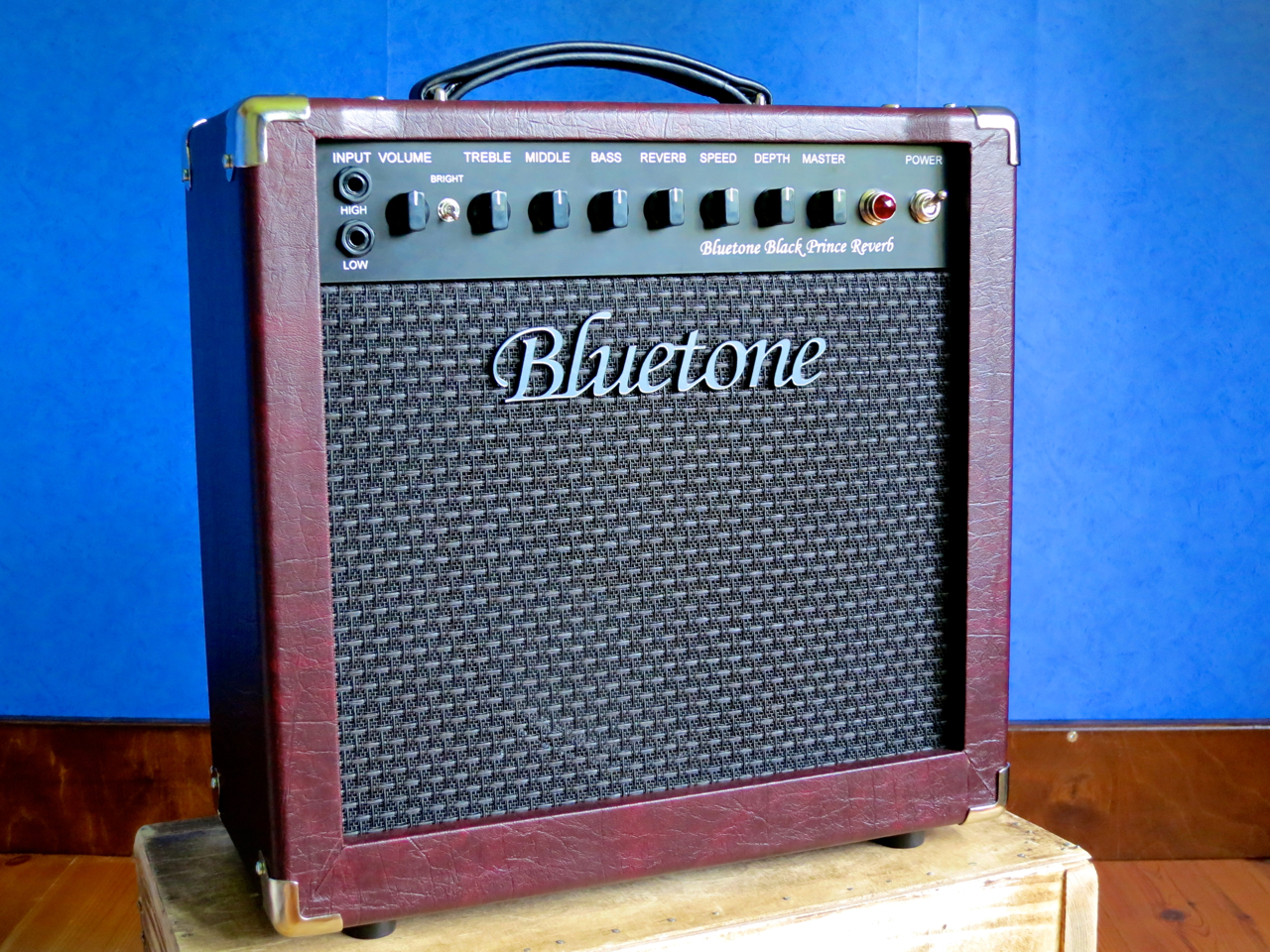
The first new Bluetone-combo is called the Bluetone Black Prince Reverb (approx. 1.500 €).
This compact and handy combo takes a lot of inspiration from Fender’s legendary ”Blackface” Princeton Reverb (version AA1164), but due to the Bluetone’s many refinements you can’t really call the Black Prince a straight copy.
In addition to the basic version in wine red tolex, you can also order the Black Prince Reverb in genuine tweed, or with an oiled cabinet made from mahogany (both at extra cost).
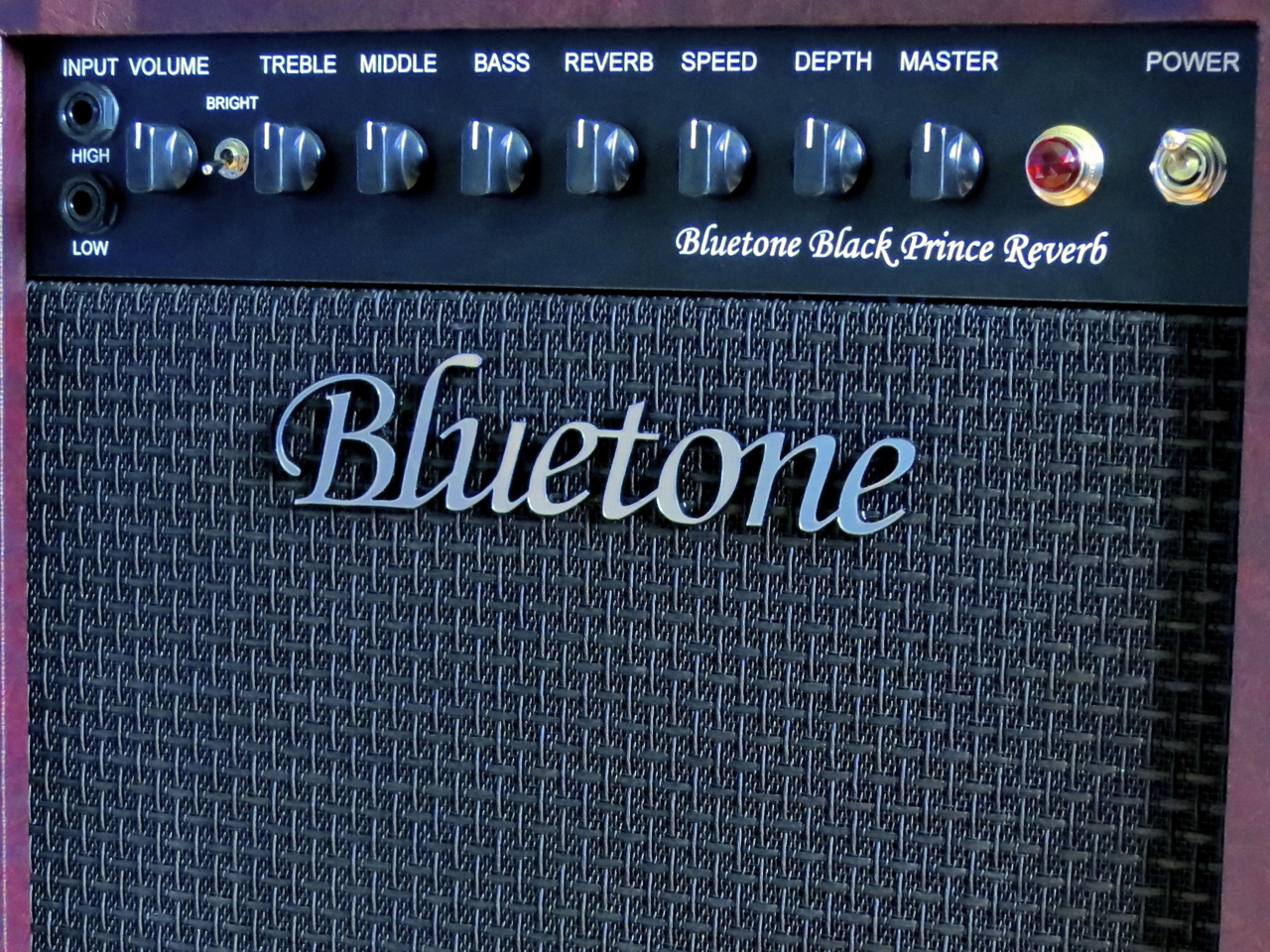
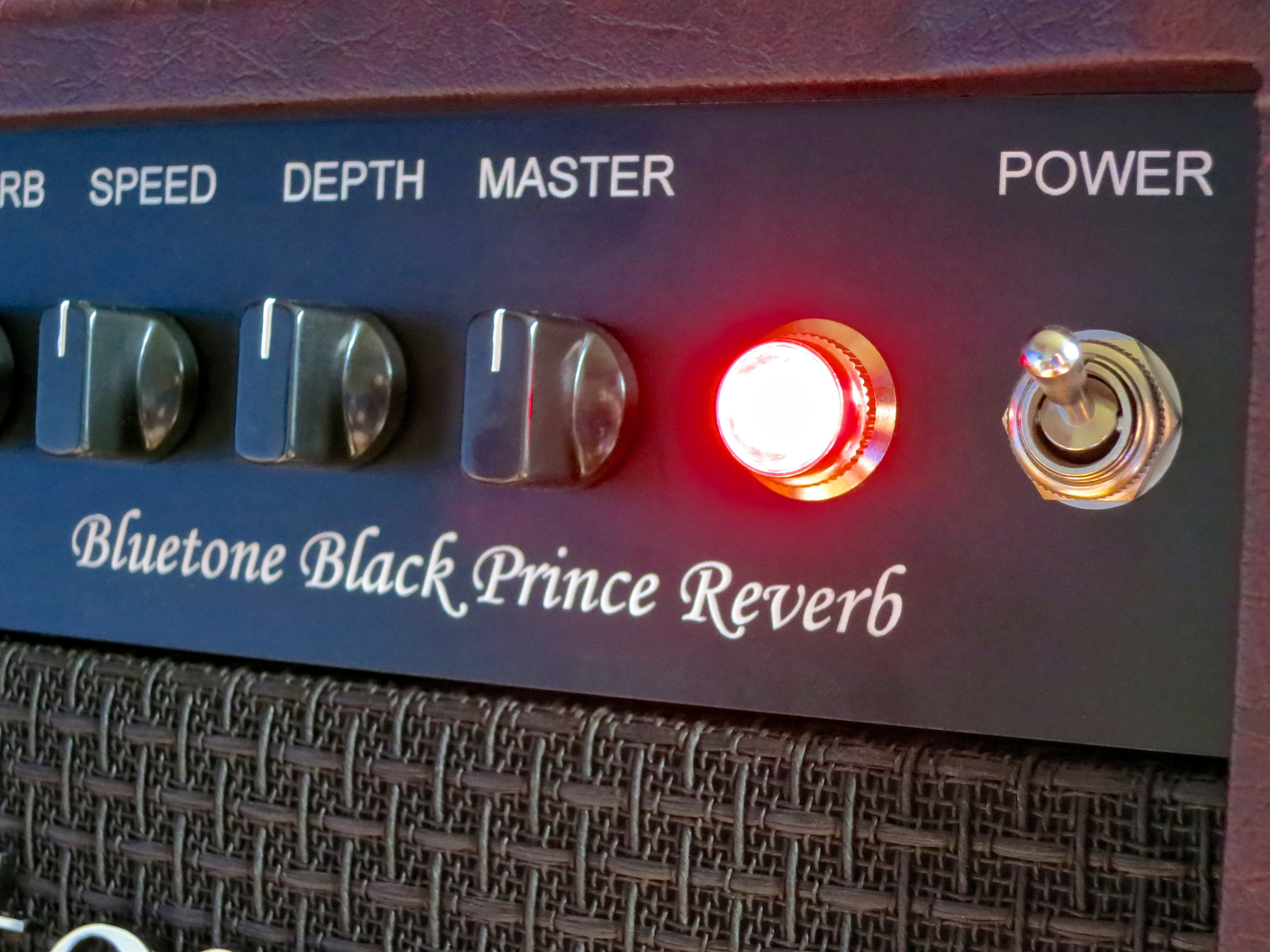
I very much like the businesslike and sober look of the Blacktone’s front panel. Everything is clearly labelled, which can be a great plus on a dimly lit stage.
The Bluetone Black Prince Reverb offers two different inputs for singlecoil and humbucker-equipped guitars (High and Low). The EQ-section is a three-band affair, with an additional Bright switch to liven up dull sounding pickups.
Even though the Black Prince Reverb is such a compact combo, it still featured both a genuine, valve-driven spring reverb and a tube tremolo.
Bluetone uses a post phase-inverter master volume in most of their designs, because it has the least negative impact on an amp’s tone and feel.
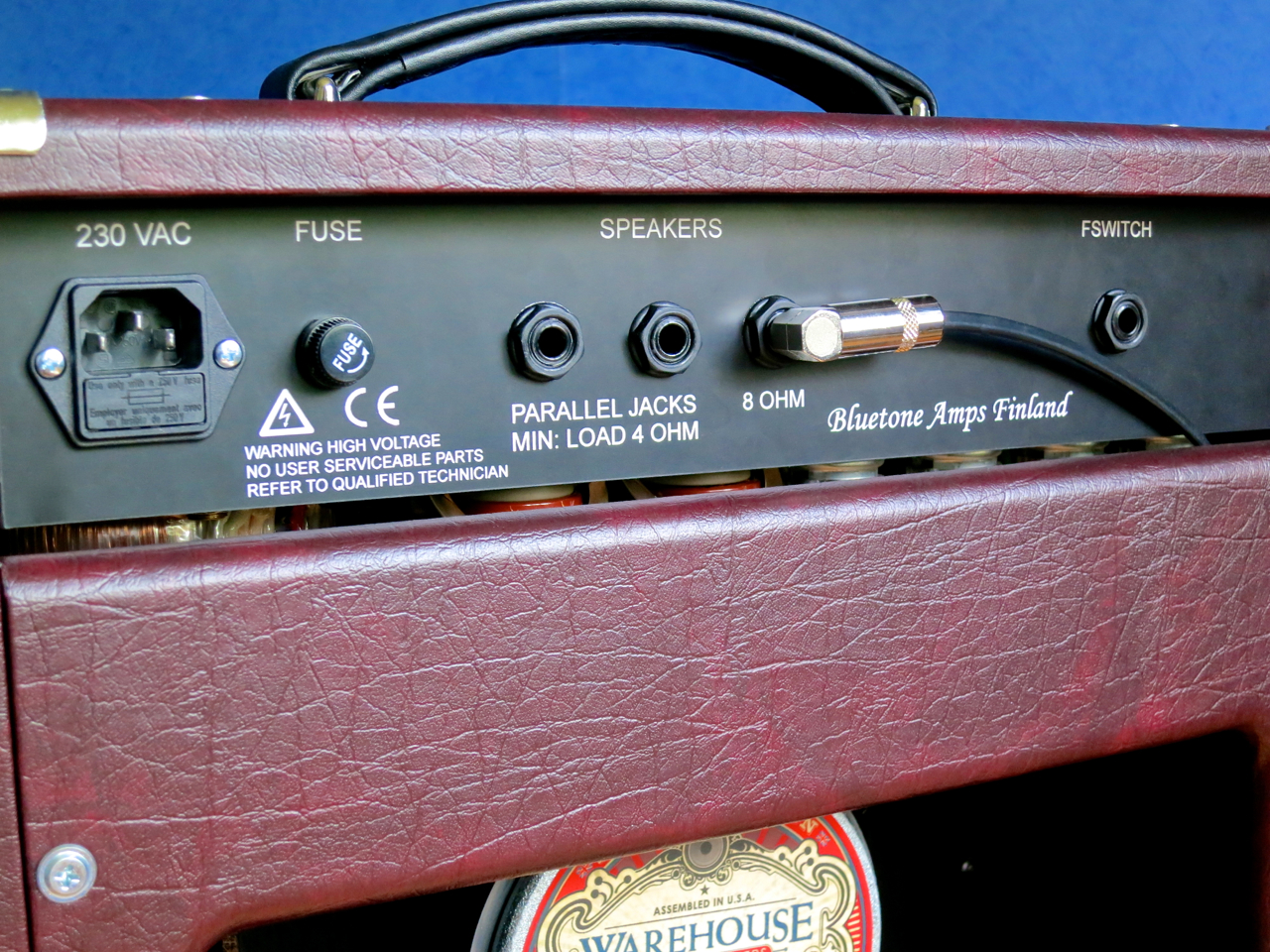
There’s a Fender-style open back on the Black Prince.
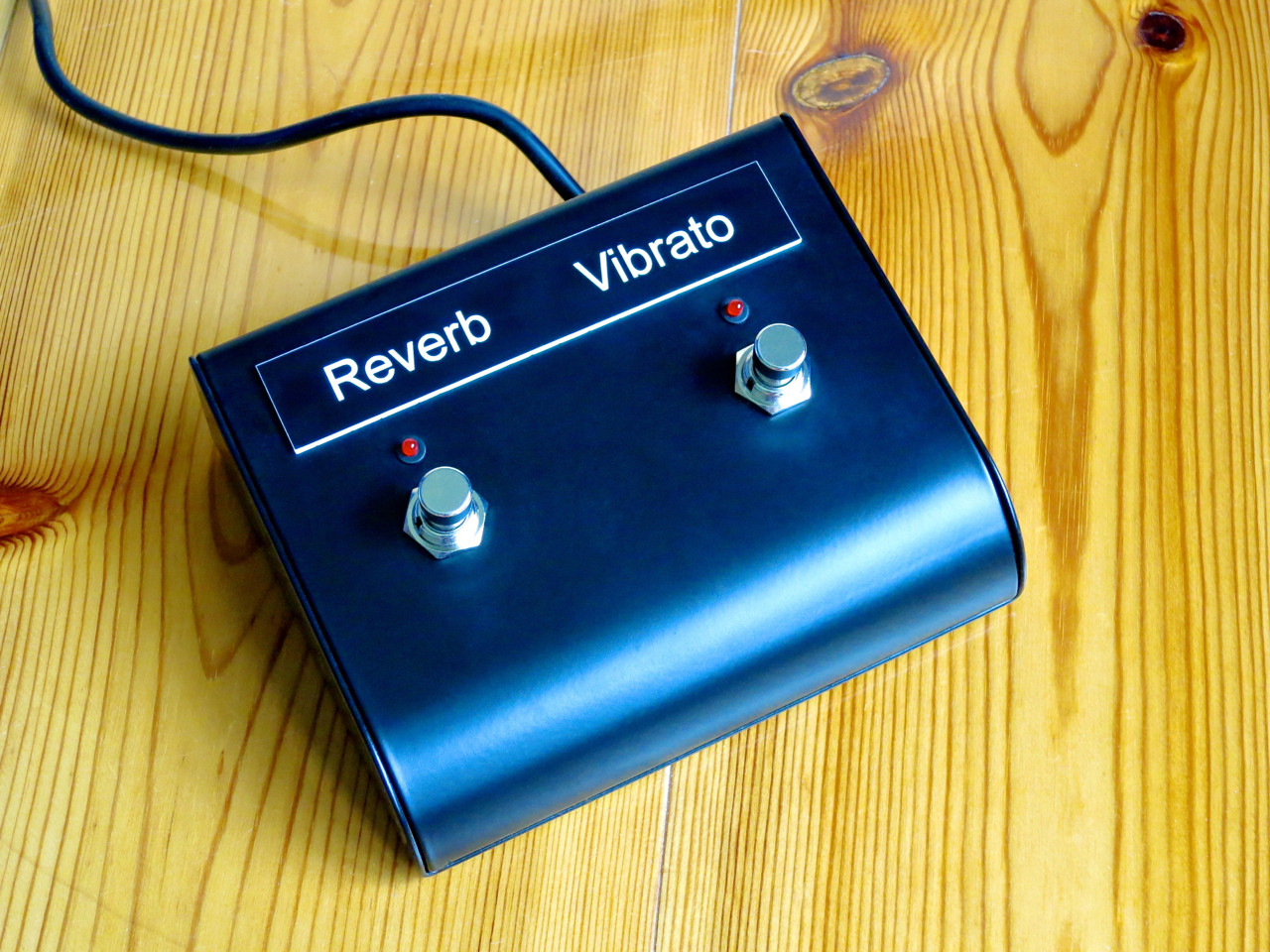
The back panel sports outputs for additional speakers, as well as the jack for the combo’s two-button footswitch unit (included).
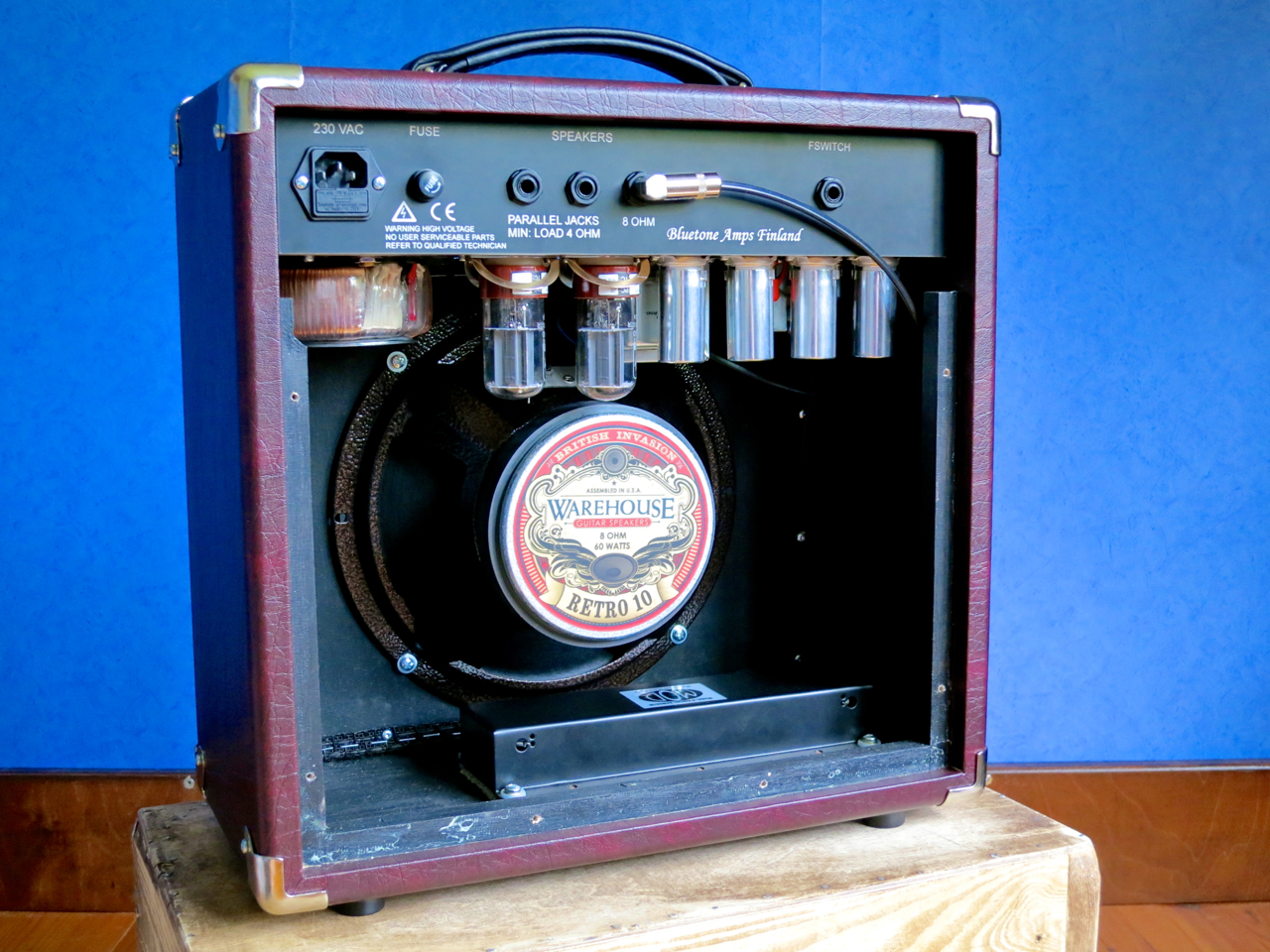
This is what the Bluetone looks like with the open back removed.
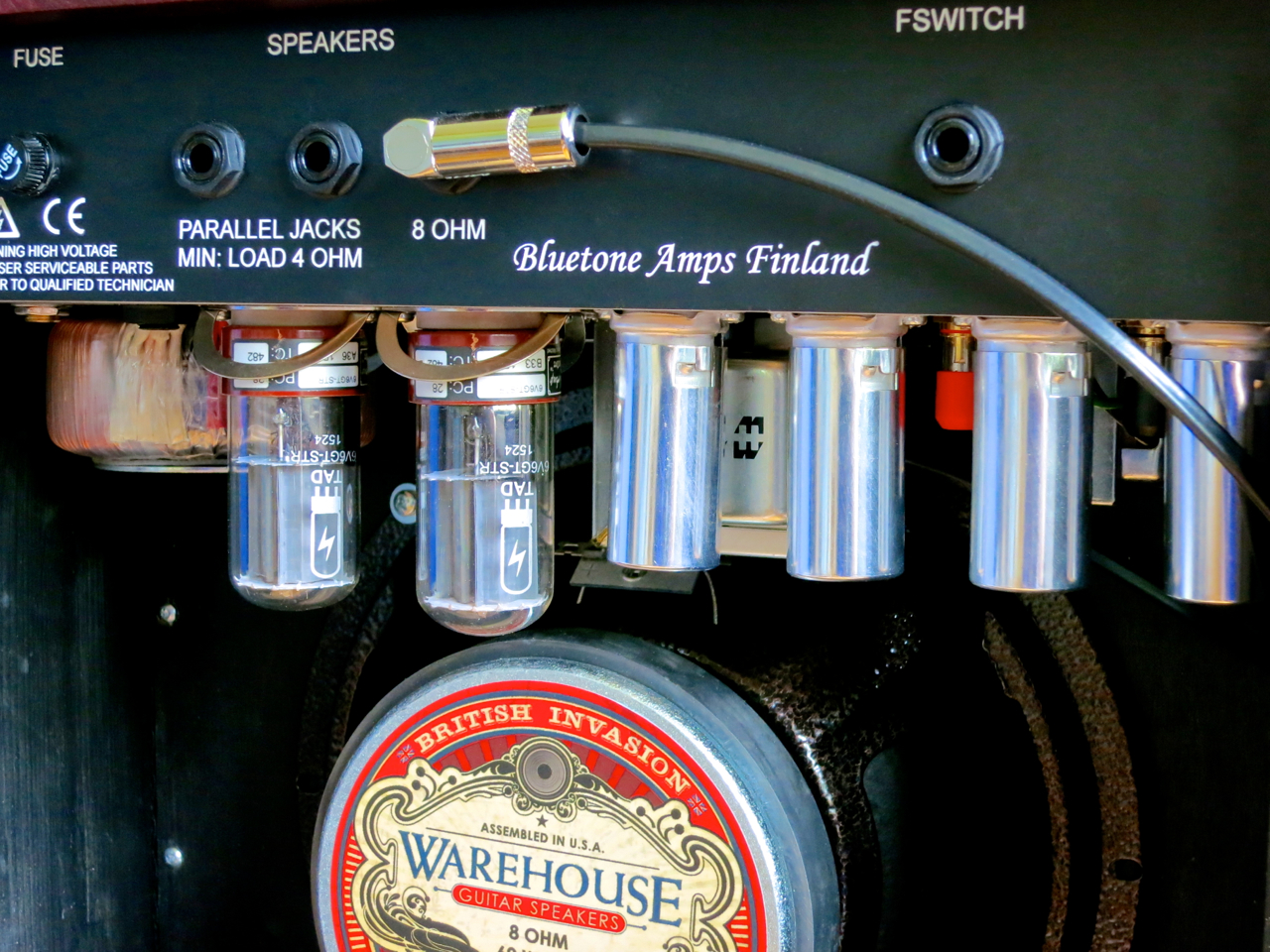
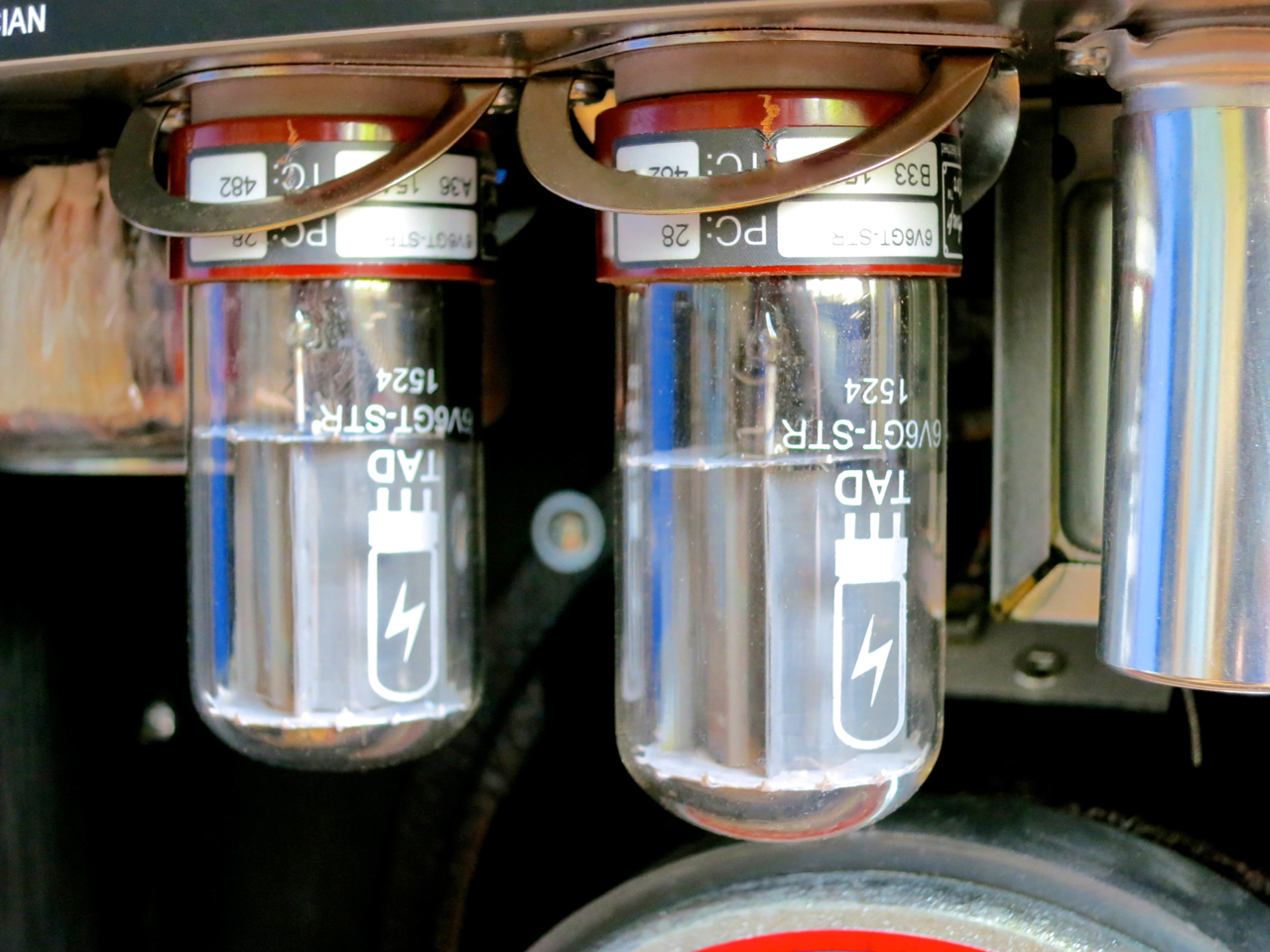
The Black Prince Reverb combo is an all-valve machine, loaded with the following tube types (from right to left):
The first 12AX7 is the combo’s preamp valve. The spring reverb circuit uses a 12AT7 and a 12AX7 valve. The 12AX7 works as the amp’s phase-inverter and tremolo tube.
The Black Prince leaves Bluetone’s workshop equipped with a pair of 6V6GT power valves, which will translate to about 20 watts of output. You can also re-bias this amp for a pair of 6L6GCs, which would boost the output to almost 30 watts.
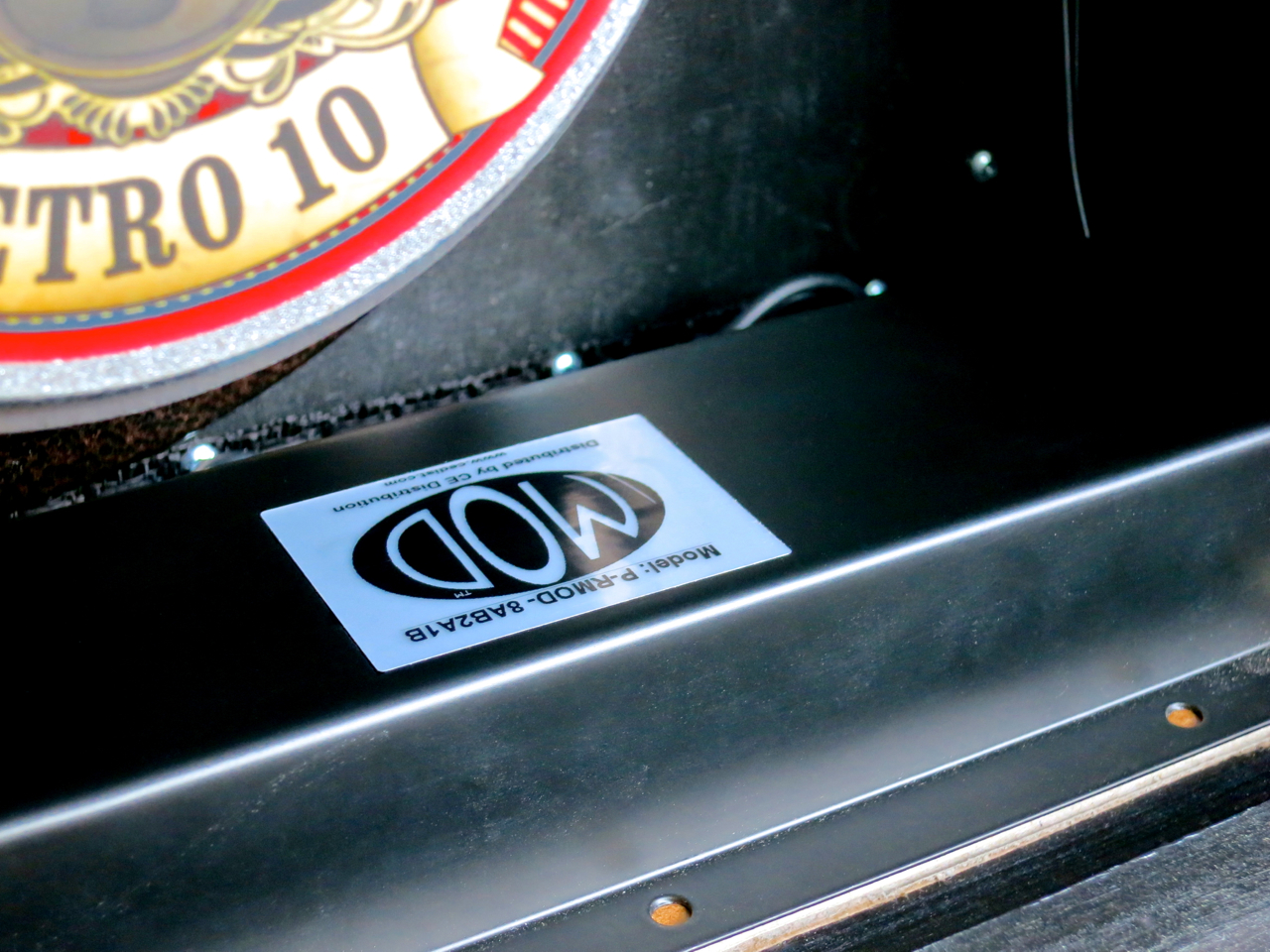
This combo’s short reverb tank is supplied by MOD.
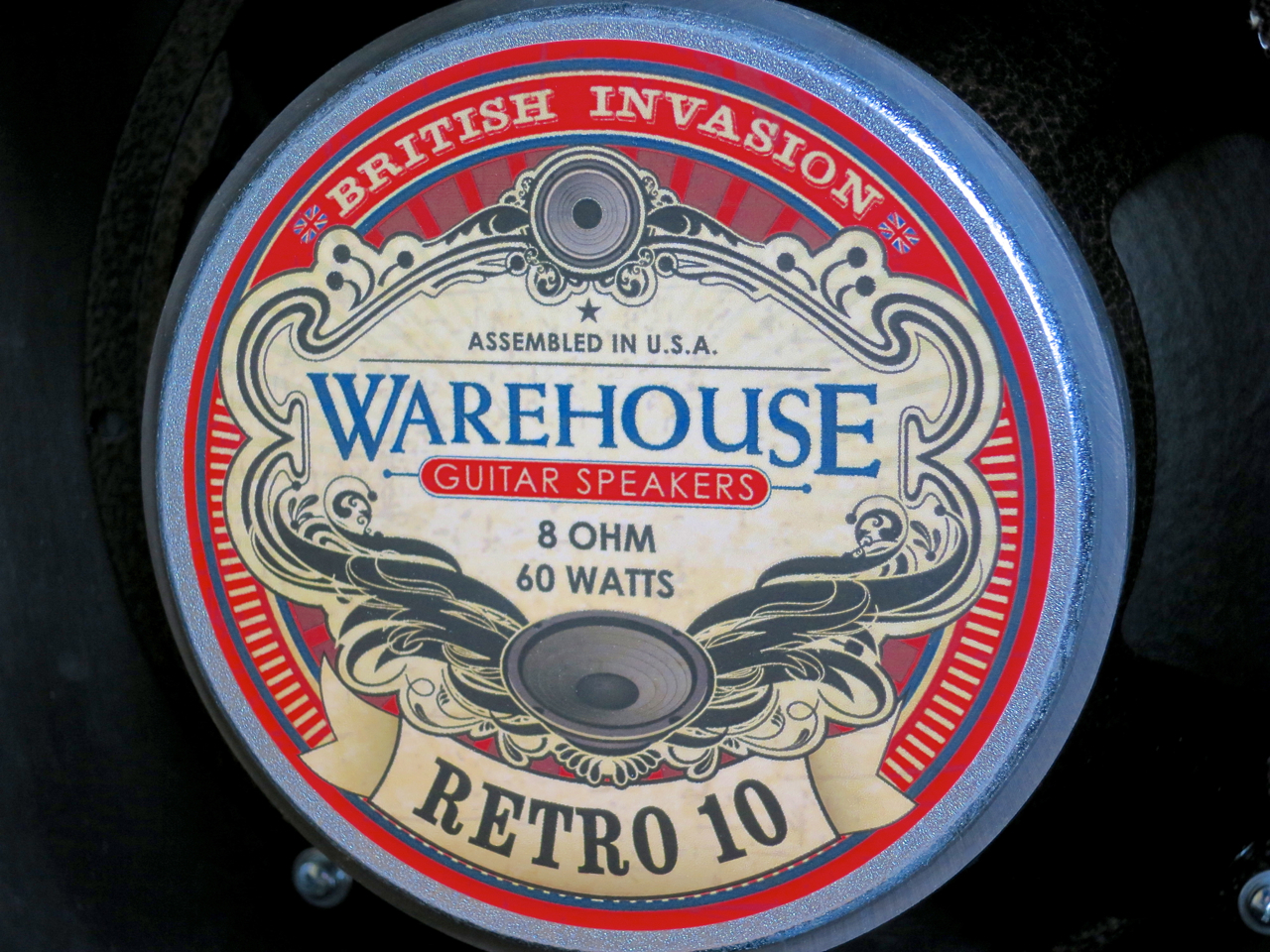
Bluetone have chosen a Warehouse Guitar Speakers Retro 10-speaker for their new combo, even though this model is distinctly different from the old Jensen speakers in vintage Fender designs.
This choice is, of course, deliberate and based upon many listening tests:
The WGS Retro, which is made to withstand far more output than this combo can deliver, keeps the Black Prince Reverb’s tones clean and dynamic under all circumstances. This speaker’s British character also makes the Bluetone-combo sound larger and fatter than you’d expect.
****
Oh, boy, this is a sound you cannot get enough of! At least in my case only a minute or two of playing the Black Prince was enough to make me consider getting myself in debt.
It’s hard to put into words what that special ingredient is, but this is what a clean electric guitar should sound like! This combo sounds clean, fresh and dynamic, but never clinical, cold or brittle. There a good dose of chime, but it doesn’t hurt your ears. The bass strings sound big, but never mushy.
The sound of the short MOD reverb tank is surprisingly dense and complex, and there’s more than enough of it to satisfy Surf Music fans. The Black Prince Reverb’s tremolo works like a treat, too, offering you anything from slow and soft to machine-gun mania.
Here’s a clip, recorded with a Fender Telecaster, gives you an idea of the Bluetone Black Prince Reverb’s dry tone, as well as its spring reverb and tremolo effects:
The Black Prince also excels in keeping your guitar’s own character intact. These three clips feature a Fender Telecaster…
…an Epiphone Casino…
…and a 1970s Japanese ”lawsuit” copy of a Gibson ES-335:
This combo’s fantastic clean tone is a fantastic platform for pedal addicts. The demo track was recorded using an analogue chorus pedal, a tube screamer-type overdrive, as well as the amp’s built-in reverb and tremolo.
The rhythm parts were played on a Fender Stratocaster, while the lead was played on a Hamer USA Studio Custom:
****
In my view, Bluetone’s Black Prince Reverb is a top-drawer choice as a combo for use at home or in the studio. It’s also great for smaller gigs, when too much noise on stage can be a problem, or you can mike it up for larger venues.
The Black Prince Reverb is a nicely compact boutique-grade valve combo offering fantastic cleans, as well as fine reverb and tremolo effects.
This amp hasn’t been spoiled by unnecessary ”tube voodoo” or distracting graphic. I’m all for the clean and understated looks this Bluetone has to offer!
This is a handmade, Finnish boutique combo, offered at a very fair price.
****
Bluetone Black Prince Reverb
1.500 €
Contact: Bluetone Amps
****
Pros:
+ value-for-money ratio
+ handmade in Finland
+ workmanship
+ fine spring reverb and valve tremolo
+ sound
+ master volume-control
 Kitarablogi.com – Finland's premier Guitar and Bass blog