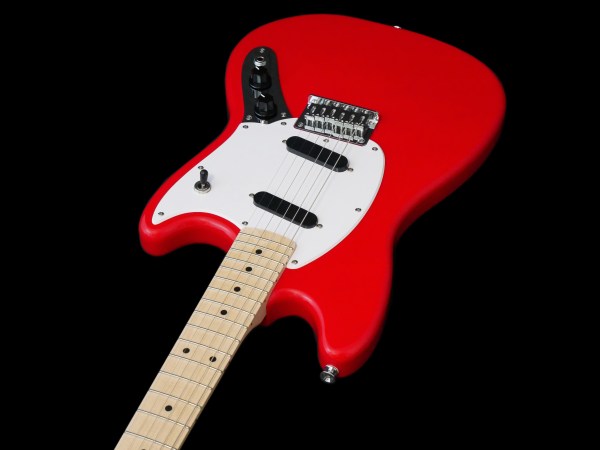
Review: Squier Sonic Mustang SS

From the late 1970s on, Fender’s student-oriented models began to find their way into the hands of musicians from the Punk, New Wave, Grunge and Alternative Rock genres.

The reasons for this can be found both in the musicians’ budgets, as well as in the guitars’ image. The average guitarist wanted to play with ”familiar and safe” models, and in Fender’s case, these were the Telecaster and Stratocaster.

At the end of the 1970s, Fender’s so-called student instruments, that were very popular in the 1950s and 60s, could be found very inexpensively second-hand. With the Mustang, Duo-Sonic or Musicmaster, the young New Wave musician got genuine Fender quality at a very affordable price, and since these instruments were not – at least at the time – collector’s items, modifying the guitars to suit the needs of the ”new music” was no problem.

Many guitarists of the new genres – e.g. the Talking Heads’ David Byrne, Sonic Youth’s Thurston Moore and Nirvana’s Kurt Cobain – added more powerful pickups to their Duo-Sonic or Mustang to better suit their sound. This resulted in distinctive guitars that certainly weren’t ”your dad’s Country guitar”.

Last year, Fender’s subsidiary Squier Guitars changed the name of its most affordable line from Affinity to Sonic, and at the same time expanded the range of instruments in the series.

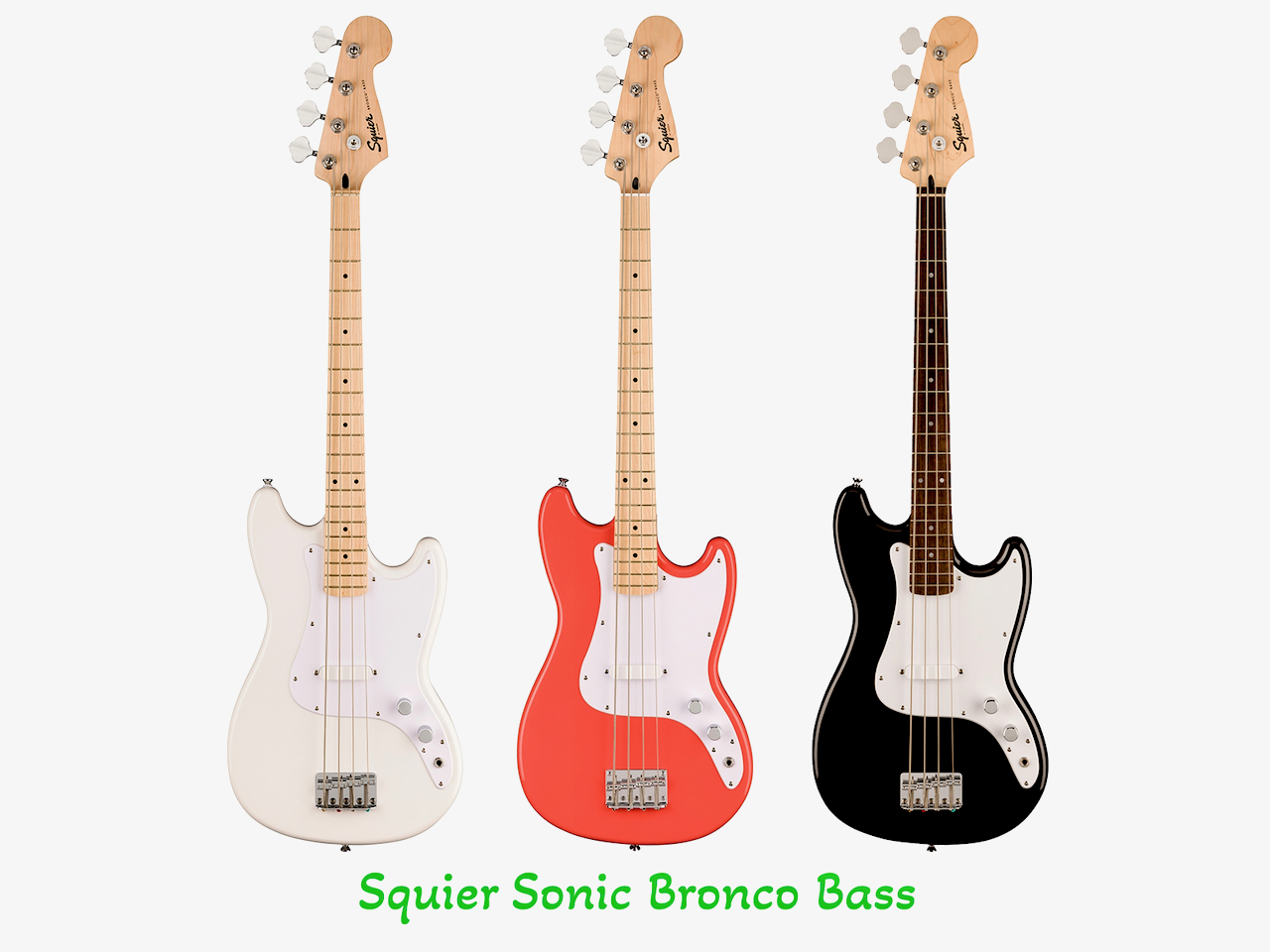
There are now two different Mustang guitars in the Sonic series, of which the Mustang HH offers two humbucker pickups, while the Mustang SS, like the original Fender, comes equipped with two single coils. Both models are offered in two different colour options as standard, which in the case of the Mustang SS model are sunburst and Torino Red. The Mustang HH comes in light blue and pink. The Sonic Bronco bass is now available in three different colors – white, red and black.

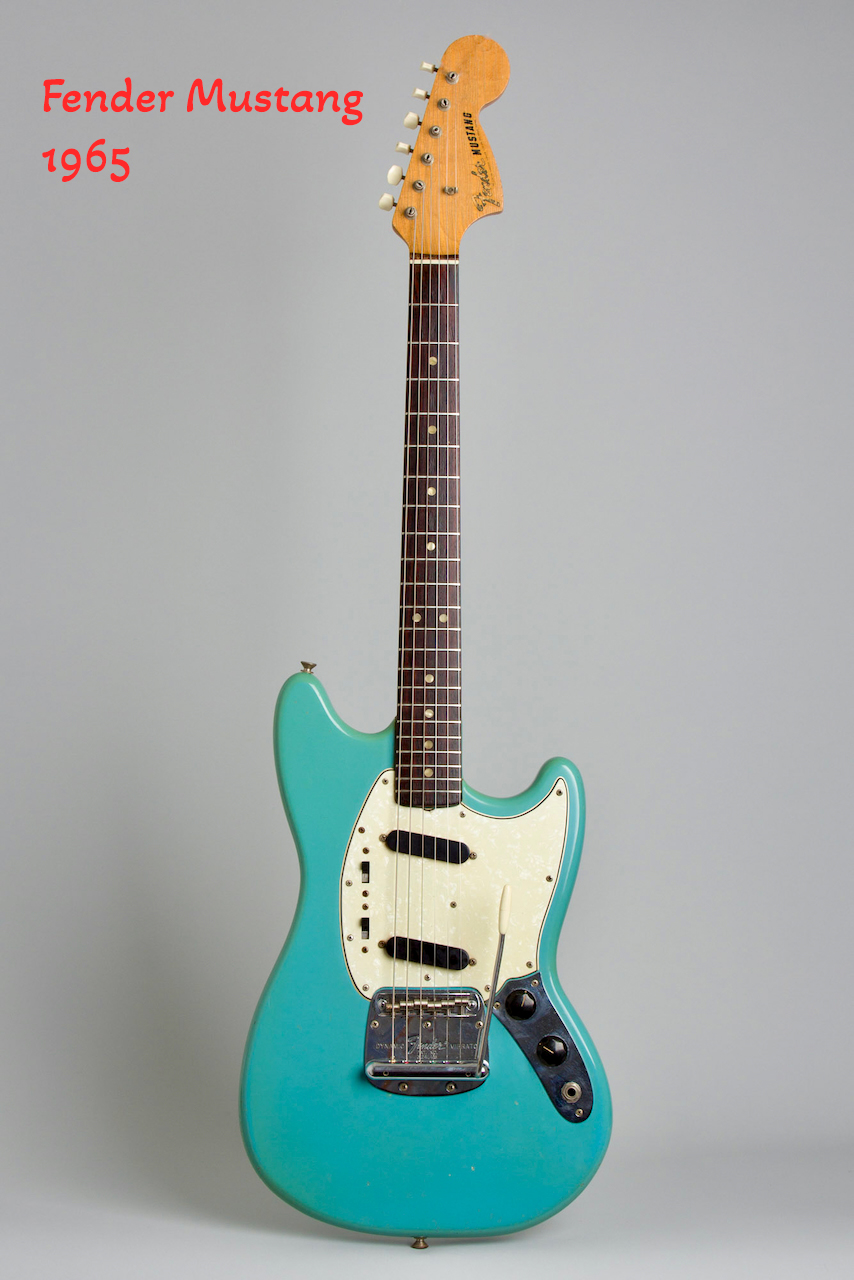
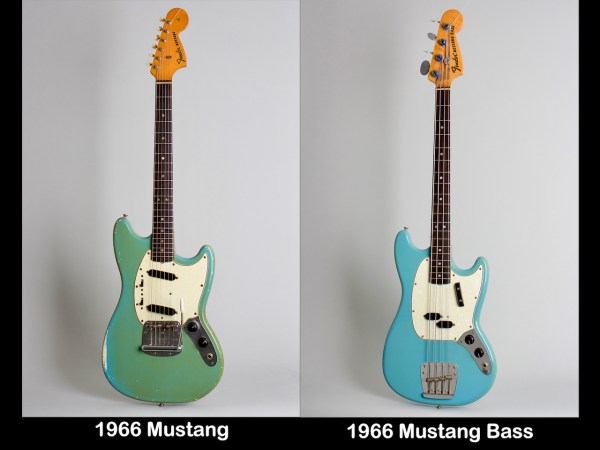
A vintage enthusiast would be the first to point out that, according to Fender’s original terminology, the Squier Sonic Mustang SS (street price approx. 180-200 €) is not a Mustang, but a Duo-Sonic, as the model has a fixed bridge and a three-position pickup selector. I would bet that Fender and Squier have decided that the name Mustang is simply cooler and better known than Duo-Sonic, which is why all their short-scale models with the same body shape are currently called Mustangs, despite the streamlined electronics and bridge.

However, the familiar basic recipe still applies:

The Squier Mustang SS is an electric guitar with a 24-inch scale. The bolt-on maple neck has a maple fingerboard and well-installed 22 vintage-style frets.
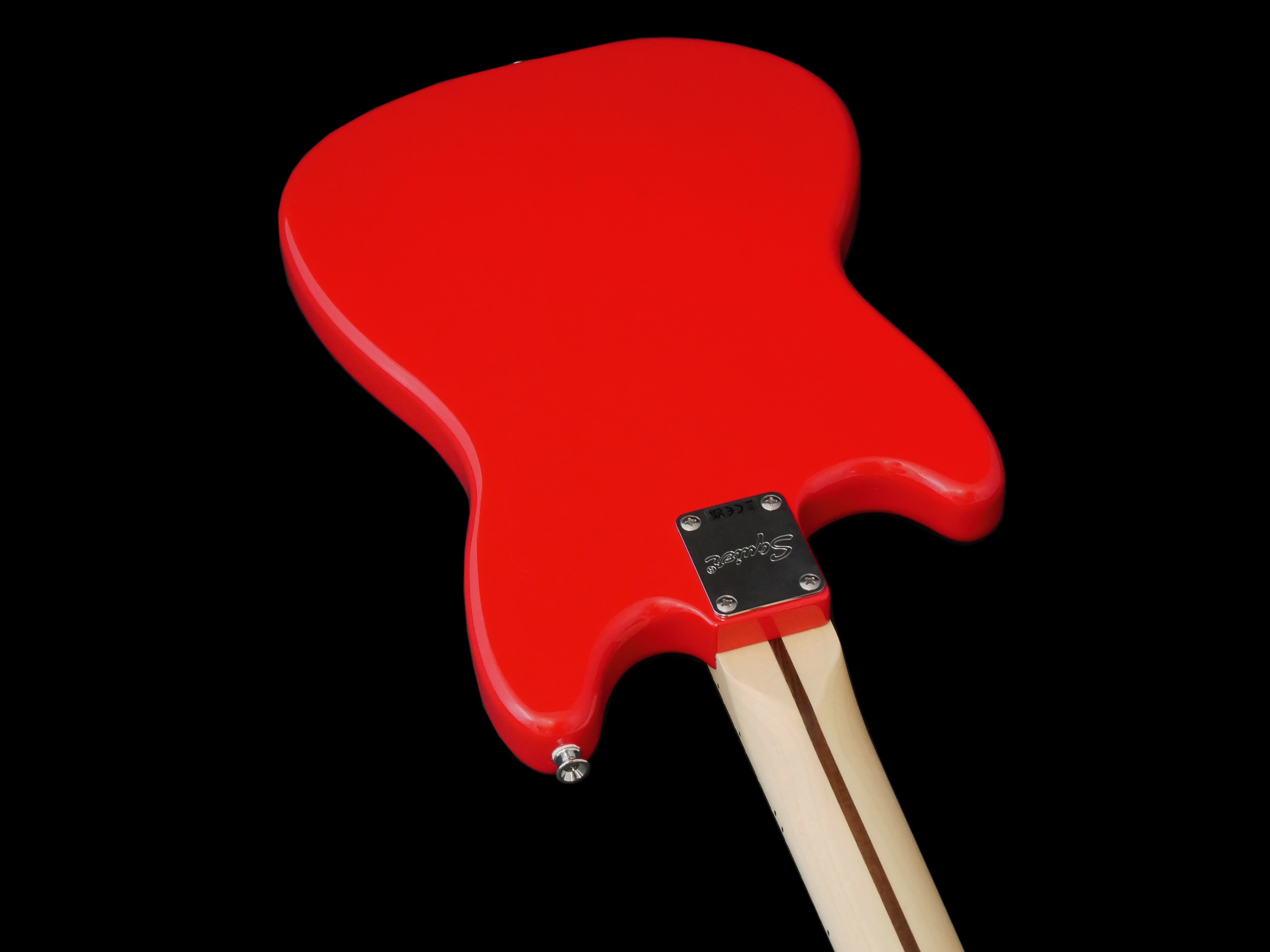
The offset body of the Mustang SS is a slab number with rounded edges, but without any chamfers.

The thick single-layer plastic pickguard is typical for Sonic series instruments. Mustang’s two single-coil pickups – with closed black plastic covers – and a three-position mic selector are installed onto the pickguard.

The Squier guitar’s volume and tone controls, as well as the output jack, are placed on a chrome-plated metal plate.
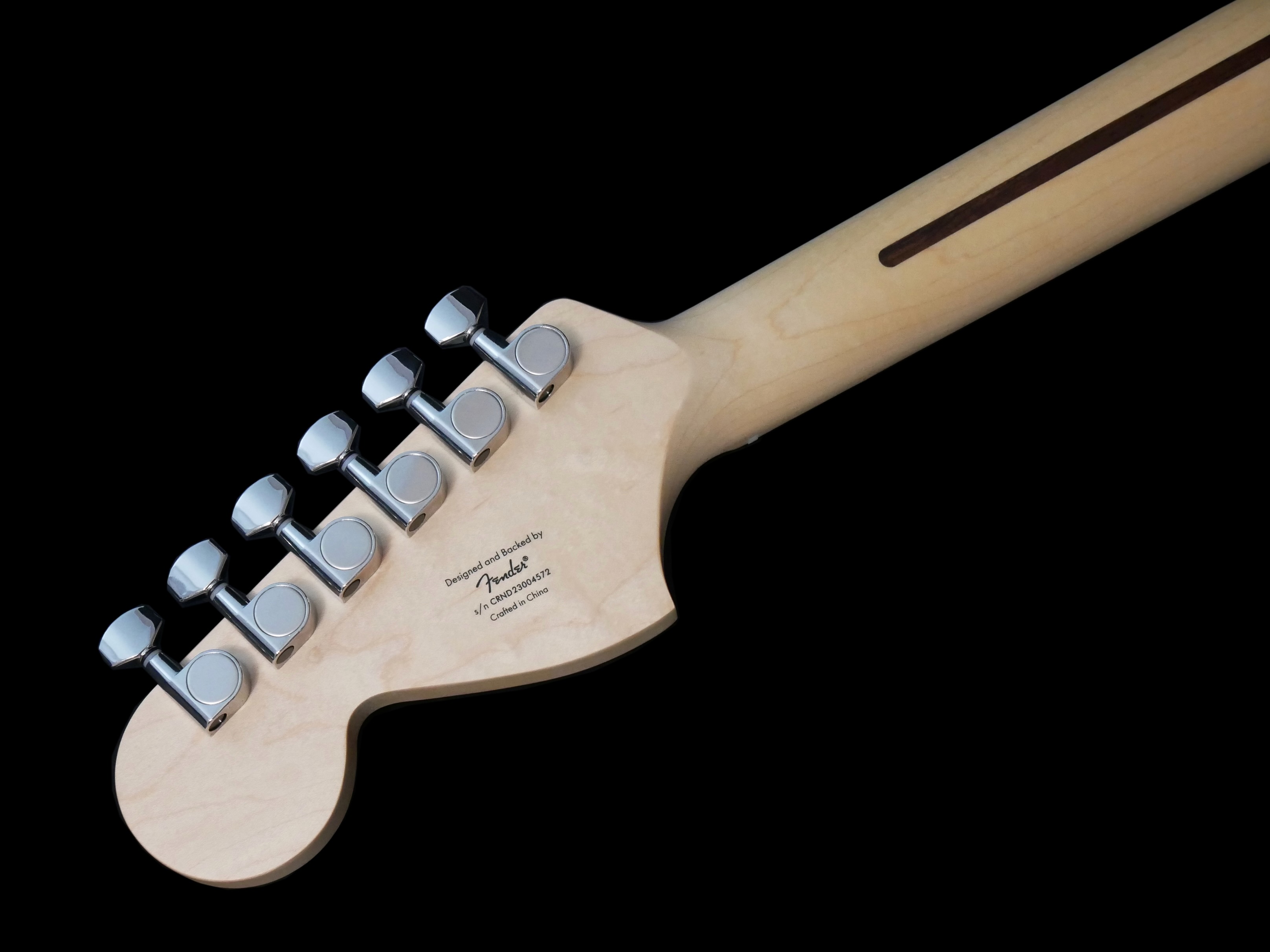
The Mustang’s modern sealed tuners work well, as does the Sonic model’s fixed bridge with six separate saddles.
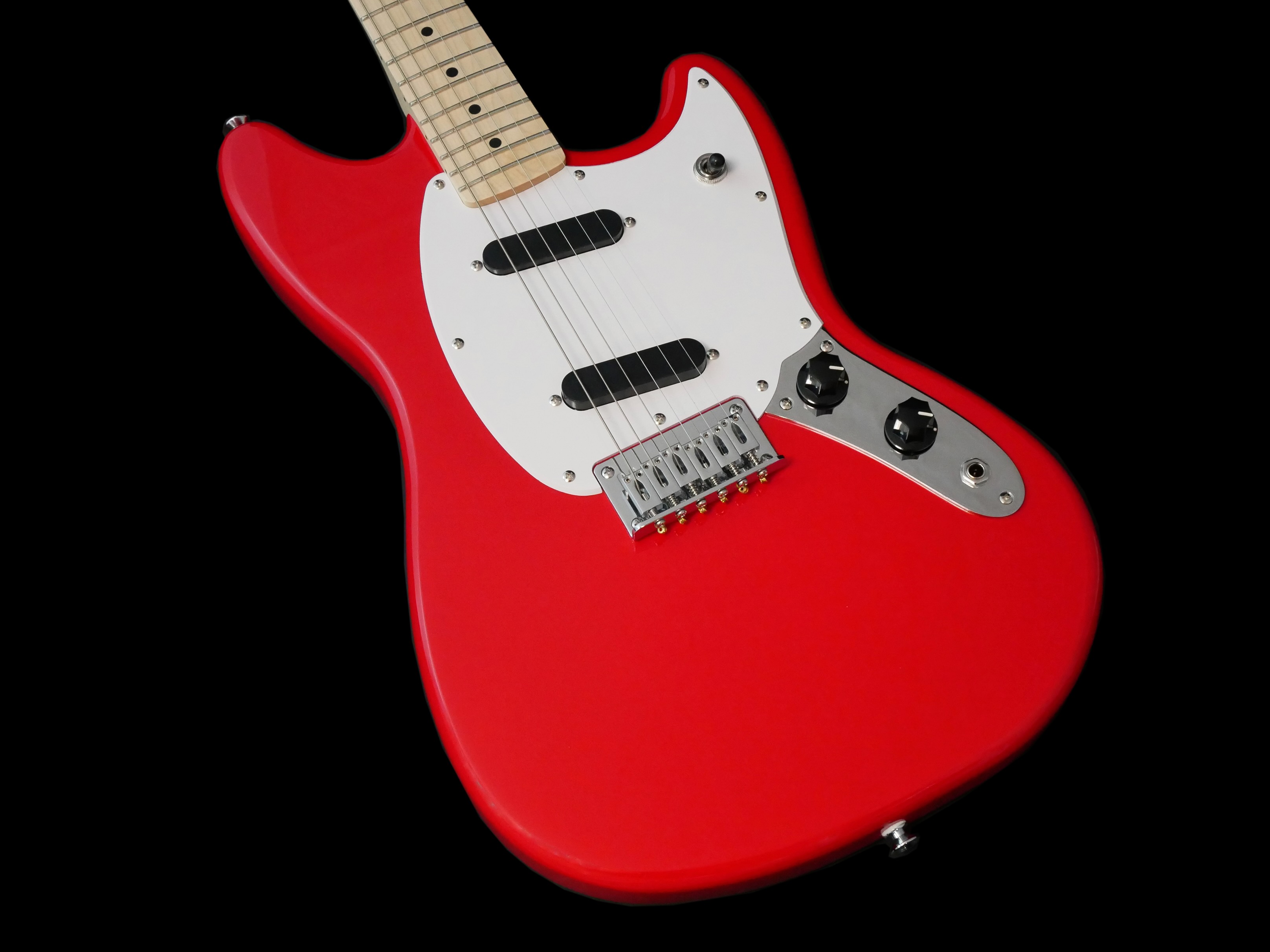
Straight out of the shipping carton, the test guitar is almost ready to play – only the action and intonation had to be fine-tuned. The guitar doesn’t suffer from sharp fret ends sticking, or other ”cheap guitar” problems. The workmanship seems fine.

The new Squier Sonic Mustang SS weighs a bit more than the original edition from the 1960s, but in light of the Mustang’s very affordable price, this is to be expected and perfectly okay.

The Squier Sonic Mustang SS model has a decent 009 set of strings installed at the factory, which is probably a good choice for the guitar’s target group (children and young people). The playing feel is very effortless and light, and the Mustang chimes very nicely. I played all the guitar tracks in the demo video with Squier’s factory-installed strings.
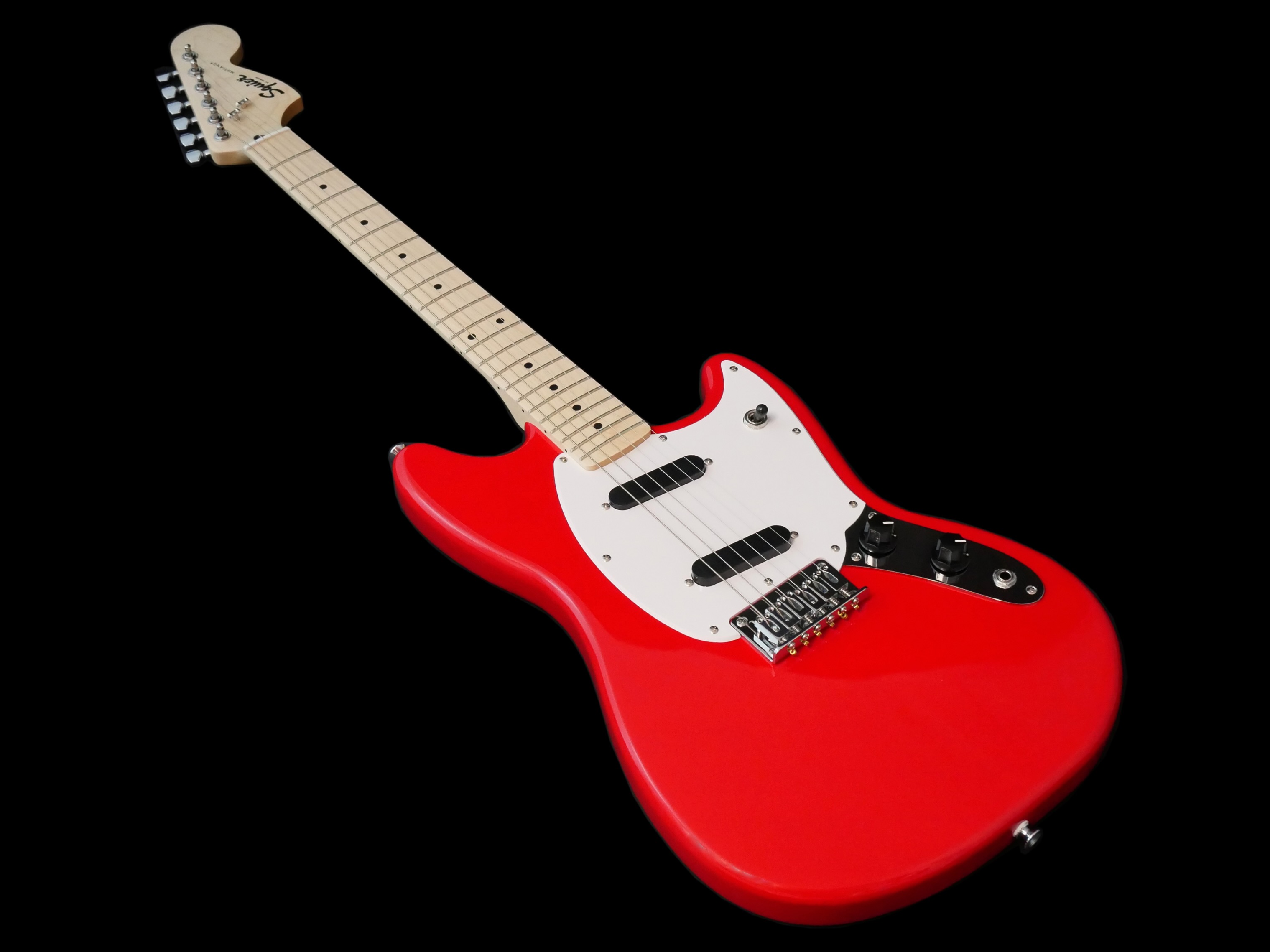
However, the feel of the 009 string set on a guitar with a 61 cm scale is too loose for me, which is why I changed over to the same 010-052 strings that I use in all my electric guitars. With these strings, the Sonic Mustang SS immediately has a firmer playing feel, which is not very different from, for example, a Gibson SG.

Although the scale of the Sonic Mustang is much shorter than that of Telecasters or Strats, there is a definite dose of ”Fender-ism” in the sound of the guitar, thanks to the single-coil pickups. Because the Mustang’s pickups are placed in somewhat different places relative to the scale than, for example, in the Telecaster, the model always displays its own recognisable sound. The Mustang’s tone rings like a bell, but is never as biting as, for example, the output of a Stratocaster.
Kalamazoo KG-2 – kun Gibson teki kuitulevystä kitaran

Vuonna 1965 Gibson Guitars etsi tapaa, jolla se voisi tehdä vielä Melody Makeria edullisempaa kitaraa aloittelijoille. Yhdellä mikrofonilla varustettu Gibson Melody Maker maksoi vuonna 1961 109,50 dollaria, mikä vastasi silloin noin tuhannen euron nykyistä ostovoimaa.

Rock’n’Roll -buumin ansiosta Yhdysvaltoihin tuotiin silloin runsaasti halpoja japanilaisia kitaroita.

Firman pomot päättivät kopioida Fenderiä, mutta ruuvikaulaisen sähkökitaramallin runkomateriaaliksi valittiin MDF-kuitulevyä kokopuun sijaan.

Koska Gibsonilla pelättiin, että uudet halpakitarat voisivat himmentää oman brändin loistoa, herätettiin 1930-luvun Kalamazoo-brändi uudelleen henkiin. Vuodesta 1933 vuoteen 1942 Kalamazoo-soittimet olivat edullisempia versioita Gibsonin akustisista kitaroista, mandoliineista ja banjoista. Näiden soittimien peruslaatu oli samankaltainen kuin Gibson-soittimissa, mutta Kalamazoot olivat kosmeettisesti vaatimattomampia, ja soittimissa ei myöskään ollut säädettävä kaularauta.

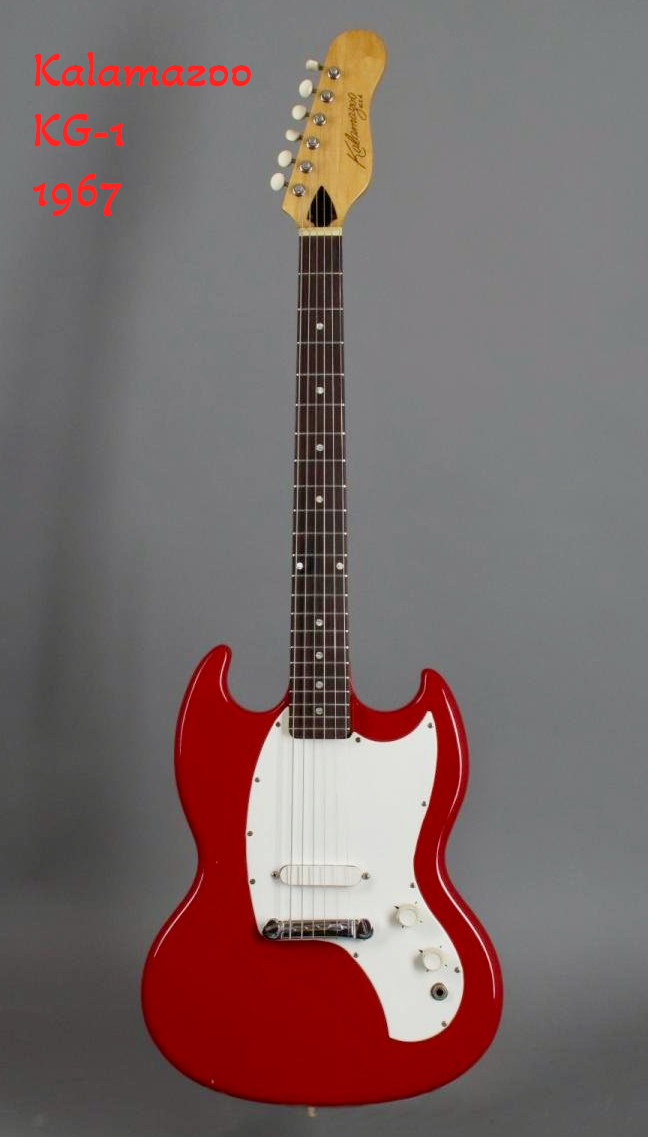
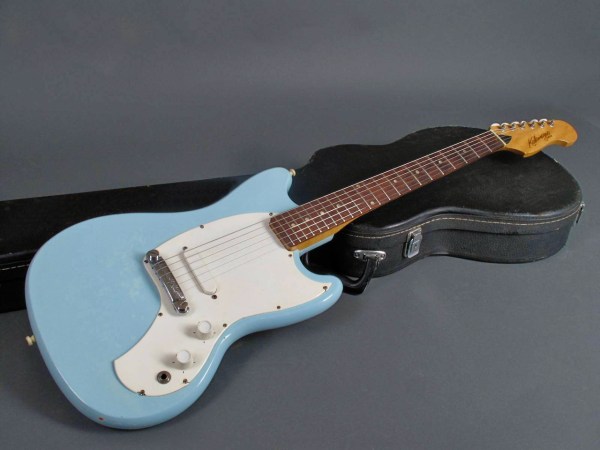
Koska uudet Kalamazoo-sähkikset olivat suunnattuja aloittelijoille, Gibson meni ja kopioi lähes yksi yhteen Fender ”oppilassoittimien” – Musicmaster, Duo-Sonic, sekä Mustang – ulkonäköä.

Uudet Kalamazoot saatiin neljänä mallina:

Kalamazoo KG-1 (yksi mikrofoni), KG-1A (yksi mikrofoni ja yksinkertainen vibrato), KG-2 (kaksi mikkiä), sekä KG-2A (kaksi mikkiä ja yksinkertainen vibrato). Värivaihtoehtoja oli tasan kolme – valkoinen, sininen ja punainen.

Vaikka Fender ei tietääkseni reagoinut tähän kopiointiin, muutettiin kuitenkin vuonna 1967 kaikkien neljä mallien rungot Gibson SG:n kaltaiseksi.

Vuoden 1969 lopussa Gibson kuitenkin lopetti koko Kalamazoo-brändin (ja myös Epiphonen US-tuotannon), koska oli päätetty teettää tästä eteenpäin edullisia soittimia Japanissa Epiphone-brändin alla.

Vuoden 1968 Kalamazoo-ilmoitus.

Squier Musicmaster Bass – Sounds!

The Squier Vista Musicmaster Bass (introduced in 1997) has been produced only for a short time, despite having been one of the best bang-for-the-buck-machines in the stable.

The original Fender Musicmaster Bass from 1971 was Fender’s most inexpensive short-scale bass at the time (probably ever). Many were sold as part of a two-piece set, which included a low-powered practice amp.

Squier’s version was one of the company’s first instruments made in China, and featured several genuine improvements over the Fender original.

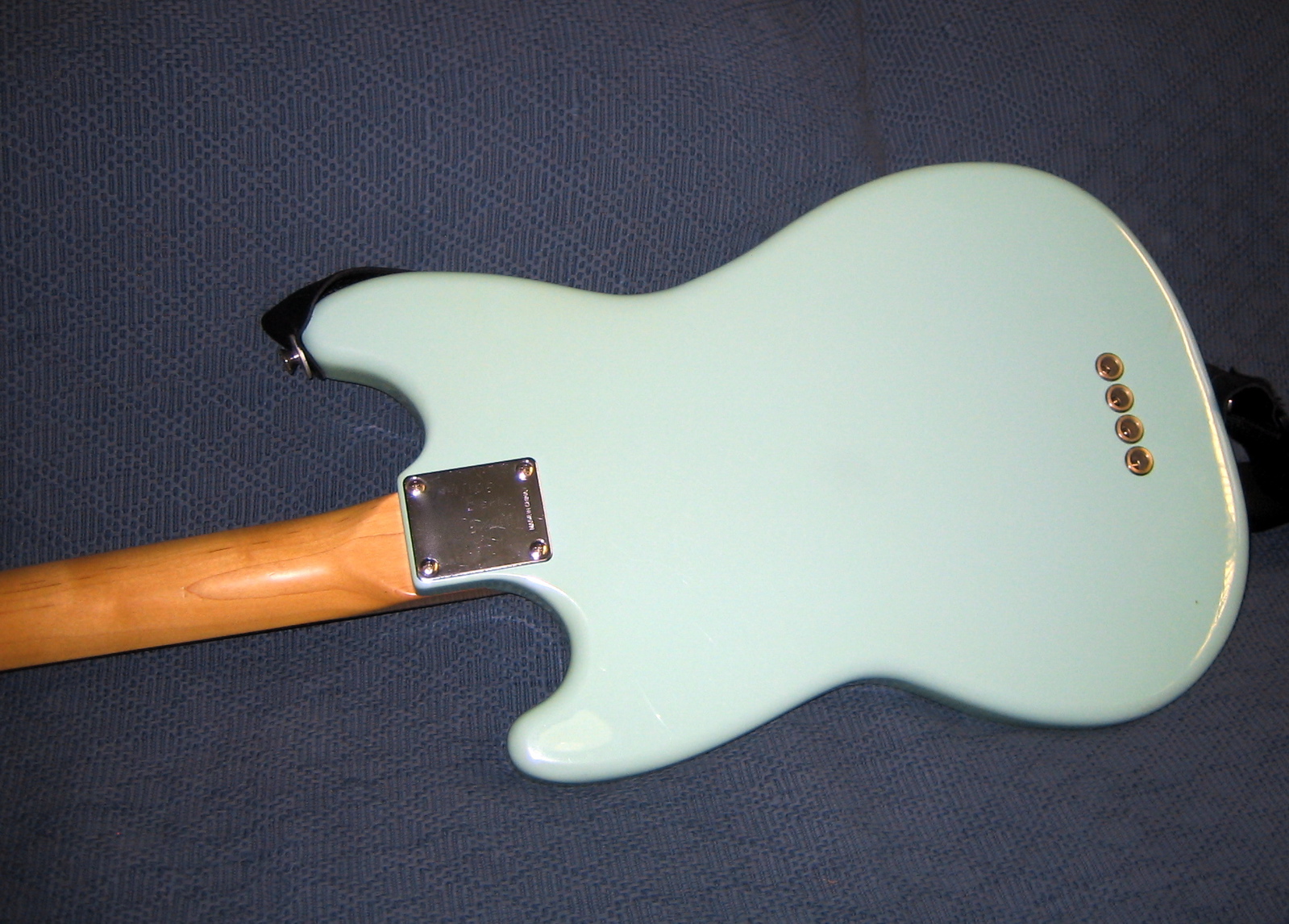
The Squier features through-body stringing resulting in better sustain.

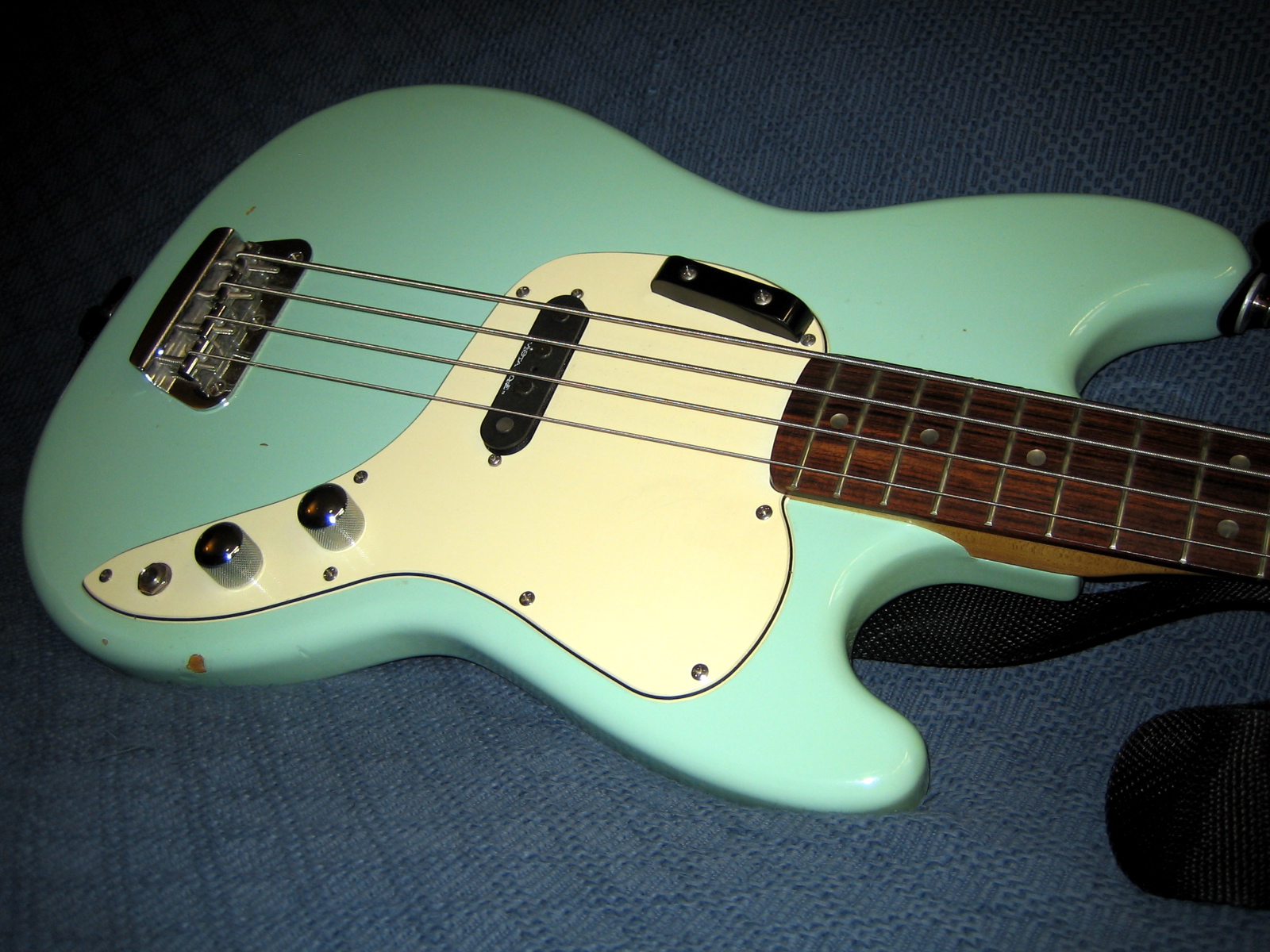
Instead of the Fender’s spartan two-saddle bridge, here we have an intonation-friendly four saddle bridge.

The headstock is finished in the same tasty seafoam green as the body.

The decent, full-sized tuners are good replicas of 1970s Schallers.

The best bit, though, is the Squier Vista Musicmaster Bass’ pickup. The Fender had been equipped with a rather weak Strat-style pickup. The Squier went for the singlecoil Precision Bass pickup, that had been on the first P-Basses (1951-56) – the result is a very healthy output and a full-bodied sound.

I used a Sans Amp Bass Driver for the Pro Tools -soundbites:

Musicmaster/fingerstyle

Musicmaster/plectrum

^^^^^^^^^^^^^^^^^^^^^^^^^^^^^^^^^^^^^^^^^^^^^^^^^^^^^^^^^^^^^^^^^^^^^^^^^^^

Squier’s current bass lineup includes the Bronco Bass, which is clearly derived from the Musicmaster. The Bronco’s bridge is the 70s two-saddle type and the pickup comes from a guitar (!) – it’s a Bullet-series Strat-pickup.

Squier Musicmaster -basson soundeja

Squierin 1997 vain lyhyesti markkinnoille tuotu Vista-sarjan Musicmaster-basso tarjoaa erittäin hyvän vastineen pienelle hinnalle.

Alkuperäinen Fender Musicmaster Bass tuli ulos vuonna 1971, ja tämä lyhytskaalainen basso oli silloin firman edullisin basso. Saatavana oli myös Musicmaster-setti, jossa myytiin basson lisäksi pientä harjoitusvahvistinta.

Squier Musicmaster oli yksi firman ensimmäisistä Kiinassa tuotetuista soittimista, ja sillä oli muutama parannettu yksityiskohta alkuperäiseen Fenderiin nähden.

Kielet kiinnitetään Squierissa rungon läpi, mikä parantaa soittimen sustainea.

Yksinkertaisen, kahdella tallapalalla varustetun alkuperäisosan sijaan käytetään tässä tallassa neljä tallapalaa, minkä ansiosta intonaatio on täsmällinen.

Lapa on viimeistelty tyylikkäästi samassa Seafoam Green -sävyssä kuin runko.

Isokokoiset avoimet virittimet ovat varsin käyttökelpoisia kopioita 1970-luvun Schallereista.

Parasta Squier Vista Musicmaster -bassossa on kuitenkin sen mikrofonivarustus. Alkuperäisessä Fenderissä oli melko heikkotehoinen, Strato-tyylinen mikrofoni. Squierissa taas käytetään samaa mikrofonia kuin ensimmäisissä Precision-bassoissa (1951-56) – ja soundi on erittäin mehukas ja itsevarma.

Ääniesimerkit tallennettiin Sans Amp Bass Driver -boksin kautta Pro Toolsiin:

Musicmaster/sormisoitto

Musicmaster/plektralla

^^^^^^^^^^^^^^^^^^^^^^^^^^^^^^^^^^^^^^^^^^^^^^^^^^^^^^^^^^^^^^^^^^^^^^^^^^^

Squierin mallistossa on ollut viime vuosina Bronco-niminen basso, joka on Musicmasterin johdannainen. Broncon tallassa on vain kaksi tallapalaa ja mikrofonina toimii Bullet-sarjan Stratomikrofoni.

Pidä blogia WordPress.comissa.

Ylös ↑