

Koki’o U-LMHLMH-C Mahogany Concert

Koki’o U-LMHLMH-T Mahogany Tenor


Kitarablogi.com – Finland's premier Guitar and Bass blog
Juttuja kitaroista ja bassoista


Kitarablogi.com had the pleasure to review two acoustic steel-string guitars from Chinese brand Farida Guitars:
The Farida M-2 is a parlour-sized guitar, while the Farida B-10E gives you this company’s take on a miked-up, slope-shouldered Gibson steel-string.
****

These days a guitar is called a parlour (or parlor, if you’re so inclined), if its soundbox is smaller than a Martin OM- or 000-body. While parlour guitars have gained a growing followership over the last few years, it is still surprisingly difficult to find reasonably priced exponents of this species.
Farida Guitars’ M-2 (current price in Finland: 465 €) ticks all the right boxes to whet a parlour lover’s appetite – a slightly shorter scale length (62.8 cm/24.7″), a 12th fret neck joint, and a classical-type open headstock.
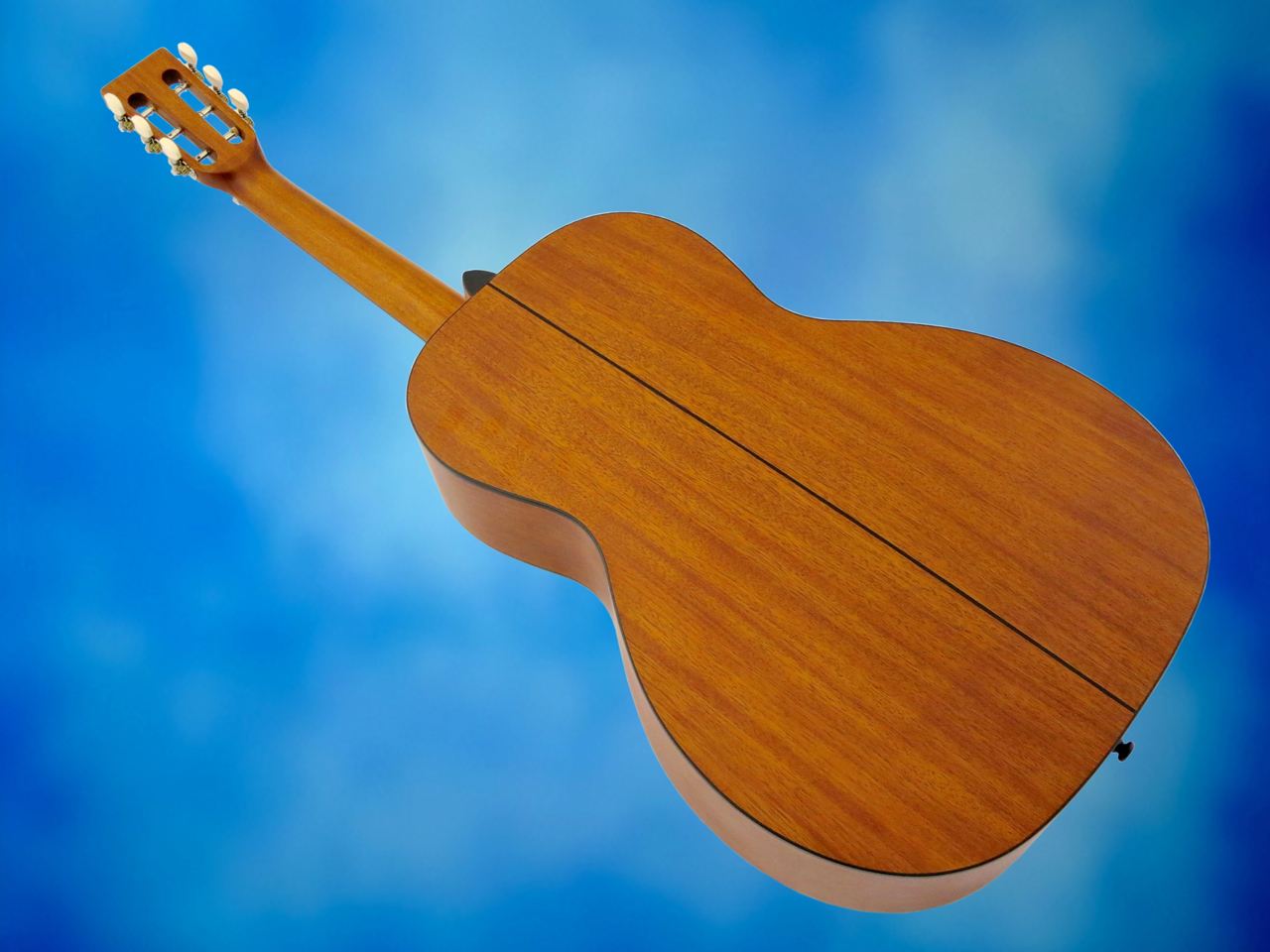
The M-2’s soundbox is made from a beautiful solid red cedar top, and laminated mahogany for the rims and the back.
The mahogany neck is glued into the body in traditional fashion.

The three-on-a-strip tuners are of a decent quality.

The Farida M2’s top nut and compensated bridge saddle are both made from a man-made bone substitute.
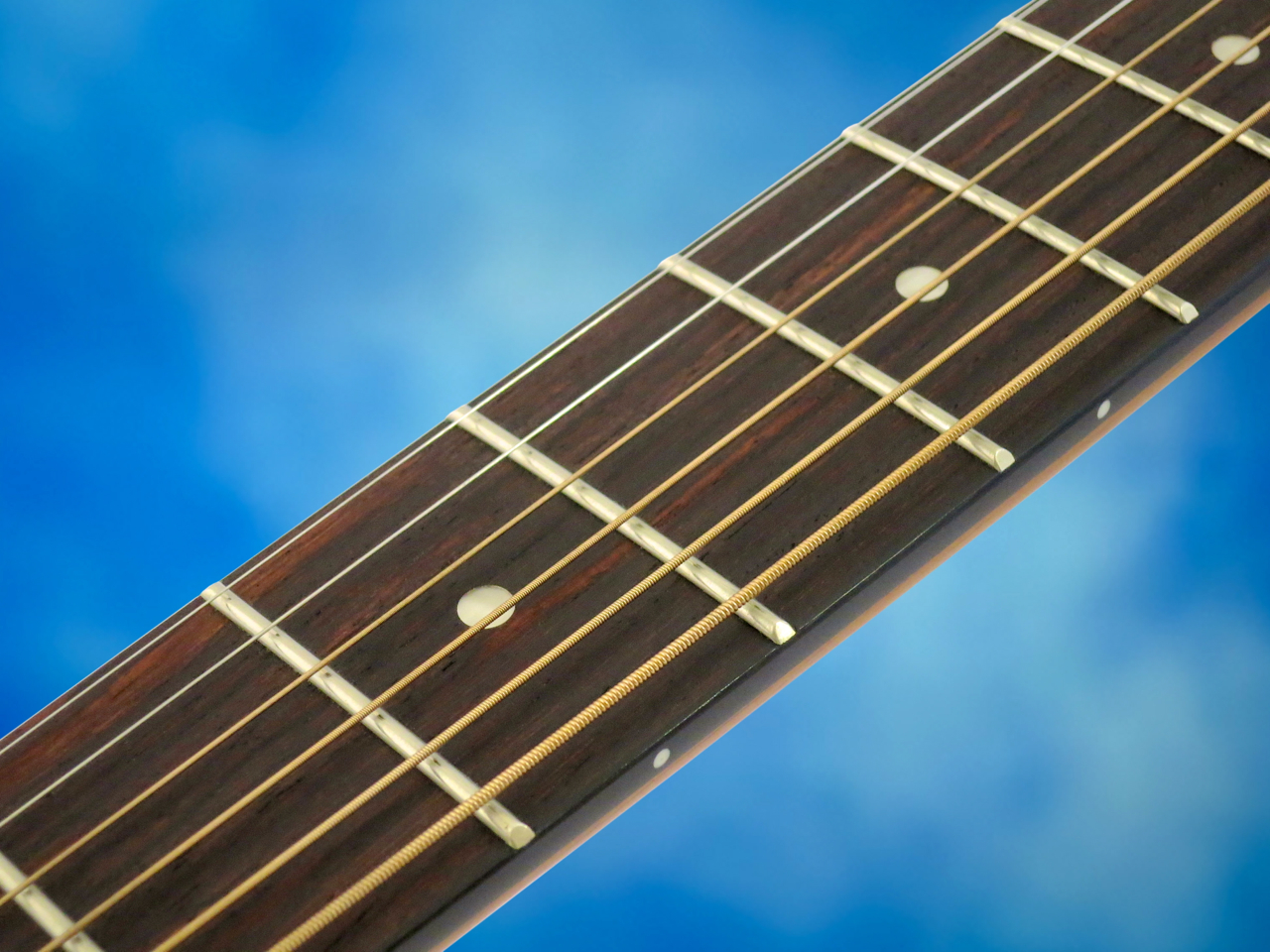
The fretwire used on this parlour has a narrow and medium-height profile.
There’s a very nice red hue to the M-2’s rosewood fretboard.
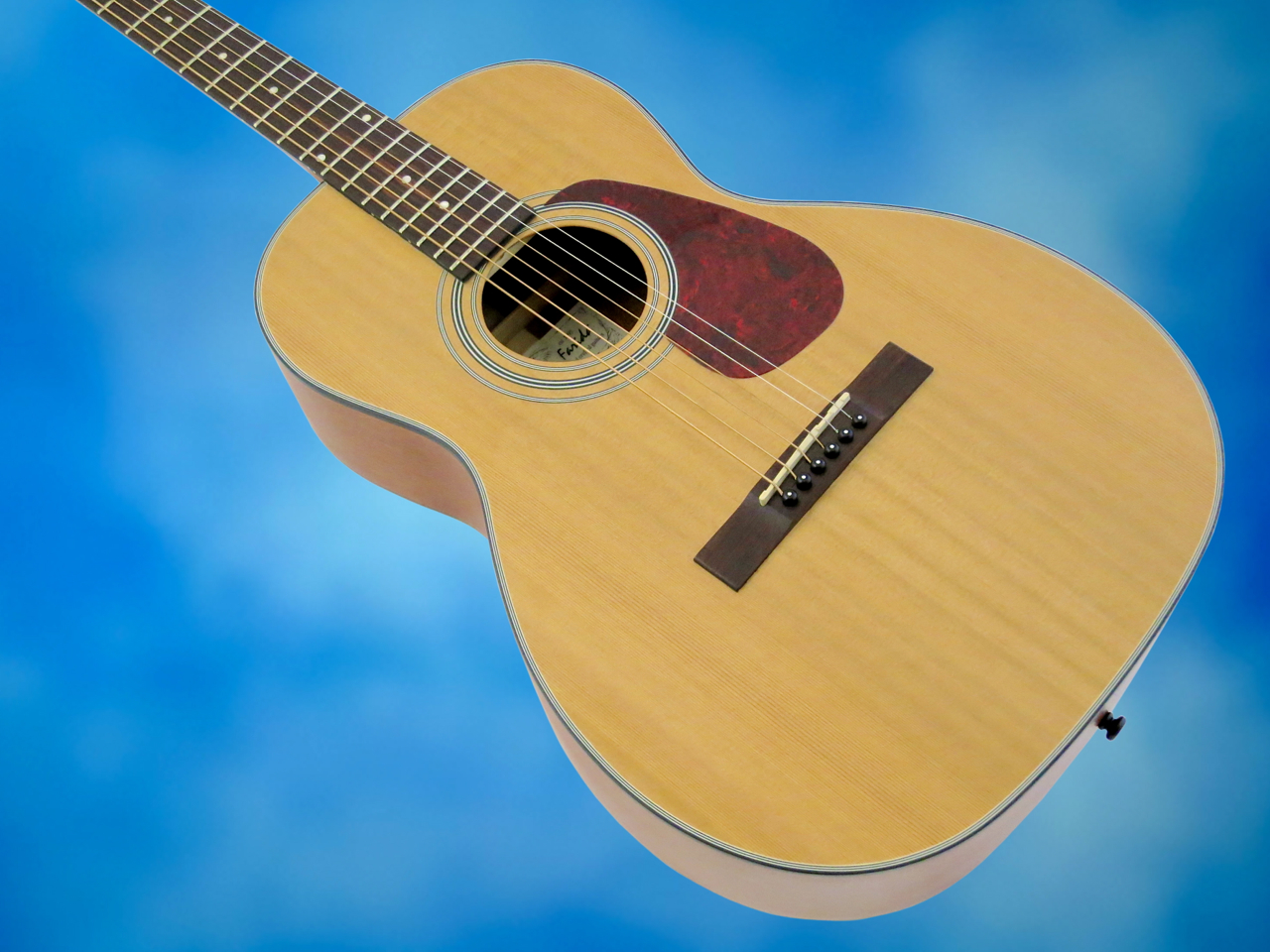
This very cleanly built acoustic instrument comes in a thin natural satin finish.
****

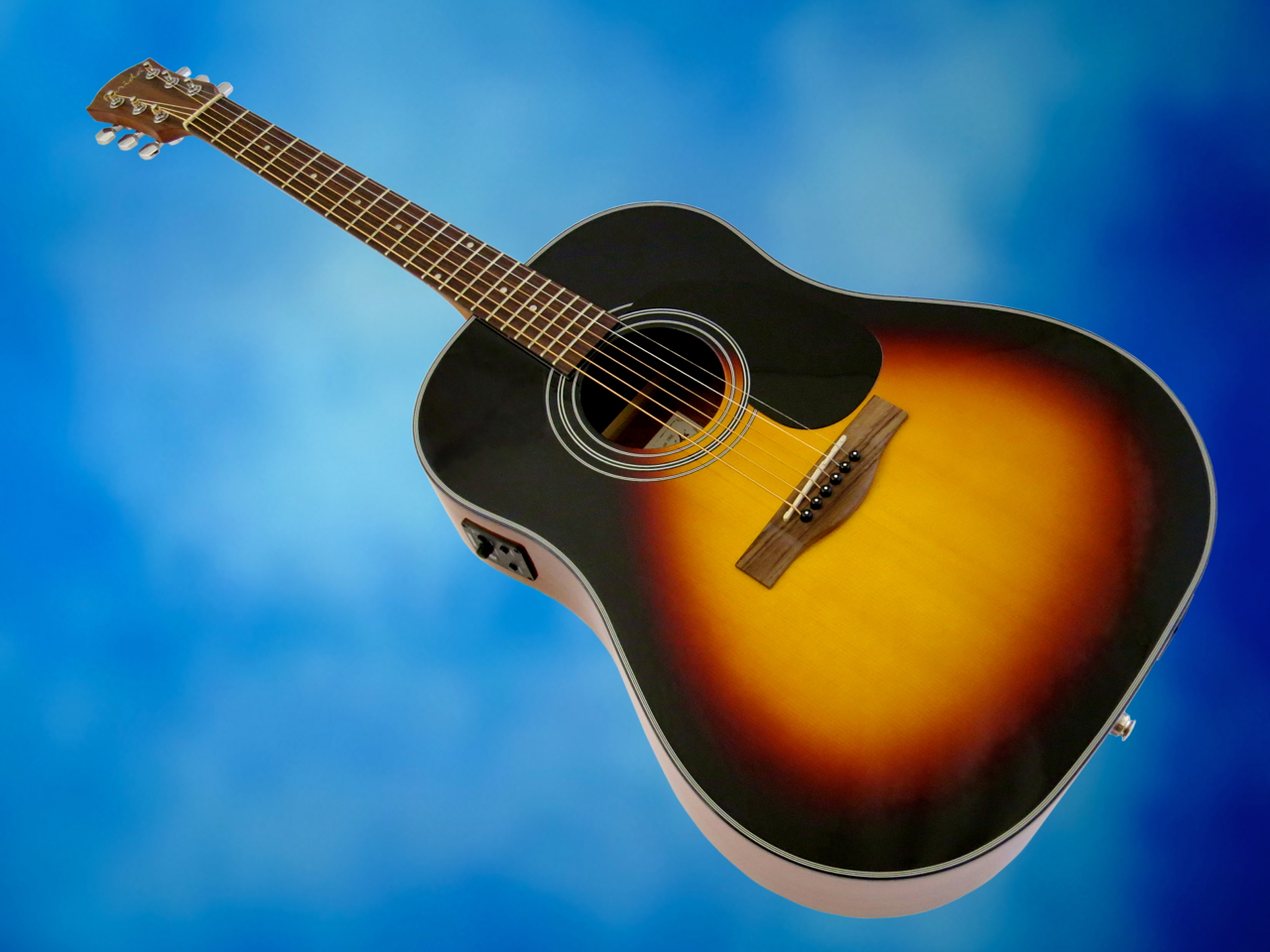
Farida’s B-10E (425 €) is the brand’s affordable version of Gibson’s famous slope shoulder (or round shoulder) dreadnought design (first released in the mid-1930s as the Advanced Jumbo). Like the name says, this guitar type differs from the more common Martin dreadnought by virtue of its rounded ”shoulders”.
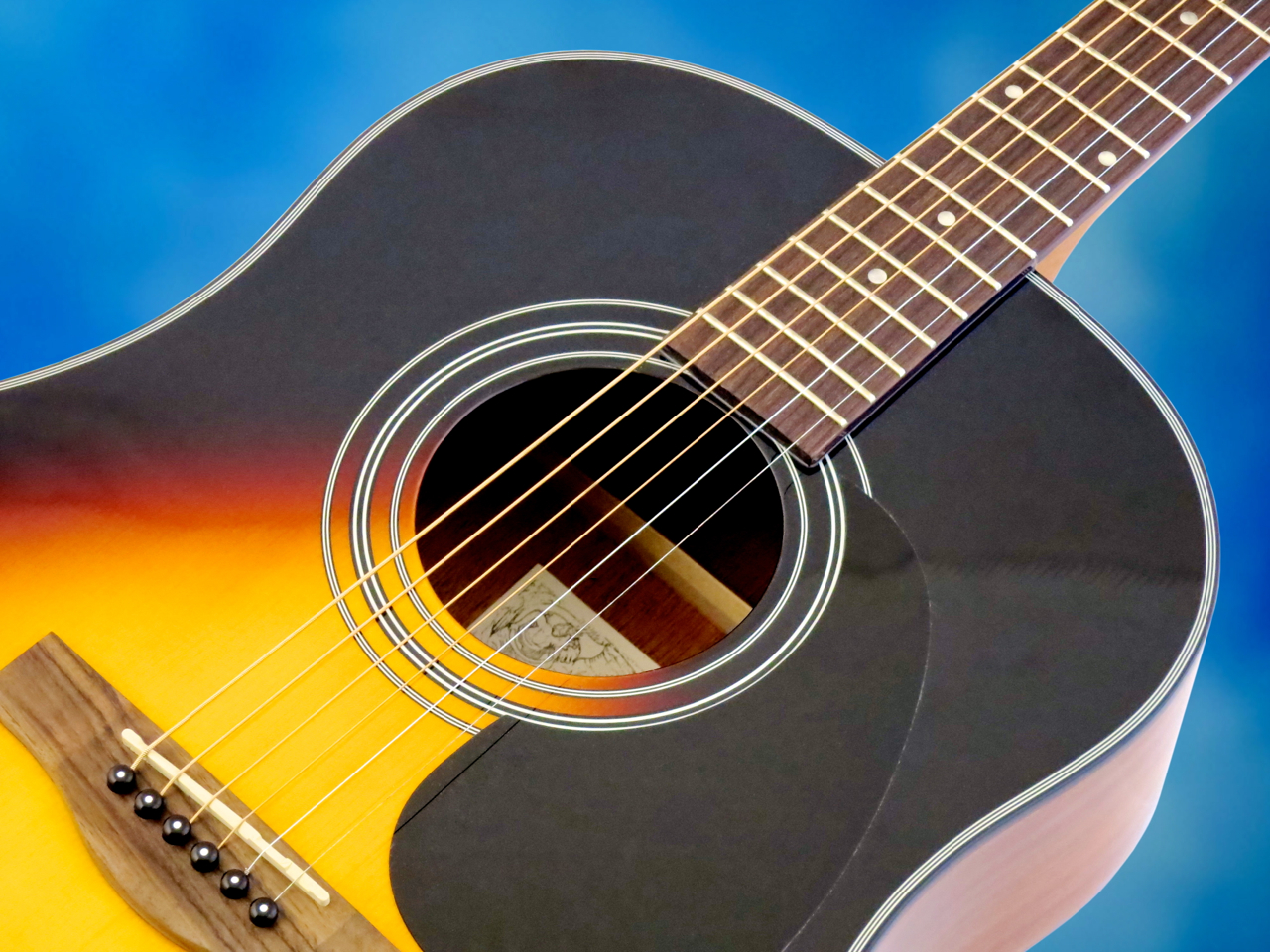
The B-10E sports a solid spruce top finished in a gorgeously deep gloss sunburst.

The mahogany soundbox has also received a gloss finish, while the mahogany neck goes for a modern satin finish.

Farida have come up with a good-looking headstock shape, at least in my opinion. The B-10E’s headstock face sports a beautiful rosewood veneer.
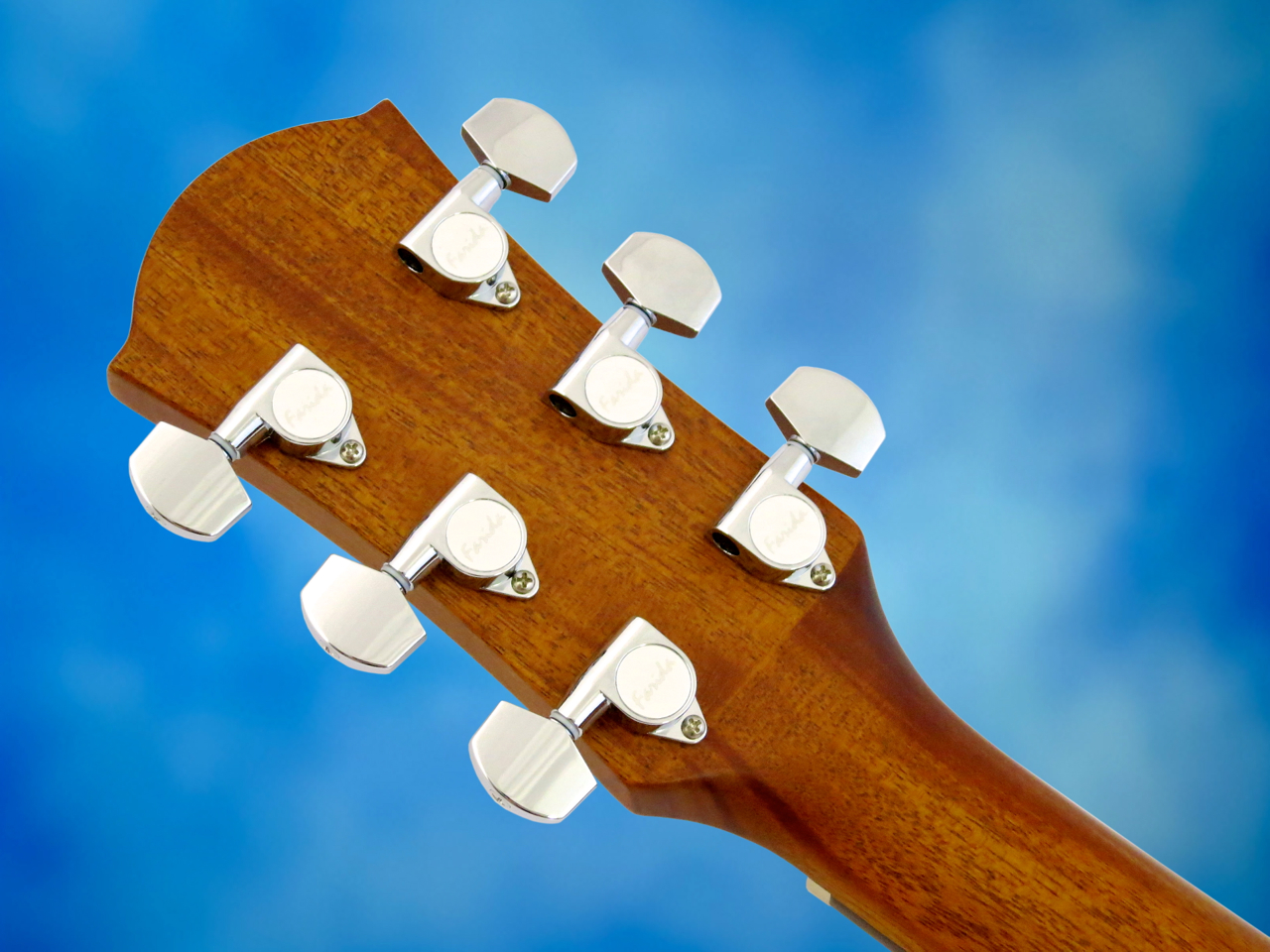
The machine heads are very decent Schaller-style models.

As with the parlour model, Farida’s slope shoulder dread also comes equipped with a self-lubricating Tusq-type nut and compensated bridge saddle.
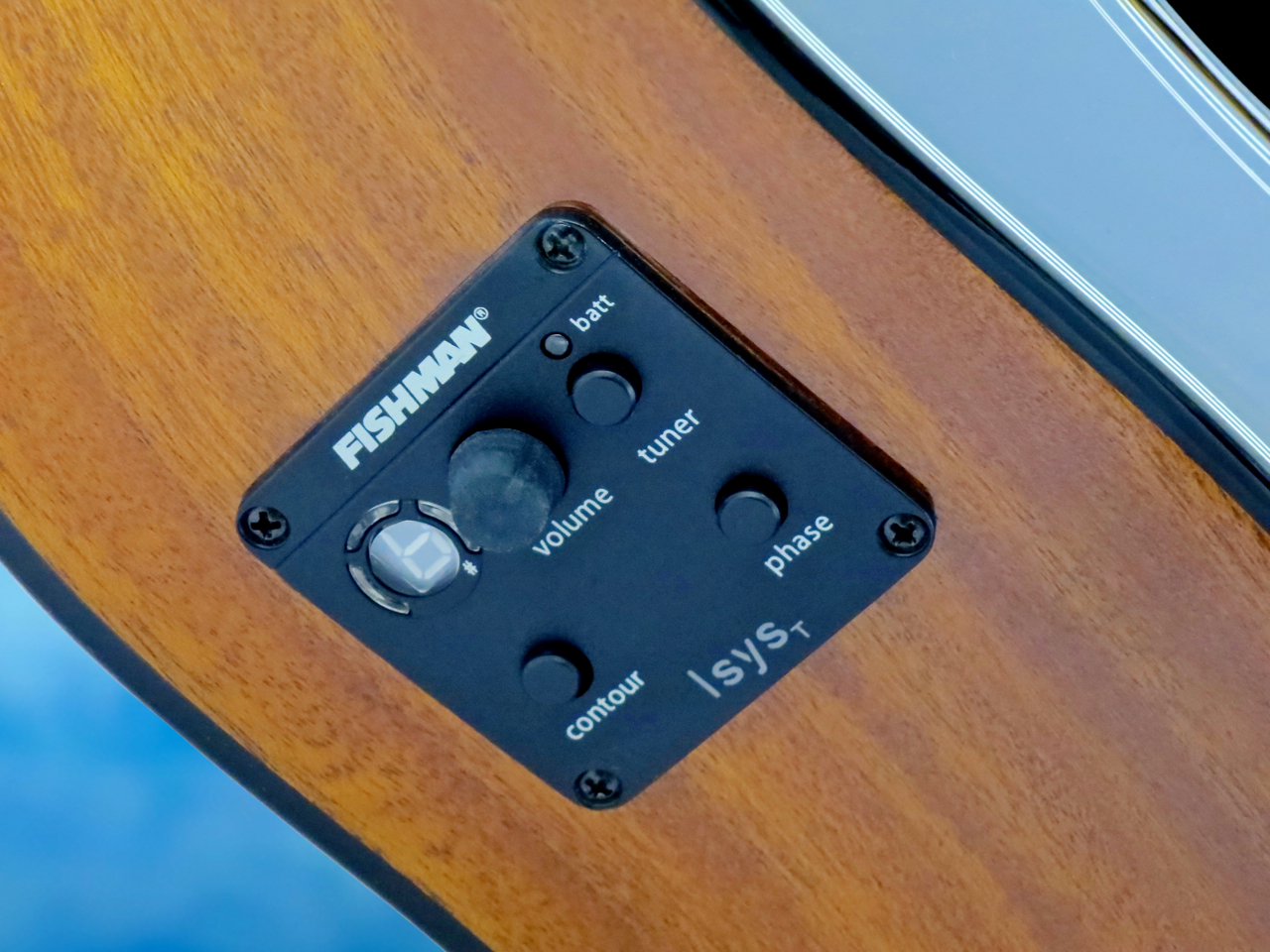
The B-10E features a Fishman Sonicore under-saddle transducer connected to an Isys T preamp.
In addition to the large volume control, the preamp also comes with a phase inverse switch (to combat feedback), a pre-EQ curve (called Contour), and a digital tuner.

The output jack is found in the end pin, with the easy access battery compartment nearby.

Despite this model’s rather affordable status, the fret job on the B-10 is actually surprisingly clean.

****

To some parlour snobs – yes, there are such people – the only ”correct” neck profile for a guitar of this type is a wide and massive V-neck (also called a boat neck). True, a boat neck is the authentic option, but many modern players do feel quite alienated by such a profile.
Luckily (and sensibly) the Farida Guitars M-2 comes with a very player-friendly, modern D-style neck profile.
Talking about comfortable: The M-2 is a very lightweight and compact little instrument, which fits effortlessly in your lap. This means that this parlour is a great choice for young players and many women, too. You don’t need to be a Folk music fan.
Farida’s M-2 delivers the sound you’d expect from a small-bodied steel-string guitar. There’s not a lot of deep bass, the mid-range has a certain boxy quality, and the whole is rounded off by a healthy dose of chiming top end.
The M-2 is a fabulous choice for fingerstyle players, because the tight bass response of a parlour leaves ample room for the full character of the mid-range to shine through:
But a small body doesn’t necessarily mean a puny sound – this Farida is a nice little barker when played with a plectrum. Thanks to its sinewy bass register this guitar is also easy to record:
The rhythm guitar parts on this demo song feature both test guitars. The Farida M-2 is in the left channel and the B-10E can be heard coming from the right:
****

Farida’s B-10E offers a lot of value and enjoyment for a very moderate price.
Here the neck profile is a slightly more rounded, oval C.
This Farida gives you the punch you’d associate with a well-made dreadnought guitar, suitably seasoned with the warmth this model’s Gibson-type scale length brings into the mix.
In contrast to the parlour, the much larger body of the B-10E equates a hefty boost in the bass and treble registers.
Played fingerstyle you’ll get a stronger bass content and more top end sparkle:
This larger-than-life persona, so typical of dreadnoughts, is also present when you switch over to a plectrum:
Fishman’s Isys T system is a very workable addition for live use. A piezo-only pickup system is always a bit of a compromise, in terms of sound fidelity, but the Isys T does a good job. In these clips the first phrase has been recorded with Contour off and the second phrase with Contour on:
The rhythm guitar parts on this demo song feature both test guitars. The Farida M-2 is in the left channel and the B-10E can be heard coming from the right:
****
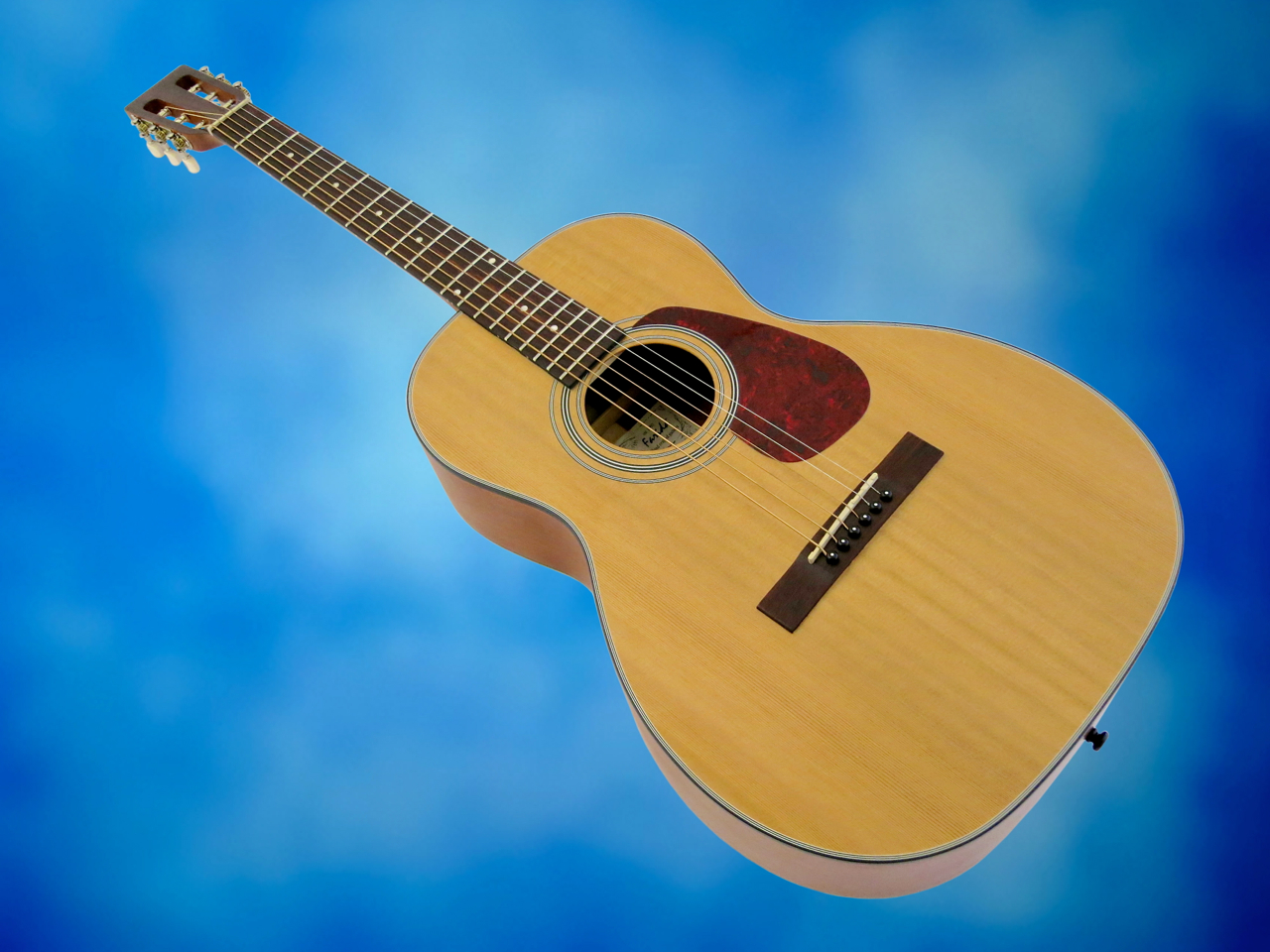
Based on this review, Farida seem to offer a lot of guitar at very fair prices. Both the Farida M-2 and the B10E are beautiful steel-string guitars that offer easy playability and inspiring sounds.
****
Farida Guitars M-2 + B-10E
M-2 – 465 €
B-10E – 425 €
Finnish distribution: Vantaan Musiikki
****
Pros (both models):
+ value-for-money
+ finish
+ fretwork
+ acoustic sound
+ easy to use pickup system (B-10E only)

Tällä kertaa Kitarablogi pääsi testaamaan kahta kiinalaisen Farida Guitarsin valmistamaa teräskielistä kitaraa:
Farida M-2 on pienikoppainen parlour-kitara, kun taas Farida B-10E edustaa firman näkemystä mikitetystä Gibson-tyylisestä dreadnought-mallista.
****
Parlour-kitaraksi (tai parloriksi) kutsutaan nykyään yleensä kaikkia sellaisia teräskielisiä akustisia, joiden koppakoko on pienempi kuin Martin Guitarsin OM- tai 000-kitaroissa. Vaikka parlour-mallien suosio on kasvanut selvästi viime vuosina, on edelleen suhteellisen hankalaa löytää edullisia tai keskihintaisia lajinsa edustajia.
Farida Guitars M-2 (465 €) tarjoaa kaikki parlourille tyypilliset ominaisuudet, kuten lyhyen mensuurin (62,8 cm/24,7 tuumaa), kaulaliitoksen 12. nauhan kohdalla, sekä avoimen viritinlavan.
M-2:n kokopuinen kansi on kaunista punaseetriä, kun taas kitaran sivut ja pohja veistetään mahongista.
Kaula on liitetty runkoon liimaamalla.
Parlour-mallin avoimet virittimet toimivat moitteettomasti.
Sekä Faridan satula että M-2:n kompensoitu tallaluu ovat Tusq-tyylisestä keinotekoisesta luusta.
Faridan käyttämä nauhamateriaali on suhteellisen kapea ja keskikorkea.
M-2:n ruusupuuotelaudalla on kaunis punertava sävy.
Kokonaan mattaviimeistelty parlour-malli on erittäin siististi rakennettu akustinen soitin.
****
Farida B-10E (425 €) on firman varsin edullinen näkemys Gibson-tyylisestä slope shoulder (tai round shoulder) dreadnought-mallista. Ero Martin-tyyliseen dreadnoughtiin löytyy – nimen mukaisesti – Gibson-tyylisen kitaran kaikukopan pyöreistä hartioista, joilla on jopa pieni vaikutus soundiin.
B-10E:n kokopuinen kuusikansi on viimeistelty kiiltävällä sunburst-värityksellä.
Myös mahongista tehty kaikukoppa on kiiltäväksi lakattu, kun taas mahonkikaulassa on mattaviimeistely.
Ainakin omasta mielestäni Faridan ruusupuuviilulla koristeltu viritinlapa näyttää kauniilta.
B-10E:hen on asennettu varsin laadukkaita Schaller-tyylisiä virittimiä.
Myös Faridan dreadnought-mallissa yläsatula ja kompensoitu tallaluu ovat kovasta, itsevoitelevasta muoviseoksesta.
B-10E-malliin on asennettu laadukas Fishman Sonicore-piezomikrofoni, sekä Isys T -etuvahvistin.
Etuvahvistimesta löytyy volume-säätimen lisäksi vaihekääntäjä (feedback-ulinaa vastaan), Contour-niminen esi-EQ, sekä digitaalinen viritysmittari.
Mikkijärjestelmän lähtöjakki on yhdistetty kitaran hihnatappiin, ja helppokäyttöinen paristolokero löytyy sen vierestä.
B-10:n nauhatyö vaikuttaa (omassa hintaluokassa) varsin laadukkaalta.
****
Monille parlour-snobeille – ja heitä on olemassa – ainoa oikea kaulaprofiili tälle kitaratyypille on melko leveä ja suhteellisen massiivinen V-poikkileikkaus. Totta, tällainen ”veneprofiili” on eittämättä autenttinen, mutta monelle nykypäivän soittajalle kuitenkin vieras ja hankala.
Farida Guitarsin M-2 on onneksi tehty nykysoittajia varten, ja sillä on erittäin mukavantuntuinen, suhteellisen matala D-kaula.
Mukavuudesta puhuen: M-2 on erittäin kevyt ja kompakti kitara, jota on todella helppo pitää sylissä. Pienen kokonsa ansiosta tällainen parlour-kitara on oiva valinta – Folk-musiikin ystäville lisäksi – myös nuorille ja naisille.
Farida M-2 -kitaran soundi on parlour-kokoiselle teräskieliselle hyvin tyypillinen. Bassorekisteri on hyvin tiukka ja kevyt, keskirekisteriä leimaa tietynlainen laatikkomaisuus, ja avoin diskantti on hyvässä tasapainossa sen kanssa.
M-2:ssa on ihanteellinen soundi sormisoittoon, koska parlour-kokoisessa kitarassa vivahteikas keskialue ei jää bassorekisterin jalkoihin:
Pieni koppa ei tarkoita pientä soundia, ja pikku-Farida toimii myös plektrasoitossa todella hyvin. M-2-mallia on myös helppo äänittää:
Demobiisissä soitetaan komppiosuudet molemmilla testikitaroilla. Farida M-2 kuluu vasemmalta, ja B-10E oikealta kanavalta:
****
Farida B-10E tarjoaa sekin mielestäni todella paljon soittamisen iloa hyvin kohtuulliseen hintaan.
Dreadnought-mallin kaula on hieman pyöreämpi tapaus, ja kutsuisin tätä kaulaprofiilia ovaaliksi C:ksi.
Tässä Faridassa riittää dreadnoughtille ominaista potkua, Gibson-mensuurin tuoman lämmön kanssa höystettynä.
B-10E:n koppakoko tuo mukanaan lisää voimaa sekä basso- että diskanttialueille.
Sormisoitossa bassonuotit ovat muhkeammat ja diskanteissa löytyy enemmän helinää:
Myös plektrasoitossa dreadnoughtin ”laajakulmasoundi” nousee mukavasti esiin:
Fishmanin Isys T -mikkijärjestelmä kuulostaa perusterveeltä, ja se toimii live-olosuhteissa moitteettomasti. Piezosoundi on aina kompromissi, mutta Isys T:n kanssa tullaan hyvin toimeen. Demopätkissä ensimmäinen fraasi on ilman Contour-EQ:ta, kun taas toisessa esi-EQ on laitettu päälle:
Demobiisissä soitetaan komppiosuudet molemmilla testikitaroilla. Farida M-2 kuluu vasemmalta, ja B-10E oikealta kanavalta:
****
Tämän testin perusteella täytyy todeta, että Faridan soittimissa on erittäin hyvä hinta-laatu-suhde. Sekä M-2 että B-10E ovat kauniita kitaroita, joita on mukavia soittaa, ja joilla on erittäin terveitä soundeja.
****
Farida Guitars M-2 + B-10E
M-2 – 465 €
B-10E – 425 €
Lisätiedot: Vantaan Musiikki
****
Plussat (molemmat mallit):
+ hinta-laatu-suhde
+ viimeistely
+ nauhatyö
+ akustinen soundi
+ helppokäyttöinen mikkijärjestelmä (vain B-10E)
Farida M-2NS + B-10E
• solid tops (M-2NS: cedar; B-10E: spruce)
• mahogany backs and sides
• set mahogany necks
• rosewood fretboards
• rosewood bridges with compensated bridge saddles
• Farida B-10E equipped with Fishman Isys pickup and preamp
****
Demo Track
• left rhythm guitar: M-2NS parlour
• right rhythm guitar: B-10E round shoulder dreadnought
• all tracks recorded with a pair of Shure SM57 microphones
Lisätiedot: Vantaan Musiikki


Carvin’s series of extremely compact MicroBass bass combos is built using the company’s lightweight BX 250 MicroBass amplifier sunk into four differently-sized speaker cabinets. Thanks to some clever design work – as well as lightweight modern bass speakers – even the largest of the MicroBass-combos, the MB210 (equipped with two 10-inch speakers and a horn tweeter), only weighs 16 kilos.
Kitarablogi received the smallest member of the MicroBass-family for testing. The MB10 is small enough to take with you on public transport, should the need ever arise.
****

Carvin MicroBass MB10 (current price in Finland: 577 €) is compactness incarnate:
The combo’s dimensions are only 47 x 33 x 28 cm (h/w/d), and it weighs in at just below 12 kilos!

Despite its diminutive size the Carvin’s build is roadworthy and sturdy.
The 10-inch speaker and the horn tweeter are safely tucked away behind a chunky metal grille.

You can use the MicroBass MB10 both with the cabinet standing up and lying on its side, thanks to two sets of rubber feet installed to the closed-back cabinet.

Black vinyl is the MB10’s standard livrée, but if you feel more flamboyant you could also get your small Carvin in, say, fake snake hide for a small surcharge (40 €).
****

Small it may be, but Carvin’s BX 250 MicroBass amplifier comes fully equipped:
Carvin’s preamp section runs in Class A with satisfyingly low levels of hiss. Adding more Drive to proceedings will fatten up your tone and add a little bit of grind, but you shouldn’t really expect any Metal-style distortion from this combo.
The Contour-knob allows you to apply a loudness-type pre-EQ curve to your signal, which will boost both the bass and treble frequencies, while attenuating the mid-range slightly. Contour works nicely in cleaning up a crowded mid-range, as well as adding a bit of punch to your overall sound.
The EQ-department on the MicroBass is very well equipped, too. In addition to the shelving Bass and Treble filters Carvin has added a lot of flexibility in the guise of two semi-parametric mid-frequency filters. There’s ample boost and cut on tap to satisfy any bass player.
The amp also includes a nifty bass-optimised one-knob compressor. A red light in the middle of the amp’s blue jewel light gives you nice visual clues about the amounts of compression applied to your signal. Carvin’s compressor works in a very musical fashion, and it helps the player to get the most out of this little bass combo. Even small amounts of compression will go a long way in helping to clean up the MB10’s output, helping you to get even more volume out of the Carvin.
Using only the built-in speakers, the MicroBass’ Class D power amp will dish out 200 watts of power, adding a compatible extension cab will give you 50 watts more.
In addition to the speaker output, there’s also a headphone output that doubles as a tuner out, and a balanced DI-output (XLR). The output levels for the headphone and DI-output are controlled by the DI Level knob. Using the Pre/Post switch you can decide, whether to send the input signal directly to the output, or whether you’d prefer to use the preamp signal, complete with compression and EQ.
Lovers of warm vintage sounds will be pleased to hear that you can dim the Carvin’s tweeter, using a mini-switch.
Because writing about sound always seems somewhat futile, I’ve prepared different audio clips to give you an idea of the Carvin MicroBass MB10’s versatility. All clips have been recorded with a microphone:
Jazz Bass – EQ-controls in neutral
Jazz Bass – light bass boost, Tweeter-switch set to Dim
Jazz Bass – played with a plectrum, a little bit of Contour added
Jazz Bass – slapped, Contour set to 12 o’clock
Höfner 500/1 – plectrum, Tweeter set to Dim
Rickenbacker 4003
Rickenbacker – plectrum
****

If you’re holding down the bass in a loud-as-f*ck Metal band, or if your usual gigs include 20,000-seater stadiums, Carvin’s little combo probably isn’t the right choice for you. The MicroBass MB10 is a loud amp – for its size – but it can only go so far…
But: The Carvin MicroBass MB 10 is a fantastic choice for the majority of us bassists, who play in small clubs, in restaurants or in pubs. In venues such as these the Carvin will be just the ticket, its tiny footprint and big sound making it a gig machine. The recording studio is also a place where a high-powered bass stack can be counterproductive, due to issues such as audible bleeding into drum mics, making a high-quality, moderate-power combo, such as the MicroBass MB10, a great choice. I’d also reckon that this little Carvin will find a place in the hearts of many Unplugged-, Folk- and (acoustic) Jazz-players.
****
Carvin MicroBass MB10
577 €
Finnish distributor: Musiikki Silfverberg
Thanks to Vantaan Musiikki for the loan of the review combo!
****
Pros:
+ compact size
+ lightweight
+ versatile
+ easy-to-use compressor
+ sound

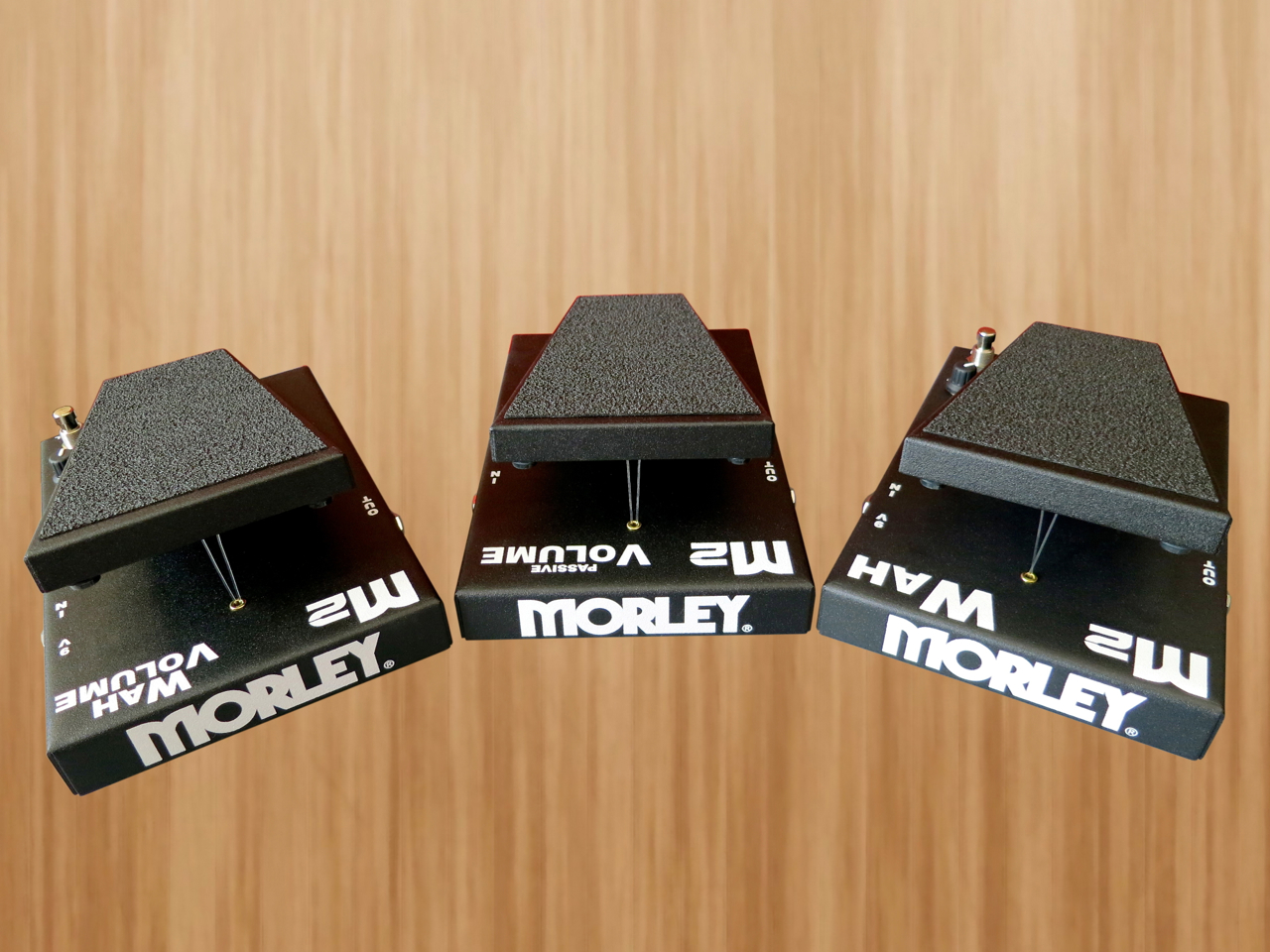
US brand Morley are best known for their pro-quality wahs and volume pedals that many players – like Steve Vai, George Lynch and Mark Tremonti – rely on in their setups. Morley’s original series uses electro-optical electronics, instead of traditional potentiometres. The big advantage in going electro-optical lies in the fact that such a pedal won’t ever become scratchy or intermittent, because there is no mechanical control pot to wear out or become dirty.
There are quite a few guitarists, though, which – for some reason or other – prefer the ”feel” and ”sound” of a mechanically controlled pedal to that of an electro-optical one. Morley’s new M2-series is a nod to the more traditional players.
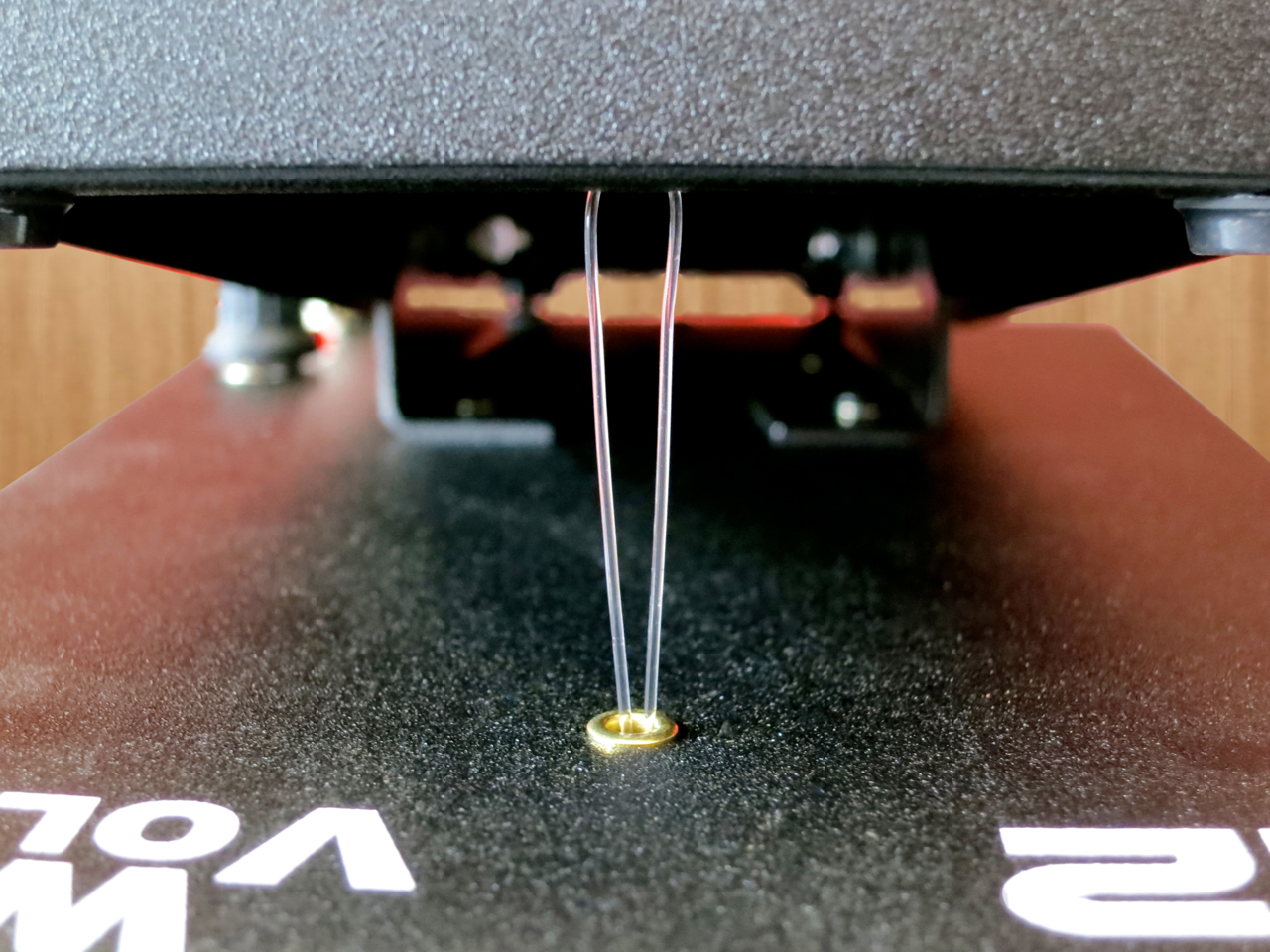
Nevertheless, Morley still like to do things their own way, which is why the company has come up with a different type of mechanical control for their M2-pedals:
Traditional pedals (and their descendants) use a rack, mounted beneath the treadle, to turn the pinion of a large control pot attached to the top of the pedal’s casing. Hanging in this exposed position, the pot is prone to take in dirt, moisture and dust, which in turn shortens its lifespan and affects signal quality. Sooner or later you will have to change the old pot for a brand-new one.
Morley’s M2-pedals use a top grade, sealed fader, tucked away neatly inside the pedal’s casing. The fader is moved by sturdy nylon strings attached to the front and back of the treadle.
****
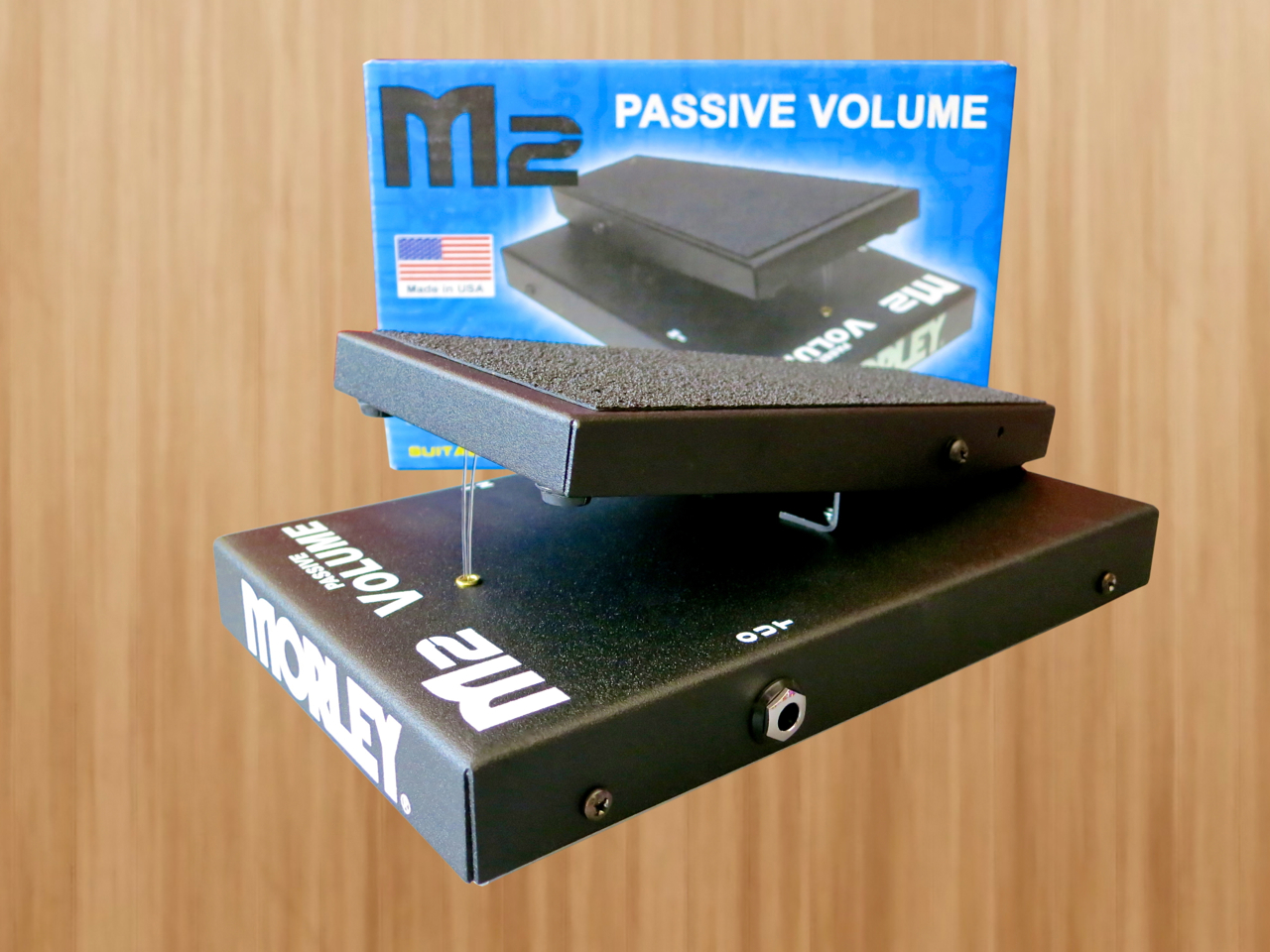
For this review we got three M2 models from Vantaan Musiikki:
The first pedal is the Morley M2 Passive Volume (current price in Finland: 76 €), which works without the need for a battery.
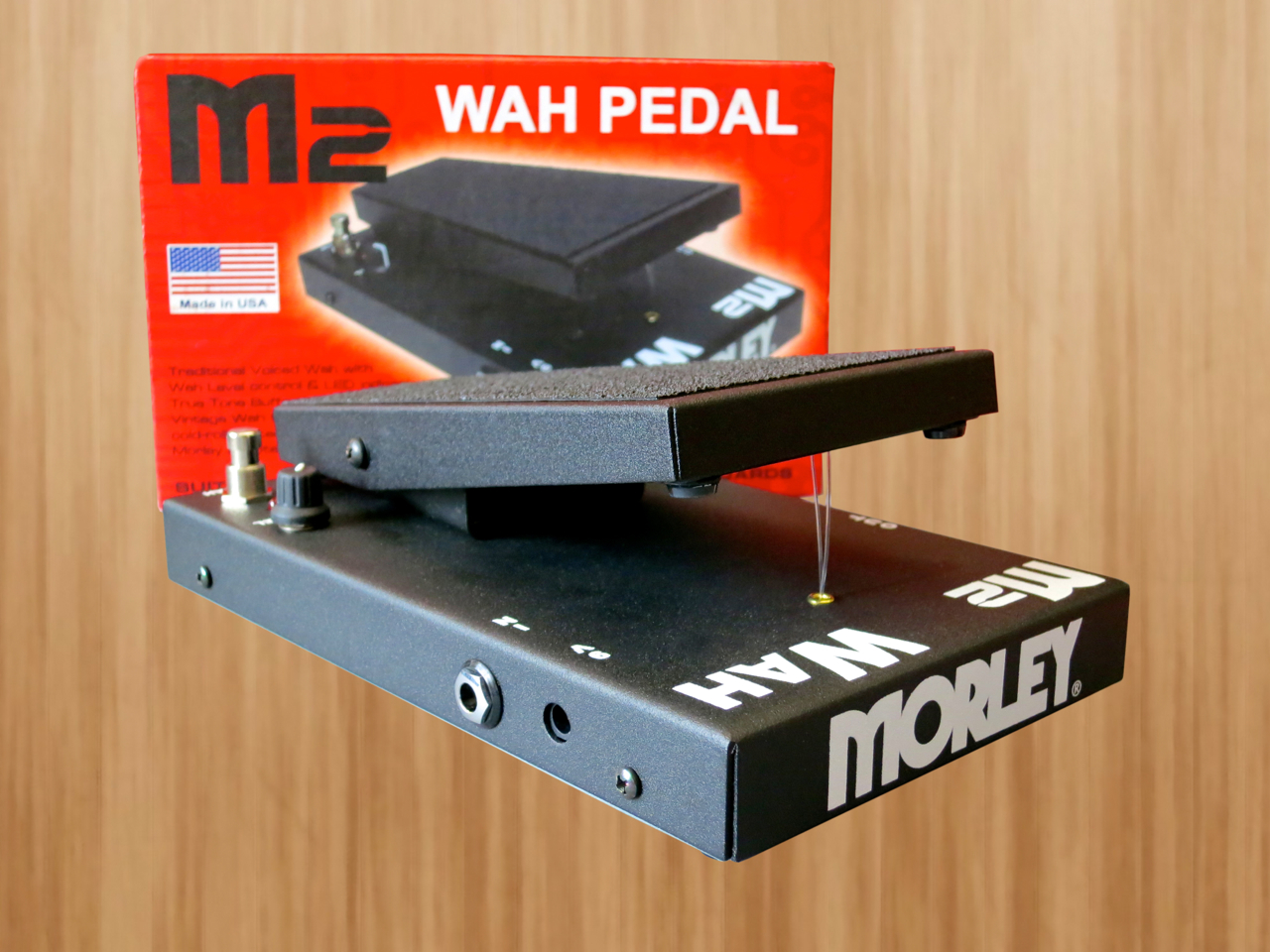
The second model is the Morley M2 Wah (83 €), which promises to deliver vintage-toned wah-goodness.

And, last but not least, there’s a cool twin-mode pedal – the Morley M2 Wah/Volume (94 €).
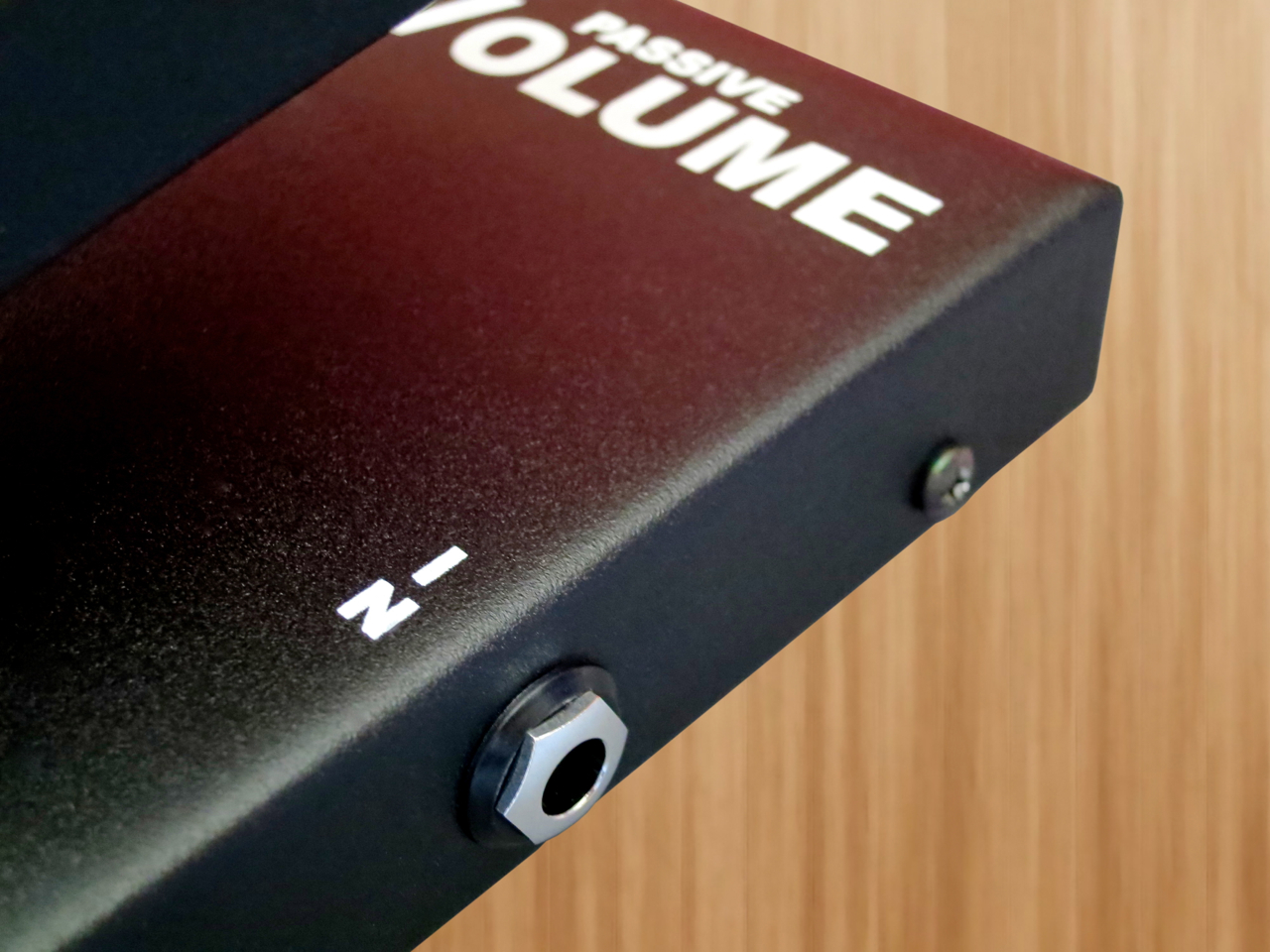
This trio of M2-pedals share the same basic build:
The housing is made from folded, cold-rolled steel, resulting in very sturdy and trustworthy pedals. The treadle sports a thick cover of non-slip material that will keep your foot safely on the pedal, no matter what.
The guitar input is on the Morley’s right flank.
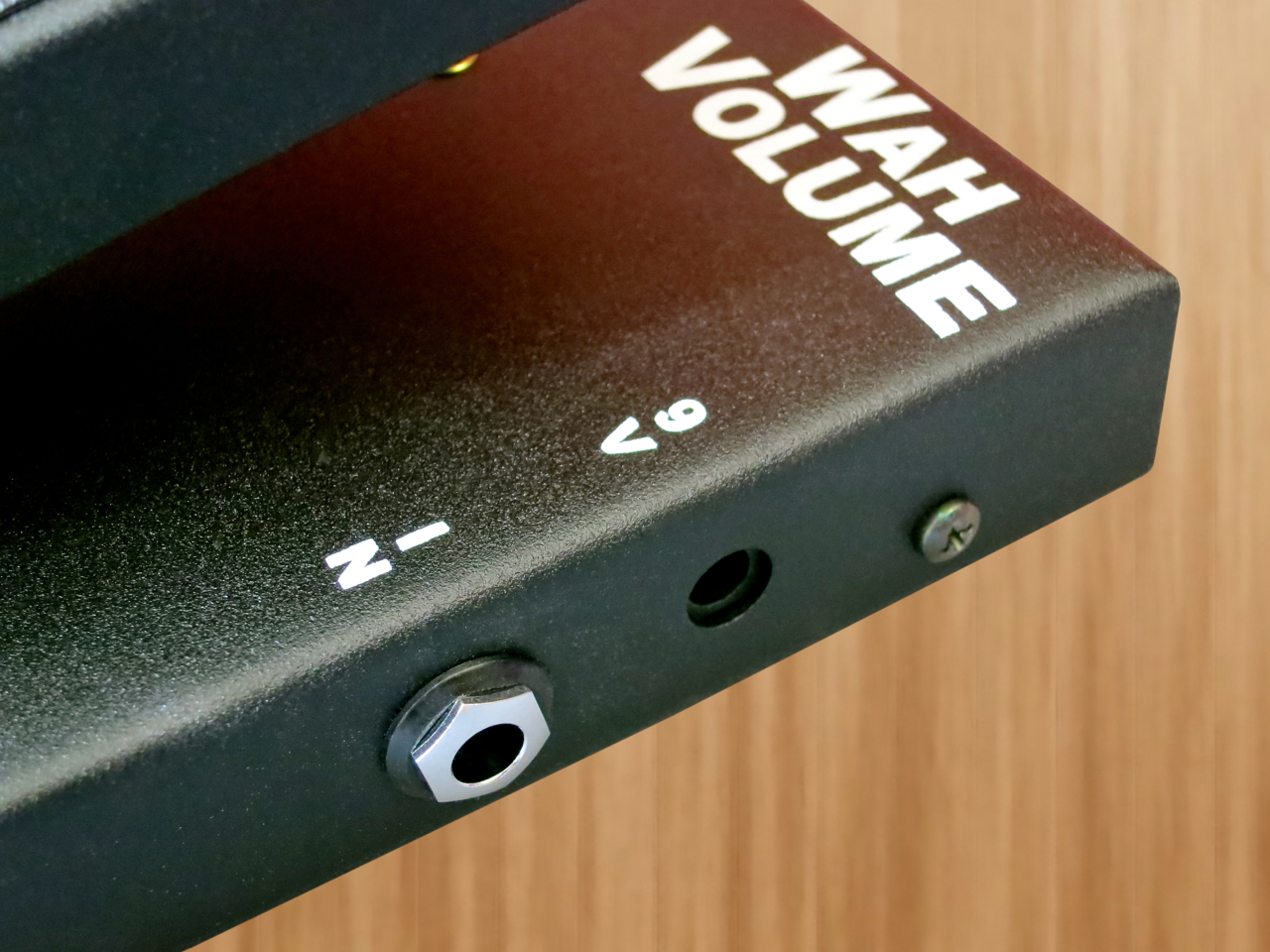
The two active pedals – the M2 Wah and the M2 Wah/Volume – additionally feature a standard 9 Volts DC input.

You can also run the active pedals using a 9 V battery. The battery compartment comes equipped with an easy-to-open quick clip lid.
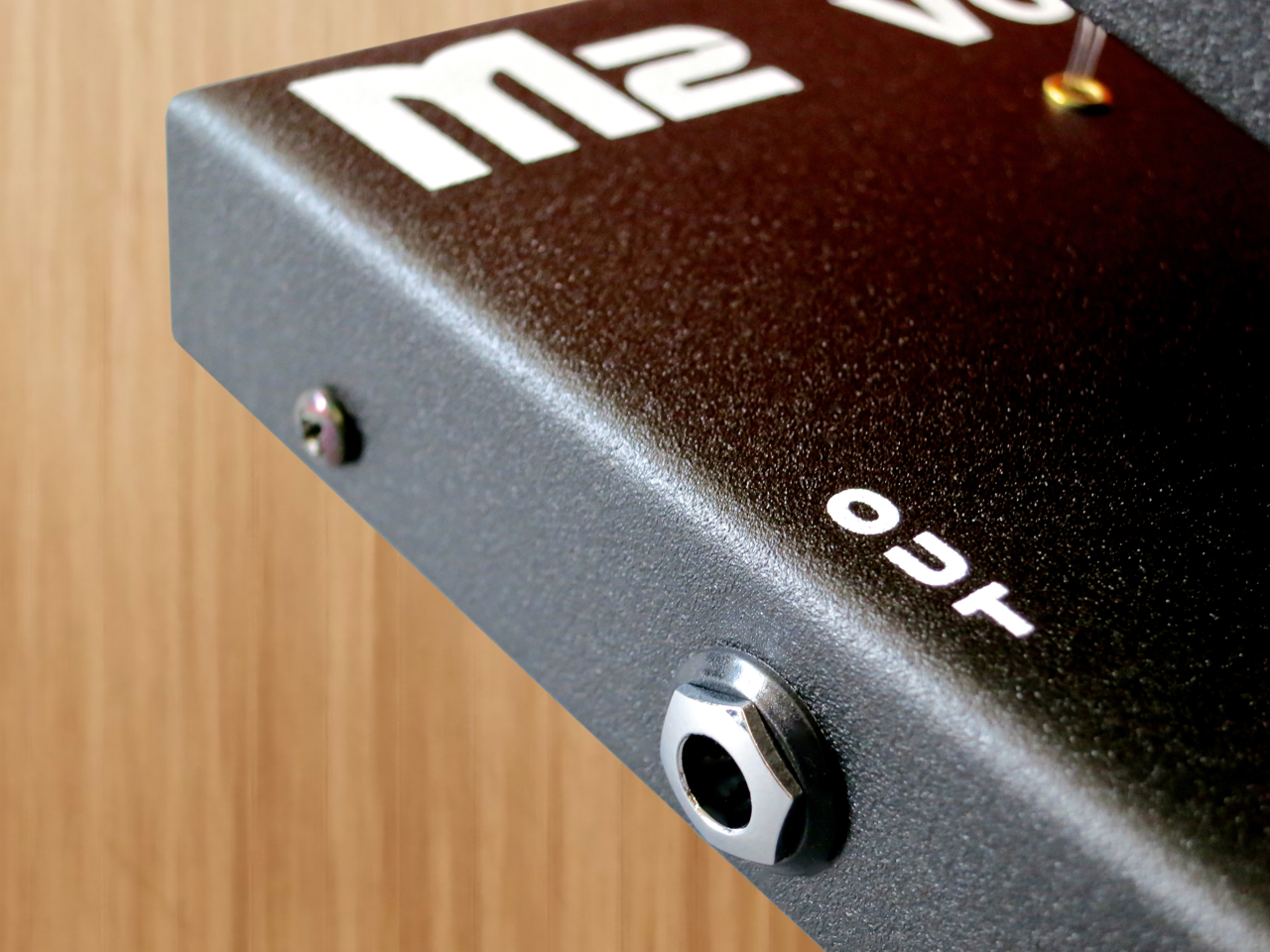
The output has been placed on the left side of the M2-pedals.
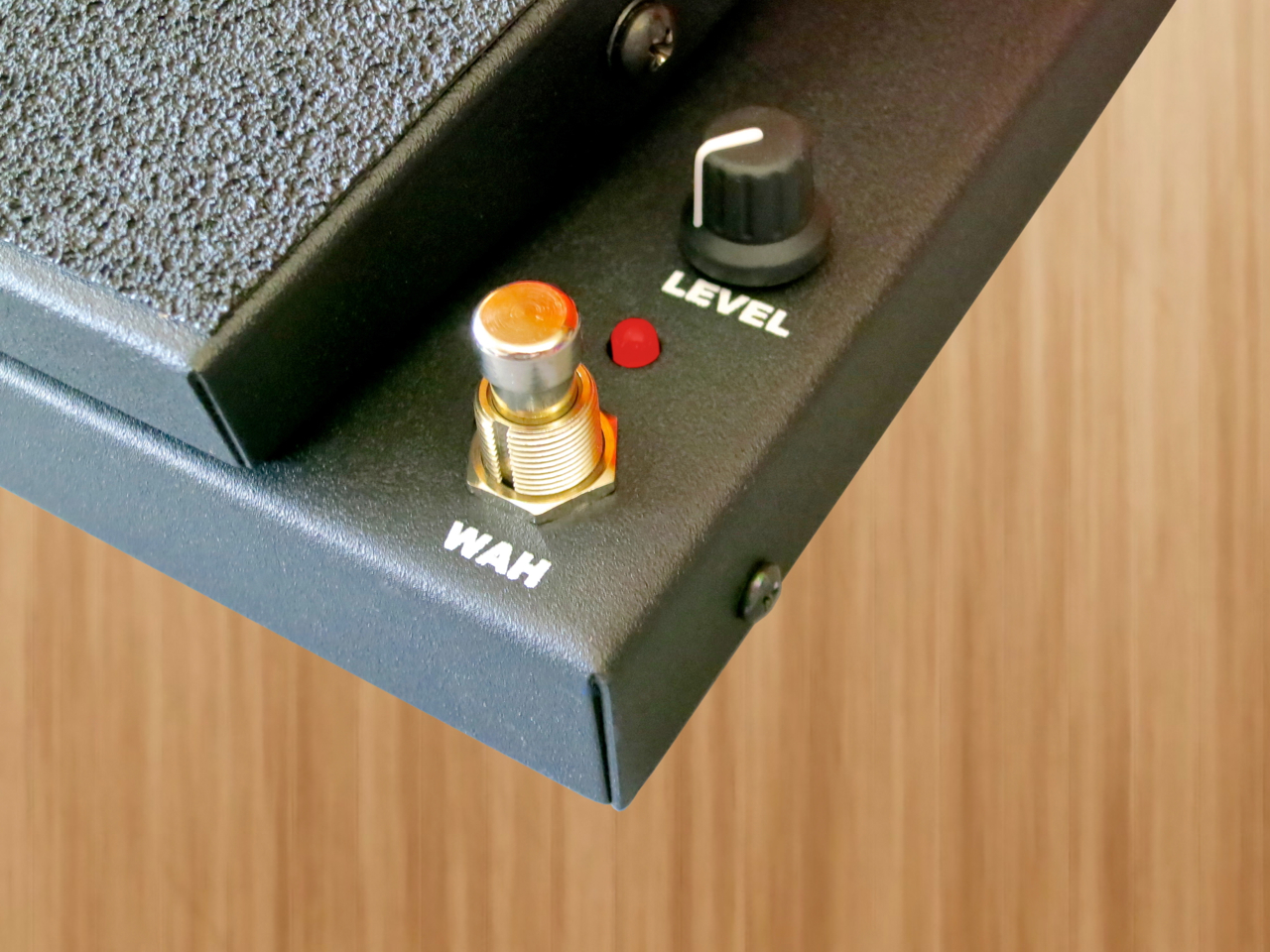
The M2 Wah features an On/Off-switch for the wah-effect (with a red indicator LED), as well as a dedicated level control for the effect signal.

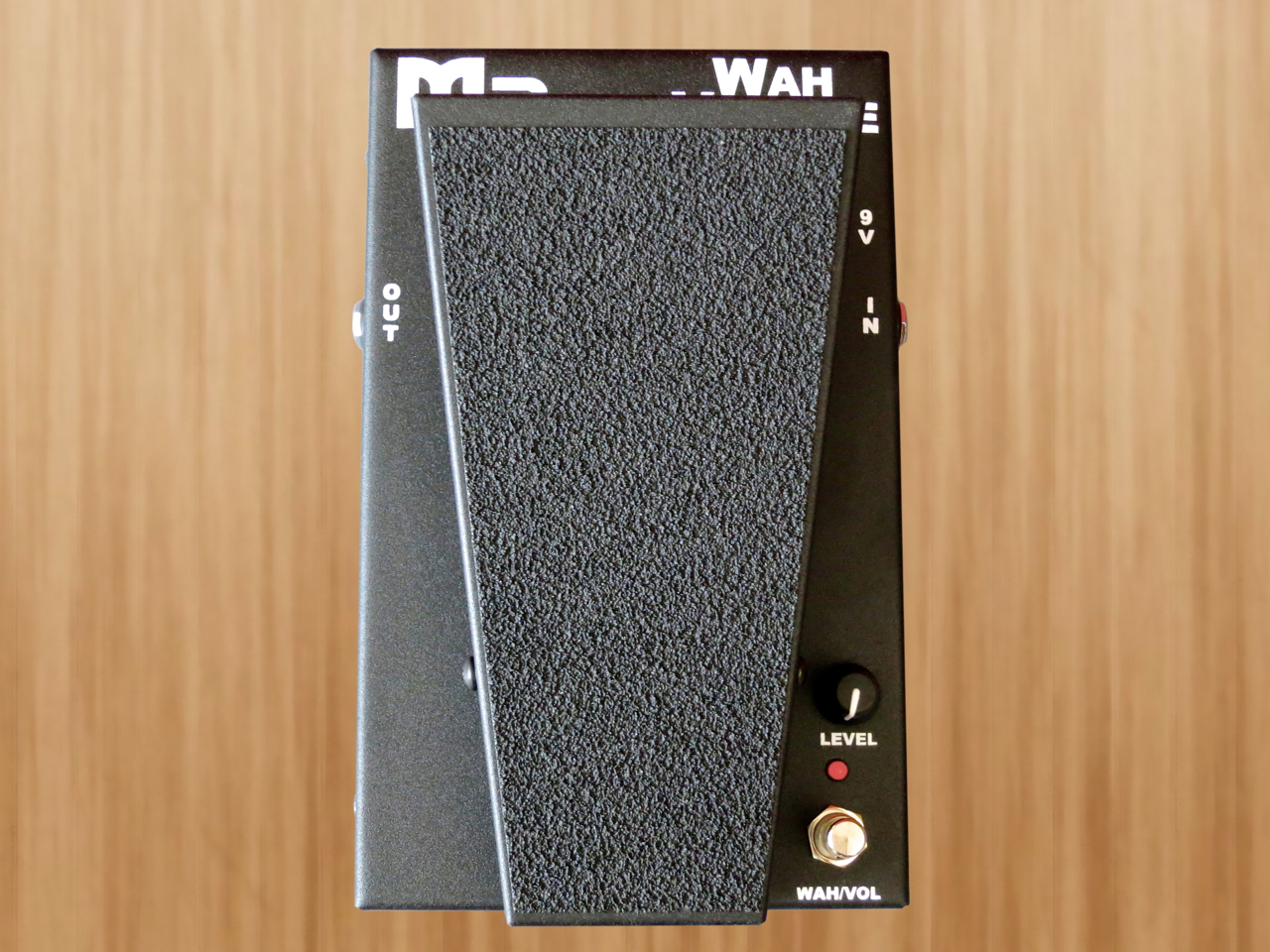
The control setup on the M2 Wah/Volume looks identical, but it functions a bit differently:
The footswitch toggles between volume mode (LED off) and wah mode (LED on). The level knob works only on the wah side of things.
****

Morley’s M2 Passive Volume-pedal works extremely smoothly, evenly and precisely. There are no jumps or wobbles in the volume level, instead the Passive Volume works just as it should, and without having any noticeable effect on your guitar’s inherent tone. The M2 Passive Volume clearly is a pro-quality choice at a very fair price.

****
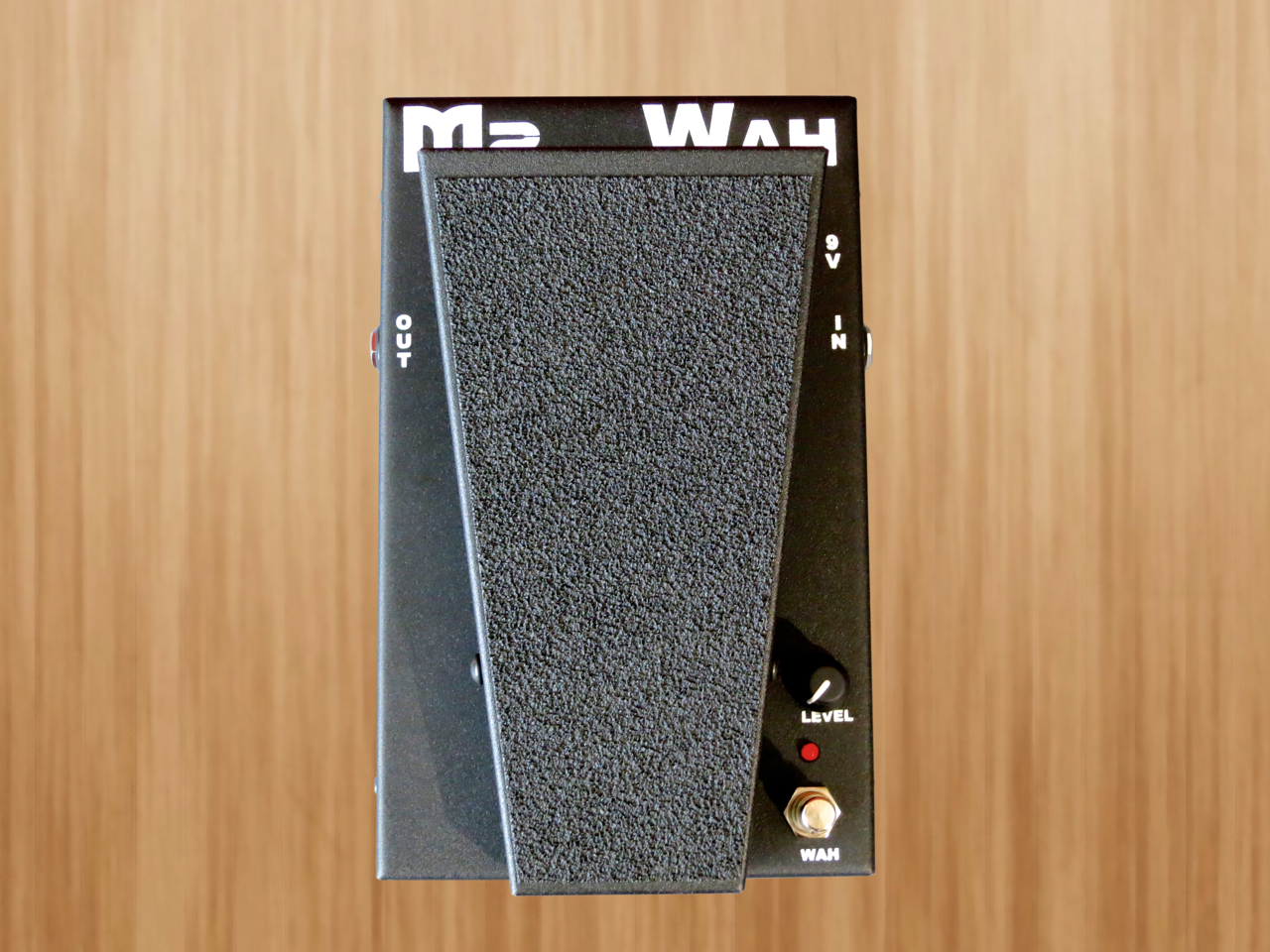
Morley’s M2 Wah comes equipped with an internal active buffer (the Morley True Tone Buffer), which stays on, even with the wah-effect turned off. An active buffer will prevent audible signal deterioration, even if you’re using a long line of (true bypass) effect pedals or a very long cable between you effects and the amp. The only ”drawback” of an active buffer is that the pedal will draw a tiny bit of current, even with the effect turned off.
Oh, boy, Morley’s wah-sound is just what the doctor ordered! The M2 Wah’s filter sounds really juicy, and the pedal works in a very musical and organic way.

****

The M2 Wah/Volume combines both volume control and wah-wah with an active buffer, meaning you do need a battery (or power supply) to run the pedal’s volume side, too.
Morley’s Wah/Volume-pedal manages to combine both effects in an easy-to-use, handy package. This pedal’s volume mode works just as evenly and smoothly as the M2 Passive Volume, while the wah side of things sounds just as tasty as in the stand-alone M2 Wah.
The M2 Wah/Volume was simply too good to let go – I had to buy one!
****

For some reason, I’ve always dug Morley’s straightforward and unsentimental design. The new M2-series, too, has that famous big, black and square ”Morley look”. Morley’s M2-pedals sure don’t look cute, but they more than make up for it when it comes to roadworthiness and reliability.
Many professionals rely on a Morley for their sound. I’m sure that these M2-series pedals will find their way into many a musician’s arsenal.
I’d suggest you go and check them out!

****
Morley M2 -series
M2 Volume – 76 €
M2 Wah – 83 €
M2 Wah/Volume – 94 €
Finnish distributor: Musiikki Silfverberg
Many thanks to Vantaan Musiikki for the loan of the review pedals!
****
Pros:
+ excellent value-for-money
+ made in USA
+ sturdy build
+ work smoothly
+ sound
+ buffered output (M2 Wah and M2 Wah/Volume only)


 Kitarablogi.com – Finland's premier Guitar and Bass blog