Review: Tech 21 Fly Rig 5

****

Tech 21 Fly Rig 5 – with Strat

Tech 21 NYC is the company behind many groundbreaking products, such as the SansAmp range of amp modelling stomp boxes, the Bass Driver DI or the all-analogue modelling guitar amps of the Trademark series.

What all these products have in common is that they’re no-nonsense tools to make the life of the gigging and recording guitarist (and bassist) easier.

Tech 21’s newest product is designed to do away with the need to hire a guitar amp for fly-in gigs. It’s an ultra-compact and sleek, pedalboard-style device called the Fly Rig 5.

****

Tech 21 Fly Rig 5 – full top

As you can see from the picture at the start of this review, the Tech 21 Fly Rig 5 (current price in Finland: 299 €) is extremely compact. It will fit in the pouch of a gig bag, as well as in the accessories compartment of many guitar cases. Just pack your guitar, the Fly Rig, a couple of cables and your tuner – and you’re ready to roll!

The Fly Rig 5’s sturdy housing is completely made from metal, and its brushed fascia gives it a cool modern look.

Tech 21 Fly Rig 5 – with PSU

The unit runs on 12 Volts of DC-power (150 mA/centre negative) and the power supply unit is (naturally) included.
Tech 21 Fly Rig 5 – Plexi + Hot

Tech 21 call their new creation the Fly Rig 5, because it features five different main functions/effects.

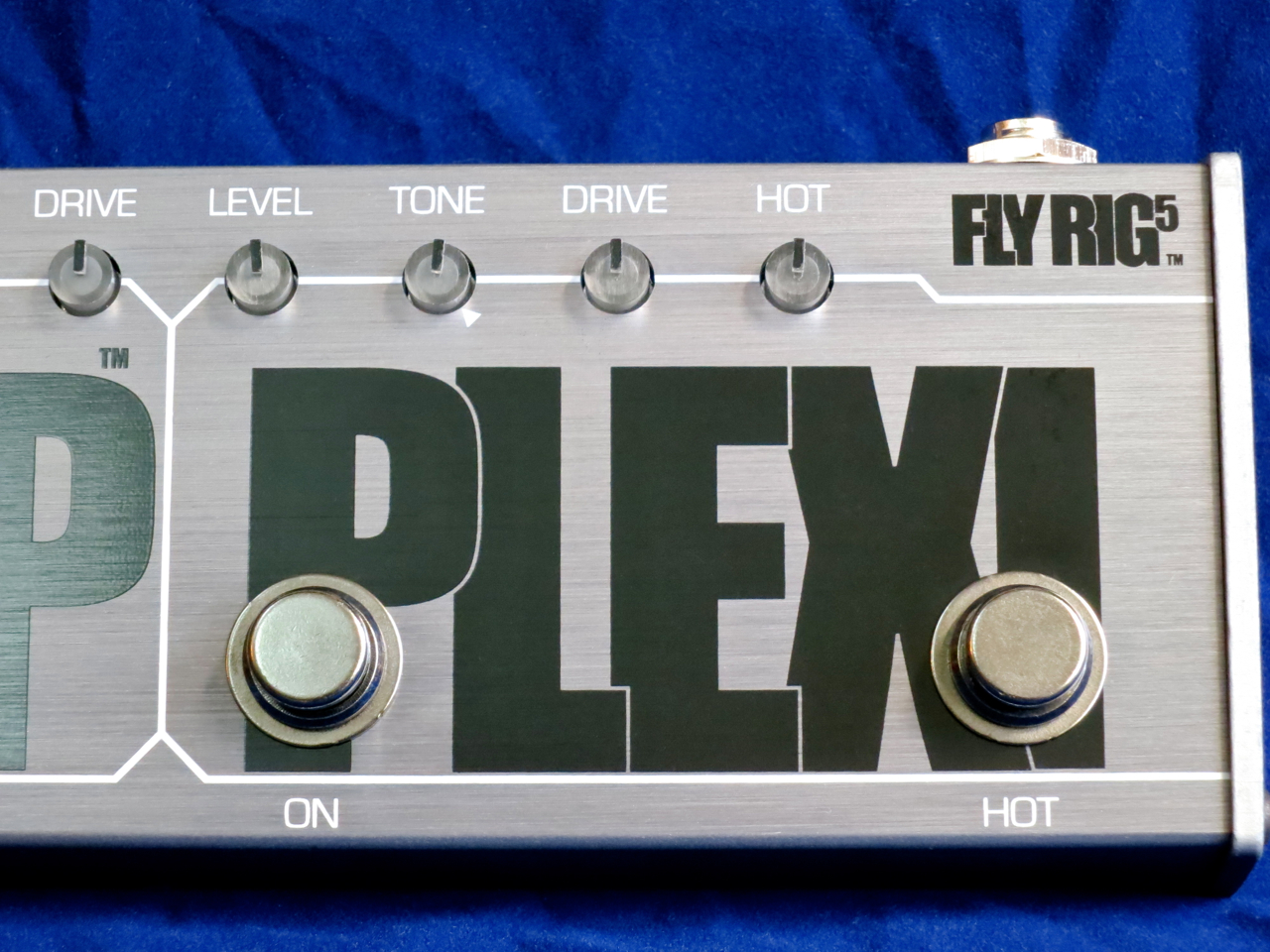
Two of these functions are grouped together under the Plexi banner. The first one, labelled Hot, is an adjustable clean boost of up to a whopping 21 dB. Secondly, you will find an analogue model of a Marshall Plexi head (based on the Hot-Rod Plexi pedal), with its controls comprising Drive, Tone and Level.

Tech 21 Fly Rig 5 – SansAmp

The next section is called SansAmp and includes Tech 21’s legendary analogue amp (and miked up cabinet) emulator (with three-band EQ), as well as a reverb effect.

Tech 21 Fly Rig 5 – DLA

The last section is labelled DLA (short for delay) and offers you a delay effect with tap tempo. Thanks to the Drift-control you can also dial in grungy tape echo-type wow and flutter.

Tech 21 Fly Rig 5 – front panel

****

Tech 21 Fly Rig 5 – Tech 21 logo

Tech 21’s Fly Rig 5 is really very easy to use: All the controls and footswitches are clearly labelled, and the control knobs of each section light up in a different colour to give you an easy to read visual clue as to which sections are currently on and which are turned off.

There’s one very minor trade-off due to the über-compact nature of this ’board, and that’s the small, slightly fiddly nature of the control knobs. On the other hand, you’re hardly likely to make major adjustments to your settings in the middle of a gig – and gigging is what the Fly Rig was conceived for.

In terms of its sound and performance, Tech 21’s newcomer easily fulfills the high standards guitarists have come to expect of the products of this company. The Fly Rig 5 sounds awesome and does exactly what it says on the tin. This combination of SansAmp, Plexi-style overdrive, booster, delay and reverb delivers the goods for the large majority of guitarists – be it Jazz, Blues, Rockabilly, Pop or Rock, the Fly Rig delivers! Metal and Thrash guitarists will most probably demand more gain and the inlusion of a noise gate, but I’d reckon that the metal crowd aren’t really the intended target group for this type of ’board.

Here’s a run-through of all of the Fly Rig 5’s effects, played on a maple-necked Fender Stratocaster. The clip starts with the Fly Rig turned off:

Here’s a similar run-through using a humucker-equipped Hamer USA Studio Custom, adding a bit more overdrive and a longer delay time:

The Delay-section’s Drift-control makes it easy to simulate tape echo effects:

A ”hidden” feature of the Fly Rig 5 is the possibility to use the Delay-section as a chorus effect. Because a chorus is basically nothing more than a slightly wobbly, very slightly offset doubling of the guitar signal, you can achieve this effect by setting the Delay-section’s Time-control to something very short, and using the Drift-control to adjust the chorus’ depth. Here’s an audio clip of a chorus setting, played with a Strat:

Tech 21 Fly Rig 5 – angle 2 + lights

****

Tech 21 Fly Rig 5 – all on

If you play a lot of fly-in gigs, and have neither the budget nor the manpower to lug a large guitar rig across the globe, Tech 21 NYC’s Fly Rig 5 is a true godsend.

It offers the most important features and effects a guitarist needs on stage or in the studio. And — most importantly – it sounds really great and inspiring.

True, using a device like the Fly Rig may not be as ”authentic” as using a real amp in the eyes of some anoraks, because Tech 21’s brand-new tool doesn’t have the ”kudos” of a mythical vintage amp. But if you’re after a pro-quality, lightweight, no-nonsense solution that will get your sound to the audience with the least amount of fuss and hassle, Tech 21’s Fly Rig 5 is hard to beat!

****

Tech 21 NYC Fly Rig 5

299 €

Finnish distributor: Musamaailma

****

Pros:

+ sturdy, all-metal construction

+ size

+ weight

+ features

+ sound

+ value for money

Cons:

– tiny control knobs

Tech 21 Fly Rig 5 – angle 1

Review: Boss OD-1X + DS-1X

od-1x + DS-1x

Boss unveiled two Special Edition pedals at NAMM 2014. These new stompboxes are updates on two classic Boss-models, and are called the OD-1X Overdrive and the DS-1X Distortion. These deluxe versions promise more gain, a tighter attack, and an even more versatile EQ-section.

****

od-1x_back_angle_gal

What is the difference between a fuzz, an overdrive and a distortion?

The fuzz pedal is the granddaddy of everything ”brang”, and it works in a rather neanderthal way, by means of brutal transistor overload. The resulting tone of transistors clipping sounds quite edgy and fuzzy (hence the name), and tends to work much better on solos and riffs, than it does on chords. A good early example would be the memorable riff on the Rolling Stones’ hit ”Satisfaction”.

The terms ”overdrive” and ”distortion” describe effects that try to mimick the way tube amp distortion sounds. In the beginning both terms were used as general descriptions of valve distortion-type stompboxes, but thanks to Boss’ way of labelling their pedals, the use of the terms has now become standardised: An overdrive effect usually offers moderate gain and less compression, resulting in a more dynamic tone, while a distortion pedal will give you more gain, more bite and more squashy compression.

od-1x_top_gal

Early on, Boss also came up with the idea of giving specific colours to specific effect types – an overdrive pedal, for example, is always yellow.

The brand-new Boss OD-1X Overdrive (155 €) represents the next generation of overdrive stompboxes, with its much more versatile range of sounds. In addition to the Drive- and Level-controls, you will find a very powerful two-band EQ-section.

****

ds-1x_back_angle_gal

Both new Special Edition-pedals are based on Boss’ patented digital MDP-technology (Multi-Dimension Processing). MDP allows for the lightning-fast, multi-band processing of the guitar signal that is needed to keep the attack tight and chords free from sonic mud. There’s added clarity and note separation, even at the higher gain levels these new pedals provide.

ds-1x_top_gal

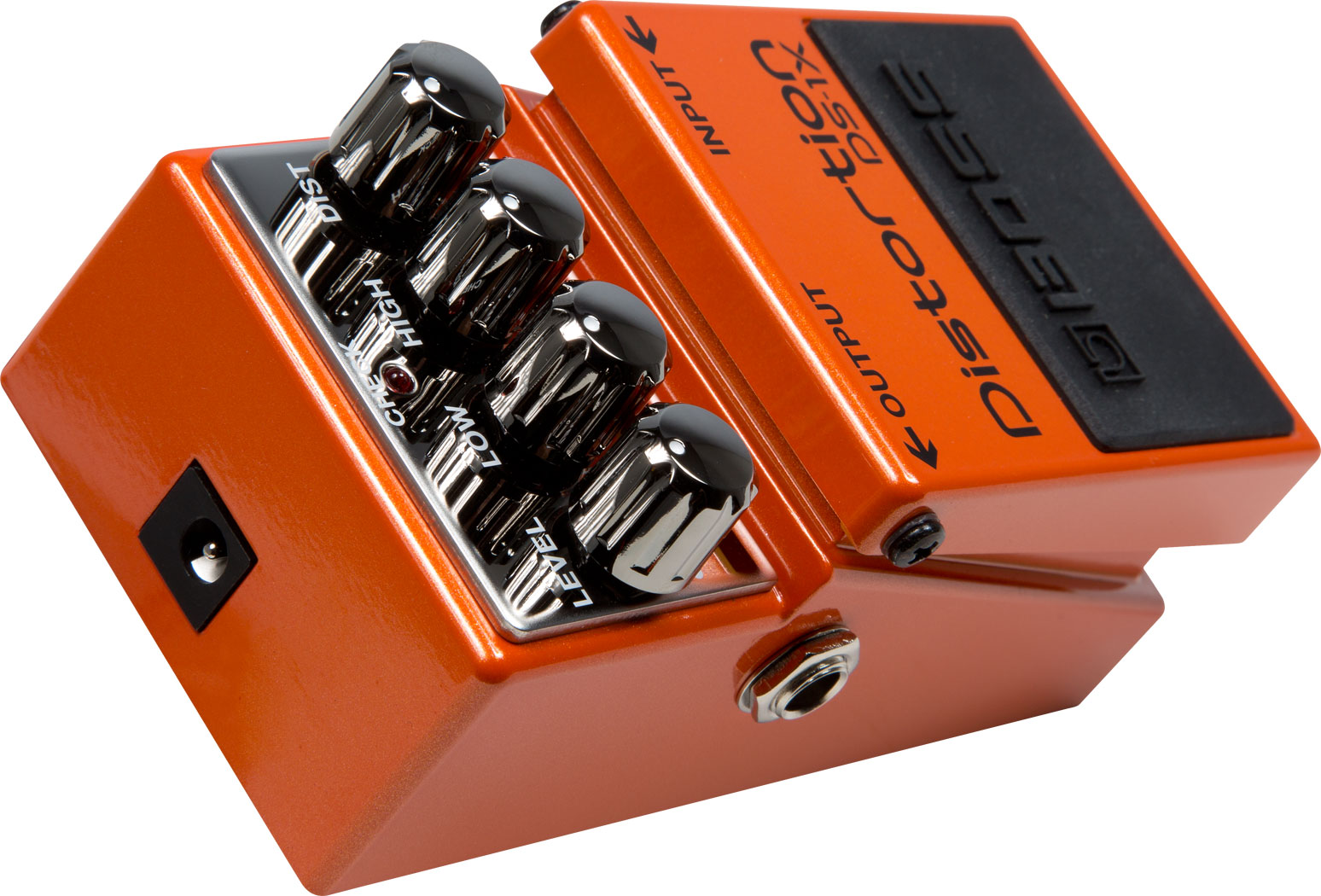
The tangerine-coloured Boss DS-1X Distortion (155 €) offers you four control knobs – Distortion, High, Low and Level. Its sound has been optimised to also work fabulously with seven- or eight-string guitars.

Both pedals can be run either using a 9 V block (an alkaline battery will give you about nine hours of continuous playing time) or a power supply (not included).

****

od-1x_angle_3_gal

You can get all the legendary Boss-overdrive sounds (think SD-1 and OD-3) from the OD-1X, too. The difference here is the much more versatile EQ-section, which gives you way more scope for fine-tuning your tone, and a bit more overdrive at the extreme end of the Drive-control. This leads to a very tasty and dynamic overdrive sound that is more open than what your traditional, mid-range focussed overdrive pedal has to offer.

Here’s anice example of the OD-1X’s lush bass register (Vox Mark III, Drive 9 o’clock, High 10 o’clock, Low 2 o’clock):

A bridge humbucker will surely benefit from a sprinkle of added top end (Hamer USA Studio Custom, Drive 9 o’clock, High 11 o’clock, Low 12 o’clock):

Turn up Drive to full, and even a small Marshall-combo’s clean channel will sound like a stack. I used the Vox-guitar for this:

And here’s the Hamer with a similar setting:

****

ds-1x_angle_3_gal

Boss’ new DS-1X broadens the sound palette of a traditional DS-1 in a very appealing way. There’s oozes of the type of tasty, chewey compression heard on so many great tracks. The DS-1X adds a much deeper low end, better note separation, a tighter attack and a more versatile two-band EQ to proceedings.

It’s clear right from the start that the DS-1X offers much more gain than its overdrive-sibling (Vox Mark III, Dist 9 o’clock):

Using humbuckers you will clearly notice the nice and creamy compression setting in (Hamer, Dist 9 o’clock):

Even though the pedal’s Distortion-control is on full in this clip, almost all of the hiss you can hear comes from the amp’s clean channel, not the DS-1X (Vox Mark III):

The DS-1X’s deep, but tight bass register is just the ticket for playing low Metal-riffs (Hamer, Dist full):

****

od-1x_ds-1x_boxes_gal

It’s a known fact that a guitarist can never own too many overdrive and distortion pedals! But thanks to these new Boss Special Edition-pedals you might be able to cut down the number of pedals on your pedalboard, after all, because the OD-1X and DS-1X cover such a large amount of musical ground. Regardless of whether you’re after a mild Blues-overdrive or insanely distorted, ultra-low Thrash-riffs, these two pedals will do it all in style.

****

Boss OD-1X + DS-1X – Special Edition -säröpedaalit

OD-1X: 155 €

DS-1X: 155 €

Finnish distributor: Roland

****

Pros (both pedals):

+ sound

+ larger gain reserves

+ two-band EQ

+ very precise attack

+ low levels of hiss

Testipenkissä: Mission Engineering ReWah PRO

****

Mission Engineering – opener

Mission Engineering on kalifornialainen laadukkaiden pedaalien ja vahvistinkaappien valmistaja.

Mission Engineering EP-1 – red no switch

Mission Engineeringin valikoimasta löytyy monta erilaista volume- ja ekspressiopedaalia.

Mission Engineering EP-1 – spring

Ekspressiopedaali-valikomasta löytyy sekä yleiskäyttöön sopivia malleja (lisäkytkimellä tai ilman) että tietylle multiefektille tai mallintavalle vahvistimelle (Line 6, Eleven Rack, G-System, jne.) valmiiksi räätälöityjä pedaaleja.

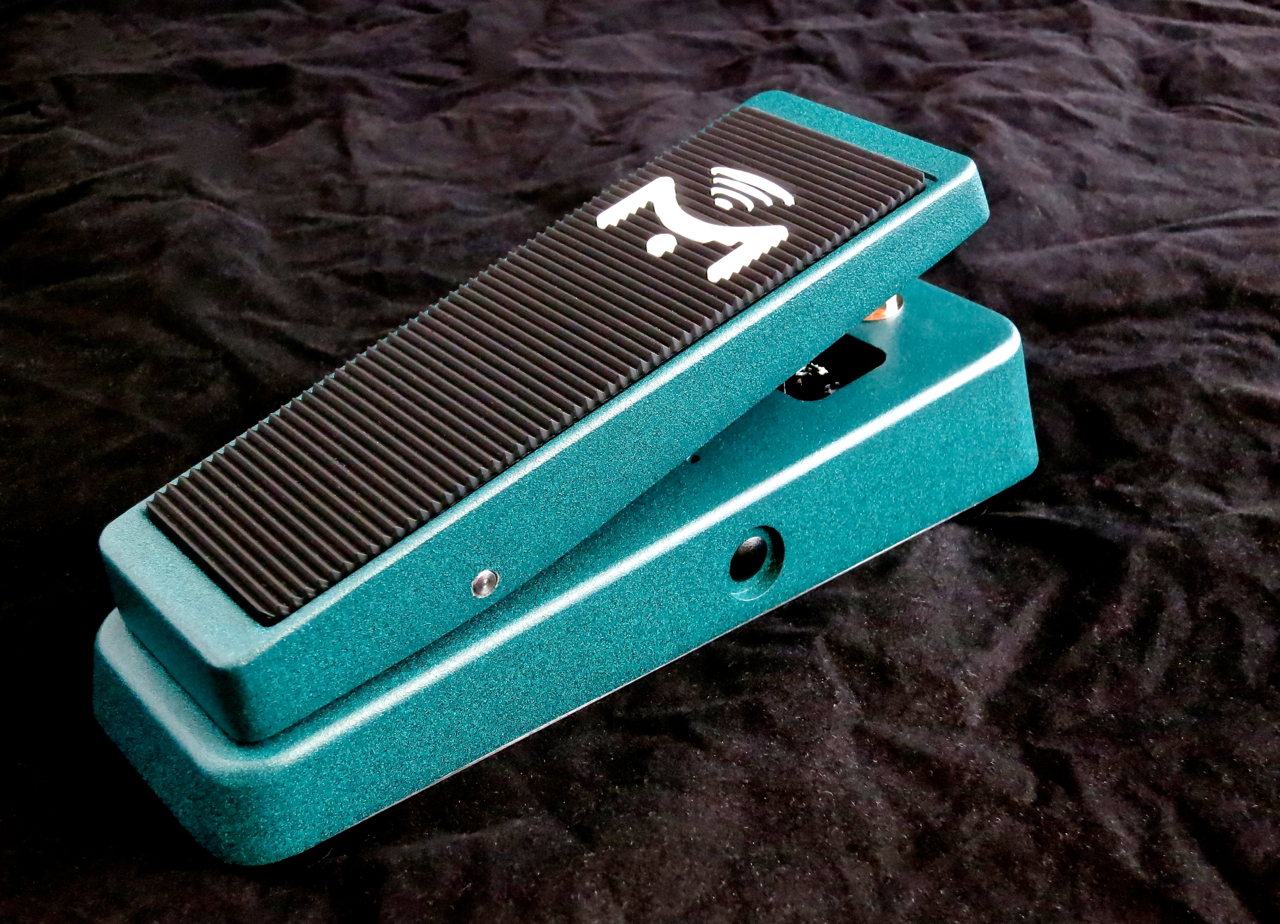
Mission Engineering SP-1 – green

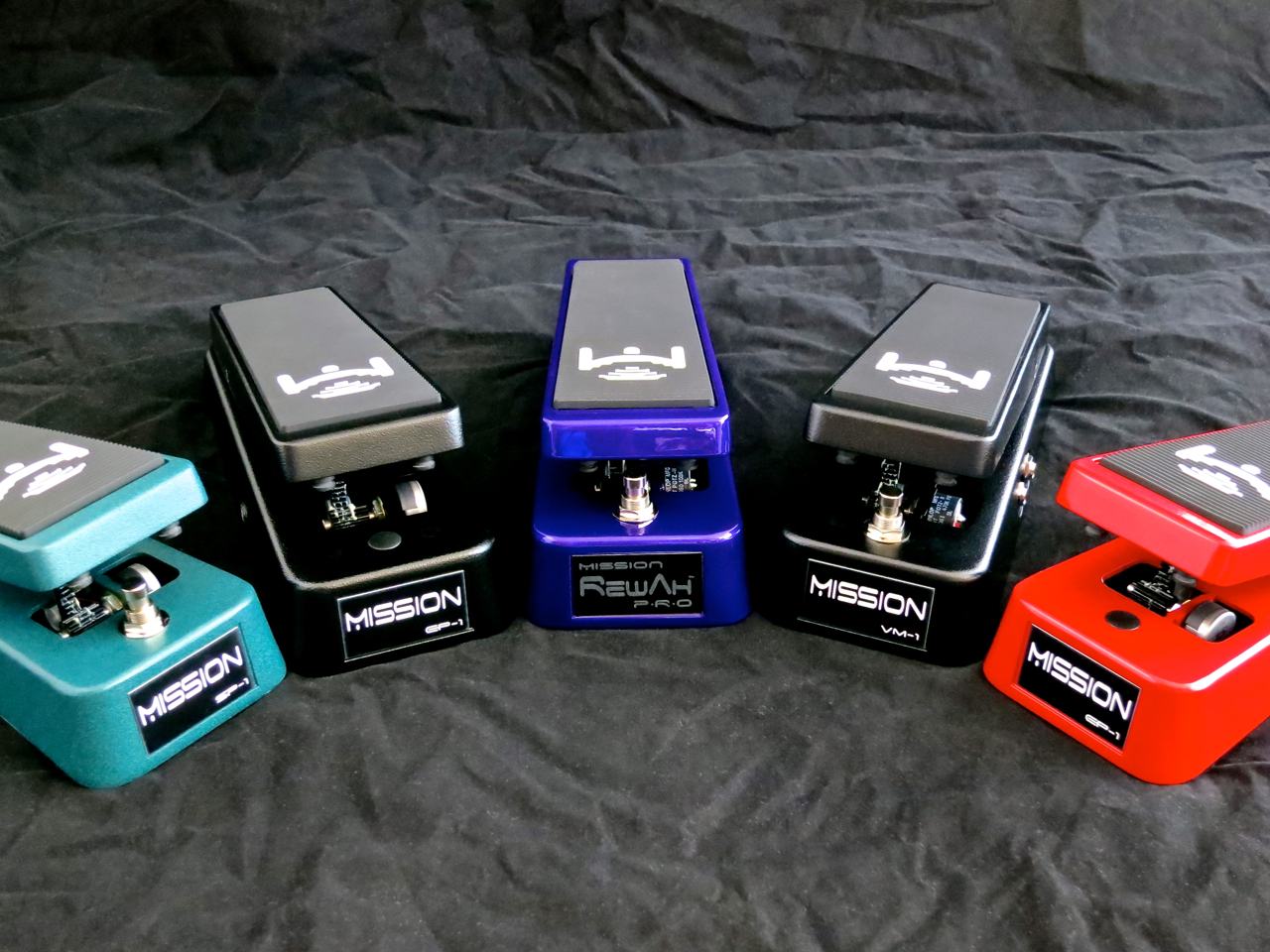
Mission Engineering -pedaalit on selvästi rakennettu kestämään rankempaakin käyttöä, ja firman laaja värivalikoima tarjoaa runsaasti vaihtoehtoja perinteisen tylsään mustaan.

Mission Engineering – all pedals

Ekspressiopedaalien hinnat alkavat 137 eurosta (EP1BK), kun taas firman volumepedaalien hinnat alkavat 154 eurosta (VM1BK).

Kokeilemani Mission-pedaalit toimivat – mallista riippumatta – erittäin sulavasti ja tarkasti.

****

Mission Engineering ReWah PRO – front angle

Mission Engineering -pedaalien kruunujalokivi on kuitenkin firman ReWah Pro -wah-wah (307 €).

Tämä pedaali näyttää hyvin tyylikkäältä, mutta vaikuttaa ulkoisesti kuitenkin tavalliselta, harmittomalta wahilta.

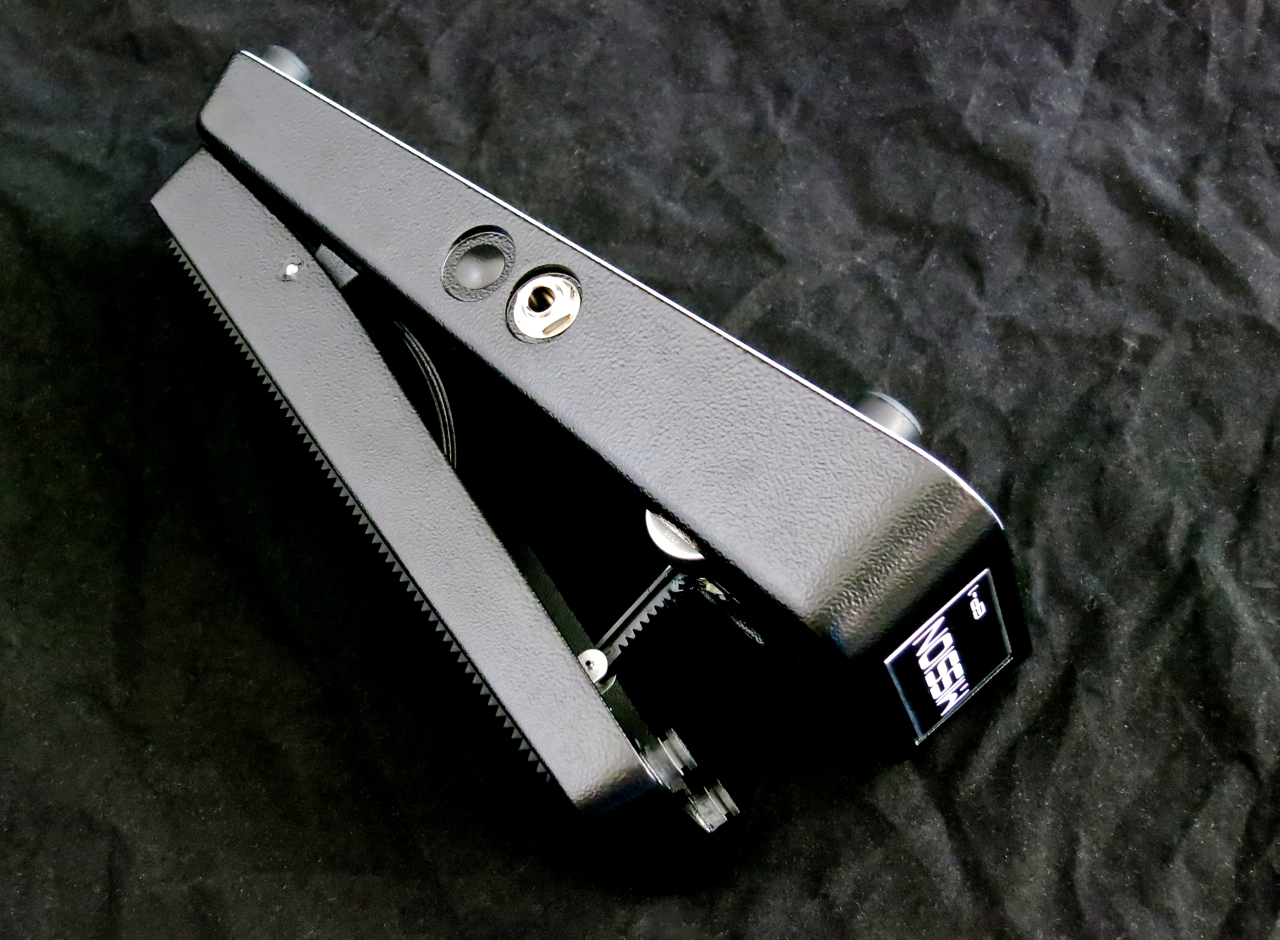
Mission Engineering ReWah PRO – power supply input

Missionin ReWah Pro -efektiä voi käyttää 9 voltin paristolla tai Boss-standardin mukaisella virtalähteellä.

Mission Engineering ReWah PRO – base plate

Pariston vaihtamisessa täyttyy irrottaa ReWahin koko metallipohja ristipääruuvarilla. Tämä seikka hidastaa pariston vaihtoa, mutta ratkaisu on mekaanisesti kestävämpi kuin muovinen paristolokero. Yhtenäinen metallilevy suojaa myös efektin elektroniikkaa tehokkaammin ulkoisia häiriöitä vastaan.

Mission Engineering ReWah PRO – electronics 1

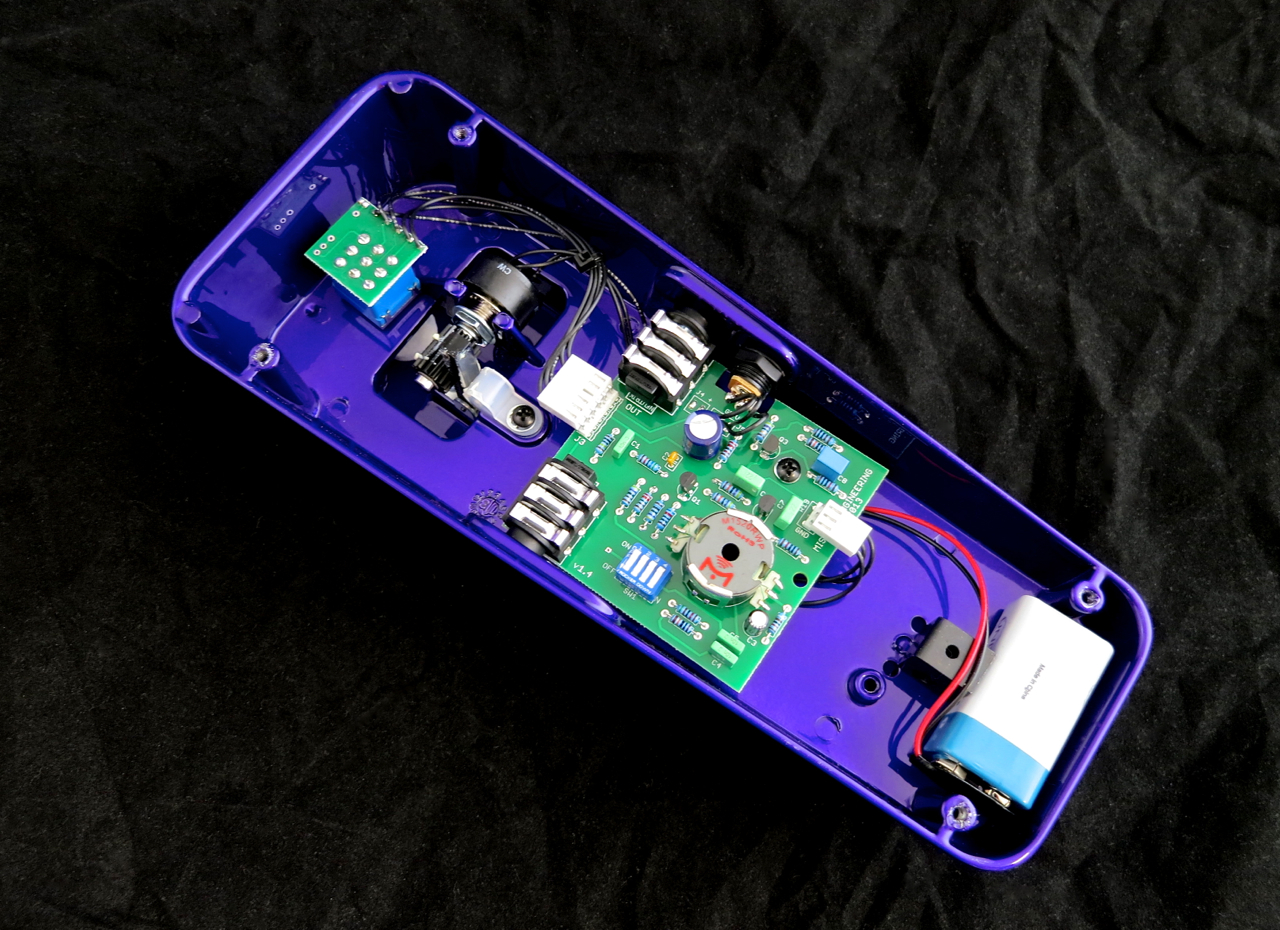
Tämän wah-wahin sisäkalut on asennettu hyvin huolellisesti ja siististi.

Mission Engineering ReWah PRO – battery

Paristo löytyy perinteisestä paikastaan kitaristin kantapään alla.

Mission Engineering ReWah PRO – Dunlop pot

Mission Engineering käyttää erittäin laadukkaita Dunlop-potentiometrejä pedaaleissaan.

Mission Engineering ReWah – switches

ReWah Pron salaisuus löytyy tästä – tämä pedaali ei ole jonkun tietyn vintage-wahin kopio, vaan moderni ja monipuolinen työkalu laatutietoiselle kitaristille:

Mission käyttää omaa, erikoisvalmisteista kelaa, jolla on samankaltainen induktanssi ja vastus kuin klassikkomalleissa, mutta huomattavasti muhkeampi bassotoisto ja pienempi saturaatio kuin yleisesti käytössä olevissa wah-keloissa.

Tämän lisäksi ReWah Pro tarjoaa neljä pikkuista kytkintä, joilla wahin filtterin ja esivahvistuksen käyttäytymistä voi muuttaa:

• Ykköskytkin lisää soundiin pienen annoksen herkullista säröä.

• Kakkoskytkimellä muutetaan filtterin keskitaajuutta hivenen verran matalammaksi, ja samalla suodinta kavennetaan. Soundi muuttuu hieman nasaalisemmaksi.

• Kolmoskytkin vetää suotimen keskitaajuutta melko voimakkaasti alas, jonka seurauksena syntyy selkeästi bassovoittoisempi wah-soundi.

• Neloskytkimellä säädetään elektroniikan vahvistusta pienemmäksi ja filtterin kaistaa leveämmäksi. Soundi muuttuu puhtaammaksi.

ReWah Pro -pedaalin kytkimet voi käyttää joko yksitellen tai kaikissa mahdollisissa yhdistelmissä. Kokeileminen todella kannattaa!

****

Mission Engineering ReWah PRO – electronics 2

Voi pojat! Minulla ei ole ollut pitkään näin hauskaa kuin Mission Engineering ReWah Pro -pedaalin kanssa!

Tämän wahin soundi on jo tehdasasetuksilla niin hyvä, että soitto loppuu vasta, kun pakarat alkavat krampata. Tämä pedaali tekee riippuvaiseksi!

Ja mikä on parasta, ovat Mission-wahin erittäin alhainen omakohina ja sen toimiva häiriösuojaus.

Tässä on lyhyt pätkä puhtaan kanavaan soitetusta wahista, jossa käytän Fender Telecaster -kitaraa ja ReWahin tehdasasetukset:

Kun kääntää kytkimet 1-3 on-asentoon, sama yhdistelmä kuulostaa tältä:

Tässä esimerkissä ReWah-pedaali on laitettu takaisin tehdasasetuksiin (kaikki kytkimet ”off”). Efekti toimii tässä pelkästään filtterinä (”fixed wah”), kitara on Hamer Studio Custom, ja särökanava on valittu:

Ja vielä kauniisti laulava kitarasoolo:

Mission Engineering ReWah PRO – switches alternative

****

Mission Engineering ReWah PRO – reverse front angle

Onko Mission Engineering ReWah Pro maailman paras wah-wah? Pedaali kuuluu kiistämättä ainakin kärkikolmikkoon, laadukkaan soundinsa ja kestävän olemuksensa ansiosta.

ReWah Pron hinta on kiistämättä kova, mutta pedaali tarjoaa omasta mielestäni reilusti vastinetta rahalle. Kun etsit mahdollisimman laadukasta wah-wahia, kannattaa ehdottomasti tutustua tähän pedaaliin!

****

Mission Engineering ReWah Pro

307 €

Maahantuoja: Musamaailma

****

Plussat:

+ kestävänoloinen

+ true bypass

+ audiofiilitason elektroniikka

+ erittäin monipuolinen

+ soundi

Pidä blogia WordPress.comissa.

Ylös ↑