****
Spira Guitars -juttu löytyy TÄÄLTÄ.
Kitarablogi.com – Finland's premier Guitar and Bass blog
Juttuja kitaroista ja bassoista
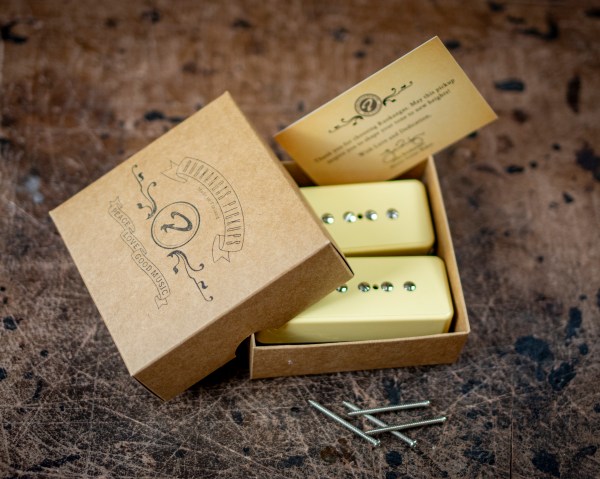
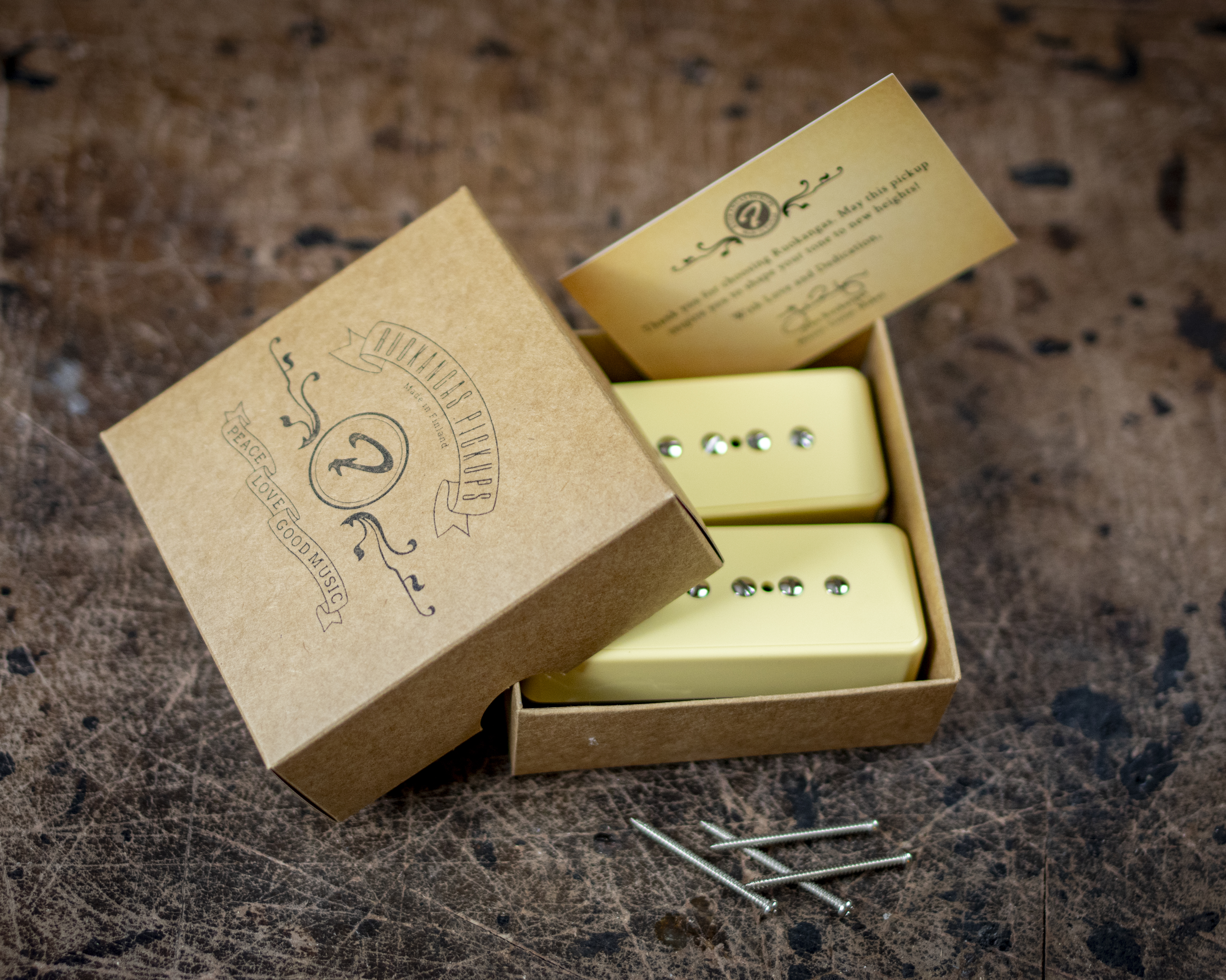
Harviala, Finland — Ruokangas Guitars has introduced Rauni and Ukko, a new pair of soapbar P90 pickups designed to deliver classic single-coil authority while remaining stable at stage volumes. Developed throughout most of 2025, the pickups feature the company’s proprietary Flux-Coil™ stabilization technology, allowing them to remain non-potted without the microphonic squeal.
Flux-Coil stabilization was first introduced in Ruokangas’ Aino & Väinö humbuckers, which received the 2025 Gear of the Year Award from Guitarist magazine (UK).
“P90s are famous for their punch and raw authority, but the line between musical grit and harshness can be razor thin”, says Juha Ruokangas. “With Flux-Coil stabilization we can keep the pickup non-potted, which preserves openness and touch sensitivity, while eliminating microphonic squeal often an issue with non-potted pickups.”
Rauni and Ukko are true single-coil soapbar P90s designed for use individually or in matched multi-pickup configurations. Sets of two or three pickups can be configured with hum-canceling in-between positions.
Find out more HERE.
****
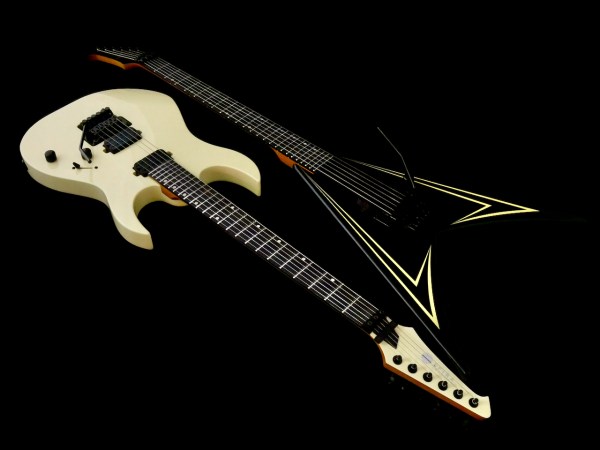
Here’s a demo of two Spira guitars from the 420 Series:
****
• The rhythm guitar tracks were played using both guitars
• Lead guitars as indicated in the video
• Amp used: Blackstar HT-1 (recorded direct)
• Pedals used: Boss SD-1, UralKit GE Rouhi, UralKit Less Love Electra
****
The demo is a short arrangement of the Megadeth classic ”Symphony of Destruction”.
****
Testi tulossa: https://blogi.rockway.fi/
****
On aina ilo tutustua aloitteleviin soitinrakentajiin ja heidän luomuksiinsa. Jonkin aikaa sitten minuun otti yhteyttä uusi soitinrakentaja nimeltä Osku Toppinen, joka on juuri alkanut yrittää vakiinnuttaa omaa sähkökitaroiden valmistustaan ”Odes Custom Guitars” -nimellä. Voit ottaa yhteyttä häneen Facebookissa tai Instagramissa.
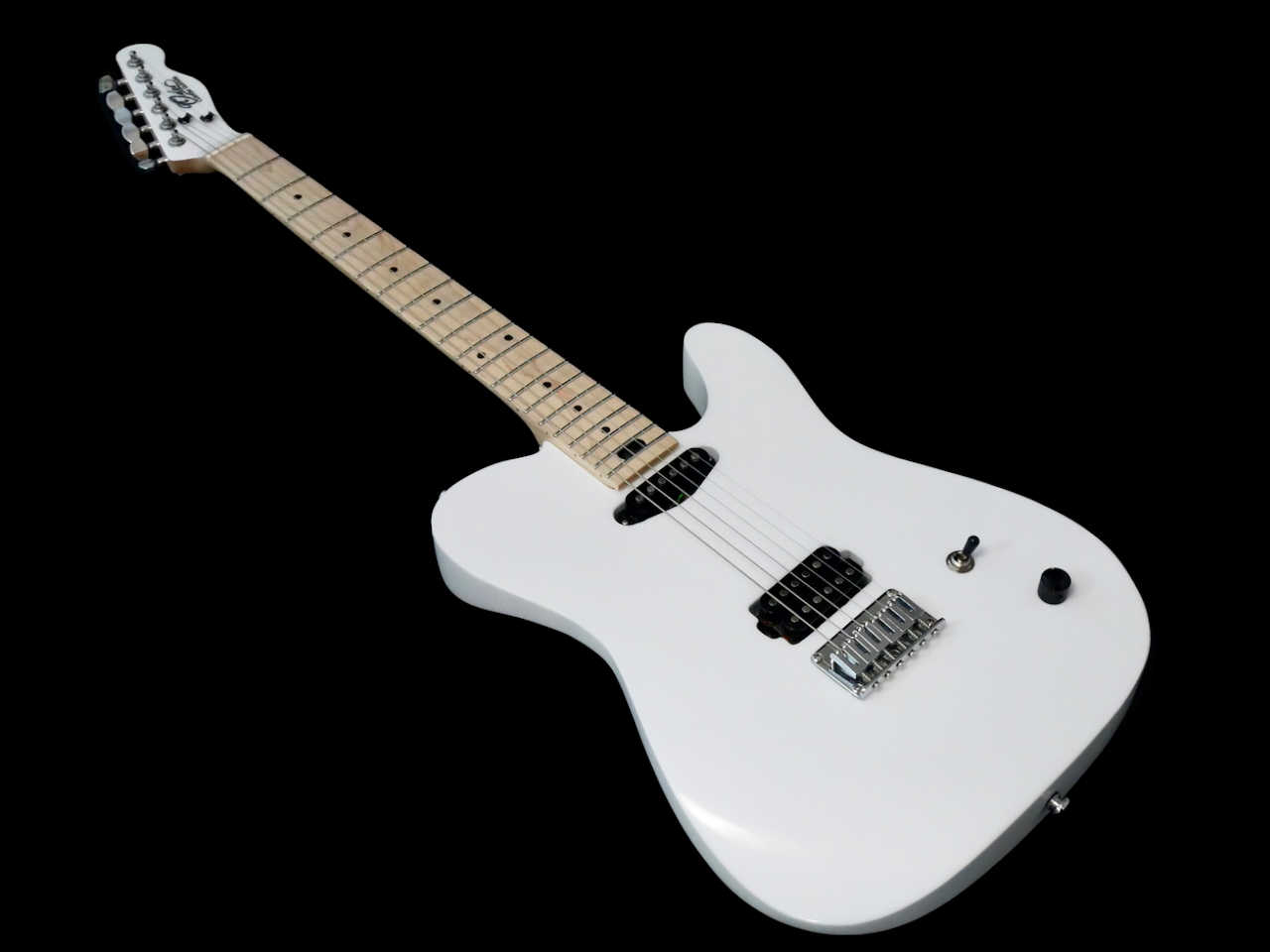
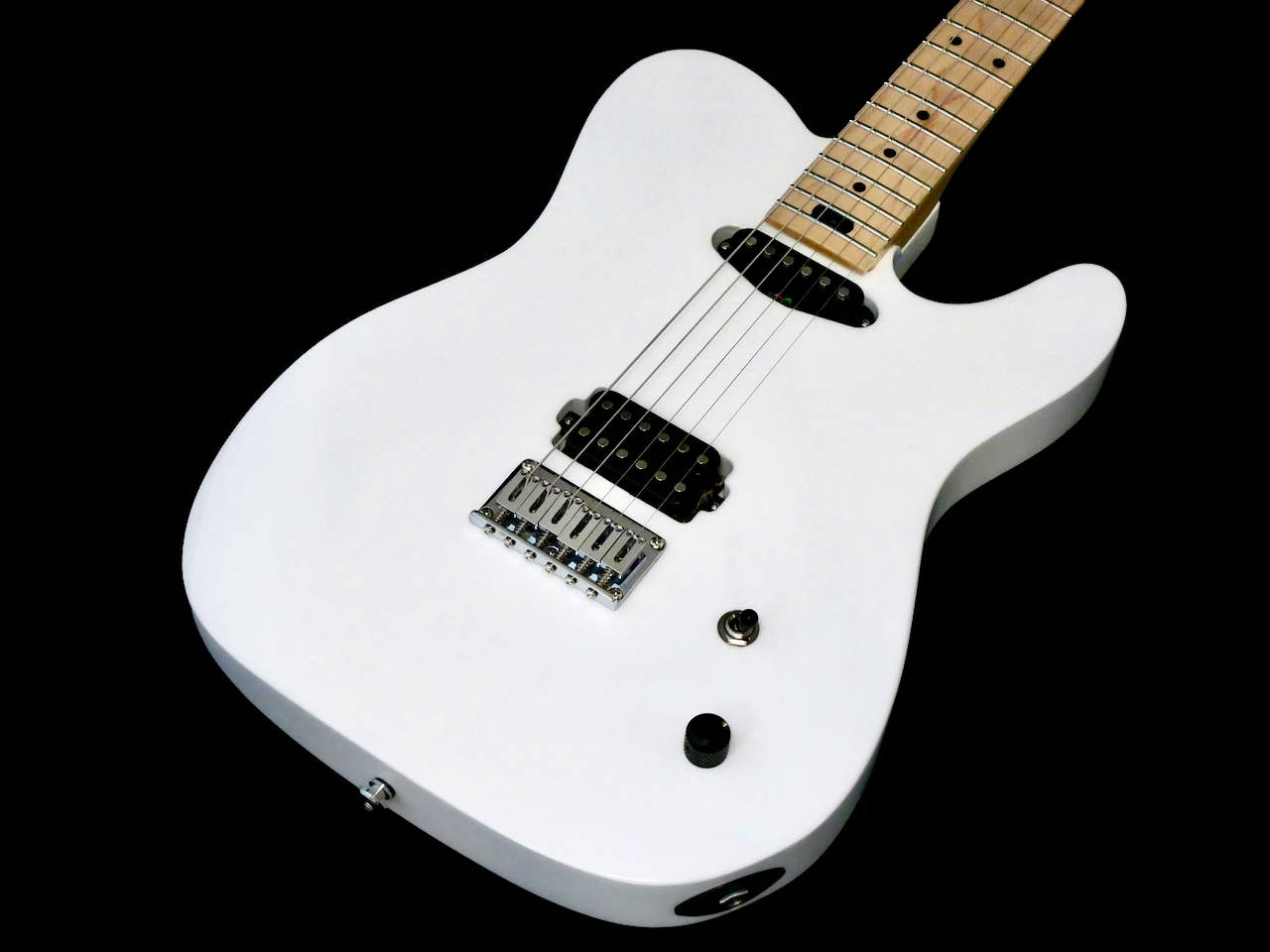
Osku osallistui hiljattain Uraltonen tapahtumaan Helsingissä, ja onnistuin saamaan sähkökitaran testattavaksi. Tätä Odes Custom -kitaraa kutsutaan nimellä ”White Wizard”. Se on moderni, kiiltävän valkoinen Tele-tyylinen soitin – hintapyyntö on 1.800 € (ilman alv:tä).
White Wizard on kyllä todella upea – kokovalkoinen leppärunko ilman häiritsevää plektrasuojusta, mutta erittäin kauniilla etu- ja takaviisteillä. Rungon kiiltävä viimeistely on upea; musta ja valkoinen ovat tekijälle vaikeimmat värit, koska jokainen pieni virhe tai kuoppa pinnassa näkyy kuin mikroskoopilla. White Wizard on yksinkertaisesti virheetön – loistavaa!
Kaula saattaa näyttää perinteiseltä Fender-kaulalta, mutta se on itse asiassa tehty kolmesta pitkästä vaahterapalasta, jotka on liimattu yhteen pituussuunnassa. Otelauta on erillinen vaahteralevy ja siinä on 21 kiiltävää, ruostumattomasta teräksestä valmistettua nauhaa.
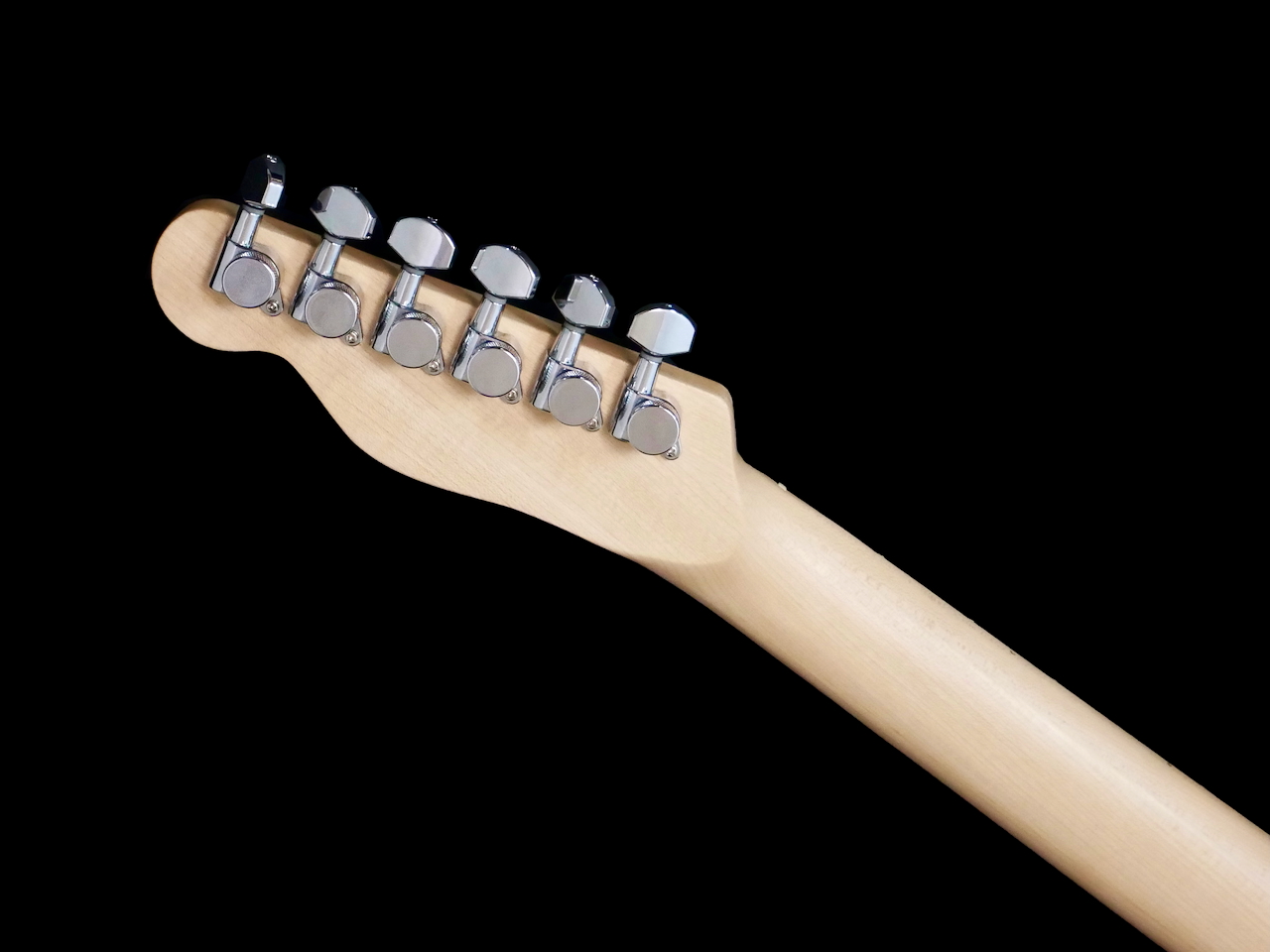
Virittimet ovat korkealaatuiset lukkovirittimet. Yläsatula on veistetty suomalaisesta hirvenluusta.
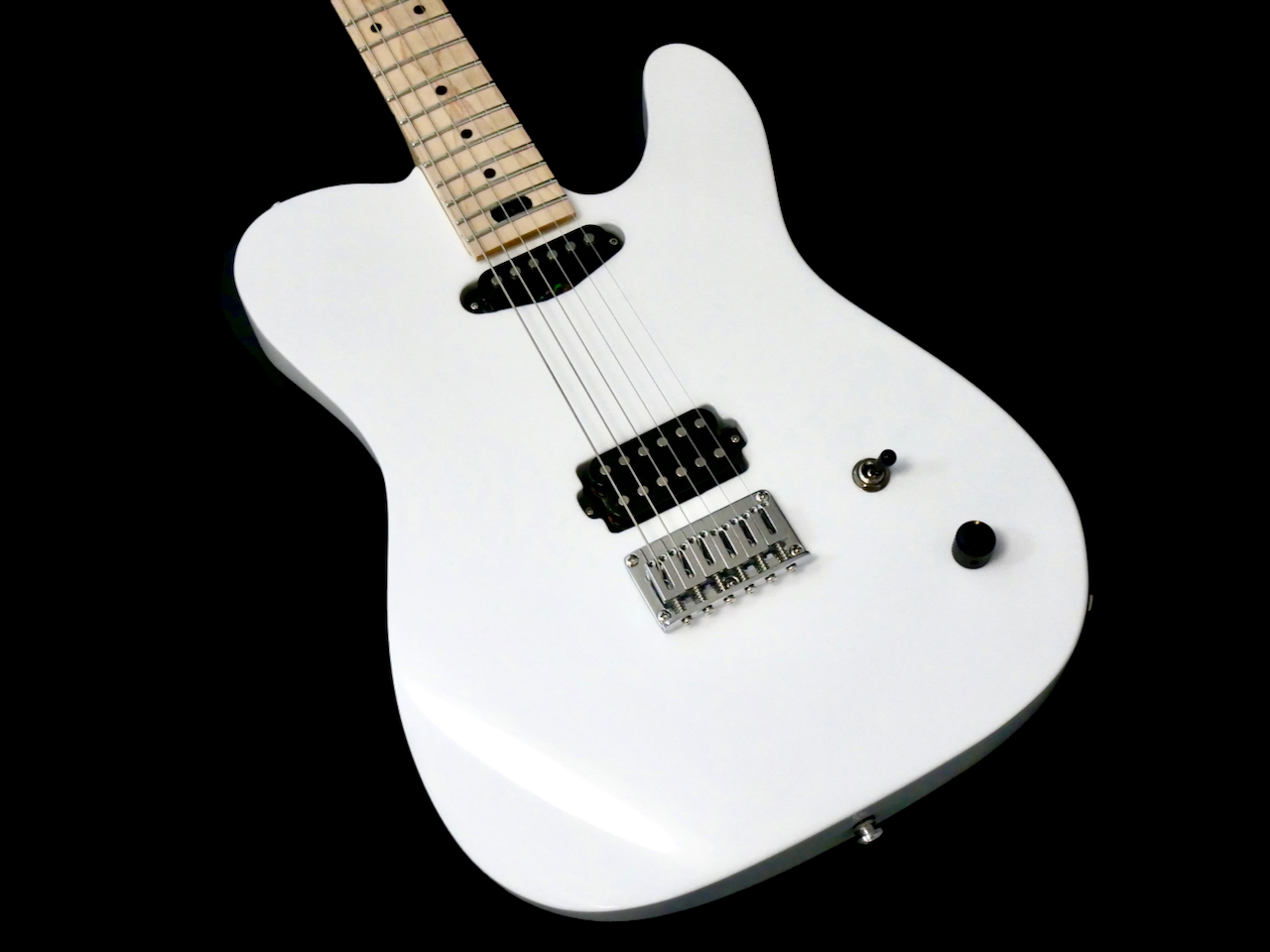
Otelaudan päässä oleva tumma aukko on huoltoaukko kaularaudan säätämiseen. Odes Custom White Wizardissa on kaularauta, jossa on pyöreä säätömutteri – aivan kuten Music Man -soittimissa – mikä tekee säätämisestä helppoa. Siihen ei nimittäin tarvita erityistä avainta tai muuta työkalua, millä tahansa metallitanko, joka sopii pyörän reikiin, voi kiertää mutteria.
Talla on Gotohin nykyaikainen malli, jossa on kuusi tallapalaa, sekä rungon-läpi kielitys.
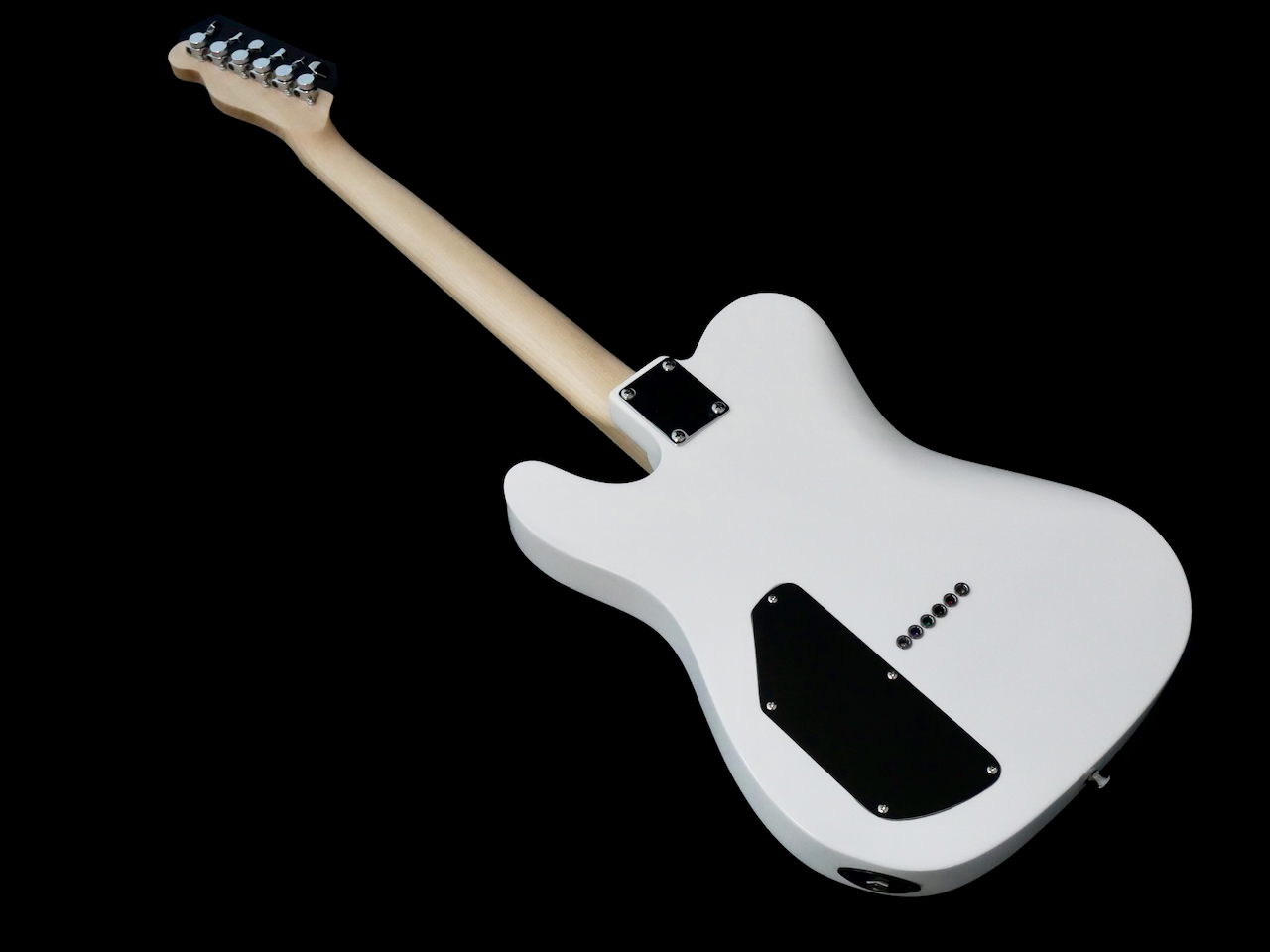
Kaulan liitos on perinteinen pulttikiinnitys – jotkut soittajat haluaisivat pyöreämmän liitoksen, mutta minulla ei ole koskaan ollut ongelmia vintage-tyyppisten kaulanivelten kanssa. Niin kauan kuin kaula pysyy tukevasti ja varmasti paikallaan, kaikki on mielestäni kunnossa.
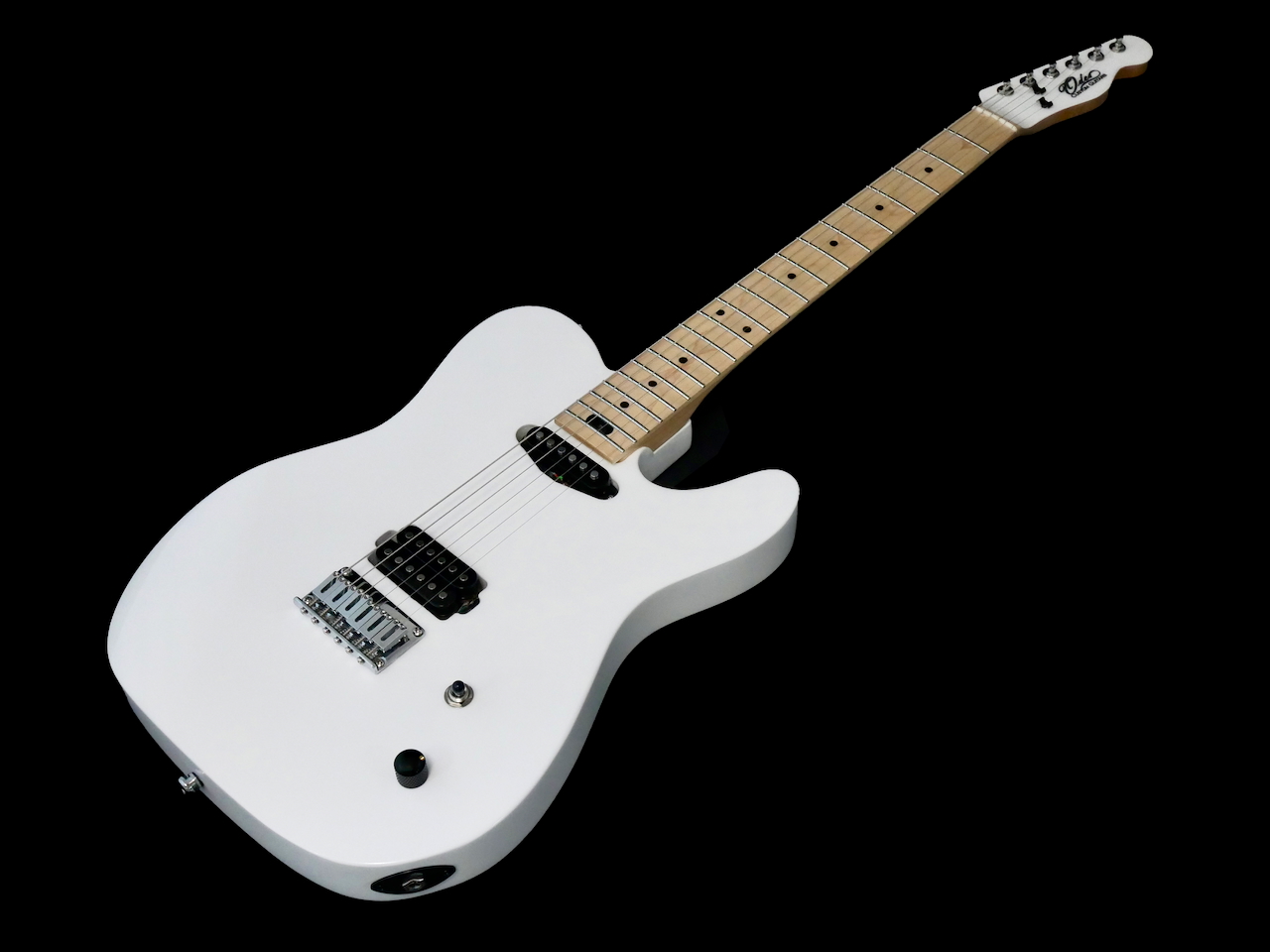
Odes Custom White Wizard -kitarassa on Oskun itse valmistama kaulamikrofoni, kun taas tallamikrofoni on avoin humbucker, joka tulee vanhasta Hamer-kitarasta.
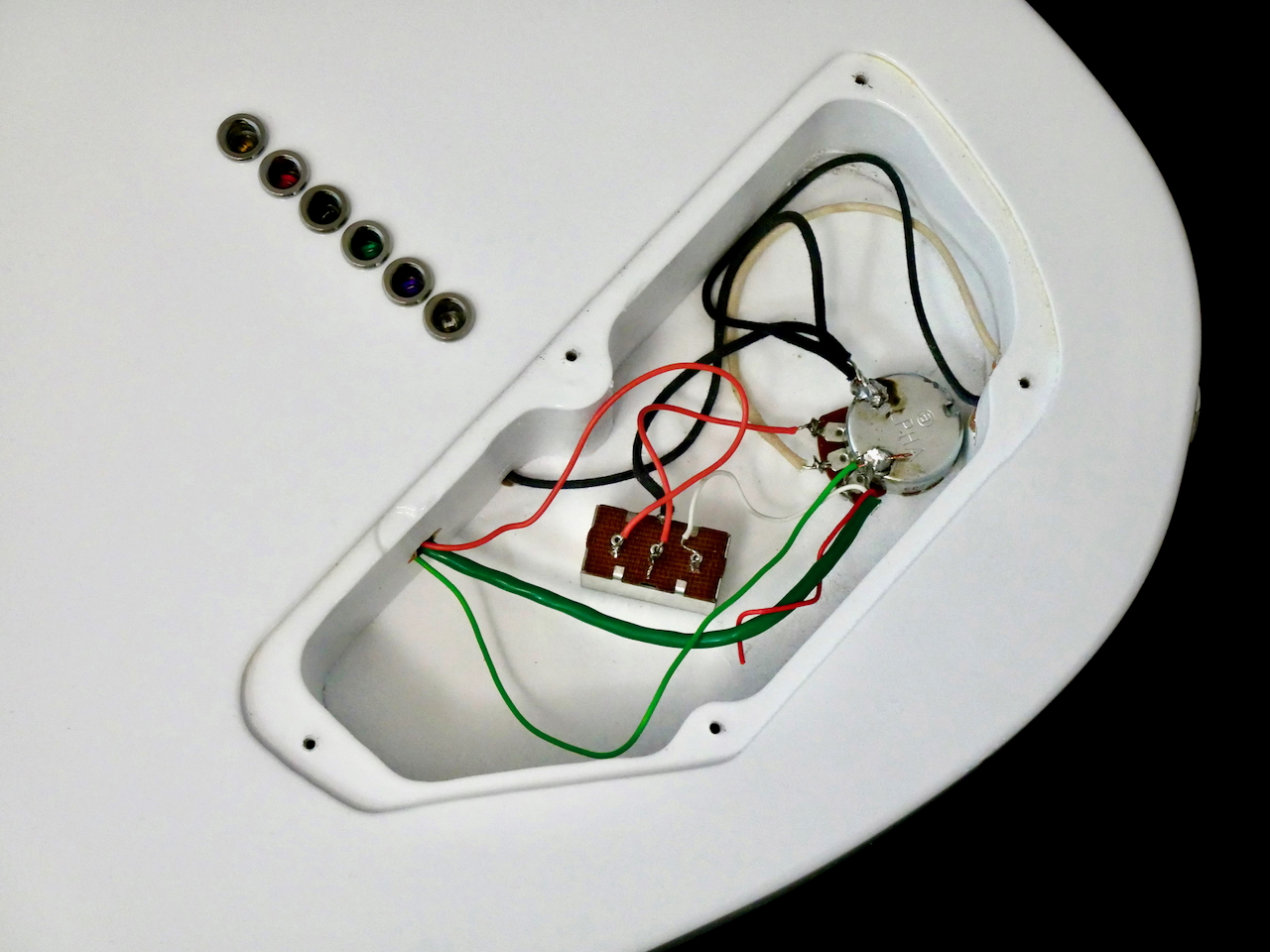
Mielestäni useimmat ihmiset odottaisivat käsintehdyltä sähkökitaralta perusteellista häiriösuojausta – joko johtavalla maalilla tai kuparifoliolla – joten tämä on ainoa pieni kritiikin kohta tässä arvostelussa. Työn laatu sinänsä on varsin kelvollista, ja kaikki toimii juuri niin kuin pitääkin.
Minusta tärkein ominaisuus, joka erottaa käsintehdyn sähkökitaran massatuotannosta, on epäilemättä kustomoidun soittimen ylivoimainen soittotuntuma.
Odes Custom Guitars White Wizardin kaulaprofiili on yksinkertaisesti uskomattoman mukava. Se on yhdistelmä 1960-luvun alun Tele-kaulaa – hoikkaa ja solakkaa C-profiilia – ja hieman epäsymmetristä poikkileikkausta, joka jättää hieman enemmän tukea peukalolle. Tämä profiili sopii minulle täydellisesti, ja kaulan satiiniviimeistely on virheetön.
Kitara on säädetty nopeaksi. On vaikea uskoa, että kyseessä on kymppisetti, koska kielten venyttäminen on niin vaivatonta.
Akustisesti White Wizard kuulostaa jo valmiiksi vahvalta ja täyteläiseltä.
Vahvistettuna tämä Odes Custom -kitara on melko erilainen kapistus kuin isoisäsi Tele. Kaulamikin soundi on puinen ja pähkinäinen, mutta ei liian lasimainen; se on enemmän Hendrix- kuin Bakersfield-henkinen. Tallan humbucker saa sinut haluamaan rokata ja tiluttaa, kunnes kanssaihmiset alkavat valittaa. Kytkimen keskiasento tarjoaa maukkaasti heliseviä soundeja.
Odes Custom Guitarsin White Wizard on loistava soitin modernille kitaristille. Tsekkaa Odesin sosiaalinen media nähdäksesi muita hienoja luomuksia!
Tiedoksi: Osku Toppinen ja Odes Custom -kitarat ovat mukana tämän vuoden Tonefestissä.

****
Muuten:
Käytin White Wizard -kitaraa myös tämän videon soolokitaran osissa:
****
One thing Finns are justifiably proud of is their education system. Take luthiers (guitar makers), for example; Finnish luthiers are not people who had to learn guitar-making autodidactically by trial-and-error, here in Finland there is indeed a vocational institution (or trade college) teaching you how to make guitars. At the Ikaalinen College of Crafts and Design you can study to become a competent maker of string instruments. Finland also has a Guild of Finnish Luthiers to help Finnish guitar makers with networking more effectively.
For me it is always a pleasure to get to know budding luthiers and their handiwork. A little while ago I was contacted by an up-and-coming luthier named Osku Toppinen, who has just started to try and establish his own electric guitars under the banner ”Odes Custom Guitars” – you can contact him via Facebook and Instagram.
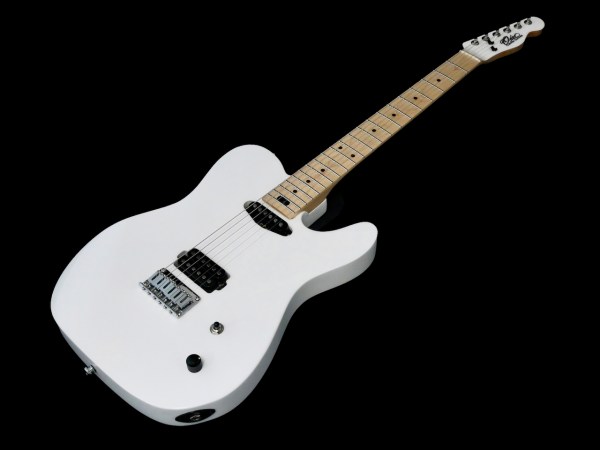
He recently took part in a small trade show in Helsinki, and I managed to get an electric guitar for testing. This Odes Custom Guitar is called the ”White Wizard”. It is a modern Tele-style instrument in gleaming white, priced at 1,800 € (sans VAT).
The White Wizard sure is one hell of a looker – an all-white alder body without any distracting pickguard, but with very luscious front and back contours. The body’s gloss finish is fantastic; black and white are the most difficult colours to get right, because every little flaw or dimple shows up like under a microscope. The White Wizard is simply flawless – I like it!
The neck might look like your regular Fender-type rock maple affair, but it is actually constructed from three long strips of maple, glued together lengthwise. The fretboard is a separate slab of maple, and offers 21 gleaming stainless steel frets.
The tuners are high-quality locking machine heads. The top nut is handmade from moose bone from Eastern Finland.
The dark hole at the end of the fretboard is actually the truss rod access. Odes Custom White Wizard sports a rod with a wheel nut – like first seen on Music Man-instruments – which makes adjustments a doddle. You don’t need a special key or other tool to adjust the rod, any metallic object that fits in the holes of the wheel can turn the nut.
The bridge is a modern six-saddle unit, made by Gotoh, with through-body stringing.
The neck joint is the traditional ”bolt-on” job – some players would prefer something rounder, but I’ve never had any problems with vintage-type neck joints. As long as the neck is kept firmly and securely in place, I’m good to go.
The Odes Custom White Wizard guitar comes with a bespoke neck singlecoil pickup made by Osku himself, while in the bridge position we find a coverless humbucker that had once been installed in a Hamer guitar.
In my view, most people would expect thorough shielding in a handcrafted electric guitar – either with conductive paint or using copper-foil – so this would be my only small niggle in this review. The workmanship in itself is quite decent, and everything works just as it should.
For me, the main feature that distinguishes a handmade electric guitar from high-volume bulk production is, without any doubt, the superior playability of a custom instrument.
The Odes Custom Guitars White Wizard’s neck profile is simply unbelievably comfortable. It is a combination of an early 1960s Tele neck – a slender, nice C-profile – coupled with a slightly asymmetrical cross-section, leaving a little bit more meat for your thumb to hold on to. This profile fits me to a tee, and the satin finish of the neck is flawless.
The set-up is fast and slinky. It’s hard to believe you’re actually dealing with a set of 10s here, because string-bending is so effortless.
Acoustically, the White Wizard already sounds strong and full.
Amplified, this Odes Custom Guitar is quite a different proposition compared to your grandpa’s Tele. The neck pickup has a sound that’s woody and nutty, but not too glassy; it’s more Hendrix than Bakersfield. The bridge humbucker makes you want to rock and shred until your better half starts complaining. Additionally, the switch’s middle selection offers some tasty jangling tones.
Odes Custom Guitars’ White Wizard is a great instrument for the modern guitarist. Check out Odes’ social media for other cool creations!
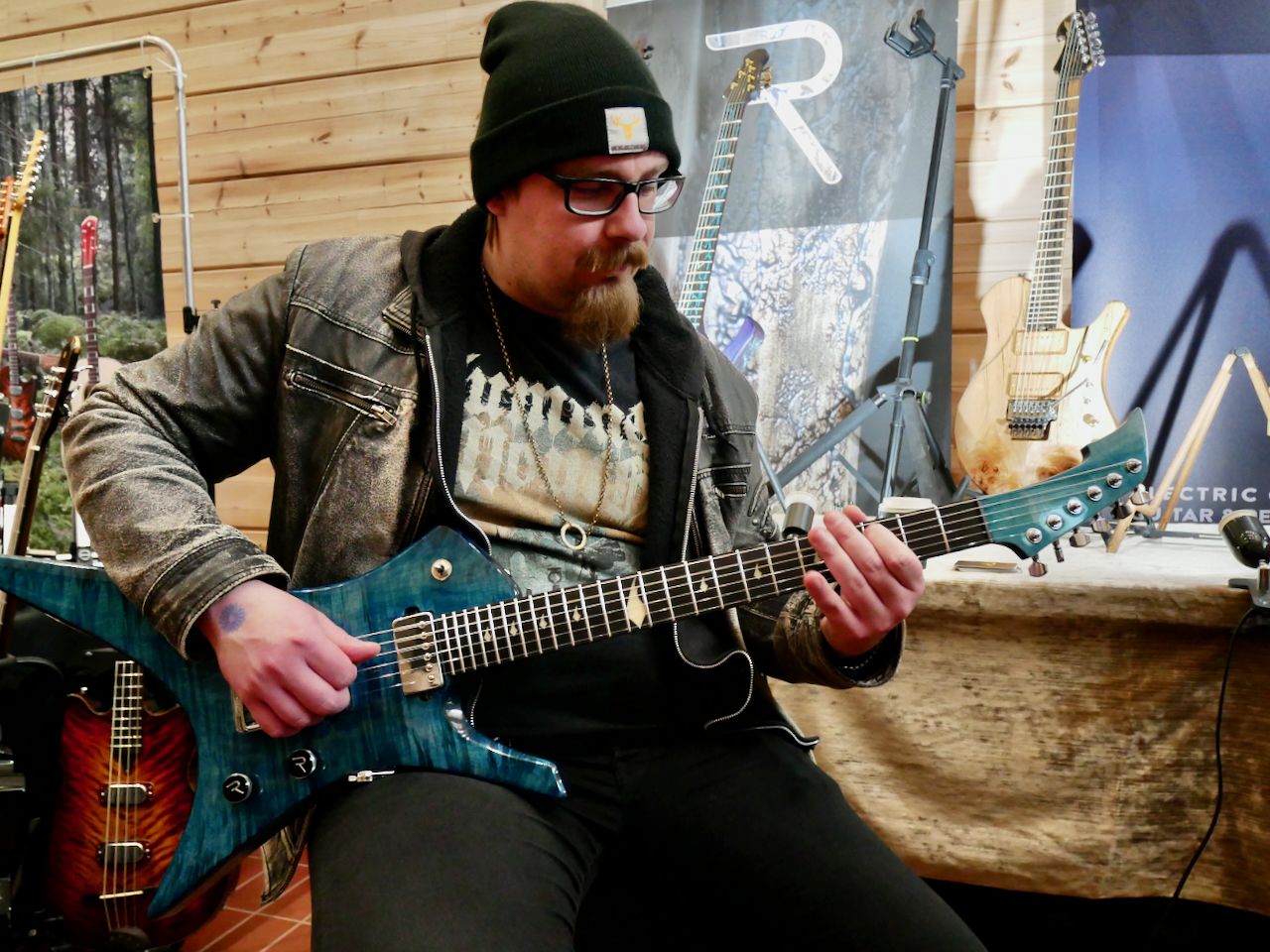
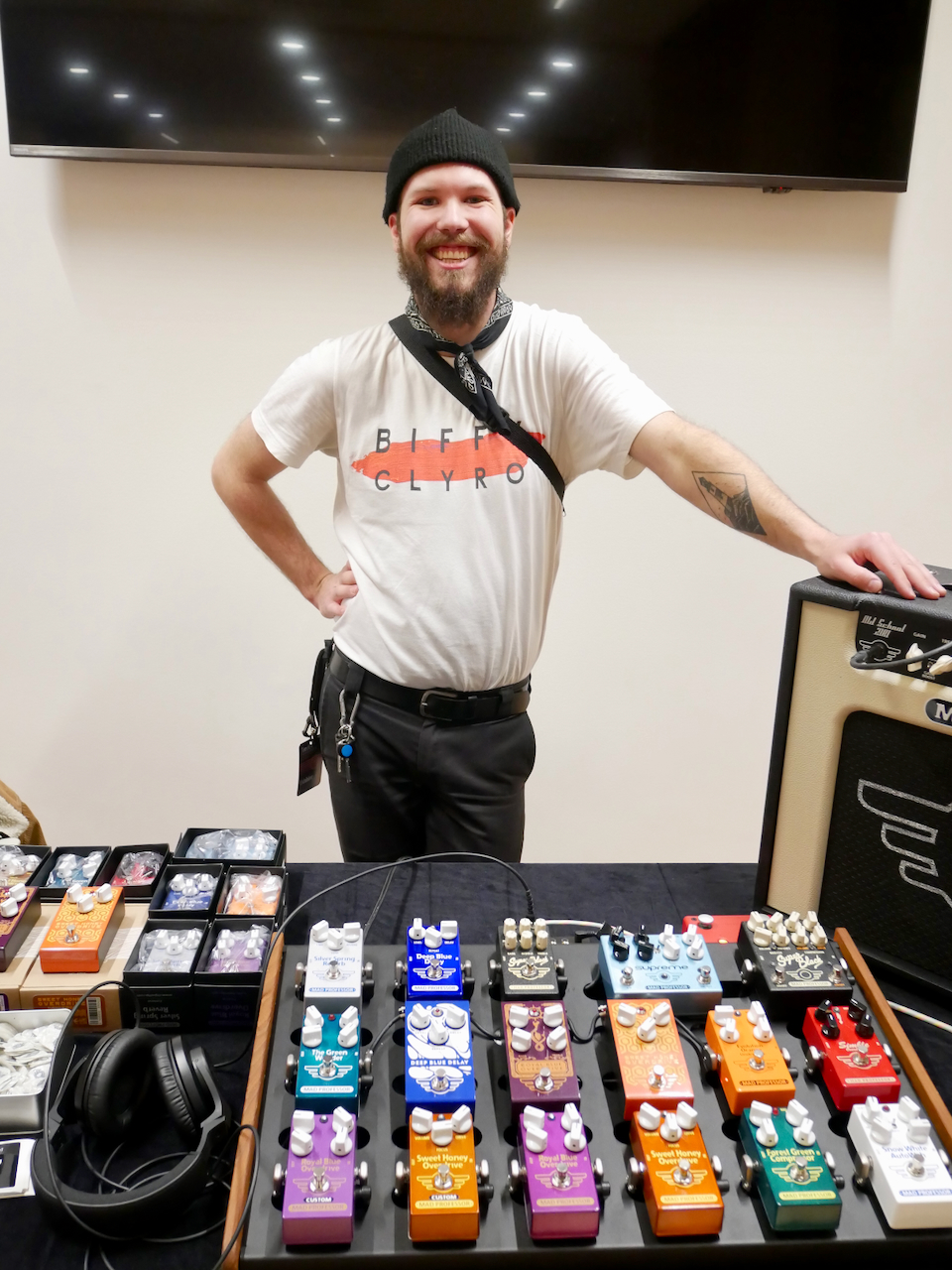
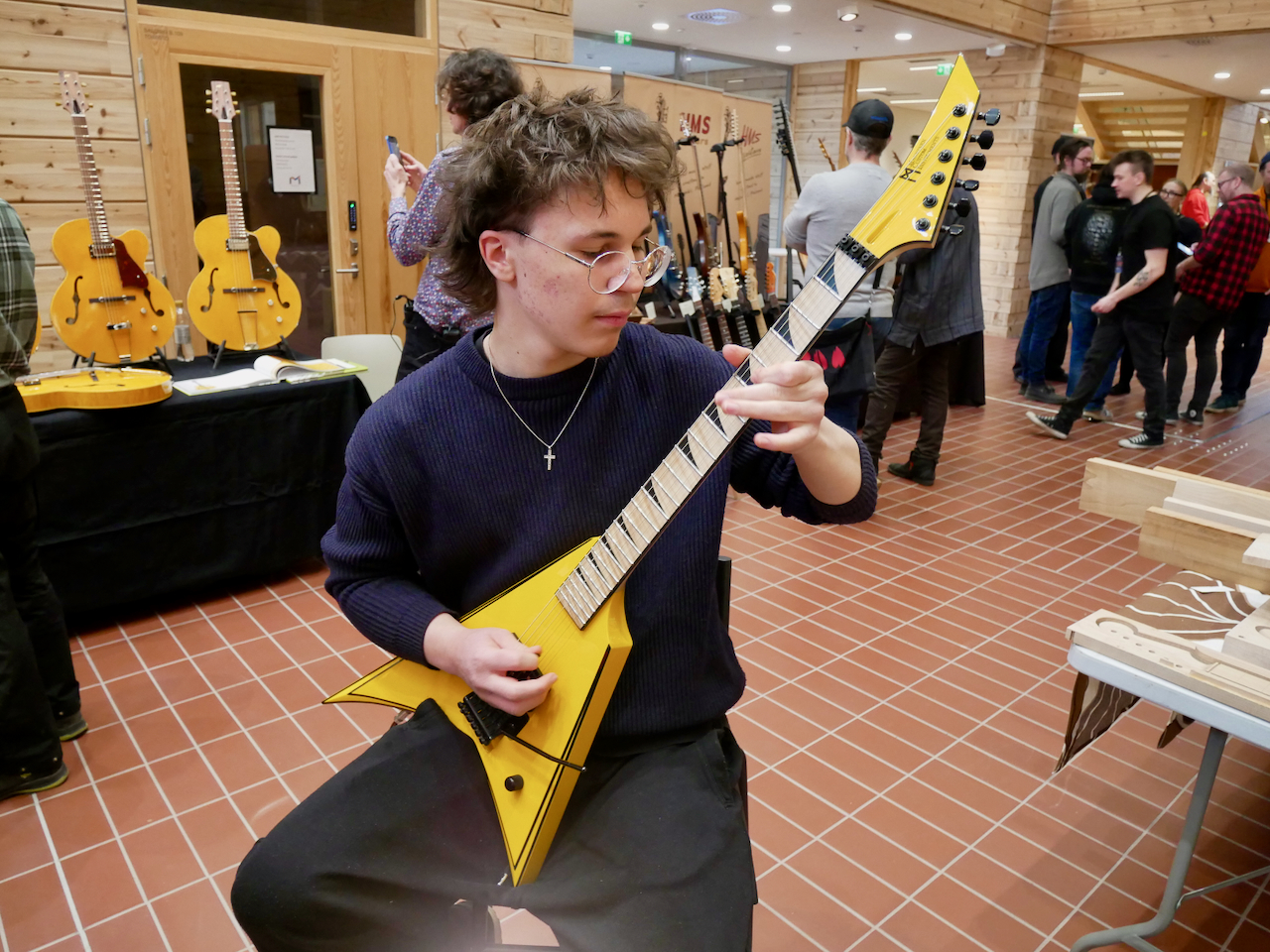
If you want to try out Finnish handcrafted instruments, and you’re able to come to Helsinki at the end of February, you should go and visit this year’s Tonefest exhibition, which runs on the 28th of February and the first of March.
****
PS: I used the White Wizard for the lead guitar part in this video, too:






 Kitarablogi.com – Finland's premier Guitar and Bass blog