

Lisää kuvia löydät TÄÄLTÄ.
Click HERE for more pictures.


Kitarablogi.com – Finland's premier Guitar and Bass blog
Juttuja kitaroista ja bassoista


Helsinki Tonefest 2018 -messujen aikataulut on julkistettu:
Demolava
11:00 Kaakkoon
11:30 Hehku & Ile Kallio
12:00 DLX Music & Timo Kämäräinen
12:30 Custom Boards
13:00 Bluetone
13:30 Taisto Guitars
14:00 TOOB
14:30 AJL Guitars
15:00 Ruokangas
Klinikat
10:30 Pauli Halme
11:45 Tomas Niemistö
13:00 Erkka Korhonen
14:15 Tuomas Wäinölä
18:00 Ovet auki
18:30-19:00 Samuli Federley
19:15-20:15 Mikko Kosonen Kosmik 5
20:35-21:35 Jackie Venson
22:00-23:15 Matt Schofield
****
Lisätietoja saa TÄÄLTÄ.

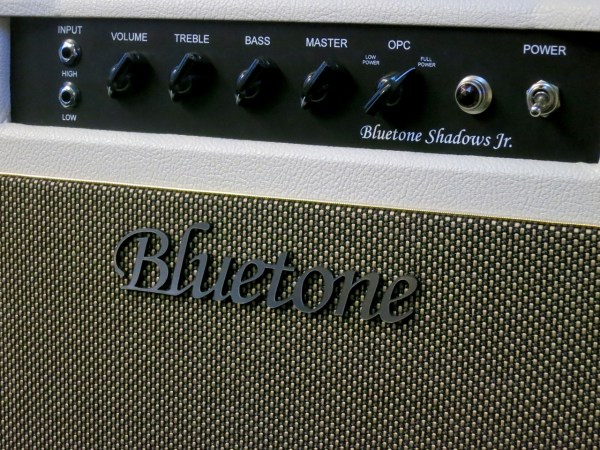
Following in the wake of their very popular Shadows Reverb combo, Finnish boutique makers Bluetone Amps have recently introduced a smaller sibling, called the Shadows Jr.
The Bluetone Shadows Jr. (combo starting at around 1,300 €) is a hand-built, all-valve guitar combo, whose sound is based on the classic Vox AC15. Instead of being a straight, slavish copy, though, the Shadows Jr. incorporates many of the up-to-date features that have made Bluetone such a well-regarded boutique maker.
****
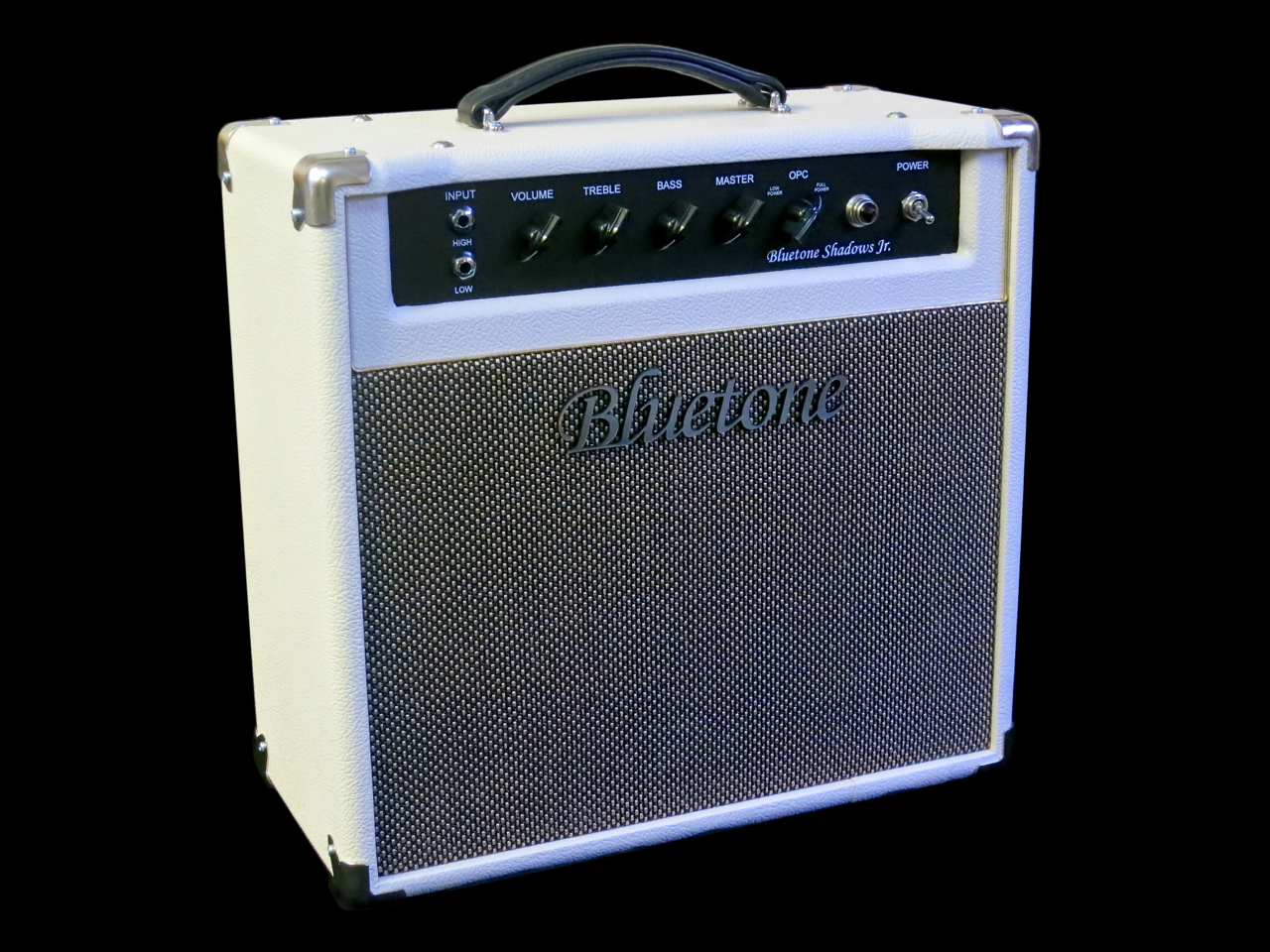
The Shadows Jr. has the clean and business-like looks that active players truly appreciate. You don’t want to be slowed down on stage by a control panel that’s hard to decipher. The Bluetone is clarity itself.

This is a single-channel all-valve combo running in Class AB mode giving you maximum output power at just over 10 watts.
The Shadows Jr. is designed around a trio of 12AX7 preamp tubes and a pair of EL84s powering the speaker. The combo’s power valves are cathode-biased, which means that swapping tubes won’t necessitate a trip to your friendly amp technician.
Bluetone is one of the very few amp makers who use torroidal power transformers. These doughnut-shaped devices (the black thing in the upper left corner) are lighter and more dependable than traditional transformer designs, and they offer more exact tolerances. As a valve amp is highly dependable on a stable and electronically quiet power supply for superior tone, Bluetone decided on using torroidal transformers early on, and they’ve never looked back.

The Warehouse Guitar Speakers Green Beret is an excellent choice for a strongly Brit-flavoured combo. Bluetone break in all of the speakers they use with low-frequency sine waves.

Despite being a compact single-channel combo amp (weighing only around 10 kg), the Bluetone Shadows Jr. offers an amazing amount of different clean and gain tones, thanks in no small part to the amp’s PPIMV master volume and the three-step OPC-switch.
PPIMV stands for ”post-power inverter master volume”, which is the preferred way of master volume design at Bluetone Amps, because it eats up the least amount of an amplifier’s tone, when in use. And if you turn the master volume knob all the way up, a PPIMV design makes the master volume ”disappear” electronically, making it completely transparent.
OPC, on the other hand, stands for ”output power control”. On the Shadows Jr. you have a choice of three settings, giving you 0.2, two or the full 10 watts of power, respectively. The magic of the OPC circuit is that it will turn volume levels down very noticeably without changing the tonal character of your settings, while also leaving almost all of the dynamics intact. Many lesser output power designs will turn a clean setting into an overdriven sound when you select a lower output level. The Shadows Jr. will sound almost the same on ten, two or 0.2 watts – the small tonal differences are the result of the speaker being driven differently. With the OPC at the lowest setting you will get approximately 95 percent of the full ”Shadows Jr. experience” at bedroom/apartment block volume levels. That’s fantastic!

The back panel gives you a choice of using the internal speaker or an external 4- or 8-ohm cabinet.
Bluetone have also included their tasty buffered, switchable effects loop with a dedicated volume control. When the loop is not in use, the circuit can also serve as a handy lead boost.
****
Are you looking for a cool little tone machine with a strong Vox-y flavour, and no-compromise build quality? You should do yourself a favour and try the Bluetone Shadows Jr.
The Shadows Jr. ticks all the right boxes:
You get that classic clean tone with that sweet mid-range ”attitude”. A clean tone that is lively, but never glassy or brittle.
With the front-end volume near the other extreme you’ll get overdrive and distortion that is more gritty and dynamic – think later era Beatles, windmilling Townshend, or multilayered May – than creamy and compressed.
But don’t forget to check out the wide scope of break-up Blues and Rock ’n’ Roll sounds to be had between 11 and 2 o’clock on the volume (gain) control (depending on the guitar used). You’re in for hours of wailing soloing and chunky rhythms without ever needing an overdrive stompbox.
Here’s a Gibson Les Paul Junior on its own:
Demo track number one features two rhythm guitar tracks – a Fender Stratocaster (stereo left) and a Gibson Les Paul Junior (right) – as well as a Hamer USA Studio Custom on lead duty:
The second demo track features a Gibson Les Paul Junior (rhythm left), an Epiphone Casino (rhythm right), and a Fender Telecaster (lead guitar):
****
The Bluetone Shadows Jr. is a fantastic little tone machine for the Vox-inclined player, who likes warm clean tones, dynamic break-up sounds, and gritty late-Sixties/early-Seventies dirt.
The build quality is miles ahead of any mass-produced guitar amplifier – this is a handcrafted boutique-grade valve amp. Modern additions like the PPIMV master volume, the OPC circuit, and the switchable effects loop, also raise this amp above any vintage-style copies.
For many the crucial question with low-wattage amps is volume. How loud is the Bluetone Shadows Jr?
Let’s just say that if you’ve only ever tried 10-watt tranny combos before you’re in for quite a surprise! These are ten (-plus) watts of British-style valve amp majesty, with every last ounce of loudness wrung out of the power amp and speaker.
With the OPC and the master on full, this little chap will easily get you into trouble with your neighbours in your block of flats on clean tones alone. If you don’t need 100 percent clean tones, the Shadows Jr. will easily get you through many rehearsals and gigs in small venues. And there’s always the option to stick a mic in front of the speaker.
So, don’t expect a Heavy Metal-type volume onslaught, but be prepared for some serious business.
****
Bluetone Amps Shadows Jr.
Prices starting from 1,300 €
Contact: Bluetone Amps
Pros:
+ Handmade in Finland
+ Master volume
+ OPC
+ Effects loop
+ Sound
+ Value-for-money

• Handmade in Finland
• All-valve Class AB single-channel combo
• 10 W, 2 W or 0.2 W of output power (OPC)
• Diode recitified
• Two-band EQ
• PPIMV Master Volume
• Built-in buffered FX loop/booster
• 3 x ECC83 (12AX7) & 2 x EL84
• One 10-inch WGS Green Beret speaker (25 Watts/8 Ohms)
****
Demo Track
All guitars recorded with the Bluetone Shadows Jr. (no pedal effects used). Delay and reverb added during mixdown.
• Rhythm guitars: Fender Stratocaster (left channel) & Gibson Les Paul Junior (right channel)
• Lead guitar: Hamer USA Studio Custom
Recorded with a Shure SM57.

• Digital practice and recording amp
• 40 W power (2x 20 W)
• Speakers: 2x 6.5″
• 21 Amp models
• 47 Effects
• Controls for Gain, Volume, Treble, Bass & Master
• Three layer buttons
• Tap button
• USB recording output
• Aux input
• Headphone output
• Digital chromatic tuner
• Bluetooth audio streaming
• Easy WIFI firmware and feature updates
• Editing and sharing via Fender Tone app (iOS & Android)
****
Demo tracks recorded with a pair of Shure SM57s.
Guitars used – Fender (Japan) ’62 Telecaster Custom reissue & Hamer USA Studio Custom


Where there’s a forum, there’s a fight – or at least that’s what it looks like.
Electric guitarists like to argue for ages about valve amplifiers and digital amp modellers, and which one is ”better”.
Uke players, for their part, get all hot under the collar when it comes to ukulele strings. There are two main camps – Nylgut-fans and fluorocarbon-connoisseurs. Although the uke is classified as an nylon-string instrument, very few instruments are strung with straight nylon anymore.
Nylgut and Supernylgut strings have been developed in Italy. A string company named Aquila came up with a patented way of manufacturing plastic strings, whose sound and feel is as close as possible to traditional gut strings. Gut strings have always been somewhat problematic, because it is hard to produce a string of uniform quality, when the basic material is of animal origin. Additionally, gut strings react far stronger to changes in humidity and temperature (resulting in pitch fluctuations), compared to plastics like nylon.

Aquila Nylguts have become a de facto industry standard, especially for affordable and mid-price ukuleles.
Nylguts are easy to spot thanks to their milky look and silky surface. First-generation Nylgut strings tended to have a coarser surface, which made them susceptible to a bit of handling noise (faint squeaks), but current versions have managed to do away with this problem (almost) completely.
Aquila Nylguts tend to produce a crisp, bright and open sound, which is why they can be a good choice for darker sounding ukuleles (like many plywood-bodied instruments). Some players, though, dislike the soft bendiness of Nylgut strings.

Fluorocarbon strings are a quite recent addition, too, despite the fact that the material has already been in use for fishing lines for quite some time. Fluorocarbon is a sturdy and dense material that makes it possible to make slightly smaller gauge strings than Nylgut. Fluorocarbons also tend to feel a bit stiffer.
C.F. Martin’s ukuleles come strung with fluorocarbons as standard, and many high-end makers have started to follow Martin’s lead. Fluorocarbon strings are also quite popular with progressive players and many vintage ukulele owners.
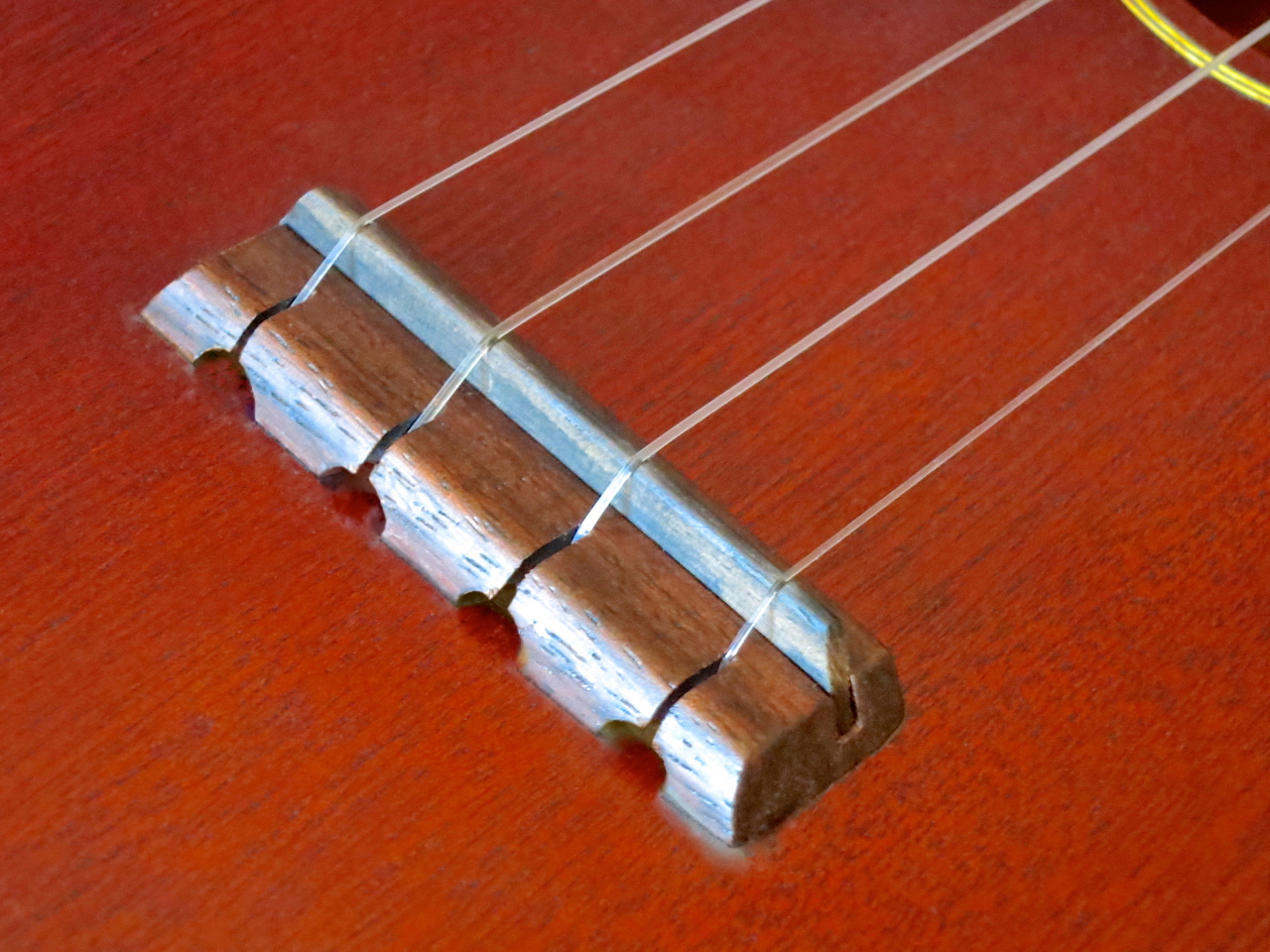
Most fluorocarbon strings are clear, even though you can also buy coloured versions of this string type, too. In Finland Martin-strings are the most widely available, but many other manufacturers, like D’Addario, GHS or Worth, make their own quality fluorocarbons.
A seldomly mentioned advantage of fluorocarbon strings is that – because of their slightly smaller diameter – they can sometimes solve intonation problems, if a uke pitches slightly sharp with a set of Nylguts.
Fluorocarbon strings tend to sound meatier and punchier compared to Nylgut strings.
****
The audio clips have been played on a pair of Martin Style 2-type sopranos – a Sigma SUM-2S (Supernylgut) and an Ohana SK-38 (fluorocarbon).
****
Read Kitarablogi’s Ukulele Round-up 2017 HERE.



 Kitarablogi.com – Finland's premier Guitar and Bass blog