Three examples showing the different basic styles of wah-pedal use: • ”Papa…” – whacka-whacka Motown/Funk • ”Voodoo…” – expressive wah-wah use • ”Money…” – so-called ”cocked” wah-wah (pedal parked in one position) **** • Vox V845 wah-wah • Mad Professor Simble Overdrive • Ibanez 850 Fuzz Mini • Fender (Japan) Stratocaster and Hamer USA Studio Custom guitars • Juketone True Blood valve combo
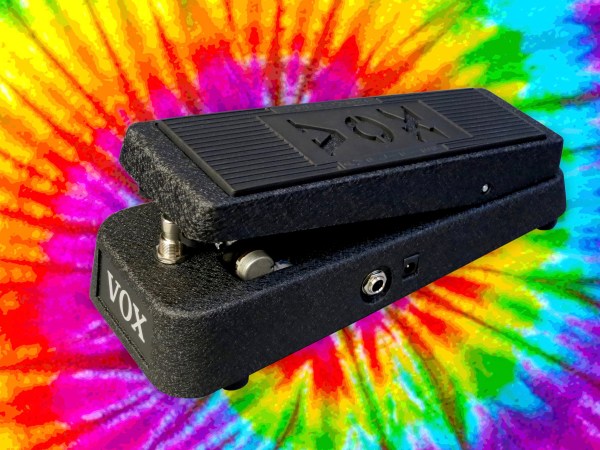
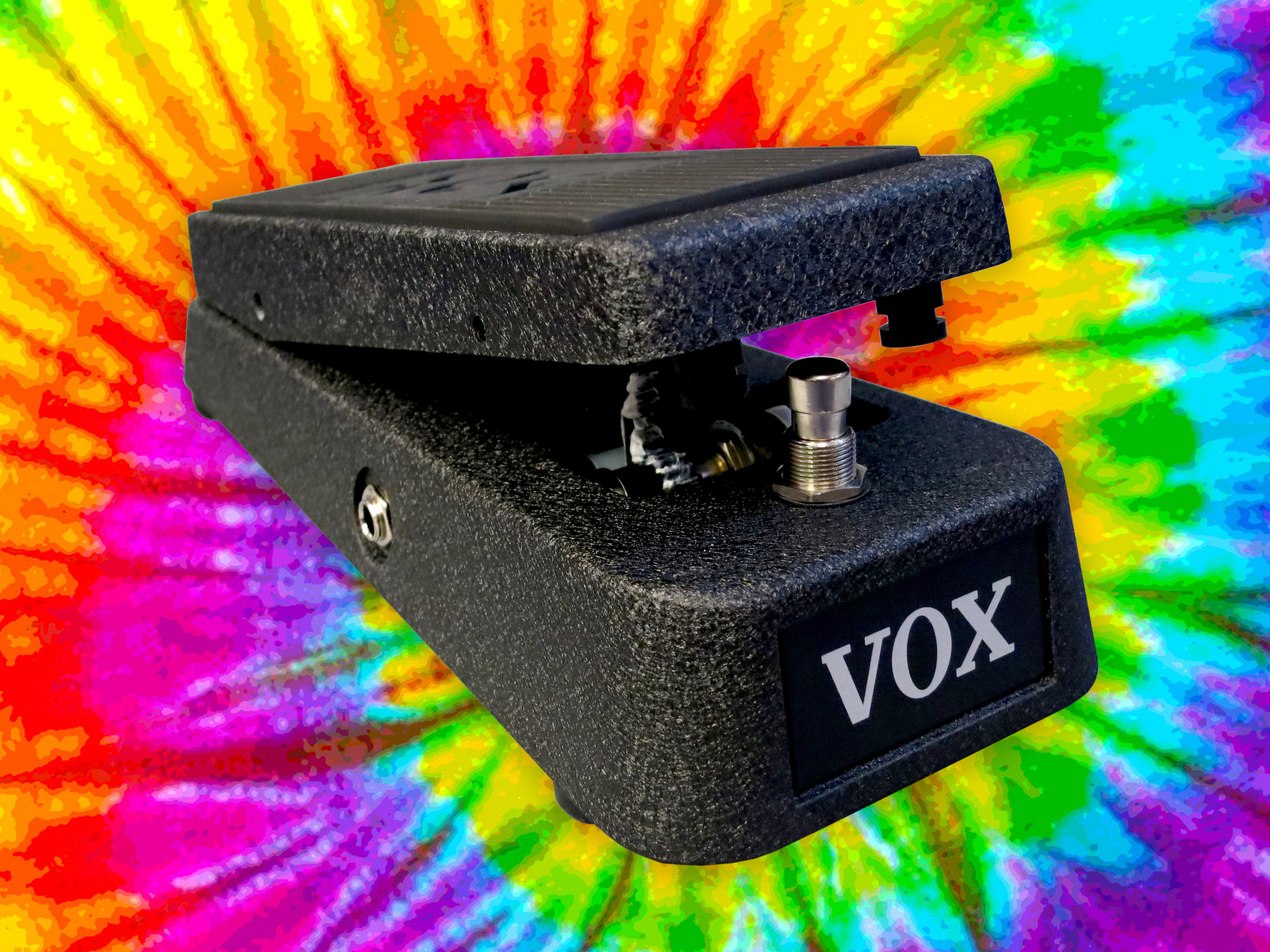
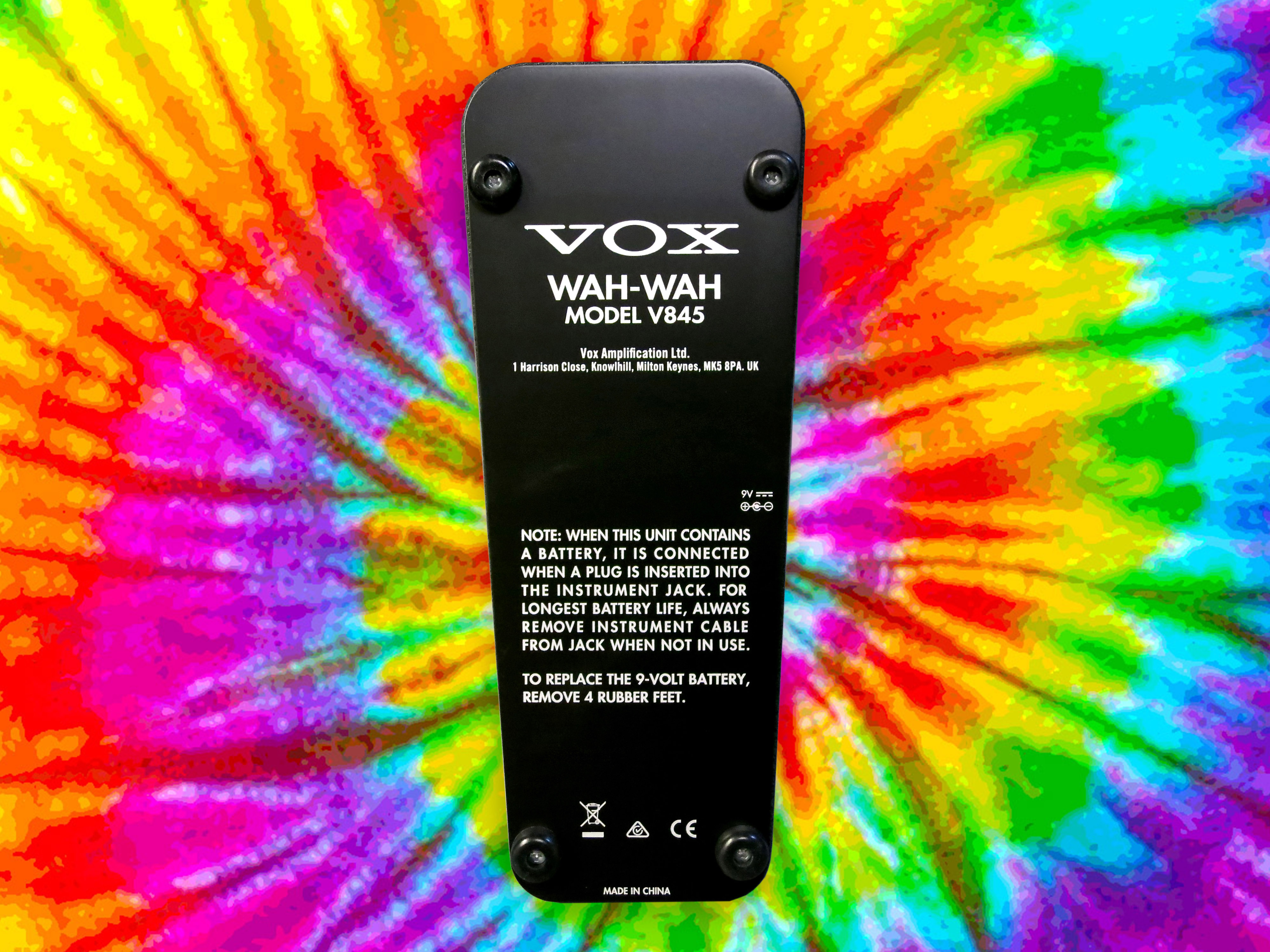
The Vox V845 is an interesting wah-pedal for at least three reasons – it’s made by the inventors of the wah-wah, it is very affordable (around 70-75 euros in Finland), and it is much lighter than regular Vox- or Dunlop-made wah-wahs (only 900 g compared to approx. 1.6 kg).
This drastic difference in weight is achieved by using a plastic core for both the main casing and the treadle. This core is then coated with an aluminium-based coating that gives the V845 the traditional look of a wah.
Electronically the Vox V845 is virtually identical to a vintage Vox-wah, apart from being built with a couple of PCBs and modern components.
An important improvement over the originals from the 1960s and 70s is the addition of a DC input, which allows you to power the V845 from a modern power supply.
The Vox V845 looks like a wah-wah, feels like a wah-wah, so it’s no surprise that it also sounds like a genuine Vox-wah. The V845 switches on and off in the traditional way by giving the switch beneath the treadle a push in the toe-down position. The sound is big and warm, and, typical for a Vox, a little less abrasive in the top end than a standard Dunlop Cry Baby. What’s not to like?
I’ve been using the Vox V845 for four years by this point, and it hasn’t given me any trouble so far. Check it out!
****
Here are two recent recordings I’ve used the V845 on:
Finnish company Uraltone ran a DIY pedal workshop at this year’s Tonefest Helsinki, where you could assemble this overdrive/distortion pedal kit. The three-way mini-switch gives you regular distortion, slightly overdriven boost, and distortion with asymmetrical clipping. All guitar tracks recorded using the Uraltone Tonefest Overdrive Plus pedal: • main rhythm guitar (centre): Harley Benton DC-60 Junior; Juketone Trueblood • rhythm guitar (left): Harley Benton DC-60 Junior; Bluetone Black Prince Reverb • rhythm guitar (right): Squier Sonic Mustang SS; Bluetone Black Prince Reverb • lead guitar: Jackson JS32 Dinky; Vox V845 wah; Bluetone Black Prince Reverb • microphone: Shure SM7B
Yllättävän monelle kompressori on jotenkin mystinen laite, joka käyttää musta magiaa soundin muokkaamiseksi. Todellisuudessa kompressori (yleiskielessä: kompura) on (puoli-) automaattisesti toimiva signaalitasoon vaikkuttava piiri, jolla kavennetaan signaalin dynamiikka – siis: hiljaisten ja kovien äänien välinen ero – toivotulla tavalla.
Etenkin puhtailla kitarasoundeilla kompressorista voi olla paljon apua, silloin kun kaivataan lisää sustainea, tukevampaa soundia, tai vaikkapa rauhallisempaa äänikuvaa. Esimerkiksi monille kantrikitaristeille kompura on lähes pakollinen varuste, jolla saadaan nopeat lickit, joissa usein sekoittuvat otetut äänet ja avoimet kielet, kuulostamaan tasaisempana ja sliipattuina.
Kitaristille tarjotaan nykypäivänä monta eri kompuraa pedaalin muodossa, joista suurin osa toimii ”enemmän tai vähemmän” -periaatteella, ehkä vielä lisätyllä atakki-kytkimellä.
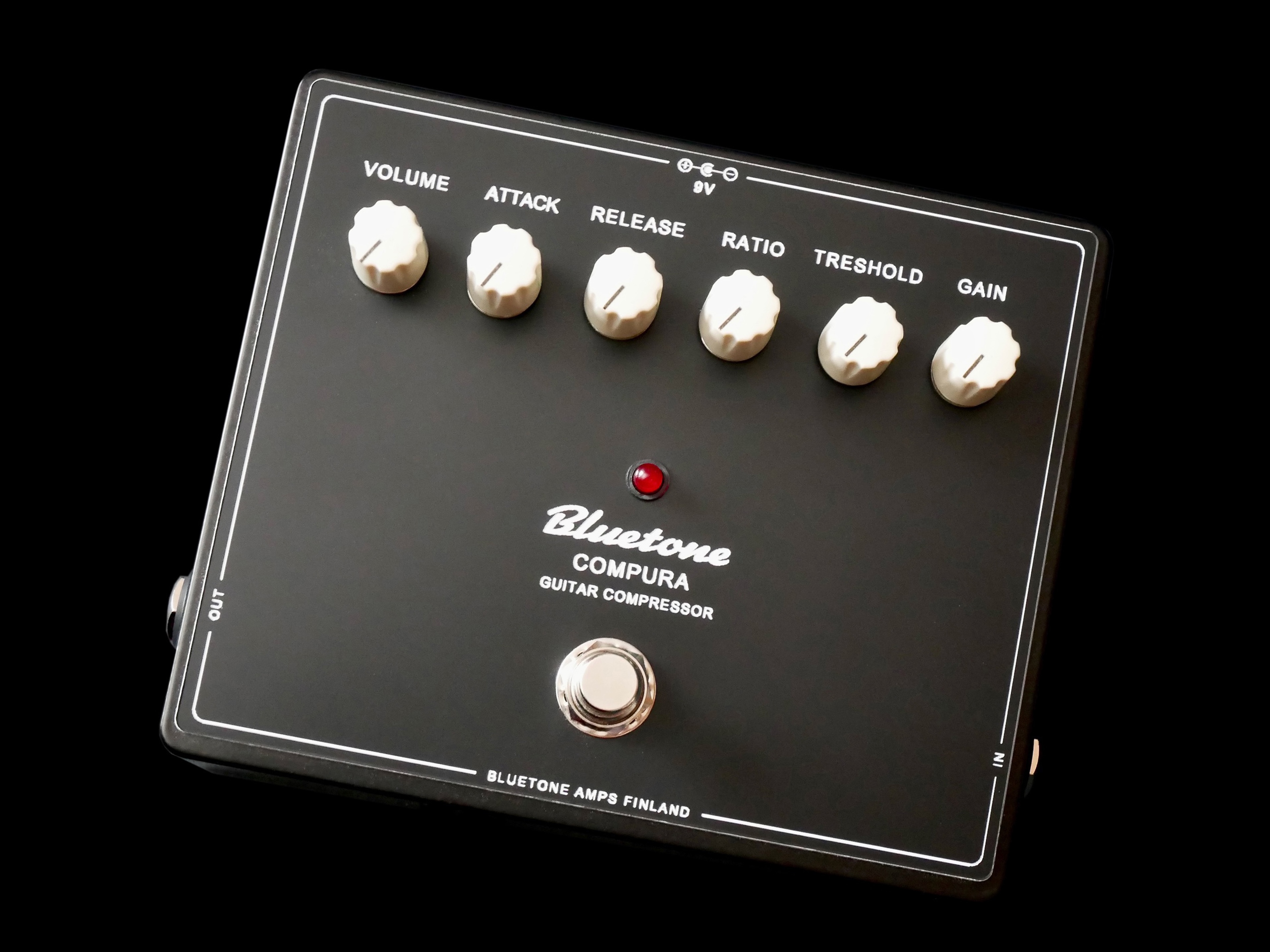
Suomalainen Bluetone Compura (330 €) lähestyy aihepiiriä toiselta kulmalta tarjoamalla laajasti säädettävän studiokompressorin kitarapedaalissa. Kuusi säädintä voivat aluksi näyttää hieman pelottavalta, mutta kun niiden toimintaa käy ensin rauhallisesti läpi, niin homma alkaa nopeasti selvenemään.
• GAIN on Compuran esivahvistus. Tässä ei ole kyse säröstä, vaan siitä, että eri kitaroissa (ja bassoissa) on eri mikrofonien vuoksi erilaiset lähtötasot. Gain-säätimellä pystyy siis optimoimaan valitun kitaran signaalitasoa kompressiopiiriä varten.
• THRESHOLD (kyllä, kuvan varhaisessa tuotantomallissa on pieni kirjoitusvirhe) tarkoittaa kynnystasoa. Threshold-tason alle jäävä signaali pysyy kompressoimatta, kun taas kynnyksen ylle menevät osuudet puristetaan dynamiikan osalta kasaan.
• RATIO on kompressiosuhteen säädin. Studiokompressoreissa lukee ratio-säätimen vieressä tavallisesti numeerinen suhde, jossa esimerkiksi ”1:1” tarkoittaa, ettei kompressoida lainkaan, kun taas ”8:1” tarkoittaa, että jos tulosignaalin taso nousee kahdeksan desibeliä kynnystason yli signaalia kompressoidaan niin, että lähtötaso nousee vain yhden dB:n verran. Bluetone Compurassa säädöt tehdään korvakuulolla.
• ATTACK ja RELEASE säätävät kuinka nopeasti kompressori alkaa vaikuttamaan signaalin tasoon sen jälkeen, kun kynnystaso ensin ylittyy (Attack-säädin), sekä silloin kun tulosignaalin taso taas laskee kynnystason alle (Release-säädin). Attack-säätimellä pystyy siis vaikuttamaan esimerkiksi siihen, kuinka paljon äänten atakista säilyy muuttumattomana, kun taas Release-säädin vaikuttaa siihen kuinka nopeasti kompressiopiiri ”nollauttuu” signaalipiikkien välissä.
• VOLUME-säädin on Bluetone Compura -pedaalissa lähtötason säädin, siis sama säädin jota kutsutaan monessa studiokompressorissa make-up gainiksi. Volume-nuppia säädetään korvakuulolla omien tarpeiden – esimerkiksi signaaliketjun muiden efektien – mukaan. Jotkut tykkäävät käyttää kompressorit miedoina boostereina, kun taas toiset haluavat, että kompressorin toiminta on signaalitason osalta lähes huomaamaton.
****
Studiossa kompressorin mittaristo on hyvin tärkeä työväline, josta saa tietoa siitä kuinka ”kuuma” tulosignaali on, kuinka monta desibeliä signaalin dynamiikka puristetaan kasaan, ja millä tasolla efektin lähtösignaali on.
Kitarapedaalissa tällainen mittarointi on minusta usein tarpeeton; usein värikkäät mittarit lattialla jopa vievät soittajan huomiota pois kaikkein tärkeämmästä – omasta soundista.
Tärkein on minun mielestäni se että muistetaan, ettei ole olemassa ”ainoa oikea tapa” käyttää sellaista kompressoria kuin Bluetonen Compura, koska mukana on aina kokonainen kasa muuttajia, kuten soitin, oma soittotatsi, musiikkigenre, muu signaalitie, käytössä oleva vahvistin jne.
Kun ottaa itselleen ensin hieman tutustumis- ja kokeiluaikaa Bluetone Compuran kanssa, löytyy hyvin helposti ja nopeasti sellaiset parametrien asetukset, jotka toimivat sinun omassa musiikillisessa työympäristössä. Se mikä sinun mielestäsi toimii sinun omassa musiikissa, on oikea riippumatta siitä, mitä toiset ehkä sanovat.
Helsingissä käsintehty Bluetone Compura ei ole halpakompura, vaan huippulaadukas pro-tason kompressoripedaali, joka tarjoaa studiokompressoreista tuttua säädettävyyttä kompaktissa muodossa. Siihen nähden laitteen hinta on jopa edullinen.
****
• Puhtaat komppiosuudet ja soolokitara – Fender ’62 Telecaster Custom Reissue • Puhtaat ja säröiset komppiosuudet – Fender ’57 Stratocaster Reissue • Vahvistin – Bluetone Black Prince Reverb • Pedaalit – Bluetone Compura, Mad Professor Simble OD • Mikrofoni – Shure SM7B • Mikkivahvistin – Cranborne Audio Camden EC2 • Interface – Universal Audio Volt 2
****
DEMO CLIP 1 Kompressorin ansiosta puhdas kitarariffi tulee kokonaiskuvassa paremmin esiin. Aluksi neljä tahtia ilman kompressoria. **** DEMO CLIP 2 Puhtaan vahvistimeen soitettu wah-wah ei aiheuta niin paljon säröä/klippausta, jos käytetään kompressoria wahwah:n ja vahvistimen välissä. Aluksi neljä tahtia ilman kompressoria. **** • Kitara – Fender ’57 Stratocaster Reissue • Vahvistin – Bluetone Black Prince Reverb • Pedaalit – Bluetone Compura, Vox V845 • Mikrofoni – Shure SM7B • Interface – Universal Audio Volt 2
Here’s a demo of the Bluetone Compura guitar compressor, based on the INXS classic ”Need You Tonight”. • Clean rhythm and lead guitars – Fender ’62 Telecaster Custom Reissue • Clean and overdriven rhythm guitars – Fender ’57 Stratocaster Reissue • Amp used – Bluetone Black Prince Reverb • Pedals used – Bluetone Compura, Mad Professor Simble OD • Mic used – Shure SM7B • Preamp used – Cranborne Audio Camden EC2 • Interface used – Universal Audio Volt 2
• Guitar used – Fender Japan 60s Stratocaster • Amp used – Bluetone Black Prince Reverb • Bass used – Höfner 500/1 Violin Bass • Bass amplifier – Bluetone Bass 200 • Mic used – Shure SM7B • Preamp used – Cranborne Audio Camden EC2 Check out Laundromat’s Instagram page HERE.
Laundromat is the name Finnish fuzz builder Antti Karttu has chosen for his line of handcrafted fuzz pedals.
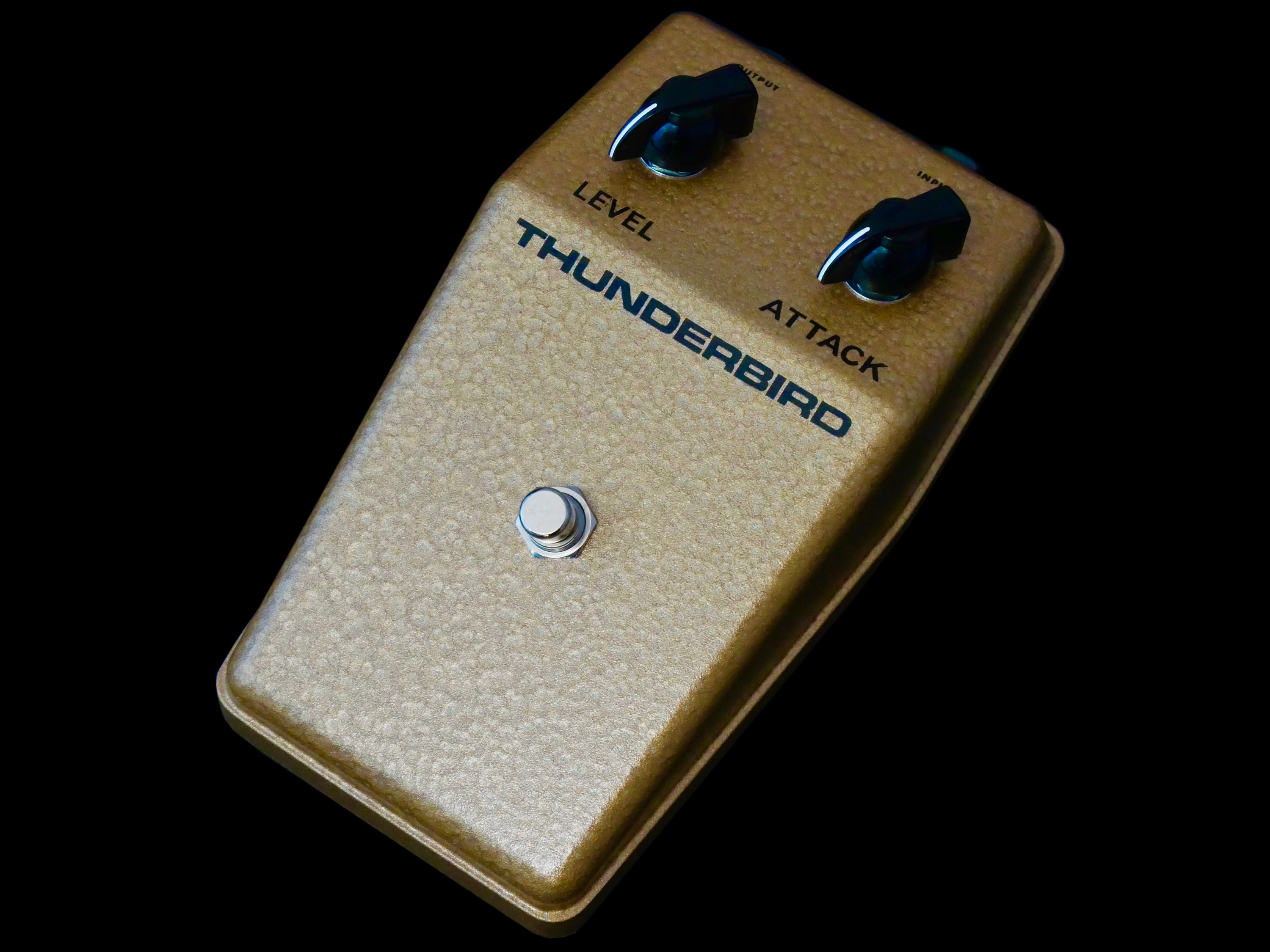
The Thunderbird Mk I (390 €) is based on Gary Hurst’s legendary Tone Bender Mk I. The 1965 Tone Bender was one of the first fuzz pedals ever, and it started the fuzz craze in the UK.
Laundromat uses its own extremely rugged case design and only the best available components. The Thunderbird Mk I circuit is built around three NOS germanium transistors – namely a pair of Mullard OC75s and a Texas Instrument.
Like the original, the Laundromat Thunderbird Mk I isn’t a subtle fuzz pedal. This pedal grabs you by the lapels and shakes you, screaming in your face.
There isn’t much in the way of dialling down the fuzz with your guitar’s volume control, like on Fuzz Face-style circuits. This here is more of an on-off-affair.
The sound and behaviour of the Thunderbird Mk I is just as you’d expect – this is a rude sounding fuzz with a clear tendency towards gating, which adds crackles and spitting sounds to note attacks.
Vintage Tone Bender’s these days command silly prices, even for road-weary units.
Laundromat’s Thunderbird Mk I is clearly built to last, meaning it will give you delicious fuzz tones reliably.
Silloin kun aloitin kitaran soittamista – 1970-luvulla – ”halvat” kitarat ja vahvistimet olivat yleensä huonoja. Nykypäivänä asiat ovat onneksi muuttuneet, ja edullisilla soittovehkeillä pystyy saamaan tarpeeksi hyviä soundeja, ettei innostus musiikin tekemiseen loppu.
Jos budjetti on pieni, eikä tarkoitus ole soittaa kokonaisen bändin kanssa, saa jo tällaisella kattauksella aikaiseksi ”olohuonekitaristia” tyydyttäviä soundeja.
When I first started playing guitar – in the 1970s – ”cheap” guitars and amps were generally bad. Fortunately, things have changed, and you can get satisfying sounds with relatively inexpensive equipment.
If your budget is small, and you don’t aim at playing with a whole band, a small set-up like the above will keep you going for a good while.
• Riff guitar parts (panned slightly left and right): Hamer USA Studio Custom • Rhythm and lead guitars: Squier Bullet Stratocaster • Guitar amp: Bluetone Shadows Jr • Mic: Shure 545SD • Mic preamp: Cranborne Audio Camden EC2 • The Squier Bronco Bass was recorded direct with the EC2
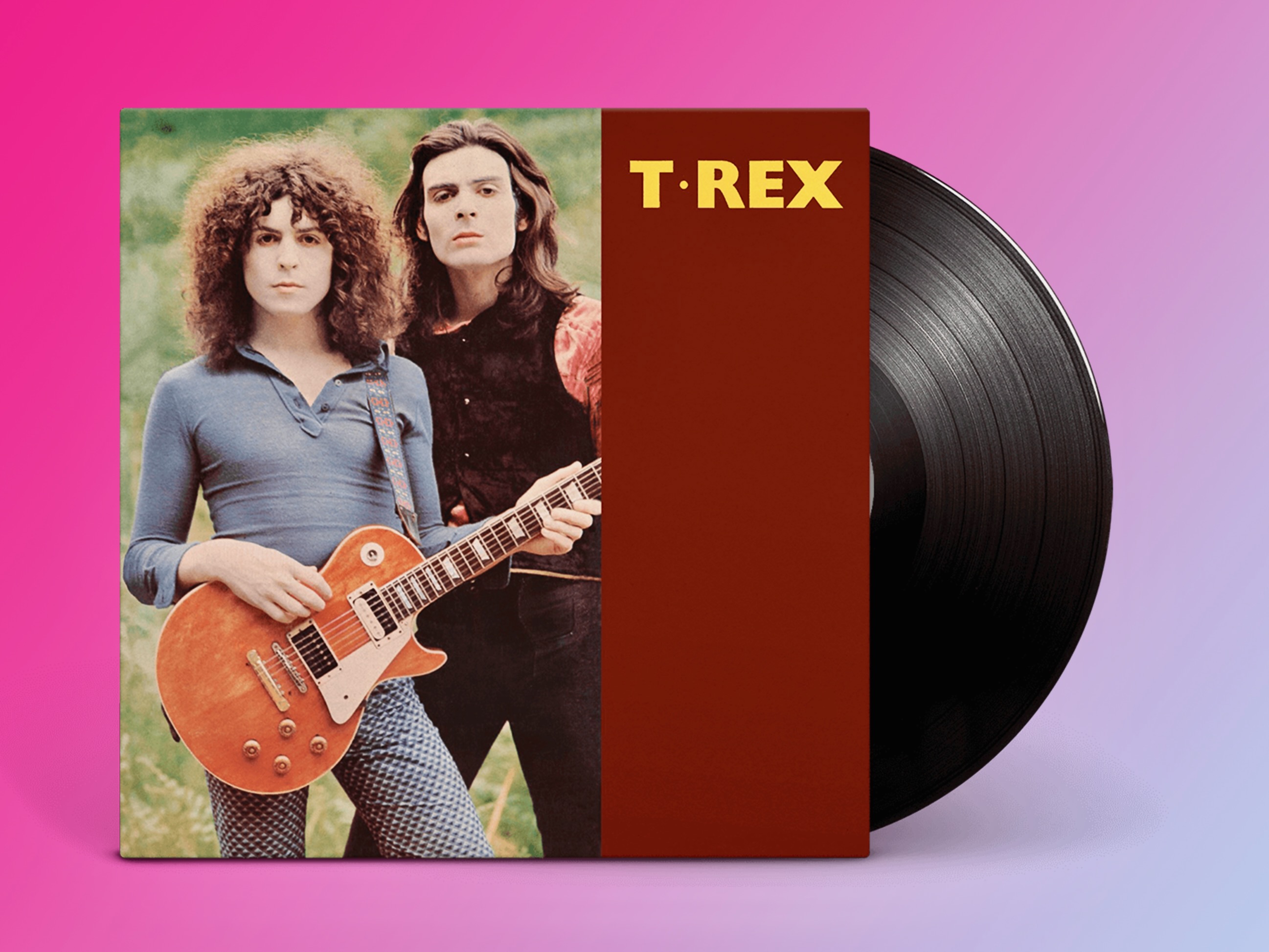
To many the Glam Rock genre was born with the release of T. Rex’ eponymous album in December 1970, as well as with the band’s two standalone singles ”Ride A White Swan” (10/1970) and ”Hot Love” (02/1971). The album ”Electric Warrior” (released in September ’71) – and especially its huge hit single ”Get It On (Bang A Gong)” – then shot the band into the stratosphere.
Marc Bolan’s idiosyncratic vocal delivery, charged with unveiled eroticism, was an important ingredient in the band’s success, but for many the real magic happened in the T. Rex guitar sound. Probably the most important ingredient in Bolan’s tone was a rather rare British fuzz box, called the John Hornby Skewes Shatterbox. Even though the Shatterbox was a two-in-one box that added a switchable treble booster to the fuzz, Marc Bolan tended to rely on the fuzz effect only, while using a Dallas Rangemaster for boosting purposes.
Fans of the T. Rex guitar sound were facing a dilemma; Rangemaster copies aren’t that hard to come by, but Shatterbox Fuzz copies are almost impossible to find. That is, until now…
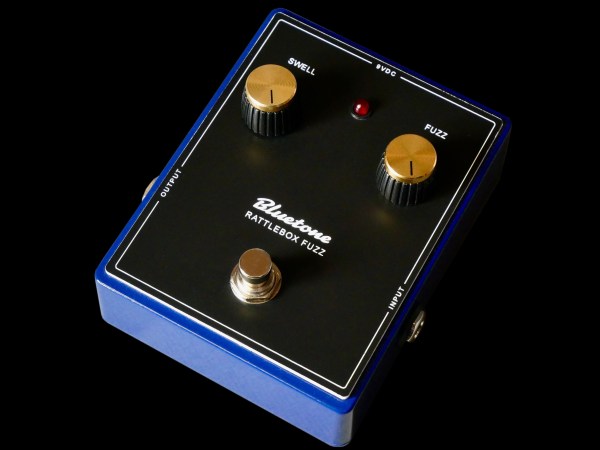
The brand-new Bluetone Rattlebox Fuzz (220, – €) is a slightly modernised version of the original 1960s Shatterbox.
Bluetone’s Rattlebox contains a sensibly updated version of the Shatterbox’ original fuzz circuit. The Rattlebox is extremely easy to use, because it sports only two controls – Swell (the gain control) and Fuzz (the volume).
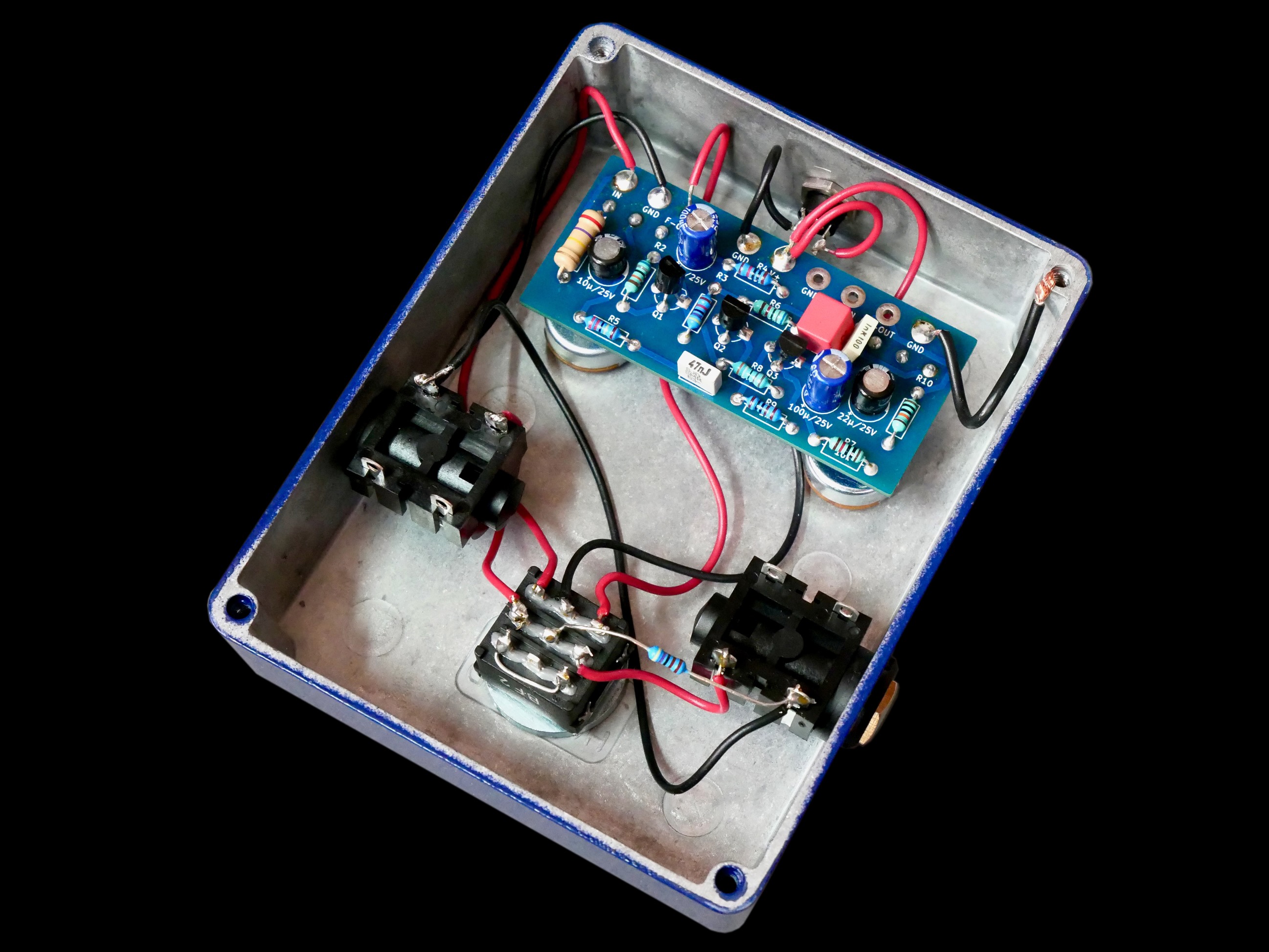
The Bluetone Rattlebox’ circuit is designed around three silicon transistors. The built-quality is top notch, without resorting to any point-to-point-voodoo. This effect runs on any Boss-type nine-volt power supply.
****
What does the Bluetone Rattlebox offer you that you cannot get from other fuzz pedal?
Compare to a silicon Fuzz Face, for example, the Rattlebox sounds much fatter, and its bite is situated in a slightly lower frequency range.
Speaking of which: Fuzz Faces – and similar designs – are usually used with the gain turned up full or almost full. Then you use you guitar’s volume control to find your personal sweet spot.
This ”pedal to the metal” approach doesn’t work that well, when applied to the Bluetone Rattlebox. There are two reasons for this:
For one, Bluetone’s new fuzz reacts very interactively to the pickup feeding the signal to the pedal, and, secondly, the ”wrong” choice of Swell setting will make the pedal gate rather easily, sometimes even sounding like a broken guitar cable.
The Rattlebox is best approached by carefully going over the settings across the whole range of the Swell control to find the best spots to achieve the desired sound with your guitar.
In this example I recorded a silicon Fuzz Face clone (first half) and the Bluetone Rattlebox (second half) with the controls turned full up on both pedals. With these settings the Rattlebox leaves clearly audible gating artefacts with the guitar’s (SG Junior copy) own volume turned down.
****
You can get beautiful and creamy rhythm sounds from the Bluetone Rattlebox, as the demo song proves. The lead guitar’s strong gating, on the other hand, is used here deliberately to accentuate each note’s start and finish.









 Kitarablogi.com – Finland's premier Guitar and Bass blog