Contact: Musiikki Silfverberg
Kitarablogi.com – Finland's premier Guitar and Bass blog
Juttuja kitaroista ja bassoista
• Made in Germany
• Single-transducer double bass pickup
• Mounts in bridge scroll
• Output jack attaches with velcro
****
Audio demo recorded with an East European plywood double bass. The Shadow SH951 was plugged straight into a Focusrite Saffire 6 USB-soundcard.
Monille Mayson Guitars ei ole tuttu nimi.
Olen melko varma, että tilanne tulee muuttumaan lähitulevaisuudessa. Mayson on kiinalainen kitarabrändi, joka pyrkii kehittämään omat ratkaisunsa designin ja valmistusmenetelmien suhteen, pelkän kopionnin sijasta. Maysonin pääsuunnittelija on Alex Wang, jonka käsialaa ovat firman monet rakenteelliset ja tuotantoteknilliset parannukset. Tavoitteena on rakentaa laadukkaita teräskielisiä kitaroita muusikkoystävälliseen hintaan.
Mayson Guitarsin merkittävimmät innovaatiot koskevat firman patentoitua kaulan ruuviliitosta, kansien rimoituksia, sekä hieman syvempien kaikukoppien käyttämistä lämpimämmän soundin tuottamiseksi.
Kitarablogi sai Maysonin suomalaiselta maahantuojalta, NordSoundilta, Mayson M3/OCE -kitaran testiin.
****
Mayson M3/OCE (558 €; topattu pussi kuuluu hintaan) kuuluu valmistajan Luthier-sarjaan. Kyseisessä mallissa on Mayson Marquis -kokoinen koppa (vastaa Grand Auditorium -mallia) soololovella, sekä aktiivinen mikkijärjestelmä.
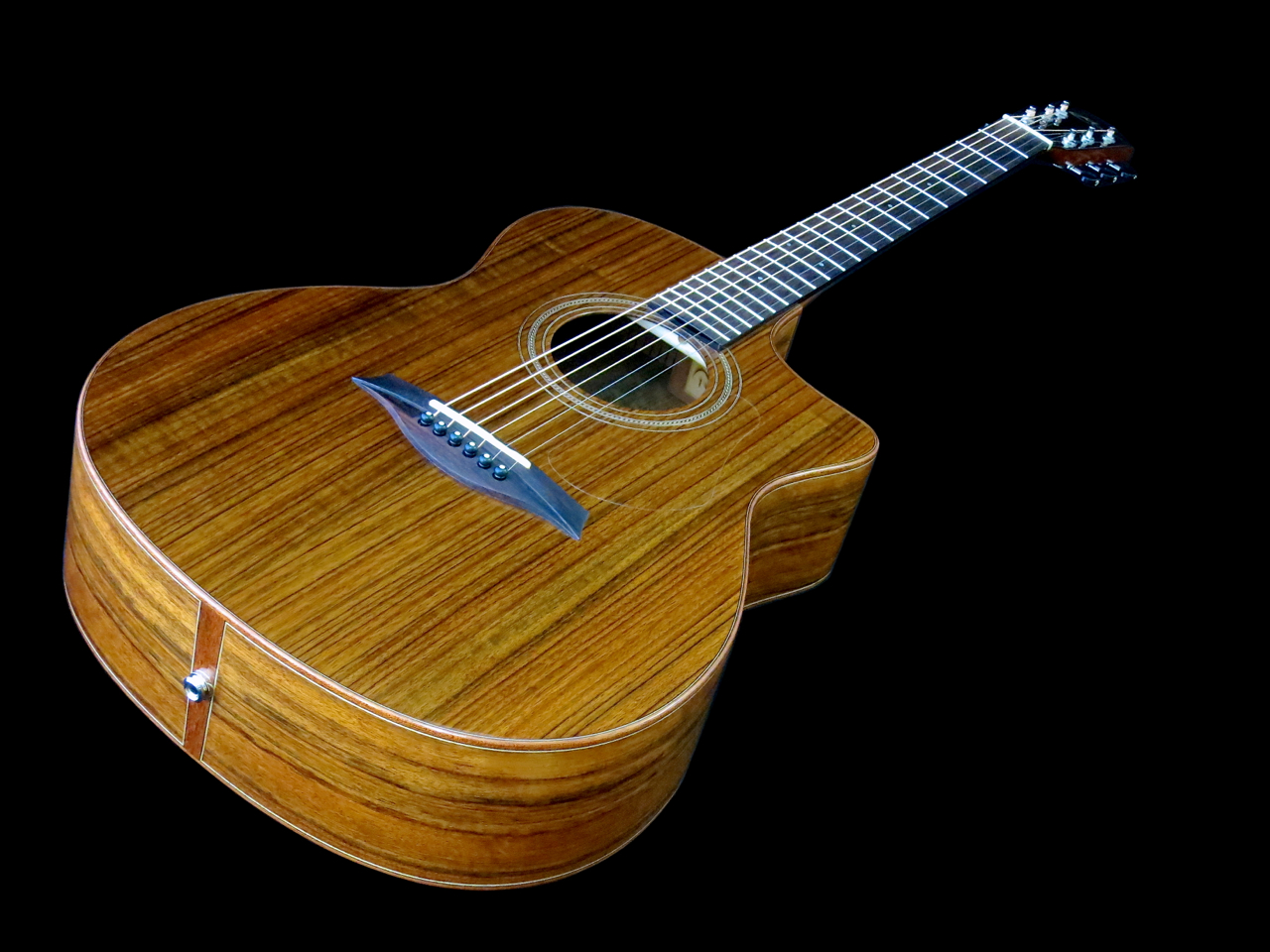
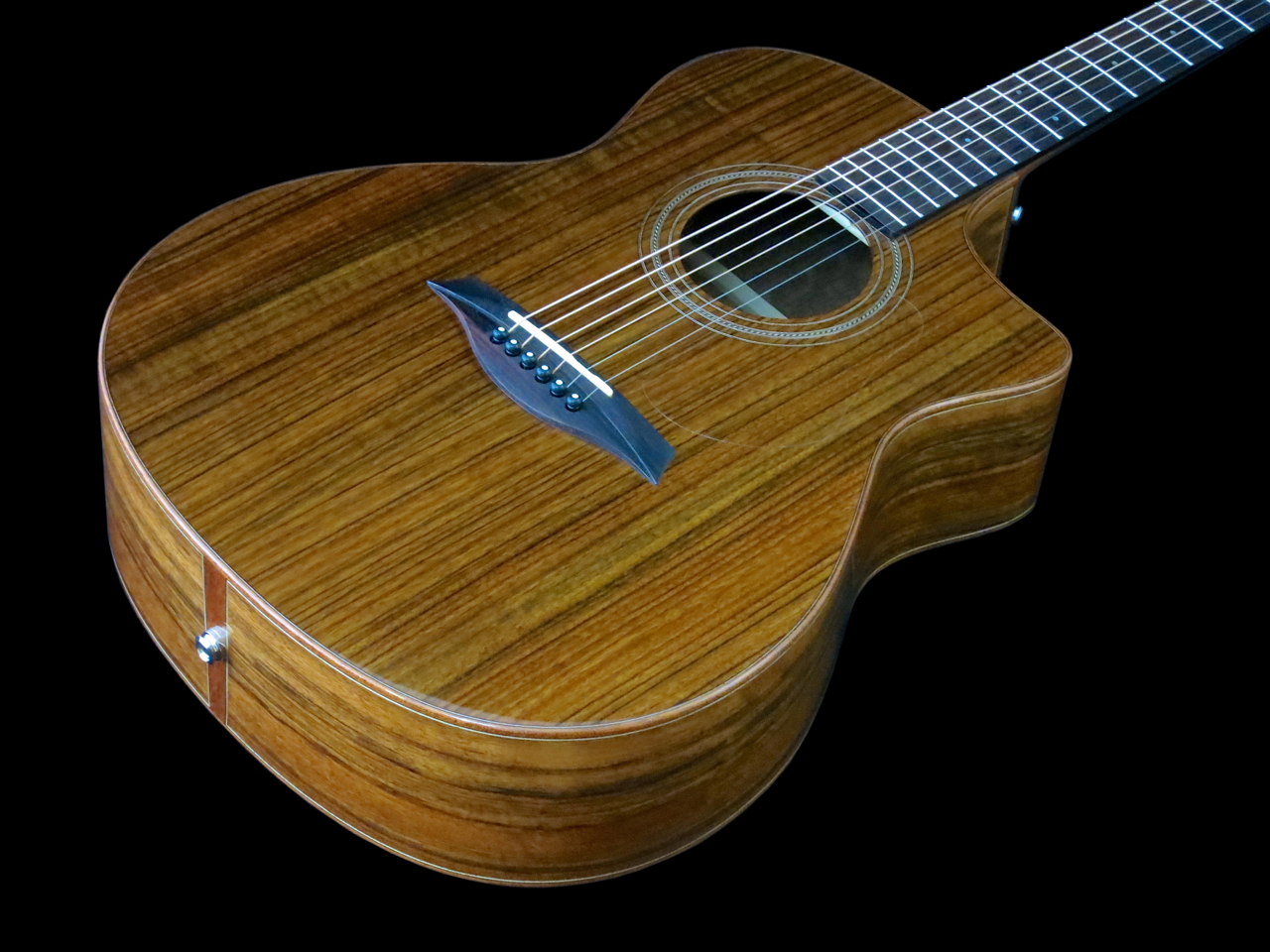
M3/OCE on hyvin tyylikäs ja näyttävä soitin, jossa on kokopuinen ovangkol -kansi, sekä vaneripohja ja -rimat samasta kauniista puusta. Ovangkol on ruusupuun kaukainen sukulainen (ei uhanalainen) Afrikasta.
Maysonin kaula on veistetty mahongista, ja sen otelautaan on käytetty intialaista palisanteria. Nauhojen profiili on perinteisen kapea.
Mayson kayttää kitaroissaan omavalmisteisia, avoimia viritinkoneistoja.
Virittimet on upotettu lavan puuhun, mikä estää hyvin tehokkaasti kaiken ei-toivotun liikkumisen sivusuunnassa.
Sekä satulaan, että kompensoituun tallaluuhun on M3/OCE:ssa käytetty aitoa naudanluuta.
Testisoittimeen on asennettu Maysonin oma MPC-6 Purecoustics mikrofonijärjestelmä.
Järjestelmän etuaste tarjoaa kolme säädintä – volume, basso ja diskantti.
Testikitaran ainoa pieni pistevähennys tulee sen irrallisesta paristopussista. Pussia paikallaan pitävä tarranauha oli irronnut kaulablokin vierestä, minkä vuoksi paristo roikkui ainoastaan johtimien varassa kitaran kopassa.
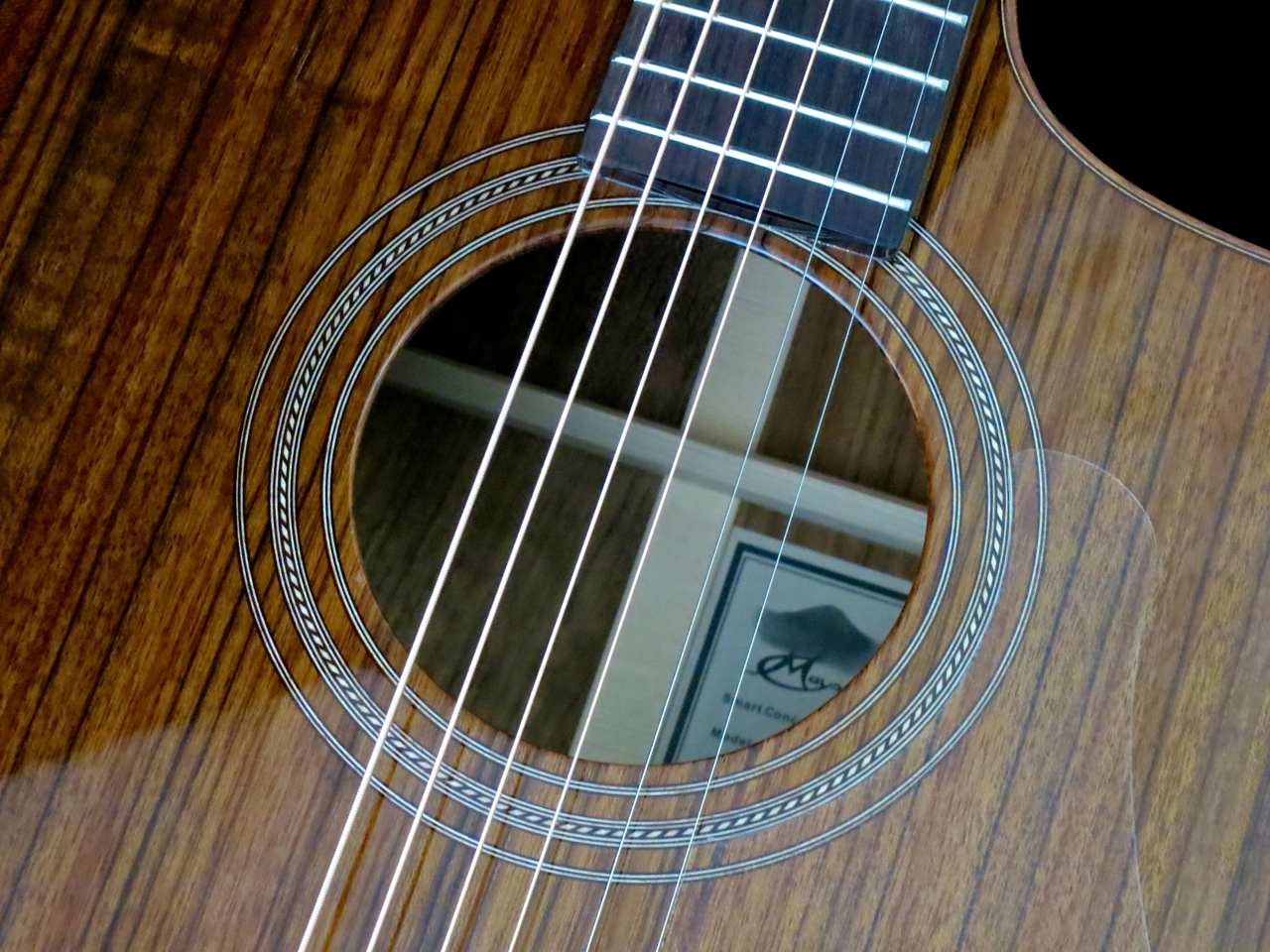
M3/OCE:ssä on tyylikäs rosetti ja puusta tehty reunalistoitus.
Laadukas kirkas viimeistely tuo ovangkolin kauniit syykuviot esiin.
****
Kyllä, kyllä, myönnän sen avoimesti:
Olen kauniiden puiden suuri ystävä, eikä Mayson M3 jätä tässä suhteessa todellakaan toivomisen varaa.
Kaunis ulkonäkö on M3/OCE:ssä kuitenkin vain osa erittäin toimivaa kokonaisuutta. Kitaran soitettavuus on erinomaisella tasolla, mistä on kiittäminen laadukasta nauhatyötä ja kaulan mukavaa D-profiilia.
Parasta tässä Maysonissa on mielestäni kuitenkin kitaran soundi. Testikitara soi täyteläisesti, mutta tarkasti, ja se tarjoaa aimon annoksen tuoreutta ja helinää diskantissa. M3/OCE:n sointia voisi kuvailla jopa flyygelimäiseksi.
Maysonin piezomikitys ja sen MPC-6 Purecoustics -etuaste toimivat moiteettomasti. Helppokäyttöisestä järjestelmästä saa hyvinkin käyttökelpoisen piezotulkinnan kitaran akustisesta soundista.
Tässä lyhyt näppäilypätkä, jonka äänitin AKG C3000 -mikrofonilla:
…ja sama näyte kitaran omalla mikrofonijärjestelmällä taltioituna:
Hieman plektrasoittoa AKG:lla nauhoitettuna:
…ja sama pätkä Purecoustics-järjestelmän kautta:
Demobiisi koostuu kolmesta stereoraidasta, joiden taltiointiin on käytetty kahta C3000-mikrofonia:
****
Minun mielestäni Mayson M3/OCE on todella hieno teräskielinen akustinen toimivalla piezoelektroniikalla, hyvinkin reiluun hintaan. Ovangkol -kopan ansiosta kitara näyttää yhtä kauniilta kuin se soi.
Se on siis kaikin puolin kokeilemisen arvoinen peli.
****
Mayson M3/OCE
558 € (topattu pussi kuuluu hintaan)
Maahantuoja: NordSound
Plussat:
+ erittäin kaunis ovangkol-koppa
+ työnjälki
+ soitettavuus
+ akustinen soundi
+ mikitetty soundi
Miinukset:
– pariston vaihtaminen hieman työlästä
Most of you will not have heard of Mayson Guitars, yet.
I’d guess this will change soon, because this ambitious Chinese acoustic guitar maker is not content with simply copying other people’s designs and building techniques. Mayson’s chief designer Alex Wang has come up with many structural improvements and updated manufacturing methods to make a better steel-string guitar.
Key changes include Mayson’s patented bolt-on neck joint, their own special top bracing pattern, and deeper bodies for a richer sound.
Mayson Guitars’ Finnish distributor NordSound kindly supplied us with a Mayson M3/OCE for this review.
****
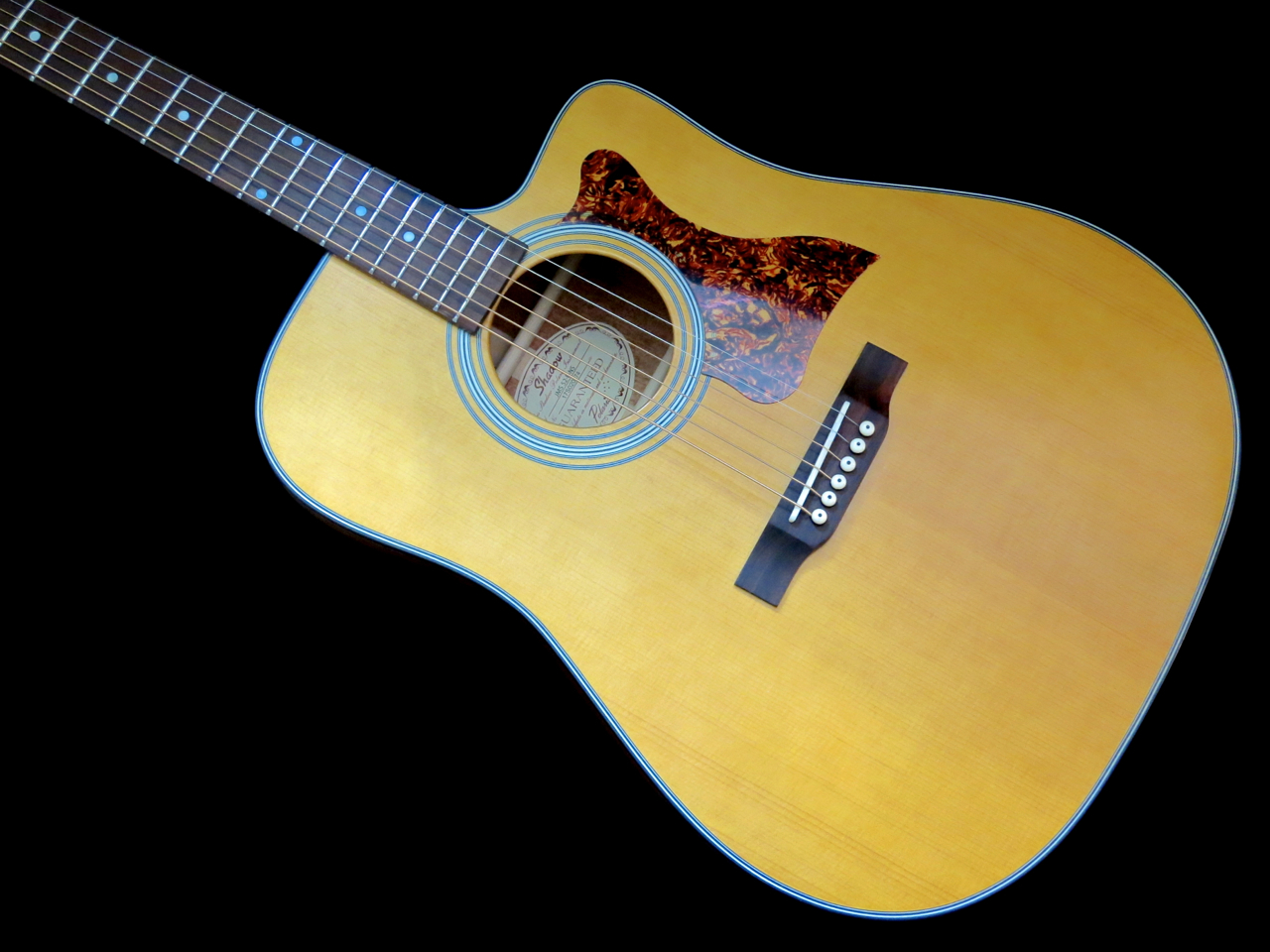
The Mayson M3/OCE (price in Finland: 558 €; incl. gig bag) comes from the company’s Luthier Series and is a Mayson Marquis-sized (Grand Auditorium) cutaway model with a built-in pickup and preamp system.
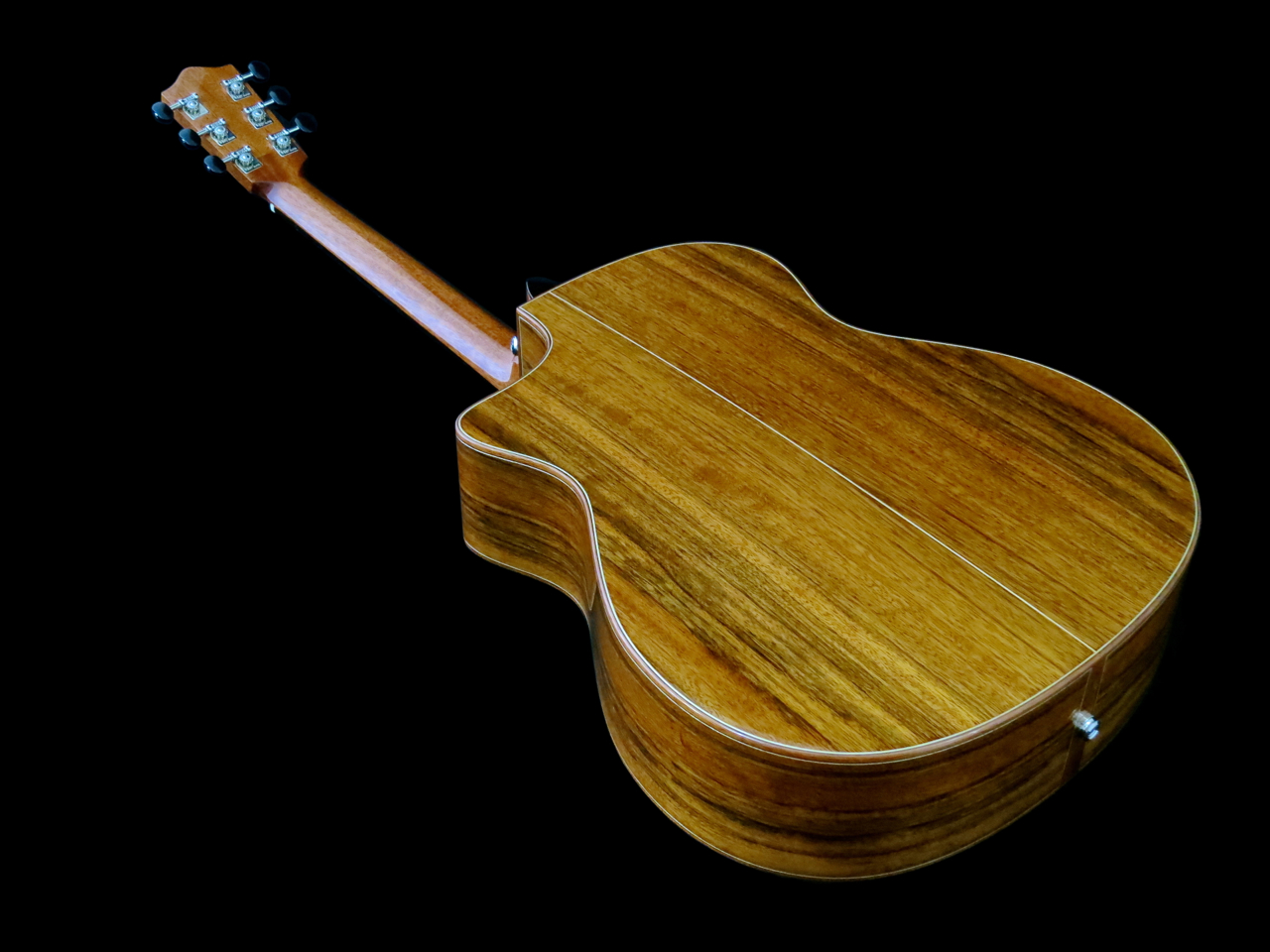
The M3/OCE is an extremely beautiful steel-string with a richly grained solid ovangkol top, and laminated ovangkol sides and back. Ovangkol is a non-endangered African relative of rosewood.
The Mayson’s neck is crafted from mahogany and topped with an Indian rosewood fingerboard sporting narrow frets.
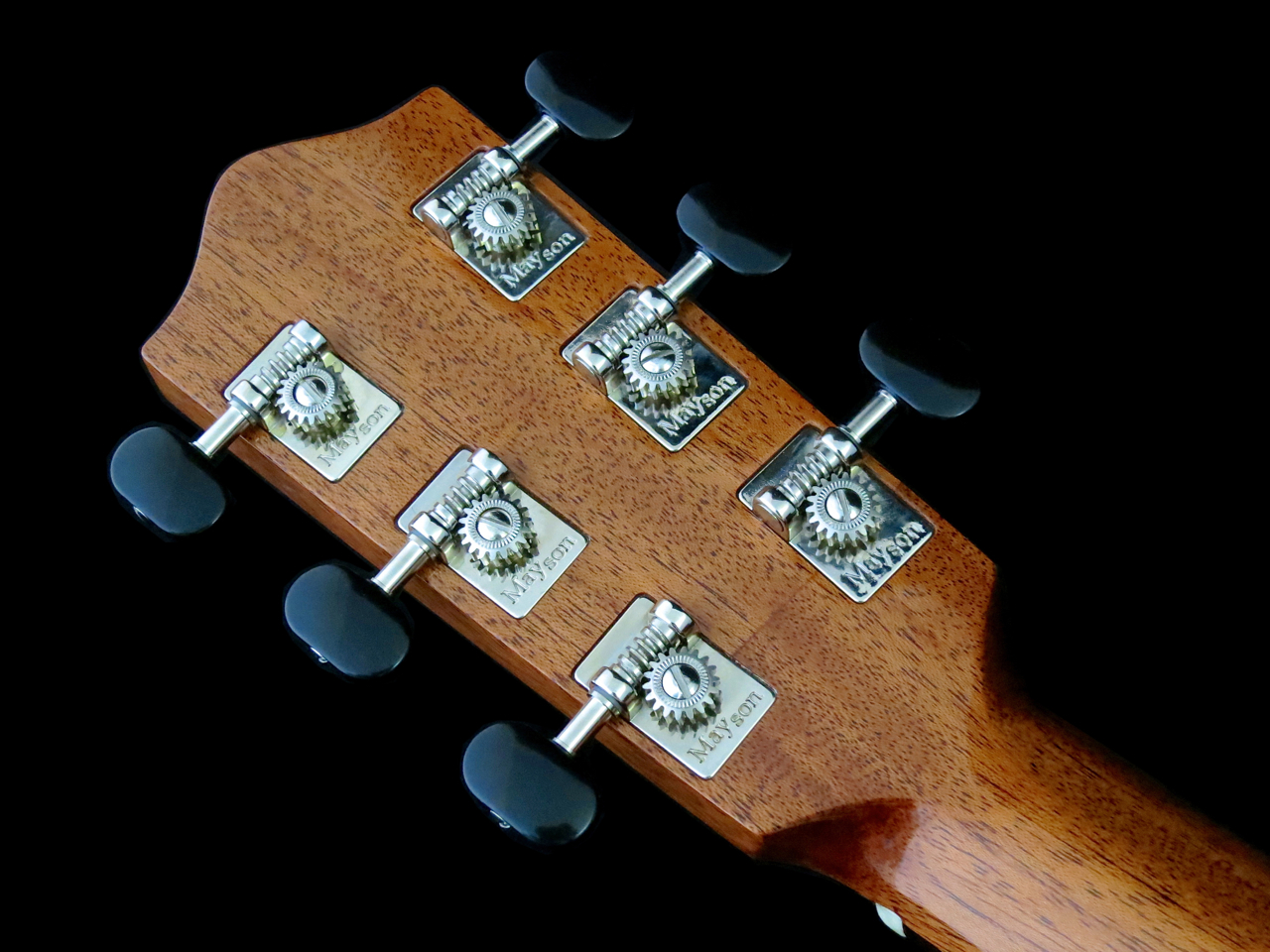
Mayson uses its own special style of open gear machine heads.
The tuners are sunk into the back of the headstock to prevent any sideways movement of the machine heads.
The M3/OCE comes with a top nut and a compensated bridge saddle both made from genuine bone.
Our review instrument comes with Mayson’s own MPC-6 Purecoustics pickup system.
The preamp offers you three unobtrusive knobs to adjust your sound – volume, bass and treble.
The only point deduction comes in the guise of a freewheeling battery pouch. The sticky tape holding the velcro supposed to hold the battery pouch in place (next to the neck block) has become unstuck somewhere down the line, leaving the battery hanging from the preamp by its connecting cables.
The M3/OCE comes adorned in tasteful wood binding.
The guitar has received a flawless natural gloss finish.
****
I must admit to it:
I’m a real sucker for beautiful woods, so the Mayson M3 got me on its side straight away, thanks to its stunning ovangkol soundbox.
But the M3/OCE isn’t only looks! This guitar plays great, not least thanks to its comfortable D-profile neck, and a very decent fret job.
In my view, the best thing about this Mayson is the way it sounds, though. The sound is rich, well-defined, and offers plenty of zing and sparkle. This is a huge sound with fantastic definition, which reminds me of a grand piano.
Mayson’s MPC-6 Purecoustics pickup system also ticks all the right boxes in my opinion, giving you a very decent piezo version of the M3/OCE’s acoustic voice.
Here’s a short clip played fingerstyle and recorded with a single AKG C3000 microphone:
…and the same clip recorded using the guitar’s pickup system:
Here I’ve used a plectrum and the AKG mic:
…and here’s the same piece recorded with the Purecoustics system:
The demo track consists of three different stereo guitar tracks, all recorded with a pair of C3000s:
****
The Mayson M3/OCE is a fine acoustic guitar with a very decent pickup system at a very fair price. The ovangkol soundbox makes this guitar a real thing of beauty.
I can only recommend you try one out for yourself.
****
Mayson M3/OCE
558 € (includes gig bag)
Finnish distributor: NordSound
Pros:
+ gorgeous ovangkol body
+ workmanship
+ playability
+ acoustic sound
+ pickup sound
Cons:
– no quick-access battery compartment
How do you assess the condition of an instrument?
In my view, the condition of any guitar can be gauged by dividing up any possible issues into three groups:
• Group 1 – Things that can be changed/corrected easily:
++ truss rod settings
++ dead strings/”wrong” string gauge
++ intonation
++ string height (action)
++ pickup height
++ pickup model (if no woodwork/modification is required)
++ worn-out tuners (if no woodwork is required)
***
• Group 2 – Small and slightly bigger issues that a qualified repairperson can solve:
++ a cracked top nut
++ string slots in nut too deep or not deep enough
++ a faulty vibrato system
++ worn frets or high/low frets
++ crackling controls
++ faulty switches
***
• Group 3 – Issues that are difficult and/or expensive to repair:
++ a badly warped neck (so-called corkscrew)
++ a set neck that is out of alignment
++ a broken truss rod
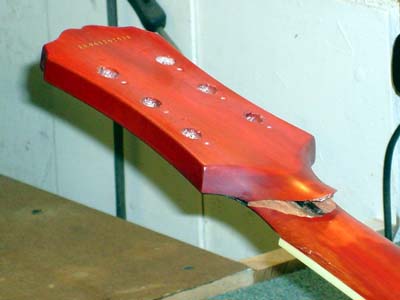
++ unrepaired (or badly fixed) cracks in the wood (for example a broken-off headstock)
++ a botched DIY ”customisation”
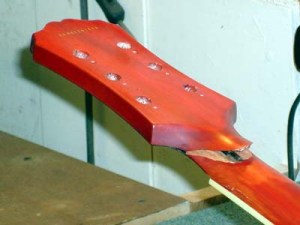
Would you buy a guitar from Pete?
****
Here’s one way of assessing the condition of a guitar systematically:
• Tune the instrument and play it for a minute or two. You’ll get an idea of the current set-up, as well as of the general condition and sound of the instrument.
• Is the neck correctly aligned to the body (especially important in set-neck instruments)?
Look at the distance of the e-strings to the fingerboard edges at the 14th fret. If both e-strings are approximately the same distance from the edge of the fingerboard, you’re good to go.
• The truss rod setting (aka relief):
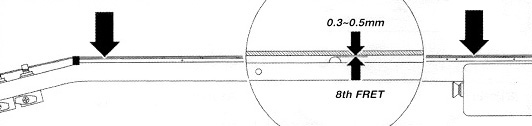
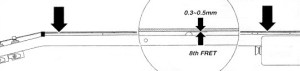
Press the bottom E-string down simultaneously at the 1st and 14th frets (you can use a capo at the first fret), and use it as a straightedge. Take a look at the string at the 8th fret; there should be a small gap between the top of this fret and the E-string – that’s what we call the relief. If the gap is around 0.5 mm, the truss rod is set as it should be. Check the treble e-string in the same way. If there’s a substantial difference between the relief at the low E and the treble e, you’re most likely looking at a warped neck.
If the truss rod setting is not ideal (too tight = no relief; too loose = relief greater than 0.5 mm) you should ask the seller to adjust the truss rod for you.
• Check the nut slots:
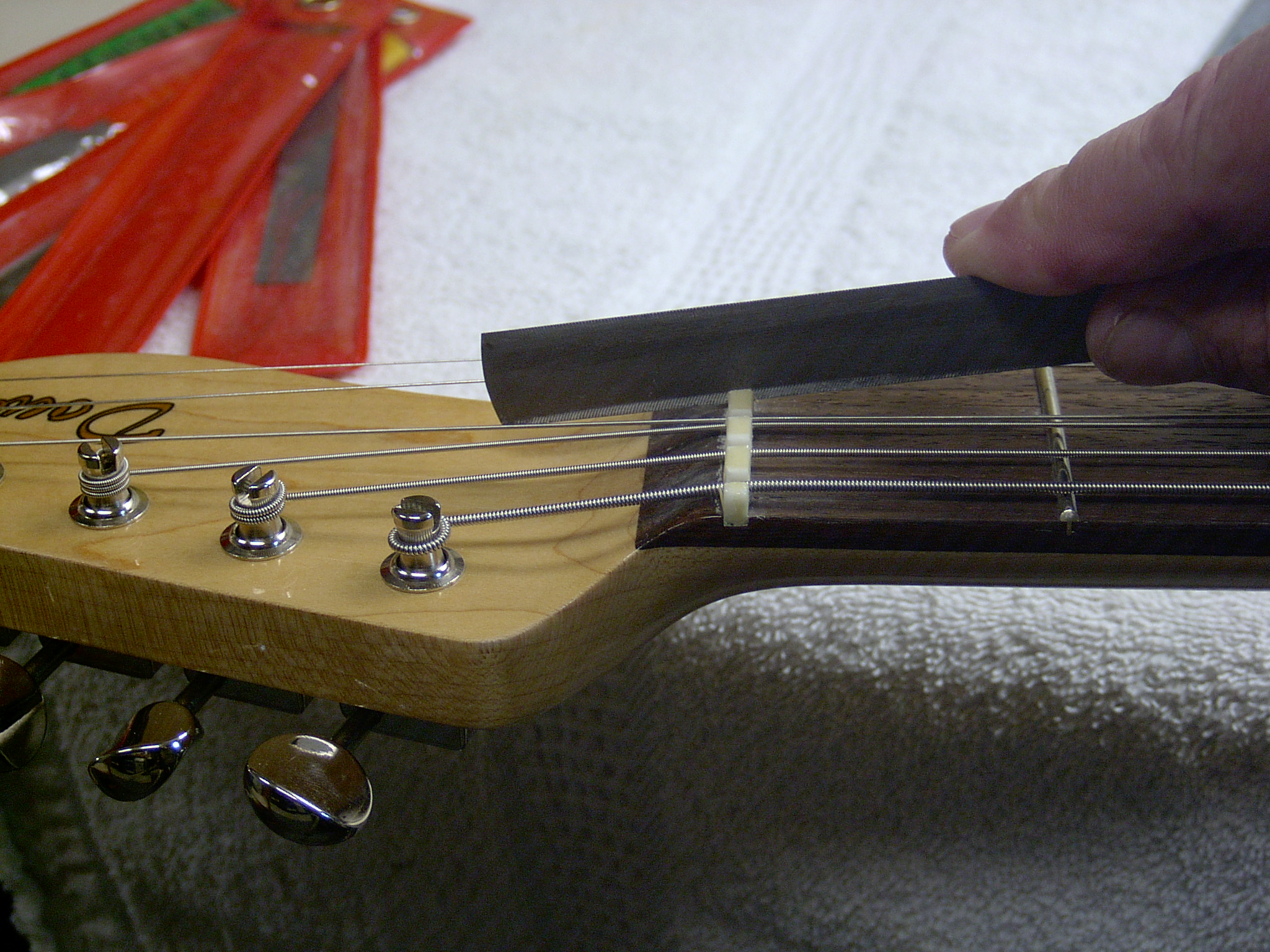
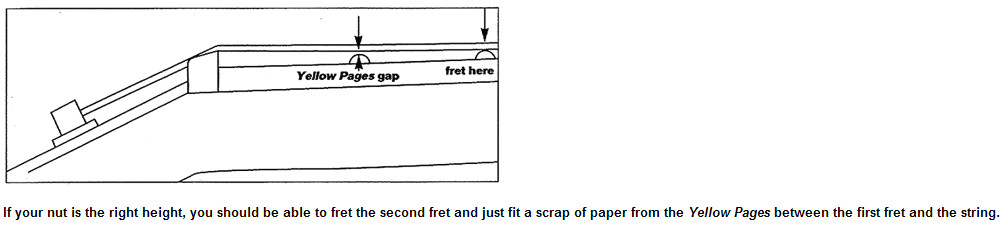
Each string is pressed down in turn at the 3rd fret. The string should now be resting on the second fret. Look for a small gap between the 1st fret and the string you’re pressing down. Using a regular 009- or 010-gauge set, there should be a tiny gap beneath the treble e-string and the first fret (when fretting the string at the third fret), just about large enough to fit a sheet of printer paper in there. Because the bass strings need more clearance to vibrate freely, the gap between the first fret and the bottom of each string increases slightly going from the top e-string to the bass E-string.
If the nut slots aren’t cut deep enough, the guitar will be hard to play, and sound badly out of tune in the lowest (open) positions, regardless of action settings and intonation. A luthier will be able to correct the matter for a small charge using a set of special nut files.
If the string slots are too deep (= the strings rest on the first fret, when pressed down at the third), a nut replacement will be in order (except with locking nuts that can be shimmed). Nut slots that are too deep will result in rattling open strings, even if the action and the truss rod have been adjusted correctly. Note: You should check for string rattling using clean amp settings. Playing the guitar unamplified might make you whack the strings harder than necessary.
In most cases replacing a nut is an easy procedure for a repairperson.

• The condition of the frets:
On a used guitar, slight wear marks on the frets are the result of normal use, and this light wear won’t cause any problems.
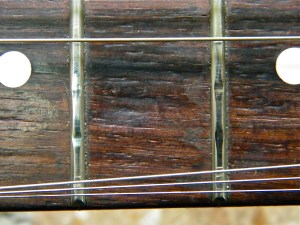
If the frets are very worn (like the ones in the picture below), you should take the cost of a fret dress (or even a complete refret) into consideration, and maybe try to get the seller to lower his/her asking price.
Refretting bound fingerboards is more complicated and time-consuming than dealing with unbound ’boards, which is usually reflected in the cost. Ask you luthier.
• Check the bridge:
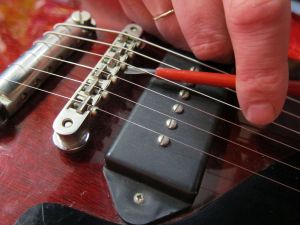
Are all the screws and bridge saddles in working order? Is there ample scope for intonation adjustment?
If the guitar’s set-up is unsatisfactory – the action may be too high or too low; the intonation may be off – ask the seller to adjust the guitar for you before making a buying decision!
• Check the electronics:
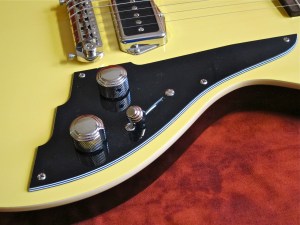
Play around with all controls and switches – is everything working as it should? Do all the pickups work?
Scratchy, crackling pots and faulty switches are quite easy for a luthier to exchange. If we’re talking about a new guitar, the shop should take care of this before you buy. With a pre-owned instrument, you will have to take care of the repairs. Note: Replacing electrical components and pickups in semi-acoustic and archtop guitars is generally much more complicated, which will be reflected in the luthier’s quote.
• Check the vibrato:
Does the vibrato (aka the tremolo or the whammy bar) work as it should? Are all the parts in working condition, or are you faced with rusty screws or even broken parts? Is there ample scope for action and intonation adjustment?
If the vibrato bridge looks very worn, or if there are structural problems, like a broken off (or loose) bridge post, you might be facing a complete replacement or a costly repair.
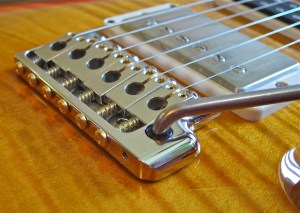
• And finally: Plug the guitar into an amp, and play it some more. Listen to the sound of the instrument. Check its playing feel, its ergonomics, and make a final assessment of its overall condition.
• Based on this checklist (and any possible issues you might have found) you should ask yourself two questions:
This review could also carry the headline: ”Tanglewood brings vintage to the masses”. Tanglewood’s Sundance Historic guitars have been designed to give you plenty of that ”pre-war” charm at very player-friendly prices. Take the two models on review, for example, which have price tags well below 700 Euros, despite even coming with on-board Fishman pickups and preamps!
The TW40O-AN-E and the TW40D-AN-E are both quite reminiscent of certain legendary Martin-models from the 1930s and 40s.
****
The Tanglewood TW40O–AN-E (current price in Finland 673 €) is the Sundance Historic series’ version of a Martin OM-18 model – the first Martin steel-string acoustic to feature a neck joint at the 14th fret when it was introduced in the Thirties.
Tanglewood’s TW40D-AN-E (673 €) is a tip of the hat to Martin’s D-18, which is the most copied, most referenced steel-string of all time. Even Gibson went out and bought a Martin in 1960, so they could use it to reverse engineer their own Hummingbird and Dove models.
Both of these models can also be had without the pickup system for 598 Euros each.
The necks of the TW40O and the TW40D have been built in the traditional fashion employed on classical guitars:
The neck is a one-piece mahogany affair – headstock and all – save for a separate, glued-on neck heel.
The bodies are crafted using solid spruce tops and laminated mahogany rims and backs.
The ”AN” in the model designation hints at the beautiful Antique Natural finish of these Historic Series instruments.
The nut is genuine bovine bone.
The machine heads are very decent copies of 1930s open-geared Grovers. They do a great job of keeping the tuning stable, but their action is a little bit stiffer than what you’re used to with modern die-cast tuners.
The slender and small frets fit the vintage brief of the TW40O and TW40D to a tee.
Here’s a good example of how different two pieces of rosewood can look:
The reviewed TW40O-AN-E’s bridge is a nicely-grained light example…
…while the dreadnought carries a much darker counterpart.
The compensated bridge saddle is genuine bone on both instruments.
Both Sundance Historics have been equipped with a Fishman Sonitone pickup and preamp.
The piezo transducer sits beneath the bridge saddle and feeds its signal to the preamp – featuring master volume and master tone controls – that has been glued to the underside of the soundhole’s bass side edge. The Sonitone is powered by a 9 V battery, which is stowed away in its own pouch that is velcro’d to the neck block. The downside is that changing the battery is a much more involved affair than with a quick change battery compartment, but the advantage of this Fishman system is that it doesn’t spoil the guitar’s looks.
Both Tanglewoods sport an end pin output jack.
****
The care that has quite obviously gone into building these two Tanglewood Sundance Historic guitars really puts a smile on your face. The workmanship is clean and precise, and both instruments look more expensive than they really are.
Even though both guitars are from the 500-800 Euro price bracket, Tanglewood have gone the extra mile to match the wood grain on the sides of both guitars. The tops of the shoulders look bookmatched.
The vintage brief extends to more than simple cosmetics on the TW40O-AN-E:
Vintage OM-guitars (OM stands for Orchestra Model) are known for their slightly wider necks with soft V-profiles. You will also often find a slightly wider string spacing at the bridge, which makes fingerstyle playing much easier.
Tanglewood has used these vintage specifications for their Sundance Historic OM:
The neck has a very nice, soft V-profile, with a width at the top nut of 46 mm. The low E to top e spacing at the bridge is a very comfy 58 mm, which is good news for fingerpickers, working equally well with a plectrum.
The TW40O plays like a dream with a nice set-up on our review sample (string height at the 12th fret: bass-E – 2.1 mm/treble-e – 1.9 mm).
There a lot of debate about the pros and cons of solid backs in acoustic guitars. Some claim that a solid back is almost as important as a solid top in a steel-string acoustic, while others point to the use of laminated backs in the legendary Selmer-Maccaferri guitars (and newer exponents of the Gypsy Jazz genre) or to the great sound of arched-back vintage Guilds.
My own position in this debate is that most (but not all) guitars with laminated backs a bit quieter and drier-sounding than their all-solid brethren. Nevertheless, I feel that a solid top and an overall well-crafted instrument are much more important to the sound as a whole.
An OM-sized steel-string will have a ”sweeter”, less bass-heavy tone than a Dreadnought of similar build, which is due in large part to its smaller and differently-shaped body.
Tanglewood’s TW40O has the trademark OM-sound – the guitar’s voice is open and well-balanced, with a projection akin to that of a Dreadnought, and it is very easy to record and place in a mix.
These two clips have been recorded with a pair of Shure SM57 microphones:
Fishman’s Sonitone system is a decent and easy-to-use choice to amplify your guitar on stage with the least amount of hassle:
****
The original aims in designing the Dreadnought were the need for more volume and a fatter bass register. At first Martin’s D-models were aimed squarely at the ”singing cowboys”, which were so popular in the US in the 1930s and 40s. These musicians, such as Gene Autry or Hank Williams, needed loud guitars that would build a strong foundation for their vocals. This is what started the phenomenal success of the D-model, making it fairly ubiquitous in most genres of music.
Tanglewood’s TW40D-AN-E is a well-made homage to a 1930s-style D-18, both in terms of looks and sound.
The TW40D’s neck is virtually identical to the one on the TW40O – a nice soft-V affair, which is slightly wider and bigger than the neck on many contemporary steel-strings.
The craftsmanship displayed on this D is of the same high standard as on the reviewed OM, really leaving nothing to be desired in terms of the TW40D’s playability and set-up (bass-E: 2.2 mm/top-e: 1.7 mm).
We all know how a Dreadnought should sound: a big bottom end, coupled with a warm mid-range and chiming treble.
The Tanglewood TW40D doesn’t disappoint:
Fishman’s Sonitone system also works very well in the context of the TW40D-AN-E-model:
****
In my opinion Tanglewood’s TW40O-AN-E and TW40D-AN-E really do offer something special in their price range:
Here we have a pair of steel-string acoustics at player-friendly prices, which take the terms ”vintage” and ”historic” above and beyond mere cosmetics. Thanks to the ”vintage correct” neck dimensions and neck profiles of these two instruments, and the wider string spacing, genuinely vintage-feeling guitars become available without custom shop price tags.
These are well-made, great-sounding guitars. Too bad I have to give them back…
****
Tanglewood Sundance Historic
TW40O-AN-E – 673 €
TW40D-AN-E – 673 €
Finnish distributor: Musamaailma
****
Pros:
+ value-for-money
+ workmanship
+ authentic neck profile
+ playability
+ Fishman pickup and preamp
+ sound