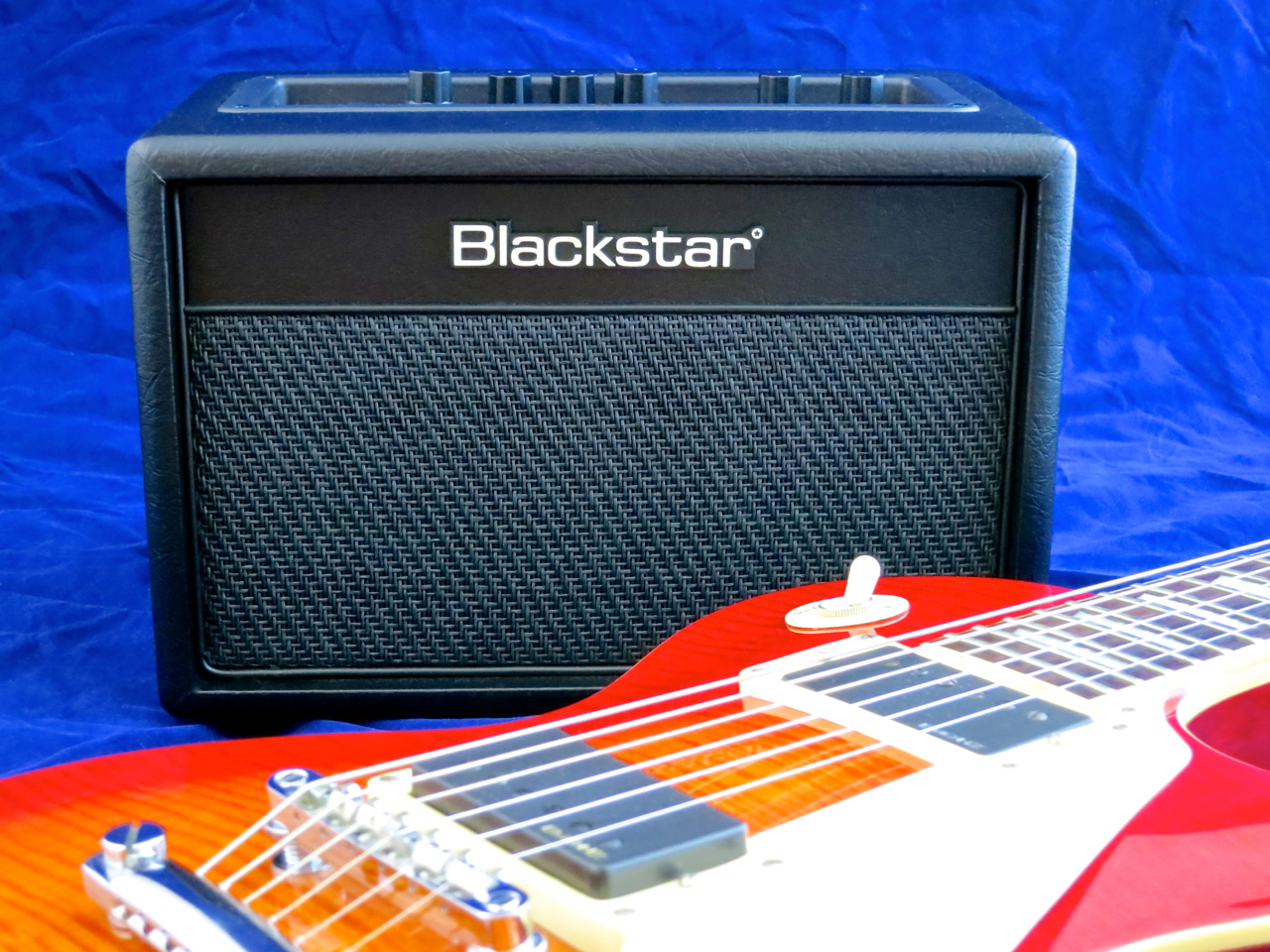
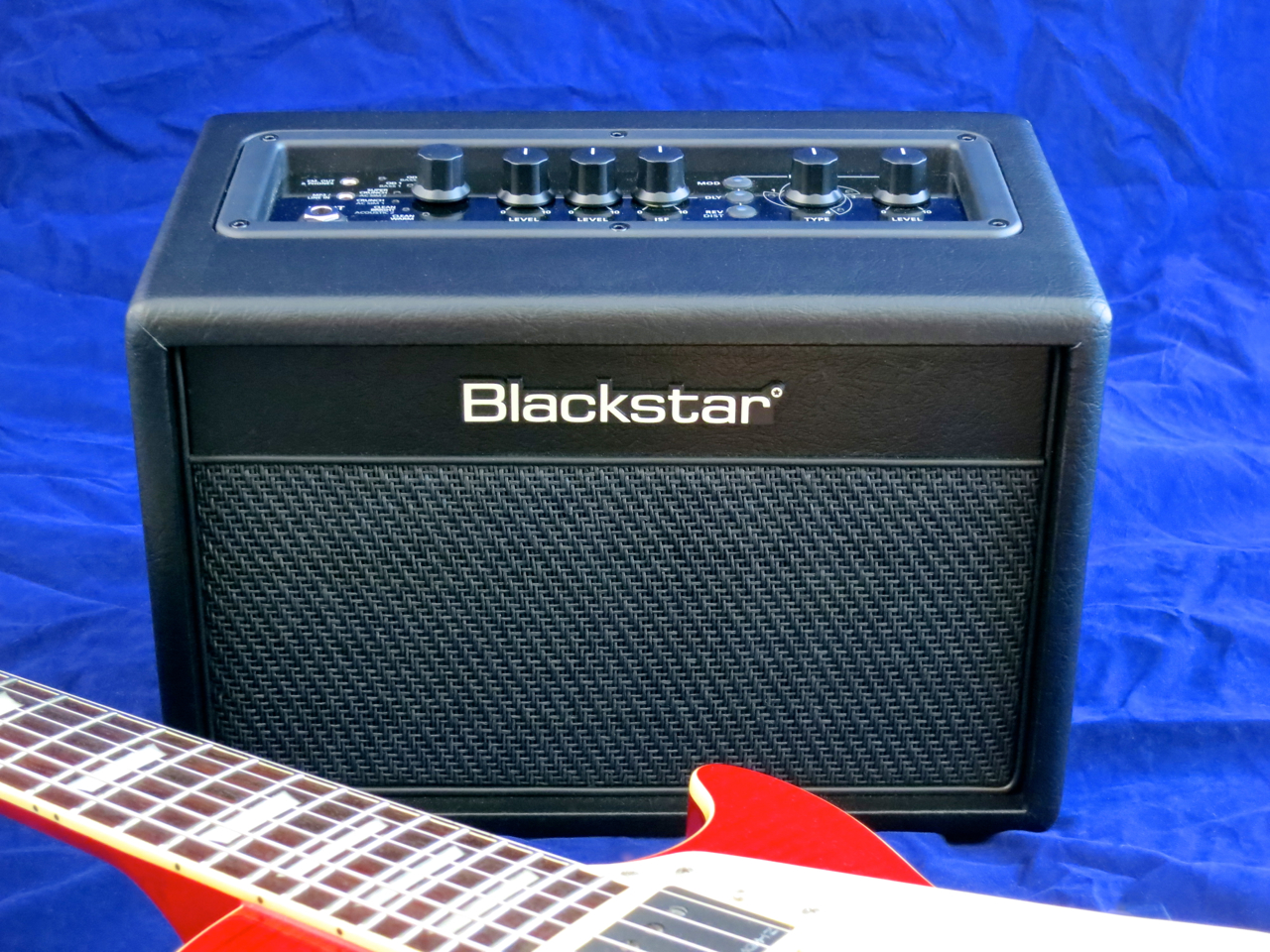
Blackstar’s ID:Core BEAM (current price in Finland: 299 €), which was introduced at this year’s NAMM Show, is one of a new breed of amplifiers:
The BEAM is a so-called ”lifestyle amp” that combines a practical solution for living room practising with a Bluetooth stereo system with a suitable Rock look.
****
The Blackstar ID:Core BEAM is a genuine ID:Core-combo, which means that all its parameters are accessible via Blackstar’s Insider software.
The newcomer is a stereophonic amp with its 20 watts of power running into a pair of three-inch speakers. Blackstar’s Super Wide Stereo-effect – a feature taken from the company’s larger ID:Core combos – can also be applied to the BEAM’s music player, with its own, separate width adjustment.
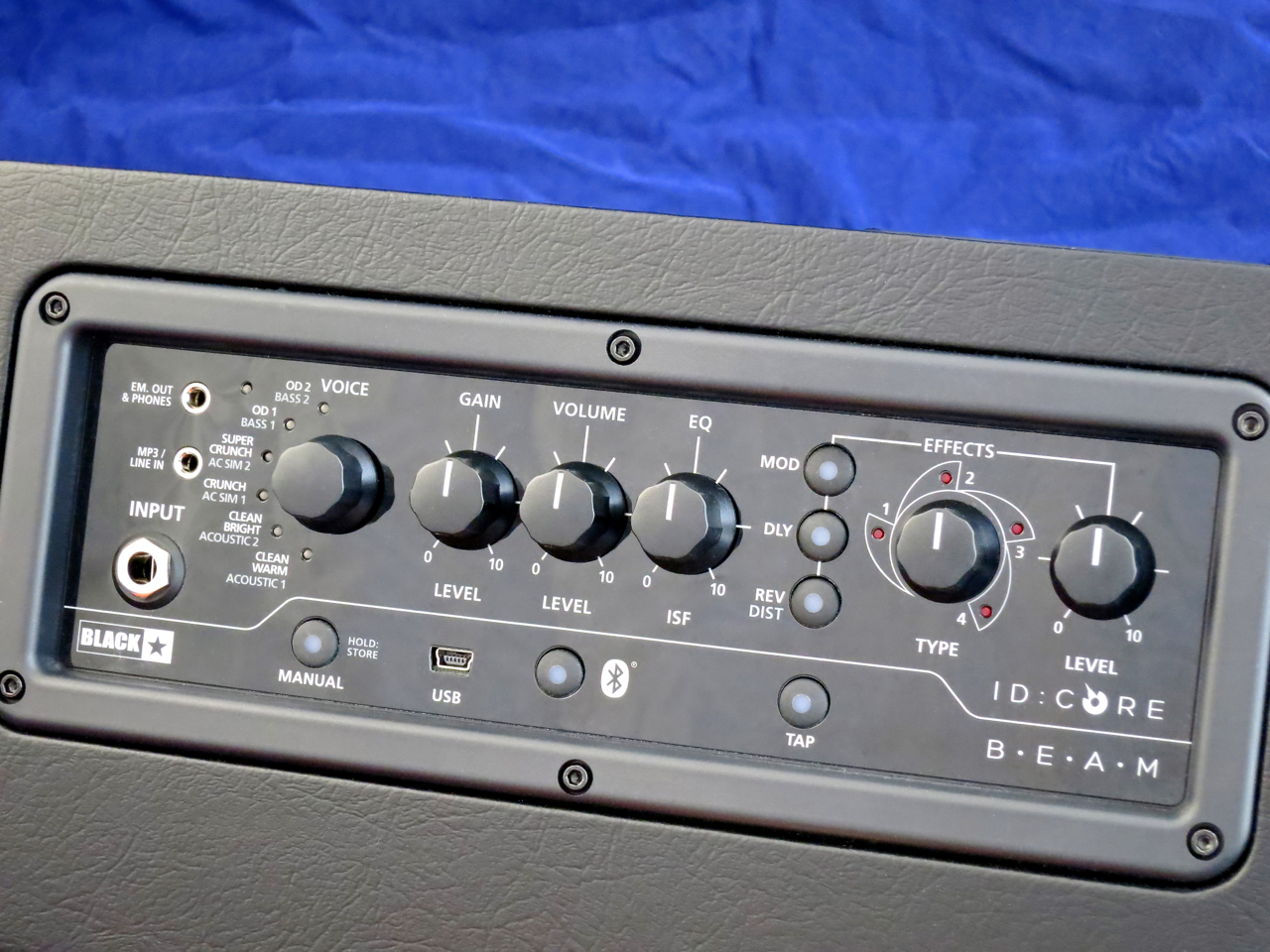
Apart from the power switch, the ID:Core BEAM’s back panel features the input jack for the (optional) footswitch. The rest of the combo’s controls and connectors can be found on the top-mounted control panel.
The larger ID:Core combos are well-equipped practice amps, but the BEAM has a couple of additional aces up its sleeve:
The ID:Core BEAM offers you 12 amp models (Voices). The first set (the Voices LED glows red) deals with six amp models for electric guitar, while the second set (green LED) gives you two Voices each for acoustic guitar, electric bass, and acoustic guitar simulation.
The amp section has three physical knobs for adjustment – gain, volume, and Blackstar’s patented ISF-control, which control’s the amp’s overall tonal character. Using the Insider-software you will be able to access additional parameters for deep editing, like a three-band EQ-section or a noise gate.
The effects department features four different modulation effects, four delay types, and four reverbs. The two Voices for bass swap the reverbs for bass distortion. You can choose one effect from each effect section for a Voice (meaning up to three simultaneous effects).
The small combo also features a built-in tuner.
The music signal, sent to the BEAM from your mobile device via Bluetooth, naturally isn’t sent through the combo’s amp modelling circuits. It is fed into the signal chain just before the power amp section. The ID:Core BEAM allows you to play along to the Bluetooth signal, of course!
The USB-port isn’t only used to remote control the amp’s parameters via Insider – this lifestyle combo doubles as a full-blown USB sound card. The BEAM can be run in three different USB-modes, which allows you to either send a stereo signal of the amp sound to your sequencer, or send two discrete mono signals (with one channel completely dry, and the second channel with all the amp modelling and effects) to your recording software. The third USB-mode is called Reamping, and it’s used to feed a dry guitar signal off your audio sequencer into the ID:Core BEAM and record the effected signal onto a separate recording track simultaneously.
The signal level of the USB-audio can be controlled directly (and independently of the amp’s master volume settings), making it very easy to set the correct recording levels for your personal studio setup.
****
Blackstar have really hit the bull’s eye with their new lifestyle combo!
Listening to music with a very critical ear you can hear a little bit of hiss, but it isn’t loud enough to spoil the fun. Remember, the ID:Core BEAM isn’t meant to be a studio monitor, but rather a nifty, compact music player for your bookcase – something this little combo handles with much aplomb. You wouldn’t necessarily expect such a full and strong delivery from such a compact unit.
The ID:Core BEAM also sounds great as a guitar and bass amp, which isn’t quite as surprising, considering this combo’s pedigree.
The guitar amp voices have plenty of character, and the effects have more than ample depth and width:
The high quality of the acoustic simulator was something of a positive surprise:
Despite its diminutive size, the BEAM also delivers when it comes to electric bass tones:
****
The Blackstar ID:Core BEAM succeeds to combine a programmable practice combo for guitar and bass, a Bluetooth-player, and a USB sound card into a very enticing package. In addition to being a great living room amp, the BEAM could also prove a handy little amp for guitar instructors.
Carvin’s series of extremely compact MicroBass bass combos is built using the company’s lightweight BX 250 MicroBass amplifier sunk into four differently-sized speaker cabinets. Thanks to some clever design work – as well as lightweight modern bass speakers – even the largest of the MicroBass-combos, the MB210 (equipped with two 10-inch speakers and a horn tweeter), only weighs 16 kilos.
Kitarablogi received the smallest member of the MicroBass-family for testing. The MB10 is small enough to take with you on public transport, should the need ever arise.
The combo’s dimensions are only 47 x 33 x 28 cm (h/w/d), and it weighs in at just below 12 kilos!
Despite its diminutive size the Carvin’s build is roadworthy and sturdy.
The 10-inch speaker and the horn tweeter are safely tucked away behind a chunky metal grille.
You can use the MicroBass MB10 both with the cabinet standing up and lying on its side, thanks to two sets of rubber feet installed to the closed-back cabinet.
Black vinyl is the MB10’s standard livrée, but if you feel more flamboyant you could also get your small Carvin in, say, fake snake hide for a small surcharge (40 €).
****
Small it may be, but Carvin’s BX 250 MicroBass amplifier comes fully equipped:
Carvin’s preamp section runs in Class A with satisfyingly low levels of hiss. Adding more Drive to proceedings will fatten up your tone and add a little bit of grind, but you shouldn’t really expect any Metal-style distortion from this combo.
The Contour-knob allows you to apply a loudness-type pre-EQ curve to your signal, which will boost both the bass and treble frequencies, while attenuating the mid-range slightly. Contour works nicely in cleaning up a crowded mid-range, as well as adding a bit of punch to your overall sound.
The EQ-department on the MicroBass is very well equipped, too. In addition to the shelving Bass and Treble filters Carvin has added a lot of flexibility in the guise of two semi-parametric mid-frequency filters. There’s ample boost and cut on tap to satisfy any bass player.
The amp also includes a nifty bass-optimised one-knob compressor. A red light in the middle of the amp’s blue jewel light gives you nice visual clues about the amounts of compression applied to your signal. Carvin’s compressor works in a very musical fashion, and it helps the player to get the most out of this little bass combo. Even small amounts of compression will go a long way in helping to clean up the MB10’s output, helping you to get even more volume out of the Carvin.
Using only the built-in speakers, the MicroBass’ Class D power amp will dish out 200 watts of power, adding a compatible extension cab will give you 50 watts more.
In addition to the speaker output, there’s also a headphone output that doubles as a tuner out, and a balanced DI-output (XLR). The output levels for the headphone and DI-output are controlled by the DI Level knob. Using the Pre/Post switch you can decide, whether to send the input signal directly to the output, or whether you’d prefer to use the preamp signal, complete with compression and EQ.
Lovers of warm vintage sounds will be pleased to hear that you can dim the Carvin’s tweeter, using a mini-switch.
Because writing about sound always seems somewhat futile, I’ve prepared different audio clips to give you an idea of the Carvin MicroBass MB10’s versatility. All clips have been recorded with a microphone:
Jazz Bass – EQ-controls in neutral
Jazz Bass – light bass boost, Tweeter-switch set to Dim
Jazz Bass – played with a plectrum, a little bit of Contour added
Jazz Bass – slapped, Contour set to 12 o’clock
Höfner 500/1 – plectrum, Tweeter set to Dim
Rickenbacker 4003
Rickenbacker – plectrum
****
If you’re holding down the bass in a loud-as-f*ck Metal band, or if your usual gigs include 20,000-seater stadiums, Carvin’s little combo probably isn’t the right choice for you. The MicroBass MB10 is a loud amp – for its size – but it can only go so far…
But: The Carvin MicroBass MB 10 is a fantastic choice for the majority of us bassists, who play in small clubs, in restaurants or in pubs. In venues such as these the Carvin will be just the ticket, its tiny footprint and big sound making it a gig machine. The recording studio is also a place where a high-powered bass stack can be counterproductive, due to issues such as audible bleeding into drum mics, making a high-quality, moderate-power combo, such as the MicroBass MB10, a great choice. I’d also reckon that this little Carvin will find a place in the hearts of many Unplugged-, Folk- and (acoustic) Jazz-players.
Vuoden alussa NAMM-messuilla esitelty Blackstar ID:Core BEAM (299 €) kuuluu uuteen, nopeasti kasvavaan vahvistinkategoriaan:
Se on niin kutsuttu ”lifestyle amp”, joka on samalla sekä hyödyllinen pikkukombo harjoitteluun että kitaristin imagoon sopiva Bluetooth-vahvistin musiikin kuuntelua varten.
****
Blackstar ID:Core BEAM on aito ID:Core-kombo mikä tarkoittaa, että sen kaikkiin parametreihin pääsee käsiksi Blackstarin oman Insider-softan kautta.
Uutuuskombo on stereofoninen, ja sen 20 watin tehoa pusketaan ulos kahdesta kolmen tuuman kaiuttimista. Isoista ID:Coreista tuttu Super Wide Stereo -efekti toimii BEAM-kombossa myös musiikin kuuntelussa, ja sen vaikutusta voi säätää erikseen.
ID:Core BEAM:n takaseinästä löytyy sähköliittimen lisäksi jakki jalkakytkimelle (maksullinen lisävaruste). Kaikki muut liittimet on sijoitettu isolle etupaneelille.
BEAM:n isot sisarukset ovat jo todella hyvin varustettuja, mutta pikkukombo panee ominaisuutensa runsaudella vielä selvästi paremmaksi:
Vahvistinmallinnuksia löytyy tässä peräti 12 kappaletta. Ensimmäinen satsi (Voice-ledi palaa punaisena) on varattu kuudelle eri sähkökitarakanavalle, kun taas toisesta satsista (vihreä ledi) löytyy kaksi vahvistintyyppiä akustiselle kitaralle, kaksi akustisen kitaran mallinnusta, sekä kaksi ohjelmaa sähköbassolle.
Vahvistinosasto tarjoaa kolme fyysistä säädintä soundien muokkaamiseksi – gainin ja volumen lisäksi löytyy vielä Blackstarin patentoima, yleissoundiin vaikuttava ISF-toiminto. Insider-softalla pääsee säätämään sitten tarkemmin muitakin parametrejä, kuten EQ:t tai kohinaporttia.
Efektiosasto tarjoaa neljä modulaatioefektiä, neljä viivetyyppiä, sekä neljä eri kaikua. Bassovahvistimien kanssa on kaiun sijaan lisätty bassosärö. Jokaisesta efektityypistä voi valita yhden per vahvistinmalli, siis samanaikaisesti voidaan käyttää korkeintaan kolmea efektiä.
Pikkukombossa on myös kätevä sisäinen viritysmittari.
Bluetooth:n kautta vastaanotettu audiosignaali ei luonnollisesti kulje mallinnusosion läpi, vaan se lisätään ID:Core BEAM -kombon signaalitielle vasta kitaravahvistimen jälkeen. Bluetooth-musiikin kanssa voi tietysti soittaa mukaan!
USB-liitintä ei käytetä ainoastaan Insider-softan pyörittämiseen, vaan tämä lifestyle-kombo on myös täysverinen usb-äänikortti. BEAM:lla on kolme eri USB Audio -moodia – vahvistin pystyy lähettämään joko stereofonista kitarasignaalia efekteillä höystettynä sekvensserille tai kaksi monosignaalia, joista yksi on kuiva tulosignaali ja toinen koko mallinnuksen läpi käynyt monosignaali. Näiden kahden lisäksi on tarjolla vielä erittäin kätevä Reamping-tila, jossa sekvensseristä lähetetty prosessoimaton kitararaita viedään ID:Core-kombon läpi ja mallinnettu signaali äänitetään toiseen sekvensseriraitaan.
USB-signaalitasoa pystyy säätämään itsenäisesti ja riippumatta kombon masterista, minkä ansiosta usb:n kautta lähetetyn voimakkuuden saa aina omalle äänityssoftalle sopivaksi.
****
Kyllä, nyt täytyy sanoa, että Blackstarin uusi lifestyle-kombo on täysosuma!
Musiikin kuuntelussa on havaittavissa pikkusen kohinaa, mutta se ei nouse lainkaan häiritsevästi esiin. ID:Core BEAM ei ole tarkoitettukaan studiomonoriksi, vaan kirjahyllyn musiikkikeskukseksi, ja se asia on kombolla suveräänisti hallussa. Musiikki kuulostaa yllättävän täyteläiseltä, ja myös sitä volyymin määrää on tarjolla kiitettävän runsaasti.
Myös kitara- ja bassosoundien osilta Blackstar-uutuus ei jätä mielestäni toivomiseen varaa!
Kitarasoundit soivat erittäin hyvin, ja myös BEAM:n efektitarjonta on varsin maukas:
Akustisen kitaran mallintaminen onnistuu pikkukombolla yllättävän hyvin:
Vaikka tämä Blackstar-uutuus on hyvin kompakti tapaus, jopa BEAM-kombon bassosoundit kuulostavat mukavan meheviltä:
****
Blackstar ID:Core BEAM yhdistää erittäin onnistuneesti mallintavan harjoituskombon kitaralle (ja bassolle), usb-äänikortin, sekä tehokkaan Bluetooth-kaiuttimen. Ainakin omasta mielestäni tämä uutuuskombo sopii todella hyvin – olohuonekäytön ohella – myös opetusvahvistimeksi.
Carvinin erittäin kompakteissa MicroBass-bassokomboissa firman ultrakevyt BX 250 MicroBass -vahvistin on upotettu neljään erikokoisiin kaappeihin. Hyvän suunnittelun ja nykyaikaisten (entistä kevyempien) kaiuttimien ansiosta, jopa isoin Carvin MicroBass -kombo – kahdella kymppituumaisella kaiuttimella, sekä diskanttitorvella varustettu MB210 – painaa vain 16 kiloa.
Kitarablogi sai testiin MicroBass-perheen pienimmän jäsenen, MB10-kombon, jolla pystyy matkustamaan vaikkapa julkisilla treeneihin tai keikalle.
Kombon ulkomitat ovat vain 47 x 33 x 28 cm (k/l/s), ja pikku-Carvinin paino pysyy jopa alle 12 kilon!
Pienuudestaan huolimatta myös tämä Carvin on jämerää tekoa.
Kunnon metalliritilän takana näkyy kymppituumainen bassokaiutin, sekä kombon neodyymimagneetilla varustettu diskanttitorvi.
MicroBass MB10 -vahvistinta voi käyttää joko pystyasennossa tai sivullaan. Kombon suljetun kotelon kylkeen on tätä varten lisätty toinen satsi kumijalkoja.
Musta vinyylipäällyste on MB10:ssä vakiona, mutta pientä lisämaksua vastaan (40 €) voi tilata oman MicroBass-kombon vaikkapa käärmeennahka-kuvioisella vinyylillä.
Carvinin etuvahvistin toimii A-luokan periaatteella mukavan alhaisella kohinatasolla. Drive-säädintä avaamalla voi saada soundia vintage-tyylisesti vielä rouheammaksi ja mehevämmäksi, mutta säröpedaalin kaltaista Metal-säröä ei pitäisi odottaa tästä vahvistimesta.
Contour-säätimen tarkoitus on lisätä soundiin hieman loudness-maista esi-EQ:tä, jossa basso- ja diskanttirekistereitä boostataan vähän, samalla kun keskialueelta otetaan hieman signaalia pois. Signaaliin voi näin lisätä jo hieman potkua (ja siistiä keskitaajuuksia), ilman että taajuuskorjaimiin on edes koskettu.
MicroBassin EQ-osasto on hyvin varusteltu – Bass- ja Treble-hyllykorjainten lisäksi on tarjolla jopa kaksi puoliparametrista korjainta keskitaajuuksille.
Vahvistimesta löytyy myös bassolle optimoitu, helppokäyttöinen kompressori. Signaalitasosta ja kompressorin toimesta saa MicroBass-kombossa myös optista viestiä, punaisella merkkivalolla muuten violetin jewel-valon keskellä. Carvinin kompressori toimii musikaalisesti ja on oiva työkalu, jolla saadaan pikkukombosta kaikki irti. Jo hyvin maltillisesti käytettynä kompressori tekee lopputuloksesta siistimmän, ja samalla voi soittaa komboa lujempaa.
Omilla, sisäisillä kaiuttimilla MicroBassin D-luokan päätevahvistimen maksimitehoksi ilmoitetaan 200 wattia. Sopivalla lisäkaapilla voidaan saada pikkukombosta vielä 50 wattia lisää tehoa ulos.
Kaappilähdön lisäksi on tarjolla vielä kuulokelähtö (joka on samalla myös lähtö viritysmittarille), sekä balansoitu DI-lähtö (XLR). Kuuloke- ja DI-lähdölle on yhteinen säädin signaalitasolle (DI Level), ja Pre/Post-kytkimellä voi valita lähetetäänkö tulosignaali suoraan lähtöihin vai käytetäänkö EQ:lla ja kompressorilla höystetty signaali lähteenä.
Pehmeän vintage-soundin ystävät iloitsevat varmasti Tweeter-pikkukytkimestä, jolla saa haluttaessa diskanttitorvi hiljaisemmaksi.
Koska soundin kuvailu on hyvin hankalaa touhua, olen äänittänyt erilaisia audiopätkiä, joilla saa kuvan Carvin MicroBass MB10:n monipuolisuudesta. Äänitykset on tehty kahdella mikrofonilla (siis ilman DI-lähtöä):
Jazz Bass – EQ:t neutraaliasennossa
Jazz Bass – kevyt bassoboosti, Tweeter-kytkin Dim-asennossa
Jos olet todella kovaäänisen Thrash Metal -bändin basisti, tai jos olet lähdössä soittamaan seuraava keikkasi Olympiastadionilla, Carvinin pikkukombo ei ole ehkä se paras valinta. MicroBass MB10 on kyllä – etenkin kokoonsa nähden – hyvin kovaääninen bassokombo, mutta jossain tulee kuitenkin raja vastaan.
Carvin MicroBass MB 10 on kuitenkin loistava valinta meille enemmistölle, jotka soittavat säännöllisesti ravintoloissa ja pubeissa. Näissä paikoissa Carvinin maltillinen volyymi, kompakti koko ja loistava soundi tekevät MicroBass-kombosta lyömättömän keikkakoneen. Studiossakin pieni bassovahvistin on usein kullan arvoinen, koska vuotoäänet, esimerkiksi rumpumikkeihin, saa estettyä helpommin. Myös Unplugged-, Folk- ja akustisen Jazz-musiikin ystäville pikku-Carvin voi osoittautua erinomaiseksi valinnaksi.
The good people of EBS Sweden are now bringing a healthy dose of fuzz to the bassist’s toolbox.
****
The EBS FuzzMo (current price in Finland: 169,90 €) is a fuzz-type high gain distortion developed especially for bass.
This stompbox is made in China to the EBS’ exacting standards. It’s a sturdy pedal with very positive feeling controls.
The FuzzMo can be powered in three ways:
If you use an EBS amp from the Drome-, Gorm-, HD- or TD-series, you can use a TRS-cable (aka a stereo cable) to feed phantom power from the amp to the effect pedal.
The FuzzMo pedal also runs off a standard 9 V battery, but you will need a screwdriver to take off the base plate first.
The third alternative is to employ a Boss-type power supply (9 V DC, centre negative) to fire up the stompbox.
****
Even though the EBS FuzzMo looks somewhat similar to the company’s Billy Sheehan -pedal, the controls on the fuzz work in a different way.
The FuzzMo doesn’t do ”nice and sweet” – the Gain control offers fuzz from medium-crunchy to balls-to-the-wall-fuzz. Shape adjusts the tone of the fuzz effect – not in the way a traditional tone control does, but rather by changing the waveform of the fuzz signal. At seven o’clock the sound is quite warm and organic with the waveform approaching a square, while five o’clock is far brighter and more aggressive with the waveform resembling a triangle.
The mini-switch underneath the FuzzMo-logo (called Character) also plays an important part in the stompbox’ sound:
Switched to the left no EQ’ing is applied to the signal (FLAT). In the middle position there’s a slight attenuation of the mid-range. SCOOP on the right side results in a very Metal-style scooped-mid tone with plenty of bite.
Modern bass effects often split the bass signal at the input. One half is fed through the effect, while the other half is kept dry and mixed into the wet signal before it reaches the output. The advantage of doing things this way is that it enables you to keep your bottom end and dynamic attack intact.
This is just the way EBS’ FuzzMo works, too:
You use the Volume knob to adjust the fuzz signal’s volume level, and then use the Blend control to add the desired amount of dry bass. This feature is especially important in fuzz pedals for bass, because the hard clipping of a fuzz effect practically negates all your playing dynamics by design. With the FuzzMo there will be no problems with your tone becoming mushy, clogged up and indistinct, because the Blend control lets you restore your bass guitar’s punch and low end.
Here’s a bit recorded with a Jazz Bass (both pickups on) and a relatively low Gain setting:
In this clip I added some more fuzz and bite to a Rickenbacker played with a plectrum:
Thanks to the ability to blend in the dry signal, the EBS FuzzMo also works extremely well with a five-string (in this case a Yamaha BB with active EMGs):
Note that on all these audio clips the Gain control stayed below one o’clock. If you want you can take things much, much further with this EBS-pedal!
The FuzzMo is a typical EBS-pedal – it’s a sturdy, pro-quality stompbox and it sounds great. If you’re a purveyor of sleazy, dirty and aggressive bass tones, you should definitely give this baby a spin!
EBS Swedenin uusin mausterasia tuo maukasta fuzzia basistin elämään.
****
EBS FuzzMo (169,90 €) on sähköbassoille suunniteltu fuzz-tyyppinen säröpedaali.
Kiinassa rakennettu efektiloota edustaa EBS:lle tyypillistä vankkaa tekoa, sen jämäkän oloisella jalkakytkimellä ja sulavasti toimivilla potikoilla.
Elektroniikan sähköntarpeen voi tyydyttää kolmella eri tavalla:
Jos on käytössä EBS:n Drome-, Gorm-, HD- tai TD-mallinen vahvistin, voi käyttää vahvistimen tarjoamaa phantom-syöttöä TRS-plugijohdon kautta. TRS-johto tulee silloin kytkeä FuzzMo:n lähdön ja vahvistimen tulon väliin.
FuzzMo-pedaali toimii toki myös perinteisesti yhdeksän voltin paristolla, mutta pariston vaihtamiseen tarvitaan ruuvimeisseliä, koska pohjalevy on ensin irrotettava.
Kolmas vaihtoehto on käyttää Boss-standardin mukaista virtalähdettä (9 V DC, miinus keskellä).
****
Vaikka EBS:n FuzzMo muistuttaa ulkoisesti firman Billy Sheehan -pedaalia, vaikuttavat fuzz-pedaalin säätimet kuitenkin hieman toisella tavalla soundiin.
”Mieto” ei ole FuzzMo:ssa homman nimi, sillä Gain-säätimen vaikutusalue menee keskivahvasta erittäin rankkaan fuzziin. Shape-nupilla säädetään säröefektin sointia, mutta kyseessä ei ole perinteinen tone-potikka, vaan yliohjauksessa syntyvän aaltomuodon säädin. Vasemmalla äärilaidalla on tarjolla orgaanisempi ja lämpimämpi kanttiaalto, kun taas toisessa ääripäässä lootasta lähtee kirkkaampi ja purevampi kolmioaalto.
Lopulliseen särösoundiin vaikuttaa vielä FuzzMo-logon alle sijoitettu minikokoinen vipukytkin:
Kun kytkin on vasemmassa asennossa, säröpedaalin EQ-osasto on pois päältä (FLAT). Keskiasennossa särösignaalissa vaimennetaan hieman keskialueen taajuuksia, kun taas oikealla laidalla (SCOOP) syntyy Trash-tyylinen, pureva särösoundi.
Nykyaikaisissa bassoefekteissä jaetaan bassosignaali usein heti tulon jälkeen kahteen. Puolet signaalista menee efektin läpi, kun taas toinen puoli miksataan ennen pedaalin lähtöä kuivana efektoituun signaaliin. Tämän menetelmän suuri etu on, että basson alkuperäinen dynamiikka ja pyöreys säilyy miltei ehjänä efektityypistä huolimatta.
Juuri tällä tavalla toimii myös EBS FuzzMo:
Volume-säätimellä asetetaan särösignaalin voimakkuutta ja Blendillä lisätään siihen sitten oman tarpeen mukaan basson puhdasta signaalia. Etenkin bassoille tarkoitetussa fuzz-pedaalissa tällainen ominaisuus on erittäin tervetullut, koska fuzz-piirit leikkaavat toimintaperiaatteensa takia etenkin soittodynamiikkaa melko rankasti. FuzzMo-pedaalilla ei synny ongelmia puuroutumisen kanssa, jollei juuri sitä halua.
Tässä on lyhyt esimerkkipätkä sormilla soitetusta Jazz-bassosta (molemmat mikrofonit täysille avattuna) ja hyvin miedolla fuzzilla:
Plektralla soitetuille Rickenbackerille lisäsin hieman enemmän, ja hieman purevampaa, säröä:
Puhtaan signaalin annostelun ansiosta EBS:n FuzzMo toimii myös mainiosti viisikielisen basson kanssa (EMG-mikrofoneilla varustettu Yamaha BB-malli):
On muuten syytä huomauttaa, että kaikissa esimerkkipätkissä Gain-säädin pysyi alle puoleksi avattuna. EBS-pedaalista lähtee tarvittaessa vielä huomattavasti rankempia soundeja!
FuzzMo on tyypillinen EBS-pedaali – se on kestävän oloinen laite laadukkaalla soundilla, joka sopii mainiosti likaisten bassosoundien ystäville.
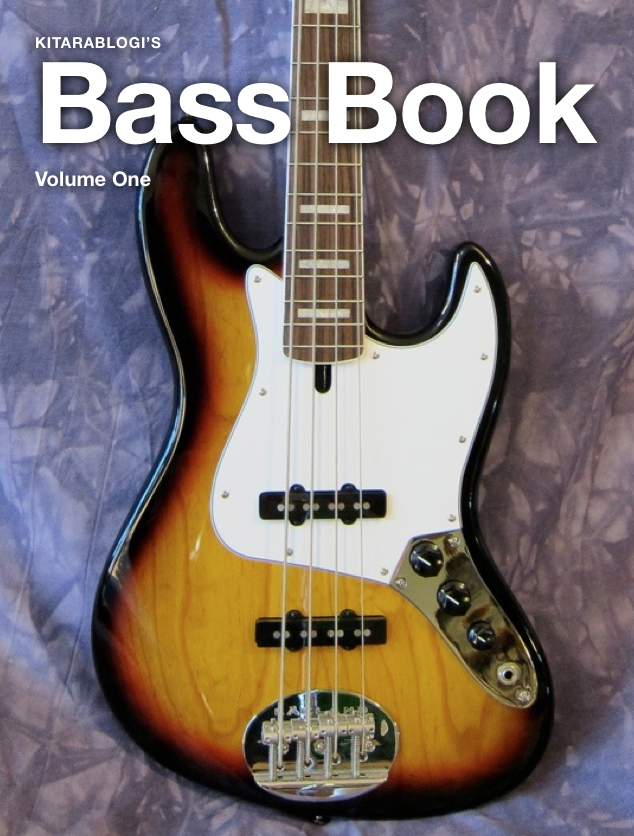
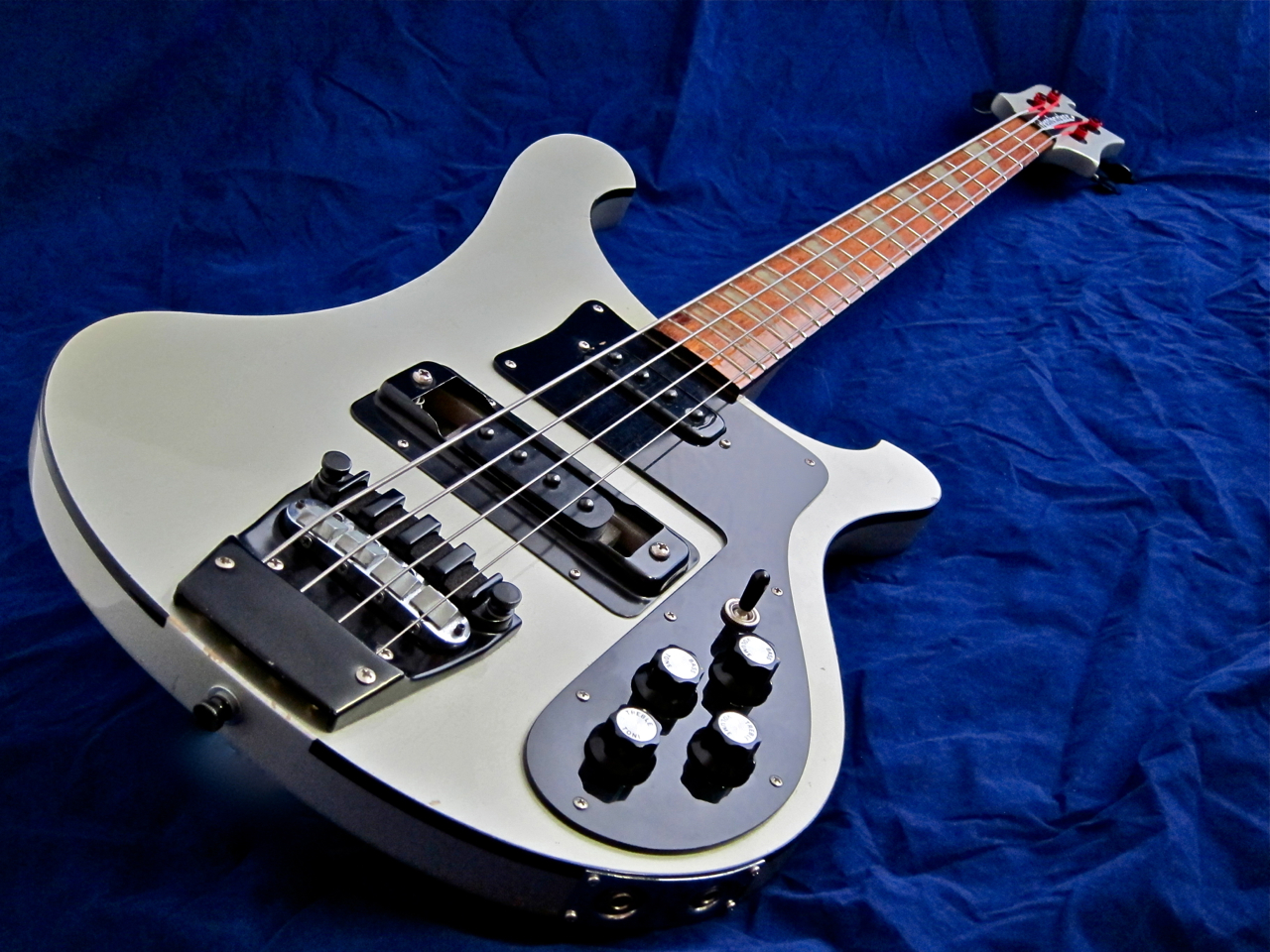
Kitarablogi’s Bass Book presents nine different electric basses in photographs and sound samples. Check out quality instruments by makers such as Kataja Custom Shop (Finland), Lakland, Mannedesign, Rickenbacker, Schecter, Spector and Tokai.
Download you free copy HERE or get it at the iBookstore.
Bass Bookissa esitellään yhdeksän eri bassoa kuvilla ja soundeilla. Soittimien kirjo ulottuu suomalaisesta Kataja Custom Shopista Laklandiin, Mannedesignista Rickenbackeriin, ja Schecterista Spectorin kautta Tokai-bassoon.
Lataa kirja tästä LINKISTÄ tai suoraan iBookstorelta.








 Kitarablogi.com – Finland's premier Guitar and Bass blog