
Kitarablogi.com – Finland's premier Guitar and Bass blog
Juttuja kitaroista ja bassoista

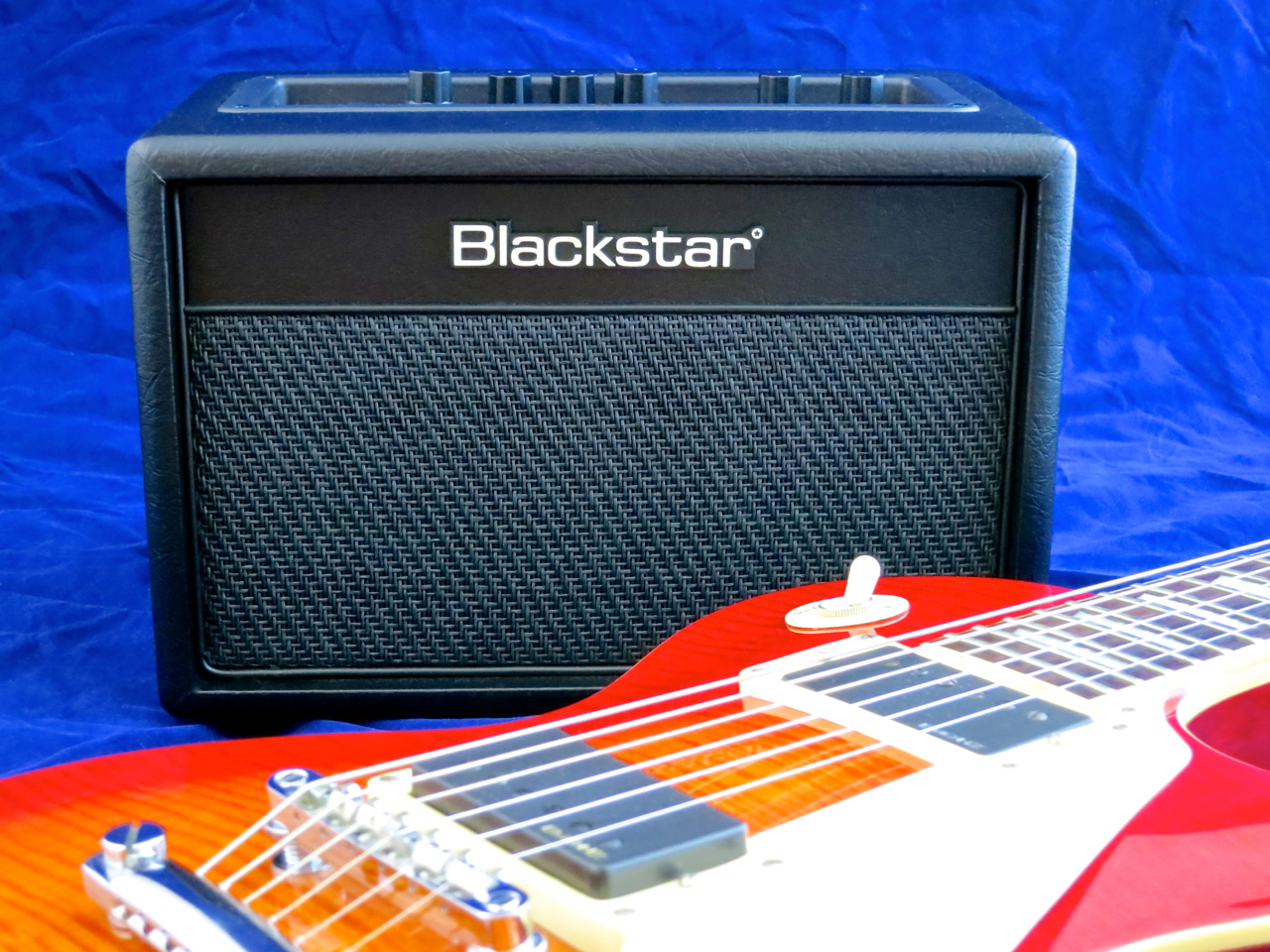
Blackstar’s ID:Core BEAM (current price in Finland: 299 €), which was introduced at this year’s NAMM Show, is one of a new breed of amplifiers:
The BEAM is a so-called ”lifestyle amp” that combines a practical solution for living room practising with a Bluetooth stereo system with a suitable Rock look.
****

The Blackstar ID:Core BEAM is a genuine ID:Core-combo, which means that all its parameters are accessible via Blackstar’s Insider software.
The newcomer is a stereophonic amp with its 20 watts of power running into a pair of three-inch speakers. Blackstar’s Super Wide Stereo-effect – a feature taken from the company’s larger ID:Core combos – can also be applied to the BEAM’s music player, with its own, separate width adjustment.

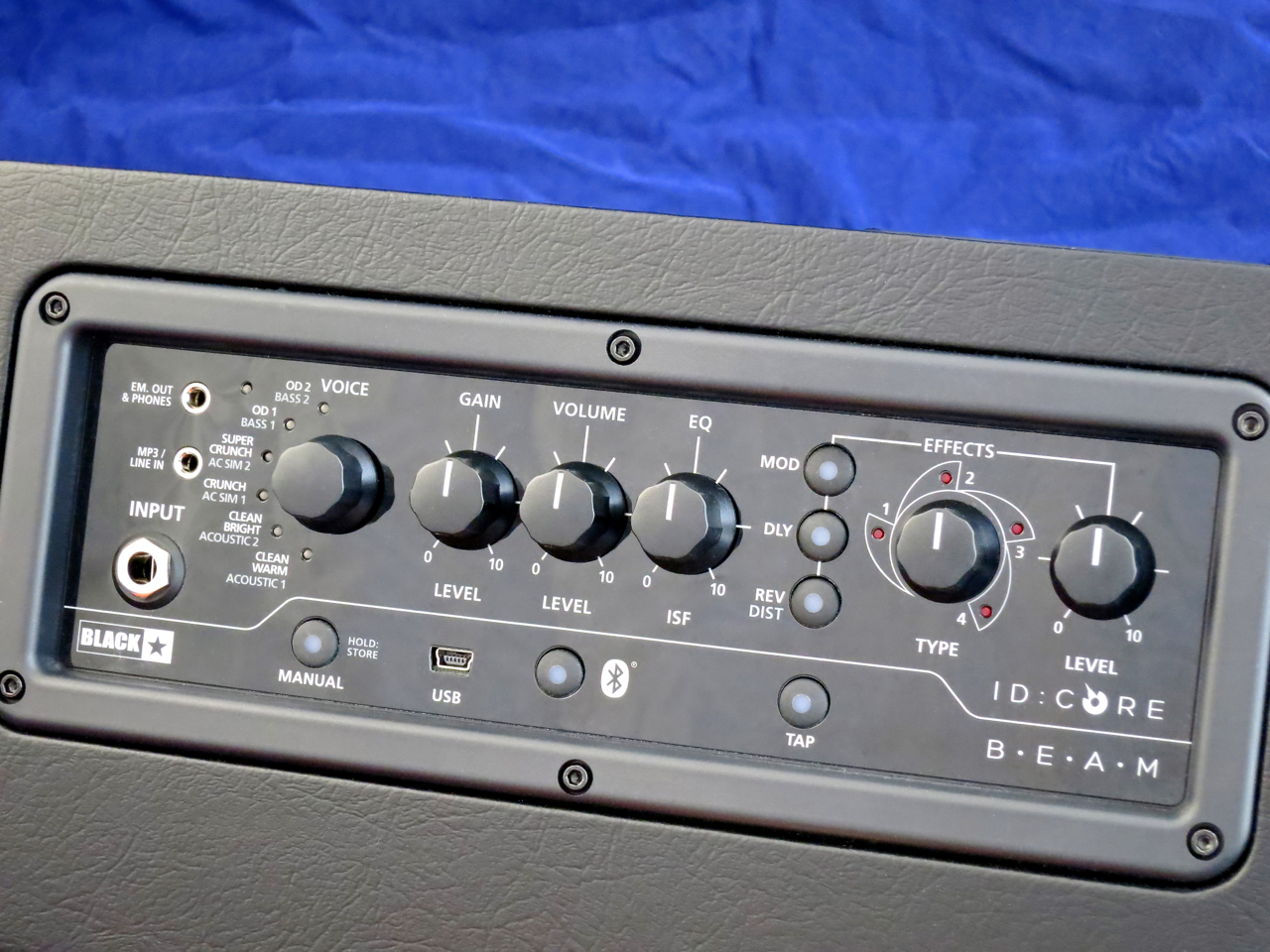
Apart from the power switch, the ID:Core BEAM’s back panel features the input jack for the (optional) footswitch. The rest of the combo’s controls and connectors can be found on the top-mounted control panel.
The larger ID:Core combos are well-equipped practice amps, but the BEAM has a couple of additional aces up its sleeve:
The ID:Core BEAM offers you 12 amp models (Voices). The first set (the Voices LED glows red) deals with six amp models for electric guitar, while the second set (green LED) gives you two Voices each for acoustic guitar, electric bass, and acoustic guitar simulation.
The amp section has three physical knobs for adjustment – gain, volume, and Blackstar’s patented ISF-control, which control’s the amp’s overall tonal character. Using the Insider-software you will be able to access additional parameters for deep editing, like a three-band EQ-section or a noise gate.
The effects department features four different modulation effects, four delay types, and four reverbs. The two Voices for bass swap the reverbs for bass distortion. You can choose one effect from each effect section for a Voice (meaning up to three simultaneous effects).
The small combo also features a built-in tuner.
The music signal, sent to the BEAM from your mobile device via Bluetooth, naturally isn’t sent through the combo’s amp modelling circuits. It is fed into the signal chain just before the power amp section. The ID:Core BEAM allows you to play along to the Bluetooth signal, of course!
The USB-port isn’t only used to remote control the amp’s parameters via Insider – this lifestyle combo doubles as a full-blown USB sound card. The BEAM can be run in three different USB-modes, which allows you to either send a stereo signal of the amp sound to your sequencer, or send two discrete mono signals (with one channel completely dry, and the second channel with all the amp modelling and effects) to your recording software. The third USB-mode is called Reamping, and it’s used to feed a dry guitar signal off your audio sequencer into the ID:Core BEAM and record the effected signal onto a separate recording track simultaneously.
The signal level of the USB-audio can be controlled directly (and independently of the amp’s master volume settings), making it very easy to set the correct recording levels for your personal studio setup.
****
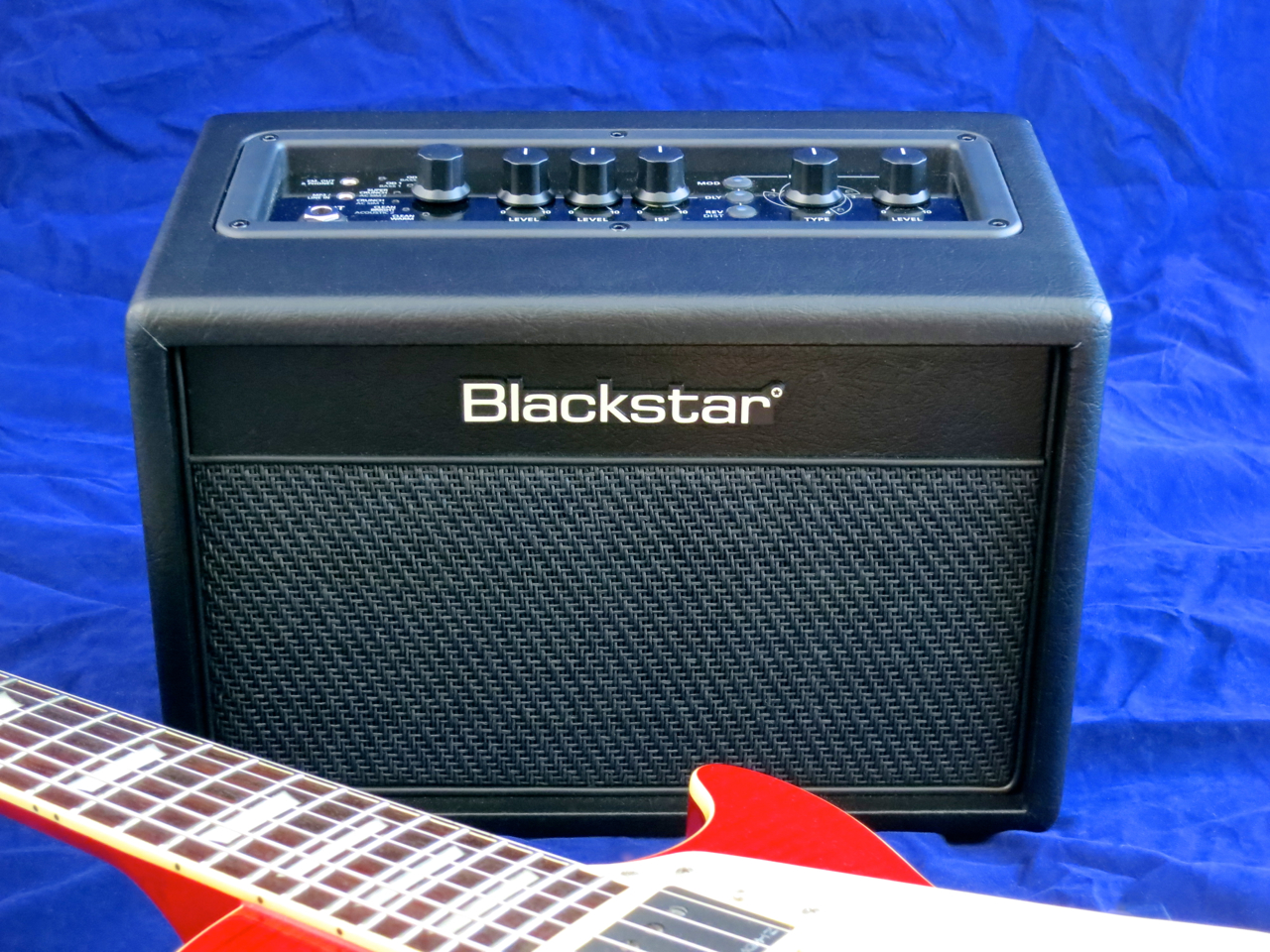
Blackstar have really hit the bull’s eye with their new lifestyle combo!
Listening to music with a very critical ear you can hear a little bit of hiss, but it isn’t loud enough to spoil the fun. Remember, the ID:Core BEAM isn’t meant to be a studio monitor, but rather a nifty, compact music player for your bookcase – something this little combo handles with much aplomb. You wouldn’t necessarily expect such a full and strong delivery from such a compact unit.
The ID:Core BEAM also sounds great as a guitar and bass amp, which isn’t quite as surprising, considering this combo’s pedigree.
The guitar amp voices have plenty of character, and the effects have more than ample depth and width:
The high quality of the acoustic simulator was something of a positive surprise:
Despite its diminutive size, the BEAM also delivers when it comes to electric bass tones:
****

The Blackstar ID:Core BEAM succeeds to combine a programmable practice combo for guitar and bass, a Bluetooth-player, and a USB sound card into a very enticing package. In addition to being a great living room amp, the BEAM could also prove a handy little amp for guitar instructors.
****
Blackstar ID:Core BEAM
299 €
Finnish distributor: Musamaailma
****
Pros:
+ well thought-out concept
+ value for money
+ feature-packed guitar and bass amp
+ adjustable Super Wide Stereo-function
+ USB sound card
+ full sound
Cons:
– high noise gate setting on default bass distortion
Vuoden alussa NAMM-messuilla esitelty Blackstar ID:Core BEAM (299 €) kuuluu uuteen, nopeasti kasvavaan vahvistinkategoriaan:
Se on niin kutsuttu ”lifestyle amp”, joka on samalla sekä hyödyllinen pikkukombo harjoitteluun että kitaristin imagoon sopiva Bluetooth-vahvistin musiikin kuuntelua varten.
****
Blackstar ID:Core BEAM on aito ID:Core-kombo mikä tarkoittaa, että sen kaikkiin parametreihin pääsee käsiksi Blackstarin oman Insider-softan kautta.
Uutuuskombo on stereofoninen, ja sen 20 watin tehoa pusketaan ulos kahdesta kolmen tuuman kaiuttimista. Isoista ID:Coreista tuttu Super Wide Stereo -efekti toimii BEAM-kombossa myös musiikin kuuntelussa, ja sen vaikutusta voi säätää erikseen.
ID:Core BEAM:n takaseinästä löytyy sähköliittimen lisäksi jakki jalkakytkimelle (maksullinen lisävaruste). Kaikki muut liittimet on sijoitettu isolle etupaneelille.
BEAM:n isot sisarukset ovat jo todella hyvin varustettuja, mutta pikkukombo panee ominaisuutensa runsaudella vielä selvästi paremmaksi:
Vahvistinmallinnuksia löytyy tässä peräti 12 kappaletta. Ensimmäinen satsi (Voice-ledi palaa punaisena) on varattu kuudelle eri sähkökitarakanavalle, kun taas toisesta satsista (vihreä ledi) löytyy kaksi vahvistintyyppiä akustiselle kitaralle, kaksi akustisen kitaran mallinnusta, sekä kaksi ohjelmaa sähköbassolle.
Vahvistinosasto tarjoaa kolme fyysistä säädintä soundien muokkaamiseksi – gainin ja volumen lisäksi löytyy vielä Blackstarin patentoima, yleissoundiin vaikuttava ISF-toiminto. Insider-softalla pääsee säätämään sitten tarkemmin muitakin parametrejä, kuten EQ:t tai kohinaporttia.
Efektiosasto tarjoaa neljä modulaatioefektiä, neljä viivetyyppiä, sekä neljä eri kaikua. Bassovahvistimien kanssa on kaiun sijaan lisätty bassosärö. Jokaisesta efektityypistä voi valita yhden per vahvistinmalli, siis samanaikaisesti voidaan käyttää korkeintaan kolmea efektiä.
Pikkukombossa on myös kätevä sisäinen viritysmittari.
Bluetooth:n kautta vastaanotettu audiosignaali ei luonnollisesti kulje mallinnusosion läpi, vaan se lisätään ID:Core BEAM -kombon signaalitielle vasta kitaravahvistimen jälkeen. Bluetooth-musiikin kanssa voi tietysti soittaa mukaan!
USB-liitintä ei käytetä ainoastaan Insider-softan pyörittämiseen, vaan tämä lifestyle-kombo on myös täysverinen usb-äänikortti. BEAM:lla on kolme eri USB Audio -moodia – vahvistin pystyy lähettämään joko stereofonista kitarasignaalia efekteillä höystettynä sekvensserille tai kaksi monosignaalia, joista yksi on kuiva tulosignaali ja toinen koko mallinnuksen läpi käynyt monosignaali. Näiden kahden lisäksi on tarjolla vielä erittäin kätevä Reamping-tila, jossa sekvensseristä lähetetty prosessoimaton kitararaita viedään ID:Core-kombon läpi ja mallinnettu signaali äänitetään toiseen sekvensseriraitaan.
USB-signaalitasoa pystyy säätämään itsenäisesti ja riippumatta kombon masterista, minkä ansiosta usb:n kautta lähetetyn voimakkuuden saa aina omalle äänityssoftalle sopivaksi.
****
Kyllä, nyt täytyy sanoa, että Blackstarin uusi lifestyle-kombo on täysosuma!
Musiikin kuuntelussa on havaittavissa pikkusen kohinaa, mutta se ei nouse lainkaan häiritsevästi esiin. ID:Core BEAM ei ole tarkoitettukaan studiomonoriksi, vaan kirjahyllyn musiikkikeskukseksi, ja se asia on kombolla suveräänisti hallussa. Musiikki kuulostaa yllättävän täyteläiseltä, ja myös sitä volyymin määrää on tarjolla kiitettävän runsaasti.
Myös kitara- ja bassosoundien osilta Blackstar-uutuus ei jätä mielestäni toivomiseen varaa!
Kitarasoundit soivat erittäin hyvin, ja myös BEAM:n efektitarjonta on varsin maukas:
Akustisen kitaran mallintaminen onnistuu pikkukombolla yllättävän hyvin:
Vaikka tämä Blackstar-uutuus on hyvin kompakti tapaus, jopa BEAM-kombon bassosoundit kuulostavat mukavan meheviltä:
****
Blackstar ID:Core BEAM yhdistää erittäin onnistuneesti mallintavan harjoituskombon kitaralle (ja bassolle), usb-äänikortin, sekä tehokkaan Bluetooth-kaiuttimen. Ainakin omasta mielestäni tämä uutuuskombo sopii todella hyvin – olohuonekäytön ohella – myös opetusvahvistimeksi.
****
Blackstar ID:Core BEAM
299 €
Lisätiedot: Musamaailma
****
Plussat:
+ toimiva konsepti
+ hinta-laatu-suhde
+ hyvin varusteltu, ohjelmoitava kitara- ja basso-osasto
+ säädettävä Super Wide Stereo -toiminto
+ USB-äänikortti
+ täyteläinen soundi
Miinukset:
– voimakas kohinaportti bassosärön tehdasasetuksissa
Lisätiedot: Musamaailma

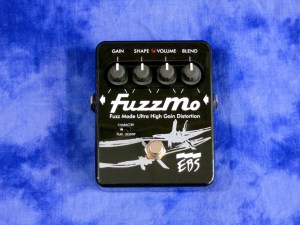
The good people of EBS Sweden are now bringing a healthy dose of fuzz to the bassist’s toolbox.
****

The EBS FuzzMo (current price in Finland: 169,90 €) is a fuzz-type high gain distortion developed especially for bass.
This stompbox is made in China to the EBS’ exacting standards. It’s a sturdy pedal with very positive feeling controls.
The FuzzMo can be powered in three ways:
If you use an EBS amp from the Drome-, Gorm-, HD- or TD-series, you can use a TRS-cable (aka a stereo cable) to feed phantom power from the amp to the effect pedal.

The FuzzMo pedal also runs off a standard 9 V battery, but you will need a screwdriver to take off the base plate first.

The third alternative is to employ a Boss-type power supply (9 V DC, centre negative) to fire up the stompbox.
****

Even though the EBS FuzzMo looks somewhat similar to the company’s Billy Sheehan -pedal, the controls on the fuzz work in a different way.
The FuzzMo doesn’t do ”nice and sweet” – the Gain control offers fuzz from medium-crunchy to balls-to-the-wall-fuzz. Shape adjusts the tone of the fuzz effect – not in the way a traditional tone control does, but rather by changing the waveform of the fuzz signal. At seven o’clock the sound is quite warm and organic with the waveform approaching a square, while five o’clock is far brighter and more aggressive with the waveform resembling a triangle.
The mini-switch underneath the FuzzMo-logo (called Character) also plays an important part in the stompbox’ sound:
Switched to the left no EQ’ing is applied to the signal (FLAT). In the middle position there’s a slight attenuation of the mid-range. SCOOP on the right side results in a very Metal-style scooped-mid tone with plenty of bite.
Modern bass effects often split the bass signal at the input. One half is fed through the effect, while the other half is kept dry and mixed into the wet signal before it reaches the output. The advantage of doing things this way is that it enables you to keep your bottom end and dynamic attack intact.
This is just the way EBS’ FuzzMo works, too:
You use the Volume knob to adjust the fuzz signal’s volume level, and then use the Blend control to add the desired amount of dry bass. This feature is especially important in fuzz pedals for bass, because the hard clipping of a fuzz effect practically negates all your playing dynamics by design. With the FuzzMo there will be no problems with your tone becoming mushy, clogged up and indistinct, because the Blend control lets you restore your bass guitar’s punch and low end.
Here’s a bit recorded with a Jazz Bass (both pickups on) and a relatively low Gain setting:
In this clip I added some more fuzz and bite to a Rickenbacker played with a plectrum:
Thanks to the ability to blend in the dry signal, the EBS FuzzMo also works extremely well with a five-string (in this case a Yamaha BB with active EMGs):
Note that on all these audio clips the Gain control stayed below one o’clock. If you want you can take things much, much further with this EBS-pedal!

The FuzzMo is a typical EBS-pedal – it’s a sturdy, pro-quality stompbox and it sounds great. If you’re a purveyor of sleazy, dirty and aggressive bass tones, you should definitely give this baby a spin!
****
EBS Sweden FuzzMo
169,90 €
Finnish distributor: F-Musiikki
****
Pros:
+ build quality
+ can be powered in three ways
+ sound optimised for bass
+ three-way EQ-switch
+ Blend control
+ offers a lot of gain
Cons:
– no quick access to battery

Amfisound Guitars is a small company from the northern Finnish town of Oulu. Run by two master luthiers, Amfisound offers a surprisingly wide variety of different guitar and bass models, as well doing a lot of customising and repair jobs. Kitarablogi visited Amfisound’s workshop late last year – read all about it HERE.
Amfisound have introduced a new bass model recently, called the Raudus Bass, which is the subject of this review.
****

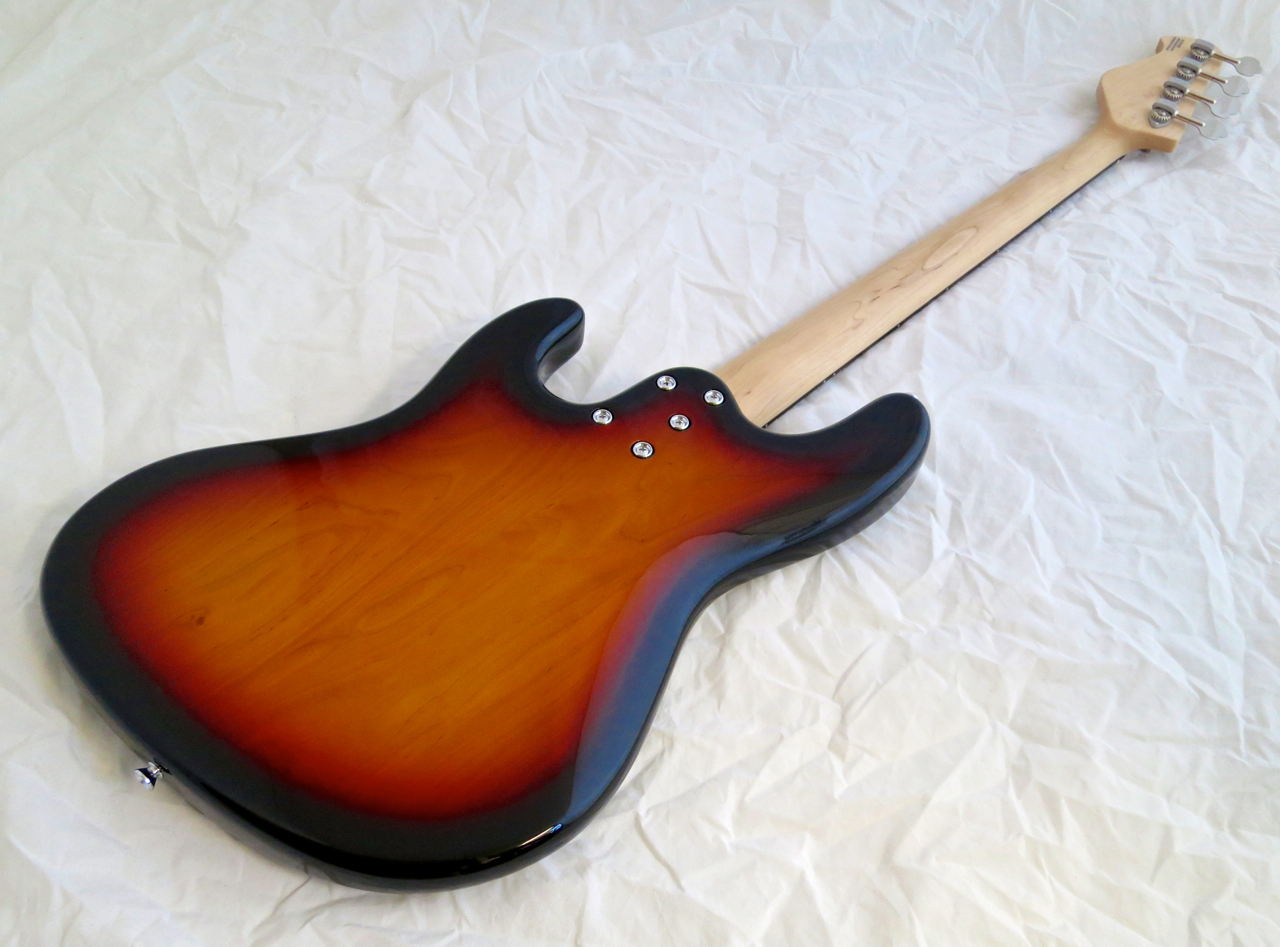
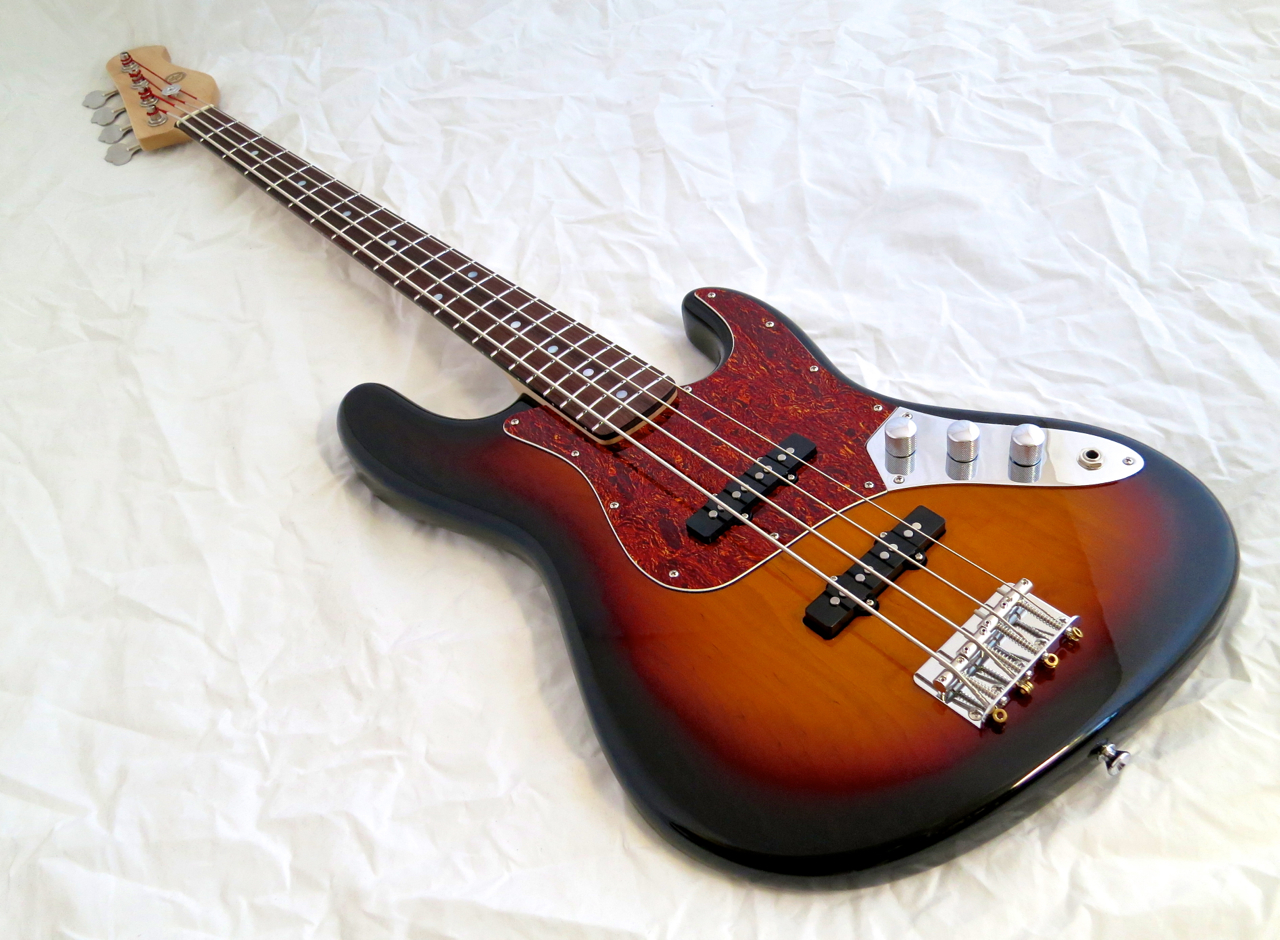
The Amfisound Raudus Bass (prices for EU-customers starting from 2,520 €) clearly takes its inspiration from Fender’s classic Jazz Bass, but this new Finnish (passive) bass offers a number of modern updates and improvements. The easiest things to notice on first sight are probably the added 21st fret and the much deeper cutaway.

The Raudus sports a body made from Finnish alder and a bolt-on maple neck.
The neck comes finished in a very thin satin lacquer, while the body is gloss finished in a glorious tri-colour sunburst.

Our review sample of the Amfisound Raudus features two differences to the basic model – different tuning machines and different pickups.

This Raudus comes equipped with a set of Hipshot’s UltraLite tuners (additional charge: 50 €), which are built from aircraft-grade aluminium. The UltraLite machines work extremely smoothly and precisely, and they efficiently cut down on surplus headstock weight, which is a good thing on such a traditionally-inspired long scale bass, such as the Raudus.
The two-way truss rod is accessed from the headstock side of the neck.

The outstanding standard of workmanship displayed in the Raudus-model’s fretwork, is but one of many points bearing clear testament to the world-class standard of Finnish luthiery! This is genuine custom shop quality.
The fretboard is made of Indian rosewood, and it’s sporting 21 medium-jumbo sized frets.
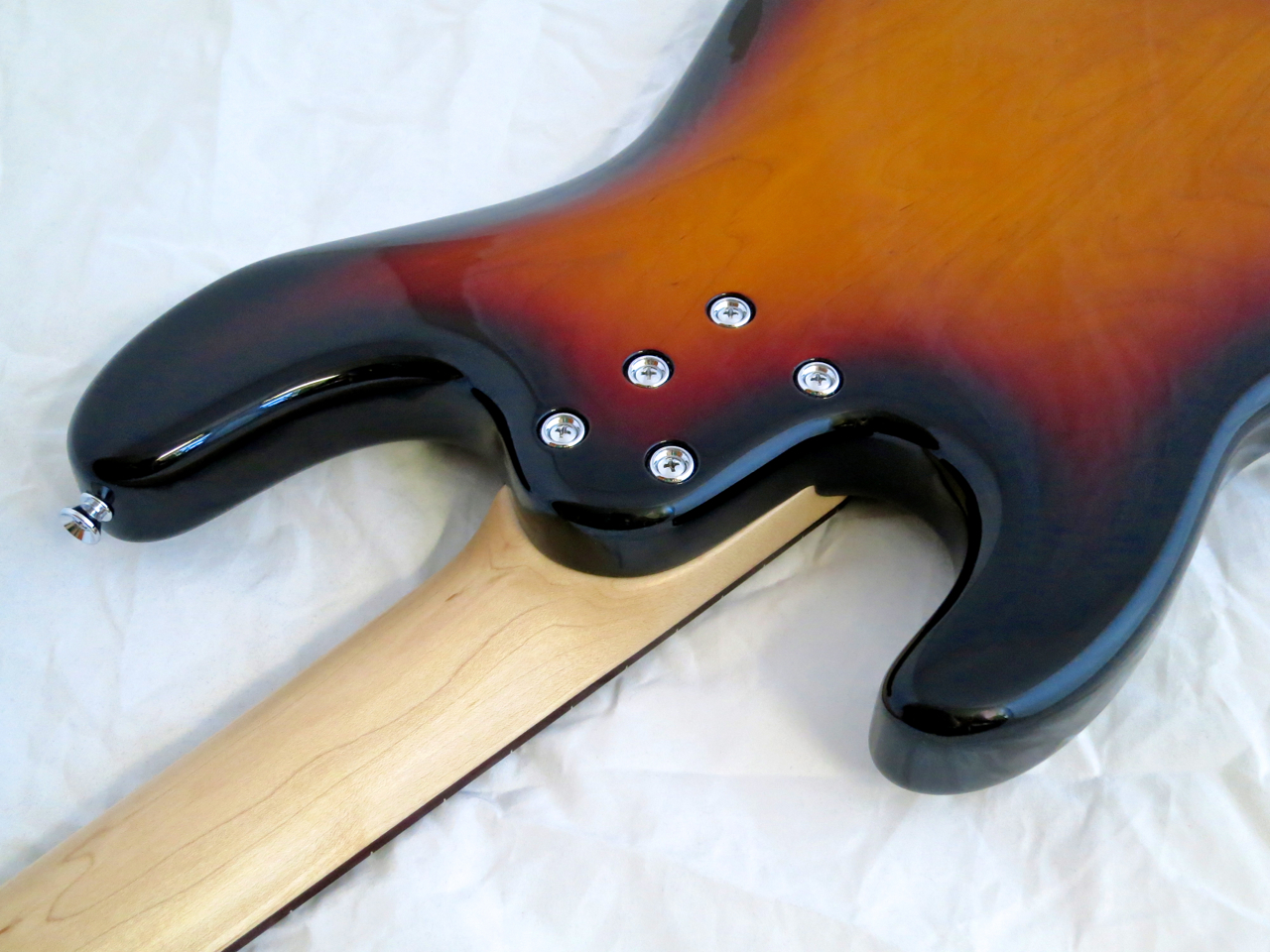
Amfisound’s rounded body heel makes excursions to the dusty end of the neck very comfortable, indeed.

The bridge is a quality copy of the original, late-Sixties Fender bridge – if it ain’t broken, don’t fix it.
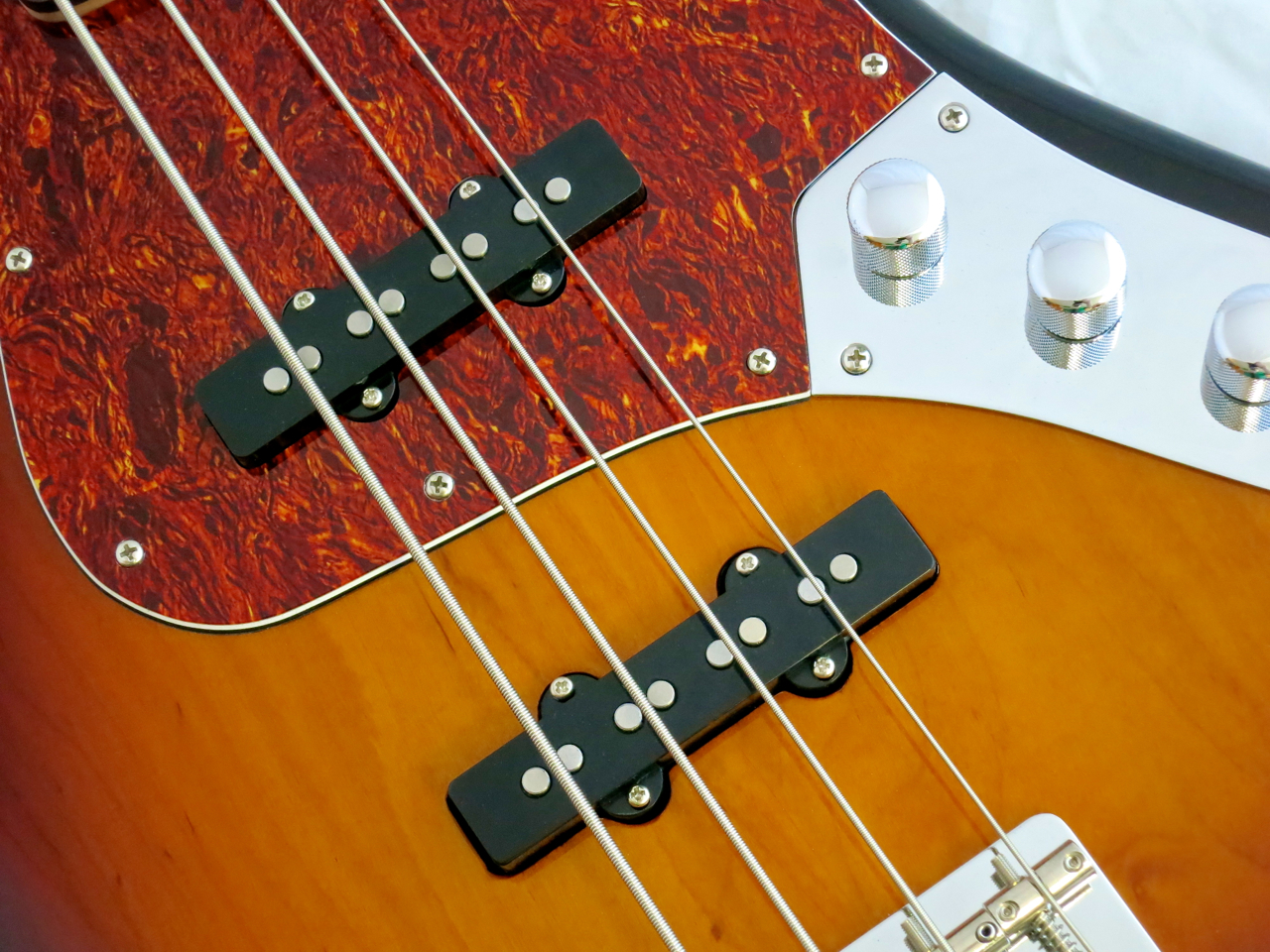
The review sample comes with a set of Jarno Salo Pickups from Finland. The basic version uses Swedish Lundgrens.

This instrument offers you Jazz Bass-type controls – separate volume-knobs for each pickup, plus a master tone-control.

Amfisound’s workmanship is spot-on and very crisp – even under the hood.
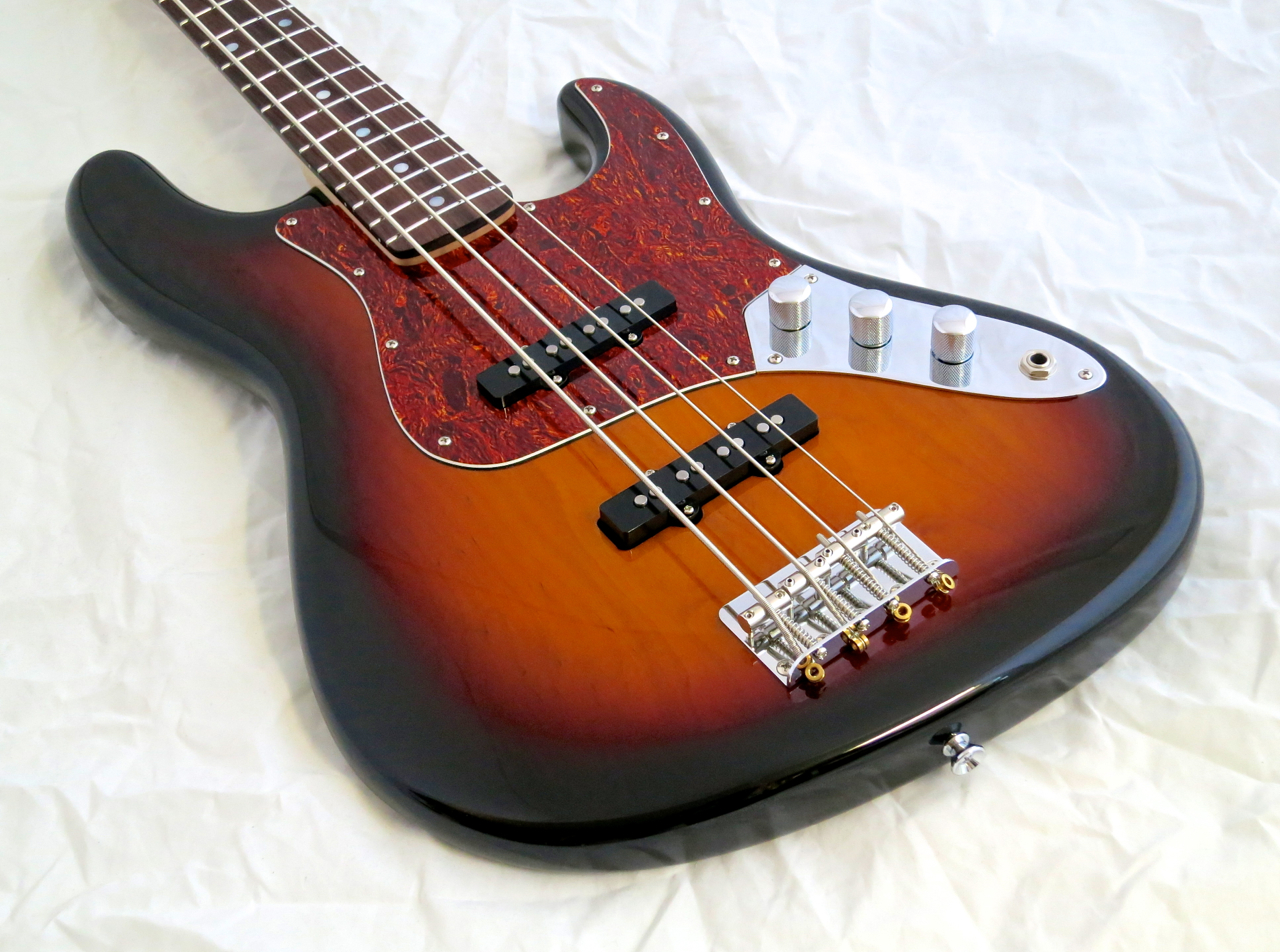
The list of available custom options from Amfisound is very long, and includes (in the Raudus-model’s case) an ash body, different bridges and/or tuners, as well as active Glockenklang-electronics (among other things). For more detailed information you should contact Amfisound’s Tomi or Sampo.
There’s also a five-string Raudus on offer, which is built with a longer scale of 35 inches.
****

Amfisound’s Raudus Bass is a real corker of an instrument, with its sound and playability second to none.
The flatter-than-vintage fingerboard radius (9.5″) gives the slender neck a suitably modern playing feel. Thanks to Amfisound’s exemplary fretwork, our review sample’s low action (E: 2.0 mm/g: 1.6 mm) was completely free of annoying fret buzz or string rattle.
I’m a devoted Jazz Bass-fan, which made me feel right at home playing the Raudus. Yes, it’s true that the Amfisound offers much better top fret access, but overall this new bass feels like a dear old friend.
And this bass’ sound is outstanding, too, dishing out oodles of classic, Jazz Bass-style tones.
Jarno Salo’s excellent pickups are singlecoil designs, with the bridge pickup being reverse-wound and reverse-polarity in relation to the neck unit. This means that using both pickups together gets rid of any possible electromagnetic hum and buzz (from transformers, lighting or displays).
In terms of sound, these Salo-pickups really give you all those classic tones you’d expect from a bass such as this.
Listen to these three audio clips. Each clip has the neck pickup first, followed by both pickups on, and the bridge pickup going last:
****
The Amfisound Raudus Bass is a very fine example Finnish luthiery, there’s no two ways about this. Finns must be very lucky to find such fine instruments right at their doorstep!
****
Amfisound Guitars Raudus Bass
Prices starting from 2,520 € (EU-customers) & 2,032 € (outside the EU)
Hard case included.
Contact: Amfisound Guitars
****
Pros:
+ Made in Finland
+ handmade
+ workmanship
+ playability
+ sound
Amfisound Guitars on kahden soitinrakentajamestarin yhdessä vetämä soitinpaja Oulun Haukiputaalta, joka tarjoaa erittäin laajan valikoiman omia soitinmalleja, sekä kattavat korjaus- ja kustomointipalvelut. Löydät Kitarablogi-jutun viime talven Amfisound-vierailusta TÄÄLTÄ.
Amfisoundilta on hiljattain ilmestynyt uusi bassomalli nimeltään Raudus Bass, jota on saatu nyt testiin.
****
Amfisound Raudus Bass -mallin (hinnat alkaen 2.520 €) lähtökohtana on nähtävästi toiminut Fenderin Jazz-basso, mutta tämä uusi suomalainen passiivibasso tarjoaa monia nykyaikaisia päivityksiä, joita on esikuvasta turha hakea. Helpoiten havaittavissa ovat varmaan rungon huomattavasti syvempi soololovi ja otelautaan lisätty 21. nauha.
Raudus-basson runko veistetään suomalaisesta lepästä ja sen kaula on vaahteraa.
Kaulaa viimeistellään ohuella, mattapintaisella lakkauksella, kun taas runko komeilee kiiltävässä, kolmivärisessä sunburstissaan.
Testattu Amfisound Raudus on hyvin lähellä mallin perusversiota, lukuun ottamatta testisoittimen virittimet ja mikrofonit.
Tähän Raudukseen on asennettu – maksullisena optiona (50 €) – Hipshotin höyhenenkevyet UltraLite-virittimet, joita valmistetaan lentokoneiden valmistuksessa käytetystä alumiinista. UltraLite-virittimet toimivat erittäin tarkasti, ja ne parantavat (alhaisen painonsa ansiosta) ergonomisesti rakennetun Raudus-mallin tasapainoa vielä entisestään.
Basson kaksisuuntaista kaularautaa säädetään kätevästi lavan puolelta.
Tämän Amfisoundi-soittimen esimerkillinen nauhatyö on vain yksi Rauduksen lukuisista kohdista, jotka kielivät suomalaisen soitinrakennustaidon huimasta tasosta! Tällaiseen laatuun massatuotetut soittimet yksinkertaisesti eivät yllä.
Otelauta on intialaista ruusupuuta, ja nauhojen koko on medium-jumbo.
Amfisoundin sulavaa ruuviliitosta käytetään luonnollisesti myös firman uudessa Raudus-bassossa.
Fenderin alun perin kehittämä bassotalla on monien mielestä yhä se paras vaihtoehto.
Testisoittimeen on asennettu suomalaiset Jarno Salo Pickups -mikrofonit. Perusversiossa löytyy ruotsalaisia Lundgren-mikkejä.
Säätimet toimivat Jazz-bassosta tutulla tavalla – kummallekin mikrofonille on oma volume-säädin, ja niiden lisäksi löytyy yhteinen master tone.
Amfisoundin erittäin laadukas ja siisti työ on nähtävissä myös elektroniikkalokeron kannen alta.
Amfisoundin mahdollisien custom-optioiden lista on erittäin pitkä, ja se tarjoaa Raudus Bass -mallin tapauksessa mm. saarnirunkoa, erilaisia talla- ja viritinratkaisuja, tai vaikkapa aktiivista Glockenklang-elektroniikkaa. Tarkempia tietoja optioista ja niiden hinnoista saa ottamalla yhteyttä suoraan Amfisoundin Tomiin tai Sampoon.
Raudus-basso on myös saatavilla viisikielisenä versiona pidemmällä 35-tuumaisella mensuurilla.
****
Amfisoundin Raudus on kyllä upea ja kevyt soitin, jossa soitettavuus ja soundi ovat mielestäni prikulleen kohdallaan.
Otelaudan hieman vintagea loivempi radius (9,5 tuumaa) antaa solakalle kaulalle sopivasti nykyaikaista tuntumaa. Amfisoundin esimerkillinen nauhatyö mahdollisti testibassossa hyvin matalan kielenkorkeuden (E: 2,0 mm/g: 1,6 mm) ilman minkäänlaista räminää.
Koska olen vanha Jazz-basson fani, Raudus tuntui heti ensikättelyssä vanhalta ystävältä. Totta, ylimpiin nauhoihin pääsee Amfisoundilla alkuperäistä paremmin, mutta muuten ergonomia ja soittimen tuntuma on hyvin lähellä vanhaa klassikkoa.
Eikä Raudus jätä soundiltaan lainkaan toivomisen varaa, vaan tarjolla on erittäin maukas kattaus erilaisia klassikkosoundeja.
Alkuperäisten tavalla myös Jarno Salon mikrofonit ovat yksikelaisia, jotka on kuitenkin käämitty toistensa nähden vastasuuntaan. Tämä tarkoittaa, että yksikelaisten poimimat hurinat ja sirinät katoavat aina täysin, kun molemmat mikrofonit ovat täysillä.
Soundillisesti Salo-mikrofoneissa löytyy juuri se oikea ”vanhan liiton” meininki, joka sopii erittäin hyvin tähän perinnetietoiseen Amfisound-bassoon.
Tässä kolme esimerkkipätkää (järjestys jokaisessa pätkässä: kaulamikrofoni –> molemmat –> tallamikrofoni):
****
Testin perusteella voin vain todeta, että Amfisoundin Raudus Bass todellakin edustaa suomalaista osaamista ja laatua parhaimmillaan. Miksi mennä merta edemmäs kalaan, kun tällainen, käsintehty laatubasso löytyy Suomessa?
****
Amfisound Guitars Raudus Bass
Hinnat alkaen 2.520 € (laadukas kova laukku kuuluu hintaan)
Lisätiedot: Amfisound Guitars
****
Plussat:
+ aitoa suomalaista laatua
+ käsintehty
+ työnjälki
+ soitettavuus
+ soundi




 Kitarablogi.com – Finland's premier Guitar and Bass blog