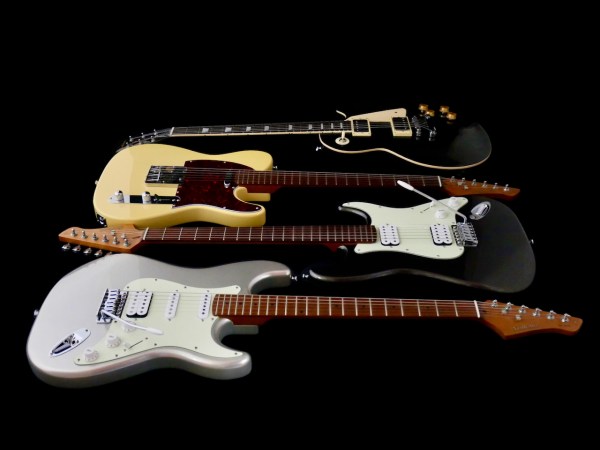
Testipenkissä: Odes Custom Guitars ”White Wizard”

****

On aina ilo tutustua aloitteleviin soitinrakentajiin ja heidän luomuksiinsa. Jonkin aikaa sitten minuun otti yhteyttä uusi soitinrakentaja nimeltä Osku Toppinen, joka on juuri alkanut yrittää vakiinnuttaa omaa sähkökitaroiden valmistustaan ​​”Odes Custom Guitars” -nimellä. Voit ottaa yhteyttä häneen Facebookissa tai Instagramissa.

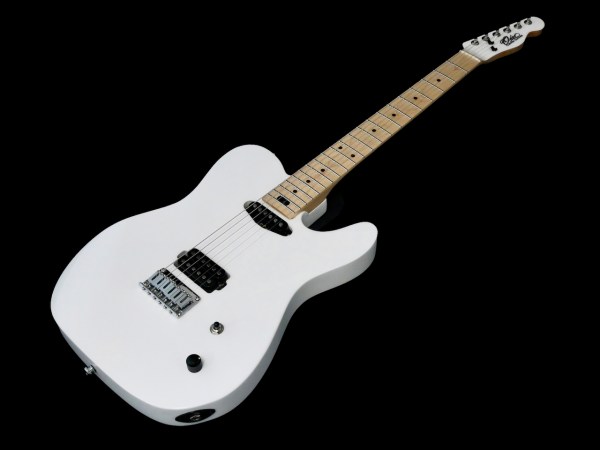
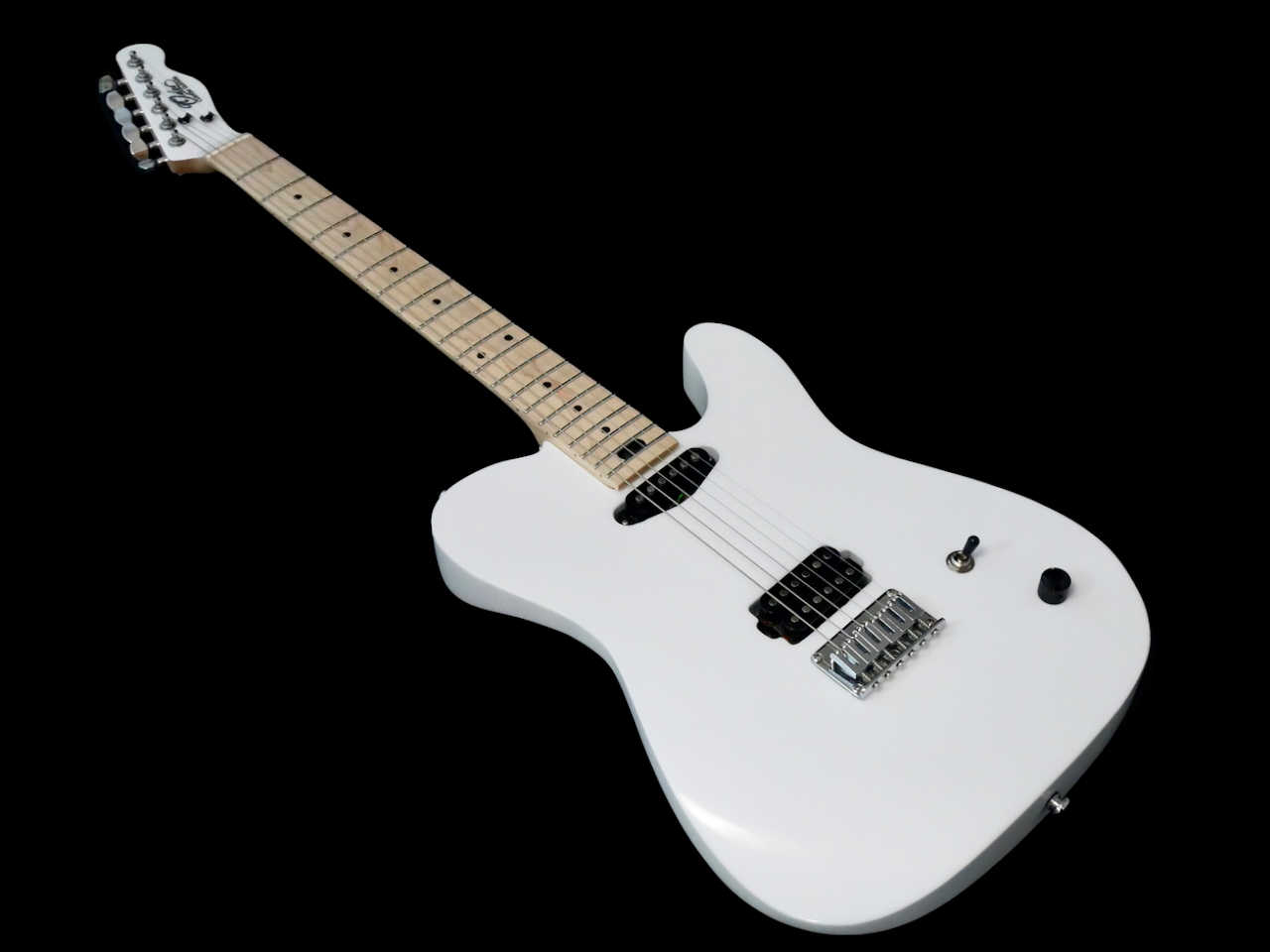
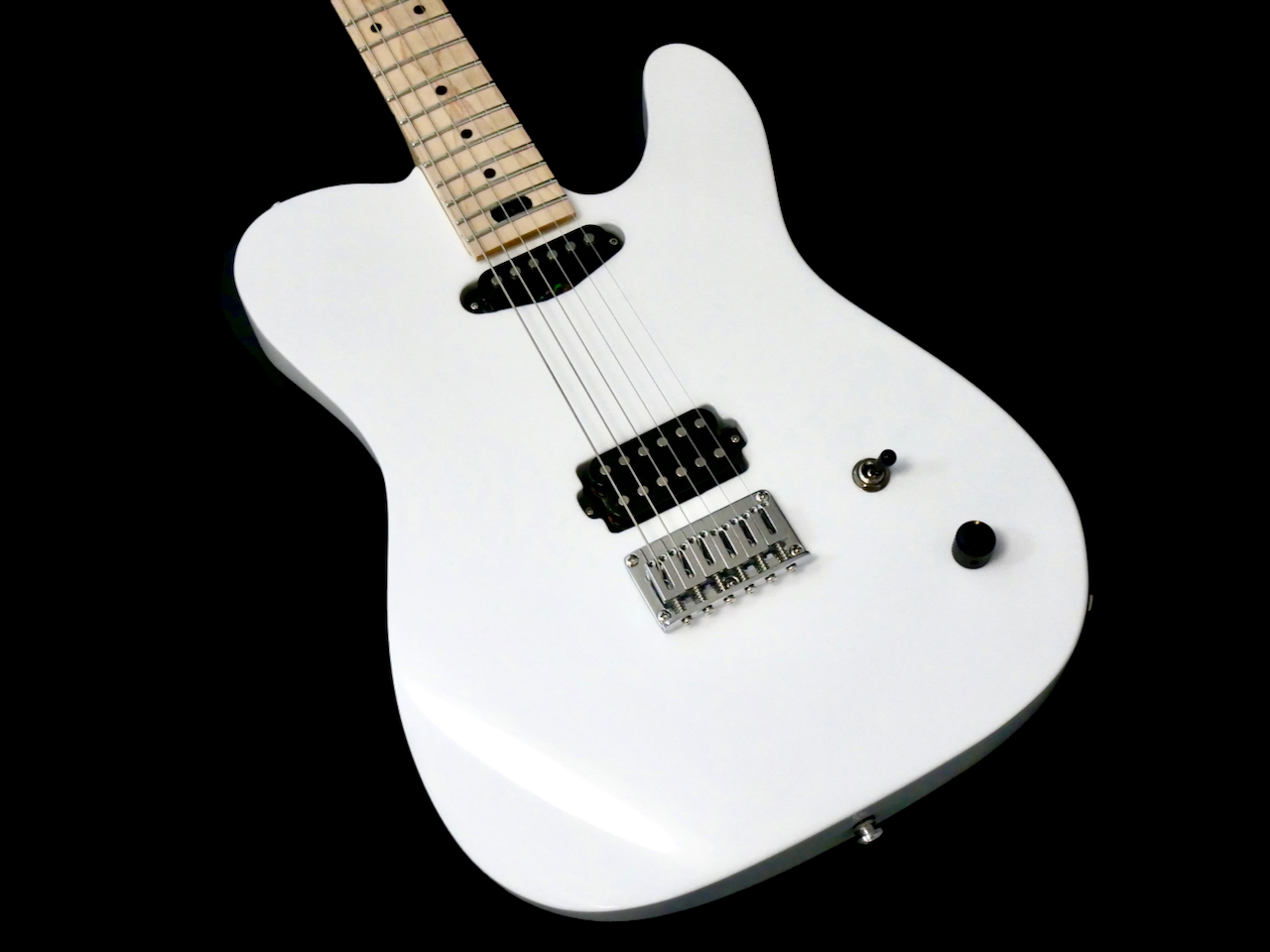
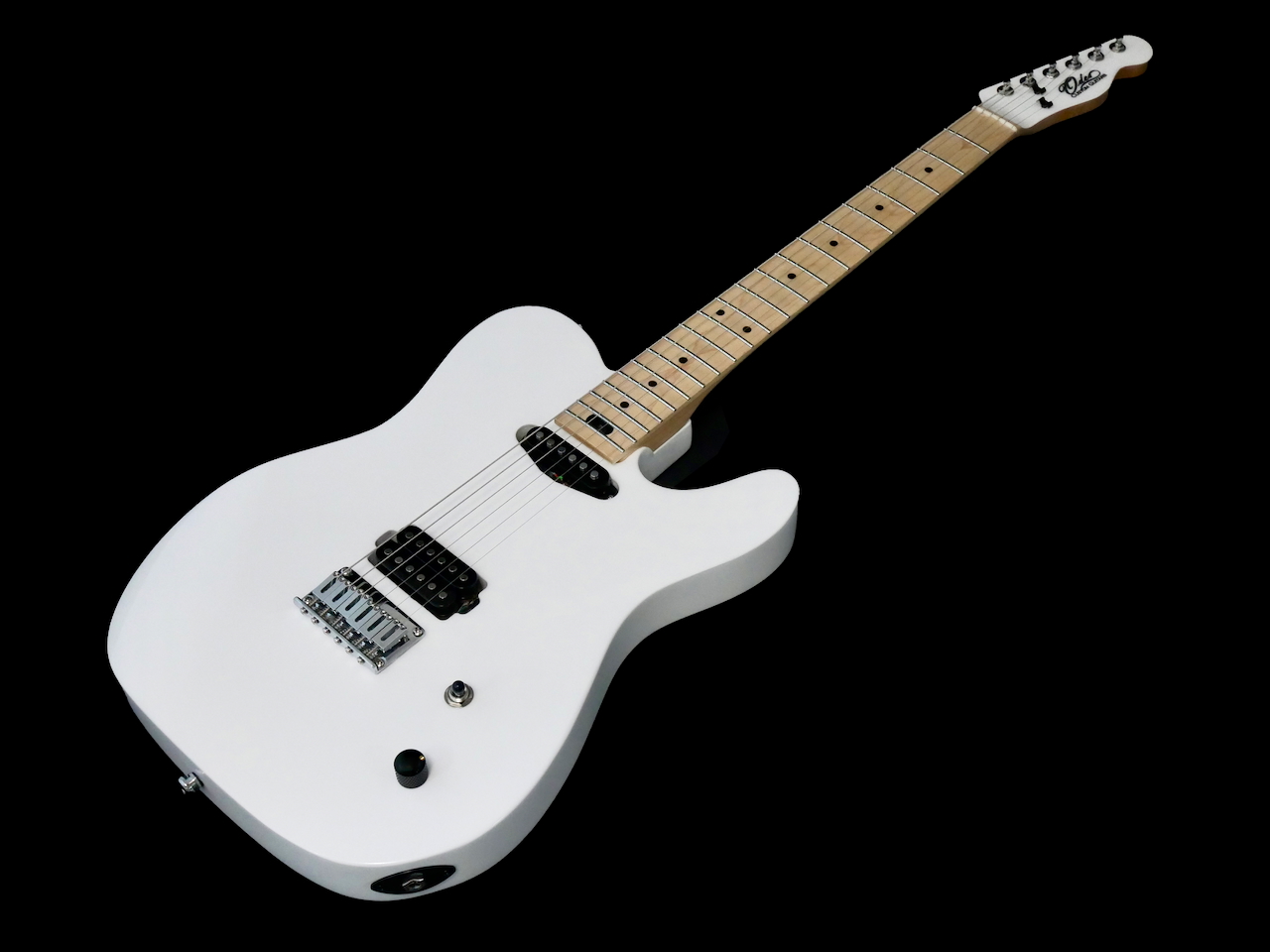
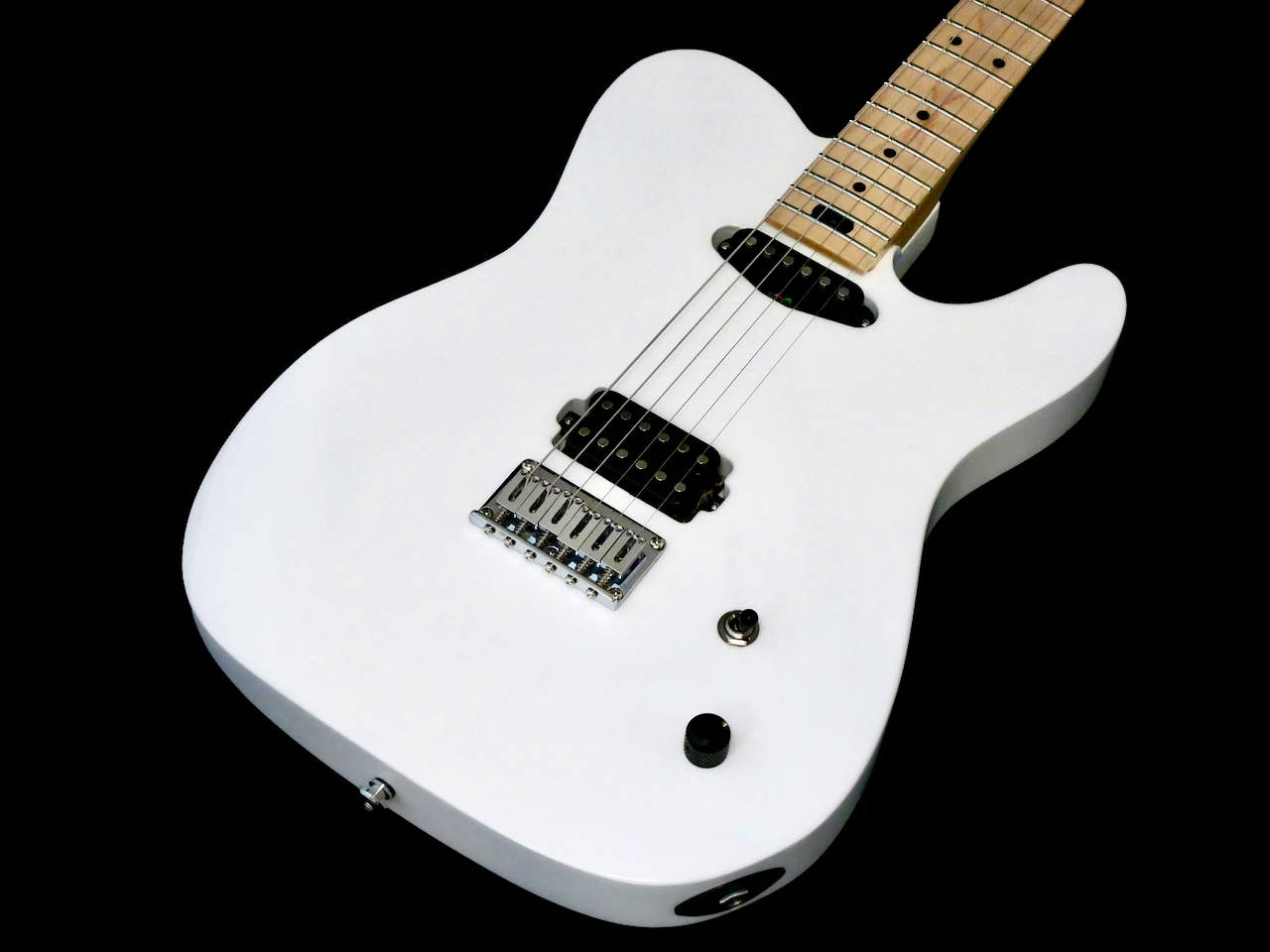
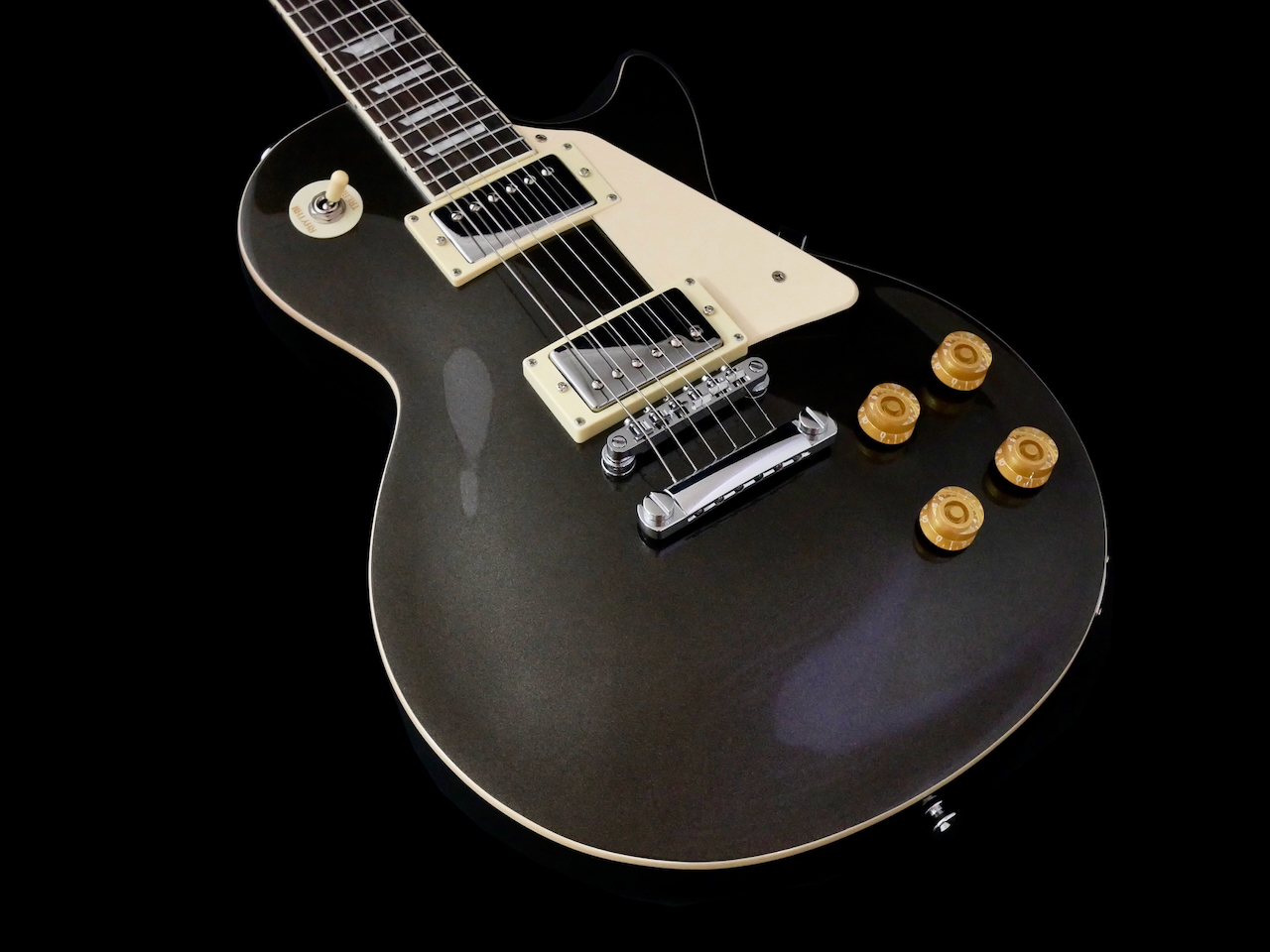
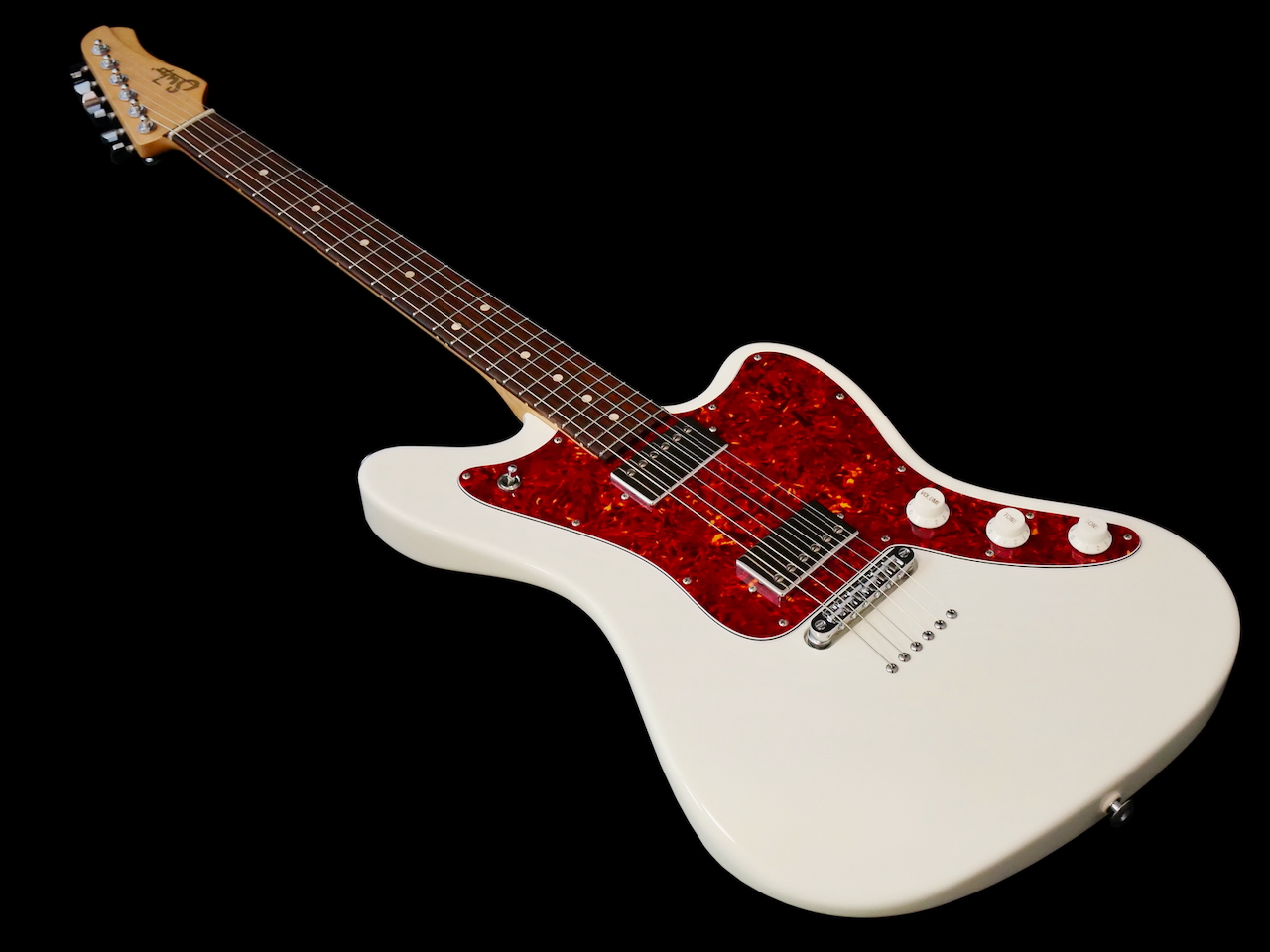
Osku osallistui hiljattain Uraltonen tapahtumaan Helsingissä, ja onnistuin saamaan sähkökitaran testattavaksi. Tätä Odes Custom -kitaraa kutsutaan nimellä ”White Wizard”. Se on moderni, kiiltävän valkoinen Tele-tyylinen soitin – hintapyyntö on 1.800 € (ilman alv:tä).

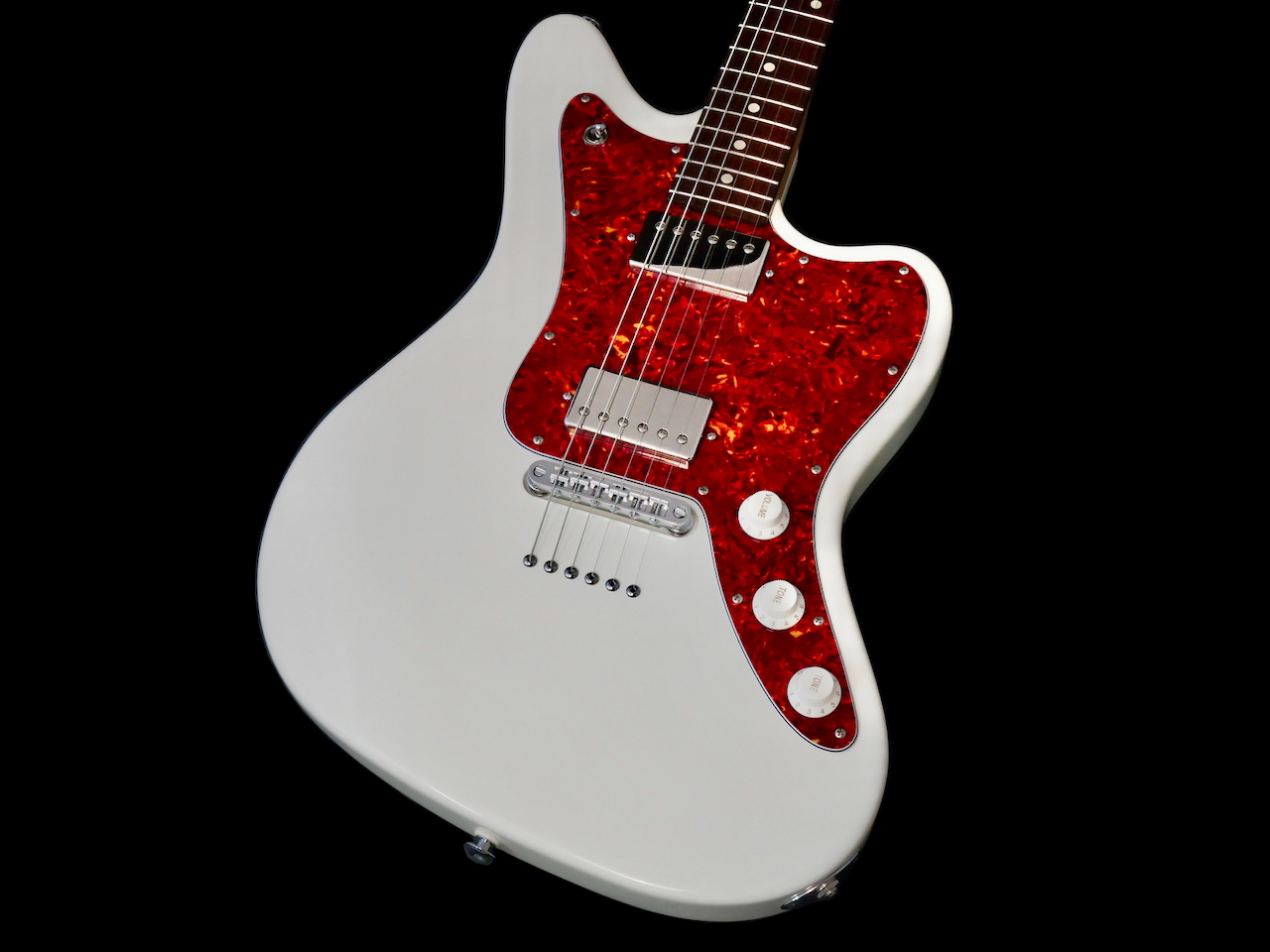
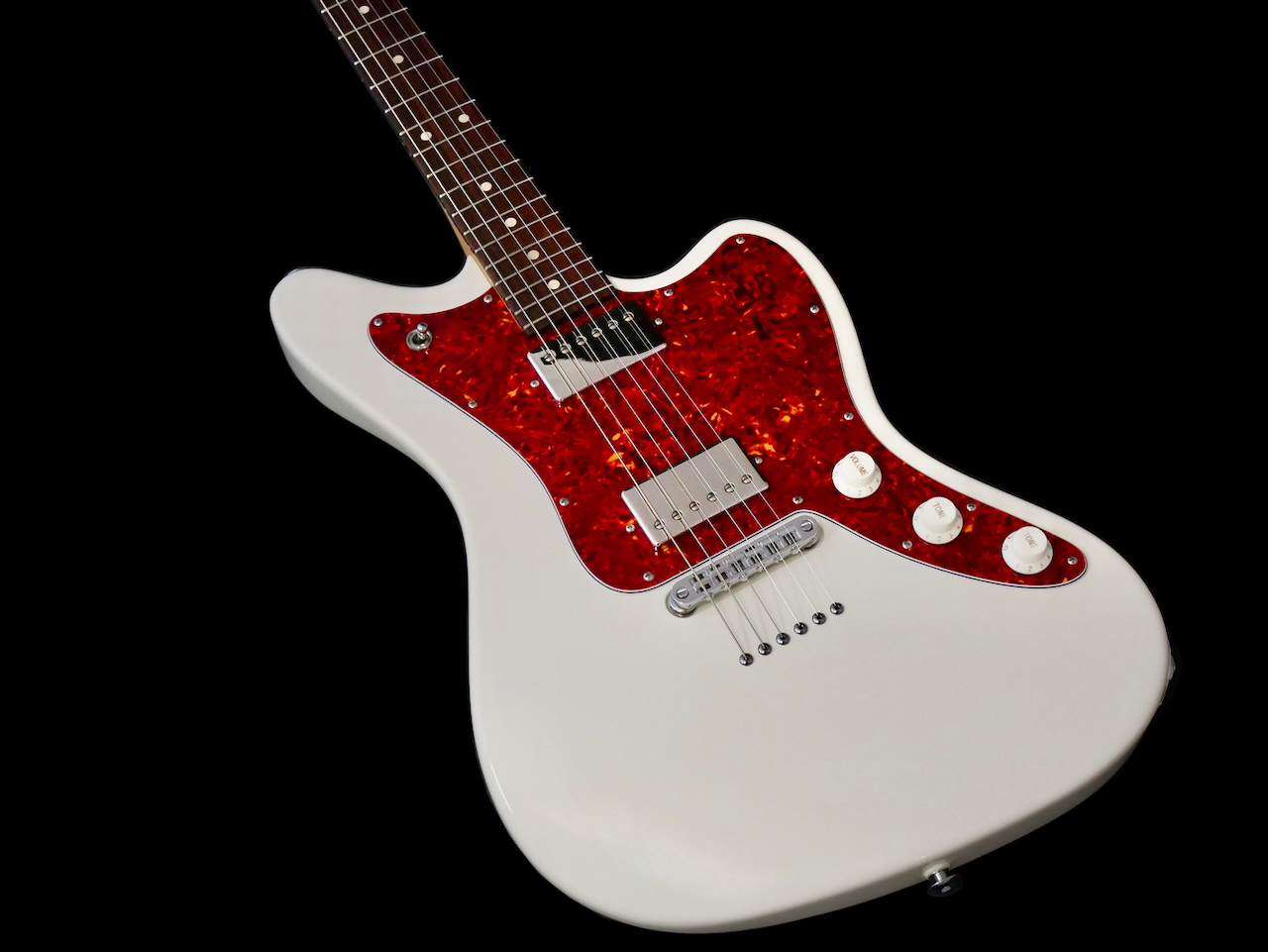
White Wizard on kyllä ​​todella upea – kokovalkoinen leppärunko ilman häiritsevää plektrasuojusta, mutta erittäin kauniilla etu- ja takaviisteillä. Rungon kiiltävä viimeistely on upea; musta ja valkoinen ovat tekijälle vaikeimmat värit, koska jokainen pieni virhe tai kuoppa pinnassa näkyy kuin mikroskoopilla. White Wizard on yksinkertaisesti virheetön – loistavaa!

Kaula saattaa näyttää perinteiseltä Fender-kaulalta, mutta se on itse asiassa tehty kolmesta pitkästä vaahterapalasta, jotka on liimattu yhteen pituussuunnassa. Otelauta on erillinen vaahteralevy ja siinä on 21 kiiltävää, ruostumattomasta teräksestä valmistettua nauhaa.

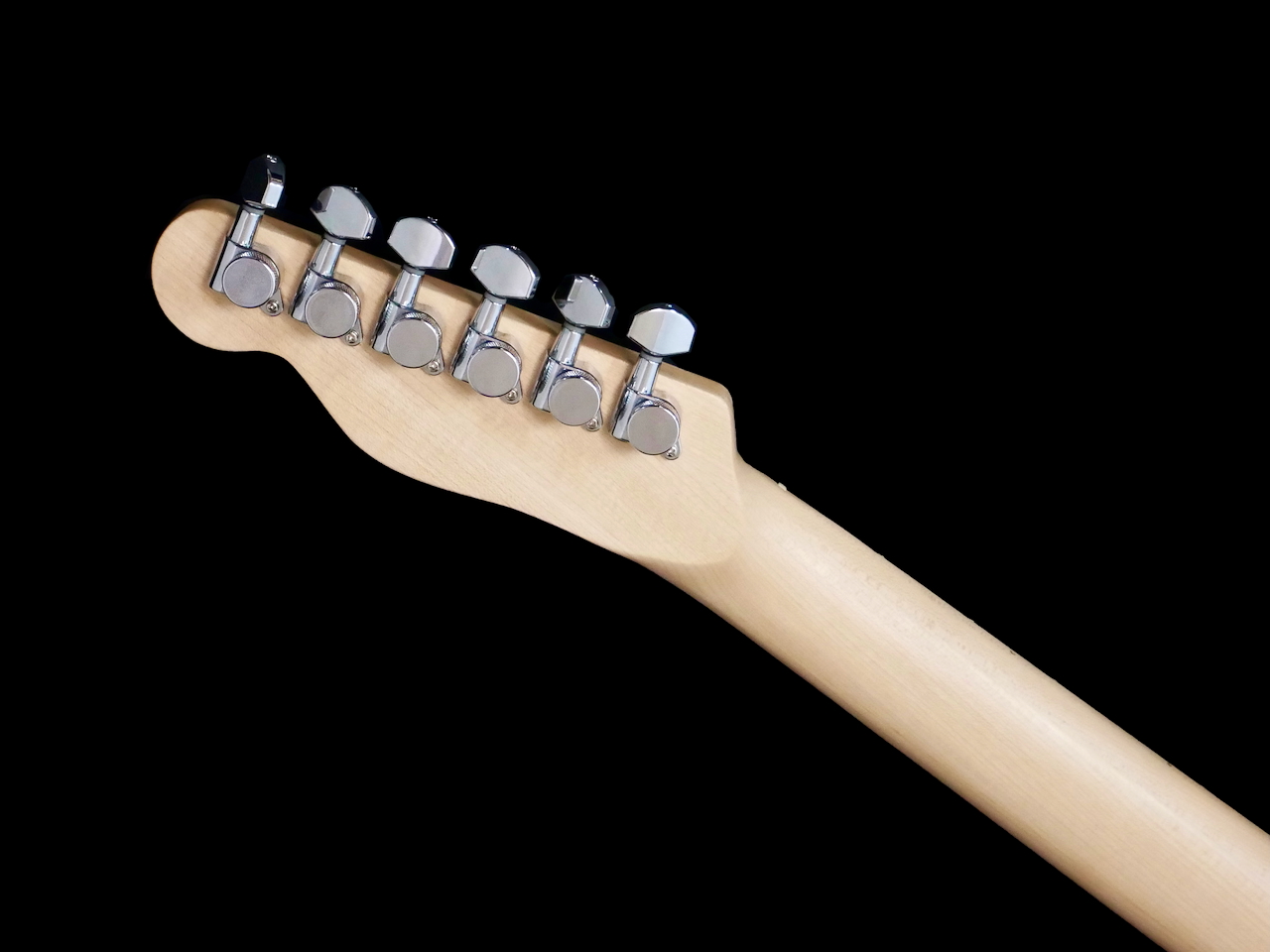
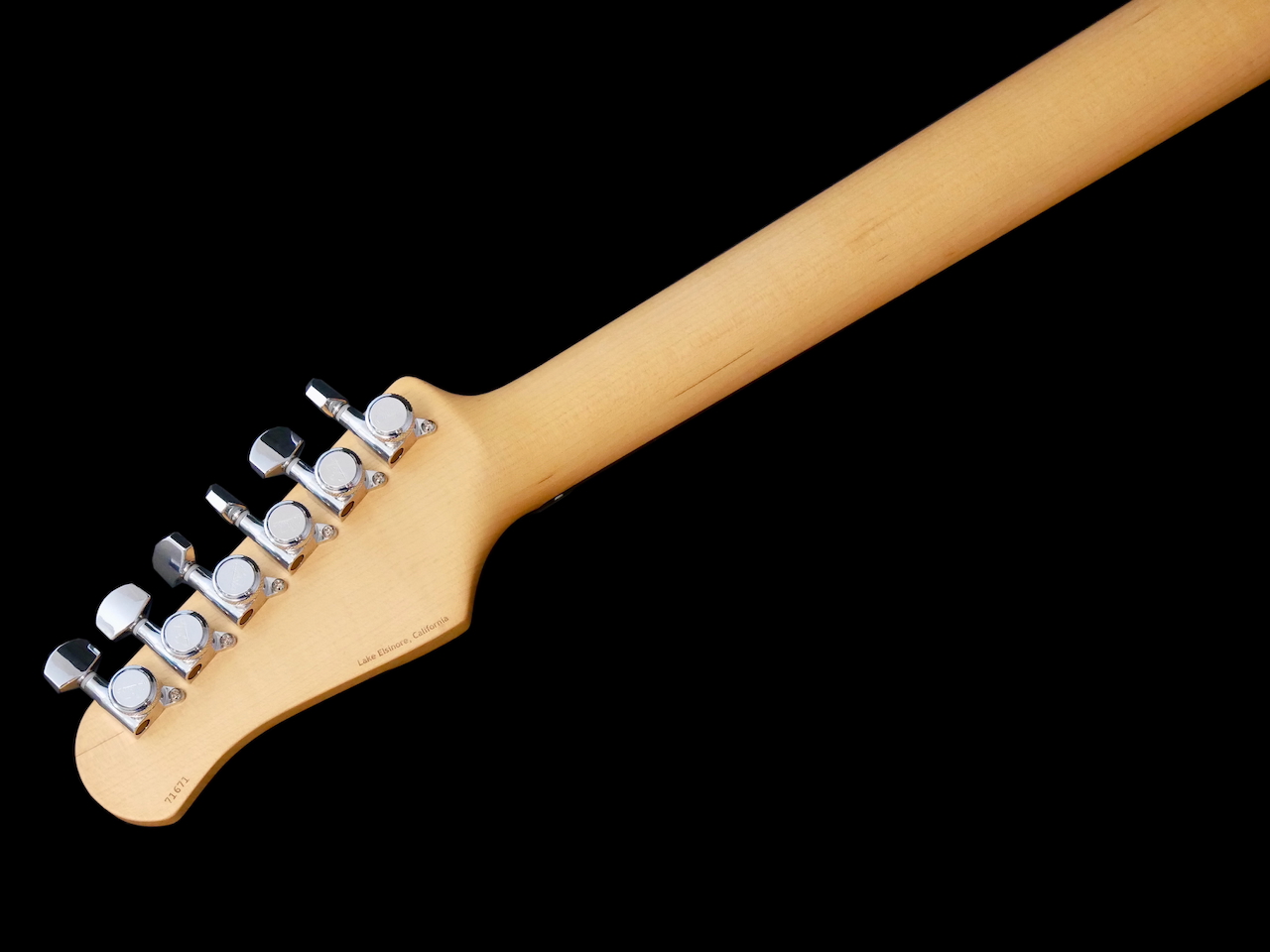
Virittimet ovat korkealaatuiset lukkovirittimet. Yläsatula on veistetty suomalaisesta hirvenluusta.

Otelaudan päässä oleva tumma aukko on huoltoaukko kaularaudan säätämiseen. Odes Custom White Wizardissa on kaularauta, jossa on pyöreä säätömutteri – aivan kuten Music Man -soittimissa – mikä tekee säätämisestä helppoa. Siihen ei nimittäin tarvita erityistä avainta tai muuta työkalua, millä tahansa metallitanko, joka sopii pyörän reikiin, voi kiertää mutteria.

Talla on Gotohin nykyaikainen malli, jossa on kuusi tallapalaa, sekä rungon-läpi kielitys.

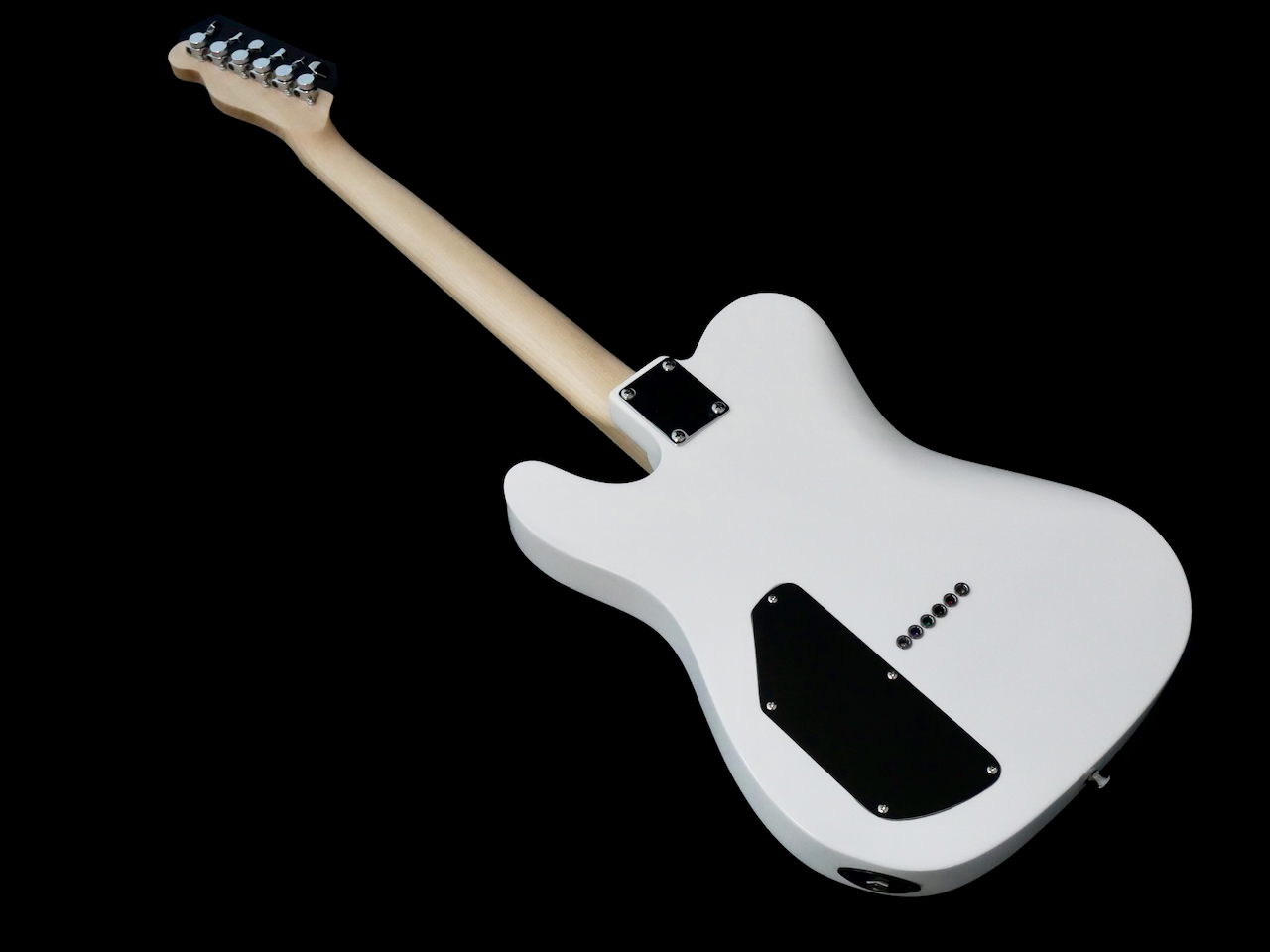
Kaulan liitos on perinteinen pulttikiinnitys – jotkut soittajat haluaisivat pyöreämmän liitoksen, mutta minulla ei ole koskaan ollut ongelmia vintage-tyyppisten kaulanivelten kanssa. Niin kauan kuin kaula pysyy tukevasti ja varmasti paikallaan, kaikki on mielestäni kunnossa.

Odes Custom White Wizard -kitarassa on Oskun itse valmistama kaulamikrofoni, kun taas tallamikrofoni on avoin humbucker, joka tulee vanhasta Hamer-kitarasta.

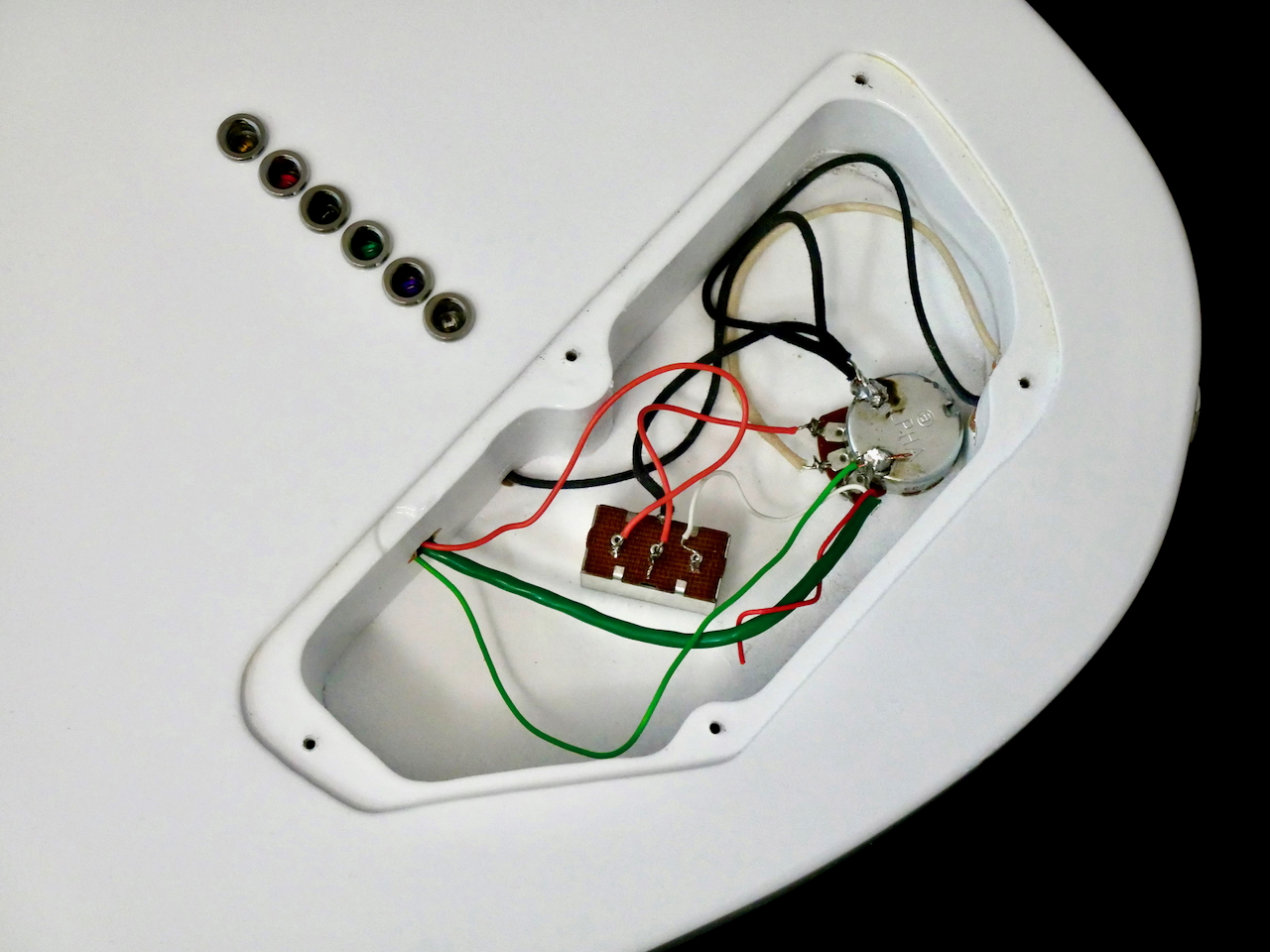
Mielestäni useimmat ihmiset odottaisivat käsintehdyltä sähkökitaralta perusteellista häiriösuojausta – joko johtavalla maalilla tai kuparifoliolla – joten tämä on ainoa pieni kritiikin kohta tässä arvostelussa. Työn laatu sinänsä on varsin kelvollista, ja kaikki toimii juuri niin kuin pitääkin.

Minusta tärkein ominaisuus, joka erottaa käsintehdyn sähkökitaran massatuotannosta, on epäilemättä kustomoidun soittimen ylivoimainen soittotuntuma.

Odes Custom Guitars White Wizardin kaulaprofiili on yksinkertaisesti uskomattoman mukava. Se on yhdistelmä 1960-luvun alun Tele-kaulaa – hoikkaa ja solakkaa C-profiilia – ja hieman epäsymmetristä poikkileikkausta, joka jättää hieman enemmän tukea peukalolle. Tämä profiili sopii minulle täydellisesti, ja kaulan satiiniviimeistely on virheetön.

Kitara on säädetty nopeaksi. ​​On vaikea uskoa, että kyseessä on kymppisetti, koska kielten venyttäminen on niin vaivatonta.

Akustisesti White Wizard kuulostaa jo valmiiksi vahvalta ja täyteläiseltä.

Vahvistettuna tämä Odes Custom -kitara on melko erilainen kapistus kuin isoisäsi Tele. Kaulamikin soundi on puinen ja pähkinäinen, mutta ei liian lasimainen; se on enemmän Hendrix- kuin Bakersfield-henkinen. Tallan humbucker saa sinut haluamaan rokata ja tiluttaa, kunnes kanssaihmiset alkavat valittaa. Kytkimen keskiasento tarjoaa maukkaasti heliseviä soundeja.

Odes Custom Guitarsin White Wizard on loistava soitin modernille kitaristille. Tsekkaa Odesin sosiaalinen media nähdäksesi muita hienoja luomuksia!

Tiedoksi: Osku Toppinen ja Odes Custom -kitarat ovat mukana tämän vuoden Tonefestissä.

****

Muuten:

Käytin White Wizard -kitaraa myös tämän videon soolokitaran osissa:

Review: Odes Custom Guitars ”White Wizard”

****

One thing Finns are justifiably proud of is their education system. Take luthiers (guitar makers), for example; Finnish luthiers are not people who had to learn guitar-making autodidactically by trial-and-error, here in Finland there is indeed a vocational institution (or trade college) teaching you how to make guitars. At the Ikaalinen College of Crafts and Design you can study to become a competent maker of string instruments. Finland also has a Guild of Finnish Luthiers to help Finnish guitar makers with networking more effectively.

For me it is always a pleasure to get to know budding luthiers and their handiwork. A little while ago I was contacted by an up-and-coming luthier named Osku Toppinen, who has just started to try and establish his own electric guitars under the banner ”Odes Custom Guitars” – you can contact him via Facebook and Instagram.

He recently took part in a small trade show in Helsinki, and I managed to get an electric guitar for testing. This Odes Custom Guitar is called the ”White Wizard”. It is a modern Tele-style instrument in gleaming white, priced at 1,800 € (sans VAT).

The White Wizard sure is one hell of a looker – an all-white alder body without any distracting pickguard, but with very luscious front and back contours. The body’s gloss finish is fantastic; black and white are the most difficult colours to get right, because every little flaw or dimple shows up like under a microscope. The White Wizard is simply flawless – I like it!

The neck might look like your regular Fender-type rock maple affair, but it is actually constructed from three long strips of maple, glued together lengthwise. The fretboard is a separate slab of maple, and offers 21 gleaming stainless steel frets.

The tuners are high-quality locking machine heads. The top nut is handmade from moose bone from Eastern Finland.

The dark hole at the end of the fretboard is actually the truss rod access. Odes Custom White Wizard sports a rod with a wheel nut – like first seen on Music Man-instruments – which makes adjustments a doddle. You don’t need a special key or other tool to adjust the rod, any metallic object that fits in the holes of the wheel can turn the nut.

The bridge is a modern six-saddle unit, made by Gotoh, with through-body stringing.

The neck joint is the traditional ”bolt-on” job – some players would prefer something rounder, but I’ve never had any problems with vintage-type neck joints. As long as the neck is kept firmly and securely in place, I’m good to go.

The Odes Custom White Wizard guitar comes with a bespoke neck singlecoil pickup made by Osku himself, while in the bridge position we find a coverless humbucker that had once been installed in a Hamer guitar.

In my view, most people would expect thorough shielding in a handcrafted electric guitar – either with conductive paint or using copper-foil – so this would be my only small niggle in this review. The workmanship in itself is quite decent, and everything works just as it should.

For me, the main feature that distinguishes a handmade electric guitar from high-volume bulk production is, without any doubt, the superior playability of a custom instrument.

The Odes Custom Guitars White Wizard’s neck profile is simply unbelievably comfortable. It is a combination of an early 1960s Tele neck – a slender, nice C-profile – coupled with a slightly asymmetrical cross-section, leaving a little bit more meat for your thumb to hold on to. This profile fits me to a tee, and the satin finish of the neck is flawless.

The set-up is fast and slinky. It’s hard to believe you’re actually dealing with a set of 10s here, because string-bending is so effortless.

Acoustically, the White Wizard already sounds strong and full.

Amplified, this Odes Custom Guitar is quite a different proposition compared to your grandpa’s Tele. The neck pickup has a sound that’s woody and nutty, but not too glassy; it’s more Hendrix than Bakersfield. The bridge humbucker makes you want to rock and shred until your better half starts complaining. Additionally, the switch’s middle selection offers some tasty jangling tones.

Odes Custom Guitars’ White Wizard is a great instrument for the modern guitarist. Check out Odes’ social media for other cool creations!

If you want to try out Finnish handcrafted instruments, and you’re able to come to Helsinki at the end of February, you should go and visit this year’s Tonefest exhibition, which runs on the 28th of February and the first of March.

****

PS: I used the White Wizard for the lead guitar part in this video, too:

Review: Epiphone SG Special VE

Alkuperäinen suomenkielinen versio tästä jutusta löytyy Rockway-blogissa.

****

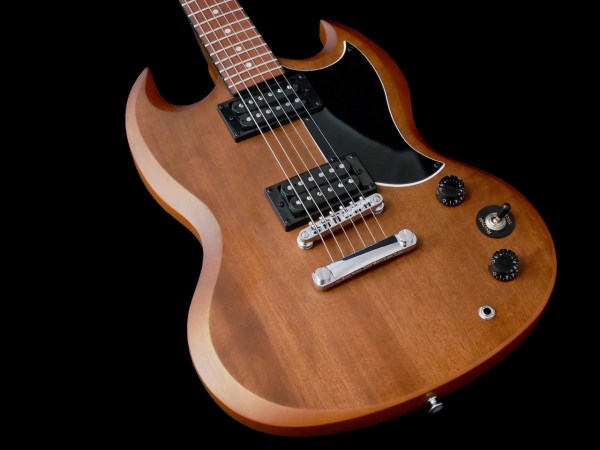
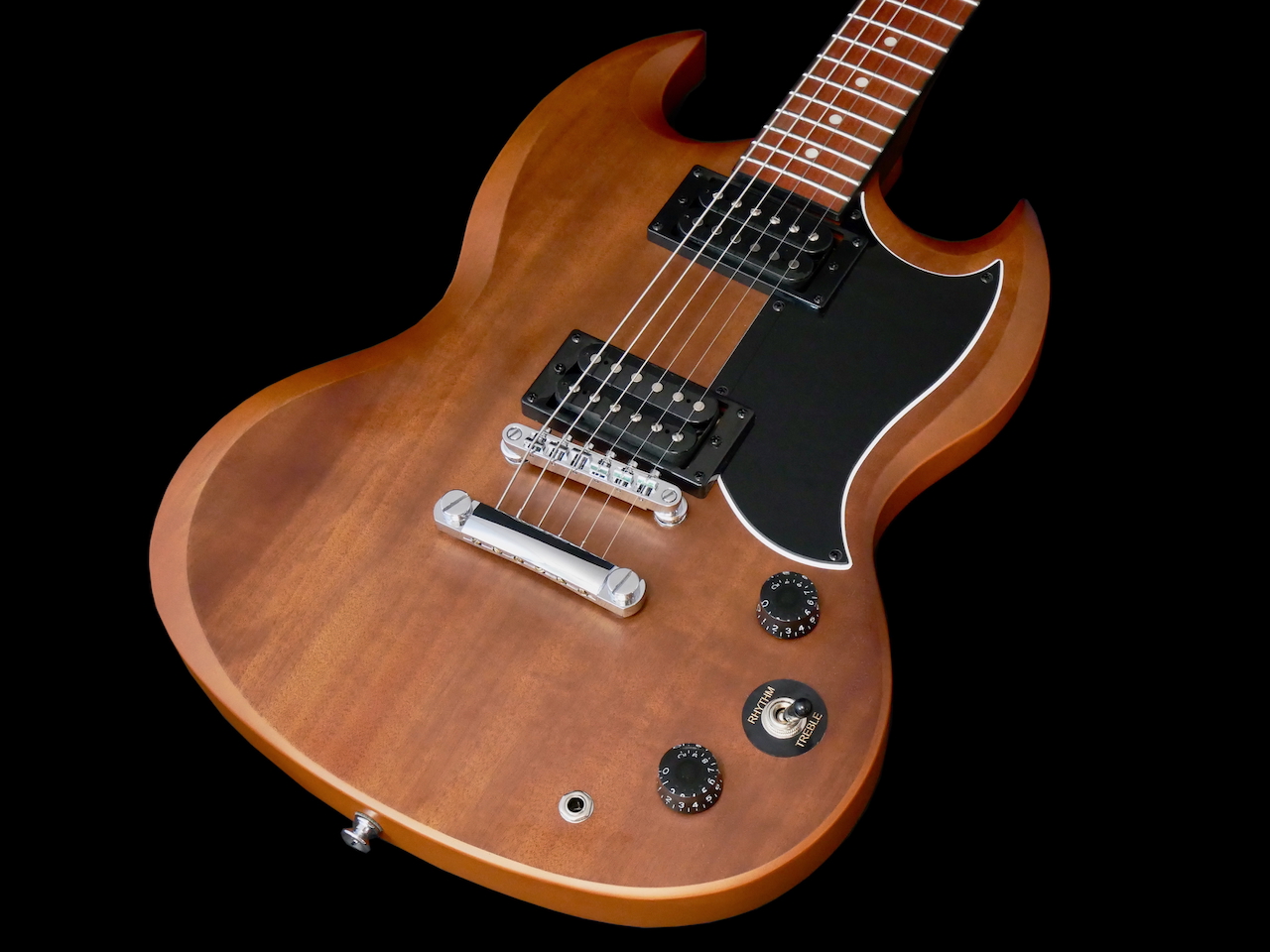
The Epiphone SG Special VE (”street price” around 240 euros in Finland) is currently the cheapest official SG replica. The letters VE stand for “Vintage Edition”, which refers to the model’s matte finish.

On the website of Epiphone’s importer – Algam Nordic – the SG Special VE is only available in matte black and matte brown (i. e. walnut), but on Epiphone’s own website the cherry red matte finish is still listed as an option. I would guess that all three options are still available at Finnish music stores.

The Epiphone SG Special VE looks a lot like the company’s own version of Gibson’s 1970s model “The SG”, especially in the walnut finish.

Should you fancy a gloss finish and chrome covered pickups, I can point you to the brand-new Epiphone SG Tribute model, which will probably replace the Special VE over time.

****

****

The Chinese SG Special VE is a very affordable instrument, which is why the guitar offers slightly unconventional detail solutions in some areas. However, the workmanship is of surprisingly high quality throughout – at least on the review instrument.

The Epiphone’s body is carved from poplar. Poplar is a basic, good instrument wood, its only ”flaw” being the wood’s dull grain pattern, which is why Music Man, for example, only uses it for solid-coloured instruments.

On the SG Special VE, this has been solved by gluing very nice looking veneers of African mahogany onto the flat middle sections of the body (front and back). This trick also preserves the traditional mahogany look of SG guitars in the VE model.

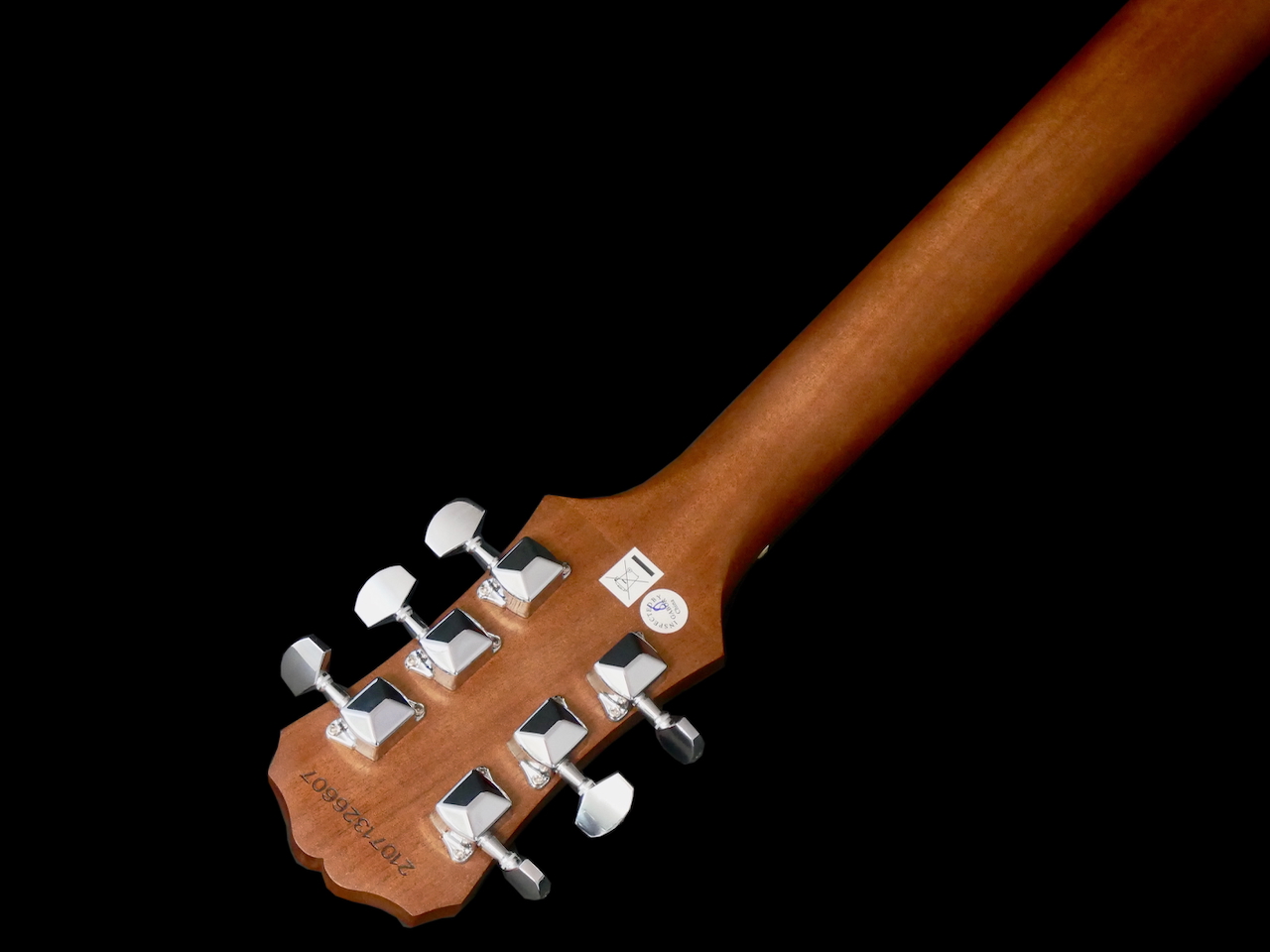
The Fender-style neck joint is a very rare solution in Gibson-style guitars these days, but it fits well on this affordable SG, especially since the joint is really tight and neat. The Epiphone SG Special VE’s neck is made of beautiful Gabon mahogany (another name for the wood is okoume). The neck is basically a one-piece affair, with a second piece added for the upper end of the headstock. The glue joint is visible below the e-string tuners.

Although this is not mentioned anywhere in the official specs, the SG Special’s reddish rosewood fingerboard has been given black plastic binding. The fingerboard is neatly fitted with 22 medium-sized frets, as well as round pearloid fingerboard inlays.

The hardware department consists of Epiphone’s Lock-Tone bridge and tailpiece, as well as inexpensive closed tuners. These machine heads are regularly criticised, for example in YouTube videos, for being ”bad at keeping the guitar in tune”.

In reality, this perceived problem is based on the fact that modern tuners usually have a tuning ratio of 18:1 or even 20:1. The pair of numbers tells us how often the tuner knob must be turned so that the tuner’s post (where the string is attached) turns one full turn. Special VE’s very affordable tuners, on the other hand, operate with a “coarse” ratio of 14:1 – the same ratio seen on many acoustic guitars from the 1970s. These old-fashioned tuners have a slightly jumpier character when it comes to tuning – it is very easy to turn past the correct pitch – and also have significantly more “play” than modern machine heads. As long as you remember to always tune each string up from flat to the correct pitch, these tuners work reasonably well, and there are no problems with tuning stability.

****

****

The Epiphone SG Special VE features the company’s own open 650R and 700T humbuckers, which are very powerful pickups with ceramic magnets. This pair of pickups represent Epiphone’s affordable take on Gibson’s 1970s Dirty Fingers humbuckers, and they have a very strong midrange and big bass.

Traditionally, two-pickup Gibson or Epiphone electric guitars often have a group of four controls in addition to a three-position toggle switch. For modern guitarists, a master volume control that affects the entire guitar is – especially in live situations – often a more functional solution than individual controls for each pickup. Also for beginners, a solution like the SG Special VE, which offers only master volume and master tone controls in addition to the switch, is clearly a better option.

The electronics compartment of the Epiphone test guitar is very clean, as are the solder joints. The parts themselves are – naturally – inexpensive, but I didn’t find anything to complain about in terms of functionality.

Can a guitar in this price range, with a bolt-on neck and a body made from ”the wrong type of wood”, be a real, proper SG? Comparing the Epiphone with three other SGs, I can say that the short answer is “yes!”

I find it very funny that both Gibson’s and Epiphone’s headquarters are apparently afraid to tell people about the real neck profiles of their guitars. Everywhere you look these days, it (almost) always says “slim taper D-neck”, regardless of the model. Do Epiphone’s decision-makers really think that players would be afraid of anything other than thin 90s profiles?

In reality, the neck profile of the Epiphone SG Special VE model is a nicely rounded, but not too thick D-profile, which I think suits an SG-style instrument very well.

There was nothing wrong with the review instrument’s set-up, and the guitar’s playability is more than okay, especially considering the Special VE’s low price.

The Epiphone’s balance on the strap is even slightly better than on many average SGs, because the neck sits about two centimeters deeper in the body than usual, due to the Special VE’s bolt-on neck.

The Epiphone SG body sits nicely in the lap and hangs comfortably against the player’s body when using a strap.

The review instrument’s acoustic voice is very healthy, and I didn’t find any disturbing dead spots.

If you use the Epiphone SG Special VE model with a vintage-style amplifier that doesn’t have a master volume control – like, for example, with a good Fender Champ copy – the instrument’s hot pickups get more distortion out of the amplifier, which I think is a good thing.

With effects pedals, it’s worth using the SG Special VE’s well-functioning master volume, because some effects – for example, some overdrives and many modulation effects – can easily ”clog up” with very hot pickups. But this is what controls on an electric guitar are for.

In my opinion, the Epiphone SG Special VE is a surprisingly nice guitar for the money. It offers a lot of mileage at a really budget-friendly price. If you like the look of the SG, the Special VE is definitely an instrument worth trying out.

****

****

Testipenkissä: Suhr Classic JM

****

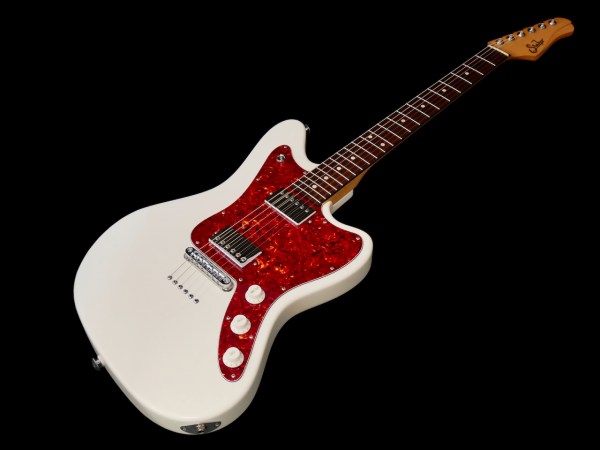
Kun pyysin testisoittimia Rockway-blogin Jazzmaster-testiin, sain samalla Musamaailmalta tarjouksen testata myös Suhr Guitarsin versio aiheesta ”Jazzmaster kiinteällä tallalla”.

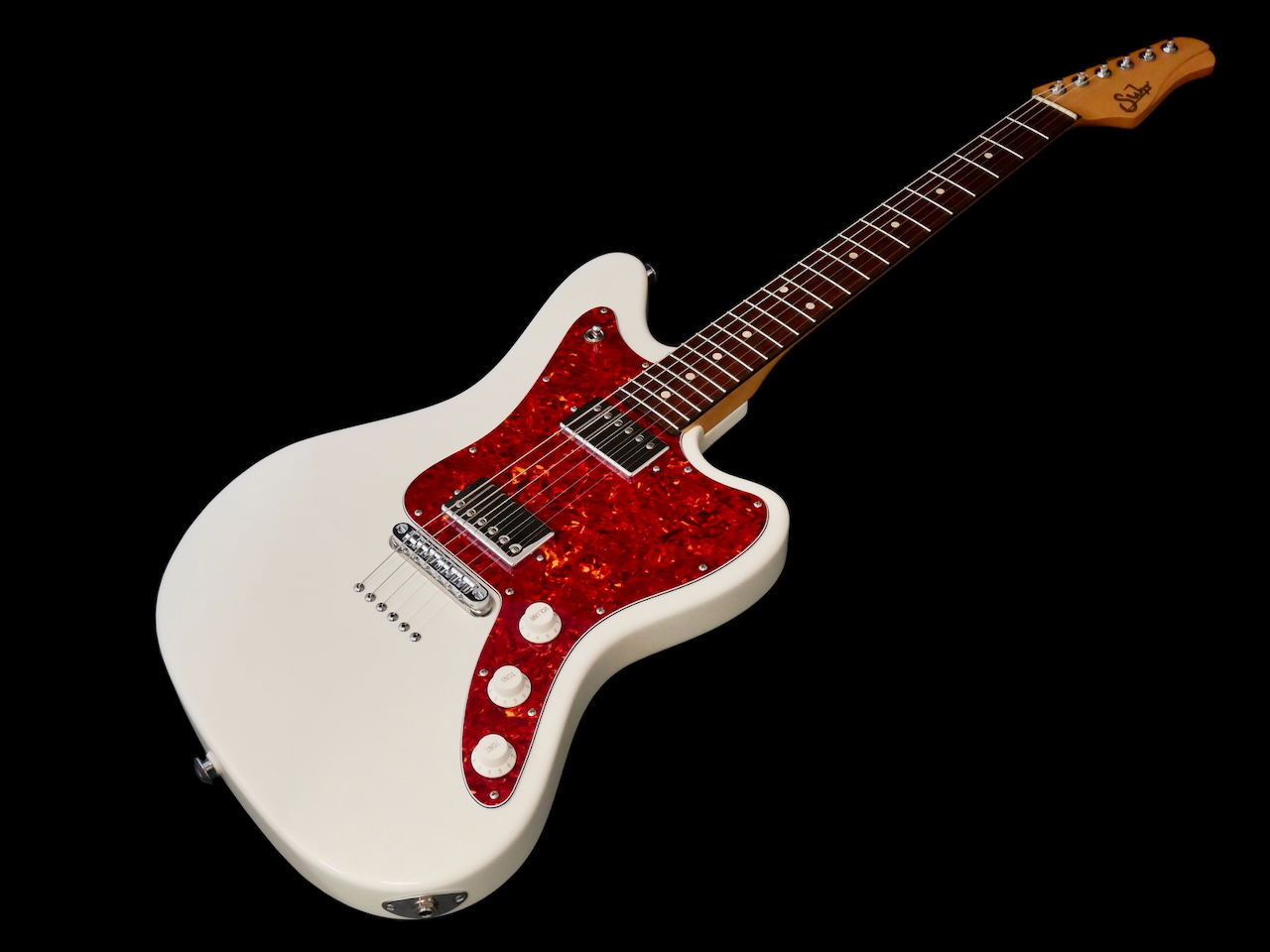
Suhr Classic JM TP6 (3.481 euroa) on nykyaikainen versio Fender Jazzmaster -mallista, jossa 1950-luvun kitaran liian monimutkainen elektroniikka erillisine säätimillä kaulamikrofonille on korvattu huomattavasti suoraviivaisemmalla ratkaisulla. Myös esikuvan kelluva vibrato sai tässä väistää; kiinteä talla on sustainin kannalta parempi ratkaisu, ja lisäksi se mahdollistaa myös nopeita vaihtoja eri virityksien välillä ilman vireongelmia.

JM-tyylisen kitaran tärkeimmästä seikasta on luonnollisesti pidetty myös Classic JM:n kohdalla kiinni – soittimen suhteellisen iso leppärunko on erittäin ergonominen, jonka ansiosta se istuu mallikkaasti soittajan kehoa vastaan.

Suhrin oma lisäys on hyvin sulava viiste kaulalevyn ympärillä, joka helpottaa pääsyn ylimmille nauhoille.

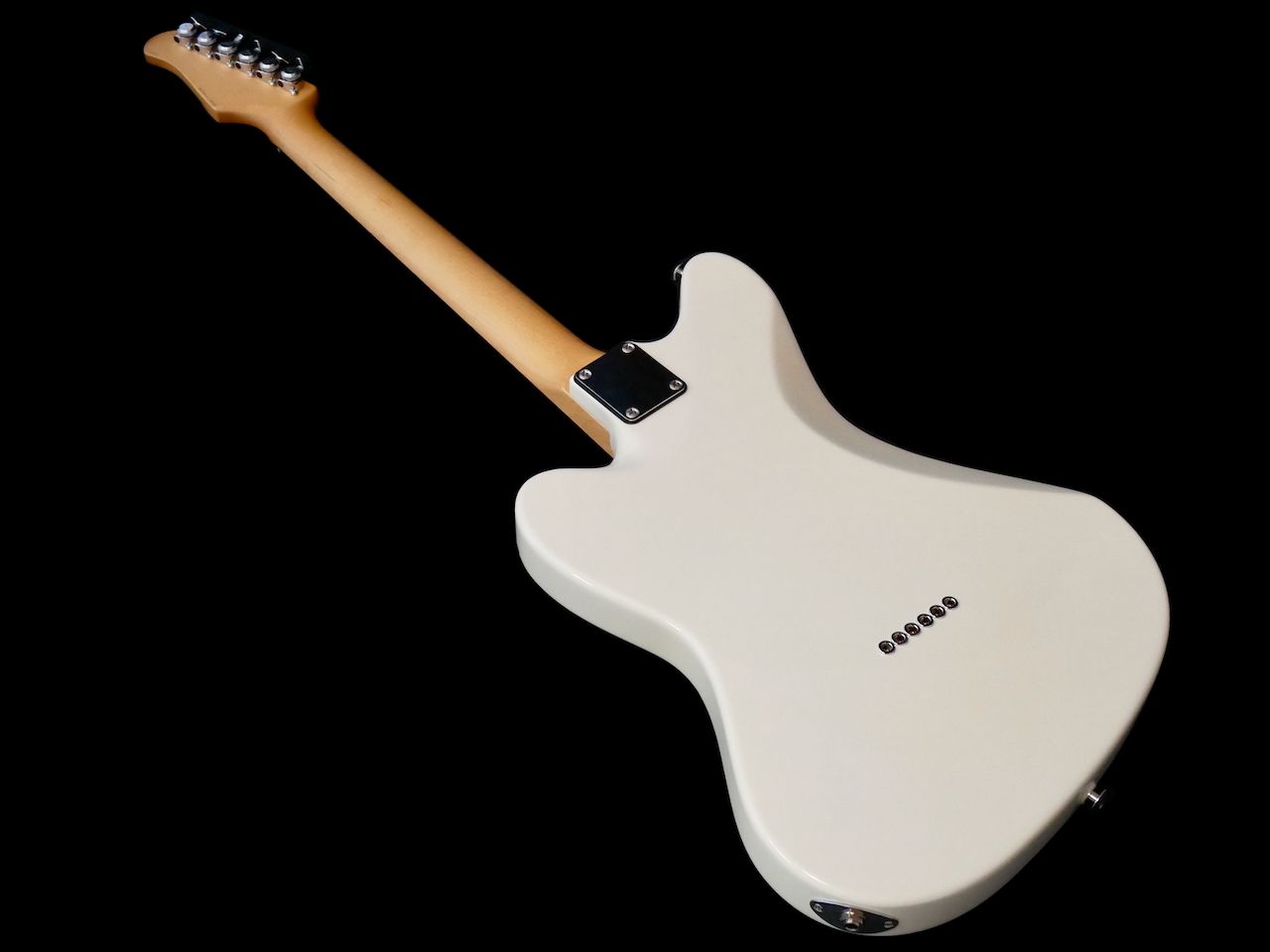
Suhr Classic JM -mallissa kaula on veistetty vaahterasta, ja se on saanut ylleen ohuen satiinipintaisen viimeistelyn.

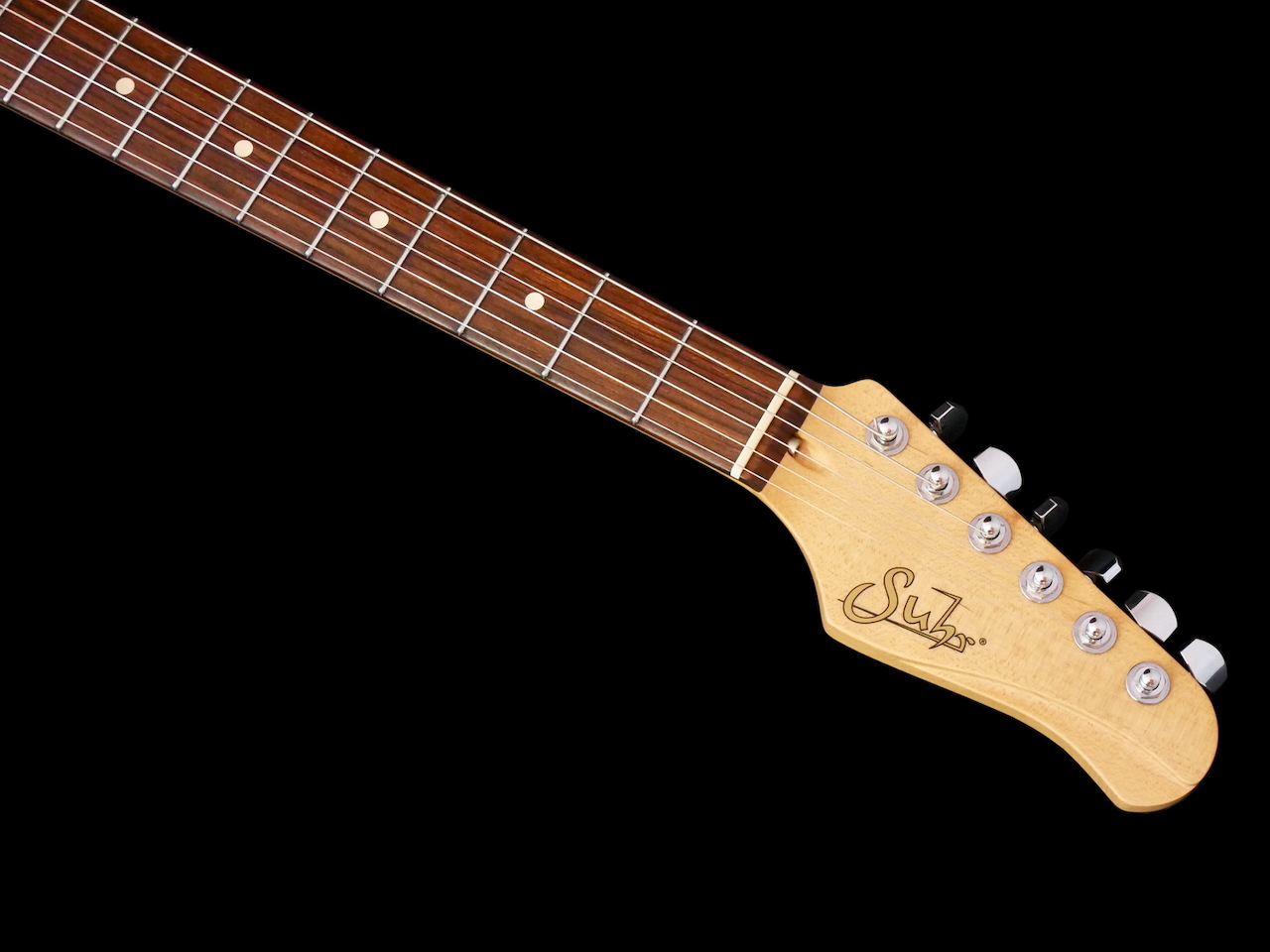
Kitaran otelauta aidosta intialaisesta ruusupuusta näyttää suorastaan herkulliselta. Otelautaan on veistetty ns compound-radius, mikä tarkoittaa että otelaudan kaarevuus on lavan lähellä kaarevampi (10 tuumaa) kuin rungon lähellä (14 tuumaa). Compound-radiuksen suuri etu on, että perussointujen soittaminen tuntuu yleensä mukavammalta juuri kaarevalla otelaudalla, kun taas soolokitaran venytyksiä on helpompi toteuttaa siististi tasaisemmalla otelaudalla.

Otelautaan on asennettu 22 medium-kokoista rosterinauhaa. Nauhatyö on ensiluokkaista.

Virittimet ovat Suhr-logolla varustetut lukkovirittimet, joilla on eripituisia tappeja, kun taas kaularaudan säätämistä hoidetaan kätevästi lavan puolelta.

Suhr Classic JM -mallin tune-o-matic-tyylinen talla tulee ToneProsin valikoimasta – sen mallitunnus on TP6. Kielet on ankkuroitu rungon takapuoleen, niin kuin Telecastereissa yleensä, ja viety rungon läpi.

Kilpikonnakuvioiseen pleksiin on asennettu kaksi Suhr SSV -humbuckeria, joilla on alnico 5 -magneetteja, sekä kromattuja kansia.

Kolmiasentoinen vipukytkin on nykyaikaista sorttia, jolla on lyhyempi vipu, minkä ansiosta holtiton plektrakäsi ei osu siihen niin helposti kuin isompaan vintage-malliin. Säätimet on tässä tarjolla kolme kappaletta, joista ensimmäinen on master volume -nuppi, ja ne kaksi muuta kummankin mikin oma tone-säädin.

Suhr Classic JM TP6 myydään omassa laadukkaassa keikkakassissaan.

****

Kerran Guitarist-lehden haastattelija kysyi Carlos Santanalta, mikä on laadukkaan kitaran tärkein ominaisuus. Santana vastasi: ”Laadukas kitara ei anna sinulle lainkaan mahdollisuuta turhiin selityksiin. Jos laadukas kitara ei soi, se ei johda kitarasta tai vahvistimesta. Jos kuulee vääriä nuotteja, se ei silloin ole kitaran vika. Laadukas soitin ei seiso sinun tiellä, vaan se auttaa sinua saada sinun musiikkia, joka tulee sun päästä ja sun sydämestä, esiin ja kuuluville.”

Suhrin JM Classic on juuri tällainen soitin, josta tulee muutamassa minuutissa oman sielun ja ruumiin pidennys.

Huomattava osa tällaisen laatukitaran hinnasta tulee nykyään laadukkaiden puiden hinnoista. Suhrin kaltainen valmistaja etsii esimerkiksi runkoa varten mahdollisimman isokokoisia paloja, mahdollisimman kevyellä painolla, koska kahdesta tai kolmesta kevyestä palasta yhteen liimattu runko soi huomattavasti vapaammin kuin pikkurimoista kasattu vastine.

Ja sitä kyllä huomaa – vaikka offset-tyyliset rungot ovat lankkukitaroiden isommasta päästä, on Suhr Classic JM erittäin kevyt sähkökitara. Offset-runkojen erinomainen ergonomia tulee näin vielä paremmin esille.

Sana ”Classic” viittaa vintage-tietoisuuteen, joka liittyy mm. varhaisen 1960-luvun kaulaprofiiliin. Tällainen oval-C muotoinen profiili istuu mallikkaasti ainakin minun omaan käteen.

Myös Suhr SSV -humbuckerien soundi on vintage-tyylinen. Legendaaristen 50-luvun Gibson PAF -mikrofonien lailla myös Suhrin humbuckerit ei ole vahattu täysin kuoliaaksi, eikä ne ole liiallisella teholla pilattu, vaan tässä on satsattu täysin dynamiseen ja avonaiseen soundiin. SSV-mikrofonien hallittu, kevyt mikrofonisuus mahdollistaa myös toivotun feedbackin lisäämistä omaan työkalupakkiin.

Suhr Classic JM:n soitettavuus on sen sijaan silkkaa nykyaika. Otelaudan compound-radius ja laadukkaasti asennetut rosterinauhat takaavat vaivattoman soitettavuuden, ja ne mahdollistavat myös hyvin matalat säädöt ilman kielten ylimääräistä räminää nauhoja vasten.

Kokonaisuudessa voi vain toteaa, että Suhr Classic JM TP6 on yksi parhaimmista kitaroista, joita olen koskaan soittanut.

Pidä blogia WordPress.comissa.

Ylös ↑