
Kitarablogi.com – Finland's premier Guitar and Bass blog
Juttuja kitaroista ja bassoista

In the mid-Seventies both of the guitar industry’s giants – Fender and Gibson – had lost their innovative edge and much of their corporate prestige. Both companies had been taken over by large corporations, and profit margins started to push quality control into the background.
Many discerning guitarists were starting to subscribe to the notion of ”They’re not making ’em like they used to”, which left the doors wide open to Far Eastern copy guitars, as well as to small boutique makers.
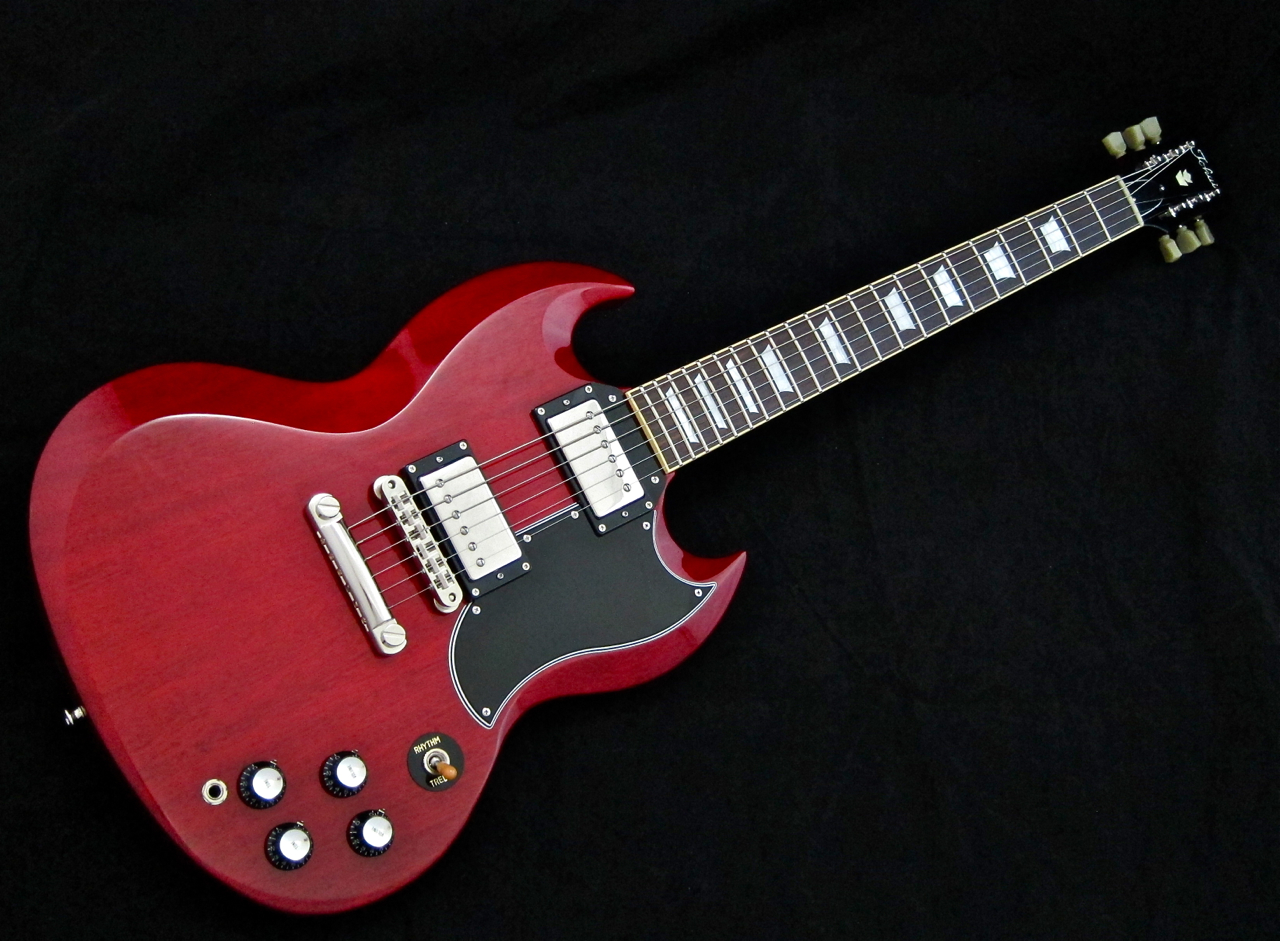
PRS Guitars, just like Hamer Guitars, took Gibson’s classic solidbody designs as a basis for their ”modern vintage” models.
With PRS Guitars it all started with a young Paul Reed Smith converting one spare bedroom at his childhood home into a workshop in 1975. By the next year he had already moved into a small workshop in Annapolis, and started attracting customers such as Ted Nugent and Peter Frampton. His first guitars were based closely on the double cutaway Gibson Les Paul Special, but featured humbucking pickups.

A few years down the road Paul Smith added fancy flame maple tops into the mix, and he managed to sell four of these guitars to Carlos Santana. Santana’s signature PRS models are still based on these original guitars.
But Smith wasn’t satisfied with simply producing refined versions of past Gibson-classics, so he set out to develop the ultimate solidbody guitar.
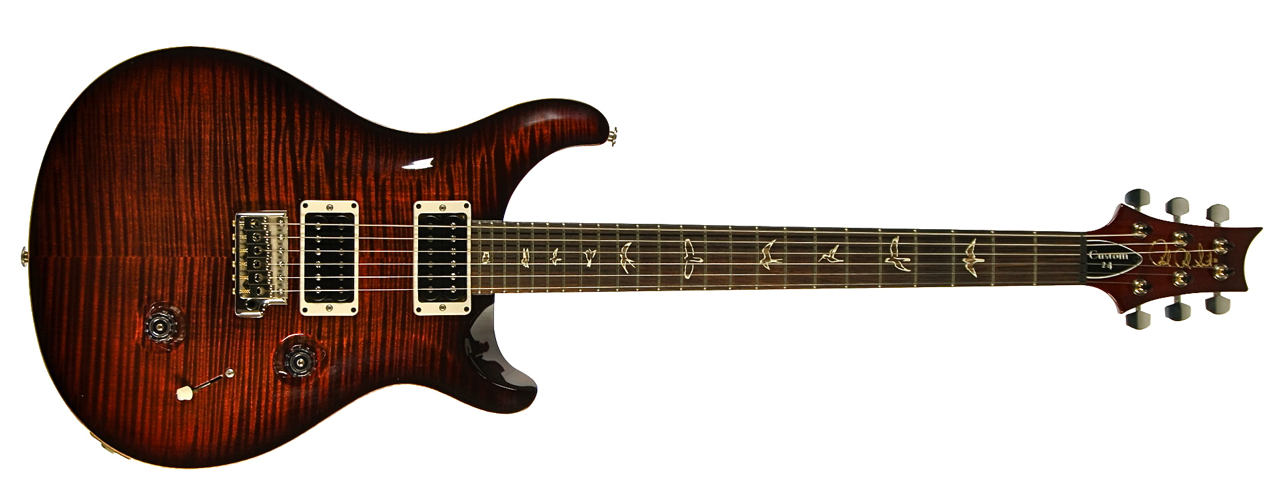
By 1985 Paul Smith had finalised his vision and started his own production facility. At the NAMM shows of 1985 Smith unveiled the PRS Custom 24 – the model that has defined the whole brand to this day. The new guitar ingeniously combined the best features of a Gibson Les Paul Standard and a Fender Stratocaster, as well as including many of Smith’s own improvements – not least the smooth and reliable PRS-vibrato and his own (Schaller-made) locking tuners.

The PRS Custom 24 combines Gibson-style materials and construction with a Fender-like outline, balance and (in most cases) a vibrato bridge. Added into the mix are a middle-of-the-road 25-inch (63.5 cm) scale length – about halfway between the softer Gibson (24.75″/62.9 cm) and the harder Fender (25.5″/64.8 cm) scale lengths – as well as two PRS-humbuckers with coil-splits.
Originally the Custom 24 came equipped with two knobs and one mini-switch. The knob closest to the bridge pickup was (and still is) the master volume control, with the second knob actually being a five-way rotary pickup selector, and not a control pot. The mini-switch was called the Sweet Switch, and served in lieu of a regular tone control, by giving you a set tone with rolled-off highs.
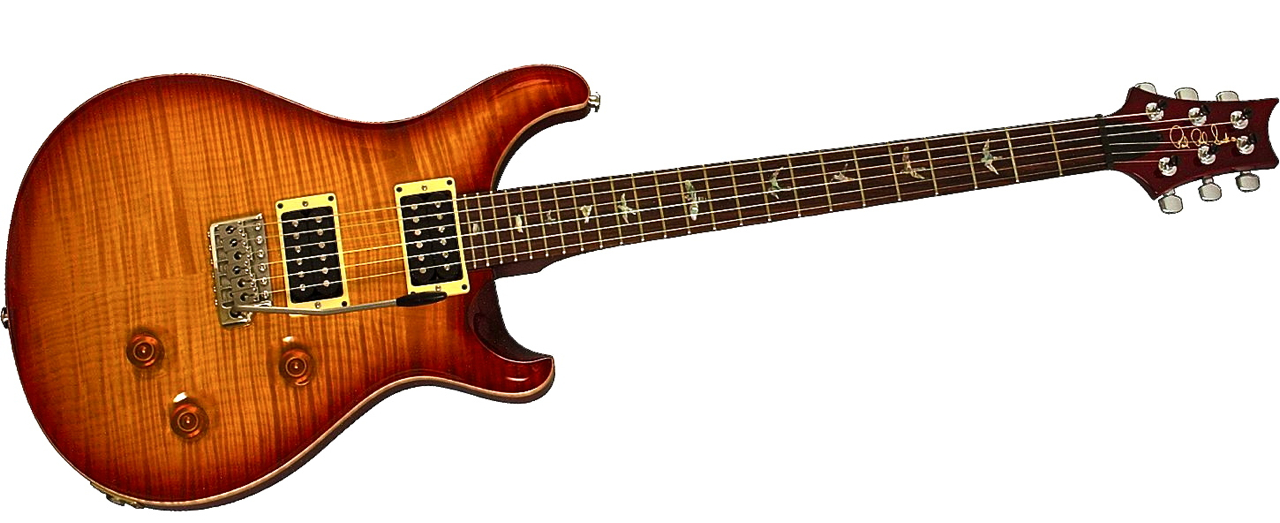
The Sweet Switch was replaced by a regular tone control around 1989, and these days many Customs also feature a regular five-way pickup selector.
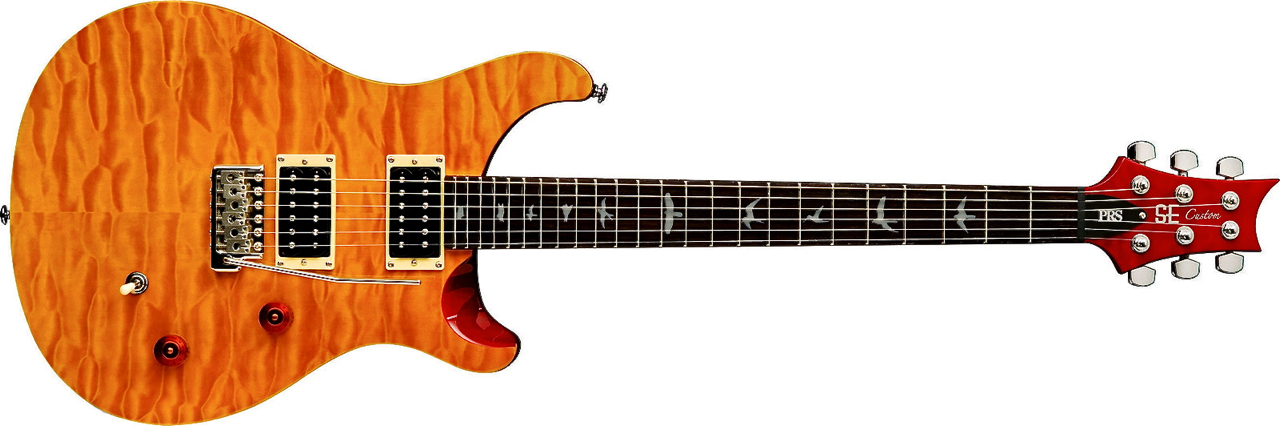
Over the years PRS have changed many details in the construction, harware and electronics of their guitars, but the Custom 24 still carries the essence of what PRS Guitars are all about – it is a beautiful, yet practical quality instrument. Or as Carlos Santana put it in an interview with Paul Reed Smith a few years ago: ”It’s a guitar that gives you no excuses not to play to the best of your abilities.”

****
Roland’s brand-new G-5 VG-Stratocaster (current RRP in Finland: 1.583 €) is the result of Roland’s and Fender’s cooperation. The guitar offers the player the genuine ”Stratocaster Experience”, as well as a wide variety of built-in, digitally modelled guitar tones and virtual tunings.

From the front the Hecho-en-Mexico G-5 VG-Stratocaster differs only slightly from your basic Strat. Only the bright blue status LED, as well as the two small black rotary switches, hint at the digitally souped-up nature of this electric guitar.

The VG-Strat’s back sports two additional cavities on the back of its alder body. The larger one holds all the digital shenanigans (courtesy of Roland), while the smaller one is the battery compartment.

The G-5 uses an up-to-date Stratocaster-neck, which allows for truss rod adjustment from the headstock end.

The sealed Fender-tuners are a quality touch.
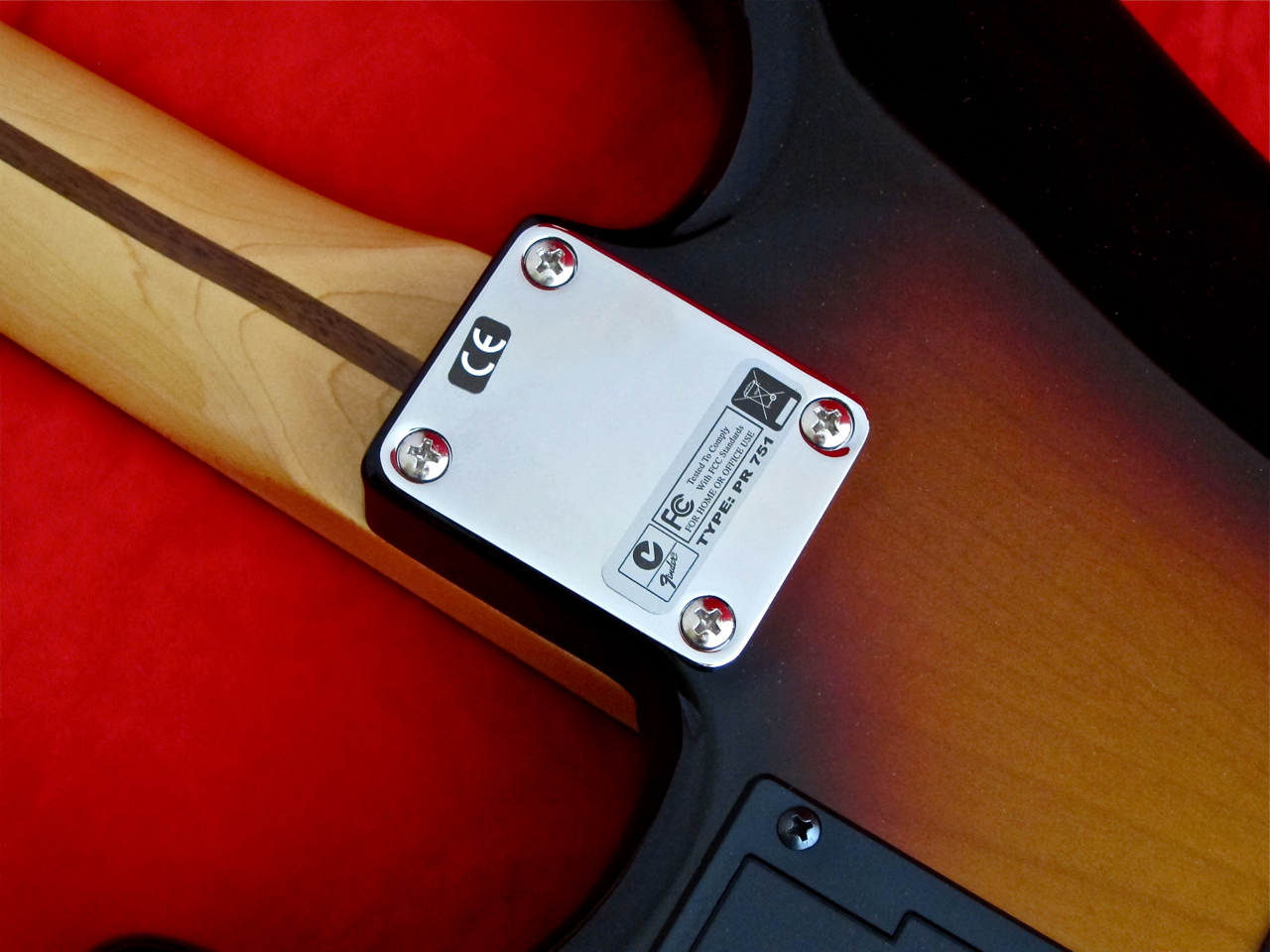
The neck joint, on the other hand, is executed in the most traditional of Fender methods.

The fingerboard curves in a 9,5-inch radius, which gives it a very comfortable, middle-of-the-road feel, right between a vintage-Fender’s curved chunkiness and a typical Gibson’s sleek flatness.
Well-set and finished jumbo frets guarantee an almost effortless playing experience. Thanks to a small fretboard ledge, the VG-Stratocaster even comes with a 22nd fret.

The traditional magnetic pickups on the Roland G-5 come straight from Fender’s Standard series – nothing esoteric, but good meat-and-potato workhorses.

Roland’s own GK-pickup sits between the traditional bridge pickup and the vintage-type vibrato bridge. The GK-pickup’s signal feeds the much-needed raw material to the modelling circuit.
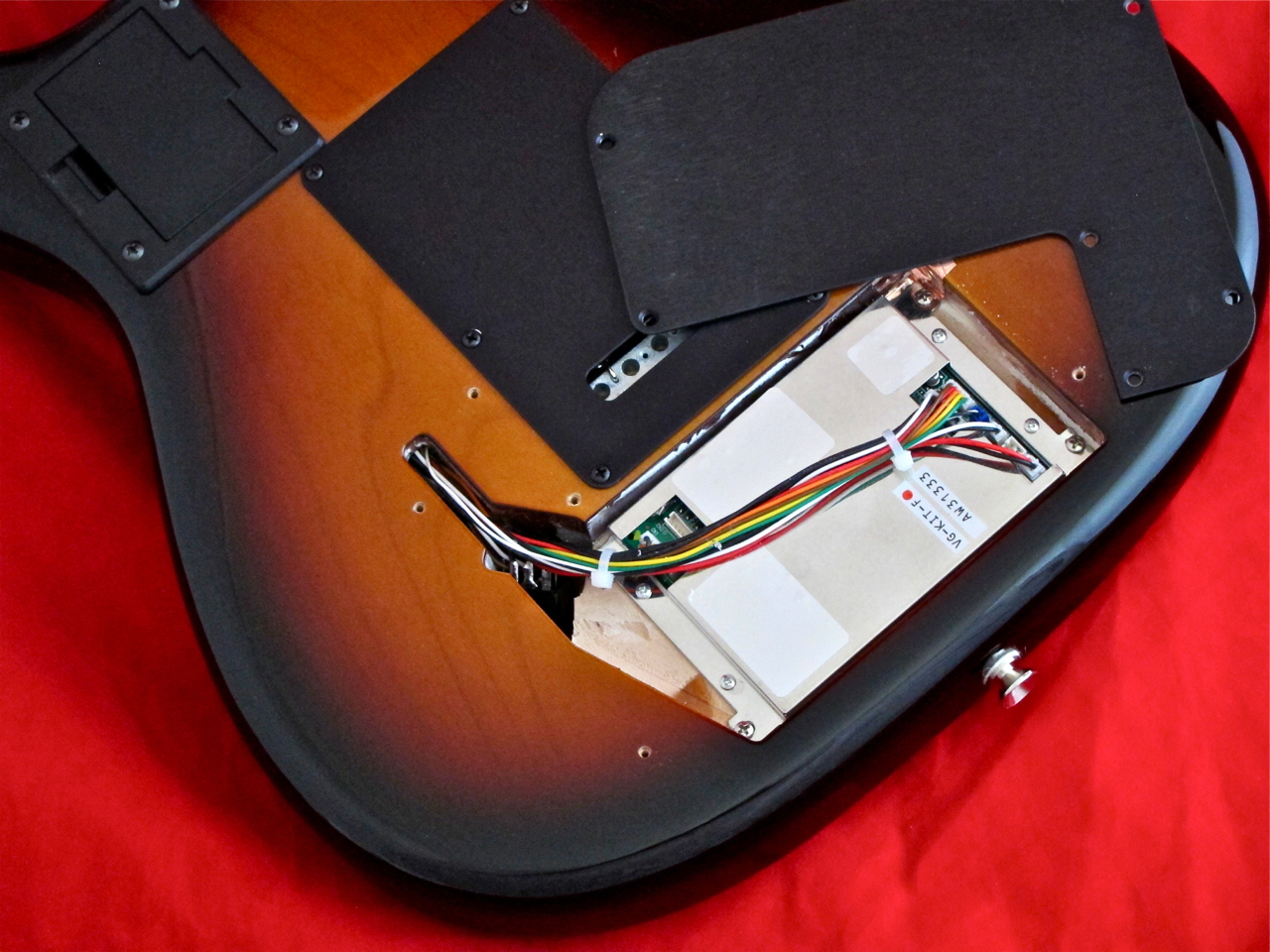
To keep electromagnetic interference into the digital COSM-circuit to a minimum, both of the guitar’s two black lids are crafted from aluminium. Additionally, the modelling department is encased in its own, shiny metal box.

The Roland G-5’s only real drawback is its large power consumption: four alkaline AA-batteries will give you about six hours of continual playing time. Using Ni-MH-rechargeables will give you approximately nine hours of fun on a full charge. Connecting a guitar lead to the VG-Strat automatically turns the digital side on, using up the battery power even if you’re only using the guitar’s traditional magnetic pickups. A simple on/off-switch might have been a welcome addition to the G-5.
In comparison to other virtual guitars Roland’s G-5 does have one advantage, though: You can use the VG-Stratocaster even without any batteries, just like a traditional Fender Stratocaster.
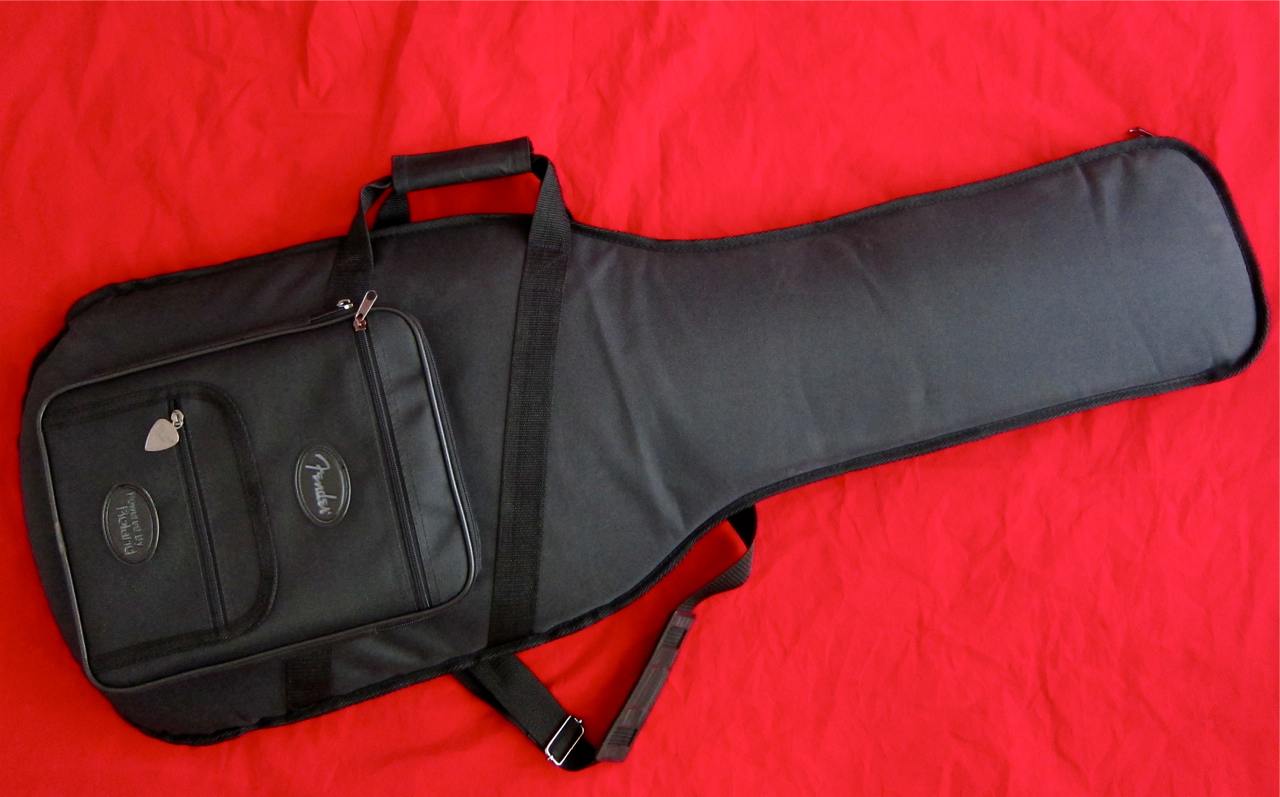
The Roland G-5 comes with its own padded gig bag.
****

The VG-Stratocaster’s oval C-profile feels very nice in the hand. The overall ergonomics are what you’d expect from a Strat – very comfortable.
Bypassing the modelling department the Roland G-5 sounds just like a good Strat should, which really shouldn’t come as a surprise to anybody.
The pickups are traditional singlecoil units with a crisp and dynamic basic tonality. Thanks to the reverse wound/reverse polarity middle pickup the in-between settings are hum free.
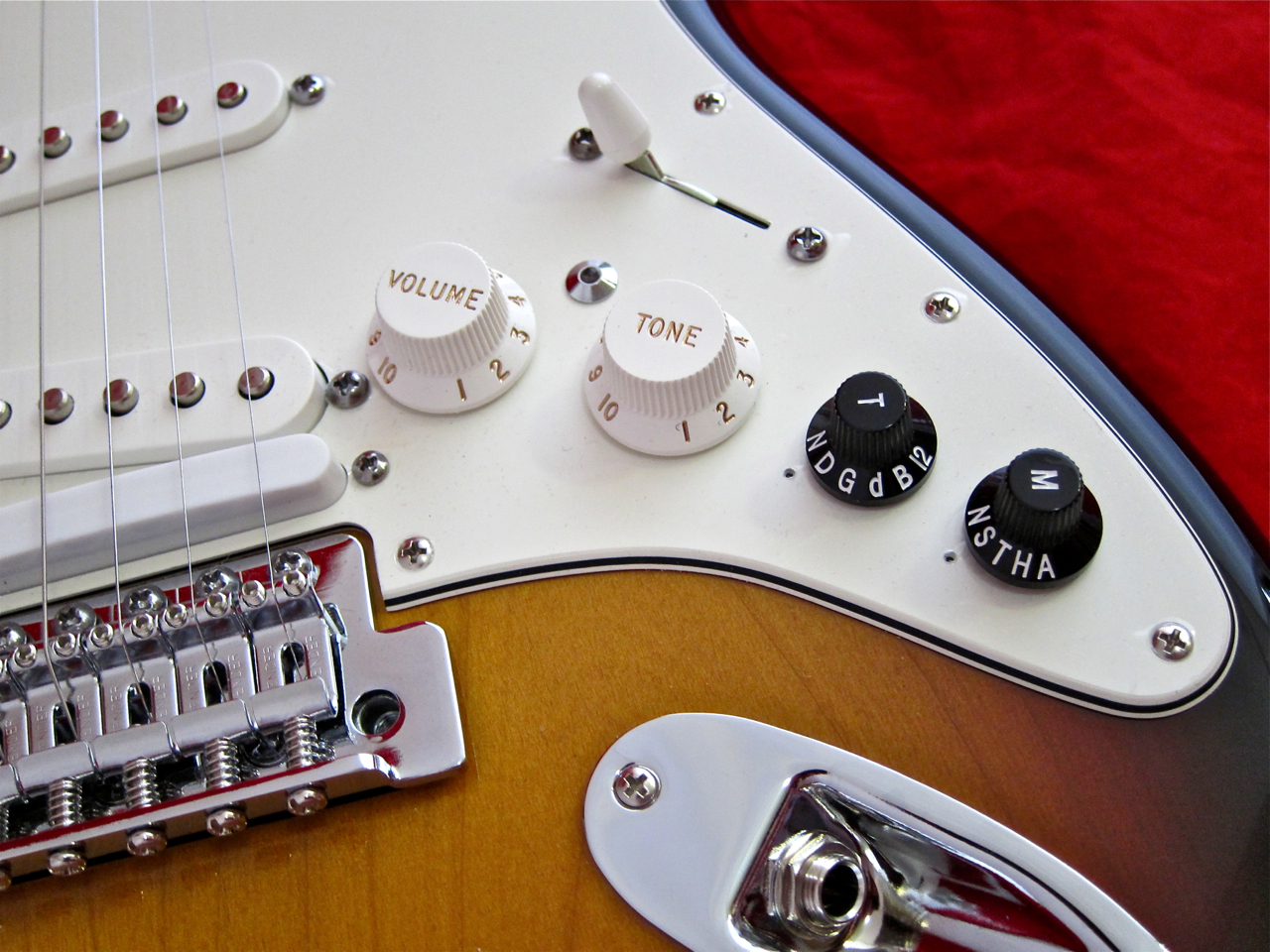
The instrument’s digital side opens up a whole wealth of possibilities.
The M-rotary offers you four basic pickup modes:
”S” is a virtual Strat. It might seem a bit daft, at first thought, to include a modelled Strat in a real Strat, but don’t forget that the modelled virtual pickups are all completely free of hum and other interference.
”T” stands for Telecaster. In addition to the three standard Tele-selections (neck, both, bridge), switch positions one and five add overwound versions of the bridge and neck pickup, respectively, to the mix. The overwound options dish out more power, as well as more bite.
The H-model gives you five virtual humbucker tones. Just like on the Telecaster-model ”H” also offers a brighter neck and bridge pickup in the selector switch’s outermost positions.
Turning the M-rotary to ”A” puts five different acoustic settings at you fingertips. You will find an archtop acoustic, a sitar, a nylon-string and two different steel-string guitars on offer. In the acoustic guitar models the G-5’s Tone-pot adjusts the digital reverb level, with the exception of the sitar model, where the control adjusts the volume of the virtual sympathetic drone strings.
In my opinion most of the models on offer hit the proverbial nail right on the head; especially the authenticity of the electric models is breathtaking. On the acoustic side of things, my favourite setting are the acoustic guitar (at the first switch position), as well as the fantastic virtual sitar. The nylon-string is perhaps the weakest model in the VG-Stratocaster — it’s useable, but not very authentic sounding.
****
The G-5’s T-rotary accesses the guitar’s virtual tunings: ”D” gives you Drop-D, ”G” stands for open G (a la Keith Richard), ”d” calls up the modal DADgad-tuning, ”B” turns the guitar into a virtual baritone guitar (Metal fans will like this), and ”12” adds six more strings to proceedings.
The virtual tunings sound great and the whole thing works without any perceivable latency or wobbling.
****
The Roland G-5 VG-Stratocaster is a fantastic package, because it gives you a great real guitar to begin with, and then adds the whole new dimension of digital modelling on top of this. A Fender Stratocaster feels safe and familiar to us – it’s a well-playing guitar with great ergonomics and a classic, versatile sound.
The digitally modelled virtual pickups, guitars and tunings take your guitar experience much, much further. The tones sound really organic, and most of the settings offer a high degree of authenticity. The amount of versatility on tap, coupled with the option to change guitar types and/or tunings in mid-song, make the Roland G-5 a very intriguing instrument for studio guitarists or players in a covers band.
The audio clips have all been recorded using the VG-Stratocaster’s digital models and tunings:
Humbucker-model in virtual Drop-D
Humbucker-model in virtual baritone-tuning
The guitar parts from the video
****
Roland G-5 VG-Stratocaster
current RRP in Finland: 1.583 €
Finnish distributor: Roland Scandinavia
****
Pros:
+ genuine Fender Stratocaster
+ playability
+ analogue side works without batteries
+ analogue tone
+ quality and versatility of COSM-models
+ speed and reliability of virtual tunings
+ workmanship
Cons:
– power consumption
****

****
Uusi Roland G-5 VG-Stratocaster (suositushinta 1.583 €) on Rolandin ja Fenderin yhteistyön hedelmä, joka tarjoaa, sekä aidon, analogisen Strato-kokemuksen, että laajan valikoiman digitaalisesti mallinnettuja kitarasoundeja ja virtuaalivirityksiä.
Meksikossa valmistettu G-5 VG-Stratocaster poikkeaa edestä vain vähän tavallisesta rivi-Stratosta. Vain pieni sininen status-ledi ja mallinnusosaston kaksi mustaa kiertokytkintä antavat ymmärtää, että kyseessä on digitaalisesti turboahdettu sähkökitara.
VG-Straton leppärunkoon on lisätty takapuolesta kaksi lokeroa, joista isompi on Rolandin mallinnuselektroniikkaa varten ja pienempi paristoille.
G-5:ssa käytetään nykyaikaista Stratocaster-kaulaa, jossa kaularaudan säädön pystyy hoitamaan kätevästi lavan puolelta.
Sujetut Fender-virittimet hoitavat hommansa mallikkaasti.
Kaulan ruuvikiinnitys on perinteiden mukainen.
Otelaudan radius on 9,5 tuumaa, mikä on hyvin toimiva keskitie vintage-Fendereiden jäntevän soittotuntuman ja Gibson-tyylisen venyvyyden välillä.
Jumbo-kokoiset nauhat ja huolellinen nauhatyö takaavat kitkatonta soittokokemusta. Otelaudan lisäkielikkeen ansiosta VG-Stratoon on mahdutettu mukaan jopa 22 nauhaa perinteisten 21:n sijaan.
Roland G-5:n magneettiset mikrofonit ovat Fenderin Standard-sarjasta – erittäin asiallisia pelejä siis.
Perinteisen tallamikrofonin ja vintage-vibran väliin on mahdutettu Rolandin oma GK-mikrofoni, josta VG-Straton mallinnuspiiri saa tarvitsemansa raakasignaalia.
Digitaalisen COSM-elektroniikkan häiriösuojaukseen on satsattu – kitaran mustat takakannet ovat alumiinista ja piirilevyn päälle on laitettu vielä oma metallikansi.
Roland G-5 on aikamoinen sähkösyöppö: virtuaalipiiri toimii neljällä AA-paristolla noin kuusi tuntia. Ni-MH-akuille luvataan peräti yhdeksän tuntia soittoaikaa latausta kohti.
Muihin virtuaalikitaroihin kohti Roland VG:llä on kuitenkin se etu, että se toimii ilman sähköäkin ihan tavallisena Stratocasterina.
G-5 VG-Stratocaster toimitetaan omassa topatussa pussissaan.
****
VG-Stratocasterin ovaali, C-muotoinen kaulaprofiili tuntuu mukavalta. Myös koko kitaran ergonomia on Stratolle tyyppillinen – siis erittäin hyvä.
Ilman digitaalitekniikka Roland G-5 -kitara soi kuin perushyvä Fender Stratocaster, minkä ei pitäisi olla kenellekään iso yllätys.
Mikrofonit ovat perinteisiä yksikelaisia, joilla on raikas ja dynaaminen soundi. Vastasuuntaan käämityn keskimikin ansiosta kitaran kuuluisat väliasennot ovat häiriövapaita.
Kitaran digitaalipuoli taas on tämän soittimen varsinainen runsaudensarvi.
M-kiertokytkin tarjoaa neljä mallinnusryhmää:
”S” on virtuaali-Strato, ja vaikka se tuntuu ensin hieman hullulta lisätä oikeaan Stratoon saman kitaratyypin mallinus, mallin etu on, että virtuaalimikrofonit eivät hurise lainkaan.
”T” tarjoaa kolmen perinteisten Telecaster-soundien (kaula, molemmat, talla) lisäksi vipukytkimen ääriasennoissa vielä ylikäämityn kaula- ja tallamikrofonin soundeja. Lisäsoundeissa on enemmän tehoa, sekä hieman lisättyä purevuutta keskialueella.
H-malli on tietysti virtuaalinen humbucker. Tämän mallin kohdalla vipukytkimen ääriasennot valitsevat kirkkaampia versioita kaula- ja tallahumbuckereista.
A-asento tarjoaa viisi erilaista digitaalista mallia vipukytkimen asennon mukaan. Tarjolla ovat akustinen orkesterikitara, sitar, nylonkielinen kitara, sekä kaksi teräskielistä. Akustisissa malleissa kitaran tone-potikalla säädetään sisäisen digikaiun signaalitasoa, paitsi sitar-mallissa, jossa tonella määrätään resonoivien virtuaalikielten volyymiä.
Omasta mielestäni lähes kaikki mallinnukset ovat tässä kitarassa täysosumia, etenkin sähkökitara-osastossa autenttisuus on suorastaan ällistyttävää. Akustisista malleista omat suosikit ovat kytkimen tallamikki-pykälästä löytyvä teräskielinen akustinen, sekä loistava virtuaali-sitar (jolla on intonaatio kohdallaan). Nylonkielisen imitaatio, sen sijaan, on mielestäni VG-Stratocasterin heikoin soundi – käyttökelpoinen, muttei kovin auttentinen.
****
G-5:n T-kiertokytkimellä pääsee virtuaalisiin virityksiin käsiksi: ”D” on Drop-D-viritys, ”G” on avoin G-viritys (esim. Keith Richardsin suosima viritys), ”d” on modaalinen DADgad-viritys, ”B” tarjoaa Metal-kitaristeille matalaa baritoni-viritystä, ja ”12” lisää menoon kuusi virtuaalikieltä.
Virtuaaliviritykset toimivat suorastaan mallikkaasti ilman viiveitä ja erittäin varmalla otteella.
****
Roland G-5 VG-Stratocaster on mielestäni loistava kokonaisuus, koska se yhdistää erittäin monipuolisen virtuaalitarjonnan toimivaan fyysiseen alustaan. Stratocaster on kitarana meille kaikille tuttu ja turvallinen – soittotuntuma ja ergonomia ovat tunnetusti hyviä ja perinteinen soundi melko monipuolinen.
Digitaalisen mallinnuksen ansiosta soundi- ja virityksien tarjonta kasvaa räjähdysmäisesti. Soundi on orgaaninen ja mallinnukset ovat suurilta osin erittäin uskottavia. Laaja soundi- ja viritystarjonta, sekä VG-Straton tarjoama mahdollisuus muuttaa virtuaalisoitinta ja/tai -viritystä jopa kesken biisin tekevät G-5:sta erittäin varteenotettavan valinnan esimerkiksi coverbändin kitaristille tai mainosmusiikin tekijölle.
Ääniesimerkit on äänitetty käytämällä VG-Straton mallinnuksia ja virtuaalivirityksiä:
Humbucker-malli Drop-D-virtuaaliviritys
Humbucker-malli baritoni-virtuaaliviritys
****
Roland G-5 VG-Stratocaster
suositushinta: 1.583 €
Maahantuoja: Roland Scandinavia
****
Plussat:
+ aito Fender Stratocaster
+ soitettavuus
+ toimii myös ilman paristoja
+ analoginen soundi
+ mallinnuksien monipuolisuus ja laatu
+ virtuaalivirityksien varmuus ja nopeus
+ työnjälki
Miinukset:
– virrankulutus
****

This time Kitarablogi.com takes a closer look at two Hagström models: The Viking Deluxe Baritone is a Far-Eastern-made baritone-guitar, made to please the friends of low riffage, while the brand-new Northen Swede is part of the company’s new high-end line, which is handmade in the Czech Republic.
****

The Hagström Viking Baritone (current street price in Finland approx. 600 €) is the newest addition to the Viking-line. This long-necked beauty features the same stylish curves and semi-acoustic body as the rest of the Vikings.
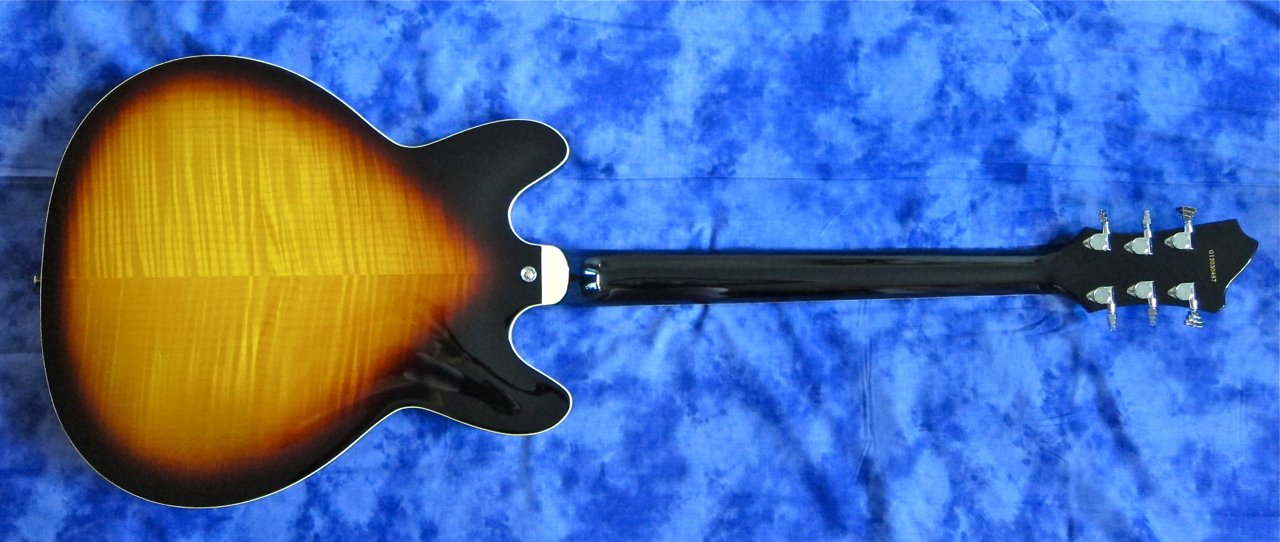
The Canadian hard rock maple neck is glued into the body, which is made from flame maple plywood.

Hagström’s headstock simply oozes 1950’s glitzy panache, with its ultraclean binding and inlay work.
The top nut, on the other hand, is up to date, using self-lubricating, man-made Black Tusq.
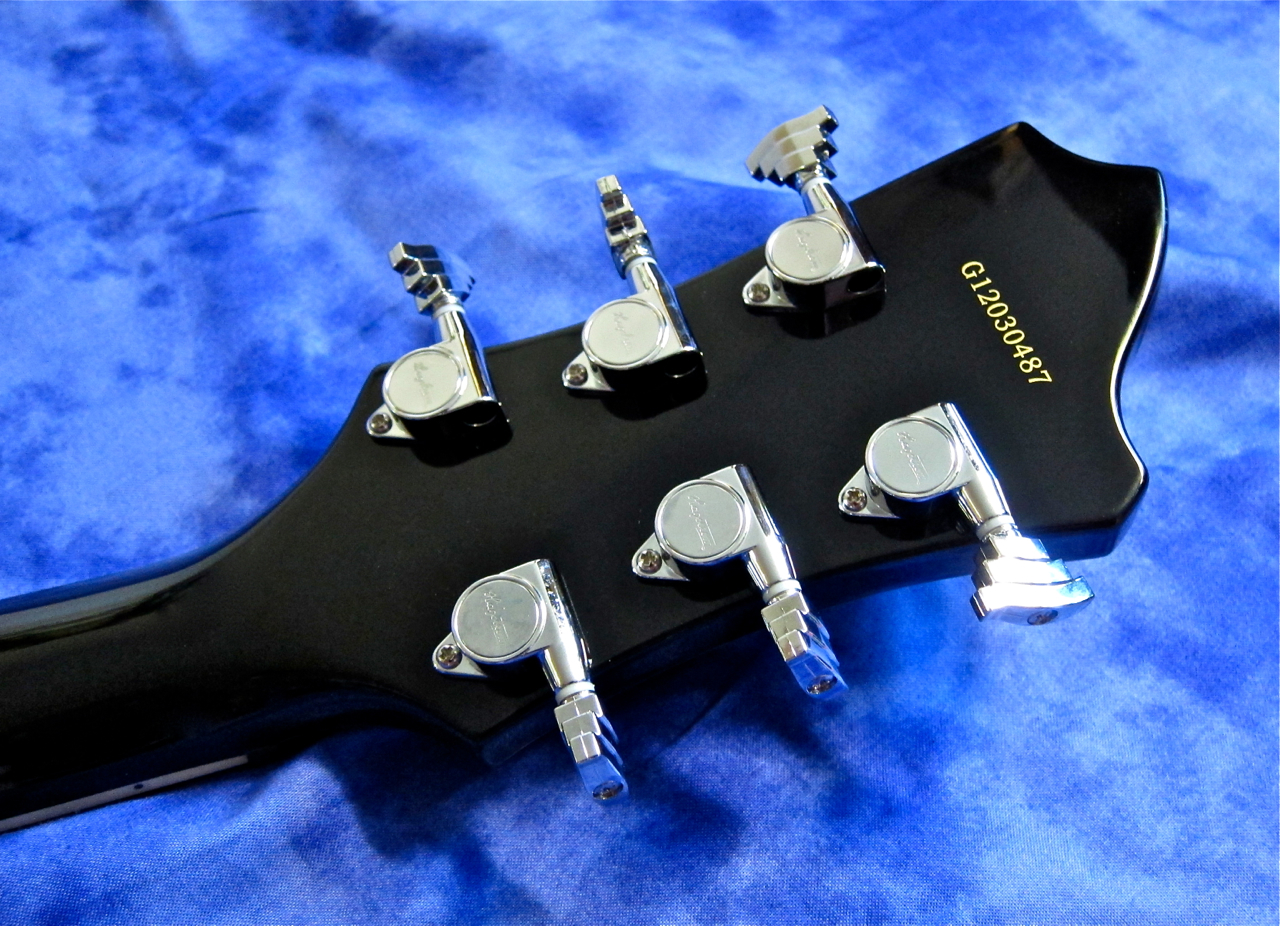
Modern sealed Hagström-tuners keep things steady.

One of Hagström’s special features is their Resinator-fingerboard. Resinator is a man-made alternative to ebony – in both looks and sound – and is made using wood fibres and resin.
The fretwork is rather good on our test sample, apart from a few fret ends, which felt a tiny bit sharpish in places.

Inside the plywood soundbox you can see the Viking Baritone’s full-length mahogany centre block.
The centre block is what turns a fully acoustic guitar into a semi. It improves attack and sustain, as well as greatly reducing the danger of howling feedback at higher volume levels.
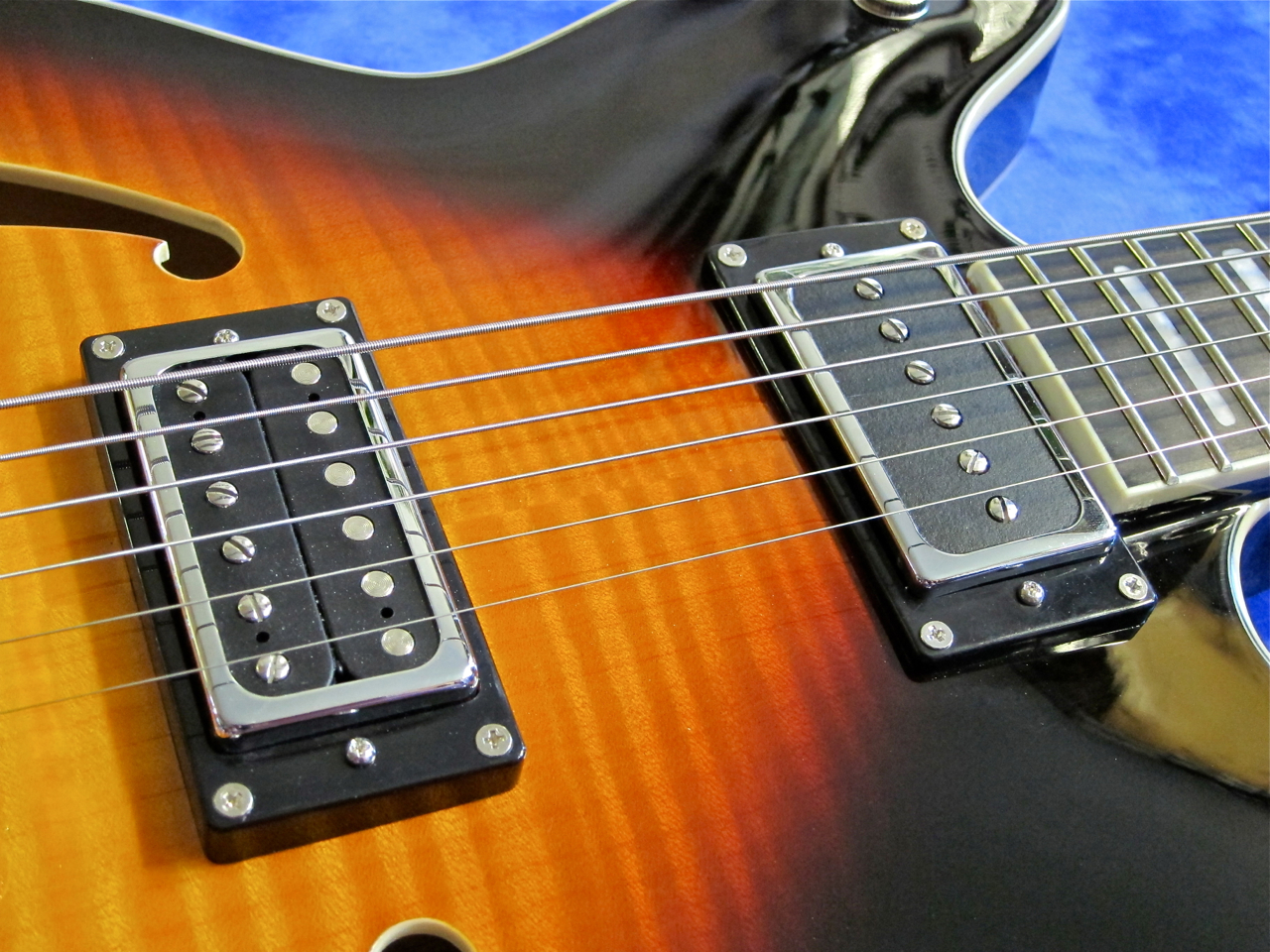
Hagström have optimised this Viking’s choice of pickups for use in a baritone-guitar:
The neck pickup is Hagström’s new P-Urified unit, which is a P-90-type singlecoil in humbucker-size. Employing a singlecoil in the neck position makes great sense, as it improves tonal clarity, while steering clear of any potential mushiness.
The bridge unit is Hagström’s great Custom 58 -humbucker, whose moderate output and nice dynamic range fit the P-Urified perfectly.
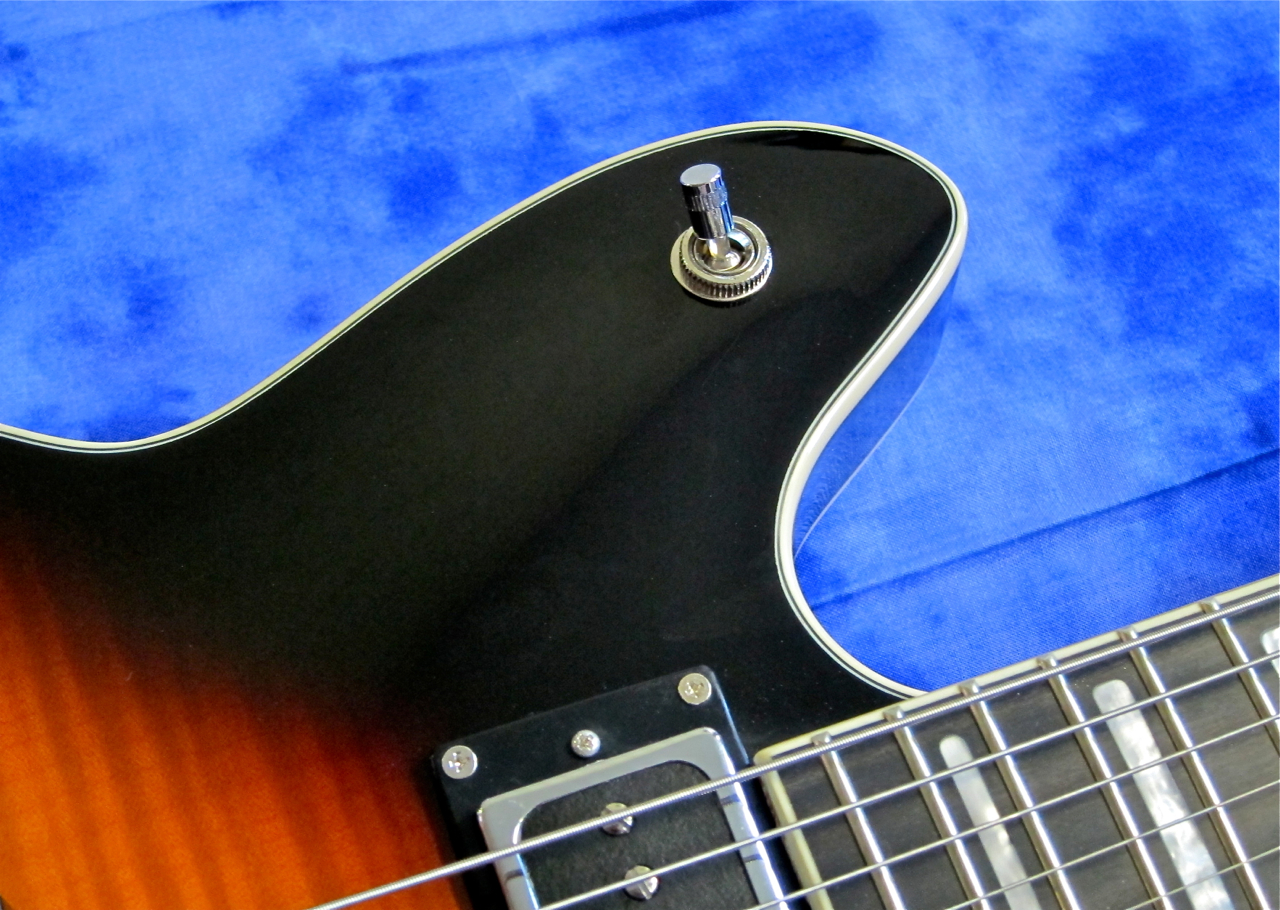
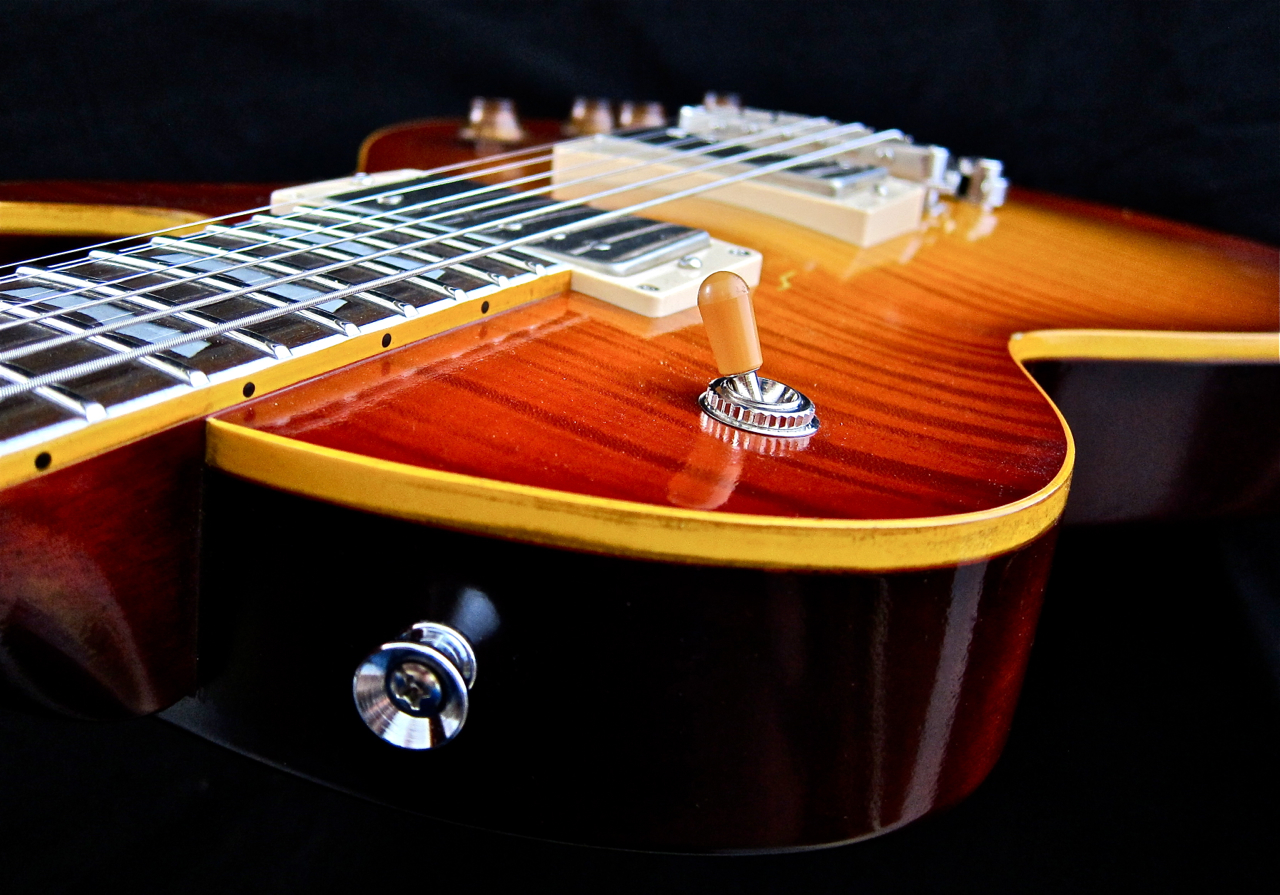
The three-way toggle sits on the Viking Baritone’s top horn.

It’s nice to see quality long-throw pots and clean workmanship inside the Viking.

The classic Gibson-type bridge and stopbar combination works fine on a semi like this.
****
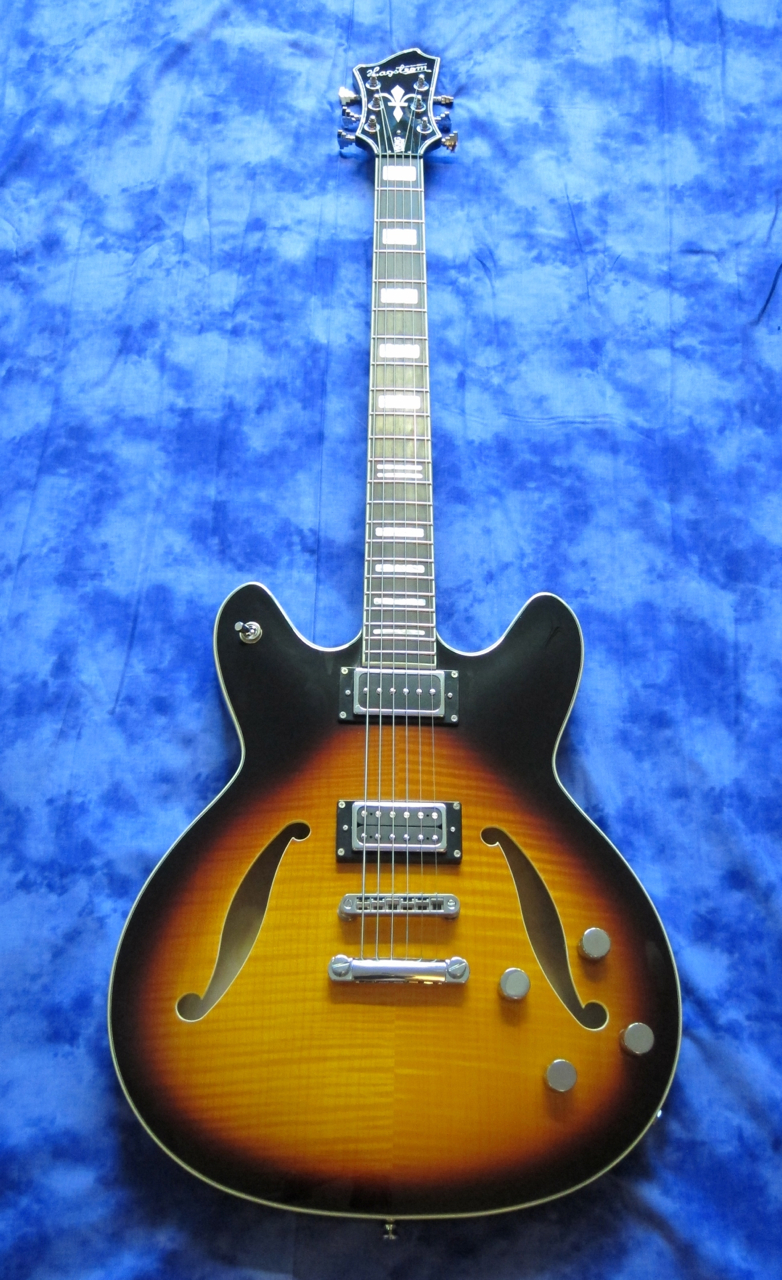
Thanks to its nice, moderate weight the Hagström Viking Baritone sits comfortably in your lap, with good strapped-on balance, too, regardless of a whiff of neck-heaviness due to its long neck.
The neck profile is a fleshy, but not too fat ”D”. Due to a baritone-guitar’s longer scale length (28″/71,1 cm) a newbie will need a little time to adjust his (or her) technique, but after a few minutes or so muscle memory will take the reigns without any problems.
The Viking Baritone’s choice of pickups really does it for me, fitting this guitar’s acoustic tone to a tee. The freshness of the neck pickup, together with its deliciously woody response, will keep even the lowest runs clear and punchy. And the moderately-powered bridge humbucker adds just the right amount of bite and grit to proceedings.
I feel that Hagström’s Viking Baritone is a fine baritone for all occasions and all styles of music (well, probably apart from the most massive of high-gain applications).
Listen to these two audio clips (the pickup order is: neck – both – bridge):
Hagström Viking Deluxe Baritone – clean
Hagström Viking Deluxe Baritone – crunchy
****
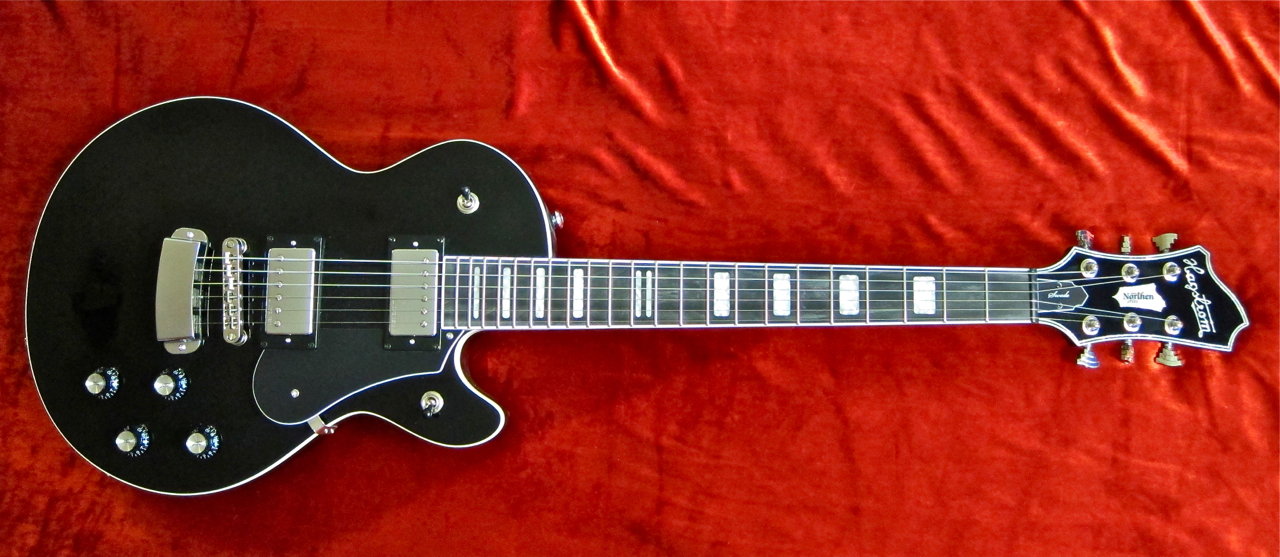
The Hagström Northen Swede (current street price in Finland approx. 1.200 €) is a high-quality, EU-made reissue of the classic Swedish model of yore.
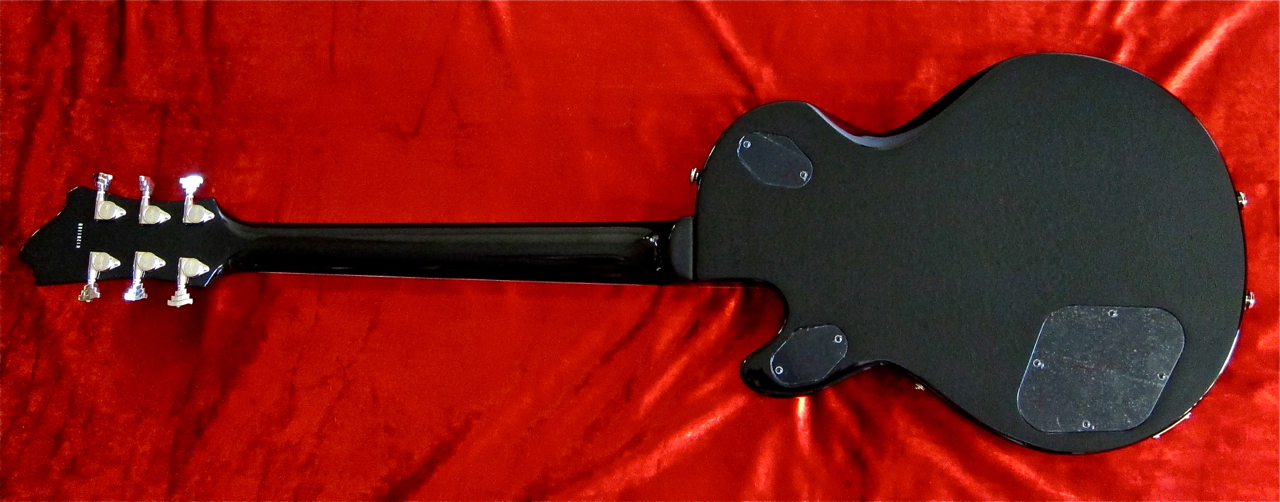
We’re talking about a set-neck solidbody, made almost completely from African mahogany (note: the cover plates look strange in this pic, because they still have their protective foils stuck on top).
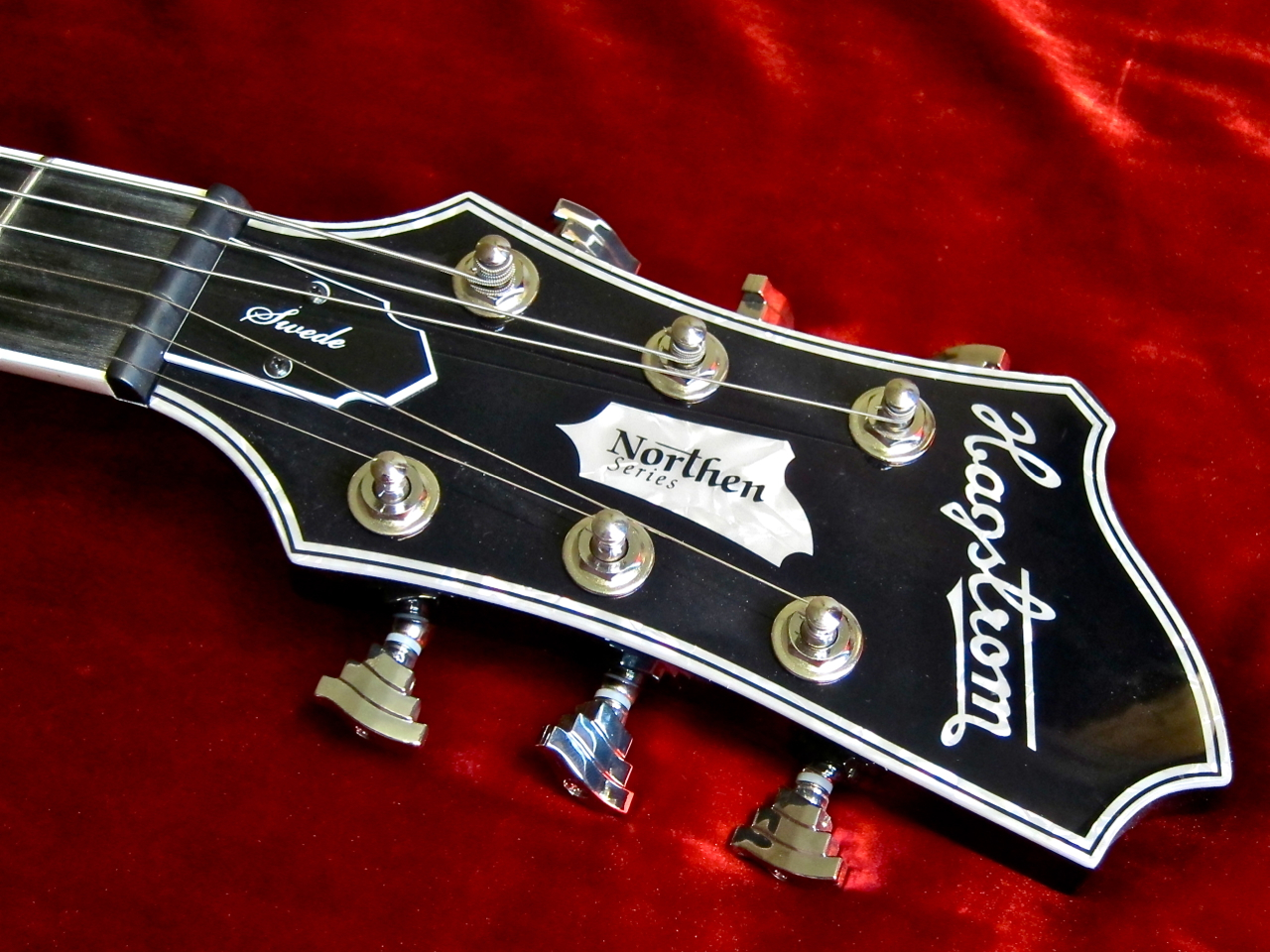
The large pearloid inlay proudly displays the Northen-series’ logo.

The Hagström-tuners have an 18:1 gear ratio and a smooth and precise feel.
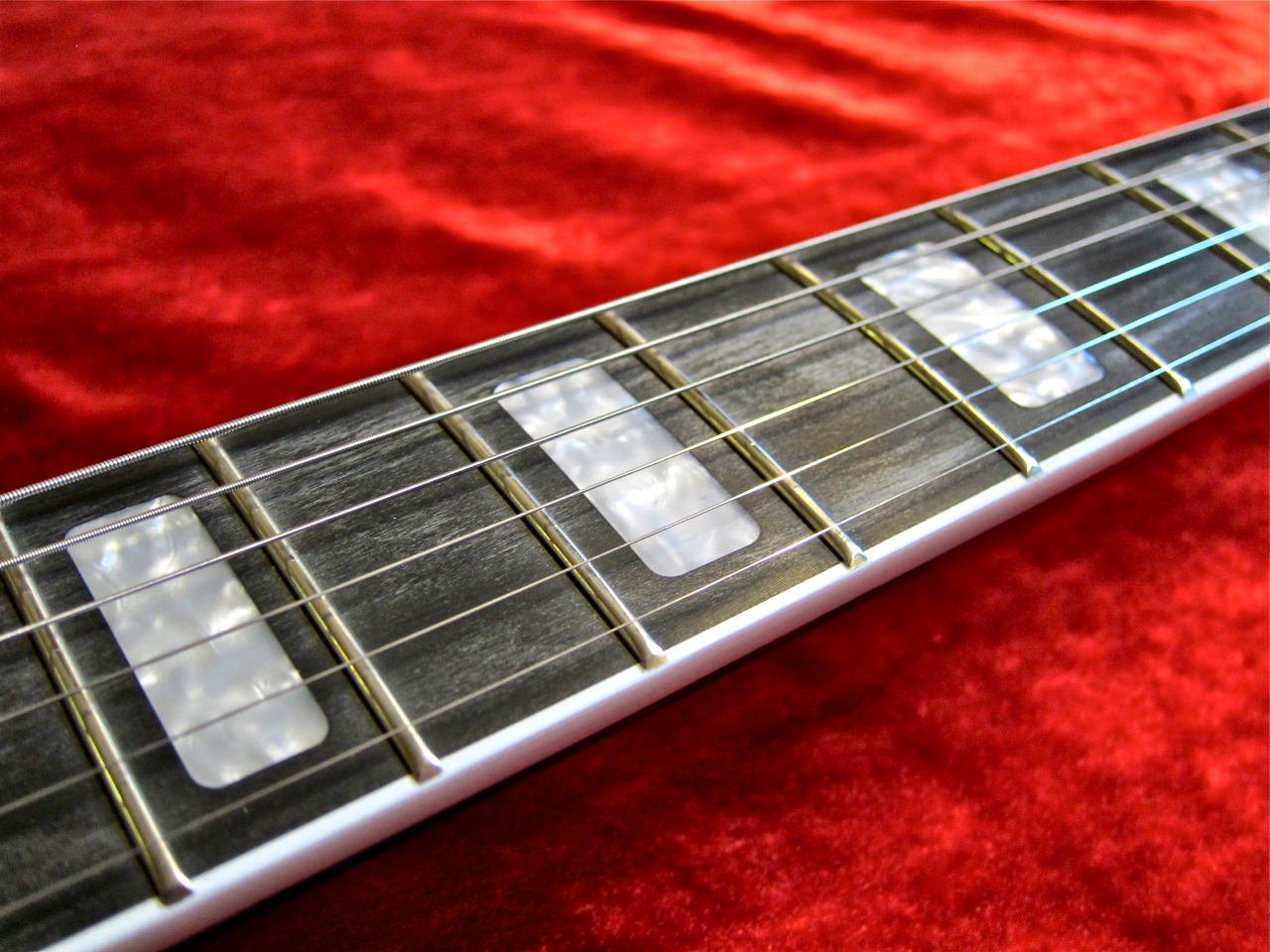
The Northen Swede’s Resinator-board looks more lively than its counterpart on the Viking Baritone. The fretwork is very good.
One special, time-tested feature of all Hagström necks is the H-Expander truss rod system. The H-Expander truss rod sits in a rigid aluminium bar with an H-shaped cross-section. The whole system is then mounted into a tight-fitting, profiled slot inside the the neck, resulting in greater rigidity and thus a better vibrational transfer than most other truss rod systems provide.
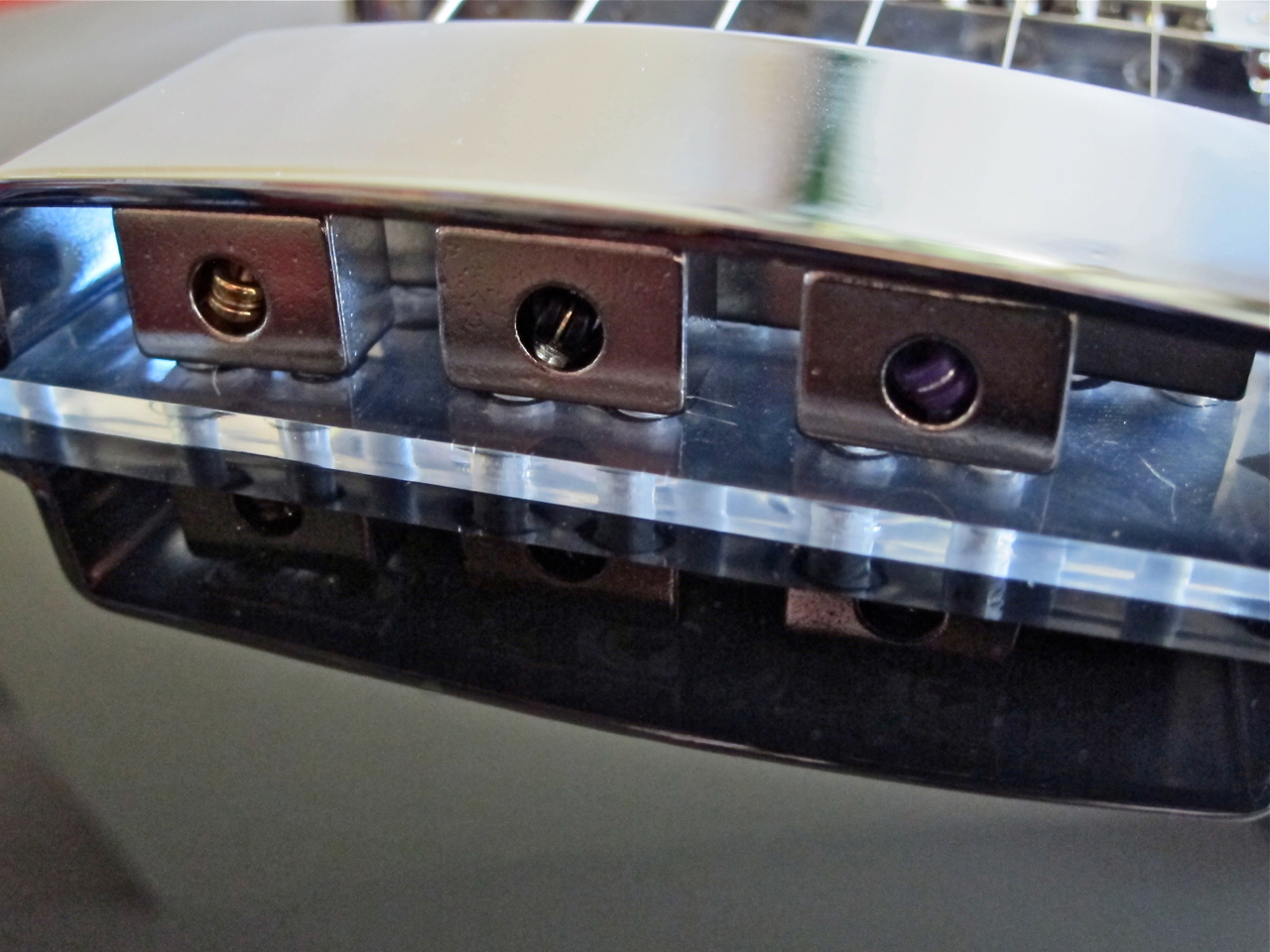
The Swede features Hagström’s idiosyncratic tailpiece, using individual string retainers mounted onto a perspex plate.

Swedish pickup-guru Johan Lundgren is the force behind the Northen Swede’s classy pickups. The guitar is equipped with a pair of No. 2 -humbuckers, which are powered by Alnico 2 magnets.
The Hagström Swede sports two three-way toggle switches: The switch on the guitar’s shoulder is your usual pickup selector, while the one on the treble-side horn is a tone filter -switch.
The tone filter’s middle position is off, with the ”up” selection giving you a mild presence roll-off, while the ”down” position results in a noticeably greater treble and high-mid cut.
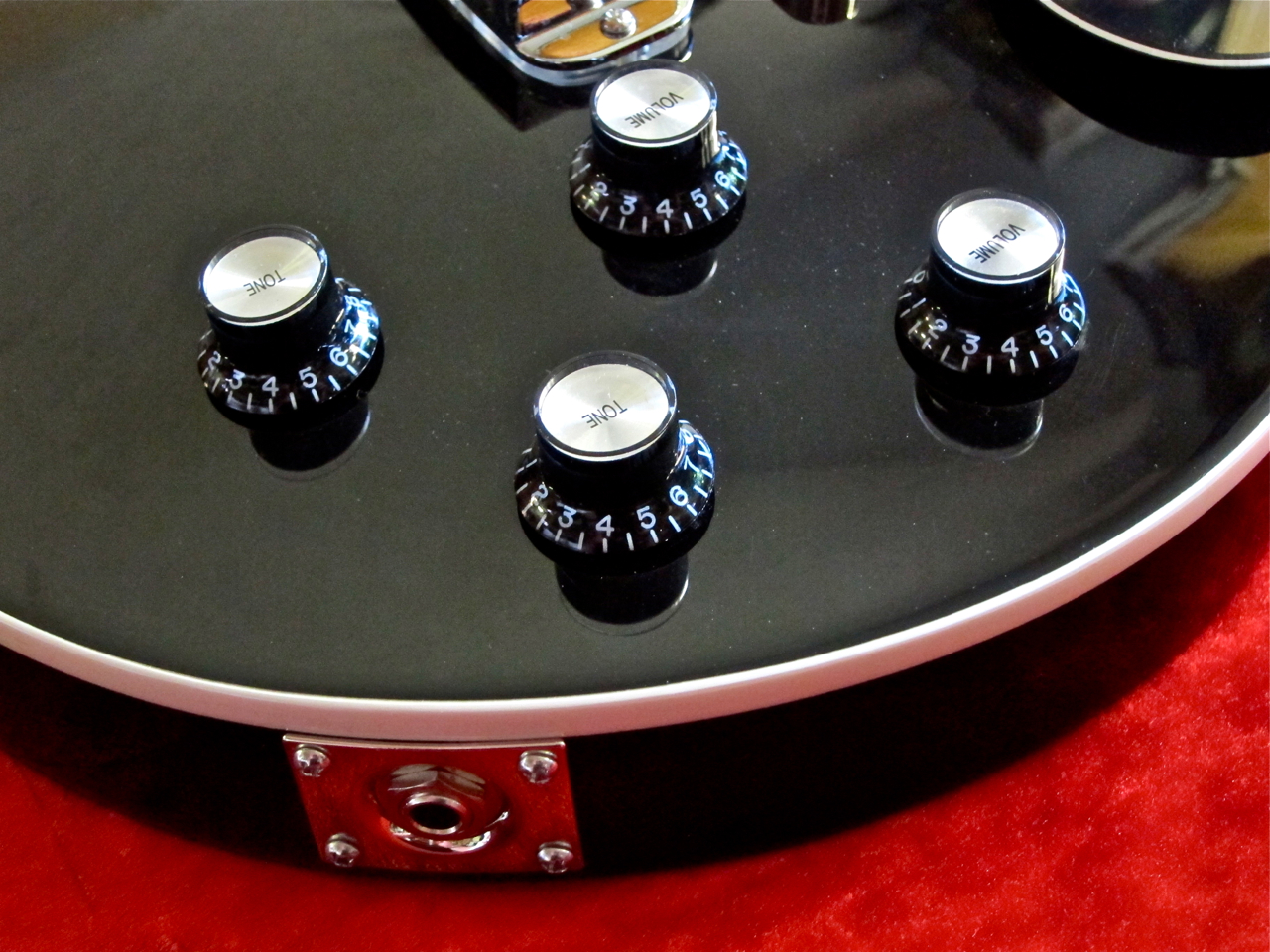
The control knobs work in the standard Les Paul -fashion, with each pickup being provided with its own set of volume and tone controls.
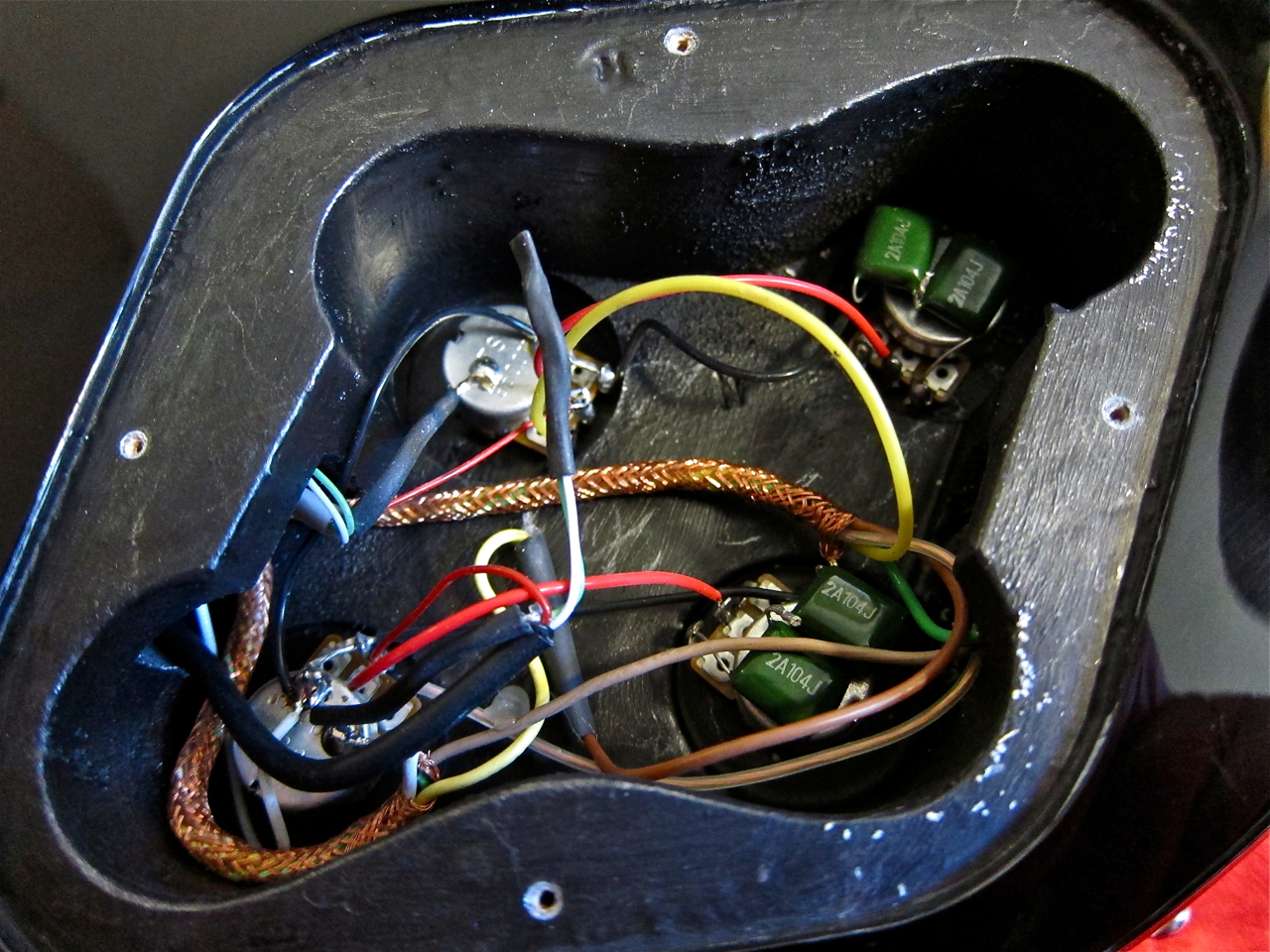
Quality components, clean soldering and thorough screening, using conductive paint and an aluminium-lined lid, get the thumbs up from this here reviewer.
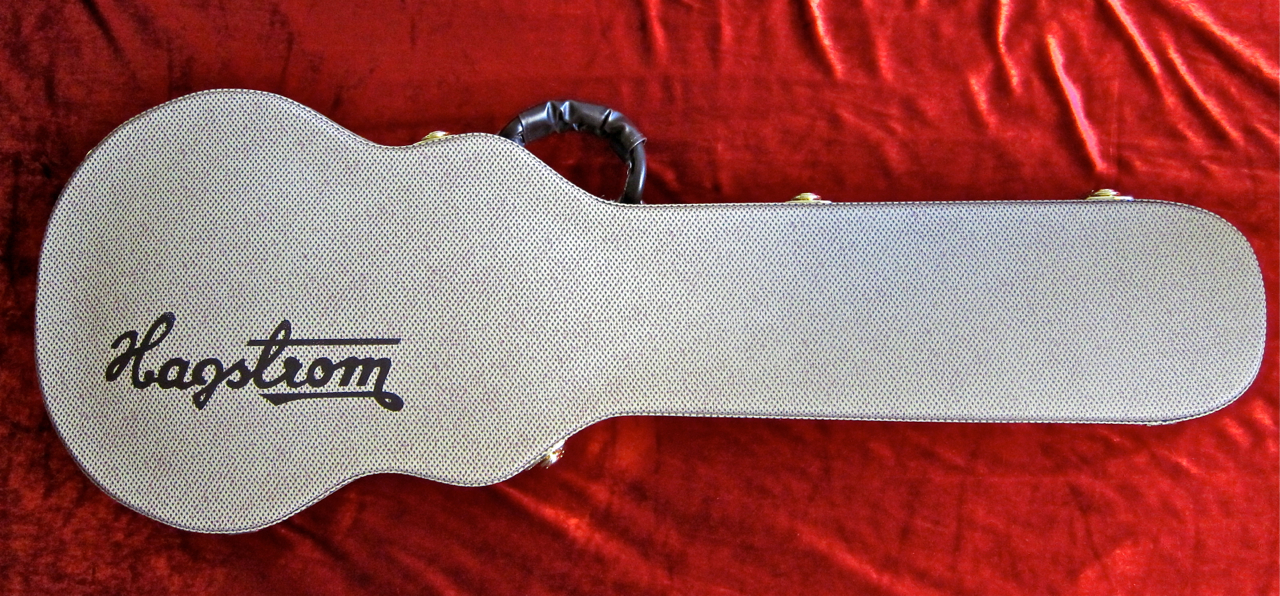
A sturdy and beautiful Hagström-case is included in the Northen Swede’s price.
****

The Hagström Northen Swede’s well-rounded neck profile feels great to me. The nicely polished frets and the ’board’s 12-inch camber make for a fast and effortless playing experience.
Thanks to the fantastic interplay between the tone filter -switch and the guitar’s controls, the tonal options afforded by this Swede are virtually limitless. The Lundgren-designed pickups have a very clear and clean basic tonal character, which enables you to make the most of the Northen Swede’s passive electronics.
In my opinion Hagström’s Northen Swede is a top-quality guitar offering a great deal of tonal variation to the discerning guitar connoisseur. In light of its Czech origin, I must say that the Northen Swede truly represents quality European workmanship at a very moderate price.
All the following audio clips have been recorded with the tone filter -switch starting at off, then going to moderate roll-off, with the last phrase using the full treble cut selection:
Hagström Northen Swede – neck pickup/clean
Hagström Northen Swede – both/clean
Hagström Northen Swede – bridge pickup/clean
Hagström Northen Swede – neck pickup/crunchy
Hagström Northen Swede – both/crunchy
Hagström Northen Swede – bridge pickup/crunchy
****
…and here we have both Hagströms in action:
Hagström Viking Baritone + Northen Swede – the video’s audio
****
Hagström-guitars
Finnish distributor: EM Nordic
A big thank you to DLX Music Helsinki for the loan of the review instruments!
****
Hagström Viking Deluxe Baritone
Current street price in Finland about 600 €
Pros:
+ sound
+ playability
+ workmanship
+ weight
+ pickups
Cons:
– fingerboard binding felt a tad angular on test sample
****
Hagström Northen Swede
current street price in Finland about 1.200 €
Pros:
+ made in the EU
+ sound
+ versatility
+ Lundgren-pickups
+ workmanship
+ playability
+ weight
****





 Kitarablogi.com – Finland's premier Guitar and Bass blog