Testipenkissä: LTD MH-330FR + ESP Horizon FR-II SD

****
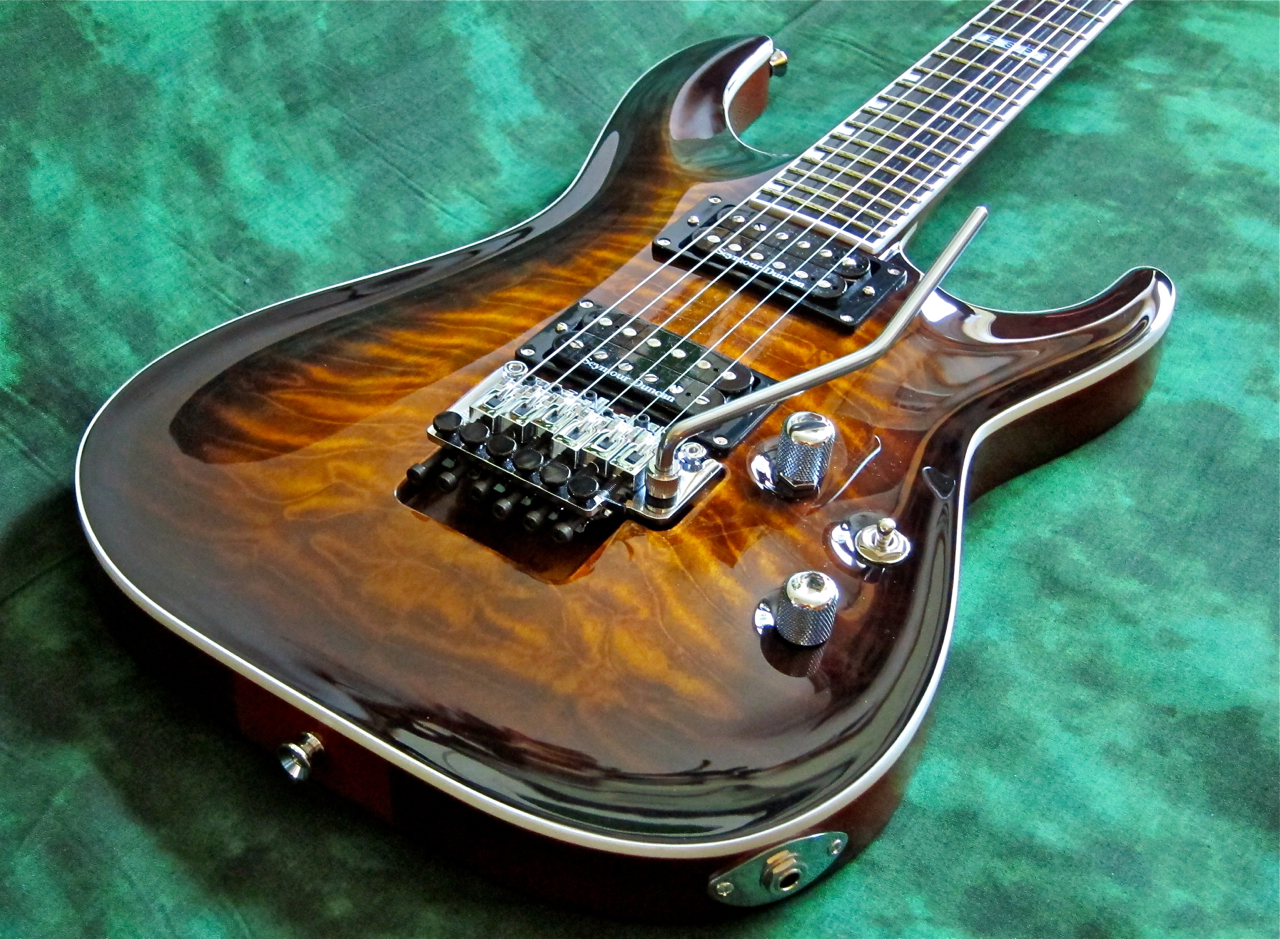
ESP:llä on valikoimassaan monta kitaravirtuoosille suunnattua mallia. Ehkä klassisin niistä on Horizon – tyylipuhdas Superstrato, jolla on kaksi humbuckeria sekä Floyd Rose -lukkovibra.
Poimimme testiin kaksi Horizon-mallia:

aktiivisilla ESP-mikeillä varustettu LTD MH-330FR…

…sekä pramea ESP Horizon FR-II SD Seymour Duncan -humbuckereilla.
****

LTD MH-330FR (489 €) varsin näyttävä ja virtaviivainen kitara, ja testisoittimen Electric Blue -metalliväritys korostaa tätä sopivasti.

Sama kiiltävä lakkaus ulottuu myös soittimen vaahterakaulaan ja mahonkirungon selkäpuoleen.

MH-330FR:n metalliosat on pinnoitettu ”mustalla” nikkelillä.

Suljetut, Gotoh-tyyliset ESP-virittimet ovat hyvin asiallista laatua. Volute-paksunnos lujittaa lavan ja kaulan liitoskohtaa.

Kaunis palisanteriotelauta, valkoinen reunalistoitus, tyylikkäät otemerkit, sekä 24 jumbo-kokoista nauhaa tarjoavat runsaasti iloa sekä silmille että sormille.

Viistotun reunan ansiosta pääsy ylimpiin nauhoihin tuntuu LTD:ssä perinteistä ruuviliitosta mukavammalta.

MH-330FR:een on valittu mikrofoneiksi kaksi aktiivista ESP-humbuckeria.

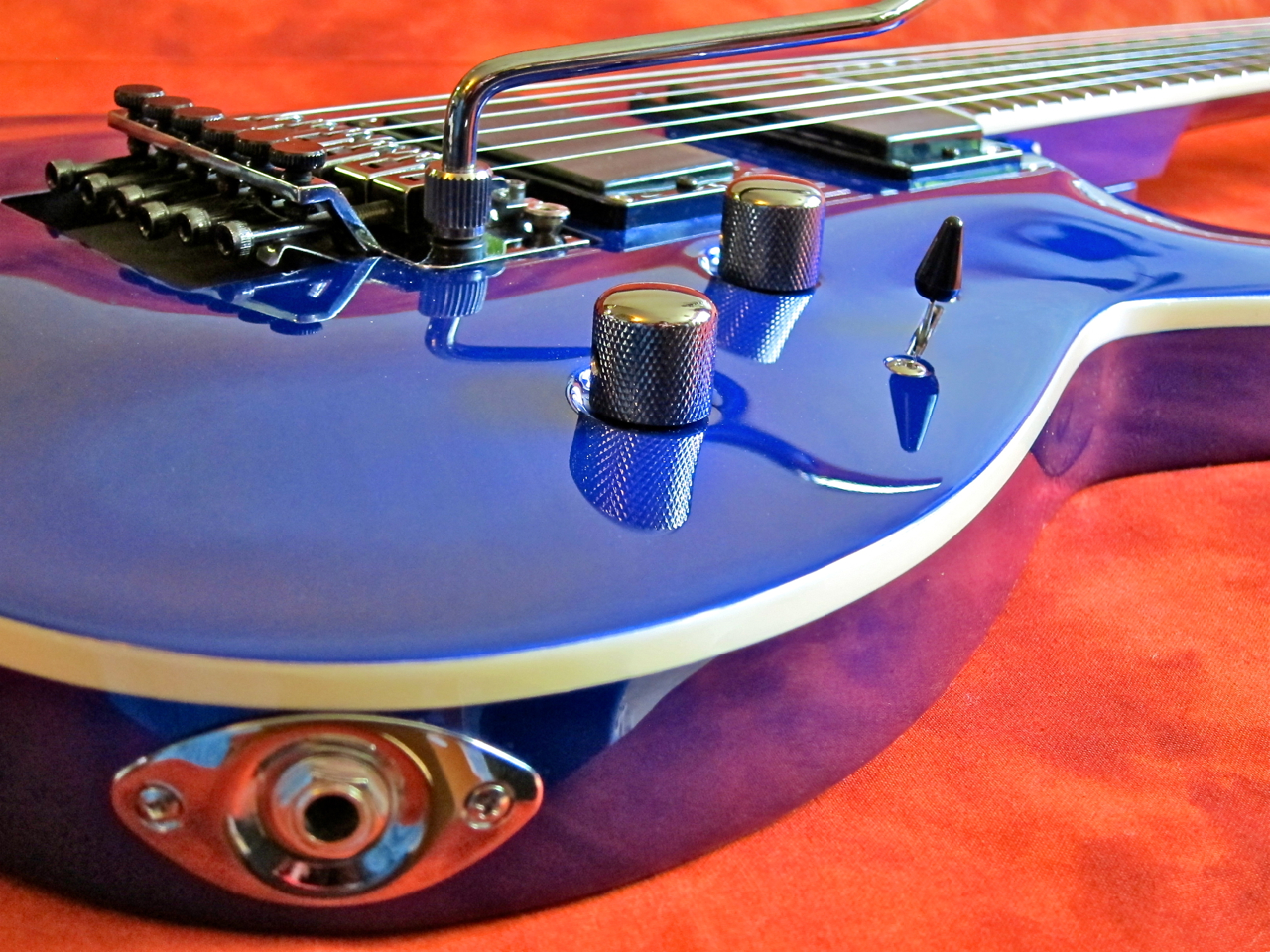
Säädinosasto tarjoaa master volumen ja master tonen, sekä kolmiasentoisen, Fender-tyylisen kytkimen.

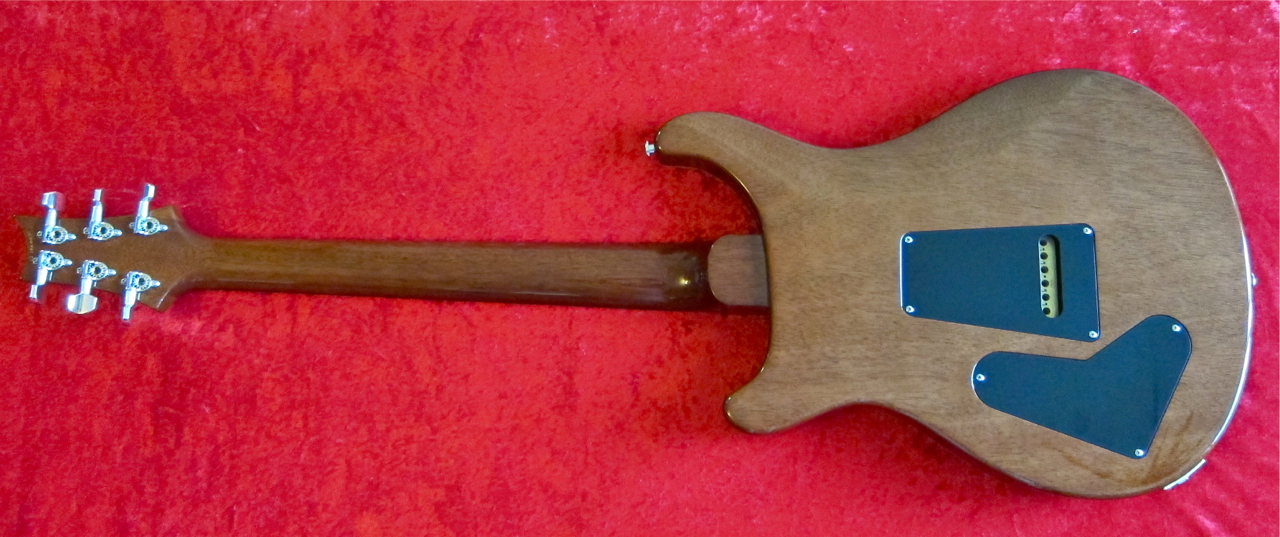
Paristolokeron kansi on kiinnitetty koneruuveilla ja runkoon upotetuilla kierreholkeilla, mikä on paljon parempi ratkaisu kuin tavalliset puuruuvit.

Siisti työnjälki jatkuu myös elektroniikkalokerossa, joka on häiriösuojattu grafiittimaalilla ja alumiinifoliolla vuortuilla kannella.

LTD:n Floyd Rose Special -vibra on perushyvä, edullisempi lisenssi-Floikka, joka on valmistettu Etelä-Koreassa. Tärkein ero kalliimpaan Floyd Rose Original -tallaan nähden ovat sinkkiseoksesta valetut tallapalat ja vibrablokki. Original-mallissa käytetään teräksestä valmistettuja tallapaloja, sekä messinkiblokkia.
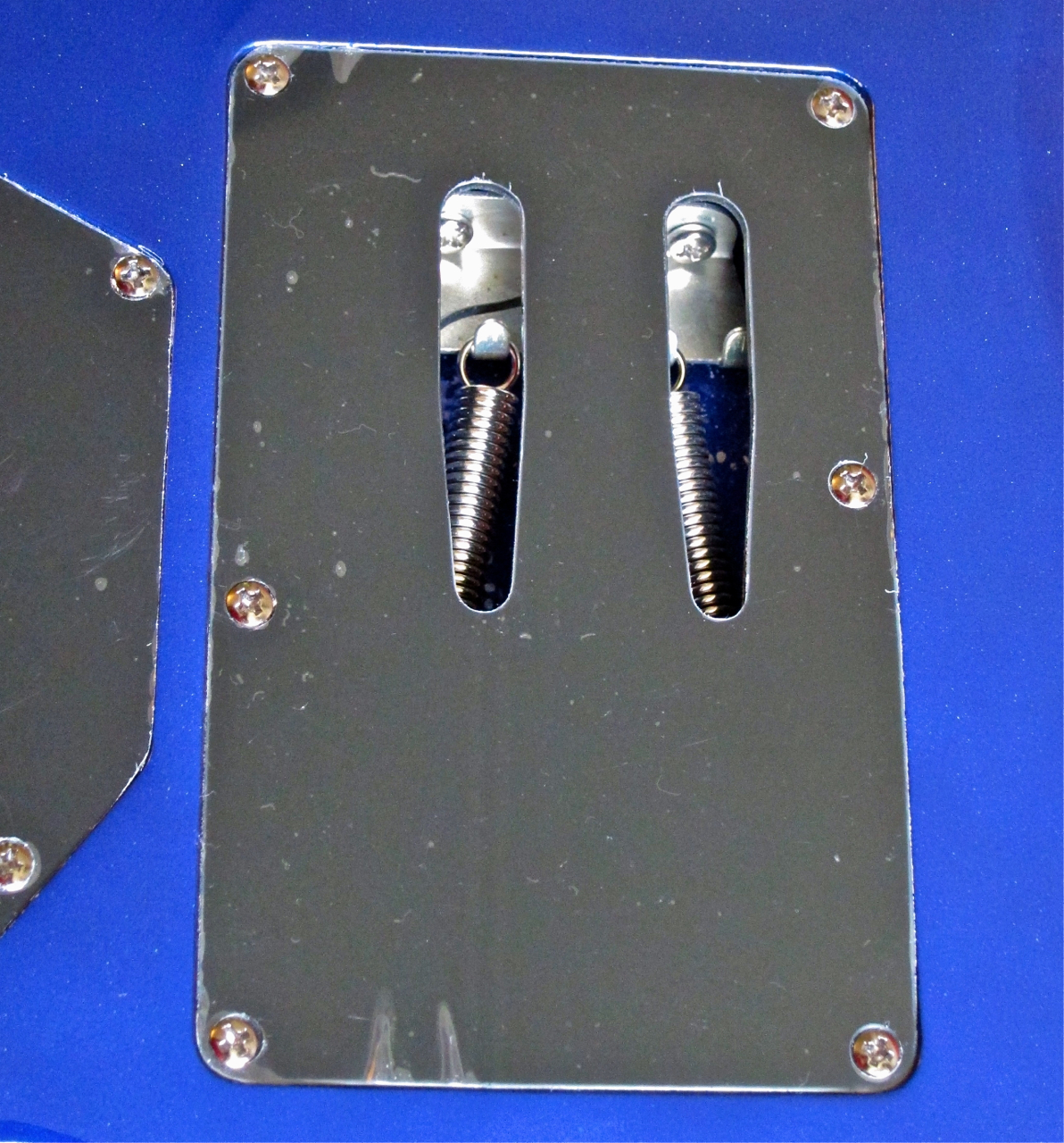
MH-330FR:ssä voi säätää jousien vetoa kätevästi jousilokeroa avaamatta!
****

ESP:n Horizon FR-II (1.929 €) edustaa firman tinkimätöntä japanilaista soitinrakennustaitoa. Malli kuuluu ESP:n laadukkaaseen Standard-sarjaan, ja se on rakennettu rungon läpi menevällä vaahterakaulalla.
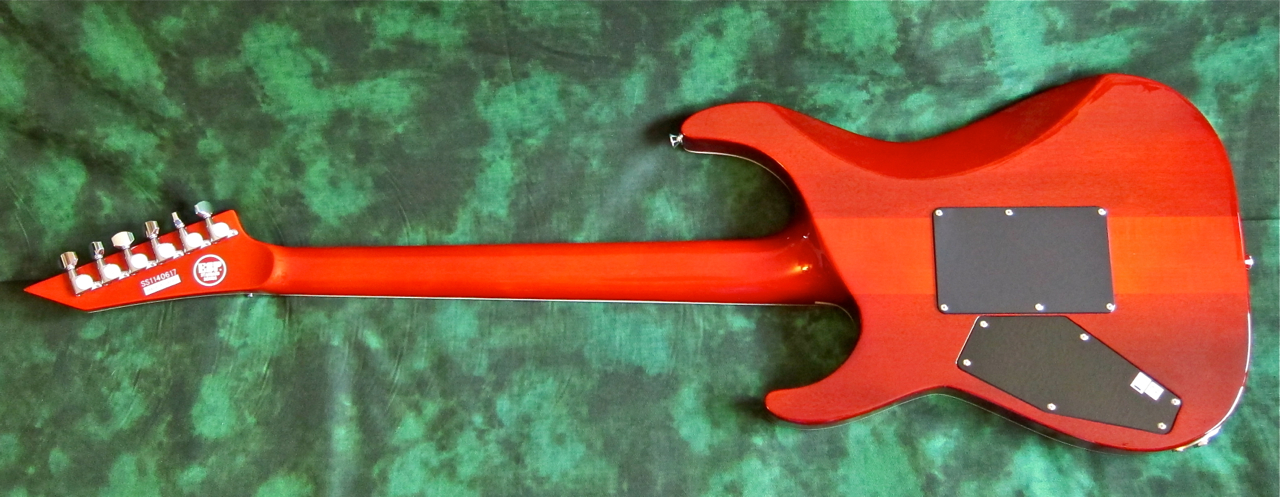
Rungon takaosa on veistetty mahongista, ja sen kansi on huippulaadukasta loimuvaahteraa.

Väristä riippuen Horizon FR-II -kitara on tarjolla joko ”mustalla” nikkelillä päällysttyillä metalliosilla tai – niin kuin Dark Brown Sunburst -värisen testisoittimen tapauksessa – kromatuilla osilla.

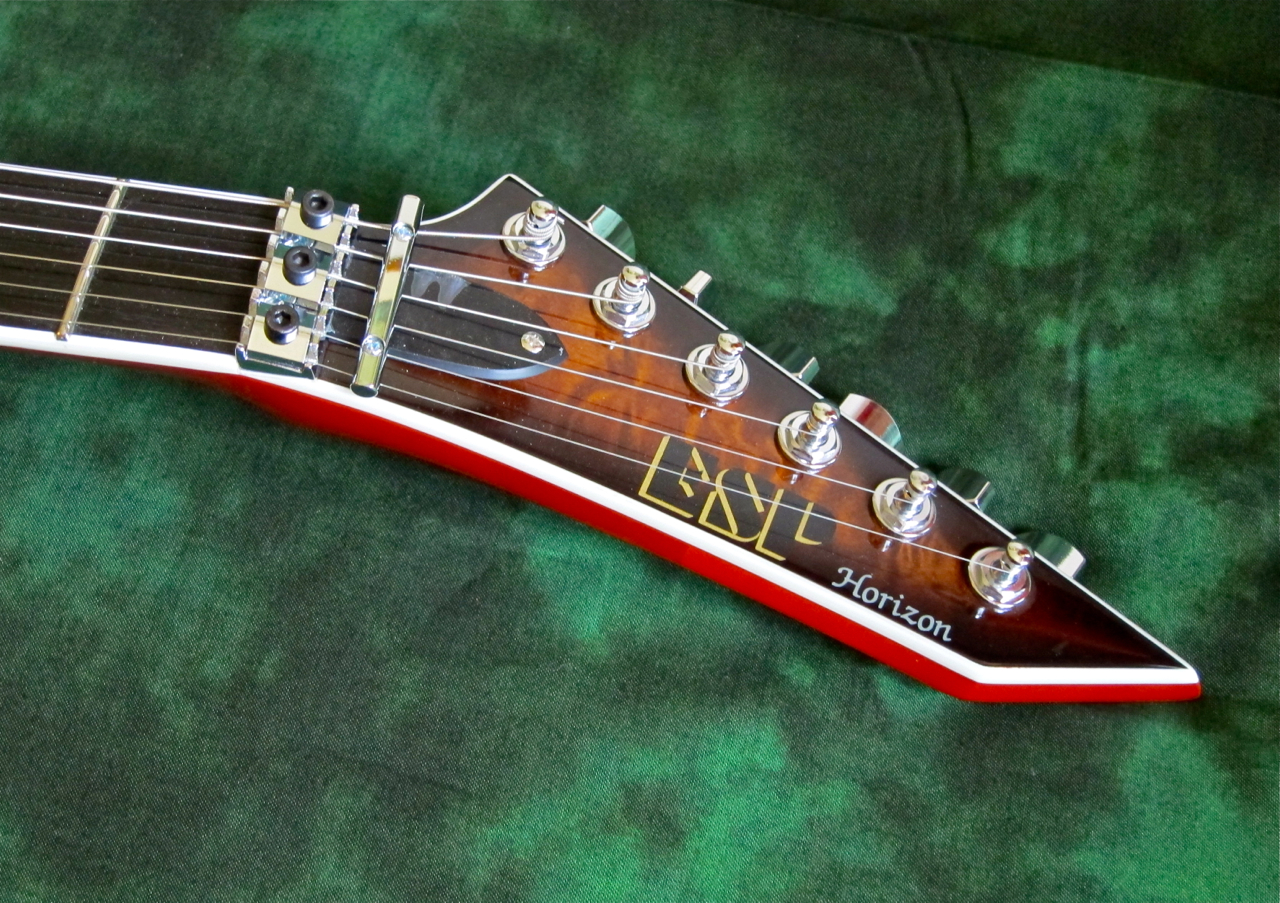
Suljetut virittimet tulevat Gotohin mallistosta.

LTD:n työnjälki oli jo todella hyvällä mallilla, mutta ESP:n Horizon tekee hyvin selväksi, että tässä on selvästi kyse pro-luokan soittimesta: erittäin sileään eebenpuuotelautaan on istutettu 24 jumbo-kokoista nauhaa, jotka on viimeistelty huolellisesti tarkaksi ja liukkaaksi soittoalustaksi.

Kaulan ja rungon liitoskohta on varsin sulava.
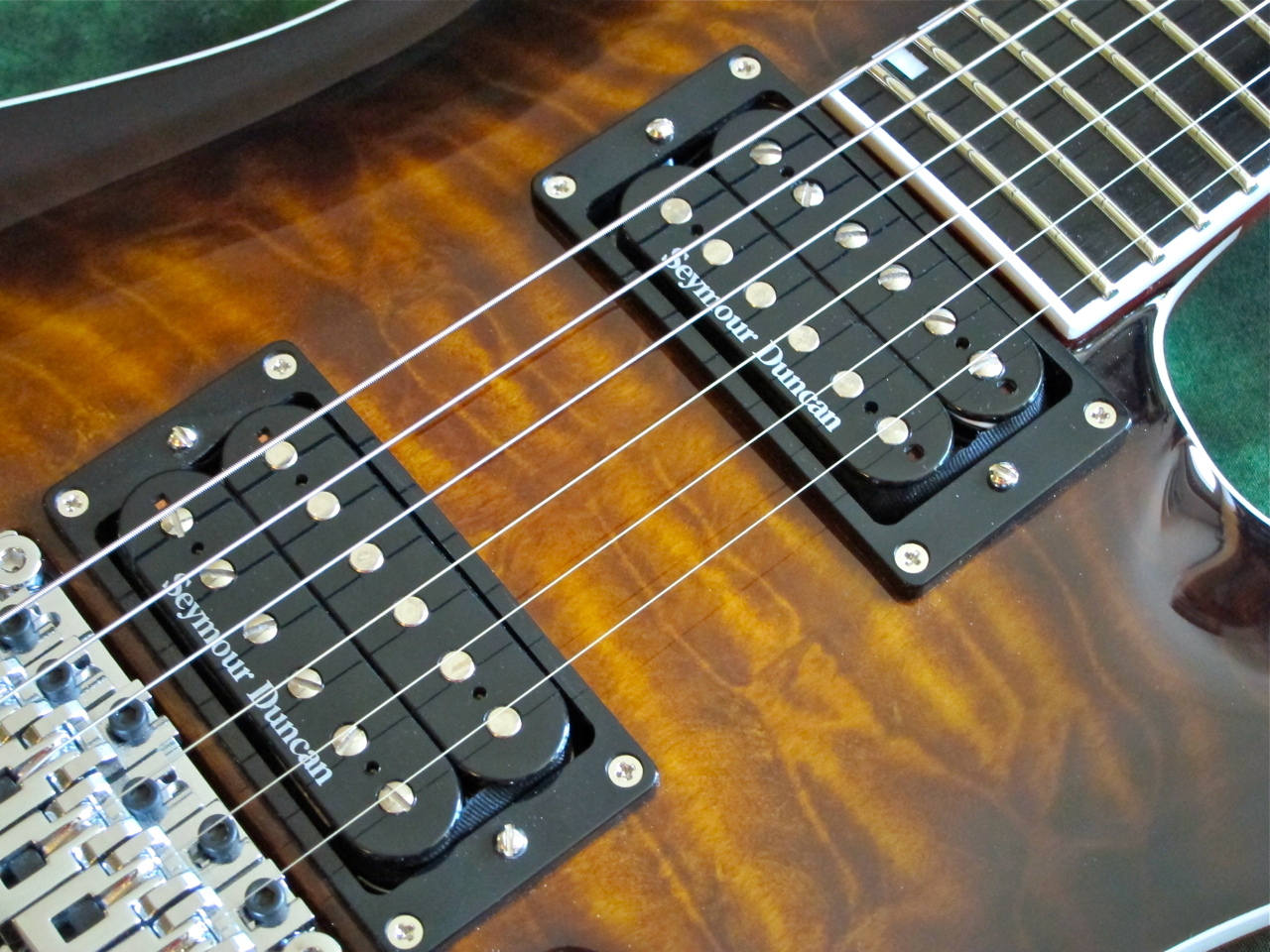
ESP Horizon FR-II -mallin saa myös aktiivisella EMG-mikityksellä, mutta testisoitin on kitaran SD-versio, johon on asennettu kaulamikrofoniksi Seymour Duncanin ’59-malli ja tallahumbuckeriksi saman valmistajan JB-malli (JB = Jeff Beck).

Master volume -potikaan on lisätty jousella varustettu push/push-painokytkin. Yläasennossa kytkin puolittaa Horizonin mikrofoneja.

Erittäin siistiä työtä ja laadukkaat komponentit – tästä tunnistaa laatusoittimen.

Tämä Floikka on Schallerin valmistama Floyd Rose Original -vibratalla terästallapaloilla ja messinkiblokilla.

ESP Horizonin hintaan kuuluu luonnollisesti myös laadukas kova laukku.
****

LTD MH-300FR on painonsa suhteen mukavasti keskiluokkaa, ja se tasapainoituu nätisti soitettaessa.
Spekseissä lukee ”Thin U Neck Contour”, ja olin hieman huolissani, että kyseessä olisi 1980-luvun litteä ja matala kaula. Onneksi LTD:n kaulaprofiili osoittautui oikein mukavaksi. Luonnehtisin sitä hoikaksi, muttei luisen laihaksi D-profiiliksi.
MH-300FR:n Floikka toimii sinänsä vallan mainiosti, paitsi että minulla oli pieniä vaikeuksia kammen kiinnityksen kanssa. Ajatus on tunnetusti, että kampi ruuvataan tallaan kierrekauluksen avulla. Kammen on sitten tarkoitus kääntyä soiton aikana jouhevasti pois tieltä ja sitten takaisin käyttöön, ilman että edestakaisin-liike aiheuttaa kiinnityskauluksen löystymistä. Valitettavasti tämä ei toteutunut testiyksilöllä niin kuin oli ajateltu, vaan kammen liikkuminen löysäsi kaulusta vähitellen soiton aikana. Tämän seurauksena kampi alkoi roikkua löysästi vibrasta ja Floikka sai hieman epätarkan tuntuman. Toivottavasti kyse on todellakin vain harmillisesta yksilöviasta, koska vibran toiminnassa sinänsä ei ollut mitään moitittavaa.
Soundiltaan LTD MH-300FR on – tyypillisenä aktiivisena sähkökitarana – erittäin tasaisesti ja avoimesti soiva soitin. Etenkin alhaisempi keskialue on huomattavasti ”siistimpi” tai lineaarisempi kuin monilla passivisilla humbuckereilla varustetuilla kitaroilla.
Esimerkkipätkät alkavat aina kaulahumbuckerista:
****
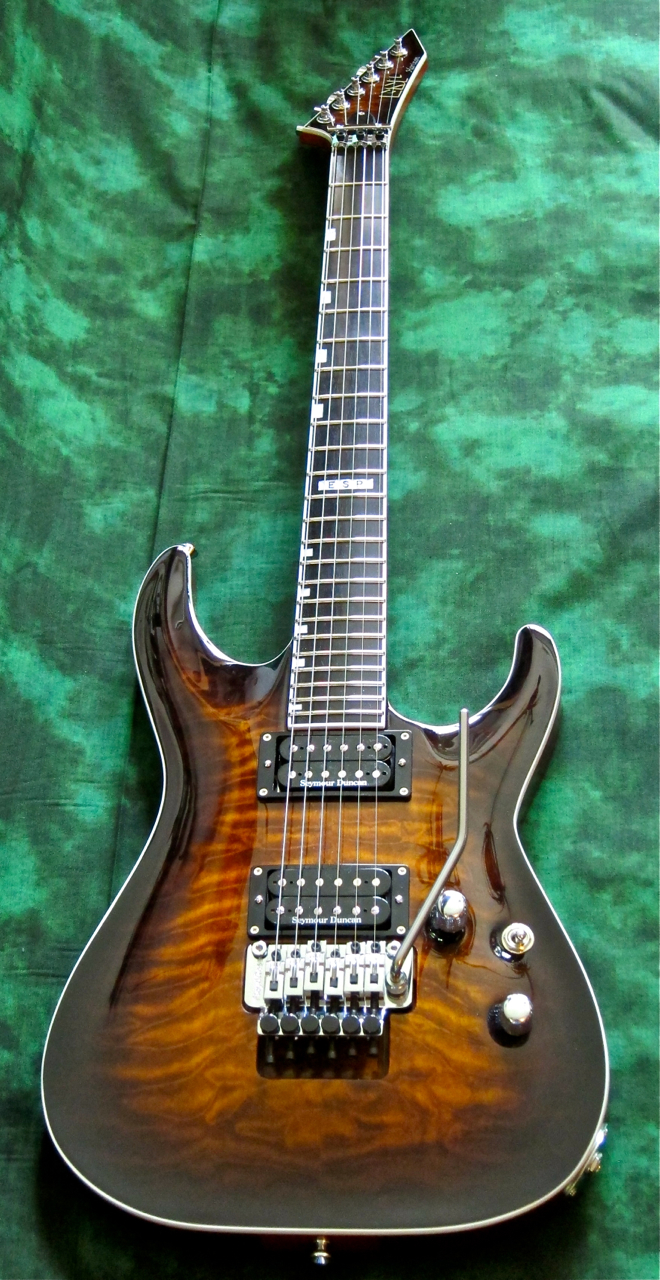
ESP Horizon FR-II on mukavan kevyt kitara erittäin hienolla soittotuntumalla. Kaulaprofiili on aavistuksen verran matalampi kuin edullisessa LTD-mallissa, mutta ei missään nimessä liian ohut mukavaan soittoon.
Esimerkkillisen nauhatyön ansiosta hyvin loivalla kaarevuudella toteutettu otelauta mahdollistaa hyvin vaivattommat venytykset.
Floyd Rose Original on yhä kiistämättä lukkovibrojen ykkönen, joka toimii testikitarassa erittäin jouhevalla ja varmalla otteella.
ESP Horizon FR-II:n soinnissa on enemmän lämpöä kuin LTD-sisarmallissa, selkeästi tiheämmän keskialueen ansiosta. Joillekin Thrash Metal -kitaristeille tällainen karakteeri voi olla jo liiankin täyteläinen, mutta yleisesti ottaen ESP:n juureva soundi on mielestäni hyvin herkullinen ja monipuolinen.
Mikrofonien puolitus antaa Horizonille vielä lisää värejä, joilla kitarasankari voi maalata haluamaansa soundimaailmaa.
Esimerkkipätkissä aloitan aina puolitetuilla humbuckereilla (kaula – molemmat – talla), minkä jälkeen soitan samat kuviot täysillä mikrofoneilla samassa järjestyksessä:
****
Tämän testin perusteella voi vain todeta, että ESP:llä on kitaranteko mallikkaasti hallussaan.
LTD-alamerkin MH-330FR on vakavasti otettava, mainio aktiivinen soitin, joka tarjoaa rutkasti vastinetta rahalle. Erittäin kätevä työkalu siis…
ESP Horizon FR-II taas on loistokitara laatutietoiselle – virtuoosikitara vailla kompromissejä.
ESP Horizon FR-II & LTD MH-330FR – videon audioraita
****
ESP ja LTD -sähkökitarat
Maahantuoja: Musamaailma
****
LTD MH-330FR
489 €
Plussat:
+ hinta-laatu-suhde
+ työnjälki
+ soitettavuus
+ aktiiviset mikrofonit
+ Floyd Rose -vibra
Miinukset:
– testisoittimen vibrakammen kiinnitys
****
ESP Horizon FR-II Seymour Duncan
1.929 €
Plussat:
+ japanilainen laatusoitin
+ työnjälki
+ soitettavuus
+ mikrofonien puolitus
+ soundi
+ Floyd Rose Original -vibra
****


Review: PRS Studio

****

The PRS Studio -model, which was introduced last year, bundles all the improvements of the last few years in one single instrument. The Studio sports a long list of new – or improved – features, such as the Narrowfield-humbuckers.
****

In Gibson-speak ”studio” usually means a less expensive, slightly scaled-down model. In the PRS Studio’s case the word ”studio” denotes a guitar that is meant to be very versatile.
The PRS Studio (current price in Finland around 3,000 €) is a set-neck electric guitar, with the company’s traditional 25-inch (63,5 cm) scale. A great-looking flame maple top comes as standard on the Studio. PRS offer several different colour finishes, as well as a choice between a wraparound bridge or a PRS vibrato.
Both the neck and the back of the body are crafted from top-quality mahogany. The Studio is offered with two new neck profiles: The fuller version is called Pattern Neck, while its slimmer counterpart is designated as Pattern Thin.
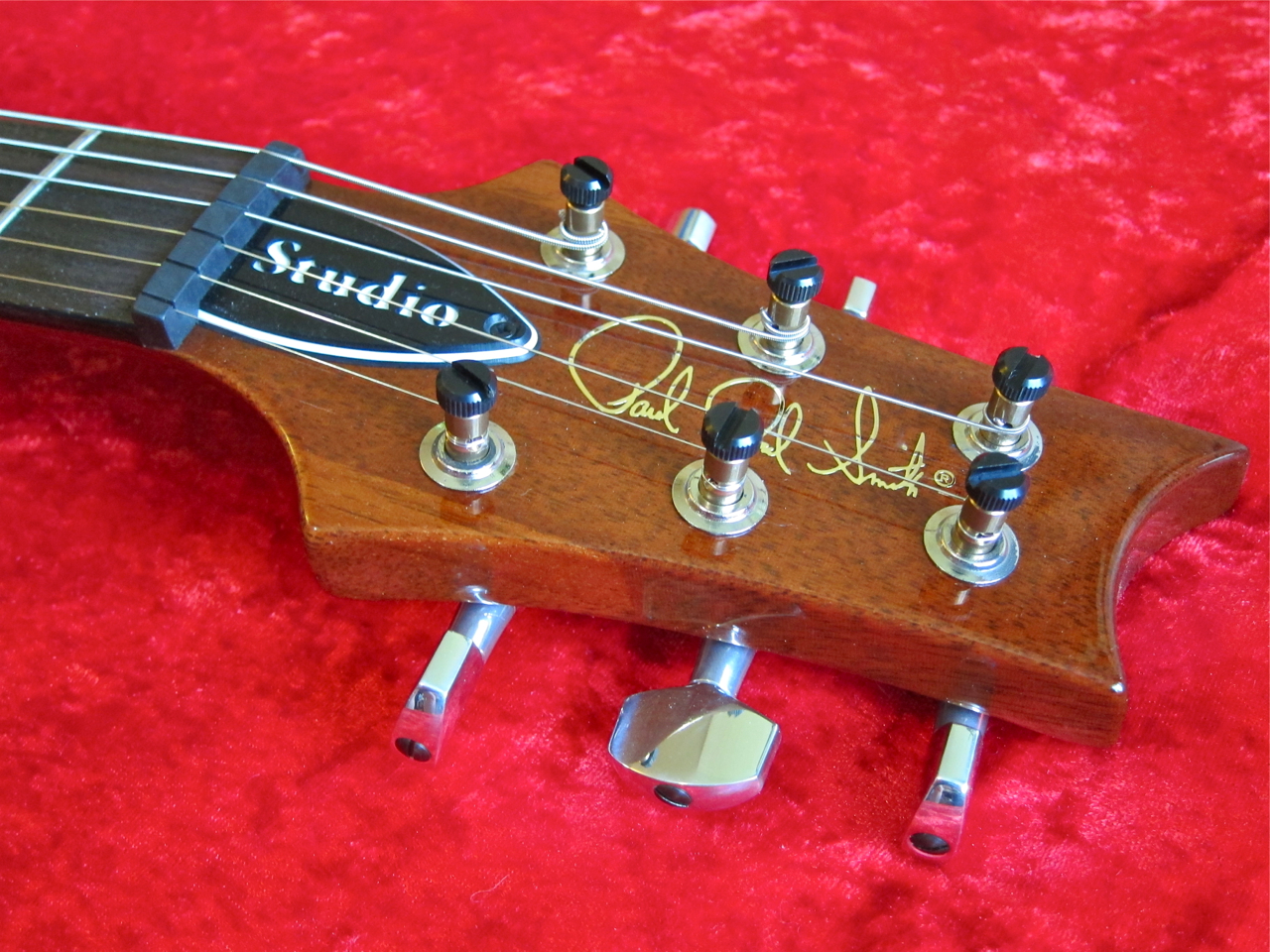
The new PRS Phase III locking tuners feature brass string posts and bushings with a much tighter fit.

I assumed that the reason for the open casings was weight reduction, but I was wrong. In one of PRS’ You Tube videos Mr Smith states that the main reason for this design change were the cool looks.

The company’s new bird inlays are standard on the Studio-model – cream coloured outlines filled with walnut.
The fretwork on our test sample was truly exemplary.

Here’s a good look at PRS’ customary neck joint – its big heel is good for sustain.

Over the past decades the PRS body shape has become a classic design in itself.

A breath-taking view for most guitar connoisseurs – the famous ”fake” binding, which is achieved by leaving the rim of the maple top unstained.
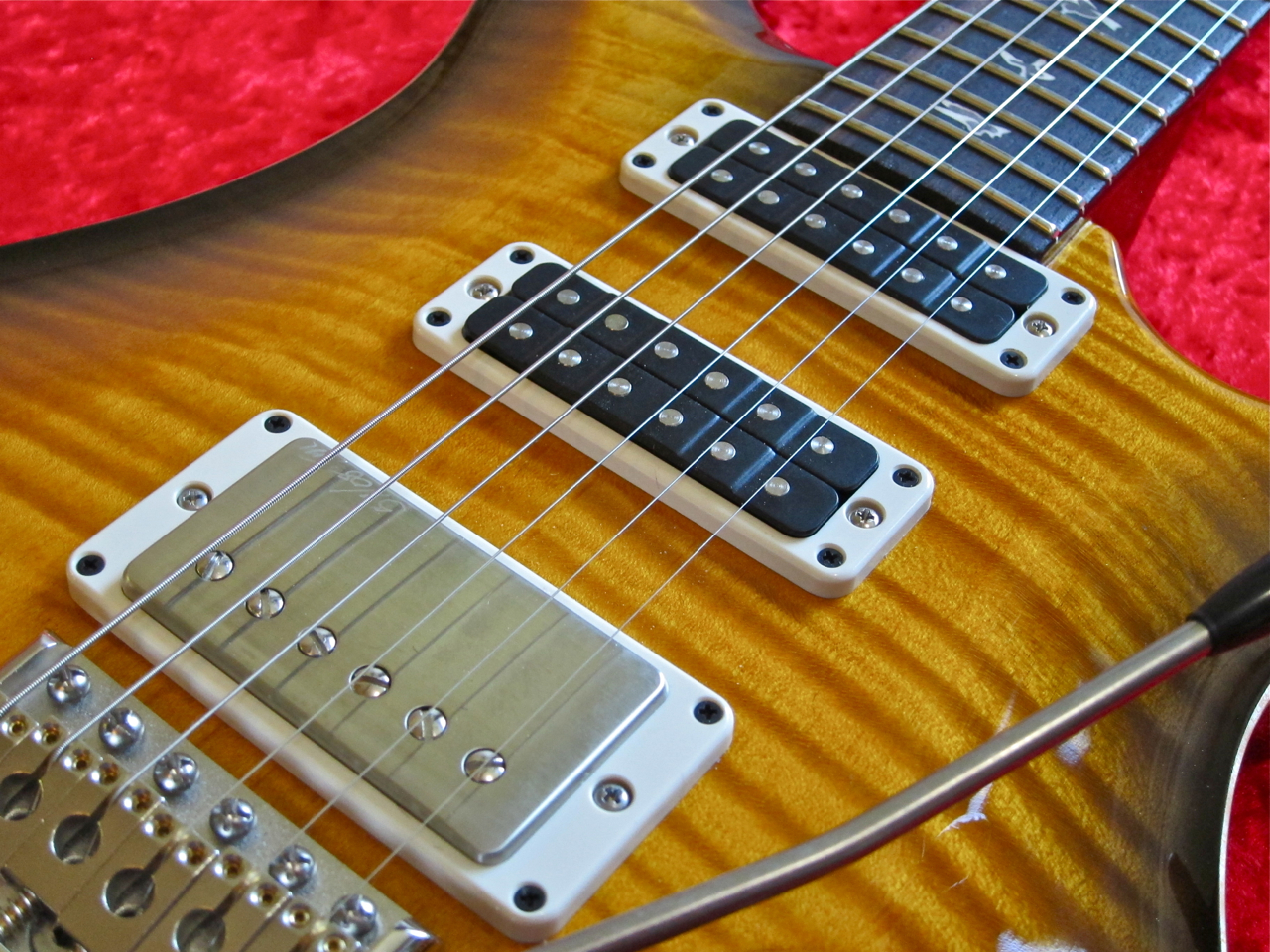
In the last years PRS has given its pickups a thorough overhaul, which has spawned a few new models: The Studio comes equipped with the new PRS 57/08 -humbucker in the bridge position. Many PRS-fans claim that this is the company’s best-ever vintage-type humbucker. The 57/08’s metal cover is brushed aluminium, and bridge versions have their model number deliberately engraved upside-down.
The brand new Narrowfield-humbuckers are very special beasts, indeed, with a sound of their own. The Narrowfield has a full-size humbucker’s output level and warm basic character, but thanks to its much narrower magnetic window the higher-mids and treble range both sound fresher and more transparent.

A push-pull-switch inside the tone control lets you split the bridge pickup.

PRS’ vintage-style vibrato is a fine improvement on Leo Fender’s original Stratocaster-bridge.

The vibrato block is milled from solid brass.

This is what the review sample’s control cavity looks like – not the cleanest PRS I’ve ever seen. Luckily the sawdust doesn’t seem to hamper the guitar’s functionality.

A classy hard case rounds out this package.
****

According to Paul Reed Smith himself, the Studio’s new Pattern neck profile is actually a return to the very beginning of PRS Guitars, when PRS was a tiny little workshop. The Pattern Neck isn’t miles away from the famous Wide-Fat-profile, but it is clearly rounder with much less shoulders to it.
The Studio’s ergonomics and playability can be summed up in one word – fantastic. The guitar is feather-light, and its slender body with the long upper horn balances perfectly on a strap – despite the neck joining the body at the 20th fret.
The PRS vibrato comes set up with four springs and works buttery and precisely with perfect return-to-pitch.
Acoustically the Studio performs like a true PRS – there’s a good dose of Gibson-ish set-neck character, mixed with a drier and and tighter attack. The warm, well-rounded, but fresh character is carried evenly across the whole fretboard.
The Narrowfield-pickups are a very interisting new breed. They don’t pretend to be sound like Strat-sized ’buckers, but give you plenty of humbucker warmth, coupled with more presence and a nice top end sheen. The Narrowfields work well in combinations, where you’d normally expect a couple of Fender-style singlecoils. In my opinion this is the first time I’ve heard a guitar, where a third humbucker makes tonal sense.
The moderately-powered PRS 57/08 -humbucker is the perfect partner for the Narrowfields, because it, too, has a fresh and dynamic tone. Splitting the 57/08 even gives you quite credible Fender-sound approximations.
The soundbites all start with the neck pickup on its own, flicking through all the switch positions with the bridge humbucker split. The final two repeats are the middle-plus-bridge and bridge-alone selections with the full humbucker in use:
****

Three thousand Euros is quite a lot of money for one guitars. True, but I feel the PRS Studio is really worth each Cent – it is a guitar crafted to the highest standards from top-quality materials. The result is one of the best guitars coming from a large-volume manufacturer. Outstanding playability, coupled with the fantastic tone of the new pickups put this PRS in a league of its own.
****
PRS Guitars Studio
Current price in Finland: approx. 3,000 €
Finnish distributor: EM Nordic
A big thank you to DLX Music Helsinki for the loan of the review sample!
Pros:
• sheer quality
• workmanship
• playability
• smooth vibrato
• sound
• versatility
Cons:
• sawdust in the control cavity
****
The Ruokangas Mojo King in action!
Played by Antti Paranko.
Testipenkissä: PRS Studio
****
Viime vuoden puolella ilmestynyt PRS Studio -malli on firman jatkuvan kehityksen tämänhetkinen huipentuma. Tähän kitaraan sisältyy pitkä lista parannuksia monissa yksityiskohdisssa, sekä PRS:n uudet Narrowfield-humbuckerit.
****
Gibsonilla sana ”studio” viittaa tavallisesti ”standardia” edullisempaan versioon. PRS Guitarsin Studio-mallissa ei todellakaan ole kyse säästöversiosta, vaan nimi tulee tämän mallin monipuolisista soundimahdollisuuksista.
PRS Studio (DLX Musicin hinta 2.995 €) on liimakaulainen sähkökitara firman perinteisellä 25-tuumaisella (63,5 cm) mensuurilla. Pramea loimuvaahterakansi on jokaisessa Studiossa vakiona. Malli on saatavana usealla eri värityksellä, sekä PRS-vibratallalla tai firman wrapover-tallalla varustettuna.
Sekä kaula että rungon takaosa ovat ensiluokkaista mahonkia. Studiota valmistetaan kahdella uudella kaulaprofiililla: Pattern Neck on täyteläisempi vaihtoehto, kun taas Pattern Thin Neck on ohuempi.
Uusissa PRS Phase III -virittimissä on kielten lukitus, messingistä tehdyt tapit, sekä vintagea tiukemmin lapaan istuvat kaulukset.
Oletin, että virittimien puoliavoimiim koteloihin on päädytty painosyistä, mutta yhdessä firman You Tube -videossa Herra Smith kertoo, että tämä ratkaisu on valittu, koska ”se näyttää niin kivalta”.
PRS Studion vakiovarustukseen kuuluvat myös ruusupuisen otelaudan lintu-upotukset. Uusimmassa versiossa on kermanvaalea ulkoreuna ja pähkinäpuusta veistetty sisäosa.
Nauhatyö on testisoittimessa suorastaan esimerkkillistä.
Tältä näyttää Paul Reed Smith Guitarsin perinteinen liimaliitos sustainea lisäävällä, tukevalla kaulakorolla.
Firman rungon muotoilusta on tullut vuosien myötä klassikko.
Kitarafaneille tämä on suorastaan henkeäsalpaava näky – PRS:n kuuluisa ”feikki” reunalistoitus, jossa kannen reuna jätetään värjäämättä.
Viime vuosina PRS:n mikrofonivalikoima on käynyt läpi perusteellisen uudistusprosessin: tallamikrofoniksi on valittu PRS:n vintage-tyylinen 57/08-humbucker, joka on monien mielestä paras PRS-humbucker ikinä. 57/08:n metallikansi on harjattua alumiinia, ja pikanttina detaljina mikin mallitunnus on tallaversioissa aina päälaellaan.
Uusinta uutta on kaula- ja keskiasemaan asennettu Narrowfield-humbucker, joka on ihan uusi mikrofonityyppi omalla soundillaan. Narrowfieldissä on vintage-humbuckerin lähtöteho ja lämmin perusluonne, mutta kapeamman magneettisen ikkunan ansiosta erilainen preesensalueen rakenne ja hieman tuoreempi diskantti.
Tone-potikassa on nostokytkin, joka puolittaa yläasennossa tallahumbuckerin.
PRS:n vintage-tyylinen vibrato on itsekin legendaarinen parannus Leo Fenderin alkuperäisestä Strato-vibrasta.
Vibrablokki on valmistettu isosta messinkipalasta.
Tällaiselta testisoittimen elektroniikkalokero näyttää – ei ehkä siistein näkemäni PRS-kitara, mutta puupöly ei haittaa mitenkään kitaran toimivuutta.
Laadukas laukku kuuluu luonnollisesti PRS Studion hintaan.
****
Studion uusi Pattern-kaulaprofiili on itseasiassa PRS-kitaroiden alkuperäinen profiili sitä ajasta, kun PRS oli vielä pikkuinen custom-paja. Pattern Neck on lähellä vanhaa Wide Fat -profiilia, mutta aavistuksen verran lihaksikkaampi ja selvästi pyöreämpi. Wide Fat -kaulan hartiat on poistettu PRS:n uudesta Pattern Neckistä.
Studio-mallin soittettavuutta ja ergonomiaa voi kuvailla yhdellä sanalla – ensiluokkainen. Kitara on kevyt, ja sen ohut – ja yläsarvella varustettu – runko roikkuu tasapainoisesti hihnassa, vaikka kaulaliitos on vasta 20:n nauhan kohdalla.
Neljällä jousella varustettu PRS-vibra toimii hyvin jouhevasti ja tarkasti, ja se palaa käytön jälkeen nätisti nolla-asentoonsa ilman vireongelmia.
Akustisesti soitettuna PRS Studio soi kuin tyyppillinen PRS – Gibson-tyylinen perusluonne, mutta hieman kuivemmalla ja tiukemmalla atakilla. Kuulas, mutta lämmin karakteeri, sekä pitkä sustain ovat tasaisesti läsnä koko kitarassa.
Narrowfield-mikrofonit ovat erittäin mielenkiintoinen uutuus. Ne eivät yritäkään olla häriövapaita, Strato-tyylisiä mikrofoneja. Sen sijaan Narrowfieldistä saa loistavia solakkaampia humbucker-soundeja, jotka todellakin toimivat loistavasti kolmen mikrofonin kattauksessa. Etenkin viisipykäläisen vipukytkimen väliasennoissa eron tavallisien ja NF-humbuckereiden välillä on helppo havaita.
Hyvin maltillisella teholla toimiva PRS 57/08 -humbucker sopii tähän settiin täydellisesti, koska senkin sointi on dynaaminen ja hienostuneen raikas. Splitattuna 57/08:sta saa irti jopa melko uskottavia Fender-kaltaisia soundeja.
Seuraavissa esimerkeissä soitan kytkimen asennot läpi kaulamikistä ensin puolitettuun tallamikrofoniin. Lopuksi tulevat vielä ne kaksi asentoa, joissa tallahumbuckeri on kytketty täysille:
****
Kolmetuhatta euroa on aika paljon rahaa yhdestä sähkökitarasta. PRS Studio on kuitenkin täysin hintansa arvoinen: soitin on valmistettu parhaista osista suurella huolella. Lopputulos on mielestäni yksi parhaimmista, sarjatuotannossa valmistettavista kitaroista. Soitettavuus on ensiluokkainen, ja uusien mikrofonien ansiosta tämä PRS on monipuolisuudessaan ihan omaa luokkaansa.
****
PRS Guitars Studio
DLX Musicin hinta: 2.995 €
Maahantuoja: EM Nordic
Kiitos DLX Music Helsingille testikitaran lainaamisesta!
Plussat:
• laatu
• työnjälki
• soitettavuus
• vibran toiminta
• soundi
• monipuolisuus
Miinukset:
• hieman puupölyä testiyksilön elektroniikkalokerossa
****

Review: Duesenberg Dragster + Starplayer TV Outlaw


Duesenberg Guitars is a German guitar company, who are known for their classy instruments and their ingenious improvements in many of the finer details of electric guitars and basses.
The company’s founder and creative mastermind is Dieter Gölsdorf – a true legend in his lifetime – who has been a tireless innovator in this field since the Seventies.
After a break of a few years Duesenbergs are available here in Finland again, which is a good reason to take a closer look at two of their most intriguing designs…
****

The flat-top Duesenberg Dragster (current street price in Finland 1,099 €) channels some of a Les Paul Junior’s spirit in supercharged form – there’s plenty of mahogany, a single pickup, a wraparound bridge and electronics with a nice little twist.
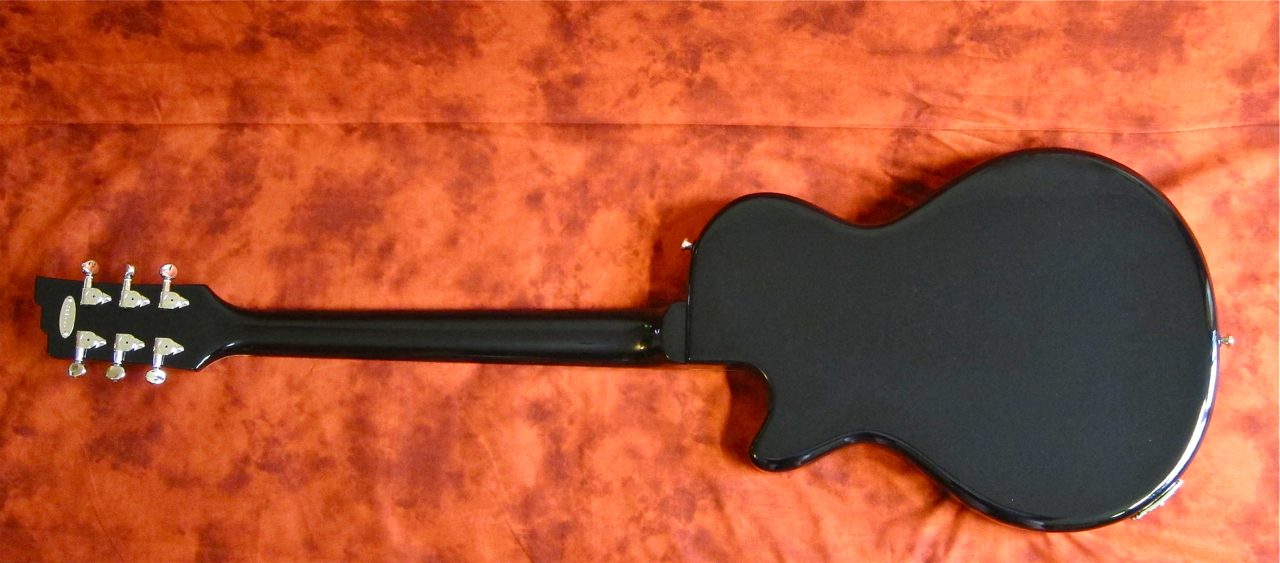
The one-piece mahogany neck is glued into the guitar’s mahogany body.

The Dragster’s headstock successfully melds Art Deco influences with drag race chic.

The tuners are one of Duesenberg’s specialties, called Z-tuners.
Stringing up, the string is inserted into the tuning post from the front, feeding it through the hole on the other side of the headstock in the process. You snip off the overhang next to the tuner chassis, and then pull the sharp string-end back slightly so it disappears into the tuner. Then you tune the string to pitch, without having to deal with sharp string-ends poking your fingers or scratching up the headstock’s finish – simple but ingenious!

The rosewood fingerboard sports well-seated jumbo frets, as well as cream-coloured position markers.

Another cool detail: Duesenberg’s strap buttons can be used with your normal guitar strap, in which case their conical shape helps prevent the strap from slipping off the button, or you can use them with Schaller’s strap locks.

The front of the Dragster’s body in finished in a fetching Vintage Blonde with bound edges.

The bridge pickup is a Duesenberg Domino, which is a humbucker-sized P90-type singlecoil.
The third height-adjustment screw on the neck-facing side of the pickup cover is another typical Duesenberg-detail. It allows you to tilt the pickup so its top runs parallel to the strings.

Duesenberg’s wraparound bridge is a very sturdy design. Thanks to the tune-o-matic-inspired top the bridge offers plenty of scope for precise intonation adjustment.
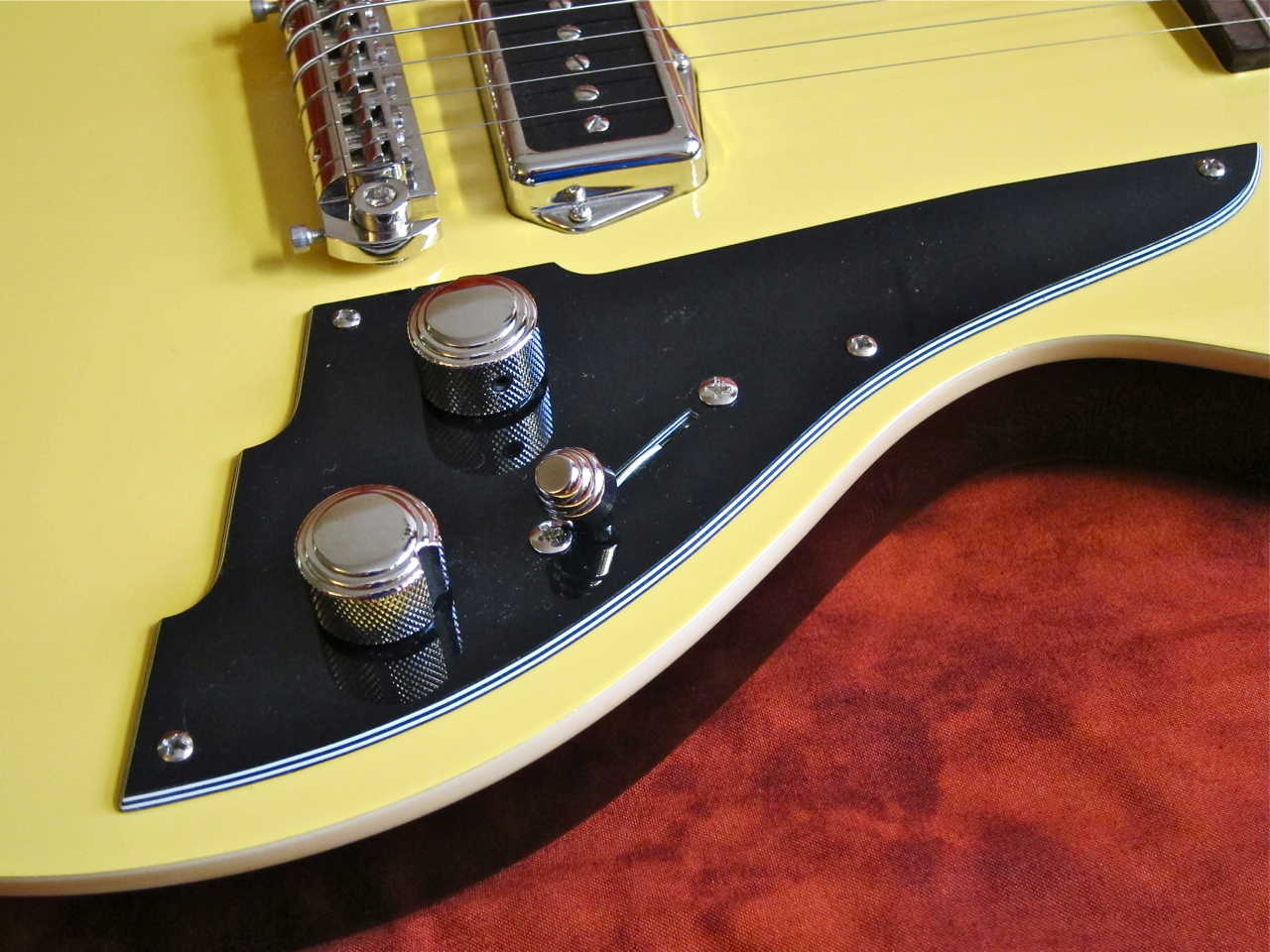
The Dragster is equipped with two passive controls – master volume and master tone. The tone pot uses a Duesenberg Speed-Pot, which has a much shorter travel than a regular control, making wah-wah type effects much easier to achieve on the fly.
The basic idea for a three-way switch on a single-pickup electric has been borrowed from Fender’s venerable Esquire model, although Duesenberg’s reading is much more refined. Using a handful of different resistors and capacitors magically creates three different basic tones. Position one gives you the unadulterated sound of the Domino pickup. Position two selects a distinctly more polite and slightly tamer alternative, not miles away from the jangle of a two-pickup guitar’s middle selection. Lastly, position three comes up with a nice approximation of a neck singlecoil’s tone.
****
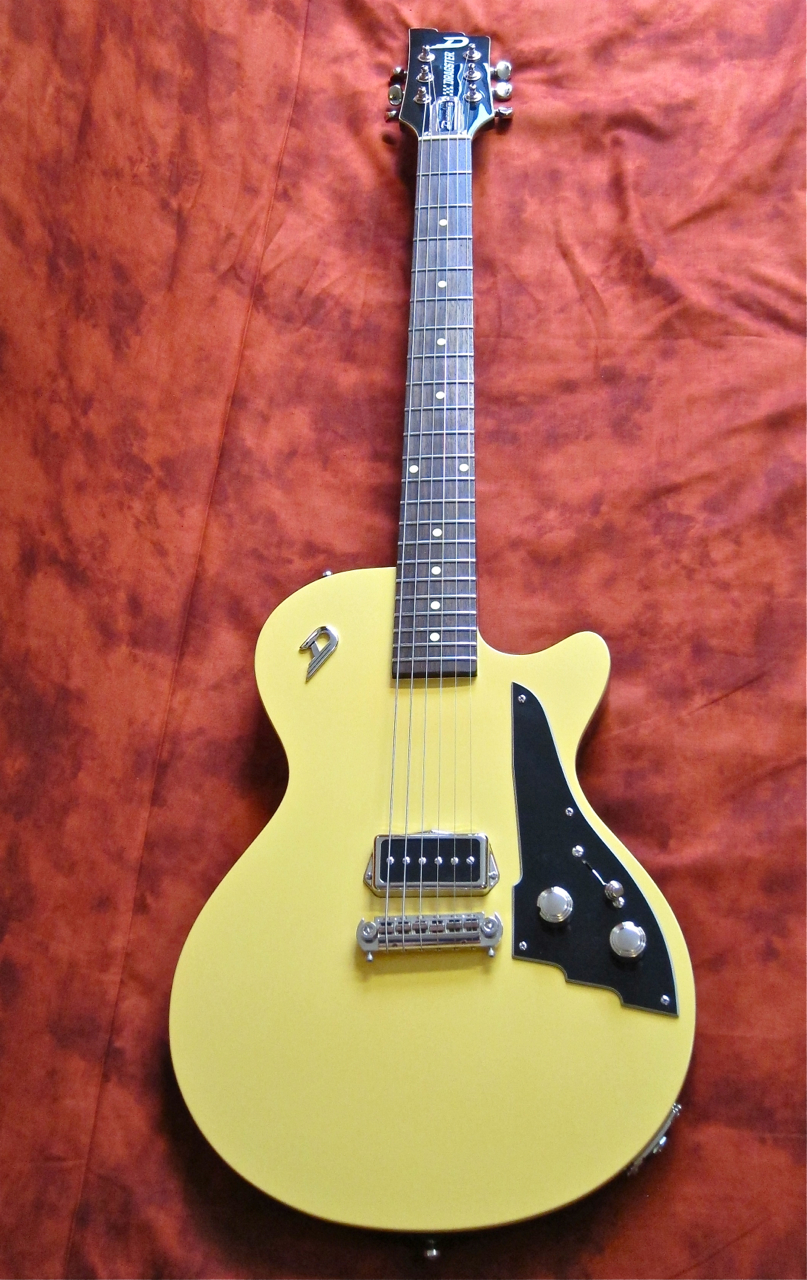
While the Dragster is a contemporary instrument it still is endowed with a strong dose of vintage charm and feel. The neck profile is reassuringly chunky, but still very player-friendly. The guitar balances nicely on a strap and feels comfortable in an angular, Telecaster or LP Junior kind of way.
Duesenberg uses PLEK-machines for the ultimate in fret dressing and top nut cutting, which makes the playability and factory set-up of their instruments truly outstanding.
Amped up the Dragster’s basic tone captures the rawness, chunk and raunch of a P90 to a tee. I didn’t see that much of a difference between switch positions one and three – with the latter being a slightly warmer version of the former – but found the smooth and chiming middle position a very worthwhile addition to the Dragster’s tonal arsenal.
Here are two example soundbites I’ve recorded (both clips feature the ”neck” position first and the pure bridge setting last):
Duesenberg Dragster – overdriven
****
The Duesenberg Starplayer TV (current street price in Finland 1,449 €) is the company’s bestseller and available in many different finishes and versions.

The most intriguing permutation must surely be the Starplayer TV Outlaw (current street price in Finland 1,729 €), which sees both the headstock face as well as the body’s top covered in fake reptile hide – yeah, Rock’n’Roll.

The Outlaw’s plywood body sports a flame maple back finished in translucent black.

This is what the synthetic crocodile skin looks like.

The Outlaw comes equipped with the locking version of Duesenberg’s Z-Tuners, because this model also features the company’s Deluxe Tremola -vibrato.
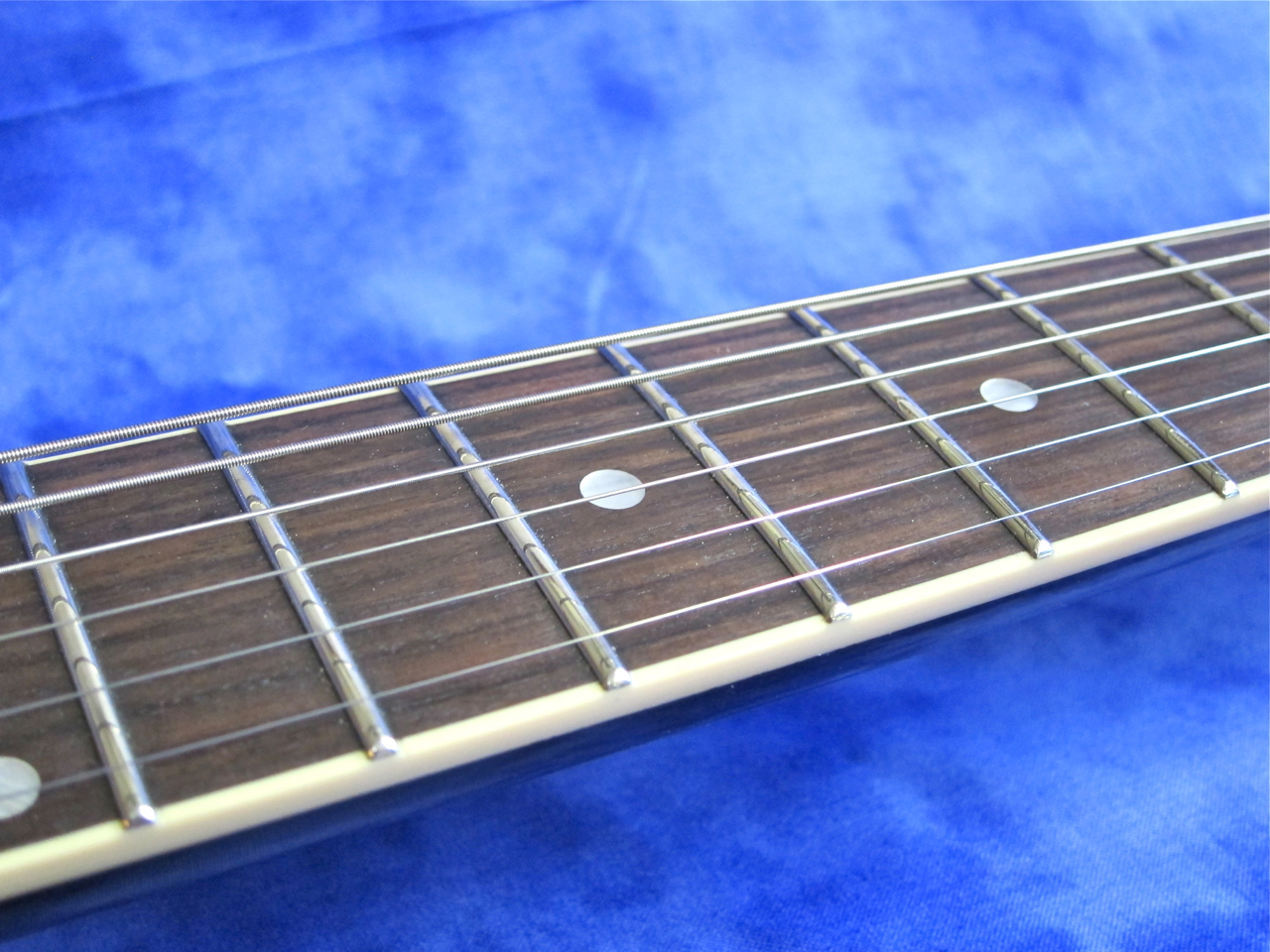
The cream fingerboard binding adds even more panache to the Starplayer TV.

A black guitar and nickel-plated hardware and scratchplate – how cool can you get?

The Starplayer TV’s top is crafted from spruce plywood. The centre block, which is tapered behind the bridge, is solid maple.
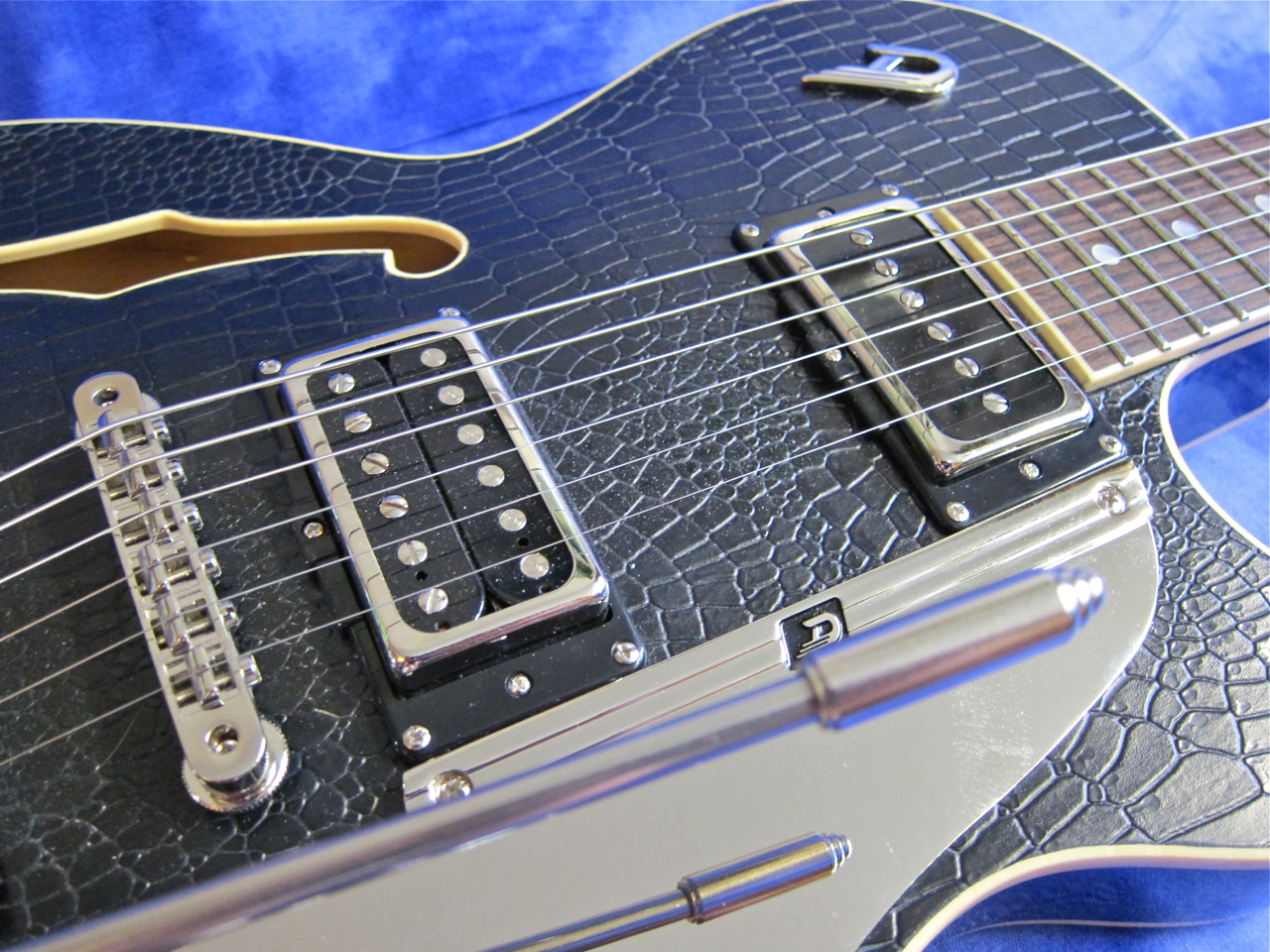
All Starplayer TV -variations to date carry a Duesenberg Domino singlecoil in the neck position and a Grand Vintage Humbucker next to the bridge.
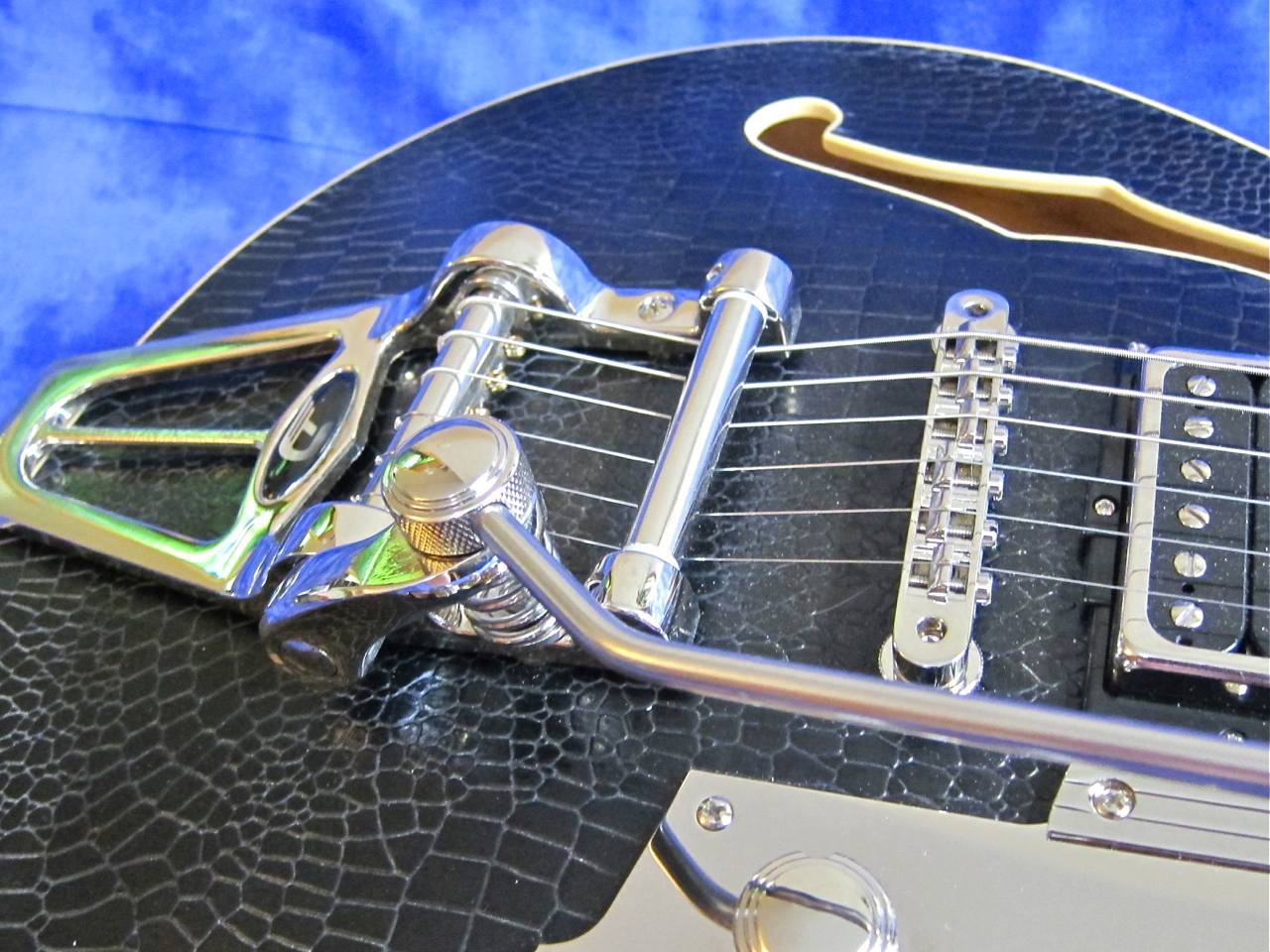
Duesenberg’s Deluxe Tremola is clearly related to a Bigsby, but features several important improvements: The vibrato arm is adjustable for length and swings 360 degrees. Stringing is made very easy here, as the ball ends rest against a long plate – no tiny, fiddly pins here.
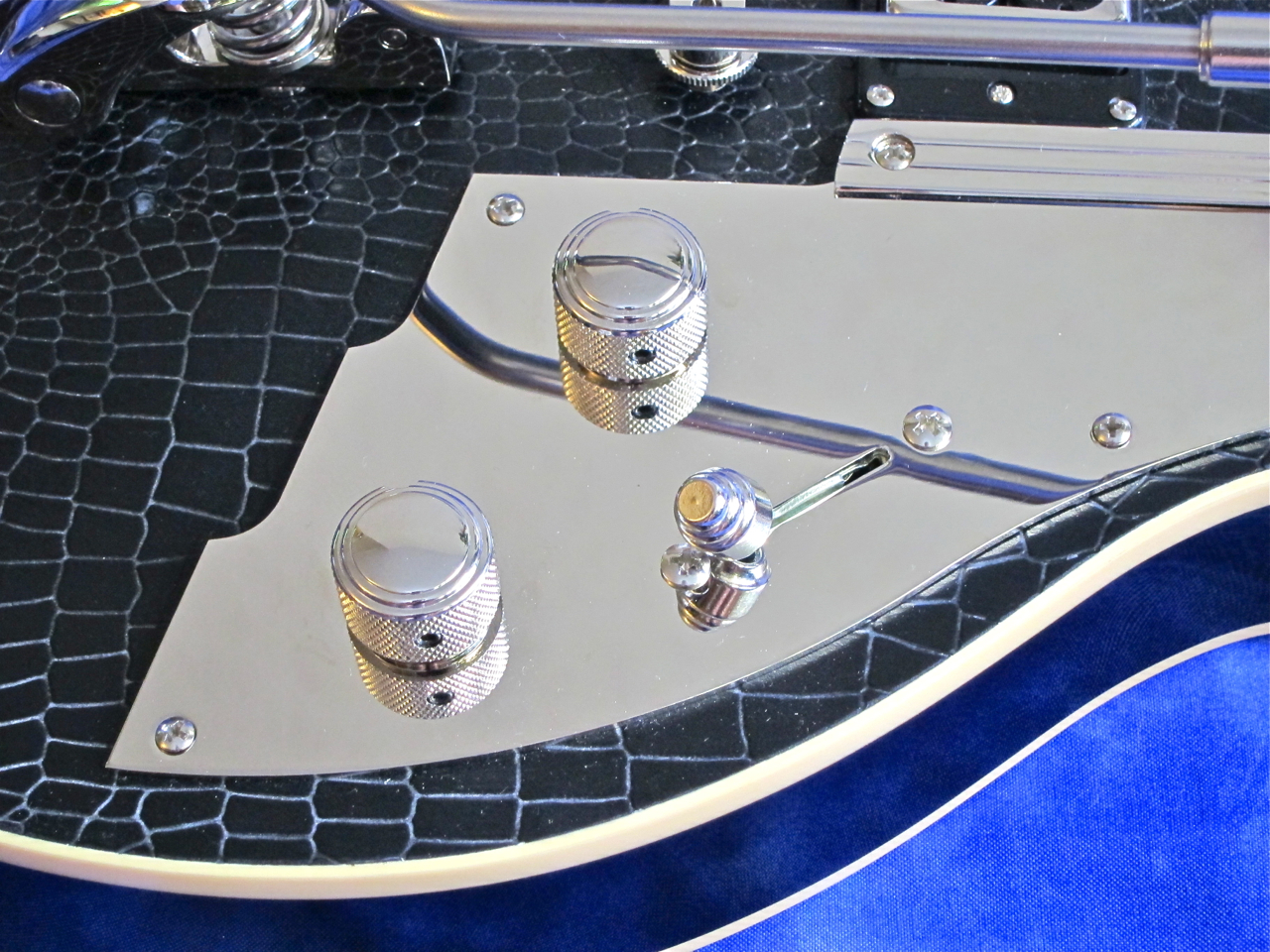
A master volume, a master tone and a three-way selector – no surprises here…

All Duesenbergs are equipped with this stylish and chunky jack plate.

In Finland Duesenberg-guitars are sold with a stylish case.
****

I have to say the fake reptile hide not only looks great but also feels nice and soft underneath your arm.
The Starplayer TV Outlaw is quite a compact semiacoustic, which makes it comfortable to play and wear for extended periods of time.
The neck profile is round and full, but less of a handful than the Dragster’s offering.
Acoustically the Starplayer TV Outlaw isn’t particularly loud, due to its compact body, but its attack is strong and clear and the notes sustain very well. The spruce top adds a charming sprinkle of woody dryness to proceedings.
The Domino-singlecoil is a fantastic choice for a neck pickup, bringing out all of the Outlaw’s clear and organic character without ever mushing up.
And the Grand Vintage is a perfect match – adding a moderate amount of power, while retaining this guitar’s clarity and dynamics in an exemplary fashion.
Here are two soundbites for you (neck pickup – both – bridge pickup):
Duesenberg Starplayer TV Outlaw – Rockabilly
Duesenberg Starplayer TV Outlaw – crunchy
****
Duesenberg have a strong knack for combining harmoniously vintage class with German ingenuity and precision. The result are stylish instruments with a great feel and an outstanding tone.
The Duesenberg Dragster is a dyed-in-the-wool Rock- and Blues-machine, while the Starplayer TV Outlaw combines very tasty semiacoustic tones, a fine vibrato and great playability into a very enticing package.
Welcome back, Duesenberg!
****
Duesenberg-guitars
Finnish distributor: F-Musiikki
****
Duesenberg Dragster
street price 1,099 € (includes case)
Pros:
+ sound
+ playability
+ workmanship
+ PLEK-set-up
****
Duesenberg Starplayer TV Outlaw
street price 1,729 € (includes case)
Pros:
+ sound
+ playablity
+ workmanship
+ PLEK-set-up
+ vibrato action and return to pitch
****
Review: ML-Factory LP-style kit, self-assembled


This is a review of an electric guitar kit I have assembled myself:
I had ordered an LP-style kit from ML-Factory in Germany (the price is around 200 €, depending on the chosen model).
One of the most critical and tricky operations has already been executed in this kit – it comes with the mahogany neck already glued into the body.
If you stick to an easy-to-apply oil and wax finish, the assembly of a kit such as this is a nice project for one day (or, maybe better, one weekend). The only slightly more advanced step left to you would then be sinking the back plates into the routings in the body’s back.

I had decided to apply an Osmo Color wood wax finish to the kit, which, naturally, added a few days more to the process, due to wood preparation, masking, and drying times.
Interestingly, I found it harder to apply a consistent finish to the top’s ash veneer, compared to the mahogany used for both body and neck. The wax colour was harder to get even and flat, and much more red seeped beneath the masking tape onto the multi-ply binding.

On the back and the neck working with Osmo Color was much more fun, easier, and quicker in drying. The end result is a nice tomato soupish red hue, with the finish feeling quite organic – a bit like Gibson’s Faded-series.

In my opinion the bound headstock on this ML-Factory kit is rather pretty, even though there are a couple of discoloured spots on the mahogany veneer (glue, perhaps?). I left the headstock face au naturel, using oil and wax.
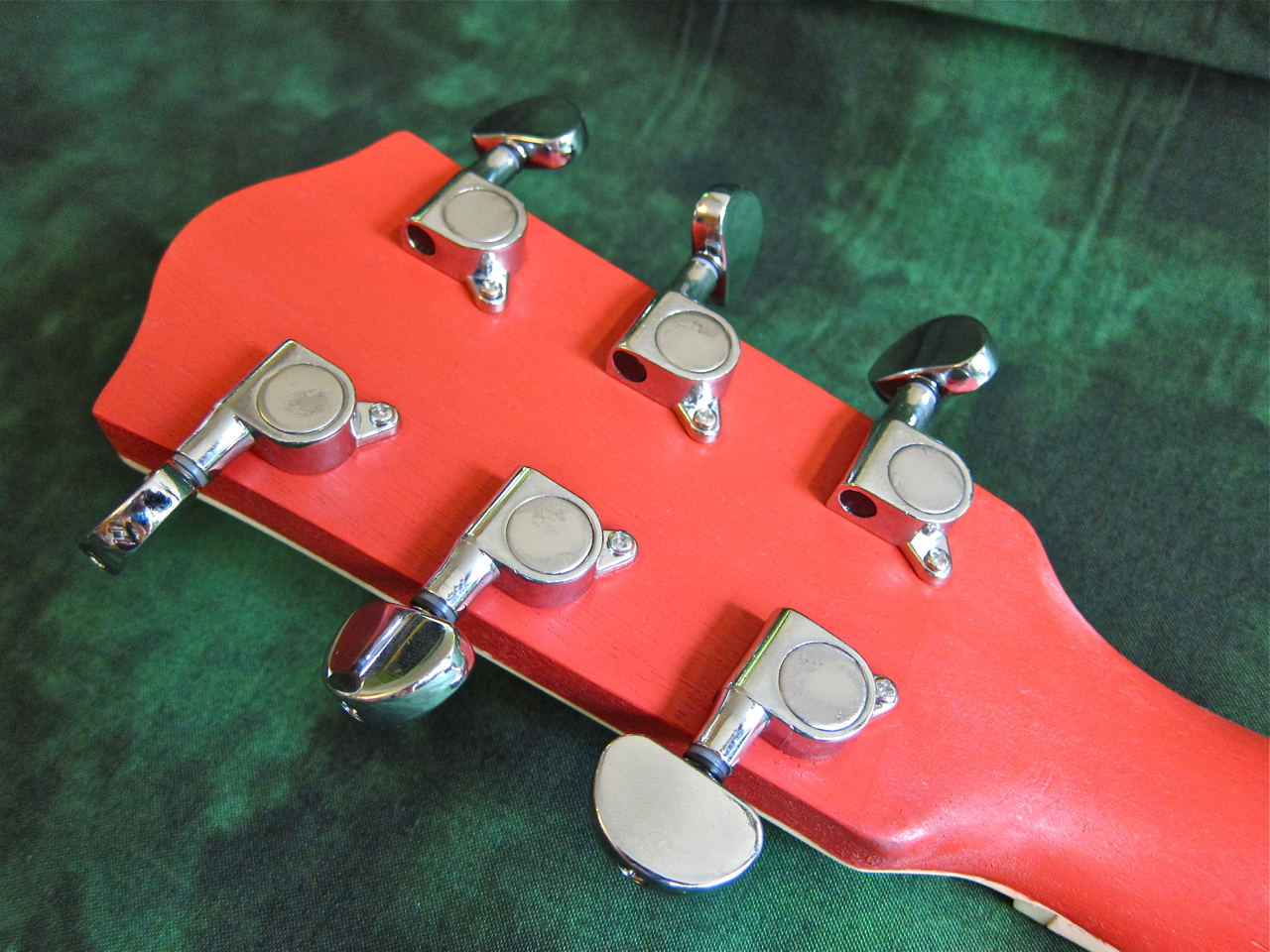
The eagle-eyed may notice that the headstock isn’t 100-percent straight, which is why the tuners on the left are not quite on the same height as the ones on the right side. Luckily, this is merely a small cosmetic issue, which doesn’t affect the finished guitar’s functionality and playability in the slightest.
The kit’s sealed tuners work well.

The fingerboard oil I applied brings out the beauty of the rosewood.

ML-Factory’s LP-style kit has a body that is a tad flatter (by about 3 mm) compared to a real Gibson Les Paul. You notice the difference only when you measure the guitar, especially as my kit guitar has a similarly substantial weight as many Gibson originals.
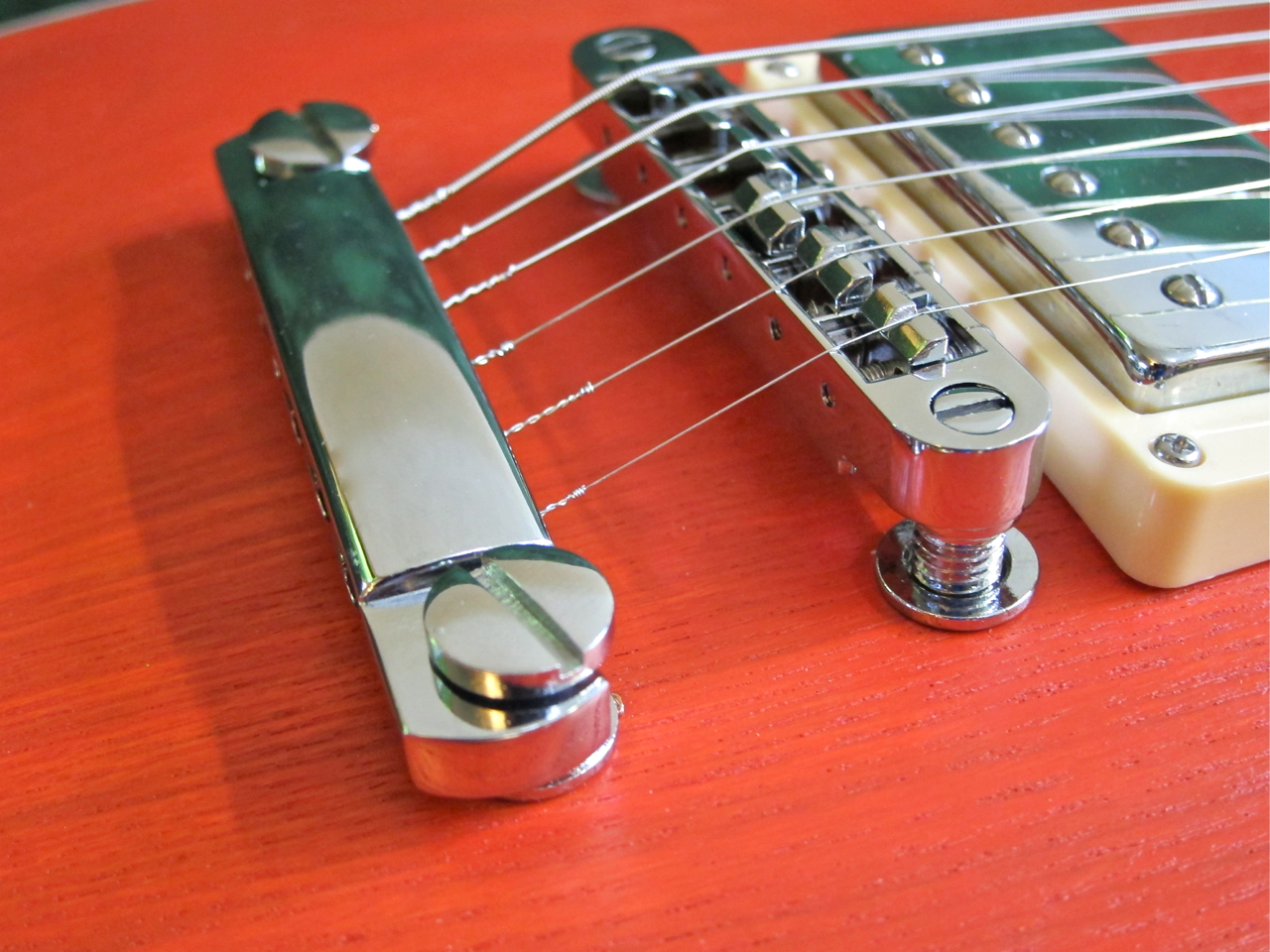
The bridge and tailpiece are of similar quality as those used on many affordable-to-mid-priced guitars. The Tune-o-Matic-copy here is even a modern version, which doesn’t need the annoyingly rattling retaining wire found on so many other bridges of this type.

The humbuckers supplied with this kit are wax potted to reduce their susceptibility to feedback howling. We found straight-bottomed bezels for this arched top guitar – perhaps not the most stylish and sturdy choice…

The toggle switch came supplied with both the classic knurled thumb wheel (which needs a specialist tool for tightening), as well as a standard nut. I used the nut, because the switch’s thread was rather tight and the switch couldn’t be mounted without resorting to a spanner.

The kit’s controls work well.

Here’s the view from a player’s perspective.
****
Let’s get this message out of the way first:
No – you cannot get quality akin to a 3.000 € custom shop guitar from a 200 € DIY-kit! The quality of the wood used, as well as the workmanship and the supplied parts (at least, judging from my guitar) are simply of a much more modest standard.
But: If you’re good at woodworking and fret dressing, and if you have some experience in applying sprayed-on lacquer finishes, you can easily get a kit such as this up to the standard of a 600–800 € instrument. And once you get these things sorted, there’s no reason why you shouldn’t be able to customise a kit guitar even further.
****

I would have liked to have seen cleaner woodwork on this Far-Eastern kit. The router bits and drills used on my kit left the cavities and holes rather messy. Nothing that would have stood in the way of completing the instrument, but not really pretty workmanship either.
I probably will give the frets a little more care later, as they feel a little rough beneath the strings right out of the box. I also had to file the 10th fret down carefully by a fraction of a millimetre beneath the high e-string, as the fret was a little high in this spot, causing sitar-like rattling. Certainly nothing a complete rookie would be able to diagnose or rectify easily.
I might also exchange the top nut some time in the future. There isn’t anything really wrong about the supplied nut; it’s only that I am a rather forceful player, and this nut is cut a whiff too low for my playing style, meaning I get rattling open strings (E, A and D) every once in a while.
The not quite flat finish, as well as the colour smeared onto the bindings are all my own doing, and down to my inexperience in all matters dealing with paints and lacquers.
****
But in the greater scheme of things, and keeping in mind the extremely affordable price of this kit, there’s really a lot to like about the ML-Factory LP-style guitar kit.
Assembling this guitar was a pleasant experience, and I now have one more working guitar in my arsenal.
The truss rod works well, same goes for the tuners and the bridge. As supplied, the fretwork isn’t top notch, but I had no problems in setting up this kit to my favoured action (low E: 2.4 mm/high e 2.0 mm) using a 10–52 gauge set of strings.
The guitar was easy to intonate and it plays in tune across the whole fretboard.
The neck profile on my guitar is a straight copy off of Gibson’s 60s-neck – a very comfortable, medium-thickness ”D”.
Acoustically, the ML-Factory guitar is in the right ballpark for an LP-type guitar, displaying a fresh, but round-nosed attack, a warm overall character, and bags of sustain.
The pickups supplied with the ML-Factory-kit are surprisingly good. Naturally, nobody should expect Harry Häussel-, Jason Lollar- or Seymour Duncan Antiquity -type clarity, tone and panache – remember: This kit costs less than many high-end pickups.
The pickups on my guitar have a slightly higher-than-vintage output, but still enough clarity and character for my taste. In light of the low price of this kit, the pickups aren’t bad at all.
I’ve recorded three soundbites for you. Each example starts with the three-way toggle set to the neck pickup:

****
ML-Factory LP-style kit with ash veneer top
price around 200 € (plus packing and postage)
****
In Finland you can get guitar kits from these two retailers: Millbrook Musiikki and SP-Elektroniikka.
****
Review: TC Electronic Röttweiler + The Dreamscape

****

TC Electronic’s Röttweiler-distortion (current street price in Finland 129 €) specializes in brutal distortion sounds, and doesn’t waste any time on sissy stuff.
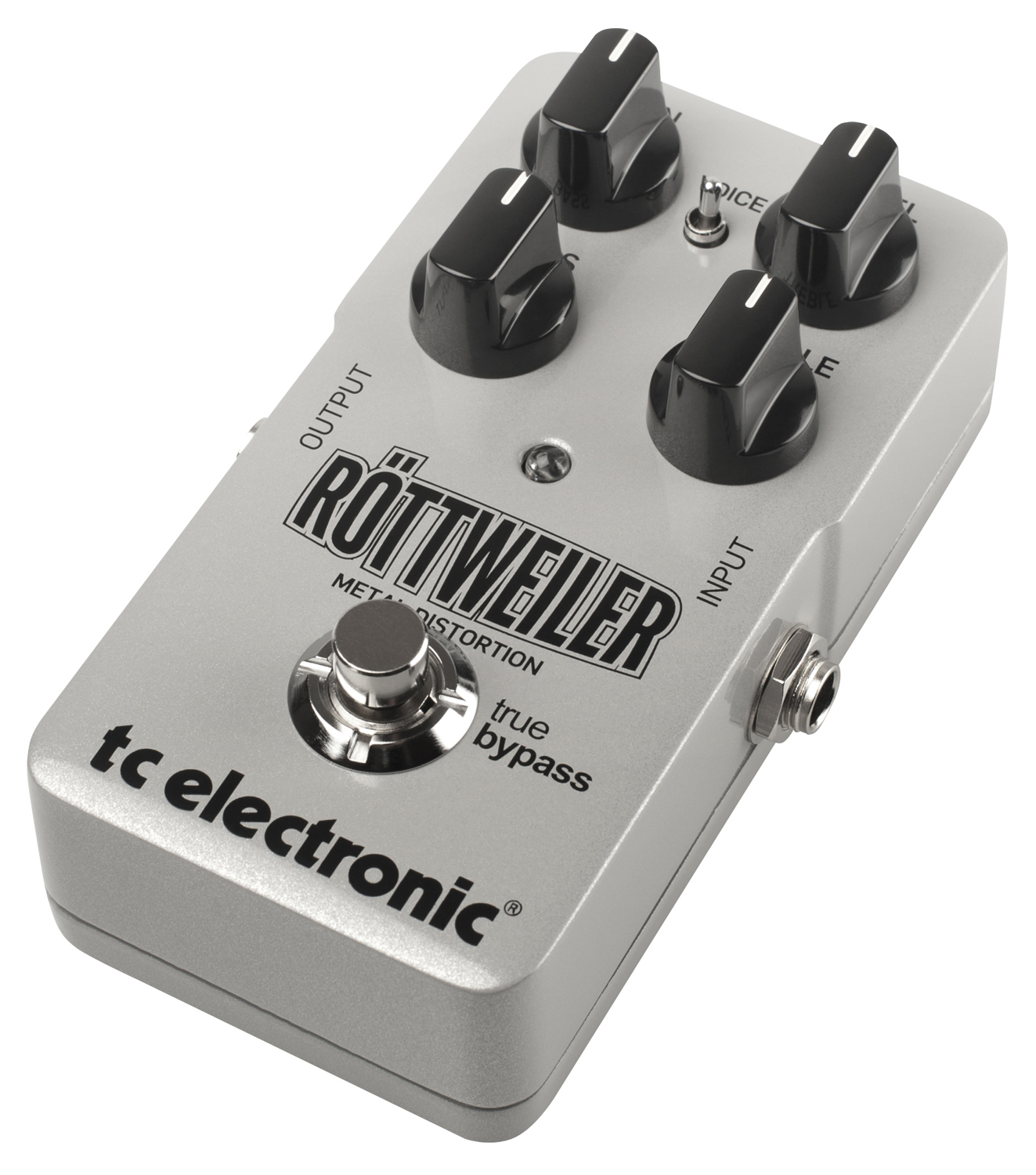
The gain control takes you from quite a lot of distortion to complete über-Metal-mayhem – so don’t go looking for besuited and well-behaved Blues-tones here. The Voice-switch gives you two different shades of brutal: One selection is fatter in the mid-range for more classic Hard Rock and Metal stuff, while the other selection gives you the scooped out tones favoured in many contemporary styles. The pedal also offers bass and treble controls for fine-tuning your tone.
The TC Electronic Röttweiler is a brilliant tool for the Metal-aficionado, which turns any amp into a high-gain monster stack.
Here are three sound clips, which Miloš Berka recorded using a seven-string Schecter into a clean amp setting:
****

TC Electronic’s The Dreamscape (current street price in Finland 245 €) is John Petrucci’s signature effect pedal. It contains six different modulation effects, as well as one memory slot for a Tone Print.
The Dreamscape can be run in mono as well as in stereo. If you take off the bottom plate you’ll gain access to two tiny switches – one allows you to select either true or buffered bypass, while the other enables you to set the pedal to wet signal only, which is handy if you use the Dreamscape in a parallel effects loop.
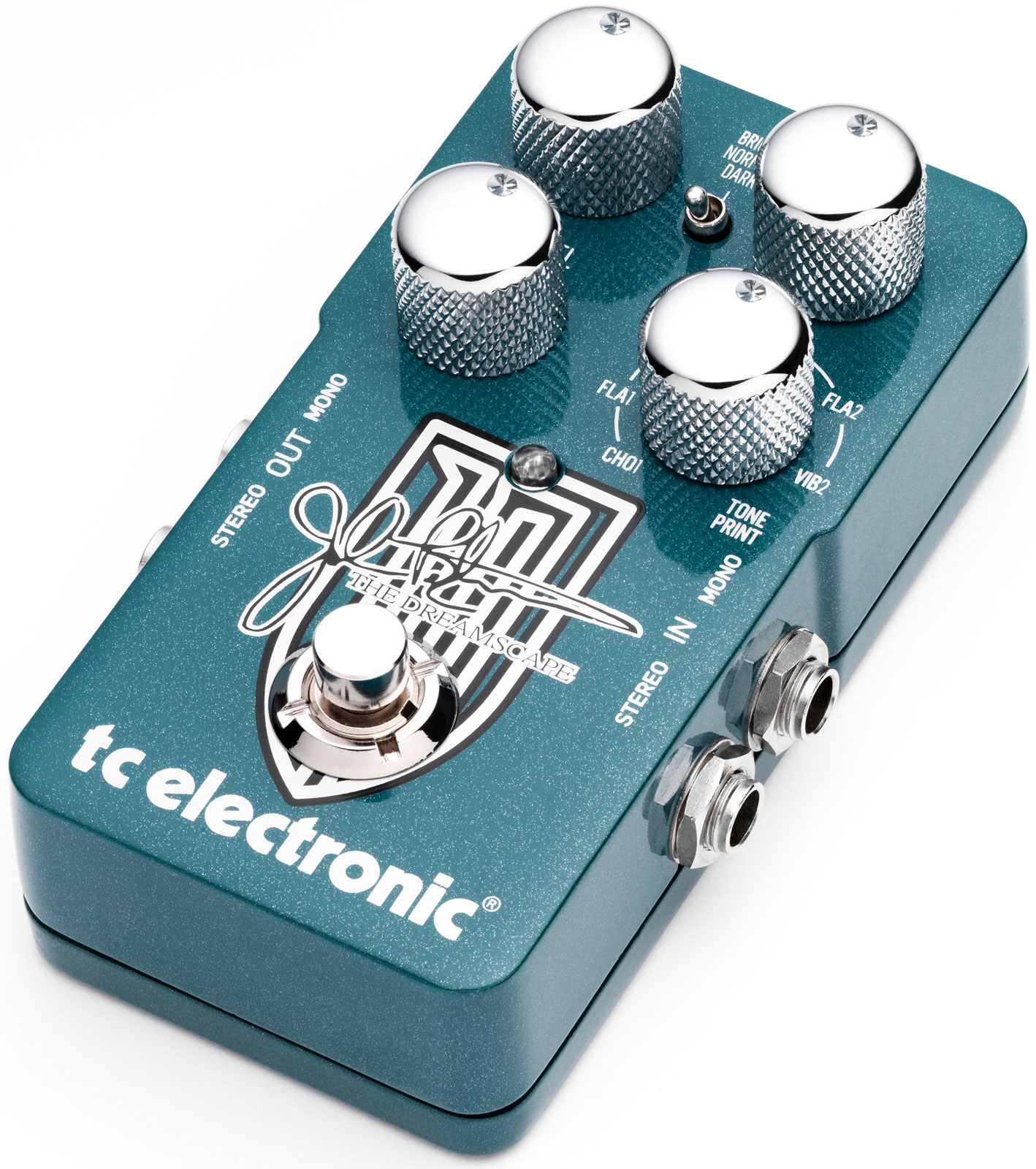
The Dreamscape comprises controls for depth, speed and level. A three-way mini-toggle lets you select between three different EQ curves – from soft and dark to bright and upfront.
John Petrucci has chosen and grouped the six effects in such a way that the effects numbered ”1” are suited to his clean styles, while the second variations go with his overdriven tones. Personally, I wouldn’t draw so drastic a line, as I got great results with any of the six effects in all types amp of settings. This pedal’s main idea is in offering two distinctly different versions each of the three effect types included – namely chorus, flanger and vibrato – that behave and sound different to each other.
Here are some example sounds I recorded using a Fender Stratocaster:
At 245 € the TC Electronic Dreamscape is the priciest Tone Print -pedal to date. Some of the price will surely be a signature pedal premium. But you shouldn’t forget the fact that John Petrucci’s pedal also offers six different effects plus one Tone Print -slot in one compact package. Looking at the Dreamscape from this angle makes the higher retail price sound much more reasonable.
****
TC Electronic guitar pedals
Finnish Distributor: Soundtools
****
Röttweiler Distortion
current street price 129 €
Pros:
+ compact
+ specialized tool for Metal
+ great sound
+ versatile in its own genre
Cons:
– Voice-switch in a tight spot
****
The Dreamscape
current street price 245 €
Plussat:
+ compact
+ six modulation effects
+ Tone Print -enabled
+ versatile
+ also works in stereo
Cons:
– higher price than other Tone Print -pedals
– Bright-switch in a tight spot
****
 Kitarablogi.com – Finland's premier Guitar and Bass blog