


****
Lisätiedot: Soundtools
Kitarablogi.com – Finland's premier Guitar and Bass blog
Juttuja kitaroista ja bassoista

****

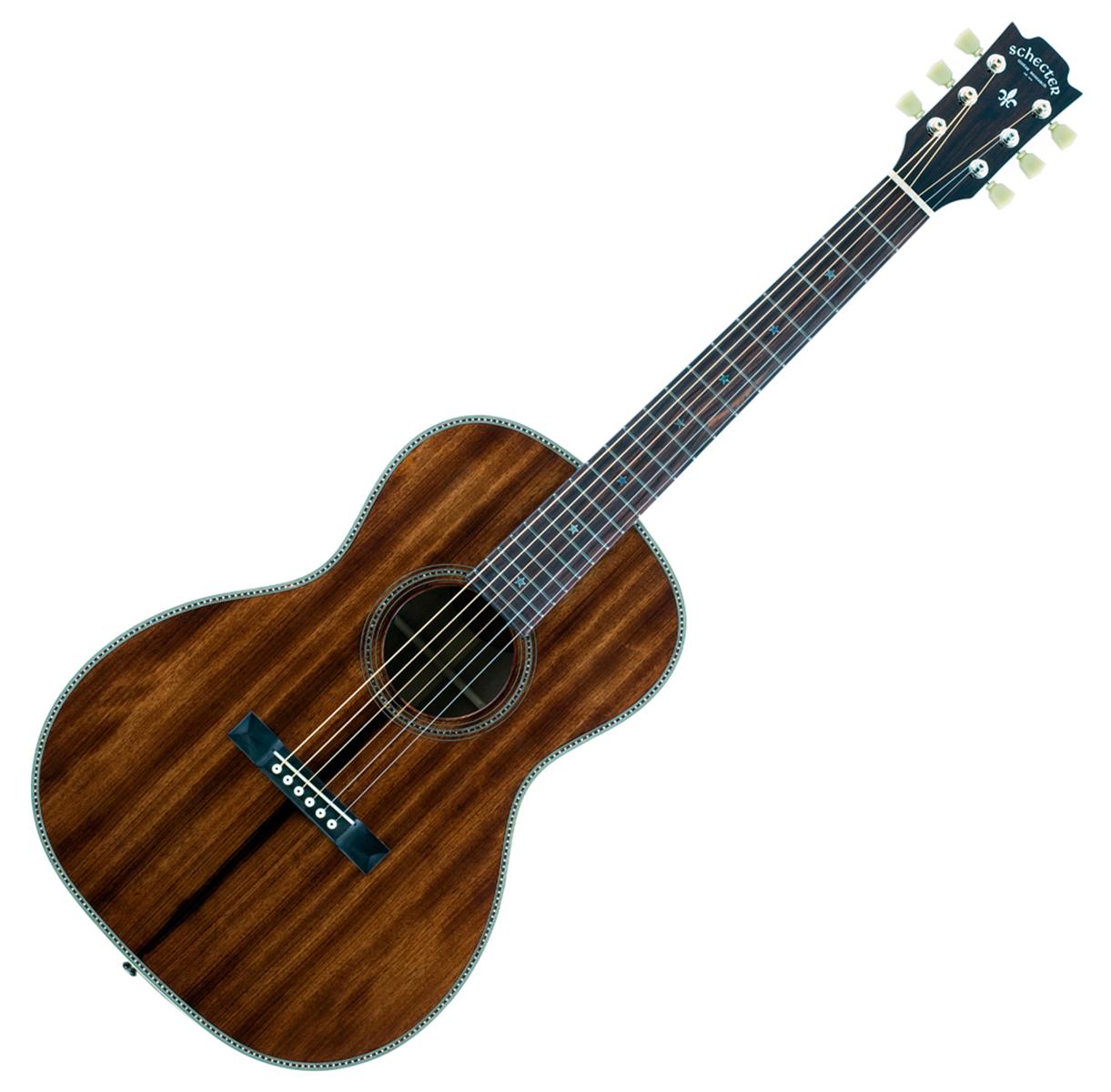
Schecter probably aren’t known so much as manufacturers of acoustic guitars, but they do carry a few acoustic-electric models in their current line-up. We picked up a new model from Schecter’s Hellraiser range for a review – the Hellraiser Studio Acoustic.
****
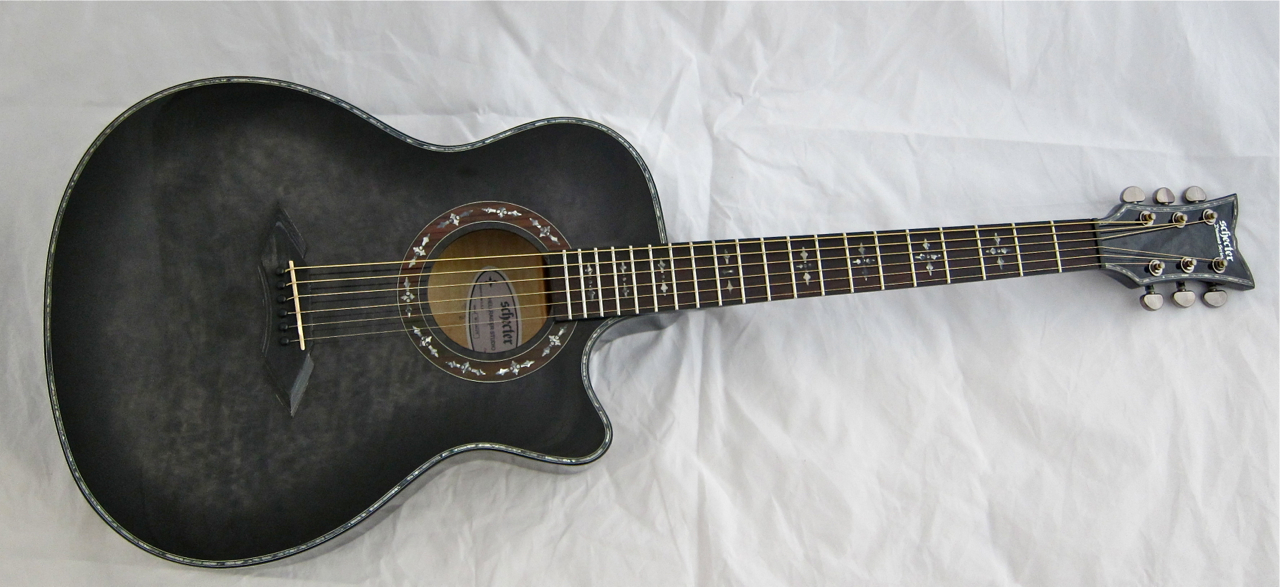
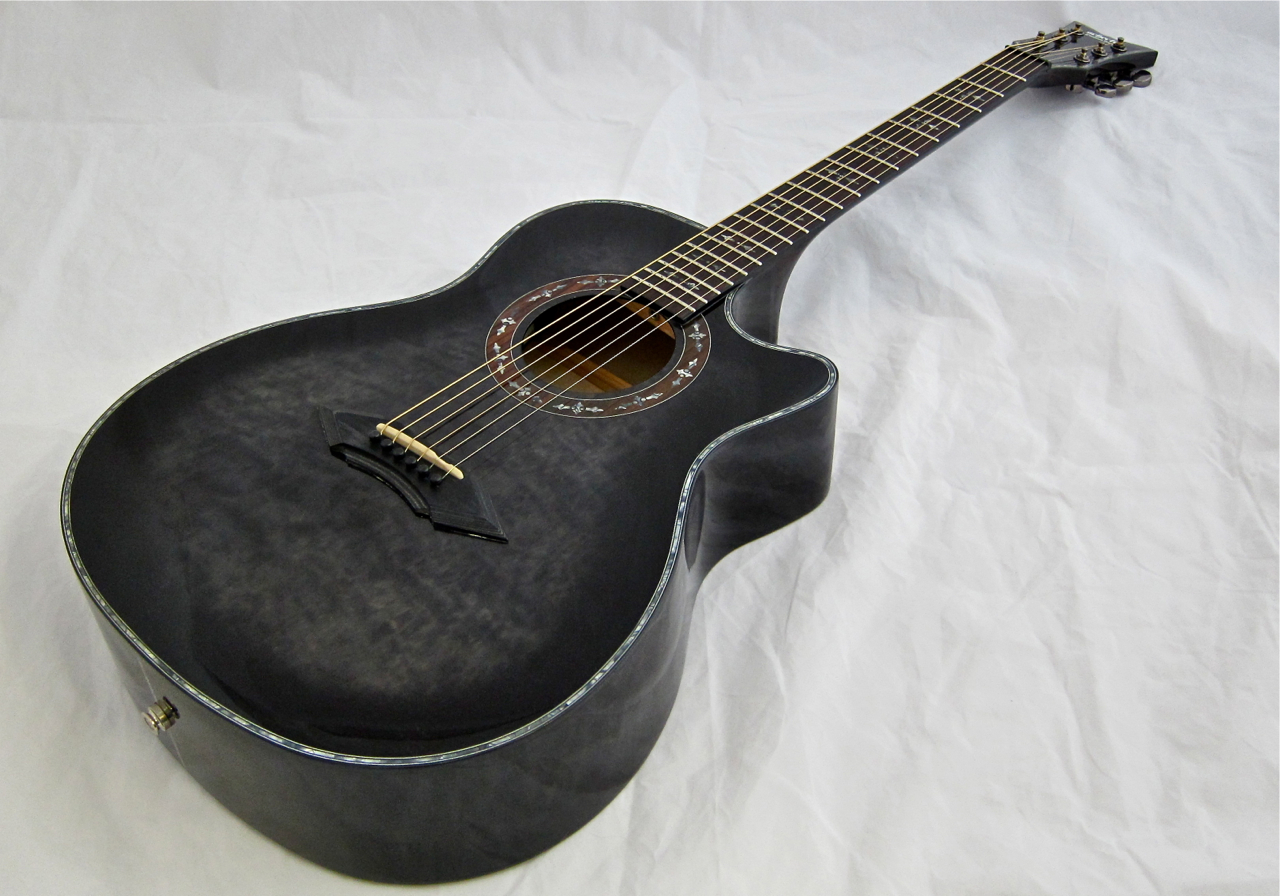
The Schecter Hellraiser Studio Acoustic (current street price in Finland approx. 600 €) is a stunning looker with a Grand Auditorium -sized, full-depth body.
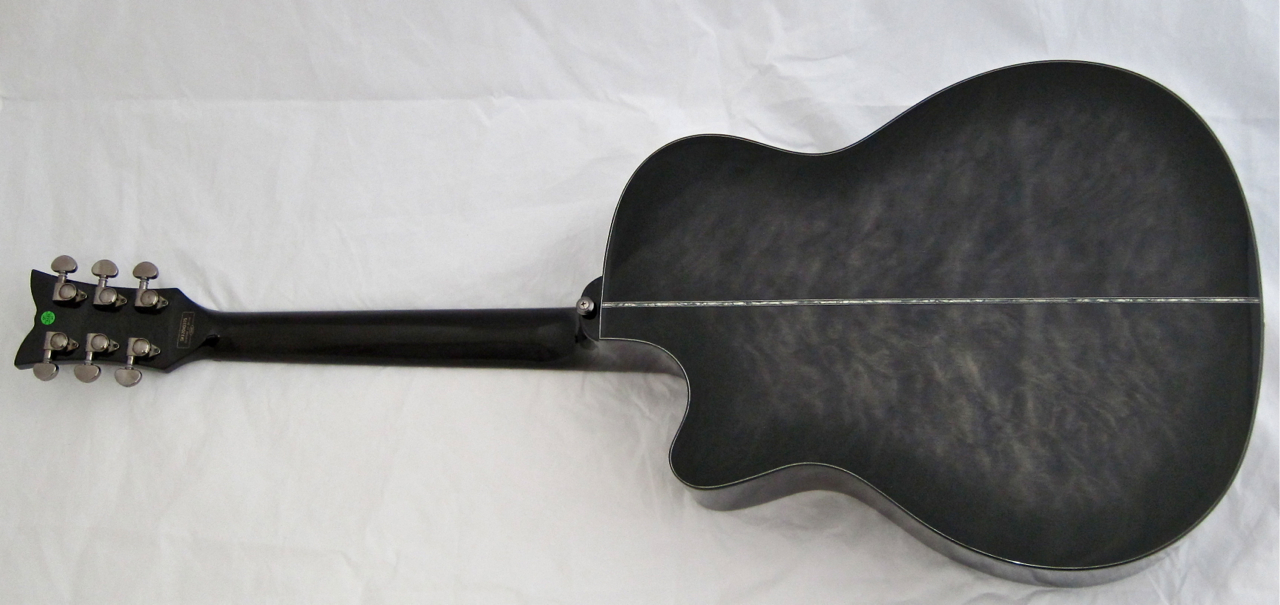
The whole body – top, rims and back – is crafted from beautiful, laminated quilted maple. Our review sample sports a fetching see-through-black gloss finish.
The glued-in neck, which is finished in solid gloss black, is made from mahogany.

Judging by its headstock shape, Schecter seems to be aiming the Hellraiser Studio squarely at the Rock and Metal crowd. The headstock features intricate binding in luscious grey pearloid framed by black and white strips of plastic.

The sealed Grover-tuners sport a cool and moody black chrome finish.

The bound rosewood fretboard comes equipped with 20 jumbo-sized frets, giving the guitar an effortless modern playing feel.
The Hellraiser Studio’s ’board is adorned with cleanly executed gothic-style cross inlays, made from grey pearloid.
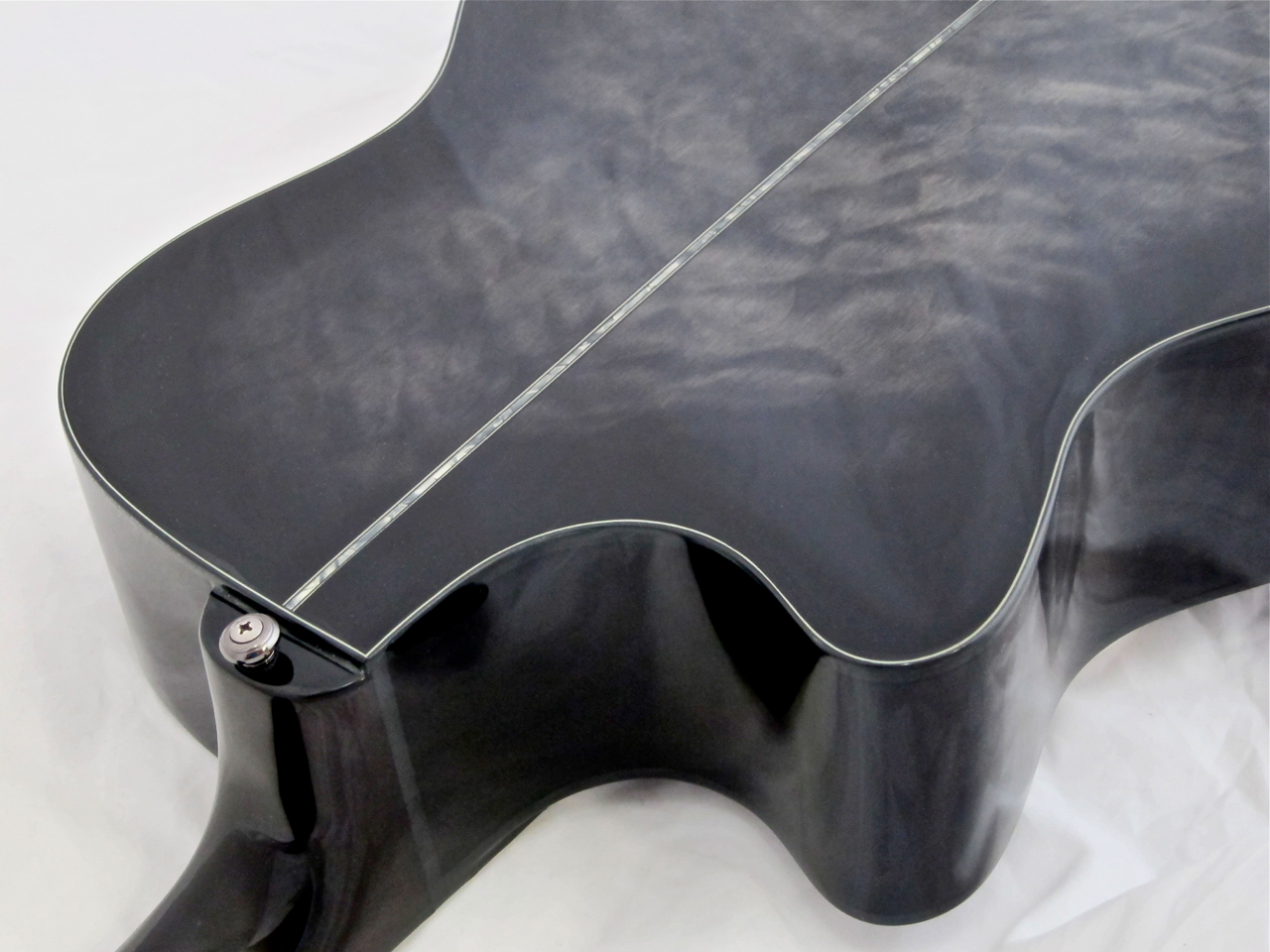
The stylish dark pearloid theme is carried over onto the soundbox – seen here in the back’s centre line.
Schecter’s Hellraiser Studio comes factory-equipped with a second strap button.

The guitar’s flowing lines are a thing of beauty.

The test sample’s bracings and kerfed linings look well made, even if there are a couple of glue specks in places.
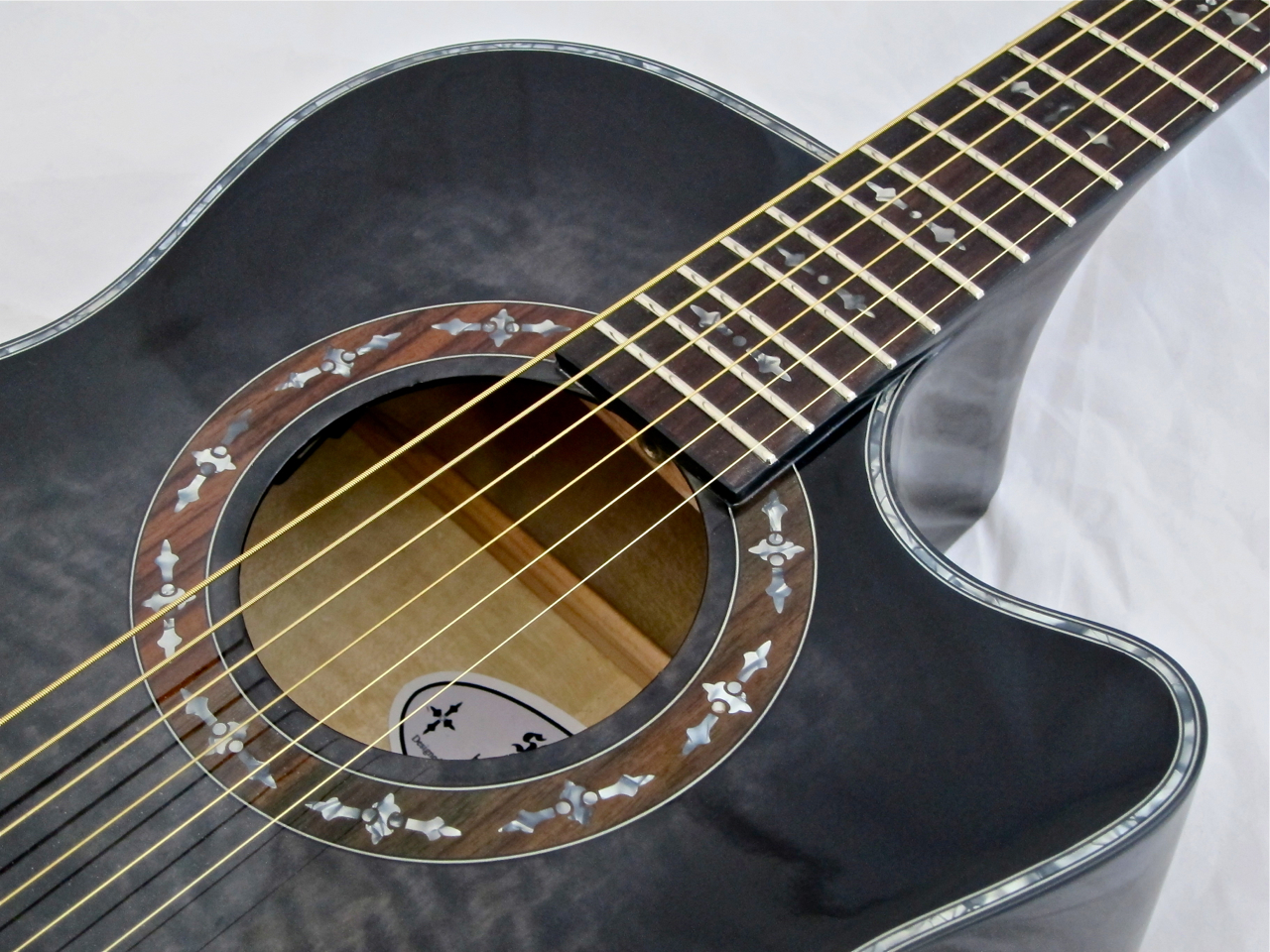
The gothic theme continues in the rosewood rosette’s inlays.

A very dark finish is a double-edged sword for any manufacturer, because any tiny imperfection shows up more clearly. On the review instrument a tiny amount of white glue can be seen seeping out from under the bridge – the only small slip-up on this nicely-finished guitar.
The bridge is an interesting design, made from a composite material based on wood and black resin. The octave-compensated bridge saddle is Graph Tech’s man-made alternative to ivory, called Tusq.
The under-saddle-transducer is a Fishmanin Sonicore piezo pickup.
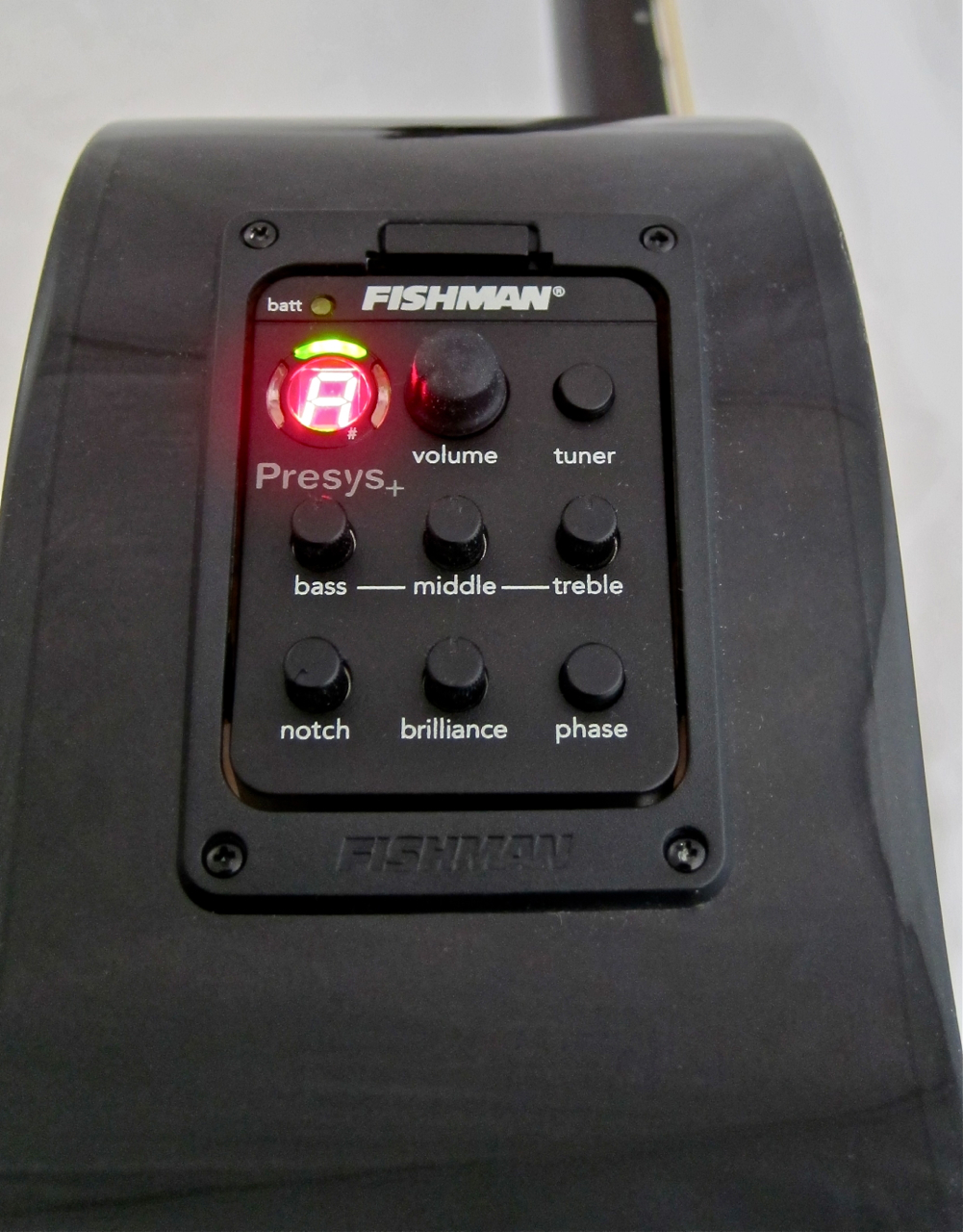
The UST’s signal is sent to a Fishman PreSys+ preamp featuring four-band EQ – bass, middle, treble and brilliance – a notch filter (to combat feedback or annoying stage resonances), a phase reverse switch (also for feedback removal), as well as a chromatic tuner, which also works without the guitar lead plugged in.

The PreSys+ makes battery changes a doddle.
****

Even though the Schecter Hellraiser Studio Acoustic is aimed at Rock musicians, Schecter haven’t chosen an overtly ”electric” neck profile for this steel-string – which is good in my opinion. The guitar’s well-rounded, medium D-profile feels great, giving you ample flesh to hold on to.
Sadly, our review sample suffers from some minor fretting issues, which lead to the high-e string buzzing at the first and 14. frets. Otherwise the set-up is good and the guitar plays well.
Nowadays it seems that many manufacturers have found out how to put together a good-sounding acoustic guitar using a laminated body. The Schecter Hellriser Studio is a good example of this. Even though you cannot find the out-and-out volume and punch of an all-solid shouter in a laminated steel-string, this Schecter really manages to hold its own, and do so with panache.
The all-maple body gives you a lively tone with a tight, sinewy bottom end, a clear mid-range (typical of maple-bodied steel-strings), as well as a nicely rounded top end. I see the Hellraiser Studio as a great choice for accompanying vocals, as the guitar’s clarity leaves ample space in the frequency spectrum for the singer.
The Fishman Sonicore/PreSys+ is a high-quality combination that sounds great right off the bat, without even touching the EQ. Fishman have managed to filter out most of the infamous nasal quack and attack click, so often found on lesser piezo systems. Thanks to this the Hellraiser’s EQ is freed up to fine-tune your (already great) basic tone, instead of having to combat any annoying tonal problems inherent in the original signal.
I recorded the following examples both acoustically (using an AKG C3000) and direct (with the Fishman’s EQ flat):
Fingerstyle – miked up (AKG C3000)
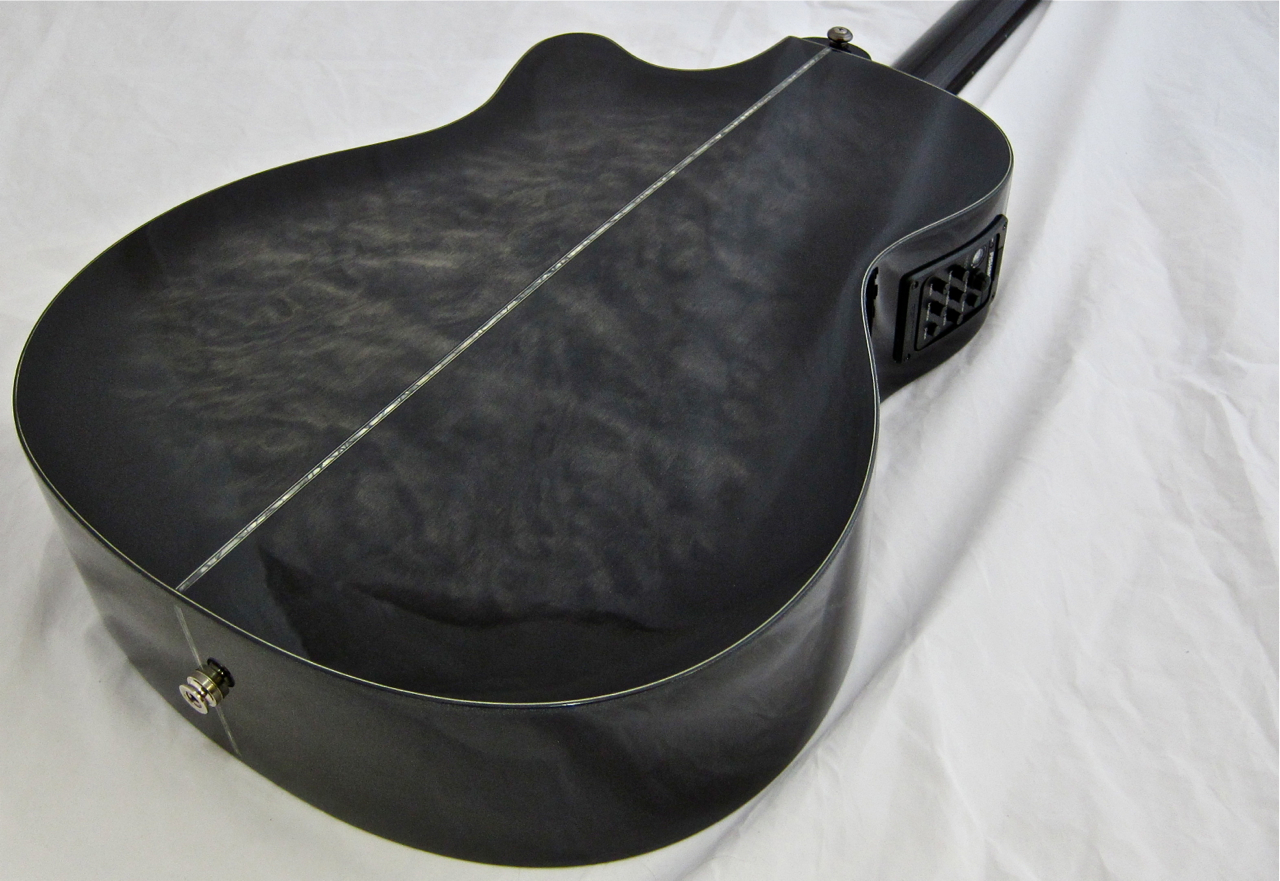
The review guitar’s fretting (or neck?) problem really is a shame, because overall this Schecter is an extremely nice acoustic-electric. Schecter are known for their stringent quality control, so maybe this here was the one guitar that slipped through.
Schecter’s Hellraiser Studio Acoustic is a beautiful instrument, offering easy playability and a great sound. The guitar’s clear voice records very well – regardless of whether you’re using a microphone or the fantastic on-board Fishman-system. I can only recommend a test run!
****
Schecter Hellraiser Studio Acoustic
Current street price in Finland approx. 600 €
Finnish distributor: Soundtools
****
Pros:
+ beautiful design
+ overall workmanship
+ playability
+ acoustic tone
+ pro-quality Fishman-electronics
Cons:
– some fretting issues on review sample
– some glue visible at bridge
****
Schecter Guitars ei ole ehkä kovin tunnettu akustisista kitaroistaan, mutta firman mallistosta löytyy tosiaan muutama elektroakustinen teräskielinen. Saimme testiin Hellraiser-sarjan uuden akustisen jäsenen – Hellraiser Studio Acoustic.
****
Schecter Hellraiser Studio Acoustic (katuhinta noin 600 €) on hyvin näyttävä soitin Schecterin omalla designilla, joka on lähellä Grand Auditorium -mallia, mutta aavistuksen verran syvemmällä kopalla.
Koppa on valmistettu kauniista (quilt maple) loimuvaahteravanerista, ja se on saanut ylleen see-through-black-nimistä kiiltävää liukuväritystä.
Koppaan on liimattu mahonkikaula, jolla on kiiltävä musta viimeistely.
Schecterin kohderyhmä on lavan ulkonäön perusteella luultavasti Rock- ja Metal-musiikkia soittavat kitaristit. Lapa on koristeltu erittäin siistillä reunalistoituksella, johon on käytetty helmiäismuovia.
Laadukkaiden Grover-virittimien tummaa viimeistelyä kutsutaan mustaksi kromiksi.
Reunalistoitettuun palisanteriotelautaan on asennettu 20 jumbo-kokoista nauhaa, joiden ansiosta kitaran soittotuntuma on hyvin nykyaikainen ja vaivaton.
Hellraiser Studio -akustisella on otelaudassa myös erittäin siistejä gootti-tyylisiä upotuksiä tummasta helmiäismuovista.
Tyylikäs helmiäis-teema jatkuu myös pohjan keskiviivassa, ja sitä säestää kaunis reunalistoitus.
Hellraiser Studiolla on muuten jo valmiiksi asennettu toinen hihnatappi (mikä ei ole akustisissa kitaroissa lainkaan itsestäänselvyys).
Schecterin sulavamuotoinen runko on hyvin kaunis. Kitaran kärjekäs talla sopii hyvin soittimen gootti-tyyliseen ilmeeseen.
Testiyksilön kaikki rimoitukset näyttävät hyvin siisteiltä, vaikka siellä täällä näkyykin pieniä liimatahroja.
Soittimen näyttävässä, palisanterista veistetystä rosetissa on samanlaisia upotuksia kuin otelaudassa.
Hyvin tumma viimeistely on valmistajan näkökulmasta aina hieman hankala, koska pienetkin epäsiisteydet näkyvät niin hyvin. Testiyksilön tallan alta pursuava valkoinen liima on ainoa lipsahdus Schecterin muuten kiitettävässä viimeistelyssä.
Itse talla on mielenkiintoinen, mustasta hartsista ja puusta valmistettu nykyaikainen komposiittitalla, ja Schecterin omaa suunnittelua. Kompensoitu satula on tehty Graph Techin, norsunluuta muistuttavasta, keraamisesta Tusq-materiaalista.
Tallaluun alle on sijoitettu Fishmanin Sonicore-piezomikrofoni.
Mikrofonin signaali vahvistetaan ja muokataan laadukkaalla Fishman PreSys+ -etuvahvistimella. Tarjolla on nelikaistainen taajuuskorjain – bass, middle, treble ja brilliance – kuoppasuodatin (notch filter, jolla voi poistaa feedbackia aiheuttavan taajuuden), vaihekääntäjä (phase) feedbackia vastaan, sekä kroomaattinen viritysmittari (toimii myös ilman johtoa).
Paristonvaihto käy PreSys-etuvahvistimessa erittäin kätevästi ja nopeasti.
****
Vaikka Schecter Hellraiser Studio Acoustic on selvästi rokkarille suunnattu kitara, on se onneksi saanut kunnon teräskielisen kaulaprofiilin. Kyseessä on mukavan täyteläinen, keskipaksu D-kaula, jonka ansiosta käsi saa kunnon otteen soitettaessa, eikä väsy niin nopeasti kuin joidenkin ”vauhtikaulojen” kanssa.
Valitettavasti testiyksilössä on jotain pientä häikkää nauhoituksessa, jonka takia ylä-e-kieli sirisee häiritsevästi ensimmäisen nauhan ja myös 14. nauhan kohdalla, muuten kitara soi puhtaasti ja hyvin.
Nykyään monet valmistajat ilmiselvästi osaavat myös tehdä hyvin soivia vanerikoppaisia teräskielisiä kitaroita. Tämä Schecter on hyvä esimerkki tästä. Vaikka sellaista täyspuisen soittimen todella kovaa potkua ja äänekkyyttä ei luonnolliseti löydy vanerikoppaisesta kitarasta, on Schecteriun Hellraiser Studio todellakin yllättävän voimakasääninen ja eloisa tapaus.
Vaahterakopan soundissa on tiukka bassotoisto, tälle puulajille tyypillinen siisti keskialue, sekä kauniisti soiva diskantti. Mielestäni Hellraiser Studio sopii erittäin hyvin lauluäänen komppaamiseen, koska sen erotteleva sointi jättää laululle riittävästi tilaa.
Fishmanin Sonicore/PreSys+ -yhdistelmä on erittäin laadukas tapaus, joka kuulostaa jo hyvin terveeltä EQ:t neutraaliasennossa. Fishman on onnistunut hyvin pitämään piezomikrofoneja yleisesti vaivaavaa marisevaa nasaalisuutta suurilta osin aisoissa. Tämän ansiosta PreSysin taajuuskorjaimia ei tarvitse haaskata huonon perusäänen korjailuun, vaan voi keskittyä kokonaan hyvän perussoundin hienosäätämiseen.
Äänitin seuraavat esimerkit samanaikaisesti sekä akustisesti (AKG C3000 -mikrofonilla) että linjasoittona (EQ:t neutraaliasennossa):
Näppäily – mikitetty (AKG C3000)
Testiyksilön pieni nauhaongelma on mielestäni todella harmillinen, koska muuten tämä Schecter on erittäin sympaattinen tapaus. Toivottavasti kyse on niin sanotusta ”maanantaikappaleesta”, joka on jostain kumman syystä läpäissyt Schecterin laadunvalvontajärjestelmää.
Muuten Schecter Hellraiser Studio Acoustic on nimittäin erittäin kaunis ja hyvin soiva elektroakustinen kitara. Helpposoittoisen Schecterin raikas ääni on helppo tallentaa, joko perinteisesti mikittämällä studiomikrofonilla tai käyttämällä soittimen tarjoamaa laadukasta Fishman-etuvahvistinta. Kokeilemisen arvoinen soitin siis!
****
Schecter Hellraiser Studio Acoustic
katuhinta noin 600 €
Maahantuoja: Soundtools
****
Plussat:
+ tyylikäs ulkonäkö
+ työnjälki (paitsi nauhatyö testikitarassa)
+ soittotuntuma
+ akustinen ääni
+ laadukas Fishman-etuvahvistin
Miinukset:
– nauhaongelmat testisoittimessa
– liimajäljet tallan alla


Today shredder-par-excellence Jeff Loomis took time out before his Helsinki gig to meet fans and sign autographs at Helsinki’s Sound-Shop store.
Jeff even signed one of Sound-Shop’s Schecter Jeff Loomis Signature models.


****

DLX Musiikilla on iso kitaraosasto, jossa ovat esillä mm. …

…Hagström…

…ja Vox.
****
DLX:n akustisessa puolessa oli mukana myös Taylor Guitars.


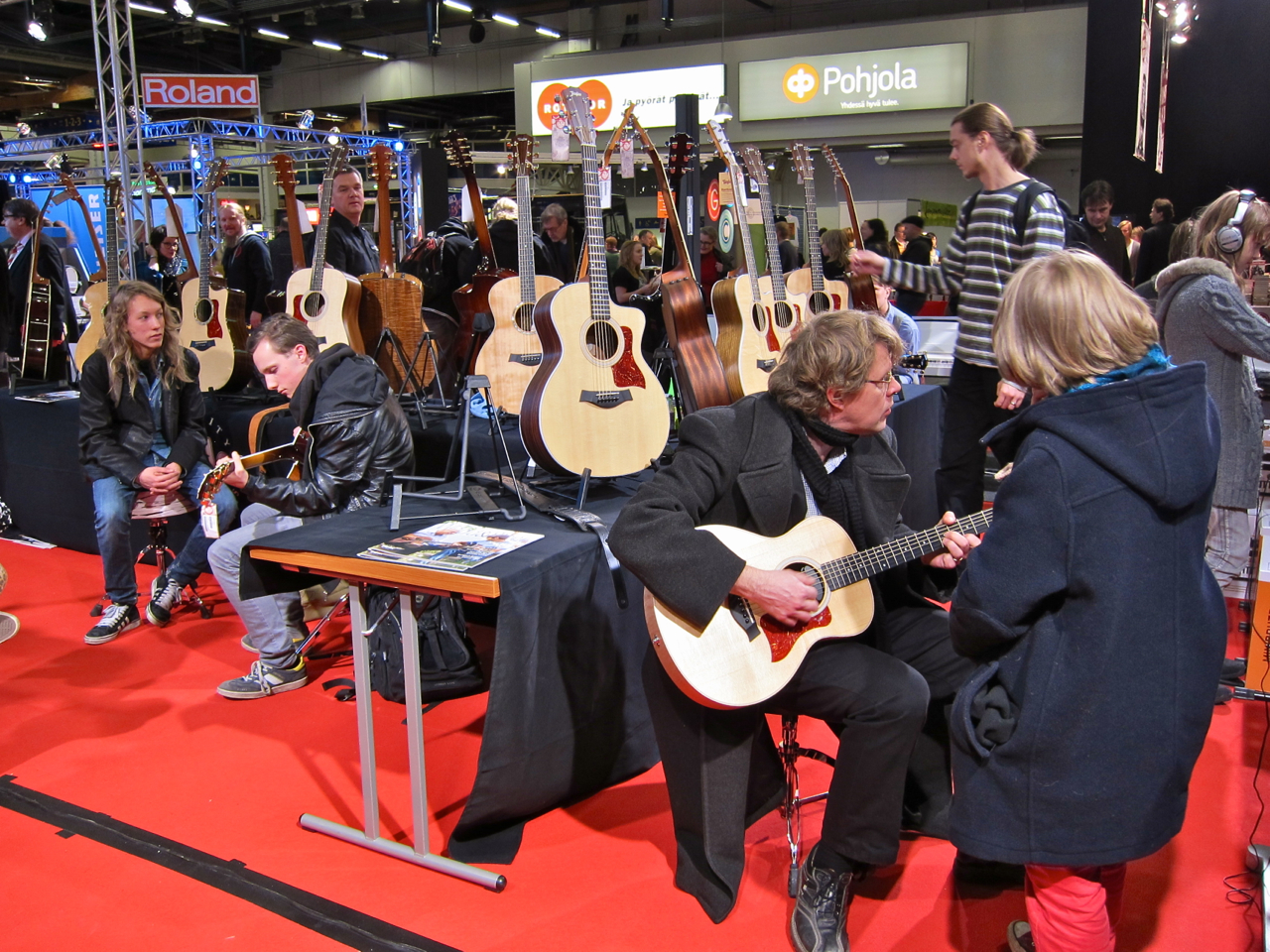

Myös 8-kielistä baritoni-Tayloria voi kokeilla…

****

Riffi-julkaisujen Tommi Posalla on kädessään kustantamon uunituore Country Guitar Workshop 2 -kirja. Kirjan tekijä on Jarmo Hynninen.
****
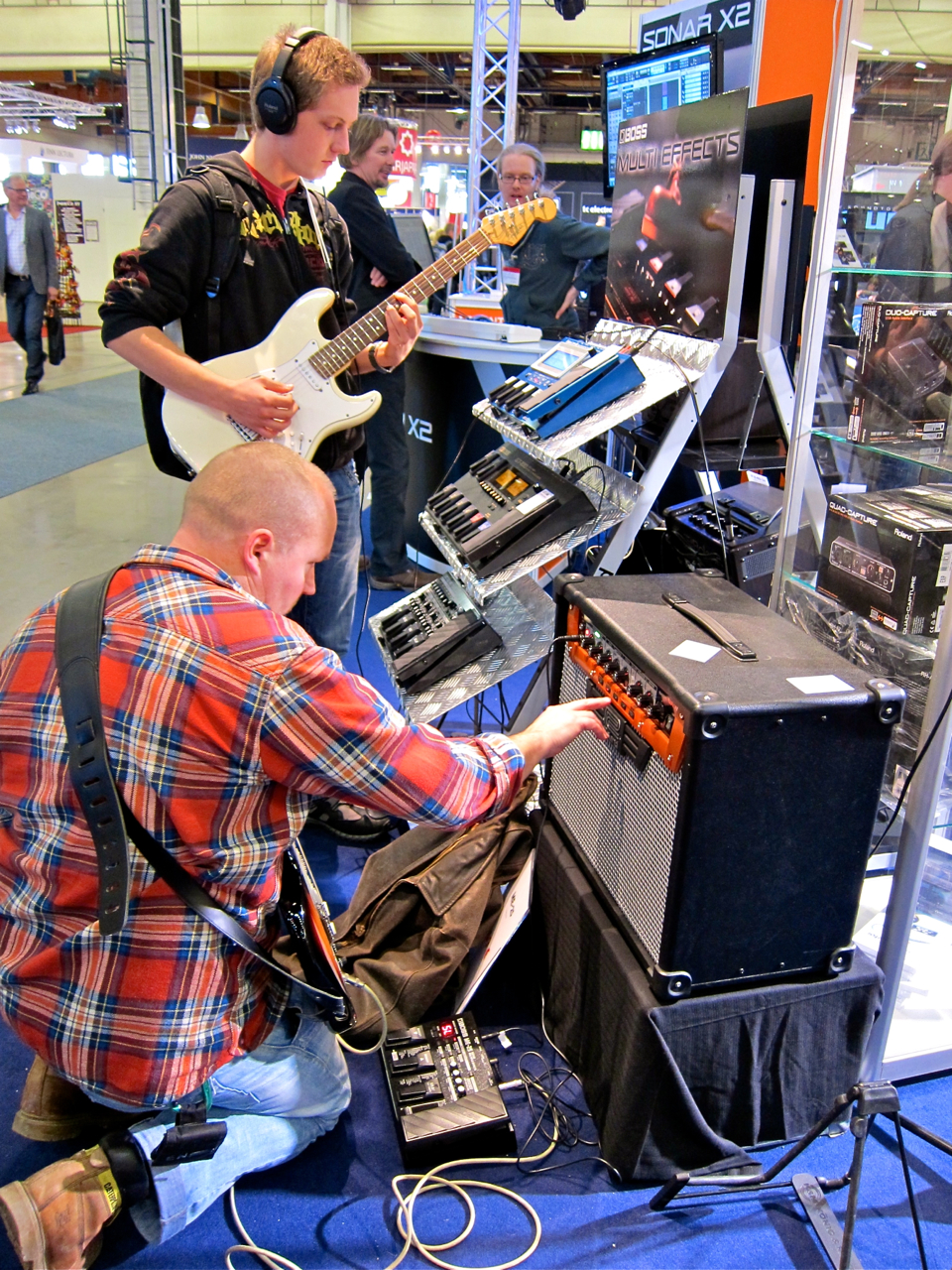
Rolandilla voi tsekata mm. digitaalista GA-112-komboa.
****

Jos Schecter, TC Electronic tai Ampeg kiinnostavat, kannattaa käydä Soundtoolsin osastolla!
****

Messut jatkuvat vielä sunnuntaihin saakka.

****

TC Electronic’s Röttweiler-distortion (current street price in Finland 129 €) specializes in brutal distortion sounds, and doesn’t waste any time on sissy stuff.
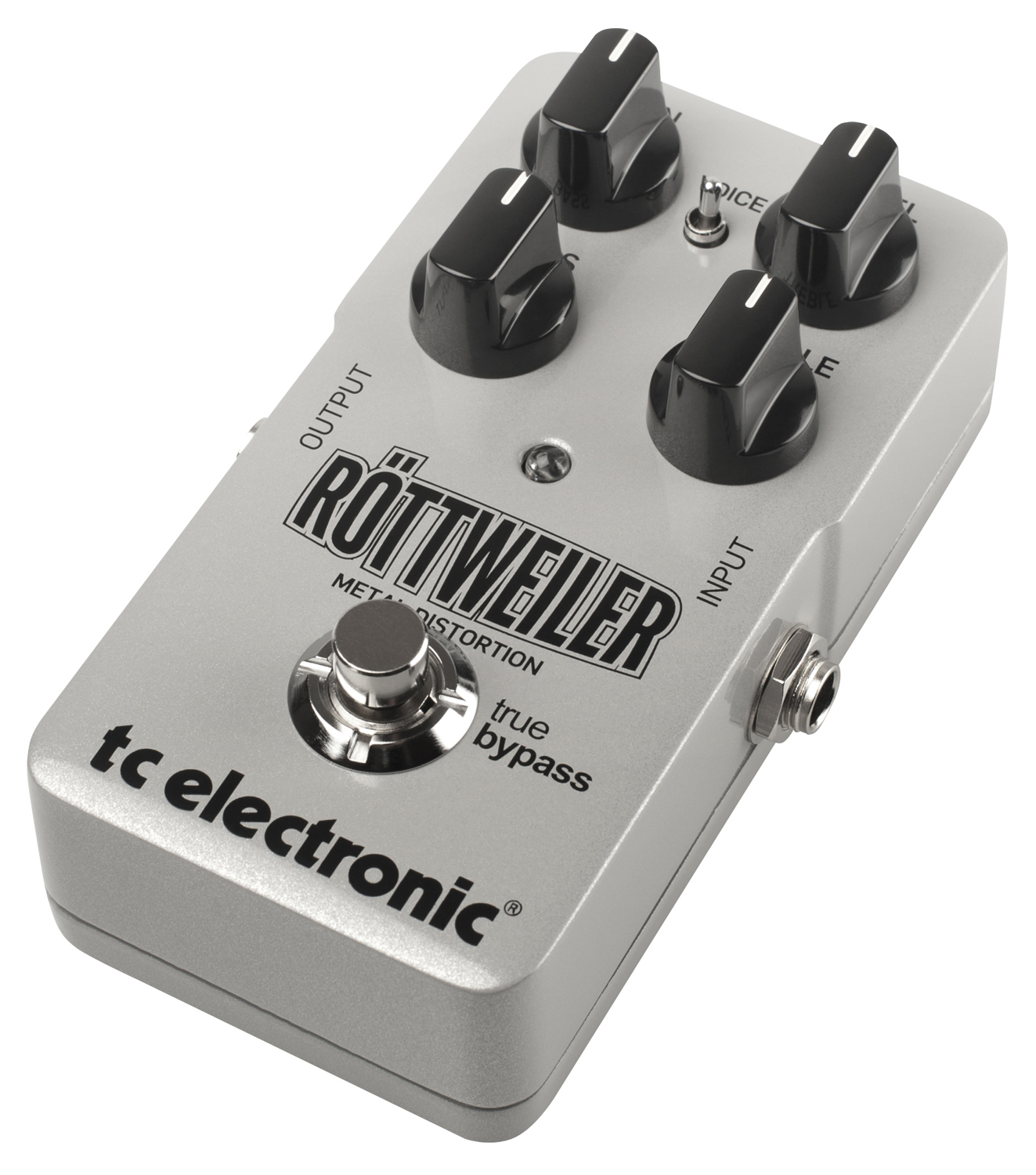
The gain control takes you from quite a lot of distortion to complete über-Metal-mayhem – so don’t go looking for besuited and well-behaved Blues-tones here. The Voice-switch gives you two different shades of brutal: One selection is fatter in the mid-range for more classic Hard Rock and Metal stuff, while the other selection gives you the scooped out tones favoured in many contemporary styles. The pedal also offers bass and treble controls for fine-tuning your tone.
The TC Electronic Röttweiler is a brilliant tool for the Metal-aficionado, which turns any amp into a high-gain monster stack.
Here are three sound clips, which Miloš Berka recorded using a seven-string Schecter into a clean amp setting:
****

TC Electronic’s The Dreamscape (current street price in Finland 245 €) is John Petrucci’s signature effect pedal. It contains six different modulation effects, as well as one memory slot for a Tone Print.
The Dreamscape can be run in mono as well as in stereo. If you take off the bottom plate you’ll gain access to two tiny switches – one allows you to select either true or buffered bypass, while the other enables you to set the pedal to wet signal only, which is handy if you use the Dreamscape in a parallel effects loop.
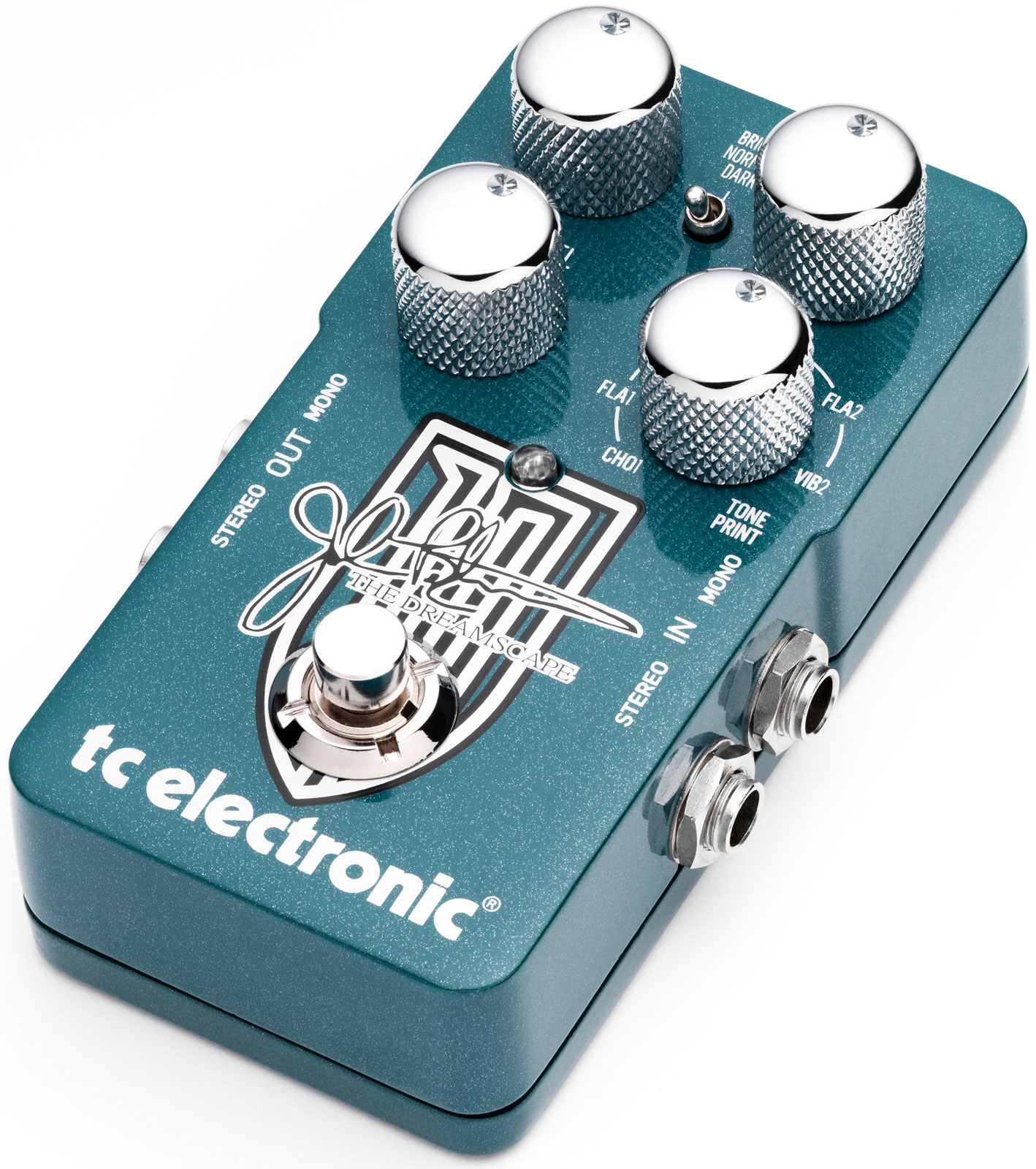
The Dreamscape comprises controls for depth, speed and level. A three-way mini-toggle lets you select between three different EQ curves – from soft and dark to bright and upfront.
John Petrucci has chosen and grouped the six effects in such a way that the effects numbered ”1” are suited to his clean styles, while the second variations go with his overdriven tones. Personally, I wouldn’t draw so drastic a line, as I got great results with any of the six effects in all types amp of settings. This pedal’s main idea is in offering two distinctly different versions each of the three effect types included – namely chorus, flanger and vibrato – that behave and sound different to each other.
Here are some example sounds I recorded using a Fender Stratocaster:
At 245 € the TC Electronic Dreamscape is the priciest Tone Print -pedal to date. Some of the price will surely be a signature pedal premium. But you shouldn’t forget the fact that John Petrucci’s pedal also offers six different effects plus one Tone Print -slot in one compact package. Looking at the Dreamscape from this angle makes the higher retail price sound much more reasonable.
****
TC Electronic guitar pedals
Finnish Distributor: Soundtools
****
Röttweiler Distortion
current street price 129 €
Pros:
+ compact
+ specialized tool for Metal
+ great sound
+ versatile in its own genre
Cons:
– Voice-switch in a tight spot
****
The Dreamscape
current street price 245 €
Plussat:
+ compact
+ six modulation effects
+ Tone Print -enabled
+ versatile
+ also works in stereo
Cons:
– higher price than other Tone Print -pedals
– Bright-switch in a tight spot
****





 Kitarablogi.com – Finland's premier Guitar and Bass blog