
Contact: Nordsound
Kitarablogi.com – Finland's premier Guitar and Bass blog
Juttuja kitaroista ja bassoista


If you’ve always lusted for a hand-soldered guitar amp you were left with two options until quite recently:
You could either buy an expensive boutique/custom shop amplifier, or – if you’re handy with a soldering iron – opt for a DIY amp kit.
Now there’s a third choice for those of us neither well-heeled nor technically savvy:
British company Juketone offers a range of tasty Fender tweed inspired, hand-wired guitar amplifiers at very moderate prices, thanks to Chinese production and selling direct via the Internet.
****

The Juketone True Blood (250 £; introductory offer for a limited time only) is the company’s smallest combo.
The True Blood is based on Fender’s legendary 1950s Tweed Champ (specifically the 5F1 version), with a few small tweaks.
Tweed Champs have been built with several differently shaped cabinets over the Fifties, depending on their exact vintage. The True Blood comes in the all-straight cabinet seen on most mid-Fifties originals, while Fender’s current Custom Shop version features the later angled front.

The tweed covering on our review sample was very neat and crisp.
The combo’s cabinet is made of plywood, except for the back covers, which looked (and felt) like MDF-board.

The two most important differences between a vintage Champ and Juketone’s True Blood combo lie in the speaker-type and rectifier valve choices.
In addition to the two audio signal valves – a Ruby Tubes 12AX7 and a 6V6GT – Juketone has chosen a slightly less-known 6Z4 rectifier tube. The 6Z4 used in Juketone amps is a Chinese version (aka the Sino 6Z4) that is not compatible with the American rectifier valve of the same name.
Jensen has traditionally been the speaker brand of choice for vintage tweed amps, but their bass response very often sounds a bit flabby by modern standards. In my opinion, Juketone has made a very good decision in choosing a more British-voiced speaker for their True Blood combo. The eight-inch Celestion Super 8 could be described as an alnico-driven version of their popular Eight 15.

Inside the metal amp chassis you will be greeted by high quality components and clean workmanship. This is genuine hand-soldering using soldering lugs riveted to a fibreglass board.
You’d be foolish to expect the wiring to be on the same, insanely high level – in terms of its neatness – as generally seen on boutique-grade amps, but the True Blood is definitely in line with Juketone’s ”affordable boutique” ethos.
****

Maybe the most important part in the charm of a 5F1-type Champ (or Champ clone) is the directness of this small combo’s approach to tonal nirvana. There’s no master volume, no tone control, no effects – just a single volume control, and the straightest signal path from input jack to speaker known to mankind.
To some, this type of diminutive Fifties practice amp looks like it’s hopelessly ancient, but the Tweed Champ still has a lot of fans.
The Juketone True Blood’s secret to success lies in the combo’s interactive behaviour. The most traditional way to use the True Blood would be to dial in the maximum amount of volume (and distortion) needed, and then control the amp using the guitar’s own volume and tone controls. Thanks to the naturally rich compression this combo produces when pushed, turning down the guitar volume for cleaner sounds will result in less of a volume drop than expected. Here’s a short clip using a double humbucker guitar (Hamer USA Studio Custom):
If you need more clean headroom from your True Blood (Blues harpists, listen up) than what the factory 12AX7 has to offer, you could easily drop in one of a number of ”cooler” 12A_7-family replacements, such as a 12AU7 or a 12AT7.
Here are three clips of a Fender Telecaster, a Gibson Les Paul Junior and a Hamer Studio Custom, respectively, with their bridge pickups selected. Each clip has been recorded with the combo’s volume control set to ”6”, ”8”, ”10” and ”12”, using a Shure SM57:
The Juketone True Blood’s low volume and tasty compression make this combo an excellent choice for use in the (home-) studio. Just add a little EQ and compression, and season the result with a bit of reverb and/or delay during mixdown, and you’ll be surprised at how big this little chap really sounds:
****

I can only recommend Juketone’s True Blood warmly for use as a living room and recording amp.
Laying your hands on a hand-wired tweed-style combo has never been so easy or affordable. The warm, big bass response of the Celestion speaker is a definite improvement, at least in my book!
This Juketone combo is a serious alternative to your run-of-the-mill mass-produced practice. It sounds pure and sweet. A hand-soldered combo, such as this, is also far easier to repair (or modify) than a PCB-based design.
****
Juketone True Blood
250 £ (introductory offer)
Contact: Juketone
Pros:
+ affordable
+ workmanship
+ hand-wired
+ sound

Jos on halunnut itselleen uuden, käsinjuotetun putkivahvistimen, vaihtoehtoja on tähän mennessä ollut käytännössä kaksi – joko ostaa kallis boutique- tai custom shop –vahvistin, tai kasata vahvistin rakennussarjan pohjalta.
Brittiläinen Juketone tarjoaa kuitenkin kolmannenkin vaihtoehdon tweed-faneille – edullisia, Fender-henkisiä putkivahvistimia, jotka suunnitellaan Englannissa ja valmistetaan Kiinassa.
****
Juketone True Blood (250 puntaa plus lähetyskulut) on firman pienin kombo.
True Blood perustuu suurilta osin legendaariseen 1950-luvun Fender Champ -komboon (5F1-versio), johon Juketone on tehnyt pieniä muutoksia.
Tweed-Champeja on rakennettu 1950-luvun eri vaiheissa kolmella eri kaiutinkotelolla. True Bloodin kaiutinkotelo on kokonaan suorakaiteinen (niin kuin 1955/56-malleissa), kun taas Fenderin Custom Shop -versiossa pohja on syvempi kuin kansi (50-luvun lopun versio).
Tweed-kankaalla päällystetty kotelo on valmistettu lähes täysin vanerista, lukuun ottamatta takalevyjä, jotka ovat kuitulevyä.
Tärkeimmät erot vanhan Champin ja Juketonen True Bloodin välillä löytyvät tasasuuntaajaputkesta ja kaiuttimesta.
Audio-osaston Ruby Tubes 12AX7- ja 6V6GT -putkien lisäksi vahvistimesta löytyy hieman harvinaisempi kiinalainen 6Z4-tasasuuntaaja, joka ei ole yhteensopiva samannimisen amerikkalaisen putkityypin kanssa.
Vanhoissa tweed-Champeissa on yleensä Jensen-kaiutin, mutta Juketone on valinnut komboonsa selvästi brittiläisemman, kahdeksantuumaisen Celestion Super 8 -mallin, joka on alnico-versio saman valmistajan suositusta Eight 15 -kaiuttimesta.
Metallisen vahvistinkotelon sisältä löytyy kauttaaltaan laadukkaita komponentteja, jotka on juotettu siististi lasikuitulevyn juotoskorviin.
Työnjälki ei kuitenkaan (luonnollisesti) ole aivan samalla viivalla verrattuna esimerikiksi Bluetonen valmistamiin boutique -vahvistimiin, joissa styrkkarin sisälmykset näyttävät suorastaan taideteokselta. Juketone True Blood tarjoaa kuitenkin hämmästyttävän laadukkaan putkivahvistinelämyksen todella edullisesti.
****
Tärkeä osa 5F1-tyypisten Champien (ja Champ-kloonien) viehätystä on se, että ne tarjoavat soundille suorimman mahdollisen tien kitarasta kaiuttimelle. Ei masteria, ei taajuuskorjaimia, ei efektejä – yksi kanava, kaksi tuloa ja pelkkä volume-säädin, siinä kaikki!
Vaikka tämä 1950-luvun harjoituskombo vaikuttaakin monien silmistä muinaisesineeltä, on Tweed Champillä silti yhä monta ystävää.
Juketone True Blood -kombon salaisuus piilee vahvistimen interaktiivisuudessa. Luontevin tapa käyttää tällaista pikkukomboa on asettaa sen volume-säädin täysille (tai lähes täysille), ja hallita soundia soittimen omilla volume- ja tone-säätimillä. Vahvistimen tuottaman luontaisen kompression ansiosta saadaan eloisia ja täyteläisiä puhtaita soundeja myös pienelle säädetyillä humbuckerilla.
Jos kaipaa True Bloodilta hieman enemmän puhdasta headroomia (esim. huuliharppua vahvistettaessa), kannattaa etuasteessa kokeilla 12AX7-putken sijaan 12A_7-perheen hieman ”heikompia” malleja, kuten esimerkiksi 12AU7 tai 12AT7.
Tällä tavoin soivat Telecasterin, LP Juniorin ja Hamer Studio Customin tallamikrofonit True Blood -kombon kautta. Jokaisessa klipissä kombon Volume-säätimen asennot ovat ”6”, ”8”, ”10” ja ”12”. Taltiointiin on käytetty Shure SM57-mikrofonia:
Juketone True Bloodin pieni teho ja muhkea kompressio tekee kombosta myös oivan työkalun (koti-) studiossa. Hieman kaikua ja kompressiota, sekä pieni ripaus EQ:ta lisämausteiksi miksausvaiheessa, ja lopputulos kuulostaa paljon isommalta ja mehevämmältä kuin uskoisi:
****
Juketone True Blood on mielestäni oiva valinta suoraviivaista putkikomboa olohuoneeseen tai kotistudioon etsittäessä.
Se on helppo ja edullinen tapa saada itselleen aitoa tweed-tyylistä soundia. Celestion-kaiuttimen tuoma jäntevä keskialue ja muhkea basso ovat minun mielestäni ainoastaan plussaa!
Juketone-kombo on varteenotettava vaihtoehto tavallisille, massatuotetuille pikkukomboille – eikä vain hyvän soundinsa ansiosta. Käsinjuotetun elektroniikan etuja ovat myös helpompi huolto ja modifiointi.
****
Juketone True Blood -kombo
250 £ (+ lähetyskulut)
Lisätiedot: Juketone
Plussat:
+ hinta
+ työnjälki
+ käsinjuotettu
+ soundi

For many guitarists the Vox AC30 is the greatest guitar amp ever made – bar none.
The combo was originally designed for the instrumental group The Shadows, but it became known worldwide as ”The Beatles Amp”. Over the decades, many other guitarists have favoured Vox’ best known design. Users include people like Brian May (Queen), Rory Gallagher and U2’s The Edge. Many Finnish Shadows-/Ventures-style bands (”rautalankka”) also favour the AC30.
Despite their legendary status, vintage Vox AC30s also do have their issues:
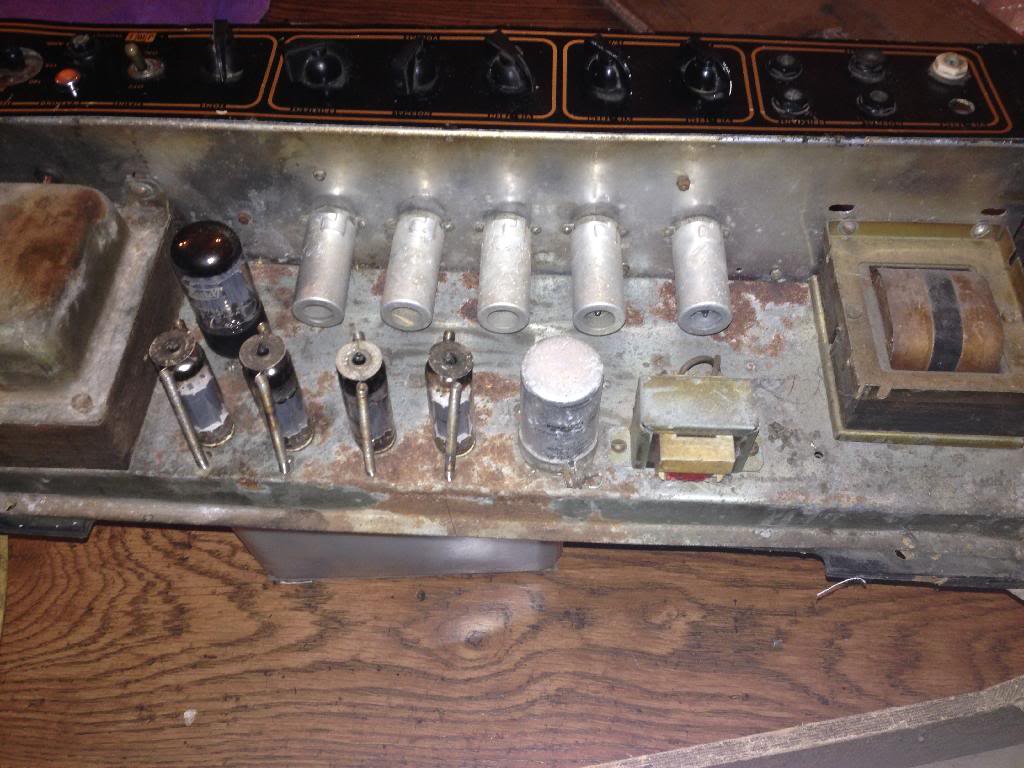
This large 2 x 12″ combo weighs quite a lot, making it a little hard to carry alone. Old Voxes also are non-master volume amps, which means that attaining natural distortion comes at the cost of serious sound pressure levels – often too much for small clubs and function gigs. Old AC30s also have all their valves – yes, also the power amp tubes – placed inside an almost completely closed metal chassis. This has led to vintage-Voxes getting an infamous reputation as relatively prone to catching fire.
Boutique amp makers Bluetone (from Helsinki, Finland) have recently come up with their special take on the beloved classic combo. Their new amp is called Bluetone Shadows Reverb, and it comes with a whole number of welcome improvements and modern features.
****
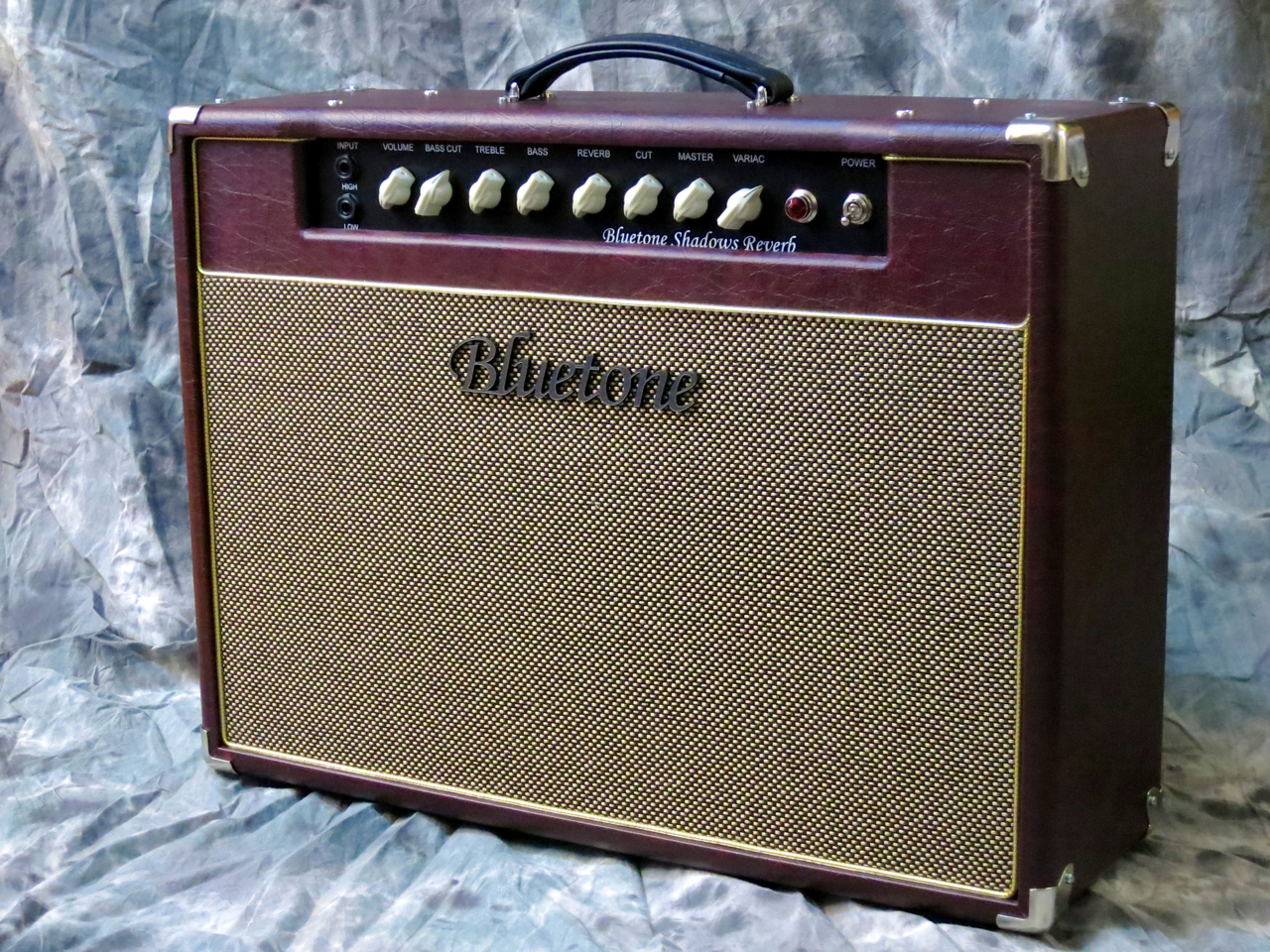
Bluetone’s Shadows Reverb (reviewed version: 1,950 €) is a single-channel all-valve amp loaded with a genuine spring reverb. The combo represents the company’s view of what constitutes a perfect Top Boost-channel tone, all presented in a much more compact format.
The Shadows Reverb is a class AB amp, and it offers between 15 and 30 Watts of output power, depending on the setting of its built-in Variac.

The combo’s cabinet is made from high-grade plywood. The Shadows Reverb is a good deal smaller and less deep than its classic forebear from the 1960s.

This reduction in heft is due mostly to the use of 10-inch Celestion Alnico Gold speakers in place of the AC30’s 12-inch speaker pair.
The speakers in the Shadows Reverb combo have been ”played in” for a number of hours (using an oscillator) to get rid of the typical tightness of brand-new Alnico Golds.

This Bluetone-combo uses three 12AX7-tubes, and a single 12AT7 in its preamp section.
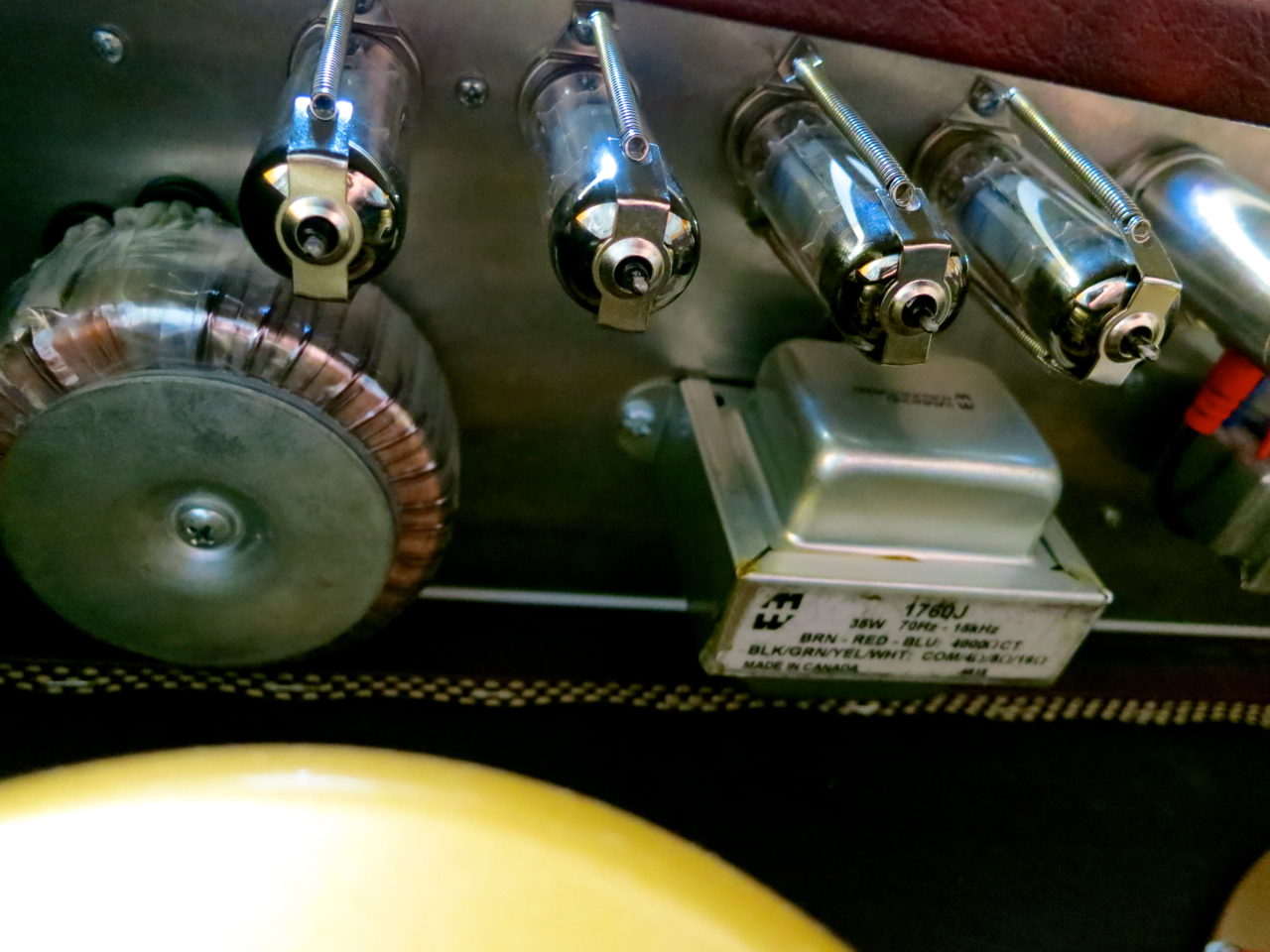
The power amp runs on a quartet of EL84 valves. The Shadows Reverb is a cathode-biased valve amp, which means that replacing the power amp tubes doesn’t usually necessitate any rebiasing.
****

Yes, the Bluetone Shadows Reverb is ”just” a single-channel combo, but it is far from a single sound guitar amplifier. In large part this is thanks to the brilliant modern features Bluetone has incorporated into this homage.
The Shadows Reverb offers you two guitar inputs – High and Low – for use with single coil- and humbucker-equipped instruments.
The preamp features a two-band Baxandall EQ-section – with typically interactive controls for Bass and Treble – as well as a three-stage Bass Cut rotary switch, which offers you two fatter alternatives to the famously bright and wiry Vox Top Boost sound.
The onboard spring reverb sounds fantastic and is a real treat to work with, giving you everything from completely dry tones to Surf Music antics.
The power amp section comes with three controls:
Cut allows you to make overall adjustments to the combo’s treble output.
Bluetone’s Master Volume-control is placed after the phase inverter, right at the end of the signal chain. This allows you to get juicy power amp distortion at low volume levels, and with only minimal changes in the amp’s tone.
As mentioned before, the Shadows Reverb comes with a built-in Variac circuit. Although the Variac also has a bearing on the combo’s output level, it works in a completely different way to the master volume, namely by dropping the voltage the power amp runs on. Turning the Variac down will result in a good deal less clean headroom and more power amp sag.
Due to large public interest, I had to return the Shadows Reverb much earlier than anticipated, but I still managed to record two different demo tracks with the Bluetone amp.
The first (clean) track features rhythm guitar tracks played on a Fender Telecaster (left channel) and a 1970s Japanese copy of a Gibson ES-335 (Kasuga; right channel). The lead guitar part was played on a Fender Stratocaster. All guitar tracks have been recorded with an AKG C3000 microphone placed approximately 80 cm from the combo’s front:
The second track (overdriven) has been recorded with a Stratocaster. The distortion comes from the Shadows Reverb (no pedals used), and all tracks have been close-miked with a pair of Shure SM57s:

****
Bluetone’s Shadows Reverb is an outstanding boutique amp take on the Vox AC30 motif. Like all other Bluetone amps, the Shadows Reverb is carefully handmade in Finland to the company’s strict quality standards. This results in reliable top-drawer tools for the musician, with extremely low levels of hiss and negligible AC hum.
I had a great time test driving this combo. The Bluetone Shadows Reverb simply delivers all it promises with style and panache. The combo weighs approximately half of the original classic (AC30s usually weigh between 31 to 36 kg, depending on their specific vintage and the speakers they come loaded with). The reduced size means you won’t be having any problems lifting this beauty into the boot of a small car, such as a Ford Fiesta.
Thanks to the additional features of this Bluetone combo – like the Bass Cut and the Variac – you will be able to enjoy the great sound of the Shadows Reverb anywhere you want, be it at home or on stage.
****
Bluetone Shadows Reverb
Prices starting at approx. 1,700 € (reviewed version: 1,950 €)
Manufacturer: Bluetone Amps
****
Pros:
+ handmade in Finland
+ size
+ weight
+ valve-powered spring reverb
+ Variac- and Master Volume-controls
+ sound


Kitarablogi.com had the pleasure to review two acoustic steel-string guitars from Chinese brand Farida Guitars:
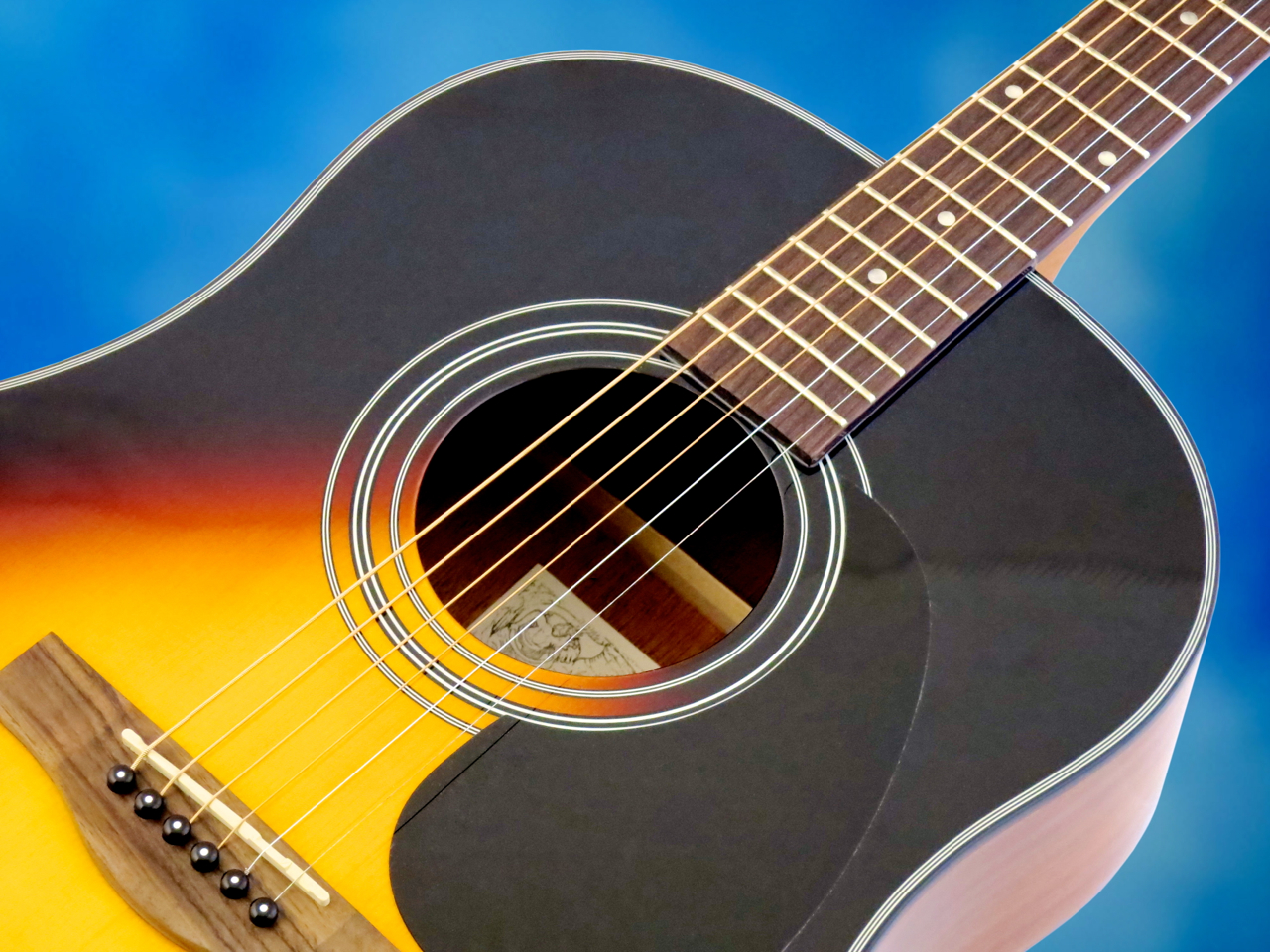
The Farida M-2 is a parlour-sized guitar, while the Farida B-10E gives you this company’s take on a miked-up, slope-shouldered Gibson steel-string.
****

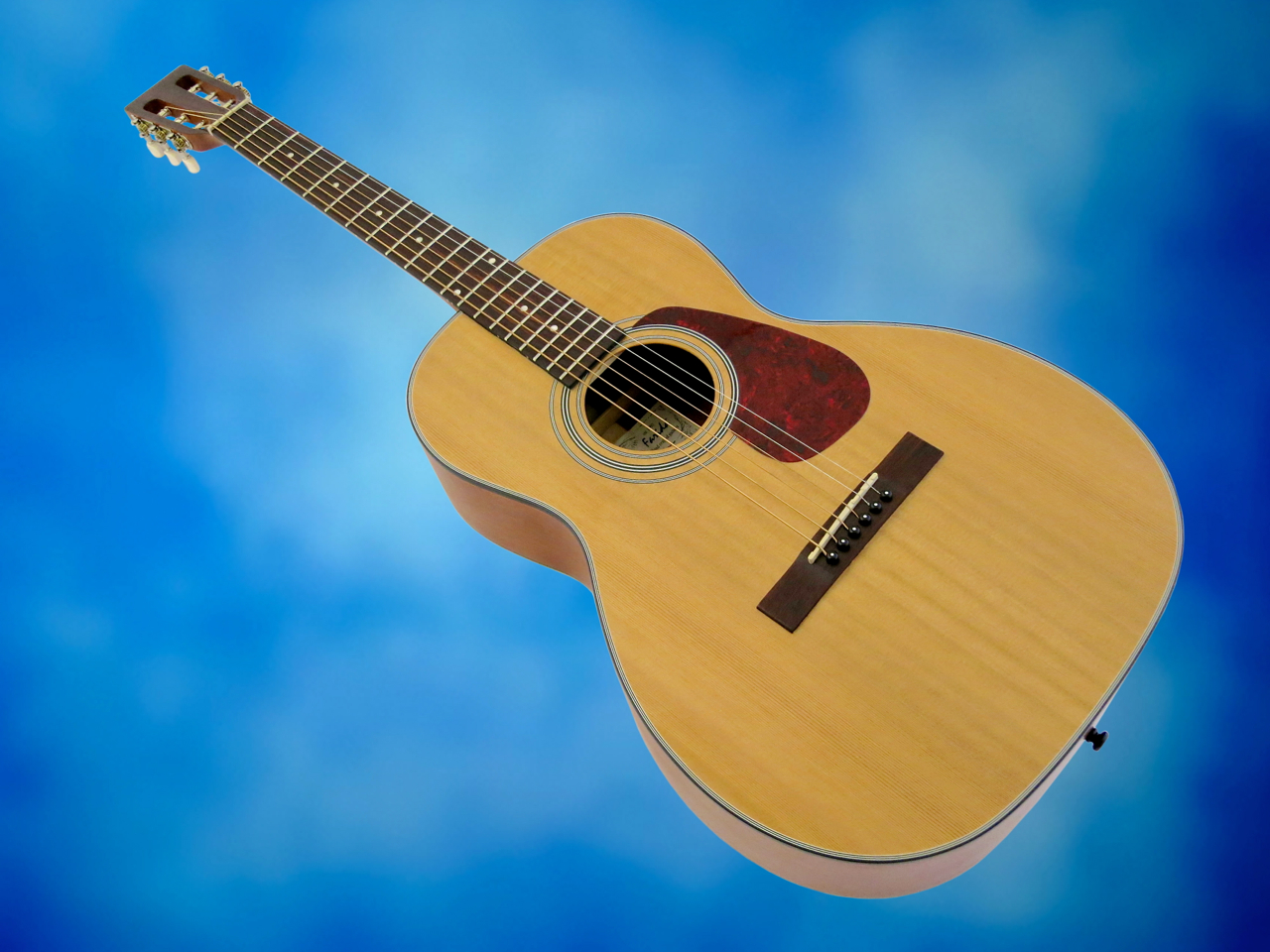
These days a guitar is called a parlour (or parlor, if you’re so inclined), if its soundbox is smaller than a Martin OM- or 000-body. While parlour guitars have gained a growing followership over the last few years, it is still surprisingly difficult to find reasonably priced exponents of this species.
Farida Guitars’ M-2 (current price in Finland: 465 €) ticks all the right boxes to whet a parlour lover’s appetite – a slightly shorter scale length (62.8 cm/24.7″), a 12th fret neck joint, and a classical-type open headstock.
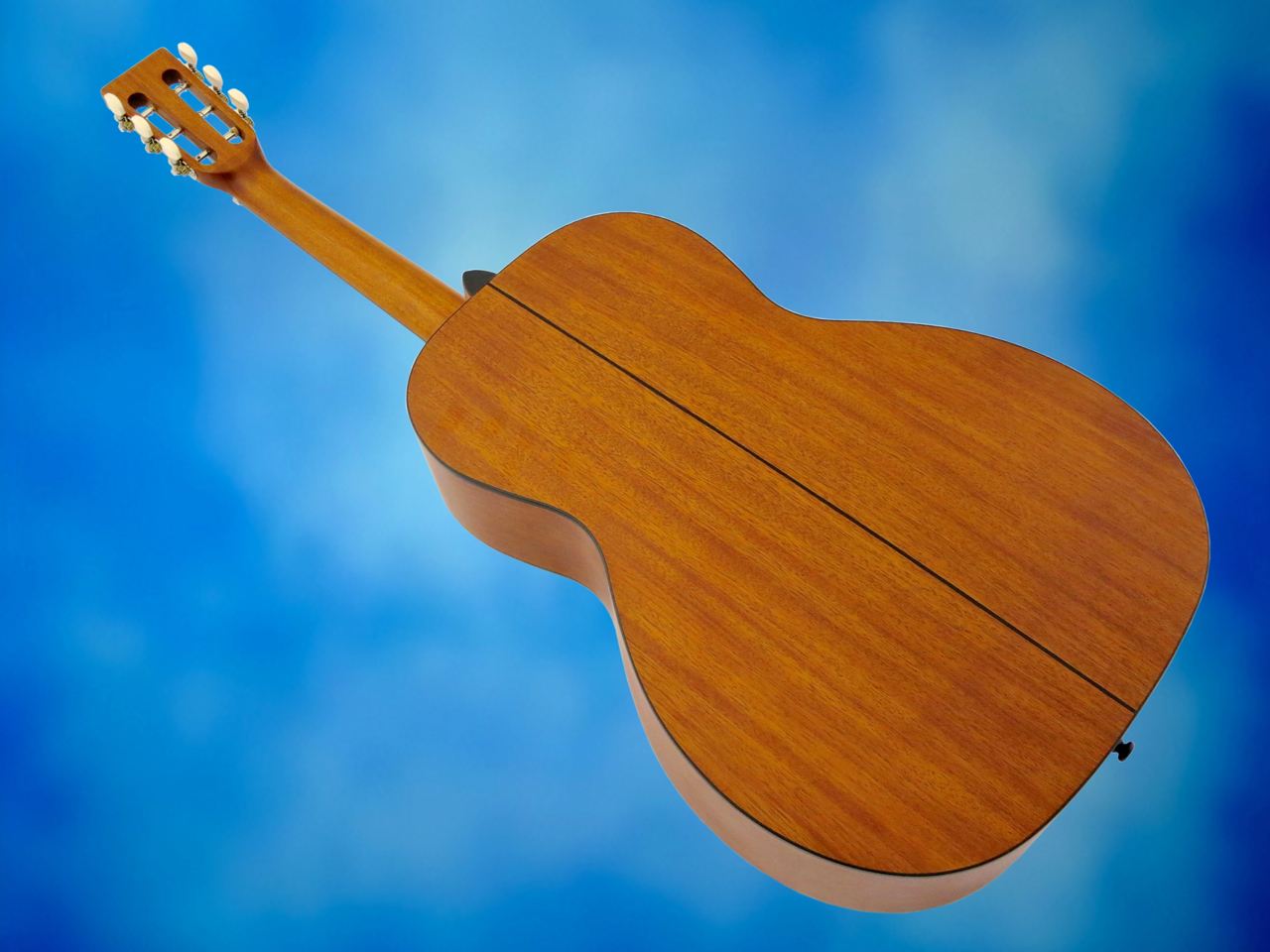
The M-2’s soundbox is made from a beautiful solid red cedar top, and laminated mahogany for the rims and the back.
The mahogany neck is glued into the body in traditional fashion.

The three-on-a-strip tuners are of a decent quality.

The Farida M2’s top nut and compensated bridge saddle are both made from a man-made bone substitute.
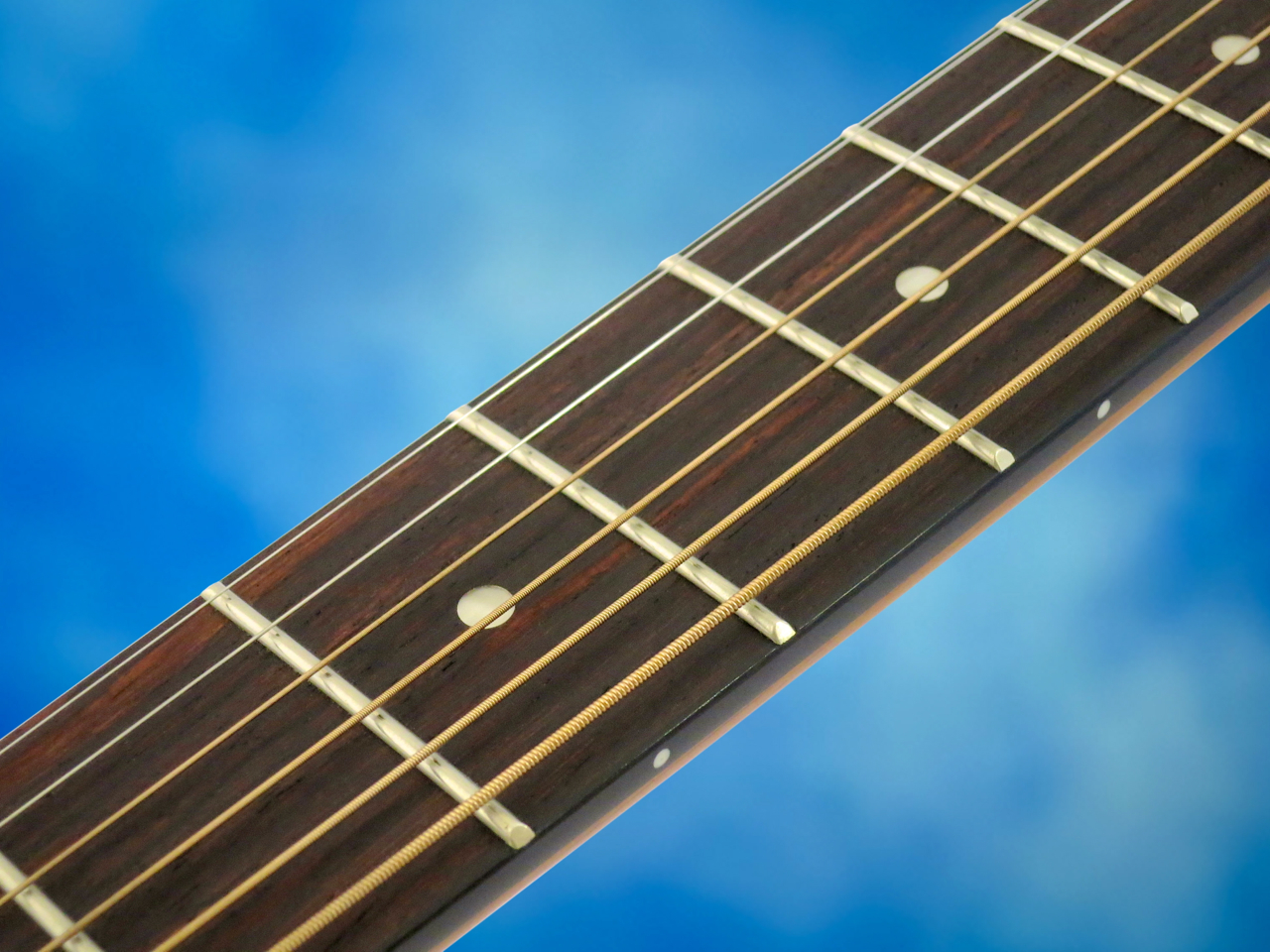
The fretwire used on this parlour has a narrow and medium-height profile.
There’s a very nice red hue to the M-2’s rosewood fretboard.
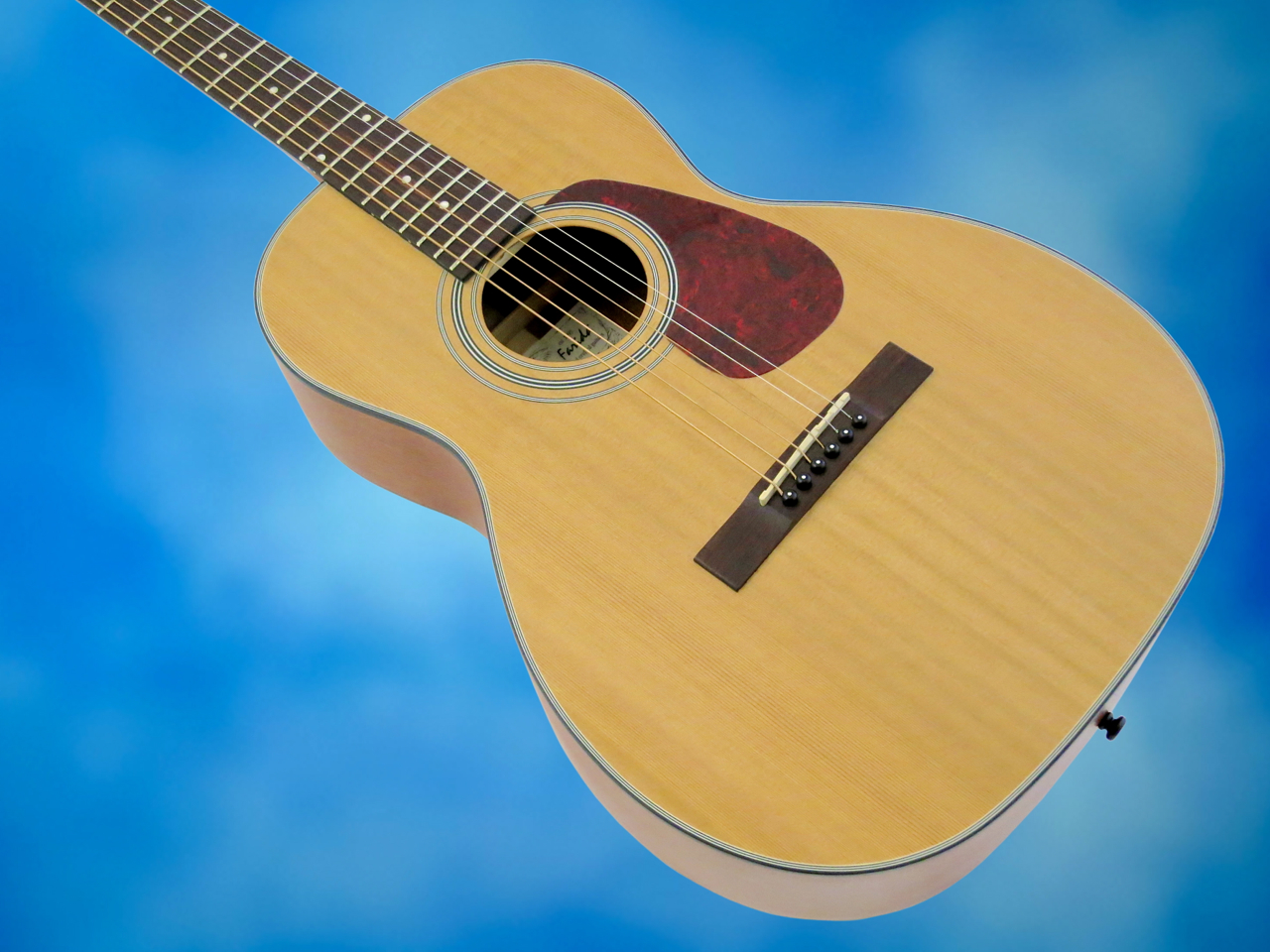
This very cleanly built acoustic instrument comes in a thin natural satin finish.
****

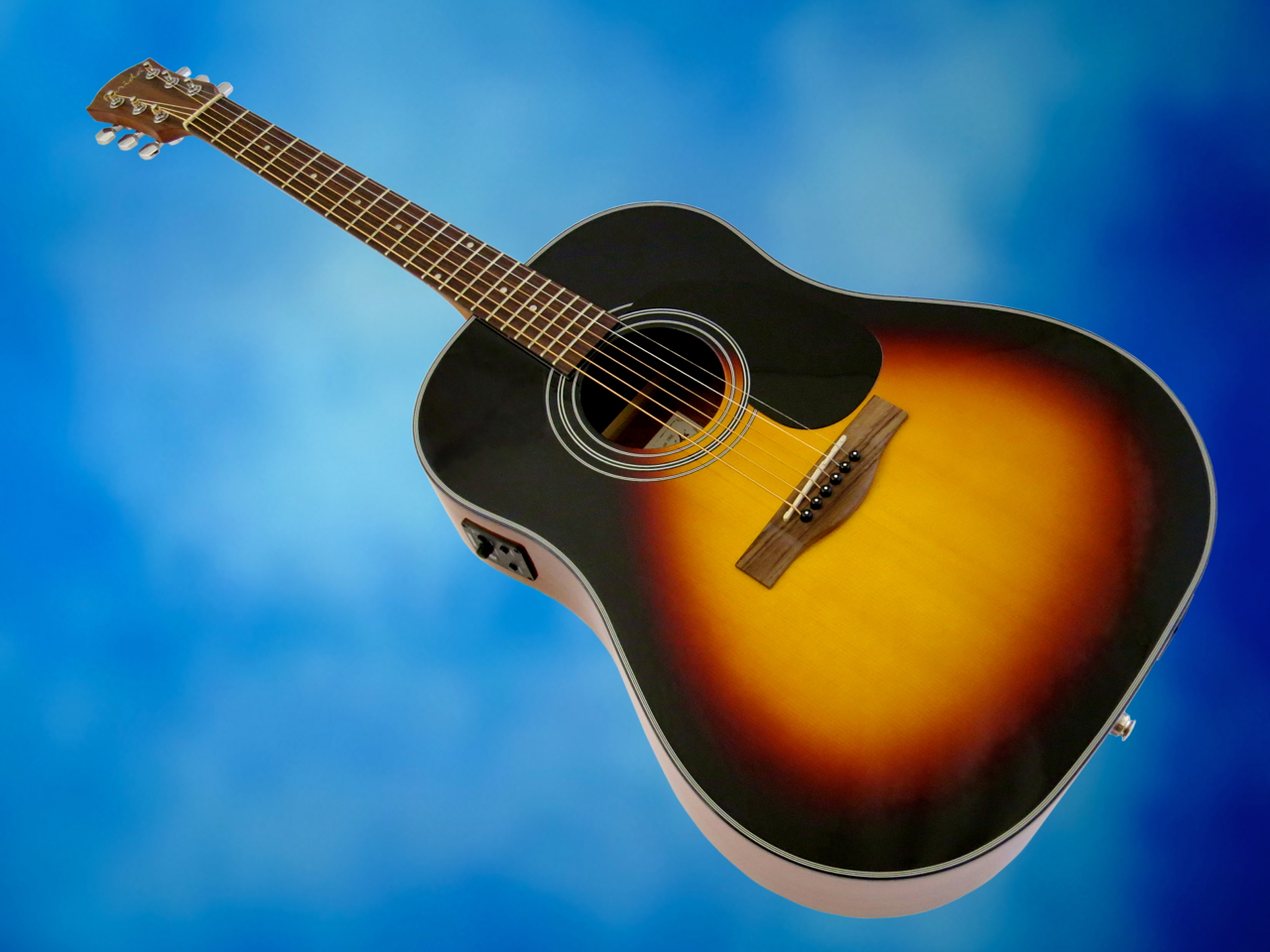
Farida’s B-10E (425 €) is the brand’s affordable version of Gibson’s famous slope shoulder (or round shoulder) dreadnought design (first released in the mid-1930s as the Advanced Jumbo). Like the name says, this guitar type differs from the more common Martin dreadnought by virtue of its rounded ”shoulders”.
The B-10E sports a solid spruce top finished in a gorgeously deep gloss sunburst.

The mahogany soundbox has also received a gloss finish, while the mahogany neck goes for a modern satin finish.

Farida have come up with a good-looking headstock shape, at least in my opinion. The B-10E’s headstock face sports a beautiful rosewood veneer.
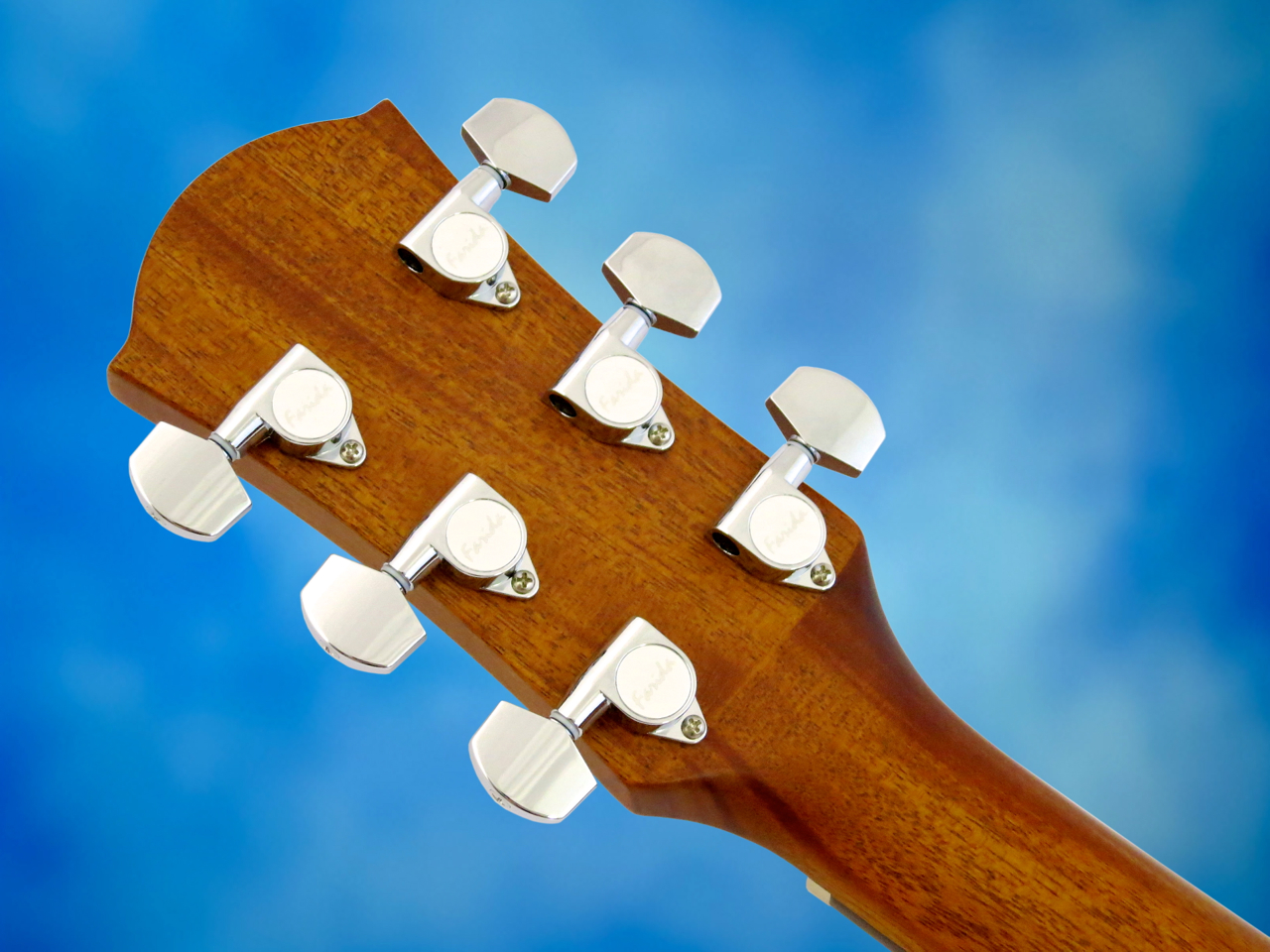
The machine heads are very decent Schaller-style models.

As with the parlour model, Farida’s slope shoulder dread also comes equipped with a self-lubricating Tusq-type nut and compensated bridge saddle.
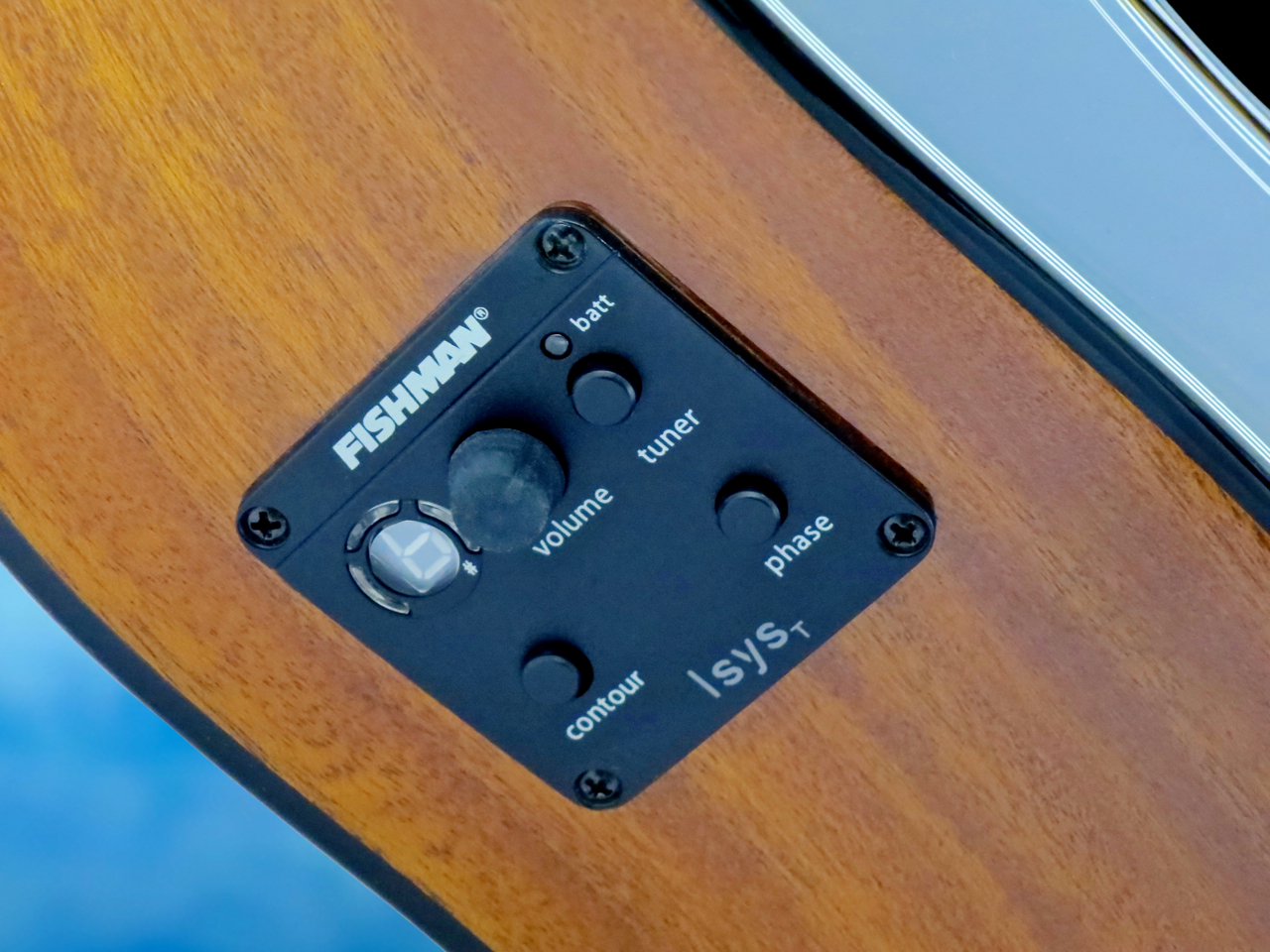
The B-10E features a Fishman Sonicore under-saddle transducer connected to an Isys T preamp.
In addition to the large volume control, the preamp also comes with a phase inverse switch (to combat feedback), a pre-EQ curve (called Contour), and a digital tuner.

The output jack is found in the end pin, with the easy access battery compartment nearby.

Despite this model’s rather affordable status, the fret job on the B-10 is actually surprisingly clean.

****

To some parlour snobs – yes, there are such people – the only ”correct” neck profile for a guitar of this type is a wide and massive V-neck (also called a boat neck). True, a boat neck is the authentic option, but many modern players do feel quite alienated by such a profile.
Luckily (and sensibly) the Farida Guitars M-2 comes with a very player-friendly, modern D-style neck profile.
Talking about comfortable: The M-2 is a very lightweight and compact little instrument, which fits effortlessly in your lap. This means that this parlour is a great choice for young players and many women, too. You don’t need to be a Folk music fan.
Farida’s M-2 delivers the sound you’d expect from a small-bodied steel-string guitar. There’s not a lot of deep bass, the mid-range has a certain boxy quality, and the whole is rounded off by a healthy dose of chiming top end.
The M-2 is a fabulous choice for fingerstyle players, because the tight bass response of a parlour leaves ample room for the full character of the mid-range to shine through:
But a small body doesn’t necessarily mean a puny sound – this Farida is a nice little barker when played with a plectrum. Thanks to its sinewy bass register this guitar is also easy to record:
The rhythm guitar parts on this demo song feature both test guitars. The Farida M-2 is in the left channel and the B-10E can be heard coming from the right:
****

Farida’s B-10E offers a lot of value and enjoyment for a very moderate price.
Here the neck profile is a slightly more rounded, oval C.
This Farida gives you the punch you’d associate with a well-made dreadnought guitar, suitably seasoned with the warmth this model’s Gibson-type scale length brings into the mix.
In contrast to the parlour, the much larger body of the B-10E equates a hefty boost in the bass and treble registers.
Played fingerstyle you’ll get a stronger bass content and more top end sparkle:
This larger-than-life persona, so typical of dreadnoughts, is also present when you switch over to a plectrum:
Fishman’s Isys T system is a very workable addition for live use. A piezo-only pickup system is always a bit of a compromise, in terms of sound fidelity, but the Isys T does a good job. In these clips the first phrase has been recorded with Contour off and the second phrase with Contour on:
The rhythm guitar parts on this demo song feature both test guitars. The Farida M-2 is in the left channel and the B-10E can be heard coming from the right:
****
Based on this review, Farida seem to offer a lot of guitar at very fair prices. Both the Farida M-2 and the B10E are beautiful steel-string guitars that offer easy playability and inspiring sounds.
****
Farida Guitars M-2 + B-10E
M-2 – 465 €
B-10E – 425 €
Finnish distribution: Vantaan Musiikki
****
Pros (both models):
+ value-for-money
+ finish
+ fretwork
+ acoustic sound
+ easy to use pickup system (B-10E only)
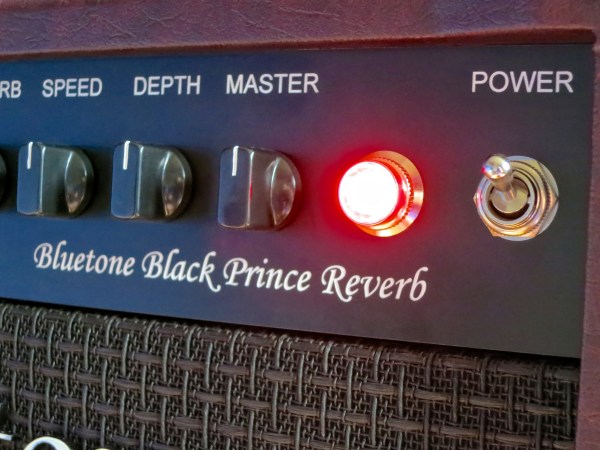
The Bluetone Black Prince Reverb guitar combo sees the boutique amp makers from Helsinki branch out into a new and interesting direction.
All the Bluetone models we have known thus far have been (and still are) produced as pure and genuine custom-made valve amplifiers.
This means that each new amp is ordered by the customer based on a certain Bluetone configuration on their website – like an à la carte-menu. The chosen model is then tweaked according to the customer’s wishes, and there are plenty of different options available – from the details of the amplifier’s internal specifications all the way to the type of finish of the cabinet and the font on the control panel.
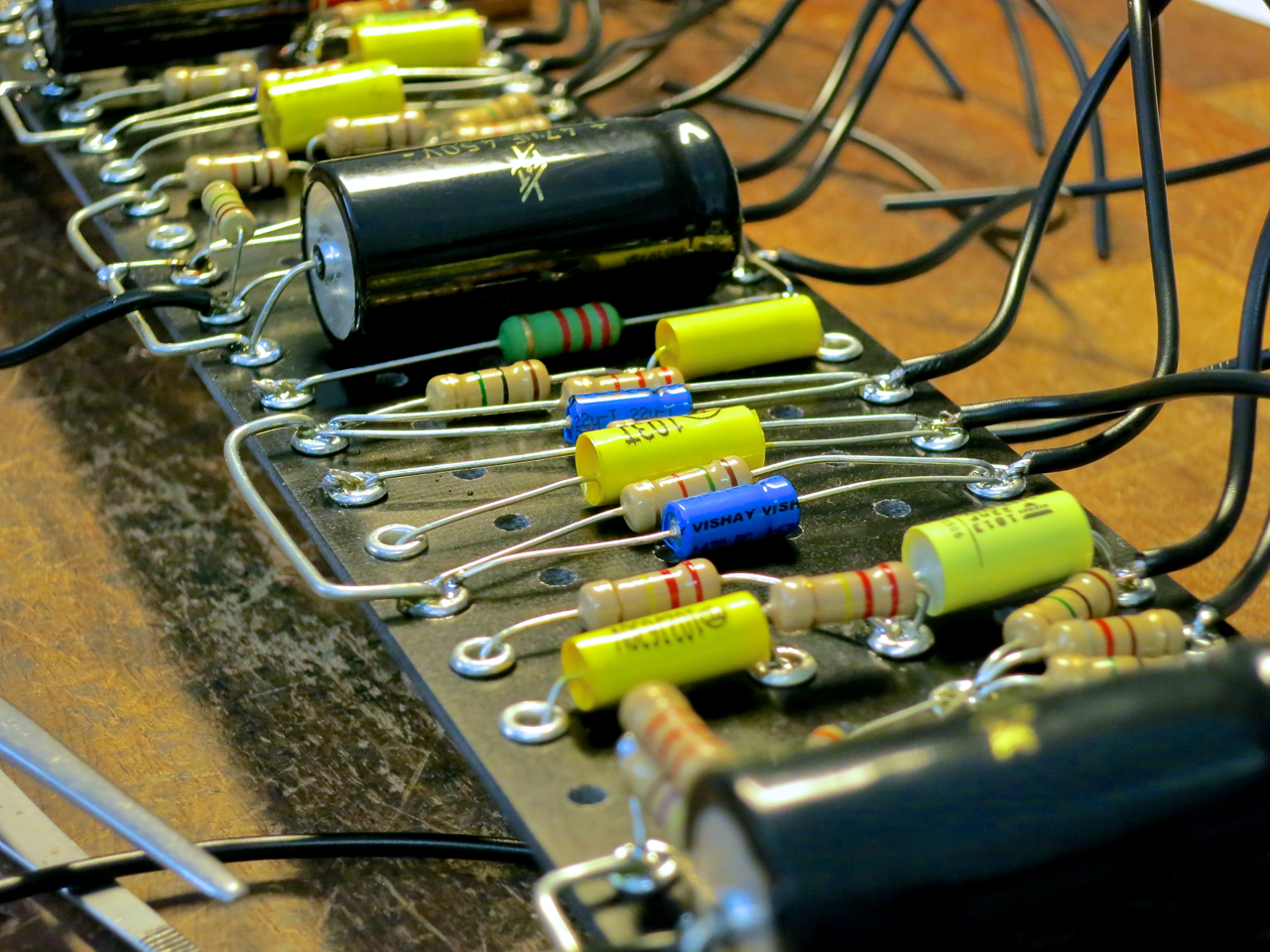
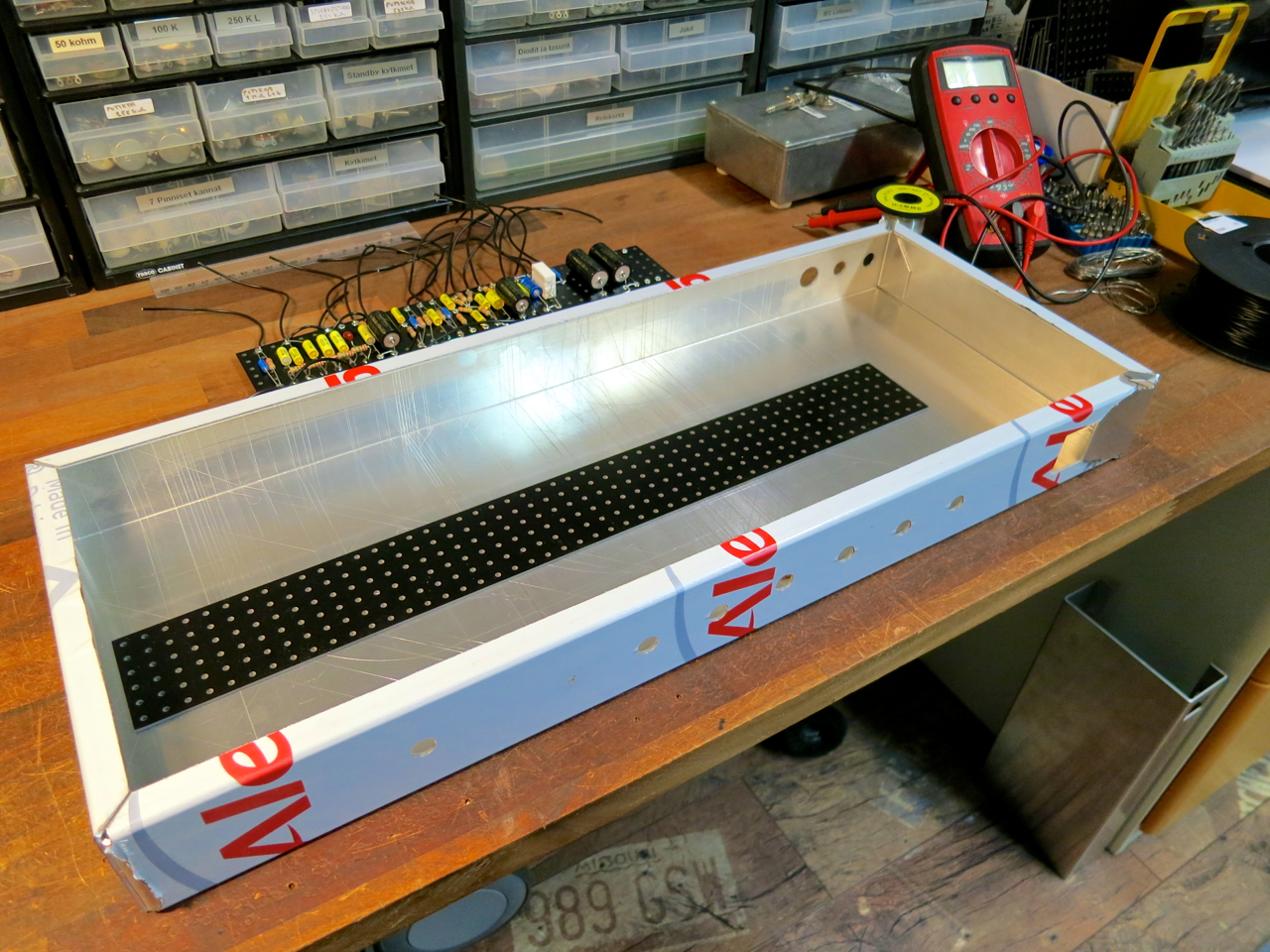
Due to the nature of custom amps, such as these, every Bluetone Custom amp is built completely by hand, starting with a clean slate – meaning: an empty metal chassis, and an empty fibreglass eyelet-board.
The board is then riveted at the right spots to take all the necessary wiring and electronic components going into this specific custom order. Everything is soldered into place by hand (point-to-point).
This is a very involved and time-consuming process, requiring a steady hand and a keen eye, which of course is reflected in the price of a Bluetone Custom amp. The advantage of building this type of point-to-point amp is, of course, that it gives the customer free reign to have his dream amp built.
Bluetone’s dynamic duo – Harry Kneckt and Matti Vauhkonen – have recently decided to launch a second model range alongside their strictly custom-made amps. The new range will include a few models that will be made and sold ”as is”, with only very limited options to choose from.
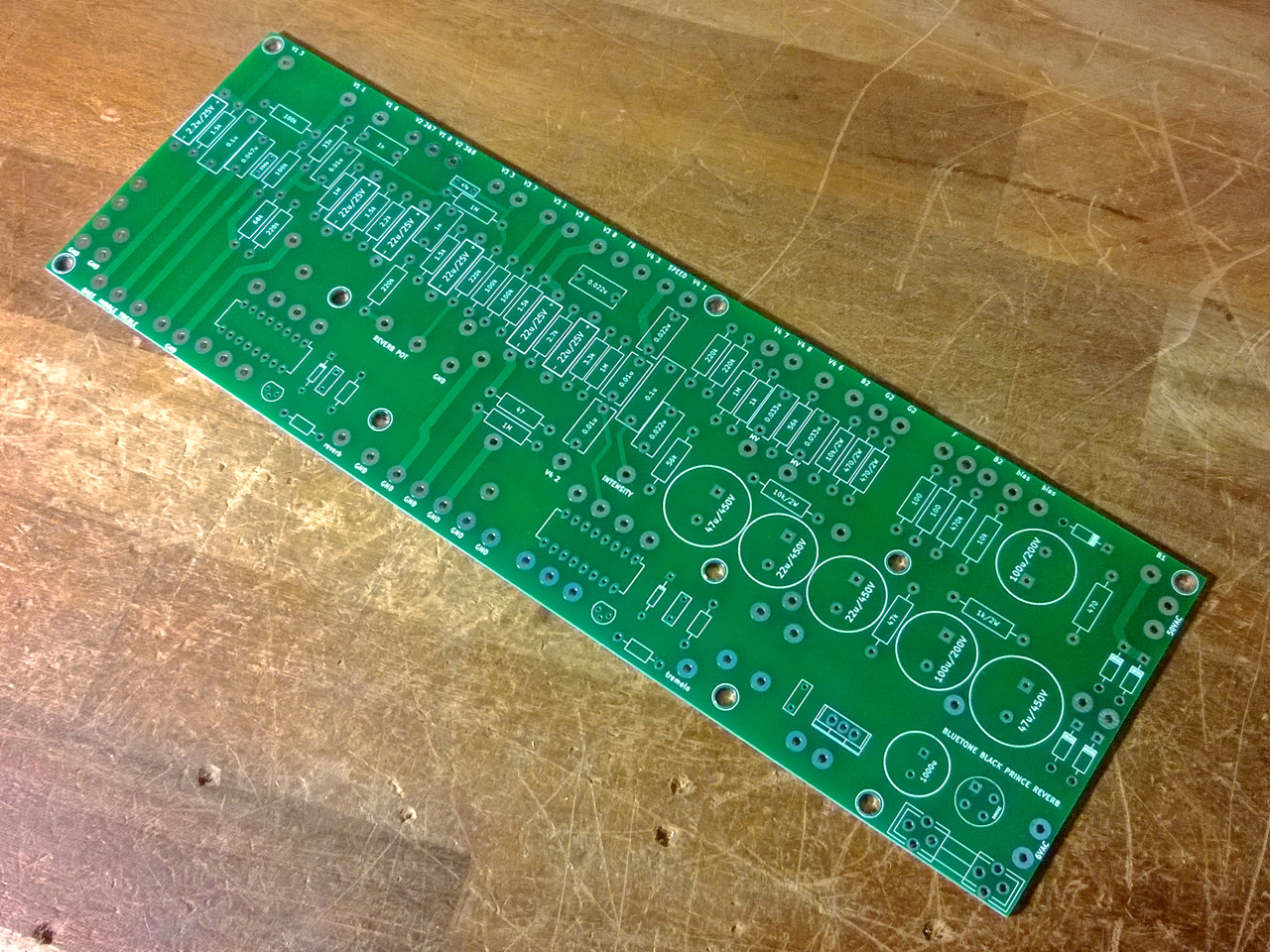
These new amps will be made using so-called hybrid boards.
Bluetone’s hybrid boards are very sturdy PCBs made of fibreglass, and are of a considerably higher quality than what you’d find in mass-produced valve amplifiers. Each component’s place on the hybrid is clearly labelled, and some of the ”wiring” is already incorporated into the board itself. In contrast to many mass-produced affordable amps, Bluetone’s new range will see all tubes and transformers mounted securely to the metal chassis (like on their custom-made amps, too), and not directly on the PCB (like on many affordable Far Eastern designs).
The rest of the building process is virtually identical to the more costly custom-made amplifiers – the components are fitted to the hybrid board by hand (from the top) and hand-soldered to the board. Thanks to the hybrid board the new amplifier range will be much easier and faster to produce, which will be reflected in the pricing of the new hybrid amps vis-à-vis the point-to-point custom orders.
****
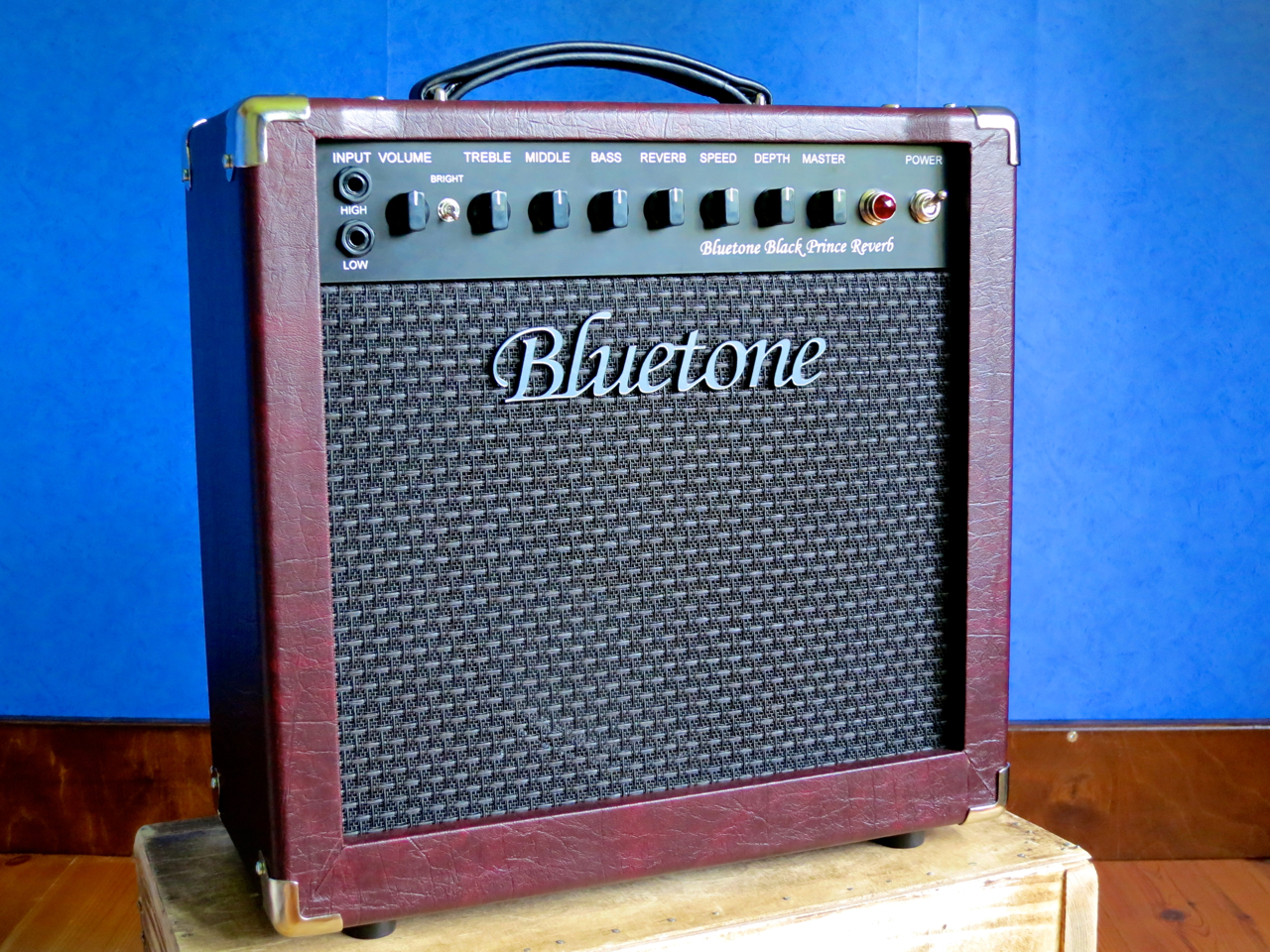
The first new Bluetone-combo is called the Bluetone Black Prince Reverb (approx. 1.500 €).
This compact and handy combo takes a lot of inspiration from Fender’s legendary ”Blackface” Princeton Reverb (version AA1164), but due to the Bluetone’s many refinements you can’t really call the Black Prince a straight copy.
In addition to the basic version in wine red tolex, you can also order the Black Prince Reverb in genuine tweed, or with an oiled cabinet made from mahogany (both at extra cost).
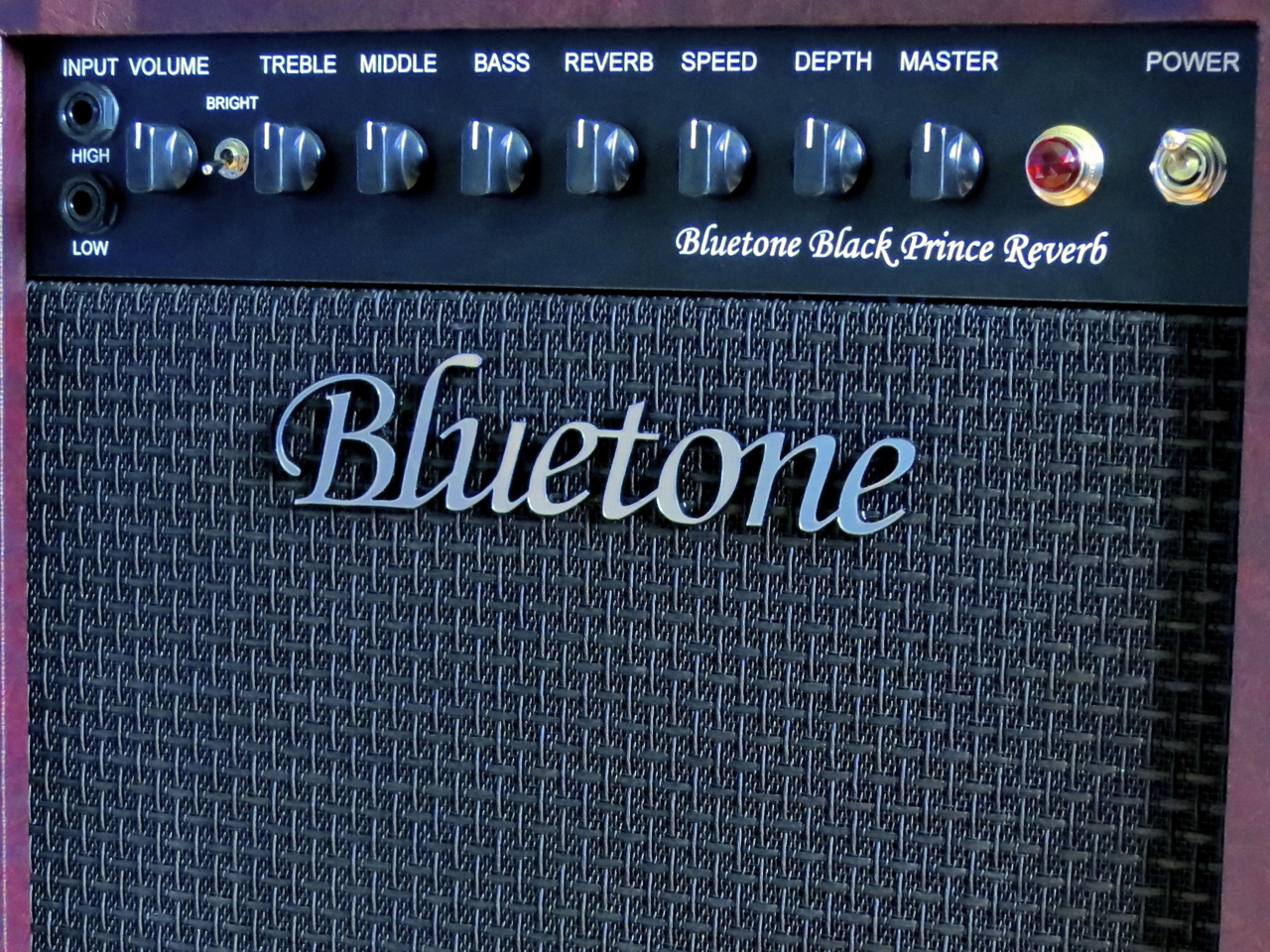
I very much like the businesslike and sober look of the Blacktone’s front panel. Everything is clearly labelled, which can be a great plus on a dimly lit stage.
The Bluetone Black Prince Reverb offers two different inputs for singlecoil and humbucker-equipped guitars (High and Low). The EQ-section is a three-band affair, with an additional Bright switch to liven up dull sounding pickups.
Even though the Black Prince Reverb is such a compact combo, it still featured both a genuine, valve-driven spring reverb and a tube tremolo.
Bluetone uses a post phase-inverter master volume in most of their designs, because it has the least negative impact on an amp’s tone and feel.
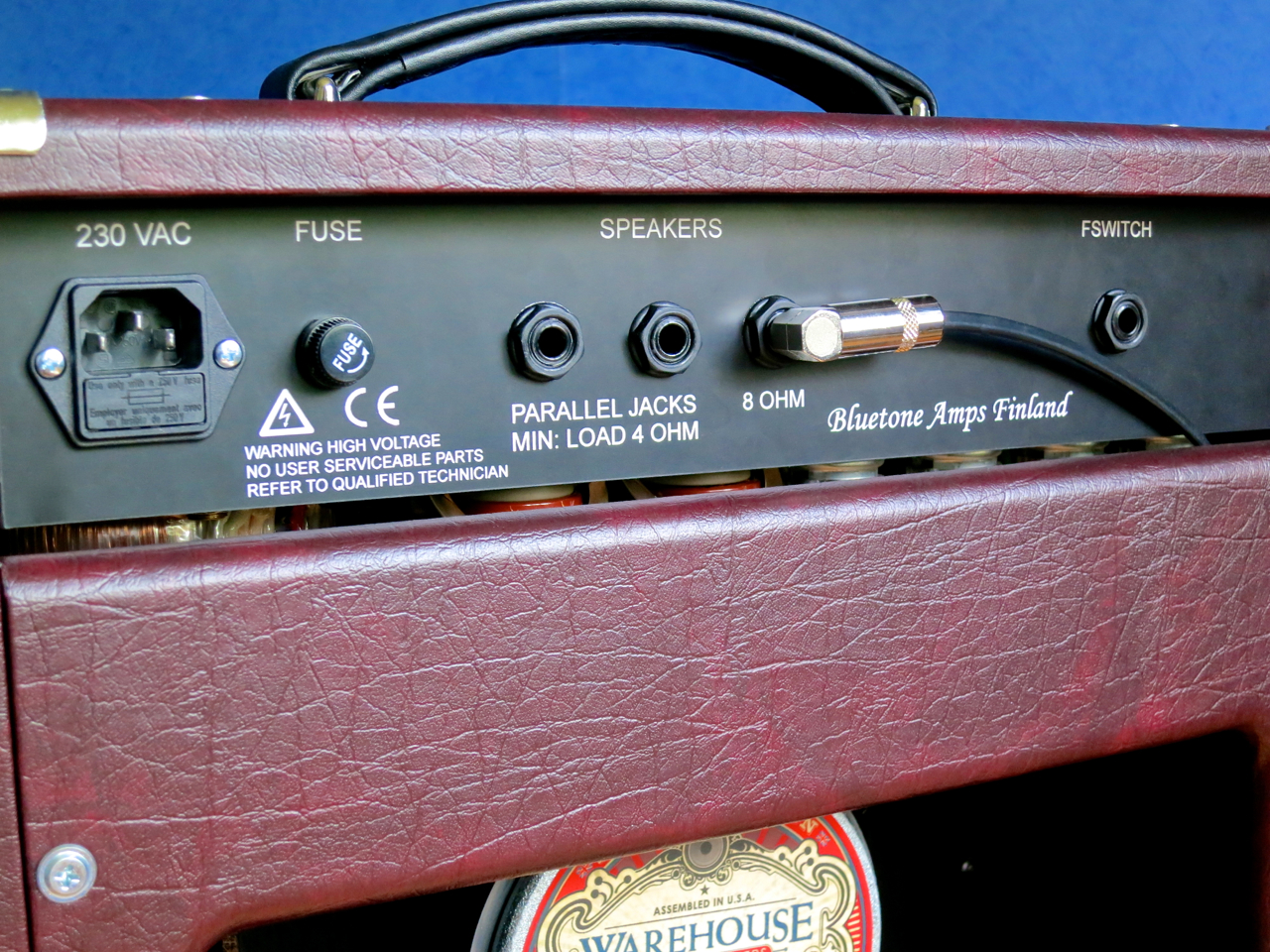
There’s a Fender-style open back on the Black Prince.
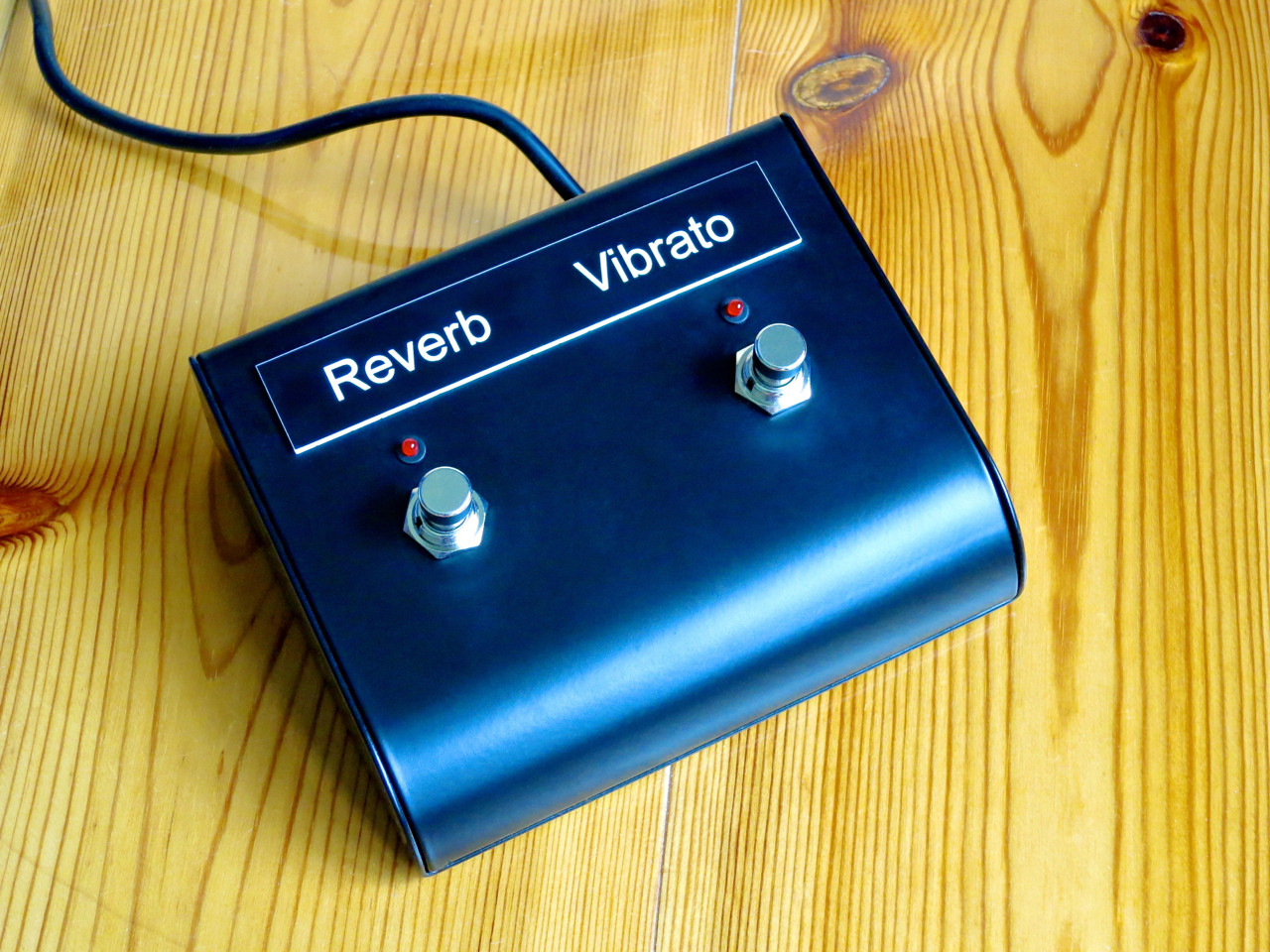
The back panel sports outputs for additional speakers, as well as the jack for the combo’s two-button footswitch unit (included).
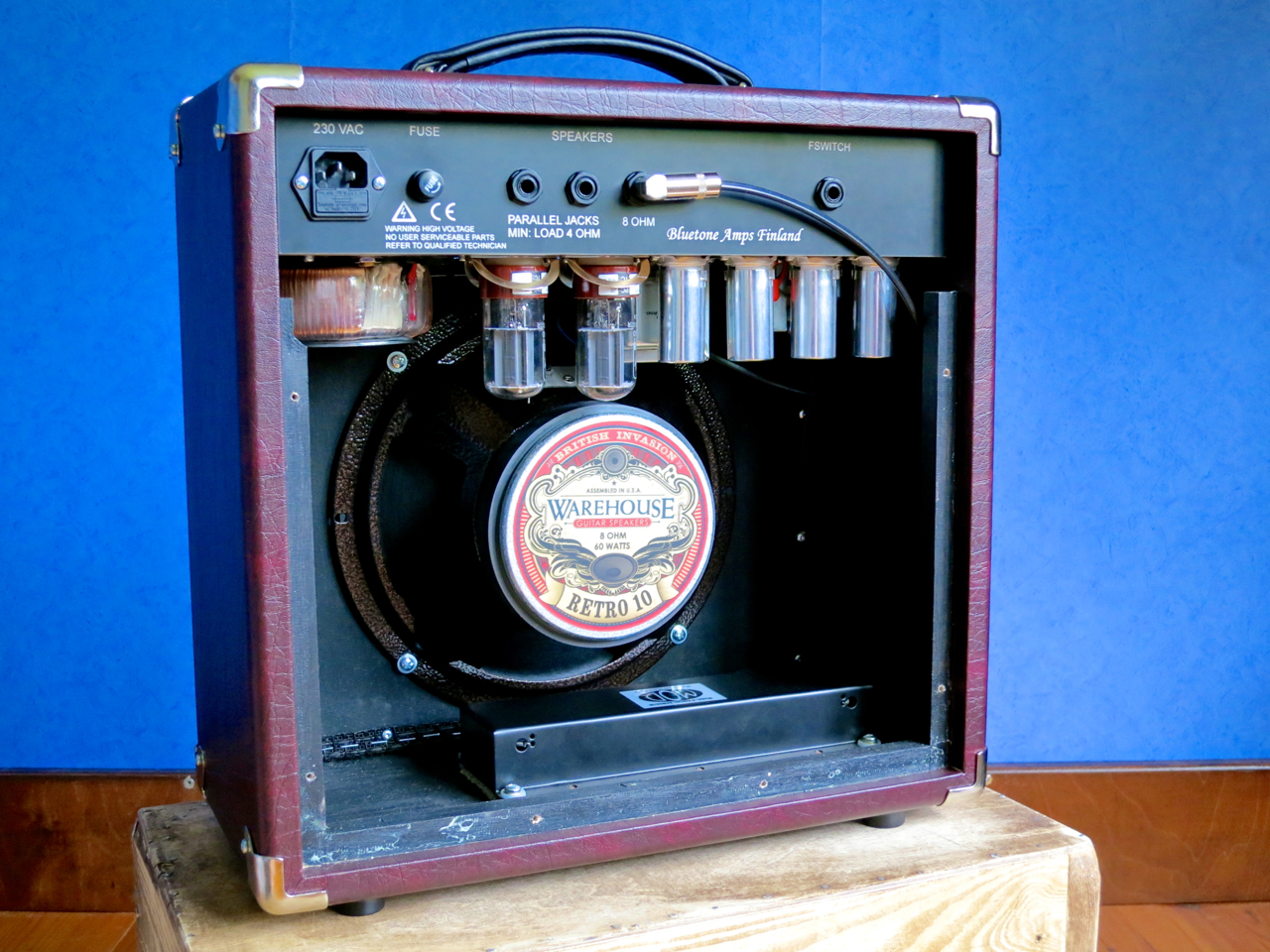
This is what the Bluetone looks like with the open back removed.
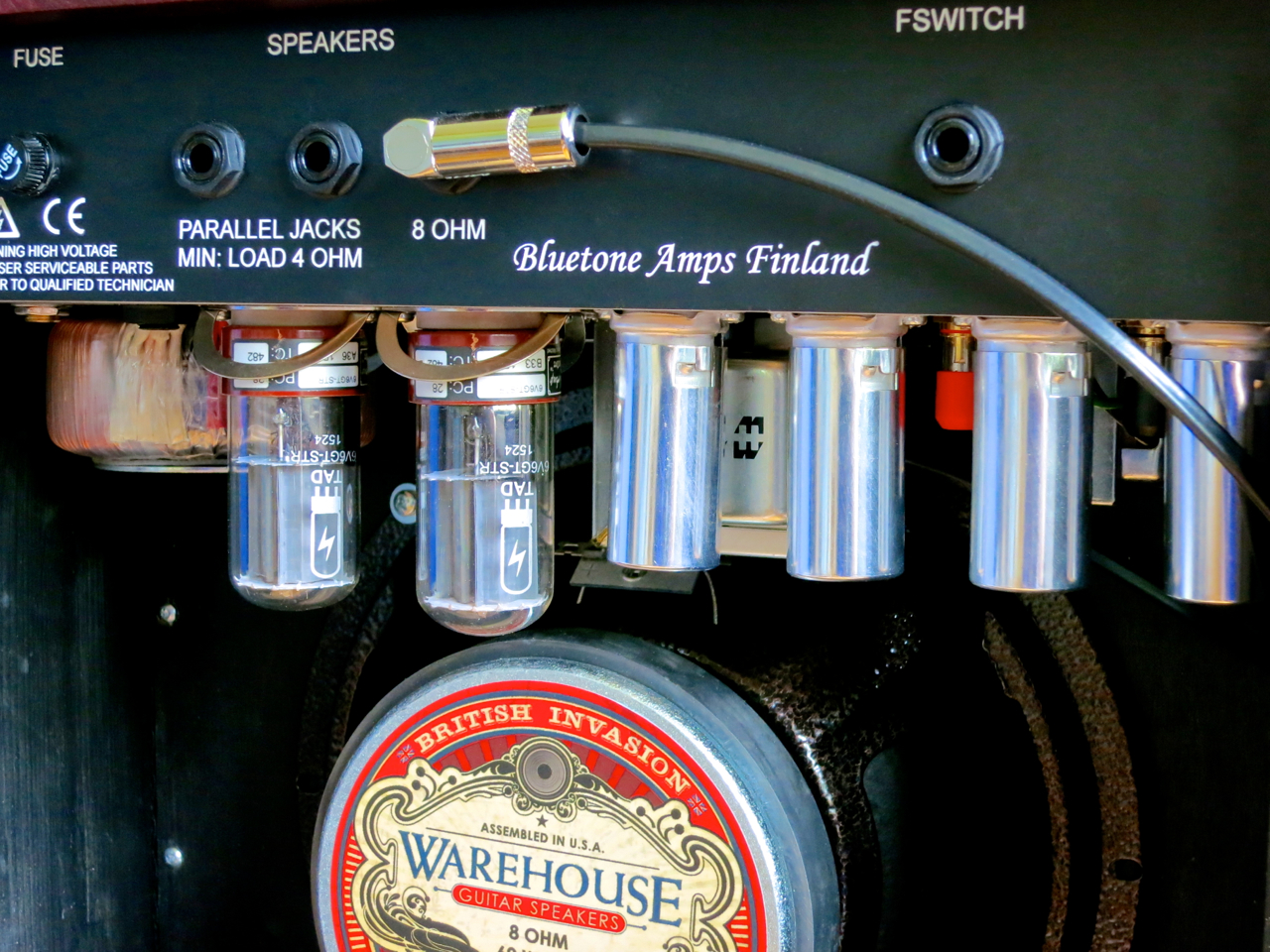
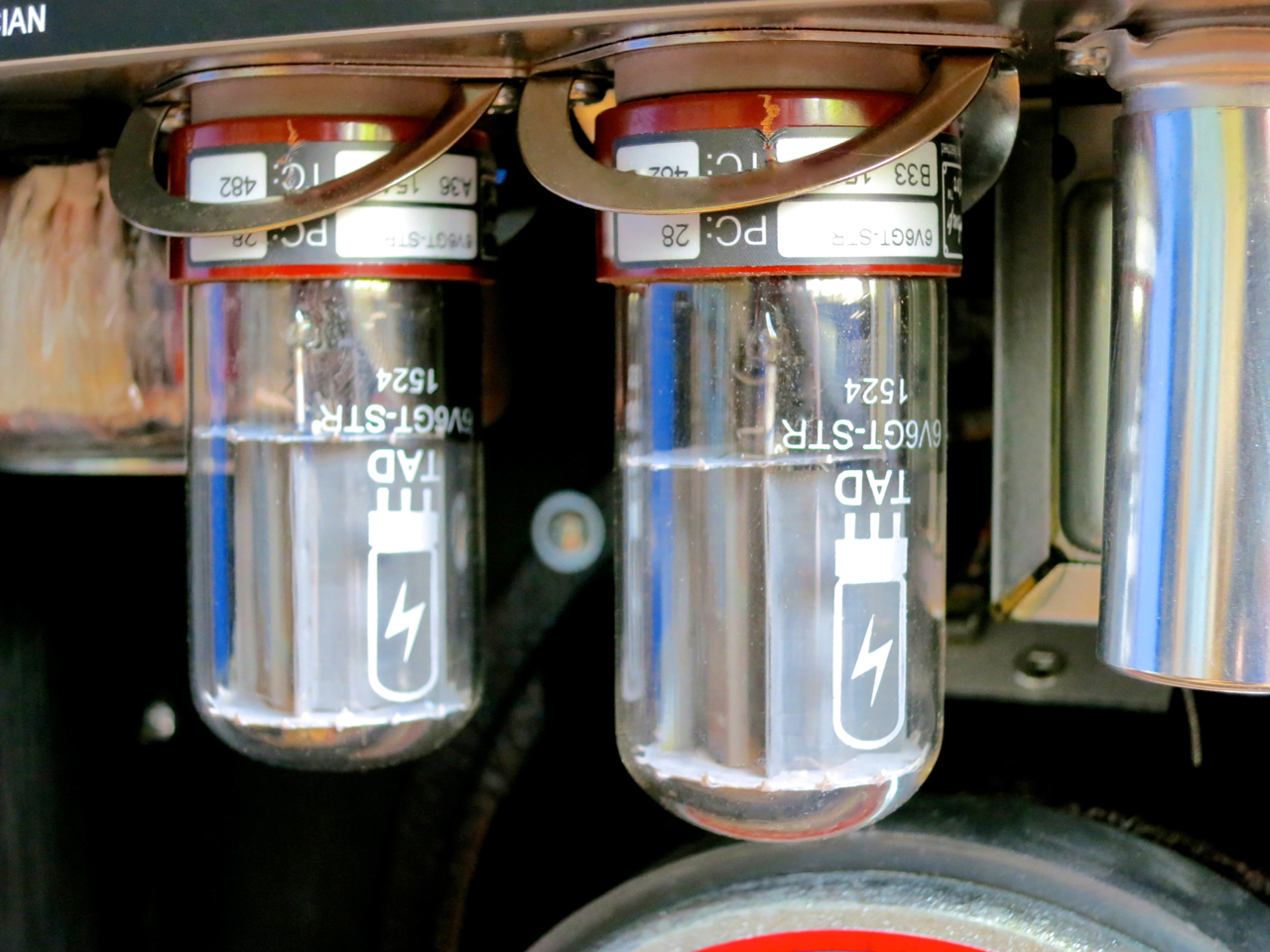
The Black Prince Reverb combo is an all-valve machine, loaded with the following tube types (from right to left):
The first 12AX7 is the combo’s preamp valve. The spring reverb circuit uses a 12AT7 and a 12AX7 valve. The 12AX7 works as the amp’s phase-inverter and tremolo tube.
The Black Prince leaves Bluetone’s workshop equipped with a pair of 6V6GT power valves, which will translate to about 20 watts of output. You can also re-bias this amp for a pair of 6L6GCs, which would boost the output to almost 30 watts.
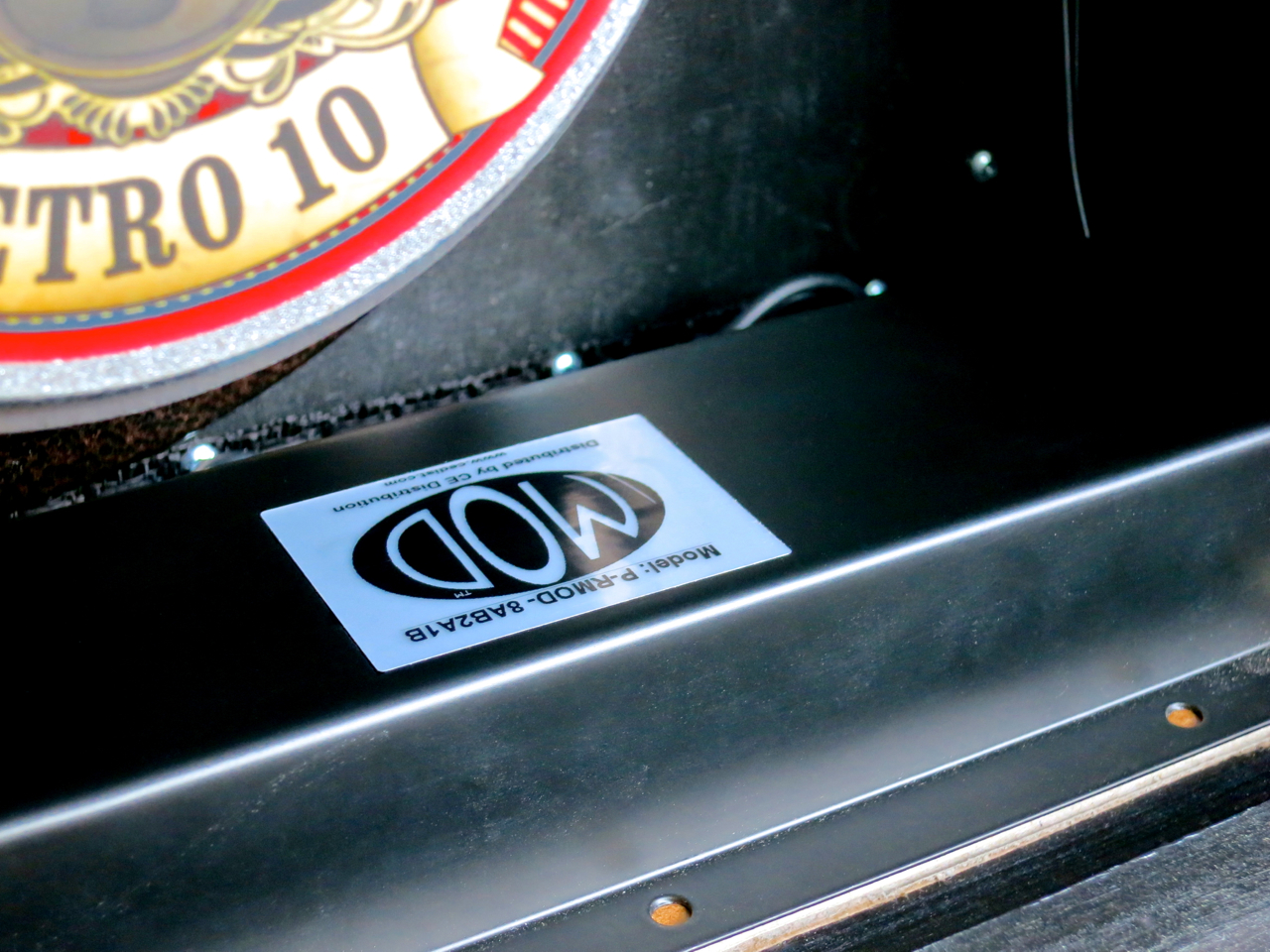
This combo’s short reverb tank is supplied by MOD.
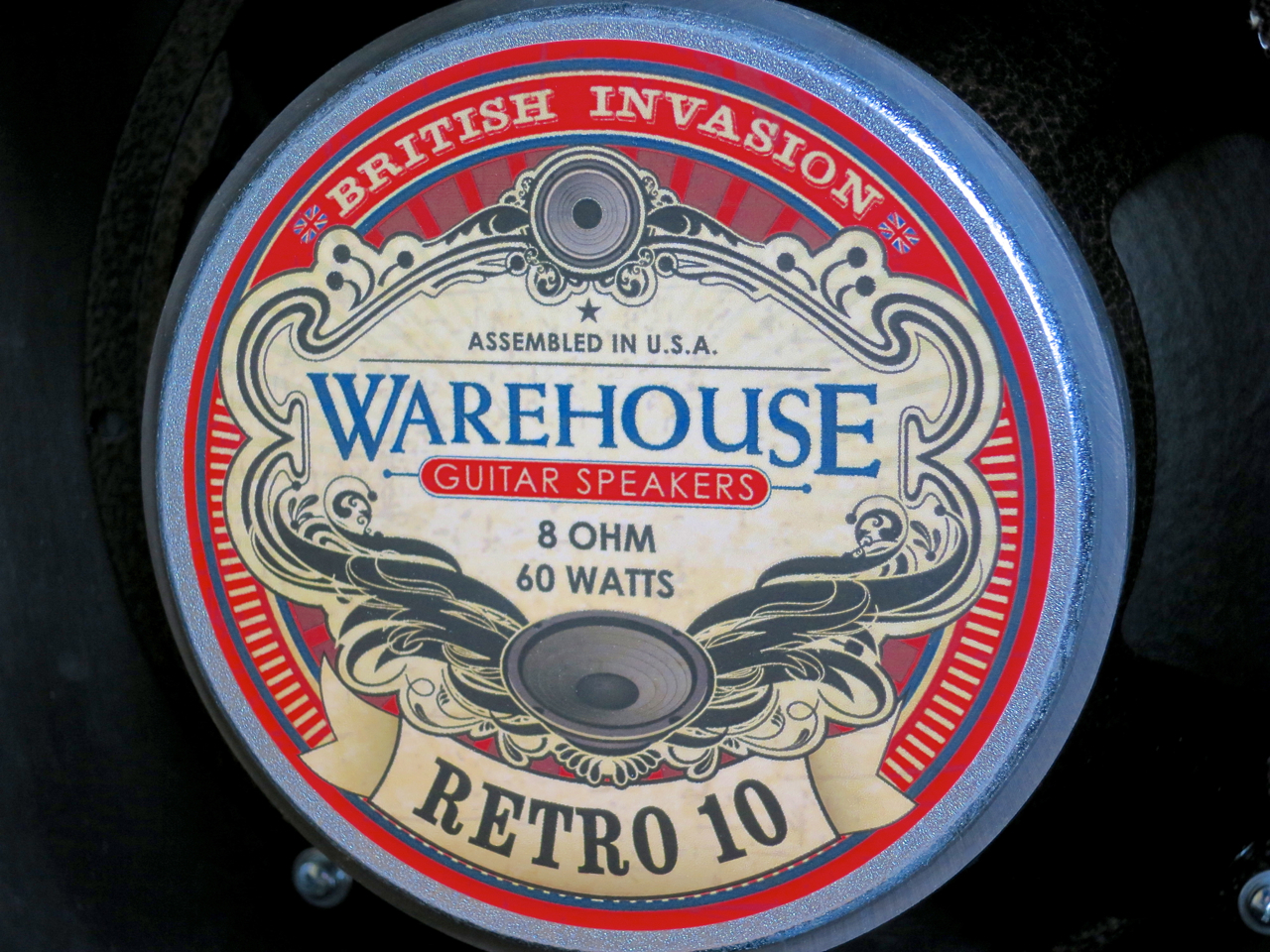
Bluetone have chosen a Warehouse Guitar Speakers Retro 10-speaker for their new combo, even though this model is distinctly different from the old Jensen speakers in vintage Fender designs.
This choice is, of course, deliberate and based upon many listening tests:
The WGS Retro, which is made to withstand far more output than this combo can deliver, keeps the Black Prince Reverb’s tones clean and dynamic under all circumstances. This speaker’s British character also makes the Bluetone-combo sound larger and fatter than you’d expect.
****
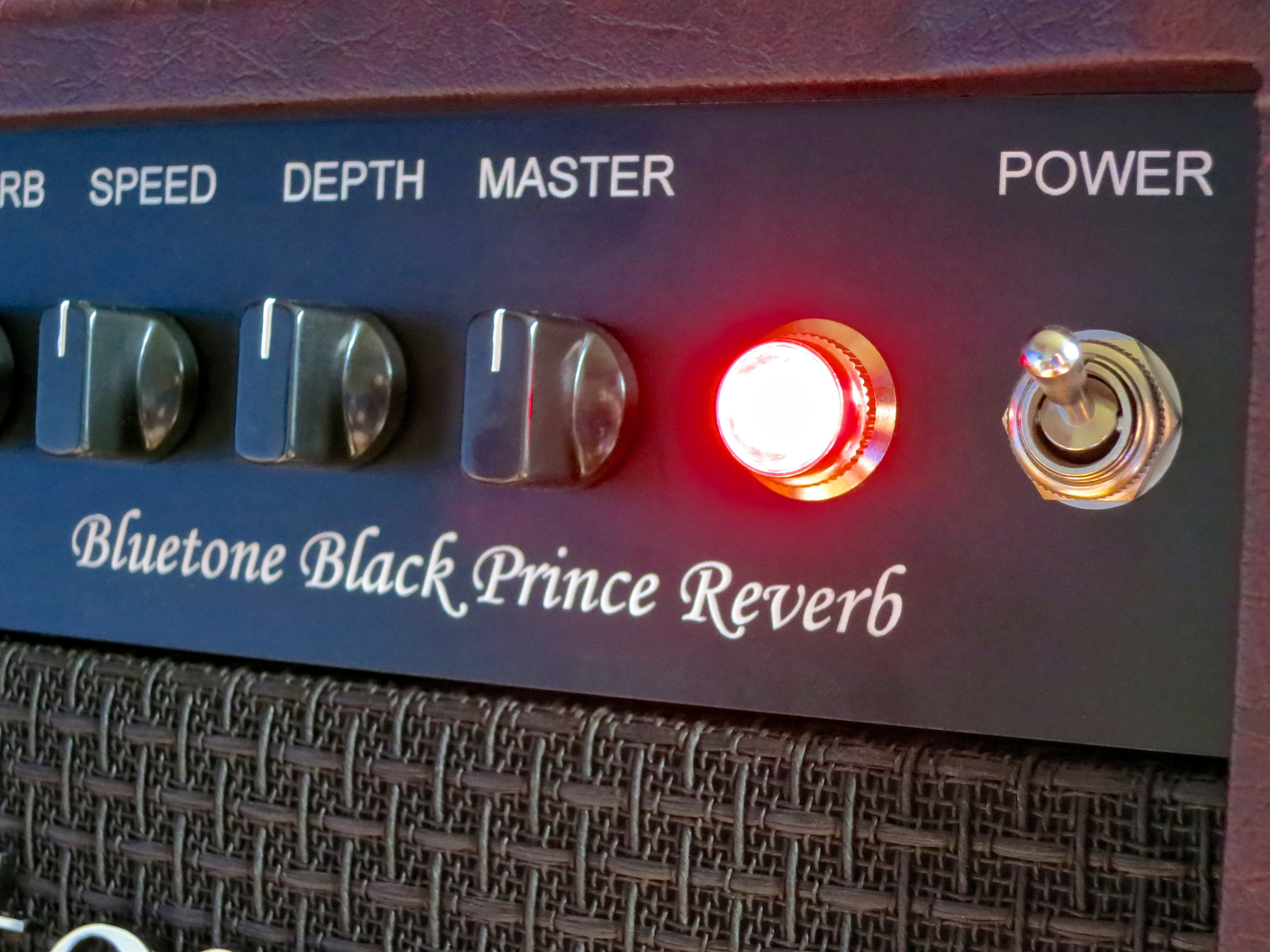
Oh, boy, this is a sound you cannot get enough of! At least in my case only a minute or two of playing the Black Prince was enough to make me consider getting myself in debt.
It’s hard to put into words what that special ingredient is, but this is what a clean electric guitar should sound like! This combo sounds clean, fresh and dynamic, but never clinical, cold or brittle. There a good dose of chime, but it doesn’t hurt your ears. The bass strings sound big, but never mushy.
The sound of the short MOD reverb tank is surprisingly dense and complex, and there’s more than enough of it to satisfy Surf Music fans. The Black Prince Reverb’s tremolo works like a treat, too, offering you anything from slow and soft to machine-gun mania.
Here’s a clip, recorded with a Fender Telecaster, gives you an idea of the Bluetone Black Prince Reverb’s dry tone, as well as its spring reverb and tremolo effects:
The Black Prince also excels in keeping your guitar’s own character intact. These three clips feature a Fender Telecaster…
…an Epiphone Casino…
…and a 1970s Japanese ”lawsuit” copy of a Gibson ES-335:
This combo’s fantastic clean tone is a fantastic platform for pedal addicts. The demo track was recorded using an analogue chorus pedal, a tube screamer-type overdrive, as well as the amp’s built-in reverb and tremolo.
The rhythm parts were played on a Fender Stratocaster, while the lead was played on a Hamer USA Studio Custom:
****
In my view, Bluetone’s Black Prince Reverb is a top-drawer choice as a combo for use at home or in the studio. It’s also great for smaller gigs, when too much noise on stage can be a problem, or you can mike it up for larger venues.
The Black Prince Reverb is a nicely compact boutique-grade valve combo offering fantastic cleans, as well as fine reverb and tremolo effects.
This amp hasn’t been spoiled by unnecessary ”tube voodoo” or distracting graphic. I’m all for the clean and understated looks this Bluetone has to offer!
This is a handmade, Finnish boutique combo, offered at a very fair price.
****
Bluetone Black Prince Reverb
1.500 €
Contact: Bluetone Amps
****
Pros:
+ value-for-money ratio
+ handmade in Finland
+ workmanship
+ fine spring reverb and valve tremolo
+ sound
+ master volume-control
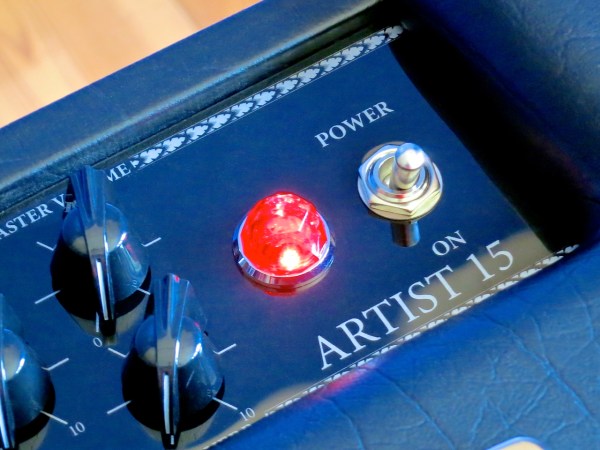

In a way Blackstar Amplification’s new Artist Series breaks new ground for the British amp maker.
Until now most of Blackstar’s designs were based on the typically British tones of EL34 and EL84 power tubes, often associated with Marshall designs.
The new Artist combos feature power amps built around 6L6 valves, as used in many of Fender’s classic designs. According to Blackstar the new Artist amps are designed to combine the best bits of the typically British Class A tone (with two ECC83s in the preamp section) with the dynamic range and chiming top end of a 6L6 power section.
Kitarablogi.com was given the opportunity to take the smaller Artist model – the Blackstar Artist 15 (current price in Finland: 799 €) for a spin.
****

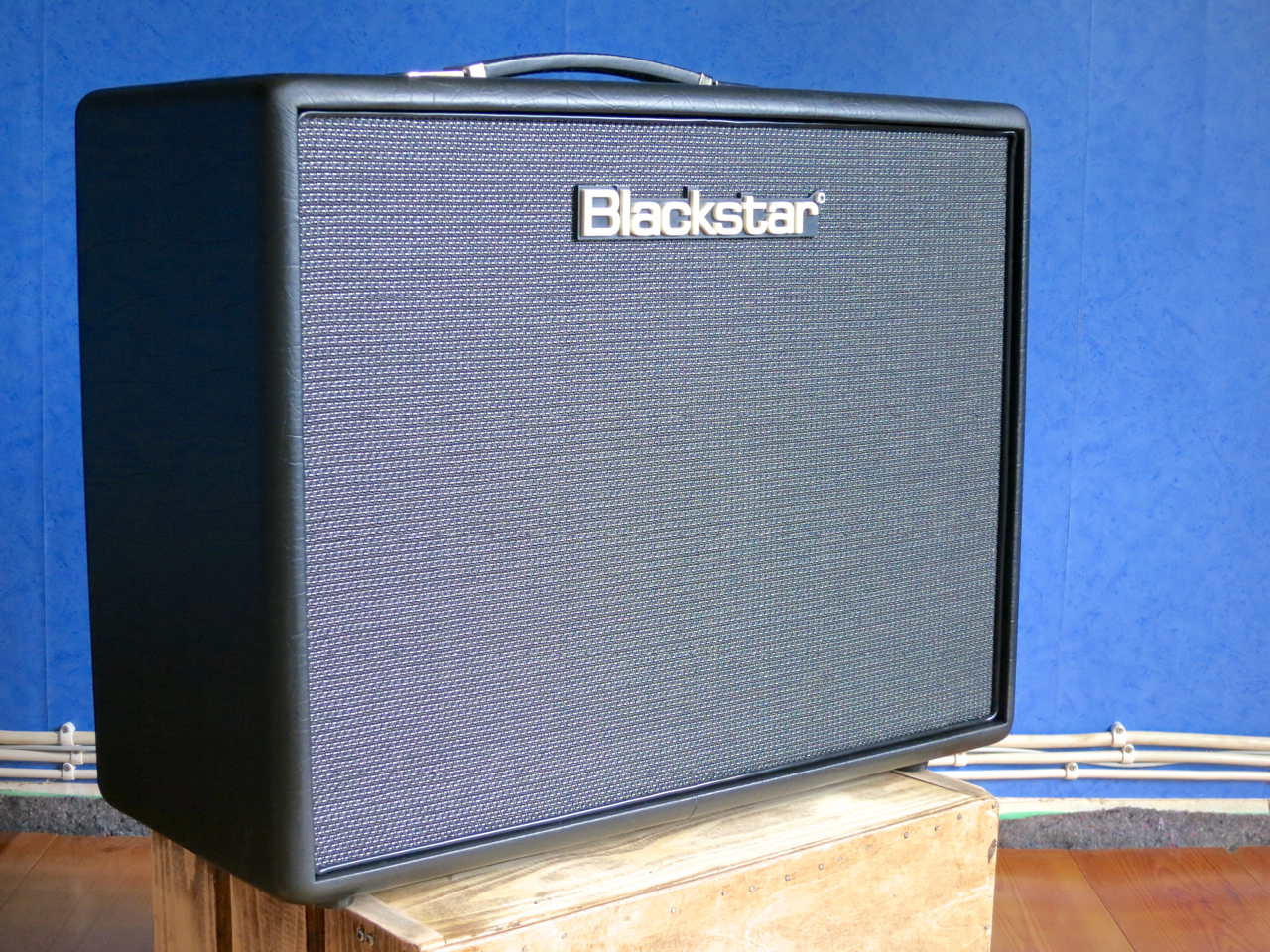
The Blackstar Artist 15 looks like a typical Blackstar combo – black vinyl covering and a dark grey grille cloth.
For a combo that comes equipped with a single 12-inch speaker the amp’s cabinet is rather large. The reason for the cabinet’s size becomes clear when you look at the Artist 15 from behind.
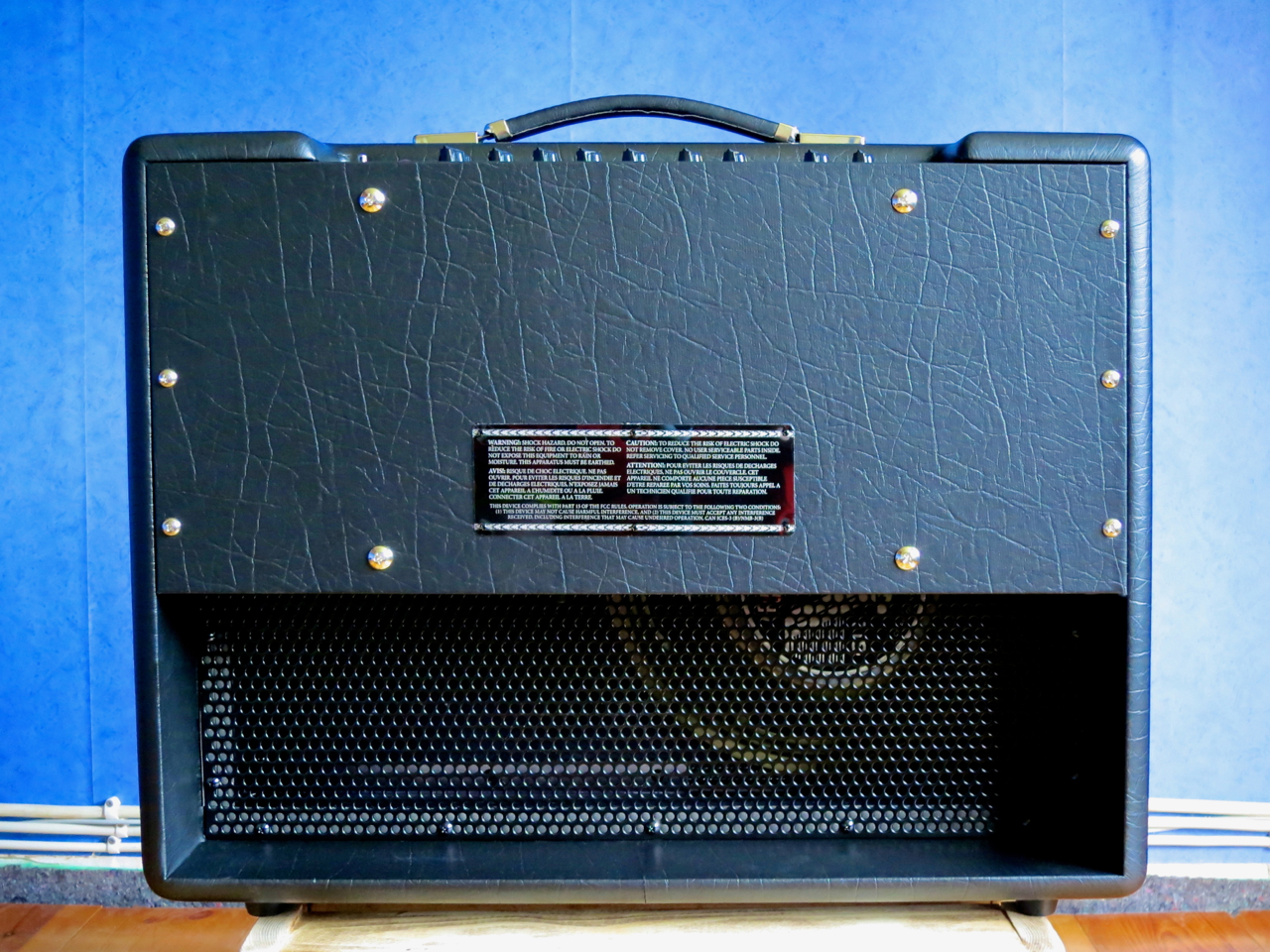
The combo’s Celestion V-Type G12-speaker has been placed deliberately to one side of the combo. Blackstar doesn’t tell us exactly why this configuration has been chosen, but I’d wager that the idea behind this is to harness the benefits of a large, stiff front baffle and a larger cabinet – namely: a crisp attack, and a warm, full bottom end.

Celestion’s V-Type comes loaded with a ceramic magnet. According to Celestion this speaker combines a classic tonality with a modern power rating.

The Blackstar’s back panel sports a whole array of connectors for things such as external speaker cabinets, a speaker-emulated line out, an effects loop, as well as the channel footswitch that comes with the amp.
****

Blackstar’s Artist 15 is rated at 15 watts of output and features two preamp channels:
Channel 1 is the so-called boutique channel, designed to put the least possible amount of components between your guitar and the speaker. This channel sports only two controls – Volume and Tone – before the signal is sent on to the master section.
Channel 2 gives you the full Blackstar-experience – you’ll find separate Gain and Volume knobs, a three-band EQ section, as well as Blackstar’s proprietary ISF-control. Setting the ISF knob to zero will result in bright and sinewy Fender Blackface-style sounds, while ISF at full on will give you muscular, Marshall-type tones from this channel.
In addition to the Master Volume control, the Artist 15’s master section also includes the level control for the combo’s very nice digital reverb.
Channel 1 clearly has a much rounder and warmer basic tonality than the (more versatile) second channel. With clean settings Channel 1 will give you a fuller mid-range compared to the more Fender-like, chimey Channel 2.
Here’s what Channel 1 sounds like played clean with an Epiphone Casino (first clip) and a Gibson Melody Maker SG (second clip):
…and here’s Channel 2 played with the same guitars:
The Artist 15’s channels also differ in the amount of gain they offer:
Channel 1 will take you from clean all the way to Rockbilly-style breakup and traditional Blues overdrive, while Channel 2 offers more than enough dirt for chunky Rock tones.
Here’s Channel 1 at full gain (Casino and Melody Maker SG):
…and here are two clips of Channel 2 with Gain full up:
The rhythm guitar tracks on the demo song have been recorded with a 1970s Japanese ES-335 copy (made by Kasuga; left channel) and a maple-necked Fender Stratocaster (right channel). The lead is played on the Kasuga:
****
The new Blackstar Artist 15 isn’t your typical two-channel combo, which offers you a clean channel and a dirty channel. This is a valve amp that’s all about choices and flexibility.
Blackstar have noticed that pedalboards are becoming en vogue again, which is why their new Artist combos offer enough headroom for clean tones in both of their two channels.
For pedal users the big advantage of the Artist 15’s architecture lies in the fact that the combo offers two high-quality clean variants in the same amp. Channel 1 is a back-to-basics boutique-/AC30-style channel, while Channel 2 offers a much broader range of clean tones, all the way from Fender to modern Marshall.
Of course, you’re free to use the Blackstar Artist 15 in the traditional channel-switching fashion, too, which will give you a top-notch clean sound from Channel 1, and a very versatile array of quality overdriven and distorted tones from Channel 2.
Either way – the Blackstar Artist 15 hits bull’s-eye, in my opinion, and I can only recommend checking one out for yourselves.
****
Blackstar Artist 15
799 €
Finnish distribution: Musamaailma
Pros:
+ workmanship
+ clean headroom
+ versatile amp sound
+ great reverb

Tällä kertaa Kitarablogi pääsi testaamaan kahta kiinalaisen Farida Guitarsin valmistamaa teräskielistä kitaraa:
Farida M-2 on pienikoppainen parlour-kitara, kun taas Farida B-10E edustaa firman näkemystä mikitetystä Gibson-tyylisestä dreadnought-mallista.
****
Parlour-kitaraksi (tai parloriksi) kutsutaan nykyään yleensä kaikkia sellaisia teräskielisiä akustisia, joiden koppakoko on pienempi kuin Martin Guitarsin OM- tai 000-kitaroissa. Vaikka parlour-mallien suosio on kasvanut selvästi viime vuosina, on edelleen suhteellisen hankalaa löytää edullisia tai keskihintaisia lajinsa edustajia.
Farida Guitars M-2 (465 €) tarjoaa kaikki parlourille tyypilliset ominaisuudet, kuten lyhyen mensuurin (62,8 cm/24,7 tuumaa), kaulaliitoksen 12. nauhan kohdalla, sekä avoimen viritinlavan.
M-2:n kokopuinen kansi on kaunista punaseetriä, kun taas kitaran sivut ja pohja veistetään mahongista.
Kaula on liitetty runkoon liimaamalla.
Parlour-mallin avoimet virittimet toimivat moitteettomasti.
Sekä Faridan satula että M-2:n kompensoitu tallaluu ovat Tusq-tyylisestä keinotekoisesta luusta.
Faridan käyttämä nauhamateriaali on suhteellisen kapea ja keskikorkea.
M-2:n ruusupuuotelaudalla on kaunis punertava sävy.
Kokonaan mattaviimeistelty parlour-malli on erittäin siististi rakennettu akustinen soitin.
****
Farida B-10E (425 €) on firman varsin edullinen näkemys Gibson-tyylisestä slope shoulder (tai round shoulder) dreadnought-mallista. Ero Martin-tyyliseen dreadnoughtiin löytyy – nimen mukaisesti – Gibson-tyylisen kitaran kaikukopan pyöreistä hartioista, joilla on jopa pieni vaikutus soundiin.
B-10E:n kokopuinen kuusikansi on viimeistelty kiiltävällä sunburst-värityksellä.
Myös mahongista tehty kaikukoppa on kiiltäväksi lakattu, kun taas mahonkikaulassa on mattaviimeistely.
Ainakin omasta mielestäni Faridan ruusupuuviilulla koristeltu viritinlapa näyttää kauniilta.
B-10E:hen on asennettu varsin laadukkaita Schaller-tyylisiä virittimiä.
Myös Faridan dreadnought-mallissa yläsatula ja kompensoitu tallaluu ovat kovasta, itsevoitelevasta muoviseoksesta.
B-10E-malliin on asennettu laadukas Fishman Sonicore-piezomikrofoni, sekä Isys T -etuvahvistin.
Etuvahvistimesta löytyy volume-säätimen lisäksi vaihekääntäjä (feedback-ulinaa vastaan), Contour-niminen esi-EQ, sekä digitaalinen viritysmittari.
Mikkijärjestelmän lähtöjakki on yhdistetty kitaran hihnatappiin, ja helppokäyttöinen paristolokero löytyy sen vierestä.
B-10:n nauhatyö vaikuttaa (omassa hintaluokassa) varsin laadukkaalta.
****
Monille parlour-snobeille – ja heitä on olemassa – ainoa oikea kaulaprofiili tälle kitaratyypille on melko leveä ja suhteellisen massiivinen V-poikkileikkaus. Totta, tällainen ”veneprofiili” on eittämättä autenttinen, mutta monelle nykypäivän soittajalle kuitenkin vieras ja hankala.
Farida Guitarsin M-2 on onneksi tehty nykysoittajia varten, ja sillä on erittäin mukavantuntuinen, suhteellisen matala D-kaula.
Mukavuudesta puhuen: M-2 on erittäin kevyt ja kompakti kitara, jota on todella helppo pitää sylissä. Pienen kokonsa ansiosta tällainen parlour-kitara on oiva valinta – Folk-musiikin ystäville lisäksi – myös nuorille ja naisille.
Farida M-2 -kitaran soundi on parlour-kokoiselle teräskieliselle hyvin tyypillinen. Bassorekisteri on hyvin tiukka ja kevyt, keskirekisteriä leimaa tietynlainen laatikkomaisuus, ja avoin diskantti on hyvässä tasapainossa sen kanssa.
M-2:ssa on ihanteellinen soundi sormisoittoon, koska parlour-kokoisessa kitarassa vivahteikas keskialue ei jää bassorekisterin jalkoihin:
Pieni koppa ei tarkoita pientä soundia, ja pikku-Farida toimii myös plektrasoitossa todella hyvin. M-2-mallia on myös helppo äänittää:
Demobiisissä soitetaan komppiosuudet molemmilla testikitaroilla. Farida M-2 kuluu vasemmalta, ja B-10E oikealta kanavalta:
****
Farida B-10E tarjoaa sekin mielestäni todella paljon soittamisen iloa hyvin kohtuulliseen hintaan.
Dreadnought-mallin kaula on hieman pyöreämpi tapaus, ja kutsuisin tätä kaulaprofiilia ovaaliksi C:ksi.
Tässä Faridassa riittää dreadnoughtille ominaista potkua, Gibson-mensuurin tuoman lämmön kanssa höystettynä.
B-10E:n koppakoko tuo mukanaan lisää voimaa sekä basso- että diskanttialueille.
Sormisoitossa bassonuotit ovat muhkeammat ja diskanteissa löytyy enemmän helinää:
Myös plektrasoitossa dreadnoughtin ”laajakulmasoundi” nousee mukavasti esiin:
Fishmanin Isys T -mikkijärjestelmä kuulostaa perusterveeltä, ja se toimii live-olosuhteissa moitteettomasti. Piezosoundi on aina kompromissi, mutta Isys T:n kanssa tullaan hyvin toimeen. Demopätkissä ensimmäinen fraasi on ilman Contour-EQ:ta, kun taas toisessa esi-EQ on laitettu päälle:
Demobiisissä soitetaan komppiosuudet molemmilla testikitaroilla. Farida M-2 kuluu vasemmalta, ja B-10E oikealta kanavalta:
****
Tämän testin perusteella täytyy todeta, että Faridan soittimissa on erittäin hyvä hinta-laatu-suhde. Sekä M-2 että B-10E ovat kauniita kitaroita, joita on mukavia soittaa, ja joilla on erittäin terveitä soundeja.
****
Farida Guitars M-2 + B-10E
M-2 – 465 €
B-10E – 425 €
Lisätiedot: Vantaan Musiikki
****
Plussat (molemmat mallit):
+ hinta-laatu-suhde
+ viimeistely
+ nauhatyö
+ akustinen soundi
+ helppokäyttöinen mikkijärjestelmä (vain B-10E)

 Kitarablogi.com – Finland's premier Guitar and Bass blog