
Lisätiedot: EM Nordic
Kitarablogi.com – Finland's premier Guitar and Bass blog
Juttuja kitaroista ja bassoista

Lisätiedot: EM Nordic

Kitarablogin testipenkissä kävi tällä kertaa kaksi eri Markbass bassokomboa – toisesta niistä on jo tullut varsinainen klassikko firman mallistossa, kun taas toinen on upouusi nimikkomalli erittäin soittajaystävällisellä hinnalla.
****

Markbass Mini CMD 121P (799 €) on yksi firman myydyimmistä kombovahvistimista, koska se tarjoaa hyvin kompaktissa, ja erittäin houkuttavassa paketissa kaikkia Markbassolle ominaisia tunnusmerkkejä ja ominaisuuksia.
Mini CMD 121P -komboon on asennettu tehokas, mutta kevyt neodyymikaiutin Markbassin keltaisella kartiolla, sekä diskanttitorvi (edestä katsottuna oikeassa yläkulmassa).

Kotelon takaseinässä on refleksiaukko. Kombo on päällystetty kestävällä mustalla mattomaisella materiaalilla, ja tuhdit kulmasuojat on tehty muovista.

Kombon ulkomitat ovat vain 38 x 43 x 36 cm (l x k x s) ja koko komeus painaa hiukan yli 13 kiloa, mikä tekee tästä Markbass-vahvistimesta helppoa roudata.
Vaikka Markbass Mini CMD 121P onkin kompakti, se ei missään nimessä ole hentoääninen, vaan se tarjoaa 300 wattia kahdeksan ohmin tai 500 wattia neljän ohmin impedanssilla.
Markbass rakentaa kombojaan upottamalla olemassa olevia vahvistin-nuppeja ylhäältä päin kaiutinkoteloon. Tässä tapauksessa käytössä on Combo Head II -niminen vahvistinyksikkö.

Vahvistimessa on aktiivijäähdytys pienellä ja hiljaisella tuulettimella. Reilunkokoinen tuuletusaukko kombon sivussa takaa tuloilman riittävyyden.

Markbass-vahvistimien erinomainen soundi on italialaisvalmistajan tärkein valttikortti ja ominaisuus:
Combo Head II:n kolme volume-säädintä on helppoa erottaa EQ:sta ja muista nupeista niiden keltaisen värin ansiosta. Tulopuolella on tarjolla gain-säädin (sinisellä ledillä), kun taas lähtöpuolelta löytyy master volumen lisäksi myös tasosäädin kombon DI-lähtöä varten.
EQ-osastolta löytyy nelikaistaiset taajuuskorjaimet, sekä Markbasson omat VLE- ja VPF-säätimet.
VLE tarkoittaa Vintage Loudspeaker Emulator, ja säätimen avulla voi siirtyä portaattomasti nykyaikaisesta, tuoreesta soundista vintage-maisesti kumisevaan soundiin.
Variable Pre-Shape Filter -nupilla (VPF) taas muokataan signaalia hieman Hi-fi-tyylisemmäksi.
Kombossa on myös sisäinen kaksikaistainen limitteri, joka suojaa Mini CMD 121P:n kaiuttimia ylikuormittumiselta, silloin kun vahvistin toimii täydellä volyymillä.

Koska nupin etupaneeli katsoo ylöspäin, suuntavat takapaneelin liittimet luonnollisesti lattiaa kohti. Ei ehkä paras mahdollinen ratkaisu pimeällä lavalla, mutta ajan kanssa käyttäjä varmasti oppii ulkomuistista liittimien järjestyksen ja sijainnin.
Tässä Markbassossa on balansoitu DI-lähtö omalla pre-/post-EQ ja ground lift kytkimillä. Lisäksi löytyy yksi efektilenkki, yksi lähtö viritysmittarille, sekä Speakon-liitin lisäkaiuttimelle.
****

Legendaarinen basisti Jeff Berlin on jo pitkään ollut Markbass-tuotteiden fani. Berlinistä on hiljattain tullut myös oman musiikkiopiston – The Players School of Music – johtaja, ja hän sai idean kehittää yhdessä Markbass-suunnittelijoiden kanssa edullisempaa, juuri opiskelijoille tarkoitettua Markbass-komboa.
Tämän yhteistyön hedelmä, Markbass CMD Jeff Berlin Players School (499 €), on suunniteltu kunnianhimoista aloittelijaa varten, mutta sopii varmaan myös kaikille sellaisille basisteille, jotka etsivät edullista, mutta hyväsoundista komboa. CMD JB Players School -kombon tarkoitus on antaa käyttäjälle aito Markbass-kokemus mutta muutamalla, Jeff Berlinin pyytämällä, muutoksella höystettynä.
Jeff Berlinin ihannesoundi on lämmin, iso ja orgaaninen. Mies myös vihaa tunnetusti diskanttitorvien käyttöä kaikissa bassokaapeissa. Näistä syystä Players School -malliin on suunniteltu erikoissyvä kaiutinkaappi, ja siksi kombo on myös varustettu ainoastaan yhdellä 15-tuumaisella ämyrillä.

Basistilegendan toivelistalla oli myös kestävä, komboon upotettu metallikahva. Vaikka Players School -mallin ulkomitat ovat selvästi Mini CMD -komboa isommat (46 x 46 x 48 cm), painaa vahvistin silti vain 16 kiloa.

Myös tässä kombossa on refleksiaukot takana…
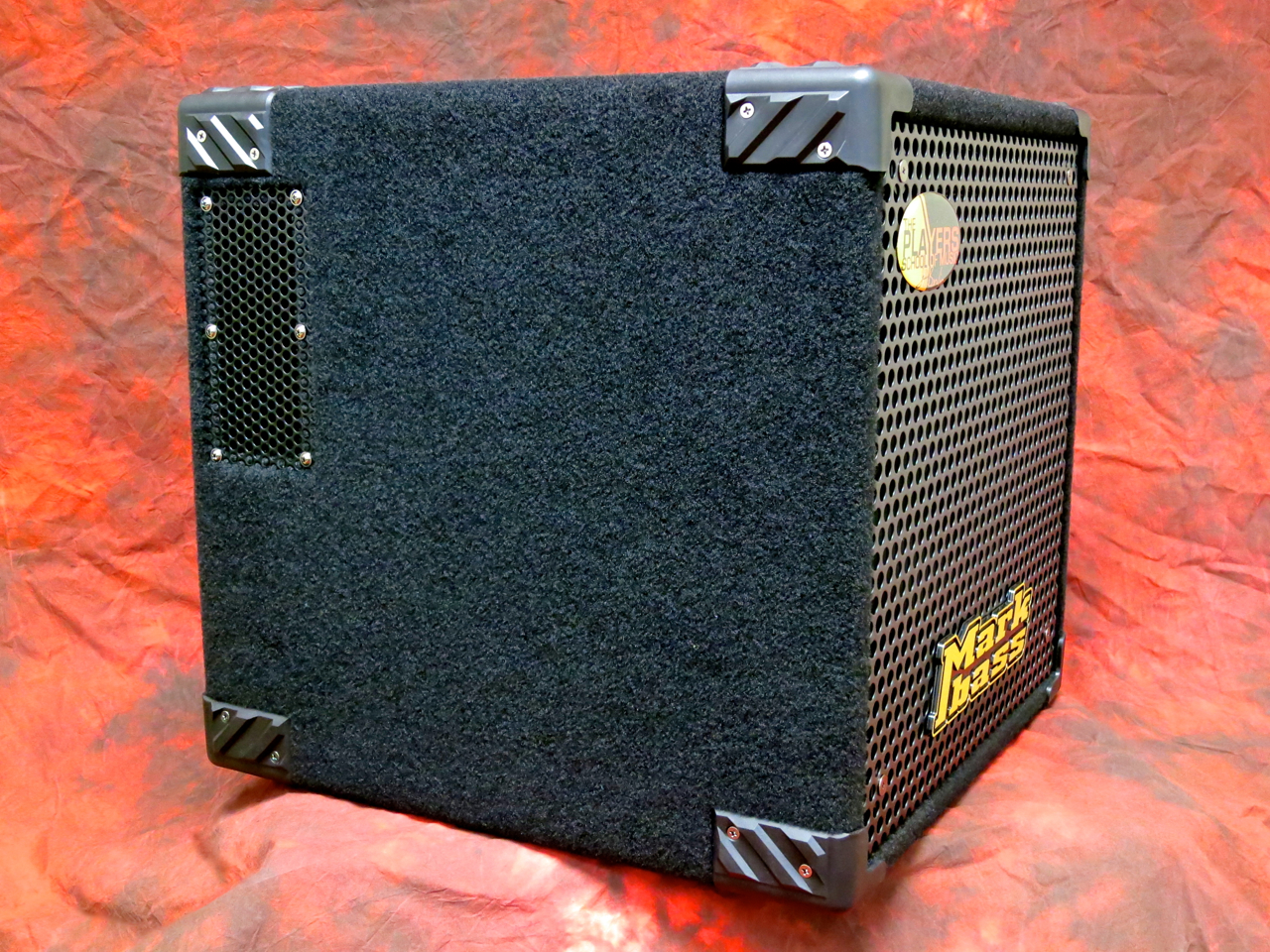
…sekä tuuletusritilä vahvistinyksikön tuloilmaa varten.

Players School -mallissa käytetään Markbassin Little Mark 250 nuppia, josta lähtee 150 wattia kahdeksalle ohmille (tai 250 wattia neljän ohmin impedanssille).
Vahvistimen ominaisuudet ovat miltei samoja kuin Mini CMD -kombossa – tarjolla on nelikaistainen EQ, ja sen lisäksi VLE- ja VPF-filtterit.

CMD JB Players School -vahvistimen takapaneeli on toiseen komboon nähden käytännössä täysin identtinen, ja sieltä löytyy DI-lähtö, efektilenkki, lähtö viritysmittarille, sekä Speakon-kaiutinlähtö.
****

On helppo nähdä miksi Markbass Mini CMD 121P -mallista on tullut näin valtava myyntimenestys italialaisvalmistajalle: On hyvin hankalaa löytää näin kompaktia ammattitason bassovahvistinta, josta lähtee samaa volyymiä, voimaa, potkua, monipuolisuutta, sekä näin laadukasta ääntä.
Mini CMD 121P:n ääni on hyvin täyteläinen ja tasapainoinen (vaikka kyseessä onkin ”vain” 12-tuumainen kaiutin), ja sen äänessä on herkullisen mehukas ja kärjekäs ylämiddle, sekä hyvin luonteikas ala-middle. Erittäin musikaalisesti toimivalla EQ-osastolla, sekä Markbasson VLE- ja VPF-säätimillä on helppoa löytää juuri se ”oma ja oikea” soundi.
Mini CMD:n omat tehot tulevat varmasti riittämään hyvin moneen keikkatilanteeseen. Tosi isoissa paikoissa taas voi käyttää komboa yksinkertaisesti sopivalla lisäkaapilla.
Ei tarvitse olla mikään selvännäkijä ennustamaan myös Markbasson CMD Jeff Berlin Players School -kombolle suurta menestystä. Tässä kun on tarjolla täysikokoinen Markbass-kombo 500:lla eurolla!
En tiedä miten he ovat tehneet sen mutta, itse asiassa, pienemmästä nimellistehostaan huolimatta Players School -kombo vaikuttaa lähes niin äänekkäältä kuin nyt testattu Mini CMD. Jeff Berlin Players School:n potku riittää varmasti hyvin moneen ravintola- ja hääkeikkaan, sekä pienille klubeille. Ja lisätehon tarpeessa voi aina käyttää lisäkaappia ja/tai kombon erinomaista DI-lähtöä kytkettynä PA:han.
CMD JB Players School -kombolla on todella herkullinen ääni, jossa riittää syvyyttä ja lämpöä, ja myös vahvistimen dynaaminen skaala on vaikuttava. Tulen itsekin yleensä erinomaisesti toimeen ilman erillisen diskanttielementin tuomia naksahduksia, ja ihastuin täydellisesti Jeff Berlin CMD -kombon nykyaikaiseen soundiin ja silkkiseen trebleen.
Olen äänittänyt molempia komboja samankaltaisilla säädöillä yhdellä single Shure SM57 -mikrofonilla. Näissä demoissa on aina sama järjestys: Jazz Bass (sormisoitto)/Mini CMD –> Rickenbacker (plektralla)/Mini CMD –> Jazz Bass/CMD JBPS –> Rickenbacker/CMD JBPS.
Tässä ovat pelkästään basso-osuudet:
Rummut lisätty:
Koko sovitus, mutta bassot miksattu eteen:
Ja viimeiseksi hieman ”tavallisempi” miksaus:
****
Markbass Mini CMD 121P & CMD Jeff Berlin Players School -kombot
Mini CMD 121P – 799 €
CMD JB Players School – 499 €
Maahantuoja: Musamaailma
****
Plussat (molemmat mallit):
+ koko
+ paino
+ monipuolisuus
+ teho
+ soundi
Miinukset (molemmat mallit):
– takapaneeli hieman hankalassa paikassa
This time Kitarablogi.com takes a look at two different Markbass bass combos – one is already a bona fide classic, while the other is a brand new, affordably-priced signature model.
****
The Markbass Mini CMD 121P (current price in Finland: 799 €) is one of the company’s best-selling combos, as it manages to put all of Markbass’ trademark features into a compact, hard-to-beat package.
The Mini CMD 121P comes loaded with a lightweight, but powerful 12-inch neodymium speaker with Markbass’ cool yellow cone, as well as a piezo tweeter in the top right corner.
The back-ported cabinet is covered in a hard-wearing carpet style exterior, and comes equipped with sturdy plastic corner protectors.
The whole combo measures only 38 x 43 x 36 centimetres (w x h x d) and weighs in at just above 13 kilos, which makes it easy to carry around by its single top handle.
Despite its diminutive dimensions the Markbass Mini CMD 121P packs a very hefty punch, delivering 300 watts at 8 ohms or 500 watts at 4 ohms.
Markbass tend to use existing amp head models in their combos by simply sinking the amp units into the cabinet from the top. This combo uses the Markbass Combo Head II amp, for example.
Ample ventilation is provided thanks to a side vent, as well as a (quiet-running) ventilator next to the bass-reflex port.
Markbass’ excellent preamp is definitely one of the features that originally put the Italian brand on the map:
The Combo Head II makes all the volume knobs stand out from the EQ-section by using yellow controls. We have an input gain control (with its corresponding blue indicator LED), a level control for the balanced DI output, and the master volume control.
The EQ-section comprises a four-band EQ, and Markbass’ special VLE and VPF controls.
VLE stands for Vintage Loudspeaker Emulator, and it allows you to take your tone from modern, fresh and wiry to vintage-style thuddy – and all points in-between – by the simple turn of a knob.
The Variable Pre-Shape Filter, or VPF, lets you dial in a pre-EQ curve with a dip in the lower mids, should you prefer a more Hi-Fi-type sound.
A built-in, automatic two-band limiter protects the Mini CMD 121P’s speakers from damage, even when you run the combo flat out.
As the amp head has been sunk into the cabinet with its controls facing up, the back panel faces floor ward. This isn’t the most practical of solutions on a dimly lit stage, but over time you will learn which connector is which.
The Markbass features a balanced DI output with pre/post-switching and a secure ground lift feature, an effects loop, a tuner output, and a Speakon connector for hooking up an expansion cabinet.
****
Bassist extraordinaire Jeff Berlin has long been a vocal supporter of Markbass amps. Now Mr Berlin and Markbass have come up with an affordably-priced, but fully-spec’d bass combo to go along with Jeff’s position as the director of The Players School of Music.
The new Markbass CMD Jeff Berlin Players School combo (current price in Finland: 499 €) is aimed directly at the ambitious beginner/intermediate bass player (or anyone on a tight budget), who wants maximum tone from a gig-worthy combo. The CMD JB Players School combo gives you the genuine Markbass experience with a couple of twists specifically requested by Jeff Berlin.
Mr Berlin likes to hear a fat, organic bass sound, and he simply hates all types of tweeters in bass amplifiers, which is why he requested a special, deep cabinet for the Players School –model, loaded with an all-black 15-inch speaker, but no treble horn.
Jeff Berlin also requested a chunky metal handle for the 46 x 46 x 48 centimetres cabinet. Despite its larger cabinet and speaker the CMD JB Players School model still only weighs just under 16 kilos.
This combo is also rear-ported…
…and features an air vent for the fan-cooled amplifier.
The Players School model comes equipped with a Little Mark 250 amp, which dishes out 150 watts to 8 ohms, or 250 watts at 4 ohms impedance.
The amp’s features are virtually identical to the Mini CMD’s, offering a four-band EQ-section with additional VLE and VPF knobs.
The CMD JB Players School offers the same array of outputs on its back panels, namely balanced DI, effects loop, tuner output, and Speakon speaker output.
****
It’s easy to see why the Markbass Mini CMD 121P has become such a mega seller for the Italian maker: There aren’t that many professional bass combos around that manage successfully to glean such an amount of volume, punch, versatility and sheer quality of tone from such a compact 12-plus-one setup.
The Mini CMD 121P’s basic tone is surprisingly full (for a 12-inch speaker) and balanced with a nice, juicy upper midrange nose, as well as lots of lower-mid character. The extremely musical EQ-, VLE- and VPF-controls make it very easy to dial in the sounds you hear in your head.
You will be able to do most of your gigs just by running the Mini CMD by its own. For larger venues, simply add one of Markbass’ bass cabs for additional girth and volume.
You don’t need to be a prophet to predict a huge success for Markbass’ CMD Jeff Berlin Players School combo, too. A genuine, full-blown Markbass bass combo for 500 euros, you’ve gotta be kidding me!
I’m not sure how they’ve managed to do this, but actually, despite its lower wattage, the Players School amp doesn’t seem that much quieter. I’m sure you can play most restaurant gigs, functions, and small clubs with this combo. And should you need more power, there’s always the option to use the excellent built-in DI output to connect to the PA-system.
The CMD JB Players School combo has a gorgeously round, deep and warm basic tone with a wide dynamic range. I’m not a huge fan of the additional click and trebly scratch that many tweeters seem to add to your bass sound, which made me feel right at home with the Jeff Berlin CMD, and its modern tone and silky top end.
I’ve recorded both combos with similar settings using a single Shure SM57. These demo tracks all follow the same sequence: Jazz Bass (fingerstyle)/Mini CMD –> Rickenbacker (plectrum)/Mini CMD –> Jazz Bass/CMD JBPS –> Rickenbacker/CMD JBPS.
Here are the combos on their own:
The same track with the drums added:
The full arrangement with the bass tracks mixed high:
And, lastly, a more balanced mix of the above:
****
Markbass Mini CMD 121P & CMD Jeff Berlin Players School combos
Mini CMD 121P – 799 €
CMD JB Players School – 499 €
Distributor: Musamaailma
****
Pros (both combos):
+ size
+ weight
+ versatility
+ power
+ sound
Cons (both combos):
– back panel access

Bass parts on demo song:
1. Squier (Japan) Jazz Bass/Mini CMD 121P – fingerstyle
2. Rickenbacker 4003/Mini CMD 121P – plectrum
3. Squier (Japan) Jazz Bass/CMD JB Players School – fingerstyle
4. Rickenbacker 4003/CMD JB Players School – plectrum
All bass tracks recorded using a Shure SM57.
****
Distributor: Musamaailma


Marco de Virgiliis’ company Markbass has made its mark spearheading the use of Class D power amps, which have made it possible to pack an amazing amount of output power into very small and lightweight bass amp heads. Markbass’ sister brand, DV Mark, concentrates on guitar amps, for the most part.
Markbass and DV Mark have recently changed their distributor in Finland. Their products are now distributed by Musamaailma, which celebrates its 30th year in business in 2015.
The combos in DV Mark’s Jazz series – the DV Little Jazz (current price in Finland: 393 €) and the DV Jazz 12 (462 €) – are very lightweight guitar amps, meant for professional use, and designed to concentrate solely on one thing – a top grade clean tone.
****
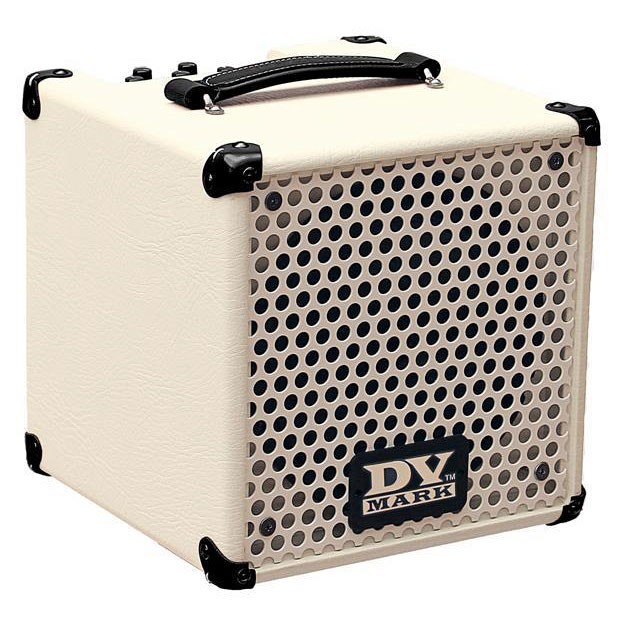
The DV Little Jazz is a surprisingly small combo in the shape of a cube (27 x 27 x 26 cm). Thanks to its diminutive size and small weight (just under seven kilos), you can easily take it on a bus or tram on the way to your next gig or rehearsal.
The cream white cabinet is home to an eight-inch speaker that was specially designed for this amp.
The corner protectors and the Little Jazz’ sturdy metal grille give this small combo a suitably chunky look.

The DV Jazz 12 is a good deal larger in size (43 x 42 x 30 cm), with a more traditional guitar combo look and a stylish cloth grille.
Thanks to its special-design, neodymium 12-inch speaker, the Jazz 12 weighs in at just under nine kilos.


Both combos have a partially open back, and they share an identical, fan-cooled amplifier module dishing out 45 watts of power.
The back panel offers a speaker output, a balanced DI output (XLR), as well as a headphones output and an on/off-switch for the internal speaker.

In addition to the Master volume, the control panel sports a three-band EQ section, a level control for the built-in digital reverb, as well as an auxiliary input for your phone, tablet or mp3-player.

****

The sound of both DV Mark Jazz-combos is really clean, warm and beautiful, but never lifeless or one-dimensional. The inherent character of your chosen guitar is kept intact, and the same holds true for all the intricacies of your playing technique.
You can then fine-tune the tone to your liking by using the musical EQ section.
A fantastically realistic spring reverb simulation works as the basis for the reverb sound in these DV Mark combos. To add even more character and depth to the overall tone, DV Mark’s designers have chosen to add some pitch modulation to the reverb. Adding reverb in moderate amounts, the modulation adds a chorus-like breadth to proceedings. At full-on Surf-style settings, though, the pitch modulation could prove to be a tad distracting to some guitarists.
My only real criticism regarding the Little Jazz and Jazz 12 combos has to do with their continuous fan-cooling. On stage the – relatively quiet – whoosh of the PC-type fan won’t be a problem, but in intimate recording studio settings some fan noise may end up on ”tape”.
I would really like to stress that, despite looking like a small practice amp, the DV Mark Little Jazz really is meant for active onstage use – it’s not a toy! The combo’s 45 W will be enough in many situations, and if you need more power, you can simply stick a mic in front of it or use the excellent built-in DI-output.
For such a small amp the Little Jazz sounds surprisingly big and warm, even though there’s a small trace of boxiness to the tone, when compared directly with the Jazz 12. DV’s Little Jazz sounds like the grown up guitar combo it really is.
Here’s a short clip using a Fender Telecaster and recorded with a Shure SM57:
This is what a double humbucker Hamer sounds like through the Little Jazz:
Here’s a short clip of the built-in reverb:
The DV Jazz 12 could be called the Little Jazz’ deluxe edition, thanks to its bigger and slightly more open sound. The larger speaker combined with a larger cabinet gives the brilliant clean tone more space to breathe. The end result is one of the best clean sounds I’ve ever heard.
The first clip has been played on a Telecaster:
Here’s a similar clip with my Hamer USA Studio Custom:
I’ve used an Epiphone Casino (equipped with Göldo pickups) for the demo track. The first pass is the Little Jazz, the second pass has been recorded with the Jazz 12:
****

The DV Mark Little Jazz and Jazz 12 are two great combos for the gigging guitarist. And I don’t just mean Jazzers.
These DV Mark combos are also fantastic choices for players who like to get their sounds from pedals or multi-effect boards. By combining a pair of Little Jazzes or Jazz 12s you’ll end up with a great-sounding stereo rig, which will still be easy to transport.
****
DV Mark Little Jazz + Jazz 12
DV Little Jazz – 393 €
DV Jazz 12 – 462 €
Finnish distributor: Musamaailma
****
Pros (both models):
+ lightweight
+ compact
+ ample output power
+ workmanship
+ sound
+ DI-output
Cons (both models):
– continuous fan-cooling


Yamaha has recently upgraded its very successful L-Series of steel-string guitars.
The most important update, at least in terms of sound quality, is the use of A.R.E.-treated spruce tops across the whole range of models. Yamaha’s proprietary Acoustic Resonance Enhancement is a wood treatment that uses heat, changes in humidity and pressure, to artificially age tonewoods. The aim is to produce brand-new acoustic instruments, which sound played-in from the get-go.
L-Series guitars come in three body sizes – LJ (Medium Jumbo), LS (Small Body = Folk-sized) and LL (Original Jumbo = Dreadnought-sized).
Kitarablogi had the pleasure to take a Yamaha LL6 ARE (current price in Finland: 534,90 €) for a spin.
****

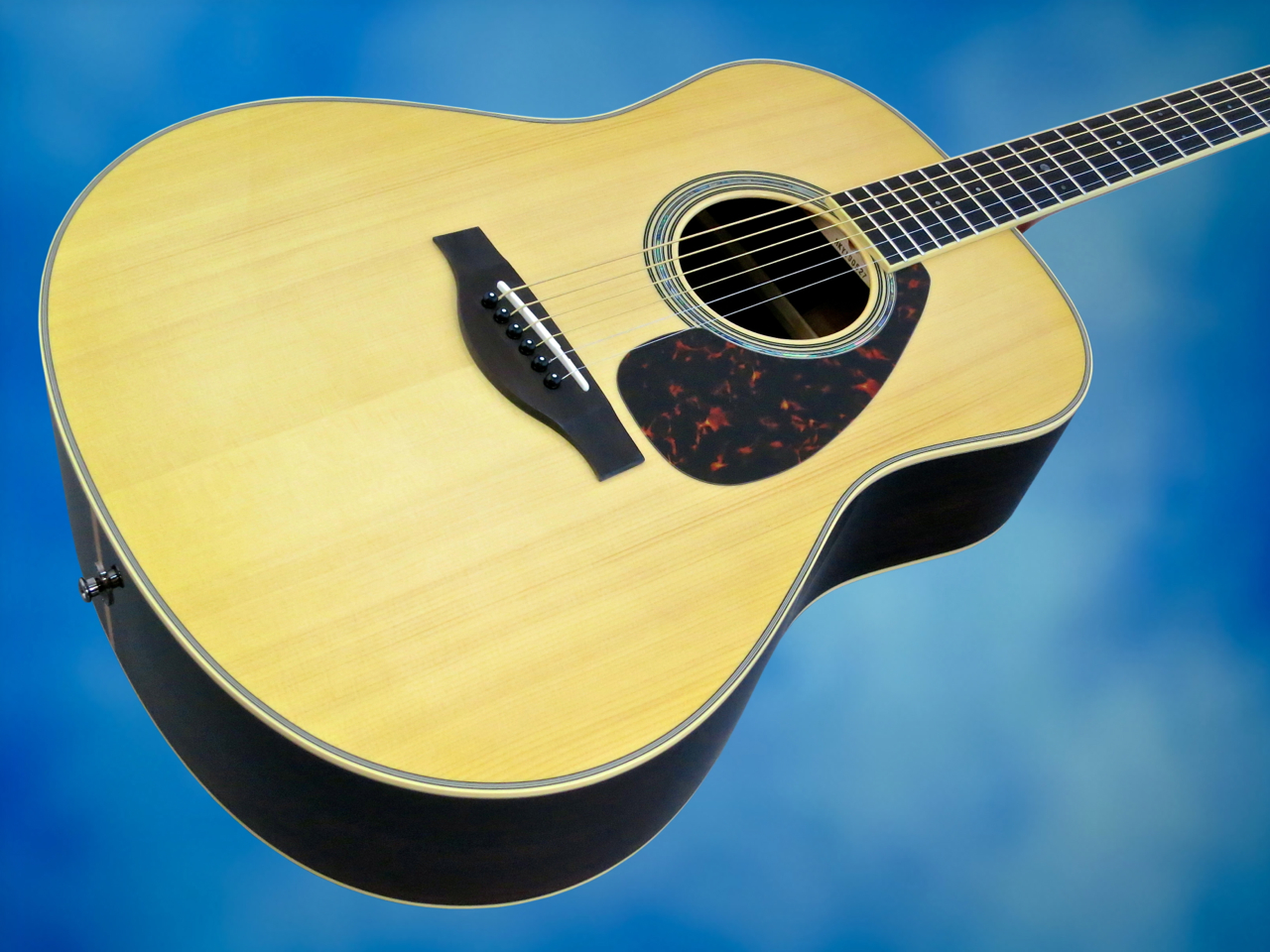
Yamaha’s Original Jumbo body style is the company’s own design, set apart from a traditional Dreadnought by its slimmer shoulders and its more rounded lower bout. The result looks nicely balanced.
Yamaha uses solid Engelmann spruce for all of their L-Series tops. Engelmann spruce has a reputation for sounding warmer and less constricted, when compared to Sitka spruce.
The LL6 is available in four different finishes – natural, brown sunburst, black and Dark Tinted (a deep reddish-brown hue).
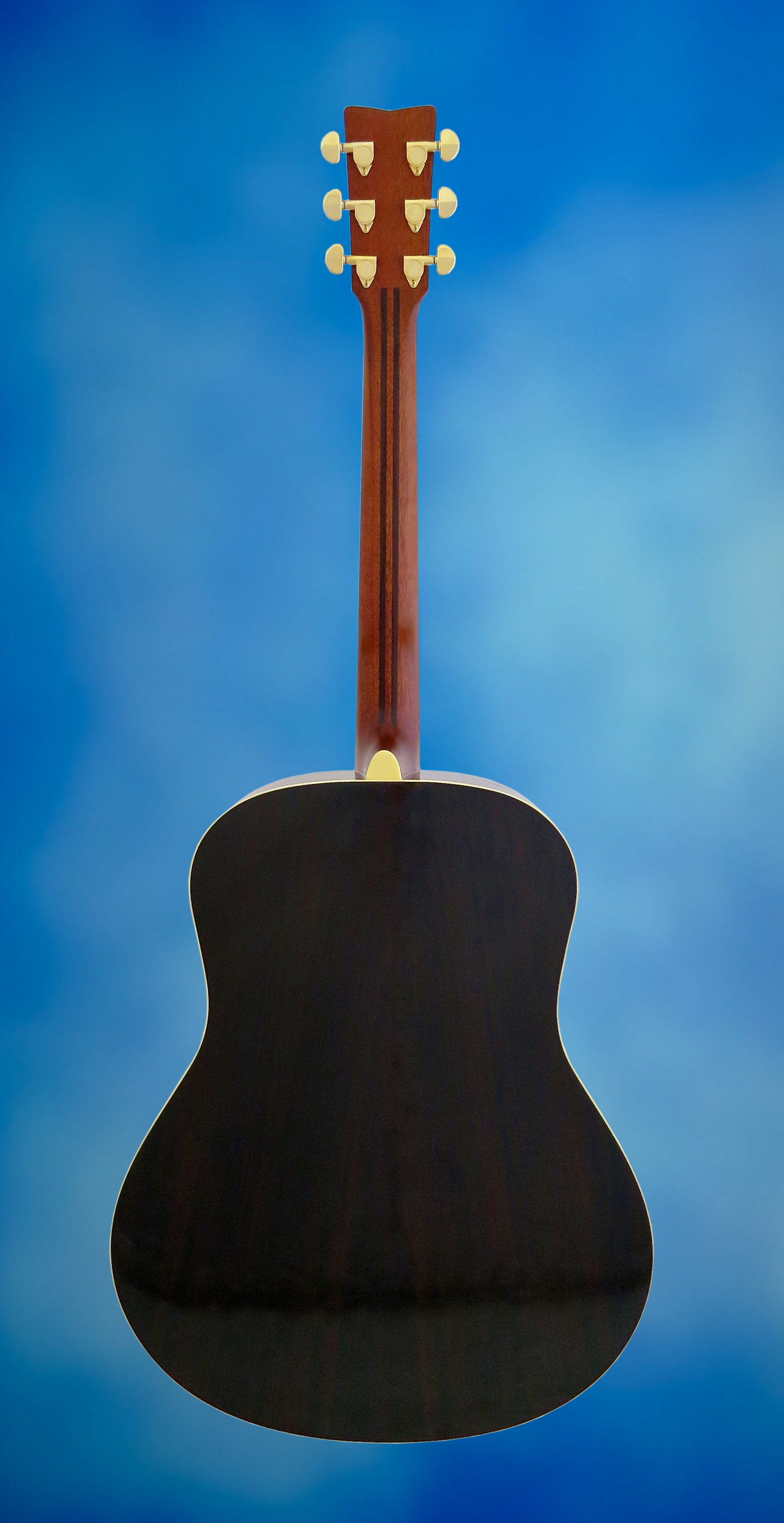
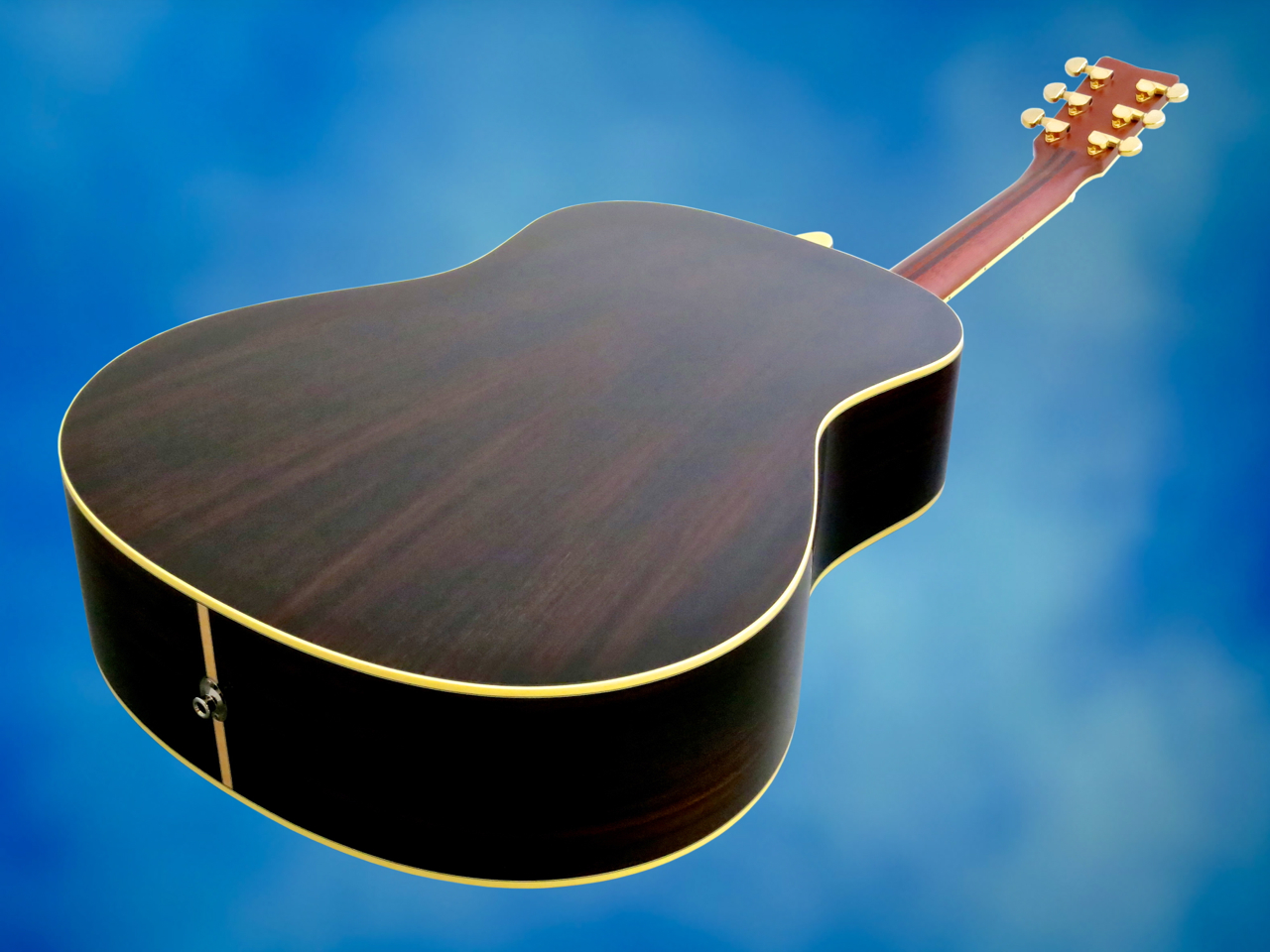
The Yamaha LL6’s sides and back are made from beautifully grained laminated rosewood. There’s a mahogany backed version available, too, the Yamaha LL6M ARE.
The guitar’s body has received a gloss finish, while the back of the neck sports a thin satin finish.

The bound headstock is home to a set of TM-29G tuning machines.

All new L-Series instruments come with five-piece necks. In the LL6’s case this means three pieces of mahogany with two strips of rosewood sandwiched between them. The idea behind this type of construction is to add stiffness to the neck, and thus sustain.
The LL6’s headstock and neck heel are crafted from separate pieces of mahogany, which are then glued to the main part.

The quality of the fretwork on this Yamaha is very good.
Another new feature across all L-Series models are rolled-in fingerboard edges for an even more comfortable playing experience.

Yamaha uses a modified type of non-scalloped X-bracing on all L-Series tops, which is meant to add a healthy dose of punch and warmth into the mix.

The centre ring of this beautiful soundhole rosette has been crafted from genuine abalone shell.
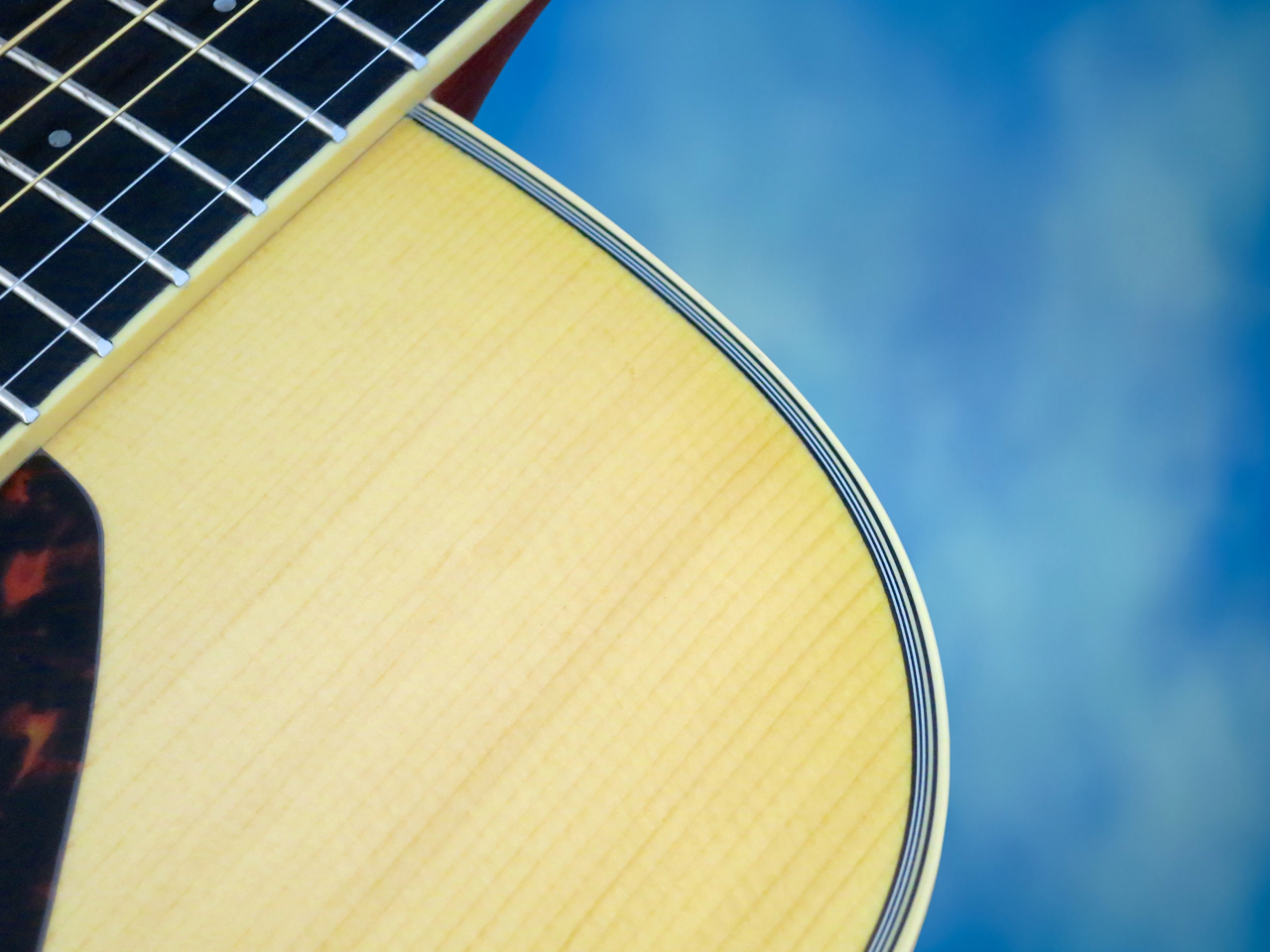
There’s multiple binding on the Yamaha’s top, as well as single ply cream binding around the back.

The LL6 comes with a Yamaha SRT Zero Impact piezo pickup hidden beneath its compensated bridge saddle.

As the main focus of the LL6 lies on its acoustic performance, Yamaha wanted an unobtrusive pickup system without the need for an on-board preamp or a battery compartment. This is why the LL6 comes equipped with a passive pickup that is wired directly to the output jack.

Yamaha’s LL6 ARE is sold in its own soft case, which is a nice hybrid of a gig bag and a hard case.
****

It speaks volumes about Yamaha’s high standards of craftsmanship, as well as the company’s stringent quality control, when the importer’s product specialist takes you to the warehouse, and simply hands you an untouched shipping carton, without even opening it. His only question was: ”Which colour would you prefer?”
And, judging from the review guitar, this trust in Yamaha’s quality control seems totally justified. When I opened the soft case I found a great instrument in fine fettle.
The neck’s new-and-improved oval C-profile feels fantastic, and the nut width of 44 mm offers enough room for complex fingerings. Yamaha have gone for a good working compromise at the bridge, too, with an E-to-e-string spacing of 55 mm, that most strummers and fingerpickers will get to grips with nicely.
The playability was first rate (remember this is a sub-600 € guitar):
The action with the factory-installed 012-gauge set was really comfortable (string height at the 12th fret: low E – 2.1 mm/high e – 1.6 mm), and the guitar played beautifully, without any rattles or buzzes whatsoever.
It’s virtually impossible to verify any claims that Yamaha’s A.R.E.-treatment makes the LL6 ARE sound like well played-in ”old ’un”, because no two vintage guitars are the same, and also because I didn’t have a ”non-A.R.E.” Yamaha to hand.
What I can say, though, is that the Yamaha LL6 ARE sounds very open, dynamic and mature, right out of the shipping carton. Many brand-new steel-string acoustics require a playing-in period to lose a certain restricted sense of dynamics and a spiky top end. The LL6 ARE sounds warm, well-balanced and open right from the start.
Fingerstyle playing comes across well-articulated. The LL6 has a clear top end and a rich bass register; it’s a warm tone, but the bottom end never gets overbearing.
The first example has been close-miked with an AKG C3000 microphone:
For a no-frills, passive piezo system the LL6’s SRT-pickup sounds rather nice:
Combining both signals works well, too:
Strumming the LL6 gives you great punch, a sparkling top end, and plenty of mid-range character (AKG C3000):
The piezo-powered version is a bit drier, but still work well in my view:
Using both signals together sounds like this:
The rhythm guitar tracks in this short Beatles-cover have been recorded with a Shure SM57, while the lead guitar parts have been recorded direct off the built-in pickup:
****
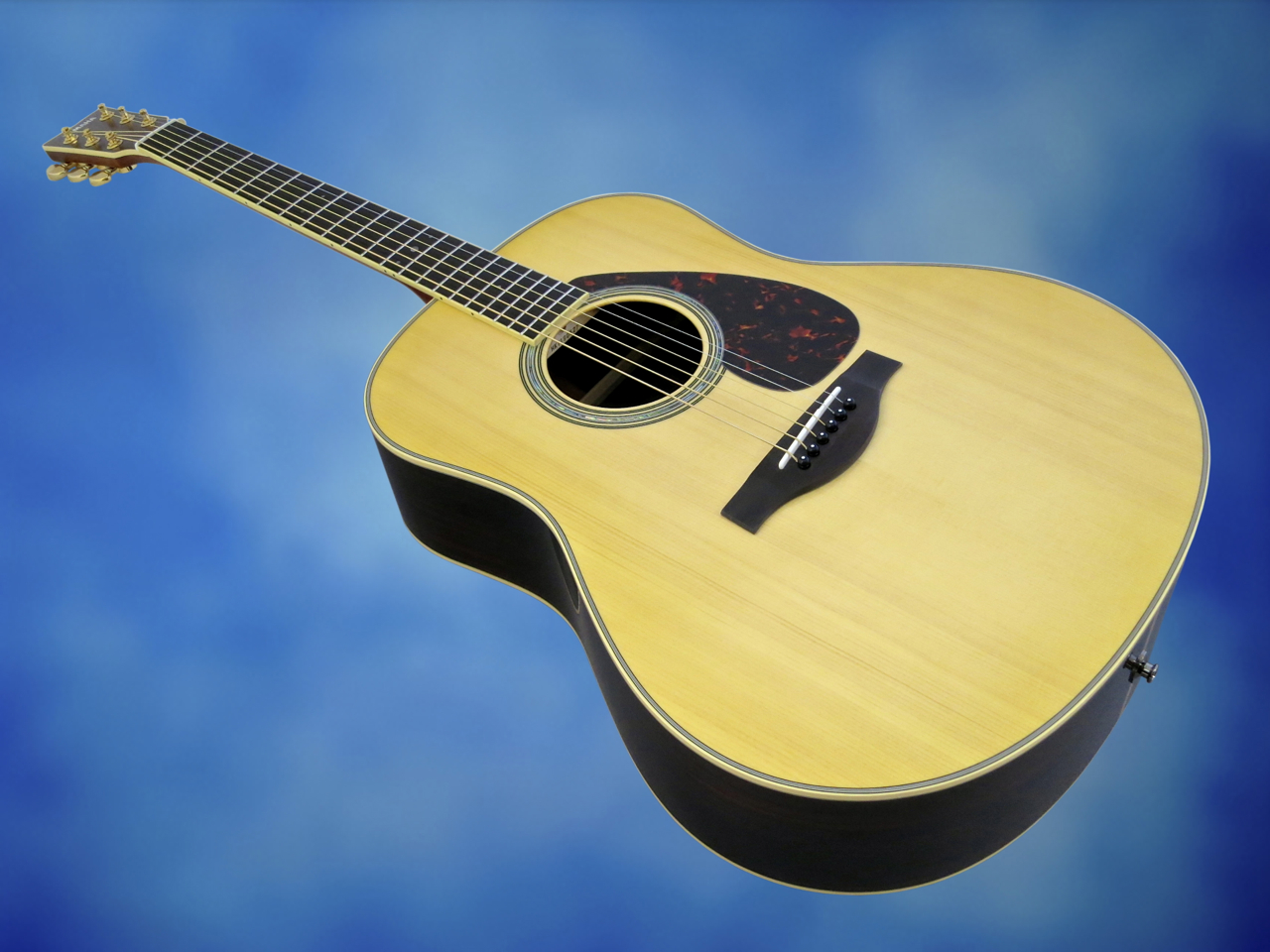
The Yamaha LL6 ARE might be the most-affordable member of the L-Series, but it most certainly is a thoroughbred example of its species. The improved neck profile is a real treat, and the A.R.E.-treatment seems to make a clear difference. This is a beautiful instrument with a voice to match. I also like the straightforward pickup system, which offers a decent sound with no fuss. I’d really recommend you try out one of these guitars, as the LL6 ARE punches well above its weight.
****
Yamaha LL6 ARE
534,90 €
Finnish distributor: F-Musiikki
****
Pros:
+ workmanship
+ A.R.E.-treated solid top
+ neck profile
+ acoustic sound
+ unobtrusive pickup system
+ soft case included
Yamaha on hiljattain päivittänyt erittäin suositun L-sarjan teräskielisiä kitaroita.
Soundin kannalta tärkein uudistus on, että koko sarjassa käytetään nyt Yamaha A.R.E. -prosessin läpi käyneitä kansia. Acoustic Resonance Enhancement on firman kehittämä puunkäsittelytapa, jossa esivanhennetaan soitinpuita lämpökäsittelyllä, sekä ilmankosteutta ja ilmanpainetta tarkoin säätämällä. Koko prosessin idea on saada uusia kitaroita soimaan heti kättelyssä sisäänsoitetun soittimen lailla.
L-sarjan kitaroita tarjotaan kolmessa eri koppakoossa – LJ (Medium Jumbo), LS (Small Body = Folk-kokoinen) ja LL (Original Jumbo = Dreadnought-kokoinen).
Kitarablogi sai tällä kertaa testattavaksi Yamaha LL6 ARE -mallin (534,90 €).
****
Yamahan Original Jumbo -koppa on firman omaa designia, jolla on selvästi kapeammat hartiat ja pyöreämpi alaosa kuin perinteisissä Martin D -malleissa. Lopputulos on sulava ja sopusuhtainen.
Yamaha käyttää LL6 ARE -mallissa (niin kuin nykyisin koko L-sarjassa) kokopuista Engelmann-kuusta kansimateriaalina. Engelmann-kuusen soundista sanotaan, että se on usein lämpimämpi ja avoimempi kuin sitkankuusikannella varustetuissa kitaroissa.
LL6-mallia saa natural-vaihtoehdon lisäksi myös sunburst-värityksellä, sekä mustana ja ruskeana.
Yamaha LL6:n sivut ja pohja on tehty kauniista ruusupuuvanerista. Mallista on saatavilla kuitenkin myös LL6M ARE -versio, jos tykkää enemmän mahongista.
Kitaran runko on lakattu kiiltäväksi, kun taas sen kaulaa on mattaviimeistelty.
Reunalistoitettuun lapaan on asennettu kuusi nykyaikaista TM-29G-viritinä.
Uudistetun LL6:n kaula tehdään kolmesta pitkästä mahonkipalasta ja kahdesta ruusupuupalasta. Rakenteen tarkoitus on lisätä kaulan lujuutta.
LL6:n viritinlapa sekä kaulakorko on veistetty kahdesta erillisestä mahonkipalasta, jotka on liimattu kaulan pitkänomaiseen osaan.
Yamahan nauhatyö on hyvin kiitettävällä tasolla.
Reunalistoitetun palisanteriotelaudan reunoja on hieman pyöristetty, mikä lisää tuntuvasti LL6:n soittomukavuutta.
L-sarjan kansissa käytetään Yamahan omaa versiota perinteisestä X-rimoituksesta (non-scalloped), jolla halutaan lisätä sopivasti potkua ja lämpöä raikkaaseen kuusikansi-perussoundiin.
Kitaran kauniissa rosetissa keskimmäinen rengas on koottu abalone-helmiäisestä.
Kannessa on monikerroksinen reunalistoitus.
LL6:n kompensoidun tallaluun alle on piilotettu Yamahan oma SRT Zero Impact -piezomikrofoni.
LL6:ssa pääpaino on kitaran akustisessa soundissa, eikä soitinta haluttu pilata monimutkaisella etuvahvistimella tai paristolokerolla. Tämän vuoksi LL6:n systeemi on täysin passiivinen ja SRT-mikrofoni on kytketty suoraan lähtöjakkiin.
Yamaha LL6 ARE:n hintaan kuuluu myös erittäin laadukas soft case -laukku, joka on oiva kovan laukun ja tavallisen gigbagin hybridi.
****
Se sanoo mielestäni aika paljon Yamahan työnjäljestä ja laadunvalvonnasta, kun maahantuojan tuotespesialisti ottaa testaajan mukaan varastoon ja antaa hänelle täysin avaamattoman kuljetuslaatikon suoraan hyllyltä. Ainoa kysymys oli: ”Minkä värin haluat?”
Ja tämä luottamus Yamahan laatuun oli täysin oikeutettua, sillä testiin saapunut kitara on todella hyvässä trimmissä oleva laatusoitin.
Kaulan uudistettu, ovaali C-profiili tuntuu erittäin mukavalta kädessä, ja 44:n millimetrin kaulaleveys satulan kohdalla antaa otekädelle riittävästi liikkumatilaa myös monimutkaisia sointuja varten. Myös Yamahan valitsema e-kielten välinen etäisyys tallan kohdalla (55 mm) on loistavasti toimiva kompromissi sekä plektra- että sormisoittoa varten.
Soittotatsi oli testiyksilössä säädetty tehtaassa hyvin mukavaksi 012-paksuisella kielisatsilla (kielten korkeus 12. nauhan kohdalla – matala-E: 2,1 mm/korkea-e: 1,6 mm), ja LL6 ARE soi kauniisti ja täysin rämisemättä.
On mielestäni miltei mahdotonta sanoa, soiko tämä Yamaha ARE-prosessin ansiosta ”kuin vanha vintage-soitin”, koska vintage-kitaroissakin on isoja eroja, eikä minulla ole ollut mahdollisuutta verratta LL6 ARE -mallia suoraan vastaavaan ”ei-ARE-Yamahaan”.
Minun on kuitenkin todettava, että Yamaha LL6 ARE soi uunituoreenakin hyvin avoimella ja dynaamisella äänellä. Tässä ei esiinny lainkaan – niin monia uusia (= ei sisäänsoitettuja) teräskielisiä vaivaava – uudenkarheus tai dynamiikan ja diskantin kireys, vaan ääni on lämmin, avoin ja erittäin hyvässä tasapainossa.
Sormisoitossa LL6 ARE artikuloi erittäin hyvin. Soitossa on aimo annos helisevää diskanttia ja lämmintä bassoa, mutta bassot eivät kumise tai dominoi tämän mallin äänimaailmaa.
Tätä pätkää on lähimikitetty AKG C3000 -mikrofonilla:
Passiiviseksi piezosysteemiksi LL6:n SRT-mikrofoni soi mielestäni hyvin kauniisti:
Myös stereoyhdistelmä molemmista signaaleista kuulostaa hyvältä:
Plektrasoitossa kuuluu LL6:n mukavasti helmeilevä atakki ja sen lämmin, mutta avoin keskialue (C3000):
Piezoversio on suorasukkaisempi, muttei missään nimessä huono:
Yhdistelmä kuuluu tältä:
Tässä Beatles-coverissa komppiraidat on äänitetty dynaamisella Shure SM57 -mikrofonilla, kun taas soolo-osuudet on poimittu mukaan linjasoittoina:
****
Vaikka Yamaha LL6 ARE on edullisin tapa tutustua L-sarjan konseptiin, on malli silti täysverinen lajinsa edustaja. Päivitetyn kaulaprofiilin ansiosta LL6 ARE on entistäkin mukavampaa soittaa, ja kannen A.R.E.-käsittely näyttää toimivan. Tämä on kaunis ja kaunisääninen soitin. Pidän myös tämän Yamaha-mallin kytke-ja-unohda-periaatteella toimivasta mikkisysteemistä. LL6 ARE on mielestäni ehdottomasti kokeilemisen arvoinen teräskielinen. Tämän Yamahan rahkeet riittävät – edullisen hintansa huolimatta – varmasti myös ammattikäyttöön.
****
Yamaha LL6 ARE
534,90 €
Maahantuoja: F-Musiikki
****
Plussat:
+ työnjälki
+ A.R.E.-käsitelty kansi
+ kaulaprofiili
+ akustinen soundi
+ huomaamaton mikkisysteemi
+ soft case kuuluu hintaan


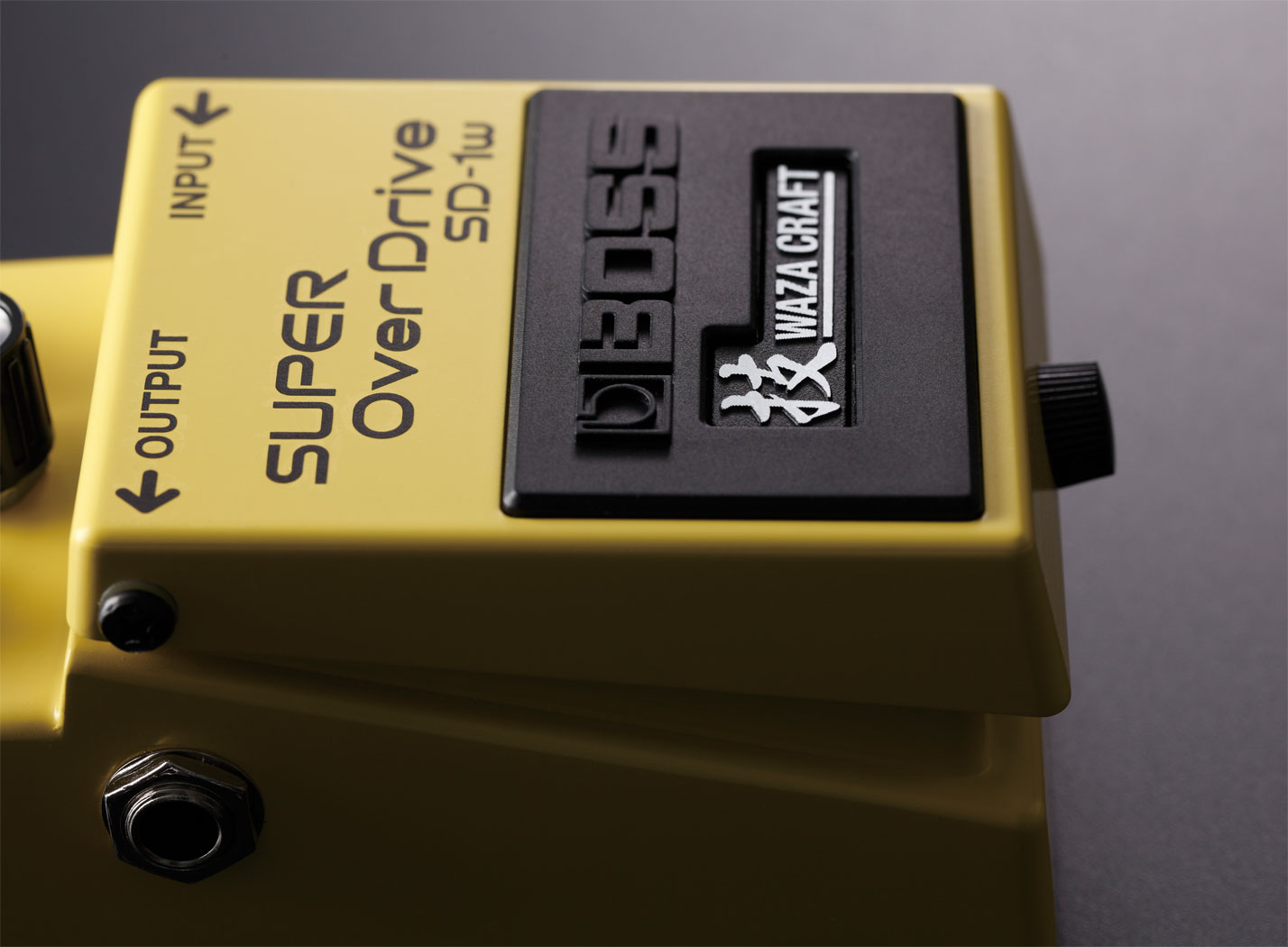
Boss’ Waza Craft pedals are the company’s brand-new all-analogue, top-of-the line compact effects. The Waza Craft range has been designed to give the quality-conscious guitarist the full boutique-pedal experience in the well-loved Boss format.
The Japanese word ”waza” can be translated as art, artistry or technology, and hints at the fact that the three new pedals (the overdrives reviewed here, plus the DM-2W delay) are a return to old-school, all-analogue circuitry, and that the effects are factory-modded for your convenience.
****
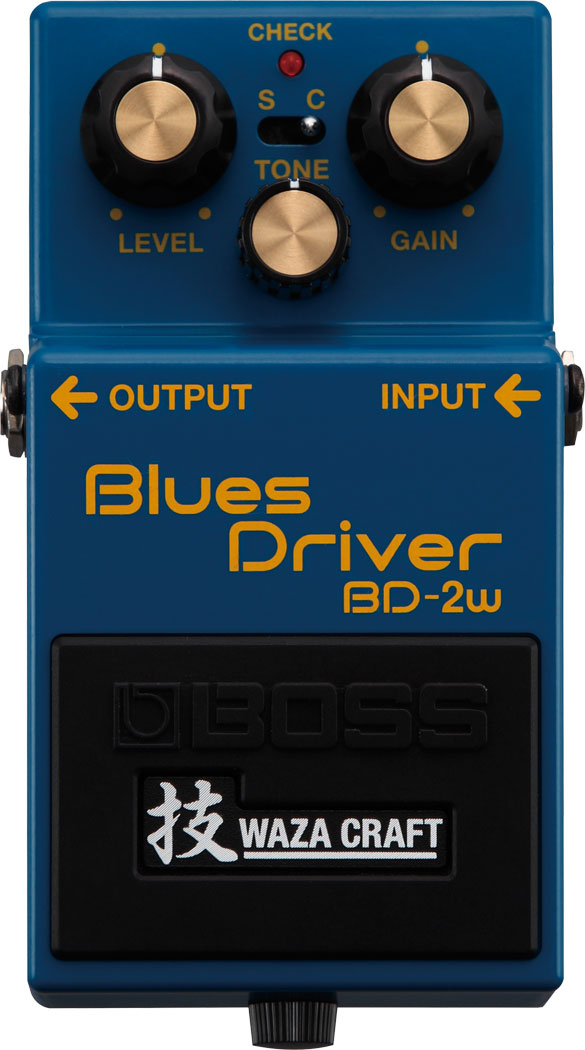
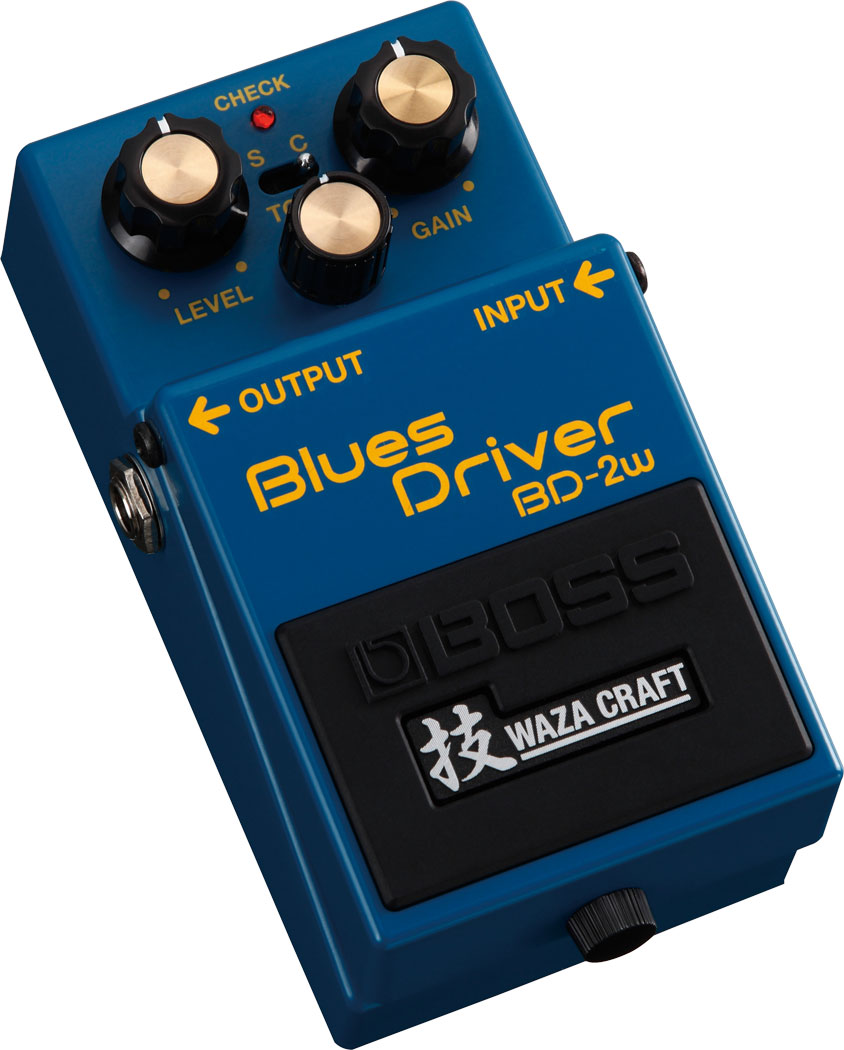
The Boss Blues Driver BD-2W Waza Craft (current price in Finland around 155 €) is a ”waza-treated” update of the popular Blues Driver overdrive.
In the late 1970s Boss came up with the now-legendary, compact guitar pedal format, which has since become an industry standard. The typical Boss pedal is made from a cast metal casing with the quick-access battery compartment tucked away beneath the pedal’s switch flap.
The BD-2W comes with the standard three controls for Gain, Tone and Level.
The Waza Craft range’s special feature lies in their twin mode set-up. You can use the mini-switch to toggle between Standard- and Custom-mode. Standard will give you a boutique version of the regular Boss Blues Driver experience, while Custom ups the ante by offering you a wider dynamic range, as well as a warmer tonality with added top-end sparkle.
The first clip gives you an idea of the BD-2W’s sound with the Gain control at 12 o’clock. The first half is played in Standard-mode, switching over to Custom-mode for the second half:
For the second clip I turned Gain up to full:
****
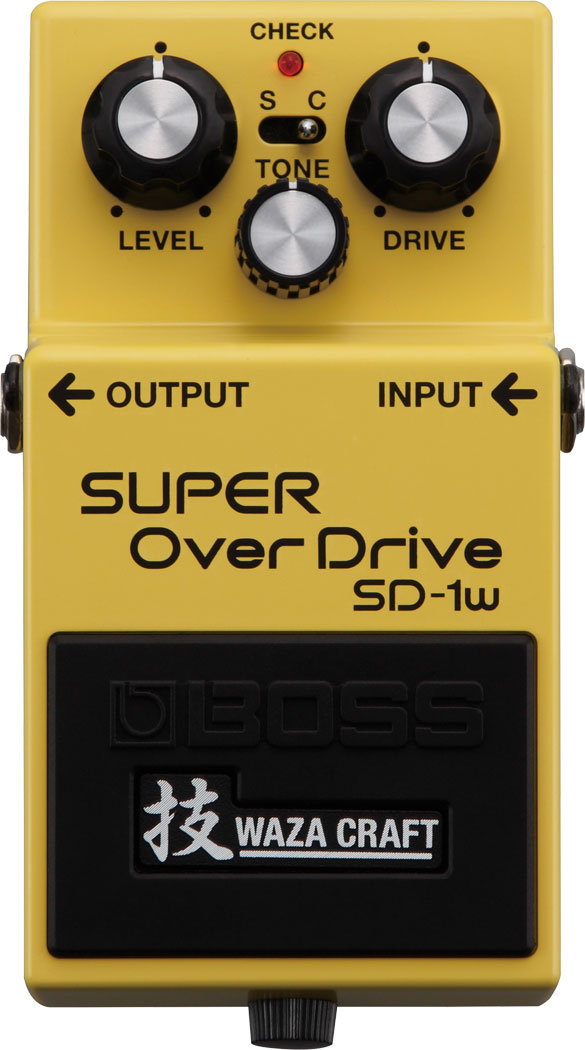
The Boss Super OverDrive SD-1W Waza Craft (current price in Finland around 155 €) is the top-of-the-line version of the company’s yellow-clad classic.
The name gives it away – we’re looking at an overdrive stompbox, so we should expect a dynamic performance with a dense mid-range. As a rule of thumb, distortion-type effects tend to have more bite and a creamier compression than an overdrive.
The Boss SD-1W, too, sports three controls – Drive, Tone and Level – and a mode switch. Standard-mode is meant to give you an upmarket counterpart of the regular SD-1 pedal, while Custom-mode promises a wider frequency range (especially handy for ultra-low tunings).
Here’s a clip of the SD-1W with Drive set to 12 o’clock. Standard-mode comes first, followed by Custom-mode:
And this will give you an idea of this pedal’s sound with Drive turned all the way up:

****

What do terms like ”boutique-pedal” and ”premium range” really mean?
In the case of the Waza Craft pedals the answer lies in both the sound and the ”feel” of these effects:
Both overdrive boxes sound even creamier than the standard versions, while also adding a small degree of clarity to proceedings. These premium versions also manage to keep hiss levels even lower than their ”ordinary” counterparts. Both the BD-2W and the SD-1W feel somewhat more organic and responsive, when compared to their (well-made) standard range brethren. The overdrive tones are very natural, and both effects react very nicely to changes in playing dynamics or guitar volume settings. You never get the feeling of the effect being pasted on, instead there’s a real interaction going on between the player, his guitar and the effect pedal.
In isolation Boss’ Waza Craft overdrives might even seem a little underwhelming, but when you A/B them with their standard series counterparts the differences become quite clear rather quickly. Don’t get me wrong, the standard versions are reliable industry standards with a more than decent sound, but for the ultimate Boss-experience you should take the path to Waza Craft.

****
Boss BD-2W + SD-1W Waza Craft
approx. 155 €
Finnish distribution: Roland Suomi
****
Pros:
+ classic format
+ all-analogue
+ two modes
+ sound


 Kitarablogi.com – Finland's premier Guitar and Bass blog