Now on Soundcloud: Halla Custom Hallabird

Halla Custom Hallabird
Handmade neck-through electric guitar
• Made in Finland
• 9-stripe khaya/walnut through-neck
• khaya body wings
• long scale – 67 cm/ 26.37″
• ebony fingerboard
• brass nut
• 24 Jescar Evo frets
• two-way truss rod
• black Gotoh hardware
• two Halla Custom P-90 pickups
• three-way toggle, master volume, three-way impedance switch
Contact: halla.tv/
Amp used – Bluetone Shadows Jr.
Pedals used – 1980s Ibanez SC10 Chorus (rhythm guitars), Morley M2 Wah (lead guitar)
Mic used – Shure SM57
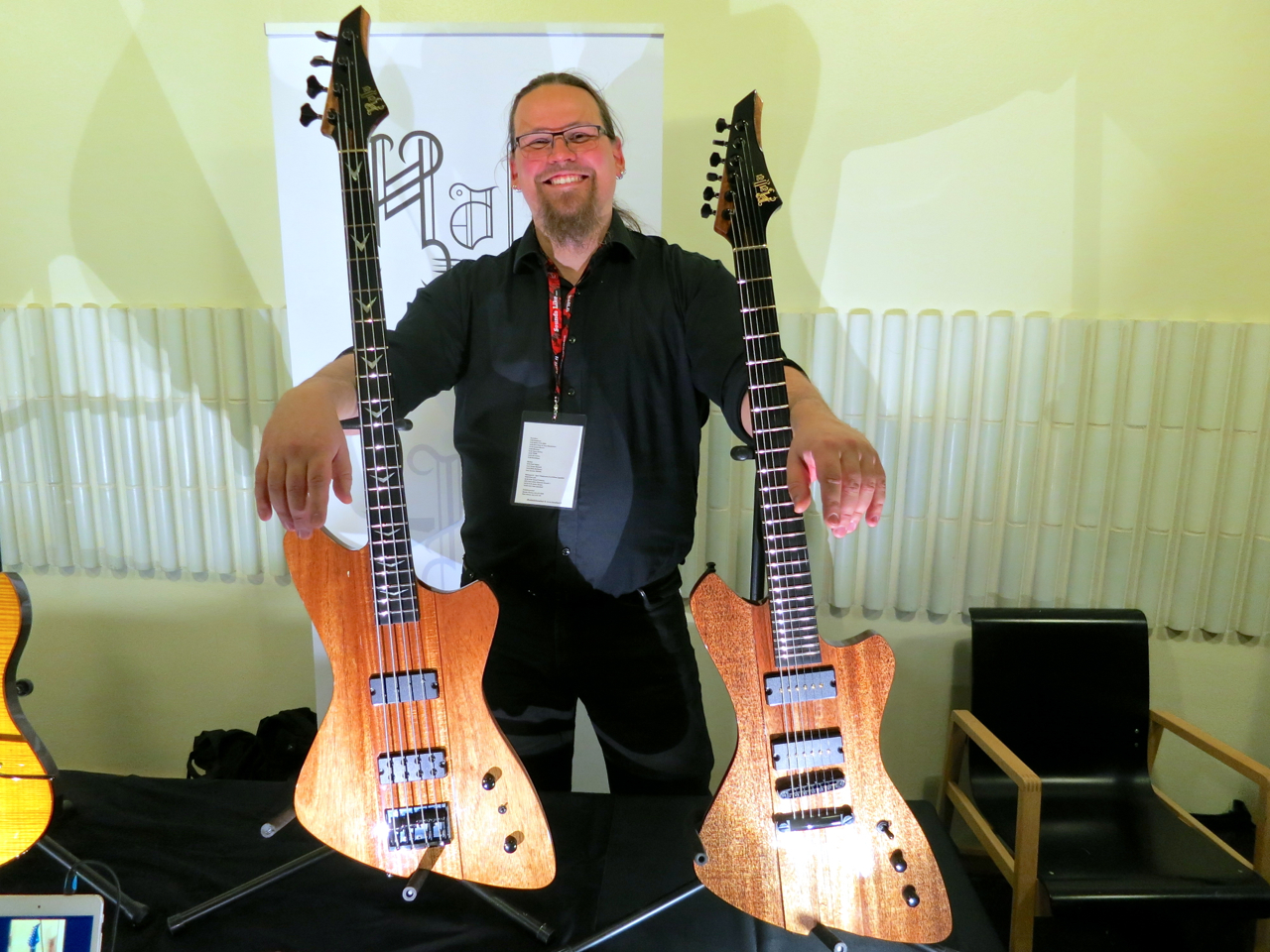
Hagström Fantomen – Now on Soundcloud
Lisätiedot: DLX Musiikki
Review: Bluetone Shadows Jr.
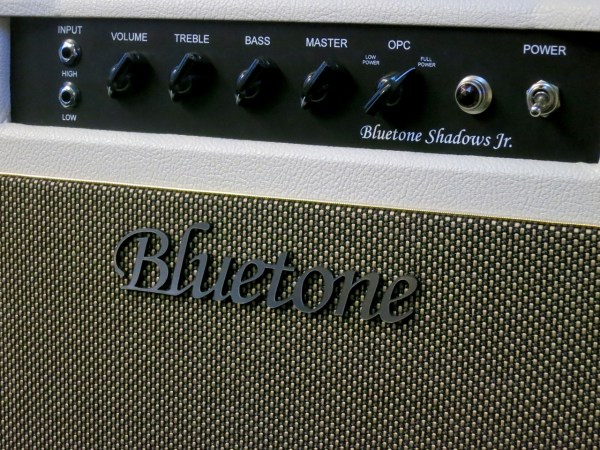
Following in the wake of their very popular Shadows Reverb combo, Finnish boutique makers Bluetone Amps have recently introduced a smaller sibling, called the Shadows Jr.
The Bluetone Shadows Jr. (combo starting at around 1,300 €) is a hand-built, all-valve guitar combo, whose sound is based on the classic Vox AC15. Instead of being a straight, slavish copy, though, the Shadows Jr. incorporates many of the up-to-date features that have made Bluetone such a well-regarded boutique maker.
****
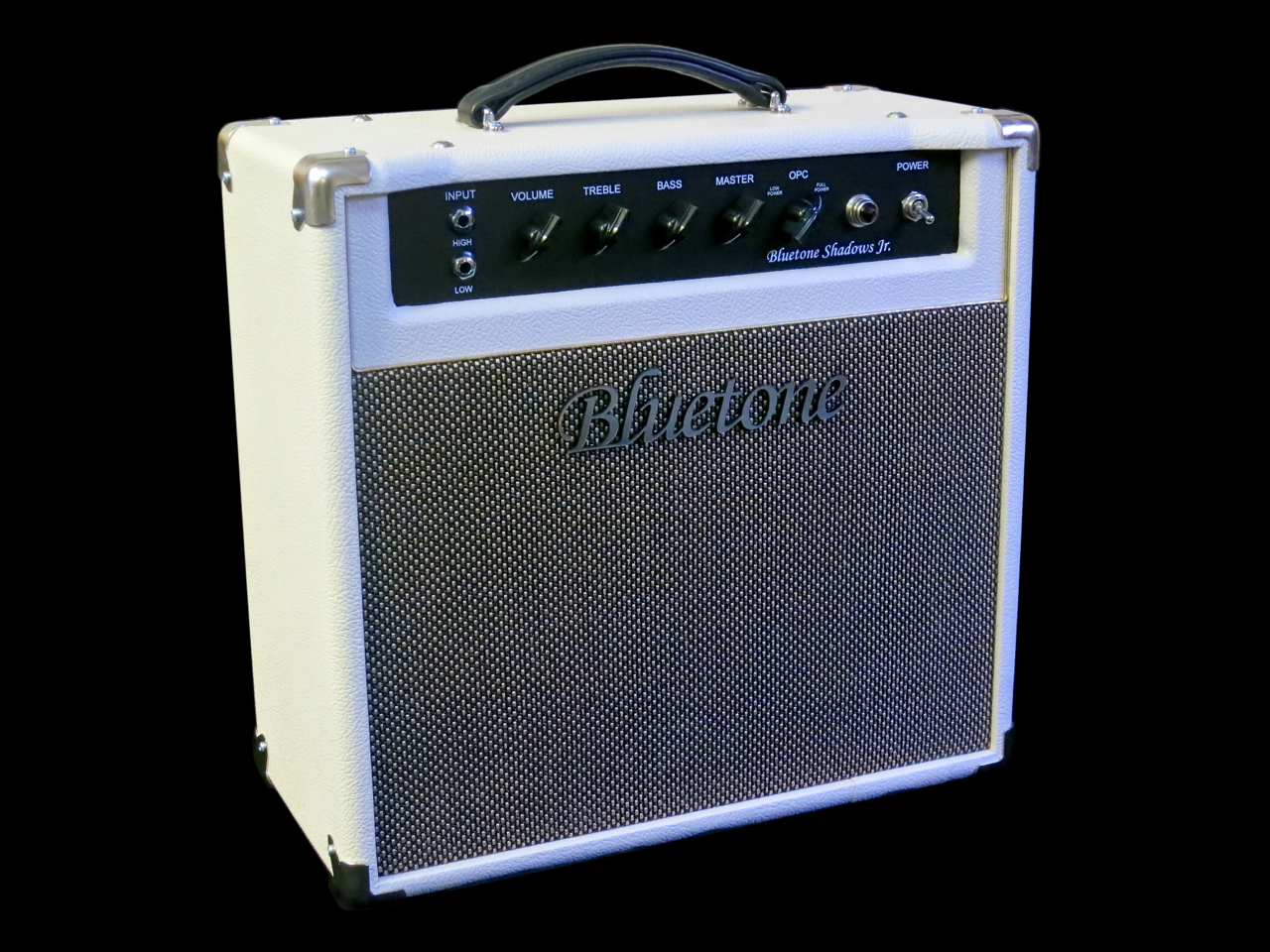
The Shadows Jr. has the clean and business-like looks that active players truly appreciate. You don’t want to be slowed down on stage by a control panel that’s hard to decipher. The Bluetone is clarity itself.

This is a single-channel all-valve combo running in Class AB mode giving you maximum output power at just over 10 watts.
The Shadows Jr. is designed around a trio of 12AX7 preamp tubes and a pair of EL84s powering the speaker. The combo’s power valves are cathode-biased, which means that swapping tubes won’t necessitate a trip to your friendly amp technician.
Bluetone is one of the very few amp makers who use torroidal power transformers. These doughnut-shaped devices (the black thing in the upper left corner) are lighter and more dependable than traditional transformer designs, and they offer more exact tolerances. As a valve amp is highly dependable on a stable and electronically quiet power supply for superior tone, Bluetone decided on using torroidal transformers early on, and they’ve never looked back.

The Warehouse Guitar Speakers Green Beret is an excellent choice for a strongly Brit-flavoured combo. Bluetone break in all of the speakers they use with low-frequency sine waves.

Despite being a compact single-channel combo amp (weighing only around 10 kg), the Bluetone Shadows Jr. offers an amazing amount of different clean and gain tones, thanks in no small part to the amp’s PPIMV master volume and the three-step OPC-switch.
PPIMV stands for ”post-power inverter master volume”, which is the preferred way of master volume design at Bluetone Amps, because it eats up the least amount of an amplifier’s tone, when in use. And if you turn the master volume knob all the way up, a PPIMV design makes the master volume ”disappear” electronically, making it completely transparent.
OPC, on the other hand, stands for ”output power control”. On the Shadows Jr. you have a choice of three settings, giving you 0.2, two or the full 10 watts of power, respectively. The magic of the OPC circuit is that it will turn volume levels down very noticeably without changing the tonal character of your settings, while also leaving almost all of the dynamics intact. Many lesser output power designs will turn a clean setting into an overdriven sound when you select a lower output level. The Shadows Jr. will sound almost the same on ten, two or 0.2 watts – the small tonal differences are the result of the speaker being driven differently. With the OPC at the lowest setting you will get approximately 95 percent of the full ”Shadows Jr. experience” at bedroom/apartment block volume levels. That’s fantastic!

The back panel gives you a choice of using the internal speaker or an external 4- or 8-ohm cabinet.
Bluetone have also included their tasty buffered, switchable effects loop with a dedicated volume control. When the loop is not in use, the circuit can also serve as a handy lead boost.
****
Are you looking for a cool little tone machine with a strong Vox-y flavour, and no-compromise build quality? You should do yourself a favour and try the Bluetone Shadows Jr.
The Shadows Jr. ticks all the right boxes:
You get that classic clean tone with that sweet mid-range ”attitude”. A clean tone that is lively, but never glassy or brittle.
With the front-end volume near the other extreme you’ll get overdrive and distortion that is more gritty and dynamic – think later era Beatles, windmilling Townshend, or multilayered May – than creamy and compressed.
But don’t forget to check out the wide scope of break-up Blues and Rock ’n’ Roll sounds to be had between 11 and 2 o’clock on the volume (gain) control (depending on the guitar used). You’re in for hours of wailing soloing and chunky rhythms without ever needing an overdrive stompbox.
Here’s a Gibson Les Paul Junior on its own:
Demo track number one features two rhythm guitar tracks – a Fender Stratocaster (stereo left) and a Gibson Les Paul Junior (right) – as well as a Hamer USA Studio Custom on lead duty:
The second demo track features a Gibson Les Paul Junior (rhythm left), an Epiphone Casino (rhythm right), and a Fender Telecaster (lead guitar):
****
The Bluetone Shadows Jr. is a fantastic little tone machine for the Vox-inclined player, who likes warm clean tones, dynamic break-up sounds, and gritty late-Sixties/early-Seventies dirt.
The build quality is miles ahead of any mass-produced guitar amplifier – this is a handcrafted boutique-grade valve amp. Modern additions like the PPIMV master volume, the OPC circuit, and the switchable effects loop, also raise this amp above any vintage-style copies.
For many the crucial question with low-wattage amps is volume. How loud is the Bluetone Shadows Jr?
Let’s just say that if you’ve only ever tried 10-watt tranny combos before you’re in for quite a surprise! These are ten (-plus) watts of British-style valve amp majesty, with every last ounce of loudness wrung out of the power amp and speaker.
With the OPC and the master on full, this little chap will easily get you into trouble with your neighbours in your block of flats on clean tones alone. If you don’t need 100 percent clean tones, the Shadows Jr. will easily get you through many rehearsals and gigs in small venues. And there’s always the option to stick a mic in front of the speaker.
So, don’t expect a Heavy Metal-type volume onslaught, but be prepared for some serious business.
****
Bluetone Amps Shadows Jr.
Prices starting from 1,300 €
Contact: Bluetone Amps
Pros:
+ Handmade in Finland
+ Master volume
+ OPC
+ Effects loop
+ Sound
+ Value-for-money
Review: Tokai TST-50 Modern

Tokai Guitars’ extremely well-made Japanese – uhm – tributes to classic electric guitars from the 1950s and ’60s were one of the main reasons why industry giants, such as Fender and Gibson, started their own Far Eastern brands, like Squier and Epiphone, in the Eighties.
Yet Tokai doesn’t cling slavishly to the past, instead the company is also regularly coming up with up-to-date versions of their best-loved models. Their newest updated Strat-style electric is the Tokai TST-50 Modern (999 €; comes with a hard case), which was developed in cooperation with Tokai Guitars Nordic.
****

You could be forgiven to think the TST-50 Modern was a cracking 1960s reissue model at first glance, especially as some of the basic ingredients are virtually identical:
We find a bolt-on maple neck with a rosewood fretboard, and a premium class alder body adorned with a beautiful two-tone sunburst finish.

But a closer look at the headstock gives us a clue that this isn’t a run-of-the-mill TST-50:
A bullet truss rod adjuster on the TST-50 Modern allows you to tweak your neck relief without having to detach the neck from the body, as on vintage style S-type guitars. But despite the bullet truss rod, Tokai have chosen – wisely, in my opinion – to stick with the original four-screw neck attachment.

The Tokai TST-50 Modern comes with a 9.5 inch fingerboard radius, which means that the feel is slightly flatter than on vintage Stratocasters (that usually feature a 7.25 inch radius), but still more curved, and thus more Fender-ish, than Gibson’s flatter 12 inch radius. The TST-50 Modern also sports chunkier frets (Dunlop 6105), making it easier to play than the thin wire used on vintage originals. In combination with the flatter fingerboard radius the bigger frets also make string bending a great deal less work. As a final flourish this models gives you an additional fret (22 instead of 21).

The classic six-screw Stratocaster vibrato bridge was a huge engineering achievement back in 1954. No other vibrato offered that much travel, coupled with excellent sound and very fair return to pitch.
Now – 60 years later – many players do look for an even smoother and more precise ride, than what the vintage model can offer. For these guitarists the Tokai TST-50 Modern offers a modern, two-post vibrato bridge – the Gotoh 510T model.
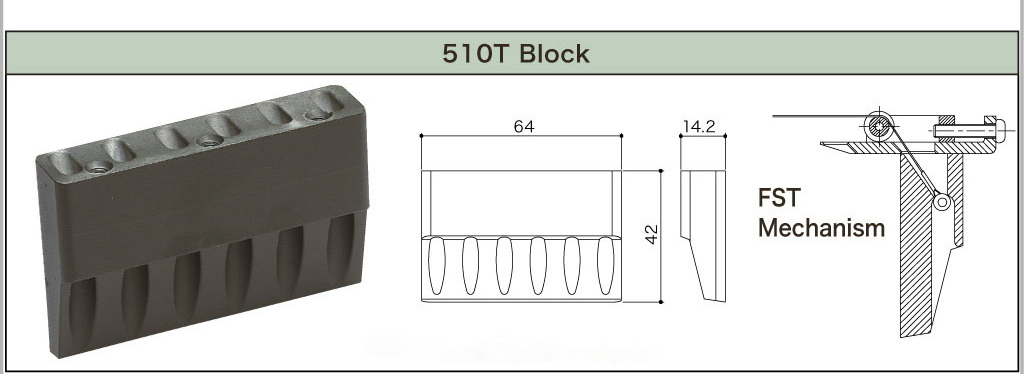

Gotoh’s 510T-vibrato comes with the company’s groundbreaking FST-block. The string channels inside the FST-block have been drilled much deeper than in a vintage block, which anchors the ball ends much closer to the bridge plate. The strings then pass the bridge plate at a shallow angle, without being pressed hard against the plate’s sharp edges. Thanks to Gotoh’s FST-system the vibrato’s return to pitch is improved vastly, because the strings’ ball ends stay in place firmly. Additionally, this system cuts down significantly on string breakages due to friction between the strings and the bridge’s base plate (like normally seen on vintage Strat bridges).
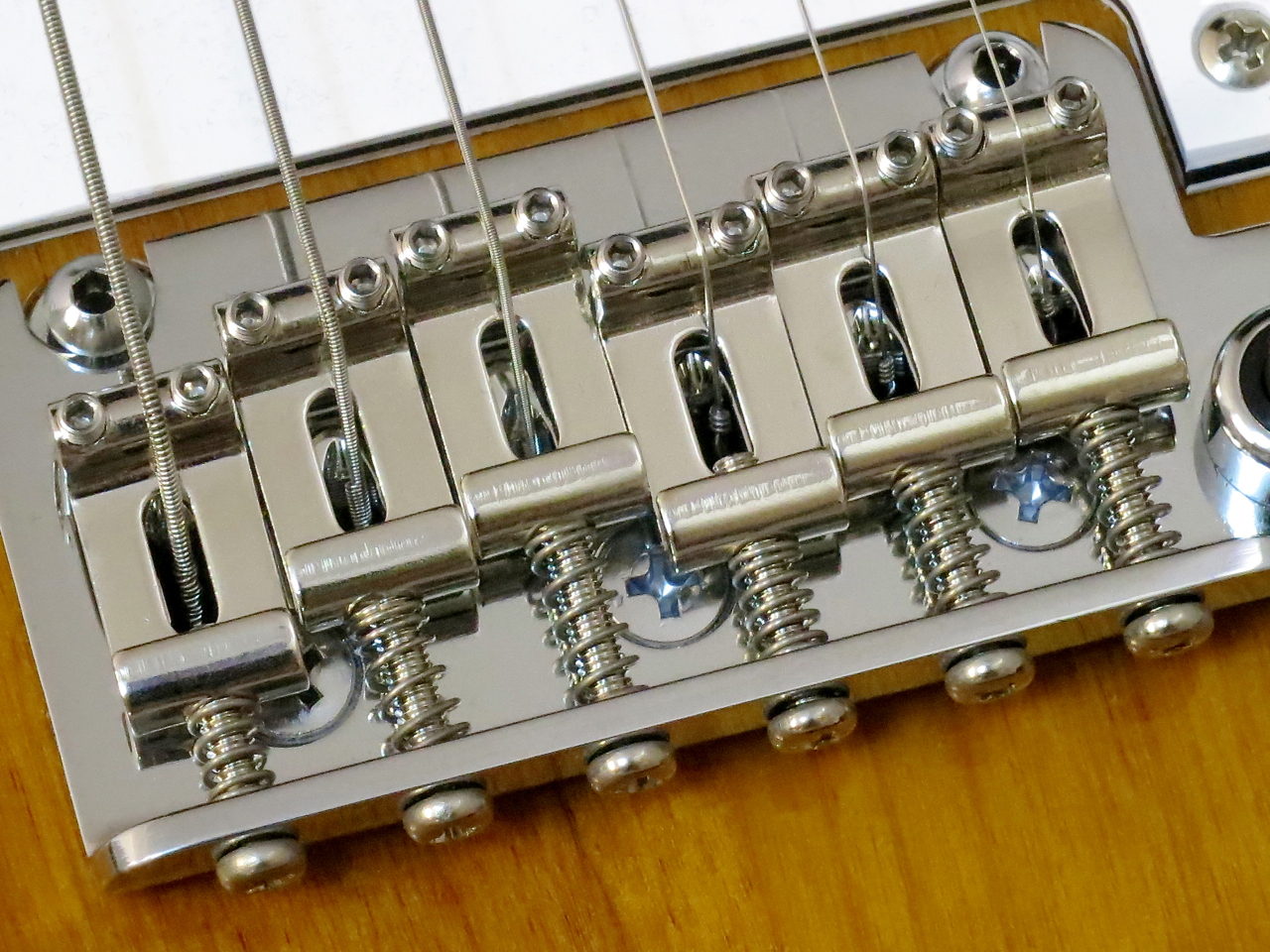
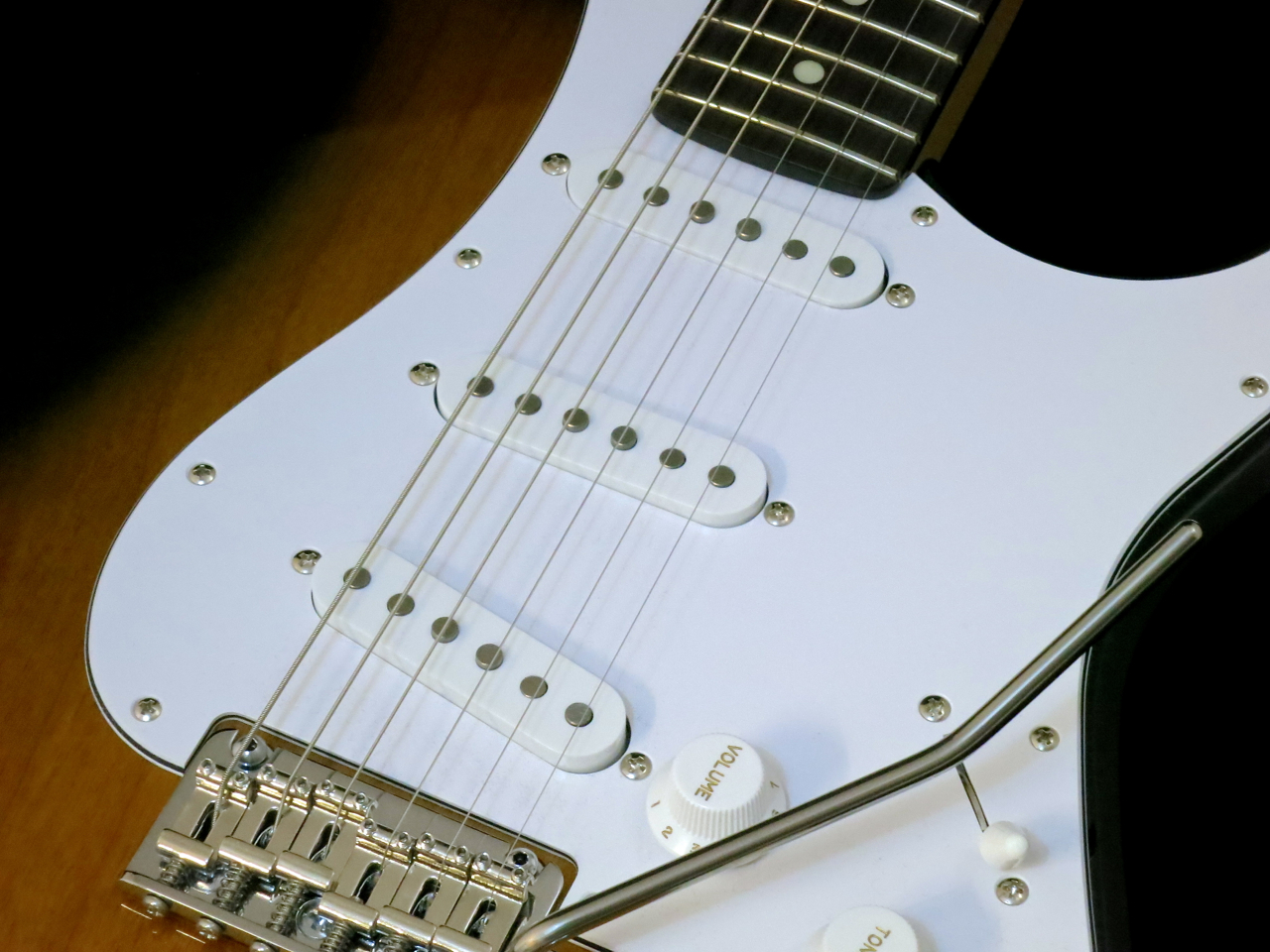
When it comes to its pickups and control layout, Tokai’s TST-50 Modern follows a classic footpath – a trio of Tokai’s acclaimed Vintage ST pickups, along with a five-way switch, a master volume, and tone controls for the neck and middle pickups. Hidden beneath the three-layer scratchplate there’s a humbucker routing, in case you want to customise you guitar further.
****

Vintage or modern, fans of Strat-style guitars expect a high level of ergonomics from their instrument, and Tokai’s Japanese TST-models never disappoint. All the body contours have been copied from the famous 1957/58 originals – it doesn’t get any more streamlined than this.

The satin-finished neck features an oval C-profile, which is just the Sixties-type of neck shape I enjoy the most on an S-style guitar. Thanks to the flatter fretboard radius and the medium-jumbo frets, the playing feels of the TST-50 Modern is similar to that of a well-loved, much-played, and refretted vintage model (but without any scratches or dents, of course).
The Gotoh 510T vibrato works like a dream. It’s smooth and precise, but doesn’t add any unwelcome metallic overtones or sharpness to the sound (unlike some Floyd Rose bridges).
The Tokai TST-50 Modern sounds like a top-drawer Strat should.
Here’s a clip with the Tokai TST-50 Modern plugged into a hand-wired Tweed Champ clone (a Juketone True Blood):
I’ve used Electro-Harmonix’ Germanium 4 Big Muff Pi and Nano Big Muff Pi pedals on the demo track (in addition to the Tokai and a Blackstar HT-1R valve combo):

****
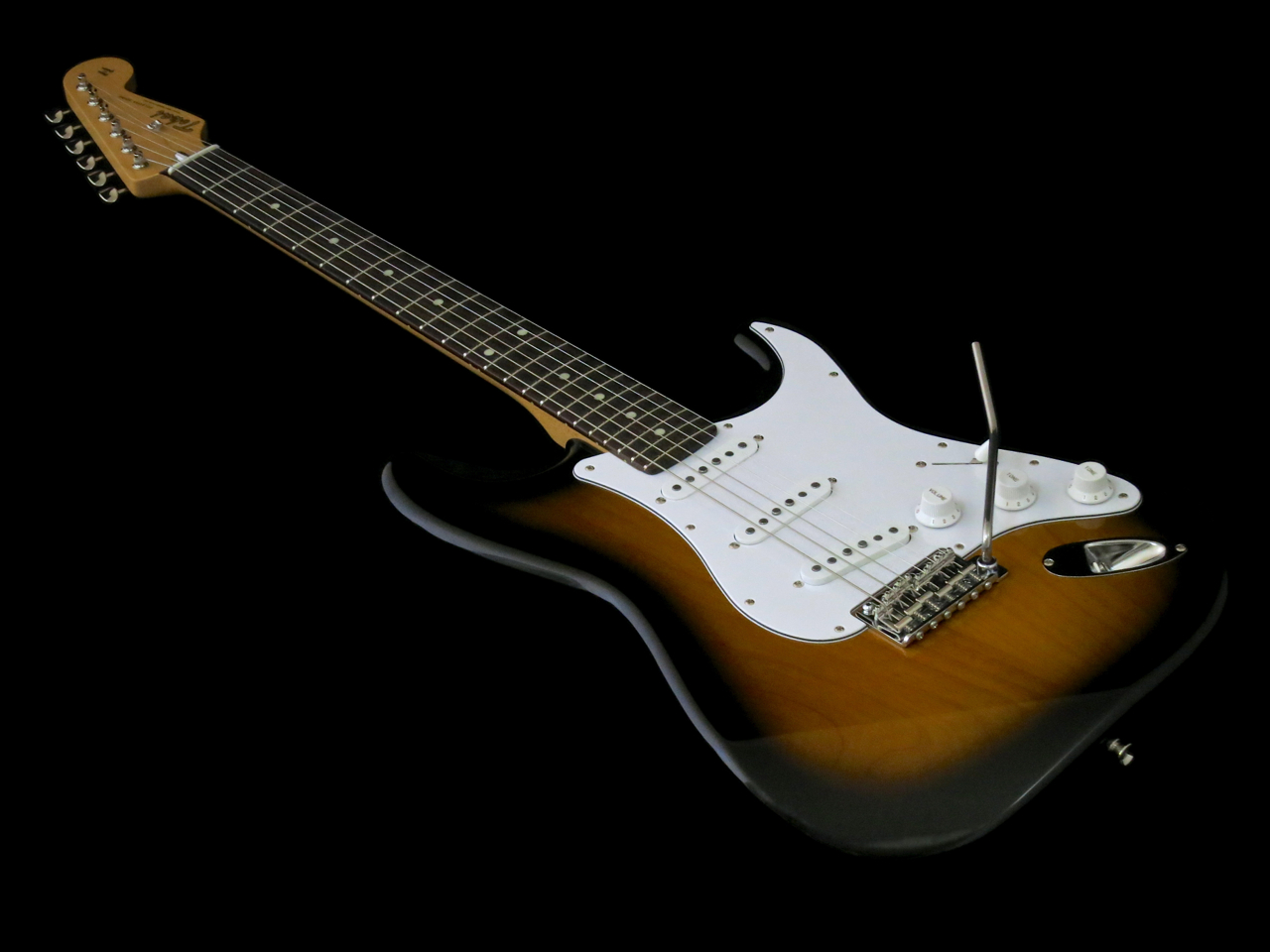
Gear reviewers often face criticism for not ”dishing the dirt” on the equipment they test, but in the Tokai TST-50 Modern’s case there isn’t really anything negative to write about. This is an extremely well-made updated version of the most famous electric guitar of them all. The Tokai combines modern playability with delicious vintage sounds.
****
Tokai Guitars TST-50 Modern
999 € (quality hard case included)
Finnish distribution: Musamaailma
Pros:
+ Japanese craftsmanship
+ sensible updates
+ playability
+ sound
+ outstanding value-for-money
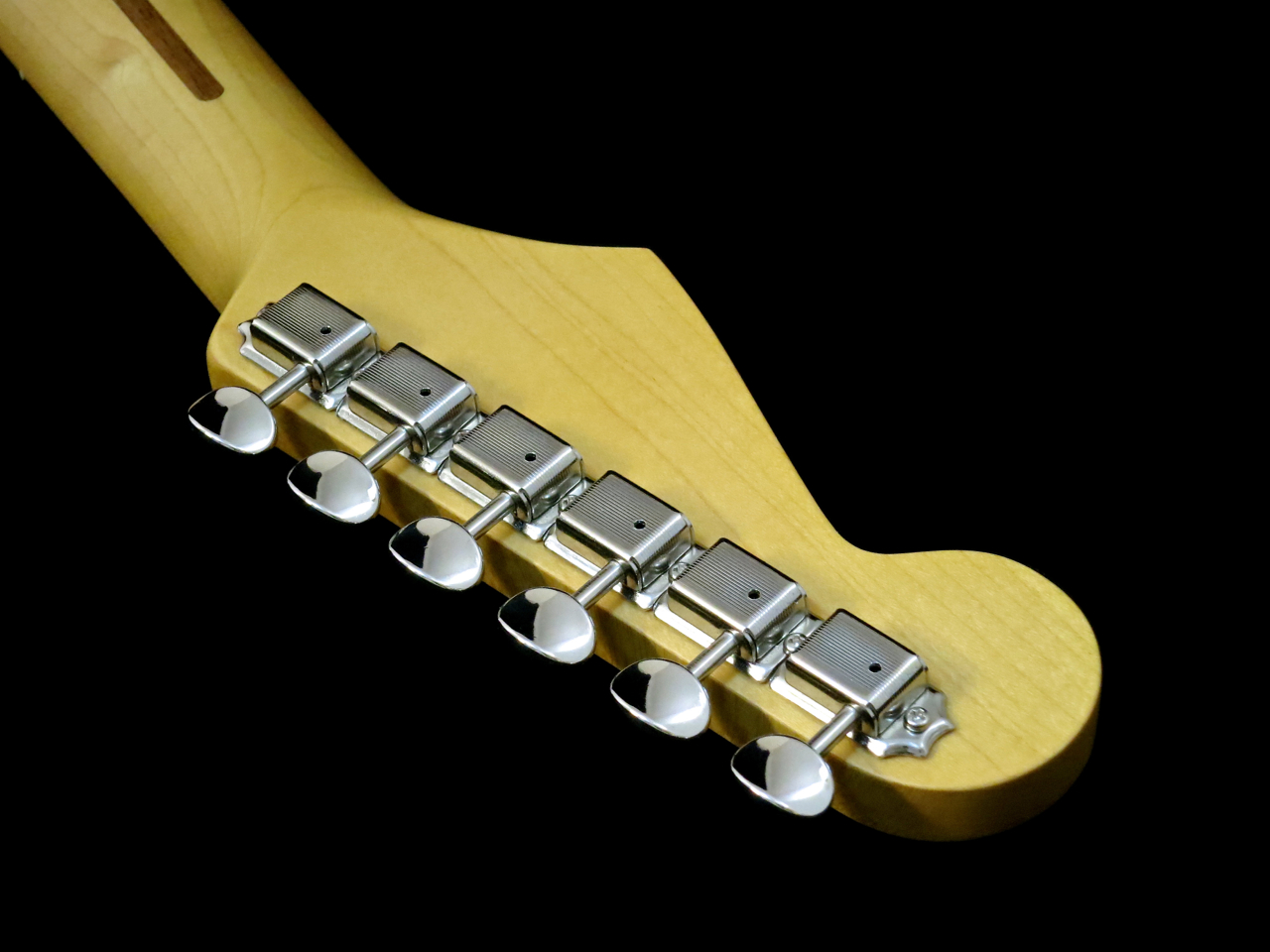
Testipenkissä: Tokai TST-50 Modern

Japanilaisen Tokai Guitarsin erittäin laadukkaat, mutta suhteellisen edulliset – kröhöm – kunnianosoitukset 1950- ja ’60-luvun klassikkosoittimille olivat yksi pääasiallinen syy sille, että esimerkiksi Fender ja Gibson perustivat 1980-luvun alussa omat aasialaiset tytärmerkkinsä Squier ja Epiphone.
Tokai ei kuitenkaan elä menneisyydessä, vaan valmistaa pikkutarkkojen klassikkokopioiden lisäksi Japanissa myös nykysoittajien tarpeisiin vastaavia kitaroita ja bassoja. Uusin modernimpi malli on Tokai Guitars Nordicin kanssa yhteistyössä kehitetty Tokai TST-50 Modern (999 €; kova laukku sis. hintaan), nykyaikainen Stratotyylinen sähkökitara.
****
Ensisilmäyksellä TST-50 Modern näyttää 1960-luvun vintage reissuelta, ja monet kitaran perusaineksista ovatkin perinteisiä:
Vaahterainen ruuvikaula ruusupuuotelaudalla, sekä premium-luokan lepästä veistetty runko kaksivärisellä liukuvärityksellä.
Mutta jo viritinlavasta näkee, että tämä ei ole rivi-TST-50:
TST-50 Modernin kaularautaan pääsee nimittäin suoraan käsiksi sen bullet-tyylisen säätöruuvin ansiosta, kun taas vintage-tyylinen ruuvikaula täytyy usein irrottaa rungosta kaularaudan säätämistä varten, koska säätöruuvi sijaitsee rungon puoleisessa päässä.
Tokai TST-50 Modern -mallin 9,5 tuuman otelautaradius on loivempi kuin vintage-Stratoissa (joissa se on 7,25 tuumaa), mutta yhä kaarevampi (= Fendermäisempi) kuin esimerkiksi Gibson-kitaroissa (12 tuumaa). Kitaraan on myös asennettu vintagea tuhdimmat nauhat (Dunlop 6105), minkä ansiosta soittotuntuma on nopeampi ja vaivattomampi kuin vanhanaikaisilla, ohuilla nauhoilla. Yhdessä loivemman otelaudan kanssa, korkeammat nauhat tekevät myös bendauksista helpompia. Piste iin päällä on Modern-mallin tarjoama lisänauha (22.).
Perinteinen, kuuden ruuvin varaan laakeroitu Strato-vibra oli vuonna 1954 todella mullistava keksintö. Se tarjosi muita vibroja runsaasti laajemman liikeradan, ja sen “soundi” ja vireisyys olivat hyvät.
Nyt, 60 vuotta myöhemmin, monet soittajat vaativat kuitenkin hienostuneempaa vibratoa vintagea jouhevammalla ja tarkemmalla käyttökokemuksella. Heille Tokai TST-50 Modern tarjoaa nykyaikaisen, veitsenterälaakeroidun Gotoh 510T -vibratallan.
Gotoh 510T -tallassa on firman mullistava FST-blokki. FST-blokissa kielikanavat on porattu niin, että kielet on ankkuroitu vintagea lähemmäksi vibran pohjalevyä. Kielet myös kulkevat pohjalevyn läpi loivassa kulmassa, jolloin ne eivät hankaa reikien reunoja vasten. FST-blokin ansiosta kielet pysyvät myös rankassa käytössä paremmin paikoillaan, mikä parantaa tallan vireisyyttä. Kielet myös katkeilevat huomattavasti vähemmän, koska ne eivät painaudu voimakkaasti teräviä metallireunoja vasten, kuten Straton vintage-vibratossa yleensä.
Mikkien ja elektroniikan suhteen Tokai TST-50 Modern luottaa klassikkoaineksiin – kolme Tokai Vintage ST -yksikelaista, sekä master volume ja kaksi tonea (kaula- ja keskimikeille). Kolmikerroksisen pleksin alle on kuitenkin jo tehtaalla tehty tallamikrofonille humbucker-kokoinen kolo mahdollistamaan vaivattoman lisäkustomoinnin.
****
Nykyaikainen tai ei, Strato-tyyliseltä kitaralta odotetaan aina mahdollisimman hyvää ergonomiaa, ja Tokain japanilaiset TST-mallit edustavat kyllä lajinsa huippua. Rungon muotoilu on kopioitu suoraan 1957/58-vuosien Stratoilta – sulavampaa runkoa saa kyllä hakea.
Mattalakatussa kaulassa on ovaali C-profiili – juuri sellainen varhaisen 60-luvun muoto, jollaisesta tykkään S-tyylisissä kitaroissa eniten. Loivan otelaudan ja medium-jumbo nauhojen ansiosta soittotuntuma on kuin paljon soitetussa, uusilla nauhoilla varustetussa vintage-kitarassa (mutta tietysti ilman naarmuja tai painaumia).
Gotoh 510T -vibratalla toimii mallikkaasti. Tallan toiminta on jouhevaa ja tarkkaa, mutta se ei tuo soundiin minkäänlaista ei-toivottua terävyyttä (jollaista esiintyy monien Floyd Rose -tyylisten tallojen yhteydessä).
Soundiltaan Tokai TST-50 Modern on aito laatu-Strato isolla L:llä.
Tässä Tokai TST-50 Modern on kytketty käsinjuotettuun Tweed Champ -klooniin (Juketone True Blood):
Demobiisissä on käytetty Electro-Harmonix Germanium 4 Big Muff Pi- ja Nano Big Muff Pi -säröjä Tokain ja Blackstar HT-1R -kombon lisäksi:
****
Laitetestaajia aina patistetaan kertomaan “likaisia totuuksia” heidän testaamistaan laitteista, mutta en todellakaan löydä mitään negatiivista sanottavaa Tokai TST-50 Modern -kitarasta. Se on erittäin laadukas sähkökitara, jossa on nykyaikainen soitettavuus, mutta herkullinen vintage-soundi.
****
Tokai Guitars TST-50 Modern
999 euroa (laadukas laukku kuuluu hintaan)
Maahantuoja: Musamaailma
Plussat:
+ japanilaista laatutyötä
+ käytännöllisiä päivityksiä
+ soitettavuus
+ soundi
+ erinomainen hinta-laatu-suhde
Now on SoundCloud: Mustang GT40
• Digital practice and recording amp
• 40 W power (2x 20 W)
• Speakers: 2x 6.5″
• 21 Amp models
• 47 Effects
• Controls for Gain, Volume, Treble, Bass & Master
• Three layer buttons
• Tap button
• USB recording output
• Aux input
• Headphone output
• Digital chromatic tuner
• Bluetooth audio streaming
• Easy WIFI firmware and feature updates
• Editing and sharing via Fender Tone app (iOS & Android)
****
Demo tracks recorded with a pair of Shure SM57s.
Guitars used – Fender (Japan) ’62 Telecaster Custom reissue & Hamer USA Studio Custom
Testipenkissä: Markbass EVO 1

Upouusi Markbass EVO1 on digitaalinen mallintava bassovahvistin, jossa on kuitenkin pyritty pitämään teknologia visusti taustalla, jotta nuppia olisi mahdollisimman helppo käyttää.
Italialainen Markbass on tunnettu edelläkävijänä, etenkin D-luokan päätevahvistimien käytön suhteen, joiden ansiosta hyvin tehokkaatkin vahvistimet voivat olla kompakteja ja kevyitä. Kahden räkkiyksikön (räkkiraudat löytyvät paketista) kokoinen EVO1 tarjoaa 500 wattia neljään ohmiin tai 300 wattia kahdeksaan ohmiin. Uutuusnuppia voi myös käyttää ilman kaappia, sillä D-luokan päätevahvistin ei rikkoudu kaapin tuoman vastuksen puutteesta.
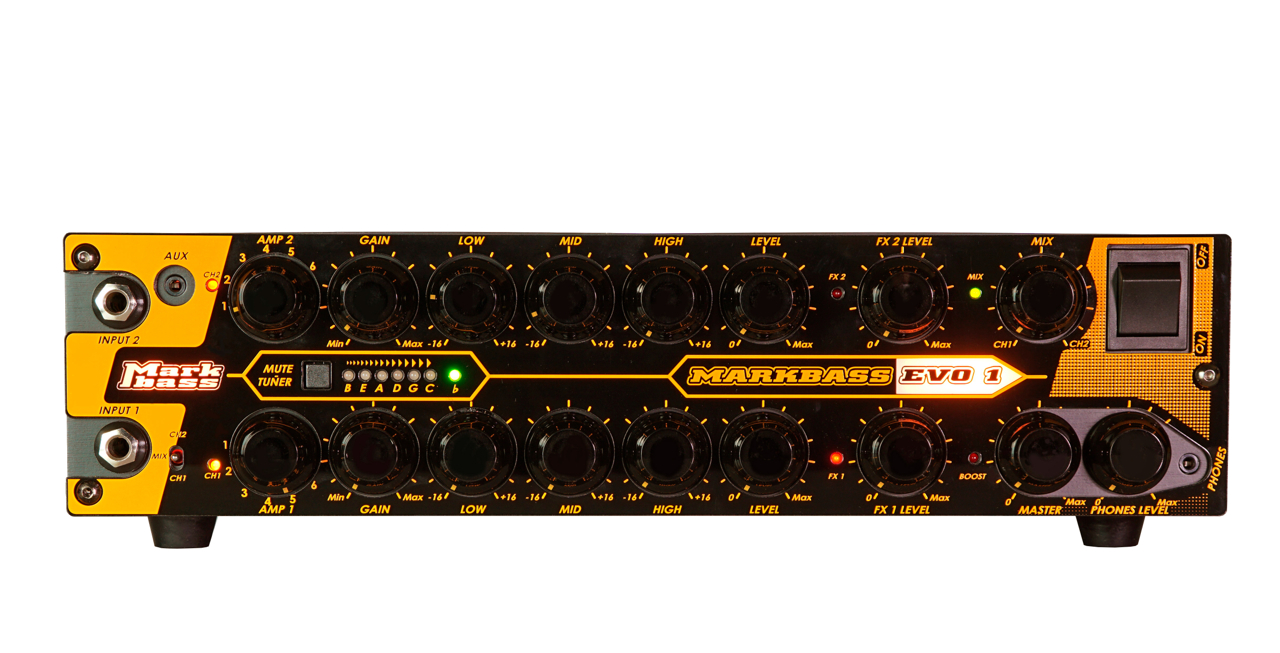
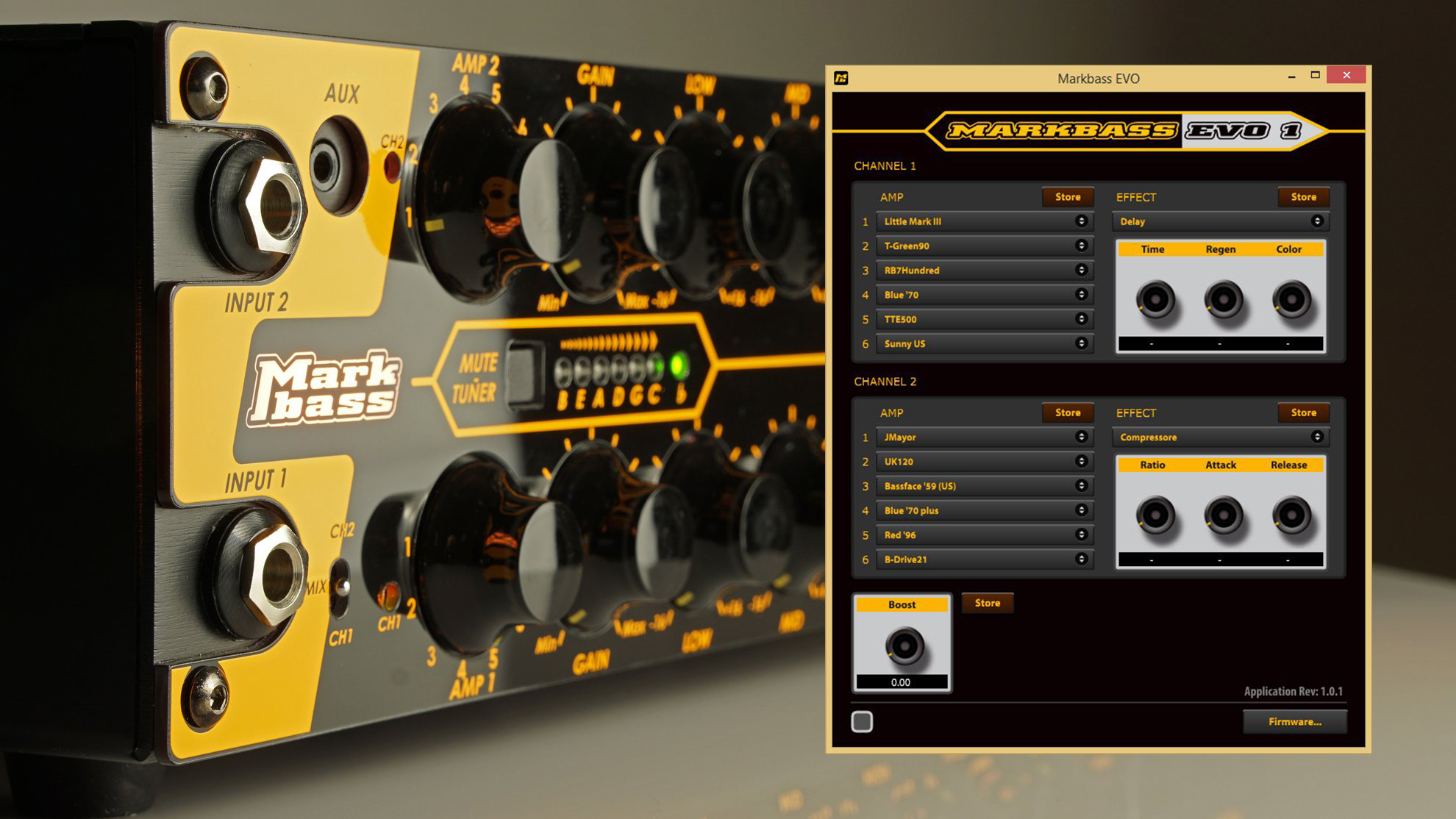
Markbass EVO1 on kaksikanavainen bassonuppi digitaalisella etuasteella. Kukin kanava tarjoaa kuusi erilaista vahvistintyyppiä, jotka on valittavissa kiertokytkimillä. Tehdasasetuksissa nuppi tarjoaa 12 vahvistinmallinusta (kuusi per kanava), mutta Markbassin ilmaisella EVO1-softalla (Win/Mac) vahvistintyyppien paikkoja voi vapaasti vaihtaa USB-yhteyden välityksellä. Käyttäjä pystyy myös käyttämään molemmissa kanavissa samoja mallinnuksia biamping-tyylisiä soundeja varten.
Tällä hetkellä EVO1-nupista löytyy seuraavat vahvistinmallinnukset:
• Markbass Little Mark III
• Trace Elliot GP12
• Gallien-Krueger RB700
• Ampeg SVT-VR Blue Line
• Markbass TTE 500
• Sunn T
• Tech 21 SansAmp Bass Driver
• SWR Red Head
• Ampeg SVT-VR Blue Line Plus
• Fender Bassman
• Vox AC120
• Marshall Major
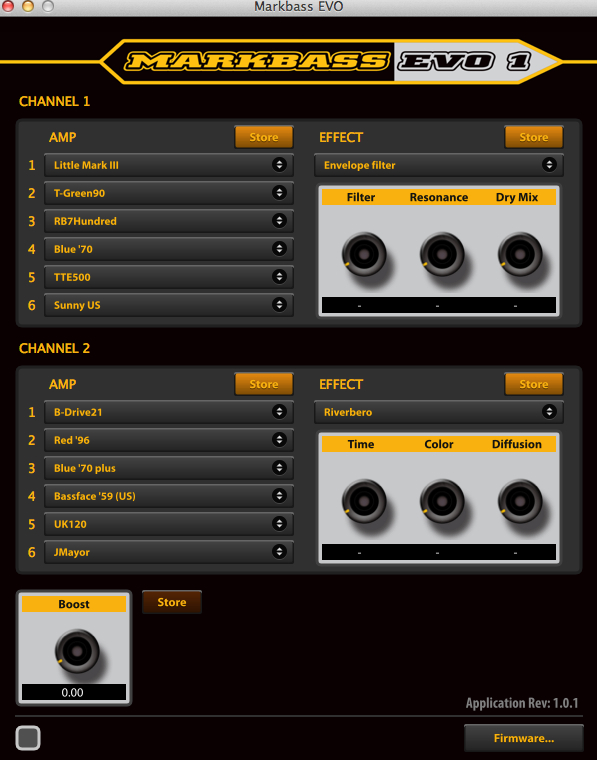
EVO1:n kanavia voi käyttää yksitellen, yhdessä tai siten, että kanavoihin on kytketty eri soittimet (esim. Presari “Fender-kanavaan” ja Rickenbacker “Marshall-kanavaan”). Molemmat kanavat tarjoavat omat Gain- ja Level-säätimet, sekä kolmikaistaiset EQ-osastot. Kummallakin kanavalla on myös yksi oma insert-efektinsä, jota säädetään FX-nupilla enemmän-vähemmän-periaatteella. Vahvistimen tullessa tehtaalta, ykköskanavalle on ladattu kompressori ja kakkoskanavalle chorus-efekti. EVO1-softalla pystyy kuitenkin asettamaan kullekin kanavalle mieleisensä EVO1:n tarjoamasta kuudesta efektistä sekä säätämään kolme efektiparametriä per kanava. Olen melko varma, että tulevaisuuden firmware-versiot tulevat laajentamaan sekä vahvistin- että efektivalikoimaa entisestään.
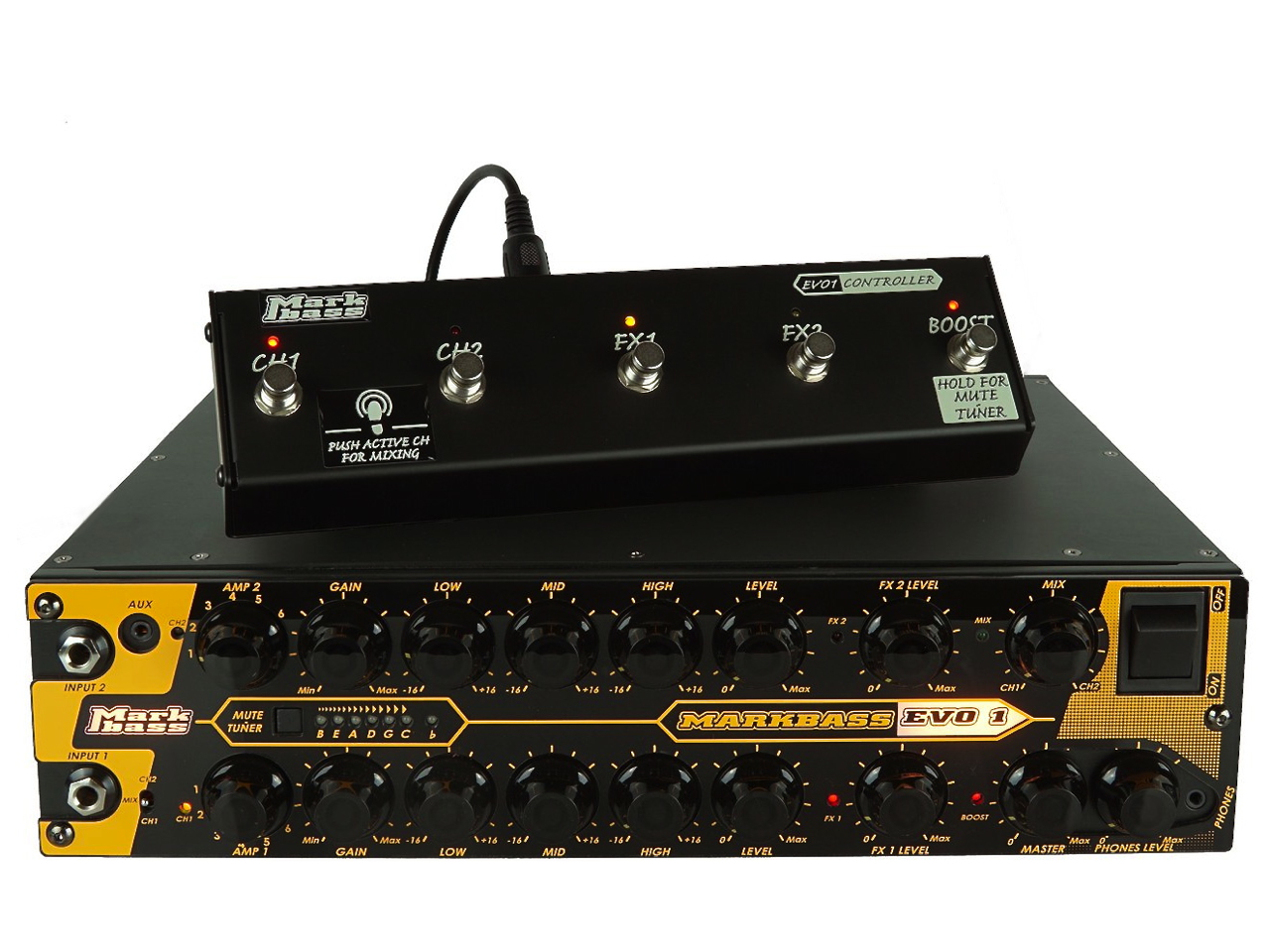
Sekä etupaneelin Boost-ledi että EVO1-softan boost-säädin paljastavat, että nuppiin on piilotettu boosteri. Boostin saa kytkettyä päälle ja pois ainoastaan lisävarusteina saatavilla EVO1 Controller -kytkinyksiköillä tai MIDI-käskyillä. Markbass-nupin sisäisellä viritysmittarilla soittimen voi luonnollisesti virittää standardivireeseen, mutta virettä voi myös madaltaa puolikkaan tai kokonaisen sävelaskeleen verran.
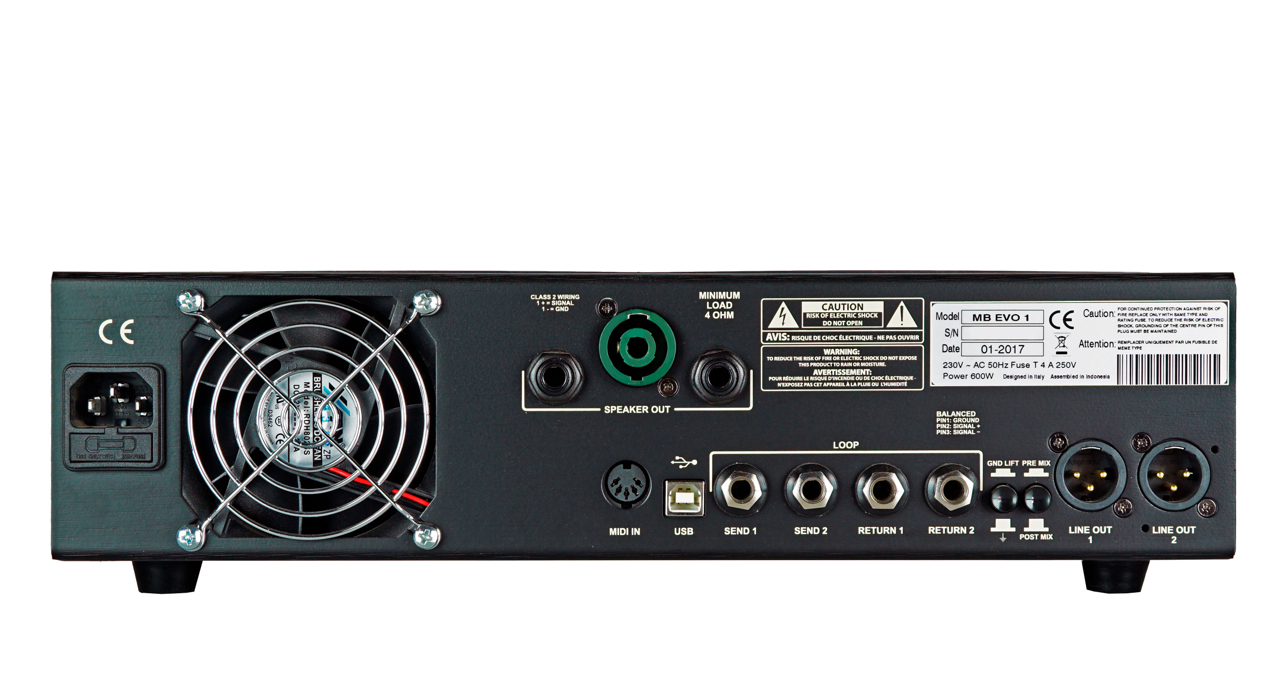
EVO1:n takapaneelista löytyy kolme kaappilähtöä sekä erilliset efektilenkit molemmille kanaville. Paneelista löytyy myös kaksi linjatasoista XLR-lähtöä, jotka on kytketty siten, että ns. Pre Mix -tilassa kummallekin kanavalle on oma lähtö, kun taas Post Mix -moodissa kanavien yhteen miksattu signaali kuuluu kummastakin lähdöstä.
****
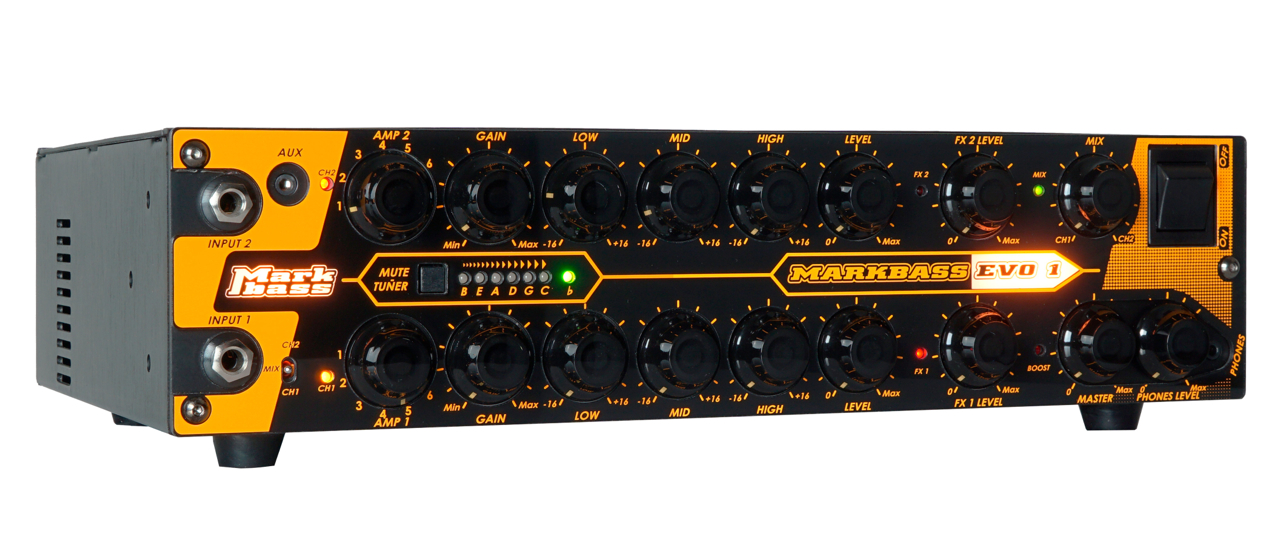
Markbass EVO1 ei ole ensimmäinen digitaalinen, mallintava bassovahvistin, mutta se on mielestäni tällä hetkellä ylivoimaisesti paras.
Miksi? No siksi, koska se on ensisijaisesti helppokäyttöinen kaksikanavainen pro-tason bassonuppi. Vaikka EVO1:n etuvahvistin on täysin digitaalinen, vahvistin soi luonnollisella, aidolla ja “analogisella” äänellä, täysin ilman digitaalisia artefakteja tai latency-viivettä.
Minusta on myös todella hyvä, että Markbass ei ole sisällyttänyt EVO1-nuppiin mitään tarpeettomia ominaisuuksia. Uutuusnupissa ei ole monimutkaista valikkorakennetta tai 100 user-presettiä. On pyritty toteuttaa helppokäyttöinen kaksikanavainen nuppi, jolla on kuitenkin ässä hihassa – nimittäin 12 eri vahvistinmallin soundimaailmat. Näistä vaihtoehdoista jokainen varmasti löytää juuri ne hänelle sopivat soundit, ja yhdestä vahvistimesta saa sekä kompressoidut rock-murinat, että choruksella höystetyt fretless-revittelyt.
EVO1:n molempaa kanavaa ja Mix-toimintoa hyödyntämällä, yhdellä bassolla voi myös luoda soundeja, joissa molemmissa kanavissa on sama vahvistintyyppi, mutta efektit vaikuttavat vain tiettyihin taajuusalueisiin. Esimerkiksi ykköskanavassa voisi olla pelkistetty, kevyesti kompressoitu bassosoundi, kun samalla kakkoskanavasta leikattaisiin bassotaajuuksia ja soundiin lisättäisiin vaikkapa chorusta tai säröä. Näin bassosoundissa voidaan, efektoinnista huolimatta, säilyttää tietynlainen selkeys.
Ääniesimerkit vahvistinmallinuksista on äänitetty (jutun alussa olevan listan järjestyksessä) Markbass Standard 410HF -kaapin kautta Shure SM57 -mikrofonilla. Basso on japanilainen vuoden 1986 Jazz Bass:
Demobiisissä on käytetty näitä bassoja:
• Epiphone Thunderbird IV
• G&L JB-2
• LTD (by ESP) B-50 EMG
• Samick Greg Bennett Delta DB-104
• Sterling (by MM) SUB Ray4
****
Markbass EVO1
858 €
Markbass Standard 104 HF -kaappi – 899 €
Maahantuoja: Musamaailma
First Look: Valeton Dapper Mini
Valeton Dapper Mini
Four-in-one effects strip
• TUNER module with fast, accurate tuning
• Flexible DRIVE module offering OVERDRIVE or DISTORTION
• CHORUS module
• Analog-voiced DELAY module with tap tempo
• HEADPHONE output
• Power supply included
****
Demo track based on ”Purple Rain” by Prince.
• Rhythm guitars – Fender Telecaster (left) and Stratocaster (right)
• Lead guitar – Fender Stratocaster
The Valeton Dapper Mini was plugged into a Juketone True Blood amplifier (handwired Tweed Champ clone). Recorded with a Shure SM57. Reverb added during mixdown.
Contact: R-JAM Group
Mustang GT40 – the Kitarablogi-video
Fender Mustang GT40
• Digital practice and recording amp
• 40 W power (2x 20 W)
• Speakers: 2x 6.5″
• 21 Amp models
• 47 Effects
• Controls for Gain, Volume, Treble, Bass & Master
• Three layer buttons
• Tap button
• USB recording output
• Aux input
• Headphone output
• Digital chromatic tuner
• Bluetooth audio streaming
• Easy WIFI firmware and feature updates
• Editing and sharing via Fender Tone app (iOS & Android)
****
Demo track recorded with a Shure SM57.
Guitar used – Fender (Japan) ’62 Telecaster Custom reissue
 Kitarablogi.com – Finland's premier Guitar and Bass blog