
Here’s a nice Epiphone Flying V video

Kitarablogi.com – Finland's premier Guitar and Bass blog
Juttuja kitaroista ja bassoista

Jarmo Hynninen is one of Finland’s top guitarists and guitar instructors.
Watch his excellent version of the old Jazz standard Caravan, which he recorded using his trusty Gretsch 6120 Reverend Horton Heat -guitar going through Fractal Audio’s Axe-FX II rack effect:


****
Musamaailma tarjoaa Suomessa hyvin harvinaisen kustomointipalvelun, jossa asiakas voi tilata – kohtuullista lisämaksua vastaan – kitaraansa haluamansa EMG- tai Seymour Duncan -mikit valmiiksi asennettuina. Firmalla on omat kitaranrakentajat töissä paikan päällä varastossa, jotka hoitavat kitaran säätämisen ja kustomoinnin vankalla ammattitaidolla.


Kitarablogi sai kokeilua varten uuden Tokai TST-50 -mallin (699 €), joka edustaa brändin laadukasta japanilaista mallistoa.

Tokai TST-50:een on talla-asemaan vaihdettu perinteisen yksikelaisen mikrofonin sijaan Seymour Duncanin Little ’59 -humbuckeri (84,60 €), joka lupaa PAF-tyylisiä soundeja Strato-kokoisesta mikrofonista.
****

Tokai TST-50 on perinteitä kunnioittava S-tyylinen sähkökitara varhaisen 1960-luvun speksien mukaan:
Leppärungon muotoilu on hyvin sulava, ja runko on saanut ylleen kolmivärisen sunburst-lakkauksen. Ruuvattu vaahterakaula pienellä viritinlavalla, tumma otelauta palisanterista sekä valkoinen, kolmikerroksinen pleksi täydentävät kuvan.
****


Testiyksilön vaahterakaula on kaunista kanadalaista linnunsilmävaahteraa. Vintage-speksejä kunnioittaen tässä mallissa käytetään Gotohin laadukkaita Kluson-kopioita.

Vintagesta poiketen kaula on viimeistelty erittäin ohuella satiinipintaisella lakalla. Lopputulos tuntuu erittäin mukavalta ja ”nopealta”.
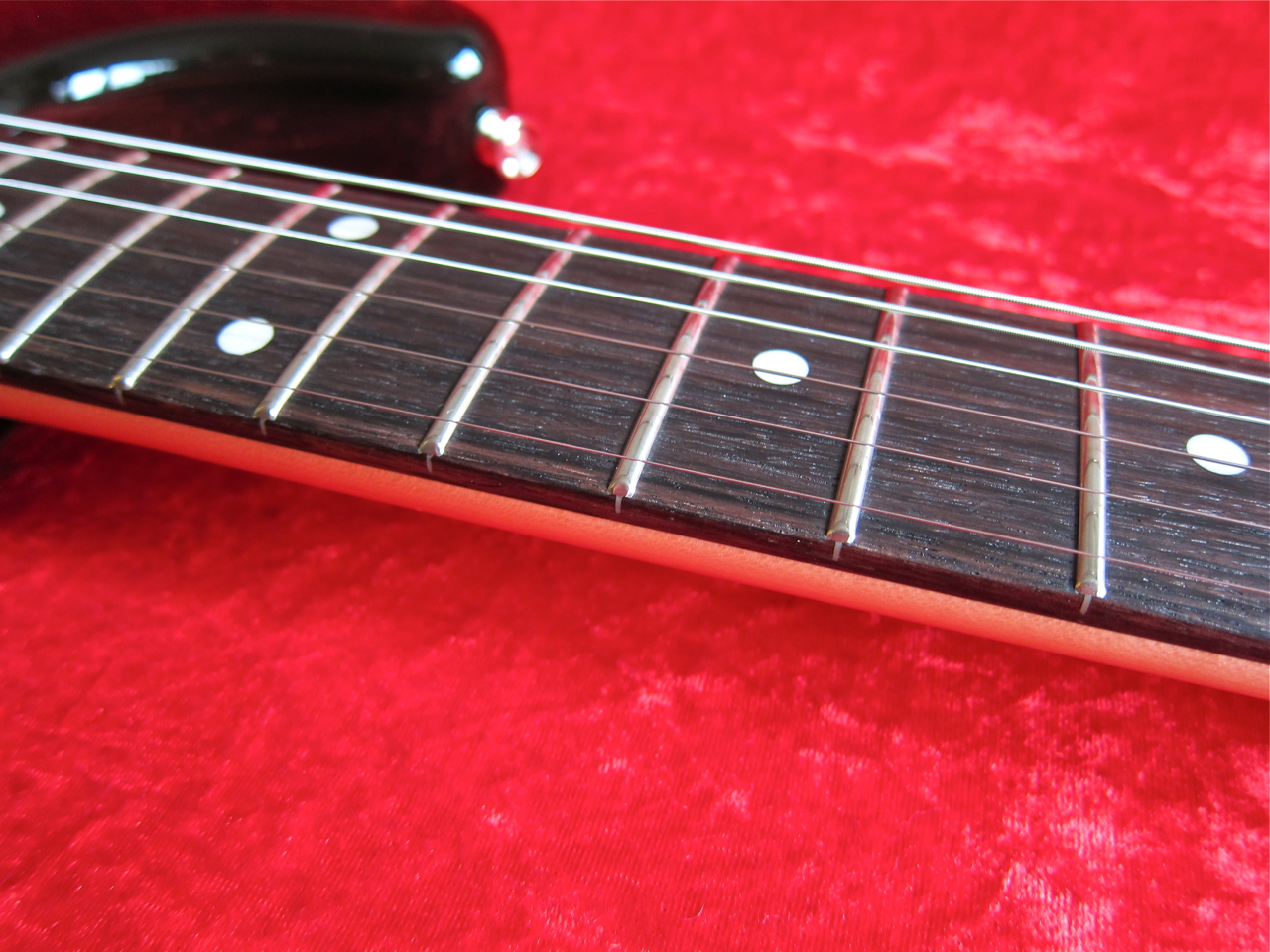
Alkuperäistä korkeammat ja leveämmät nauhat ovat nekin nykyaikaisen maun mukaan, koska ne helpottavat ratkaisevasti kielten venymistä.

Kitaran alkuperäiset mikrofonit tulevat Gotohin Japan Vintage -mallistosta – japanilaista laatutyötä siis. Myös TST-50:n vintagevibra on peräisin saman valmistajan kalliimmasta, japanilaisesta hardware-sarjasta.
Seymour Duncan Little ’59 on nykyään jo itsekin klassikko. Kun tämä mikrofoni esiteltiin yli 20 vuotta sitten, se oli yksi ensimmäisistä Strato-kokoisista humbuckereista, jossa kelat olivat vierekkäin.
Testisoittimen elektroniikkaan ei muuten koskettu — säätimet toimivat perinteisesti siten, että ensimmäinen tone-säädin vaikuttaa vain kaulamikrofoniin ja toinen tone vain keskimikkiin.
****
Ei ole ihme, että Fenderin Stratocaster (ja sen kaikki sen kopiot ja mukaelmat) on myydyin kitara maailmassa – malli istuu esimerkillisesti kehoon soittajan koosta ja ruumiinrakenteesta riippumatta.
Tokai TST-50 on erittäin onnistunut versio samasta teemasta, ja työnjälki on kauttaaltaan ensiluokkainen.
Kaulaprofiiliksi on valittu mukavan ovaali C-poikkileikkaus, josta kaula saa hyvin autenttisen varhaisen kuuskytluvun karakteerin.
Tokain akustinen sointi on tämän lajityypin malliesimerkki – selkeä, naksahtava atakki sekoittuu sopusuhteessa leppärungon ja palisanteriotelaudan tuomaan lämpöön, sekä vintagevibran tuoreuteen.
Monelle kitaristille suoraan lähtöjakkiin kytketty Strato-tyylinen yksikelainen on liian ohut, pureva ja terävä vaihtoehto, etenkin särösoundeissa. Tässä kohtaa Little ’59 astuu kuvioihin. Soundi saa keskiväkevästä humbuckerista selvästi enemmän ryhtiä, potkua ja paksuutta. Puhtaaseen kanavaan syötettynä Little ’59:n aiheuttama hyppy volyymitasossa voi olla joidenkin mielestä liian korostunut, mutta särökäytössä Strato-tyylinen kitara saa pikkuhumbuckerista erittäin maukkaan boostin kermaisia sooloja tai rankkoja riffejä varten.
Äänipätkissä soi aina ensin Tokain kaula- ja keskimikrofoni yhdessä, minkä jälkeen siirrytään Seymour Duncaniin:
****
Tokai-kitarat ja Seymour Duncan -tuotteet
Maahantuoja: Musamaailma
****
Tokai TST-50
699 €
Plussat:
+ erinomainen hinta-laatu–suhde
+ soundi
+ työnjälki
+ laadukas vibrato
****
Seymour Duncan Little ’59 for Strat
84,60 €
Plussat:
+ sopii suoraan S-tyyliseen kitaraan
+ soundi
+ PAF-tyylinen signaalitaso
+ neljä johtoa mahdollistavat erilaisia kytkentöjä
****
****
Finnish importer and retailer Musamaailma offer an in-house customising service, which is still a rather rare thing over here. For a fair price you can order your guitar with your choice of EMG- or Seymour Duncan -pickups. Musamaailma employ their own luthiers, so all this work is done professionally and in-house.
Kitarablogi got to try out the brand-new Tokai TST-50 -model (current price in Finland: 699 €), which is an addition to the brand’s high-quality Japanese line-up.
In our case the Tokai TST-50’s stock, singlecoil bridge pickup has been swapped for a humbucking Seymour Duncan Little ’59 (current price in Finland: 84,60 €), which promises authentic PAF-type tones from a Strat-sized unit.
****
Tokai’s TST-50 gives more than a passing nod to traditional S-style guitars in an early Sixties vein:
The alder body has all the characteristic flowing curves and deep body chamfers, and it has been finished in beautiful three-colour sunburst. The bolt-on maple neck with a small headstock, the rosewood fretboard and the three-ply white scratchplate complete the picture.
****
Gorgeous Canadian hard rock maple has been used for the test sample’s neck – there are even some bird’s eyes sprinkled across the neck. In keeping with the vintage-look the Tokai sports a set of high-end Gotoh Kluson-copies.
For the TST-50 Tokai have nonetheless made the sensible decision to stray from the vintage path by employing a thin satin finish on the neck. The result feels extremely comfortable and ”fast”.
The medium-sized frets are another welcome upgrade, giving you more purchase for precise string-bending action.
This model’s stock pickups come from Gotoh’s Japan Vintage series – pro-quality singlecoils. The TST-50 also sports a vintage-correct, Japanese Gotoh-vibrato.
Seymour Duncan’s Little ’59 has become a classic itself by now. When this model was introduced over two decades ago, it was one of the first Strat-sized humbuckers with side-by-side coils.
The rest of our test sample’s electronics has been left untouched – the controls work in the traditional way, with one tone control for the neck pickup and one for the middle pickup. The bridge pickup is left without a tone control, its signal going only through the master volume.
****
A Strat-style guitar’s great ergonomics are well documented by now, so there’s really no need to reiterate common knowledge. No wonder the Fender Stratocaster (and all its copies) is the best-selling electric guitar of all times – this model sits comfortably in you lap, regardless of the player’s size and physique.
Tokai’s TST-50 is an outstanding variation on this theme, delivered with crisp and clean workmanship.
We find a comfortable, oval C-shaped neck profile, resulting in a quite authentic early Sixties feel.
Acoustically this Tokai displays all of the classic traits of a guitar of this type – a well-defined, clucking attack in fine balance with the warmth and character an alder body and rosewood fingerboard bring, seasoned with a sprinkle of vibrato-induced sparkle.
Many guitarists find the cutting tone of a bridge singlecoil too much to bear with this type of guitar, especially in an overdriven or distorted musical context. This is just where Duncan’s Little ’59 comes to the rescue. This humbucker with its moderate, PAF-type output level lends proceedings a healthy kick up the proverbial. There’s more beef and mid-range in the tone, as well as the dynamics and fat-ness you’d associate with a full-sized humbucker. Staying in clean territory the resulting jump in the guitar’s output might be a bit too much for some purists, but for overdriven Blues, Rock and high-gain tones the Little ’59 is a great way to fly.
The soundbites all feature the stock neck/middle-combination for starters, moving on to the Duncan Little ’59 about halfway through:
****
Tokai-instruments and Seymour Duncan -products
Finnish distributor: Musamaailma
****
Tokai TST-50
Current price in Finland: 699 €
Pros:
+ outstanding value-for-money
+ sound
+ workmanship
+ quality vibrato
****
Seymour Duncan Little ’59 for Strat
Current price in Finland: 84,60 €
Pros:
+ fits most Strat-type guitars directly
+ tone
+ PAF-type output
+ four conductors for different wiring options
****

****
In this beautiful book guitarist Brian Whitehouse describes many of the Ramirez Guitar Museum’s historic Spanish guitars, which he then plays on the accompanying CD.

****
One of the new products at the EBS-stand in Frankfurt this year was a compact-yet-powerful bass amp called Reidmar. Kitarablogi.com managed to get hold of a Reidmar RD250, as well as a Classic Line -series CL112-cabinet for this review.
****
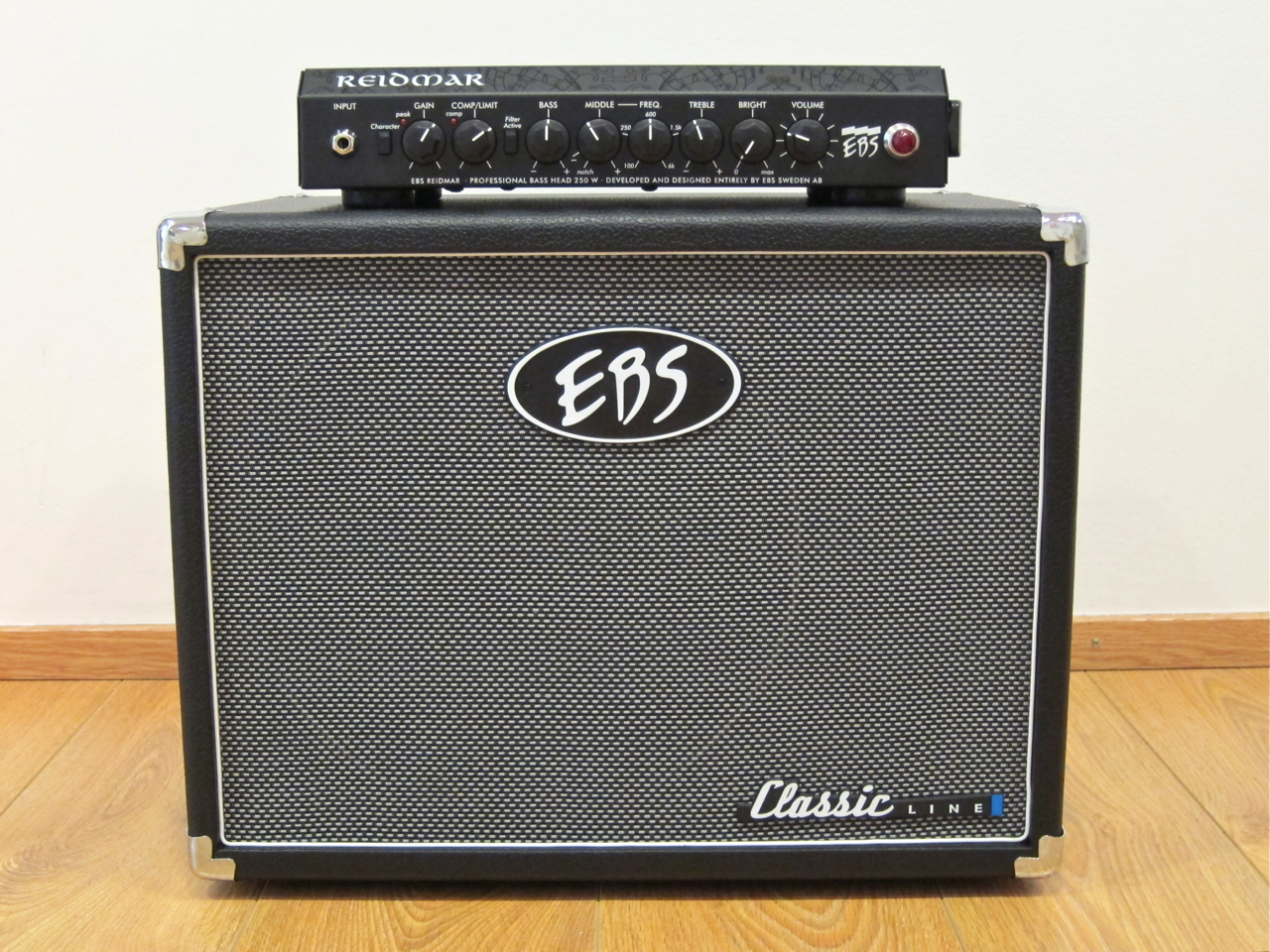
Both the Reidmar-head, as well as the Classic Line -series of cabinets have been designed and engineered in Sweden, but are being produced cost-effectively in China.
The EBS Reidmar (current street price in Finland: 469 €) runs a Class D power amp with 250 Watts of output at 4 Ohms. Because Class D amps run extremely energy-efficiently, there’s no need for large and heavy cooling ribs, which is why such amps can be much more compact than a traditional amplifier of the same power rating. EBS’s Reidmar weighs in at a mere 3.2 kilos, and fits easily into a compact backpack.
The good guys at EBS were quick to stress that the 250 W (RMS) rating is rather conservative, with the head reaching more than 400 Watts peak power with minimal distortion.
The new Classic Line CL112 -cabinet (current street price in Finland: 299 €) fits the Reidmar like a glove, as it, too, has been designed to pack a massive punch into a handy-sized piece of gear. The cab’s impedance is eight Ohms, and beneath the vintage-style exterior you can find one 12-inch speaker paired with a two-inch tweeter.
****
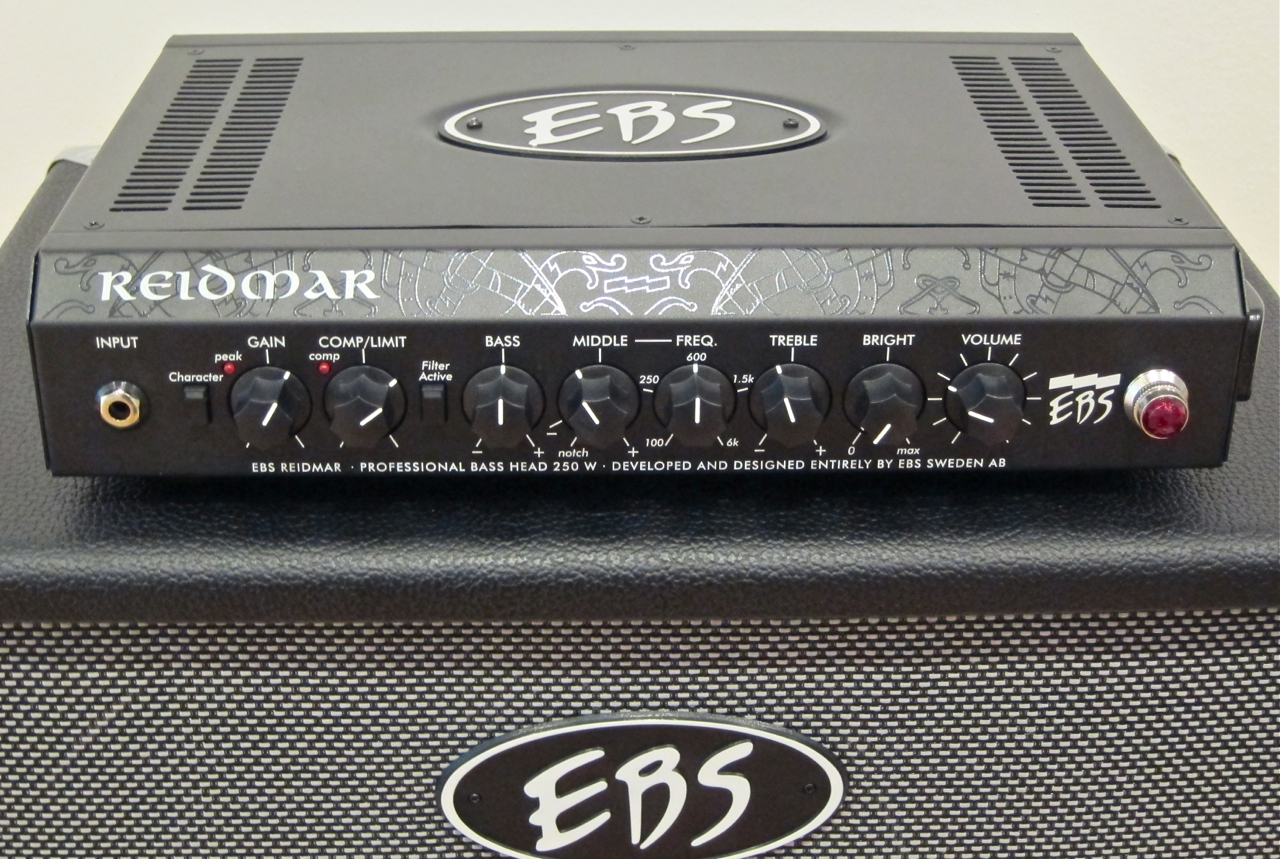
Regardless of its diminutive size, the Reidmar’s front panel dishes up all the goodies we’ve come to expect from an EBS-amp:
Next to the Gain-control you find the Character-button which lets you choose between a linear frequency curve and a loudness-type counterpart, with more bottom end and treble. EBS’ on-board compressor is known for its organic and musical behaviour, as well as its easy one-knob functionality. The EQ-section uses a four-band set-up with semiparametric mids – meaning the user can adjust the mid-range-filter’s centre frequency (in this case between 100 and 6,000 Hz). One EBS-speciality is the notch filter built into the mid-band. A notch filter is a very steep (=exact) filter that can be used to defeat an acoustic bass’ feedback howl or to reign in strong room/stage resonances, without interfering with the rest of your tone.
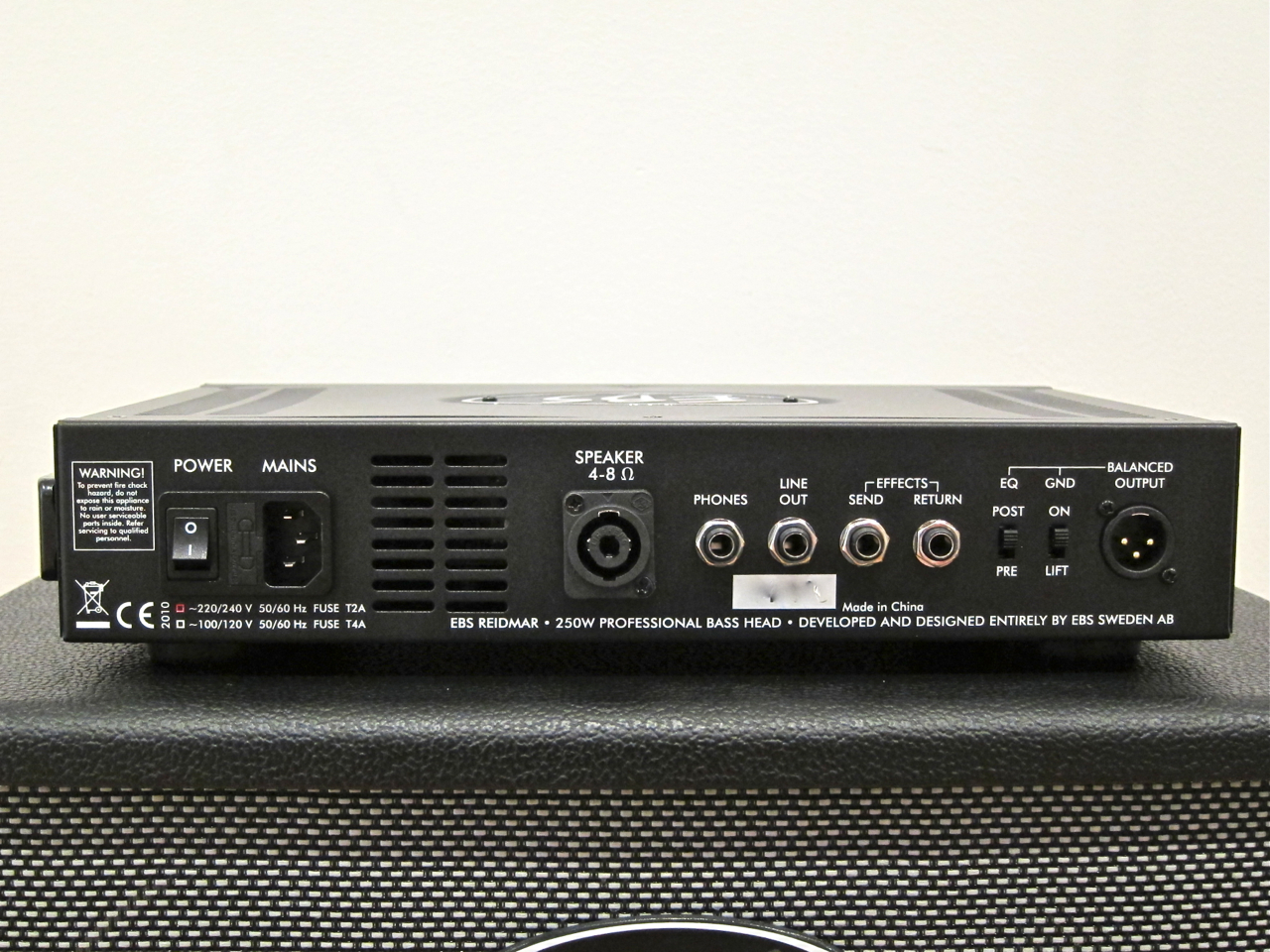
The back panel holds all your connections to the outside world – from the excellent DI-output to the effects loop.
****
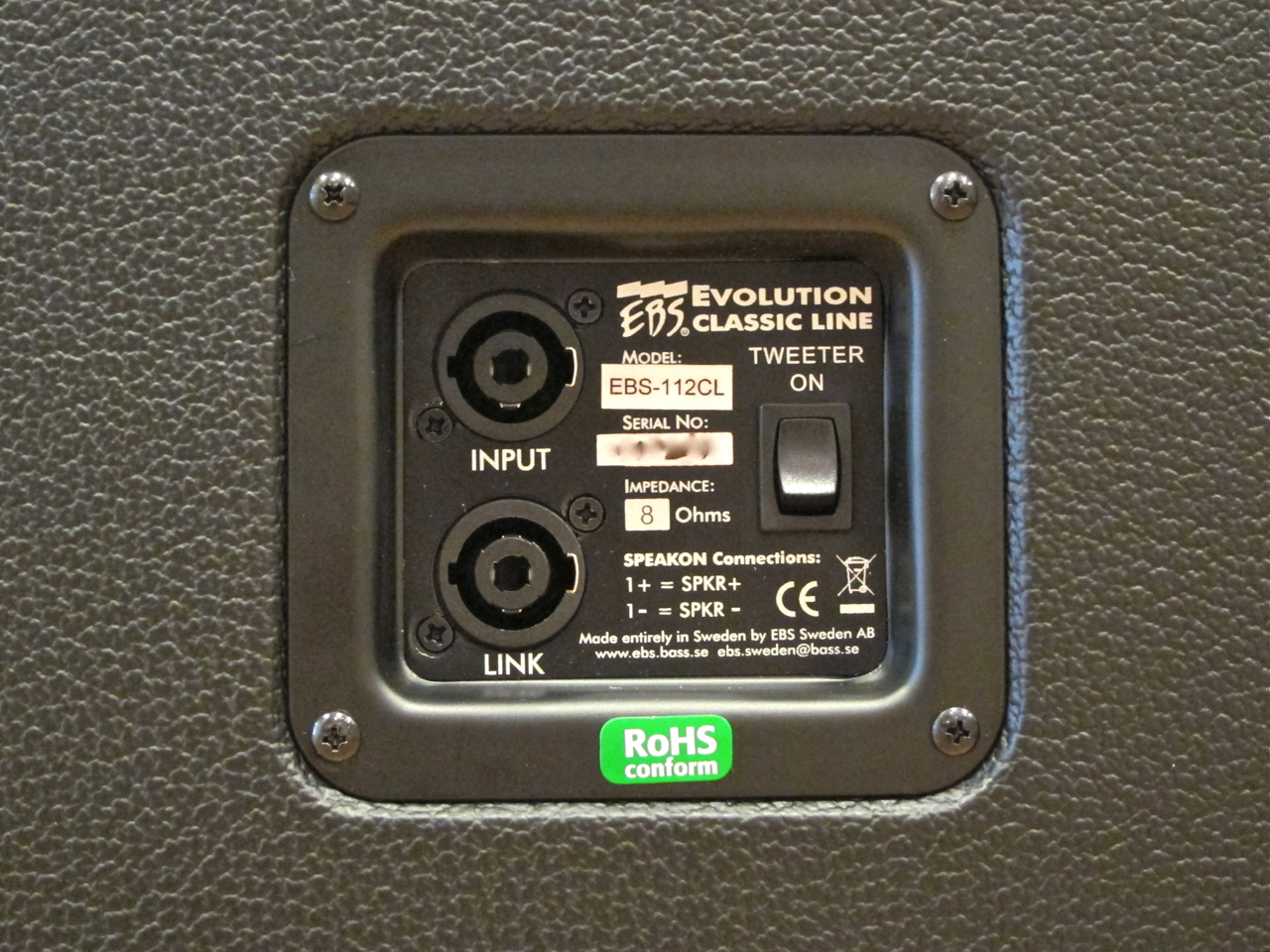
The EBS CL112 -cab sports two Speakon-connectors on its back panel – one for the input signal, and one to link another cabinet to the head. The small Tweeter-switch lets you switch off the cab’s tweeter for authentic vintage-style tones.

Even though the CL112 weighs in at only 17.5 kilos, EBS have sunk a sturdy metal grip into the cabinet’s left side.
****
A good bass amp should sound well balanced and full before you even touch the EQ-controls. The EBS Reidmar/CL112 -stack passes this test with full points. My old Jazz Bass sounds nice and chewy, with all of its ”wood” and tone intact:
Engaging Character noticeably pumps up the bass and adds muscle to the proceedings:
The EQ-section makes it possible to achieve virtually any tone you want. Let’s start with a nice and clean Pop tone:
Boosting the bottom end, as well as adding bite, results in a classic slap tone:
Adding bass while cutting treble takes you straight to Reggae’s swampy realms:
A punkish bit of plectrum-driven anger can be dialled in just as quickly on the EBS-stack:
…and if you fire up a chorus pedal the Reidmar and the CL112 can take you straight to Jaco-land:
Pictures of Blogi – Homage to Jaco P.
****
With its Reidmar-head and CL112-cabinet EBS have managed to shrink a bassist’s core equipment without depriving him (or her) of his (or her) tone. True, if a five-string is your weapon of choice, you should probably consider a different cabinet – like the EBS NeoLine 115, for example – to keep the punch in the lowermost notes intact, but in most situations this little gem of a stack will hold its own more than adequately. If you splash out on two CL112-cabs you’d get a very powerful and flexible modular system, which would enable you to take along the second cab to larger gigs, leaving it at home when it’s not needed.
The Reidmar gives you genuine EBS-tone in a compact and very affordable package. The EBS CL112 dissipated all my reservations concerning single 12-inch cabs: Its tone is open and strong, without being the least bit boxy or nasal. The silky-sounding tweeter adds just the right amount of brilliance to the tone. Jättebra!
****
EBS Reidmar RD250 & Classic Line CL112
Finnish distributor: F-Musiikki
****
EBS Reidmar RD250
Street price: 469 €
Pros:
+ price
+ sound
+ flexibility
+ power
+ size
+ weight
****
EBS CL112
Street price: 299 €
Pros:
+ price
+ sound
+ power handling
+ size
+ weight
****


Here are a few soundbites of a 2004 Made-in-Korea Epiphone Thunderbird IV recorded direct via a Focusrite Saffire 6 USB -interface into Apple Garageband:
Each soundbite starts with the neck pickup, continues with both pickups on, and ends with the bridge unit on its own.
****
****
Yksi uutuuksista EBS-ständillä Frankfurtissa oli kompakti voimanpesä nimeltään Reidmar. Kitarablogi.com sai Reidmar-nupin, sekä Classic Line -sarjaan kuuluvan CL112-kaapin testiin.
****
Sekä Reidmar-nuppi että Classic Linen kaapit on suunniteltu Ruotsissa, mutta valmistus on siirretty Kiinaan, mikä selittää molempien edullisen hinnan.
EBS Reidmar (katuhinta: 469 €) on D-luokan päätevahvistimella varustettu 250-wattinen (4 ohmia) bassonuppi. Koska D-luokan vahvistimet toimivat hyvin energiatehokkaasti, ne eivät tarvitse suuria jäähdytyselementtejä. Tämän ansiosta D-luokan vahvistimet ovat yleensä huomattavasti pienempiä ja kevyempiä kuin teholtaan vastaava perinteinen vahvistin. EBS:n Reidmar painaa vain 3,2 kiloa, ja koko nuppi mahtuu helposti esimerkiksi olkalaukkuun tai selkäreppuun.
EBS:n edustajat muuten korostivat messuilla, että nupin 250:n watin RMS-teho on ilmoitettu hyvin konservatiivisesti, ja että vahvistimen peak-teho voi nousta yli 400 wattiin ilman säröä.
Uusi Classic Line CL112 -kaappi (katuhinta: 299 €) sopii Reidmarin pariksi kuin nakutettu, koska sekin on suunniteltu mahdollisimman kompaktiksi. Kaapin impedanssi on kahdeksan ohmia, ja sen vintage-tyylisen ulkokuoren alle on sijoitettu yksi 12-tuumainen kaiutin, sekä 2-tuumainen diskanttipilli.
****
Pienestä koostaan huolimatta Reidmarin etupaneeli tarjoaa kaikki EBS-vahvistimista tutut ominaisuudet:
Gain-säätimen vieressä olevalla Character-napilla voi lisätä tulosignaaliin jo heiman loudness-maista taajuuskäyrää, ilman että taajuuskorjaimiin tarvitsisi koskea lainkaan. EBS:n kompressori on tuttu hyvin musikaalisesta toiminnastaan, ja sen säätäminen on todella helppoa. EQ-osasto on nelikaistainen parametrisella keskialueella, mikä tarkoittaa että keskialueen filtterin keskitaajuutta voi säätää (tässä tapauksessa 100:n ja 6.000:n hertsin välillä). EBS-taajuuskorjainten erikoisuus on Middle-säätimeen sisäänrakennettu notch filter -ominaisuus. Notch-filtteri (kaistanestosuodatin) on erittäin kapeaa erikoissuodatin, jolla voi poistaa tehokkaasti esimerkiksi akustisen basson feedback-ulinan tai pahan lava-/huoneresonanssin, vaikuttamatta lähes olenkaan muihin taajuuksiin.
Takapaneeliin on sijoitettu kuulokelähtö (hiljaista harjoittelua varten), linjatasoinen lähtö, efektilenkin liittimet, sekä EBS:n ensiluokkainen DI-lähtö.
****
EBS CL112 -kaapin takapaneelissa on kaksi Speakon-liitintä, joista yksi on tulosignaalia ja toinen useampien kaappien ketjuttamista varten. Oikeanpuoleisella kytkimellä voi halutessa mykistää diskanttipillin autenttisia vintage-soundeja varten.
Vaikka CL112:n paino on vain 17,5 kg EBS on upottanut kaapin vasempaan kylkeen ammattitason metallikahvan. Kuljettaminen on siis yhtä turvallista kuin vaivatontakin.
****
Hyvän bassovahvistimen pitäisi soida tasapainoisen hyvin jo ilman EQ:ta tai muita apuvälineitä. EBS Reidmar/CL112-stäkillä tämä erikoiskoe hoidetaan mallikkaasti. Vanha Jazz-bassoni soi jäntevästi, ja soittimen oma karakteeri pysyy täysin ehjänä:
Character-käyrä lisää touhuun sopivasti potkua ja fundamenttia:
Taajuuskorjainten käyttö avaa tien mahdollisuudet mihin soundiin tai tyylilajiin vaan. Aloitetaan siistillä Pop-bassolla:
Lisäämällä hieman botnea ja preesenssiä saa kädenkäänteessä loistavan peukkubasso-soinnin aikaiseksi:
Kun taas leikataan diskanttia reilusti pois ja lisätään vielä enemmän bassoa saadaan Reidmarista mainio Reggae-kone:
Eikä nahsahtava plektra-Rock ole mikään haaste EBS-stäkille:
…ja kun lisätään hieman chorus-efektiä Reidmar ja CL112 vievät meidät Jacon ihmeelliseen maailmaan:
Pictures of Blogi – Homage to Jaco P.
****
EBS on Reidmarin ja CL112-kaapin myötä onnistunut kutistamaan ja keventämään huomattavasti basistin työkaluja, ilman että pääasia – soundi nimittäin – kärsisi tämän seuraksena. Totta, viisikieliselle bassolle tarvitaan ehkä toisenlainen kaappi – esimerkiksi EBS NeoLine 115 – jotta alhaisimmat sävelet soisivat kunnolla, mutta useimmissa tilanteissa tällaisella pikku-stäkillä pärjää mainiosti. Kahdella CL112-kaapilla voi sitten jo rakentaa modulaarisen järjestelmän, jolloin toinen kaappi otetaan vain silloin mukaan, kun sitä oikeastaan tarvitaan.
Reidmar tarjoaa ehtaa EBS-soundia pienessä, kevyessä ja hyvin edullisessa pakkauksessa. EBS CL112 -kaappi taas pyyhki pois kaikki ennakkoluuloni 12-tuumaisia kohtaan – ei mitään nasaalisuutta tai tukkoisuutta, vaan loistava bassosoundi, jolle kaapin silkkisen pehmeä diskanttipilli antaa viimeisen silauksen. Jättebra!
****
EBS Reidmar RD250 & Classic Line CL112
Maahantuoja: F-Musiikki
****
EBS Reidmar RD250
katuhinta: 469 €
Plussat:
+ hinta
+ soundi
+ monipuolisuus
+ teho
+ koko
+ paino
****
EBS CL112
katuhinta: 299 €
Plussat:
+ hinta
+ soundi
+ tehonkesto
+ koko
+ paino
****

****
A dedicated amplifier for acoustic guitar opens up plenty of interesting possibilities: most small pub gigs won’t require a PA-system anymore, because the majority of acoustic combos are equipped with a second input channel for a microphone. For larger gigs you can assign the acoustic combo to monitoring duties, putting yourself in full control over your stage sound, and then feeding your signal on to the FOH mixer.

The Tanglewood T6 (current price in Finland: 396 €) is a very compact, two-channel combo, pumping out 60 Watts of power through an 8-inch speaker. The T6 weighs a mere 11 kilos, and is very easy to transport thanks to the nice gigbag that comes with the amp.
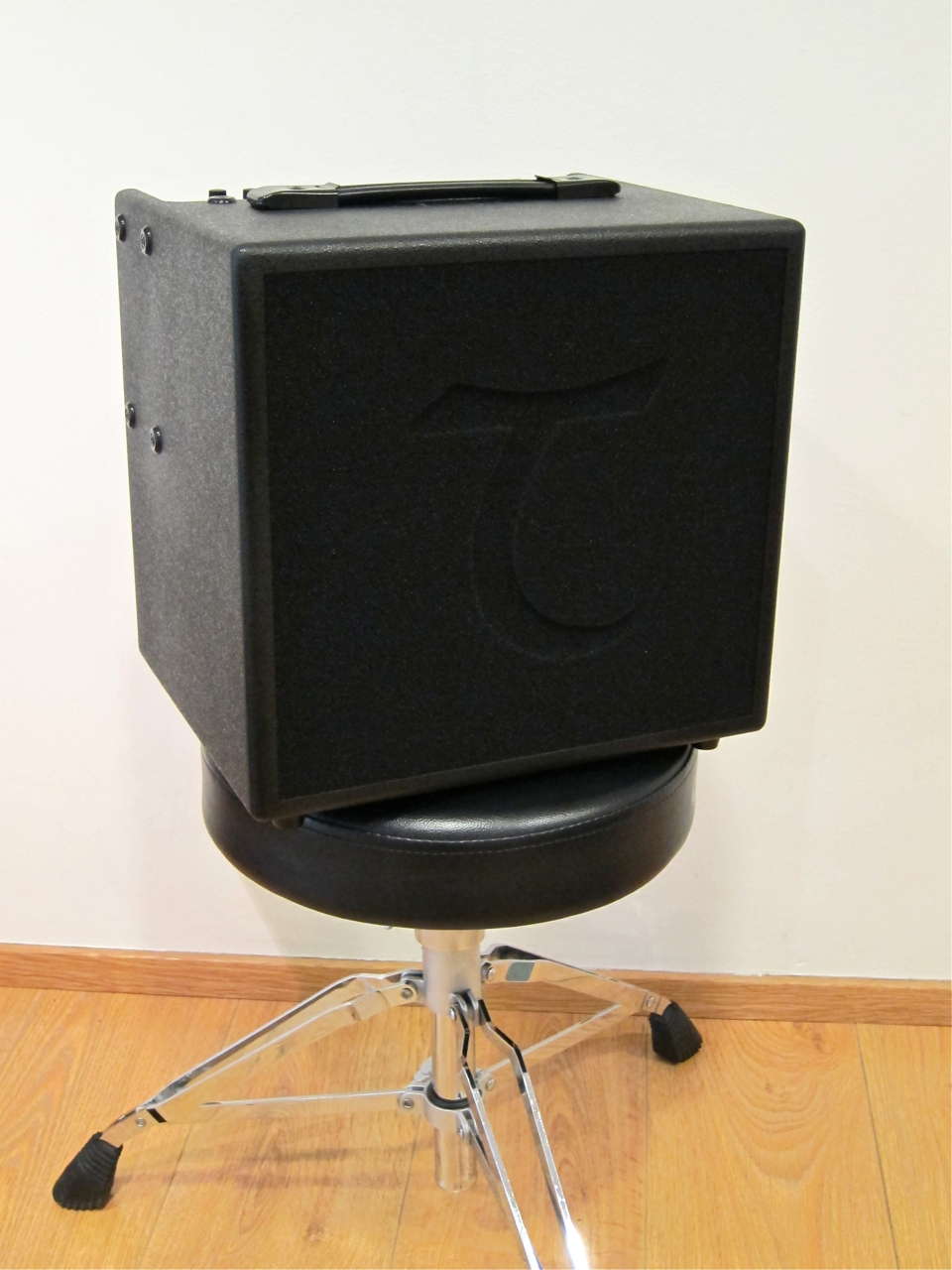
The Tanglewood feels rugged enough for regular gigging, with its cabinet covered in textured nylon. A fat foam grille protects the speaker.

The T6’s first channel is meant for use with an acoustic guitar (or similar instrument), offering controls for gain and the 3-band EQ. The High/Low-selector lets you tame hot guitar preamps, while Contour adds brilliance to a dull signal.
Channel number two is the right place to connect a microphone or a line level signal source. It sports an XLR/jack-combo connector, a Mic/Line-selector, as well as controls for gain and 2-band EQ.
Tanglewood’s effects section lets you choose between four different effects – two different reverbs (Hall and Plate), one combination effect (Chorus/Room) and one delay. The Effect Pan -knob lets you assign the signals from both channels to the effect section’s input. Going all the way counterclockwise will feed only the signal off channel one to the effect, while going all the way clockwise only sends channel two’s signal to the effect processor. The Level control adjusts the amount of wet signal in the output mix.

The back panel holds all the connectors necessary for the T6 to communicate with an auxiliary signal, an mp3-player, your tuner, a mixer or soundcard (XLR or line out), a pair of headphones, as well as a footswitch (for muting the effects on the fly).

If need be you can even hoist the Tanglewood T6 up onto a speaker stand.
****
I must admit that the quality of the T6’s basic sound came as a surprise to me. Even without resorting to the EQ controls this combo rings out clear and true, with a fresh and punchy tone that’s never brittle or abrasive (all soundbites have been recorded using a Taylor 110CE -guitar):
The Tanglewood’s Hall-reverb sounds lush and dense, with just the right amount of presence:
Switching to Plate-reverb I found a good amount freshness and a nice, unobtrusive charcter:
For my taste I would have preferred for the Chorus/Room-combination to contain a larger amount of chorus with added depth – still, the effect is more than useable in its present form, too:
The Delay-effect feels a little half-hearted; not because of its sound, but because the delay time is factory-set to a medium value, which will only fit some songs. A better solution would have been to have offered either a selector – slapback/medium – giving you two different time presets, or a full-blown tap tempo function, which would allow you to set song-specific delay times.
****
If you’re on the lookout for an easy-to-use, good-sounding acoustic combo that won’t cost you an arm and a leg, I suggest you rush out to your Tanglewood dealer. With the T6 you only have to set your gain levels and the master volume, adjust the effect section to your liking, and you’re ready to roll. The amount of amplification is ample for most small pub gigs, and the T6 works well as a backline stage monitor, as long as you don’t play in a raucous Hard Rock band.
The Tanglewood’s only real drawback is the complete absence of dedicated feedback-prevention tools, like a notch-filter or an automatic feedback defeater. Nevertheless, you can well work your way around this by positioning the T6 sensibly, and maybe closing you guitar’s soundhole, should you require high sound levels.
****
Tanglewood T6
Current price in Finland: 396 €
Finnish Distributor: Musamaailma
****
Pros:
+ lightweight
+ compact
+ basic sound
+ quality effects
+ stand adapter built in
+ affordable
Cons:
– delay-time fixed
– no anti-feedback tools
****
 Kitarablogi.com – Finland's premier Guitar and Bass blog