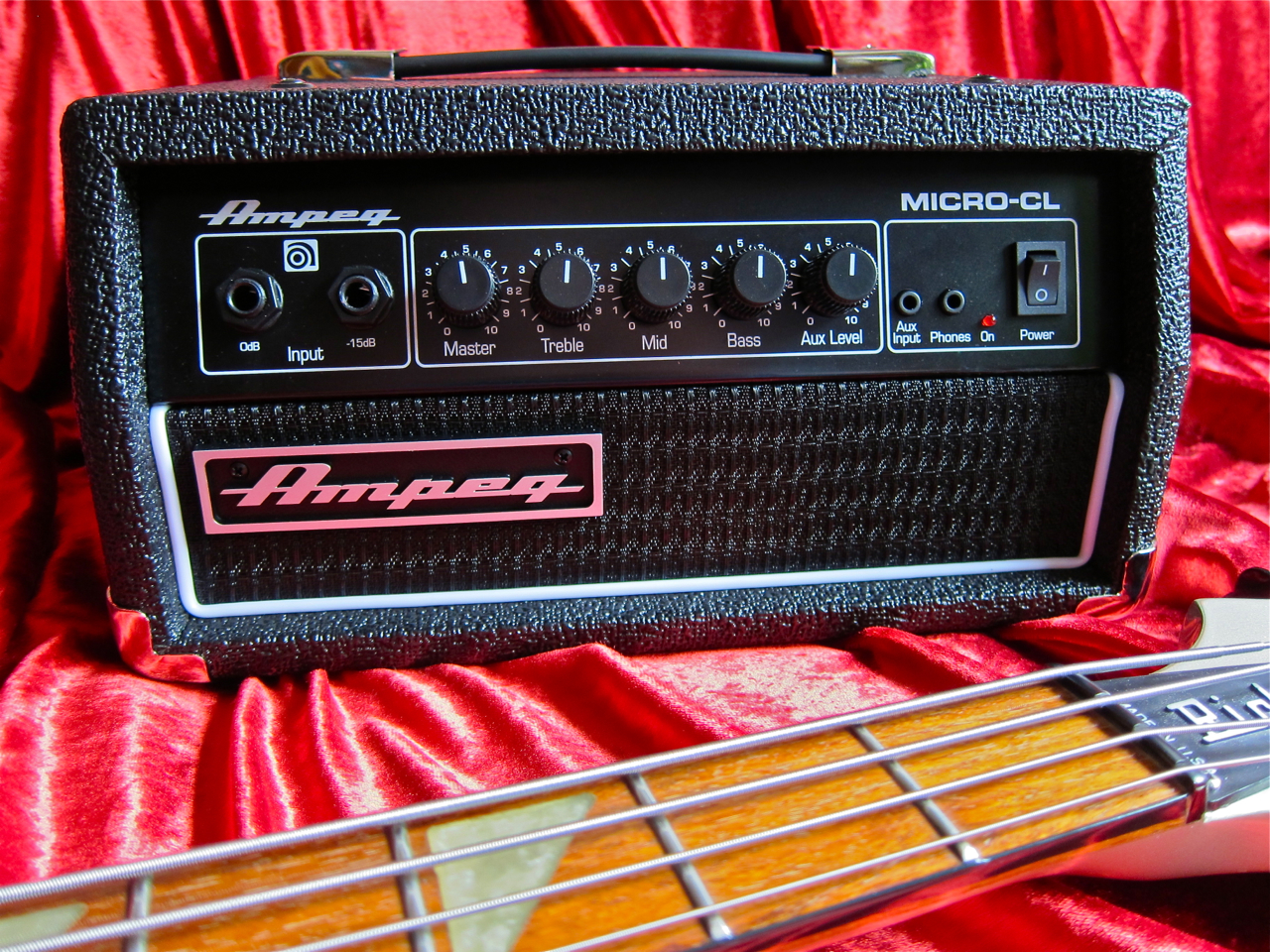
At NAMM 2012 Ampeg introduced their second micro stack to the public – the Ampeg Micro-CL.
The company’s first foray into this market segment came in the guise of the very successful Micro-VR (currently still available), which is a 200 Watt miniature version of Ampeg’s classic 1970s SVT. The brand-new Micro-CL takes its starting point from the Eighties version of the venerable Ampeg bass stack (the SVT-CL), offering 100 Watts of bass tone.
Ampeg’s Micro-CL -stack (current RRP in Finland: 505 €) brings the company’s classic look down to an easily manageable size.
The solid-state head weighs in at only about six kilos, with the cabinet clocking in at a very moderate 15 kg. The whole miniature stack is only about 80 cm tall – making it a very easy fit with almost any car boot.
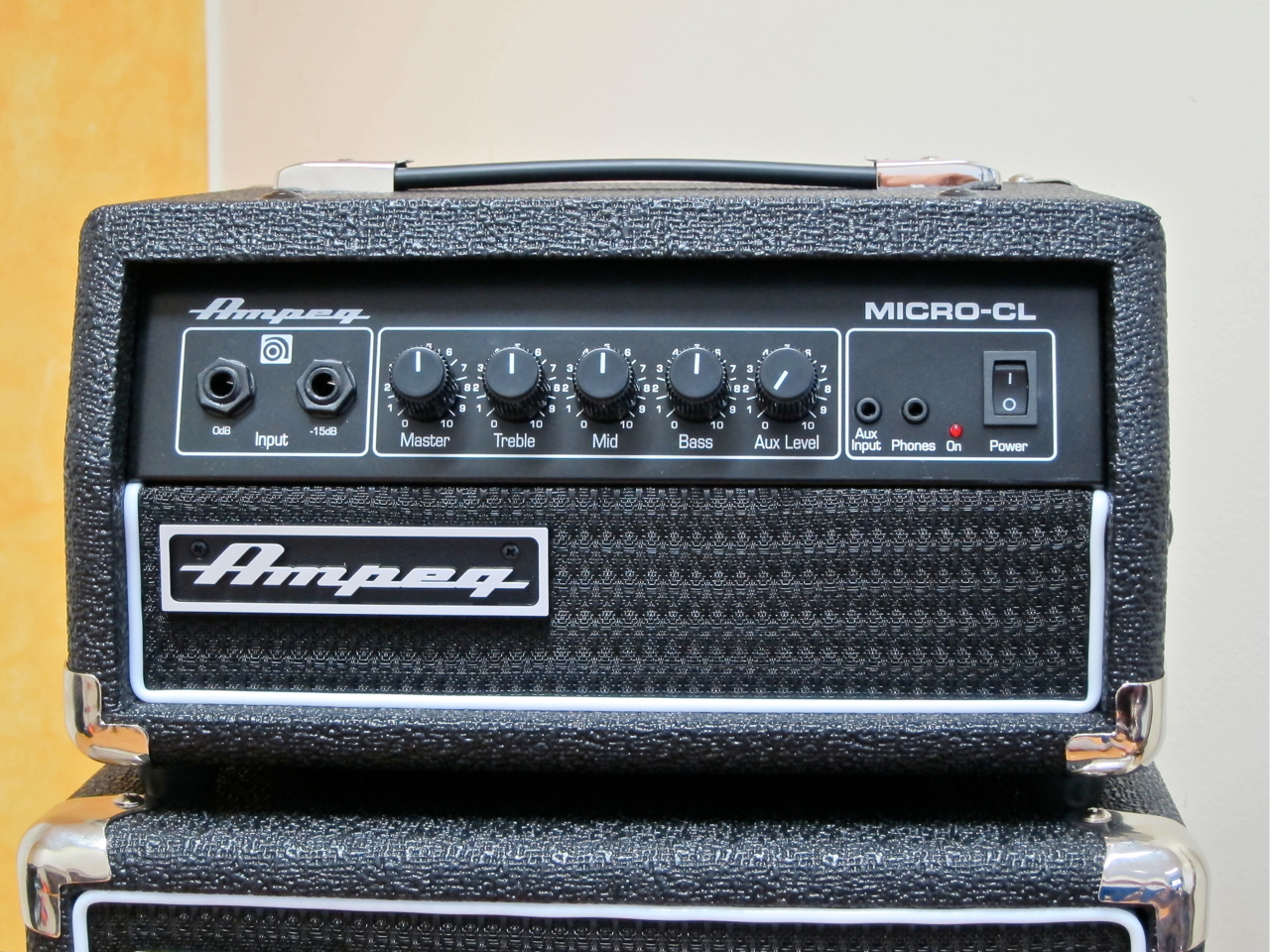
The Micro-CL-head comes equipped with two inputs – one for passive and the other for active bass guitars – as well as a three-band EQ-section.
Because this amp is also very handy as a practice amp at home, Ampeg have added an Aux-input (with its own volume control) and a headphones output to the front panel.
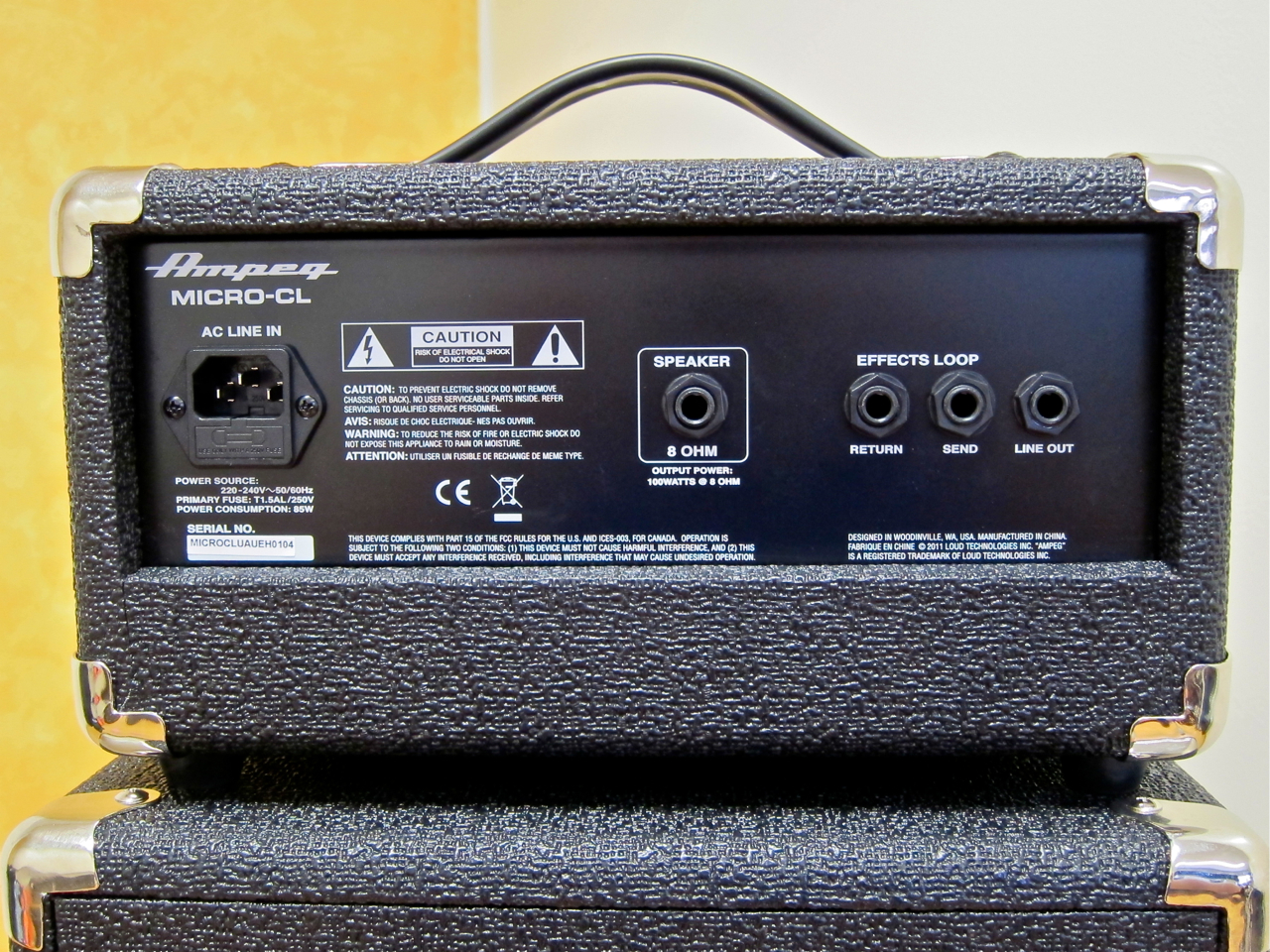
On the head’s flip side you’ll find the speaker output, as well as phone jacks for the effects loop and the line-level output.
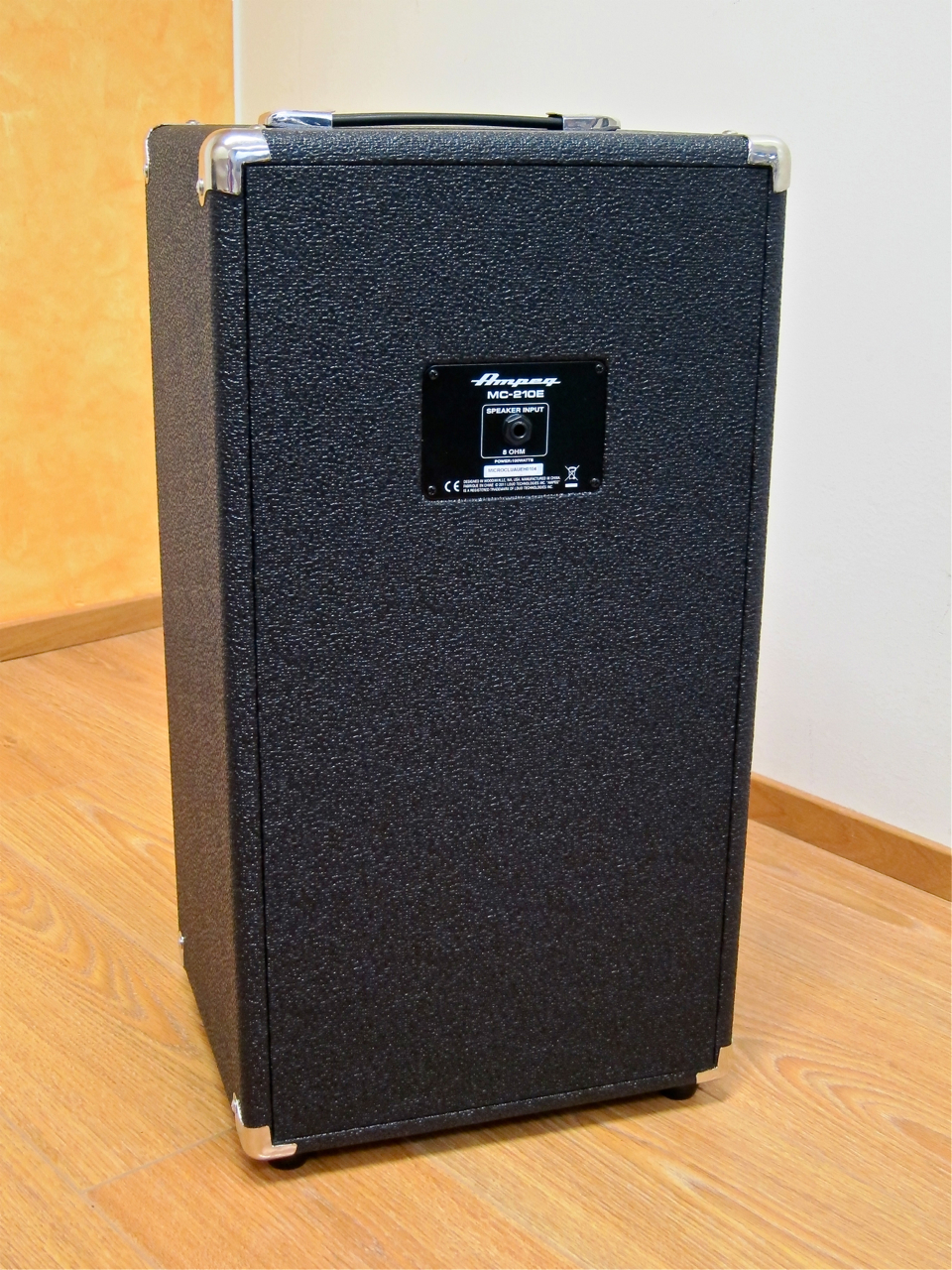
The stack’s cabinet – called the Ampeg MC-210E – is built using the same Infinite Baffle -principle also applied to the company’s famous (and huge) 8 x 10″ cabinets.
The completely enclosed cab comes loaded with two 10-inch speakers. The front grille is attached in the traditional way using velcro.
The workmanship seems spot on, with the miniature cabinet exuding the same air of rugged roadworthiness that its big brothers are known for.
The speaker input sits on its own metal plate.
Just to put things into perspective for you: Here’s the stack and a regular bass guitar case – yup, this stack really is small…
****
The amp may be small and cuddly, but don’t forget we have a genuine 100 W Ampeg system here!
I was positively surprised by the sound levels this small bass amp dishes out. Using it at home I wouldn’t recommend turning the master volume anywhere above number three, if you want to stay on good terms with your neighbours.
In the rehearsal studio – where I also recorded the audio clips for this review – the Micro-CL left me in no doubt that it would be fully up to its task at rehearsals and even smaller gigs.
With regard to its sound the tiny stack proved to be a thoroughbred Ampeg: The tones on offer are fat and juicy, with the raunchy midrange growl this company’s bass amps are famous for.
With the master volume approaching 10 you will also be able to coax some tasty, tube-like overdrive from the Micro-CL – but I’d suggest using earplugs then.
Granted, the Ampeg Micro-CL -stack is something of a cutie, but this isn’t a fancy toy, it’s a real bass amp with a lot of Ampeg-tone to boot.
The audio clips have been recorded using my ’87 Rickenbacker 4003 (starting with the neck pickup):
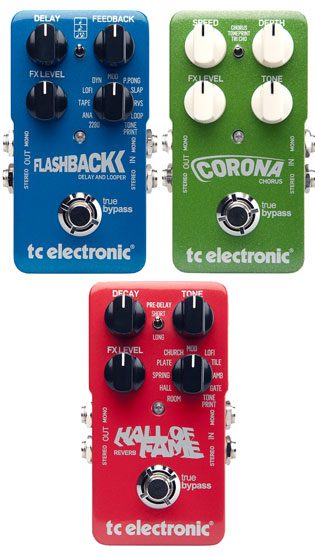
TC TonePrint -pedaaleihin on nyt saatavilla uusia, Metal- ja Thrash-painotteisia TonePrinttejä, joiden takana ovat Scott Ian (Anthrax), Bill Kelliher (Mastodon), Michael Paget (Bullet For my Valentine), James ’Munky’ Shaffer (Korn), sekä Jona Weinhofen (Bring Me The Horizon).
Yksi Ampegin tämänvuotisista NAMM-uutuuksista on firman toinen pikkustäkki – Ampeg Micro-CL.
Suuren suosion saanut edeltäjä – Micro-VR (yhä saatavilla) – on pienennetty versio 1970-luvun Ampeg SVT -vahvistimesta, jolla on 200:n watin teho. Upouusi Micro-CL taas on satawattinen miniatyyri 80-luvun Ampegista (nykyinen SVT-CL).
Ampeg Micro-CL -stäkki (ovh: 505 €) tuo firman tyylikkyyttä helposti kannettavaan muotoon.
Transistorinuppi painaa vain kuusi kiloa, ja siihen kuuluva kaappi ainoastaan 15 kiloa. Koko ministäkki jää korkeudeltaan juuri ja juuri alle 80 cm – se mahtuu siis helposti tavallisen henkilöauton takakontiin.
Micro-CL-nuppi tarjoaa kaksi tuloa – yksi passiivi- ja toinen aktiivibassolle – ja kolmikaistaisen EQ-osaston.
Koska kyse on tässä myös harjoitusvahvistimesta, nuppiin on lisätty Aux-tulo (minijakki, omalla volyymisäätimellään) mp3-soittimelle. Myös kuulokelähtö löytyy etupaneelista.
Takapaneeliin on sijoitettu Micro-CL:n linjatasoinen lähtö, sekä efektilenkin liittimet.
Stäkin kaappi – Ampeg MC-210E – on rakennettu samalla Infinite Baffle -periaatteella kuin firman perinteiset, valtavankokoiset 8 x 10″ -kaapit.
Täysin suljetussa kaapissa on miniversiossa kaksi kymppituumaista kaiutinta. Etukangas on kiinnitetty autenttisesti tarranauhoilla.
Ampeg-kaappi vaikuttaa erittäin kestävältä, ja työnjälki on yhtä laadukas kuin Ampegin täysikokoisissa tuotteissa.
Takalevyltä löytyy MC-210E:n tulo.
Tässä näkyy Ampeg Micro-CL ja tavallinen bassokeissi – kyllä, stäkki on todella pieni…
****
Vaikka vahvistin onkin pienikokoinen, on syytä muistaa, että kyseessä on kuitenkin aito, satawattinen Ampeg!
Yllätyin kuinka paljon ääntä tästä pikkujärjestelmästä lähti. Olohuonekäytössä master-säädin pysyy varmasti jossain alkumetreillä (kolmosen tienoilla), muuten naapurisopu on vaarassa jäädä innokkaan bassosoiton jalkoihin.
Treenikämpässä – jossa äänitin myös tämän jutun esimerkkipätkät – kävi hyvinkin selväksi, että Micro-CL:n voimavarat riittävät mainiosti tavalliseen harjoituskäyttöön, ja jopa monille pienille keikoille.
Soundiltaankin Ampegin pienokainen on täysiverinen Ampeg: soundissa on mukana aimo annos lämpöä, ja firman vahvistimille tyyppillinen rouhea ja murea keskialue on tässäkin hyvin esillä.
Kun master-säädin on lähes täysillä, mukaan kuvaan astuu myös hyvin putki-tyylinen särö, mutta silloin korvatulppien käyttö on jo suositeltavaa.
Vaikka Ampeg Micro-CL -stäkki onkin ulkomitoiltaan erittäin söpö, se ei ole lelu vaan oikea bassovahvistin, joka tarjoaa aidon Ampeg-soundin kätevässä pakkauksessa.
Seuraavat esimerkkipätkät on soitettu Rickenbacker 4003 -bassolla (vuosimalli 1987, aina kaulamikki ensin):
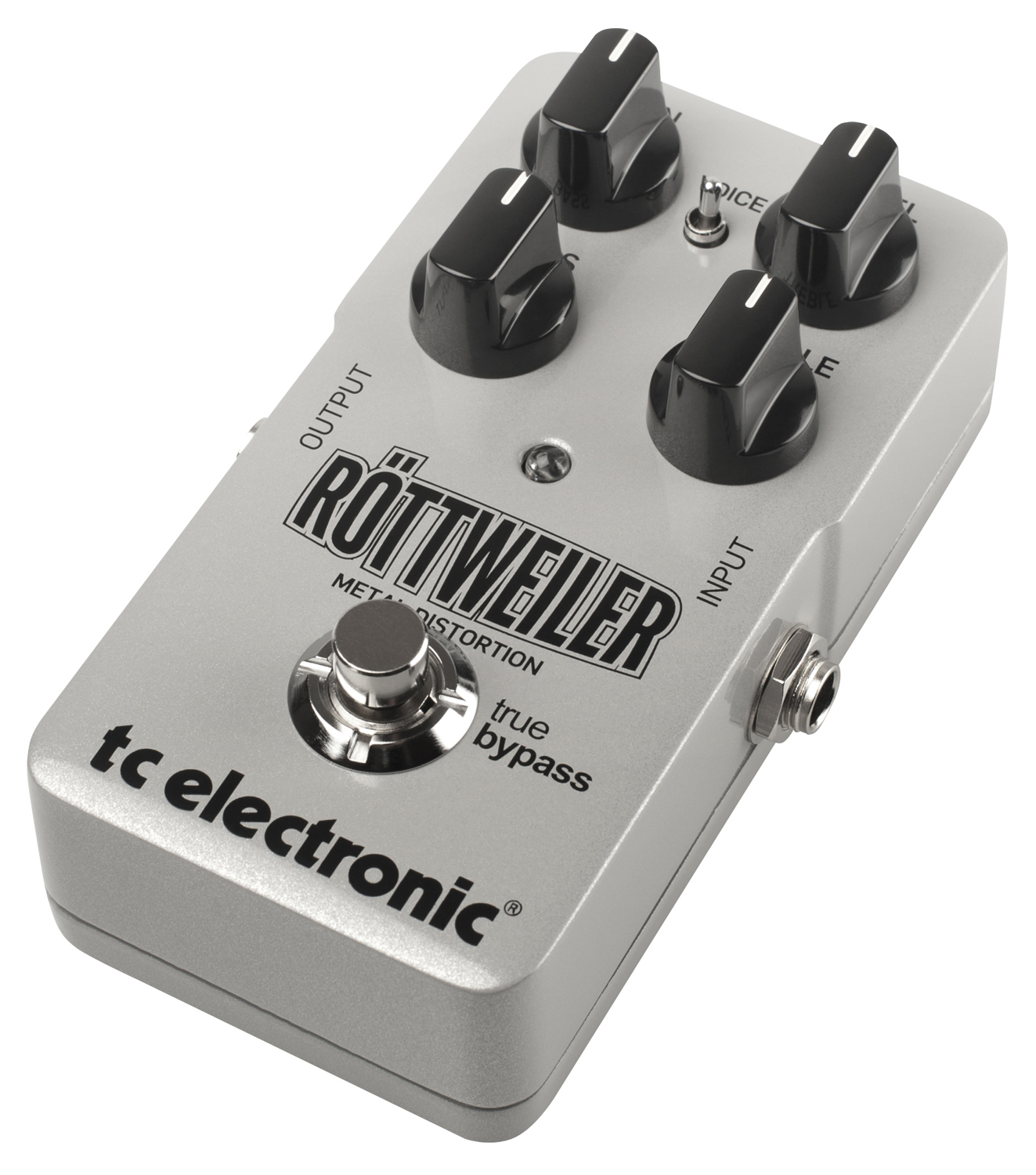
TC Electronic’s Röttweiler-distortion (current street price in Finland 129 €) specializes in brutal distortion sounds, and doesn’t waste any time on sissy stuff.
The gain control takes you from quite a lot of distortion to complete über-Metal-mayhem – so don’t go looking for besuited and well-behaved Blues-tones here. The Voice-switch gives you two different shades of brutal: One selection is fatter in the mid-range for more classic Hard Rock and Metal stuff, while the other selection gives you the scooped out tones favoured in many contemporary styles. The pedal also offers bass and treble controls for fine-tuning your tone.
The TC Electronic Röttweiler is a brilliant tool for the Metal-aficionado, which turns any amp into a high-gain monster stack.
Here are three sound clips, which Miloš Berka recorded using a seven-string Schecter into a clean amp setting:
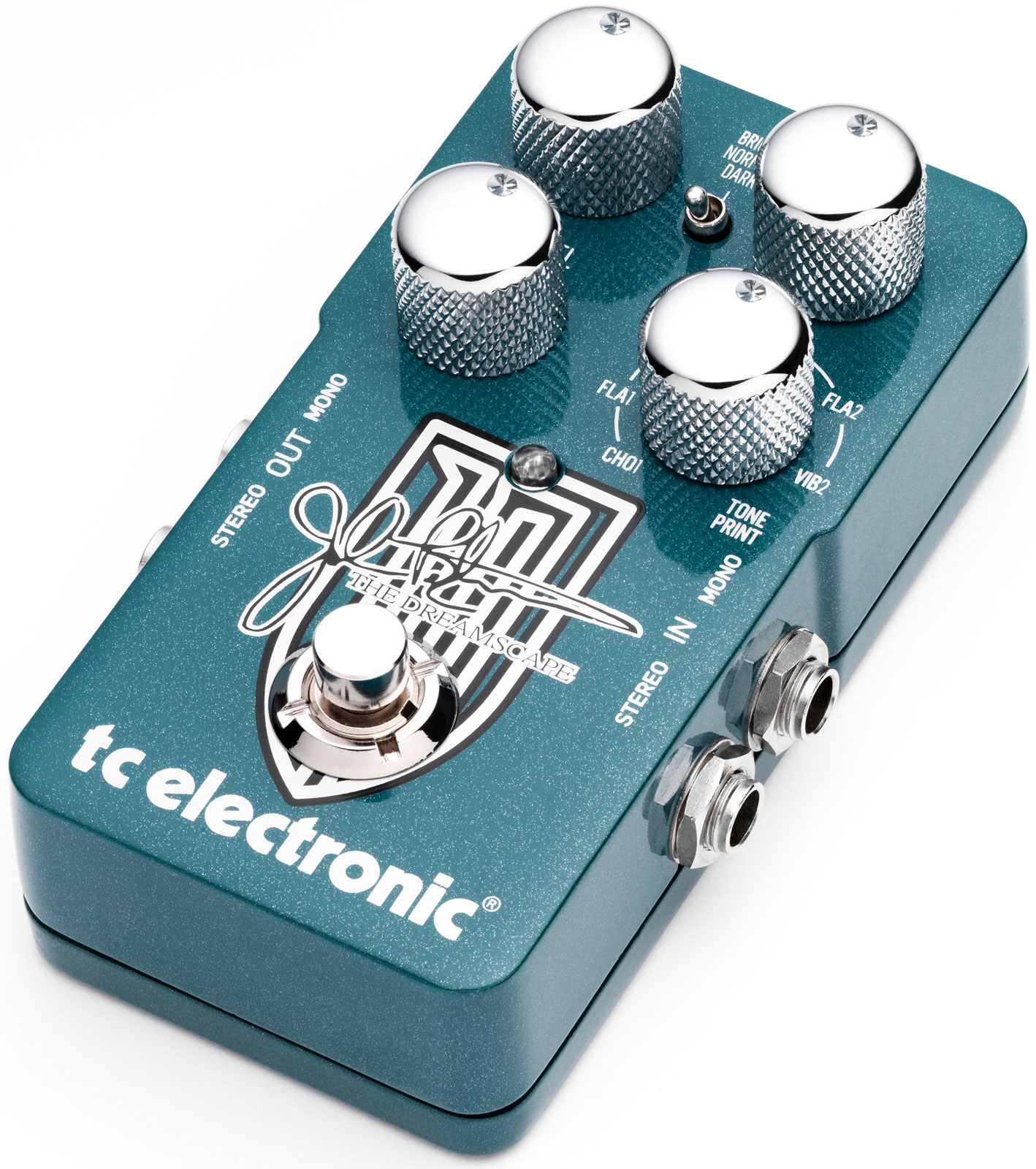
TC Electronic’s The Dreamscape (current street price in Finland 245 €) is John Petrucci’s signature effect pedal. It contains six different modulation effects, as well as one memory slot for a Tone Print.
The Dreamscape can be run in mono as well as in stereo. If you take off the bottom plate you’ll gain access to two tiny switches – one allows you to select either true or buffered bypass, while the other enables you to set the pedal to wet signal only, which is handy if you use the Dreamscape in a parallel effects loop.
The Dreamscape comprises controls for depth, speed and level. A three-way mini-toggle lets you select between three different EQ curves – from soft and dark to bright and upfront.
John Petrucci has chosen and grouped the six effects in such a way that the effects numbered ”1” are suited to his clean styles, while the second variations go with his overdriven tones. Personally, I wouldn’t draw so drastic a line, as I got great results with any of the six effects in all types amp of settings. This pedal’s main idea is in offering two distinctly different versions each of the three effect types included – namely chorus, flanger and vibrato – that behave and sound different to each other.
Here are some example sounds I recorded using a Fender Stratocaster:
At 245 € the TC Electronic Dreamscape is the priciest Tone Print -pedal to date. Some of the price will surely be a signature pedal premium. But you shouldn’t forget the fact that John Petrucci’s pedal also offers six different effects plus one Tone Print -slot in one compact package. Looking at the Dreamscape from this angle makes the higher retail price sound much more reasonable.
TC Electronicin Röttweiler-särö (katuhinta 129 €) on erikoistunut rankkoihin soundeihin, eikä haaskaa aikaa turhalle hienostelulle.
Gain-säätimen vaikutusalue ulottuu kovasta säröstä vielä kovempaan — Blues-tyylisiä pikkusärösoundeja on Röttweilerilta siis turha etsiä. Kaksiasentoinen Voice-kytkin tarjoaa kaksi eri perussoundia: off-asennossa keskialue on tuhdimpi klassisia Hard Rock- ja Metal-soundeja varten, kun taas on-asennossa Röttweilerista lähtevät purevammat Thrash-soundit, joissa on selvästi vähemmän matalaa keskialuetta (engl. scooped mids). Soundien hienosäätöön pedaali tarjoaa vielä sävynsäätimet bassolle ja diskantille.
TC Electronic Röttweiler on loistava erikoistyökalu metallimusiikin ystäville, joka saa jokaisen vahvistimen kuulostamaan tulikuumalta high gain -stäkiltä.
Tässä kolme esimerkkisoundia, joita Miloš Berka soitti seitsenkielisillä Schecterillä puhtaan vahvistimeen:
TC Electronic The Dreamscape (katuhinta 245 €) on John Petruccin nimikkopedaali, joka sisältää kuusi modulaatioefektiä sekä yhden Tone Print -muistipaikan.
Dreamscape-pedaalia voi käyttää sekä mono- että stereofonisissä ympäristöissä. Pohjalevyn alla löytyy muista Tone Print -efekteistä tutut kaksi minikytkintä, jolla voi valita suoran tai bufferoidun bypass-tilan välillä, sekä kytkeä efektoimattoman signalin kokonaan pois pedaalin lähtöistä, kun käyttää rinnakaiskytkennöllä olevaa efektilenkkiä.
Dreamscapen säätimillä voi vaikuttaa valitun efektin syvyteen (depth), vatkauksen nopeuteen (speed), sekä pedaalin lähtötasoon. Kolmiasentoinen minikytkin tarjoaa efektoidun signaalin kolmella eri kirkkaudella – tummasta ja miedosta Dark-vaihtoehdosta kirkkaan ja selkeään Bright-valintaan.
John Petruccin valitsemat efektit on ryhmitetty kitarasankarin omien tarpeiden mukaan niin, että kolmen efektin ykkösvaihtoehto on sellainen, jonka Petrucci käyttää puhtaissa soundeissa, ja kakkonen on tarkoitettu särösoundeille. Itse en vetäisi rajan ollenkaan niin tiukasti, sillä sain kaikilla kuudella efektillä hyviä soundeja aikaiseksi. Pedaalin juju on mielestäni juuri siinä, että jokaisesta efektityypistä on olemassa kaksi erilaisia versiota, joilla on hieman erilainen soundi, ja jotka reagoivat eri tavalla säätöihin.
Olen äänittänyt tällaiset pätkät Fender Stratocasterilla:
TC Electronic The Dreamscape on 245:llä eurolla kallein Tone Print -pedaali. Osa hinnasta on luultavasti nimikkomallin lisäys, mutta toisaalta tarjoaa tämä pedaali samassa paketissa peräti kuusi erilaista, laadukasta modulaatioefektiä sekä yhden Tone Print -muistipaikan. Pedaalin monipuolisuuden valossa hinta ei kuulostaa enää kovin pahalta.















 Kitarablogi.com – Finland's premier Guitar and Bass blog