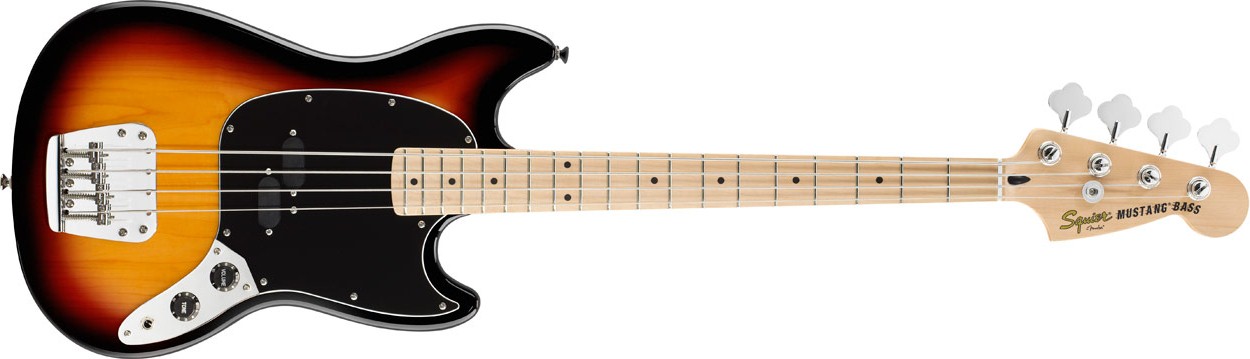
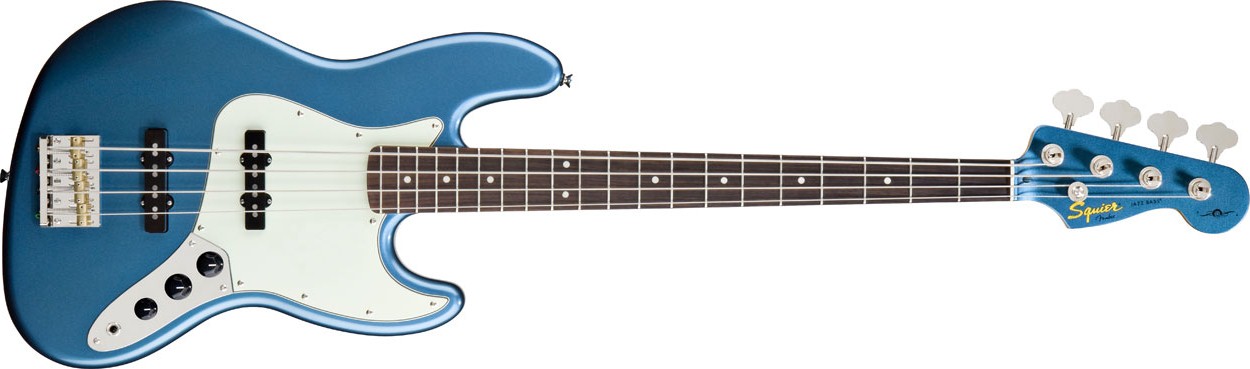
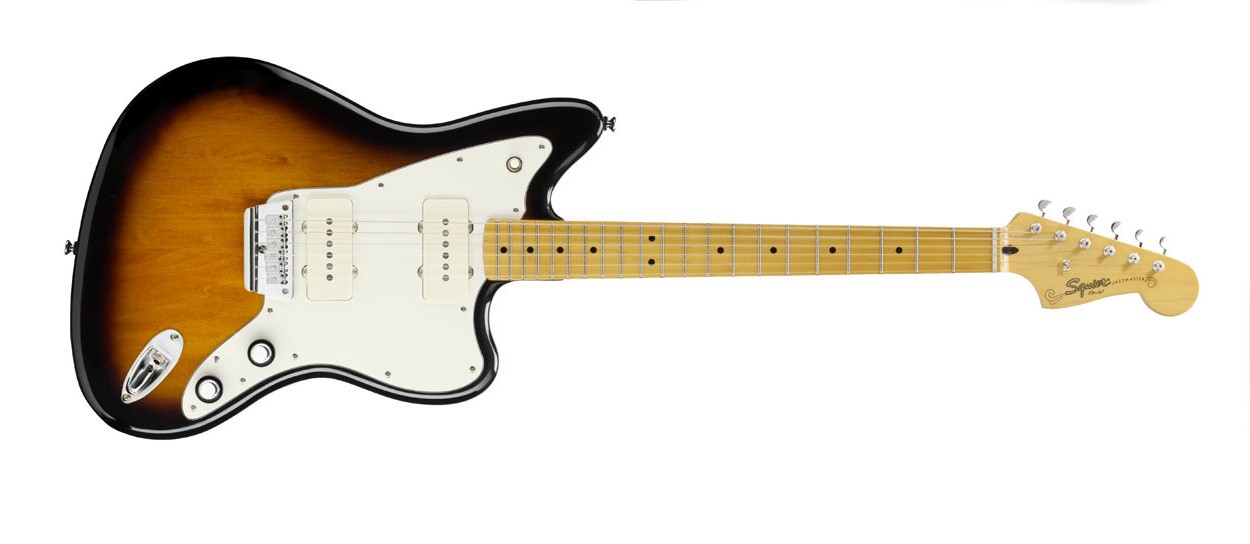
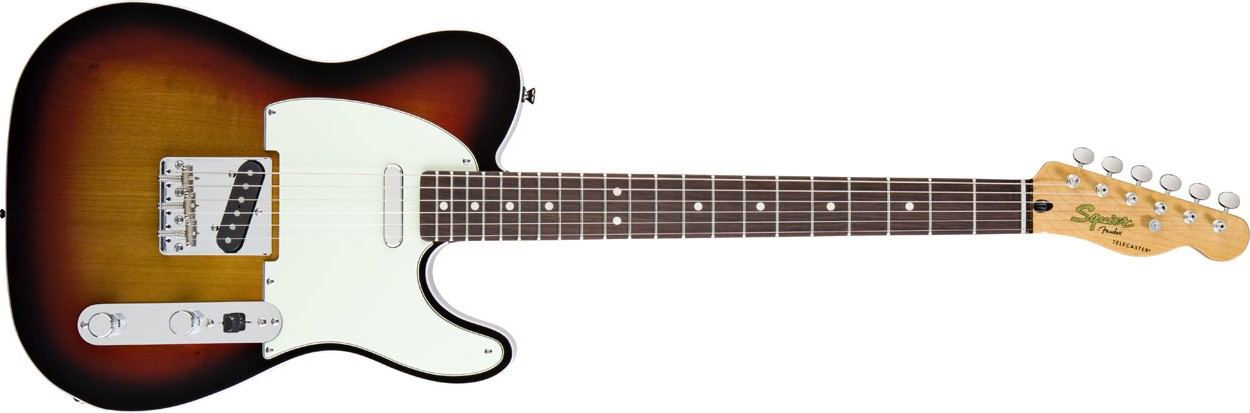
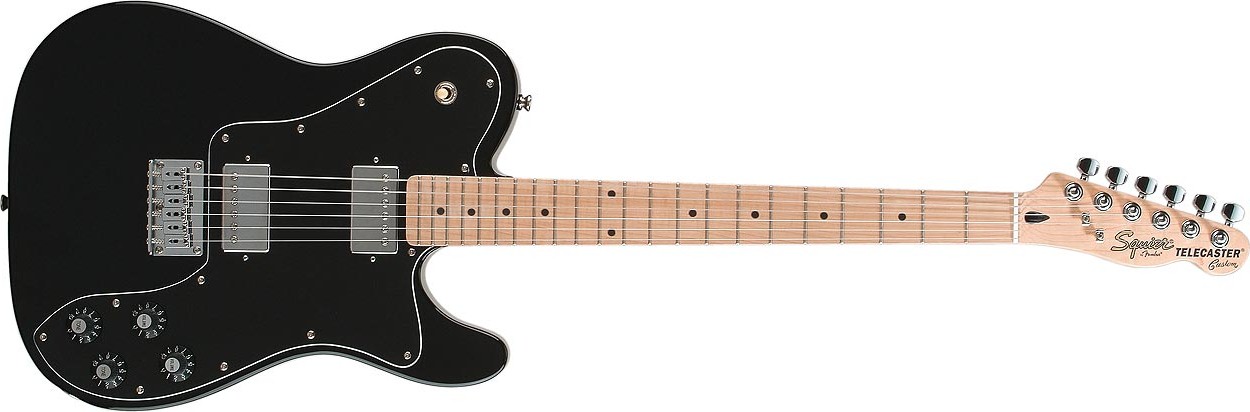
*** Mustang Bass *** New for 2011 *** Uutuusmalli ***

Squier have just released their cost-conscious version of Fender’s Mustang Bass.

The Mustang Bass – originally introduced in 1966 – was Fender’s first short-scale bass.

Famous users have included Denny Laine (Wings) and Bill Wyman (Rolling Stones).

Squierin uusin basso on edullinen versio Fenderin Mustang-bassosta.

Alkuperäinen Mustang Bass vuodelta 1966 oli firman ensimmäinen lyhytskaalainen bassomalli.

Nimekkäät soittajat olivat esimerkiksi Denny Laine (Wings) ja Bill Wyman (Rolling Stones).

Mielenkiintoiset basso-kissat Squierilta

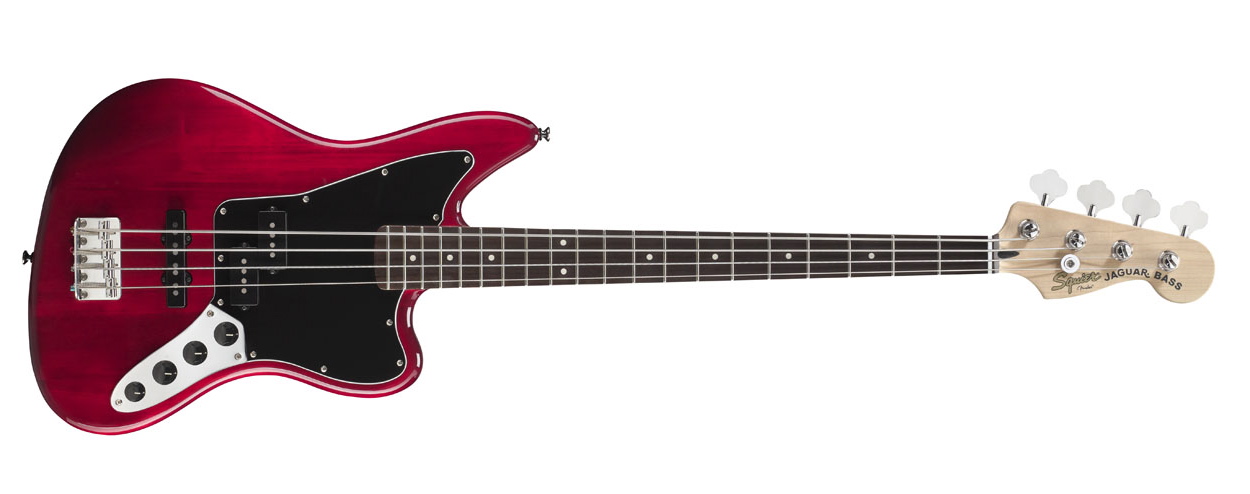
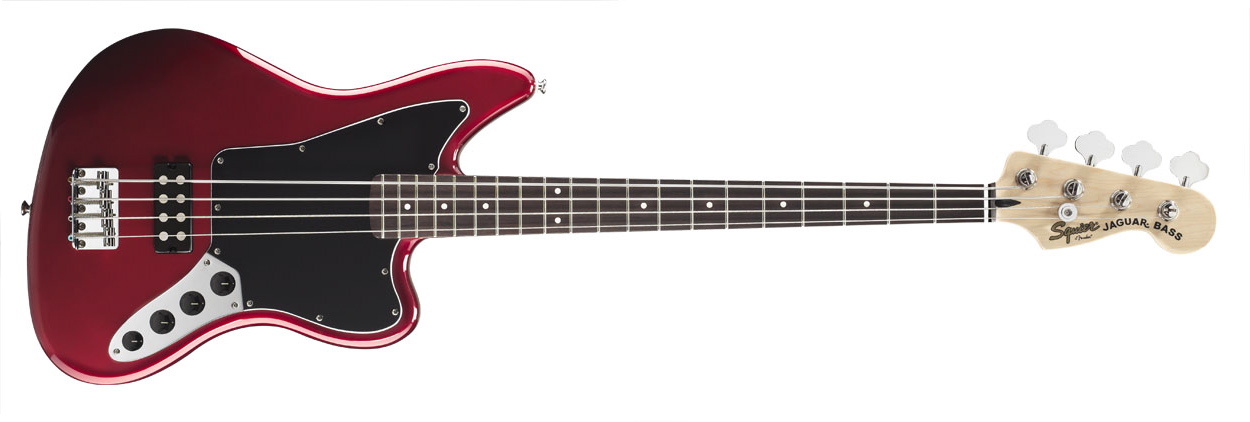
Squierin Jaguar-basso on saatavilla kolmena uutena eri versiona:

Jaguar Bass Special tarjoaa hoikan Jazz-tyylisen kaulan, PJ-mikrofonivarustuksen sekä aktiivisen bassobuusterin.

______________________________________________

Jaguar Bass Special HB -mallissa taas on Music Man -tyylinen mikrofoni.

_____________________________________________

Kolmantena on passiivinen, lyhyellä mensuurilla varustettu versio teemasta – Jaguar Bass Special SS.

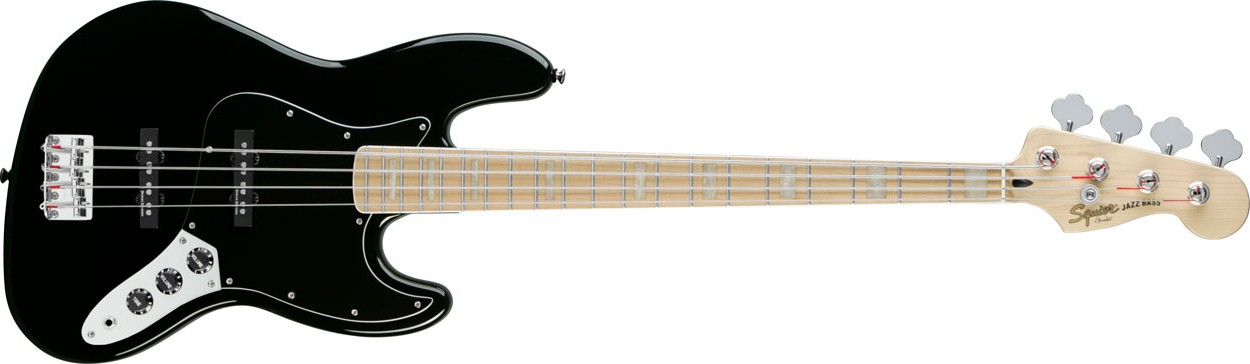
Classic Basses, part 2: Fender Jazz

It took quite some time for the electric bass to really catch on. Fender introduced the Precision Bass in 1951, but had to wait for almost a whole decade, before they felt that the market was ready for a second bass guitar from the company.

In 1960 Fender released its deluxe update – the Jazz Bass.

Leo Fender listened to the most common complaints made by players and sampled their suggestions for improvements, and he addressed these issues with the new model. The Jazz has a more slender neck profile, a more ergonomic body shape and it offers a wider sound palette (thanks to its two singlecoil pickups) compared to its forebear.

The very first batch of Jazz Basses was equipped with stacked concentric controls, which offered separate volume and tone controls for each of the two pickups (see the sunburst bass above).

But already in 1961 the electronics were updated to the less fussy combination now widely known as the Jazz Bass -set-up – separate volume controls with one master tone.

The pickups are reverse wound/reverse polarity, which means that when used together they defeat transformer hum and electromagnetic buzz effectively.

While the standard version was offered in three-tone sunburst only, the Jazz Bass was ordered in Custom Color -finishes quite regularly in the 1960s, often with matching headstock faces.

From the end of the ’60s and all through the ’70s the fretboard was bound and featured large block inlays. Maple fingerboards were quite common during the ’70s.

Despite the changes in its looks the Jazz Bass’ sound always stayed excellent. Its sound is slightly more slender and transparent than that of its equally famous stablemate. The front pickup is full, but less throaty than a P-Bass’ split-coil unit. The bridge pickup has a nice, nasal timbre, and the combination is slightly hollowed out with a fresh zing, which made funky slap bass styles so fashionable.

________________________________________________________

Check out the sound of my own Squier Jazz Bass (Made in Japan, 1985) here.

Klassikkobassot, osa 2: Fender Jazz

Presarin ilmestymisen jälkeen kesti melko pitkään, ennen kuin sähköbassosta tuli riittävän suosittua, että Fender uskalsi lanseerata toisen bassomallin.

Fender Jazz -basso tuli markkinnoille vuonna 1960 firman deluxe-versiona.

Leo Fender otti soittajien parannusehdotuksia vastaan ja rakensi uuden bassonsa niiden perusteella. Uudessa Jazz-mallissa oli huomattavasti solakkaampaa kaulaprofiili, entisestäkin ergonomisempi runko sekä monipuolisempi sounditarjonta, kahden yksikelaisten mikrofonien ansiosta.

Ihan ensimmäisissä Jazz-bassoissa käytettiin päällekkäisiä säätimiä, joissa kummallakin mikrofonilla oma volume- (päällekkäinen nuppi) ja tone-säätimensä (musta rengas, katso kuva tämän jutun alussa).

Jo vuonna 1961 elektroniikka muutettiin kuitenkin niin, että kummallakin mikrofonilla oli oma volume-säätimensä, mutta molemmilla oli yhteinen master tone. Tämän järjestelmän etu on sen selkeys, ja tällaista volume/volume/tone-asetelma kutsutaan nykyään Jazz Bass -säädinasetelmaksi.

Mikrofonit on käämitty toisiinsa nähden vastakkaiseen suuntaan, ja myös niiden magneettinen polariteetti on vastakkainen, minkä ansiosta ne toimii yhdessä humbuckerina.

Vaikka perusversio myytiin kolmivärisellä liukuvärityksellä, monet Jazz-bassot tilattiin niin kutsutulla Custom Color -viimeistelyllä, jossa usein myös viritinlapa oli värillinen.

1960-luvun loppupuolella ja myös koko 1970-luvulla Jazz-bassolla oli reunalistoitettu otelauta – joka oli usein palisanterin sijaan veistetty vaahterasta – ja neliskanttiset otemerkit (joko mustia tai vaaleata helmiäismuovia).

Ulkonäöstä riipumatta soundi pysyi kuitenkin aina samana. Jazz-basso soi täyteläisesti, mutta sen ääni on kuitenkin notkeampi ja hieman selkeämpi kuin Precision-mallin sointi. Etumikrofoni on lämmin, tallamikrofoni herkullisen nasaalinen ja mikrofonien yhdistelmä pikkuisen ontto, mikä loi perustan Funk-bassistien slap-soittoon.

________________________________________________________

Oman Squier Jazz Bass:n (Made in Japan, vm. 1985) soundin voi kunnella esimerkiksi tästä.

_________________________________________________________

Classic Basses, part 1: Fender Precision

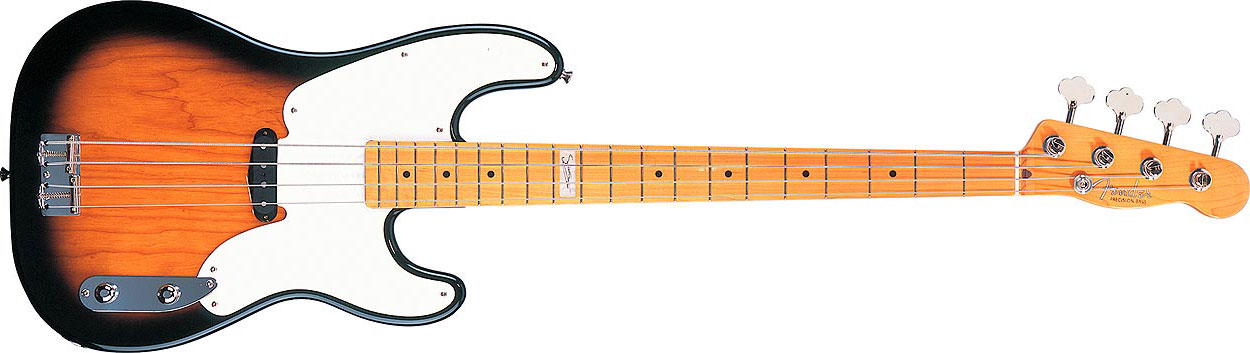
Leo Fender’s and George Fullerton’s Precision Bass was the world’s first electric bass guitar. It was introduced to the puzzled public in 1951.

Tony Bacon and Barry Moorehouse quote Fender’s old production chief from the 50s and 60s, Forrest White, on the initial impact the new-fangled instrument had (in their well-written ”The Bass Book”):

”Those who were not sure if Leo was crazy when he brought out the solidbody guitar were darn sure he was crazy now, since he came up with an electric bass. They were convinced a person had to be out of their mind to play that thing.”

Leo and George took the Telecaster-concept and adapted it for a bass instrument. At the same time they hit upon some standards – almost by mistake – that are still valid these days. The most important ones are the body’s additional long upper horn, which helped in balancing such a long-necked instrument, as well as the scale length of 34 inches (84,6 cm).

Initial problems in the project were the total lack of appropriate strings, which had to be custom-ordered from V.C. Squier, as well as tuning machines. At first they used sawed off double bass tuners, before they were able to order Kluson-machines, manufactured to Fender’s own specifications.

The first edition of the Precision Bass, made between 1951 and 1954, had a yellowish, semi-opaque-finished (blonde) slab ash body, a black Bakelite scratchplate, a Telecaster-style single coil pickup and a one-piece maple neck with a Telecaster-headstock. The simple bridge had only two saddles, which were first made from plastic and later from metal.

When the Stratocaster was introduced in 1954 the P-Bass received a slight make-over: the body gained Fender’s comfort contours, the scratchplate changed to single-ply white plastic and the standard finish became two-tone sunburst.

The Sting Signature Precision is based on a ’54-’56 P-Bass:
But Leo Fender still wasn’t quite satisfied with his creation: the pickup was picking up too much buzz, and its spiky signal tended to trash a lot of Bassman-amp speakers. Adding to this the Precision’s intonation wasn’t really very precise, because of the spartan bridge. And lastly it seemed that the small headstock had something to do with some dead notes on the g-string around the 5th fret.

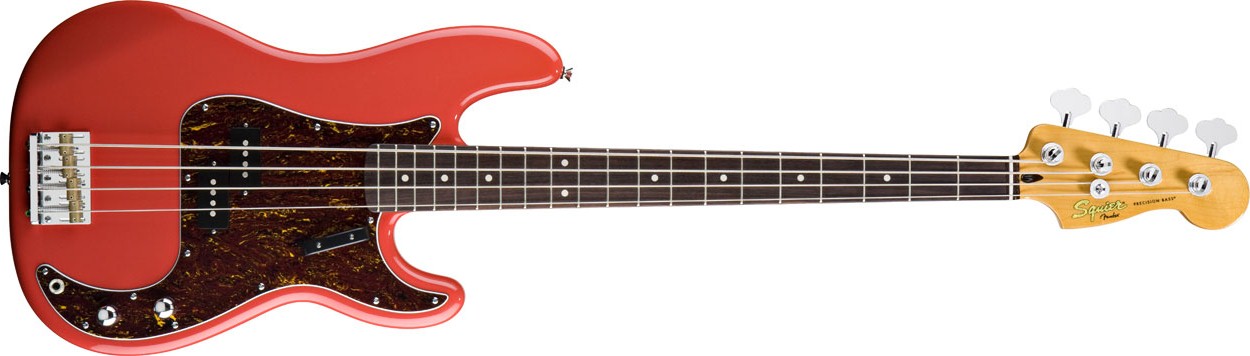
All these problems were addressed in the major overhaul (in 1957), which turned the Precision into the classic we all know today: with a large Strat-style headstock, a bridge with four individual saddles and a brand-new split-coil pickup.

This new pickup consisted of two halves, one each for the E- and A-string as well as the D- and g-string, wound reverse and with opposing magnetic polarities. Once hooked up in series the split-coil pickup produces a humbucking signal with a singlecoil sound. Placing each string between its own pair of magnets (in contrast to the single magnet below each string in the old design) also smoothed out the attack phase of each note, which in turn resulted in a signal that was much easier on a bass amp’s speakers.

The very first ”new and improved” Precisions also featured a gold-coloured aluminium scratchplate.
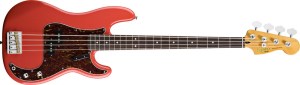
In 1959 Fender switched to rosewood fingerboards on all of their string instruments. Since the end of the 60s the P-Bass has been available both with a one-piece maple neck as well as with a rosewood fretboard.
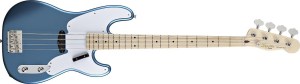
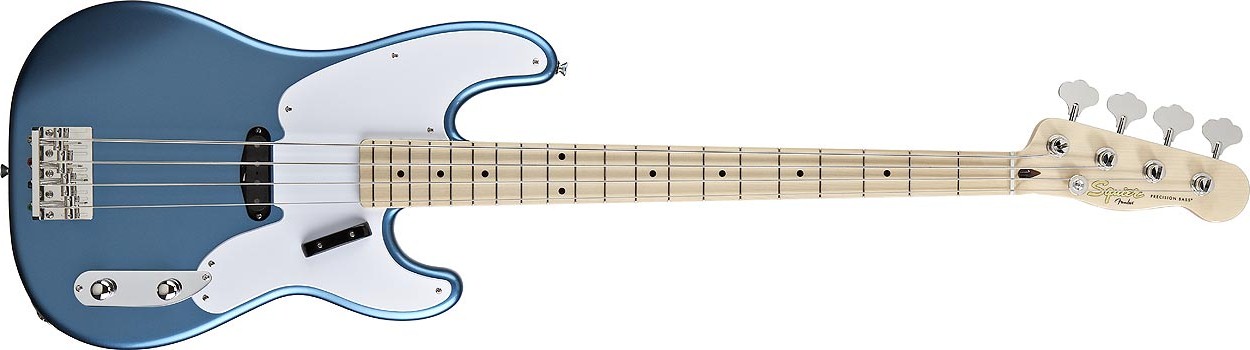
Nowadays Squier and Fender offer a Precision-model for all seasons and budgets, from vintage replicas to modern updates.

___________________________________________________________

You can listen to the sound of a 1976 fretless Fender Precision here.

The song was written by my late friend Pauli Rissanen, who also sings on the recording.

Klassikkobassot, osa 1: Fender Precision

Leo Fenderin ja George Fullertonin kehittämä Precision Bass oli maailman ensimmäinen sähköbasso, ja se ilmestyi vuonna 1951.

Tony Baconin ja Barry Moorehousen loistavassa kirjassa ”The Bass Book” Fenderin 1950/60-luvun tuotantopäällikkö Forrest White kertoi musiikkimaailman reaktioista uuteen soittimeen:

”Ne ihmiset, jotka eivät olleet Telecasterin ilmestymisen yhteydessä ihan varmoja, oliko Leolla muutama ruuvi löysällä, olivat nyt täysin varmoja siitä, että ukko on hullu!”

Leo ja George ottivat Telecasterista mallin ja laajensivat konseptin bassosoittimelle sopivaksi. Samalla ne keksivät lähes ”vahingossa” muutamia sähköbasson standardia, jotka ovat vielä tänä päivänäkin voimassa. Tärkeimmät ovat rungon pitkä yläsarvi, jonka ansiosta basson pitkä kaula ei vaikuta negatiivisesti soittimen balanssiin, ja mensuurin pituus (34 tuumaa/84,6 cm).

Isoja hankaluuksia aiheutti sopivien kielien puuttuminen (ensimmäiset tilattiin juuri P-bassoa varten V.C. Squierilta), ja virittimetkin piti kustomoida itse sahaamalla kontrabasson virittimia poikki, ennen kuin Klusonilta saatiin tilattua Fenderin speksien mukaisia kapistuksia.

Vuodelta 1951-1954 Presarilla oli (Telecasterin lailla) kellertävän viimeistelty suorakantinen saarnirunko, iso musta pleksi, Telecaster-tyylinen yksikelainen mikrofoni, sekä kitaralta lainattu lapa. Tallassa oli vain kaksi tallapalaa (ensin muovista, sen jälkeen metallista).

Kun Stratocaster-kitara saatiin valmis (1954), muutettiin P-bassoa hieman Straton mukaiseksi: rungolla oli nyt mukavuusviisteet, viimeistelly oli sunburst ja pleksi valkoinen.

Stingin nimikkomalli on sellaisen Precisionin (1954-56) uusintapainos:

Leo Fender ei kuitenkaan ollut vielä ihan tyytyväinen luomukseensa: mikrofoni oli häiriöherkkä ja sen tuhti potku rikkoi herkästi Bassman-vahvistimen kaiuttimia. Intonaatiokin ei ollut aivan kohdallaan, ja pieni lapa aiheutti selvästi kuolleita kohtia g-kielellä (4-5:n nauhan kohdalla).

Uudesta päivityksestä tuli meille kaikille tuttu Presari, jossa on Stratocaster-lapa, neljällä tallapaloilla varustettu talla ja uusi splitcoil mikrofoni.

Uudessa mikissä on erilliset puoliskot E- ja A-kielille ja D- ja g-kielillä, jotka ovat sekä magneettisesti että kelojensa suhteen vastavaiheessa toisiaan. Kun puoliskot kytketään sarjaan tulee niistä käytännössä humbucker yksikelaisen mikrofonin soundilla. Uudessa mikrofonissa on myös aina kaksi magneettia jokaisen kielen molemmin puolin, minkä ansiosta atakista tulee hieman miedompaa (kun vertaa aikaisempaan mikrofoniin).

Ensimmäisissä ”uusissa” Presarissa oli myös alumiinista valmistettu kullanvärinen plektrasuoja.

Vuonna 1959 kaikki Fender-kitarat ja myös Precision saivat palisanteriotelaudan. 1960-luvun loppupuolelta taas alkoi P-bassoissa valinnanvapaus otelaudan suhteen, ja myös tänä päivänä saa oman maun mukaan vaahtera- tai palisanteriotelaudalla varustetun mallin.

Squierilta ja Fenderilta saa jokaiselle budjetille sopivan version Presarilta – vanhojen mallien uusintapainoksista nykyaikaiseen päivitykseen.

___________________________________________________________

Oman nauhattoman Presarin (vuodelta 1976) soundia voi kuunnella esimerkiksi tässä.

Biisin on kirjoittanut edesmennyt ystäväni Pauli Rissanen, joka myös laulaa siinä demossa.

Classic Guitars, part 3: Fender Telecaster

The Fender Telecaster is the model that put the solid body electric guitar on the map. Although quite a few inventors had dabbled with the concept of an electrically amplified solid body guitar from the 1930s onwards, Leo Fender and George Fullerton succeeded in starting a huge industry back in 1950.

The guitar we now know as the Fender Telecaster first saw light as a one-pickup guitar – the Esquire. The first Esquires had a small pushbutton next to the volume and tone controls, enabling the player to switch quickly between the normal bridge pickup tone and a boomy sound with the treble removed. A few weeks later the pushbutton was replaced with a three-way lever selector, which gave you the boomy tone, the normal pickup sound with tone control and a setting with the bridge pickup routed directly to the output jack for more treble.

At first the two-pickup counterpart retained the Esquire-moniker, before Fender hit upon a new name – the Broadcaster. In February 1951 Fender got a telegram from Gretsch – then a much larger company than Fender – informing them that they already had a trademarked drum-series called Broadkaster, and asking Fender to stop infringing on their trademark.

Time for a name-change, again. In the meantime Fender used up the old logo decals, modified by clipping off the Broadcaster-script. These guitars are now affectionately called ”Nocasters”.

In August 1951 the two-pickup Fender model finally became the Telecaster.

The Tele is a really straightforward instrument, put together from a slab body (no comfort contours here) and a bolt-on maple neck, sometimes augmented by a rosewood fingerboard.

The neck pickup has its own metal cover, while the bridge pickup is suspended in the box-like bridge.

The vintage-style Tele bridge is equipped with only three saddles, but these days many of the model’s versions feature modern six-saddle bridges. Anoraks can discuss one bridge type’s ”superiority” over another for ages on end – let me just state that the bridge saddles of different versions can either be made from brass, steel or die-cast metal, which all have differing influences on the respective guitar’s tone.

Since 1967 the three-way switch gives you either the warm neck pickup, the nicely broad and slightly hollow mix of both units, or the nasal, twangy and sinewy bridge pickup on its own. The bridge pickup sound quickly became the Tele’s calling card and it’s one of the mainstays in Country music. But this guitar is much more versatile than ”just” Country, and it is widely used in many music styles from Blues to Rock. Even some Metal guitarists have been spotted sporting a Tele, even though they usually have the original pickups exchanged for humbuckers.

In my opinion, the Telecaster is a fantastic guitar for a novice, if you can live with the edgy slab body. Leo Fender wanted to create a guitar that was easy to manufacture, easy to service and easy to repair. He envisaged a sturdy workhorse-instrument for the working musician.

Only very seldom does an inventor succeed so completely, as Messrs Fender and Fullerton have.

Save

Pidä blogia WordPress.comissa.

Ylös ↑