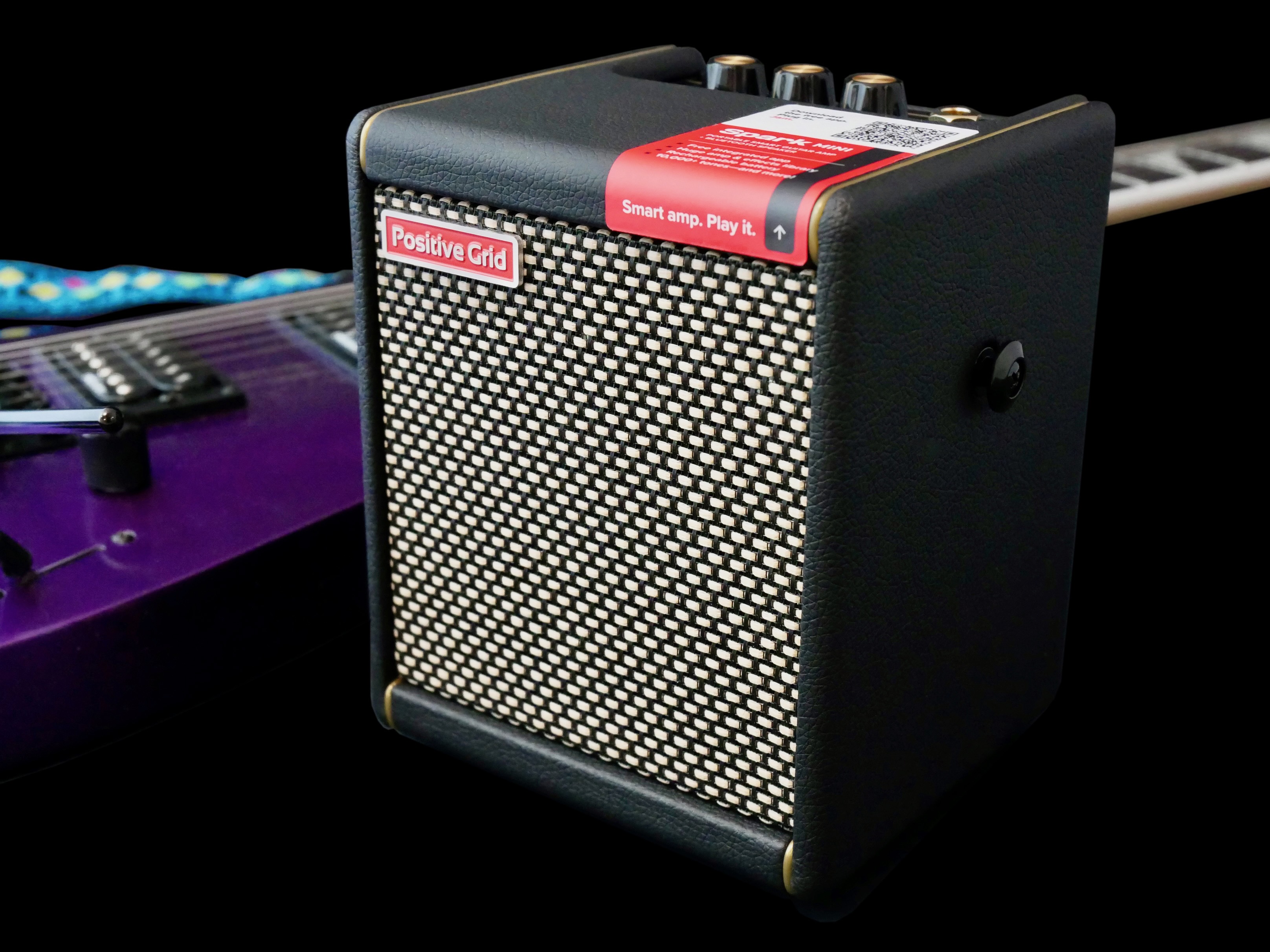
Here’s a short demo song featuring the Positive Grid Spark Mini practice amp (10 W modelling amp). The track is based on the Beatles classic ”Dear Prudence”. • All guitar tracks were recorded with the Spark Mini amp and a Shure SM7B microphone. • Guitars used: Harley Benton DC-60 Junior & Fender (Japan) 50s Stratocaster Reissue. • Audio interface: Universal Audio Volt 2 Find out more about the Spark Mini HERE. **** Rockway-testi tulossa.
Yllättävän monelle kompressori on jotenkin mystinen laite, joka käyttää musta magiaa soundin muokkaamiseksi. Todellisuudessa kompressori (yleiskielessä: kompura) on (puoli-) automaattisesti toimiva signaalitasoon vaikkuttava piiri, jolla kavennetaan signaalin dynamiikka – siis: hiljaisten ja kovien äänien välinen ero – toivotulla tavalla.
Etenkin puhtailla kitarasoundeilla kompressorista voi olla paljon apua, silloin kun kaivataan lisää sustainea, tukevampaa soundia, tai vaikkapa rauhallisempaa äänikuvaa. Esimerkiksi monille kantrikitaristeille kompura on lähes pakollinen varuste, jolla saadaan nopeat lickit, joissa usein sekoittuvat otetut äänet ja avoimet kielet, kuulostamaan tasaisempana ja sliipattuina.
Kitaristille tarjotaan nykypäivänä monta eri kompuraa pedaalin muodossa, joista suurin osa toimii ”enemmän tai vähemmän” -periaatteella, ehkä vielä lisätyllä atakki-kytkimellä.
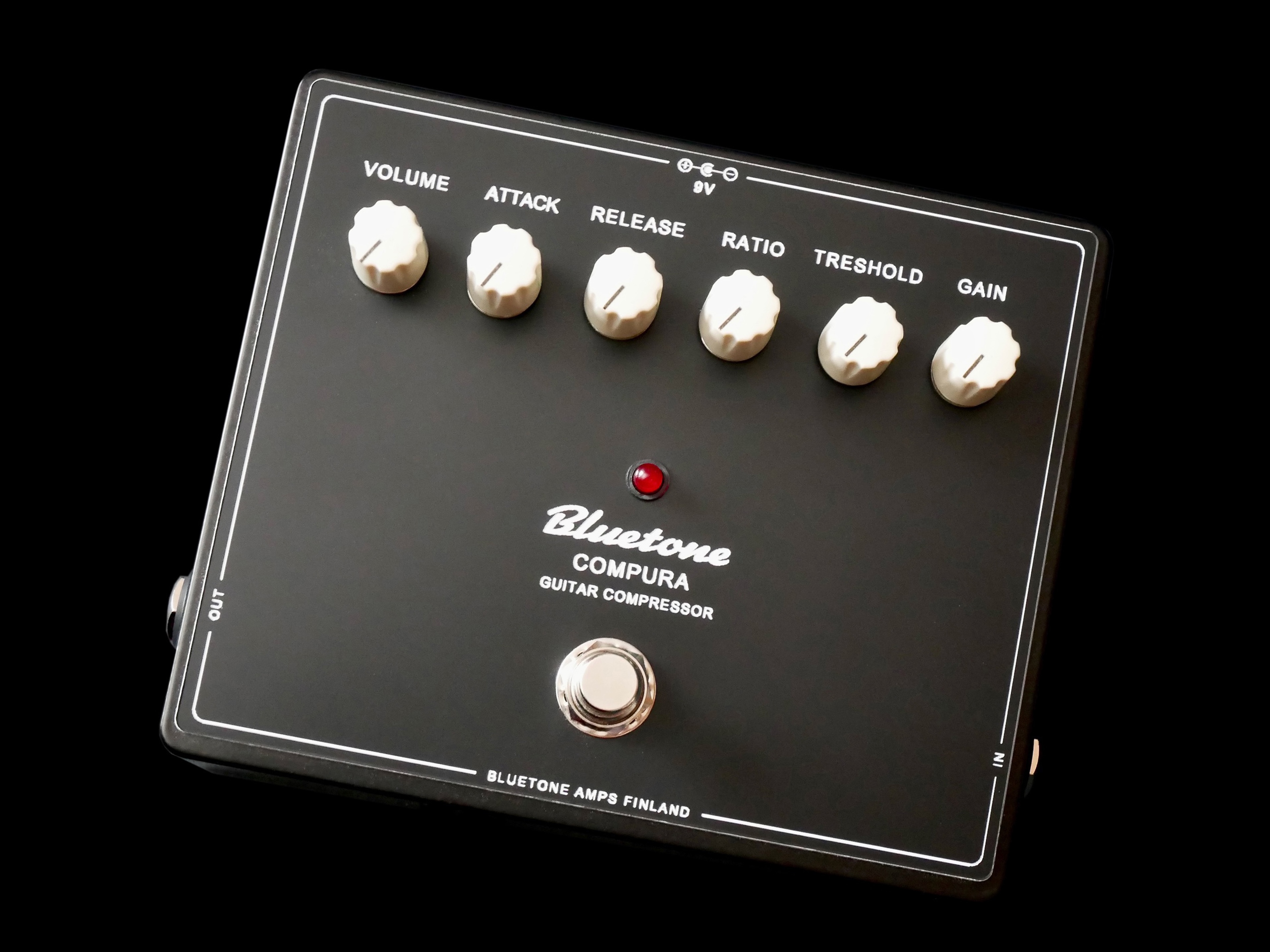
Suomalainen Bluetone Compura (330 €) lähestyy aihepiiriä toiselta kulmalta tarjoamalla laajasti säädettävän studiokompressorin kitarapedaalissa. Kuusi säädintä voivat aluksi näyttää hieman pelottavalta, mutta kun niiden toimintaa käy ensin rauhallisesti läpi, niin homma alkaa nopeasti selvenemään.
• GAIN on Compuran esivahvistus. Tässä ei ole kyse säröstä, vaan siitä, että eri kitaroissa (ja bassoissa) on eri mikrofonien vuoksi erilaiset lähtötasot. Gain-säätimellä pystyy siis optimoimaan valitun kitaran signaalitasoa kompressiopiiriä varten.
• THRESHOLD (kyllä, kuvan varhaisessa tuotantomallissa on pieni kirjoitusvirhe) tarkoittaa kynnystasoa. Threshold-tason alle jäävä signaali pysyy kompressoimatta, kun taas kynnyksen ylle menevät osuudet puristetaan dynamiikan osalta kasaan.
• RATIO on kompressiosuhteen säädin. Studiokompressoreissa lukee ratio-säätimen vieressä tavallisesti numeerinen suhde, jossa esimerkiksi ”1:1” tarkoittaa, ettei kompressoida lainkaan, kun taas ”8:1” tarkoittaa, että jos tulosignaalin taso nousee kahdeksan desibeliä kynnystason yli signaalia kompressoidaan niin, että lähtötaso nousee vain yhden dB:n verran. Bluetone Compurassa säädöt tehdään korvakuulolla.
• ATTACK ja RELEASE säätävät kuinka nopeasti kompressori alkaa vaikuttamaan signaalin tasoon sen jälkeen, kun kynnystaso ensin ylittyy (Attack-säädin), sekä silloin kun tulosignaalin taso taas laskee kynnystason alle (Release-säädin). Attack-säätimellä pystyy siis vaikuttamaan esimerkiksi siihen, kuinka paljon äänten atakista säilyy muuttumattomana, kun taas Release-säädin vaikuttaa siihen kuinka nopeasti kompressiopiiri ”nollauttuu” signaalipiikkien välissä.
• VOLUME-säädin on Bluetone Compura -pedaalissa lähtötason säädin, siis sama säädin jota kutsutaan monessa studiokompressorissa make-up gainiksi. Volume-nuppia säädetään korvakuulolla omien tarpeiden – esimerkiksi signaaliketjun muiden efektien – mukaan. Jotkut tykkäävät käyttää kompressorit miedoina boostereina, kun taas toiset haluavat, että kompressorin toiminta on signaalitason osalta lähes huomaamaton.
****
Studiossa kompressorin mittaristo on hyvin tärkeä työväline, josta saa tietoa siitä kuinka ”kuuma” tulosignaali on, kuinka monta desibeliä signaalin dynamiikka puristetaan kasaan, ja millä tasolla efektin lähtösignaali on.
Kitarapedaalissa tällainen mittarointi on minusta usein tarpeeton; usein värikkäät mittarit lattialla jopa vievät soittajan huomiota pois kaikkein tärkeämmästä – omasta soundista.
Tärkein on minun mielestäni se että muistetaan, ettei ole olemassa ”ainoa oikea tapa” käyttää sellaista kompressoria kuin Bluetonen Compura, koska mukana on aina kokonainen kasa muuttajia, kuten soitin, oma soittotatsi, musiikkigenre, muu signaalitie, käytössä oleva vahvistin jne.
Kun ottaa itselleen ensin hieman tutustumis- ja kokeiluaikaa Bluetone Compuran kanssa, löytyy hyvin helposti ja nopeasti sellaiset parametrien asetukset, jotka toimivat sinun omassa musiikillisessa työympäristössä. Se mikä sinun mielestäsi toimii sinun omassa musiikissa, on oikea riippumatta siitä, mitä toiset ehkä sanovat.
Helsingissä käsintehty Bluetone Compura ei ole halpakompura, vaan huippulaadukas pro-tason kompressoripedaali, joka tarjoaa studiokompressoreista tuttua säädettävyyttä kompaktissa muodossa. Siihen nähden laitteen hinta on jopa edullinen.
****
• Puhtaat komppiosuudet ja soolokitara – Fender ’62 Telecaster Custom Reissue • Puhtaat ja säröiset komppiosuudet – Fender ’57 Stratocaster Reissue • Vahvistin – Bluetone Black Prince Reverb • Pedaalit – Bluetone Compura, Mad Professor Simble OD • Mikrofoni – Shure SM7B • Mikkivahvistin – Cranborne Audio Camden EC2 • Interface – Universal Audio Volt 2
****
DEMO CLIP 1 Kompressorin ansiosta puhdas kitarariffi tulee kokonaiskuvassa paremmin esiin. Aluksi neljä tahtia ilman kompressoria. **** DEMO CLIP 2 Puhtaan vahvistimeen soitettu wah-wah ei aiheuta niin paljon säröä/klippausta, jos käytetään kompressoria wahwah:n ja vahvistimen välissä. Aluksi neljä tahtia ilman kompressoria. **** • Kitara – Fender ’57 Stratocaster Reissue • Vahvistin – Bluetone Black Prince Reverb • Pedaalit – Bluetone Compura, Vox V845 • Mikrofoni – Shure SM7B • Interface – Universal Audio Volt 2
Here’s a demo of the Bluetone Compura guitar compressor, based on the INXS classic ”Need You Tonight”. • Clean rhythm and lead guitars – Fender ’62 Telecaster Custom Reissue • Clean and overdriven rhythm guitars – Fender ’57 Stratocaster Reissue • Amp used – Bluetone Black Prince Reverb • Pedals used – Bluetone Compura, Mad Professor Simble OD • Mic used – Shure SM7B • Preamp used – Cranborne Audio Camden EC2 • Interface used – Universal Audio Volt 2
• Guitar used – Fender Japan 60s Stratocaster • Amp used – Bluetone Black Prince Reverb • Bass used – Höfner 500/1 Violin Bass • Bass amplifier – Bluetone Bass 200 • Mic used – Shure SM7B • Preamp used – Cranborne Audio Camden EC2 Check out Laundromat’s Instagram page HERE.
Laundromat is the name Finnish fuzz builder Antti Karttu has chosen for his line of handcrafted fuzz pedals.
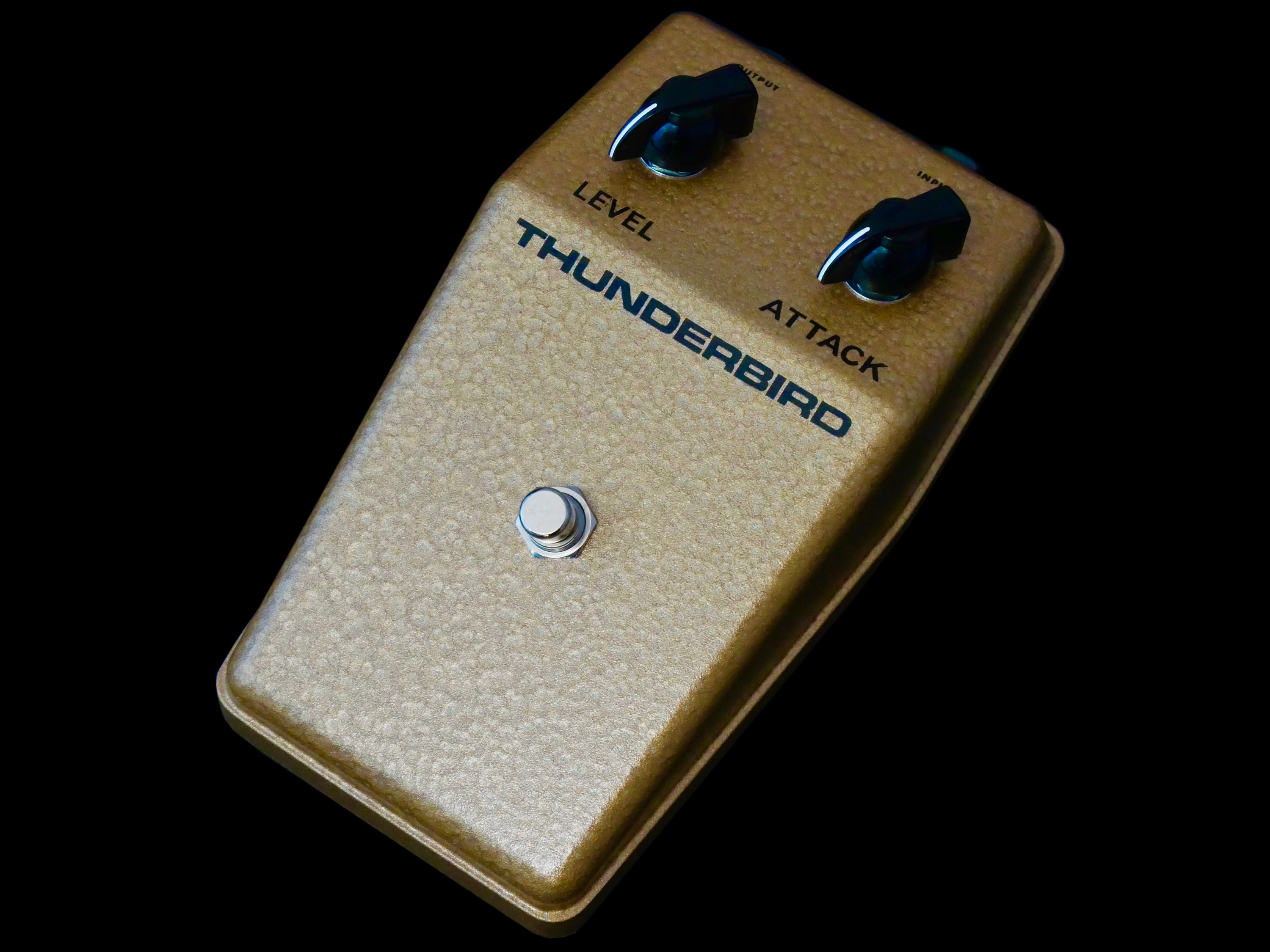
The Thunderbird Mk I (390 €) is based on Gary Hurst’s legendary Tone Bender Mk I. The 1965 Tone Bender was one of the first fuzz pedals ever, and it started the fuzz craze in the UK.
Laundromat uses its own extremely rugged case design and only the best available components. The Thunderbird Mk I circuit is built around three NOS germanium transistors – namely a pair of Mullard OC75s and a Texas Instrument.
Like the original, the Laundromat Thunderbird Mk I isn’t a subtle fuzz pedal. This pedal grabs you by the lapels and shakes you, screaming in your face.
There isn’t much in the way of dialling down the fuzz with your guitar’s volume control, like on Fuzz Face-style circuits. This here is more of an on-off-affair.
The sound and behaviour of the Thunderbird Mk I is just as you’d expect – this is a rude sounding fuzz with a clear tendency towards gating, which adds crackles and spitting sounds to note attacks.
Vintage Tone Bender’s these days command silly prices, even for road-weary units.
Laundromat’s Thunderbird Mk I is clearly built to last, meaning it will give you delicious fuzz tones reliably.
Finnish boutique amplifier company Bluetone Custom Amplifiers offers a wide range of different all-valve guitar amplifiers, from gnarly tweed-style combos to the full-on assault of modern high-gain Metal machines.
Over the last few years Bluetone’s dynamic duo of Harry Kneckt and Lauri Vuojolahti seem to have hit on a winning concept with their range of amplifiers with the word ”Black” as the first word in their name.
It all started in 2021, when Bluetone introduced a thoroughly updated version of the Black Prince Reverb. That particular model – which is basically a handmade cross between a Fender Blackface Princeton and a Deluxe, coupled with a very versatile power amp section – has very quickly become the company’s top selling model. This success has spawned several smaller Black Prince models, which have also become very popular. I own a Black Prince Reverb myself, and it has become my go-to guitar amplifier.
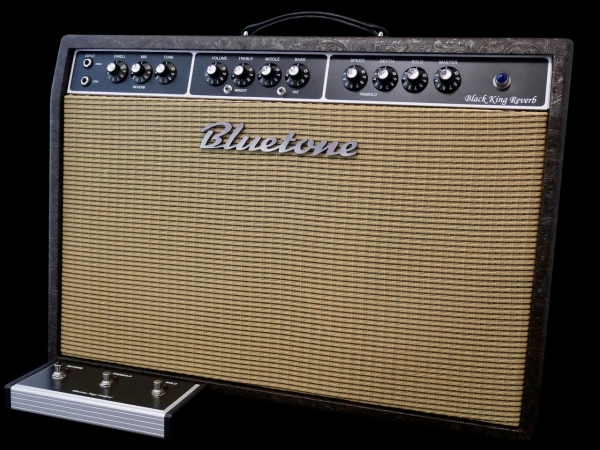
When Harry told me that Bluetone was about to introduce a new model – called the Black King Reverb – that would combine a Fender Vibro-King’s preamp section with Bluetone’s Black Prince-power amp, I was very eager to test drive one.
I’m a huge admirer of Pete Townshend’s (The Who) oeuvre, and he has been using Fender Vibro-Kings as his live amps, ever since they were introduced in the mid-1990s.
The first couple of Bluetone Black King combos were sold as quickly as the guys could make them, but now I’ve finally managed to grab one for a couple of days.
****
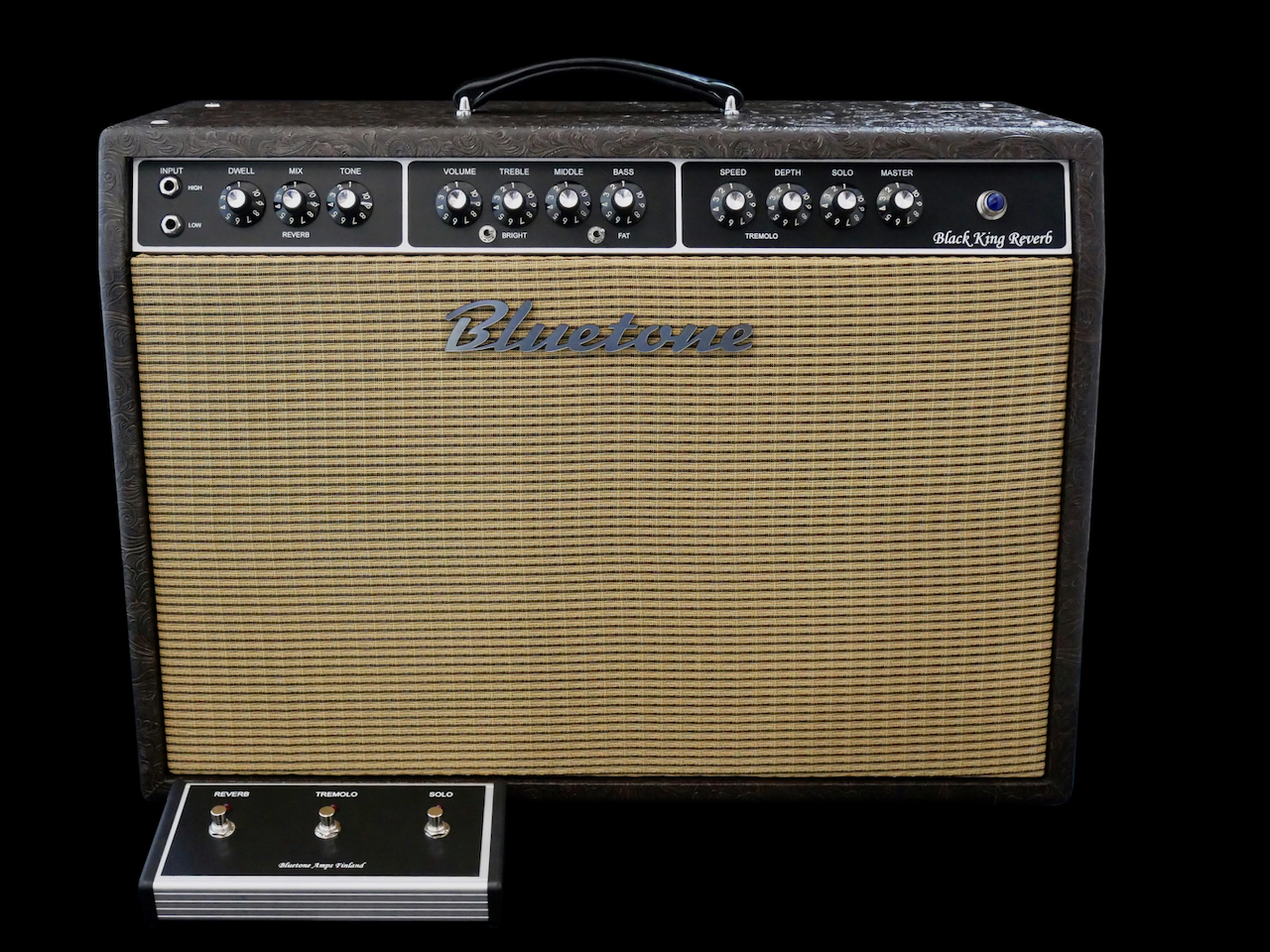
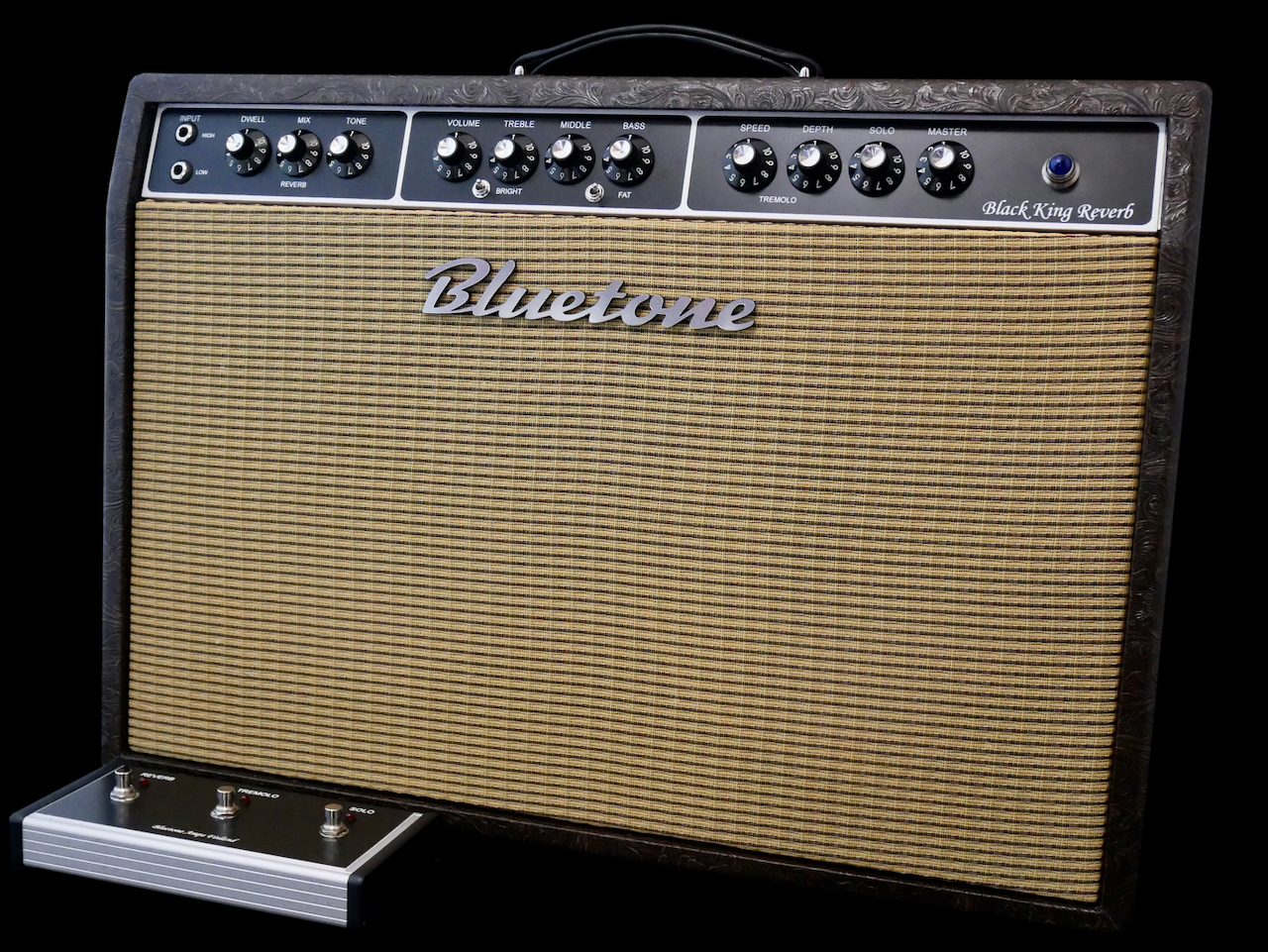
The Bluetone Black King Reverb (current price: 1,900 €) is twin-speaker all-tube combo, loaded with a pair of 10-inch speakers, but it still weighs in at less than 14 kilos. Most of the musician-friendly weight reduction is down to Bluetone using solid paulownia wood for its cabinets. Paulownia is an ecologically viable species that offers a superior strength-to-weight ratio for amplifier and speaker cabinets.
As mentioned before, the Black King lifts its extremely flexible power amp section from Bluetone’s Black Prince combo. The power amp runs off a pair of valves – virtually all available octal power tubes can be dropped in without the need for rebiasing. A pair of 6L6GCs or EL34s will give you approximately 28 to 30 watts of output power, while a pair of 6V6GTs will drop the output down to about 14 watts. Refer to the manual for details.
The Black King’s preamp is built around three 12AX7, but will also take other valves from the 12A_7-range, if you want to experiment with different gain structures (again, refer to the manual).
The toroidal power transformer (the black doughnut in the far left) is another long-standing hallmark of Bluetone amplifiers, which cuts down on the amp’s weight, as well as reducing hum interference noticeably.
The Black King Reverb normally leaves Bluetone’s workshop with a pair of 10-inch Warehouse Guitar Speakers Veterans, but – Bluetone being a custom builder – you can also request different speakers, should you so desire.
The long reverb tank is installed to the bottom of the combo’s cabinet.
Despite making all-valve amplifiers, Harry and Lauri are all about hard technical facts, leaving all the snake oil and tube voodoo for others. In the Black King’s case this means – among other things – that the reverb’s signal path is using their unique op-amp-powered circuit, for a cleaner, more dynamic and hiss-free tone.
For a single-channel combo Bluetone’s Black King Reverb offers plenty of scope for adjustment:
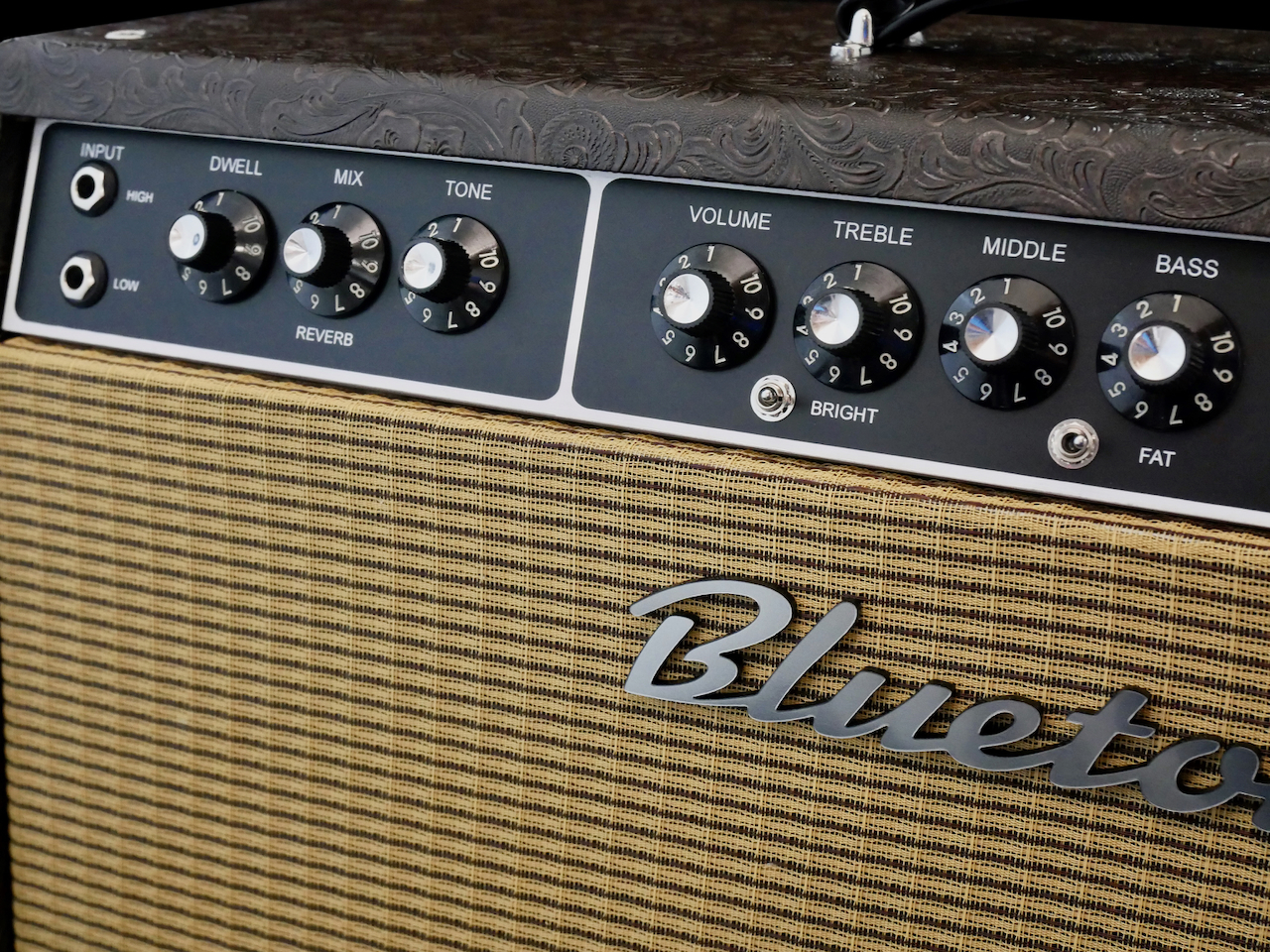
The preamp section sports controls for volume and 3-band EQ with an additional two mini-switches for Bright- and Fat-boosts. Everything does what it says on the tin, offering a wide variety of fantastic guitar tones that keep the core character of each guitar intact.
The Black King is a reverb connoisseur’s nirvana, not only offering a top-quality full-length spring tank, but also a full set of three controls for maximum tonal range. Dwell adjusts how hard you drive the spring reverb’s input – higher Dwell-settings will result in longer reverb times, as well as more saturation. Tone controls the tone of the reverb’s output, from dark to bright, while Mix lets you choose how much of the Black King’s super lush reverb will be used to bolster your guitar signal.
The output section offers you controls for the Band King’s scrumptious bias-modulated tremolo, the level of the solo-boost, and the master volume control. As the master volume is placed after the phase inverter stage, setting the master control to full will remove it completely from the power amp’s circuit.
All three amp effects – tremolo, soolo-boost, and reverb – are switched on or off with the supplied three-switch foot-switching unit.
There’s a lot going on on the Bluetone Black King Reverb’s back panel:
There’s an unbalanced line level output with its dedicated signal level control, so you can plug the combo straight into a speaker modeller. If you need to go completely silent, for example in the studio, the Black King includes a built-in switchable dummy load.
Next to the three speaker outputs we can find a mini-switch labelled ”NFB On/Off”. This allows you to choose whether or not you want to run so-called negative feedback in the combo’s power amp section.
A negative feedback loop will normally ”clean up” the power amp’s sonic footprint, giving you less power amp distortion and more clarity and articulation, while turning it off will give you a gnarlier and more distorted character. A wide generalisation would be that negative feedback takes the amp closer to Blackface territory, while no negative feedback gives it more of a Tweed- or Vox-style accent. Of course, your choice of power amp valves also has an important bearing on the overall character of the Black King.
The Black King offers some of the best clean sounds you are likely to experience, regardless of the type of guitar or pickup you throw at it. The genuine spring reverb is simply fantastic, and may even prove to be a dealbreaker in comparison to many other combos. The tremolo effect is luscious, with plenty of scope for adjustment of both speed and depth.
The overdriven/distorted tones you can glean from the Bluetone Black King Reverb are pleasantly gritty, but if you don’t like them, no problem – the Black King also loves pedal effects.
In my view, the Black King Reverb’s clean tones are this combo’s biggest forte. There’s plenty of headroom on offer, and the character is definitely in the Blackface-vein. There’s plenty of dynamic range on offer and the amp’s basic voice is big and open, seasoned with a crystal-clear top end. The three-band EQ offers more than enough scope for tone-shaping, and the Bright- and Fat-boosts work like a dream. What’s not to like?
For less than two grand you can get yourself a hand-made boutique valve combo that’s very versatile and great sounding. This is hands down one of the best amps you will find in its class, and it’s offered at a very fair price.
Here’s a demo song featuring the brand-new Bluetone Black King Reverb combo. The track is a short cover of the Who’s classic medley ”See Me, Feel Me/Listening To You”. All guitar tracks recorded with the Bluetone Black King Reverb, without any additional pedals. The amp was miked with a Shure SM7B running into a Cranborne Audio Camden EC2. **** ”See Me, Feel Me” – Guitars • rhythm guitar (stereo left): Fender Japan 50s Stratocaster Reissue • rhythm guitar (stereo right): Epiphone G-400 (SG Standard) • lead guitar: Fender Japan 50s Stratocaster Reissue ”Listening To You” – Guitars • rhythm guitar (stereo left): Fender Japan 50s Stratocaster Reissue • rhythm guitar (stereo right): Epiphone G-400 (SG Standard) • lead and harmony guitars: Gibson Melody Maker SG **** • bass guitar: Rickenbacker 4003 plugged straight into the Cranborne preamp












 Kitarablogi.com – Finland's premier Guitar and Bass blog