****

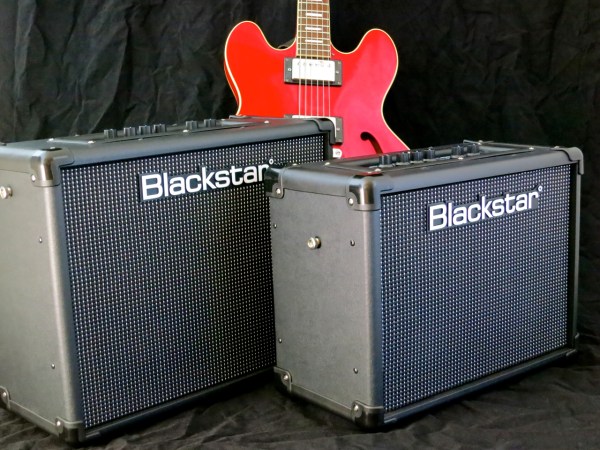
Earlier this year, Blackstar Amplification have released their new ID:Core series, which comprises three stereophonic practice amps (at the moment of writing).
Blackstar’s ID:Core combos are powered by the same modelling technology used in the company’s full-blown ID-series. The ID:Core amps simply take this technology to a smaller format.
Kitarablogi had the pleasure of testing the new series’ middle model – the ID:Core 20 (2 x 10 W) – as well as the largest member of the ID:Core family – the ID:Core 40 (2 x 20 W).
****
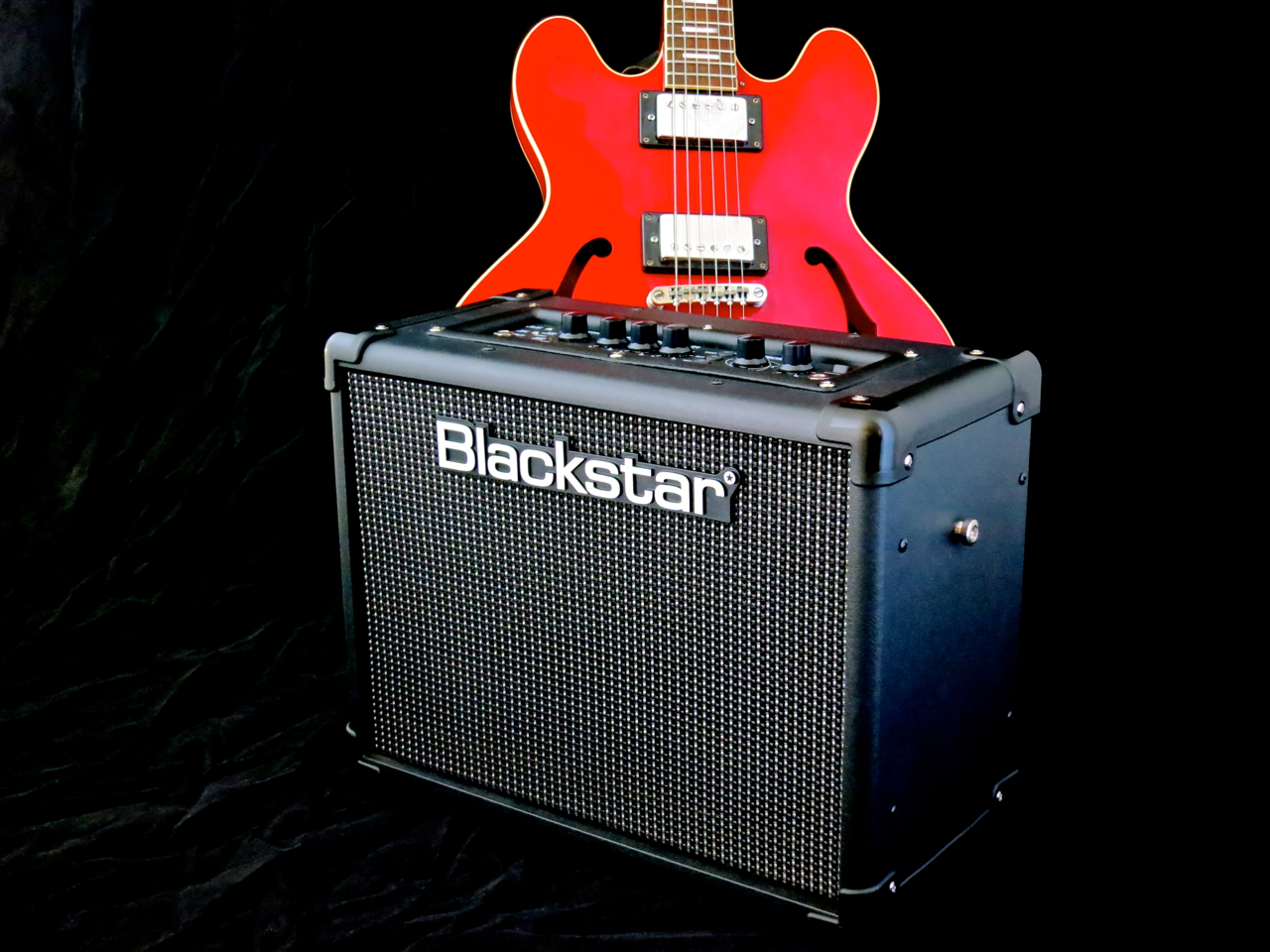
The Blackstar ID:Core 20 (current price in Finland: 149 €) comes equipped with a pair of five-inch speakers.
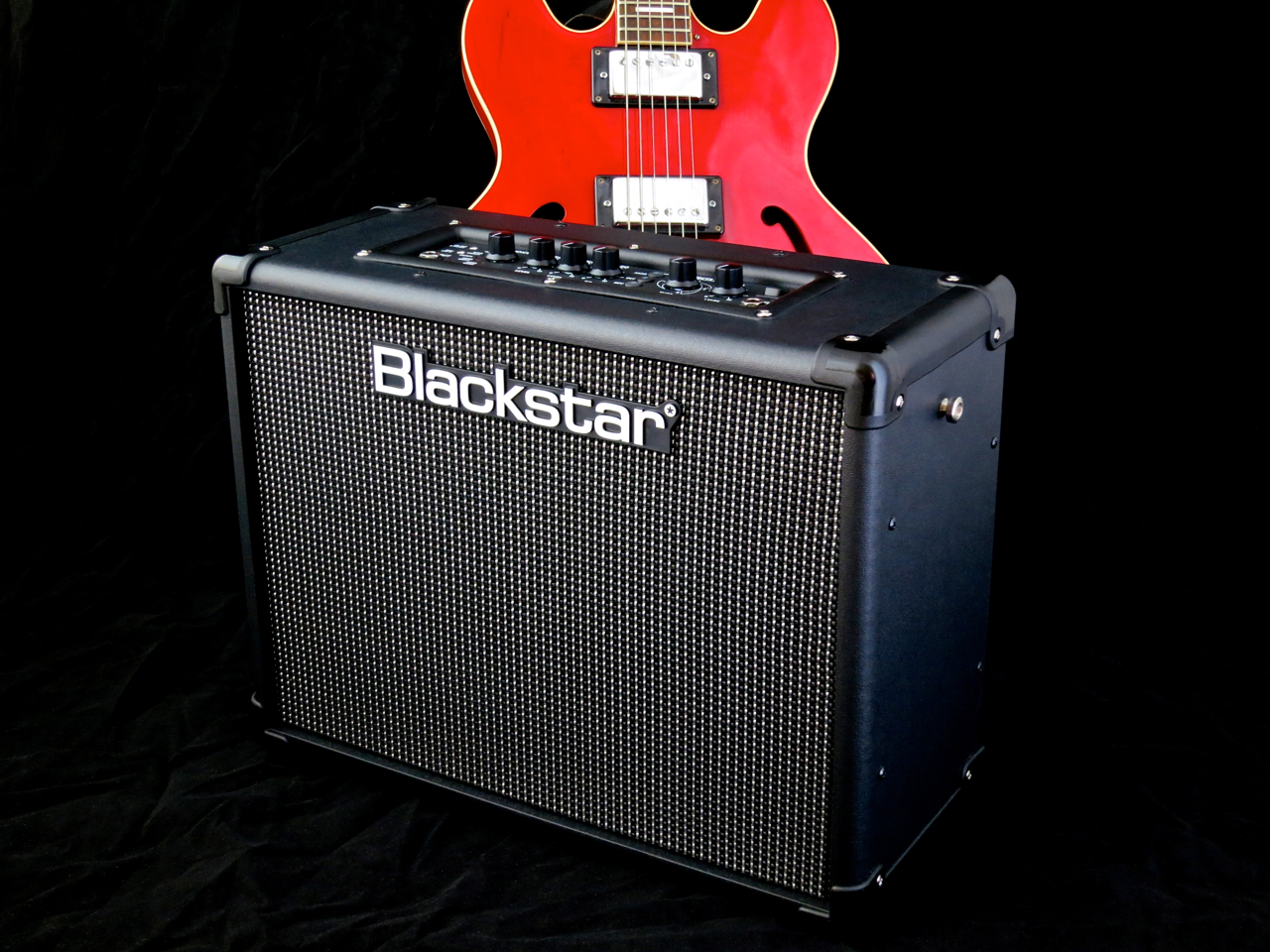
The larger Blackstar ID:Core 40 combo (current price in Finland: 195 €) uses two 6.5-inch speakers to get its message across.
Except for the differences in power amp-, cabinet- and speaker-sizes, the rest of the specifications are identical in these two guitar combos. To make this review more readable I will concentrate on the Blackstar ID:Core 40, and mention any possible differences found in the ID:Core 20.

The new Blackstar combo has a very handy size, and it is easy to carry. In addition to the carrying strap, you will find the power supply unit and a quick start guide in the shipping box. You can download the full owner’s manual as a PDF-file from Blackstar’s website or HERE.
Even though the ID:Core series, naturally, isn’t really built to withstand the rigours of touring, these combo’s are rather sturdy little numbers. These may be mere practice amps, but toys they are most definitely not!
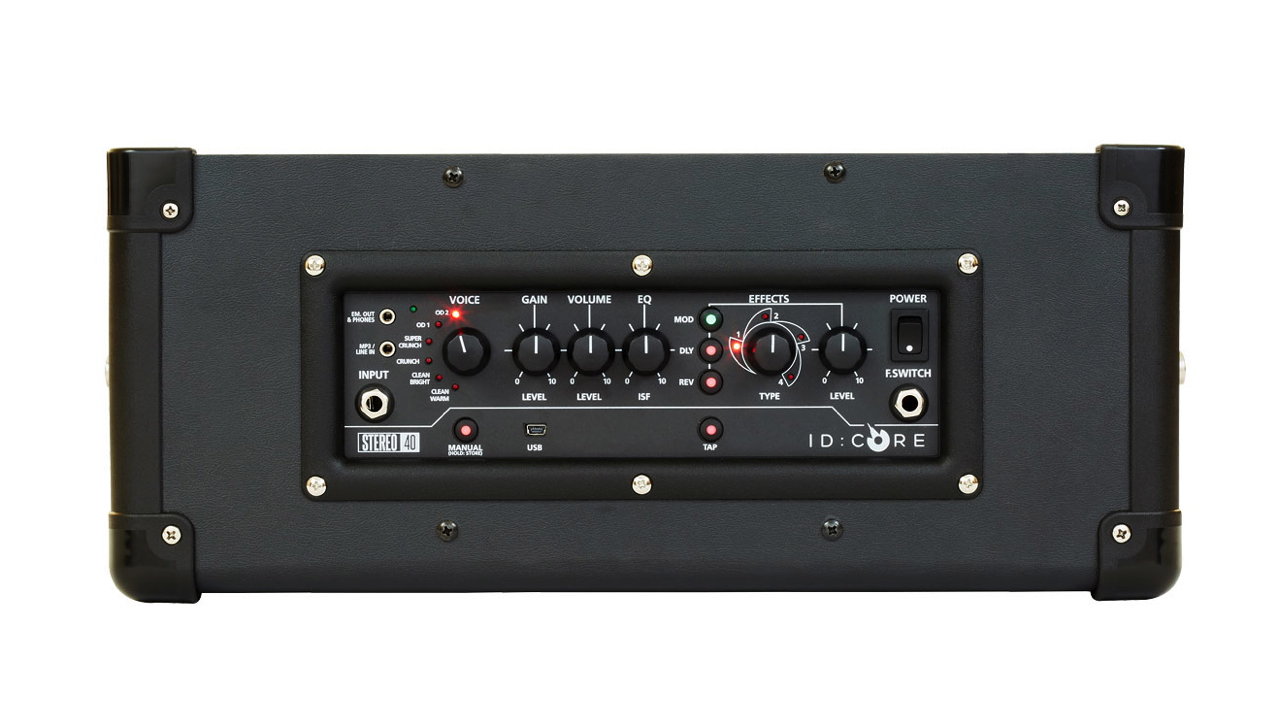
The electronics have been installed into the ID:Core’s top.
All the controls, push-buttons and inputs/outputs are identical throughout the whole series, with the exception of the smallest combo (the ID:Core 10) not offering the option of connecting a FS-11 footswitch unit (not included).
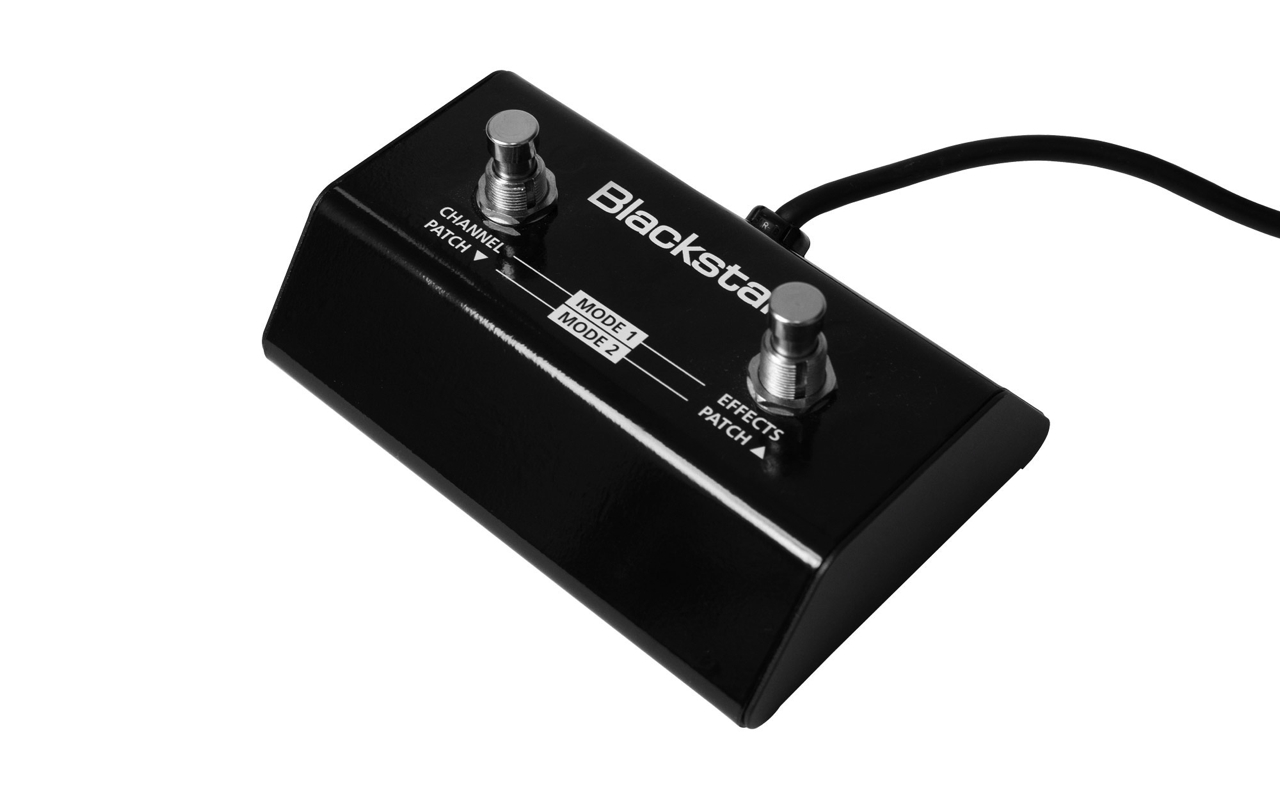
The ID:Core 40’s factory default uses the FS-11’s left switch for switching between two Voice-channels, with the right switch functioning as an effect mute for the selected channel.
The free Blackstar Insider -software (PC and Mac) also lets you select a different footswitch mode that offers you all Voice-channels, and which uses the two switches to step through all the channels, either up (right switch) or down (left switch).
****

The ID:Core 40 is very easy to use:
The Voice-selector lets you choose one of the combo’s six Voice-channels (= digital amp models). In Preset-mode calling up a channel automatically recalls all the stored preset settings, like gain, ISF or effects. In Manual-mode switching to a different Voice only changes the selected amp type, with the other settings staying the way you have manually set them.
Naturally, all presets can be adjusted by the user, and the changes can then be stored in the ID:Core combo’s memory, wiping the factory preset in the process.
The new Blackstar-combos also come equipped with a digital tuner, which springs to life when you hold down the Manual- and Tap-buttons simultaneously for a couple of seconds. In Tuner-mode the combo’s red Voice-LEDs represent the six guitar strings, while the LEDs in the Effect-buttons tell you whether the pitch is flat (REV), sharp (MOD) or right on the money (DLY).
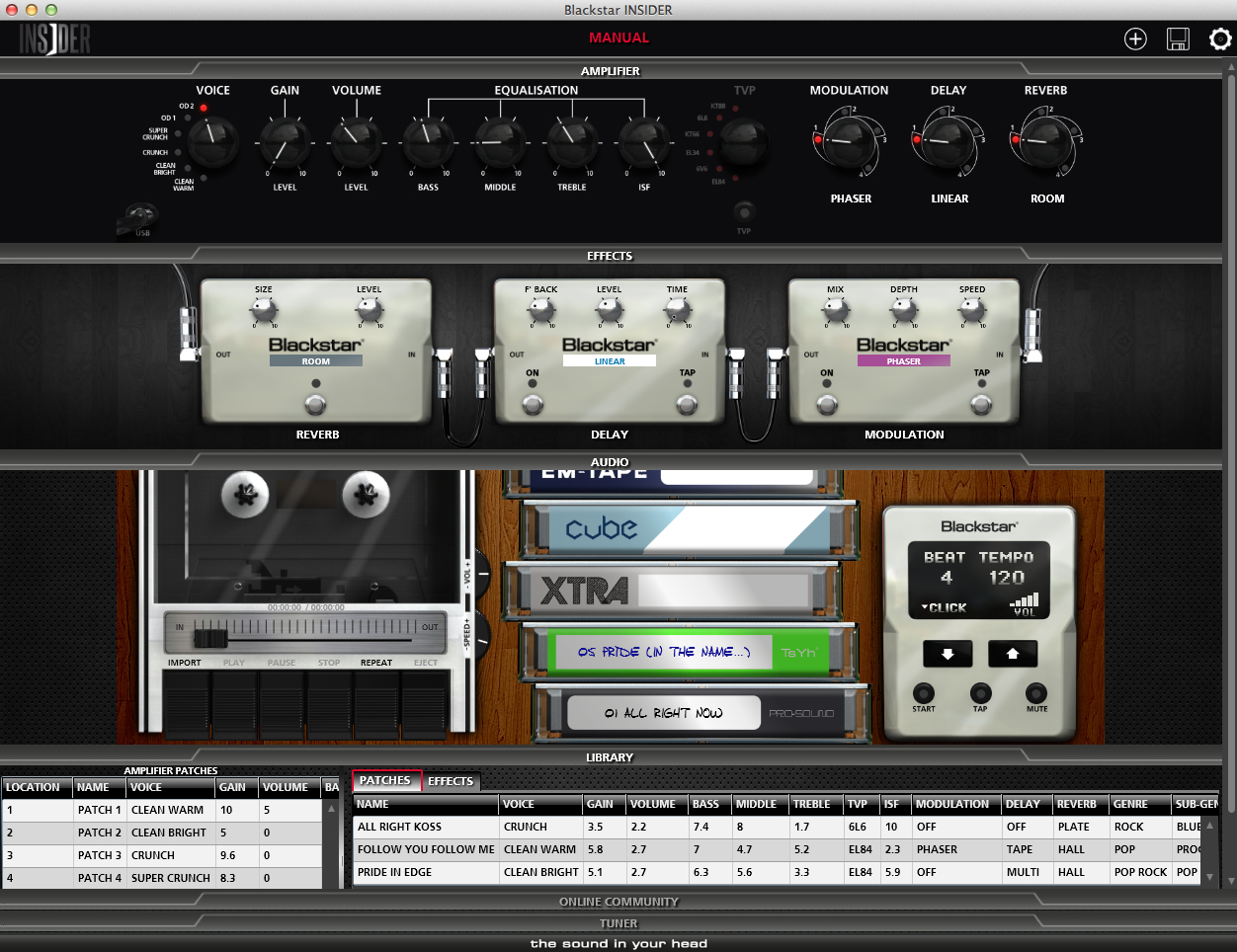
By downloading Blackstar’s Insider-software you get access to additional features of the ID:Core combo via its mini-USB-port (Hey, Blackstar: Why isn’t a USB-cable included with the amp?):
The most crucial of the additional functions, in terms of the combo’s tone, is the access to its internal three-band EQ. The combo only offers you a physical knob for the ISF-setting, which lets you change the amp’s character from bright-ish ”American” (ISF = 0) to chunkier ”British” (ISF = 10). The Insider-programme also lets you fine-tune each preset’s Bass, Middle and Treble EQ-settings.
Insider also allows you to create you own ID:Core-presets, save as many as you like, and send them to your combo for use. But note that each preset is always tied to the Voice-channel used as its basic ingredient. This means that an ID:Core combo will always offer six different Voice-channels – you cannot load six different Warm Clean patches, or six OD1 Metal sounds, into the combo’s six Voice-channels.
If you want, you can set up an Insider-account, which enables you to share your own patches with other ID:Core users around the globe.
The Blackstar Insider software also includes some tools for practicing. There’s a simple rhythm box, as well as a music player (looking like an old cassette recorder), which even allows you to change a music file’s tempo and/or loop a certain part.
Insider’s tuning section gives you an on-screen, graphically-enhanced version of the combo’s internal tuner.
Thanks to its USB-connectivity you can also use the ID:Core combos as an external sound-card for direct recording to your audio sequencer. You can even configure the combo for re-amping (using the Insider-software), but I wasn’t quite satisfied with the way the ID:Core performed as a sound-card (at least with the tested firmware version). I’d like to see an even shorter audio latency, as well as a hotter audio signal, before I would seriously consider using the ID:Core for direct recording.
****

Blackstar’s advertisements are placing quite a lot of emphasis on the ID:Core series’ Superwide Stereo function. With Superwide Stereo turned on (factory default, you can also switch it off via Insider) especially the delays and reverbs sound impressively lush. You feel enveloped in a cloud of sound, with some of it seeming to even come from behind you.
Actually, the ID:Core’s effects aren’t really stereophonic at all – you shouldn’t expect ping-pong delays, or anything of that sort. In reality, these Blackstar combos have a signal path that is completely monophonic, up to the point the signal reaches the power amp section (and headphone amp). It is only at this point that a stereo signal is created from the mono by splitting the mono signal in two, and by changing the phase of one of the signals. The result is a lush, broad, and fairly natural ”stereo” sound.
This method of creating ”fake stereo” has long been used in analogue modulation effects. There’s nothing ”wrong” or ”deceitful” in doing things this way, and Blackstar’s Superwide Stereo sure sounds impressive, but I’m not sure I’d want to trumpet this amp series’ ”stereo-ness” so loudly.
But now to the most important aspect of an amp – it’s tone:
I could sum it all up by saying that the amps sound great! Regardless of the fact that we’re talking about very pocket-friendly practice amps here, the sounds and dynamic response Blackstar’s excellent ID-modelling technology dishes out will leave you with a big grin on your face. Six well-chosen Voices and 12 quality effect types shouldn’t leave anybody wanting.
The ID:Core 40, naturally, sounds noticeably ”bigger”, compared to the ID:Core 20, with its smaller speakers and cabinet. Nonetheless, you get the feeling that both combos make the most of their respective wattage. Miked up both combos sound virtually the same.
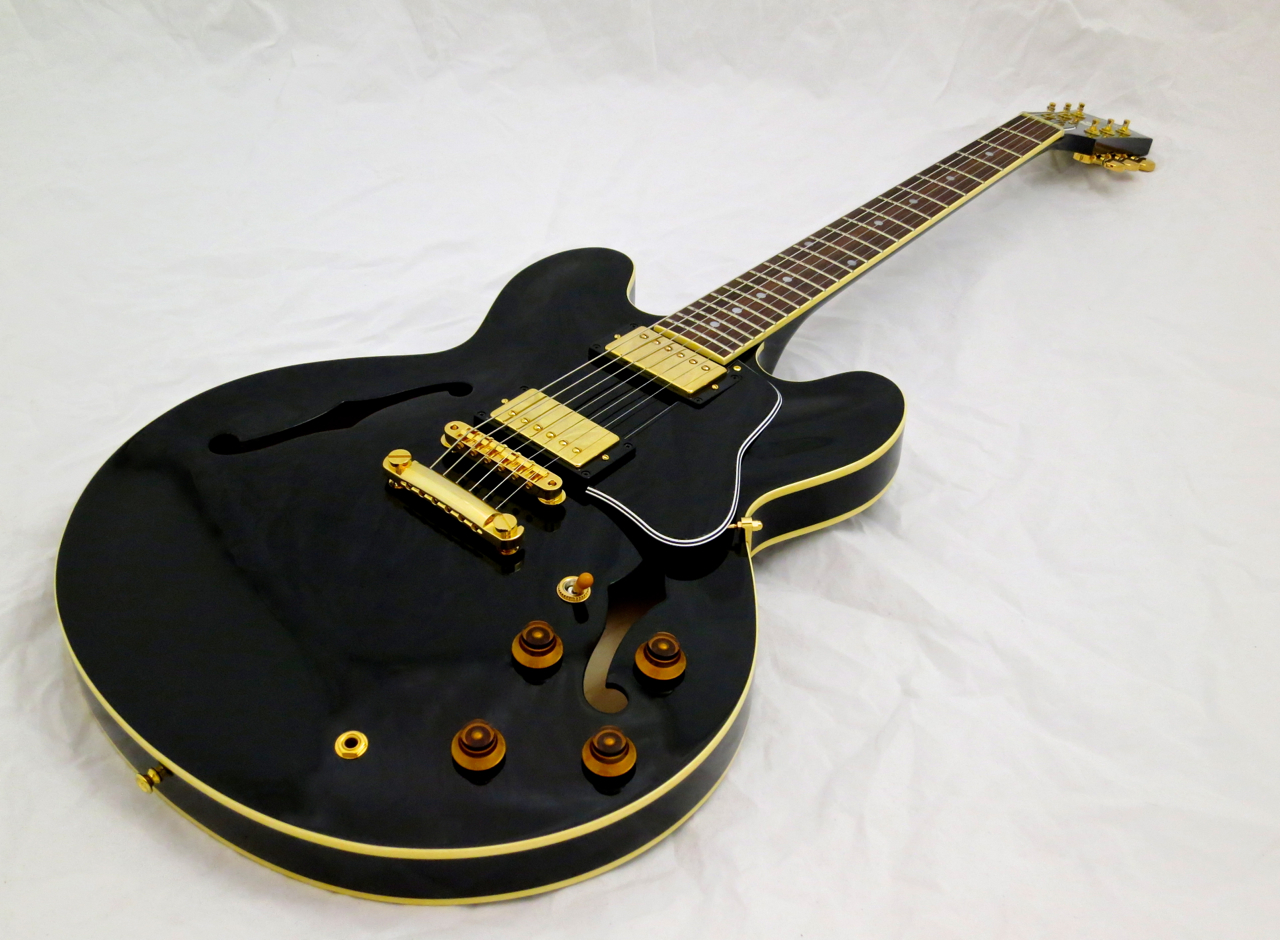
The following sound clips have been recorded with the Blackstar ID:Core 40, using the factory presets as a basis, which I then fine-tuned to my liking. I played these clips on my Kasuga (a Japanese ES-335 copy from the Seventies), recording the sound with two dynamic Shure microphones.
Clean Warm:
Clean Bright:
Crunch:
Super Crunch:
OD1:
OD2:
****
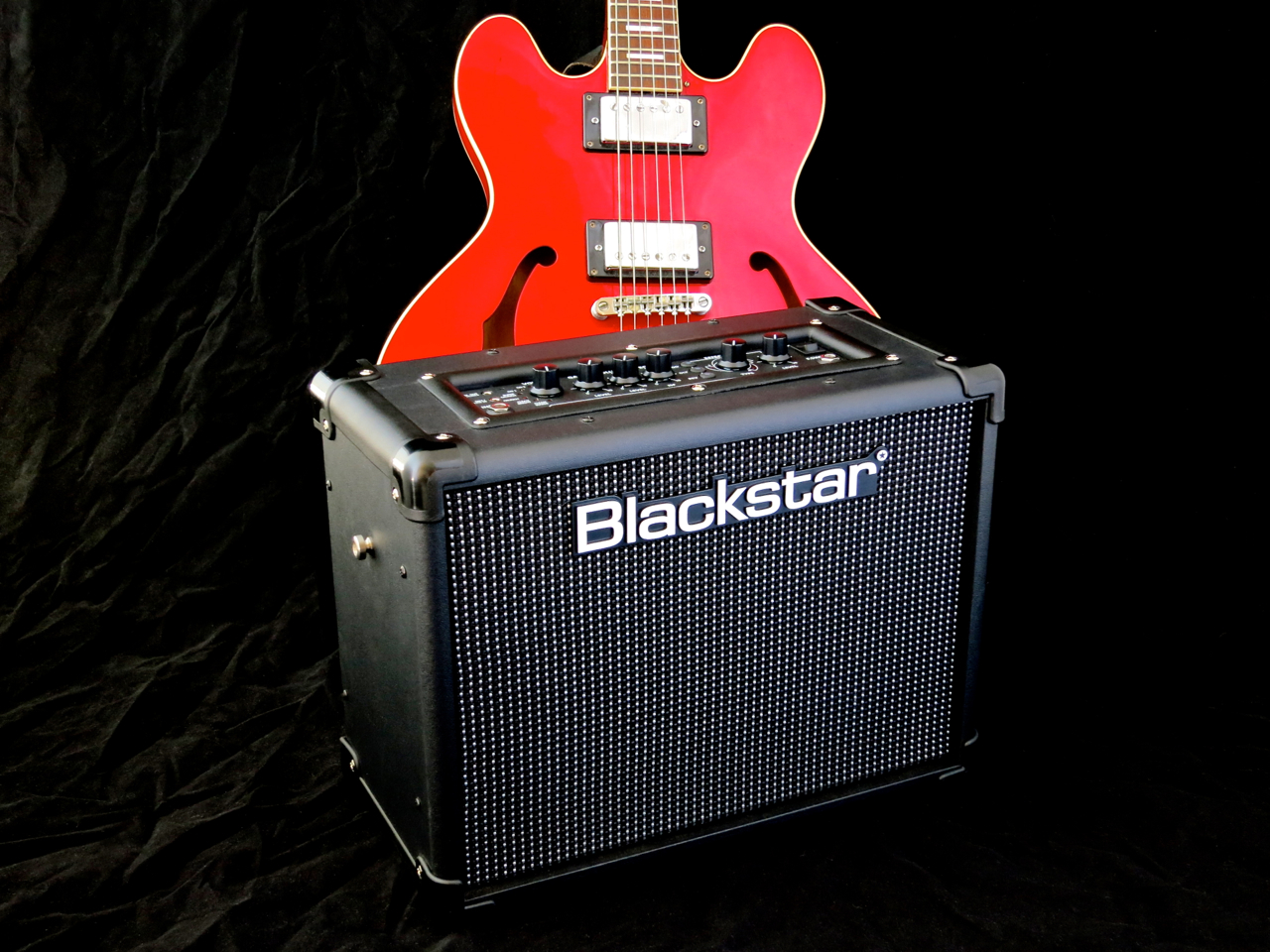
Blackstar have successfully managed to transfer the great sounds of their ”grown-up” ID Series amps to the ID:Core practice combos. Together with Blackstar’s Insider-software, the ID:Core 20 and ID:Core 40 combos are fully-spec’ed and inspiring tools for practice, home recording, teaching and warm-up. You get genuine Blackstar tone in a handy package!
****
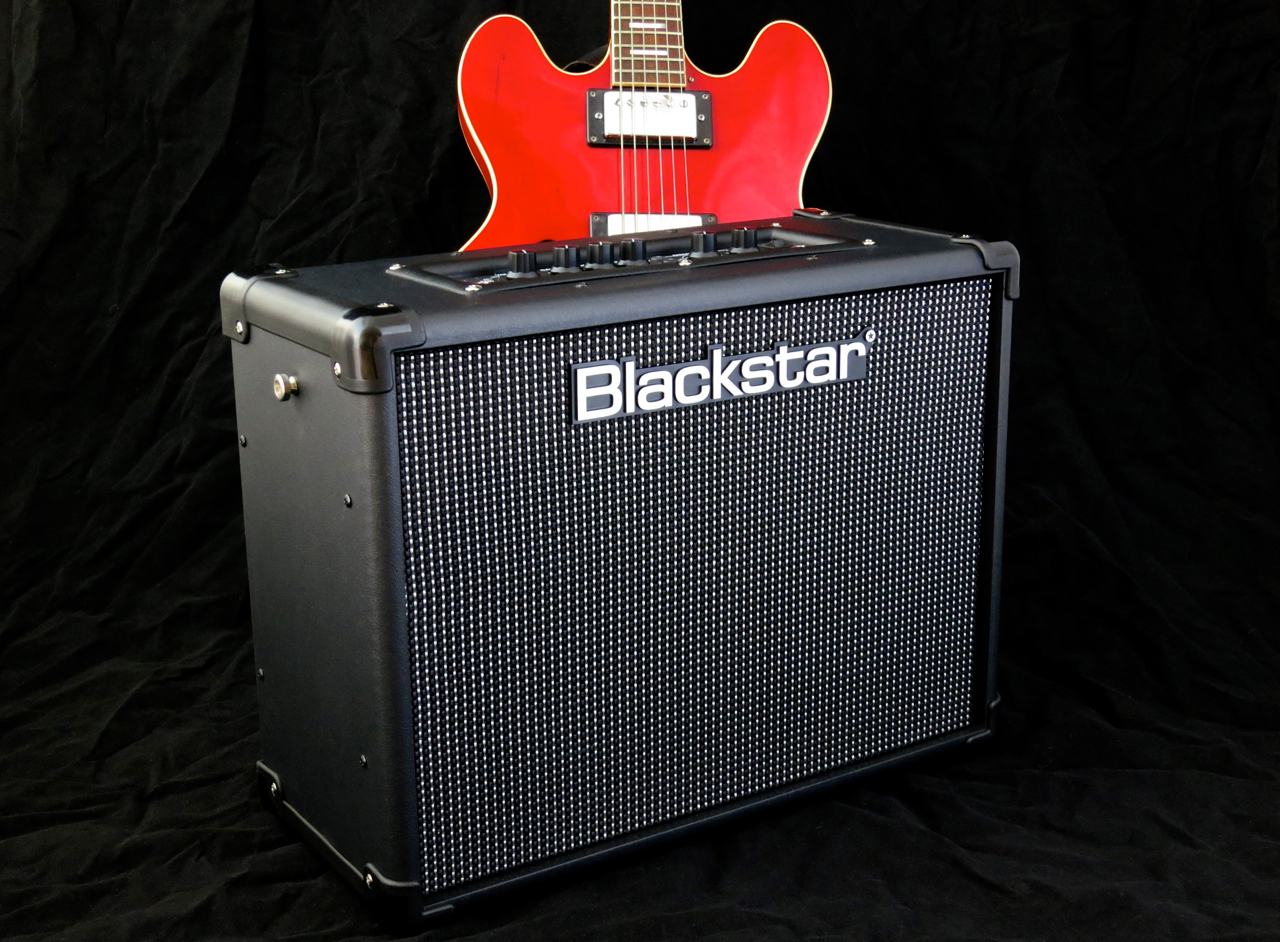
Blackstar ID:Core -kombot
ID:Core 20 – 149 €
ID:Core 40 – 195 €
Finnish distributor: Musamaailma
****
Pros:
+ workmanship
+ versatile sound
+ up to three simultaneous effects
+ built-in USB sound-card
+ Blackstar Insider -compatible
Cons:
– latency in USB-recording






 Kitarablogi.com – Finland's premier Guitar and Bass blog