Review: Jet Guitars JT-350 SH + JT-450Q

Alkuperäinen suomenkielinen testi on ilmestynyt Rockway-blogissa.

****
Telecaster-style electric guitars are the cornerstone of all solid-body guitars. Although the original Fender model was released in 1950, the basic Tele is still in everyday use around the world. A simple “breadboard” body, a bolt-on neck, and two very different single-coil pickups, and that’s it.

Tele-style instruments are excellent country, blues, rock, and soul guitars, with their twangy bridge pickup sound easily recognisable.

Sometimes, however, a player wants something extra, something more than that old-school Telecaster tone.

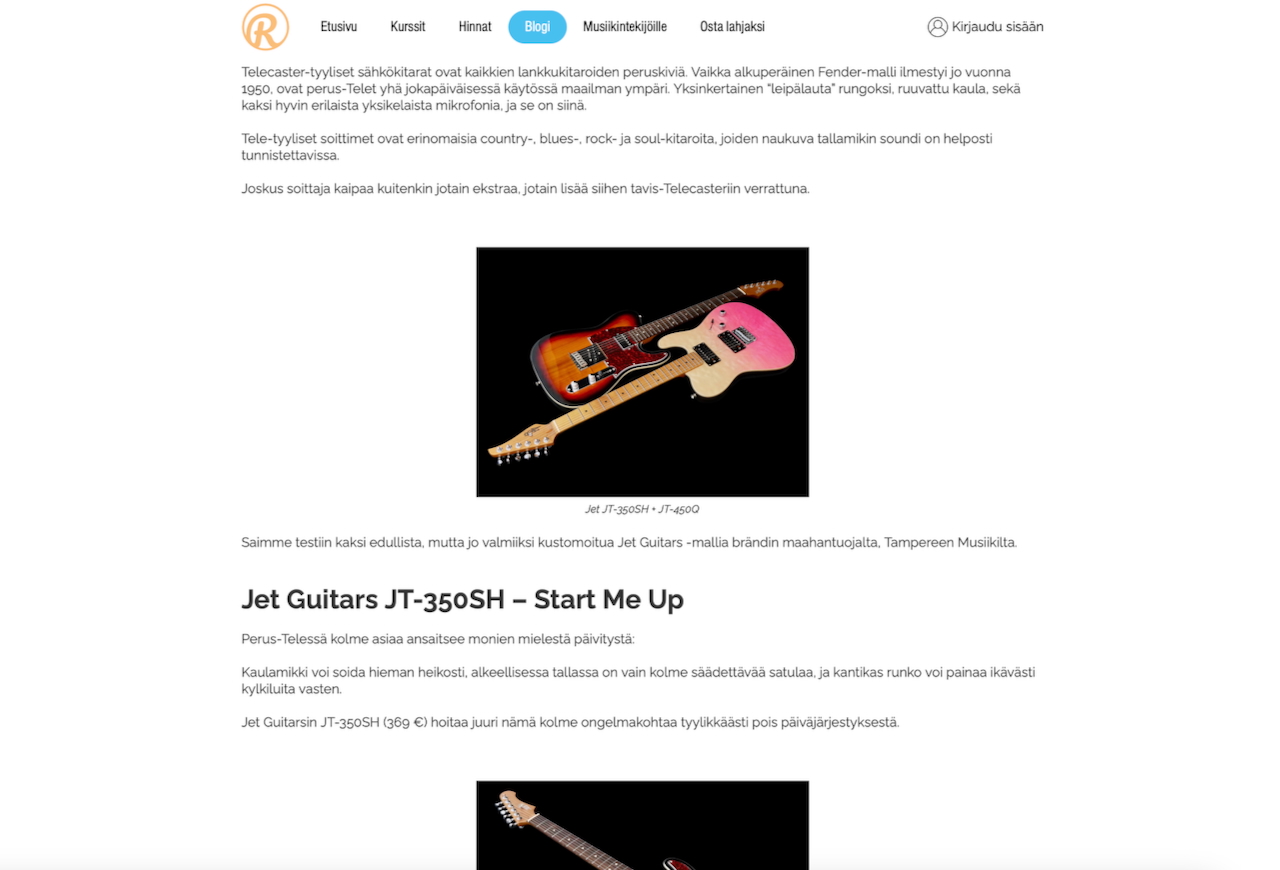
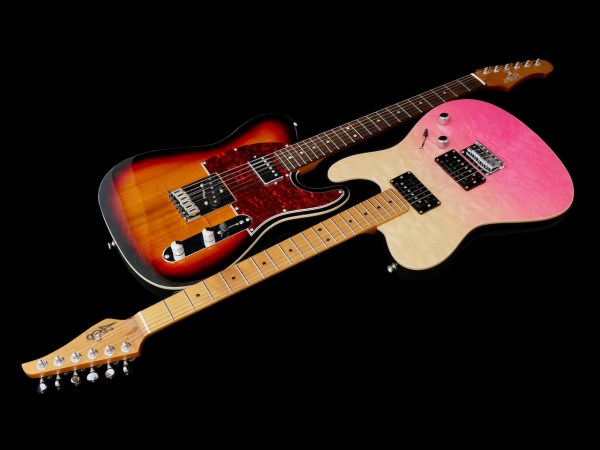
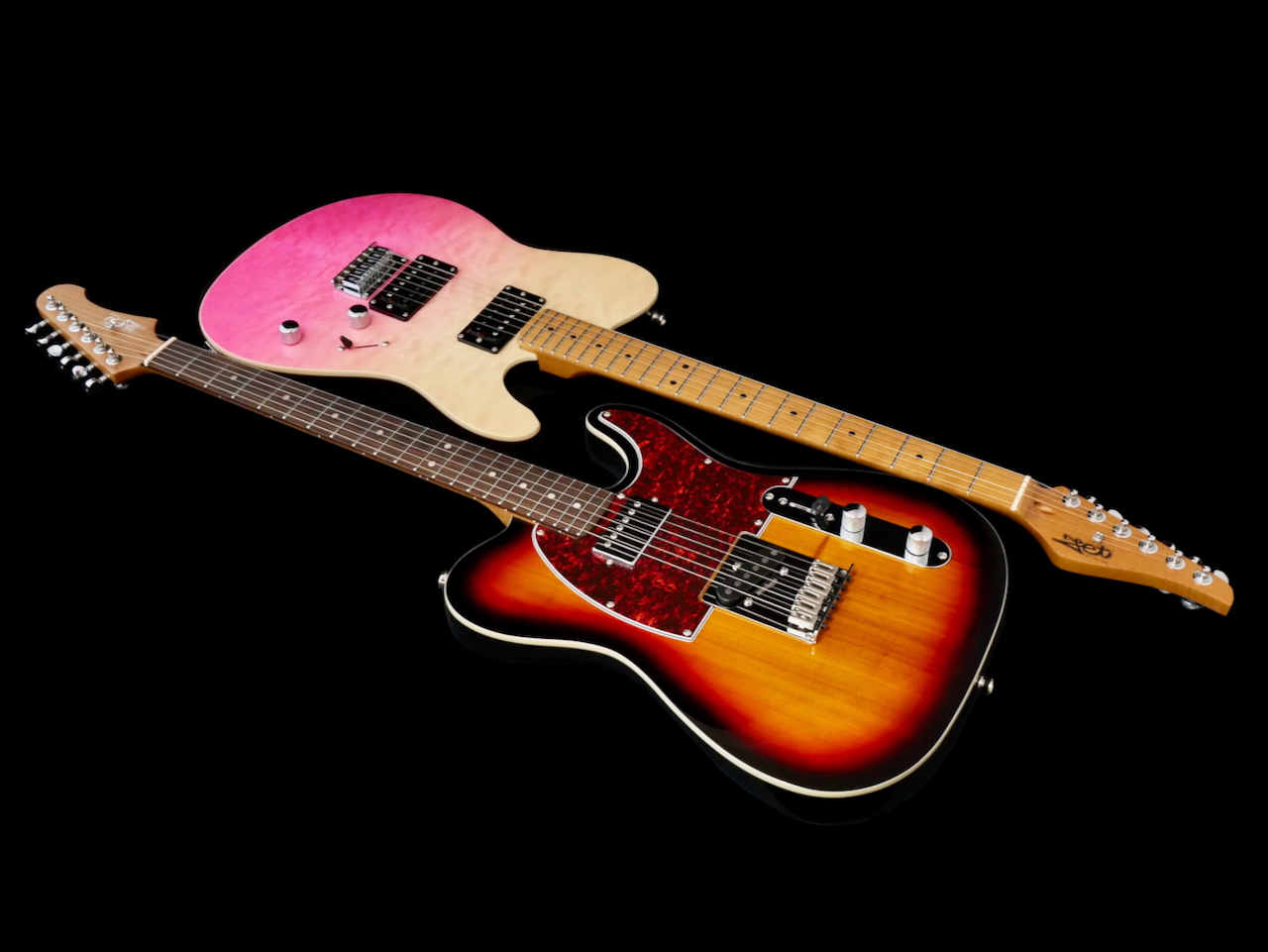
We received two affordable, yet ”factory-customised” Jet Guitars models for a review from the brand’s importer, Tampereen Musiikki.

****
There are three things that many people think deserve an upgrade on a basic Tele:
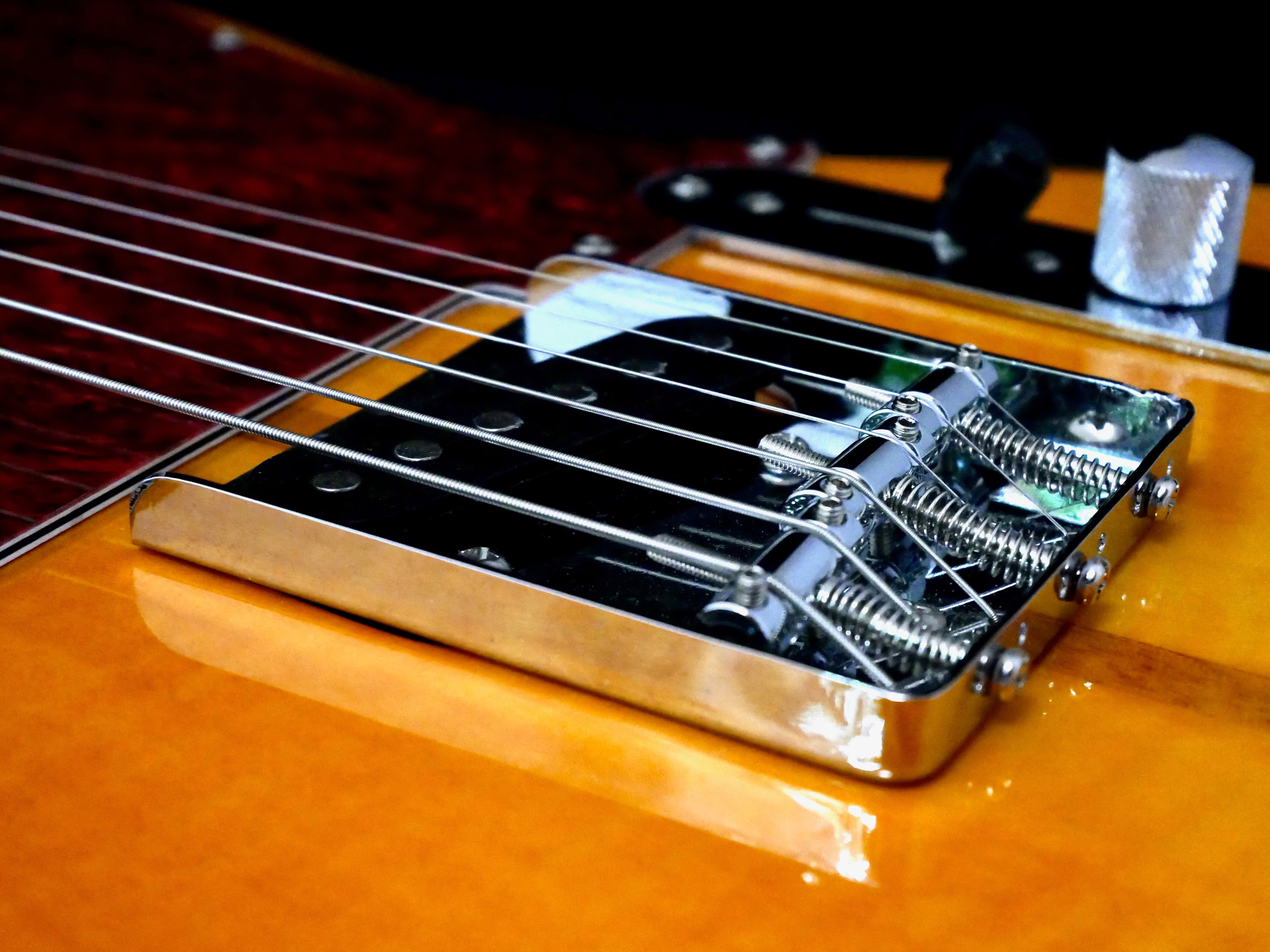
The neck pickup can sound a bit weak, the rudimentary bridge has only three adjustable saddles, and the square body can be annoyingly hard on the ribs.
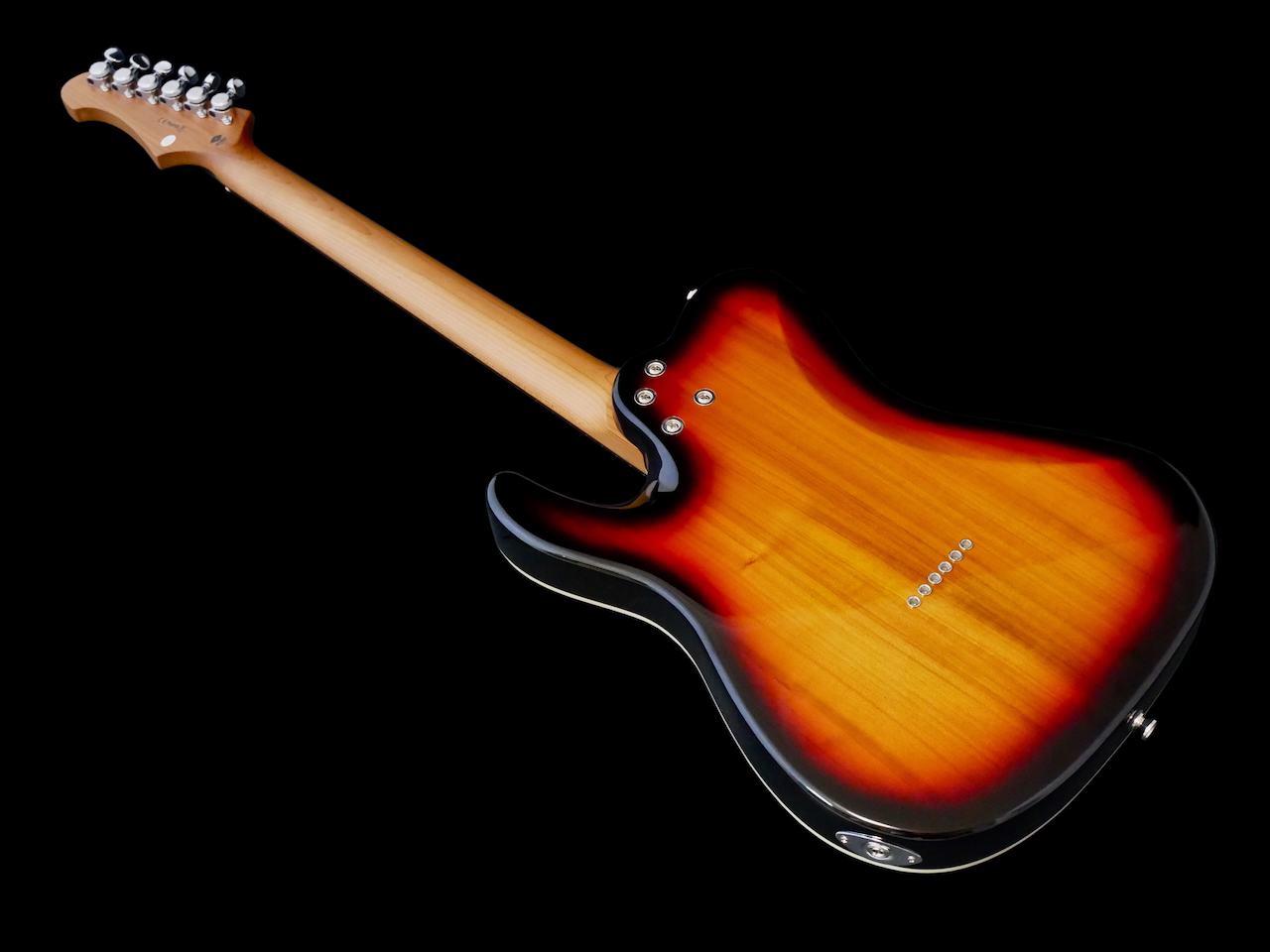
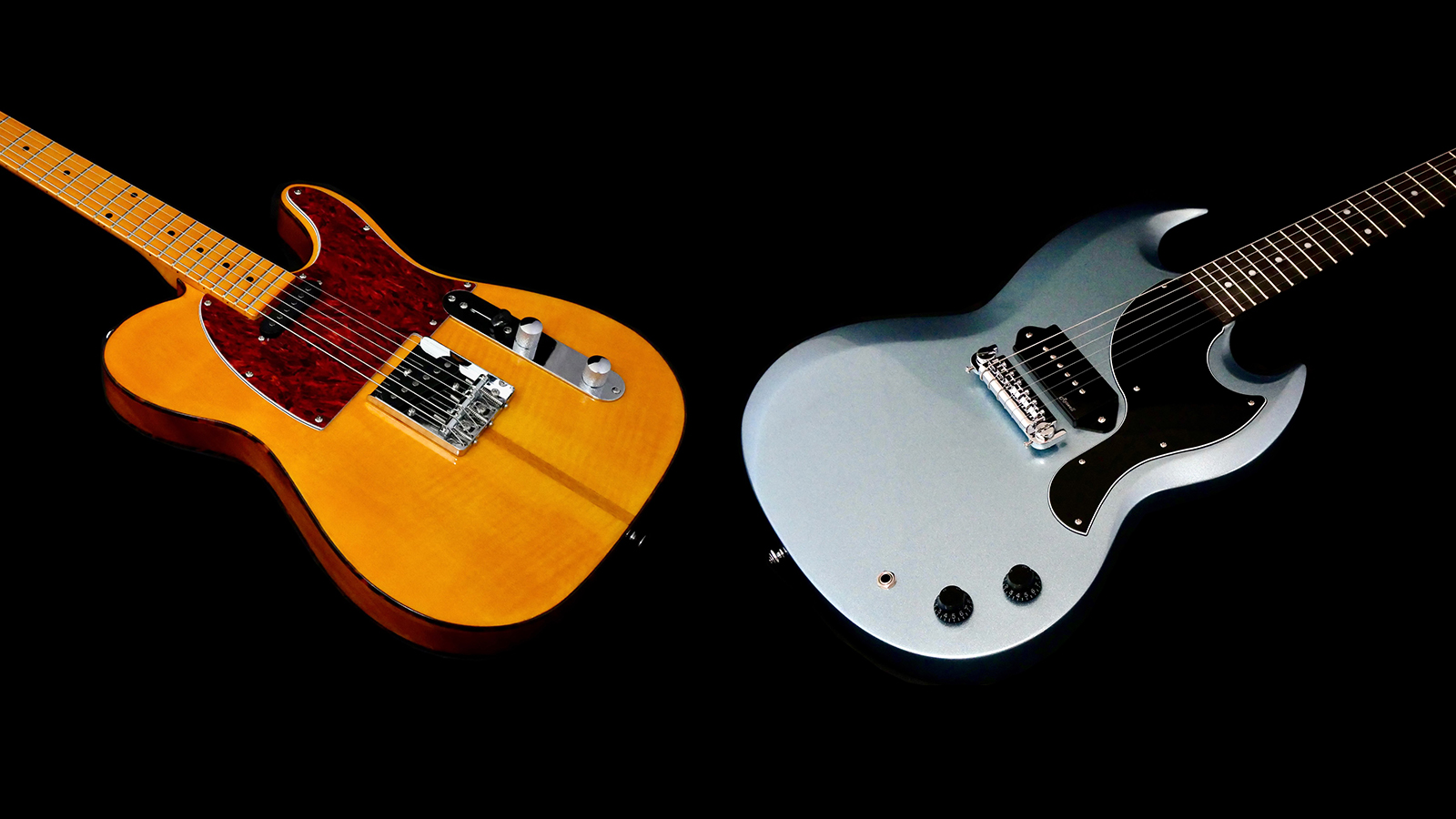
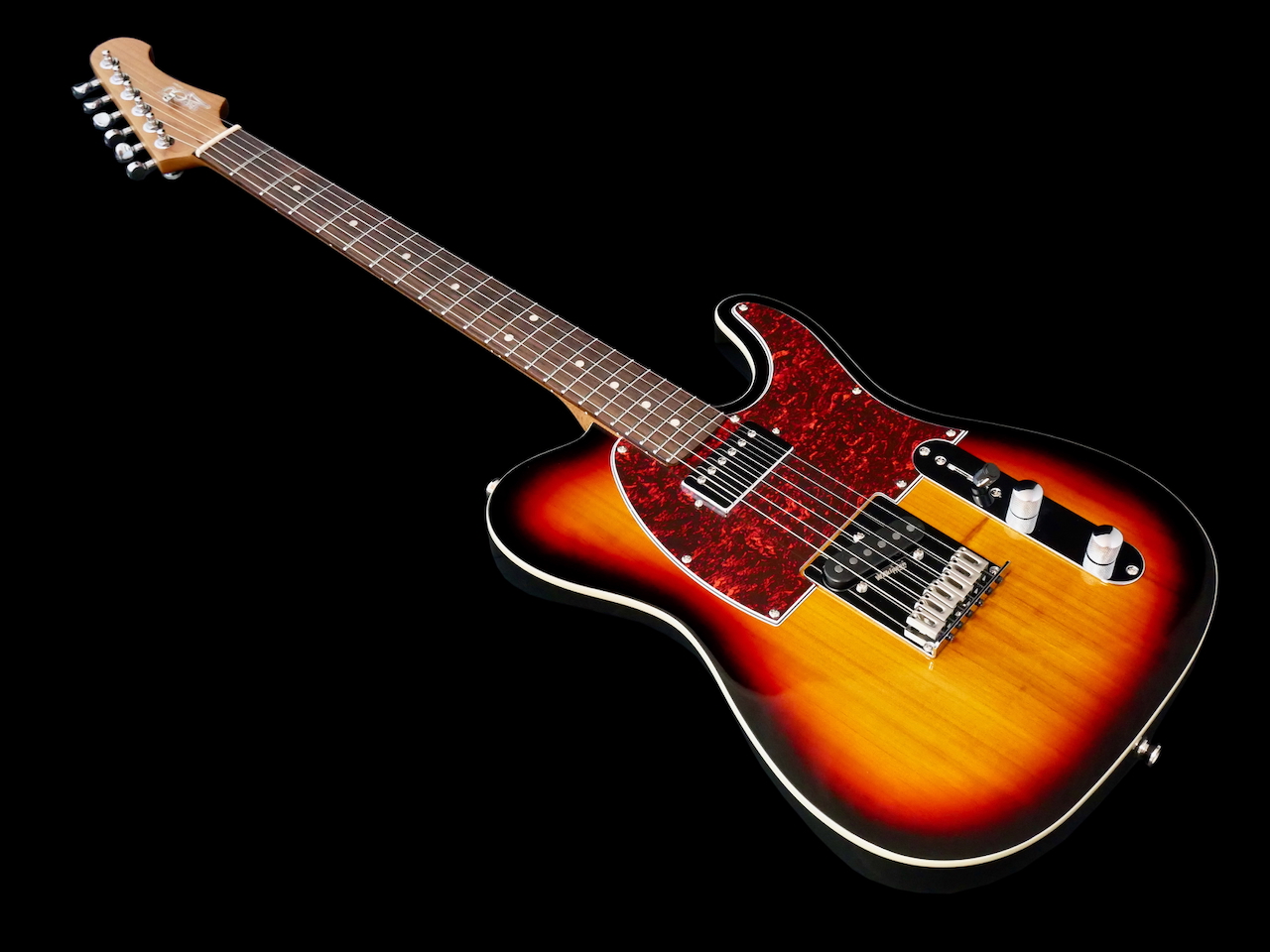
Jet Guitars’ JT-350SH (€369) stylishly takes care of these three problems.

Despite its affordable price, the JT-350SH has added many pro-level features:
The guitar’s neck is carved from heat-treated Canadian maple, while the fingerboard is made of Indian rosewood. The neck is equipped with a dual-action truss rod, and its adjustment is conveniently done at the headstock end. Thanks to the locking tuners, changing strings is a quick task, and the instrument stays in tune very well.

The basswood body, which is bound at the front, has two bevels at the back – one in the cutaway to make it easier for the playing hand to reach the upper frets, and the other has been added to the top edge to soften the fit of the body against the player’s body. The bolt-on neck joint on the Jet JT-350SH is also rounded.

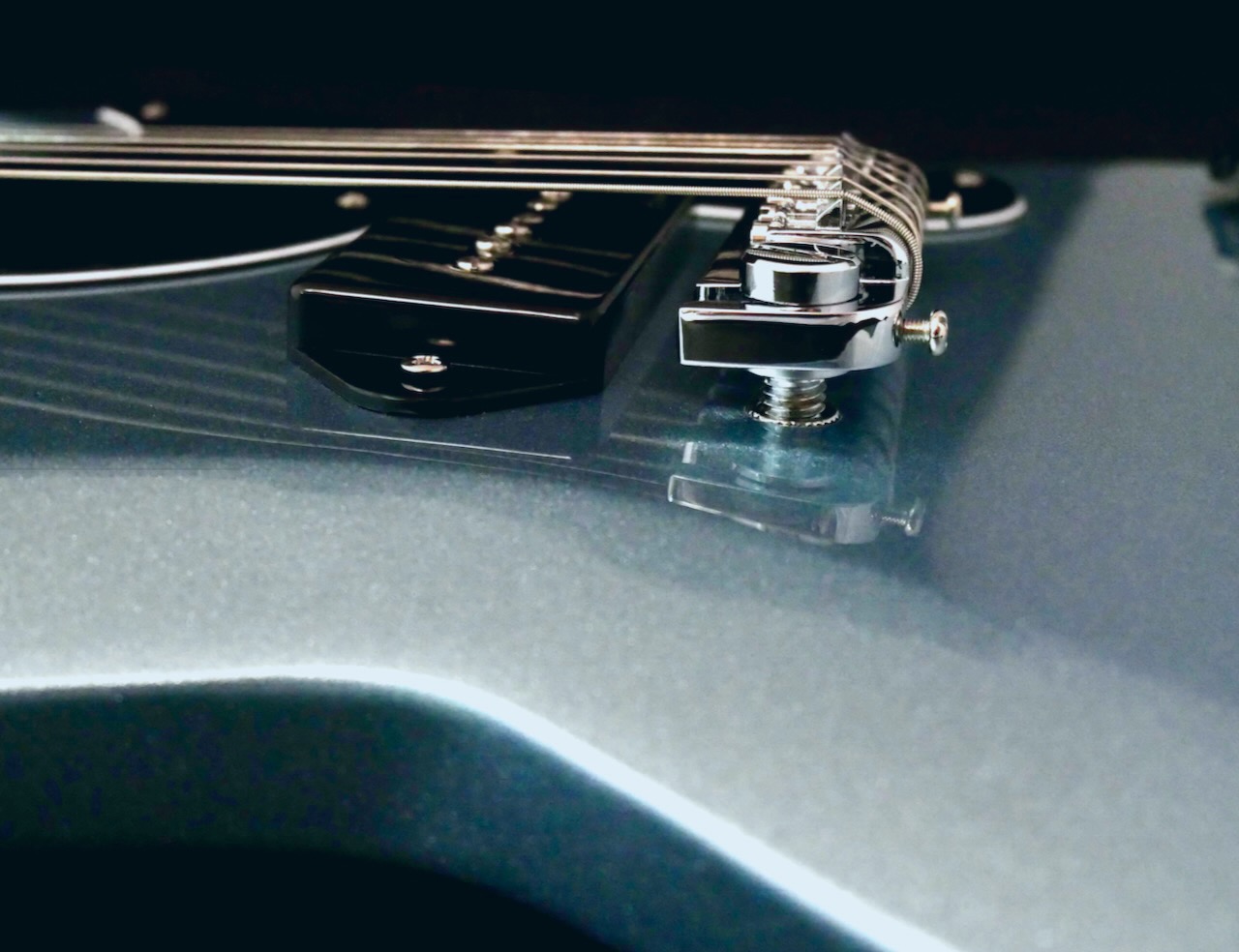
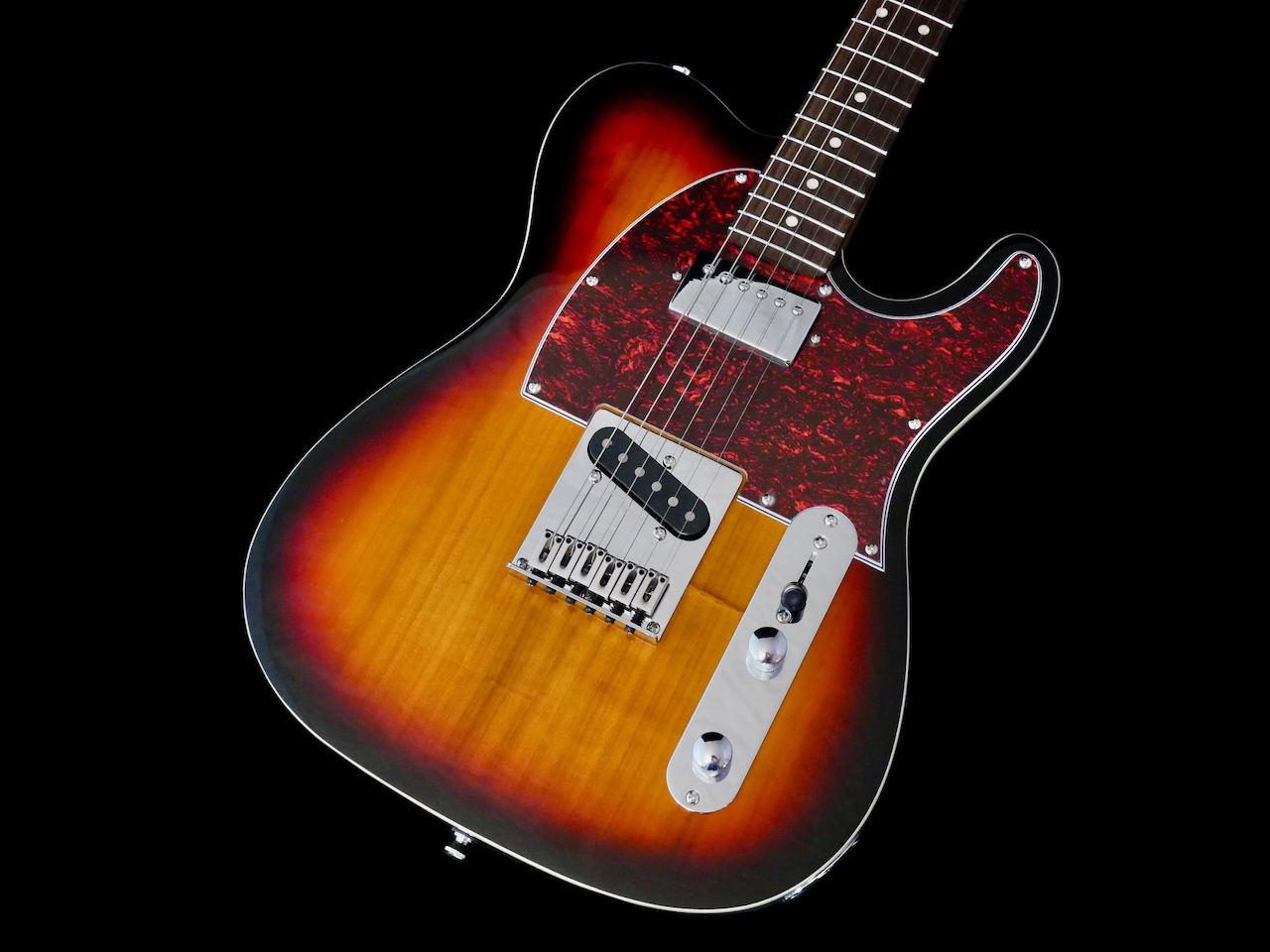
Wilkinson’s high-quality, modern six-saddle bridge is home to a traditional (alnico) Tele bridge pickup, while a full-size alnico humbucker sits in the tortoiseshell-patterned pickguard.

This SH-pickup combination (a portmanteau of “single-coil” and “humbucker”) makes a single Tele sound like two different guitars, as it offers the classic Tele bridge sound, as well as the creamy Gibson sound. It’s not entirely clear who first invented the SH-combination on a Tele, but blues guitarist Albert Collins used a custom Tele like this back in the 1960s. Rolling Stones legend Keith (“Keef”) Richards uses both modified Telecasters and second-generation 1970s Tele Customs with a factory-installed neck humbucker. In the 1980s, Andy Summers of the Police became well-known for his JT-350SH-style Fender guitar.

The Jet JT-350SH adds a pull-switch embedded in the tone knob to the standard Tele front-both-rear connection, allowing you to split the humbucker for traditional single-coil Tele sounds.

The Jet Guitars JT-350SH model’s playability is first-class, thanks to a slim neck profile, a gentler fingerboard radius (9.5 inches) and really good fretwork. The guitar arrived for review with an excellent set-up.
****
In 1979, The Who’s Pete Townshend had had enough of his heavy Gibson Les Paul Deluxe guitars from the 70s, and he sent his guitar technician, Alan Rogan, to find something better for the next tour.

Townshend had also played Telecasters in the 1960s and he remembered that this guitar model was relatively light, but at the same time very durable. However, he wanted a guitar with two humbuckers, for a thicker distorted sound.

After a few twists and turns, Alan Rogan found a new company – Schecter Guitar Research – that made both guitar parts and complete electric guitars. Rogan ordered a pair of Schecters for his boss, Townshend liked them, and “the rest is history”, as they say.

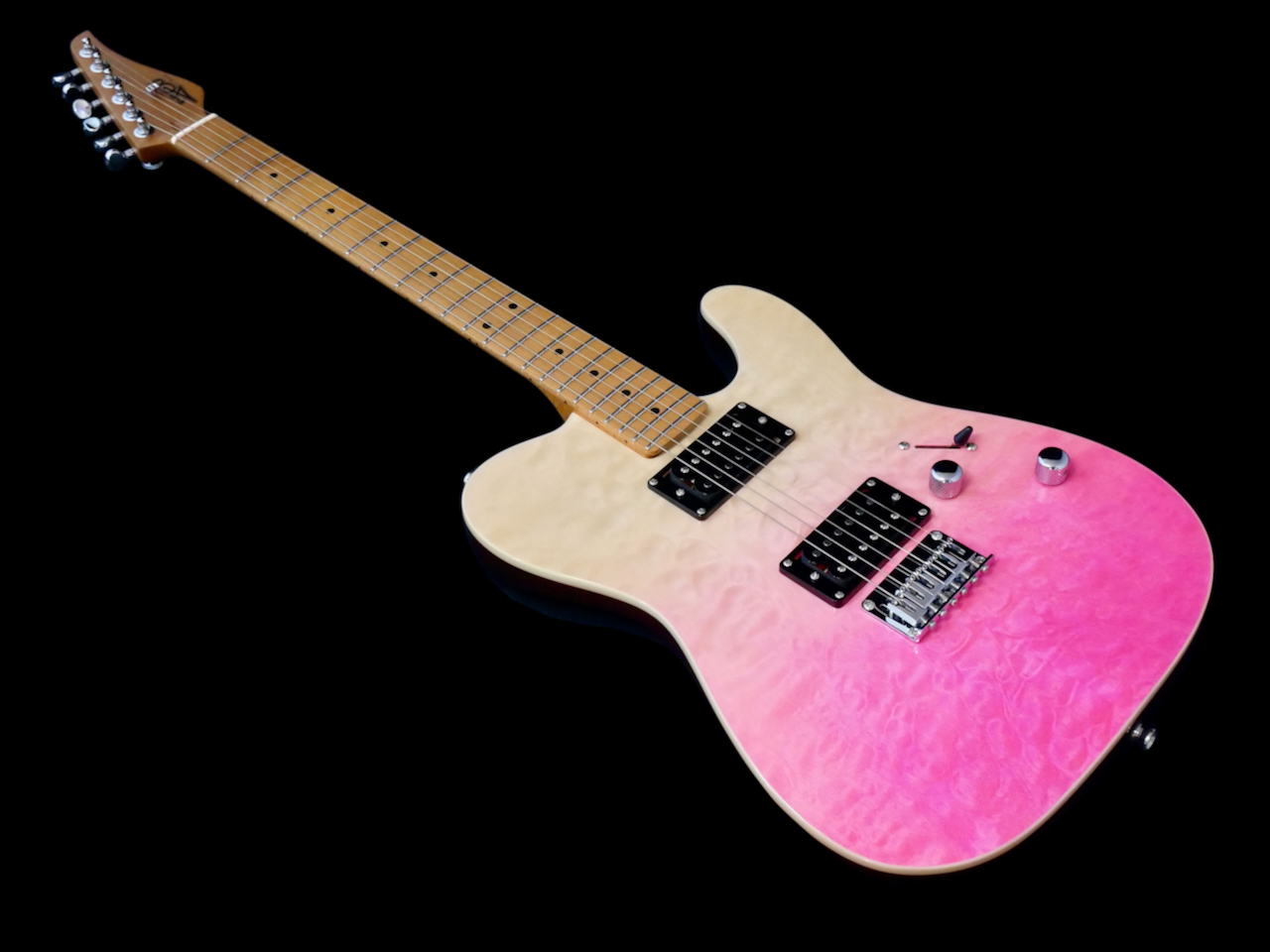
Jet Guitars’ JT-450Q (€399) is a fancy double humbucker Tele, with a few more piquant details added:
A very impressive quilted maple top with a front elbow bevel, a pink burst finish, and a split pickup with a pull-switch (in the tone control).
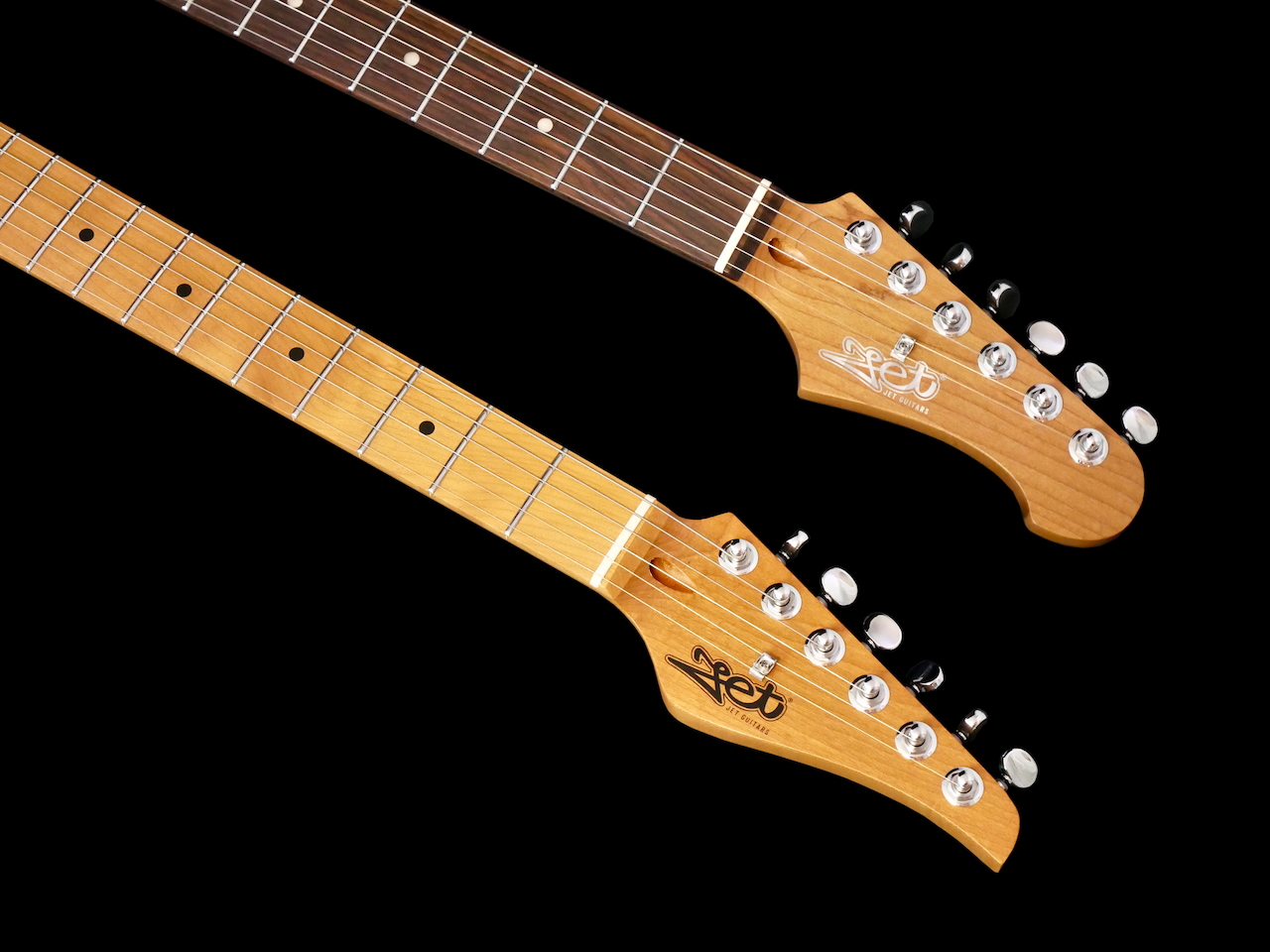
The basic components of the JT-450Q are largely the same as those of the JT-350SH model. The JT-450Q has a heat-treated maple neck with a fingerboard made of the same material. The shape of the headstock on this model is also different – it vaguely resembles the Pensa-Suhr headstock. The truss rod in this model is also dual-action and the tuners are of the locking variety. The top nut is made of genuine bovine bone on both instruments.

The body of the guitar is carved from basswood, and the JT-450Q also has a gloss finish, while the neck has a satin finish. The back of the body of the JT-450Q features the same soft bevels as seen on the JT-350SH.

Since the Jet JT-450Q uses two humbuckers in their own frames, the guitar’s bridge is a hardtail Strat-style version. However, the strings are still strung through the body in the regular Telecaster manner.

The Jet’s coverless alnico humbuckers are connected to a three-position switch, as well as master volume and tone. As I already mentioned, the tone pot has a push-pull switch that allows you to split the double-coil pickups in half for single-coil sounds. The switch and controls are mounted at an angle, Strat-style, so that you can easily create volume swell effects with your pinky. The JT-450Q’s humbuckers are not spoiled by excessive power, which imbues them with a beautiful and dynamic sound.
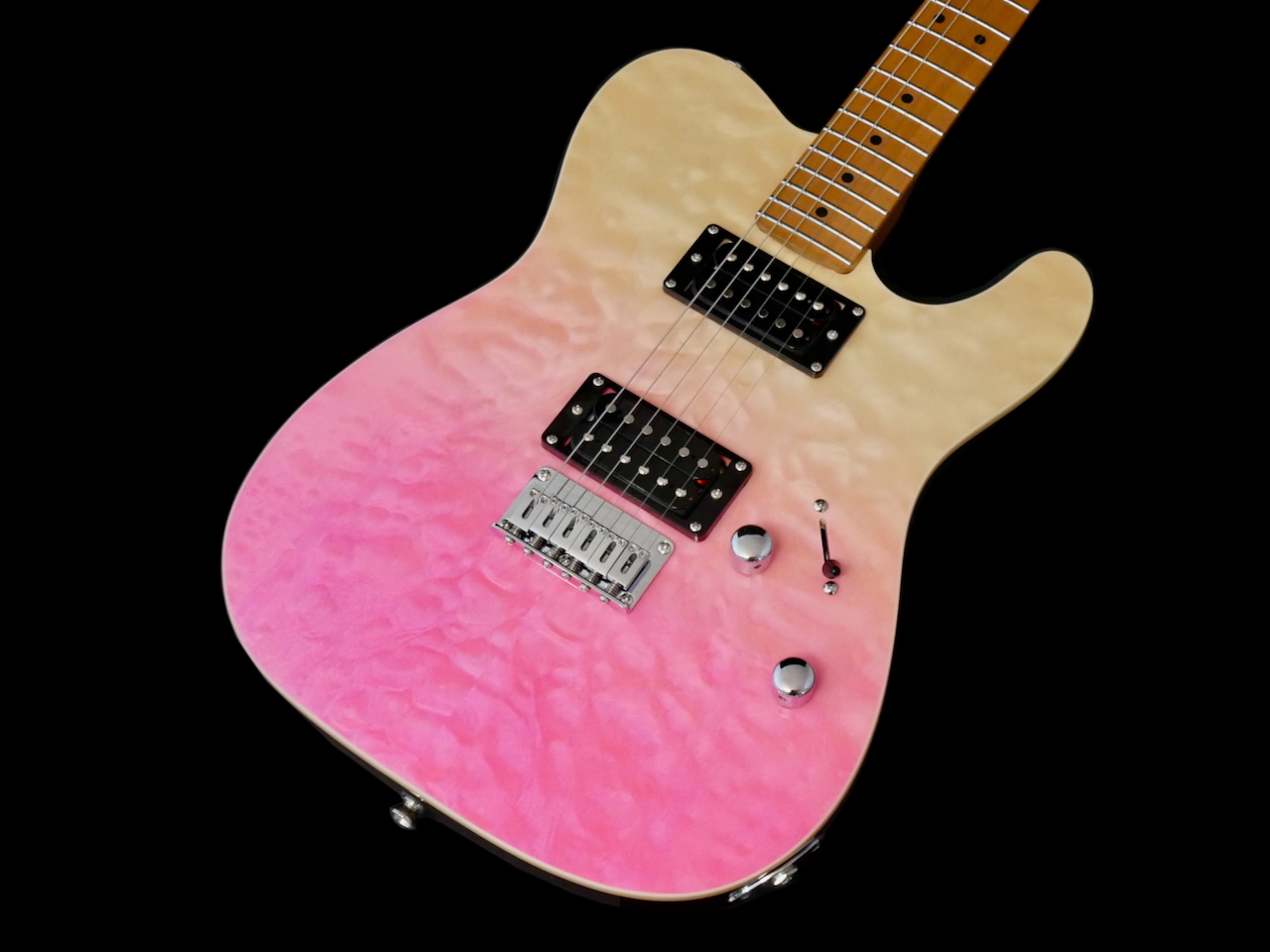
In the case of the Jet JT-450Q, you can also just marvel at how such an inexpensive guitar can feel so good in the hand. The neck profile here is also a nice oval C-profile, which – in addition to the very good fretwork – makes playing effortless and fast. The low trim of the test guitars can only be achieved with very strict quality control, which seems to be up to the task at Jet Guitars.
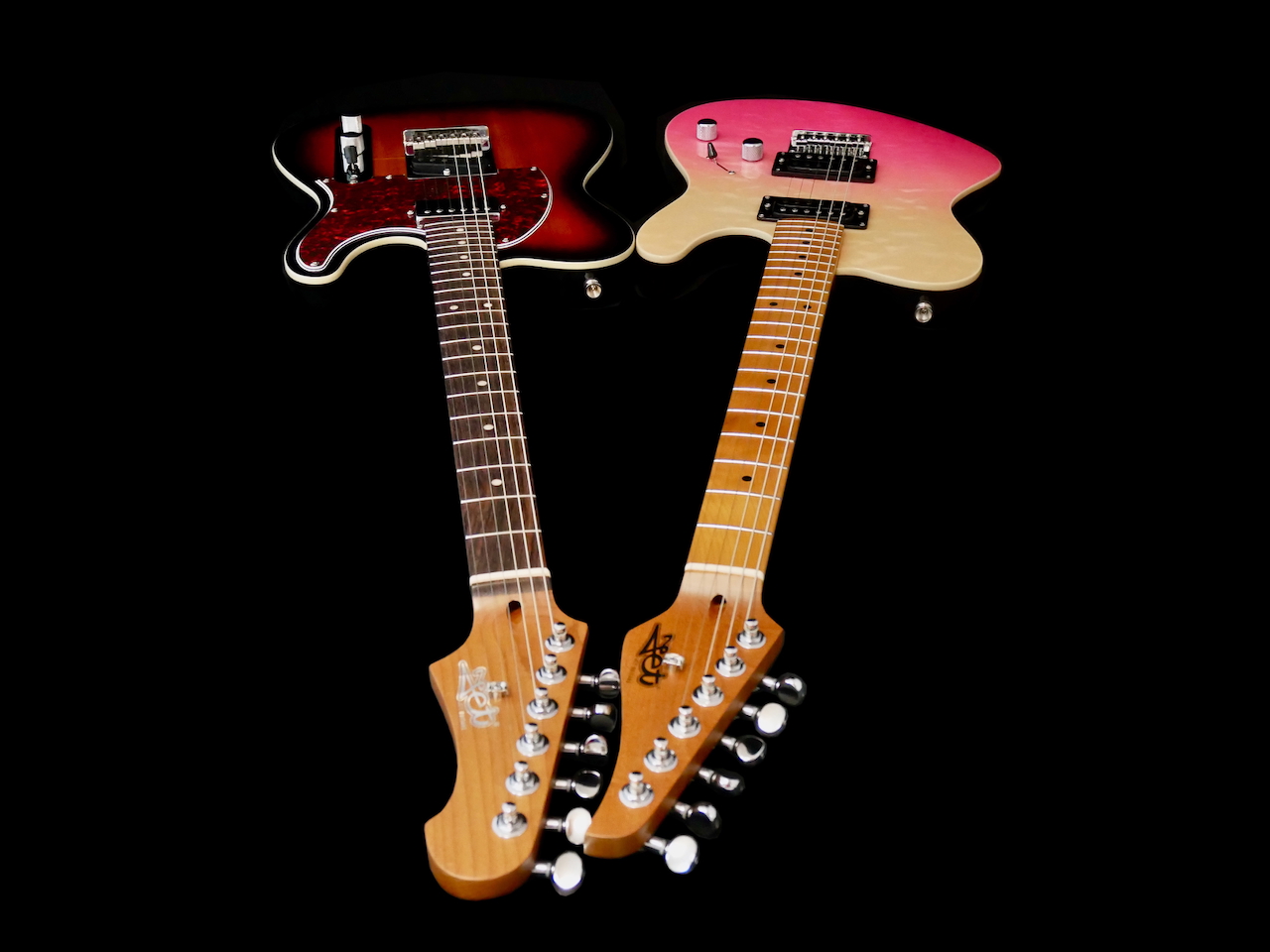
Jet Guitars JT-350 SH + JT-450Q – tulossa Rockway-blogiin

Here’s a demo of the Jet Guitars JT-350 SH, based on the Rolling Stones classic ”Start Me Up”.

• All guitar tracks played with the Jet Guitars JT-350 SH

• Amp used: Bluetone Black Prince Reverb

• Pedals used: Mad Professor Simple OD, EHX Memory Toy

• Mic used: Shure SM7B

• Preamp used: Cranborne Audio Camden EC2

****

Here’s a demo of the Jet Guitars JT-450Q, based on the Who classic ”Who Are You?”

• All guitar tracks played on the Jet JT-450Q

• Pedals used: EHX Memory Toy, Joyo Analog Chorus

• Amp used: Bluetone Shadows Jr

• Mic used: Shure SM7B

• Preamp used: Cranborne Audio Camden EC2

Review: Bluetone Black King Reverb

Finnish boutique amplifier company Bluetone Custom Amplifiers offers a wide range of different all-valve guitar amplifiers, from gnarly tweed-style combos to the full-on assault of modern high-gain Metal machines.

Over the last few years Bluetone’s dynamic duo of Harry Kneckt and Lauri Vuojolahti seem to have hit on a winning concept with their range of amplifiers with the word ”Black” as the first word in their name.

It all started in 2021, when Bluetone introduced a thoroughly updated version of the Black Prince Reverb. That particular model – which is basically a handmade cross between a Fender Blackface Princeton and a Deluxe, coupled with a very versatile power amp section – has very quickly become the company’s top selling model. This success has spawned several smaller Black Prince models, which have also become very popular. I own a Black Prince Reverb myself, and it has become my go-to guitar amplifier.

When Harry told me that Bluetone was about to introduce a new model – called the Black King Reverb – that would combine a Fender Vibro-King’s preamp section with Bluetone’s Black Prince-power amp, I was very eager to test drive one.

Embed from Getty Images
I’m a huge admirer of Pete Townshend’s (The Who) oeuvre, and he has been using Fender Vibro-Kings as his live amps, ever since they were introduced in the mid-1990s.

The first couple of Bluetone Black King combos were sold as quickly as the guys could make them, but now I’ve finally managed to grab one for a couple of days.

****

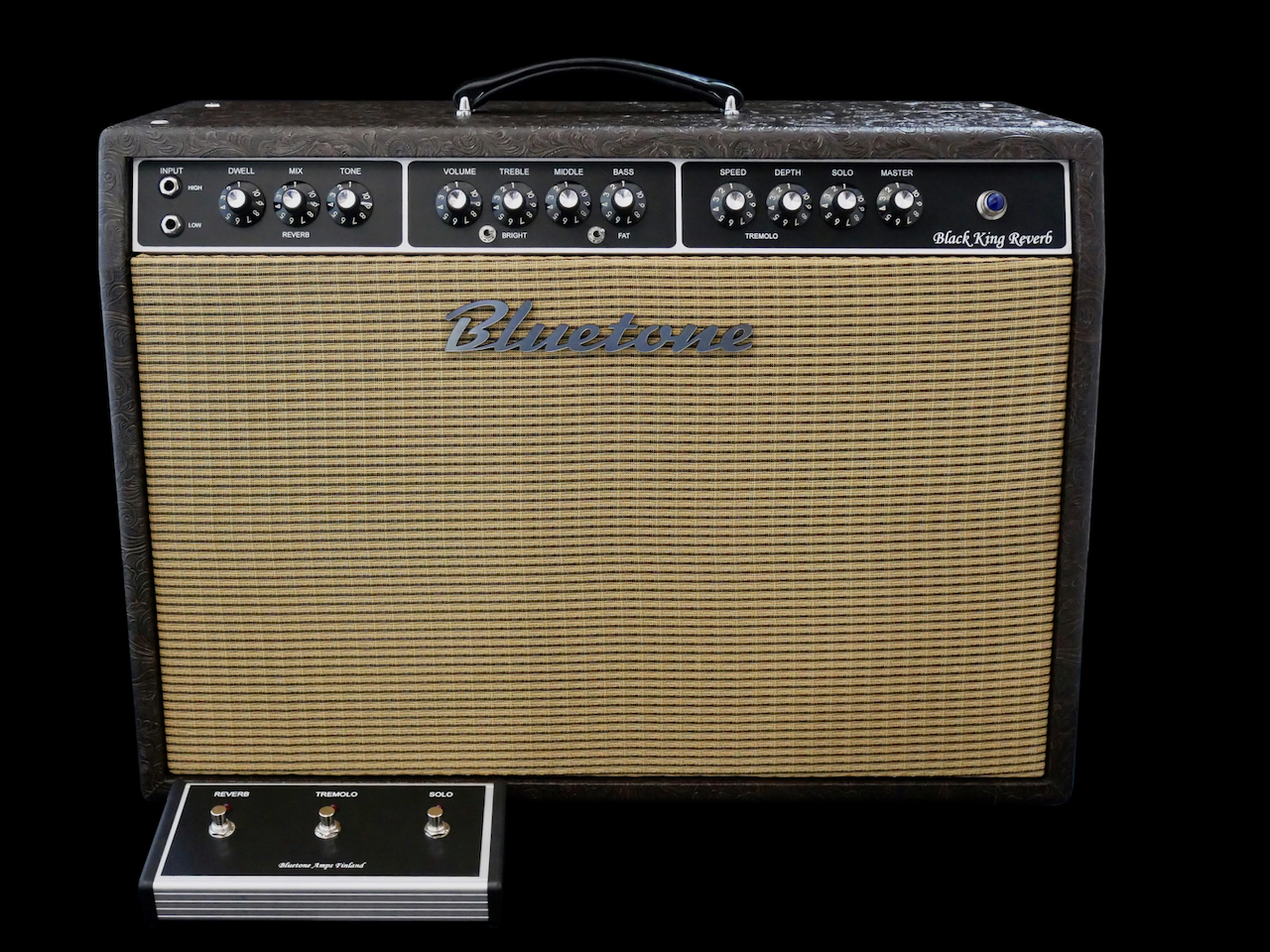
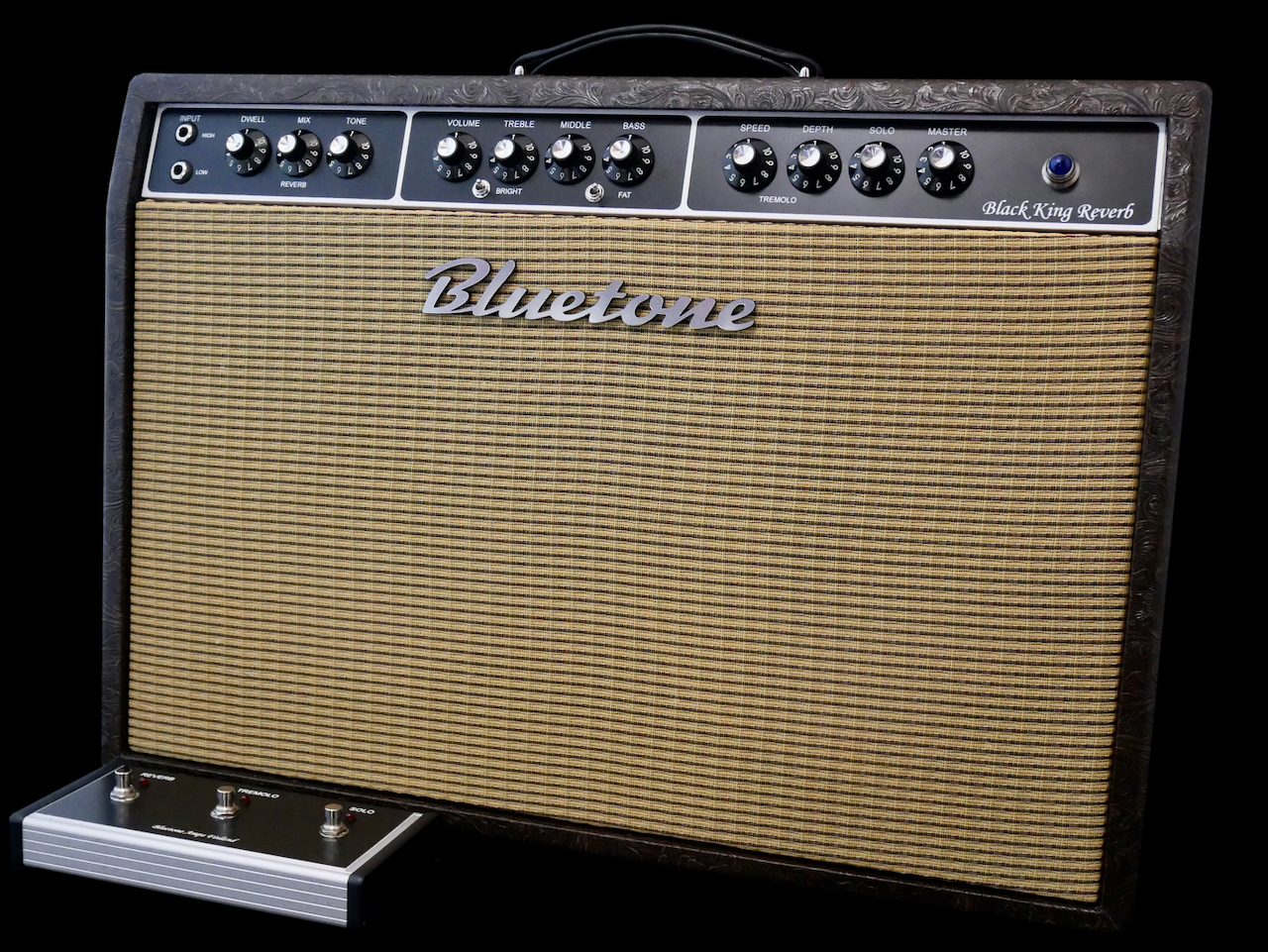
The Bluetone Black King Reverb (current price: 1,900 €) is twin-speaker all-tube combo, loaded with a pair of 10-inch speakers, but it still weighs in at less than 14 kilos. Most of the musician-friendly weight reduction is down to Bluetone using solid paulownia wood for its cabinets. Paulownia is an ecologically viable species that offers a superior strength-to-weight ratio for amplifier and speaker cabinets.

As mentioned before, the Black King lifts its extremely flexible power amp section from Bluetone’s Black Prince combo. The power amp runs off a pair of valves – virtually all available octal power tubes can be dropped in without the need for rebiasing. A pair of 6L6GCs or EL34s will give you approximately 28 to 30 watts of output power, while a pair of 6V6GTs will drop the output down to about 14 watts. Refer to the manual for details.

The Black King’s preamp is built around three 12AX7, but will also take other valves from the 12A_7-range, if you want to experiment with different gain structures (again, refer to the manual).

The toroidal power transformer (the black doughnut in the far left) is another long-standing hallmark of Bluetone amplifiers, which cuts down on the amp’s weight, as well as reducing hum interference noticeably.

The Black King Reverb normally leaves Bluetone’s workshop with a pair of 10-inch Warehouse Guitar Speakers Veterans, but – Bluetone being a custom builder – you can also request different speakers, should you so desire.

The long reverb tank is installed to the bottom of the combo’s cabinet.

Despite making all-valve amplifiers, Harry and Lauri are all about hard technical facts, leaving all the snake oil and tube voodoo for others. In the Black King’s case this means – among other things – that the reverb’s signal path is using their unique op-amp-powered circuit, for a cleaner, more dynamic and hiss-free tone.

For a single-channel combo Bluetone’s Black King Reverb offers plenty of scope for adjustment:

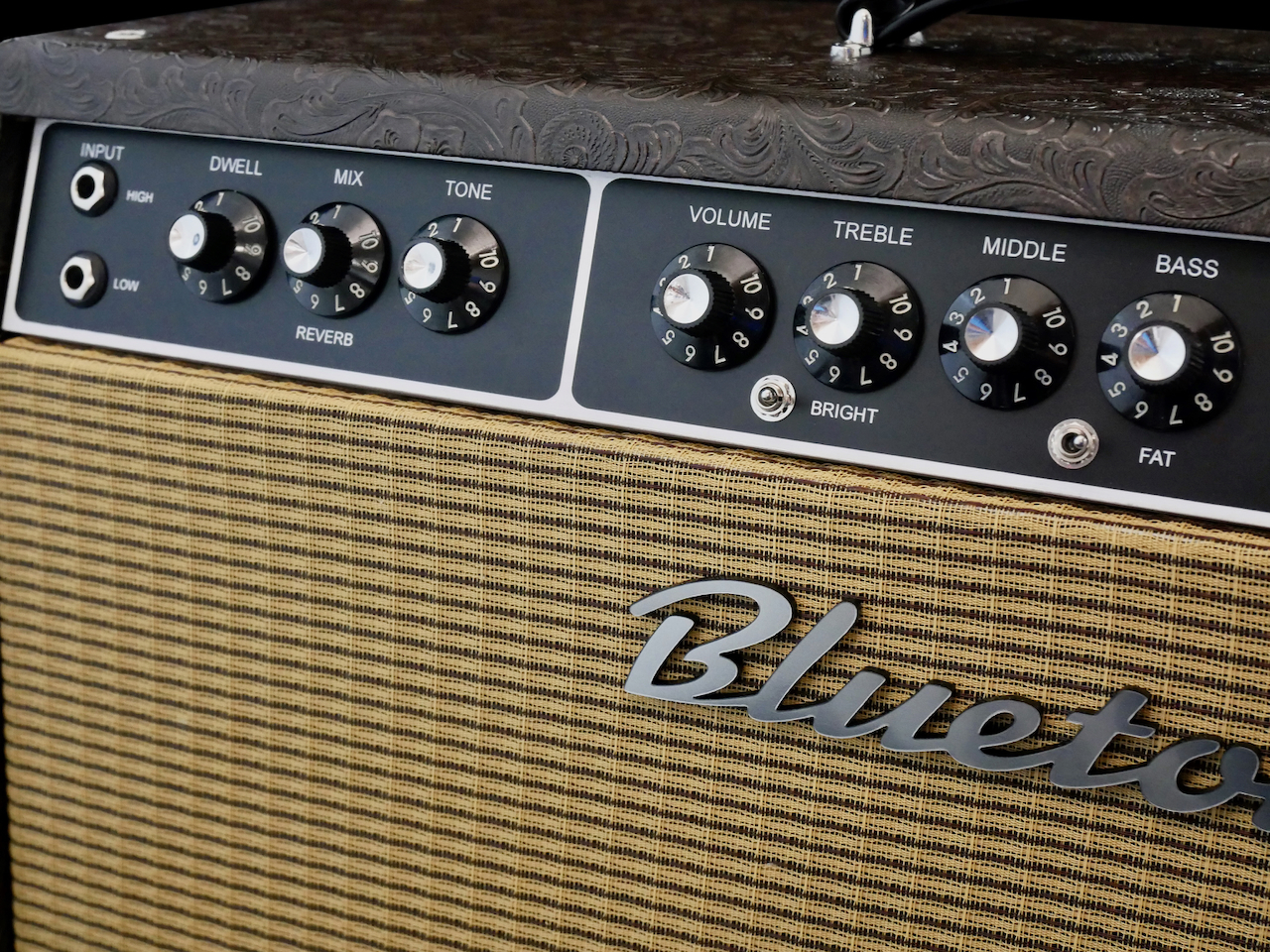
The preamp section sports controls for volume and 3-band EQ with an additional two mini-switches for Bright- and Fat-boosts. Everything does what it says on the tin, offering a wide variety of fantastic guitar tones that keep the core character of each guitar intact.

The Black King is a reverb connoisseur’s nirvana, not only offering a top-quality full-length spring tank, but also a full set of three controls for maximum tonal range. Dwell adjusts how hard you drive the spring reverb’s input – higher Dwell-settings will result in longer reverb times, as well as more saturation. Tone controls the tone of the reverb’s output, from dark to bright, while Mix lets you choose how much of the Black King’s super lush reverb will be used to bolster your guitar signal.

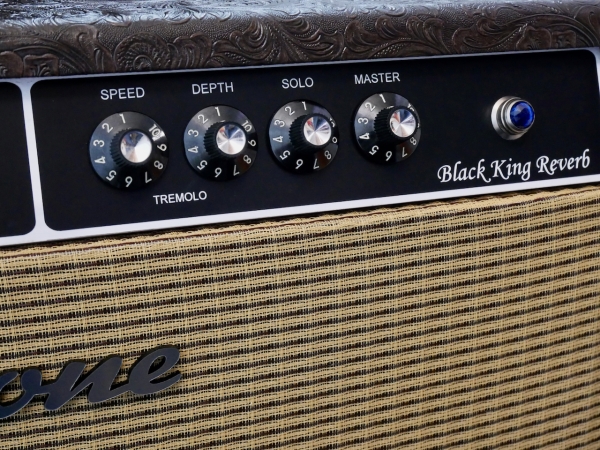
The output section offers you controls for the Band King’s scrumptious bias-modulated tremolo, the level of the solo-boost, and the master volume control. As the master volume is placed after the phase inverter stage, setting the master control to full will remove it completely from the power amp’s circuit.

All three amp effects – tremolo, soolo-boost, and reverb – are switched on or off with the supplied three-switch foot-switching unit.

There’s a lot going on on the Bluetone Black King Reverb’s back panel:

There’s an unbalanced line level output with its dedicated signal level control, so you can plug the combo straight into a speaker modeller. If you need to go completely silent, for example in the studio, the Black King includes a built-in switchable dummy load.

Next to the three speaker outputs we can find a mini-switch labelled ”NFB On/Off”. This allows you to choose whether or not you want to run so-called negative feedback in the combo’s power amp section.

A negative feedback loop will normally ”clean up” the power amp’s sonic footprint, giving you less power amp distortion and more clarity and articulation, while turning it off will give you a gnarlier and more distorted character. A wide generalisation would be that negative feedback takes the amp closer to Blackface territory, while no negative feedback gives it more of a Tweed- or Vox-style accent. Of course, your choice of power amp valves also has an important bearing on the overall character of the Black King.

The Bluetone Black King Reverb ticks all the right boxes in my book.

The Black King offers some of the best clean sounds you are likely to experience, regardless of the type of guitar or pickup you throw at it. The genuine spring reverb is simply fantastic, and may even prove to be a dealbreaker in comparison to many other combos. The tremolo effect is luscious, with plenty of scope for adjustment of both speed and depth.

The overdriven/distorted tones you can glean from the Bluetone Black King Reverb are pleasantly gritty, but if you don’t like them, no problem – the Black King also loves pedal effects.

In my view, the Black King Reverb’s clean tones are this combo’s biggest forte. There’s plenty of headroom on offer, and the character is definitely in the Blackface-vein. There’s plenty of dynamic range on offer and the amp’s basic voice is big and open, seasoned with a crystal-clear top end. The three-band EQ offers more than enough scope for tone-shaping, and the Bright- and Fat-boosts work like a dream. What’s not to like?

For less than two grand you can get yourself a hand-made boutique valve combo that’s very versatile and great sounding. This is hands down one of the best amps you will find in its class, and it’s offered at a very fair price.

Here’s a demo song featuring the brand-new Bluetone Black King Reverb combo. The track is a short cover of the Who’s classic medley ”See Me, Feel Me/Listening To You”.
All guitar tracks recorded with the Bluetone Black King Reverb, without any additional pedals. The amp was miked with a Shure SM7B running into a Cranborne Audio Camden EC2.
****
”See Me, Feel Me” – Guitars
• rhythm guitar (stereo left): Fender Japan 50s Stratocaster Reissue
• rhythm guitar (stereo right): Epiphone G-400 (SG Standard)
• lead guitar: Fender Japan 50s Stratocaster Reissue
”Listening To You” – Guitars
• rhythm guitar (stereo left): Fender Japan 50s Stratocaster Reissue
• rhythm guitar (stereo right): Epiphone G-400 (SG Standard)
• lead and harmony guitars: Gibson Melody Maker SG
****
• bass guitar: Rickenbacker 4003 plugged straight into the Cranborne preamp

Bluetone Black King Reverb ++ Testi tulossa ++ Working on a review

Here’s a demo song featuring the brand-new Bluetone Black King Reverb combo. The track is a short cover of the Who’s classic medley ”See Me, Feel Me/Listening To You”.
All guitar tracks recorded with the Bluetone Black King Reverb, without any additional pedals. The amp was miked with a Shure SM7B running into a Cranborne Audio Camden EC2.
****
”See Me, Feel Me” – Guitars
• rhythm guitar (stereo left): Fender Japan 50s Stratocaster Reissue
• rhythm guitar (stereo right): Epiphone G-400 (SG Standard)
• lead guitar: Fender Japan 50s Stratocaster Reissue
”Listening To You” – Guitars
• rhythm guitar (stereo left): Fender Japan 50s Stratocaster Reissue
• rhythm guitar (stereo right): Epiphone G-400 (SG Standard)
• lead and harmony guitars: Gibson Melody Maker SG
****
• bass guitar: Rickenbacker 4003 plugged straight into the Cranborne preamp

Tulossa Rockway-blogiin: Voiko saksalaisfirmojen omissa brändeissä edes puhua laadusta?

• Demobiisi äänitetty tehdaskielillä ja tehdassäädöillä.
• Efektejä: Joyo Analog Chorus, Mad Professor Simble OD, EHX Nano Big Muff Pi, Jim Dunlop CryBaby Mini
• Vahvistin: Bluetone Black Prince Reverb
• Äänityskalusto: Shure SM57 ja Universal Audio Volt 2

****

• Demobiisi äänitetty tehdaskielillä ja tehdassäädöillä.
• Vahvistimet: Bluetone Shadows Jr & Juketone True Blood
• Efektipedaaleja ei käytetty
• Äänityskalusto: Shure SM57 ja Universal Audio Volt 2

Using the Volume Control to Adjust Distortion

Before the advent of channel-switching guitar amps using your guitar’s volume control(s) was the main way to adjust your gain level.

This works especially well with amps that have relatively low clean headroom and break up into distortion easily.

In this video I use an approximation of the Who’s live arrangement of ”Pinball Wizard” to demonstrate this way of adjusting your distortion levels.

Guitar: Arvo Guitar with 2 P-90s

Amp: Bluetone Shadows Jr combo (Vox AC15 style amp)

No effect pedals used!

Pidä blogia WordPress.comissa.

Ylös ↑