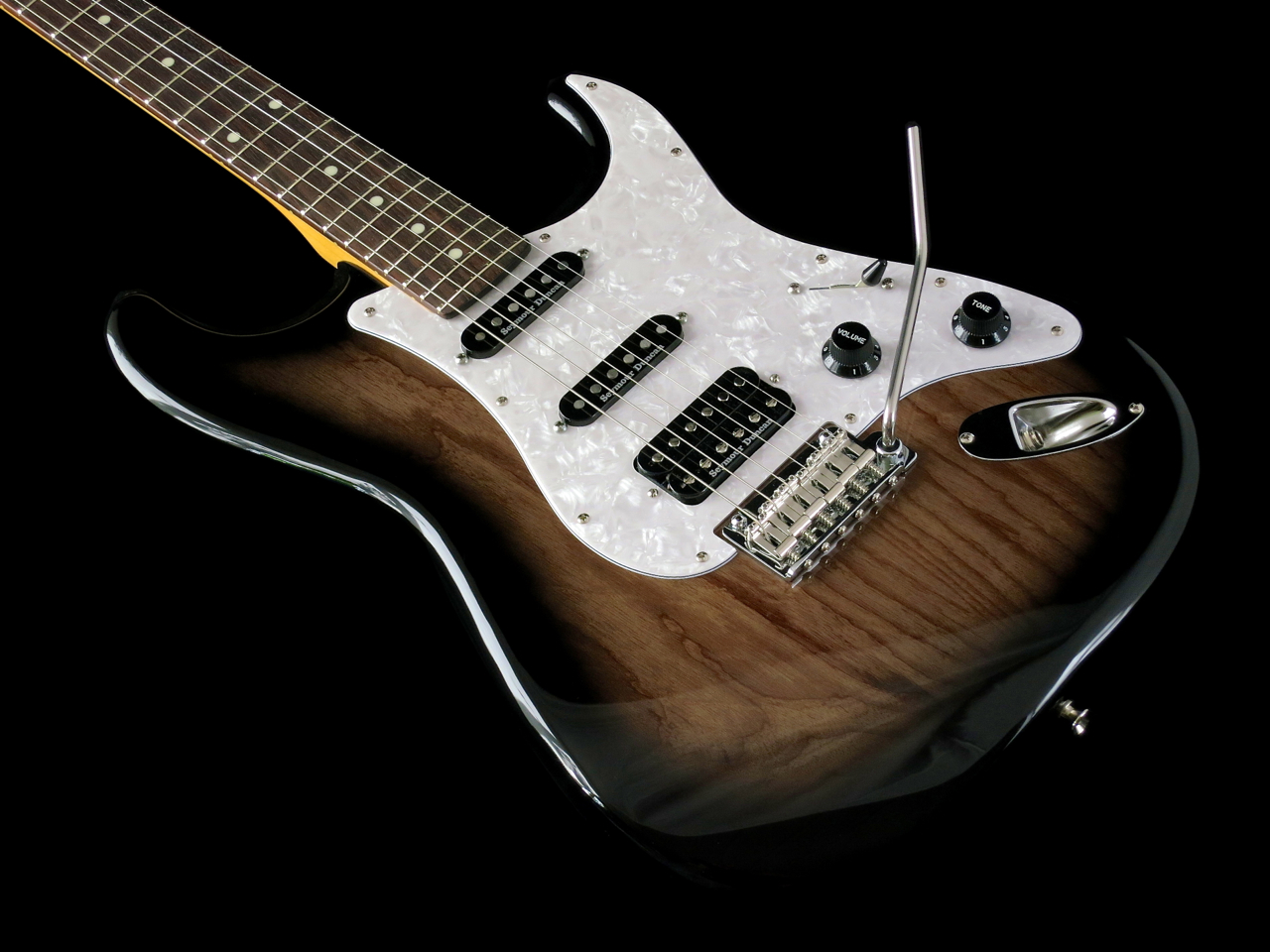
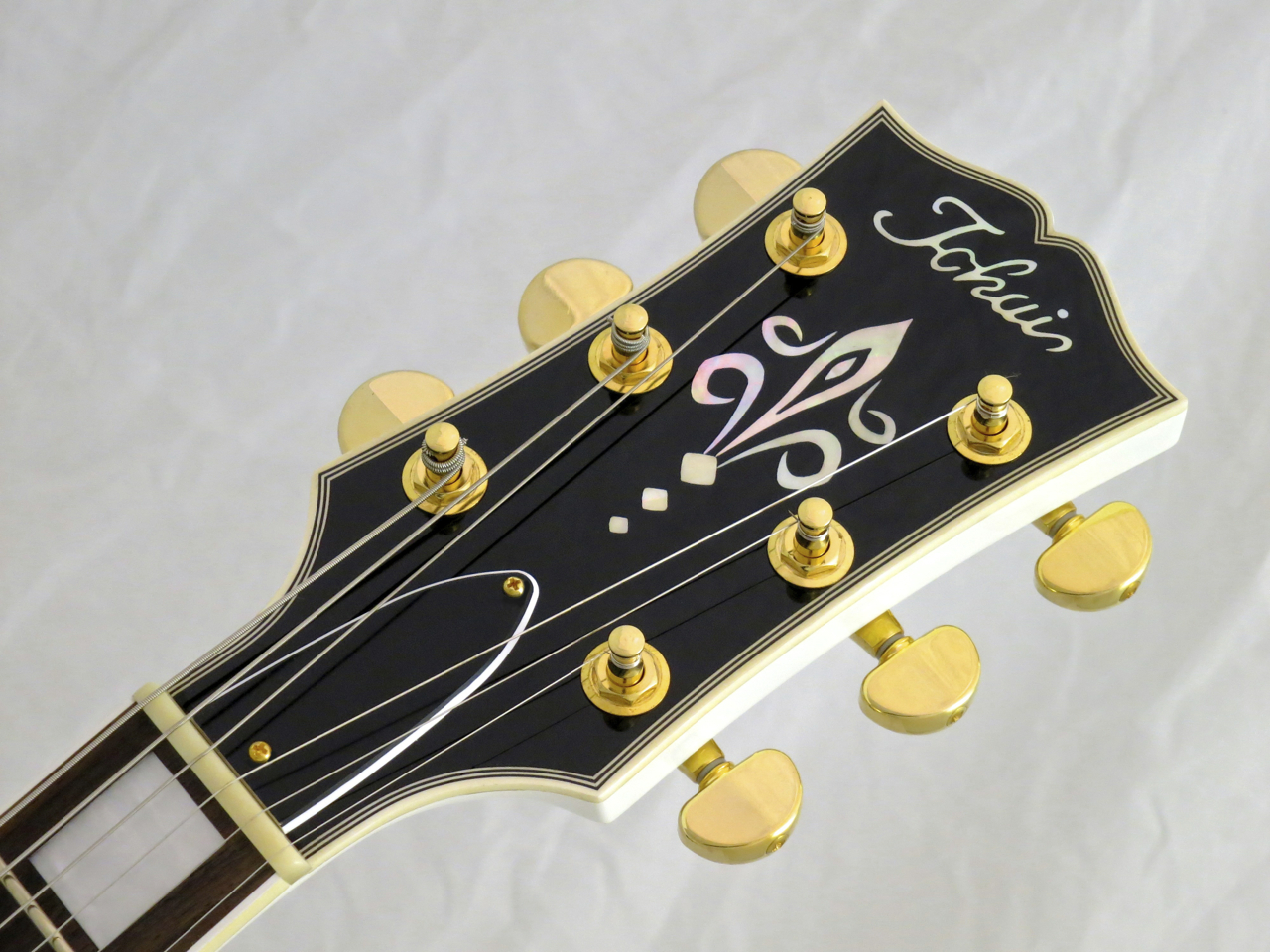
Uusi Tokai TST-50-FS on tällä hetkellä saatavilla kolmella eri mikrofonivarustuksilla:
• Three-Tone Sunburst -versiossa on kaksi yksikelaista SSL-1-mikrofonia, sekä Seymour Duncan ’59 -humbucker.
• Sienna Sunburst -mallissa on kaksi SD Classic Stack Plus -mikrofonia (hurinattomia, stacked-coil mikrofonia), sekä JB-humbucker metallikuorella.
• Ebony Transparent -kitarassa taas on kaksi Duncanin Vintage Hot Stack -mikrofonia (hurinattomia) ja tallamikrofonina toimii saman firman Custom 5 -humbucker.
Kitarablogin testi on tulossa lähiaikoina!
****
The new Tokai TST-50-FS is currently available with three different pickup configurations:
• The Three-Tone Sunburst version has a pair of SSL-1 single-coils and a Seymour Duncan ’59 humbucker.
• The Sienna Sunburst model comes with two noiseless SD Classic Stack Plus pickups, as well as a covered JB model.
• The Ebony Transparent guitar sports two noiseless Duncan Vintage Hot Stacks and a Custom 5 in the bridge position.
Watch this space for a full review in the very near future!
Kitarablogi’s year starts off with some really tasty guitars – three Japanese Tokai Love Rock models. Handcrafted Love Rocks just like these originally laid the foundation for Tokai’s legendary reputation as a maker of high-quality copies of vintage guitars.
****
Tokai’s LC-107 (current price in Finland: 1.219 €) is the company’s gorgeous version of a Les Paul Custom.
The gold-coloured hardware fits our review sample’s tasty see-through wine red finish to a tee.
In terms of built, the Tokai LC-107 follows closely the original 1950s recipe of an LP Custom – unlike many recent original Gibsons:
The mahogany body is genuinely solid, meaning there are no hidden holes or pockets serving as weight relief. Tokai keeps the weight of their Love Rocks down by carefully selecting lightweight mahogany.
The LC-107’s curved top, too, has been carved from mahogany (!), just like Gibson did it in the Fifties.
There is one change, though, that Tokai made for environmental reasons:
The bound fingerboard is made from rosewood, not ebony.
The multiply binding on both top and back add a nice dose of panache to the looks of the Tokai LC-107.
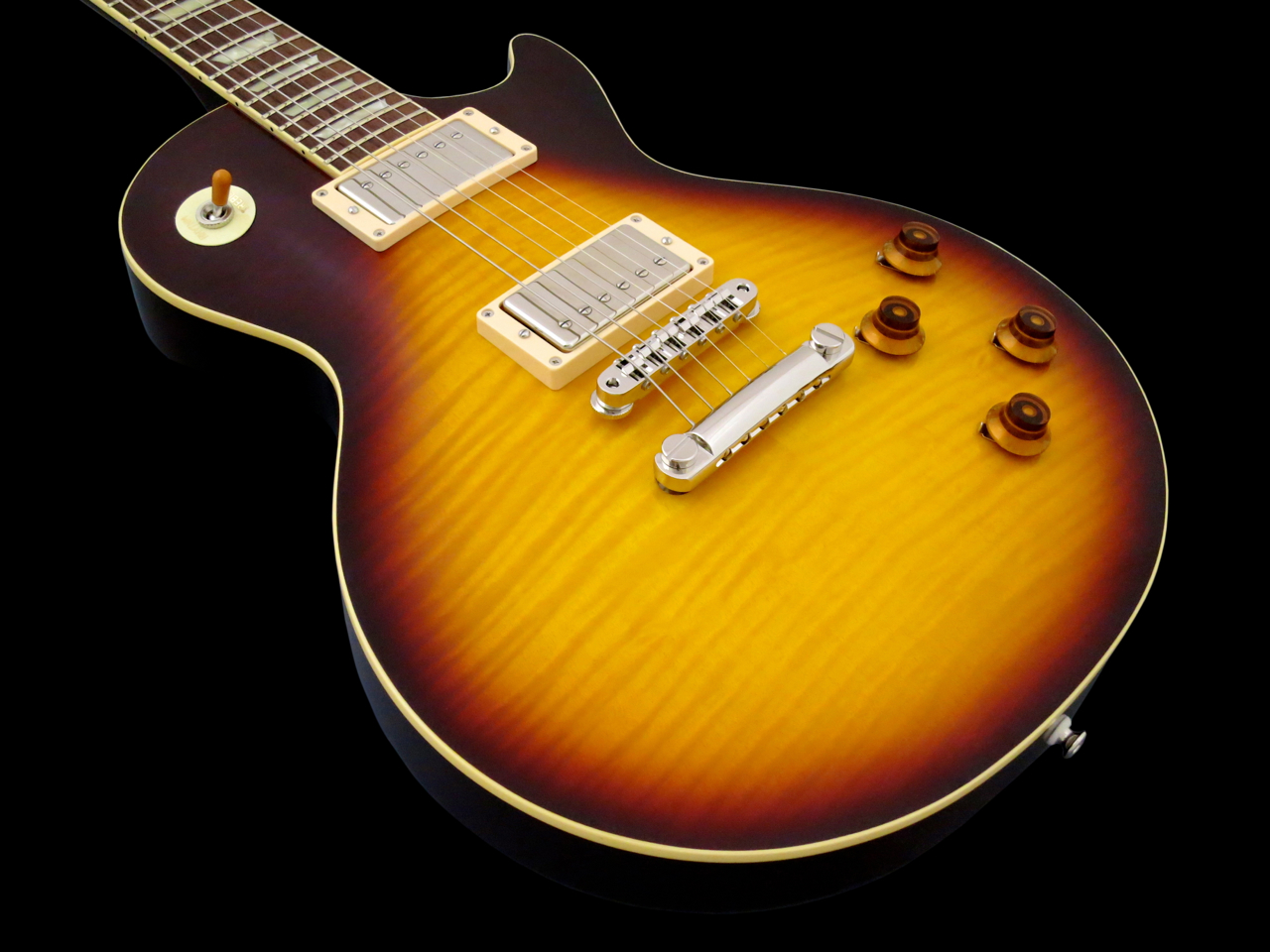
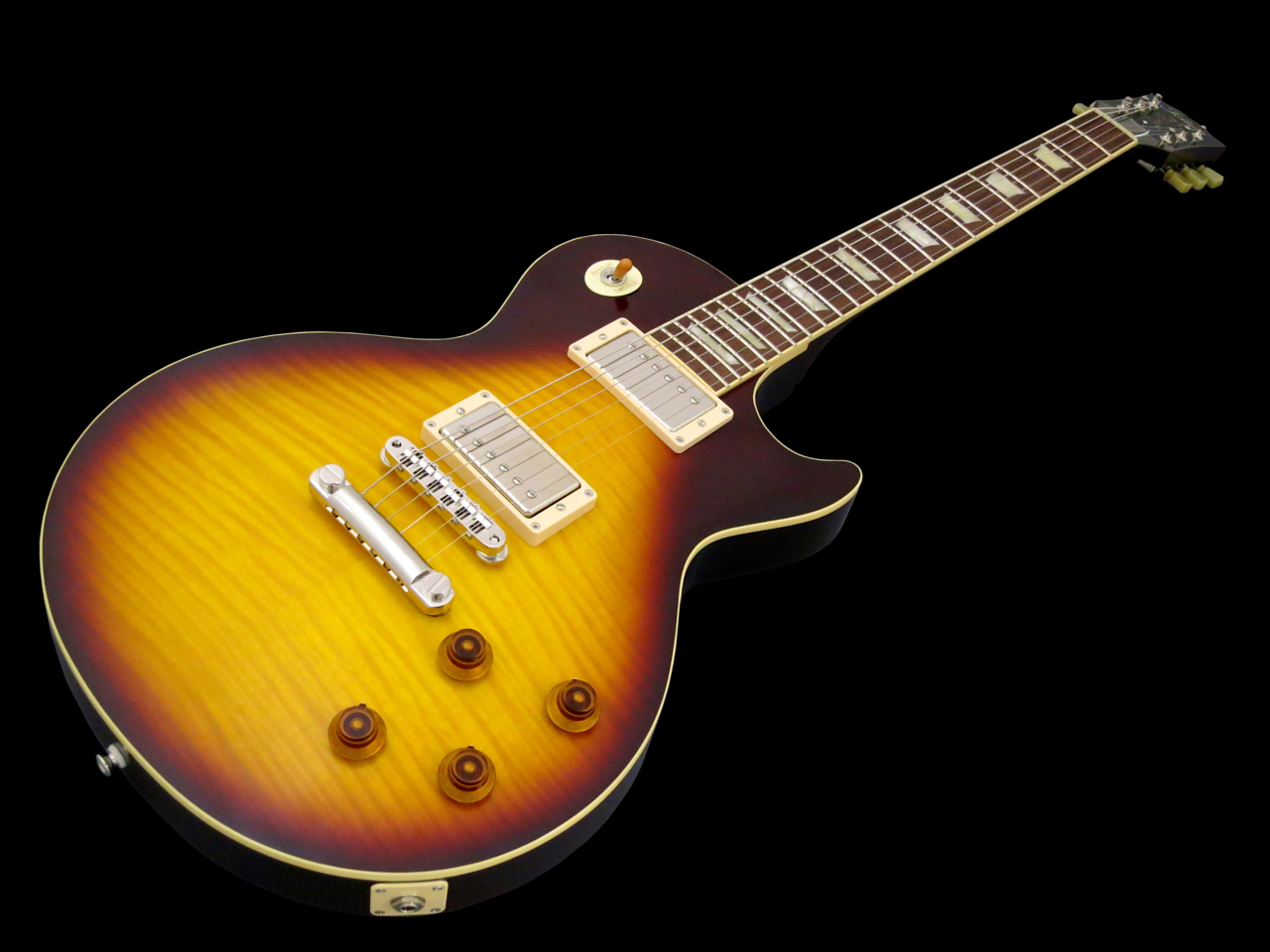
The Tokai LS-130F (1.514) is an LP Standard-type instrument with a thin satin finish.
The letter F in its name hints at the beautiful solid flame maple top of the LS-130F.
Our review instrument comes in a beautiful tobacco sunburst, whose edges may look brown at first glance, but actually turn out to be a dark, see-through violet, allowing you to see the chatoyant wood grain beneath it.
The LS-130F’s neck and the back of the body have been finished in cherry red.
Due to the runaway popularity of tiger striped maple on Les Pauls, many younger guitarists might think that all Standards made between 1958 and ’60 have flame maple tops. Actually, there are many original ’Bursts that were produced with what is nowadays called a plain top.
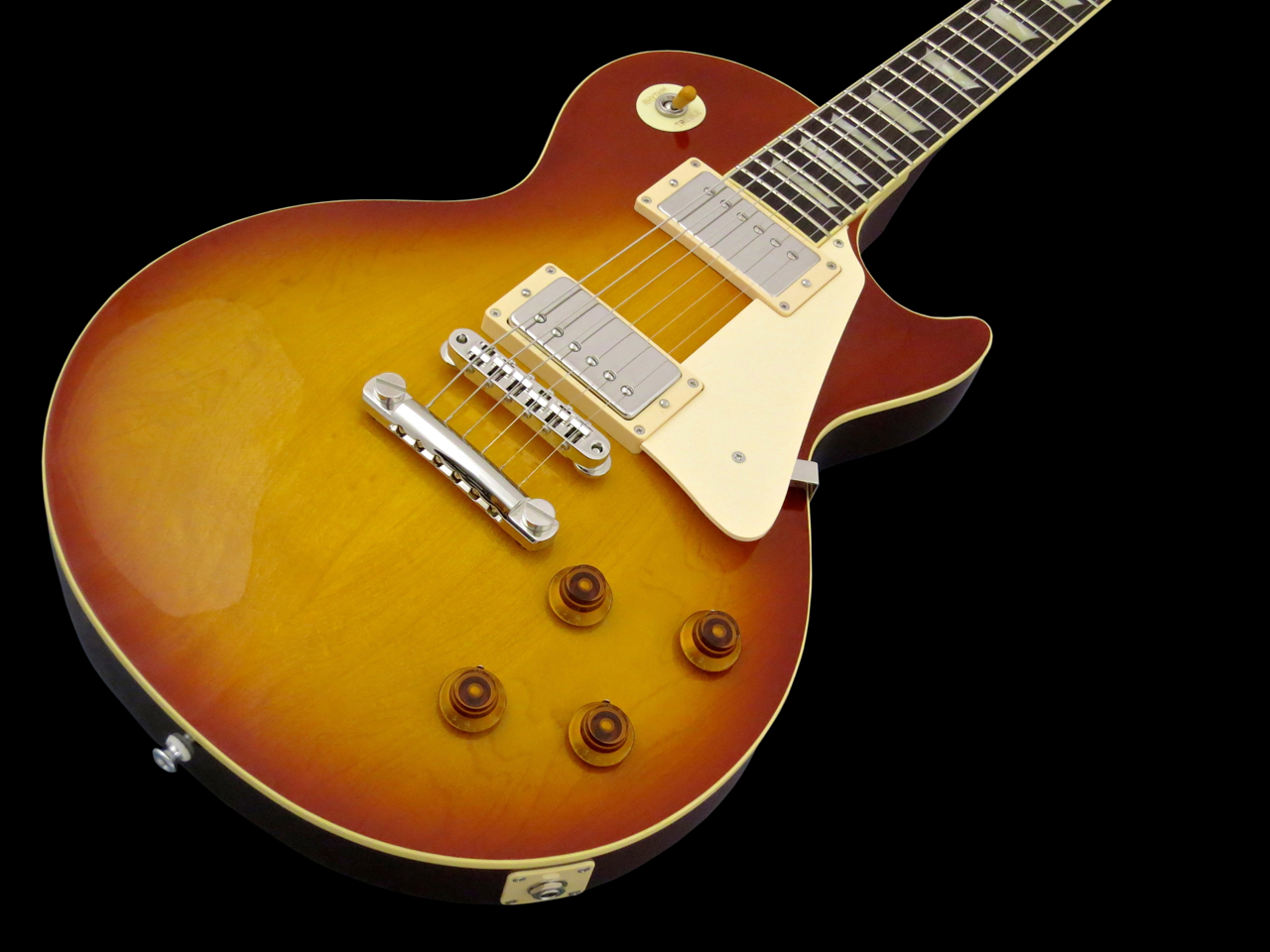
Tokai’s LS-160 (1.773 €) is a stunning, top-of-the-line version of such a plain top LP.
Adding to the LS-160’s vintage-style prestige is this instrument’s nitrocellulose finish, taking this model’s specifications right back to 1958.
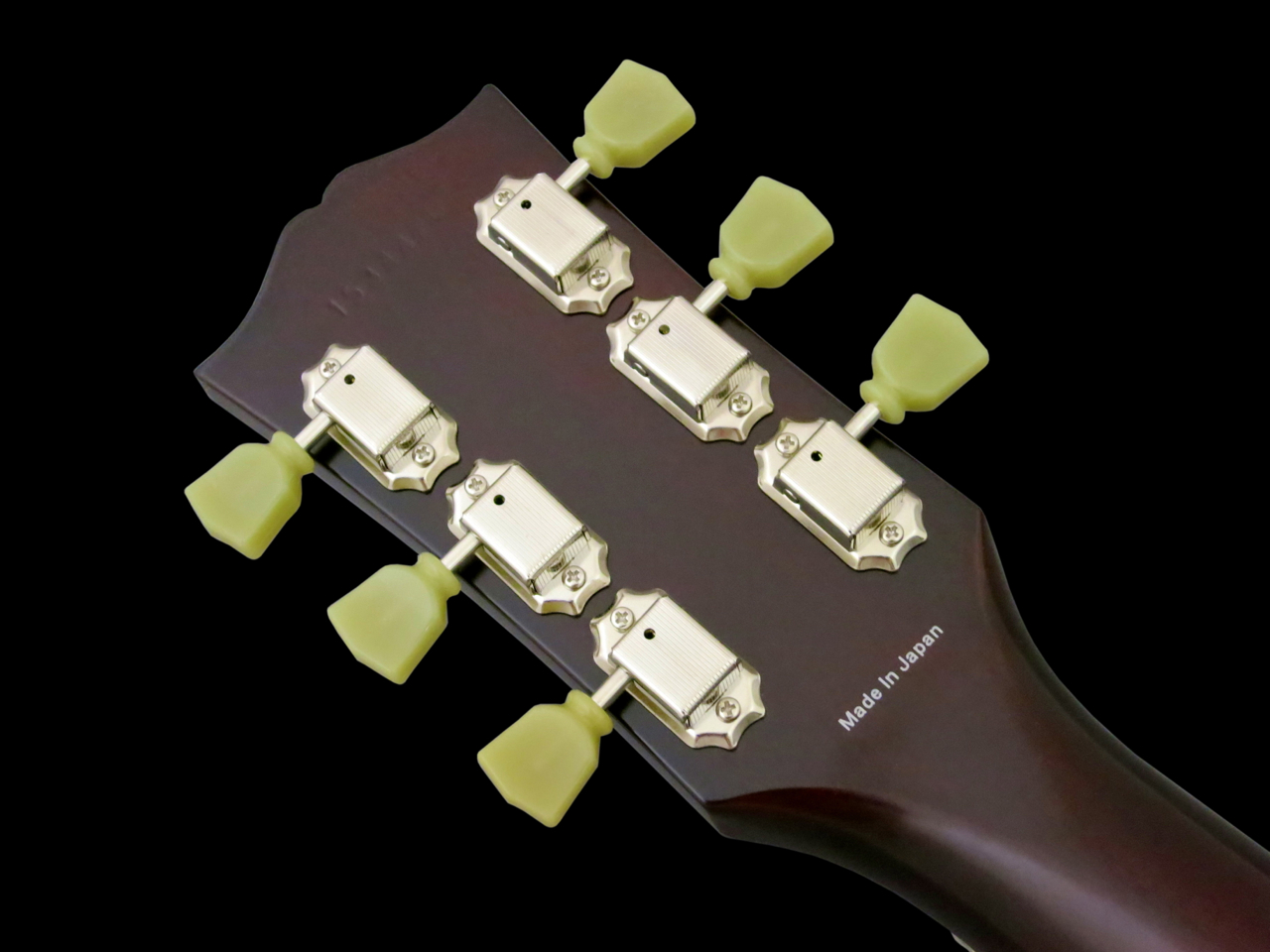
The headstock on the Tokai LC-107 sports plenty of inlay works, as well as multiple binding.
The tuners are modern sealed Gotoh heads.
The headstocks on both the LS-130F and the LS-160 follows the more restrained LP Standard pattern.
These two models come equipped with Gotoh’s quality versions of vintage Kluson tuners.
The Tokai LC’s sports oblong position markers made from pearloid plastic…
…while both LS’ come with crown inlays.
The fretwork on all three instruments is exemplary.
All three guitars have long tenon neck joints, with a part of the neck extending into the neck pickup cavity.
Many players claim that this type of neck joint makes for better tone and sustain.
The tune-o-matic bridges and stopbars on all three models come from Gotoh’s Japanese hardware range.
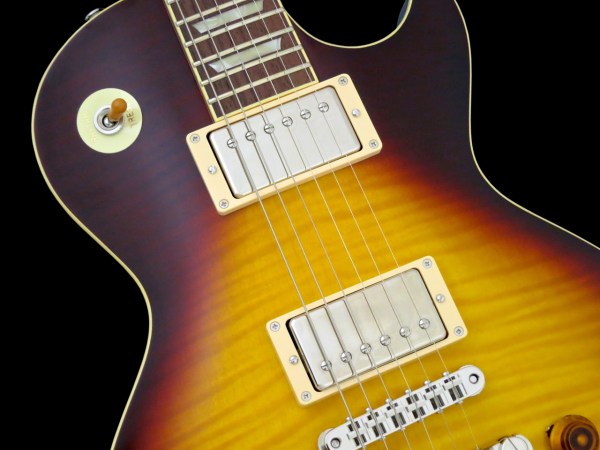
The LC-107 comes with a pair of Tokai’s fabled PAF Vintage Mark II humbuckers.
The LS-130F and LS-160 have been equipped with a pair of Seymour Duncan ’59 Model pickups.
The control cavities look clean and neat, displaying Japanese craftsmanship and parts, as well as thorough shielding with conductive paint.
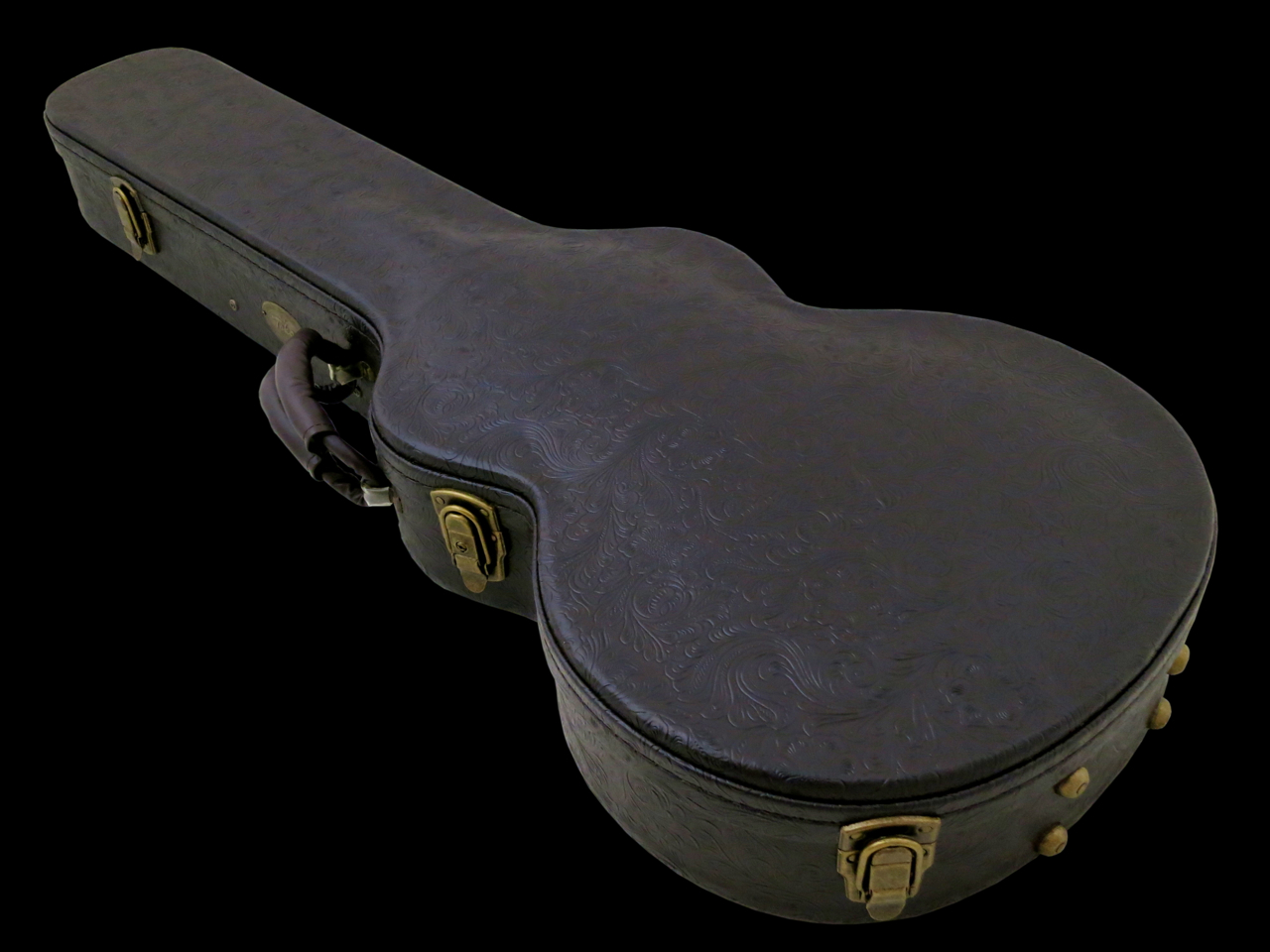
Our review trio is sold with a nice Tokai hard case included in the price.
In order to protect the LS-160’s delicate nitro finish, this model is placed inside the case in its own velours bag.
****
In terms of their playability, all three guitars – the LC-107, the LS-130F and the LS-160 – are all on an equally high level. In terms of their feel, though, close inspection reveals a few minute differences.
The neck profile on the Tokai LC-107 is a medium-depth, well-rounded D-shape. LP fans would probably describe this neck as a ’59 Neck – meaning there’s enough meat on the bones for tone, but the overall dimensions are not unwieldy.
Tokai’s LS-130F comes endowed with a 58 Neck, meaning the full chunky Monty. The fantastic matte finish makes this neck feel very ”fast”, despite its considerable girth.
The LS-160’s neck profile is the slimmest neck of this trio. It’s what you call a 60 Neck – not as deep as a 59 Neck, and with an oval C-profile.
Despite the fact that all review instruments came strung with the same set of 010-strings, and notwithstanding identical setups (string height at the 12th fret: low E: 1.9 mm/treble e: 1.6 mm), Tokai’s LS-160 felt a little bit bendier than the LC-107 and LS-130F.
****
Played acoustically, the Tokai LC-107 had a sweet voice with nice woody mids and a little helping of shimmering highs, which is most likely down to the all-mahogany body.
Tokai’s own PAF Vintage Mark II pickups are great remakes of Gibson’s fabled late-Fifties humbuckers. Their output levels are relatively low, keeping the tone dynamic and fresh:
Tokai’s LS-130F turned out to be a little shouter, when strummed unplugged. This guitar gives you that famous freight-train-jumped-off-the-tracks-at-full speed experience that so many LP players love.
Seymour Duncan’s ’59 Model humbuckers make the LS-130F sound a little bit bigger and broader, when compared directly to the LC-107:
Unplugged the Tokai LS-160 sits right between its cousins. It isn’t as vociferous as the LS-130F, but there’s a bit more presence than what you’d find in the LC-107.
What is surprising, though, is that the LS-160 has the most ”vintage-accurate” tone of this trio, when plugged into an amplifier, even though the pickups are exactly the same as in the LS-130F. The neck pickup is dipped deep in tasty cream, while the bridge pickup is more dynamic and a bit brighter than many would expect from an LP Standard. The end result is a very versatile clean tone:
The demo track keeps the same guitars on clean rhythm duty throughout (left channel: LC-107; right channel: LS-160). The riffs and lead parts, on the other hand, change – first up is the LC-107, then the LS-130F, and the last to go is the LS-160:
****
Tokai’s LC-107, LS-130F and LS-160 offer you top quality for a very fair price. All three models are professional grade instruments that play like a dream and sound fantastic.
The LC-107’s woody tone makes it a good choice for Jazz- and Fusion-guitarists, but will work equally well in other genres, too.
Tokai’s LS-130F would be my choice for an all-rocking, all-riffing Love Rock. Put on your top hat and travel to Paradise City.
The LS-160 takes you all the way back to the vintage Les Pauls that have served as Tokai’s inspiration. This authentically minded vintage-style guitar is full of dynamic Bluesbreaker-mojo.
Kitarablogissa uusi vuosi alkoi testien suhteen kolmella herkkupalalla, kun testiin saapuivat kolme Tokai Love Rock -kitaraa malliston kalliimmasta päästä. Tokain legendaarinen maine perustui alun perin juuri tällaisiin, Japanissa käsityöllä valmistettuihin, Les Paul -tyylisiin kitaroihin.
****
Tokai LC-107 (1.219 €) on valmistajan upea versio Les Paul Custom -mallista.
Tokai LC-107:n rakenne on – useista nyky-Gibsoneista poiketen – hyvin uskollinen alkuperäiseen LP Custom -reseptiin:
Rungon takaosa on veistetty mahongista, ilman että siihen olisi jyrsitty painoa vähentäviä aukkoja. Tokaissa soittimen painoa pidetään maltillisena valitsemalla vain kevyitä mahonkilankkuja kitarantekoon.
Myös LC-107:n kaareva kansi on tehty kokopuisesta mahongista (!), niin kuin 1950-luvun Customeissa oli tapana.
Vain otelaudan suhteen Tokai on muuttanut alkuperäistä reseptiä:
Ekologisista syistä LC:n otelaudassa käytetään ruusupuuta alkuperäisen eebenpuun sijaan.
Rungon monikerroksinen reunalistoitus lisää LC-107-kitaran tyylikyyttä vielä entisestään.
Tokai LS-130F (1.514) on LP Standard -tyylinen malli satiinipintaisella viimeistelyllä.
Mallitunnuksen F-kirjain viittaa LS-130F:n kokopuiseen loimuvaahterakanteen (englanniksi: flame maple).
Testisoittimen liukuväritys on nimeltään Tobacco Sunburst. Viimeistelyn peittävän ruskealta vaikuttavat reunat ovat todellisuudessa tummaa violettia, jonka läpi pystyy näkemään kannen ”liekit”.
LS-130F:n kaula ja rungon takapuoli ovat kirsikanpunaisia.
Vaikka monet kitaristit nykyään luulevat, että kaikissa vuosien 1958-60 LP Standardissa oli loimuvaahterakansi, todellisuudessa huomattava osa tehtiin niin kutsutuilla plain top-kannella.
Tokai LS-160 (1.773 €) on erittäin kaunis versio juuri tällaisesta plain top -kitarasta.
LS-160-malli tarjoaa kaikkien muiden laadukkaiden yksityiskohtien lisäksi vielä aidon nitrolakkauksen 50-luvun hengessä.
Tokai LC-107:n viritinlavassa on runsaasti upotuksia, sekä monikerroksinen reunalistoitus.
Virittimet ovat nykyaikaisia, suljettuja Gotoh-malleja.
LS-130F- ja LS-160-kitaroissa lavan koristelu on hieman hillitympi.
Näissä malleissa on laadukkaita kopioita 1950-luvun Kluson-virittimistä.
Tokai LC:n neliskanttiset otemerkit ovat helmiäismuovista…
…kun taas LS-malleissa on käytössä crown-muotoiset upotukset.
Nauhatyö oli kaikissa kolmessa soittimissa esimerkillinen.
Kolmikossa on myös ns. long tenon -kaulaliitos, jossa kaulan mahonkinen osa jatkuu yhtenäisenä vielä kaulamikrofonin alle.
Monien mielestä tällainen lujempi liitos parantaa kitaran sointia ja sustainea.
Kitarakolmikon tallat ja kieltenpitimet tulevat Gotoh:n laadukkaasta, japanilaisesta mallistosta.
Tokai luottaa omiin PAF Vintage Mark II -humbuckereihin LC-107-mallissaan.
LS-130F- ja LS-160-kitaroihin taas on asennettu Seymour Duncanin laadukkaita PAF-tyylisiä ’59 Model -mikrofoneja.
Takakoloissa on näkyvissä erittäin siistiä työtä, laadukkaita japanilaisia komponentteja, sekä huolellista häiriösuojausta grafiittipitoisella maalilla, sekä alumiinifoliolla vuoratulla muovikannella.
Testikolmikko myydään laadukkaassa Tokai-kotelossa.
LS-160:n nitrolakkauksen lisäsuojaukseksi löytyy tämän kitaran kotelossa vielä erillinen plyysipussi.
****
Soitettavuudeltaan LC-107, LS-130F ja LS-160 ovat hyvin lähellä toisiaan, mutta vertailemalla löytyy kuitenkin todella pieniä eroja kolmikon välillä.
Tokai LC-107:n kaulaprofiiliksi on valittu keskipaksu, tasaisen pyöreä D-muoto. LP-fanit puhuisivat tässä ’59-kaulasta – kaulassa on siis mukavasti ”lihaa luiden päällä”, mutta sen paksuus on vielä maltillinen.
Tokai LS-130F taas tarjoaa kolmikon tuhdimman kaulaprofiilin. Tämän mallin mattaviimeistely tuntuu erittäin mukavalta.
LS-160:n kaulaprofiili menee vuoden 1960 suuntaan, mikä tarkoittaa paksuuden kannalta hieman maltillisemmat mitat.
Vaikka kaikissa kolmessa kitarassa oli 010-satsin kielet ja identtinen kieltenkorkeus 12. nauhalla (basso E: 1,9 mm/diskantti e: 1,6 mm), oli LS-160:n soitettavuus vielä aavistuksen verran kevyempi kuin LC-107- ja LS-130F-malleissa.
****
Akustisesti soitettuna Tokai LC-107:n äänessä oli mukava ripaus kuivuutta ja kauniisti kimmeltävä diskantti, mikä johtuu varmasti täysin mahongista tehdystä rungosta.
Tokain omat PAF Vintage Mark II -mikrofonit ovat laadukkaita uusintapainoksia 50-luvun humbuckereista. Niiden signaaliteho on maltillinen, minkä ansiosta soundi on dynaaminen ja avoin:
Tokai LS-130F on akustisesti soitettuna selvästi kolmikon kovaäänisin. Akustisesti tässä kitarassa on juuri se kiskoista-suistunut-tavarajuna-joka-lähestyy-kovaa-vauhtia-fiilis, josta niin monet LP-tyylisten kitaroiden soittajat tykkäävät.
Seymour Duncan ’59 Model -mikkien välityksellä LS-130F:n soundissa on hieman enemmän voimaa ja leveyttä kuin LC-107:ssä:
Akustisesti kokeiltuna Tokai LS-160:n ääni on jossain LC-107:n ja LS-130F:n välissä. Se ei ole ihan yhtä äänekäs kuin LS-130F, mutta soundissa löytyy hieman kirkkaampaa preesensiä kuin LC-107-mallissa.
Yllättävää oli kuitenkin, että testikitaroista LS-160 soi vahvistimen kautta selvästi eniten vintage-maisesti, vaikka kitarassa on samat mikrofonit kuin LS-130F:ssä. Kaulamikrofoni soi todella kermaisesti, kun taas tallahumbucker soi kirkkaammin kuin ehkä odottaisi LP-tyylisestä kitarasta. Lopputulos on tämän kolmikon monipuolisin puhdas soundi:
Demobiisissä puhtaat komppikitarat pysyvät muuttumattomina koko biisin ajan (vasemmalta: LC-107; oikealta: LS-160). Riffit ja soolo-osuudet taas on soitettu niin, että ensimmäisessä läpimenossa soi vain LC-107, toisessa vain LS-130F ja kolmannessa taas vain LS-160:
****
Tokai LC-107, LS-130F ja LS-160 tarjoavat huikeaa laatua todella reiluun hintaan. Kaikki kolme kitaraa ovat pro-luokan laatusoittimia erittäin kevyellä tatsilla ja herkullisella soundilla.
LC-107:n pähkinäinen soundi tekee tästä soittimesta oivan valinnan Jazz- ja Fusion-kitaraksi, mutta se toimii todella hyvin myös muissa genreissä.
Tokain LS-130F on kolmikosta se koviten riffaileva ja rokkaava valinta. Sylinterihattu päälle, ja eikun menoksi Paradise Cityyn.
LS-160 taas on pikkutarkka ja herkullinen uusintapainos Bluesbreaker-tyylisestä vintage-LP:stä, joka tarjoaa hyvin dynaamisia humbuckersoundeja.


















 Kitarablogi.com – Finland's premier Guitar and Bass blog