Bogner Amplification has recently added a new member to its Goldfinger-family of guitar amps. In addition to the two-channel Goldfinger 45, there’s now also a single-channel amplifier available, called the Goldfinger 54 Phi.
****
The basic idea behind the Bogner Goldfinger 54 Phi combo (current price in Finland:3.091 €) was to develop the most versatile single-channel valve amp possible.
The 54 Phi’s starting point was the Goldfinger 45’s clean Alpha-channel. The new model is concentrating mainly on clean tones, and it is meant as the ideal combo for guitarists who achieve most of their sounds with the help of effect pedals.
In its combo version – the 54 Phi is also available as an amp head – weighs in at about 26 kilos.
The cabinet is made from pine ply and it sports an open back construction.
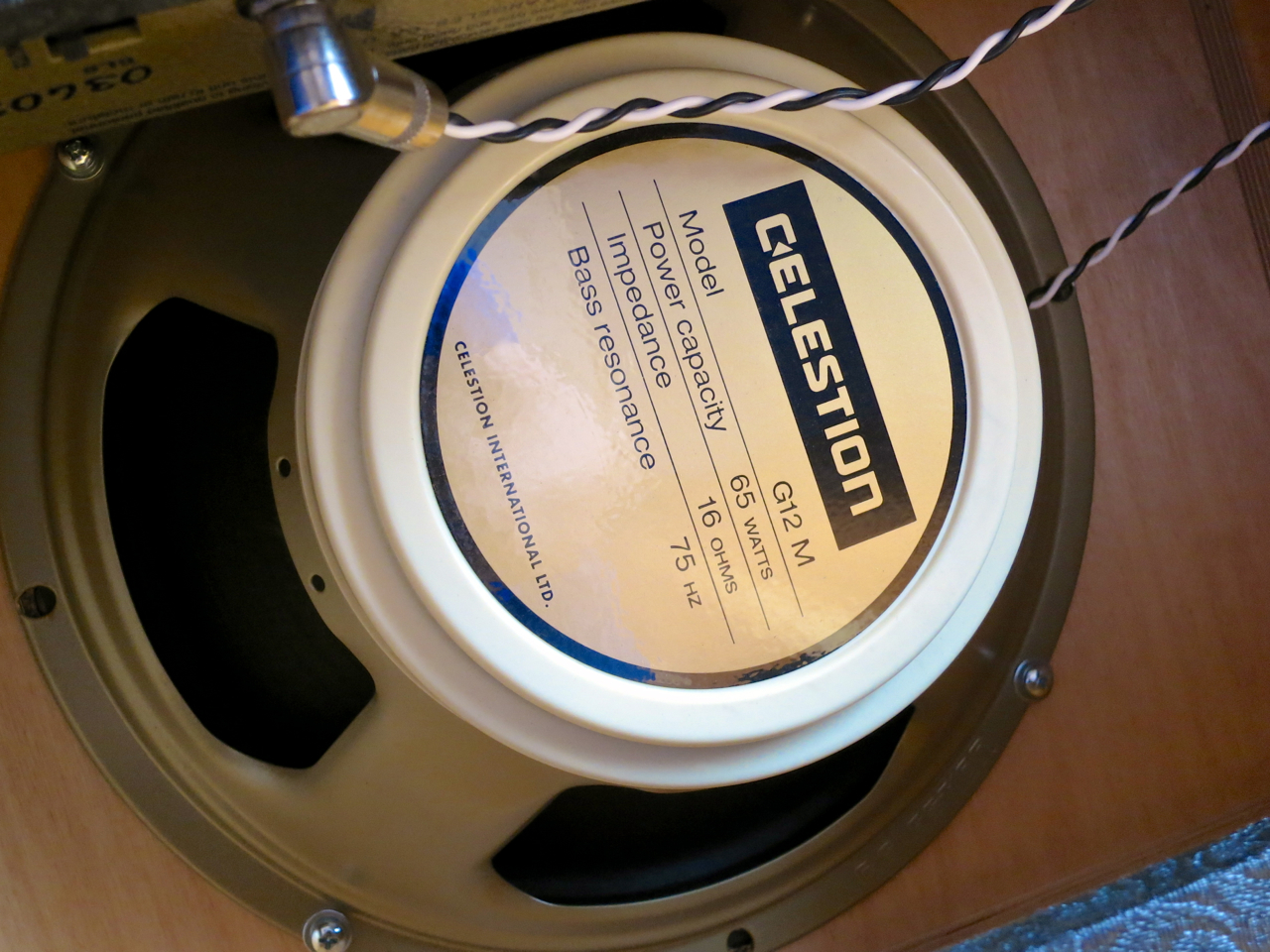
Bogner’s new tube combo comes equipped with a Celestion G12M-65 Creamback speaker, which combines a modern power rating with a classic, Greenback-type tonality.
A four-button footswitch unit is sold with the GF 54 Phi, and it gives us some hints regarding the combo’s versatility and features.
****
Bogner’s Goldfinger Phi offers a lot of scope for adjustment, so that every guitarist can dial in the sound he or she wants. Due to its versatility the 54 Phi needs you to get familiar with all its features, before plugging your guitar in and wailing away.
Actually, you should start your sonic journey with this Bogner’s back panel! The GF 54 Phi comes with a slightly unusual split power amp that employs two pairs of power amp valves – a pair of 6V6s and a pair of 6L6s. Each pair can be switched on or off individually, while the front panel’s Hi/Low-switch makes it possible to use only a single power amp tube from each pair, in effect halving the combo’s output power. By using the Hi/Low-switch and the power amp switches you can choose from six power modes. The lowest alternative lets the Goldfinger Phi run at approximately nine watts (6V6, Low), while the highest power mode (6L6+6V6, Hi) will give you the combo’s full 66 watts of output.
As were talking about a valve amp here, choosing between pairs (or single) power amp tubes doesn’t only have a bearing on the 54’s power rating, but it also affects the amp’s behaviour, especially when it comes to clean headroom and power amp compression (sag). You need to find the ”right” tube and Hi/Low-switch mix for your own, personal tone.
The Gain knob is used to set the preamp gain, while Loudness is what Bogner calls their master volume controls. There are two signal boosts implemented in the Goldfinger Phi’s preamp, but their are placed at different points in the signal chain, which makes them work and sound differently. The adjustable Boost booster is placed in front of the Gain control, even making it possible to achieve some distortion, if necessary. Solo, in turn, is a fixed booster that sits right at the end of the preamp.
Bogner’s GF 54 Phi offers you two different EQ-configurations. You can choose from Bogner’s own, modern tone stack or switch to a vintage Baxandall EQ. Originally, the Baxandall circuit was designed for Hi-Fi equipment, but it found its way into some guitar amps from the 1950s and 60s. Due to the way a Bax EQ works, there’s a perceivable drop in volume when you switch over without readjusting the EQ controls.
The EQ-section is complemented by a separate Presence control, as well as two Expand-switches (one adding bottom end, the other treble).
It may come as a shock to some valve purists, but Reinhold Bogner has deliberately chosen a digital reverb unit for his 54 Phi. In his view this digital unit offers more depth of sound and lushness than the type of spring tray he’d be able to fit into the 54 Phi combo. The reverb type features a little bit of chorus-style modulation to liven things up even further.
I’ve moaned about this before, and I’ll say it again: I’m not the biggest fan of Bogner’s downward-facing back panels. Unless you know the exact position of all connectors and switches by heart, you are forced to lie on your back to make sense of it all.
Be that as it may, the Bogner Goldfinger 54 Phi’s back panel gives you a wide array of different options for getting the most from your combo.
****
I was only given a weekend to test Bogner’s new baby, which is why I didn’t have enough time to record more audio demos. I still managed to come up with two, stylistically rather different demo songs.
The first track was recorded with the 54 Phi combo running in in 9 watts power mode, which made it possible to achieve overdriven sounds without the aid of pedals, simply by running hot humbucking pickups into the Goldfinger. The lead guitar is a Gibson Les Paul Junior with the tone knob turned down halfway, while all backwards guitar tracks were played on a Gibson Melody Maker SG. I recorded the combo (in both demo songs) with a Shure SM57:
The second demo track was recorded with the Bogner running at full tilt (66 W), and with a Boss SD-1 overdrive and a Joyo JF-37 chorus pedal in front of the combo. All guitar parts are played on a Flaxwood MTQ Hybrid guitar with a neck humbucker and a Telecaster-type single coil in the bridge position:
****
Bogner’s Goldfinger 54 Phi is a prime example of the versatility and quality of sound a well-designed, single-channel valve amp can offer.
This is a combo for the sound aesthete, who wants to build a strong foundation for his or her sound, regardless of whether this tone comes from just the fingers or a range of effect pedals.
Bogner Amplificationin Goldfinger-vahvistinperhe on hiljattain kasvanut. Kaksikanavaisen Goldfinger 45 -vahvistimen lisäksi on nyt saatavilla yksikanavainen herkkupala nimeltään Goldfinger 54 Phi.
****
Bogner Goldfinger 54 Phi -kombon (3.091 €) idea on ollut kehittää mahdollisimman monipuolinen yksikanavainen putkivahvistin.
54 Phi:n lähtökohtana on toiminut Goldfinger 45:n puhdas Alpha-kanava. Uutuusmallin pääpaino on juuri puhtaissa soundeissa, sillä 54 Phi on tarkoitettu paljon efektipedaaleja käyttävän kitaristin unelmakoneeksi.
Goldfinger 54:n komboversio (54 Phi on saatavilla myös nuppina) painaa noin 26 kiloa.
Vahvistimen kotelo valmistetaan mäntyvanerista ja sen takaseinä on avoin.
Uuden kultasormen kaiuttimiksi on valittu Celestionin G12M-65 Creamback -malli, jossa nykyaikainen tehonkesto yhdistyy klassiseen Greenback-soundiin.
GF 54 Phi:n mukana tuleva kytkinlauta, jossa on neljä kytkintä, antaa jo ensimmäisen vihjeen uutuus-Bognerin ominaisuuksista.
****
Goldfinger Phi pyrkii siihen, että jokainen kitaristi löytää kombosta juuri sen haluamansa soundin tarjoamalla runsaasti mahdollisuuksia muokkaukseen. Kombon monipuolisuuden vuoksi kannattaa tutustua 54:n ominaisuuksiin perusteellisesti ja rauhassa.
Oikeasti soundien maistamista pitäisi aloittaa tässä Bognerissa takapaneelista! GF 54 Phi:ssä on nimittäin hieman epätavallinen päätevahvistin, jossa toimii kahdet, kytkettävissä olevat putkiparit – 6V6 ja 6L6. Etupaneelista taas löytyy Hi/Low-kytkin, jolla päätevahvistimen tehoa voi puolittaa kytkemällä toisen kummankin putkiparin putkista pois päältä. Näin vahvistimen tehoa voi muokata kuudessa askeleessa yhdeksänwattisesta (6V6, Low) 66-wattiseksi (6L6+6V6, Hi).
Pääteputkien valinnat eivät kuitenkaan ulota ainoastaan Goldfingerin päätetehoon, vaan koko kombon käyttäytyminen muuttuu, etenkin puhtaan headroomin ja päätevahvistimen kompression (engl. sag) suhteen. Tämän perustan päälle rakennetaan sitten oma soundimaailma etupaneelissa olevien säätimien ja kytkimien avulla.
Gain-säädin on etuvahvistusta varten ja Loudness on Bognerin nimi master-volyymille. Säädettävä Boost-vahvistus ja kiinteä Solo-buusteri toimivat molemmat etuvahvistimessa, mutta niiden tarkka sijainti signaaliketjussa on eri. Boost vaikuttaa signaaliin jopa ennen Gain-säädintä, mikä tarkoittaa että sillä voi myös saada tarvittaessa särösoundeja aikaiseksi, kun taas Solo sijaitsee etuvahvistimen loppupuolella.
GF 54 Phi:ssa on tarjolla peräti kaksi eri EQ-vaihtoehtoa – Bognerin nykyaikaisen tone-stäkin sijaan voi nimittäin myös valita hieman erikoisen Baxandall EQ:n. Se oli alun perin taajuuskorjain Hifi-laitteille, joka oli kuitenkin käytössä myös joissain 1950- ja 60-luvun vahvistimissa. Bax EQ:n valinta laskee toimintaperiaatteensa vuoksi hieman etuvahvistimen signaalitasoa.
EQ-osastoa täydentävät erillinen Presence-säädin, sekä kaksi Expand-kytkintä, joista yksi lisää signaaliin diskanttia ja toinen bassoa.
Joillekin putkipuristeille tulee varmaan yllätykseksi, että Reinhold Bogner on päättänyt käyttää 54 Phi:ssä digikaikua. Mies on kuitenkin sitä mieltä, että hänen käyttämä kaikumoduuli kuulostaa selvästi paremmalta kuin GF:een menevä jousikaikutankki. 54-kombon kaikusoundissa on lisämausteena kevyt chorus-tyylinen huojunta, joka pitää lopputuloksen mukavasti elävänä.
Olen sanonut sen ennenkin, mutta pidän takapaneelin sijaintia Bogner-komboissa hieman epäkäytännöllisenä. Lattiaa kohti osoittavien kytkimien ja liittimien takia kitaristin täytyy maata selällään, jos haluaa nähdä mitä hän juuri tekee.
Takapaneelinkin tarjoamat ominaisuudet kielivät joka tapauksessa siitä, että Bogner Goldfinger 54 Phi on aito pro-luokan putkikombo.
****
Uutuus-Bogner kävi testissä vain viikonlopun yli, minkä takia audiodemojen tekoon käytettävissä oleva aika oli tällä kertaa hyvin rajallinen. Ehdin kuitenkin äänittää kaksi, tyyliltään hyvin erilaisia demobiisiä.
Ensimmäisessä biisissä 54 Phi -kombo oli 9 Watts -moodissa, jolloin Goldfingeria sai humbuckereilla säröön vielä olohuone-volyymillä. Soolokitarana toimii Gibson Les Paul Junior (kitaran tone-potikka oli säädetty hieman alas), kun taas takaperin soivat kitaralinjat on soitettu Gibson Melody Maker SG -mallilla sisään (molemmissa biiseissä kitaramikkinä toimii Shure SM57):
Toisessa demobiisissä Bogner oli ns. täysillä (66 W) ja sen eteen oli kytketty Boss SD-1 -särö ja Joyo JF-37 -chorus. Kaikki kitararaidat on soitettu Flaxwood MTQ Hybrid -kitaralla, joka on kaulahumbuckerilla varustettu Tele-tyylinen soitin (testi tulossa):
****
Bognerin Goldfinger 54 Phi todistaa hyvinkin vakuuttavasti, kuinka monipuolinen ja moniulotteinen erittäin laadukkaasti toteutettu yksikanavainen putkikombo voi olla.
Tällä soundiesteetikon unelmakoneella voi luoda omalle kitarasoundille vankan perustan, riippumatta siitä tuleeko se oma soundi pelkästään sormilta vai onko käytössä hyvin varustettu pedaalilauta.
From a guitarist’s standpoint, Finland truly is the land where milk and honey flow. In relation to its tiny population Finland is home to an unbelievable number of first-rate guitar-, effects- and amp-makers.
One such boutique-level amp brand is Hehku Customs from the town of Pori (on the western coast). Hehku’s team consists of chief designer Jarmo Välimäki, as well as Markku Penttilä and Juha Heljakka, who are in charge of R & D, sales and marketing.
There are several examples of different custom amps the company has built on Hehku’s website. Prices for custom amps start at about roughly 1,300 €. Hehku Custom’s cabinet sizes and shapes are standardised, but all other details can be tailoured to each customers wishes and requirements. ”The basic idea is that we want to make our customers’ wildest dreams come true!” says Jarmo Välimäki.
****
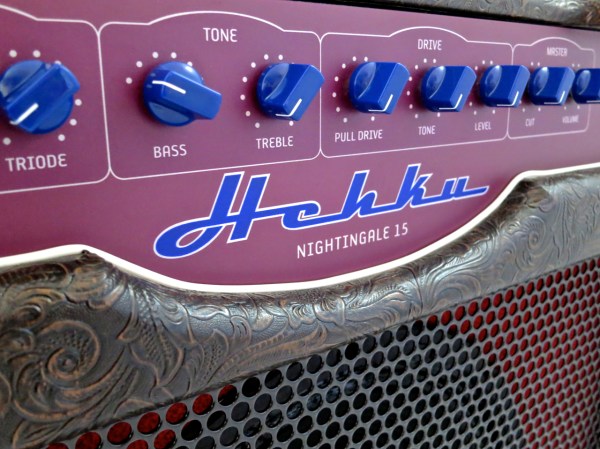
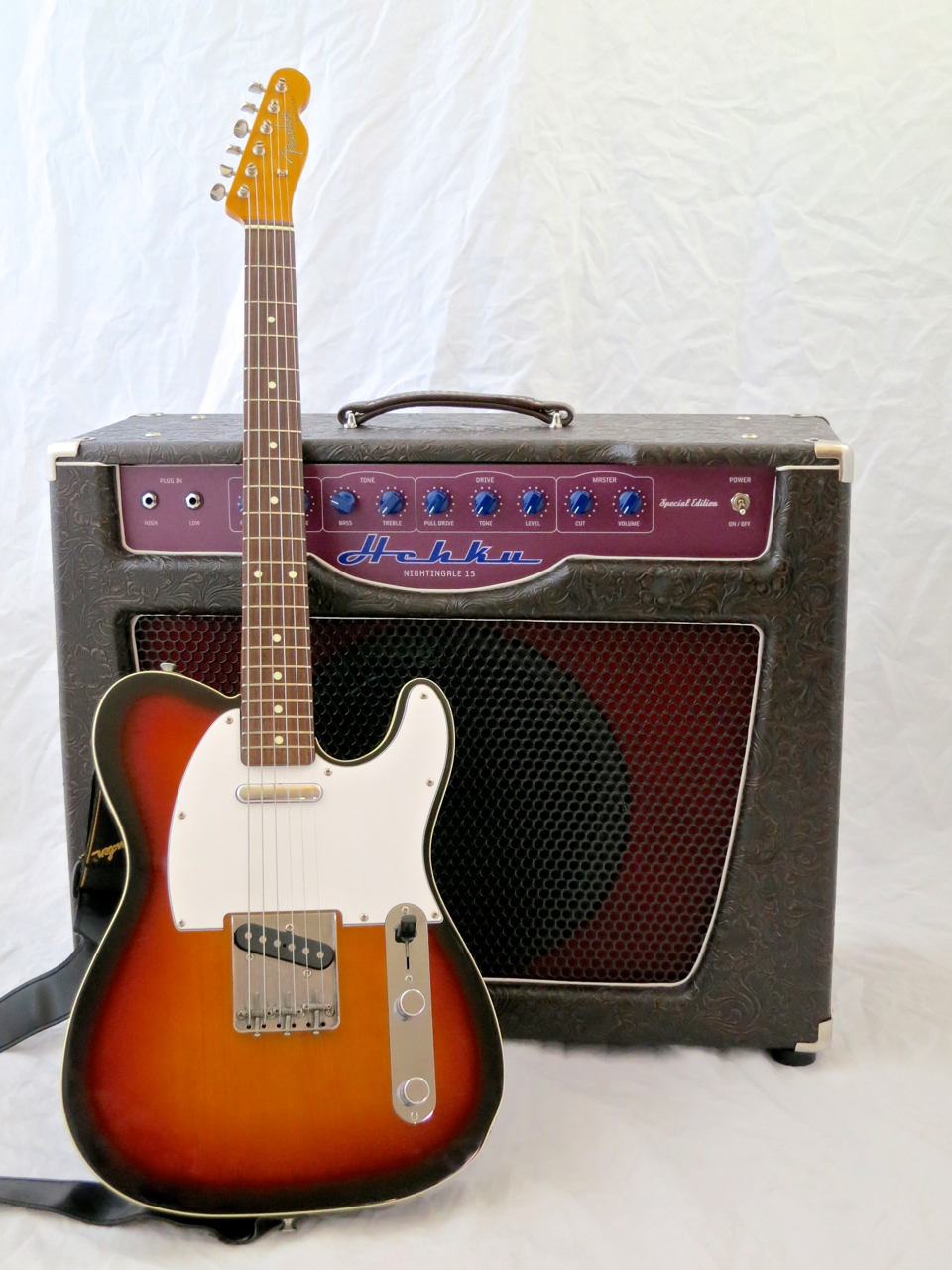
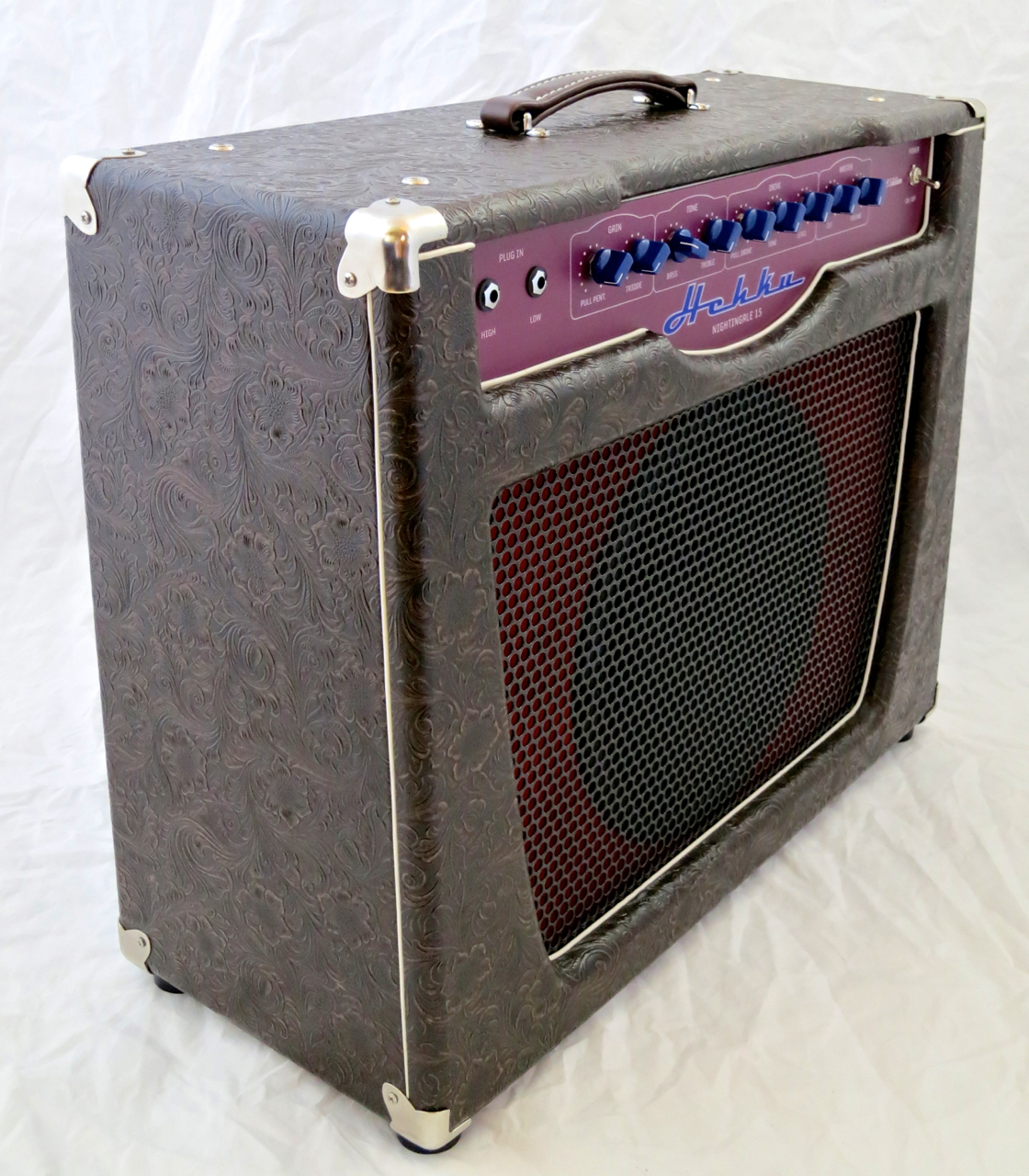
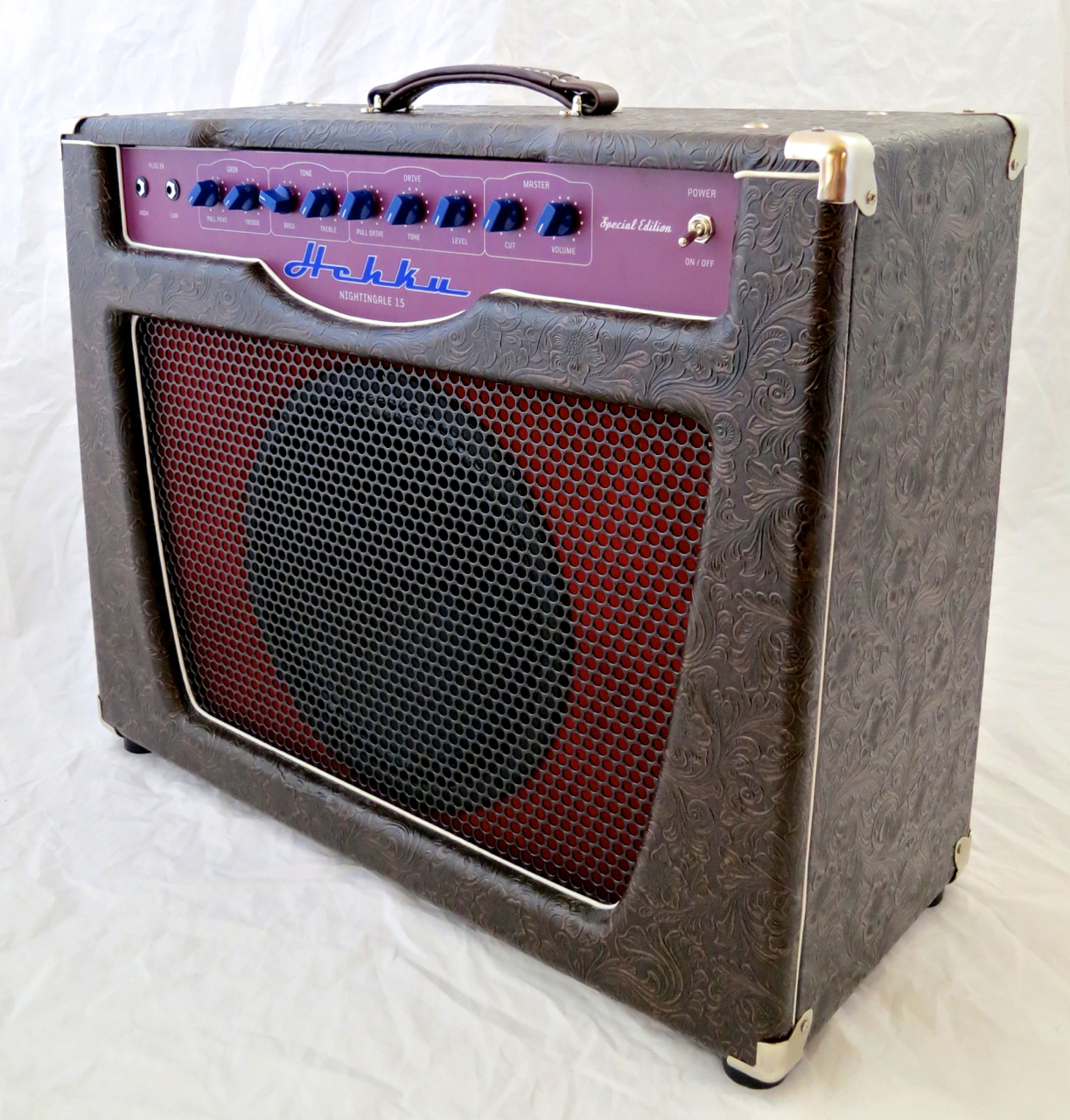
Kitarablogi got a 15-watt Hehku Nightingale 15 combo for testing. This is Hehku Custom’s first standardised model without custom options.
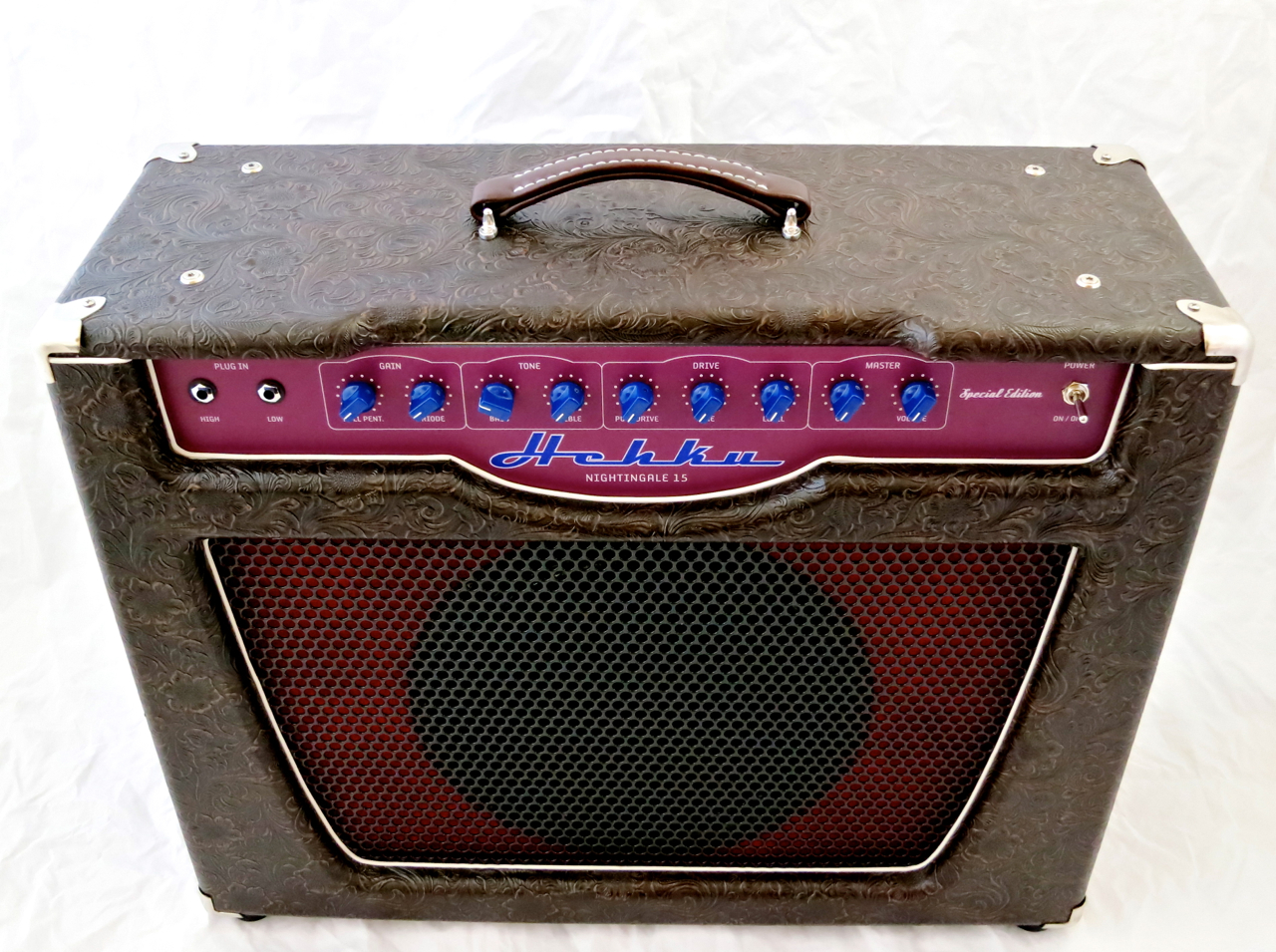
The Nightingale 15 (combo approx.:1,950 €, head approx.: 1,750 €) is a hand-made, all-valve combo with a single 12-inch speaker, and represents many features typical of Hehku’s design philosophy.
The Nightingale’s cool and original looks make it clear from the off that this combo isn’t your typical Fender Tweed clone.
The Hehku Nightingale is an open-backed combo with easy valve access. All Hehku cabinets are made from Finnish birch ply, which is an outstanding material, both in terms of strength as well as sound.
Birch ply is also relatively lightweight, which is why the Nightingale is easy to carry by its single top handle.
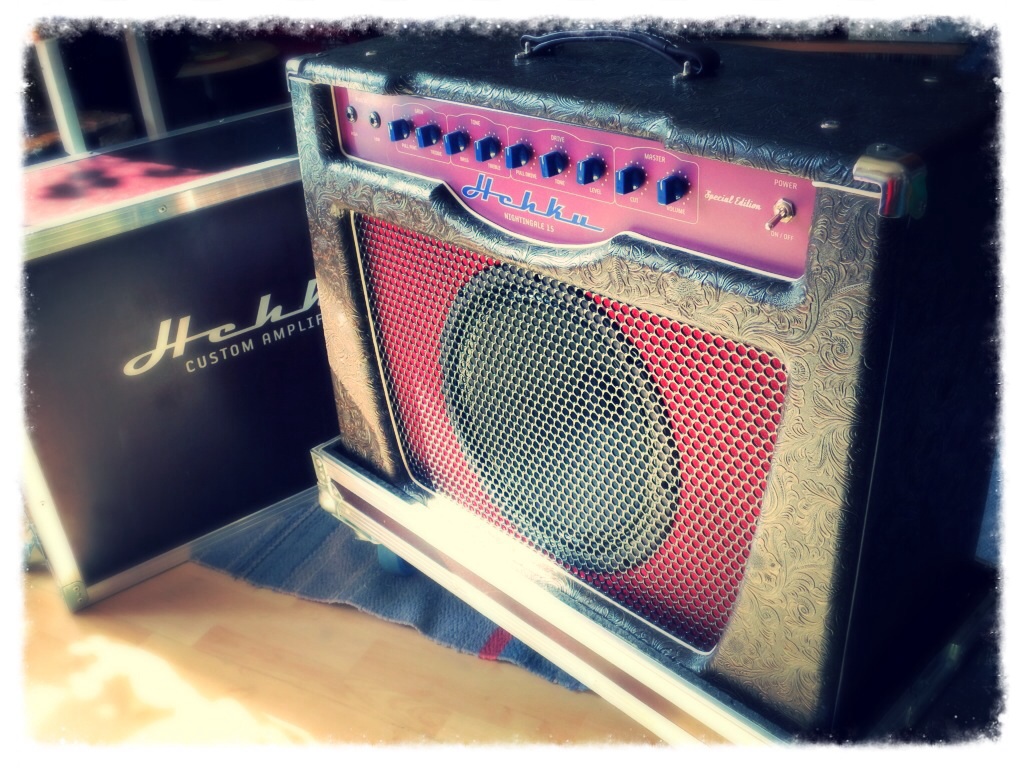
Hehku also offers professional transport cases to go with their amps and cabinets. A road case for the Nightingale 15 would set you back around 260 €.
****
Hehku’s Nightingale 15 is a very special case for a two channel combo, because its signal path is in series the whole way through.
Most vintage (-style) amps have two discrete channels with separate controls and functions (like ”Normal” and ”Tremolo”), and no channel switching capabilities. Modern amps, on the other hand, may share a single EQ section between two channels, but they offer channel switching, and separate gain and volume settings for each channel.
Hehku’s Nightingale takes its own, idiosyncratic path by offering two switchable channels in a cascading set-up. This means that the Clean channel’s triode and pentode gain settings, as well as this channels two-band EQ (six-position rotary Bass, active Treble), also influence the Drive channel’s tone and response.
You can either use the control panel’s push/pull-switches or the compact footswitch unit (included with the amp) to select triode- and pentode-modes, and to switch from Clean to Drive.
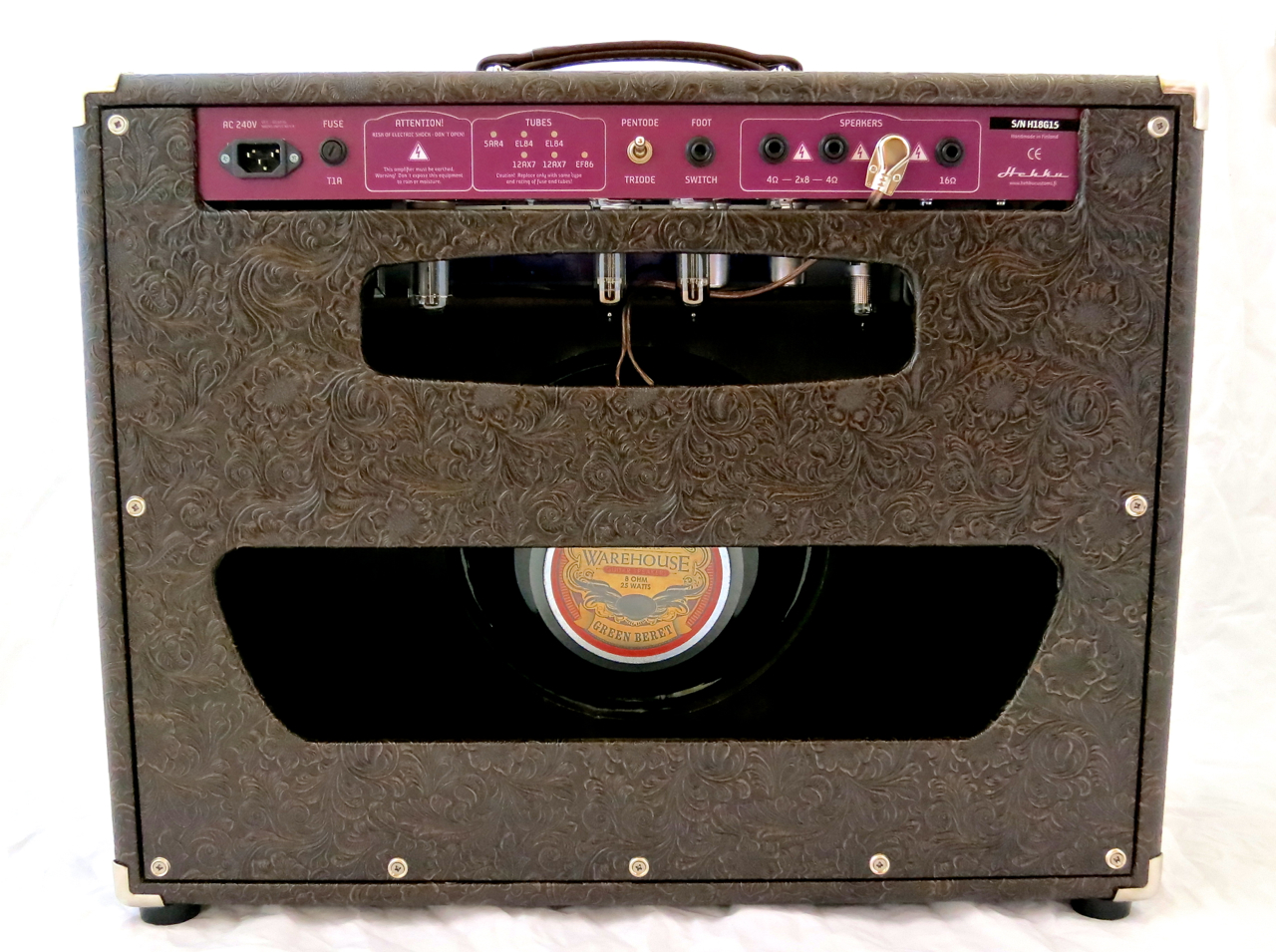
The Nightingale’s back panel sports a handy valve chart for easy orientation.
There’s also a triode/pentode switch for the power amp valves – switching to triode-mode the combo’s output power drops from fifteen to seven watts, and it also changes the amp’s tone somewhat.
Thanks to its four speaker outputs you will be able to connect the Nightingale to virtually any external guitar cabinet you can find.
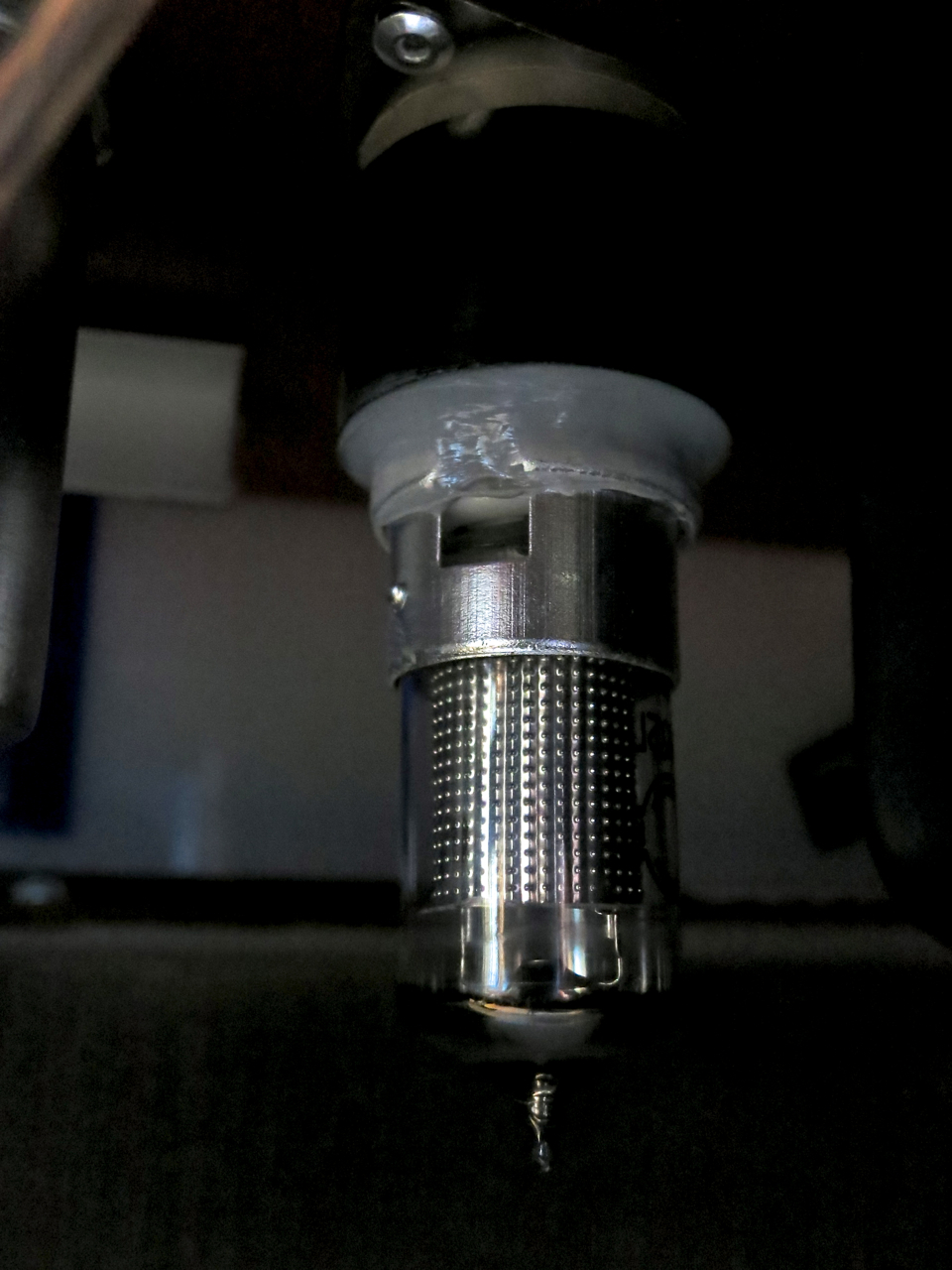
The clean channel is constructed around a EF86-type pentode. The EF86 (aka the 6267) is known for its great tone, and it can be found in some vintage Vox amps, as well as in Matchless and Dr Z amps. But due to its microphonic nature this tube type is not widely used.
Hehku Customs has solved this problem by using a damper made from silicone, which decouples the EF86 from the mechanical vibrations of the combo.
Overdrive (and phase inversion) duties are handled by a pair of 6N2P-valves, which are Russian, military-spec’ed relatives of the 12AX7/ECC83, offering a slightly different gain structure and sound.
The Nightingale uses a tube rectifier designed around a type 5AR4.
The power amp section runs on a pair of EL84s. You could also drop in two Russian (military) 6P15P/EL83-types, and thanks to the fact that the Hehku Nightingale is self-biasing, you can do this without the need for an amp technician.
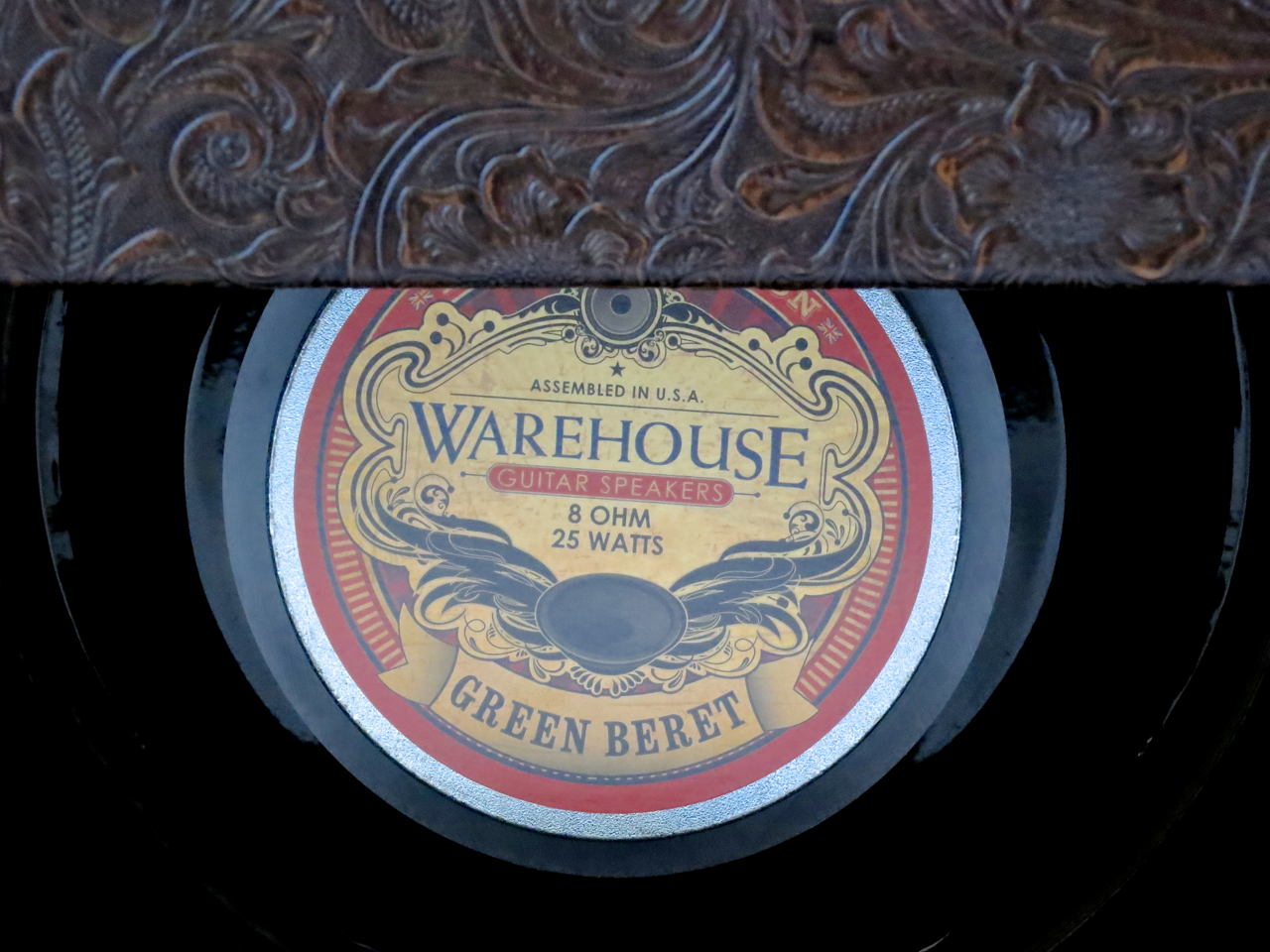
A quality 12-inch speaker from Warehouse, the Green Beret, has been selected for its British sound.
****
With its factory set-up (6N2P + EL84), the Hehku Nightingale 15’s clean channels has plenty of headroom, even for twin humbucker guitars. The six-step Bass-rotary and the combo’s active Treble control offer you a lot of leeway to tune the tone to your requirements. Tonally, the Nightingale’s clean delivery is more ”Vox” than ”Blackface”.
The Nightingale’s overdriven tones are extremely tasty, too. There’s a very juicy mid-range, coupled with a healthy dose of top end grit, which will surely satisfy any fan of classic Rock and Blues sounds.
Here’s a clip recorded with my vintage-reissue Fender Telecaster – you will hear: clean (triode) –> clean (pentode) –> overdriven (triode) –> overdriven (pentode); the power amp runs in pentode-mode:
And here’s a similar clip played with my Hamer USA Studio Custom:
****
Hehku’s Jarmo Välimäki also supplied me with a set of alternative valves (12AX7 + 6P15P), and the difference in tone and dynamics is easy to hear:
With the alternative set, there’s much less headroom on offer. Even the Telecaster will drive the clean channel into break-up (in pentode-mode), with the Hamer stepping clearly into Blues-overdrive territory.
These valves add more gain to the drive channel, and also result in a slightly flabbier bass and sharper treble. The Nightingale 15 sounds great this way, too, even though my own preferences lean more into the direction of the factory set-up.
Here’s a clip with the Telecaster (the control settings have stayed unchanged, only the valves have been swapped):
And here’s the sound of the amp played with the Hamer’s two humbuckers:
****
In my view, the Hehku Customs Nightingale 15 is a fantastic all-valve combo with its own voice and an interestingly idiosyncratic overall concept. I like Hehku’s eye for detail, and the fact that the company go their own way in terms of looks and electronic design. The Nightingale is a top-drawer amp, offering its own distinctive looks and sounds, without the need to resort to snake oil or nostalgic tube voodoo.
Hehku’s Nightingale is a modern, hand-made valve combo, with a clear and easy-to-understand lay-out, as well as a very interesting and interactive signal path. The Nightingale is not about trying to imitate any specific vintage amp’s sounds – this amp is a true creative tool, setting you on your path to your personal guitar tone nirvana.
The Nightingale 15 sure isn’t cheap, but in light of the fact that this is a hand-made Finnish product, you can only call the price tag very fair!
Albion Amplification is a new name on the Finnish market, even though the brand has been in existence since 2010.
Albion’s main man is genuine amp guru and bonafide living legend Steve Grindrod. Mr Grindrod left an indelible mark in the field of amplifier design as Marshall’s chief designer for over 20 years. In the beginning of the Noughties, after leaving Marshall, he also worked for Vox for a few years.
Albion was founded in 2009 as a joint venture between Grindrod and Chinese audio specialists IAG Group. Albion’s guitar and bass amplifiers are produced in their own plant in China under the direct supervision of Steve Grindrod, who has moved there from the UK.
****
The Albion TCT35C (recommended retail price in Finland: 865 €) is part of the company’s TCT-series, which is aimed directly at the guitarist who needs a versatile amp.
The TCT-series offers two-channel, all-valve amplifiers built with a very open architecture that allows for maximum flexibility. At the moment of writing, the TCT-series comprises two combos and three amp heads.
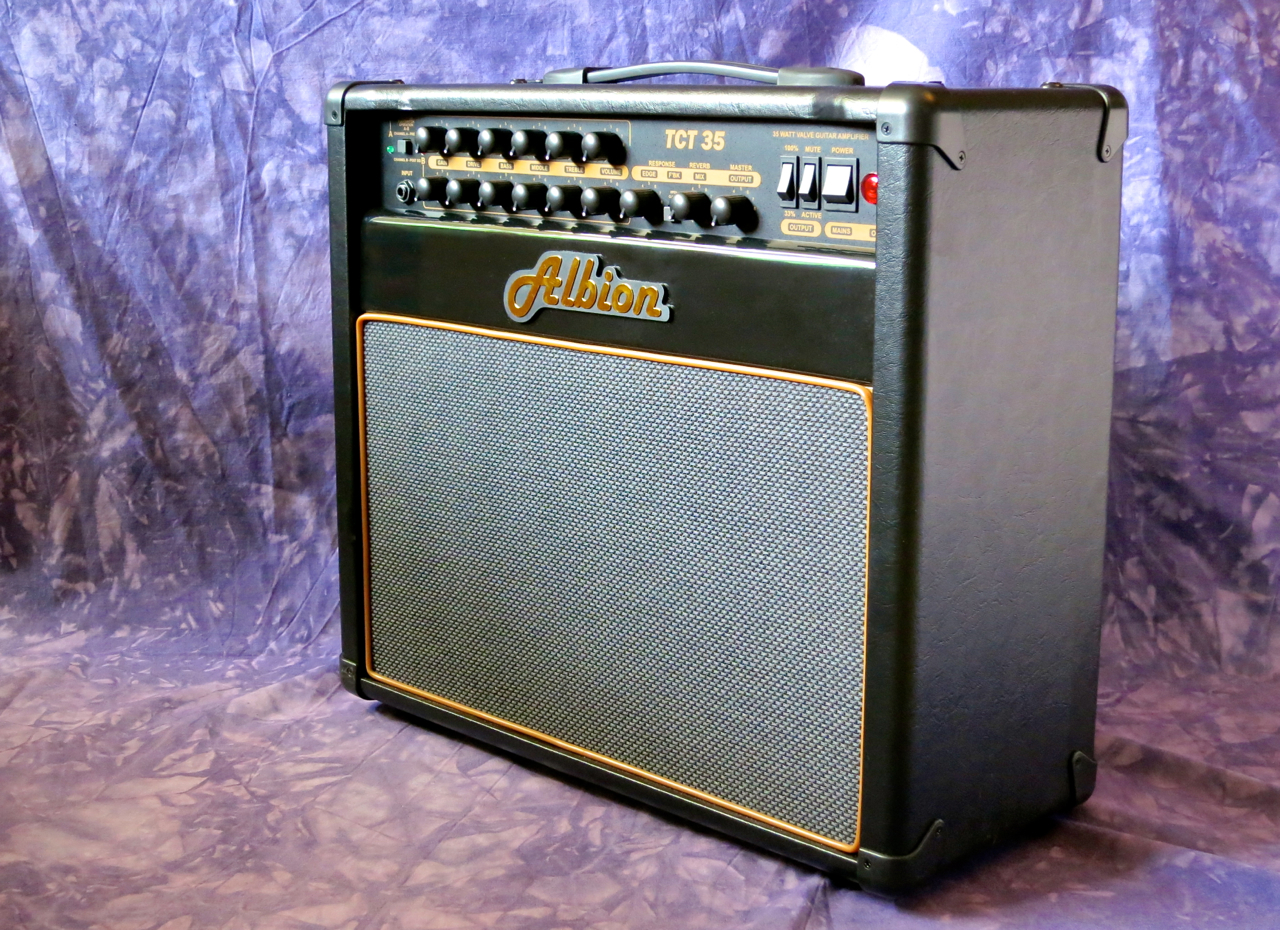
The TCT35C has a cabinet made of high-quality birch plywood. The panel carrying the golden script logo is a solid piece of walnut, which has received a piano black finish on our review sample (there’s also a see-through wine red version available).
The overall finishing quality is on a very high level, and the TCT35C looks rather stylish in a businesslike, slightly understated way.
The combo weighs in at about 24 kilos, which is rather moderate for an all-valve amp of this size.
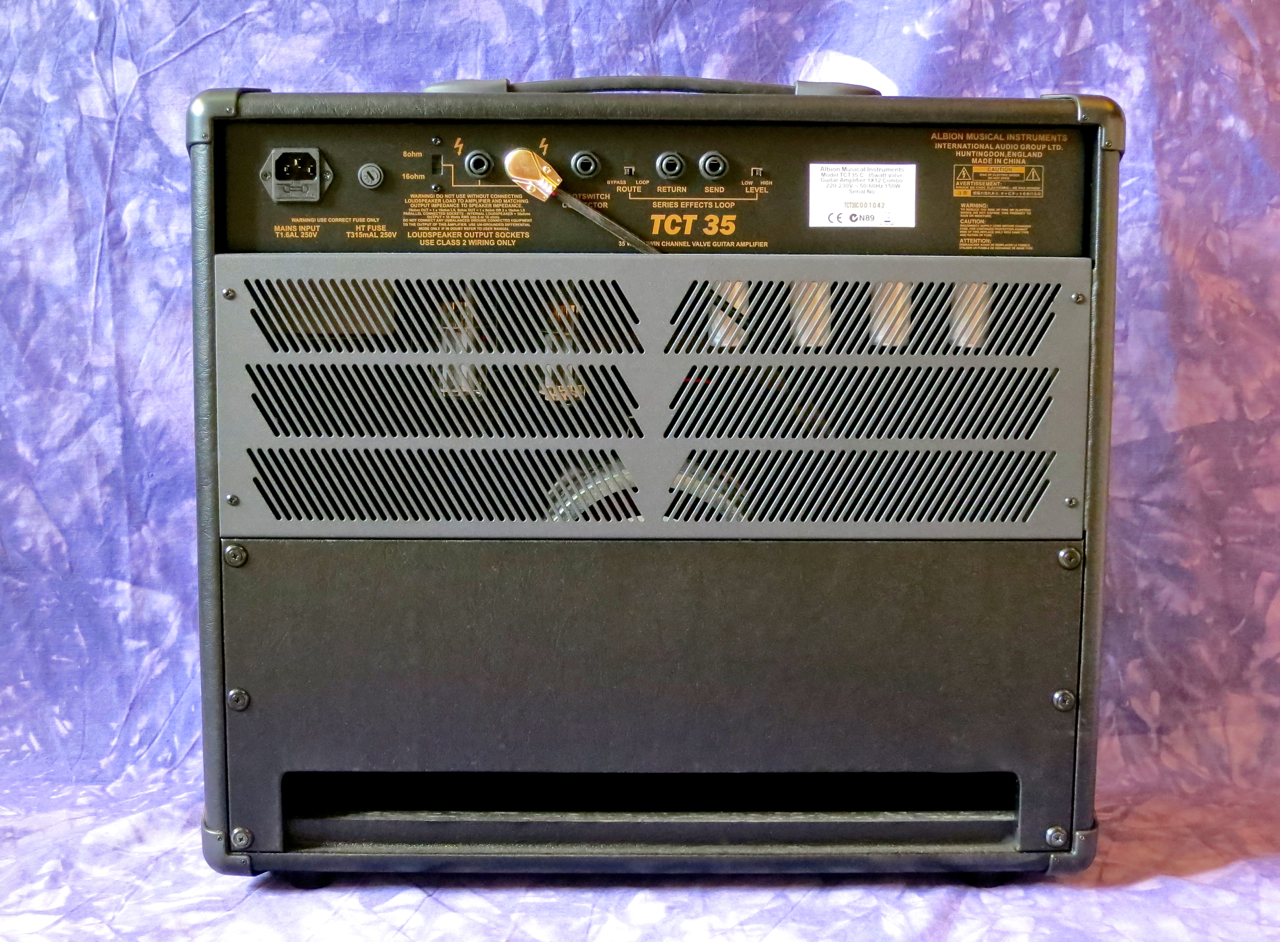
The cabinet features a half-closed back with a sturdy metall grille protecting the valves (or ”tubes”, for our North American friends).
Albion’s TCT35C employs three 12AX7 valves (aka ECC83) in its preamplifier section. A fourth 12AX7 is used as the combo’s phase inverter.
The power amp section churns out approximately 35 Watts of power (RMS), using a pair of 6L6 valves.
All Albion amps use IAG Group’s pro-quality audio transformers, which are well regarded by Hifi-enthusiasts and used in IAG’s Leak and Luxman valve amplifiers.
Albion produces all of their PCBs, metal parts and speakers in their own factory to Steve Grindrod’s exacting specifications.
The TCT35C comes equipped with a 12-inch Albion G1280-VSR-16 speaker, which has power rating of 80 Watts and an impedance of 16 Ohms.
A two-switch footswitch unit comes supplied with the combo. It allows for channel switching, as well as the muting of the on-board digital reverb unit.
The unit is shipped with the output jack on the right hand side, but if you prefer to have the connector on the left, you can switch things around easily. Simply unscrew the six screws holding the footswitch assembly in the chassis, pull the assemby out, turn it around, put the switches back into the chassis and tighten the screws. Brilliantly easy!
****
Even though both of the Albion TCT35C’s channels sport the same controls, the channels have been designed differently:
In Channel A the guitar signal is first routed through the EQ-section, before it reaches the main gain stages. In Channel B the signal first goes from the input jack to the gain section and is only then fed into the EQ-department. Even though both channels will give you sounds from clean all the way to high gain, each channel has its own distinct character and ”feel”.
One special feature of TCT-series amps are their twin gain controls – called Gain and Drive. The first amplification stage is called Gain, while the second one is called Drive, and each adds their own type of gain structure and character to a channel’s tone. By experimenting with different combinations of a channel’s Gain and Drive settings you will get a plethora of different sounds and responses to playing dynamics.
The combo’s Master-section offers some additional features for even more tonal flexibility:
The Edge-control is a presence/brightness control for the power amp, which allows you to tailor the TCT35C’s bite to your own requirements. The F’BK-switch (short for ”feedback”) offers you two different power amp responses – you can either go for more bite and a very tight attack or choose a creamier delivery with much more fat compression.
Steve Grindrod has chosen to use digital reverb on his TCT-amps, because they tend to stand up better to the demands of a high gain amp.
Thanks to its output power switch you can also run the combo at only 33 % of its output power. As were dealing with a genuine valve amp here, this power drop also lowers the clean headroom and adds some tasty power amp compression to the signal.
The TCT35C’s effects loop is deliberately using solid state technology, as Steve Grindrod aims for a clean and transparent signal transfer in this section.
****
The Albion TCT35C combo is an extremely flexible guitar amp, thanks to its well-designed channel architecture and its extremely efficient channel equalisers.
This isn’t a one-trick pony at all, but rather a guitar sound enthusiast’s dream machine, offering a large palette of different tones.
Despite the fact that both channels will ”do” clean as well as dirty tones, Channel B will offer you more gain than Channel A. ”Fender-style” and ”Marshall-style” are far too narrow to adequately describe the different characters provided by Channels A and B, but there are clear differences apparent in their mid-range sounds and bass responses.
The effective Channel EQs, as well as the Master-section’s Edge- and Feedback-controls add their bits to the Albion’s versatility. While the TCT35C is quite an intuitive amp to use, I’d still recommend you take your time to find out all the features and sounds this combo has to offer.
These eight audio clips only scratch the surface of what the Albion TCT35C’s tonal versatility.
Let’s start with two clean examples using Channel A; first the Stratocaster:
…followed by a Les Paul-style Hamer Studio Custom:
Here are two crunchy clips played through Channel A. First the Strat:
…and then the Hamer:
These are two crunchy clips using Channel B – the Stratocaster first:
…followed by the double-humbucker Hamer:
And as a finale two high gain examples (Channel B) – starting with the Strat:
…and finishing with the Hamer (in Drop-D):
****
Wow, what a fantastic amp! I can’t think of any musical genre the Albion TCT35C couldn’t master.
The TCT35C is an extremely versatile valve amplifier offering loads of great sounds. Despite being quite a compact combo there’s plenty of volume on tap.
Steve Grindrod’s vast knowledge and experience in the field of amp design really shows in the way the Albion is put together, as well as in the quality of the sounds on offer in the TCT35C and in the low amounts of hiss (even in high gain settings).
****
Albion TCT35C
Current RRP in Finland – 865 € (street price approximately 800 €)
















 Kitarablogi.com – Finland's premier Guitar and Bass blog