Kielten vaihtaminen – Les Paul -tyyliset kitarat

Kuvat: Miloš Berka

****

Kielten vaihtamiseen tarvitaan Les Paul -tyylisessä kitarassa kielisatsin lisäksi terävän leikkurin, viritysmittarin ja kitarajohdon. Halpa muovikamppi nopeuttaa virityskoneiston kääntämistä.

Metalliviivoittimella taas mitataan ennen kuin aloittaa kielten korkeus 12:n nauhan kohdalla. Mittaamisen ansiosta kitaran säätäminen soittokuntoon helpoittuu huomattavasti, esimerkiksi jos on jouduttu poistamaan talla.

****

Pidän minun 80-luvun Les Paul Juniorissa kielet pujotettuna kieltenpitimeen edestä vintage-tyylisesti. Seurauksena on hieman pehmeämpi tatsi.

Tällä tavalla Les Paul -tyyliset kitarat nykyään kielitään, mikä näyttää siistimmältä. Molemmat tavat ovat ”sallittuja” – valitse omasi.

****
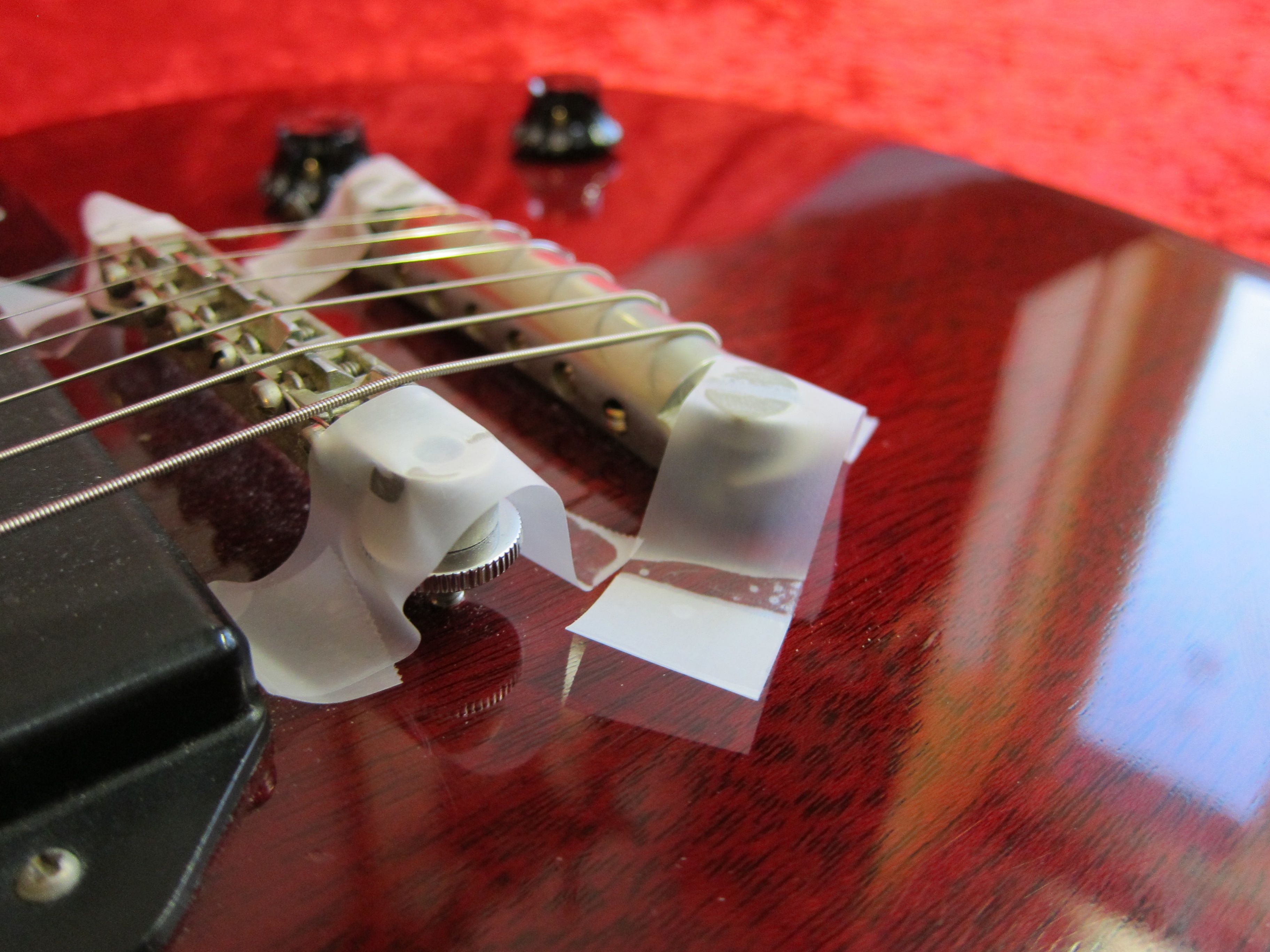
Teippaan sekä tallan että kieltenpitimen kiinni kitaran kanteen, koska ilman kielten vetoa ne lähtevät helposti irti, mikä voi kieltenvaihdon yhteydessä vahingoittaa kitaran runkoa. Älä missään nimessä käytä sellaista teippiä, joka jättää ikävät (ja usein ikuisetkin) jäljet kitaran lakkaukseen (esim. ilmastointi teippi). Samasta syystä on myös viisasta irrottaa teipit heti kuin kielet on vaihdettu.

Jos kitarasi on uudempi Epiphone tai se on varustettu Tone Pros -metalliosilla teippaamisen ei tarvitse, koska sekä talla että kieltenpidin ovat kiinni tolpissaan.

****
Mielestäni on helpointa ottaa ensin kaikki kielet pois.

****
Kun poistaa ensin virittimen aiheuttama kierre, kielen voi vetää kieltenpitimen läpi ilman turhaa kitkaa.

****

Työnnän kielen kieltenpitimen läpi.

****

Alun perin Juniorini oli varustettu Grover minivirittimillä, mutta vaihdoin vanhat Schaller M6-Vintage -virittimiin muutama vuosi sitten.

****
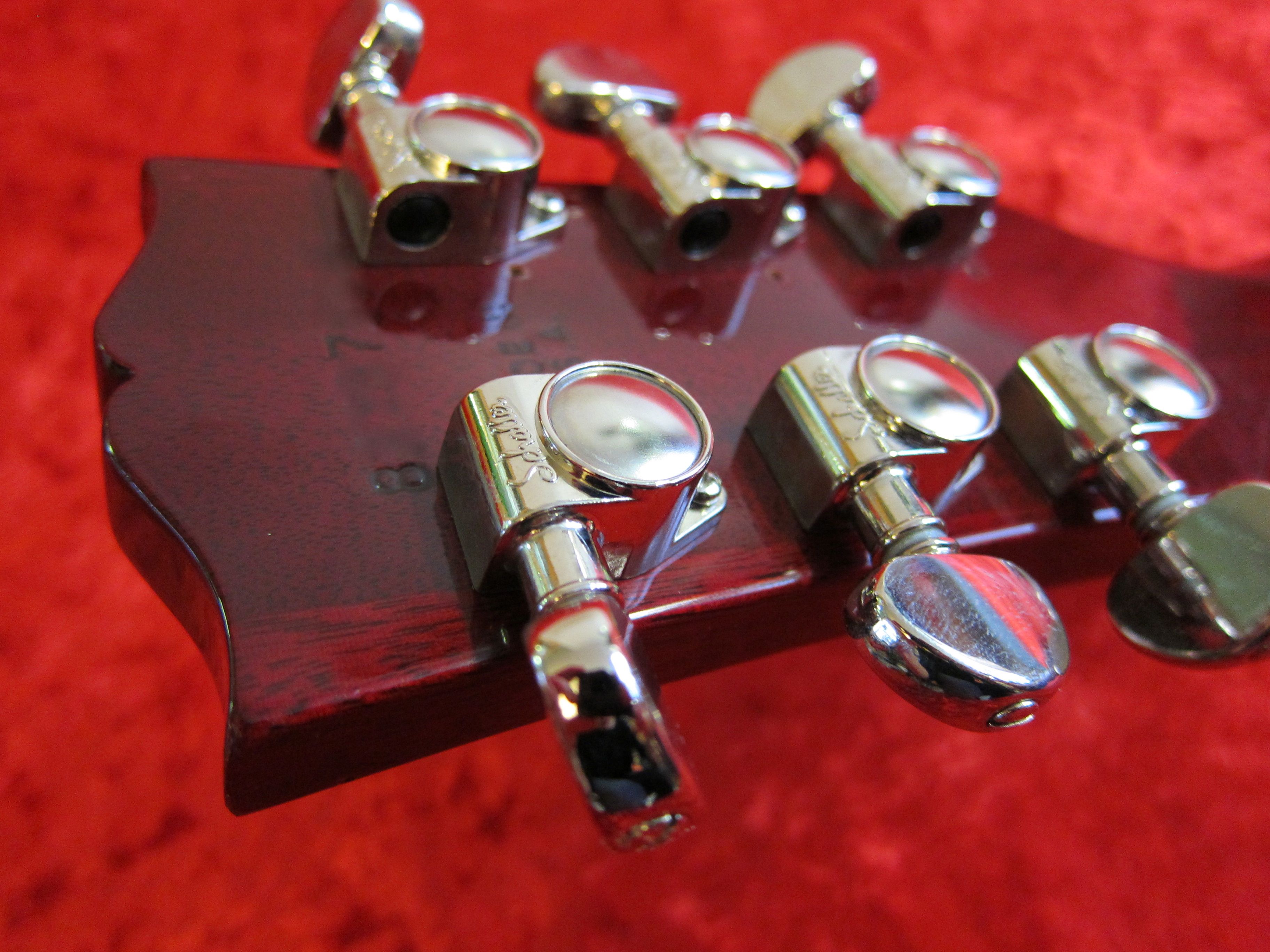
Suljetut virittimet ovat käytännössä huoltovapaita. Niiden tuntuma voi säätää nupin keskellä olevalla ruuvilla.

****
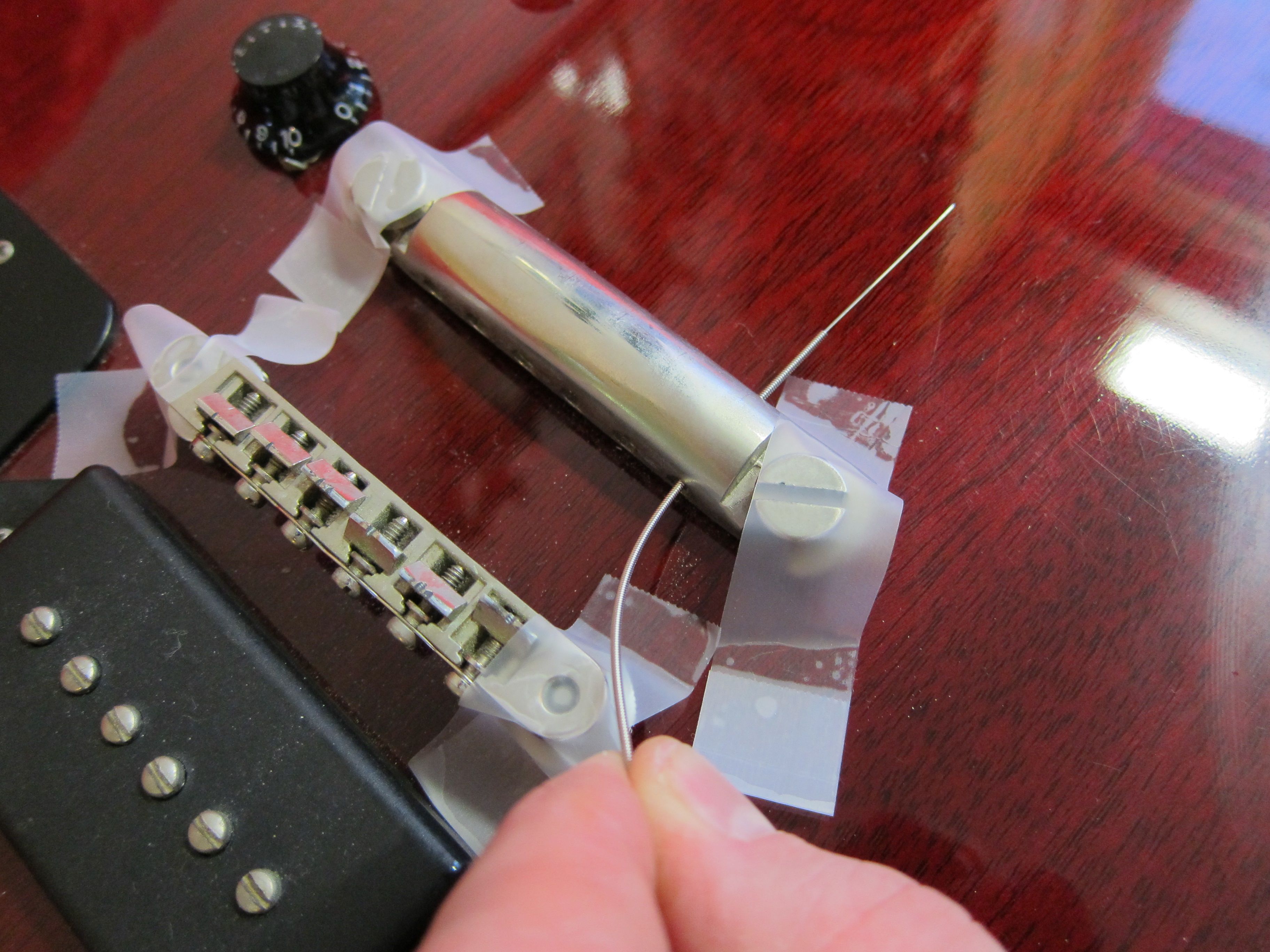
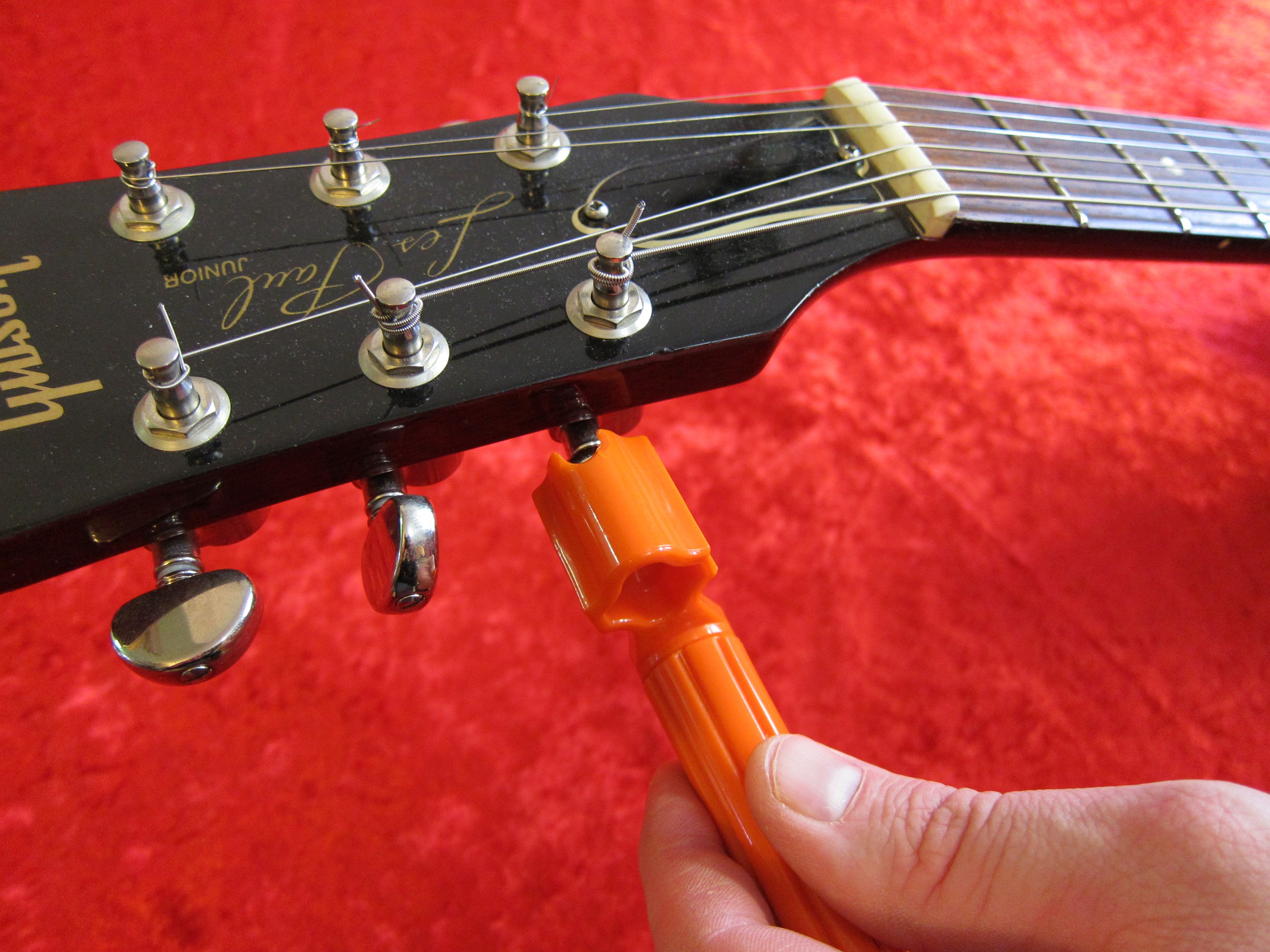
Minä suosittelen että aloitat uusien kielten laittamisen ”alhaalta” (lähellä satulaa) ja etenet pareissa (E-e, A-h, D-g).

Uusi kieli pujotetaan kokonaan kieltenpitimen läpi. Vasta kuin ball-end-rengas on turvallisesti paikoillaan kieli vedetään tallan yli kohti viritinlapa.

****
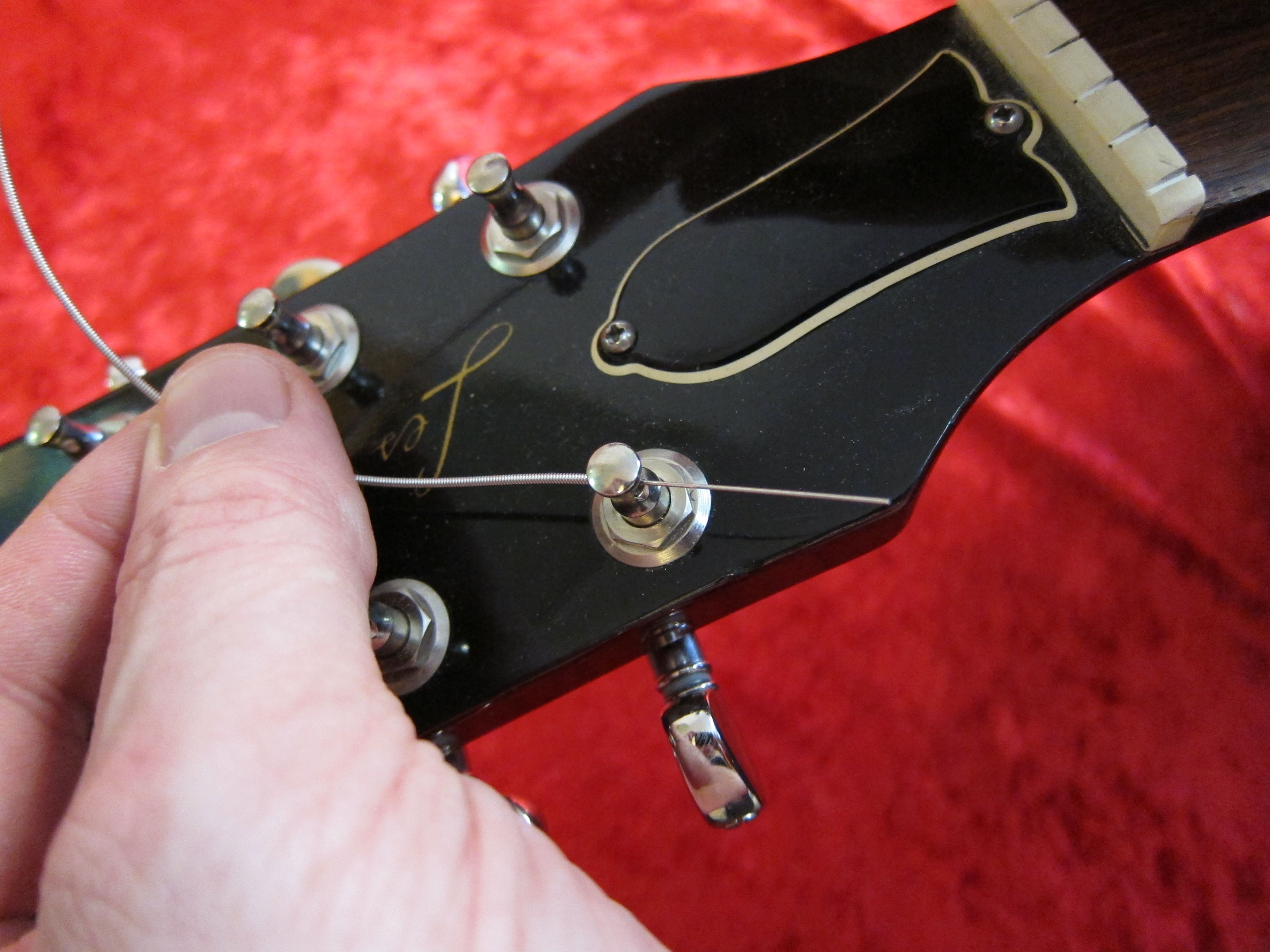
Kieli työnnetään virittimen läpi…
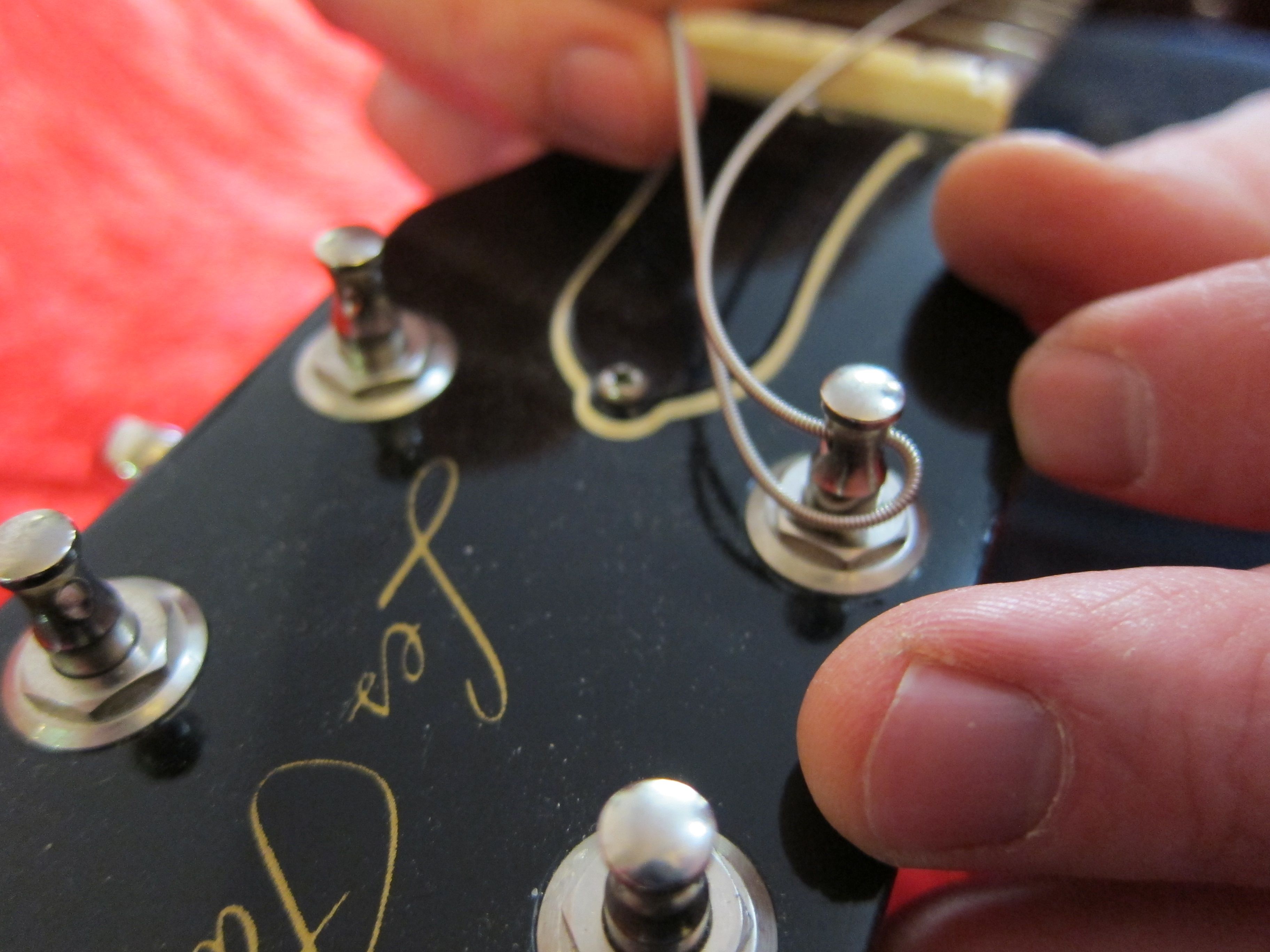
…vedetään viritintapin ympäri…
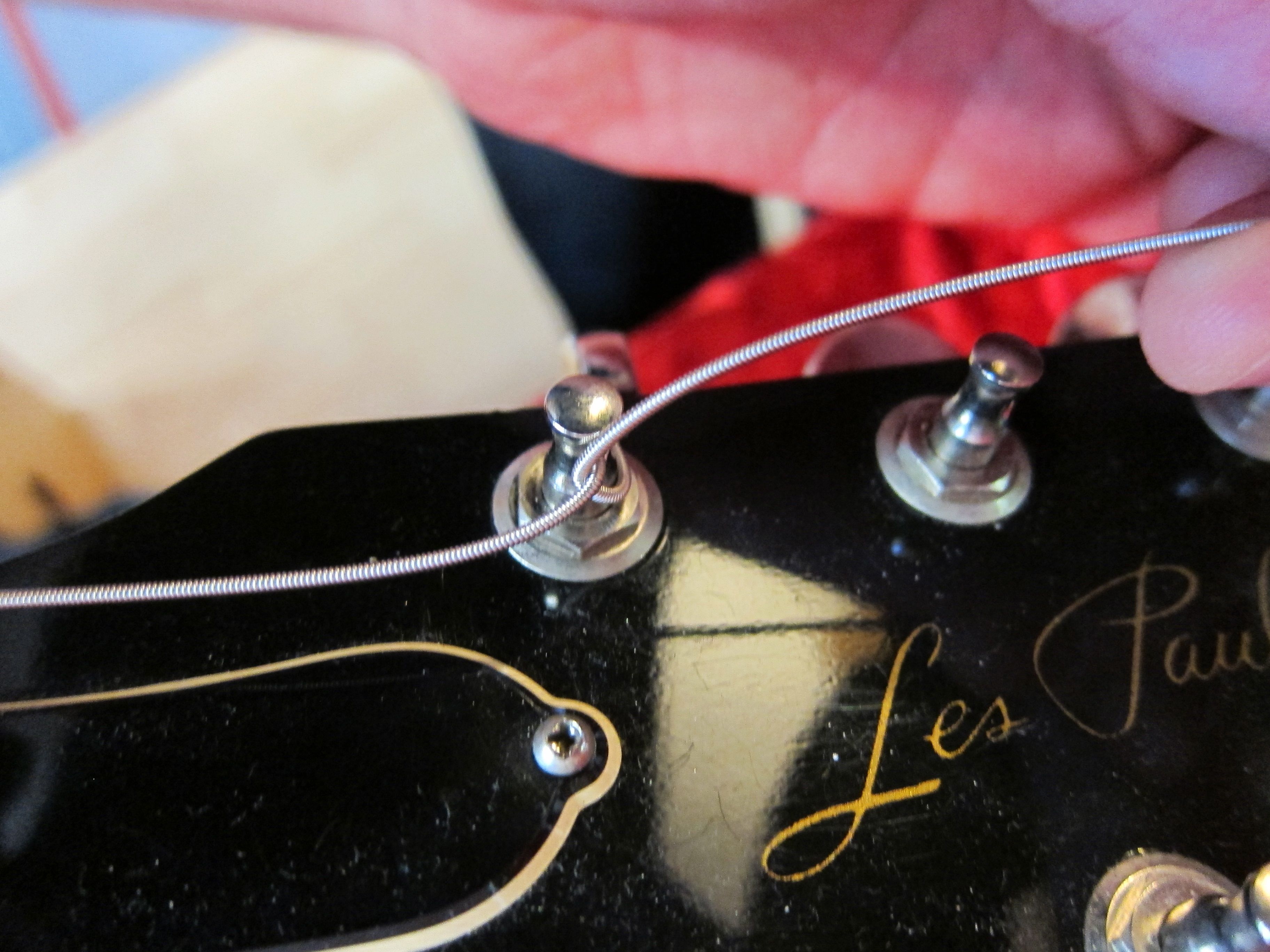
…ja lukitaan paikoilleen vetämällä sitä kohti kitaran logoa.

****

Yksi käsi painaa kielen alas, kun toinen kiertää sen kireäksi. Kielen pitää kiertää tapin ympäri ylhäältä yhä alemmas.

****
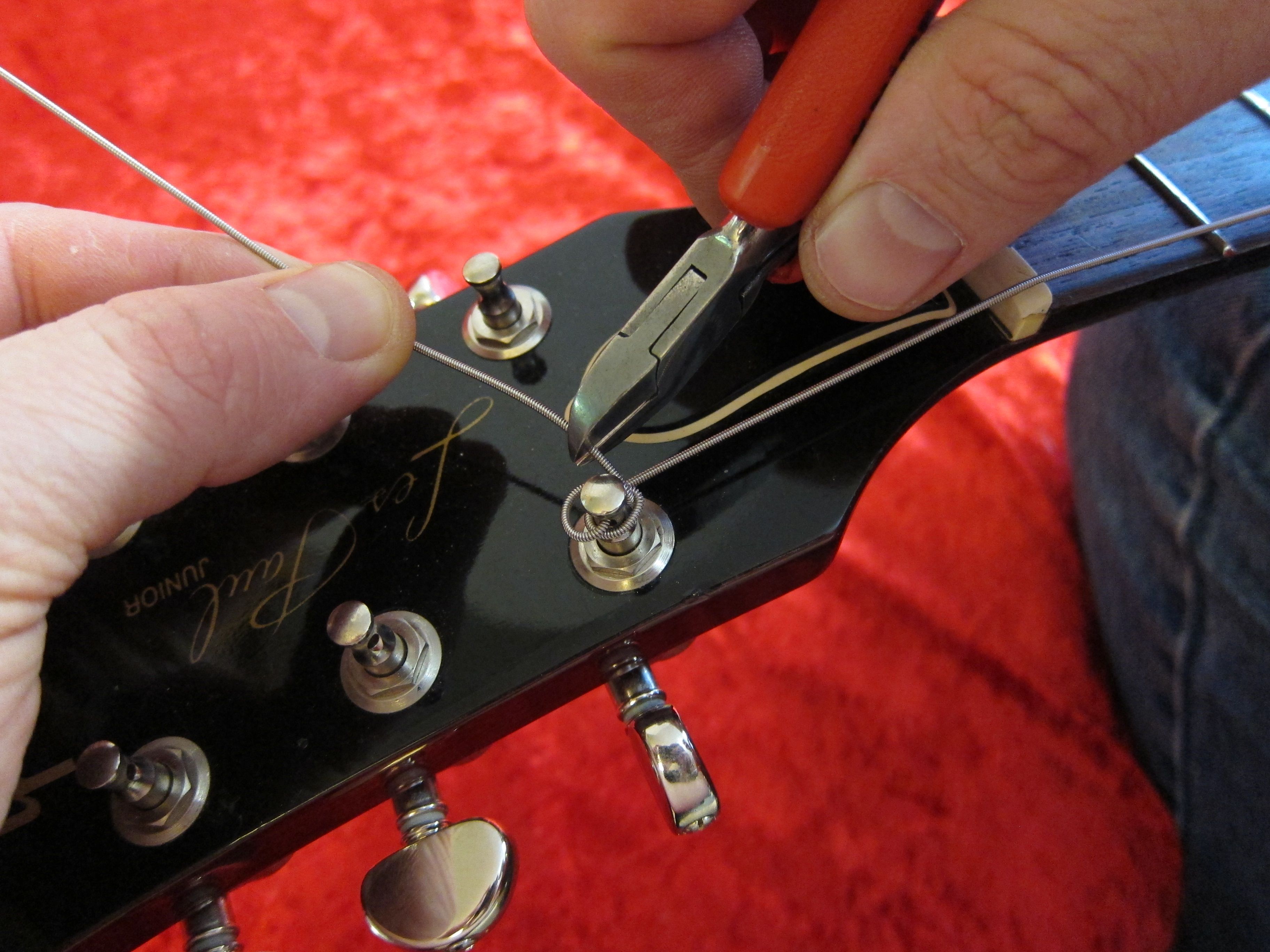
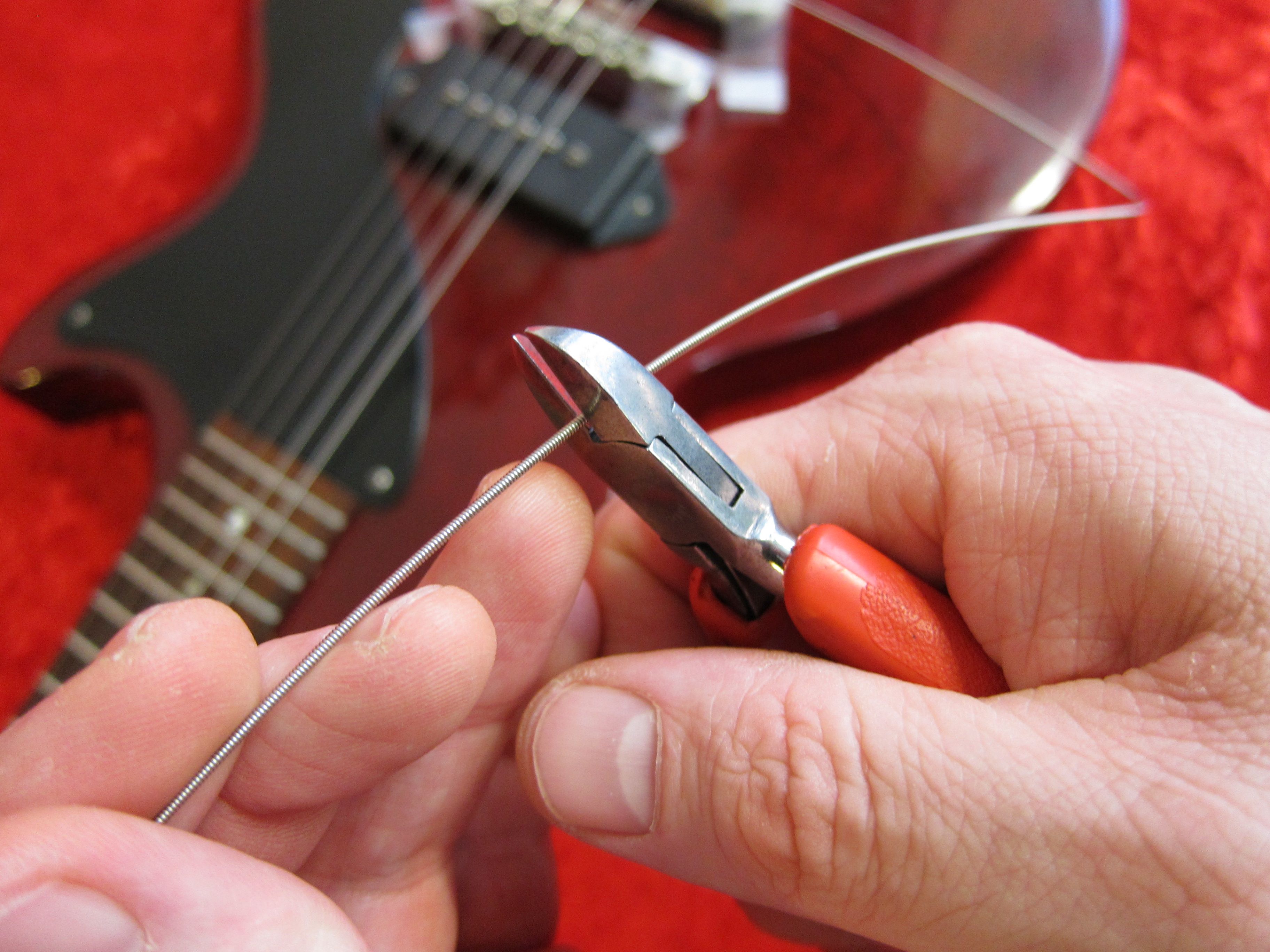
Suosittelen ylijäävän palan poistamista katkaisemalla sitä lähellä viritintappia. Sen jälkeen taivutan varovaisesti kielitynkän hieman kohti lapaa. Ole varovainen, katkaistu kieli on hyvin terävä!

****

Jos kaikki meni suunnitelman mukaan, näyttää uusi ala-E tältä.

****

Kielet pitävät virettä nopeammin, jos niitä venytetään ensimmäisten viritysten yhteydessä: ensin viritetään, sitten venytetään…neljän-viiden kerran jälkeen viritys pitäisi alkaa asettua.

Otekäsi pitää kielen alhaalla venymisen yhteydessä, jottei satulaan kohdistaisi liikkaa rasitusta.

Kun kitara on viritetty voidaan mitata uusien kielten korkeus 12:n nauhan yllä. Tarvittaessa säädetään kielten korkeutta nostamalla tallaa (tai laskemalla sitä).

****

Viimeinen vaihe on intonaation tarkistus ja (jos on tarve) säätäminen. Intonaatiota tarkistetaan kitara sylissä soittamalla ensin avoimen kielen (tai kielen huiluääntä 12:n nauhan kohdalla) ja sen jälkeen kieli painettua alas 12:n nauhalla.

Jos alaspainetun kielen sävel on matalampi kuin tavoitettu sävel, tallapalan täyttyy säättää lähemmäksi tallamikrofonia. Tämän jälkeen viritetään uudestaan ja tarkistetaan intonaatiota uudestaan.

Jos alaspainetun kielen sävel on korkeampi kuin tavoitettu sävel, tallapalan täyttyy säättää tallamikrofonista poispäin. Tämän jälkeen viritetään uudestaan ja tarkistetaan intonaatiota uudestaan.

PS: Vanhoissa kitaroissa tune-o-matic-talla voi istua hieman löysästi tolppien päällä. Itse joudun kieltenvaihdon jälkeen aina työntämään tallan bassopuoli varovaisesti kieltenpitimeen suuntaan. Vaikka kyse on vain todella pienestä virheasennosta, seikka vaikuttaa tuntuvasti kitaran intonaatioon!

***

Changing strings – Les Paul -type guitars

Photos: Miloš Berka

****

Here’s what you need:

A pack of strings, a wire cutter, a tuner and a guitar lead. A cheap plastic crank speeds up the whole process of string winding.

A metal ruler comes in handy for measuring the action at the 12th fret before you start. If you take down these measurements it will be easy to readjust your guitar’s action, if you’ve taken off the guitar’s hardware, for example.

****

I keep my 1980s Les Paul Junior strung in the old-school way, with the strings going over the stopbar. This approach gives you a slightly looser feel.

This is how Les Paul -type guitars are usually strung these days, which looks cleaner and neater. Both approaches are valid – take your choice.

****

I use sticky tape to secure the tune-o-matic bridge and stopbar to the body to prevent them from falling off and damaging the guitar. Don’t use adhesives that could mark your guitar, like duct tape, and don’t keep the tape on the guitar for longer than it takes to change strings, if you don’t want to leave (possibly permanent) marks on your finish.

If you own a recent Epiphone guitar, or your guitar is equipped with Tone Pros hardware, the tape is not needed. In these cases the hardware is already fixed to their posts.

****

It’s easiest, in my opinion, to take off all strings once.

****

The old strings are much easier to pull out of the stopbar, once you’ve snipped off the coiled end that was formed by the tuner post.

****

Here I’m pushing the old string through the stopbar.

****

My Junior was equipped originally with Grover Minis, which I replaced with Schaller M6-Vintage tuners a few years ago.

****

Sealed tuners are practically maintenance-free. You can adjust their feel with the small screw at the tip of the tuner buttons.

****

I’d recommend you work your way up from the wrist of the headstock and work in pairs: first E-e, then A-b, and lastly D-g.

Pull the new string all the way through the stopbar, and only pull it over the bridge, once the string’s ball-end is in place inside the stopbar.

****

Insert the string…

…pull it around the post…

…and lock the string in by pulling it up away from the body.

****

Keep the string pressed downwards, while you’re turning the crank. Each new winding should pass under the one before it.

****

I’d recommend cutting off the surplus string in close proximity to the tuning post. Then I bend the stub down towards the headstock face. Be careful, a cut off string is very sharp!

****

If everything went according to plan this is how the new low E-string should look in the tuner.

****

Getting new strings to stay in tune is a much faster process, if you stretch each string carefully. It works like this: First you tune to pitch, then you stretch each string, and retune again. Once you’ve repeated this process four to five times, you should be ready to go.

Your fretting hand should hold down the string you’re stretching at the first or second fret to avoid damage to the top nut.

Once the guitar is in tune you should check the string action at the 12th fret and compare it with the values measured with the old string set. Raise (or lower) the bridge as needed.

****

The last stage should be checking and resetting the guitar’s intonation. Always check your intonation with the guitar in playing position, by comparing the correctly tuned open string (or its 12th fret harmonic) to the fretted pitch at the 12th fret.

If the fretted note is flat (its pitch too low), you need to adjust the bridge saddle closer to the bridge pickup. Give the screw a few turns, then retune and check again. Repeat if necessary.

If the fretted note is sharp (its pitch too high), you need to adjust the bridge saddle further away from the bridge pickup. Give the screw a few turns, then retune and check again. Repeat if necessary.

PS: On older guitars the tune-o-matic-bridge’s bridge post holes may be worn. After a string change, I always have to give the bridge’s bass side a little push towards the stopbar to get it back into its correct position on my Junior. The actual difference in terms of millimeters is only incremental, but it does make a discernible difference to the guitar’s intonation!

***

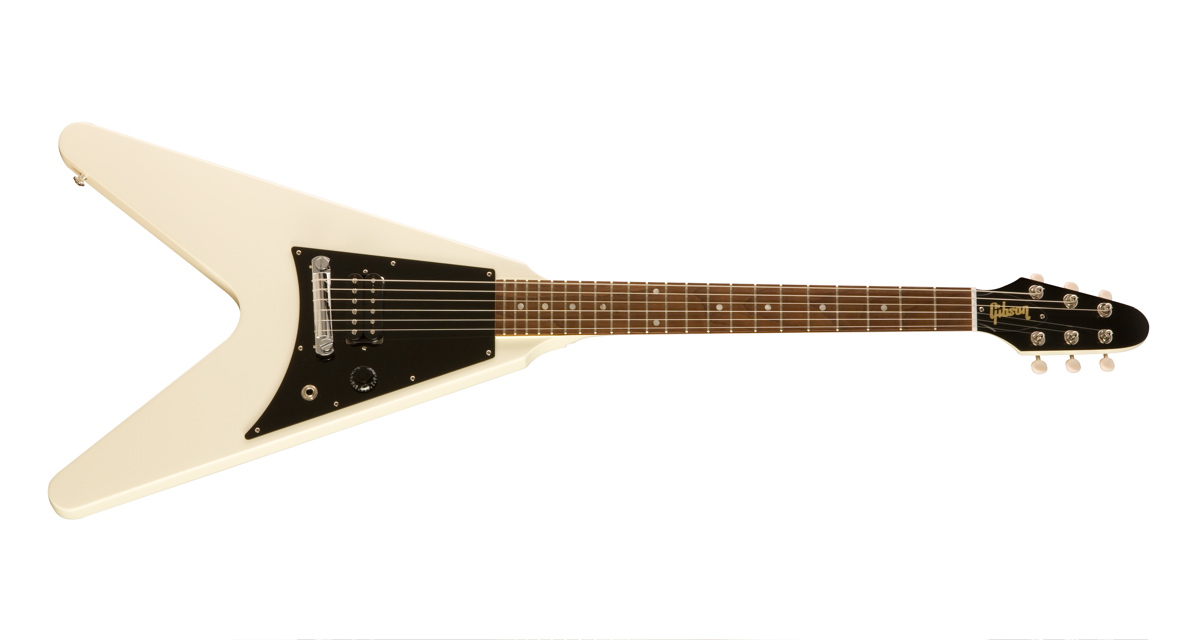
Gibson Flying V – tai: kaksi vuosikymmentä etuajassa

Vuonna 1957 Ted McCartyn mitta oli täynnä. Gibsonin toimitusjohtajaa ärsyttivät ainaiset puheet firman vanhanaikaisuudesta ja tylsyydestä muiden valmistajien ja joidenkin kitaristien keskuudessa. Etenkin Fenderin tuomat uudet tuulet kitaroiden valmistuksessa ja markkinoinnissa saivat McCartya uskomaan, että Gibson tarvitsi jotain mullistavan uutta mallistossansa.

Pidettiin kokonainen sarja aivoriihi-istuntoja, jossa yritettiin löytää mahdollisimman omanlaatuisia kitaroita. Pomo itse keksi tällaiset muodot:

Kun ensimmäinen prototyyppi oli valmis, joku nauroi ”Hehee, tämä näyttää lentävältä V-kirjaimelta!”, ja siinä olikin uutukaiselle sopiva nimi.

Kun Flying V näytettiin ensimmäistä kerta NAMMissa (1958, samalla esiteltiin myös Explorer-mallin), varsin erikoinen kitara oli yksi messujen kohokohtista. Kaula ja runko veistettiin korina-puusta ja metalliosat olivat kullattuja.

Ongelma oli vain, että omintakeinen kitara oli aikansa edellä, minkä takia siitä ei tullut myyntimenestys. Alkuperäinen painos (1958–’59) jäi alle 100 kappaletta, ja myös niistä jotkut käytettiin vain mainoskylttinä joidenkin musiikkiliikeiden edessä.

Kuuskytluvun keskivaiheella musiikkimaku oli jo muuttanut sen verran raskaampaan suuntaan, että Gibson päätti yrittää uudestaan. Uusi Flying V oli mahongista, ja sillä oli perinteinen Gibson-kieltenpidin. Myös säätimet oli hieman eri järjestyksessä tässä uusintapainoksessa (katso alle).

Jimi Hendrix käytti juuri sellaista 60-luvun mallia, aina kun halusi Stratoa paksumpia soundeja.

Mutta vasta 1970-luvulla, kun Hard Rock ja Metal keksittiin, tuli Veestä muodikas lavakitara, sekä lavakarismansa että Gibson-soundinsa ansiosta.

Ja se lentää yhä vain eteenpäin; juuri tällä hetkellä Gibson tarjoaa upouuden seitsenkielisen Veen aktiivimikityksellä rankkaan riffitykseen.

Myös uudesta, laajennetusta Melody Maker -sarjasta löytyy Flying V – Flying V Melody Maker – jolla on mahonkikaula, vaahterarunko, tallahumbucker omalla volume-säätimellä sekä yksinkertainen wraparound-talla – that’s it.

Flying V:n ainoa huono ominaisuus on, ettei mallia voi soittaa istuen. Toisaalta, kukahan moshaa istuen?

😉

The Gibson Flying V, or: Two Decades Ahead Of Its Time

In 1957 Gibson’s then president, Ted McCarty, grew tired of the company being slagged off as ”boring old farts” by some of its competitors. Especially the fresh touch brought to guitar-making (and marketing) by young upstarts Fender, made McCarty determined that something had to be done to put the ”stuffy” image behind them.

They held a series of brain-storming sessions with a view to coming up with the most outrageous designs imaginable. Ted McCarty himself came up with this:

When the first prototype was built somebody said (laughing, no doubt): ”Hey, this thing looks like a flying Vee!”, and the name stuck.

When the Flying V was first shown at the Winter NAMM show in 1958 – along with its sister model the Explorer – it sure was the show-stopper McCarty had hoped for, with its radical shape, korina neck and body and gold parts.

The problem was the model was way ahead of its time, and didn’t really sell well in its original form. Less than 100 Flying V’s were shipped to dealers during 1958-9, with some ending up as shop signs (!) to draw in customers.

In the mid-60s times had changed, though, and heavier music was becoming en vogue, so Gibson decided to reissue the Flying V, albeit with a standard stop-tailpiece, a different control layout and the company’s customary mahogany used for the body and neck.

It was this version that Jimi Hendrix used whenever he needed a fatter sound than his Stratocaster could provide him with.

But it was really only with the advent of Hard Rock and Metal in the 1970s that the Vee really took off as a fashionable guitar, as it offered both cool looks and fat Gibson-tone in the right proportions.

Since then the Flying V has never really left us; right now, for example, Gibson are offering an EMG-equipped, active 7-string version for ultra-brutal riffing.

And brand-new is a budget version of the Vee, called the Flying V Melody Maker, which gives you the essence of what the Vee’s about in a nutshell: a mahogany neck glued to a maple body, one powerful humbucker, a single volume control and a simple wraparound bridge topping it all off – that’s it.

The Flying V only has one single drawback – you can’t play the model sitting down. But then again, headbanging doesn’t really work sitting down…

😉

Pidä blogia WordPress.comissa.

Ylös ↑